Adm. Christopher Grady Nominated for Vice Chairman of JCS
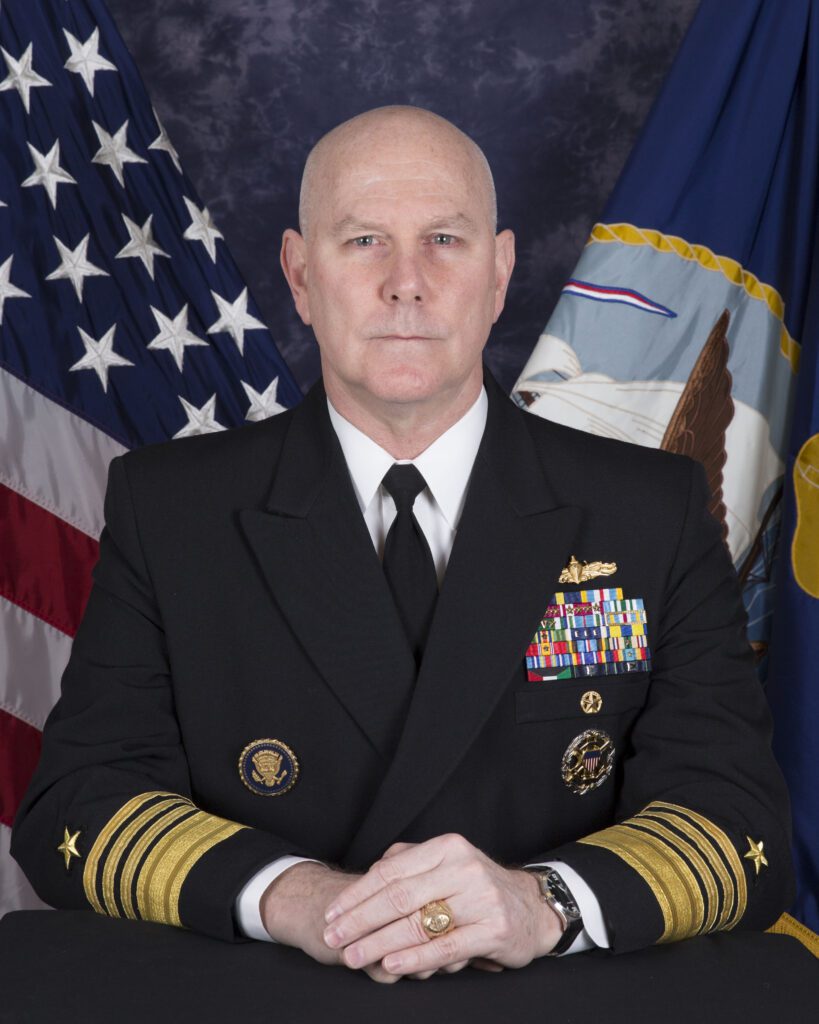
Adm. Christopher W. Grady, appointed as vice chairman of the Joint Chiefs of Command. U.S. NAVY

ARLINGTON, Va. — Defense Secretary Lloyd J. Austin III announced Nov. 2 the president has nominated Navy Adm. Christopher W. Grady for reappointment to the rank of admiral, and assignment as vice chairman of the Joint Chiefs of Staff, Washington, D.C.   

If confirmed, Grady, a surface warfare officer currently serving as commander, U.S. Fleet Forces Command, Norfolk, Virginia, would be the first Navy officer to serve as vice chief since Adm. James A. Winnefeld Jr. retired in 2015. 

As commander, U.S. Fleet Forces Command, Grady is responsible for training, certifying and providing “combat-ready Navy forces to combatant commanders that are capable of conducting prompt, sustained naval, joint and combined operations in support of U.S. national interests,” according to the command’s mission statement. The command also supports U.S. Northern Command, U.S. Element North American Aerospace Defense Command, and U.S. Strategic Command.  

Below are excerpts from Grady’s official biography: 
 
Adm. Christopher W. Grady is a native of Newport, Rhode Island. He is a graduate of the University of Notre Dame and was commissioned an ensign through the Naval Reserve Officers Training Corps program. Grady is a distinguished graduate of Georgetown University where he earned a Master of Arts in National Security Studies while concurrently participating as a fellow in Foreign Service at the Edmund A. Walsh School of Foreign Service. He is also a distinguished graduate of the National War College earning a Master of Science in National Security Affairs. 

He assumed command of U.S. Fleet Forces Command/U.S. Naval Forces Northern Command on May 4, 2018, and assumed duties of commander, U.S. Naval Forces Strategic Command and U.S. Strategic Command Joint Force Maritime Component Commander on Feb. 1, 2019. 

In his most recent assignment, he was the commander, U.S. 6th Fleet and the commander, Naval Striking and Support Forces NATO, while simultaneously serving as the deputy commander, U.S. Naval Forces Europe and U.S. Naval Forces Africa. 

At sea, Grady’s initial tour was aboard USS Moosbrugger (DD 980) as combat information center officer and antisubmarine warfare officer. As a department head, he served as weapons control officer and combat systems officer in USS Princeton (CG 59). He was commanding officer of Mine Countermeasures Rotational Crew Echo in USS Chief (MCM 14) and deployed to the Arabian Gulf in command of USS Ardent (MCM 12). Grady then commanded USS Cole (DDG 67), deploying as part of NATO’s Standing Naval Forces Mediterranean. As commander, Destroyer Squadron 22, he deployed to the Arabian Gulf as sea combat commander for the Theodore Roosevelt Carrier Strike Group in support of Operations Enduring Freedom and Iraqi Freedom. 

Ashore, Grady first served on the staff of the Joint Chiefs of Staff and then as naval aide to the Chief of Naval Operations (CNO). He also served on the staff of the CNO as the assistant branch head, Europe and Eurasia Politico-Military Affairs Branch (OPNAV N524). He then served as executive assistant to the Navy’s Chief of Legislative Affairs. Next, he served as the deputy executive secretary of the National Security Council in the White House. He then went on to serve as the executive assistant to the CNO. 
 
Additional flag assignments include director of the Maritime Operations Center (N2/3/5/7), Commander, U.S. Pacific Fleet; Commander, Carrier Strike Group One/Carl Vinson Carrier Strike Group, where he deployed for nearly 10 months to the Western Pacific and the Arabian Gulf conducting combat operations in support of Operation Inherent Resolve; and Commander, Naval Surface Force Atlantic. 


AUKUS Agreement Will Provide Tomahawk Missiles to Australian Navy

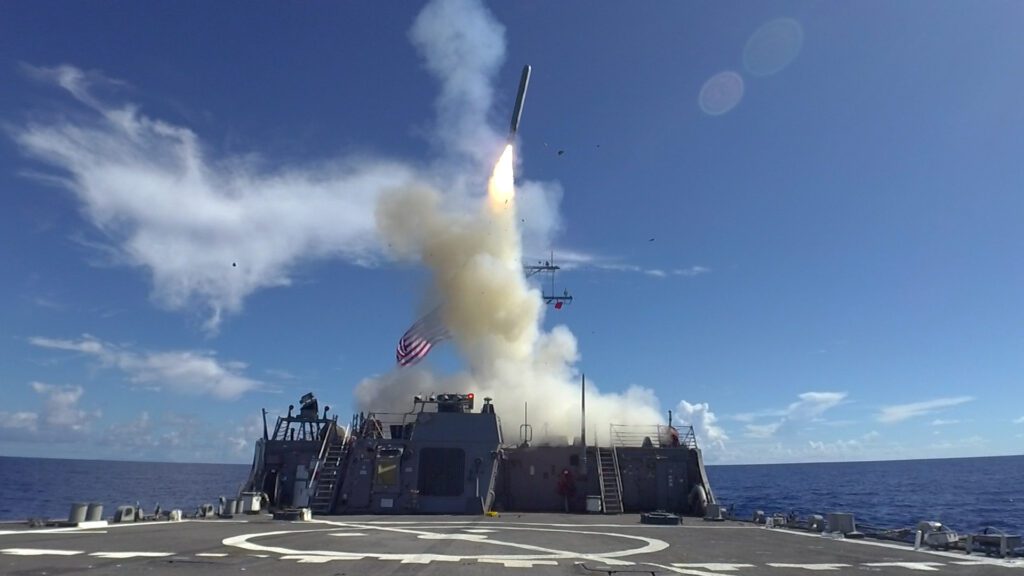
A tomahawk land attack missile is launched aboard the Arleigh Burke-class guided-missile destroyer USS Curtis Wilbur (DDG 54) during a live-fire demonstration as part of Pacific Vanguard (PACVAN) in 2019. U.S. NAVY / Mass Communication Specialist 2nd Class Taylor DiMartino

ARLINGTON, Va. — The AUKUS agreement between Australia, the United Kingdom and the United States announced last month highlighted the plan to add nuclear-powered attack submarines to the Royal Australian Navy (RAN), but the agreement also will add long-range precision-strike capability to the RAN in the form of Tomahawk cruise missiles to arm destroyers and also long-range precision missiles to the Royal Australian Air Force (RAAF) and to ground forces. 

“Throughout the decade, Australia will rapidly acquire long-range strike capabilities to enhance the ADF’s ability to deliver strike effects across our air, land and maritime domains,” the Australian Department of Defence said in a release. The management of this transition, and other capability acquisition options that will meet Australia’s strategic requirements, will be at the forefront of consultations through AUKUS over the next 18 months.” 

RGM-109 Tomahawk cruise missiles will arm the RAN’s three Hobart-class destroyers to enable the ships to strike land targets. The Tomahawks will be housed in Mk41 Vertical Launch System cells. The Tomahawk is built by Raytheon Missiles and Defense. 

The AGM-158B Joint Air-to-Surface Standoff Missiles (Extended Range) (JASSM-ER) will arm the RAAF’s F/A-18F Super Hornet strike fighters and, in the future, F-35A Lightning II strike fighters, to strike targets at ranges up to 900 kilometers.  

Also, the AGM-158C Long-Range Anti-Ship Missiles (Extended Range) (LRASM) will arm the F/A-18Fs Both the JASSM-ER and the LRASM are built by Lockheed Martin.  

Australia also will arm its land forces with unspecified precision-strike guided missiles “capable of destroying, neutralising and supressing diverse targets from over 400 [kilometers],” the release said. 

The Department of Defence also said it will be in “continuing collaboration with the United States to develop hypersonic missiles for our air capabilities.” 

The Australian government also will be “accelerating $1 billion for sovereign guided weapons manufacturing enterprise  — which will enable us to create our own weapons on Australian soil.” 

The nuclear-powered submarines for the RAN are a long-way off in time, so the government plans a life-of-type extension of Australia’s Collins class submarine fleet, which “will enhance Australia’s ability to deter and respond to potential security challenges.” 


Navy Budget Admiral: Topline a Challenge for New Ship Programs

Rear Adm. John E. Gumbleton gives remarks at a press conference in the Port of Los Angeles, March 27, 2020. U.S. NAVY / Mass Communication Specialist 1st Class David Mora Jr.

ARLINGTON, Va. — The U.S. Navy is facing a bow wave of fiscal challenges as it launches or proceeds new major ship, aircraft and shipyard programs as it seeks to build the fleet the nation needs, the Navy’s budget director said.  

“The elephant in the room is, of course the availability of funding,” said Rear Adm. John Gumbleton, deputy assistant secretary of the Navy for Budget (FMB) and director, Fiscal Management Division, N82, Office of the Chief of Naval Operations, speaking in a webinar sponsored by the Navy League of the United States and Huntington Ingalls Industries and moderated by Dr. Jerry Hendrix, a retired Navy captain and vice president of the Telemus Group. 

“Here we are in 2021, and we’re looking at our Columbia-class [ballistic-missile submarine] coming on line, consuming large values in R&D [research and development] as well as our SCN [Ship Construction, Navy] appropriation; and at the same time trying to invest in the next large surface combatant R&D [DDGX], SSNX [Next-Generation Attack Submarine] R&D, and also the Next-Generation Air Dominance at the same time,” Gumbleton said. “[Plus] the extra ‘bonus’ of trying to recapitalize our century-old dry dock facilities, so, essentially, reinvesting in a modern shipyard. 

“All these are Navy challenges and our cross to bear so to speak, but, in a capital-intensive service, where you’re trying to keep production of destroyers, frigates, aircraft carriers [going], it just speaks to the enormous challenge of trying to do this in a smart fashion within a topline granted,” the admiral said. 

Asked about the Navy’s force structure — which currently is a subject of a Defense Department global force review — Gumbleton said a range in the number ships may be more useful for planning rather than a fixed number.  

“Any plan — you put any number out there, is guaranteed to be wrong,” he said. “It is helpful to say, ‘How precise can we be?’ We introduce the capabilities that these platforms may need to bring to bear and what type of mix — manned or unmanned, etc. — and what that might mean to a future force structure. An incredibly complex effort. I think a range speaks to the assumptions that underly any study. So, if we were to assume that we were going to have a manned/unmanned mix, that they have very different capabilities, that implies that there might be a future state where this range can reflect what choices we take with those assumptions.”  


Moton: New Frigate’s Conditions-Based Maintenance ‘A Big Change for the Navy’

An artist’s rendering of the Constellation-class guided missile frigate. U.S. NAVY

ARLINGTON, Va. — U.S Navy leaders are bullish on the forthcoming Constellation-class guided-missile frigate (FFG 62) for many reasons, including lethality, commonality, proven combat systems, and abundance of space, weight and power. In at least one respect, the FFG may be a “first” — possibly the first U.S. Navy ship with conditions-based maintenance (CBM) designed into it. 

The FFG “is going to be one of our first ship classes — if not our first one — delivered with a conditions-based maintenance system inherent in the design,” said Rear Adm Casey Moton, program executive officer, Unmanned and Small Surface Combatants, speaking Oct. 18 in San Diego at the Fleet Maintenance and Modernization Symposium of the American Society of Naval Engineers. 

Conditions-based maintenance is maintenance on a platform, system or equipment that depends on the current condition of the system. It is designed to help optimize the maintenance funds, work force, material and infrastructure at hand.  

CBM can involve scheduling maintenance based on data that can determine when a repair or replacement is needed before a failure occurs. Sensors can be used to monitor conditions and detect a potential failure before it happens. 

“We are working that very closely with SEA 21, with NAVSEA 05, how we’re going to use that working with type commanders,” Moton said. “[There] is a lot of work going on there to make sure that we are able to leverage that capability. The frigate’s boing to be one of the first ships that brings that actually brings that technical solution.”   

“For CBM, we’re trying to do important things that hopefully are going to result in less time in availabilities,” he said. “It’s a big change for the Navy, so we need industry supporting us, and that goes all the way back to the shipbuilders and the equipment suppliers.” 

Moton praised the frigate’s program as having a “good set of requirements,” a “good design,” good sustainment features, reliability built in the specifications, commonality of the combat system, good ship control software, and margins in space, weight and power to accommodate future electronic warfare systems and directed energy weapons. He noted that the program’s emphasis on basic fundamentals “sets us up for success.” 


NAVSEA Commander: Planning Efforts Showing Positive Results in Ship Maintenance

Vice Adm. William J. Galinis being piped aboard during a Pearl Harbor Naval Shipyard and Intermediate Maintenance Facilities Change of Command ceremony in June. U.S. NAVY / Justice Vannatta

ARLINGTON, Va. — The commander of the Naval Sea Systems Command said efforts to improve planning of ship maintenance availabilities are showing positive results and are helping shipyards execute the work. 

Vice Adm. William Galinis, commander, Naval Sea Systems Command, speaking Oct. 19 in San Diego during the Fleet Maintenance and Modernization Symposium, said that a key metric — days of maintenance delay — “really did not change from fiscal year ‘20 to ’21, but there are “a lot of positives out there.”  

The ongoing COVID-19 pandemic has affected shipyards and their workers, but Galinis pointed out not a single shipyard had to be closed during the pandemic. But he said that the Navy is starting to see more delay in the supply chain. 

A major factor in days of maintenance delays was the difficulty and complexity of some of the ship modernization programs, he said.  

The admiral said in fiscal 2021, the private sector shipyards delivered 40% of ships on time from their maintenance periods, whereas the Navy’s shipyards delivered about 55% on time. 

Galinis noted some positive developments. 

“We’re really starting to see some good work coming out of the planning efforts,” he said, including use of ship class maintenance plans. 

“We’re seeing now about 60% of the work going into the availabilities is directed maintenance coming right out of class maintenance plans,” he said. “That’s a plus. What we need to do now is standardize that work availability to availability, port to port, as best we can, always realizing that the ship gets a vote.” 

Galinis also noted improvement in work package development. 

“We’re locking the work package on time a year out,” he said. “I think we almost achieved 100% in [fiscal] ’21. That’s a huge, huge plus: to stabilize the work package in that time frame. We need to manage the work that gets to the package after that point.” 

He also noted that contracts to the shipyards have been issued earlier — an average of 115 days, almost four months, before work start — “a real benefit to the shipyards.” 

Galinis said the Navy needs to build the project teams sooner from the regional maintenance center, the shipyard and the ship’s crew. He also said there is work to be done in ensuring completeness of work and the quality of specifications.  

He also noted that progress has been made in getting advance materials to shipyards before the project starts is improving.  

“We’re above 95% right now getting material to the shipyards” before the project starts, he said. 

Galinis sees promise in the increased use of data analytics and artificial intelligence, that by driving those tools into the planning process “we’re going to see almost an exponential increase in improvement in that area.” 

Managing the amount of change in a work package continues to be a challenge, he said, noting that changes in the package can have a “significant impact” negatively affecting on-time delivery.  


Navy Puts Renewed Focus on Ship Battle Damage Repair

Salvage contractors from SMIT AMERICAS remove the air traffic control tower aboard the amphibious assault ship USS Bonhomme Richard (LHD 6) in preparation for towing in March 2021. U.S. NAVY / Mass Communication Specialist 3rd Class Cosmo Walrath

ARLINGTON, Va. — The loss of the amphibious assault ship USS Bonhomme Richard pier-side to a raging fire last year was a terrible blow to the U.S. Navy, but as the hulk of the ship was being towed from San Diego to Brownsville, Texas, this summer for scrapping, it performed one last service to the Navy and the nation, one that the Navy will try to repeat in the future.  

While still under tow in the Gulf of Mexico 300 miles from its destination, the Navy conducted a salvage exercise on the hulk of the Bonhomme Richard to provide valuable training for its personnel. 

The Navy brought to the hulk mobile diving and salvage personnel and divers, said Rear Adm. Eric Ver Hage, commander, Regional Maintenance Center and director, Surface Ship Maintenance and Modernization for Naval Sea Systems Command (NAVSEA), speaking at the American Society of Naval Engineers Fleet Maintenance and Modernization Symposium 2021. “All of the NAVSEA commands [and] fleet commands were involved. 

“They were able to cut metal, flood spaces, de-water spaces, patch the holes at sea; it was really, really realistic,” Ver Hage said. “We’re going to do more of that.”     

The Navy is focusing on wartime readiness and an important part of that is battle damage repair capability and capacity, the admiral said. 

With the Navy focusing more on great power competition and the increasing focus on war at sea, repairing incurring damage on its ships is demanding more attention from Navy leaders. 

Ver Hage cited the experiences of the 2000 bombing of the destroyer USS Cole and the fire on the USS Bonhomme Richard as focusing his mind on the need for the Navy to shore up its ability to repair battle damage in wartime or peacetime. He said the Navy’s Regional maintenance centers are key to that capability, “along with the operational forces, mobile diving and salvage, [superintendent of salvage], and public shipyards. It’s a team effort.”   

He noted that expertise from the oil and gas industry was brought to bear on the fire-fighting efforts for Bonhomme Richard. Drones were used for up-close inspection of hot spots and helicopters were used as a bucket brigade to help extinguish the fire. 

Ver Hage said that in future exercises in which former Navy ships are expended as targets for the fleet, the Navy will take advantage of these opportunities to exercise battle damage repair capabilities. 


Navy’s 7th Fleet Bolstered with New Ships

The Arleigh Burke-class guided-missile destroyer USS Ralph Johnson (DDG 114) arrives at Commander, Fleet Activities Yokosuka (CFAY) as one of the newest additions to Commander, Task Force (CTF) 71/Destroyer Squadron (DESRON) 15. U.S. NAVY / Tetsuya Morita

ARLINGTON, Va. — Recent ship transfers have added capability to the Forward-Deployed Naval Force of the U.S. 7th Fleet in the Western Pacific in recent months.  

Ships are occasionally transferred to or swapped out with the Japan-based fleet to modernize its capabilities or to replace ships that are rotated to receive maintenance at U.S. shipyards. 

The most recent addition to the 7th Fleet is the Lewis B. Puller-class expeditionary staging base ship USS Miguel Keith (ESB 5), which was commissioned on March 8 as the third ship of its class. Its sister ships, USS Lewis B. Puller (ESB 3) and USS Hershel “Woody” Williams (ESB 4), are assigned to the U.S. 5th Fleet and U.S. 6th Fleet, respectively. 

The Miguel Keith, nominally based in Saipan, has two mixed crews of Sailors and Civilian Mariners designed to rotate, keeping the ship deployed for longer periods. The ship is designed with a large flight deck and extensive command-and-control facilities to support expeditionary operations and can host helicopters, small boats, special operations forces, unmanned vehicles, mine countermeasures forces. It can support humanitarian and disaster-relief operations as well.   

The new Flight IIA Arleigh Burke-class guided-missile destroyer, USS Ralph Johnson (DDG 114), arrived at Yokosuka, Japan, on Oct. 4, commander, Task Force 71/Destroyer Squadron 15 Public Affairs said in a release. 

“Ralph Johnson comes over as one of the newest and most capable destroyers in the U.S. Navy,” said Capt. Chase Sargeant, commander, Task Force 71/Destroyer Squadron 15. “The addition of Ralph Johnson demonstrates our unwavering commitment to maintain maritime security in the Indo-Pacific alongside our alliances and partnerships.” 

The Flight IIA Arleigh Burke-class DDG USS Dewey (DDG 105) arrived in Yokosuka on Sept. 8, to join the FDNF. 

“Dewey is an excellent addition to our forward-deployed team,” Sargeant said in a release. “Dewey brings capability and lethality that enables U.S. 7th Fleet to defend U.S. and like-minded nation’s interests and supports a rules-based international order and free and open Indo-Pacific.” 

Earlier, on Aug. 16, the Arleigh Burke-class DDGs USS Higgins (DDG 76) and USS Howard (DDG 83) arrived in Yokosuka. These ships are Flight II and Flight IIA DDGs, respectively, with ballistic-missile defense capability. 

“These destroyers are some of the most capable ships our Navy has to offer,” added Sargeant. “Adding them to our forward deployed forces is a clear signal of our continuing commitment to our partners and allies, and our mutual commitment to maintaining stable regional maritime security.” 

One of the Navy’s oldest destroyers, the Flight I Arleigh Burke-class guided-missile destroyer USS John McCain, departed Yokosuka on Sept. 17, the ship’s public affairs officer said in a release, for assignment to the 3rd Fleet and a new homeport of Naval Station Everett, Washington. The John McCain had been a unit of the FDNF for 24 years, arriving in 1997. In addition to its operations for the 7th Fleet, the John McCain “also participated in several surge deployments to U.S. 5th Fleet in support of the USS Independence battle group in 1998 and USS Kitty Hawk strike group in 2002 and again in 2003 supporting Operations Enduring and Iraqi Freedom,” the release said. 

“It is definitely a changing of the guard with USS John S. McCain and her crew departing the 7th Fleet after over 24 years in Japan,” Sargeant said. “The contributions of the current and all previous crews in defending peace and stability in the Indo-Pacific cannot be overstated, and the entire forward-deployed fleet wishes John S. McCain fair winds as she transfers to her new homeport of Everett, Washington.” 

Earlier, on Aug. 18, the Flight I Arleigh Burke DDG USS Curtis Wilbur (DDG 54) departed Yokosuka after 25 years with the FDNF, the ship’s public affairs officer said in a release. The destroyer is now homeported with the 3rd Fleet in San Diego. 

In addition to its 7th Fleet operations, the Curtis Wilbur deployed to the U.S. 5th Fleet area of operation conducting maritime interception operations in the Arabian Sea in support of U.N. resolutions in the region, and later supported Operation Enduring Freedom with the Kitty Hawk Battle Group. 

“As the first Aegis destroyer forward-deployed to Japan, Curtis Wilbur leaves behind a legacy of warfighting excellence and operational performance that set the standard for every destroyer that followed,” Sargeant said. “For the last 25 years, the ‘Steel Hammer of the Fleet’ boldly sailed the Indo-Pacific as part of the long grey line of warships of Destroyer Squadron Fifteen that maintained the freedom of the seas and protection of our national interests.” 

USS Mustin (DDG 89), a Flight IIA DDG, departed Yokosuka on June 22 after 15 years with the FDNF. The destroyer now is a unit of the 3rd Fleet and is homeported in San Diego.  

Also ending its FDNF tour was the Whidbey Island-class amphibious dock landing ship USS Germantown (LSD 42), which departed its homeport of Sasebo, Japan on Sept. 15 after more than a decade with the FDNF, said Amphibious Squadron 11 Public Affairs in a release. 

“Germantown and the Sailors who have sailed with her have made an incredible impact across the entire 7th Fleet theater,” said Rear Adm. Chris Engdahl, commander of Expeditionary Strike Group 7. “Whether strengthening alliances and partnerships during a myriad of amphibious operations or conducting humanitarian assistance when people of the Indo-Pacific region needed it most, Germantown has always set the standard in support of a free and open Indo-Pacific region. A great ship and crew comes to replace them, but they will be missed.” 

Germantown will be replaced at Sasebo later this year by sister ship USS Rushmore (LSD 47). 


Australia’s Request for More MH-60R Helicopters Approved By State Dept.

An MH-60R Seahawk helicopter assigned to the Swamp Foxes of Helicopter Maritime Strike Squadron (HSM) 74 flies in front of the guided-missile cruiser USS San Jacinto (CG 56). The U.S. State Department has approved a possible Foreign Military Sale of 12 MH-60Rs. U.S. NAVY / Chief Petty Officer Bruno Gaudry

WASHINGTON — The U.S. State Department has approved a possible Foreign Military Sale to Australia of MH-60R Seahawk multi-mission helicopters and related services and equipment, the Defense Security Cooperation Agency said Oct. 8.

The deal has an estimated cost of $985 million. Australia has requested 12 MH-60Rs along with their engines, mission systems, guns, space parts, technical documentation, logistics support and others, the release said. 

“This proposed sale will improve Australia’s capability to perform antisurface and antisubmarine warfare missions along with the ability to perform secondary missions including vertical replenishment, search and rescue, and communications relay,” said a release announcing the approval. “Australia will use the enhanced capability as a deterrent to regional threats and to strengthen its homeland defense. Australia will have no difficulty absorbing this equipment into its armed forces.” 

Australia previously ordered 24 MH-60Rs, the last of which was delivered to the Royal Australian Navy in July 2016. 

The principal U.S. contractor will be Lockheed Martin Rotary and Mission Systems, Owego, New York. 


SECNAV: Developing Capabilities to Deter China is Navy Department’s Top Governing Concept

Secretary of the Navy Carlos Del Toro delivers remarks at the christening ceremony of the Arleigh Burke-class guided-missile destroyer USS Carl M. Levin (DDG 120) Oct. 2, at General Dynamics Bath Iron Works shipyard. His new strategic guidance says China is the “pacing challenge” for the U.S. maritime services. U.S. NAVY / Mass Communication Specialist 2nd Class T. Logan Keown

ARLINGTON, Va. — The U.S. Navy’s and Marine Corps’ top priority will be to develop capabilities to deter China, the secretary of the Navy said in his strategic guidance to the service. 

In a document released Oct. 8, “One Navy-Marine Corps Team: Strategic Guidance from the Secretary of the Navy,” Secretary Carlos Del Toro named China as the top challenge facing the Navy and Marine Corps.   

“Since my confirmation as the 78th Secretary of the Navy, I have characterized the most pressing challenges facing the Department of the Navy as the ‘Four Cs:’ China, Culture, Climate Change, and COVID,” Del Toro wrote. “The People’s Republic of China represents the pacing challenge against which we must plan our warfighting strategies and investments.”  

Of the four, Del Toro wrote, “the long-term challenge posed by the People’s Republic of China is the most significant for the Department. The People’s Liberation Army Navy [PLAN] has radically expanded both its size and capabilities, growing to become the world’s largest fleet. Complementing its modern surface combatants are hundreds of coast guard and maritime militia vessels that Beijing employs to compete in the ‘gray zone,’ the contested arena between routine statecraft and conflict. For the first time in at least a generation, we have a strategic competitor who possesses naval capabilities that rival our own, and who seeks to aggressively employ its forces to challenge U.S. principles, partnerships, and prosperity. 

“Similarly, Russia, Iran, and other authoritarian states use gray-zone aggression and coercion to challenge the rules-based international order. The Department of the Navy will be expected to contribute our unique warfighting potential to compete in the gray zone, deter further aggression, and prepare to prevail in conflict as part of an integrated warfighting approach with our fellow services. 

“As our central governing concept, the top priority for the Department of the Navy will be to develop concepts of operations and capabilities that bolster deterrence and expand our warfighting advantages vis-a-vis the People’s Republic of China,” he wrote. “We will ensure our Fleet and Fleet Marine Forces [FMF] are organized, trained, equipped, and employed in support of this priority, and that we are able to campaign and win now and in the future. In doing so, we must remain able to deter the full range of threats to our nation’s security from other authoritarian states and transnational challenges that will continue to threaten our national security and economic interests. The Department of the Navy must always stand ready to address the multitude of crises that develop globally.” 

Del Toro listed four measures to enable strategic advantage: Expand forward presence; enhance warfighting readiness; innovate and modernize ; and combat climate change.

To read the entire document, click here: https://media.defense.gov/2021/Oct/07/2002870427/-1/-1/0/SECNAV%20STRATEGIC%20GUIDANCE_100721.PDF 


Special Submarine USS Connecticut Strikes Underwater Object

The Seawolf-class fast-attack submarine USS Connecticut (SSN 22) departs Puget Sound Naval Shipyard for sea trials following a maintenance availability in this 2016 photograph. U.S. NAVY / Thiep Van Nguyen II

PEARL HARBOR, Hawaii — The submarine USS Connecticut (SSN 22) “struck an object while submerged on the afternoon of Oct. 2, while operating in international waters in the Indo-Pacific region,” the Navy said Oct. 7.  

There were no life-threatening injuries, according to the release. 

“The submarine remains in a safe and stable condition,” the Navy said. “USS Connecticut’s nuclear propulsion plant and spaces were not affected and remain fully operational. The extent of damage to the remainder of the submarine is being assessed. The U.S. Navy has not requested assistance. The incident will be investigated. 

The Connecticut, commissioned in 2005, is the third boat of the Seawolf class but is unique in that it features a 100-foot hull extension aft of the sail. The multi-mission hull extension houses enhanced payloads that allow the submarine to conduct special missions and research and development projects that aid in the advancement of future submarine technologies and capabilities. 

In January 2005, the Los Angeles-class attack submarine USS San Francisco (SSN 711) struck a sea mount while submerged southeast of Guam. The submarine’s bow sonar dome was crushed, but the pressure hull was not compromised. Dozens of crewmen were injured and one later died of injuries. The submarine was repaired and returned to fleet service in 2009 with the bow from the ex-USS Honolulu installed.