Navy’s MQ-25A Stingray secures Milestone C approval
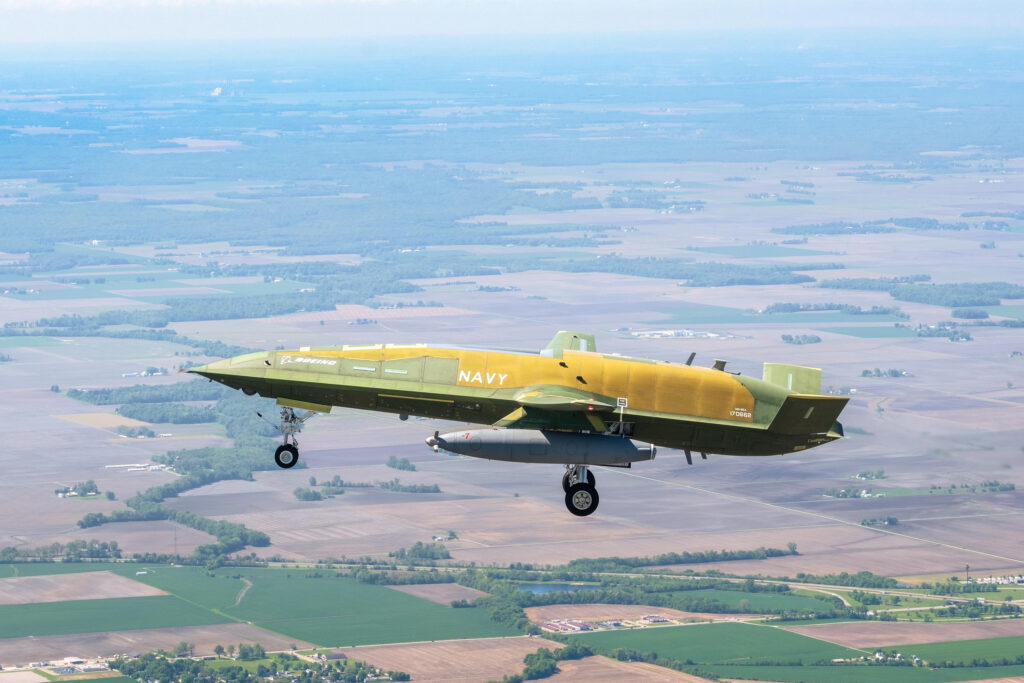
The Navy’s MQ-25A Stingray takes its first flight April 25 at Boeing’s facility at MidAmerica Airport in Mascoutah, Ill. The MQ-25 is the Navy’s first operational carrier-based unmanned aircraft. (Photo courtesy of Boeing)

From Neil Lobeda, May 19, 2026 

Following a successful first flight in April, Acting Secretary of the Navy Hung Cao announced today that the MQ-25A Stingray received Milestone C approval to move into Low-Rate Initial Production (LRIP). 

The milestone marks a major step forward in the Navy’s commitment to unmanned carrier aviation. An LRIP Lot 1 contract for three aircraft is expected to be awarded this summer and include priced options for Lot 2 (3 aircraft) and Lot 3 (5 aircraft). 

“Unmanned refueling extends our reach against any adversary,” stated Acting Secretary of the Navy Hung Cao. “Moving the MQ-25A Stingray to Milestone C and into production is arming our warfighters with a capability that increases the lethality of our Carrier Strike Groups. This is a decisive advantage that delivers our warfighters what they need to fight and win.” 

As the world’s first fully integrated, carrier-based unmanned aerial vehicle, the MQ-25A serves as the pathfinder for the future of unmanned carrier aviation. Stingray will provide the Carrier Air Wing (CVW) with essential organic refueling, allowing more F/A-18E/F aircraft to focus on strike missions. This will expand the operational reach of the air wing while preserving the service life of F/A-18E/Fs, improving readiness across the Super Hornet fleet. The Stingray is also at the forefront of integrating unmanned systems alongside manned platforms within the CVW, setting the stage for future advancements in naval aviation. 

“Milestone C approval represents an important step for this program,” said Vice Adm. John E. Dougherty IV, Portfolio Acquisition Executive Aviation. “MQ‑25A will provide persistent aerial refueling and unlock greater capacity across the air wing, ensuring our carrier strike groups remain lethal, flexible, and forward‑ready.” 

“The aircraft is ready, production is ready, and the program is ready to move this groundbreaking capability forward, paving the way for unmanned carrier aviation and enhancing fleet capability, capacity and lethality,” said Capt. Daniel Fucito, Unmanned Carrier Aviation program manager. 

The MQ‑25A program is managed by the Unmanned Carrier Aviation Program Office (PMA‑268), which is responsible for the MQ‑25A Stingray unmanned air system and the Unmanned Carrier Aviation Mission Control System (UMCS). PMA‑268 is aligned under the Carrier Strike Deputy Portfolio Acquisition Executive (DPAE), within the Portfolio Acquisition Executive for Aviation (PAE(A)). 

Editor’s note: Boeing released the following statement: 

Boeing is honored to work alongside our U.S. Navy partner in achieving this historic milestone in the MQ-25A Stingray’s development life cycle,” said Troy Rutherford, vice president, Boeing MQ-25 program. “We remain focused on getting this game-changing unmanned aircraft into the hands of the fleet and integrated into the carrier air wing.” 
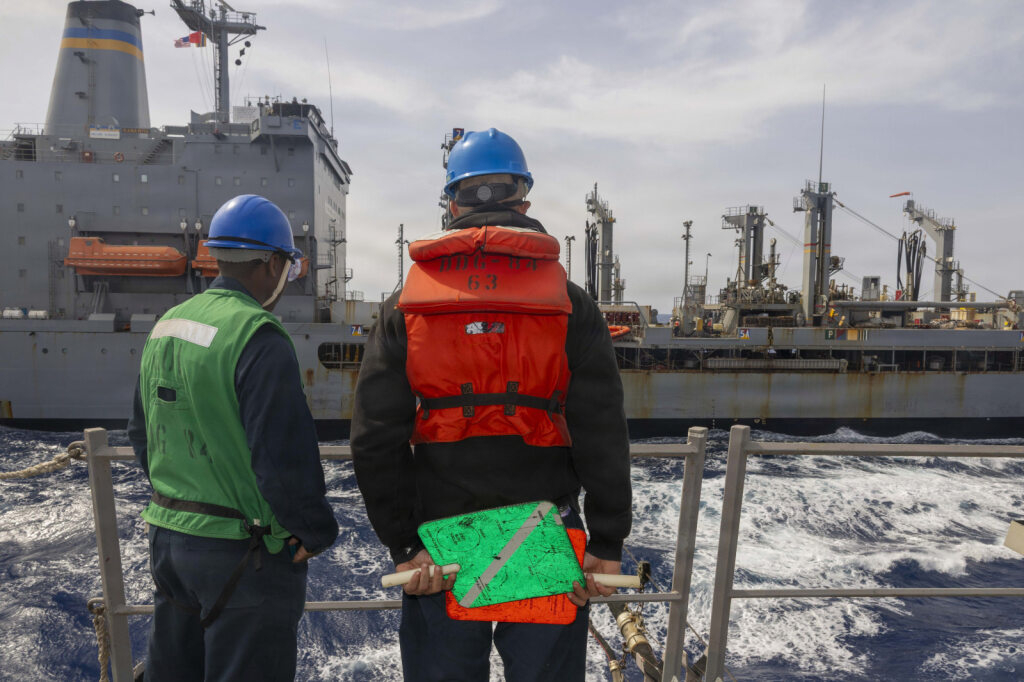


Fueling the Fight: USNS Kanawha Completes Strategic Deployment

May 18, 2026 |  By LaShawn Sykes, Military Sealift Command  

At long last, the familiar blue and yellow stripes around the top of the main smokestack appeared against the coastal sky, marking the successful completion of months of dedication and support to U.S. naval forces. 

Family and friends gathered on the pier at Naval Station Norfolk, Virginia, May 16, to welcome home the crew of the USNS Kanawha. The fleet replenishment oiler and its 92 civil service mariners returned after a 204-day deployment, including 156 days actively at sea. 

Operating in the U.S. 4th, 5th and 6th Fleets, the crew served as a strategic enabler. They delivered more than 17 million gallons of fuel, 3,000 pallets of supplies and transported 45 personnel, performing 113 replenishments to 29 U.S. and coalition vessels. As a floating warehouse, the ship enabled sustained operations during key missions, including Operations Southern Spear and Epic Fury. 

“I would like to thank the Kanawha crew and their families,” said Navy Capt. Elizabeth A. Nelson, Military Sealift Command Atlantic commodore. “The Kanawha was underway for seven long months supporting [the USS] Iwo Jima Amphibious Ready Group and the USS Gerald R. Ford Carrier Strike Group. Without the support of their families, they would not have been able to accomplish their mission. Kanawha’s performance exemplifies how MSC’s combat logistics force powers modern naval operations, directly fueling U.S. Navy readiness at sea.” 

As part of MSC’s combat logistics force, oilers like the Kanawha are integral to the Navy’s logistics system, enabling combatant ships to remain forward-deployed to protect American interests. These logistics forces are the backbone of sustained operations at sea, and the crew who operate these ships — resupplying the fleet with fuel, stores and ammunition — are a strategic piece of Navy operations. 

Replenishments at sea involve supplies being transferred from logistics force ships to combatant ships via underway replenishment. The two primary methods are connected replenishment, which transfers fuel and dry cargo via lines between ships sailing side by side, and vertical replenishment, which uses helicopters to ferry goods between the two vessels. 

Extending the Navy’s operational reach across the Caribbean, Mediterranean and the Middle East, the Kanawha leveraged 19 port visits in strategic locations, including Augusta Bay, Italy; Ponce, Puerto Rico; Souda Bay, Greece; and Yambu, Saudi Arabia. 

Through these port calls and ongoing logistical services, the crew acted as essential ambassadors, directly enhancing both diplomatic ties and combat readiness. 

Nelson praised the Kanawha crew. 

“Their MSC family owes them a debt of gratitude for their sacrifice — not just for the delivery of fuel and spare parts, but for delivering letters and packages from home that keep the fleet motivated. MSC’s [crews] are the best because they fuel the fight with more than just cargo; they fuel it with care.” 

Crewed and operated by civil service mariners, the ship entered noncommissioned service with the Navy Dec. 6, 1991, to support MSC. The ship is named after the Kanawha River in southwestern West Virginia. 


Insitu Pacific Showcases Integrator UAS, Maritime Autonomy and AI 

From Insitu  

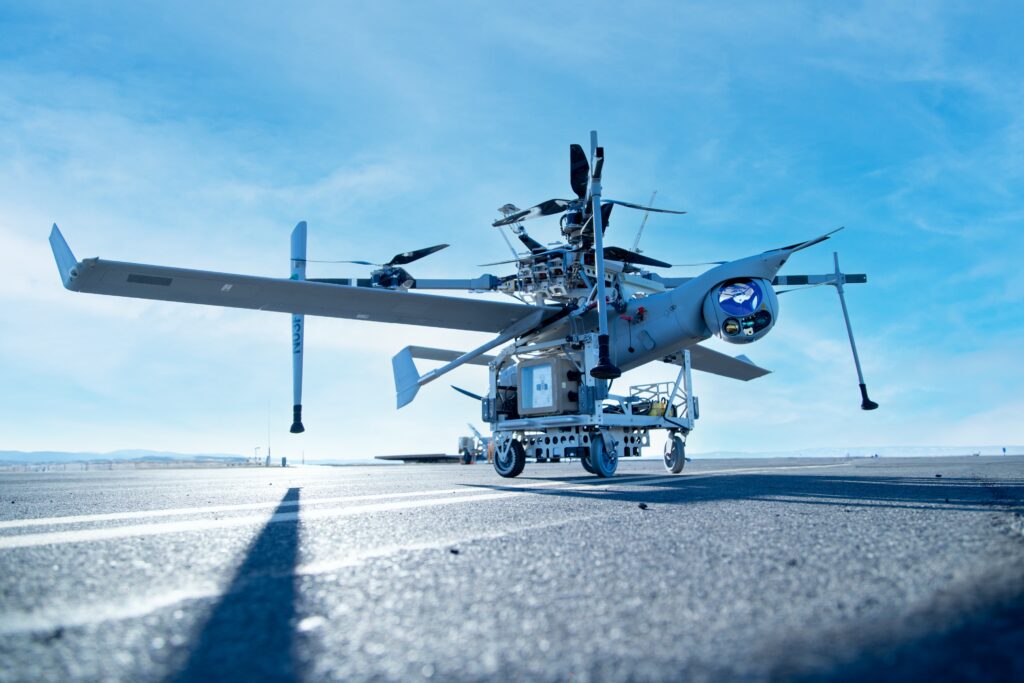
FARNBOROUGH, United Kingdom — 18 May 2026 — Insitu Pacific will attend the Combined Naval Event (CNE) from 19–21 May 2026 in Farnborough, Booth F19, showcasing how the Integrator Uncrewed Aerial System (UAS), advanced payloads and mission‑ready AI deliver credible, persistent maritime domain awareness for the UK and allied navies.  

“Combined Naval Event is an important forum for navies looking to move from concepts to practical, reliable uncrewed capability,” said Andrew Duggan, Managing Director, Insitu Pacific. “Insitu Pacific has deep experience integrating sovereign technologies and strengthening local supply chains, while delivering the persistence and reliability required for real maritime domain awareness.” 

With more than 1.6 million operational flight hours and customers in over 35 nations, Insitu platforms have a proven track record in complex maritime environments. 

At CNE, the company will focus on shipborne and shore‑based applications for the Integrator VTOL platform, highlighting how range, endurance and autonomy combine to enhance naval ISTAR and maritime security. Integrator is designed for long‑range, long‑endurance missions, supporting 13+ hours on station at 500 nautical miles – reducing the number of launches and recoveries required for effective operations. Integrator VTOL adds vertical take‑off and landing to proven fixed‑wing performance – supporting operations from naval vessels, austere shore locations and confined sites without sacrificing payload capacity or time on station. 

Insitu Pacific’s participation at CNE will include Insitu’s Oxford‑based Autonomy Centre of Excellence, which is developing autonomy and practical AI behaviours tailored to maritime operations. 

The company will also discuss the application of superior maritime payloads and sensors on Integrator, including advanced EO/IR, maritime radar, SIGINT, SAR and communications relay options. These modular payload configurations support a broad range of naval missions, from task group protection to the protection of critical offshore infrastructure and support to multi‑domain operations. 

“Our UAS solutions are proven, interoperable and ready today for modern maritime missions,” added John Kelly, Vice President Global Growth, Insitu. “With STANAG and MOSA‑compliant systems, advanced autonomy development in Oxford, and a growing UK supply chain, we’re focused on supporting partners with capabilities that integrate seamlessly into existing fleets and coalition operations.” 


HII, MetalCraft Marine Deliver Autonomous USV Prototypes for U.S. Marine Corps

From HII 
 

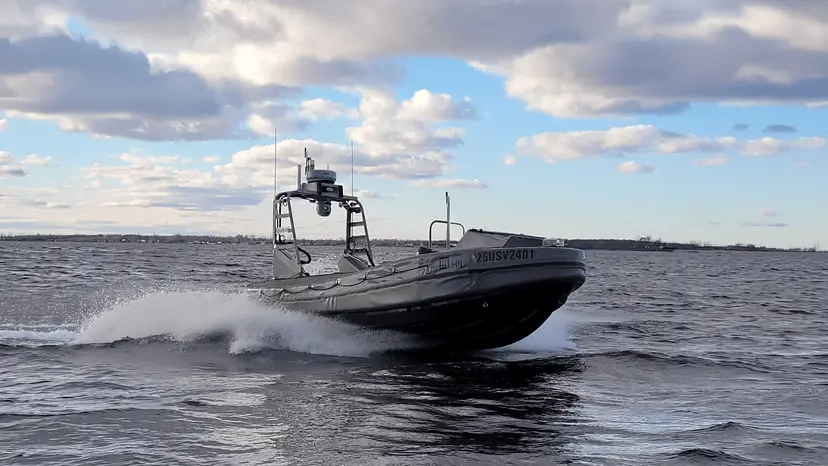
MCLEAN, Va., May 15, 2026 (GLOBE NEWSWIRE) — HII (NYSE: HII), in partnership with MetalCraft Marine, has delivered and sea tested two unmanned surface vessels (USV) awarded in a Defense Innovation Unit (DIU) contract for smaller form factor autonomous boat prototypes for the U.S. Marine Corps. 

The two ROMULUS-25 autonomous USVs were delivered in December 2025 and supported successful testing and demonstration of advanced autonomous mission behaviors at sea. 

“Successfully delivering on this prototype contract with the Defense Innovation Unit and the U.S. Marine Corps is a strong recognition of HII’s deep experience and the maturity of our proven autonomous technologies,” said Andy Green, executive vice president of HII and president of HII’s Mission Technologies division. “The ROMULUS-25, powered by our Odyssey autonomy suite, builds on thousands of hours of successful at-sea operations and demonstrates how scalable, AI-enabled unmanned systems can extend the reach, endurance, and effectiveness of naval forces.” 

The ROMULUS-25 is a 27-foot high-speed interceptor vessel designed to deliver up to 1,000 pounds of payload with a range of up to 1,000 nautical miles. Fully capable of autonomous operation, the vessel is powered by HII’s Odyssey AI-based autonomy system, which integrates multiple sensors and effectors to enable coordinated, cross-domain maritime operations in support of the U.S. Marine Corps, as well as U.S. and allied navies. 

Over the past five years, Odyssey autonomy has been validated through more than 2,200 hours of autonomous operations during government-led tests and exercises. 

Odyssey autonomy has been deployed on more than 30 platforms, accumulating over 12,000 hours of successful at-sea operations. Its modular open systems architecture (MOSA), service-based design enables integration with the HII Minotaur targeting network, enhancing mission-level operations and edge capabilities through AI-based contact recognition and identification. 

The ROMULUS-25 is part of HII’s broader family of USVs, which range from 7-foot micro-USVs to the ROMULUS-190, a 190-foot aluminum USV capable of carrying multiple containerized payloads. 

The successful execution of this award represents one of several ongoing commitments by HII and MetalCraft Marine to advance hybrid manned-unmanned fleet capabilities and enable next-generation autonomous operations in support of naval missions worldwide. 


BlackSea’s Comet USV in Tampa for SOF Week 2026

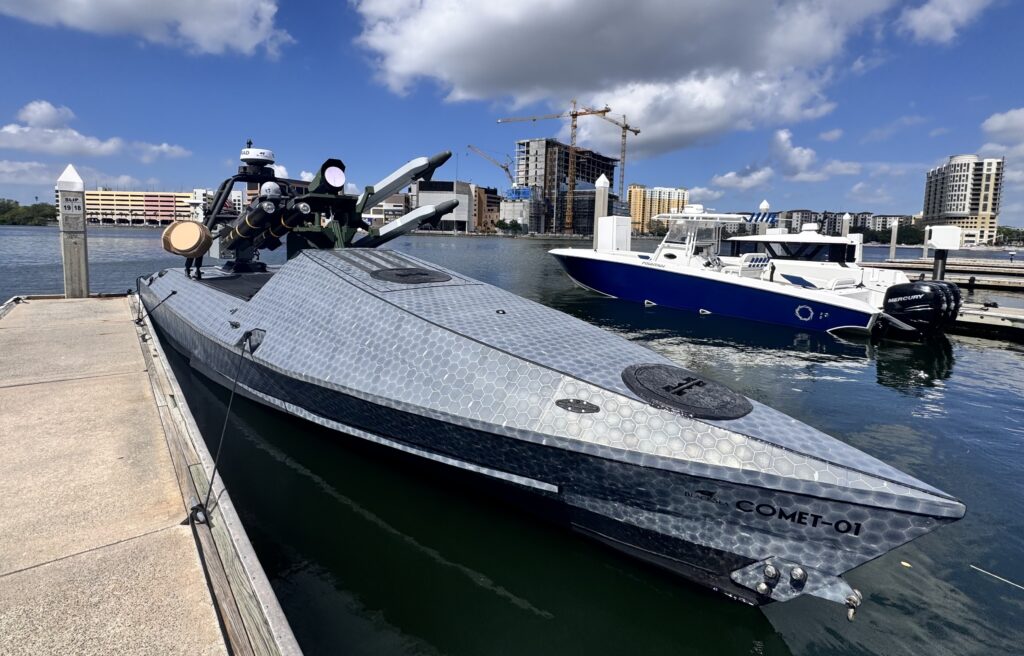
BlackSea’s Comet USV in Tampa for SOF Week 2026 (BlackSea Technologies Photo) 

A high-speed combat ready unmanned surface vessel, bristling with vital capabilities for global special operations missions 

From BlackSea Technologies 

TAMPA, Fla., May 18, 2026, BlackSea Technologies will showcase its Comet unmanned surface vessel during SOF Week 2026, bringing the company’s larger, high speed combat ready platform to the Tampa Convention Center (TCC) Waterfront at Dock 18 and inside the TCC at Booth 2600.  

Comet is designed to bridge the gap between small tactical unmanned surface vessels and larger unmanned combat craft. The 13.1 meter vessel can exceed 45 knots, carry a 10,000 pound payload including fuel, and support advanced payloads for a wide range of missions, including counter UAS, mine countermeasures, surface warfare, antisubmarine warfare, electronic warfare, maritime domain awareness and high value unit escort.  

“Comet brings BlackSea’s proven operational success with our family of unmanned surface vessels to the global special operations community at a time when maritime forces must be faster, more distributed and more adaptable,” said Bob Pudney, president of BlackSea Technologies. “This platform gives special operations forces a combat ready unmanned vessel that can support defensive and offensive missions against current and emerging threats, while carrying the payloads, sensors and effects needed for today’s fight and future operating environments.”  

Comet will showcase mission contributions from several leading industry partners, including Sierra Nevada Corp. with the BRAWLR missile system, EOS Defense Systems USA for the 30mm gun system, Leonardo DRS RADA with the RPS 42 MHR array radar, Seakeeper for gyro stabilization, Volvo Penta for propulsion, and DECPT for a unique signature management wrap designed to increase survivability in contested maritime environments.  


World’s Largest Aircraft Carrier, Strike Group Return from Historic 11-Month Deployment

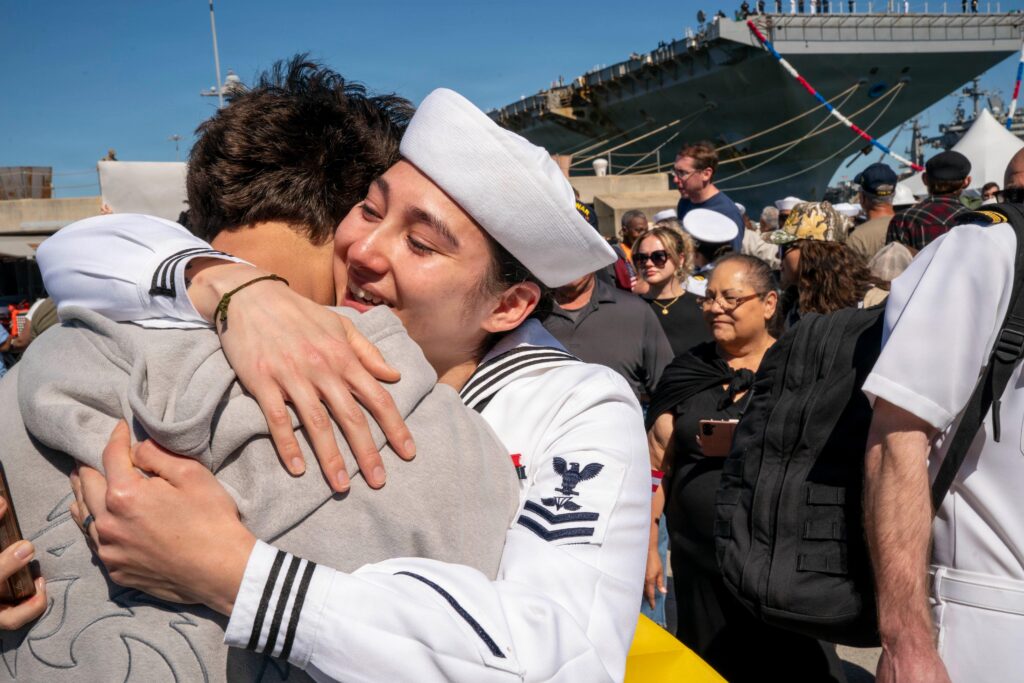
NORFOLK, Va. (May 16, 2026) – Aircrew Survival Equipmentman 2nd Class Ireland Lowe, assigned to the world’s largest aircraft carrier, USS Gerald R. Ford (CVN 78), hugs her family on the pier at Naval Station Norfolk, May 16, 2026, following a historic 11-month deployment to U.S. 2nd, 4th, 5th, and 6th Fleets as part of the Gerald R. Ford Carrier Strike Group. Before returning to Norfolk after 326 days, the Gerald R. Ford crew conducted 23 replenishments-at-sea and sailed over 57,713 nautical miles. Embarked Carrier Air Wing 8 logged more than 5,760 flight hours and 12,200 flight launches. (U.S. Navy photo by Mass Communication Specialist 1st Class Clay M. Whaley)

From Commander, U.S. Fleet Forces Command, May 16, 2026 

NORFOLK, Va. - Nearly 4,500 Sailors of the Gerald R. Ford Carrier Strike Group aboard USS Gerald R. Ford (CVN 78) returned to Naval Station Norfolk the morning of May 16, following a historic and successful 11-month deployment to the U.S. 4th, 5th and 6th Fleets. 
 
The aircraft carrier returned with its accompanying destroyers, USS Bainbridge (DDG 96), and USS Mahan (DDG 72). USS Winston Churchill (DDG 81) also returned to its homeport of Naval Station Mayport. 

 
Before returning to Norfolk after 326 days, the Gerald R. Ford crew conducted 23 replenishments-at-sea and sailed over 57,713 nautical miles. Embarked Carrier Air Wing (CVW) 8 logged more than 5,760 flight hours and 12,200 flight launches. 

Secretary of War Pete Hegseth greeted the Norfolk-based ships upon their return home. 

Hegseth spoke to the Gerald R. Ford crew over the ship’s announcement system (1MC) recognizing the Sailors for their resilience and toughness throughout the deployment. 

“For nearly a year, you have held the line for our nation,” he said. “Your voyage took you to places you never expected, from the Mediterranean Sea and 6th Fleet, where you thought you would be, to 4th Fleet, down in Southern Command for Operation Southern Spear and Absolute Resolve. Then, you fought through all the way to finish the latter part of your mission, which was to 5th Fleet in Operation Epic Fury, from Europe to Southern Command to Central Command. There, you had an unmistakable message to the world: no one can match the USS Ford. No one can match the United States military.” 

At the homecoming, Hegseth presented Carrier Strike Group 12 with the Presidential Unit Citation (PUC). The PUC is the highest honor a military unit can receive, awarded for extraordinary heroism in action against an armed enemy. 

“Individual valor is something we talk about a lot in our military, but what we honor today is something rarer: the collective soul of a unit that encountered the challenges of modern warfare and maintained an unbreakable resolve,” he said. “To wear this ribbon is to tell the world that everyone in this formation fought with an indomitable spirit. You operated with a grit and defiance that sets you apart. By your conduct, you have secured a permanent place in the hallowed lineage of our naval history.” 

Carrier Strike Group 12, commanded by Rear Adm. Gavin Duff, deployed June 24, 2025, and includes flagship USS Gerald R. Ford (CVN 78), commanded by Capt. Dave Skarosi; the nine squadrons of Carrier Air Wing (CVW) 8, commanded by Capt. Jacob Rose; Arleigh Burke-class destroyers within Destroyer Squadron (DESRON) 2, commanded by Capt. Mark Lawrence; and Arleigh Burke-class destroyer USS Winston S. Churchill (DDG 81), commanded by Capt. Judson Mallory. The guided-missile destroyers of DESRON 2 include USS Mahan (DDG 72) and USS Bainbridge (DDG 96). 

Squadrons of CVW 8 embarked aboard Gerald R. Ford include Strike Fighter Squadron (VFA) 37, “Ragin’ Bulls”; Strike Fighter Squadron (VFA) 213, “Blacklions”; Strike Fighter Squadron (VFA) 31, “Tomcatters”; Strike Fighter Squadron (VFA) 87, “Golden Warriors”; Electronic Attack Squadron (VAQ) 142, “Gray Wolves”; Airborne Command and Control Squadron (VAW) 124, “Bear Aces”; Helicopter Sea Combat Squadron (HSC) 9, “Tridents”; Helicopter Maritime Strike Squadron (HSM) 70, “Spartans”; and a detachment from Fleet Logistics Support Squadron (VRC) 40 “Rawhides.” 

U.S. 2nd Fleet, reestablished in 2018 in response to the changing global security environment, develops and employs maritime ready forces to fight across multiple domains in the Atlantic and Arctic in order to ensure access, deter aggression and defend U.S., allied, and partner interests. 


Littoral Combat Ship USS Cleveland Commissioned in Namesake City

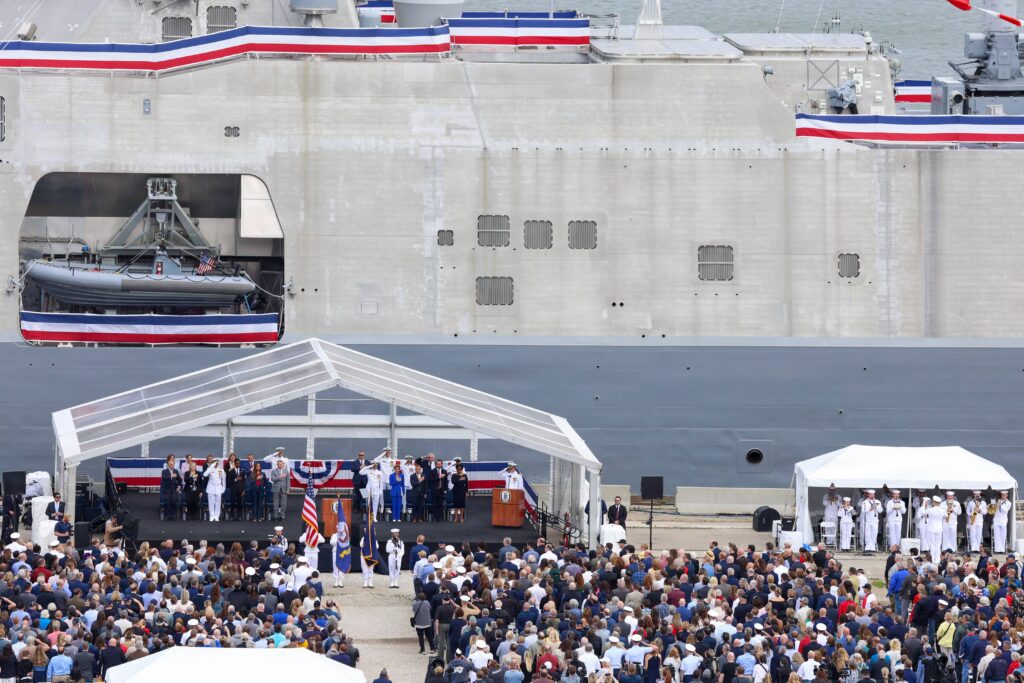
CLEVELAND (May 16, 2026) – Attendees salute while colors are paraded during the commissioning ceremony of the Navy’s last Freedom-variant littoral combat ship USS Cleveland (LCS 31) in Cleveland. Cleveland is the fourth warship to be named after Ohio’s second largest city and is the 16th and final Freedom-variant littoral combat ship (LCS) to be built and commissioned in the U.S. Navy. (U.S. Navy photo by Mass Communication Specialist 2nd Class Kenneth Blair)

From Lt.j.g Rachael Jones and Ensign Dylan Barron, Commander, Naval Surface Force, U.S. Pacific Fleet Public Affairs  

CLEVELAND (May 16, 2026) – The U.S. Navy commissioned its newest and last Freedom-variant littoral combat ship USS Cleveland (LCS 31) in Cleveland.  

During the ceremony, Acting Secretary of the Navy The Honorable Hung Cao highlighted the significance of the crew’s role in bringing the ship to life as it began its commissioned service.  

“Today we celebrate the sailors who breathe life into this ship. To the officers and crew of USS Cleveland, today is your day,” said Cao. 

LCS 31 is the fourth ship to be named in honor of the city of Cleveland. The first was a cruiser (C-19) commissioned in 1903 that served during World War I. The second was the lead ship of her class of light cruisers, USS Cleveland (CL-55), which earned 13 battle stars for its service during World War II. The third was the Austin-class amphibious transport dock, USS Cleveland (LPD 7), which served from 1967 to 2011, providing critical support during the Vietnam War, Operation Desert Shield/Storm, and various humanitarian missions.  

LCS 31 is the 16th and final Freedom-variant littoral combat ship (LCS) to be built and commissioned in the U.S. Navy. 

Cleveland’s commanding officer, Cmdr. Bruce Hallett, emphasized the significance of the crew’s role in shaping the ship’s legacy as it enters service. 

“You are not simply serving aboard this ship. You are writing the first chapter of her history. You are forging a legacy that will endure long after all of us have left these decks,” said Hallett. 

The ship’s sponsor, Robyn Modly, gave the traditional order to “man our ship and bring her to life,” at which point the crew ceremonially ran aboard. 

“Every day we do something to support this ship and her sailors will be a glorious day. Today is just the first step toward the many glorious days that will follow,” said Modly. 

USS Cleveland (LCS 31) was built by Lockheed Martin and Fincantieri Marinette Marine in Marinette, Wisconsin. Following the commissioning, the ship will transit to its assigned homeport at Naval Station Mayport, Florida.  

In the week leading up to the commissioning ceremony, the Cleveland crew spent time with their ship’s sponsor, Mrs. Robyn Modly, a native Clevelander and wife of the former Secretary of the Navy, Thomas Modly. The Sailors also participated in community events to build a strong connection with their namesake city.  

Littoral Combat Ships (LCS) are fast, agile, mission-focused warships designed to operate in near-shore environments to counter 21st-century threats. It is a class of small surface combatants equipped to defeat challenges in the world’s littorals. LCS platforms can operate independently or in high-threat scenarios as part of a networked battle force that includes larger, multi-mission surface combatants such as cruisers and destroyers. 

The commissioning of USS Cleveland underscores the Navy’s commitment to building America’s Fleet of the Future. For 250 years, American naval power has projected strength globally. That mission continues – and intensifies. We operate forward 24/7, 365 days a year. This operational tempo demands continuous capability delivery, and the Fleet of the Future is our answer. 

The mission of Commander, Naval Surface Force, U.S. Pacific Fleet (CNSP) is to man, train, and equip the Surface Force to provide fleet commanders with credible naval power to control the sea and project power ashore. 

For more news from Commander, Naval Surface Force, U.S. Pacific Fleet, visit https://www.surfpac.navy.mil/. 

More information on the Littoral Combat Ship Program can be found at: https://www.navy.mil/Resources/Fact-Files/Display-FactFiles/Article/2171607/littoral-combat-ship-class-lcs/ 


BlackSea Technologies Demonstrates GARC Capabilities During Arctic Sentry 2026 in Norway

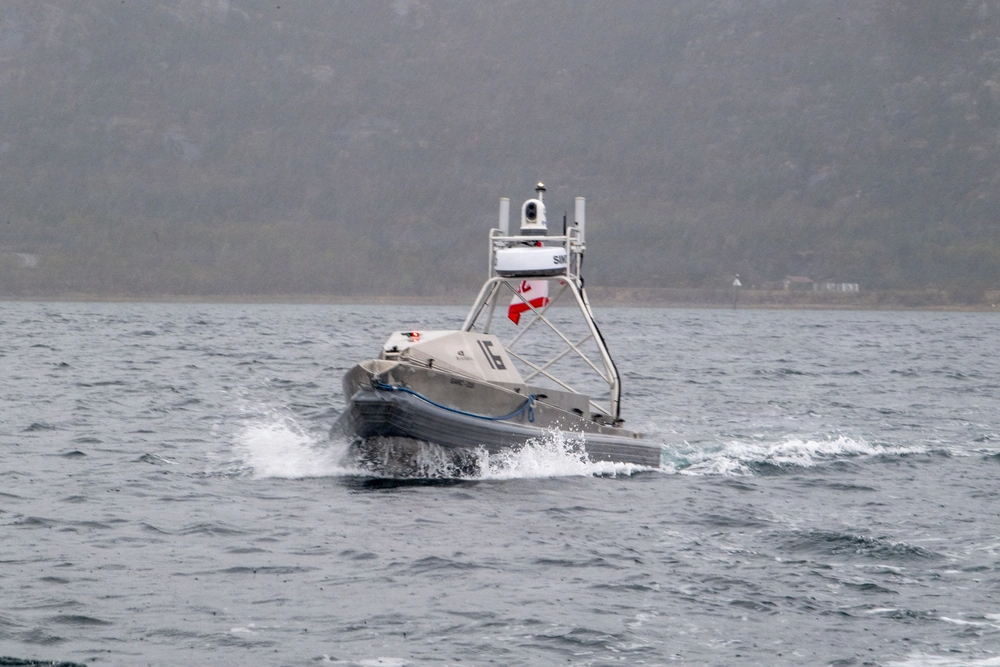
RAMSUND, Norway (May 12, 2026) — A Global Autonomous Reconnaissance Craft, attached to Commander, Task Force (CTF) 66, operates in Breivika Bay during Arctic Sentry 2026. Launched in February 2026, Arctic Sentry reflects Allies’ collective understanding that NATO must do even more as an alliance to ensure security in the Arctic and the High North, and to further strengthen its ability to operate in the region. (U.S. Navy photo by Mass Communication Specialist 1st Class Brandie Nuzzi) 

From BlackSea 

BALTIMORE, May 15, 2026, BlackSea Technologies recently participated in Arctic Sentry 2026, a NATO enhanced vigilance activity in the High North, demonstrating its Global Autonomous Reconnaissance Craft in Ramsund, Norway, alongside partners from U.S. 6th Fleet, U.S. Unmanned Surface Vessel Squadron 3 (USVRON-3) and the Royal Norwegian Navy.  

The exercise gave BlackSea’s GARC unmanned surface vessels an opportunity to operate in the far north, demonstrate autonomous surface vessel capabilities in cold weather maritime conditions, integrate with NATO partners and serve as training tools for the next generation of naval warfighters.  

“Arctic Sentry proves that GARC can operate effectively in dynamic, contested maritime environments north of the Arctic Circle,” said Lunsford Schock, mission director for BlackSea Technologies. “The exercise further cements our nation’s military partnerships with key European allies and reflects BlackSea’s commitment to preserving freedom of action at sea by delivering scalable, intelligent tools to naval forces around the world.” 

NATO launched Arctic Sentry in February as a multi-domain activity to strengthen the alliance’s posture in the Arctic and High North. NATO has said the activity brings NATO and allied exercises, forces and capabilities together under one overarching operational approach to the region. The activity is led by Joint Force Command Norfolk, with overall strategic direction from Allied Command Operations.  

U.S. Navy imagery released May 15 showed a Global Autonomous Reconnaissance Craft attached to Commander, Task Force 66 operating in Breivika Bay during Arctic Sentry 2026. The Navy identified the activity as taking place in Ramsund, Norway, and noted Arctic Sentry’s role in strengthening allied security in the Arctic and High North. 

BlackSea’s participation underscored the role of small, scalable autonomous surface vessels in distributed maritime operations, allied interoperability and training in strategically important waters. The demonstration also highlighted GARC’s ability to support naval forces in demanding operating environments where endurance, adaptability and autonomous capability are increasingly essential.  


Raytheon to Further Develop Next-Generation Software-Defined Radar Capability

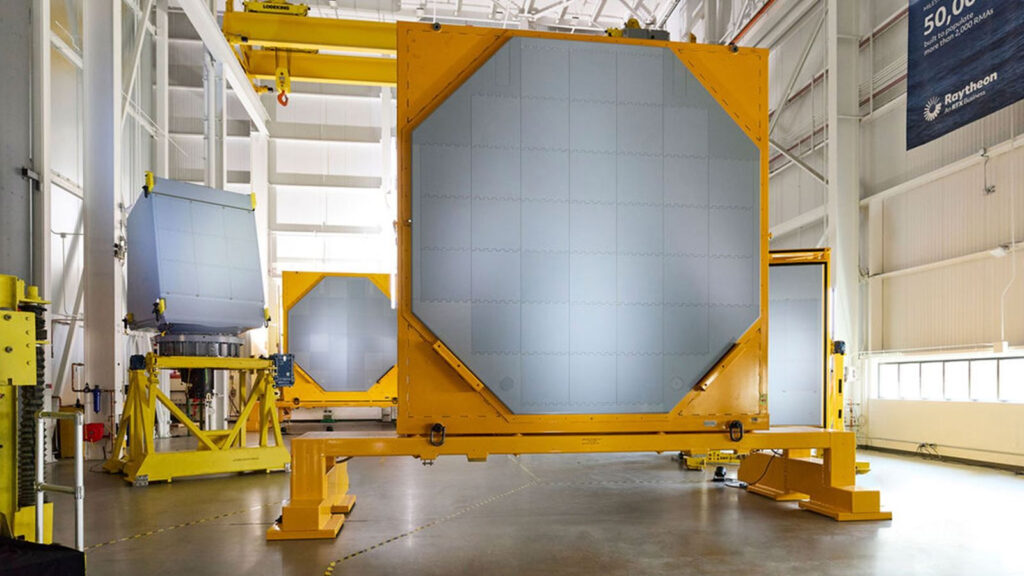
Raytheon has been awarded a contract from the Office of Naval Research to further develop advanced radar software for next-generation naval radars. Photo from RTX.

New software gives naval radars multi-mission flexibility and improved spectrum sharing with 5G 

From RTX 

ARLINGTON, Va. (May 18, 2026) — Raytheon, an RTX (NYSE: RTX) business, has been awarded a contract from the Office of Naval Research to further develop advanced radar software for next-generation naval radars. 

Under the contract, Raytheon’s Advanced Technology team will develop software that enables each building block within a radar to operate independently, allowing a single radar to perform multiple missions simultaneously. By treating each building block as its own software-defined aperture, the radar can rapidly adapt to changing operational needs and better share crowded frequency bands with commercial networks such as 5G. 

“The electromagnetic spectrum is more crowded than ever, and our systems have to be smarter about how they operate in it,” said Colin Whelan, president of Advanced Technology at Raytheon. “With precise, software-driven control over where and how we radiate, we’re taking an important step forward in how we use software‑defined apertures to keep pace with evolving mission demands.” 

Building on Raytheon’s long-standing work in software‑defined apertures, this flexible, modular architecture delivers capability enhancements through software rather than hardware redesign. This approach allows radar performance to be adapted and expanded over time with greater speed, lower cost, and reduced risk. 

Once the software development is complete, Raytheon will conduct a series of demonstrations to validate independent control of radar modules and associated capabilities such as multi-mission operation and spectrum sharing. Upon successful validation, the technology is expected to be transitioned into operational naval radar systems. 


U.S. Coast Guard’s Newest Polar Icebreaker Returns to Seattle Following 36-Day Deployment

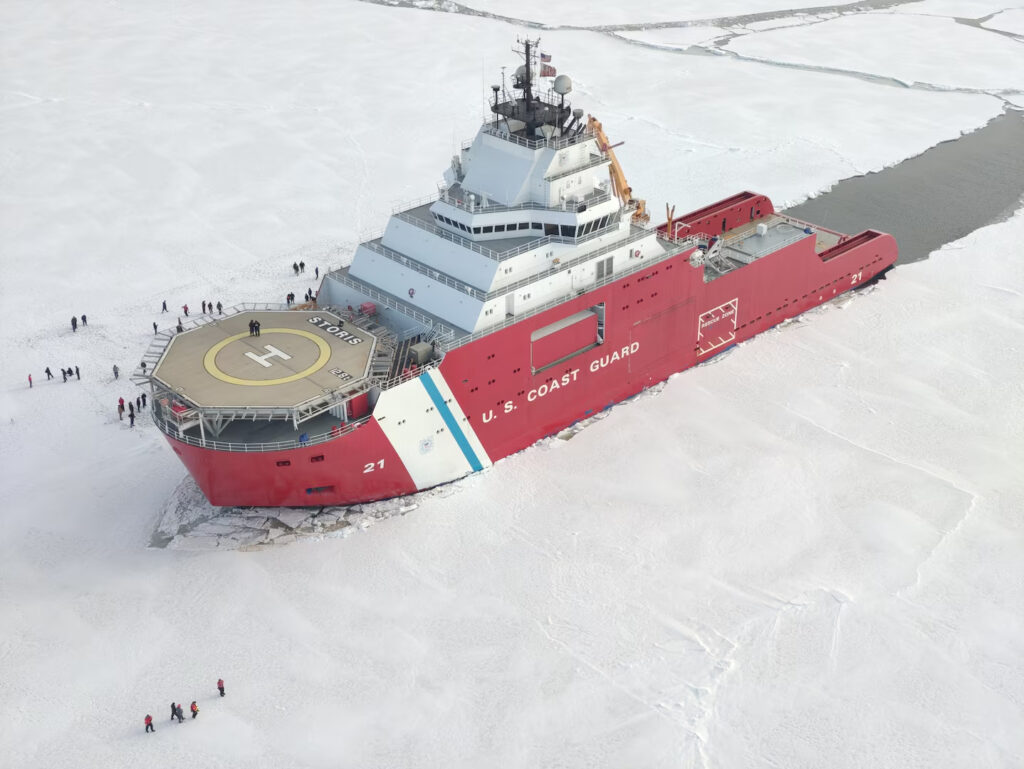
USCGC Storis (WAGB 21) sits hove to in the ice while conducting ice liberty for the crew in the Bering Sea, April 17, 2026. The patrol focused on advancing operational readiness, strengthening interoperability with other military assets, and testing new concepts to support prolonged operations in one of the world’s most demanding and austere maritime environments. (U.S. Coast Guard courtesy photo.)

From U.S. Coast Guard Northwest District, May 15, 2026 

SEATTLE — The crew of the U.S. Coast Guard’s newest polar icebreaker, the USCGC Storis (WAGB 21), returned to their temporary Seattle home port Monday after a 36-day deployment to the Bering Sea. 

The patrol focused on advancing operational readiness, strengthening interoperability with other military assets and testing new concepts to support prolonged operations in one of the world’s most demanding and austere maritime environments. 

Amid increased global focus on the Arctic, Storis’ deployment demonstrates the enhanced capability and commitment to securing maritime borders and protecting U.S. sovereignty and natural resources to safeguard national interests. 

Acquired and commissioned in 2025, Storis is the first polar icebreaker commissioned by the Coast Guard in more than two decades. A primary mission for the cutter and its crew during this deployment was conducting an ice assessment to establish baseline performance in a range of Arctic conditions. The crew evaluated the cutter’s full icebreaking capabilities, with data gathered serving as a benchmark to inform future operations for U.S. and allied vessels navigating high-latitude environments. 

The ice assessment and operational exercises are integral to the crew’s preparation for their scheduled summer deployment. 

“Operating the Storis in the extreme conditions of an Arctic winter is a clear statement of our nation’s resolve,” said Capt. Corey Kerns, commanding officer of Storis. “Storis represents a critical bridge to our future icebreaker fleet. This mission is about preparation, rigorous training and asserting the continued importance of the Arctic to our nation.” 

To demonstrate U.S. operational capability in the high latitudes, Storis conducted a joint passing exercise with the Legend-class national security cutter USCGC Waesche (WMSL 751). The exercise took place in challenging winter conditions less than a mile from the ice edge, with visibility limited to 150 yards. 

Storis and Waesche also executed a proof-of-concept fueling evolution in Dutch Harbor, Alaska. This logistical demonstration expanded Storis’ operational flexibility for future deployments. By establishing cutter-to-cutter refueling capability, Storis can extend an asset’s time on station, maximizing operational reach while reducing the need for long transits back to port for logistics. 

The crew conducted advanced ice rescue training during the deployment, practicing complex life-saving maneuvers in unforgiving Arctic conditions to prepare for high-risk search and rescue missions in ice-covered waters. This hands-on training ensures the Coast Guard can effectively respond to emergencies and protect mariners operating in harsh environments. 

To ensure maximum readiness in a rapidly evolving geostrategic environment, the crew also conducted a gunnery exercise. Operating in the Arctic presents unique defense challenges, and the live-fire exercise provided essential hands-on training for the ship’s weapons teams. By honing marksmanship and weapons system proficiency, the crew reinforced the Coast Guard’s role as an armed service capable of defending national security interests and responding to emerging maritime threats. 

Storis is a 360-foot medium icebreaker with a displacement of nearly 15,000 tons. Powered by four diesel engines generating 22,500 horsepower, the cutter can navigate through three feet of ice at five knots, adding crucial capability to the Coast Guard’s Arctic operations. 

Storis joins the cutters Healy (WAGB 20) and Polar Star (WAGB 10), augmenting the Coast Guard’s presence in the high latitudes and underscoring the United States’ commitment to Arctic security and stewardship. Storis is a multi-mission capable asset equipped to support logistics, search and rescue, ship escort, environmental protection, and enforcement of laws and treaties in the region.