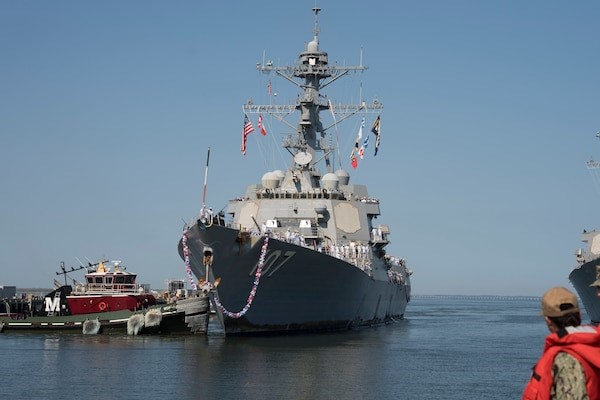
USNS John Lewis Completes First Fleet Tasked Underway Replenishment 

From Sarah Cannon, Military Sealift Command Pacific, March 19, 2025 

Military Sealift Command fleet replenishment oiler, USNS John Lewis (T-AO 205) became the first ship in the new John Lewis class to conduct a fleet task under Commander, U.S. Third Fleet, by refueling the U.S. Navy guided-missile destroyer  

USS Mustin (DDG 89) of the coast of Southern California Saturday. 

Christened at the General Dynamics NASSCO shipyard in San Diego, Calif., in 2021, Lewis has been operating in the Military Sealift Command Pacific (MSCPAC) area of operations as an MSC tasked ship. Lewis was officially introduced to Third Fleet as a trained and certified ship on March 10, 2025, with Saturday’s UNREP, the first fleet tasking, as the ship becomes fleet operational. Certified “Ready for Tasking”, Lewis will depart on its first deployment later this year. 
 
“Providing logistics services to the Navy is the bedrock mission of MSC,” said Nikki Phelps, MSCPAC’s deputy operations officer. “Having USNS John Lewis certified for tasking, providing support to Third Fleet, gives the United States another asset to provide logistics services in a timely, safe and professional manner that MSC is known for throughout the Navy and throughout the world. This is a very positive step in the life of this ship and its fellow ships in the class.” 
 
The 746-foot Lewis is the first ship of the John Lewis-class previously known as the TAO(X). This class of oilers has the ability to carry 162,000 barrels of diesel ship fuel, aviation fuel and dry stores cargo. The upgraded oiler is built with double hulls to protect against oil spills and strengthened cargo and ballast tanks. The Lewis-class oilers will replace the current Kaiser Class fleet replenishment oilers as they age out of the MSC fleet. 
 
MSC directs and supports operations for approximately 140 civilian-crewed ships that replenish U.S. Navy ships at sea, conduct specialized missions, preposition combat cargo at sea around the world, perform a variety of support services, and move military equipment and supplies to deployed U.S. forces. MSC exists to support the joint warfighter across the full spectrum of military operations, with a workforce that includes approximately 6,000 Civil Service Mariners and 1,100 contract mariners, supported by 1,500 shore staff and 1,400 active duty and reserve military personnel. 


Official: Roughly 21,000 DOD Civilians Volunteered for Deferred Resignation 

March 18, 2025 | By Matthew Olay, DoD News 

A senior defense official told the media today that approximately 21,000 Defense Department civilian employees volunteered to participate in the Deferred Resignation Program.  

The DRP, implemented by the Office of Personnel Management Jan. 28, 2025, offered most full-time federal employees — including most of the nearly 900,000 DOD civilians — the opportunity to resign with full pay and benefits until Sept. 30, 2025.  

As part of DOD’s effort to align its civilian workforce with national security priorities, the department has been actively processing DRP applications while working to achieve a strategic reduction in manpower of 5-8%, or approximately 50,000-60,000 employees.  

“When DRP was offered broadly to the workforce, there was very good participation civilian employees raising their hands and saying they would like to be considered to go on leave and be paid throughout that time,” the senior defense official said, adding that DOD has approved a majority of the applications.  

The senior defense official said that DOD’s human resources team properly vetted each employee and the role that they performed.  

“We worked with the services and components to ensure that any of the employees who volunteered to participate … could be approved without negatively impacting the department’s lethality and readiness,” the official said.    

The official also addressed concerns within DOD that a 5-8% reduction in the workforce would push uniformed service members into more civilian-type roles.  

“We are confident that we can absorb removals without detriment to our ability to continue the mission, and that’s we can be confident that we don’t need to worry about any resulting impact on the uniformed force,” the official said.   

The DPR is one initiative in a three-part strategy the Pentagon is undertaking while realigning its civilian workforce. The other two measures are a hiring freeze and the removal of certain probationary employees.  

Ordered by Defense Secretary Pete Hegseth Feb. 28, 2025, DOD’s hiring freeze acts as a “passive attrition measure,” the official said.  

By freezing the approximately 6,000 employees the Defense Department had been hiring monthly in the past, the senior official explained that the total number of DOD civilians would gradually thin over time.  

“There’s always some friction in any employee pool, it’s no different at the ,” the official said. “Employees are moving on to other things employees are retiring; and as long as we maintain the hiring freeze, we’re gaining thousands towards the workforce reduction target each month just by instituting it,” the official added.    

The third initiative in workforce realignment is the planned removal of roughly 5,400 probationary workforce employees, which DOD announced Feb. 21, 2025.  

Though limited in what could be discussed because of pending litigation, the senior defense official pointed out that choosing the first wave of employees to be released was not done arbitrarily.  

“The first removal … directly focused on employees that were documented as significantly underperforming in their job functions and/or had misconduct on their records. So, our guidance was for those to be the first probationary employees removed,” the official said, adding that DOD didn’t undertake probationary removals “blindly based on the time they had been hired.”  

When asked whether a reduction in force will be implemented following the hiring freeze, the senior official said the department is currently focused on the three aforementioned initiatives and that it wouldn’t be appropriate to get ahead of the next steps Hegseth chooses to take.  

“It’ll be the secretary’s prerogative to designate how and when he might use any of the other tools that would be available to him to achieve the stated reduction targets,” the official said. 


Australia, India, Japan, Korea, U.S. Complete Multinational Exercise Sea Dragon 2025

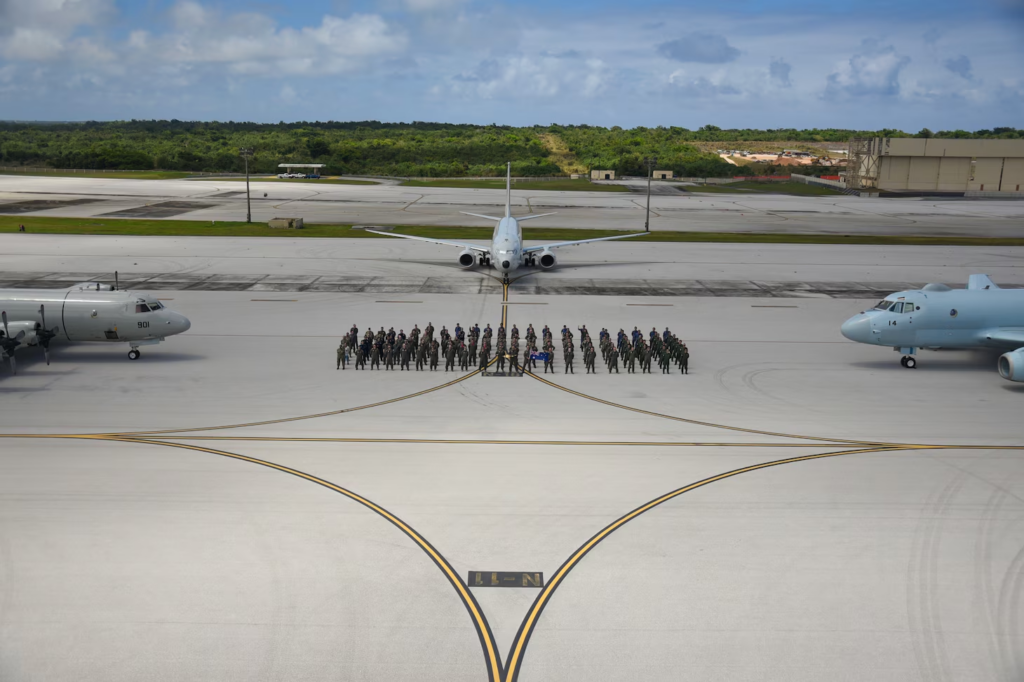
250313-N-ER662-0384 ANDERSEN AIR FORCE BASE, Guam (March 13, 2025) Participants from the Royal Australian Air Force (RAAF), Indian Navy, Japan Maritime Self-Defense Force(JMSDF), Republic of Korea Navy(ROKN), and the United States Navy pose for a group photo alongside a ROKN P-3 Orion (left), RAAF P-8A Poseidon (center), and JMSDF Kawasaki P-1 (right) during Exercise Sea Dragon 2025 at Andersen Air Force Base , Guam, March 13, 2025. (U.S. Navy photo by MCC Matthew Cole). 

From Commander, Task Force 72 Public Affairs, March 19, 2025 

ANDERSEN AIR FORCE BASE, Guam — Exercise Sea Dragon 2025 successfully concluded at Andersen Air Force Base, Guam, marking the completion of two weeks of intensive multinational anti-submarine warfare training, March 18, 2025. 

Hosted by Commander, Task Force (CTF) 72, the exercise brought together participants from the Royal Australian Air Force (RAAF), Indian Navy (IN), Japan Maritime Self-Defense Force (JMSDF), Republic of Korea Navy (ROKN), and the United States Navy. 

Two U.S. Navy P-8A Poseidon aircraft from Patrol Squadron (VP) 16 and Patrol Squadron (VP) 47 participated in the exercise. Allied and partner aircraft participating in this exercise included the RAAF P-8A Poseidon, JMSDF Kawasaki P-1, ROKN P-3 Orion, and IN P-8I Neptune. SD25 focused on enhancing ASW proficiency and multinational collaboration in the Indo-Pacific. 

Exercises like SD25 demonstrate the U.S. Navy’s commitment to regional security and strengthening maritime partnerships with allied and partner nations. 

“CTF 72 was proud to host Sea Dragon 2025 from Andersen AFB, Guam,” said Lt. Cmdr. Dan O’Keefe, assigned to Theater Security Cooperation, CTF 72. “This annual, multilateral ASW exercise included a competition phase and provided an opportunity for continuous multilateral ASW prosecution against simulated targets.” 

SD25 featured a structured training format to include a mobile ASW training target, the MK-30 “SLED” for tracking drills, and a U.S. Navy anti-submarine warfare exercise (ASWEX) where exercise participants tracked a live U.S. Navy submarine. This structure enabled aircrews to develop their ASW expertise progressively while ensuring seamless, international mission coordination. 

“Operating alongside partner nations’ maritime patrol forces strengthens security and cooperation, contributing to a free and open Indo-Pacific,” said O’Keefe. “The high level of coordination and skill displayed throughout the exercise underscores our commitment to shared regional security.” 

As with previous years, SD25 included a competitive component in which each nation’s performance was assessed and graded to earn the Dragon Belt award, testing each nation’s ASW tactics and response effectiveness in a realistic scenario. 

This year, the RAAF emerged victorious, securing the Dragon Belt for 2025. 

The “War Eagles” of VP-16, part of CTF 72, are stationed in Jacksonville, Florida, and are currently deployed to Misawa Air Base in Misawa, Japan. The “Golden Swordsmen” of VP-47, also part of CTF 72, are stationed in Whidbey Island, Washington, and are currently deployed to Kadena Air Base in Okinawa, Japan. Throughout the deployment, both squadrons will continue conducting maritime patrol, reconnaissance, and theater outreach operations in the U.S. 7th Fleet area of operations. 

U.S. 7th Fleet is the U.S. Navy’s largest forward-deployed numbered fleet, and routinely interacts and operates with allies and partners in preserving a free and open Indo-Pacific region. 


Coast Guard Achieves Major Milestone in Drug Interdiction, Border Control Operations 

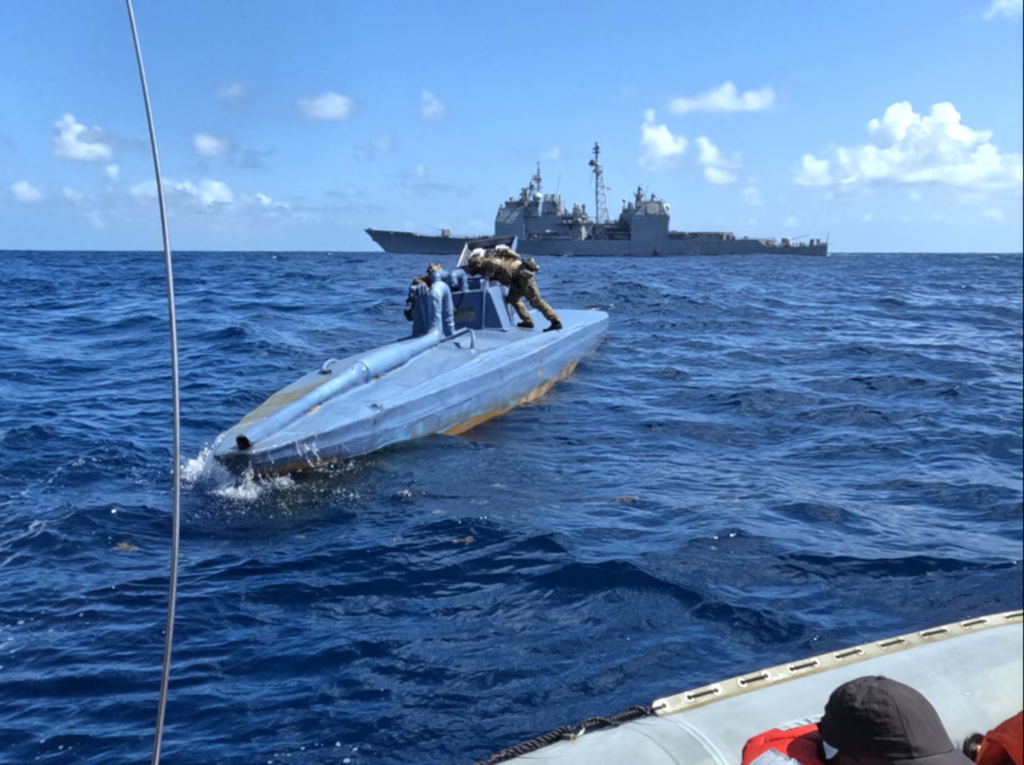
ATLANTIC OCEAN (March 22, 2024) – The Ticonderoga-class guided missile cruiser USS Leyte Gulf (CG 55), embarked U.S. Coast Guard Law Enforcement Detachment (LEDET) and Helicopter Maritime Strike Squadron (HSM) 50 work together to intercept a self-propelled semi-submersible drug smuggling vessel (SPSS), in the Atlantic Ocean, March 22, 2024. (U.S. Coast Guard Courtesy Photo/Released) 
 

From U.S. Coast Guard Headquarters, March 18, 2025 

WASHINGTON — The U.S. Coast Guard achieved a major milestone this week, interdicting over 80,000 pounds of illicit drugs since Jan. 21, being smuggled by drug cartels in an attempt to reach the U.S.  
 
The Coast Guard’s achievement comes as U.S. Northern Command (NORTHCOM) deployed two U.S. Navy warships to the southern border to support Department of Homeland Security (DHS) and Coast Guard operations. 
 
These U.S. Navy warships will operate in direct support of the Coast Guard and carry Coast Guard law enforcement teams that will enable them to shift to Coast Guard control during interdiction operations. As the Coast Guard hardens and sustains its operational posture, including the arrival of these U.S. Navy warships, it is fully integrated with DHS and the Department of Defense (DoD) through NORTHCOM and U.S. Southern Command. 
 
“The Coast Guard leads the U.S. government’s efforts to control, secure and defend the nation’s borders and maritime approaches, starting at the U.S. southern border where the president has declared a national emergency,” said Adm. Kevin Lunday, acting Coast Guard commandant. “We are now leveraging U.S. Navy capabilities with Coast Guard teams aboard to augment our forces off Southern California and Texas. We are grateful for this crucial support from our teammates at NORTHCOM and the U.S. Navy. These Navy ships provide unique capability to complement U.S. Coast Guard operations to achieve 100% operational control of the border.” 
 
Since Jan. 21, the Coast Guard has tripled its forces operating on the southern border. 
 
Later this week, the Coast Guard will further recognize its interdiction efforts with a record-setting drug offload by Coast Guard Cutter Stone (WMSL 758). Additional details will be provided via media advisory. 
 
For more information about the Coast Guard, visit www.uscg.mil. 


USS Vermont Returns Home from First Western Pacific Deployment

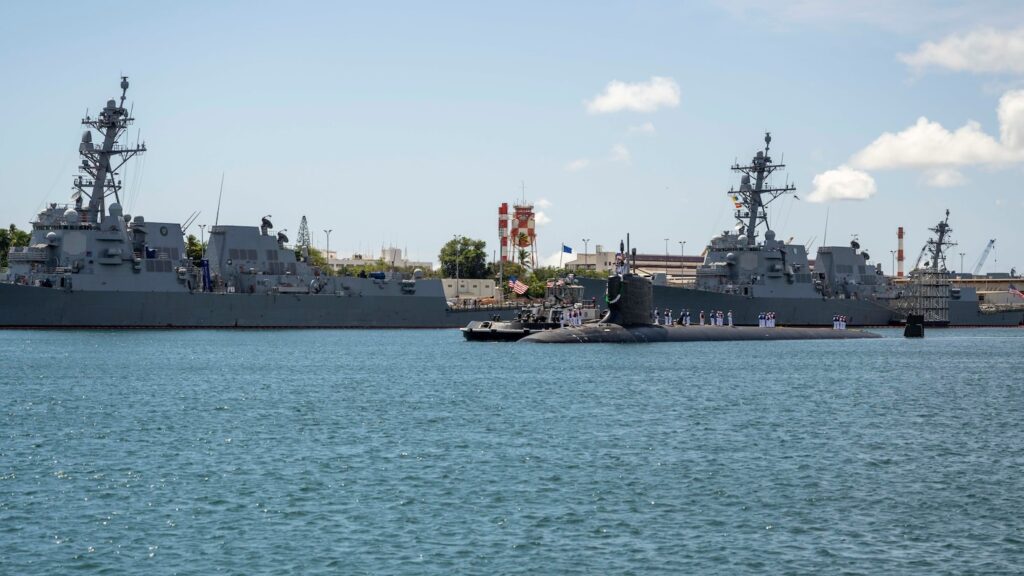
Joint Base Pearl Harbor-Hickam, Hawaii, March 16, 2025 – The Virginia-class fast-attack submarine USS Vermont (SSN 792) returns to Joint Base Pearl Harbor-Hickam, Hawaii after a scheduled deployment, March 16, 2025. Vermont is the third U.S. Navy ship named after the Green Mountain State. Vermont was administratively commissioned in April 2020 and is the first Block IV Virginia-class fast-attack submarine. (U.S. Navy photo by Mass Communication Specialist 1st Class Scott Barnes) 

From Petty Officer 1st Class Scott Barnes, March 18, 2025 

JOINT BASE PEARL HARBOR-HICKAM, Hawaii – The Virginia-class fast-attack submarine USS Vermont (SSN 792) returned to Joint Base Pearl Harbor-Hickam March 16, following a seven-month deployment, the submarine’s first deployment to the Western Pacific. 104 Sailors assigned to Vermont earned their first Sea Service Deployment Ribbon, since the submarine’s departure from Pearl Harbor in August 2024. 

 “The crew exceeded even the highest expectations, from job accomplishment to professional development,” said Command Master Chief Robert Antrim, Vermont’s chief of the boat. He continued, “Our senior Sailors were patient with our first-time deployers and took the time to train and mentor them on both job-specific and personal preparations. I’m immensely proud of how well the team performed together despite the lower level of deployment experience.” 

During the deployment, Vermont’s crew conducted port visits to Busan, South Korea, Yokosuka, Japan, and Apra Harbor, Guam. 

“I’m proud of our team and how hard they worked to get ready for Vermont’s maiden Western Pacific deployment,” said Cmdr. Michael Lilleberg, Vermont’s commanding officer. “They performed well during every aspect of the deployment, accomplishing all tasking, and providing the operational commander flexibility and lethality with which to prepare and shape the battlespace.” 

Vermont saw 20 Sailors advance to the next pay grade, and 32 Sailors earned various submarine qualifications during the deployment. In a historic achievement, Royal Australian Navy Lt. Cmdr. James* earned his U.S. Navy Submarine Warfare Device, or “dolphins”, in a ceremony as part of Vermont’s December 2024 port visit to Commander, Fleet Activities Yokosuka. 

“My most memorable achievement this deployment was having the opportunity to qualify as assistant navigator. I really enjoy the navigation aspect of my rate. Being able to qualify what is, essentially, the most senior position for navigation on my first tour and deployment was a lot of hard work, but very satisfying to achieve,” said Electronics Technician, Submarine, Navigation 2nd Class Jorge Lopez. 

Vermont is the third U.S. Navy ship named after the Green Mountain State. Vermont was administratively commissioned in April 2020 and is the first Block IV Virginia-class fast-attack submarine. 

*Per Royal Australian Navy protocols, submariners’ last names are not publicly released. 


Crowley and Naturgy Deploy First U.S. LNG Carrier, American Energy, to Serve Puerto Rico 

From Crowley, March 18, 2025 

Crowley has raised the U.S. flag on American Energy, commencing operations of the first domestic liquified natural gas (LNG) carrier to transport U.S.-sourced natural gas to Puerto Rico. The milestone will provide Puerto Rico with increased access to the reliable supply of U.S.-produced LNG, helping address the island’s ongoing power demands. 

Crowley and Naturgy have entered into a multi-year agreement that provides for the regular delivery of the U.S. mainland-sourced LNG to Naturgy’s operating facility in Penuelas, Puerto Rico. 

The Crowley-owned carrier American Energy, which has capacity of 130,400 cubic meters (34.4 million gallons) per voyage, will operate in accordance with the U.S. Coast Guard Authorization Act of 1996. The vessel has a CAP 1 rating, certifying its top rating for safety and vessel condition, and its compliance with all regulatory requirements. 

“The entry into service of American Energy marks a significant step for fuel supply reliability in Puerto Rico for our energy grid, which will greatly benefit our people,” said Puerto Rico Gov. Jenniffer González-Colón. “This partnership is an initiative to act using existing regulations to increase access to a U.S.-based LNG source that expands our options for the stabilization of our energy grid, as we work towards providing our residents and businesses a more consistently reliable power generation source.” 

The 900-foot-long (274 meters) LNG carrier builds on Crowley’s 70-plus years commitment to Puerto Rico. The company also operates the full-service marine Isla Grande cargo terminal in San Juan for its container and roll-on/roll-off vessels, including two LNG-fueled ships, and logistics services. Crowley annually delivers more than 94 million gallons of LNG through its LNG Loading Terminal in Penuelas as well as provides ocean delivery and land transportation using ISO tank containers. 

At capacity, each delivery of LNG aboard American Energy provides enough energy to power 80,000 homes for a year. LNG is also a lower-carbon fuel emitting less greenhouse gas (GHG) emissions compared to diesel and other traditional energy sources. 

“We are proud and privileged to expand U.S. LNG availability in Puerto Rico in partnership with Naturgy,” said Tom Crowley, chairman and CEO of Crowley Corporation. “LNG is an ample, reliable energy source available in the U.S. that provides a more resilient and lower-emission option as part of our nation’s energy portfolio for quickly serving the growing power needs of Puerto Rico while supporting American jobs, American energy production and U.S. national security.” 

“This contract strengthens our presence in the global LNG market, particularly in the United States, and allows Puerto Rico to obtain a stable and competitive energy supply route,” said Jon Ganuza, general manager of supply and wholesale markets, Naturgy. 

“AMO is proud to be a part of this historic partnership that benefits the people of Puerto Rico,” said American Maritime Officers National President Willie Barrere. “U.S. Merchant Mariners, many of whom were born in Puerto Rico, sailing on Jones Act vessels, have been reliably delivering goods to the Commonwealth for decades. Now we will deliver LNG fuel to power the residents and further strengthen the bond between Puerto Rico and our U.S. seafarers.” 

“The SIU is tremendously excited about providing crew members for the American Energy,” said David Heindel, president of the Seafarers International Union (SIU). “Our members have a long, proud history of working aboard LNG vessels, and our affiliated school in Piney Point, Maryland, regularly conducts U.S. Coast Guard-approved curriculums that help prepare mariners for this kind of work. We congratulate Crowley, and we look forward to helping safely operate the newly reflagged ship.” 


Hegseth Says Campaign Against Houthis Will be ‘Unrelenting’ Until Hostilities Cease

March 17, 2025 | By Matthew Olay, DoD News 

During a media interview yesterday, Defense Secretary Pete Hegseth said the U.S. military will continue to tactically engage Iranian-backed Houthis until they stop acting aggressively against U.S. ships in the region. 

Hegseth commented on the topic following President Donald J. Trump’s order for U.S. Central Command to launch multiple airstrikes against Houthis in Yemen, March 15, 2025.  

“Freedom of navigation is basic; it’s a core national interest,” Hegseth said, adding that the current campaign is about restoring deterrents in the region in addition to freedom of navigation.  

“The minute the Houthis say, ‘We’ll stop shooting at your ships [and] we’ll stop shooting at your drones,’ this campaign will end but, until then, it will be unrelenting,” he continued.  

Hegseth also said the airstrikes were meant to draw Iran’s attention.  

“The message is clear to Iran … Your support of the Houthis needs to end immediately. We will hold you accountable as the sponsor of this proxy, and I echo [the president’s] statement [that] we will not be nice about it,” Hegseth said. 

The Houthis have been acting aggressively in the Red Sea region since October 2023, when a U.S. Navy destroyer had to intercept three land-attack cruise missiles fired by the Houthis toward Israel.  

Since then, the Houthis have launched over 100 drone and missile attacks targeting American and allied ships in the Gulf of Aden and the Red Sea, resulting in many commercial ships having to alter their routes to avoid the region at a tremendous commercial cost.  

Hegseth likened the severe economic impact of the Houthi aggression in the region to “being held hostage by a terrorist organization” and then pointed out that the Trump administration has indeed labeled the Houthis as such.  

“To the Houthis: [the airstrikes weren’t] a one-night thing … This is about stopping the shooting at assets in that critical waterway to reopen the freedom of navigation, which is a core national interest of the United States,” Hegseth said, before again reemphasizing that Iran needs to “back off” from enabling the Houthis.  

Hegseth said Iran and its additional military proxies — including Hamas and Hezbollah — are in a “weakened state.”  

“But it doesn’t mean they still don’t have the desire [for aggression],” he said, adding that Iran will never be allowed to have a nuclear weapon.  

“Iran must get that clear message and negotiate the end of their pursuit for nuclear weapons because … President Trump has said clearly that they will not get a bomb,” Hegseth said. 


Vestdavit Sees Successful Sea Trials For First Davits Delivered To Us Navy Oilers At Gd Nassco

From Vestdavit 

Efficient installation and commissioning of onboard equipment is critical in the newbuild construction process – and this has been demonstrated with successful sea trials for the first davits installed by Vestdavit on a series of US Navy fleet refuelling vessels being built by General Dynamics NASSCO. 

The pair of high-specification PLRH-5000 rescue boat davits were subject to rigorous operational testing in the recent trials performed with USNS Robert F. Kennedy, or T-AO 208, that is the fourth and latest so-called T-AO oiler to be delivered in the series of John Lewis-class vessels under construction at the San Diego-based shipbuilder in the US. 

“Our davits performed as expected, which can be attributed to the proven robustness of this technology in naval operations as well as Vestdavit’s long-standing competence in davit installation that contributes to smooth-running newbuild deliveries,” says Vestdavit’s Managing Director Rolf Andreas Wigand. 

Additional davit order 

The leading Norwegian supplier of boat-handling systems has recently also secured a further purchase order from GD NASSCO for the PLRH-5000, taking its tally to seven ships covering T-AO 208 to T-AO 214 for which Vestdavit will provide a total of 14 such davits – two per vessel.  

The US shipbuilder, which specialises in design and construction of naval as well as commercial vessels, has so far been contracted to build 10 T-AO oilers under the extensive newbuild programme.  

The davits will be used for launch and recovery of seven-metre RHIBs to support refuelling operations by the oilers for US Navy carrier strike group ships operating at sea under the Military Sealift Command, with each of the 742-feet vessels having capacity to carry 157,000 barrels of oil and a sailing speed of 20 knots. 

Rapid and reliable deployment 

This demands that such boat-handling systems are capable of rapid and reliable deployment of daughter craft for mission-critical operations under challenging conditions, with a high level of redundancy to ensure they keep operating efficiently when time is of the essence and lives may be at stake, according to Magnus Oding, General Manager of US subsidiary Vestdavit Inc., who attended commissioning of the davits at the shipyard. 

He points out the PLRH-5000 davits are also equipped with sophisticated motion compensation and safety features to optimise the efficiency of launch-and-recovery operations. 

These include shock absorbers for removing peak loads, constant tension for safe and efficient recovery in rough sea conditions, and guiding arms that act as an anti-pendulation device to keep the RHIB steady. 

Proven supplier to naval market 

These advanced specifications are underpinned by Vestdavit’s proactive strategy of product development and innovation to meet client requirements through over 40 years of davit deliveries to the demanding naval segment that forms its core market, with a track record of supplying robust systems with proven performance in real-life operations for most Nato navies worldwide. 

As a major client, the US Navy has been the source of similar repeat orders for Vestdavit such as those for the dual TDB-7000 davit-type that have been delivered for three Expeditionary Sea Base (ESB) ships also contracted at GD NASSCO. 

Ease of installation 

Oding says a key factor in securing such awards is Vestdavit’s ability to deliver systems designed for ease of installation, with the PLRH-5000 supplied as a fully self-contained and skid-mounted davit that is quick to install. “All that is required is to weld it to the deck, fill oil and connect the power,” he explains. 

Furthermore, its davits are certified according to all relevant class standards based on verification of design, materials and safety, and thorough testing at the fabrication stage, which minimises any commissioning issues during vessel construction.  

Wigand concludes: “Our strong delivery model ensures we can supply tried and trusted systems that meet the highest performance standards for naval operations, with a compact footprint that enables them to be easily incorporated into newbuild designs.” 


HII to Expand Shipboard, Shore-Based Training Support for U.S. Navy and Coalition Forces

From HII 
 

MCLEAN, Va., March 18, 2025 (GLOBE NEWSWIRE) — HII (NYSE: HII) announced today that its Mission Technologies division was awarded a $147 million contract to support shipboard and shore-based combat training services for the U.S. Navy. 

Under the five-year task order, HII will provide engineering support for every aspect of training systems under the U.S. Naval Surface Warfare Center Dahlgren Division, Dam Neck Activity (NSWCDD DNA), including associated hardware, software, subsystems and elements. Tasks will range from integrated training system hardware and software installation, system certification and testing to troubleshooting, repair and lifecycle sustainment. 

“Providing full-cycle support for U.S. Navy, joint, coalition and Department of Defense training systems requires a seamless, well-orchestrated approach and close collaboration with the Navy customer to make sure we’re providing the best quality service possible,” said Michael Lempke, president of Mission Technologies’ Global Security group. “We look forward to expanding our relationship with NSWCDD DNA and ensuring our military fleets remain mission-ready through warfare systems superiority.” 

HII supports the U.S. naval fleet across various bases and operational theaters worldwide. 

A photo accompanying this release is available at: http://hii.com/news/hii-to-expand-shipboard-and-shore-based-training-support-for-the-u-s-navy-and-coalition-forces/

The company was awarded this task order under the SeaPort Next Generation multiple award contract indefinite delivery/indefinite quantity vehicle. Work will be performed at multiple locations in the U.S. and overseas. 


USS Gravely Deploys to U.S. Northern Command Area of Responsibility 

From U.S. Northern Command Public Affairs, March 15, 2025 

PETERSON SPACE FORCE BASE, Colo. – The Arleigh Burke-class guided-missile destroyer USS Gravely (DDG 107) departed Naval Weapons Station Yorktown for a scheduled deployment to the U.S. Northern Command Area of Responsibility (USNORTHCOM AOR), March 15. The ship will operate in U.S. and international waters. 

“USS Gravely’s deployment will contribute to the U.S. Northern Command southern border mission as part of the DOD’s coordinated effort in response to the Presidential Executive Order. Gravely’s sea-going capacity improves our ability to protect the United States’ territorial integrity, sovereignty, and security,” said Gen. Gregory Guillot, Commander, U.S. Northern Command. 

In support of U.S. Northern Command’s mission to restore territorial integrity at the U.S. southern border, Gravely reinforces the nation’s commitment to border security by enhancing maritime efforts and supporting interagency collaboration. The ship’s deployment highlights the Department of Defense and Navy’s dedication to national security priorities, contributing to a coordinated and robust response to combating maritime related terrorism, weapons proliferation, transnational crime, piracy, environmental destruction, and illegal seaborne immigration. 

“The deployment of Gravely marks a vital enhancement to our nation’s border security framework,” said Adm. Daryl Caudle, commander, U.S. Naval Forces Northern Command. “In collaboration with our interagency partners, Gravely strengthens our maritime presence and exemplifies the Navy’s commitment to national security and safeguarding our territorial integrity with professionalism and resolve.” 

Gravely brings maritime capabilities to the USNORTHCOM AOR in response to Presidential executive orders and a national emergency declaration and clarification of the military’s role in protecting the territorial integrity of the United States. 

A U.S. Coast Guard Law Enforcement Detachment (LEDET) will be embarked aboard Gravely. Founded in 1982, Coast Guard LEDETs carry out a variety of maritime interdiction missions, including counter-piracy, military combat operations, alien migration interdiction, military force protection, counter terrorism, homeland security, and humanitarian response.  

USNORTHCOM was named the DoD’s operational lead for the employment of U.S. military forces to carry out President Trump’s southern border Executive Orders. The combatant command continues to fill critical capabilities gaps in support of DHS and CBP.