Saildrone Awarded Contract to Map Florida’s Coastal Waters
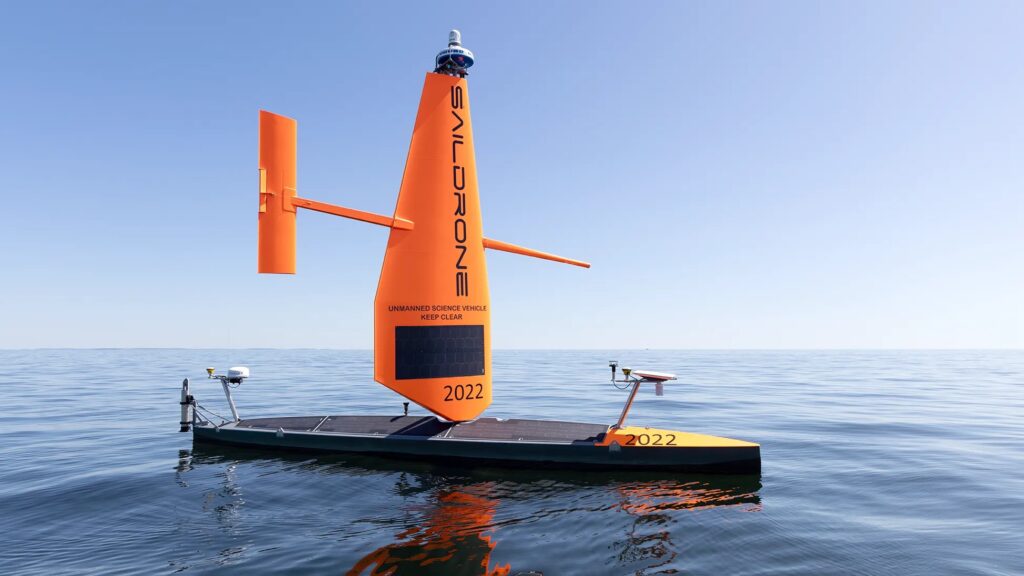
Two Saildrone Voyager USVs equipped with NORBIT WINGHEAD i80s echo sounders for high-resolution mapping will survey 2,817 square kilometers of seafloor in the Gulf of Mexico.
From Saildrone, Dec. 12, 2024
St. Petersburg, Fla. — Saildrone has been selected by the Florida Department of Environmental Protection (FDEP) to map Florida’s coastal waters in the Gulf of Mexico as part of the Florida Seafloor Mapping Initiative (FSMI), a multiyear effort to provide statewide stakeholders with accessible, high-quality, and high-resolution seafloor data of Florida’s coastal waters within the continental shelf. Updated mapping data of coastal systems is critical for protecting offshore infrastructure, habitat mapping, restoration projects, emergency response, coastal resilience, and hazard studies for the state’s citizens.
Saildrone has been tasked with collecting high-resolution multibeam data in a region known as Middle Grounds. The mission, valued at $1.66M, will use two 10-meter Saildrone Voyager uncrewed surface vehicles (USVs) equipped with NORBIT WINGHEAD i80s echo sounders for high-resolution mapping, and radar, AIS, and cameras for maritime domain awareness. Saildrone will map 2,817 square kilometers of seafloor, approximately 130 kilometers northwest of St. Petersburg.
“Mapping the Florida coastline is vital for understanding our dynamic coastal environments, supporting sustainable resource management, and enhancing resilience against extreme weather events. FSMI will provide critical insights that empower policymakers, researchers, and local communities to protect vital ecosystems and infrastructure along Florida’s coasts,” said Brian Connon, Saildrone VP Ocean Mapping. “Saildrone USVs efficiently and safely collect high-resolution bathymetric data while minimizing environmental impact.”
At 2,170 kilometers long, Florida’s coastline is second only to Alaska among US states. Many parts of the Florida coast remain unsurveyed, with existing nautical charts relying on outdated and low-resolution data.
FSMI builds on the efforts of the Florida Coastal Mapping Program (FCMaP), an initiative led by federal and Florida state agencies and other community stakeholders to generate a comprehensive high-resolution seafloor data set of Florida’s coastal waters by 2028. The data will be available for immediate use to update navigational charts and identify navigation hazards, provide fundamental baseline data for scientific research, and provide information for use by emergency managers and responders.
The data Saildrone collects will help better understand Florida’s coastal vulnerability and hurricane impact, evaluate the performance of restoration projects, and support ongoing coastal resilience efforts and flood risk mapping.
SECNAV Attends 2024 USNI Defense Forum Washington Conference
From SECNAV Public Affairs, Dec. 11, 2024
WASHINGTON (Dec. 11, 2024) – Secretary of the Navy Carlos Del Toro gave remarks at the 2024 U.S. Naval Institute (USNI) Defense Forum, Dec. 11, 2024.
The forum consisted of Senior military officials, members of Congress, industry leaders, and defense analysts who discussed the current state of shipbuilding as well as examined issues such as static fleet size, maintenance challenges, operational availability, and the difficulties shipyards face with labor, training, budgeting, and requirements.
Secretary Del Toro opened his remarks by discussing the future of building and sustaining the naval force structure for the nation’s needs.
“For the first time since World War II, we face a comprehensive maritime power,” said Secretary Del toro. “Our Navy and Marine Corps Team serves as a proud and powerful testament of our Nation’s commitment to our allies and partners in Europe, the Middle East, and Indo-Pacific regions.”
Secretary Del Toro also discussed strengthening maritime dominance and why it is important to build a culture of warfighting excellence.
“To fight and decisively win our Nation’s wars, we cannot rely on merely maintaining our sea power—we must strengthen our maritime dominance,” said Secretary Del Toro. “Our people are the foundational strength of this Department, and they provide us competitive warfighting advantage over our adversaries.”
“Our priority of building a culture of warfighting excellence is founded on strong leadership that is rooted in treating each other with dignity and respect,” said Secretary Del Toro.
Secretary Del Toro continued by highlighting the importance of enhancing strategic partnerships.
“Our greatest asymmetric strength lies in our network of partnerships with our Defense Industrial Base,” said Secretary Del Toro, “As we look to the future, we must continue to make informed decisions about shipbuilding, maintenance, repair, and the future of the fleet which will impact and shape the Navy for decades to come.”
Secretary Del Toro concluded his remarks with sharing his pride in the U.S. Navy.
“I am extremely proud of everything our department has accomplished over the last three years, and I am excited for our Navy-Marine Corps team as we chart a course for the future—a future that will require us to respond and adapt to whatever geopolitical challenges our Nation may face,” said Secretary Del Toro.
Northrop Grumman Starts Production of the First E-2D Advanced Hawkeye for France
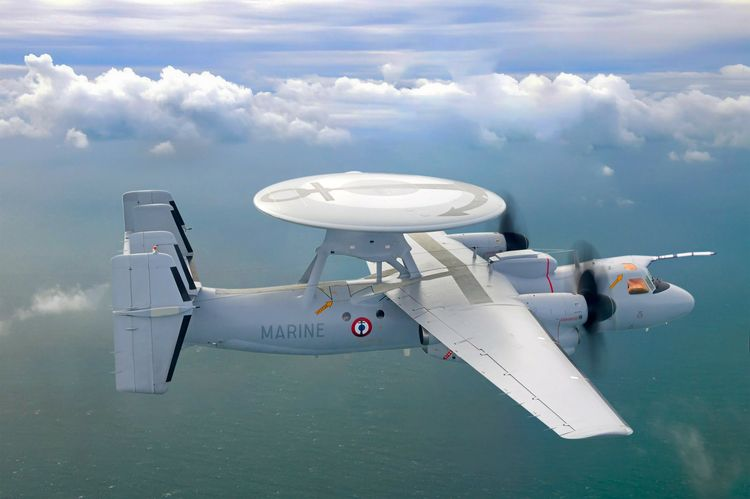
A French E-2D artist rendering. (Credit: Northrop Grumman)
From Northrop Grumman, Dec. 10, 2024
ST. AUGUSTINE, Fla. – Dec. 10, 2024 – Northrop Grumman Corporation (NYSE: NOC) celebrated the start of production of the first E-2D Advanced Hawkeye for the French Navy at the company’s St. Augustine manufacturing facility. The ceremony brought together representatives from the French Navy, Northrop Grumman, Naval Air Systems Command and Navy International Programs Office.
This milestone puts France on course to field the world’s premier airborne command and control aircraft.
Northrop Grumman is contracted to produce three E-2D aircraft, the first of which is scheduled for delivery in 2027.
The E-2Ds will replace France’s E-2C Hawkeye 2000 fleet, which has been in operation for over 25 years.
The E-2D brings significant enhancements over its predecessors, including the ability for aerial refueling.
Expert:
Janice Zilch, vice president, multi-domain command and control programs, Northrop Grumman: “Our partnership with France goes back over 25 years. We are proud to have supported the French Navy with the Hawkeye 2000, and we look forward to providing a generational leap in decision dominance with the E-2D Advanced Hawkeye.”
Details on Program:
Northrop Grumman’s E-2C Hawkeye 2000, which entered service with the French Navy in 1998, provides air defense and supports the Charles de Gaulle carrier strike group. France is the only country other than the U.S. to operate its E-2C Hawkeyes from an aircraft carrier. This capability has enabled interoperability exercises that support Hawkeyes and other aircraft from the French and U.S. fleets.
Northrop Grumman’s E-2D Advanced Hawkeye is the latest in a line of AEW aircraft that stretches back over 60 years. The E-2D is the world’s premier Airborne Command & Control aircraft, effective over land and sea. Northrop Grumman has evolved the E-2D into a cutting-edge platform, capable of facing threats anywhere in the world.
E-2 variants are operated by air forces and navies around the world. With an active production line and a 100% on-time delivery history, the E-2D continues to introduce new technology to outpace ever-evolving threats.
The Wasp ARG-24th MEU (SOC) Returns Home After a 7-Month Deployment
NORFOLK (Dec. 6, 2024) Sailors assigned to the amphibious assault ship USS Wasp (LHD 1) man the rails on the ship’s flight deck as the ship returns to Naval Station Norfolk, Dec. 6, 2024. Wasp, flagship of the Wasp Amphibious Ready Group (WSP ARG), returned from a seven-month deployment operating in the U.S. 6th Fleet area of operation. (U.S. Navy photo by MC2 Sydney Milligan)
From U.S. Fleet Forces Command, Dec. 6, 2024
The Wasp Amphibious Ready Group (WSP ARG), commanded by Amphibious Squadron (CPR) 4, returned to Hampton Roads, Virginia following a seven-month deployment to the U.S. 6th Fleet area of operations, Dec. 6.
The WSP ARG flagship, first-in-class amphibious assault ship USS Wasp (LHD 1) and San Antonio-class amphibious transport dock ship USS New York (LPD 21) returned to Naval Station Norfolk, while the Harpers Ferry-class amphibious landing dock ship USS Oak Hill (LSD 51) is expected to return to Joint Expeditionary Base Little Creek.
The embarked 24th Marine Expeditionary Unit (MEU) Special Operations Capable (SOC) returned to Camp Lejeune, North Carolina, Dec. 3.
“This deployment demonstrated the versatility and strength of amphibious forces,” said Capt. Nakia Cooper, commodore of Amphibious Squadron 4. “Whether enhancing NATO interoperability or on station as the crises response force, the Sailors and Marines of the ARG-MEU team consistently executed with precision and remained ready. To our families and loved ones—thank you for your unwavering love and support.”
Throughout the deployment, the ARG-MEU team operated extensively in the U.S. 6th Fleet area of responsibility under the authority of Task Force 61/2, participating in high-profile exercises such as Baltic Operations 2024 in the Baltic Sea and Neptune Strike 24.2 in the Eastern Mediterranean Sea. The 24th MEU (SOC) routinely rotated its landing forces to the Republic of Cyprus to participate in bilateral training with the Republic of Cyprus National Guard and their elite special operating forces. These engagements reinforced partnerships with NATO Allies and regional partners, highlighting the strategic importance of amphibious forces in fostering multinational cooperation.
The ARG-MEU also conducted more than a dozen port visits across Europe and the Eastern Mediterranean, strengthening relationships with Allies and partners while offering opportunities for bilateral training and cultural exchanges. The port visits included Klaipeda, Lithuania and Kiel, Germany as part of BALTOPS 24; Rota, Spain and Skagen, Denmark for brief stops for fuel and resupply operations; Brest and Cherbourg, France, as part of the ARG-MEU’s participation in the 80th D-Day anniversary ceremony; Aksaz and Izmir, Türkiye to strengthen relationships with NATO Ally Türkiye; Souda Bay and Thessaloniki, Greece, where 24th MEU (SOC) units were positioned to conduct bilateral training with Greek military forces; and finally, to Limassol and Larnaca, Cyprus, during bilateral training with the Republic of Cyprus National Guard and their Special Operations Forces.
“We forged stronger ties with our international Allies and partners during this deployment,” said Col. Todd Mahar, commanding officer, 24th MEU (SOC). “Every Marine and Sailor displayed remarkable adaptability and professionalism, proving the value of our forward-deployed, rapid response capabilities.”
The deployment displayed the ARG-MEU’s mission sets as a crises response force by providing readiness and flexibility to the Combatant and Fleet Commanders. From deterring aggression in contested waters to standing by for crisis response, the team consistently demonstrated its ability to adapt and deliver results.
“Our presence ensured regional stability and deterred adversaries,” added Mahar. “The ARG-MEU team was ready at every turn to uphold peace, provide aid, and project strength where it was needed most, if called upon.”
The deployment’s success was underpinned by the ARG-MEU’s operational flexibility and the integration of sea, air, and land assets, providing combatant commanders with a versatile contingency force.
“Deployments like these prove the critical role of forward-deployed amphibious forces,” said Cooper. “We are a tangible reminder of America’s commitment to our Allies and partners and a powerful deterrent to any potential adversary.”
The WSP ARG-24th MEU (SOC) team began deployment operations on June 1, 2024 following an extensive eight-month pre-deployment training program to certify the Navy and Marine Corps units for deployment. Together, the ARG-MEU is organized, trained, equipped, evaluated, and certified to conduct maritime expeditionary warfare and amphibious operations across the full range military operations. As a highly mobile, versatile, and integrated naval formation, the ARG-MEU offers geographic combatant commanders an organic combined arms force that remains forward deployed and capable of persistent competition.
The WSP ARG includes the Wasp, New York, and Oak Hill, with embarked units including Fleet Surgical Team 4, Tactical Air Control Squadron 22 Detachment 1, Helicopter Sea Combat Squadron 28, and Beach Assault Unit 21. The 24th MEU (SOC) is a Marine Air Ground Task Force, comprised of Marine Medium Tiltrotor Squadron 365 (Reinforced) as the Aviation Combat Element, Battalion Landing Team 1/8 as the Ground Combat Element, Combat Logistics Battalion 24 as the Logistics Combat Element, and a command element as their higher headquarters.
The USS Green Bay Arrives in San Diego After a Decade in Japan
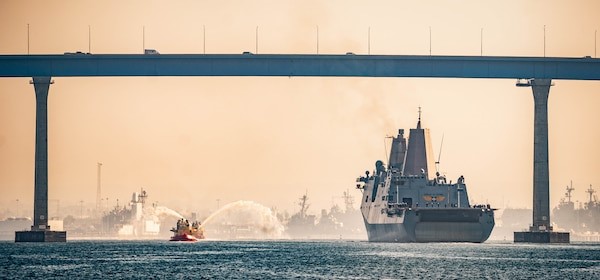
The San Antonio-class amphibious transport dock ship USS Green Bay (LPD 20) arrives in its new homeport of San Diego, Dec. 9, 2024, after nearly a decade forward-deployed to Sasebo, Japan as part of the America Amphibious Ready Group operating in the U.S. Seventh Fleet area of operations. (U.S. Navy photo by MCC Mark D. Faram)
Dec. 10, 2024
SAN DIEGO – The San Antonio-class amphibious transport dock ship USS Green Bay (LPD 20) arrived Dec. 9 in its new homeport of San Diego from Sasebo, Japan. This homeport shift will be a permanent change of station for the crew and family members. This shift complies with the National Defense Authorization Act (NDAA), requiring that U.S. Navy ships not be permanently forward deployed to Japan for more than 10 years.
“USS Green Bay has been the workhorse of Sasebo and the Seventh Fleet for nearly a decade. We are super proud of our reputation as the most ready well deck in the area of operations, and looking forward to continuing a tradition of excellence in our new home port of San Diego,” said Capt. Aaron DeMyer, commanding officer of Green Bay.
The Green Bay served as part of the America Amphibious Ready Group, operating in the U.S. Seventh Fleet area of operations. With a crew of 400 and the ability to embark 700 Marines, Green Bay’s mission is to transport and launch amphibious craft in support of amphibious warfare and humanitarian operations.
“We have a good crew that understands what needs to be done when it needs to be done. The team has been worked hard in Seventh Fleet and I’m proud of my time serving abroad but I am overjoyed to be heading home to see my wife and kids after a year away,” stated Electronics Technician 1st Class Blake Cross.
Green Bay participated in numerous operations and exercises across the Indo-Pacific to include Exercise Talisman Sabre, a bilateral military exercise between Australia and the United States, with multinational participation, enhancing collective capabilities to respond to a wide array of potential security concerns; Exercise Keen Sword 25, a joint bilateral exercise Japan designed to increase readiness and interoperability while strengthening the U.S.-Japan alliance; Exercise Iron Fist, a bilateral exercise designed to increase interoperability and strengthen the relationships between the U.S. Marine Corps, U.S. Navy, the Japan Ground Self-Defense Force and Japan Maritime Self-Defense Force; Exercise Cobra Gold 2020, a Thailand and United States co-sponsored combined joint task force and joint theater security cooperation exercise in the Kingdom of Thailand; Exercise Garuda Shield 2022, a combined and joint exercise between the Indonesian National Armed Forces and U.S. Indo-Pacific Command designed to strengthen bilateral interoperability, capabilities, trust, and cooperation; Cooperation Afloat Readiness and Training Exercise with ships and aircraft from Thailand for allied training, focused on building interoperability and strengthening relationships. Additionally, the Green Bay conducted several humanitarian assistance missions.
“While in Seventh Fleet, the Green Bay crew became my family while I was away from my own. With multiple forward deployed patrols together, I am thankful for my fellow Sailors. I am excited to go back to the states to see my family and for them to meet my Navy family too,” stated Operations Specialist 2nd Class Juana Cerriteno.
USS Green Bay was commissioned January 24, 2009. The ship is named in honor of Green Bay, Wisconsin, and serves to conduct prompt and sustained amphibious operations to support national defense and theater security cooperation.
JMSDF Fleet Air Force, U.S. Navy’s Task Force 70 Sign Memorandum to Increase Bilateral Electronic Attack Capability
NAVAL AIR FACILITY ATSUGI (Dec. 6, 2024) Japan Maritime Self-Defense Force (JMSDF) Vice Adm. Koji Kaneshima, Commander, Fleet Air Force (CFAF), right, and U.S. Navy Rear Adm. Greg Newkirk, Commander, Task Force (CTF) 70, sign a memorandum of understanding (MOU) to increase bilateral operations between the forces’ electronic attack squadrons, at the CFAF headquarters aboard Naval Air Facility Atsugi, Japan, Dec. 6. (U.S. Navy photo by MC1 Caroline H. Lui)
By Lt.Cmdr. Seth Koenig
NAVAL AIR FACILITY ATSUGI – Japan Maritime Self Defense Force (JMSDF) Vice Adm. Koji Kaneshima, Commander, Fleet Air Force (CFAF), and U.S. Navy Rear Adm. Greg Newkirk, Commander, Task Force (CTF) 70, signed a memorandum of understanding (MOU) to increase bilateral operations between the forces’ electronic attack squadrons Dec. 6, 2024.
The signing, which took place at Naval Air Facility Atsugi in Kanagawa prefecture, Japan, represented a pledge between the two commanders to increase bilateral operations and training between the JMSDF Air Reconnaissance Squadron (VQ) 81 and CTF 70 electronic attack assets, which include Carrier Air Wing (CVW) 5’s Electronic Attack Squadron (VAQ) 141, as well as expeditionary electronic attack squadron detachments rotationally deploying to Japan from Whidbey Island, Washington.
“Today, ‘FUJIN’ MOU was revised for the purpose of further strengthening Integrated Fire capabilities between CFAF and CTF70,” said Kaneshima. “Besides that, with Rear Adm. Newkirk, we came to an agreement to promote ‘FUJIN’ program. We will keep developing the mutual understanding and tactical skills between the commands and units through the trainings and exercises.”
Task Force 70’s electronic attack squadrons fly EA-18G Growler aircraft, while VQ-81 flies UP-3D electronic attack aircraft, among other assets.
The EA-18G Growler integrates the latest electronic attack technology, including the ALQ-218 sensor for airborne situational awareness, as well as ALQ-99 pods capable of jamming adversarial radar and communications systems, and next-generation jamming technology as it is refined and implemented across the force.
“Today, we’re formalizing our commitment to generate real warfighting advantage by increasing and enhancing our combined technology and expertise in the field of electronic warfare,” said Newkirk. “Our work together moving forward will allow us to expand our shared air and maritime domain awareness, as well as refine and perfect our combined electronic attack capability.”
VAQ-141 is forward-deployed to Marine Corps Air Station Iwakuni as part of Carrier Air Wing (CVW) 5, while the expeditionary VAQ-134 operates out of Misawa Air Base in the northern part of the country and Kadena Air Base in Okinawa in the southern part of the country.
Task Force 70 controls the preponderance of forward-deployed air and surface maneuver and striking forces in the U.S. 7th Fleet area of operations, overseeing Destroyer Squadron (DESRON) 15, Helicopter Maritime Strike Squadron (HSM) 51 and VAQ 134, as well as the ships and aircraft operating under Carrier Strike Group (CSG) 5, including the Nimitz-class aircraft carrier USS George Washington (CVN 73), the Ticonderoga-class guided-missile cruiser USS Robert Smalls (CG 62), the Arleigh Burke-class guided-missile destroyer USS Shoup (DDG 86) and CVW-5.
U.S. 7th Fleet is the U.S. Navy’s largest forward-deployed numbered fleet, and routinely interacts and operates with allies and partners in preserving a free and open Indo-Pacific region.
Lockheed Martin and Missile Defense Agency Demonstrate Critical Capability for Defending Guam with Successful Flight Test
From Lockheed Martin
ANDERSEN AIR FORCE BASE, Guam, Dec. 11, 2024 – Lockheed Martin and the Missile Defense Agency (MDA), in support of United States Indo-Pacific Command and the Department of Defense (DoD), have successfully completed Flight Experiment Mission (FEM)-02. Completion of FEM-02 demonstrates significant regional capability with a live exo-atmospheric intercept of a Medium-Range Ballistic Missile (MRBM) target using the Aegis Guam System (AGS) from the island of Guam.
“In partnership with the MDA, Lockheed Martin went from contract award to intercept flight test in less than two years. This rapid integration of capabilities to demonstrate the defense of Guam was enabled by leveraging proven systems and Lockheed Martin’s systems engineering, production and test excellence,” said Paul Lemmo, vice president and general manager of Integrated Warfare Systems & Sensors at Lockheed Martin. “Lockheed Martin is fully committed to providing 21st Century Security solutions for Guam.”
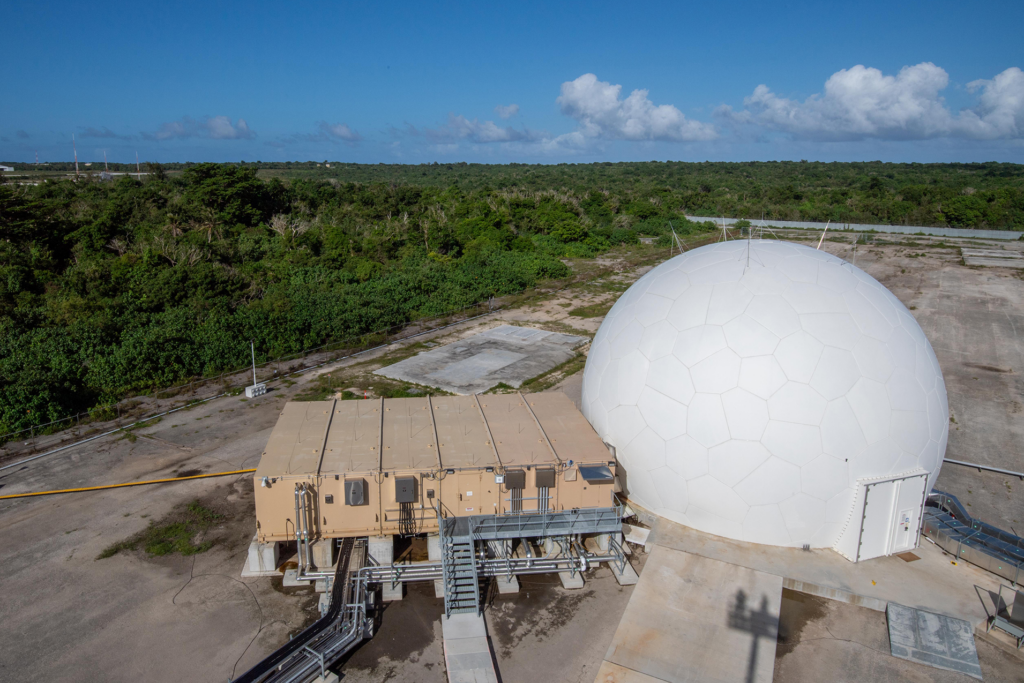
AGS, integrated with the AN/TPY-6 Radar, Vertical Launching System (VLS), and Standard Missile, could aide with pacing the Indo-Pacific threats and expanding joint all-domain operations for Guam and the region.
The FEM-02 test took place from Andersen AFB in Guam and demonstrated the defense of Guam against an air-launched MRBM. AGS was successful in acquiring and tracking the target using the AN/TPY-6 radar, planning and conducting the missile engagement using the Aegis system, launching the interceptor from the VLS on Guam, and intercepting the target over the broad ocean area.
This test provided DoD a better understanding of the missile defense system’s ability to counter threats in a realistic environment and the preliminary analysis indicates a significant step forward in the MDA’s efforts to protect the United States and its allies from emerging missile threats.
HII’s Ingalls Shipbuilding Undocks USS Zumwalt
From HII, Dec. 6 2024
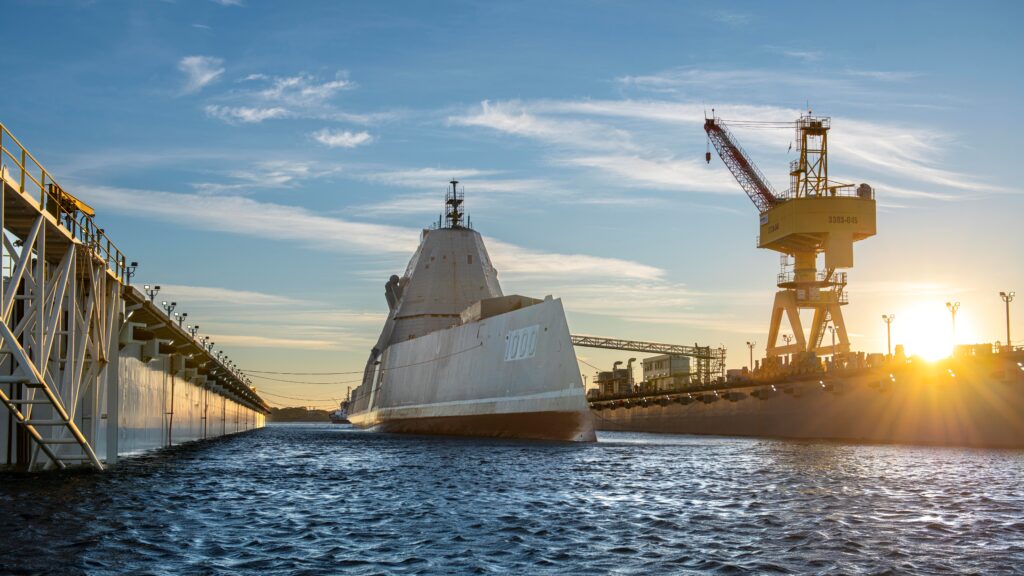
PASCAGOULA, Miss., Dec. 06, 2024 (GLOBE NEWSWIRE) — HII’s (NYSE: HII) Ingalls Shipbuilding division successfully undocked USS Zumwalt (DDG 1000), the lead ship of the U.S. Navy’s Zumwalt-class of guided missile destroyers, taking the ship one step closer to testing and returning to the U.S. Navy fleet.
“In partnership with the Navy we are steadfast in our commitment to complete this complex work that adds significant hypersonic capability to Zumwalt,” HII President and CEO Chris Kastner said. “We are proud to support the incorporation of the conventional prompt strike for the Navy.”
The undocking marked the completion of significant modernization work at Ingalls since the ship arrived at the Pascagoula shipyard in August 2023. Shortly after its arrival, the ship was put back on land in order to receive technology upgrades including the integration of the Conventional Prompt Strike (CPS) weapon system. The Ingalls team also replaced the original twin 155mm Advanced Gun Systems on the destroyers with new missile tubes.
Zumwalt-class destroyers feature a state-of-the-art electric propulsion system, wave-piercing tumblehome hull, stealth design and is equipped with the most advanced warfighting technology and weaponry. These ships will be capable of performing a range of deterrence, power projection, sea control, and command and control missions while allowing Navy to evolve with new systems and missions.
Navy Accepts Delivery of Ship to Shore Connector, Landing Craft, Air Cushion 111
By Team Ships Public Affairs, Dec. 9, 2024
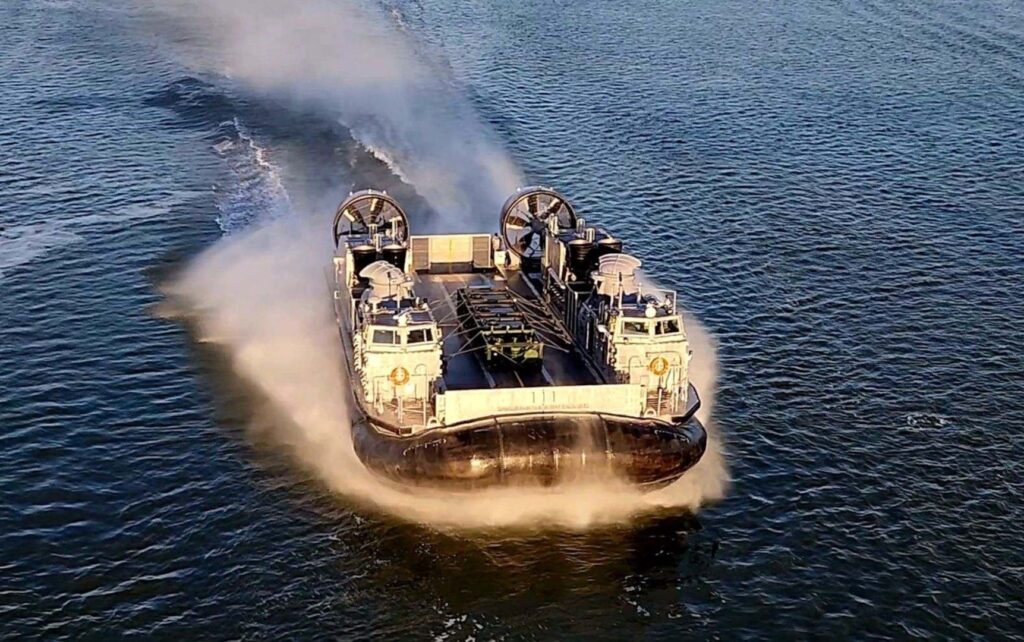
NEW ORLEANS – The latest Ship to Shore Connector (SSC), LCAC 111 was delivered to the Navy from Textron Systems on Nov. 27.
The delivery of LCAC 111 comes after completion of Acceptance Trials conducted by the Navy’s Board of Inspection and Survey, which evaluated the readiness and capability of the craft to effectively meet requirements. This new addition to the fleet enhances Navy amphibious capability, providing a vital asset for rapid deployment and logistical support.
“This new craft will provide the Navy and Marine Corps team with unparalleled capability in amphibious warfare, ensuring we remain agile and responsive to emerging threats and global challenges,” said Capt. Jason Grabelle, program manager for Amphibious Assault and Connectors Programs, Program Executive Office, Ships (PEO Ships). “The introduction of LCAC 111 into our fleet marks a significant milestone in our ongoing efforts to maintain and enhance operational readiness.”
LCACs are built with configurations, dimensions, and clearances similar to the legacy LCACs they replace – ensuring that this latest air cushion vehicle is fully compatible with existing well deck-equipped amphibious ships, the Expeditionary Sea Base and the Expeditionary Transfer Dock . LCACs are capable of carrying a 60 to 75-ton payload. They primarily transport weapon systems, equipment, cargo, and assault element personnel through a wide range of conditions, including over-the-beach.
As one of the Defense Department’s largest acquisition organizations, PEO Ships is responsible for executing the development and procurement of all destroyers, amphibious ships and craft, auxiliary ships, special mission ships, sealift ships, and support ships.
USS Arleigh Burke Returns Home After 4-Month Patrol
From U.S. Naval Forces Europe and Africa / U.S. Sixth Fleet Public Affairs
Dec. 9, 2024
ROTA, Spain – The Arleigh Burke-class guided-missile destroyer USS Arleigh Burke (DDG 51) returned home Dec. 7 after a four-month patrol, its fifth since shifting homeport to Rota.
The Arleigh Burke-class guided-missile destroyer USS Arleigh Burke (DDG 51) returned home Dec. 7 after a four-month patrol, its fifth since shifting homeport to Rota.
Arleigh Burke departed Rota, Spain Aug. 15 on patrol in support of regional Allies and partners, and U.S. national security interests in Europe and Africa. The ship began its patrol transiting east through the Strait of Gibraltar.
“Arleigh Burke Sailors continuously amaze me with their hard work and dedication, no matter the challenges thrown their way,” said Cmdr. Tyrchra Bowman, the ship’s commanding officer. “I could not have asked for a better crew, and I am immensely grateful for having the opportunity to command America’s Lead Destroyer.”
Burke’s patrol included many significant milestones, including deterrence operations in the eastern Mediterranean Sea; numerous gunshoot qualifications utilizing the MK 15 – Phalanx Close-In Weapon System (CIWS), the MK 38 25 mm machine gun system (MGS), and the 5-inch (127 mm)/54-caliber (Mk 45) lightweight gun; the pinning of eight new Chief Petty Officers; and a visit by Italian Navy Rear Admiral Andrea Petroni, Commander of Second Naval Division and Commander of Italian Maritime Forces, along with crew members of the Italian frigate Luigi Rizzo (F 595) for a passenger exchange; and seven underway replenishments, 11 flight quarters, and 14 small boat operations.
Arleigh Burke closed out its fifth patrol by joining the Harry S. Truman Carrier Strike Group to serve as Air and Missile Defense Commander while the strike group transited to the Mediterranean Sea. The ship then returned to Rota, where the crew was welcomed by friends, family, and volunteers from the USO on Dec. 7, 2024 after 115 days away from home and 22,450 miles traveled.
Commander, U.S. Sixth Fleet, headquartered in Naples, Italy, conducts the full spectrum of joint and naval operations, often in concert with Allied and interagency partners to advance U.S. national interests, security and stability in Europe and Africa.