Ships Arrive for San Francisco Fleet Week 2024 

From Brian O’Rourke, 07 October 2024 

SAN FRANCISCO — The America-class amphibious assault ship USS Tripoli (LHA 7); San Antonio-class amphibious transport dock ship USS Somerset (LPD 25) and the Unmanned Surface Vessel Ranger (OUSV 3) arrived in San Francisco in support of San Francisco Fleet Week 2024. 

Sailors, Marines and Coast Guardsmen from several ships, squadrons and military units will be in San Francisco for the annual San Francisco Fleet Week, Oct. 7-14. 
 
Participating ships and units also include the Coast Guard Legend-class maritime security cutter USCG Bertholf (WMSL 750); the Royal Canadian Navy Halifax-class frigate HMCS Regina (FFH 334); the unmanned surface vessel Ranger (OUSV 3); Naval Beach Group One; U.S. Marine Corps Task Force San Francisco (Combat Logistics Regiment 17, 15th Marine Expeditionary Unit 2; Combat Logistics Battalion 13; Combat Logistics Battalion 15; and Battalion Landing Team 1/5); the U.S. Navy Flight Demonstration Squadron, the Blue Angels; the Navy parachute team, the Leap Frogs; Navy Band Southwest; 1st Marine Division Band; 12th Marine Corps District, Recruiting Station San Francisco; Navy Talent Acquisition Group Golden Gate; Assault Craft Unit 1; Beachmaster Unit 1; Amphibious Construction Battalion 1; Amphibious Squadron 7; Combat Logistics Regiment 17; U.S. 3rd Fleet; Expeditionary Strike Group 3; and Navy Region Southwest. 
 
Navy, Marine Corps and Coast Guard forces and assets also participate in a robust disaster response exercise, an annual event joint training event that adds a serious, practical objective to San Francisco Fleet Week. The exercise is designed to train military forces and local, county, state and federal government agencies to work together to respond to natural and man-made disasters, such as earthquakes, wildfires and industrial accidents. 
 
Service members will have an opportunity to interact with the local community while participating in a number of community relations projects and entertainment events throughout the week. 
Navy, Marine Corps and U.S. Air Force bands will perform a series of free neighborhood concerts throughout San Francisco. For a full list of concerts, visit the San Francisco Fleet Week website: Neighborhood Concert Series – San Francisco Fleet Week (fleetweeksf.org) 
 
San Francisco Fleet Week also offers the public an opportunity to take a tour of the ships and interact with service members as they showcase their ships’, units’, and services’ capabilities. It also gives the public a chance to gain a better understanding of how the sea services support the national defense of the United States and protect freedom of the seas. 
The schedule for ship tours is as follows and is subject to change: 
 
Wednesday, October 9 
Pier 27 
10 a.m. – 4 p.m. 
 
Thursday, October 10 
Pier 27, Pier 35 
10 a.m. – 4 p.m. 
 
Friday, October 11 
No tours, however, the ships can be seen in the San Francisco Fleet Week Parade of Ships 11am-12p.m. from along the San Francisco waterfront. 
 
Saturday, October 12 
Piers 27, 30/32, 35 
10 a.m. – 4 p.m. 
Pier 15/17 
10 a.m. – 3:30 p.m. 
 
Sunday, October 13 
Piers 27, 30/32, 35 
10 a.m. – 4 p.m. 
Pier 15/17 
10 a.m. – 3:30 p.m. 
 
Monday, October 14 
Pier 27, Pier 30/32 
10 a.m. – 12 p.m. 
 
The public is encouraged to attend tours and interact with service members. 
Prohibited items aboard include the following: 
– Food or drinks, including ice chests and coolers 
– Camera tripods 
– Skateboards, bicycles, hover boards 
– Gang-related clothing 
– Unmanned aerial systems 
– Weapons, including knives, firearms and club weapons 
– Defensive chemicals or sprays, including mace and pepper spray 
– Spray cans of any type, fireworks, flammable liquids or other explosives 
– Illegal drugs and drugs considered illegal at the federal level, including marijuana, and/or drug-related paraphernalia 
– Electronic cigarettes 
– Large bags, including backpacks and large camera bags (small camera bags and small handbags may be permitted, but will be subject to search) 
– Strollers 
– Drinks, other than water, to facilitate security 
– Smoking, dipping, or chewing gum while onboard USN Ships or within 100FT of watch-standers 
– Pets are also prohibited, with the exception of service dogs for the disabled 
– Open-toe shoes are not recommended. High heels are not permitted 
– Ship tours may not be appropriate for those with disabilities and access and functional needs or certain medical conditions. There are steep ladders (stairways) to climb and uneven surfaces to traverse on board the ship. An alternative experience will be provided on the pier for those who wish to learn more about the ships in port. 
 
You’re also invited to visit Fleet Fest, a free family-friendly festival celebration at Pier 30/32, Saturday, 10 a.m. – 9 p.m., and Sunday, 10 a.m. – 5 p.m. Military bands and local entertainers will perform throughout the weekend. 
 
For more information, please visit the San Francisco Fleet Week web site at www.fleetweeksf.org.  


Beacon Technology Group and Akimbo Technologies Inc. Form Strategic Alliance to Strengthen Maritime Cybersecurity

Cyfax and DEFENSA Unite to Deliver Comprehensive Cyber Defense Across Global Marine Operations 

MIAMI, Oct. 7, 2024 /PRNewswire-PRWeb/ — Beacon Technology Group, a leader in cutting-edge cybersecurity for IT and industrial environments, today announced a strategic alliance with Akimbo Technologies Inc., a Canadian provider of military-grade OT cyber defense solutions. This partnership follows Beacon’s recent launch of Cyfax at BlackHat USA, the perennial cyber show, where Cyfax was showcased as a groundbreaking external attack surface management (EASM) platform. Cyfax combines deception technology with continuous hyper-automated penetration testing to provide immediate cyber posture insights, real-time alerts, and compliance reporting. 

The maritime industry faces three key challenges: increasingly sophisticated cyberattacks, restricted access to cyber insurance due to poor risk management, and the tightening of global regulations from organizations like the International Maritime Organization (IMO) and the U.S. Coast Guard (USCG). The Beacon-Akimbo alliance addresses these challenges by merging advanced IT and OT security solutions to offer maritime operators comprehensive and proactive defense, both in port and at sea. 

Cyfax’s intelligence-driven capabilities—dark web surveillance and continuous penetration testing—complement Akimbo’s DEFENSA system, which provides real-time threat detection and remediation for operational technology environments. Together, these solutions deliver the robust security posture necessary for maritime operators to meet evolving threats, and regulatory requirements, and maintain access to critical cyber insurance. 

“The maritime industry, much like other critical sectors, is moving beyond traditional defensive postures. The time has come for a paradigm shift that embraces offensive strategies. This alliance provides that shift, delivering proactive, offense-driven solutions to a sector crucial to the global supply chain,” said Rob Vazquez, CEO of Beacon Technology Group. 

“The partnership we are announcing today brings together two powerful cyber solutions, enabling the global commercial marine industry to protect itself from ever-evolving cyber threats. Building a defensive digital wall and hoping for the best is outdated. Today’s maritime industry requires proactive solutions to combat sophisticated adversaries,” said Behrouz Poustchi, CEO of Akimbo Technologies. 

As global regulations tighten and cyber insurance standards rise, the Beacon-Akimbo alliance ensures maritime operators are compliant and secure. With real-time monitoring and automated threat defense, these solutions meet the industry’s regulatory and insurance demands. 

For more information, visit https://detect.solutions/ or https://www.akimbotechnologies.com/


HII Hosts Chairman of the Joint Chiefs of Staff at Newport News Shipbuilding

From HII 

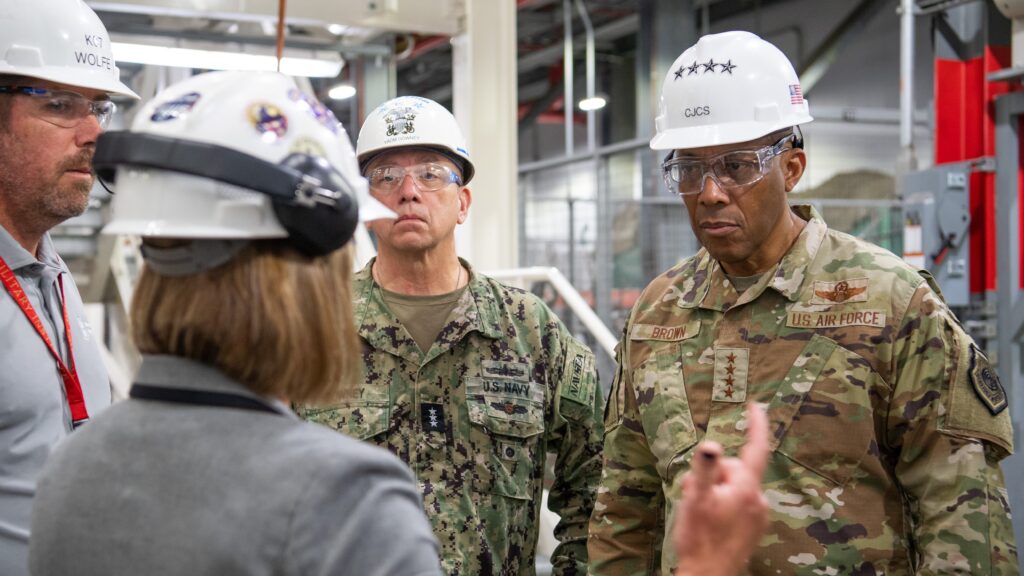
NEWPORT NEWS, Va., Oct. 04, 2024 (GLOBE NEWSWIRE) — HII (NYSE: HII) hosted Gen. Charles Q. Brown Jr., chairman of the Joint Chiefs of Staff, at the company’s Newport News Shipbuilding division Thursday. 

“I firmly believe that honing our warfighting skills has primacy in all we do,” Brown said. “It was great to see the hard work of the Navy’s shipbuilding team alongside our defense industry partners ensuring we maintain our edge through the construction of the next Ford-class carrier and Columbia-class submarine. These efforts provide our military with unmatched capabilities, reinforcing our ability to operate effectively across any mission, in any domain, and in any region of the world.” 

While at NNS, Brown visited shipbuilders and sailors on John F. Kennedy (CVN 79), saw construction progress on Virginia- and Columbia– class submarine modules, and met with shipyard leadership. Adm. William Houston, director of the Naval Nuclear Propulsion Program, and Vice Adm. Jim Downey, commander, Naval Sea Systems Command, accompanied the chairman. 

“Our shipbuilders’ commitment to supporting the Department of Defense is unwavering, and we are grateful General Brown invested time to see that for himself,” NNS President Jennifer Boykin said. “The nuclear-powered aircraft carriers and submarines we build and maintain are vital to our national security, and we are proud to deliver these critical capabilities to those who defend our freedoms.” 

Photos accompanying this release are available at: https://hii.com/news/hii-hosts-chairman-of-the-joint-chiefs-of-staff-at-newport-news-shipbuilding/

NNS is the nation’s sole designer, builder and refueler of nuclear-powered aircraft carriers and one of only two shipyards capable of designing and building nuclear‐powered submarines. 


GE Vernova Secures Contract for U.S. Navy’s Advanced Propulsion Load System Testing 

CAMBRIDGE, Mass. October 3, 2024 – GE Vernova Inc. (NYSE: GEV) today announced that its Power Conversion business has secured a contract to develop and deliver a Propulsion Load System (PLS) for the U.S. Navy’s land-based testing facilities to support a new generation of advanced naval surface vessels. These systems are planned to be used to rigorously test the performance and reliability of shipboard propulsion systems in a controlled, land-based environment before deployment at sea. 

Contract Overview 

The scope of the contract, which was booked in the second quarter of 2024, includes the design, manufacturing, delivery, and installation of two independent PLS units at a U.S. Navy facility over a three-year period. The program and the facility, managed by the Naval Surface Warfare Center Philadelphia Division (NSWCPD), will serve as the primary site for testing and qualification of propulsion systems for a new generation of advanced naval vessels, such as the FFG-62 and DDG(X).  By simulating real-world shipboard conditions, the PLS is designed to help reduce technical risks, streamline development timelines, and train future crews, providing a strategic advantage to the Navy. 

The system is expected to incorporate a full suite of power conversion technologies, including propulsion load electric motors, E-houses, power electronic motor drives, switchboards, motor control centers, load banks, transformers, and related essential infrastructure. 

“GE Vernova is proud to contribute to the U.S. Navy’s future naval capabilities by delivering innovative testing solutions that help lower the technology risk and prepare crews for the next generation of surface vessels,” said Ed Torres, Business Line Leader of GE Vernova’s Power Conversion Business. “This contract reflects our commitment to advancing naval technology through reliable, efficient propulsion load management systems.” 

Technological Significance: 

The contract further solidifies GE Vernova’s leadership in providing more energy-efficient electric propulsion technologies for complex naval applications. With over 40 U.S. Navy and U.S. Coast Guard vessel references, decades of experience with land-based test facilities, and successful integration of similar systems in programs such as the Columbia Class and Zumwalt Class, GE Vernova continues to demonstrate its expertise in this field. 

Program Background 

The award comes from the US Navy’s Program Executive Office (PEO) Ships under the program offices PMS 515 (frigates) and PMS 460 (DDG(X) program), with technical and programmatic ownership by the NSWC. The agreement, administered through the Maritime Sustainment Technology and Innovation Consortium (MSTIC) and managed by Advanced Technology International (ATI) is the largest agreement awarded to date on the MSTIC Other Transaction Authority (OTA). 

This is GE Vernova Power Conversion’s first Other Transaction Authority (OTA) award. OTAs provide the U.S. Department of Defense (DoD) and other government agencies with the flexibility needed to carry out innovation, prototype, research, and production programs by adapting and incorporating business practices that align with commercial industry standards. They promote flexible, faster, and more cost-effective product design and execution. 


US Navy Awards Bollinger Shipyards Contract to Build 7th Berthing Barge    

LOCKPORT, La., — (October 3, 2024) – Bollinger Shipyards (“Bollinger”) announced today that it has been awarded a contract to build the U.S. Navy’s seventh Auxiliary Personnel Lighter–Small (APL 73) Class berthing and messing barge. The contract award is for a fixed-price option for the detail design and construction of the vessel.   

“We’re honored to be entrusted by the U.S. Navy to continue building these critical vessels that improve the quality of life for our sailors,” said Ben Bordelon, President and CEO of Bollinger Shipyards. “We take great pride in every single vessel we build and deliver to the U.S. Navy. This contract reflects the relentless work ethic of our skilled workforce and their commitment to upholding the highest levels of quality and craftsmanship that our company was founded on and, 78-years later, remains dedicated to.”   

Bollinger delivered APL 70 and 71—to the U.S. Navy in 2022 and 2023, respectively, and is currently building APL 72.  APLs are used by the Navy to house crewmembers when ships are in port for availabilities and Inter-Deployment Training Cycles. Notably, Bollinger tailors the barge’s mobility requirement into the design, ensuring they can be towed to new bases or shipyards to support changing fleet requirements. Such mobility offers additional capabilities to serve humanitarian missions and other temporary assignments.   

APLs are 269 feet long, 69 feet wide and have a draft of 7 feet. Each vessel is equipped with offices, classrooms, washrooms, laundry facilities, medical treatment areas, a barber shop and fitness center. With mess seating for 224 enlisted personnel and 28 officers, each meal is served via five 20-minute shifts to allow food service for 1,130 personnel (three meals per day). The vessels are fitted with mixed-gender berthing spaces for 74 officers and 537 enlisted personnel, for a total of 611 people.   


SECNAV Del Toro Advances Maritime Statecraft, Strengthens Maritime Dominance during Visit to Raytheon

From SECNAV Public Affairs, Oct.4, 2024 

ShapeTUSCON, AZ (October 4, 2024) – Secretary of the Navy Carlos Del Toro visited Raytheon Technologies (RTX) to receive updates and provide feedback on advanced naval capabilities and programs today.  Discussions with Raytheon leadership addressed production timelines, industrial base health, and future technology development. 

Secretary Del Toro met with Barbara Borgonovi, President of Naval Power at Raytheon, Gina Cunningham, Vice President for Naval Missile Systems, and Gerard Hueber, Vice President of Requirements and Capabilities. 

During discussions, the Secretary emphasized the importance of continued investment in the defense industrial base to deliver cutting-edge solutions that strengthen maritime dominance amidst ongoing operations and in strategic competition.  He pointed to proven success of U.S. Navy weapons systems aboard carrier strike groups and guided-missile destroyers to defeat Houthi and Iranian attacks in the Red Sea and Mediterranean Sea.  He also noted competitors were watching those engagements closely and taking note of the Navy’s success. 

“No one should doubt our Navy and Marine Corps team’s ability to deploy and operate the world’s most complex naval weapons systems in self-defense and in defense of our allies and partners,” said Del Toro.  “That is exactly why we invest so much to develop our maritime threats, but also to deter our strategic competitors from testing our resolve.  That is also why this important visit is timely before our Navy demonstrates the ability to rearm at sea for the first time next week. “ 

The Secretary received updates on several critical programs including, the Standard Missile family, the AN/SPY-6 radar, the Tomahawk missile system and Counter-Unmanned Aircraft Systems (cUAS) capabilities.  The Secretary also received updates on accelerating SM-6 Block IA production, including investments to increase production capacity, secure more sources for critical components, and modernize manufacturing processes.  Discussions also addressed the evolving threat of unmanned aircraft systems and the company’s ongoing efforts to develop and deploy effective countermeasures. 

This visit reinforced the importance of a robust and resilient defense industrial base.  The Secretary expressed confidence in Raytheon’s commitment to delivering innovative and reliable solutions that support the Department of the Navy’s mission. 


MQ-4C Triton Unmanned Navy Aircraft System Stands Up a Third Orbit  

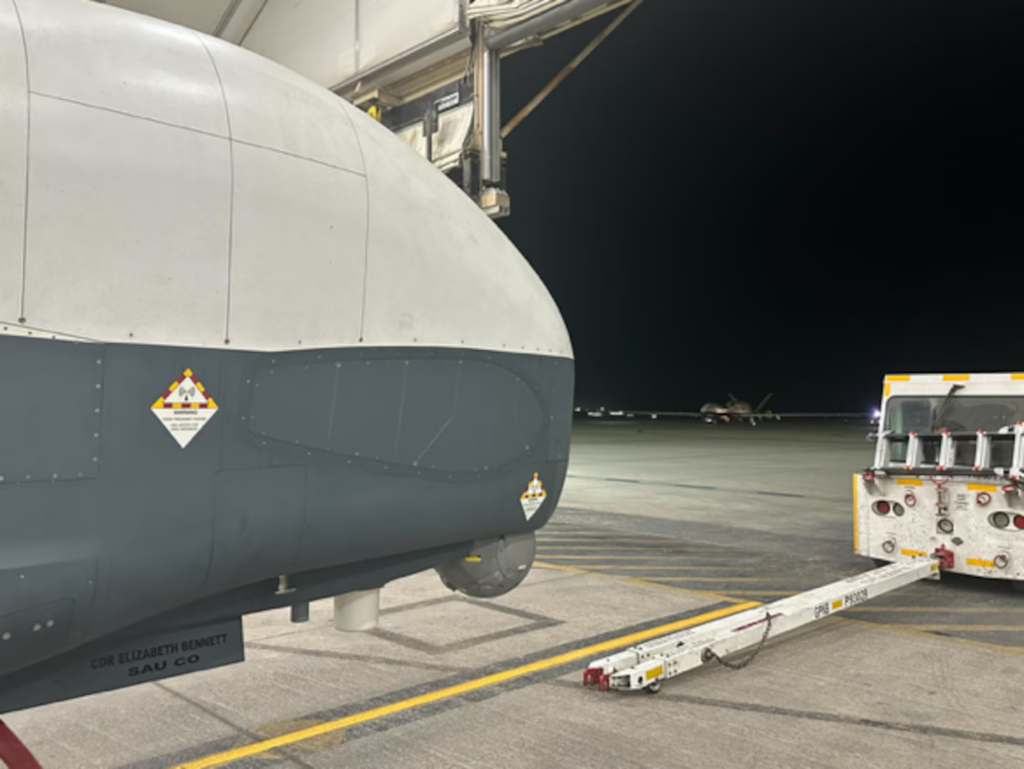
The Navy’s MQ-4C Triton unmanned aircraft system (UAS), operated by Unmanned Patrol Squadron (VUP) 19, has established a third orbit in the U.S. 5th Fleet area of operations (AOR), Oct. 1.

By Commander, Patrol and Reconnaissance Group Public Affairs, Oct. 3, 2024 

U.S. 5th Fleet Area of Operations – The Navy’s MQ-4C Triton unmanned aircraft system (UAS), operated by Unmanned Patrol Squadron (VUP) 19, has established a third orbit in the U.S. 5th Fleet area of operations (AOR), Oct. 1.  

“Enabled by the Navy’s Get Real, Get Better charge to think and act differently, and executed by the women and men of ‘Big Red’, the MQ-4C has achieved the unprecedented stand-up of three orbits, vastly increasing the maritime domain awareness for the Joint Force. Additionally, and through capitalizing on U.S. 10th Fleet’s distributed networks, we are rapidly closing the sensor to shooter gap,” Capt. Ronald Rumfelt, commanding officer VUP-19 said. 
 
Triton first deployed to Andersen Air Force Base, Guam as an Initial Operational Capability (IOC) in August 2023 soon followed by a second detachment flying from Naval Air Station (NAS) Sigonella, Italy in April 2024. With the stand-up of a third orbit in U.S. Central Command, VUP-19, or “Big Red,” achieved the unprecedented milestone of remotely operating simultaneously in three AORs from its home base at NAS Jacksonville, Florida. 
 
More impressive is that the squadron, supported by Persistent Maritime Unmanned Aircraft Systems Program Office (PMA-262) at Naval Air Station Patuxent River, achieved this milestone in just over one year from IOC.     
 
The MQ-4C Triton provides a persistent maritime ISR capability using multiple sensors. Along with P-8A Poseidon manned aircraft and TacMobile ground support system, the MQ-4C Triton is integral to the Navy’s Maritime Patrol and Reconnaissance Force (MPRF) Family of Systems (FoS). The MQ-4C is the numerical replacement for the retiring EP-3 Aries II, Navy’s long standing manned signals intelligence platform. 
 
The recently released CNO Navigation Plan 2024, Navy’s strategic guidance from the 33rd Chief of Naval Operations, specifically calls out the operationalization of robotic and autonomous systems. CNO Adm. Lisa Franchetti’s Project 33 sets priorities for accelerated implementation and seeks to move proven autonomous systems into the hands of the warfighters. Embodying this warfighting approach, that is exactly what VUP-19 is doing. 
 
Currently, Commander Patrol and Reconnaissance Group / Commander Patrol and Reconnaissance Group Pacific (CPRG/CPRG-PAC) provides oversight to more than 7,000 men and women on both coasts operating the U.S. Navy’s maritime patrol aircraft. 
 
The Maritime Patrol Reconnaissance Force is administratively organized into two CONUS Patrol and Reconnaissance Wings at NAS Jacksonville, Florida and NAS Whidbey Island, Washington: including 14 Patrol and Reconnaissance squadrons, one Fleet Replacement Squadron (FRS) and over 45 subordinate commands. The forward-deployed MPRF consists of three Patrol and Reconnaissance Wings in Manama, Bahrain (CTF-57); Sigonella, Sicily (CTF-67) and Atsugi, Japan (CTF-72). The MPRF is the Navy’s premiere provider for airborne anti-submarine warfare (ASW), anti-surface warfare (ASuW), and maritime intelligence, surveillance, and reconnaissance (ISR) operations. 


Rite-Solutions Awarded Three-Year Cyber-Physical Systems Contract by Office of Naval Research 

From Rite-Solutions 

MIDDLETOWN, R.I. (October 3, 2024)—Rite-Solutions was recently awarded a three-year contract by the Office of Naval Research (ONR) for Advancing Research on Cyber-Physical Systems Security and Resilience in a Naval Environment.  

Rite-Solutions will collaborate with its academic partner, the University of Rhode Island (URI) College of Engineering to conduct critical advanced Cyber-Physical Systems (CPS) research with applicability to address cybersecurity challenges across the Navy enterprise. Using digital engineering tools, Rite-Solutions will develop models to efficiently implement design and assess features to improve system performance while enhancing cybersecurity resiliency.  

Another element of the ONR contract will be the development of the next generation Cybersecurity workforce, which aligns with ONRs mission to plan, develop, and encourage scientific research to support the Navy and Marine Corps. While conducting their research, Rite-Solutions will be able to provide real-world, hands-on experience to two Rite-Solutions employees pursuing doctoral degrees from URI.  

“We are very excited about teaming with the University of Rhode Island on this new initiative,” said Joe Marino, Rite-Solutions co-founder and CEO. “Rite-Solutions is committed to developing the current and future defense workforce while serving the warfighters’ needs.  We demonstrate this commitment daily in how we hire and develop our workforce including a robust internship program and our involvement in college capstone projects.”  

Tim Arcano, Rite-Solutions Chief Technology Officer, shares in the excitement adding, “Cyber-Physical Systems assurance is a rapidly expanding technology area, and we are excited about using our technical expertise to conduct research in this area to build cyber solutions for the warfighter and develop the next generation cyber workforce.” 


BAE Systems awarded $92 million U.S. Navy contract for Virginia-class submarine propulsors 

BAE Systems will continue its expertise in manufacturing complex, heavy submarine structures  

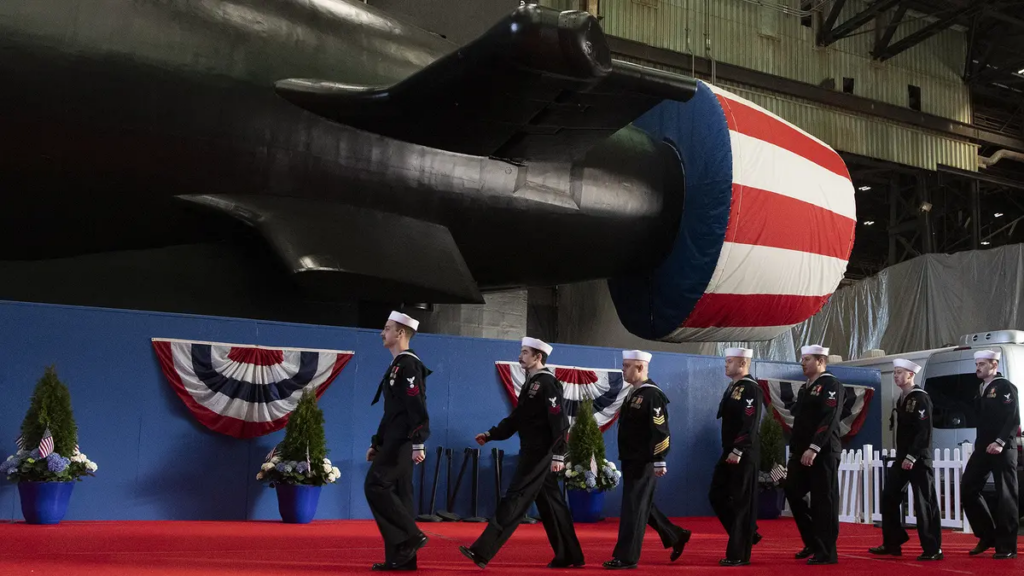
MINNEAPOLIS, Minn. — Oct. 3, 2024 — BAE Systems has been awarded a $92 million U.S. Navy contract to continue building propulsors for the Virginia-class submarine program. Under this contract, BAE Systems will deliver the Propulsor Forward Assemblies, as well as design engineering support services and support and sustainment hardware.  

“During the more than three decades that BAE Systems has manufactured propulsors for the U.S. Navy’s submarine fleet, we have developed significant expertise in the fabrication of complex heavy structures,” said Brent Butcher, vice president and general manager of Weapon Systems at BAE Systems. “We remain committed to building high-quality, reliable submarine structures and systems in support of U.S. Navy shipbuilding requirements, and our expert workforce and facilities are prepared to take on additional complex submarine assemblies to strengthen our strategic submarine industrial base.” 

The Navy’s submarine force will continue to receive high-quality and reliable propulsion systems from BAE Systems’ experienced and dedicated submarine structures production workforce at the company’s Submarine Center of Excellence in Louisville, Kentucky. The company will also continue to provide expert engineering and business support from its Minneapolis, Minnesota, facility. To date, BAE Systems has delivered 33 forward assemblies to the U.S. Navy. 

BAE Systems is a critical member of the submarine industrial base. With the advanced manufacturing capabilities of its Louisville facility, BAE Systems is also building a heavy propulsor structure for the Columbia-class submarine. The Louisville site also builds the Virginia Payload Module launch tubes, which enable Virginia-Class submarines to fire Tomahawk missiles and future payloads.   

As the company continues its support of the Navy’s submarine community, its facilities are ready to take on additional production needs and provide innovative solutions to support the submarine production requirements established by the U.S. shipbuilding community working to meet the needs of the U.S. Navy, and its allies. 


2024 Hybrid Fleet Campaign Event Tests Technology for Future Operations 

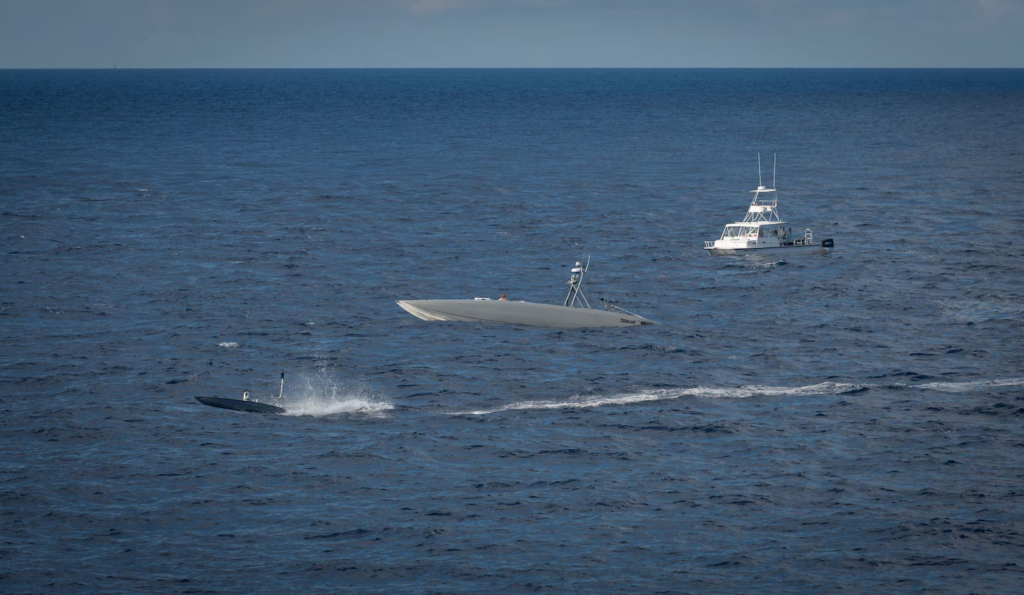
Key West, FL (September 23, 2024) Naval Information Warfare Center (NIWC) Atlantic participated in U.S. Naval Forces Southern Command/U.S. 4th Fleet’s annual Hybrid Fleet Campaign (HFC) event in Key West Harbor from Sept. 19 to 26. During the experiment that involved two dozen unmanned air/surface/underwater vehicles, NIWC Atlantic assessed how emerging communications capabilities integrated with unmanned systems both ashore and aboard the expeditionary fast transport USNS Burlington (T-EPF-10). (U.S. Navy photo by Joe Bullinger)

By U.S. Naval Forces Southern Command/U.S. 4th Fleet Public Affairs  

Sept. 27, 2024 

KEY WEST, Fla.  –  U.S. Naval Forces Southern Command/U.S. 4th Fleet demonstrated unmanned air, surface and undersea capabilities from the expeditionary fast transport ship USNS Burlington during the command’s annual Hybrid Fleet Campaign Event in Key West from Sept. 19-26, 2024. 
  
The event focused on evaluating attritable unmanned kill chains, assuring command and control, and leveraging non-traditional small business innovations. It served as both a proving ground for emerging technologies and an opportunity for partner nations and industry leaders to witness capabilities that could support the hybrid fleet. 
“We are excited about again collaborating with the Office of Naval Research, other Navy commands, and our academic and industry partners to conduct multiple experiments in the Key West Operating Area,” said Dr. Chris Heagney, Naval Air Systems Command (NAVAIR) Fleet/Force Advisor, U.S. Naval Forces Southern Command/U.S. 4th Fleet. “We consider our Fleet as the test bed for experimentation and innovation, and the Fleet experiments we will conduct will hopefully lead to future victories on the battlefield.” 
  
U.S. 4th Fleet is operationalizing robotic autonomous systems with many partners including Navy Small Business Innovation Research Experimentation Cell and Naval Information Warfare Center Atlantic in support of Chief of Naval Operations objectives outlined in Project 33 of the 2024 Navigation Plan. 
  
Experiments were conducted using unmanned aircraft systems, unmanned aerial vehicles and unmanned underwater vehicles to focus on Maritime Intelligence, Surveillance, Reconnaissance and Targeting, Assured Command and Control, and Small Business Innovative Research. A key tenant of operationalizing these systems is to push technologies to their limits, embrace risk, and ensure lessons learned. 
  
“These experiments are not about reaching 100% of our objectives,” said Cmdr. David Edwards, U.S. Naval Forces Southern Command/U.S. 4th Fleet N9 Technology and Innovation Director. “The goal of the campaign is to push these technologies to their limits and learn from the exercises no matter the outcome.” 
  
The campaign aimed to combine manned and unmanned systems to allow U.S. 4th Fleet to deploy and integrate unmanned systems and AI tools to bolster maritime domain awareness, counter narcotics and counter illegal unreported and unregulated fishing efforts throughout the area of operations while learning how other fleets across the world could use robotic systems to support their objectives. 
  
In addition to demonstrating unmanned capabilities for partner nations in attendance like Chile, Colombia, Ecuador and Peru, STEM subject matter experts from various Department of the Navy laboratories participated in the Scientists-to-Sea program during the event as observers aboard USNS Burlington in the Atlantic Ocean. 
  
While weather did impact the end of the event, crews demonstrated remarkable flexibility in adapting to schedule changes. Their efforts allowed for all predetermined objectives to be met, despite the challenges. 
  
“Overall, it was a great event that wouldn’t have been possible without support from the 37 participating DoD commands, our 31 industry partners, 4 universities, and our NAS Key West hosts,” said Cmdr. Jason Queen, U.S. Naval Forces Southern Command/U.S. 4th Fleet N9 Technology and Innovation Deputy Director. “We had 4 vessels, including Burlington, showcasing cutting-edge technologies that will inform and help shape the Hybrid Fleet of the future. This collaborative effort truly exemplifies the power of partnership in advancing naval capabilities.” 
  
U.S. Naval Forces Southern Command/U.S. 4th Fleet provides the Navy a permissive theater to operate unmanned systems, develop tactics, techniques, and procedures against near-peer competitors, refine manned-unmanned command and control infrastructure, and inform the Navy’s hybrid fleet of the 2030’s.