Navy to Boost Fleet’s Electronic Attack Capability with Next Generation Jammer Low Band Contract Award 

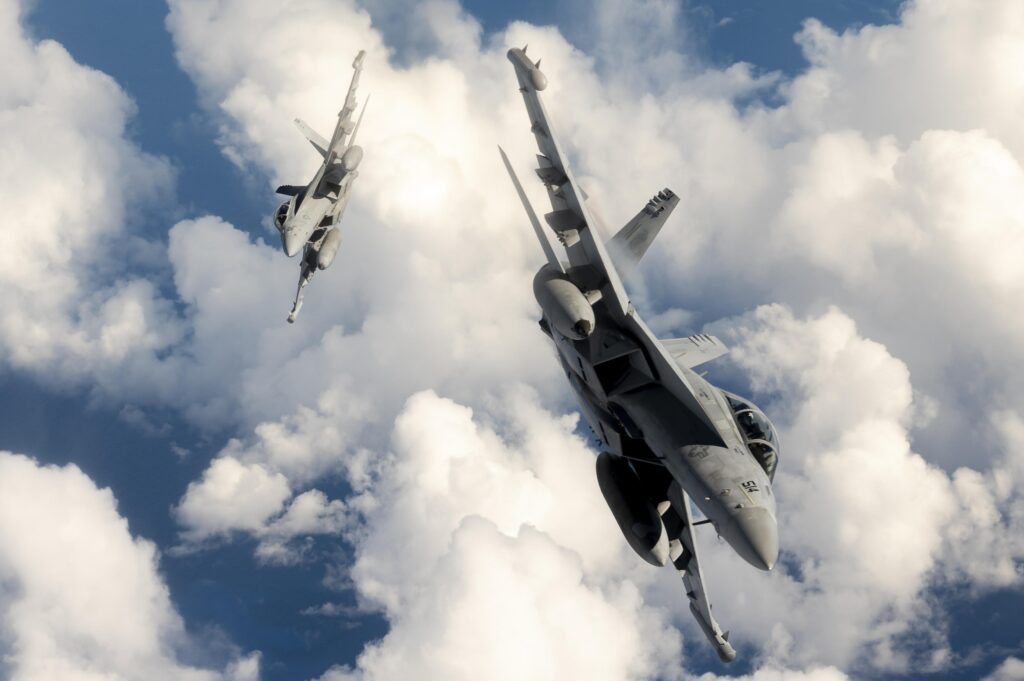
The Navy awarded a contract for the engineering and manufacturing development of the Next Generation Jammer Low Band system, which will deploy on the EA-18G Growler (pictured). It is part of a larger system that will provide enhanced AEA capabilities to disrupt, deny and degrade enemy air defense and ground communication systems. (U.S. Air Force photo by Master Sgt. Nicholas Priest)

From Naval Air Systems Command, Sept. 10, 2024 

PATUXENT RIVER, Md. — The U.S. and Australian fleets are one step closer to getting the next increment of the U.S. Navy’s most advanced airborne electronic attack (AEA) system.The Navy awarded L3 Technologies Inc., Communication Systems-West a $587.4 million contract Aug. 26 for the engineering and manufacturing development of the Next Generation Jammer Low Band (NGJ-LB) system. 

“NGJ-LB will meet current and emerging electronic warfare threats and increase the lethality of 4th and 5th generation platforms and strike weapons,” said Rear Adm. John Lemmon, Program Executive Officer for Tactical Aircraft Programs. “The Navy will partner with L3Harris to get this key capability into the hands of the warfighter.” 

The NGJ-LB is part of a larger NGJ system that will augment and ultimately replace the legacy ALQ-99 Tactical Jamming System on the EA-18G Growler aircraft. Using the latest software and Active Electronically Scanned Array technologies, NGJ will provide enhanced AEA capabilities to disrupt, deny and degrade enemy air defense and ground communication systems. 

This latest increment will counter a larger capacity of adversary systems in the low-frequency electromagnetic spectrum. NGJ-LB is scheduled to reach early operational capability in 2029. 

The Navy originally awarded the contract in 2020. Following multiple protests, the Navy issued an amended request for proposals in 2023. This contract supports the final design efforts and manufacturing of operational prototype pods and system-level prototypes for the U.S. Navy and Royal Australian Air Force (RAAF). NGJ-LB is a joint cooperative program between the U.S. Department of Defense and the Australian Department of Defence. 

“The contract award is a major step for our fleet as well as the RAAF,” said Capt. David Rueter, Airborne Electronic Attack Systems Program Office (PMA-234) Program Manager. “Our partnership with Australia to develop the newest AEA jamming capability exhibits our joint commitment to ensure continued superiority over the electromagnetic spectrum.” 

PMA-234 is responsible for acquiring, delivering and sustaining AEA systems including the NGJ, ALQ-99, and ALQ-231 Intrepid Tiger Pod II. The program office provides combatant commanders with electronic warfare capabilities that enable operational mission success. 


SECNAV Del Toro Visits Philly Shipyard for NSMV II Christening

From SECNAV Public Affairs, 9 September 2024 

PHILADELPHIA (Sept. 9, 2024) – Secretary of the Navy Carlos Del Toro visited Philly Shipyard, Inc. and spoke at the christening for the second National Security Multi-Mission Vessel Patriot State (NSMV II) Sept. 9. 

Shape“It was incredible to see how quickly the NSMV program and Philly Shipyard have come in just a few years,” said Secretary Del Toro.  “Building Patriot State and enabling its mission to train Massachusetts Marine Academy cadets will advance our Maritime Statecraft for decades.” 

Philly Shipyard is a U.S. shipbuilder pursuing a mix of commercial and government work, ranging from shipbuilding to repair and maintenance.  

Secretary Del Toro has made Maritime Statecraft and restoring the comprehensive maritime power of the United States a key component of his tenure as Secretary of the Navy. That component was advanced with Korean Shipbuilder Hanwha’s acquisition announcement of Philly Shipyard in June 2024. 

“I thank all those who answered the nation’s call to service to ensure we remain the most dominant maritime force in the world,” said Del Toro. “Your contributions to our shipbuilding industry and maritime training are vital to our Maritime Statecraft.” 

The christening was attended by U.S. Transportation Secretary Pete Buttigieg, Congresswoman Mary Gay Scanlon (D-PA 5th District), Maritime Administrator Hon. Ann C. Phillips, Massachusetts Maritime Academy President Adm. Fran McDonald, and Philly Shipyard President and CEO Steinar Nerbovik. 

When it is complete, Patriot State will be a key platform to train future leaders of the United States Merchant Marine and United States Navy. 


Coast Guard Offloads More Than $54 million in Illegal Narcotics Interdicted in Caribbean Sea 

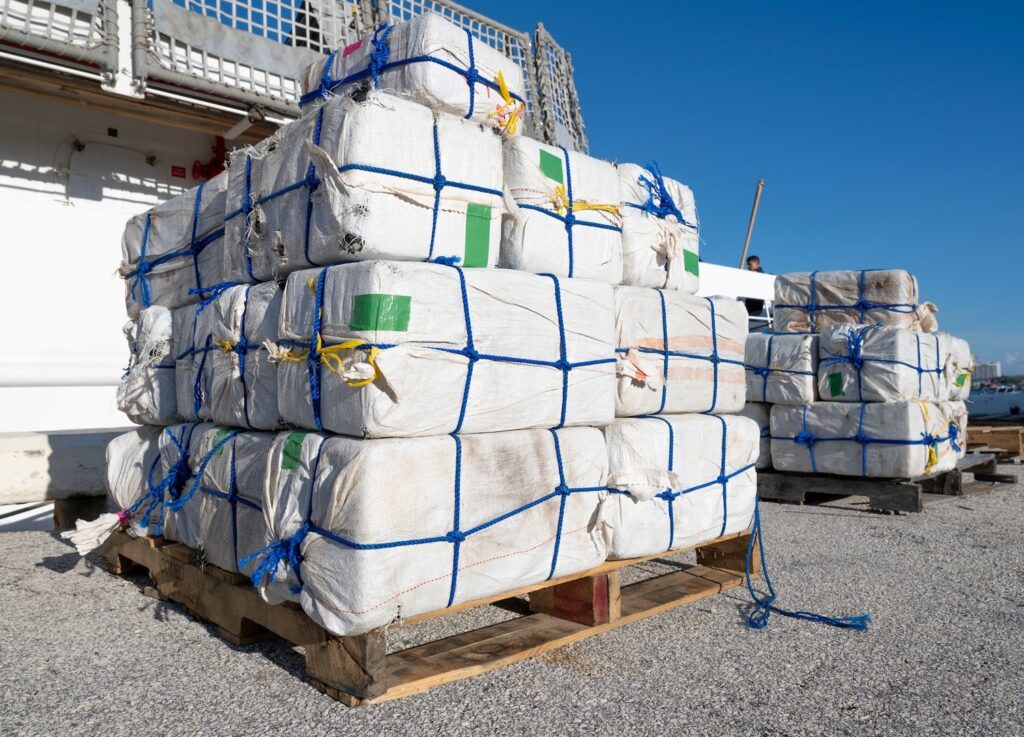
Bales of illegal narcotics, worth an estimated $54 million, are staged for an offload by crew members of U.S. Coast Guard Cutter Diligence (WMEC 616) in Port Everglades, Florida, Sept. 23, 2024. (U.S. Coast Guard photo by Petty Officer 3rd Class Eric Rodriguez) 

Sept. 10, 2024 

Coast Guard offloads more than $54 million in illegal narcotics interdicted in Caribbean Sea 

Coast Guard 7th District, Sept. 10, 2024 

MIAMI – The crew of Coast Guard Cutter Diligence offloaded more than 4,125 pounds of cocaine with an assessed street value of approximately $54 million in Port Everglades, Monday.  

Coast Guard crews, working alongside interagency and international partners, seized the illegal drugs in the international waters of the Caribbean Sea during three separate interdictions.  

The following assets and crews were involved in the interdictions: 

  • Royal Navy ship HMS Trent (P 244) 

  • U.S. Coast Guard Tactical Law Enforcement Team Pacific (PAC-TACLET) 

  • U.S. Coast Guard Cutter Joseph Napier (WPC 1115)    

  • U.S. Customs and Border Protection Air and Marine Operations (CBP-AMO) 

  • Joint Interagency Task Force South (JIATF-South) 

Along with the illicit narcotics, 11 suspected smugglers were apprehended and will face prosecution in federal courts by the U.S. Department of Justice.   

“I am extremely proud of our crew’s tenacity and professionalism, coupled with outstanding coordination with Coast Guard aircrews, during this complex counter-drug mission,” said Lt. Matthew Carmine, Coast Guard Cutter Joseph Napier commanding officer. “Their steadfast efforts, along with those of foreign allies and partner agencies, continue to prove vital to countering drug trafficking organizations and safeguarding the people of Puerto Rico and the U.S. Virgin Islands.”   

Detecting and interdicting illicit drug traffickers on the high seas involves significant interagency and international coordination. The Joint Interagency Task Force South in Key West, Florida conducts the detection and monitoring of aerial and maritime transit of illegal drugs. Once interdiction becomes imminent, the law enforcement phase of the operation begins, and control of the operation shifts to the U.S. Coast Guard throughout the interdiction and apprehension. Interdictions in the Caribbean Sea are performed by members of the U.S. Coast Guard under the authority and control of the Coast Guard’s Seventh District, headquartered in Miami.  

These interdictions relate to Organized Crime Drug Enforcement Task Forces’ (OCDETF) Strike Force Initiatives and designated investigations. OCDETF identifies, disrupts, and dismantles the highest-level criminal organizations that threaten the United States using a prosecutor-led, intelligence-driven, multi-agency approach. Additional information about the OCDETF program can be found at https://www.justice.gov/OCDETF.   

For breaking news, follow us on “X” (formerly Twitter). For additional information, find us on Facebook and Instagram.   

Visit GoCoastGuard.com to learn about active duty and reserve, officer and enlisted opportunities in the U.S. Coast Guard. Information on how to apply to the U.S. Coast Guard Academy can be found here.   


SECNAV, CNO Announce Flag Officer Assignments

From the Department of Defense, Sept. 9, 2024 

The secretary of the Navy and chief of naval operations announced today the following assignments: 

Rear Adm. Nicholas M. Homan is currently serving as commander, Fleet Information Warfare Command Pacific/Information Warfare Task Force (TF-501), Pacific, Pearl Harbor, Hawaii.  Homan has recently served as director, J-2, U.S. Central Command, MacDill Air Force Base, Florida. 

Rear Adm. Thomas S. Wall will be assigned as deputy/reserve deputy commander, Submarine Force, Atlantic, Norfolk, Virginia.  Wall is currently serving as deputy chief of staff, Submarines, Maritime Command Headquarters, Northwood, United Kingdom; and commander, Submarines, NATO, Northwood, United Kingdom. 

Rear Adm. (lower half) Dennis E. Collins, selected for promotion to rear admiral, will be assigned as reserve deputy for Fleet Readiness and Logistics, N4R, Office of the Chief of Naval Operations, Washington, D.C.  Collins is currently serving as commander, Navy Expeditionary Logistics Support Group, Williamsburg, Virginia. 

Rear Adm. (lower half) Michael L. Baker is currently serving as national geospatial director of operations; and military deputy, National Geospatial-Intelligence Agency, Springfield, Virginia.  Baker has recently served as senior defense official/defense attaché – India, New Delhi, India. 

Rear Adm. (lower half) David M. Buzzetti is currently serving as deputy Joint Staff surgeon and director, Reserve Medical Readiness Operations and Affairs, Joint Staff, Washington, D.C.  Buzzetti has recently served as deputy chief of staff, Reserve Component, N093, Office of the Chief of Naval Operations, Falls Church, Virginia.  

Rear Adm. (lower half) Stephen D. Donald will be assigned as mobilization assistant to commander, Cyber National Mission Force, U.S. Cyber Command, Fort Meade, Maryland.  Donald is currently serving as reserve deputy commander, Tenth Fleet, Fort Meade, Maryland. 

Rear Adm. (lower half) Calvin M. Foster will be assigned as deputy commander, Naval Surface Forces Atlantic, Norfolk, Virginia.  Foster is currently serving as director, Maritime Partnership Program, Sixth Fleet; and vice commander, Sixth Fleet, Naples, Italy. 

Rear Adm. (lower half) Mark F. Haigis will be assigned as deputy commander, Military Sealift Command, Norfolk, Virginia.  Haigis is currently serving as deputy commander, Navy Expeditionary Combat Command, Virginia Beach, Virginia. 

Rear Adm. (lower half) Charles Kirol will be assigned as commander, Navy Expeditionary Logistics Support Group, Williamsburg, Virginia.  Kirol is currently serving as deputy director, Logistics, Fleet Supply and Ordnance, N4, U.S. Pacific Fleet, Pearl Harbor, Hawaii.  

Rear Adm. (lower half) Joaquin Martinez de Pinillos will be assigned as reserve director, Maritime Operations, U.S. Pacific Fleet, Pearl Harbor, Hawaii.  Martinez de Pinillos is currently serving as vice commander, Seventh Fleet, Yokosuka, Japan.  

Rear Adm. (lower half) Tuan Nguyen is currently serving as senior defense official/defense attaché-China, Beijing, China.  Nguyen has recently served as a Maritime Cooperation and Competition director, U.S. Seventh Fleet, Yokosuka, Japan. 

Rear Adm. (lower half) Michael S. Richman will be assigned as deputy director for Hypersonics, Strategic Systems Programs, Washington, D.C.  Richman is currently serving as deputy commander for Cyber Engineering, Naval Sea Systems Command, Washington, D.C.  

Rear Adm. (lower half) John D. Saccomando will be assigned as reserve deputy commander, Naval Air Force Atlantic, Norfolk, Virginia.  Saccomando is currently serving as reserve deputy director of Maritime Headquarters, U.S. Pacific Fleet, Pearl Harbor, Hawaii. 

Rear Adm. (lower half) Eric H. Ver Hage is currently serving as deputy to the deputy assistant secretary of defense for international industry engagement, Washington, D.C.  Ver Hage has recently served as special assistant to commander, Naval Sea Systems Command, Washington, D.C. 

Rear Adm. (lower half) Kimberly A. Walz will be assigned as reserve director, Maritime Operations, U.S. Fleet Forces Command, Norfolk, Virginia.  Walz is currently serving as deputy commander, Naval Surface Force, U.S. Atlantic Fleet, Norfolk, Virginia.  

Capt. Benjamin E. Baran, selected for promotion to rear admiral (lower half), will be assigned as deputy commander, Navy Personnel Command, Millington, Tennessee.  Baran is currently serving as commanding officer, Navy Reserve, U.S. Fleet Forces Command (N1), Virginia Beach, Virginia. 

Capt. David N. Barnes, selected for promotion to rear admiral (lower half), will be assigned as deputy commander, Navy Recruiting Command, Millington, Tennessee.  Barnes is currently serving as deputy commander, Navy Reserve Region Readiness and Mobilization Command Fort Worth, Fort Worth, Texas.  

Capt. Shawn G. Denihan, selected for promotion to rear admiral (lower half), will be assigned as reserve deputy commander, Naval Air Systems Command, Patuxent River, Maryland.  Denihan is currently serving as chief engineer, Navy Reserve, Naval Air Systems Command, Patuxent River, Maryland.  

Capt. Michael L. Freidberg, selected for promotion to rear admiral (lower half), will be assigned as Reserve Support, N2/N6, Office of the Chief of Naval Operations, Washington, D.C. Freidberg is currently serving as regional commander, Navy Reserve Naval Information Force Reserve Headquarters, Suffolk, Virginia. 

Capt. Reginald H. Hendrix, selected for promotion to rear admiral (lower half), will be assigned as deputy commander, Navy Expeditionary Combat Command, Virginia Beach, Virginia.  Hendrix is currently serving as deputy commander, Maritime Expeditionary Security Group Two, Virginia Beach, Virginia. 

Capt. Marcus J. Lockard Jr. selected for promotion to rear admiral (lower half), will be assigned as reserve deputy director, Maritime Headquarters, U.S. Pacific Fleet, Pearl Harbor, Hawaii.  Lockard is currently serving as commanding officer, Navy Reserve Pacific Fleet Command, N3N5, Pearl Harbor, Hawaii. 

Capt. Ryan K. Mahelona, selected for promotion to rear admiral (lower half), will be assigned as reserve deputy commander, Tenth Fleet, Fort Meade, Maryland.  Mahelona is currently serving as deputy chief of staff for Warfare Readiness and Integration, Navy Reserve, Naval Information Force Reserve Headquarters, Suffolk, Virginia. 

Capt. Jason M. Naidyhorski, selected for promotion to rear admiral (lower half), will be assigned as director, Maritime Partnership Program, Sixth Fleet; and vice commander, Sixth Fleet, Naples, Italy.  Naidyhorski is currently serving as deputy commander, Navy Reserve Region Readiness and Mobilization Command, Norfolk, Virginia. 

Capt. Troy S. Pugh, selected for promotion to rear admiral (lower half), will be assigned as deputy director, Logistics, Fleet Supply and Ordnance, N4, U.S. Pacific Fleet, Pearl Harbor, Hawaii.  Pugh is currently serving as commanding officer, Navy Reserve, U.S Indo-Pacific Command, J4 KIT, Camp Smith, Hawaii.  

Capt. Katie F. Sheldon, selected for promotion to rear admiral (lower half), will be assigned as vice commander, Seventh Fleet, Yokosuka, Japan.  Sheldon is currently serving as commanding officer, Navy Reserve, U.S. Third Fleet, San Diego, California. 


LPD USS Richard M. McCool, Jr. Commissioned 

Navy Junior Sea Cadets and Navy Junior Reserve Officer Training Corps cadets make and arrival line for USS Richard M. McCool Jr. Commissioning Ceremony at Naval Air Station Pensacola in Pensacola, Florida Sept. 7, 2024. (DoD photo by EJ Hersom)

From Commander, Naval Surface Force, U.S. Pacific Fleet Public Affairs 

NAVAL AIR STATION PENSACOLA, Fla. (September 7, 2024) – The San Antonio-class amphibious transport dock USS Richard M. McCool, Jr. (LPD 29) commissioned aboard Naval Air Station Pensacola, Florida, September 7. 

 
Welcomed throughout the week, the crew, joined by the ship’s sponsor, Shana McCool, and McCool’s great-grandchildren, attended community events supported by local businesses, flyovers by the Navy’s Blue Angels flight demonstration squadron, a visit by the Pensacola Blue Wahoos, and ceremony host, Naval Air Station Pensacola. Participating in the ceremony were Marine Aviation Training Support Groups Two-One and Two-Three, Navy Training Wing Ten (VT-10) Wildcats, Navy Band Southeast, McGuire’s Pipe and Drum Band, and 350 Junior Reserve Officer Training Corps and Navy League Sea Cadets from Alabama, Arkansas, and Pensacola. 

During the ceremony guest speaker, Secretary of the Navy Carlos Del Toro, honored the ship’s namesake as they brought the ship to life, beginning its commissioned service. “Captain McCool’s leadership in the face of grave danger and his acts of heroism to save the crew and the ship our nation entrusted to him are indeed an example for all throughout.” 

“I am proud that the Department of the Navy is pursuing the award of the Amphibious Multi-Ship Procurement Contract for a total of three San Antonio Class amphibious ships—just like USS Richard M. McCool Jr.—along with an America Class amphibious assault ship,” Del Toro continued. “I am proud to see these Sailors and Marines bring this incredible warship to life in service to our nation, much like this ship’s courageous namesake.” 

Chief of Naval Operations Adm. Lisa Franchetti also reflected on the importance of the Navy-Marine Corps team. “The LPD plays an essential role on our Blue-Green team as the workhorse of our Amphibious Fleet, and soon the USS Richard M. McCool, Jr. will set sail and begin embarking, transporting, and landing elements of our Navy-Marine Corps team for a variety of expeditionary warfare training and missions,” said Franchetti. “The commissioning of this ship puts more players on the field in America’s Warfighting Navy—players the Navy needs to promote our Nation’s prosperity and security, deter aggression, and provide options to our Nation’s leaders. We need more of these players—platforms that are ready with the right capabilities, weapons, and sustainment to ensure we are fully prepared to fight and win our Nation’s wars in this decade and beyond.” 

“LPD 29 represents a shift in what an amphibious warship is,” said Gen. C.J. Mahoney, Assistant Commandant of the Marine Corps. “With the latest in integrated SPY-6 (air and missile defense radar system) and Next Generation Surface Search Technology, she enables reconnaissance and counter reconnaissance on the forward edge of the battlespace – making sense and decision space for the Fleet and Joint Force Commanders.” 

Emphasizing the critical role of the integrated Navy-Marine Corps team in the event that deterrence fails, Gen. Mahoney concluded, “If the Marine Corps is a bullet to be fired by the Navy, the USS Richard M. McCool, Jr. – with the very crew you see here today – will pull the trigger.” 

Commanding Officer Capt. Jeff Baker thanked family, friends, the commissioning committee, those who were not able to be present, the communities of Pascagoula and Pensacola, and Gulf Coast shipbuilders – electricians, machinists, pipe fitters, painters, riggers, welders, and more; everyone who helped to bring this ship to life 

Echoing McCool’s words when receiving the Medal of Honor “Fight as a unit, not as an individual”, Baker talked about the importance of the crew. “I hope that we’ve made him proud. I hope that we have lived up to and will continue to honor his legacy. The remarkable warship moored behind me, is ready for pictures, but its full of potential energy. It takes 330 officers, chief petty officers, and enlisted crew to sail her and make our warship ready for tasking. Manning these rails are the finest men and women this country has to offer. I couldn’t be prouder of them. The ship needs them all. I need them all. The Navy and our country need them all. Please thank them. They’ve got the watch.” 


“LPD 29, Richard M. McCool, when deployed comes equipped with the most advanced weapons system ever produced. The weapons system with unlimited reach, lethality, and combat effectiveness. The only system known to mankind that cannot be defeated by any adversary anywhere in the world. The weapons system of the United States Marines Corps.” 

LPD 29 is the 13th San Antonio-class LPD commissioned in the United States Navy, and the first U.S. Navy ship to bear this namesake. 

The naming of LPD 29 honors U.S. Navy Capt. Richard M. McCool, Jr., Ret. who received the Medal of Honor in 1945 for the heroism he displayed after his ship, USS LSC 122, was attacked by kamikaze aircraft in the Battle of Okinawa. Despite suffering from shrapnel wounds and painful burns, he led efforts to battle a blazing fire on his ship and rescue injured Sailors. 

McCool was a leader whose life and legacy revolved around service. In addition to USS LSC 122, he commanded the USS LSC 44 and served on the USS McKean (DD-784), USS Frank Knox (DD-742), and USS Leyte (CV-32), and at the University of Oklahoma, and Eighth Naval District, New Orleans, Louisiana. Attending Boston University in Massachusetts, he was redesignated as a public information officer with assignments as the deputy commander at the Armed Forces Information School at Fort Slocum, New York; and to Commander, Naval Base, Long Beach, California; Bureau of Naval Personnel in Washington, D.C.; Commander, South Eastern Asia Treaty Organization, Bangkok, Thailand; Ninth Naval District at Great Lakes, Illinois; Commander, First Fleet; and Commander, U.S. Naval Forces, and Commander, Seventh Fleet, Japan. Retiring as a captain in 1974 after 35 years of active duty, he continued serving his community through engagement in local politics in the Bremerton, Washington, area. McCool died in March 2008 and is buried at Naval Academy Cemetery in Annapolis, Maryland. 

San Antonio-class amphibious transport dock ships are warships that embark, transport, and land elements of a landing force for a variety of expeditionary warfare missions. They provide the Navy and Marine Corps with modern, sea-based platforms that are networked, survivable, and built to operate in the 21st century, with the MV-22 Osprey, the upgraded Amphibious Assault Vehicle, and future means by which Marines are delivered ashore. 


Rite-Solutions Receives $39 Million Contract to Design and Develop Submarine Network Monitoring and Training Systems 

MIDDLETOWN, RI (September 9, 2024)—Rite-Solutions was recently awarded a $39.3 million contract to continue support of the Inter Subsystem Monitoring Tool (ISMT) and On-Board Team Trainer Master Controller (OBTT-MC) applications. The company will provide design, engineering development, integration, testing, logistics, delivery and life-cycle sustainment in support of the Program Executive Office Undersea Warfare Systems (PEO UWS), Submarine Combat and Weapons Control Program Office (PMS 425). 

“This work supporting PMS 425 is mission critical and ensures our submarine fleet possess the most advanced combat control system capabilities,” says Joe Marino, Rite-Solutions co-founder and CEO. “Rite-Solutions gives our customers an Information Advantage® by providing the cutting-edge technical expertise needed to deliver data to the warfighter quickly and efficiently.”   

As the prime contractor, Rite-Solutions will lead a team that includes Lockheed Martin, SEACORP, Innovative Defense Technologies, and Wider Security to perform application modification, upgrades, test and evaluation, delivery and legacy system support for ISMT and OBTT-MC. 

Execution of this contract falls under Rite-Solutions’ Enterprise Solutions Business Unit, led by Vice President Andrew Thibaudeau. “ISMT provides the sailor with a centralized location for monitoring and troubleshooting network traffic across the entire Submarine Warfare Federated Tactical Systems (SWFTS) Network, and OBTT-MC provides the onboard capability to coordinate team training across subsystems such as weapons, sensors, and launchers while simulating the combat environment,” said Thibaudeau. 

Laurie Carter, Executive Vice President of Business Development and Strategy, summarized the overall impact of this award: “Rite-Solutions has supported PMS 425 and ISMT/OBTT-MC for the past 10 years and we are honored to continue supporting this important initiative for at least another seven years.  We are proud of our role in ensuring these critical applications are operational for our sailors.” 


HII Delivers Advanced REMUS 620 UUVs to NOAA Less than 24 Months after Unveiling 

From HII 

MCLEAN, Va., Sept. 09, 2024 (GLOBE NEWSWIRE) — HII’s (NYSE: HII) Mission Technologies division has successfully built and delivered two REMUS 620 uncrewed underwater vehicles (UUVs) to the National Oceanic and Atmospheric Administration (NOAA) for enhanced high-resolution ocean floor mapping. 

Unveiled only 22 months ago in November 2022, the REMUS 620 is the first medium-class UUV designed to deliver a comprehensive range of above- and below-water capabilities over long distances. 

“The rapid delivery of the REMUS 620 underscores HII’s exceptional agility and efficiency in producing and deploying uncrewed systems that meet the needs of our customers,” said Duane Fotheringham, president of Mission Technologies’ Unmanned Systems business group. “The swift production and delivery timeline to NOAA demonstrate our commitment to supporting our customers’ mission requirements with rapid development and deployment of new capabilities and technology.” 

The REMUS 620 vehicles incorporate cutting-edge modular design and engineering. Like all the REMUS UUVs built by HII, the NOAA REMUS 620 vehicles have been modified with customized enhancements for NOAA’s advanced underwater mapping and habitat restoration missions. Upgrades include a synthetic aperture sonar module, additional energy module, and auxiliary equipment. 

A photo accompanying this release is available at: https://hii.com/news/hii-delivers-advanced-remus-620-uuvs-to-noaa-less-than-24-months-after-unveiling/

NOAA plans to use the REMUS 620 vehicles for high-resolution mapping in the Gulf of Mexico, with a focus on restoring Mesophotic and Deep Benthic Communities — or dim and sunlight-free seafloor habitats — injured by the 2010 Deepwater Horizon oil spill. The timely delivery of these UUVs will allow NOAA to accelerate its critical environmental restoration and exploration missions, building on its existing use of other REMUS models for habitat characterization, marine archaeology, and various oceanographic studies. 

“The market interest in the REMUS 620 has been tremendous,” Fotheringham said. “The rapid delivery to NOAA, alongside our growing backlog of REMUS 300 orders, reinforces the market’s confidence in the continued capabilities and versatility of the REMUS series.” 

More than 600 REMUS UUVs have been sold globally and are in operation in more than 30 countries, including 14 NATO members. Over 90% of the vehicles delivered in the past 23 years are still operational today, demonstrating the platform’s durability and the ability to integrate new technologies as they are developed. 


SECNAV Del Toro Attends USNS Lansing Keel Laying at Austal Shipyard 

Artist rendering of the future USNS Lansing (EPF 16). (Austal USA)

From SECNAV Public Affairs, 6 September 2024 

MOBILE, Ala. (Sept. 6, 2024) – Secretary of the Navy Carlos Del Toro attended the keel laying ceremony for USNS Lansing (EPF 16) alongside ship sponsor Michigan Gov. Gretchen Whitmer in Mobile, Alabama, Sept. 6, 2024. 
 
The Expeditionary Fast Transport (EPF) shipbuilding program provides high speed, shallow draft transportation capability to support the intra-theater maneuver of personnel, supplies and equipment for the U.S. Navy, Marine Corps, and Army. 
 
“Our EPFs are force multipliers for our combat logistics fleet,” said Secretary Del Toro. “They allow for quicker responses to crises, strengthen our ability to conduct humanitarian and disaster relief operations, and provide logistical support for special forces missions.” 
 
Lansing will be manned by dedicated crews, comprised of both civilian mariners from the Military Sealift Command and embarked military personnel, whose expertise and teamwork will ensure the ship operates at peak efficiency, delivering critical resources and services exactly when and where they’re needed. 
 
The keel laying represents the success and importance of our Maritime Statecraft initiative, which encompasses a national, whole-of-government effort to restore the comprehensive maritime power of our nation. 
 
“Michigan has a world-class skilled workforce and is a leader in developing the techno-industrial workforce we need to build and assemble the ships, munitions, parts, and pieces our Navy, Marine Corps, and indeed our nation need to promote peace around the world,” said Del Toro. “Austal, building this ship, represents another key line of effort under our new, national approach to Maritime Statecraft—a foreign shipbuilder establishing a U.S. subsidiary, investing in America, and partnering with us to build American ships.” 
 
USNS Lansing is the first ship named in honor of Michigan’s capital city, Lansing. A previous USS Lansing (DE 388) was named for Aviation Machinist Mate First Class William Henry Lansing and decommissioned in 1965. 
 
Bridging the gap between low-speed sealift and high-speed airlift, EPFs transport personnel, equipment and supplies over operational distances with access to littoral offload points including austere, minor and degraded ports in support of the Global War on Terrorism/Theater Security Cooperation Program, Intra-theater Operational/Littoral Maneuver and Sustainment and Seabasing. EPFs enable the rapid projection, agile maneuver and sustainment of modular, tailored forces in response to a wide range of military and civilian contingencies such as Non-Combatant Evacuation Operations, Humanitarian Assistance and Disaster Relief. 
 
Secretary Del Toro made the announcement alongside Governor Gretchen Whitmer and Mayor Andy Schor of Lansing, Michigan, July 22, in addition to announcing the Michigan Maritime Manufacturing (M-3) initiative. 
 
Austal USA, located in Mobile, Alabama, was realized in 1999 for the purpose of reaching the ever increasing commercial and defense aluminum vessel market in the United States. Our shipbuilding facility occupies 164 acres on the eastern shore of the Mobile River and is strategically positioned at the mouth of the Gulf of Mexico. 


US Marine Corps Orders L3Harris Multi-Channel Radios Under 10-Year IDIQ 

From L3Harris, Aug 28, 2024  

ROCHESTER, N.Y., Aug. 28, 2024 — L3Harris Technologies (NYSE:LHX) has received a new order from the U.S. Marine Corps for multi-channel handheld and vehicular radio systems worth more than $120 million, bringing program orders to date above $600 million.  

The recent order is under a 10-year, $750 million indefinite delivery, indefinite quantity contract for L3Harris Falcon IV® handheld radios. These software-defined devices allow for immediate upgrades to the latest in NSA-certified, high-assurance standards and access to a broad resilient waveform portfolio to maintain spectrum superiority against emerging threats.  

“Our continued investment toward high-assurance technology centers around providing U.S. Marines and other customers the ability to operate seamlessly on the move without enemy interference or detection,” said Chris Aebli, President, Tactical Communications, L3Harris. “These highly advanced systems allow our fighting forces to coordinate with a growing coalition that have selected L3Harris as their resilient communication systems provider.” 

L3Harris delivers communication systems enabling Combined Joint All-Domain Command-and-Control concepts with more than 60 years of experience supporting joint force and coalition partner initiatives, including the U.S. Army’s Handheld, Manpack and Small Form Factor, the U.S. Special Operations Command’s Next Generation Tactical Communications and the UK Ministry of Defence’s Multi Mode Radio programs. 


QinetiQ US Awarded Contract to Support Delivery of Hardware on CVN 81 

STRAIT OF GIBRALTAR (Jan. 5, 2023) The world’s largest aircraft carrier USS Gerald R. Ford (CVN 78) transits the Strait of Gibraltar, Jan. 5, 2024. CVN 81 will be the fourth ship of the class. (U.S. Navy photo by MC2 Jacob Mattingly)

From QinetiQ, Sept. 5, 2024 

MCLEAN, Va., — QinetiQ US announces that it has received a contract from General Atomics Electromagnetic Systems (GA-EMS) in San Diego, California to deliver control hardware and software for the Electromagnetic Aircraft Launch System (EMALS) and the Advanced Arresting Gear (AAG) to be installed on the U.S. Navy’s next Ford-class aircraft carrier, the future Doris Miller (CVN 81). 

This contract reflects a multi-year production task to update, procure, assemble, and test launch control and arresting control hardware. For more than a decade, QinetiQ has supported GA-EMS and the U.S. Navy by providing the hardware and software for the EMALS Launch Control Subsystem, as well as control hardware and software for the AAG system. These systems were developed for and installed on the USS Gerald R. Ford (CVN 78) and future Ford-class carriers John F. Kennedy (CVN 79) and Enterprise (CVN 80). 

“QinetiQ US is honored to continue our partnership with General Atomics Electromagnetic Systems, delivering critical technology for the fourth ship in the Ford-class, CVN 81. Our ongoing commitment to excellence ensures that the Navy is equipped with the best systems to accomplish its mission with increased reliability, improved operational efficiencies, and significantly decreased lifecycle costs,” said Christopher Forrest, Executive Vice President of Advanced Robotics and Mission Solutions at QinetiQ US. 

Development and production of the hardware and software will be done in QinetiQ’s Franklin, Massachusetts facility.