Acting Sec. Su, Navy Sec. Del Toro Highlight Workforce Development, National Security at Newport News’ Apprentice School

Toured site of PCU John F. Kennedy’s construction, world’s most capable, adaptable carrier 

From the U.S. Department of Labor, Aug. 29, 2025 

WASHINGTON – Acting Secretary of Labor Julie Su and Secretary of the Navy Carlos Del Toro visited Virginia today to see how the Apprentice School in Newport News – one of the nation’s critical apprenticeship programs – is making construction of one of the world’s most capable and adaptable aircraft carriers, the PCU John F. Kennedy, possible. 

During their visit, Secretaries Su and Del Toro highlighted their shared commitment to strengthening the Department of Defense’s organic and industrial base workforce.  

“Our partnership with the U.S. Navy will enhance the quality of jobs for workers who play an essential role in protecting our nation,” said Acting Secretary of Labor Julie Su. “The Department of Labor is committed to making sure our Navy has the strongest, most diverse and skilled workforce needed to ensure military readiness and modernization.”   

The U.S. Navy and the Department of Labor have partnered to help advance Secretary Del Toro’s Maritime Statecraft Initiative and to create high-quality, good-paying jobs critical to national security, using practices included in the departments of Labor and Commerce’s Good Jobs Principles to fill the estimated 10,000 jobs needed per year over the next 10 years in the growing maritime industry.  

“The U.S. Navy’s investments in the highest possible job quality for its workforce will help to reinvigorate America’s comprehensive maritime power,” said Secretary of the Navy Carlos Del Toro. “With skilled workers who represent the best of America, the defense industrial base and maritime ecosystem will continue to thrive with an ingenuity and dedication recognized around the world.”   

Good Jobs Principles seek to create broad, equitable access to good jobs and attract the most diverse pool of talent possible, by reaching into traditionally underserved populations and communities. By doing so, the departments of Labor and Defense intend to build the skilled, diverse and ready workforce needed to strengthen the U.S. Navy in an era of intense strategic competition. 

As part of his Maritime Statecraft strategy, Secretary Del Toro is rallying organized labor as an essential stakeholder in ensuring America’s maritime power. Currently, the Navy is piloting a program to train experienced union welders to join a rotational expeditionary workforce that deploys to shipyards nationwide to support naval objectives. In October, the first class of 169 union welders will begin work on PCU John F. Kennedy at Newport News.  

In this joint effort, the departments will pursue the following key outcomes:  

  • Expanded equitable workforce development pathways to good jobs through pre-apprenticeship and Registered Apprenticeship programs.   

  • Broader active partnership with the Department of Labor’s Job Corps program.  

  • Developed and expanded partnerships with agencies, including the department’s Employment and Training Administration, Veterans Employment and Training Service, and Women’s Bureau to advance to advance workforce development initiatives aligned with the Good Jobs Principles.  

Founded in 1919, the Apprentice School at Newport News Shipbuilding offers eight advanced programs of study and apprenticeships in 19 shipbuilding disciplines for terms from four to eight years. Offering apprentices the opportunity to earn college credit, receive competitive pay and benefits and learn a trade, the institution is accredited by the Commission of the Council on Occupational Education and registered with the Virginia Apprenticeship Council. The Apprentice School is a Department of Labor Apprenticeship Ambassador.  


68th Annual Tailhook Symposium Concludes 

Rear Adm. Doug Verissimo, commander, Naval Air Force Atlantic, speaks during the 2024 Tailhook Symposium in Reno, Nevada. The symposium brought together Navy and Marine Corps aviators and industry partners to discuss significant issues impacting the Naval Aviation Enterprise. (U.S. Navy photo by Mass Communication Specialist 1st Class Ryan J. Batchelder)

By Petty Officer 1st Class Aron Montan, Commander, Naval Air Forces   

RENO, Nev. – U.S. Navy and Marine Corps aviators, veterans, industry partners and supporters attended the 2024 Tailhook Association symposium, Aug. 22-24, at the Grand Sierra Resort in Reno, Nevada. The symposium consisted of various speaking panels, junior officer engagements, an awards luncheon, winging ceremony and a banquet. 
 
Guest speakers included Adm. Sam Paparo, commander U.S. Indo-Pacific Command; Adm. Daryl Caudle, commander, U.S. Fleet Forces Command; Vice Adm. Dan Cheever, commander Naval Air Forces; Rear Adm. Michael Donnelly, director, Air Warfare Division; Rear Adm. Daniel P. Martin, commander, Naval Safety Command; and Rear Adm. Marc Miguez, commander, Carrier Strike Group Two. 
 
The 68th Tailhook Symposium focused on today’s warfighters and topics relevant to the modern landscape of the Naval Aviation Enterprise (NAE). This year’s theme of “Be Ready” emphasized the importance of alignment and teamwork between warfighters and industry partners to ensure mission readiness. 
 
“Naval aviation is essential to our maritime nation,” said Cheever. “Sea control requires air superiority, and air superiority is what naval aviation provides. The U.S. Navy’s indispensable aircraft carriers, carrier air wings and the Tailhookers who operate on them are key to our ability to win.” 
 
The three-day event kicked off with an integrated air dominance panel and NAE update to industry partners, emphasizing their contributions to naval aviation. On the second day of the event, Cheever moderated a flag officer panel facilitated discussion between flag officers and Navy and Marine Corps attendees. 
 
“The Navy, enabled by naval aviation, provides credible capability for deterrence, sea control, preservation of peace, response in crisis and power projection to win decisively in combat,” said Cheever. “When coupled with our expeditionary forces, USMC, joint forces, allies and partners and industry partners, we are a formidable and key part of distributed maritime operations.” 
 
Additionally, a panel of junior officers from Carrier Air Wing Three, embarked on the USS Dwight D. Eisenhower (CVN 69), shared their experiences of operating in a combat zone, emphasizing the intense coordination required during missions and the personal growth they gained facing unprecedented challenges. They highlighted the camaraderie among the crew and the critical role their training played in ensuring successful operations under high-pressure conditions. 
 
Tailhook 2024 concluded with a winging ceremony where student naval aviators received their “Wings of Gold,” marking their transition to fully qualified naval aviators. 
 
The Tailhook Association is an independent, nonprofit organization supporting aircraft carrier and other sea-based aviation. 
 
The NAE benefits national security by improving the operational readiness of Naval Aviation. The NAE provides a collaborative forum for leaders to deliberate and resolve interdependent issues affecting multiple stakeholders across the whole of naval aviation. 
 
As the type commander for naval aviation, Commander, Naval Air Forces’ mission is to “man, train and equip deployable, combat-ready Naval Aviation forces that win in combat.” 


Coast Guard Cutter Campbell Returns Home Following 73-day Patrol in Windward Passage 

Coast Guard Cutter Campbell is moored to the pier, June 26, 2024, during a port-of-call in Miami, Florida. (U.S. Coast Guard photo by Cmdr. Jonathan R. Harris) 

From U.S. Coast Guard Atlantic Area, Aug. 29, 2024 

NEWPORT, R.I. — The crew of the Coast Guard Cutter Campbell (WMEC 909) returned to their home port in Newport, Wednesday, following a 73-day migrant interdiction patrol in the Windward Passage. 

Campbell deployed in support of Homeland Security Task Force – Southeast (HSTF-SE) and Operation Vigilant Sentry (OVS) while underway in the Seventh Coast Guard District’s area of responsibility. During patrol, Campbell’s crew conducted maritime safety and security missions while working to detect, deter and intercept unsafe and illegal maritime migration ventures bound for the United States. 

While deployed, Campbell served in the lead role as commander, task unit for multiple assets operating in the Windward Passage and coordinated the employment of Coast Guard Cutters Venturous (WMEC 625), Isaac Mayo (WPC 1112), Joseph Napier (WPC 1115) and Robert Yered (WPC 1104). 

During the patrol, Campbell’s crew cared for and repatriated 11 Haitian migrants. In addition, the combined presence of U.S. Coast Guard assets in the Windward Passage supported the interdiction and deterrence of 643 migrants throughout Campbell’s deployment. 

“I am continuously impressed by the professionalism and work ethic demonstrated by the many other U.S. Coast Guard crews on cutters and aircraft that are constantly operating in the Windward Passage,” said Cmdr. Jonathan Harris, commanding officer of Campbell. “Teamwork is one of our greatest strengths on Campbell, and that was a key factor in preventing unsafe migrant ventures on board overcrowded vessels in these waters.” 

To ensure operational readiness for this mission, the crew of Campbell trained extensively while underway with Coast Guard Air Station Clearwater and Coast Guard Air Station Cape Cod. Campbell conducted bow hoisting, flight deck hoisting, helicopter launches and landings. These exercises were aimed at preparing for medical emergencies and improving response times when working with aviation assets. 

HSTF-SE serves as the Department of Homeland Security lead for operational and tactical planning, command and control, and acts as a standing organization to interdict unlawful maritime migration attempts with federal, state and local partners. HSTF-SE continues to enhance enforcement efforts in support of OVS, which is the 2004 DHS plan to respond to mass maritime migration in the Caribbean Sea and the Florida Straits. 

Campbell is a 270-foot, Famous-class medium endurance cutter. The cutter’s primary missions are counter-narcotics operations, migrant interdiction, living marine resources protection, and search and rescue in support of U.S. Coast Guard operations throughout the Western Hemisphere. 

For more information on how to join the U.S. Coast Guard, visit GoCoastGuard.com to learn about active duty, reserve, officer, and enlisted opportunities. Information on how to apply to the U.S. Coast Guard Academy can be found here

For more, follow us on Facebook, Instagram and X.  


Coast Guard Heavy Icebreaker Returns to Seattle Following Antarctic Deployment 

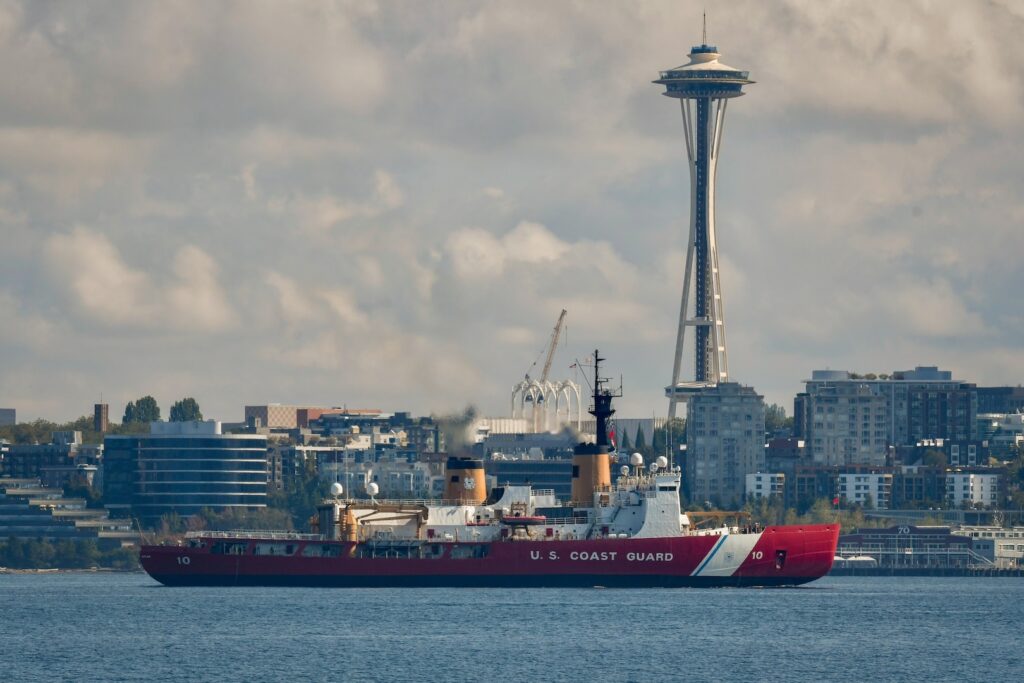
U.S. Coast Guard Cutter Polar Star (WAGB 10) transits Elliott Bay near the Seattle waterfront as the cutter approaches its homeport of Coast Guard Base Seattle, Aug. 25, 2024. At a length of 399-feet, the Polar Star is one of the largest cutters in the Coast Guard’s fleet. (U.S. Coast Guard photo by Capt. Holly Harrison) 

From U.S. Coast Guard Pacific Area, Aug. 28, 2024 

SEATTLE — The U.S. Coast Guard Cutter Polar Star (WAGB 10) and crew returned to Seattle, Sunday, after 285 days away from the cutter’s home port. 
 
Following a 138-day deployment to Antarctica supporting Operation Deep Freeze 2024, the Polar Star reported directly to Mare Island Dry Dock (MIDD) LLC. in Vallejo, California, to commence the fourth phase of a five-year Service Life Extension Project (SLEP). 
 
The work completed at MIDD is part of the in-service vessel sustainment program with the goal of recapitalizing targeted systems, including propulsion, communication, and machinery control systems, as well as effecting significant maintenance to extend the cutter’s service life. 
 
Polar Star’s SLEP work is completed in phases to coordinate operational commitments such as the cutter’s annual Antarctic deployment. Phase four began on April 1, 2024, targeting three systems: 

Boiler support systems were recapitalized, including the electrical control station that operates them. 

The heating, ventilation and air conditioning (HVAC) system was refurbished through the overhaul of ventilation trunks, fans and heaters that supply the cutter’s berthing areas. 

The flooding alarm system was redesigned, providing the ability to monitor machinery spaces for flooding from bow to stern. 

Additional work not typically completed every dry dock included removing and installing the starboard propulsion shaft, servicing and inspecting both anchor windlasses, inspecting and repairing anchor chains and ground tackle, cleaning and inspecting all main propulsion motors and generators, installation of an isolation valve to prevent seawater intrusion into the sanitary system, and overhauling the fuel oil purifier. 
 
Phase four of Polar Star’s SLEP took place over approximately 140 days and represented a total investment of $16.8 million. By replacing outdated and maintenance-intensive equipment, the Coast Guard will mitigate lost mission days caused by system failures and unplanned repairs. The contracted SLEP work items and recurring maintenance is taking place within a five-year, annually phased production schedule running from 2021 through 2025. 
 
The Coast Guard is investing in a new fleet of polar security cutters (PSC) that will sustain the service’s capabilities to meet mission needs in both the Arctic and Antarctic regions. The SLEP allows Polar Star to continue providing access to the Polar regions until the PSCs are operational and assume the high latitude missions. Polar security cutters will enable the U.S. to maintain defense readiness in the Polar regions; enforce treaties and other laws needed to safeguard both industry and the environment; provide ports, waterways and coastal security; and provide logistical support – including vessel escort – to facilitate the movement of goods and personnel necessary to support scientific research, commerce, national security activities and maritime safety. 
 
“Completing a dry dock availability is a positive milestone, and despite challenges due to being away from home port, our crew’s energy and resilience inspires me every day,” said Capt. Jeff Rasnake, Polar Star’s commanding officer. “The amount of time and effort put into Polar Star and its mission is truly remarkable. The dedication and teamwork displayed across all stakeholders exemplifies the Coast Guard’s flexibility and commitment to ensuring the continued success of Operation Deep Freeze as well as strengthened partnerships among nations invested in the Antarctic latitudes. I look forward to observing how this crew will continue to grow as a team and to discovering what we can accomplish together.” 
 
Along with the rigorous maintenance schedule, Polar Star held a change of command ceremony on July 8, 2024, in Vallejo, where Rasnake relieved Capt. Keith Ropella as the cutter’s commanding officer. Rasnake served as the deputy director for financial management procurement services modernization and previously served as Polar Star’s executive officer. Ropella transferred to the office of cutter forces where he will oversee the management of the operational requirements for the cutter fleet and develop solutions for emerging challenges facing the afloat community. 
 
Polar Star is the Coast Guard’s only active heavy polar icebreaker and is the United States’ only asset capable of providing year-round access to both polar regions. 
 
Commissioned in 1976, the cutter is 399 feet, weighing 13,500 tons with a 34-foot draft. Despite reaching nearly 50 years of age, Polar Star remains the world’s most powerful non-nuclear icebreaker with the ability to produce up to 75,000 horsepower. Polar Star’s SLEP is important to the survival of the Antarctic mission and crucial to the well-being and success of Polar Star and crew during these long missions. 


SECNAV Del Toro and Mayor Adams Announce International Naval Review 250

From SECNAV Public Affairs, 29 August 2024 

Secretary of the Navy Carlos Del Toro and New York City Mayor Eric Adams announced on August 29th that the Navy and the City of New York will host International Naval Review 250 (INR 250) from July 3rd through July 8th in 2026.Shape 

Washington, D.C., New York City, NY – Secretary of the Navy Carlos Del Toro and New York City Mayor Eric Adams announced on August 29th that the Navy and the City of New York will host International Naval Review 250 (INR 250) from July 3rd through July 8th in 2026, 
 
“There’s no better place to celebrate 250 years of American history than in New York City’s harbor,” said New York City Mayor Eric Adams. “From the early days of our country to the present day, New York City has been an unmatched international port, welcoming every corner of the globe to our shores and remaining a leading economic hub. In 2026, our city looks forward to hosting the globe to celebrate and commemorate our nation’s past, present, and future.” 
 
As part of the Semiquincentennial (250th) celebration of the United States, INR 250 will showcase America’s unwavering support to maritime security, economic prosperity, and freedom of the seas for all nations. It will connect Americans with the Navy’s longstanding role, as set forth in the U.S. Constitution, to protect American shores from foreign predation and preserve access to international trade. This extraordinary gathering will also pay tribute to countless generations of Americans who have served, sacrificed and continue to serve in defense of our nation and national maritime interests. 
 
“New York City has always been and remains a historic maritime powerhouse,” said NYC Department of Veterans’ Services’ Commissioner James W. Hendon. “From the Brooklyn Navy Yard, where iconic ships like the USS Arizona were built, to its ongoing significance in fostering international naval partnerships, New York City has been and will always remain a gateway to global trade and maritime innovation. Hosting the International Naval Review on the nation’s 250th birthday, yet again proves that New York City is the most Veteran and military friendly city in the world.” 
 
From the early days of exploration and independence to the present era of global maritime commerce and strategic competition, the United States has always recognized its vital connection to the sea. INR 250 will offer a unique opportunity to reflect on the proud heritage, achievements and sacrifices that have shaped our nation’s maritime legacy. 
 
“For 250 years, our Navy and Marine Corps Team — composed of our Sailors, Marines, Navy Civilians, Merchant Mariners, and supported by America’s shipyard workforce — have built, crewed and sailed across the globe, defending liberty, promoting freedom and advancing maritime statecraft on behalf of our nation,” said Secretary Del Toro. “Our naval heritage is intertwined with the earliest days of American independence, and INR 250 speaks to our longstanding connection with New York City and its harbor.” 
 
The U.S. Navy is inviting international navies, maritime forces and coast guards from over 130 Allied and partner nations to join INR250 and celebrations throughout the week from July 3-8. Scores of foreign warships, aircraft, and delegations will join the U.S. Fleet in the Port of New York and New Jersey. Like previous reviews, warships and vessels from federal, state, City of New York, and other partners will anchor as far south as the Verrazano Bridge and as far north as the George Washington Bridge. 
 
An aerial review and flyover for INR250 will include all types of military, historic, and other aircraft and will likely be among the largest gathering of aircraft for a review in decades. The U.S. Navy and the City of New York will showcase one of the largest gatherings of Tall Sailing ships from around the world for the International Parade of Tall Ships coinciding with INR250. 
 
In addition to INR 250, Sail4th 250, working alongside the U.S. Navy, will oversee what promises to be the greatest gathering of international tall ships in celebration of America’s 250th birthday on July 4, 2026 in the Port of New York and New Jersey. The International Parade of Tall Ships will feature 30 international Tall Ships accompanied by hundreds of other historic, leisure, and sailing vessels. The “Parade of Sail” will span from the Verrazzano Bridge to the George Washington Bridge. 
 
“Sail4th 250 is proud to be working with the U.S. Navy, the City of New York, the US Coast Guard, and countless others to continue the long tradition of bringing the international Tall Ships to the world’s most famous harbor for this historic milestone event — America’s Semiquincentennial,” added Sail4th 250 President Chris O’Brien. 
 
The International Parade of Tall Ships started with the 1964 World’s Fair led by Operation Sail. For America’s 250th celebration, Sail4th 250 will build on this maritime spectacle, not seen since July 4, 2000 during the millennium celebration. 
 
Mayor Adams and Secretary Del Toro also announced the shift of the annual Fleet Week New York to coincide with INR 250. It will include events featuring the Navy Flight Demonstration Squadron, the Blue Angels, large-scale outreach events, public engagements for U.S. and international Sailors, static displays, and other engagements throughout the Tri-State area. These events will be open to the public and international visitors. 
 
INR 250 will display the strength and capabilities of the modern U.S. Navy, which continues to play a critical role in ensuring our nation’s security as well as global maritime security alongside Allies and partners. By gathering like-minded navies and maritime forces from around the globe, INR 250 will demonstrate the United States’ commitment to international cooperation and maritime security. 
 
INR 250 will be the 7th international naval review hosted in the United States and the 4th held in the Port of New York and New Jersey, following 1976, 1986, and 2000 reviews. With New York as its centerpiece, INR 250 will commence a series of events with U.S. Navy and international Tall Sailing ship participation, to include Fleet Weeks, and port visits in East Coast and Gulf port cities of New Orleans, Norfolk, Baltimore, and Boston. 
 
Secretary Del Toro and Mayor Adams look forward to collaboration with the federal partners, the States of New York and New Jersey, and City of New York leadership, and the American people as we countdown to America’s Semiquincentennial and the International Naval Review 250. 


USS Cowpens Decommissioned After 33 Years of Service 

NAVAL BASE SAN DIEGO (Aug. 27, 2024) – Retired Vice Adm. Edward Moore delivers remarks at the decommissioning ceremony for the Ticonderoga-class guided-missile cruiser USS Cowpens (CG 63) at Naval Base San Diego Aug. 27, 2024. Cowpens was commissioned in 1991, marking 33 years as a United States Ship. (U.S. Navy photo by Mass Communication Specialist 1st Class Claire M. DuBois)

From Chief Petty Officer Mark Faram, 28 August 2024 

SAN DIEGO – Ticonderoga-class guided-missile cruiser USS Cowpens (CG 63) was recognized for more than 33 years of naval service during the decommissioning ceremony at Naval Base San Diego on August 27. 

Hundreds gathered to celebrate the ship’s distinguished history of naval service. Cowpens’s Commanding Officer, Cmdr. Jac O. Ullman III spoke of the ship’s legacy and its crew. 
 
“A guiding principle in the last chapter onboard, has been to honor the legacy of Cowpens”, said Ullman. “To honor the grit, determination, and creativity of the Continental Army and Militiamen from that cold battlefield. To honor the service of those on the first USS Cowpens – CVL 25 – and to honor the legacy of those who served before us during Mighty Moo’s 33 year career… We have done just that.” 
 
USS Cowpens participated in many operations and exercises, contributing significantly to U.S. naval power projection and security. From enforcing no-fly zones to conducting maritime security operations, the ship demonstrated versatility and capability across a range of mission profiles. 
 
One of the notable milestones in Cowpens’s history was its participation in Operation Enduring Freedom. Tasked with providing air defense and maritime security. The ship played a vital role in the early stages of the global war on terror, showcasing the Navy’s ability to respond swiftly to emerging threats. 
 
The ship’s prowess was further demonstrated during Operation Iraqi Freedom, providing crucial support for coalition forces in the Persian Gulf region. From conducting surveillance to launching precision strikes, USS Cowpens contributed to the success of coalition efforts to stabilize Iraq. 
 
“From 1983 onward, these ships [Cowpens] defended our nation’s interests, supported critical combat operations, and ensured freedom of the seas; more than that, they brought AEGIS and VLS, revolutionary technologies into the hands of our warfighters”, said Rear Adm. Ted LeClair, Deputy Commander of Naval Surface Force, U.S. Pacific Fleet. 
 
“Cowpens, the seventeenth AEGIS ship built, provided the value of these advancements. As AEGIS and VLS have evolved in both the Cruiser and Destroyer variants, Cowpens continuously demonstrated their effectiveness and lethality.” 
 
Also in attendance was Cowpens sponsor, Mrs. Lucy Mustin and the first commanding officer of Cowpens, Vice Adm. Edward Moore (Ret.). 
 
“At the end of this day, no matter when we were crewmembers, we can all agree we served on the best ship, the most formidable warship, in the best Navy, and in the best country in the world”, said Moore. “I know in my heart that long after we leave this pier today, we will, from time to time, continue to reflect on our service to country, ship, and each other.” 
 
Additionally, the ship played a key role in humanitarian assistance and disaster relief operations, providing aid to regions devastated by natural disasters such as the 2004 Indian Ocean tsunami and the 2011 earthquake and tsunami in Japan. These operations underscored the Navy’s commitment to global stability and humanitarian values. 
 
The second ship to bear the name, Cowpens was built in Bath, Maine, and commissioned March 9, 1991, in Charleston, South Carolina. Named after the pivotal Battle of Cowpens during the American Revolutionary War, the ship has faithfully served the nation for more than three decades, embodying the valor and resilience of its namesake. 
 
After the decommissioning and inactivation, the ship will be towed to the Navy’s Inactive Ship facility in Pearl Harbor, Hawaii where it will be in a Logistic Support Asset (LSA) status. 
 
The mission of CNSP is to man, train, and equip the Surface Force to provide fleet commanders with credible naval power to control the sea and project power ashore. 


The U.S. Navy Collaborates with Colleges and Universities to Transition Cutting-Edge Capabilities to the Fleet

New “Investment Horizons” Framework Accelerates Technology Transitions from Academia to Defense 

ARLINGTON, Va., August 27, 2024  – As the world grapples with increasing geopolitical tensions and the race for technological dominance intensifies, the Office of Naval Research (ONR), led by Corey Love, PhD, is partnering with Stanford University’s Technology Transfer for Defense (TT4D) program, led by Jeff Decker, PhD, to take decisive action to ensure the U.S. military remains at the forefront of innovation. The partnership between the two institutions is accelerating the transfer of technologies from dozens of academic labs around the country to military application. The “Investment Horizons” framework, recently developed under the guidance of Acting Chief Technology Officer Justin Fanelli, is a groundbreaking initiative designed to streamline and fastrack the transition of emerging technologies from academic research to military application.  

The new framework used by the ONR-Stanford partnership, is redefining how the U.S. Navy identifies, develops, and integrates innovative solutions, ensuring technological superiority in an increasingly competitive global landscape. Transitioning these cutting-edge technologies addresses national security threats in an era defined by rapid change and strategic competition. The results are already tangible. Technologies developed in university labs are being scaled and deployed across the military, enhancing the operational readiness of U.S. forces and strengthening the defense industrial base. “Investment Horizons” categorizes technologies into four strategic stages: 

  • Horizon 3 (Evaluating): Technologies that offer new capabilities, such as advanced energy storage solutions, are identified and assessed for potential military application. For instance, Nickel-Zinc battery research by Prof. Chris Rhodes and Dr. Debra Rolison at Texas State University, is currently under evaluation for use in Undersea Underwater Vehicles, with funding from ONR. The NiZn technology has already been fully vetted and is commercially scalable and now its military use is under evaluation. 

  • Horizon 2 (Emerging): Promising technologies undergo pilot programs to evaluate their scalability and integration into military operations. An example of Horizon 2 under the ONR NEPTUNE program, is the work of Prof. Steve Leeb at MIT who is testing new methods of energy management and monitoring on shipboard systems. These methods utilize AI-assisted electrical load-balancing technologies, which already exist, but these technologies must be assessed for their potential to be integrated and scaled across the U.S. Navy’s fleet in such a way that maintains the operational effectiveness of U.S. naval vessels. 

  • Horizon 1 (Investing/Extracting): Proven technologies are scaled for widespread deployment across the Navy, ensuring sustained operational effectiveness. Many university labs across the country conduct pilot tests of basic science applications which may or may not yield meaningful solutions to current and anticipated Navy challenges. The U.S. Navy invests in new potential technologies at institutions around the country to ensure the future of the US industrial base. 

  • Horizon 0 (Retiring): Outdated technologies are phased out, allowing resources to be reallocated to more promising innovations aligned with the Navy’s strategic goals. 

“The urgency of what is currently going on in our world in terms of conflict, demands that we accelerate the transition of game-changing technologies into the military, ensuring our forces are equipped with the most advanced tools available,” said Justin Fanelli, acting chief technology officer with the United States Department of the Navy. “Through collaboration with institutions like Stanford University, we’re now able to move from research to deployment faster than ever, which is essential given today’s global challenges.” 

ONR’s NEPTUNE program and Stanford’s Technology Transition for Defense program play a pivotal role in this effort. Dr. Decker emphasizes the strategic importance of aligning academic research with military needs. 

“The collaboration between Stanford University and the U.S. Navy is a powerful example of how academia can drive significant advancements in defense technology,” said Dr. Decker, managing director of the Technology Transfer for Defense program at Stanford University and with the Precourt Institute for Energy and a Social Science research scholar at Stanford. “The Investment Horizons framework is not just about adopting new technologies – it’s about ensuring that these innovations are strategically aligned with the long-term needs of the military at a time when global competition is at its fiercest.” 

With ongoing global conflicts in Africa, Middle East, Europe, and the Indo-Pacific, the need for rapid and effective technology transitions has never been more critical. The Investment Horizons framework, supported by the innovative efforts of ONR programs like NEPTUNE and NURP and academic partnerships, is positioning the U.S. Navy military to maintain its edge in this new era of Great Power Competition. 

To learn more about the ONR Investment Horizons framework, visit onr.navy.mil; for more information on the Technology Transfer for Defense program at Stanford University, visit techtransferfordefense.stanford.edu


National Call to Maritime Service Website launched 

27 August 2024 

WASHINGTON — Assistant Secretary of the Navy (Manpower and Reserve Affairs), the Hon. Franklin R. Parker today announced the launch of the National Call to Maritime Service (NCTMS) and Naval Civilian Careers (NCC) websites in Syracuse, New York. 
 
During a joint Navy Week Proclamation with Onondaga County Executive, Ryan McMahon, and Syracuse Mayor Ben Walsh, the Hon. Parker highlighted the broad range of opportunities to serve in the Department of the Navy, both in and out of uniform, and appealed to the audience to explore how they might answer the call. 
 
“Service to country looks different for everyone—it might be in a uniform or public service or as a volunteer in your local community, but as a life path, it carries profound personal and national significance,” said Hon. Parker. “We need every generation to understand the important role service plays in the fabric of our Nation, and we are encouraging the next generation to take part in building the Nation’s maritime defense and, ultimately, protecting our national security.” 

In May 2024, the Secretary of the Navy, Carlos Del Toro, issued the NCTMS to emphasize the benefits and importance of service to country. NCTMS is a call to our Nation’s youth, educators, veterans and leaders, as well as every citizen who values freedom, to consider how they might contribute. NCTMS encourages everyone to explore the different career paths within the DON at www.secnav.mil/calltomaritimeservice. 

Developed as a portal, the website allows individuals to embrace their curiosity around service and explore areas they may never have considered. It helps determine what best resonates with the individual and directs them to adjoining sites where they can learn more about the wealth of opportunities offered with the Navy and Marine Corps, as well as other jobs in support of maritime service – both military and civilian. 

“We are grateful to have Secretary Parker here to officially kick off Syracuse Navy Week and make such an important announcement about the National Call to Maritime Service,” said Mayor Walsh. “Syracuse, and the hard-working, service-oriented nature of our citizens, is the perfect backdrop for this announcement, and we are standing by to answer the call.” 

The Navy Week program has served as the Navy’s principal outreach effort into areas of the nation without a significant Navy presence, with over 300 Navy Weeks held in 95 different U.S. cities. The program is designed to share with Americans how their Navy is deployed around the world and around the clock, and why a strong Navy is vital to protecting the American way of life. 

To learn more about the NCTMS and the various ways that you can serve your country, please visit https://www.secnav.navy.mil/calltomaritimeservice/Pages/default.aspx. 


Navy Awards Contract For Continued AN/UPX-50 Interrogator Redesign

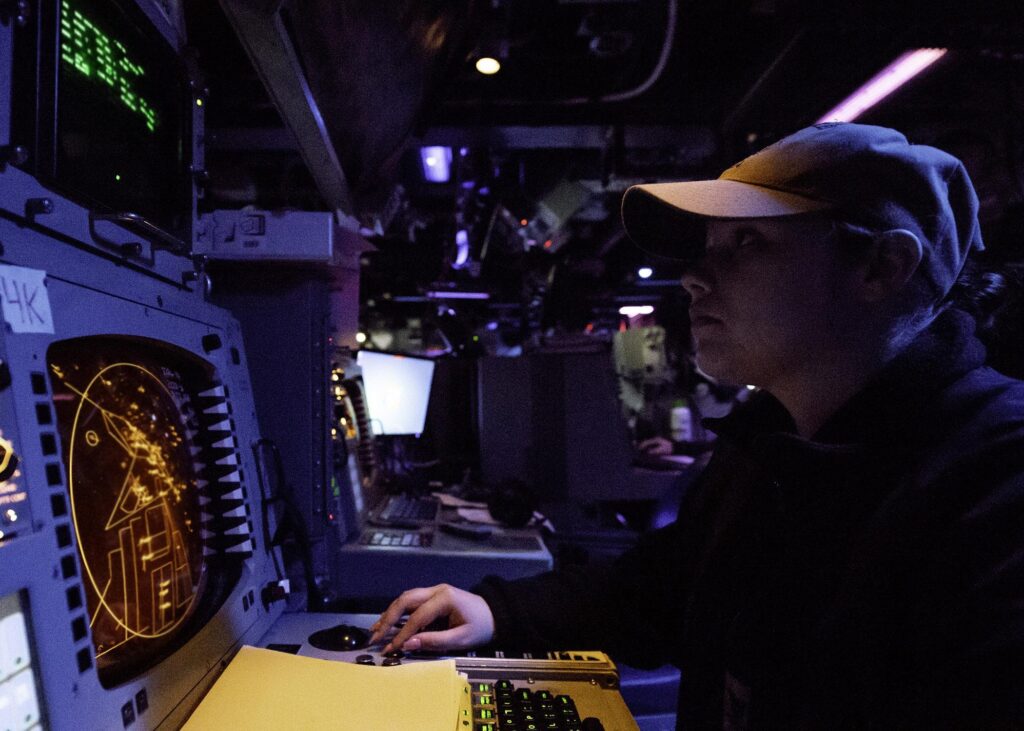
Operations Specialist 3rd Class Rikisha Cormier, assigned to the amphibious assault ship USS Boxer (LHD 4), identifies air contacts from the combat information center during a previous underway in the eastern Pacific Ocean. The new contract enhances the combat information center with the continued redesign of the AN/UPX-50(C) digital interrogator assemblies. 

Aug 28, 2024 

NAVAL AIR SYSTEMS COMMAND, Patuxent River, Md.–The U.S. Navy awarded a $24 million contract to BAE Systems for the continued redesign of the AN/UPX-50(C) digital interrogator assemblies. 

The cost-plus-fixed-fee contract is a modification to a previously issued basic ordering agreement to address parts obsolescence and implement solutions to achieve compliance with the latest specifications, qualification and certification standards for the Navy. Additionally, this order adds tasking for the integration of Target Report Processing capabilities into the Common Core DI, formerly hosted in the Interrogator Set, AN/UPX-24(V). 

The redesigned interrogator features a common modular design and systems architecture that allows for customized configurations and performance optimization. The design of this next generation interrogator allows for faster updates to Identification Friend or Foe technology in air defense, weapon systems, air traffic control and range instrumentation for several decades. 

Work is scheduled to be complete in late 2026. 


RTX’s SeaVue Multi-role Radar Provides Critical Targeting Data at RIMPAC

Radar proves its long-range target detection ability 

HONOLULU, Hawaii (Aug. 28, 2024) – Raytheon, an RTX (NYSE: RTX) business, successfully demonstrated the SeaVue Multi-role Radar’s superior long-range target detection at the U.S. Navy’s Exercise Rim of the Pacific (RIMPAC) – the world’s largest international maritime exercise.  

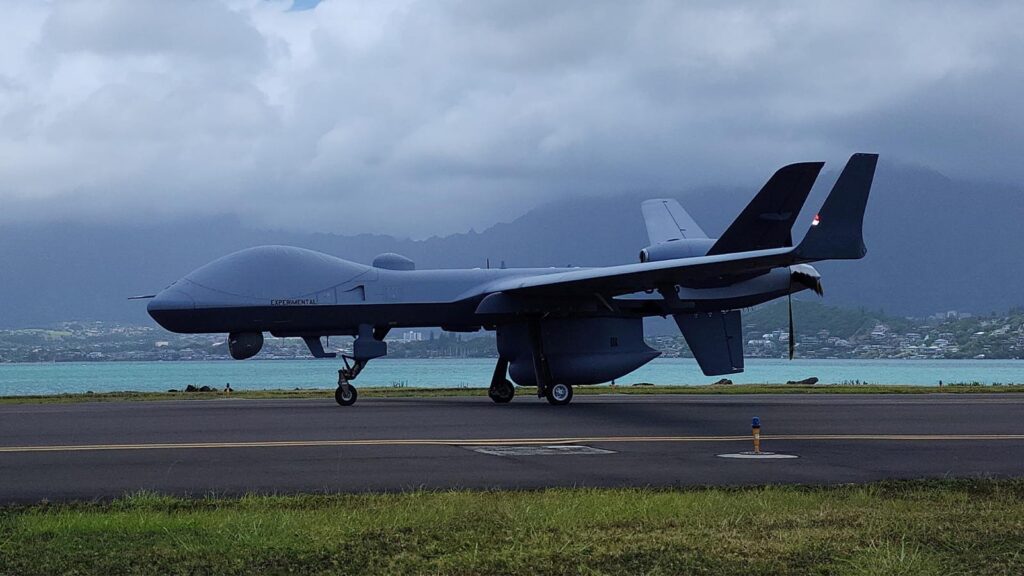
Performing a Sink Exercise, or SINKEX, an MQ-9B SeaGuardian® Unmanned Aircraft System from General Atomics Aeronautical Systems, Inc. used SeaVue Multi-role Radar (SVMR) surveillance and imaging to survey multiple targets and send track data to F/A-18 E/F Super Hornet aircraft. The aircraft were able to use the data provided by the radar to successfully fire a Long-Range Anti-Ship Missile (LRASM) at a decommissioned amphibious assault ship, the USS Tarawa (LHA-1), showcasing SVMR’s net-enabled, long-range weapons employment capabilities. 

“SVMR proved its ability to capture high fidelity targeting data needed for successful weapons engagement in a maritime environment,” said Bryan Rosselli, president of Advanced Products & Solutions at Raytheon. “The live-fire exercise enabled us to test and validate SVMR to ensure it can provide the situational awareness required in an operational environment – allowing faster decision making and more efficient kill chains.”  

SVMR is a modern, software-defined radar that provides all-weather surveillance and superior multi-mission performance for crewed and uncrewed aircraft, including fixed, rotary-wing and aerostat platforms. 

Leveraging over 60 years of surveillance radar innovation, SVMR provides extended range and small target detection from operational altitudes, enabling a more capable and efficient method for monitoring and protecting. It features a modular and scalable architecture that supports affordable upgrades and sustainment and has been developed and extensively flight tested for low and high-altitude surveillance modes.