SECNAV Names Future Guided Missile Frigate USS Galvez (FFG 67) 
From SECNAV Public Affairs, 21 June 2024 

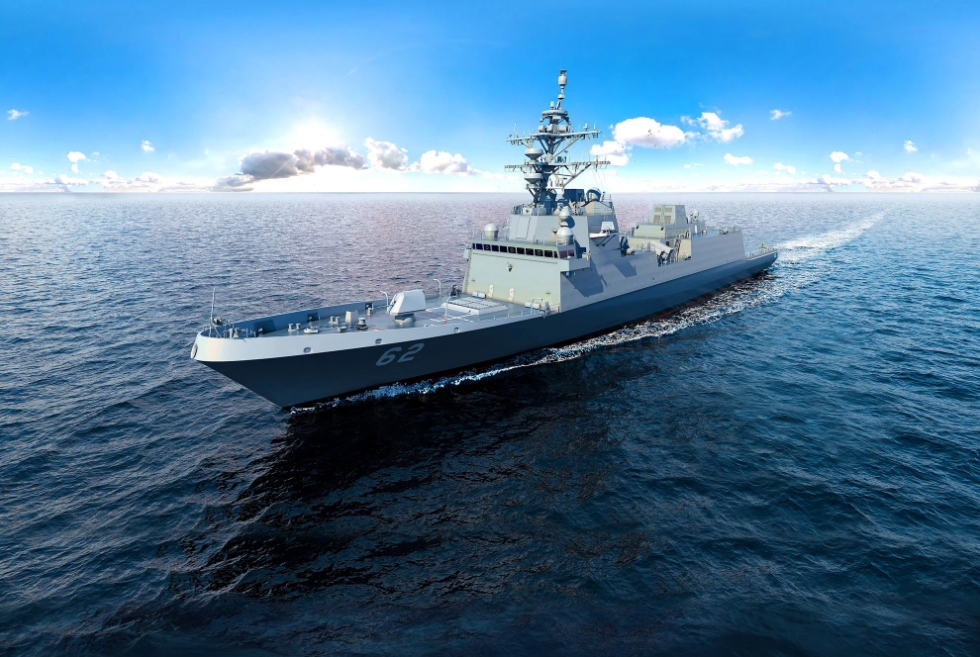
MADRID – Secretary of the Navy Carlos Del Toro announced that a future Constellation-class Guided Missile Frigate, FFG 67, will be named USS Galvez, June 21. 

Secretary Del Toro made the announcement while joining U.S. Ambassador to Spain Julissa Reynoso Pantaleón and Chief of Staff of the Spanish Navy, Admiral Antonio Pineiro, in Madrid, Spain, for the U.S. Embassy’s Fourth of July Celebration. 

The future USS Galvez honors Conde Bernardo de Gálvez y Madrid and his service during the American Revolutionary War.  This will be the first U.S. Navy vessel named for Gálvez. 

“Gálvez wasn’t just a supporter from afar—his actions directly influenced the course of the war and helped secure American Independence,” said Secretary Del Toro. “That is why, in his homeland, I am incredibly pleased to announce that our next Constellation-class frigate, FFG 67, will be named the USS Gálvez.” 

During the American Revolution, Gálvez provided supplies, intelligence, and military support to the American colonists and led military victories for Spain against Great Britain.  As governor of Spain’s territory in Louisiana, he covertly worked with American agent Oliver Pollock in 1777 to transfer money, gunpowder, and vital supplies to colonial forces.  

In his direct service to Spain, Gálvez recruited an army of 7,500 men made up of Spanish, French, African American, Mexican, Cuban, and Anglo-American forces.  In 1779–1780, his forces defeated the British at Battles in Baton Rouge, Louisiana; Natchez, Mississippi; and Mobile, Alabama.  In 1781, he successfully seized Pensacola, Florida, and was wounded during the fighting.  His contributions were recognized by George Washington as a decisive factor in the outcome of the Revolutionary War.  

After the Revolutionary War, Gálvez led an effort to chart the Gulf of Mexico, including Galveston Bay, and served as the viceroy of New Spain.  In 2014, the United States Congress passed Public Law No. 113-229, granting him honorary citizenship of the United States—making him one of only eight honorary citizens in U.S. history. 

The future USS Galvez, the sixth of the new Constellation-class frigates, was appropriated in 2024. The other ships in the class are USS Constellation (FFG 62), USS Congress (FFG 63), USS Chesapeake (FFG 64), USS Lafayette (FFG 65), and USS Hamilton (FFG 66). Secretary Del Toro named the future USS Lafayette (FFG 65) in 2023 and the future USS Hamilton (FFG 66) in May 2024. 

Along with the ship’s name, Secretary Del Toro announced the sponsors for the USS Galvez will be Ambassador Reynoso Pantaleón and Spanish Ambassador to the U.S. Ángeles Moreno Bau. They, in their role as sponsors, will represent a lifelong relationship with the ship and crew. 

“Honoring Bernardo de Gálvez in this way at our Independence celebration marks not only the close, enduring, and historic partnership between the United States and Spain, it also recognizes his and Spain’s critical role in the war for America’s Independence almost 250 years ago,” said Ambassador Reynoso. 

The Constellation-class guided-missile frigate represents the Navy’s next generation small surface combatant. This ship class will be an agile, multi-mission warship, capable of operations in both blue-water and littoral environments, providing increased combat-credible forward presence that provides a military advantage at sea. 

The Constellation-class will have multi-mission capability to conduct air warfare, anti-submarine warfare, surface warfare, electronic warfare, and information operations. 


June 22/23 U.S. Central Command Update 

From U.S. Central Command 

June 23, 2024 
 

TAMPA, Fla. – Iranian-backed Houthis struck the M/V TRANS WORLD NAVIGATOR, a Liberian-flagged, Greek-owned, and operated bulk cargo carrier in a suspected uncrewed aerial system (UAS) attack. Today, at 4:00 a.m. (Sanaa time), the crew reported minor injuries and moderate damage to the ship, but the vessel has continued underway. M/V TRANSWORLD NAVIGATOR most recently docked in Malaysia and was en route to Egypt. This marks the fourth attack by Iranian-backed Houthis on the M/V TRANSWORLD NAVIGATOR. There were no injuries on U.S. or coalition vessels. 

This continued malign and reckless behavior by the Iranian-backed Houthis threatens regional stability and endangers the lives of mariners across the Red Sea and Gulf of Aden. CENTCOM will continue to act with partners to hold the Houthis accountable and degrade their military capabilities. 

June 22, 2024 
 

TAMPA, Fla. – In the past 24 hours, U.S. Central Command (USCENTCOM) forces successfully destroyed three Iranian-backed Houthi uncrewed surface vessels (USV) in the Red Sea. 

It was determined these systems presented an imminent threat to U.S., coalition forces, and merchant vessels in the region. This action was taken to protect freedom of navigation and make international waters safer and more secure for U.S., coalition, and merchant vessels. 

Separately, Iranian-backed Houthis launched three anti-ship ballistic missiles (ASBM) from a Houthi controlled area of Yemen into the Gulf of Aden. There were no injuries or significant damage reported by U.S., coalition, or merchant vessels. 

Recent claims about a successful attack by Houthi forces on the aircraft carrier USS Dwight D. Eisenhower (CVN-69) are categorically false. 

This continued malign and reckless behavior by the Iranian-backed Houthis threatens regional stability and endangers the lives of mariners across the Red Sea and Gulf of Aden. The Houthis claim to be acting on behalf of Palestinians in Gaza, and yet they threaten and have taken the lives of innocent civilians who have nothing to do with the conflict in Gaza. CENTCOM will continue to act with partners to hold the Houthis accountable and degrade their military capabilities. 


USCGC Cutter Alert transfers from Astoria, Oregon, arrives at new home port in Cape Canaveral, Florida 

Caption: The crew of Coast Guard Cutter Alert departs Astoria, Oregon, on the Columbia River May 10, 2024. Alert is a 210-foot Medium Endurance Cutter. (U.S. Coast Guard photo by Petty Officer 1st Class Travis Magee) 

U.S. Coast Guard Atlantic Area, June 24, 2024 

CAPE CANAVERAL, Fla. — U.S. Coast Guard Cutter Alert (WMEC 630) and its crew arrived at their new home port of Cape Canaveral, June 10, 2024. Alert began the eastward journey in May after concluding 30 years of service while homeported in Astoria, Oregon, along the Pacific Northwest’s Columbia River. 

Over the course of the 30-day, 6,000 nautical mile transit, Alert crossed the equator, transited the Panama Canal, and responded to search and rescue cases. Marking a new era, Alert rendered honors to the U.S. Coast Guard Cutter David Duren (FRC 1156), a fast response cutter transiting northbound to Astoria in order to relieve Alert’s watch in the Pacific Northwest. 

Alert is now assigned to U.S. Coast Guard Atlantic Area, headquartered in Portsmouth, Virginia, and is taking the place of U.S. Coast Guard Cutter Confidence (WMEC 619) in Cape Canaveral after the Confidence was placed in commission, special status in early May. Confidence’s former crew will now crew Alert. 

The replacement of Confidence and re-homeporting of Alert represent the Coast Guard’s continued efforts to adapt to growing service demands and workforce shortages, helping ensure the Coast Guard’s ability to prioritize lifesaving missions, national security, and protection of the Maritime Transportation System with no degradation to these critical services. 

“This is not the first time Alert has shifted home port, said Cmdr. Lee Crusius, commanding officer of Alert. “Prior to her time in Astoria, Alert was homeported on the East Coast in Cape May, New Jersey. In many senses, Alert is returning to her home where she will continue to perform the vital missions demanded of the Coast Guard cutter fleet by our partner nations and the American people.” 

Alert, commissioned in 1969, was the final 210-foot, Reliance-class medium endurance cutter built. Alert performs a variety of missions including search and rescue, law enforcement, maritime defense, and protection of the marine environment. 

More information about the U.S. Coast Guard’s AY24 Force Alignment Initiative can be found here.  


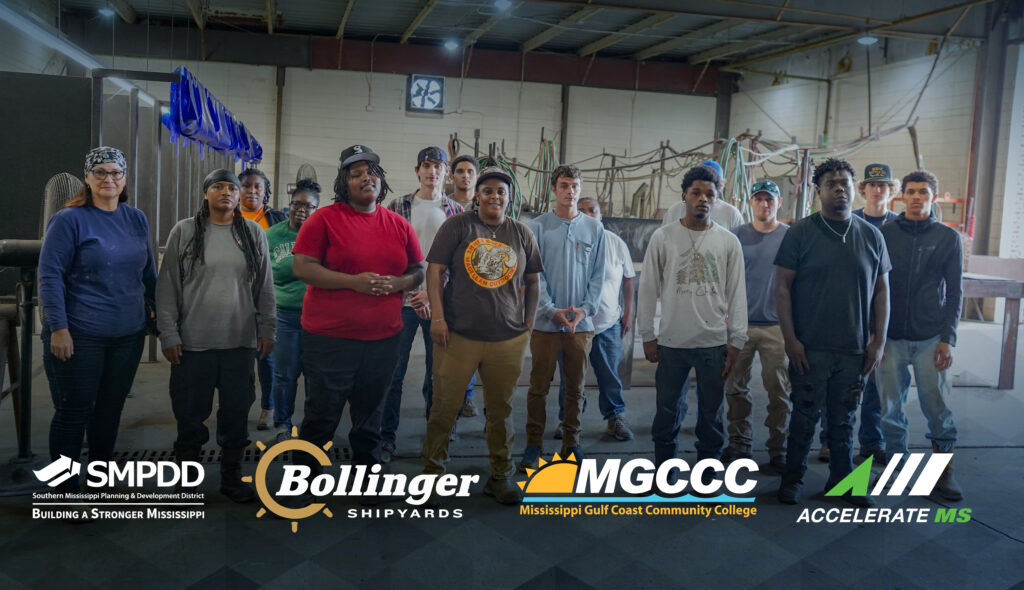
Bollinger Shipyards Launches Inaugural Shipfitter Boot Camp

Partnership with Mississippi Gulf Coast Community College, South Mississippi Planning & Development District and AccelerateMS will hire and train the next generation of Gulf Coast shipbuilders 

PASCAGOULA, MS. – (June 20, 2024) This week, Bollinger Shipyards (“Bollinger”) kicked off the inaugural Shipfitter Bootcamp, an innovative workforce development initiative alongside Mississippi Gulf Coast Community College (MGCCC), the South Mississippi Planning & Development District and AccelerateMS that will recruit, hire, and train the next generation of skilled shipbuilders, ensuring Bollinger’s workforce in Mississippi remains second to none in the shipbuilding industry. The Shipfitter Bootcamp is a critical step to establishing Bollinger Shipyards as a Center of Excellence in the design and construction of heavy polar icebreakers. 

The Shipfitter Bootcamp is a comprehensive workforce development program designed to equip current and future Bollinger employees with the essential skills and knowledge required to take their careers to the next level. Through a blend of classroom instruction and hands-on experience, students will learn the essential functions that are required to become a Shipfitter in a 14-week program.  The first 12 weeks will be taught at MGCCC and the final 2 weeks will be taught on-site at Bollinger Mississippi Shipbuilding located in Pascagoula, Mississippi.  Upon successful completion of the program each Shipfitter Trainee will be evaluated and their compensation will increase according to their skill level. 

“We are thrilled to launch this exciting new program that will ensure Bollinger and the Mississippi Gulf Coast remain synonymous with best-in-class defense shipbuilding,” said Ben Bordelon, CEO of Bollinger Shipyards. “Our industry relies on the expertise and dedication of skilled shipfitters, and this bootcamp will provide invaluable training and opportunities for individuals looking to start or advance their careers at Bollinger. When we invest in our Mississippi workforce, we’re investing in and ensuring the future success of our industry.” 

Participants in Bollinger’s Shipfitter Bootcamp will benefit from state-of-the-art facilities and resources at MGCCC, as well as becoming a Bollinger employee and earning an income while they learn.  This opportunity not only provides an income for themselves and their families, but it also offers full benefits, paid holidays and vacation.  The bootcamp is open to anyone who is interested in learning the skills necessary to become a Shipfitter. 

“For over seven decades, Bollinger has exhibited excellence and innovation in the shipbuilding industry,” said Jonathan Woodward, Ph.D., Vice President for Teaching & Learning and Community Campus at Mississippi Gulf Coast Community College. “Bollinger Mississippi has consistently delivered the highest quality ships by accentuating efficiency and effectiveness – rising above external challenges. The paramount challenge in all sectors of the current economy is human capital. The Shipfitter Bootcamp illustrates a novel, practical, and attractive approach to meet this challenge head on.” 

“Shipbuilding is a critical defense industry and a major contributor to the economic growth of the Mississippi Gulf Coast,” said Dr. Courtney Taylor, Executive Director of AccelerateMS. “These students have the opportunity to achieve success through training programs that few other fields can offer. We’re proud to support initiatives like these, which equip a new generation of workers to drive the industry’s evolution in our state.”


Austal USA Starts Construction on T-ATS 13

MOBILE, Ala. – Austal USA has started construction on the future USNS James D. Fairbanks (T-ATS 13), the third of five steel U.S. Navy Navajo Class Towing, Salvage, and Rescue Ships Austal USA has under contract with the Navy. Construction is well underway on both the future USNS Billy Frank Jr. (T-ATS 11) and USNS Solomon Atkinson (T-ATS 12).   

“It’s exciting to see another ship begin traveling down the steel production line which has been busy since we opened it just a little over two years ago,” Austal USA Vice President of New Construction Dave Growden said. “I’m proud of how well our workforce is handling the diversity of work we have taken on since the steel line became active.” 

The ship’s namesake, James D. Fairbanks, was a Camp Pendleton Marine who also served in the Navy, where he became a prominent figure in the Seabees. Fairbanks grew up on the White Earth Indian Reservation in northern Minnesota and went on to compile an impressive service record. He first served with Second Battalion Eleventh Marines (2/11) at Camp Pendleton and then did two tours in the Navy. The first included service during Operation Iraqi Freedom, where he was awarded the Bronze Star. Fairbanks also was hailed for his service in the Seabees, the Navy’s storied construction battalion. 

T-ATS will provide ocean-going tug, salvage, and rescue capabilities to support U.S. Navy fleet operations and will be a multi mission common hull platform capable of towing heavy ships. These ships will also support several missions, including oil spill response, humanitarian assistance, and wide area search and surveillance.  


Platform Aerospace’s Vanilla UAS – Communications Relay at Valiant Shield 2024  

HOLLYWOOD, Md., June 20, 2024 (Newswire.com) Platform Aerospace’s Ultra-Long Endurance Group 3 Unmanned Aircraft System (UAS), Vanilla, completed mission requirements during a 27-hour flight at the Valiant Shield 2024 (VS24) exercise in Guam. 

From June 7th to June 18th, Platform Aerospace participated in VS24, a training exercise built on the collaborative efforts of the United States Navy, Marine Corps, Army, Air Force, Coast Guard, Space Force, and partner nations. 

Upon take-off from Andersen Air Force Base (AAFB) in Guam, Vanilla completed mission requirements by demonstrating communications relay functionality through Link 16 (BATS-D) and Silvus radio connections to other participating assets, including High Altitude Balloons (HABS) and manned and unmanned air and surface vessels. In the early hours of June 13th, Vanilla flew through substantial precipitation, including multiple events of 1,000 ft/min climbs and descents due to airmass motion, in the mission airspace. Due to ongoing extreme weather, Platform Aerospace operators returned to base early rather than risk damage to the aircraft. 

On June 14, Vanilla returned to AAFB and executed a normal landing on runway 24R. Landing occurred at 11:21 local, concluding a 1-day, 3-hour, 2-minute flight with the Link 16 relay active for the entire duration. Whereas this is a relatively short flight for Vanilla, which has demonstrated >8-days of unrefueled endurance in a desert environment, this flight demonstrates advanced technology readiness for any military operational environment. 

Vanilla can be configured for Intelligence, Surveillance, and Reconnaissance (ISR), Communications Relay, Decoy, Air Launched Effects (ALE), Signals Intelligence (SIGINT), Electronic Warfare (EW), or any combination of those mission requirements. 

Vanilla is a Rapid Defense Experimentation Reserve (RDER) Program; VS24 was Vanilla’s graduation event and formal Technology Readiness Level (TRL) 8 assessment. Platform Aerospace participated in VS24 in partnership with OUSD(R&E) and the 3rd MDTF. 


June 20 Central Command Update

From U.S. Central Command 

June 20, 2024

TAMPA, Fla. – In the past 24 hours, U.S. Central Command (USCENTCOM) forces successfully destroyed four Iranian-backed Houthi uncrewed surface vessels (USV) in the Red Sea, and two uncrewed aerial systems (UAS) over the Red Sea. 

There were no injuries or damage reported by U.S., coalition, or merchant vessels.  

It was determined these systems presented an imminent threat to U.S. forces, coalition forces, and merchant vessels in the region. These actions were taken to protect freedom of navigation and make international waters safer and more secure for U.S., coalition, and merchant vessels. 


SECNAV: Hanwha Group’s Acquisition of Philly Shipyard a ‘Game Changer’

From SECNAV Public Affairs 

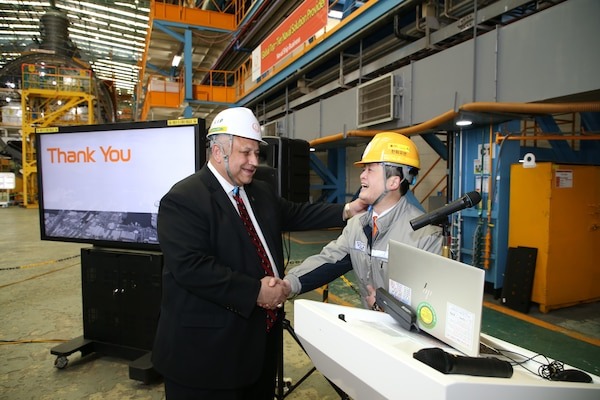
ARLINGTON, Va.– In February 2024, Secretary Del Toro traveled to Korea and Japan to meet with key shipbuilding executives. While in Korea, he toured Hanwha and HD Hyundai shipyards and met with company leaders. In his meetings with Hanwha Vice Chairman Dong Kwon Kim and his tour of their Geoje Island shipyard, he witnessed the Hanwha Group’s expertise, cutting-edge technology, and best practices, which will energize the American shipbuilding landscape. They bring world-class leadership, fostering renewed competition through innovation and industrial capacity.  

Del Toro released the following statement: 

“Hanwha’s acquisition of Philly Shipyard is a game-changing milestone in our new Maritime Statecraft. This will bring good paying union jobs to Philadelphia, a city with a 250-year relationship with the U.S. Navy.  Knowing how they will change the competitive U.S. shipbuilding landscape, I could not be more excited to welcome Hanwha as the first Korean shipbuilder to come to American shores—and I am certain they will not be the last.”  

Secretary Del Toro has made Maritime Statecraft and restoring the comprehensive maritime power of the United States a key component of his tenure as Secretary of the Navy. This acquisition aligns with both the Maritime Statecraft initiative and the Department of Defense’s National Defense Industrial Strategy. The Department of the Navy looks forward to collaborating with Hanwha Group in the future to ensure the continued strength of the American maritime industry. 


U.S. Navy Efforts Aid in Baltimore Channel Reopening

BALTIMORE (May 13, 2024) A Naval Sea Systems Command Supervisor of Salvage and Diving harbor boat secures the area around the Francis Scott Key Bridge and the M/V Dali cargo vessel before a highly controlled demolition. (U.S. Navy photo by Lt. Jason Showmaker)

By Naval Sea Systems Command Office of Corporate Communications SUPSALV 

June 12, 2024 

BALTIMORE — The U.S. Navy’s Supervisor of Salvage and Diving (SUPSALV) led critical efforts in support of the Unified Command in clearing the Port of Baltimore’s Fort McHenry Federal Channel, following the M/V Dali’s collision into the Francis Scott Key Bridge. 
 
“In the aftermath of the tragic accident and profound sadness experienced by the City of Baltimore and indeed the nation, I am proud of the extraordinary work and professionalism displayed by our Sailors and civilians, under the supervision of Capt. Sal Suarez, in support of the Key Bridge Response Unified Command,” said Secretary of the Navy Carlos Del Toro. “Our Navy and Marine Corps Team remains critical to defending our economic security, including the crucial efforts of our Navy’s diving and salvage experts to keep our waterways open.” 
 
SUPSALV arrived within hours after tasking by the U.S, Army Corps of Engineers to support the Unified Command by leading the clearing of the Baltimore Harbor waterway. The team, along with several private maritime salvage companies, mobilized resources to the site and worked to remove debris, support truss cuts, rigging and bridge sections. Their efforts also included controlled explosions that allowed the Dali to be refloated and moved back to port. 
 
“SUPSALV expertise is recognized throughout the U.S. Navy, Department of Defense and other federal agencies,” said Capt. Sal Suarez, commander, Supervisor of Salvage and Diving. SUPSALV provides technical, operational, and emergency support in marine salvage, towing, pollution control and abatement, diving and diving system safety and certification, diving and salvage equipment procurement, and underwater ship husbandry. Its expertise in marine salvage has been leveraged globally removing a sunken dredge barge in Alexandroupoli, Greece, in 2019, and recently clearing Louisiana waterways impacted by Hurricane Ida in 2021. 
 
“SUPSALV supports other federal agencies and the country with its national response capability, including active duty and contractor salvage experts,” said Paul Hankins, director, Salvage Operations at SUPSALV. “We have resources and support agreements in place so we can immediately respond with our expertise and resources when called upon.” 
 
Throughout the entirety of the process SUPSALV was responsible for managing all on-scene assets tasked with debris removal and channel clearing effort. Each day began at 06:30 a.m. to coordinate assets, align on objectives and finished daily at 5:30 p.m. to share what was accomplished that day and what they plan to accomplish next. 
 
SUPSALV provides technical, operational, and emergency support in marine salvage, towing, pollution control and abatement, diving and diving system safety and certification, diving and salvage equipment procurement, and underwater ship husbandry. 


June 18/19 U.S. Central Command Update

From U.S. Central Command 

June 19,2024

TAMPA, Fla. – In the past 24 hours, U.S. Central Command (USCENTCOM) forces successfully destroyed two Iranian-backed Houthi uncrewed surface vessels (USV) in the Red Sea. 

Separately, USCENTCOM forces successfully destroyed one ground control station and one command and control node in a Houthi controlled area of Yemen. 

It was determined these systems presented an imminent threat to U.S. forces, coalition forces, and merchant vessels in the region. These actions were taken to protect freedom of navigation and make international waters safer and more secure for U.S., coalition, and merchant vessels. 

June 18, 2024

TAMPA, Fla. – In the past 24 hours, U.S. Central Command (USCENTCOM) forces successfully destroyed eight Iranian-backed Houthi uncrewed aerial systems (UAS) in a Houthi controlled area of Yemen. 

Additionally, partner forces successfully destroyed one Houthi uncrewed aerial vehicle (UAV) over the Gulf of Aden. There were no injuries or damage reported by U.S., coalition, or merchant vessels.  

It was determined these systems presented an imminent threat to U.S., coalition forces, and merchant vessels in the region. These actions were taken to protect freedom of navigation and make international waters safer and more secure for U.S., coalition, and merchant vessels.