June 6 Red Sea Update 

From U.S. Central Command, June 6, 2024

TAMPA, Fla. – In the past 24 hours, U.S. Central Command (USCENTCOM) forces successfully destroyed eight Houthi uncrewed aerial systems (UAS) launched from Houthi-controlled areas of Yemen over the Red Sea. Additionally, USCENTCOM forces successfully destroyed two Houthi uncrewed surface vessels (USV) in the Red Sea.  

Separately, a coalition ship successfully engaged one UAS launched from a Houthi controlled area of Yemen over the Red Sea.  

Also, Iranian-backed Houthis launched one anti-ship ballistic missile (ASBM) from a Houthi controlled area of Yemen over the Red Sea.  

There were no injuries or damage reported by U.S., coalition, or commercial ships.  

It was determined these systems presented an imminent threat to U.S., coalition forces, and merchant vessels in the region. This action was taken to protect freedom of navigation and make international waters safer and more secure for U.S., coalition, and merchant vessels.  


USCGC Calhoun Returns Home Following First Deployment

From U.S. Coast Guard Atlantic Area, June 6, 2024 

NORTH CHARLESTON, S.C. — The crew of the U.S. Coast Guard Cutter Calhoun (WMSL 759) returned to their homeport in North Charleston, Monday, after completing the cutter’s first deployment.   

Calhoun’s crew steamed over 3,500 nautical miles during a five-week deployment within the Coast Guard’s First and Fifth districts area of responsibility. Calhoun’s crew worked to enforce living marine resources regulations and maritime safety missions along the Eastern Seaboard. In support of operations Atlantic Venture and Ocean Hunter, Calhoun conducted 10 commercial vessel safety boardings, issued four violations, and patrolled the nation’s maritime boundary line to support the sustainability of the marine ecosystem and safety of life at sea.  

“The crew was brilliant at the basics with the landing, launching helicopters, gathering intelligence, and sending out our boats with boarding teams to protect, defend, and save,” said Capt. Timothy Sommella, Calhoun’s commanding officer. “Our mission excellence at home leads to our credibility abroad as we support a rules-based, international order to combat illegal, unreported, and unregulated fishing.”  

During this deployment, Calhoun participated in this year’s Fleet Week in New York alongside U.S. and German naval vessels. Fleet Week is a time-honored tradition which allows the Coast Guard to demonstrate the nation’s sea power and interoperability with allies and partners. The crew of Calhoun participated in a variety of external events, hosted over 4,000 tours, showcased the Coast Guard missions, and supported on-going recruitment efforts.  

“There is not a better feeling than returning to homeport after a highly successful patrol,” said Senior Chief Petty Officer Aaron DeLuca, Calhoun’s command senior enlisted leader.  “We accomplished so much in such a short deployment period. This crew was able to test and operate all our installed systems and equipment, complete certifications for our flight deck operations, and had the opportunity to partake in dozens of community outreach and public relations events. These opportunities to make lasting memories and sea stories with shipmates help entice our members to continue to serve onboard Coast Guard cutters.”  

This was Calhoun’s first operational deployment and maiden voyage following its commissioning ceremony in North Charleston on April 20. Calhoun now joins other Charleston-based national security cutters in the fleet, including, Hamilton, James and Stone, securing the Western Hemisphere against emerging threats to the environment and food sources while safeguarding the maritime transportation system and global supply chain.     

Calhoun, manned by 130 men and women, is the newest 418-foot, Legend-class cutter to join active service in the Coast Guard. The Legend-class cutter program leads the Coast Guard’s ongoing surface fleet recapitalization, and when combined with the future offshore patrol cutters, will comprise the Coast Guard’s offshore response capability for decades to come. The cutter’s primary missions are counter drug operations, migrant interdiction, living marine resources, defense readiness, and command and control in support of U.S. Coast Guard operations throughout the world and at home.    

Calhoun’s namesake comes from the first Master Chief Petty Officer of the Coast Guard, Charles L. Calhoun. Calhoun led a distinguished career, serving in the U.S. Navy during World War II prior to enlisting in the Coast Guard in 1946. Calhoun’s Coast Guard career was marked by over 170 months of sea service, including service in Vietnam during the Vietnam War. Calhoun became the first Master Chief Petty Officer of the Coast Guard on Aug. 27, 1969, and was a champion for the service’s enlisted personnel and is responsible for bridging the gap between the command and enlisted workforce.             

For information on how to join the U.S. Coast Guard, visit GoCoastGuard.com to learn about active duty, reserve, officer, and enlisted opportunities. Information on how to apply to the U.S. Coast Guard Academy can be found here.  


Aeronautics Introduces New Operating Concept for Latest Loitering Munition System

Addressing Evolving Operational Challenges of the modern battlefield, the Orbiter 2LM and Orbiter 2ISR systems collaboratively enable an advanced sensor-to-shooter capability for diverse missions 

June 06, 2024, Aeronautics Ltd. – a world leader in design, development, and manufacturing of Unmanned Aerial Systems (UAS) for the global defense and HLS markets, introduces the Orbiter 2 LM (Loitering Munition), the latest addition to Aeronautics’ portfolio of combat proven loitering munitions systems. It offers enhanced capabilities including long endurance, persistent surveillance, optimal precision with low collateral damage making it ideal for a diverse number of missions. 

The Orbiter 2 LM offers an optimal solution, combining both the functionality of the loitering munition together with ISR capabilities. With an extended endurance of two hours, the system provides high mission flexibility for success in uncertain operational scenarios, particularly those characterized by targets with short time windows. 

The system is fully operational in GPS-denied areas and uses advanced communication – immune to interference and encrypted for secure data transmission. The system supports full connectivity to external C4I systems.  

The Orbiter 2 STS (Sensor-to-Shooter) Mission system is based on two combat-proven, fixed-wing, electric UAVs – the Orbiter 2 ISR and the Orbiter 2 LM. Both systems share a common platform, communication data link, control station and operational software. 

The Sensor-to-Shooter Mission system enables enhanced mission versatility by facilitating intelligence gathering, precise target pinpointing, and BDA (Battle Damage Assessment) via the Orbiter 2 ISR, while enabling rapid target engagement with the Orbiter 2 LM. 

The STS mission system offers superior performance, fast sensor-shooter mission cycle, and operational flexibility, all within a small logistics footprint. Moreover, the system enables efficient flight training capabilities by leveraging the Orbiter 2 ISR for diverse operational scenarios. Both Orbiter 2 LM and Orbiter ISR have high resolution day and IR electro optical payloads, onboard Automatic Target Recognition (ATR) and Video Motion Detection (VMD), for increased operational capabilities. 

The Orbiter 2 LM and the Orbiter ISR are electric-powered and characterized by low acoustic, optic and RCS signatures. The system’s simplicity enables operation by a team of two personnel after only a few weeks of training. 

Dan Slasky, President & CEO of Aeronautics, highlights, ” Aeronautics has established a strong global reputation in the tactical UA domain, enabling to meet the increased demand for autonomous capabilities in the modern battlefield. The integration of the Orbiter 2 LM into our Sensor-to-Shooter system, empowers field forces with accurate intelligence and attack capabilities, ensuring seamless execution of multiple tasks. Customers who already deploy the Orbiter 2 system, can now expand their capabilities by integrating a loitering munition system that easily interfaces with the current command, control, and communication systems. The Orbiter 2 LM represents a significant advancement in tactical unmanned aerial systems, meeting the evolving needs of modern warfare.” 


U.S. Marine Economy Continues Upward Trend 

$476 billion contribution helps build a ‘greater, more Climate-Ready Nation’ 

From NOAA, June 7, 2024 

The American marine economy continued to bolster the nation in 2022 as demonstrated by increased sales and jobs, according to the most recent statistics from the annual Marine Economy Satellite Account (MESA) released by two Department of Commerce agencies — NOAA and the Bureau of Economic Analysis (BEA). 

The marine economy contributed a total of $476 billion in economic impact in 2022, making up nearly 2% of the nation’s gross domestic product (GDP). It generated $777 billion in sales, and supported 2.4 million jobs in 2022. MESA provides valuable insights on how the marine sector contributes to the nation’s economy.  

“A strong, sustainable marine economy helps build a greater, more Climate-Ready Nation,” U.S. Secretary of Commerce Gina Raimondo said. “The Biden-Harris Administration and the Department of Commerce are committed to enhancing the marine economy, and helping communities and ecosystems grow and thrive.”   

“These figures show how essential the Blue Economy is to American prosperity,” said NOAA Administrator Rick Spinrad, Ph.D. “The ocean and the Great Lakes are integral to the overall health of America’s economy, and they impact our lives in numerous ways.”  

The largest contributors to GDP are tourism and recreation, with $163 billion; national defense and public administration, with $149 billion; and offshore minerals, with $62 billion.  

The sales sectors that showed the most growth for 2022 include: 
• Ship and boat building, up 14.6%; 
• Coastal tourism and recreation, up 8.1%; and 
• Marine transportation and warehousing, up 7%. 

For the first time, MESA includes information on wind energy and alternative power generation, allowing for a greater understanding of the offshore wind industry’s importance to the nation’s economy. Wind farm construction totaled $161 million in sales, and alternative power generation totaled $10 million in sales.  

MESA is in its seventh year, as NOAA and the BEA produce statistics that improve national estimates for ocean, coastal and major water bodies’ economic activity by major industry, accounting for inflation. The data comprises 10 sectors that represent businesses dependent on America’s ocean, coasts and the Great Lakes. 

“This report underscores the critical need to do whatever we can to support and bolster the marine sector,” said NOAA’s National Ocean Service Assistant Administrator, Nicole LeBoeuf. “Our nation’s marine economy influences many aspects of our economic landscape and our daily lives, affecting regions far beyond our coasts.” 

These data reflect a period from 2017 to 2022 and is the most comprehensive and accurate produced to date. The marine economic statistics validate previous estimates of the marine economy’s value. 

The 10 sectors, ranked by sales, adjusted for inflation, and percentage change compared to the previous year: 
• Tourism and recreation, $220 billion, up 8.1%. 
• National defense and public administration, $194 billion, down 2.5%. 
• Offshore minerals, $66 billion, down 1.3%. 
• Transportation and warehousing, $56 billion, up 7%. 
• Living resources, $31 billion, down 6.7%. 
• Ship and boat building, $20 billion, up 14.6%. 
• Coastal utilities, $15 billion, down 3.2%. 
• Research and education, $12 billion, up 4%. 
• Professional and technical services, $8 billion, down 5.5%. 
• Marine construction, $7 billion, up 3.1%. 

“We can continue building a thriving marine economy for America by investing in restoration, sustainability and working closely with stakeholders,” said NOAA Chief Economist Monica Grasso, Ph.D. “A thriving, resilient marine economy uplifts our communities and drives our nation forward.” 

The report, data and other information are available at NOAA’s Digital Coast website and on the BEA Marine Economy website. MESA’s statistics reflect 2022 data, given data availability and the analysis process. 
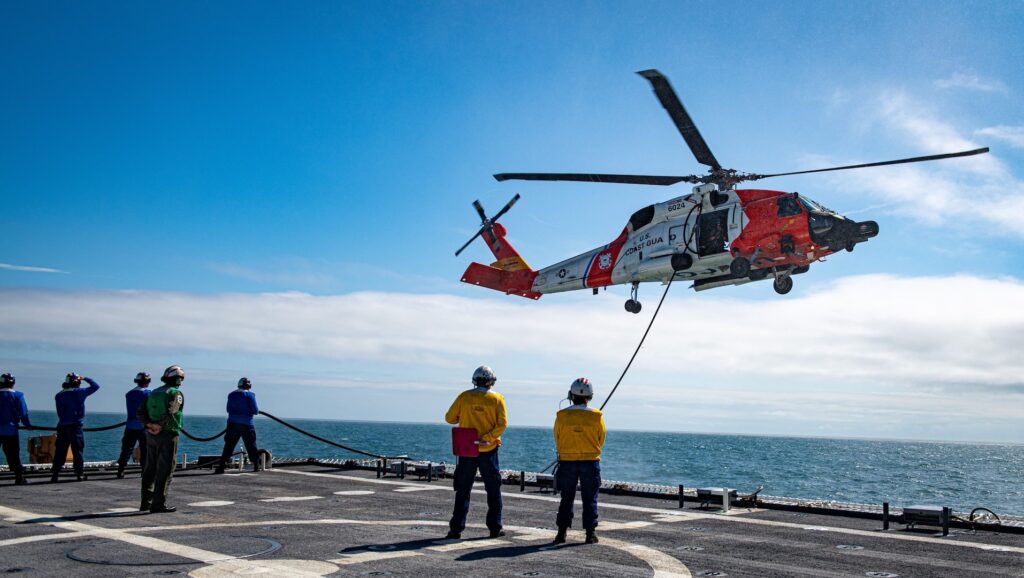


USCGC Munro Returns from Eastern Pacific Patrol; $500M Worth of Narcotics Seized

From U.S. Coast Guard Pacific Area, 5 June 2024 

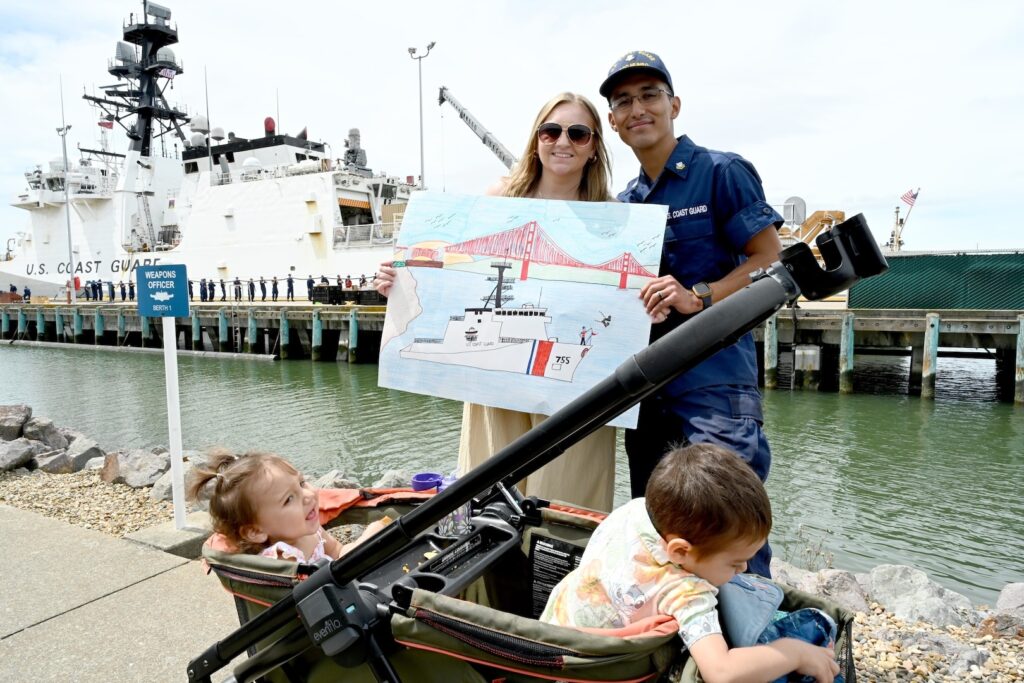
ALAMEDA, Calif. – The crew aboard U.S. Coast Guard Cutter Munro (WMSL 755) returned to their home port in Alameda on Monday, following a four-month patrol off the coasts of Central and South America in the Eastern Pacific Ocean. 
 
During their multi-mission deployment, Munro’s crew conducted counter-narcotic and illegal, unreported, and unregulated (IUU) fishing patrols. 
 
The 150-member crew deployed to the Eastern Pacific Ocean, where they interdicted seven “panga” style vessels, three low-profile vessels, and one fishing vessel suspected of trafficking narcotics. 
 
The interdictions resulted in the seizure of nearly 35,000 pounds of cocaine, more than 3,000 pounds of marijuana, and more than 140 pounds of the ketamine-based hallucinogenic party drug “tuci.” Combined, the seized narcotics are worth an estimated $500 million in wholesale value and $2 billion in street value. Munro conducted a bulk offload of the illicit narcotics in San Diego, where the narcotics were turned over to federal agents from the Drug Enforcement Administration for destruction. 
 
Munro’s crew conducted 200 flight evolutions with an embarked helicopter and aircrew from the Jacksonville, Florida-based Coast Guard Helicopter Interdiction Tactical Squadron (HITRON). The HITRON helicopter crew was a force multiplier capable of providing airborne use of force in maritime drug interdiction efforts. Munro utilized the helicopter crew for warning shots toward eight non-compliant suspect vessels and disabling fire used on four non-compliant suspect vessels, stopping the vessels by shooting out their engines and allowing surface assets to gain positive control. 
 
Following the counter-narcotics patrol, Munro transited further south to conduct IUU fisheries interdictions in international waters off the coast of Peru and Ecuador under Operation Southern Shield. Under the authority of the South Pacific Regional Fisheries Management Organization (SPRFMO) conservation management measures, Munro conducted 16 high-seas boardings and inspections of a multi-national distant water fishing fleet of more than 300 fishing and transshipment vessels, resulting in nine violations reported to SPRFMO member countries. 
 
While conducting Operation Southern Shield, Munro hosted ship observers from the Peruvian Coast Guard, the National Aeronaval Service of Panama, and the Ecuadorian Navy, emphasizing the multi-national effort to combat IUU fishing. Working alongside the Ecuadorian Navy shiprider, Munro conducted four inspections aboard Ecuadorian-flagged fishing vessels on the high seas, carrying out the first enactment of the recently signed United States-Ecuador Bilateral Agreement. 
 
Additionally, Munro’s crew responded to a search and rescue case 25 miles off the coast of Peru, saving the life of a 37-year-old patient who had been critically injured. 
 
“Our crew is dedicated and working hard to show the commitment of the U.S. Coast Guard in combating both narcotics and Illegal, Unreported, and Unregulated fishing on the high seas,” said Capt. Rula Deisher, Munro’s former commanding officer. 
 
Near the end of the patrol, Munro hosted a change of command ceremony in San Diego Thursday. During the ceremony, Capt. James O’Mara IV relieved Deisher as Munro’s commanding officer. 
 
“I am thankful to family and friends who supported Munro throughout the four-month deployment,” said O’Mara, who assumed command of Munro on May 30. “You won’t find a crew more excited than this one, ready to be home and reconnect with families. Munro showcased all the capabilities and versatility of this platform while making tangible impacts to several national security objectives. The crew has everything to be proud of, and I am honored to join this team.” 
 
Munro is one of four national security cutters homeported on Coast Guard Base Alameda. National security cutters feature advanced command, control, communications, computers, cyber, intelligence, surveillance and reconnaissance equipment; aviation support facilities; stern cutter boat launch; and long-endurance station keeping. The 418-foot cutters have an endurance of 60 to 90 days and can serve as operational-level headquarters for complex law enforcement, defense, and national security missions involving the Coast Guard and multiple partner agencies. 


CNO Franchetti Meets with Top Officials from Bahrain

Chief of Naval Operations Spokesperson Cmdr. Desiree Frame provided the following readout: 

Chief of Naval Operations Adm. Lisa Franchetti met with the Kingdom of Bahrain’s Crown Prince and Prime Minister, His Royal Highness Salman bin Hamad Al Khalifa, June 4. 

Franchetti thanked the Crown Prince for the inviolable U.S. – Bahrain defense relationship and expressed her gratitude for the continuous hospitality Bahrain shows in hosting the U.S. Navy. 

The CNO also highlighted Bahrain’s leadership in the security and stability of the region and expressed her gratitude to the Crown Prince for being one of the United States’ longest and closest partners in the Middle East, a major non-NATO Ally, and their participation in Operation Prosperity Guardian.  

During their discussion, Franchetti applauded the Comprehensive Security Integration and Prosperity Agreement (C-SIPA) signed last year to formalize U.S – Bahrain cooperation to deter conflict in the region, enhance regional stability, and de-escalate tensions. Franchetti added that C-SIPA is as a significant upgrade in our strategic bi-lateral relationship with Bahrain. Right now, C-SIPA is a bilateral agreement between the United States and Bahrain, however both leaders said they welcome other friendly countries to join because the more integrated and coordinated we are, the more secure, stable, and prosperous the region will be. 

This is the first time Franchetti has met the Crown Prince. 


Vigor begins low-rate initial production work on U.S. Army landing craft 

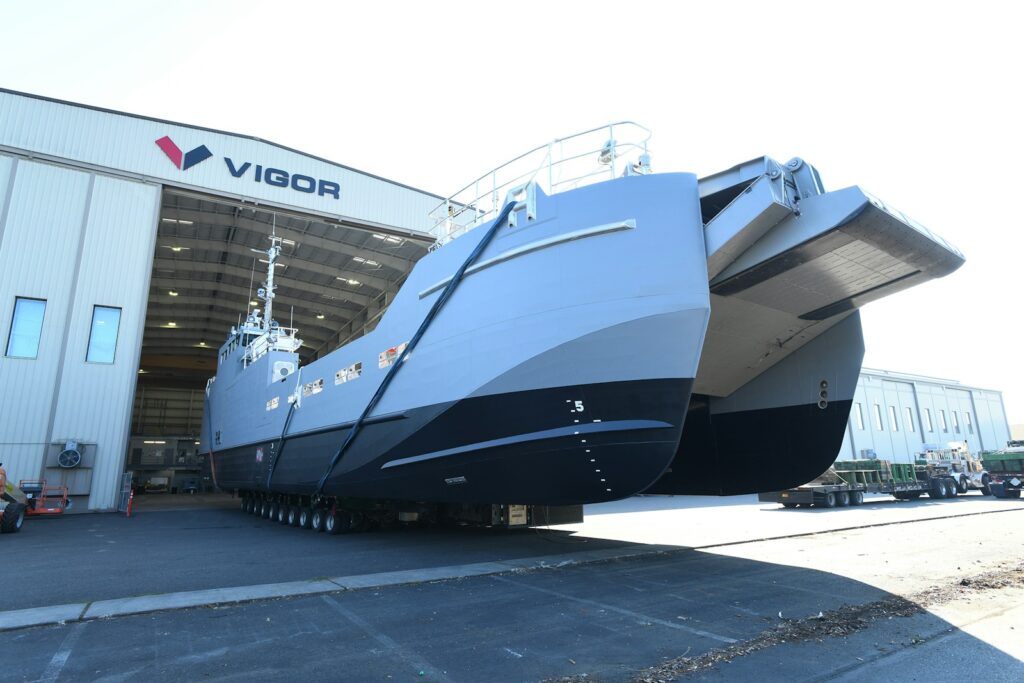
VANCOUVER, Washington (June 4, 2024) – Vigor, a Titan Company, has begun low rate initial production (LRIP) on the Maneuver Support Vehicle (Light) (MSV(L)) vessel at its facility in Vancouver, Washington. The new generation U.S. Army landing craft replaces the Vietnam-era Landing Craft Mechanized 8 (LCM-8). Vigor completed and launched the prototype vessel, SSG Elroy F. Wells, in 2022 and now commences work on the next phase of the new $1 billion contract. More than 180 skilled workers are expected to support the project over the next five years. 

“Beginning this work represents a milestone for the Army, for Vigor and for our employees,” said Jayson Robinson, Vigor’s Vice President of Fabrication. “It is a credit to the great work of our team over the last several years and the partnership with the Army to have the opportunity to take what we have learned from the prototype and build the next generation of landing craft. Our employees are incredibly proud to support our national defense and our customer’s critical mission.”  

Vigor was originally awarded the contract in 2017 and secured the Vancouver, WA facility to complete the prototype, multiple vessels under low rate production, and several more over ten years. The vessel is designed to support Army Mariners and their payload in even the most difficult environments due to its state-of-the-art maneuverability and stability.  

After undergoing sea trials throughout 2023, Vigor and the Army completed the DD 250 handoff of the prototype vessel in February and began planning for production of future vessels. The next phase of fabrication began this week and will continue for the next five years 

“This project will not only improve the Army’s capabilities, it provides more than 180 family wage jobs here in Vancouver,” Robinson said. “We are honored to have been selected for this work and committed to providing a quality, reliable vessel to our customer.”  


BAE Systems electronic warfare pods to protect U.S. Navy P-8A Poseidon aircraft 

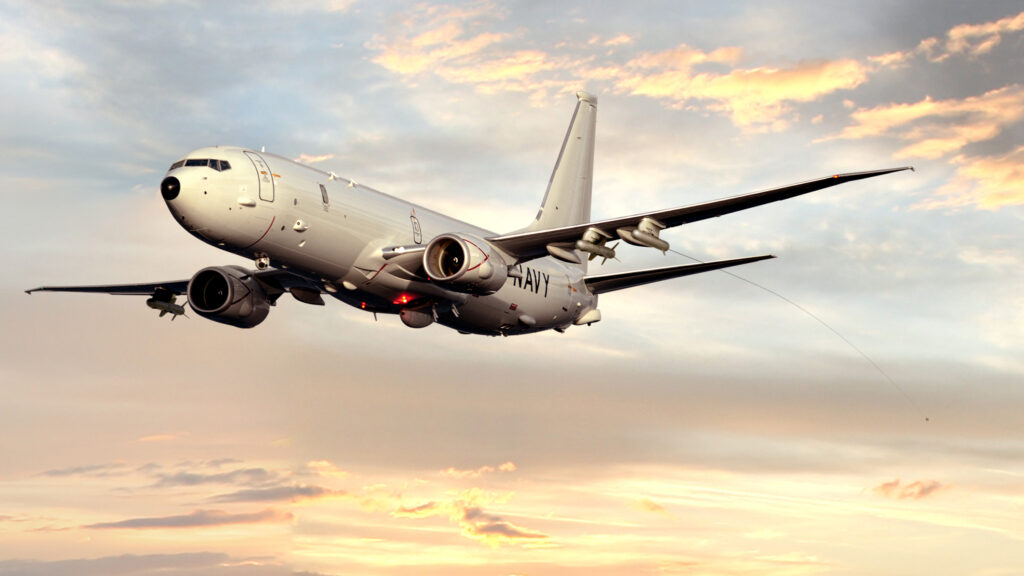
NASHUA, N.H. — June 5, 2024 — BAE Systems received a $95 million contract from the U.S. Navy for advanced countermeasure pods to protect the P-8A Poseidon Multi-Mission Maritime Aircraft from missiles and other threats. The electronic warfare (EW) pod detects and counters inbound threats, protecting the Poseidon and its crews, and expanding the aircraft’s operating range in contested environments. 

“We’re working closely with the U.S. Navy to deliver innovative solutions to protect this critical, high-value aircraft,” said Don Davidson, director of Advanced Compact Electronic Warfare Solutions at BAE Systems. “We quickly prototyped a very capable system using proven technology to defend against air-to-air and surface-to-air guided threats.” 

BAE Systems’ survivability pod provides early threat detection and effective countermeasures to protect U.S. and international high-value airborne assets. The system’s flexible, open architecture design allows rapid and affordable modernization, is compatible with future threat-detection and decoy countermeasure capabilities, and can host third-party EW techniques. 

The engineering and manufacturing development (EMD) contract follows a rapid-response contract from the U.S. Navy to demonstrate the system in 2021. The BAE Systems team designed, built, and tested a demonstration pod, exhibiting strong military-industry collaboration and rapid prototyping. The EMD contract follows successful airworthiness and effectiveness testing. 

The P-8A self-protection pod is part of BAE Systems’ Intrepid ShieldTM layered approach to aircraft and ground platform survivability that uses the full electromagnetic spectrum to detect, exploit, and counter advanced threats. The pod can be rapidly adapted for other high-value airborne assets, enabling them to operate in contested environments. 

Work on the P-8A pod and its components is conducted at BAE Systems’ state-of-the-art facilities in Nashua, New Hampshire and Austin, Texas. 


June 4 Red Sea Update 

From U.S. Central Command, June 4, 2024 
 

TAMPA, Fla. – In the past 24 hours, Iranian-backed Houthis launched two anti-ship ballistic missiles (ASBM) from Houthi-controlled areas of Yemen into the Red Sea. There were no injuries or damage reported by U.S., coalition, or commercial ships.   

This continued malign and reckless behavior by the Iranian backed Houthis threatens regional stability and endangers the lives of mariners across the Red Sea and Gulf of Aden.  


USCGC Seneca Returns Home After Two-Month Patrol in Windward Passage, Florida Straits

U.S. Coast Guard Atlantic Area, May 31, 2024 

PORTSMOUTH, Va. — The crew of U.S. Coast Guard Cutter Seneca (WMEC 906) returned to their home port in Portsmouth, May 21, 2024, following a 58-day migrant interdiction patrol in the Windward Passage and Florida Straits. 

Seneca’s crew deployed in support of Homeland Security Task Force – Southeast (HSTF-SE) and Operation Vigilant Sentry (OVS) while at sea in the Coast Guard Seventh District’s area of operations. 

Patrolling off the coast of Haiti and southern Florida Straits, Seneca’s presence helped deter migrants from taking to the sea in unsafe vessels to ensure the safety of life at sea and protect the maritime borders of the United States. 

While at sea, Seneca worked with a Coast Guard Air Station Miami HC-144 Ocean Sentry airplane crew and responded to an international search and rescue case involving an overboard passenger who fell from a cruise ship. 

During the deployment, Seneca’s crew had the opportunity to attend the inaugural Fleet Week 2024 in Miami, Florida in early May. Crew members conducted nearly 1,000 public tours over a six-day period, showcasing the U.S. Coast Guard, cutter Seneca, and the service’s missions. Seneca hosted numerous VIPs aboard to include Secretary of the Navy Carlos Del Toro, local and state politicians. 

“It’s been an honor leading Seneca and her crew, serving alongside the best and brightest women and men in the service,” said Capt. James F. McCormack, commanding officer of Seneca. “Seneca and her crew provided stability in the maritime environment of the South Florida Straits and represented the Coast Guard with distinction amongst the other U.S. maritime services at Fleet Week Miami. Seneca lived up to our motto, “Tradition of Honor, A Legacy of Action.”” 

While deployed, Seneca’s crew transited over 9,000 nautical miles. 

Established in 2003, HSTF-SE is the Department of Homeland Security-led interagency task force charged with directing operational and tactical planning, command and control, and functions as a standing organization to deter, mitigate, and respond to maritime mass migration in the Caribbean Sea and Florida Straits.  

OVS is the 2004 DHS plan that provides the structure for deploying joint air and surface assets and personnel to respond to irregular maritime migration in the Caribbean corridor of the United States. Its primary objectives are to protect life at sea while deterring and dissuading mass maritime migration alongside our federal, state, and local partners.   

Seneca is a 270-foot, Famous-class medium endurance cutter. The cutter’s primary missions are counter drug operations, migrant interdiction, enforcement of laws and treaties, and search and rescue in support of U.S. Coast Guard operations throughout the Western Hemisphere. 

For information on how to join the U.S. Coast Guard, visit www.GoCoastGuard.com to learn more about active duty and reserve, officer and enlisted opportunities. Information on how to apply to the U.S. Coast Guard Academy can be found here.