Coast Guard Offloads More Than $185 Million in Illegal Narcotics During Fleet Week Miami 
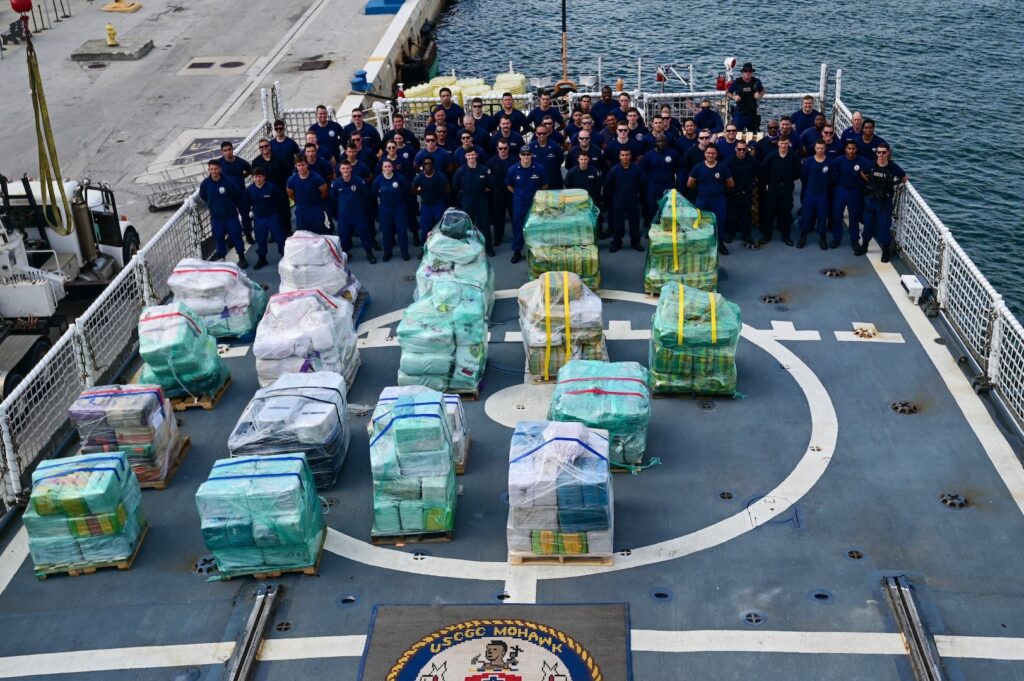
U.S. Coast Guard Cutter Mohawk (WMEC-913) crewmembers pose with approximately 18,000 pounds of illegal narcotics at Port Everglades in Fort Lauderdale, Florida, May 10, 2024.  (U.S. Coast Guard photo by Petty Officer 2nd Class Ryan Estrada) 

From U.S. Coast Guard 7th District, May 10, 2024 

MIAMI – The crew of U.S. Coast Guard Cutter Mohawk (WMEC 913) offloaded more than 13,803 pounds of cocaine and 3,736 pounds of marijuana with a combined estimated street value of approximately $185 million in Port Everglades, Friday. 

Coast Guard crews, working alongside interagency and international partners, interdicted the illegal drugs in the international waters of the Caribbean Sea and Atlantic Ocean during six separate cases. 

“Our offload today represents the combined efforts of U.S. and allied military units from a Caribbean coalition of partners working together to deny drug trafficking organizations access to maritime smuggling routes,” said Cmdr. David Ratner, commanding officer of USCGC Mohawk. “I am especially proud of the hard work of the Mohawk crew, and grateful for the opportunity to operate with interagency and NATO partners in support of our National Security.” 

The following assets and crews were involved in the interdictions: 

  • USCG Cutter Mohawk (WMEC 913) 
  • USCG Tactical Law Enforcement Team South (TACLET-South) 
  • USS Leyte Gulf (CG 55) 
  • U.S. Navy Helicopter Maritime Strike Squadron 50 (HSM 50) 
  • Royal Netherlands Navy ship HNLMS Groningen (P 843) 
  • Royal British Navy ship HMS Trent (P 244) 
  • Joint Interagency Task Force South (JIATF-South) 
  • Joint Task Force – East (JTF-E) 
  • U.S. Customs and Border Protection Air and Marine Operations (CBP-AMO) 

Along with the illicit narcotics, 10 suspected smugglers were apprehended and will face prosecution in federal courts by the U.S. Department of Justice. 

The offload included contraband seized by Coast Guard law enforcement detachments deployed aboard HMS Trent, HNLMS Groningen, and USS Leyte Gulf, whose crew interdicted a self-propelled semi-submersible vessel in March. You can read more about that case here

The fight against transnational criminal organizations requires a unity of effort in all phases, from detection and monitoring to interdiction and apprehension, through to criminal prosecutions by international partners and U.S. Attorneys’ Offices in districts across the nation. 

The Joint Interagency Task Force South in Key West, Florida, conducts the detection and monitoring of aerial and maritime transit of illegal drugs. The law enforcement phase of counter-smuggling operations in the Caribbean is conducted under the authority of the Coast Guard 7th District, headquartered in Miami. The interdictions, including the actual boardings, are led and conducted by members of the U.S. Coast Guard. 

U.S. Customs and Border Protection Air and Marine Operations deployed a National Air Security Operations MQ-9 Unmanned Aircraft System to Puerto Rico in coordination with JTF-E and JIATF-S reinforcement of the Eastern Caribbean Campaign, resulting in tremendous success. JTF-E’s Eastern Caribbean Campaign is a divergence from conventional strategies with a multi-dimensional view on security threats predominating in the region. The deployment highlighted threats emanating from the Eastern Caribbean contributing to the seizure of 25 metric tons of narcotics. 

These interdictions relate to Organized Crime Drug Enforcement Task Forces (OCDETF) designated investigations. OCDETF identifies, disrupts, and dismantles the highest-level criminal organizations that threaten the United States using a prosecutor-led, intelligence-driven, multi-agency approach. Additional information about the OCDETF program can be found at https://www.justice.gov/OCDETF

USCGC Mohawk is a 270-foot, medium endurance cutter homeported in Key West, Florida with a crew of 100. The cutter’s primary missions are counter drug operations, migrant interdiction operations, enforcement of federal fishery laws, and search and rescue in support of Coast Guard operations throughout the Western Hemisphere. Sister ship USCGC Seneca (WMEC 906) homeported in Portsmouth, Virginia, is participating in the inaugural Fleet Week Miami and is hosting free public tours. Visit the Fleet Week Miami website for more information:  Fleet Week Miami. 

For breaking news, follow us on X (formerly Twitter). For additional information, find us on Facebook and Instagram

Visit www.GoCoastGuard.com to learn more about active duty and reserve, officer and enlisted opportunities in the U.S. Coast Guard. Information on how to apply to the U.S. Coast Guard Academy can be found here


DoD, STRATCOM, INDOPACOM Representatives Tour USS Zumwalt, Discuss Hypersonics

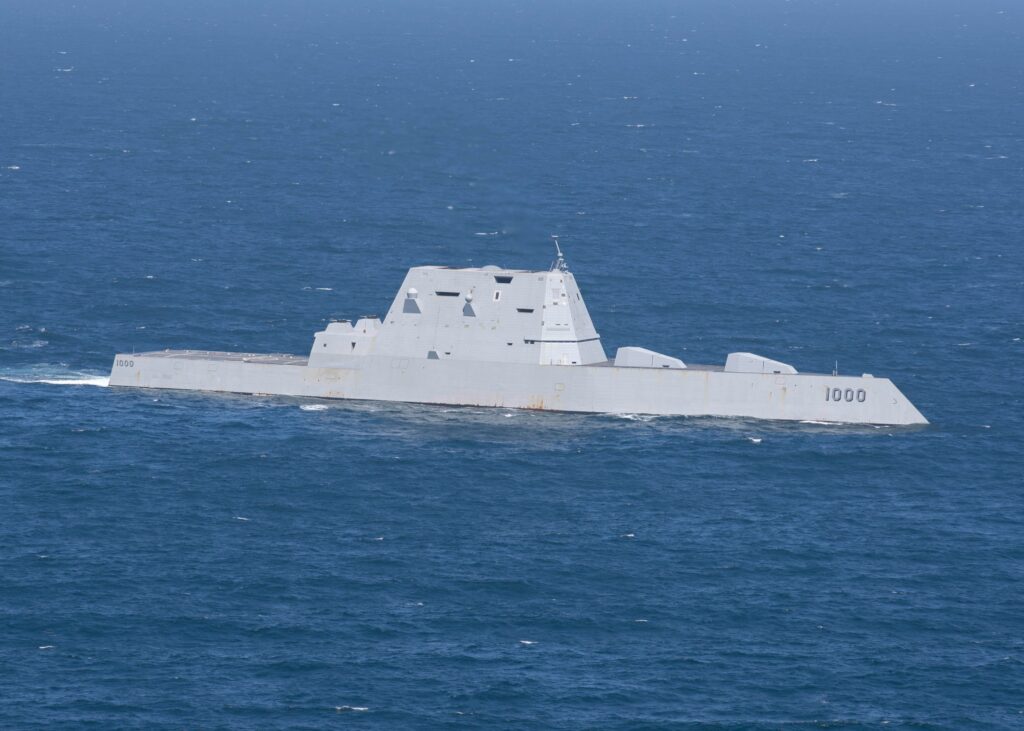
PACIFIC OCEAN (April 13, 2022) The Zumwalt-class guided-missile destroyer USS Zumwalt (DDG 1000) sails through the Pacific Ocean, April 13, 2022. (U.S. Navy photo by MC3 Christopher Sypert)

By Team Ships Public Affairs, May 8, 2024 

PASCAGOULA, (April 12, 2024) – Combatant Command and OSD senior leaders visited SUPSHIP Gulf Coast to tour the USS ZUMWALT (DDG 1000) and receive an update on the Navy’s efforts to integrate the Conventional Prompt Strike weapon system into the DDG 1000 class. Mr. Robert J. Taylor, STRATCOM Director of Capability and Resource Integration, Dr. Martin Lindsey, INDOPACOM Science and Technology Advisor, and Dr. James Weber, Office of the Under Secretary of Defense for Research and Engineering, Principal Director for Hypersonics, joined Navy Program leaders for the visit on April 4, 2024. 

“United States Strategic Command remains committed to ensuring the Conventional Prompt Strike Capability is rapidly integrated on ZUMWALT Class DDGs,” said Mr. Robert J. Taylor.  “My team and I will continue to work across Combatant Commands, Offices of the Secretary of Defense, and the Navy to integrate this highly lethal platform into plans and operations to assure Allies and Partners while sending a strong deterrence message to our adversaries”. 

USS ZUMWALT (DDG 1000) arrived at Huntington Ingalls Industries – Ingalls Shipyard (HII-Ingalls) on August 19, 2023, to enter a modernization period and receive technology upgrades including the integration of the Conventional Prompt Strike (CPS) weapon system. These upgrades, and the integration of the CPS weapon system, will help ensure Zumwalt remains one of the most technologically advanced and lethal ships in the U.S. Navy. 

“The Navy / Industry team is moving with a sense of urgency to integrate CPS capability into USS ZUMWALT” said Rear Adm. Tom Anderson, Program Executive Officer (PEO), Ships. “Many steps have been taken and are on track to get this important player on the field on time.” 

The unique design and advanced capabilities of the Zumwalt-class is well-matched with the CPS weapons system that enables precise and timely strike capability in contested environments. CPS is a non-nuclear hypersonic weapon system being designed and developed by the Navy’s Strategic Systems Programs (SSP) that will provide an intermediate range, prompt, conventional strike capability to the Department of Defense. The missile will be delivered to the Navy onboard ZUMWALT Class DDGs starting in the mid-2020’s and on Block V VIRGINIA Class SSNs starting in the early 2030’s, as well as to the Army as the Long Range Hypersonic Weapon (LRHW). 

“Conventional Prompt Strike will deliver a cutting-edge capability and strategic options to our Armed Forces, supplementing our existing unparalleled capabilities,” Weber said. “The Navy is accelerating development and transition of this transformational warfighting capability.” 


DOD Releases Fiscal Year 2023 Freedom of Navigation Report

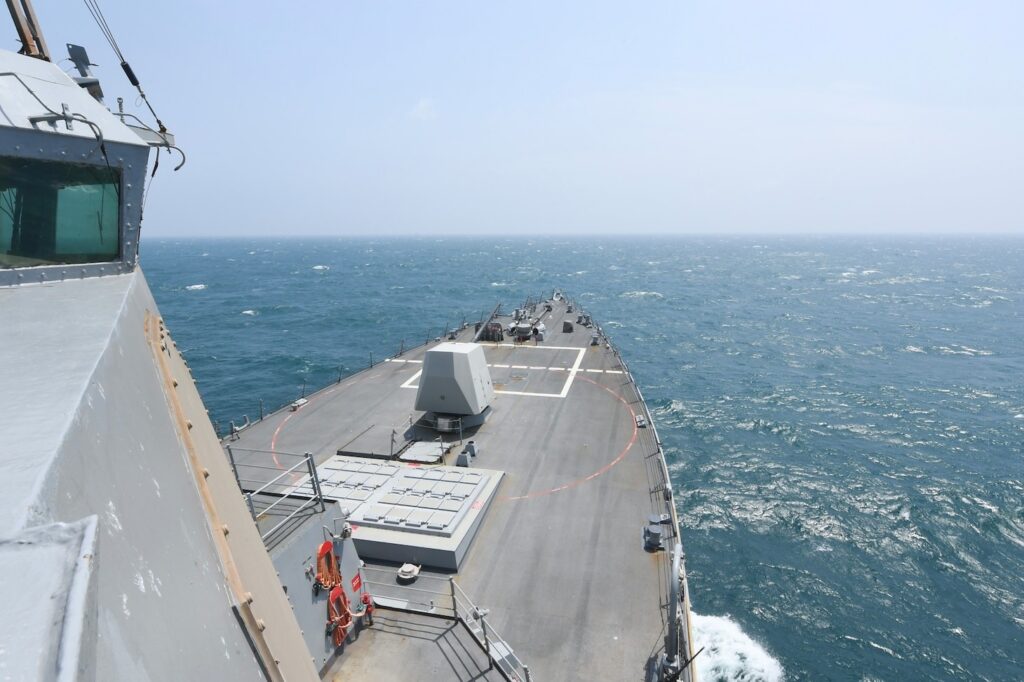
TAIWAN STRAIT (May 8, 2024) The Arleigh Burke-class guided-missile destroyer USS Halsey (DDG 97) conducts routine underway operations while transiting through the Taiwan Strait, May 8. (U.S. Navy photo by MC3 Ismael Martinez)

From the Department of Defense, May 8, 2024  

Today, the Department of Defense (DoD) released its annual Freedom of Navigation (FON) Report for Fiscal Year 2023. During the period from October 1, 2022, through September 30, 2023, U.S. forces operationally challenged 29 different excessive maritime claims advanced by 17 different claimants throughout the world. 

Excessive maritime claims are inconsistent with international law as reflected in the Law of the Sea Convention. They include a variety of restrictions on the exercise of navigation and overflight rights and other freedoms and lawful uses of the seas. Unlawful maritime claims pose a threat to global mobility and commerce, as well as the legal foundation of the rules-based international order. If left unchallenged, excessive maritime claims could limit the rights and freedoms enjoyed by every nation. 

DoD’s regular and routine operational challenges complement diplomatic engagements by the U.S. State Department and support the longstanding U.S. national interest in freedom of the seas worldwide. 

Each year, DoD releases an unclassified FON Report summarizing the broad range of excessive maritime claims challenged by U.S. forces. It also includes general geographic information to describe the location of FON assertions. The summarized reports transparently demonstrate U.S. non-acquiescence to excessive maritime claims, while protecting the operational security of U.S. military forces. 

The United States will uphold the rights, freedoms, and lawful uses of the sea for the benefit of all nations — and will stand with like-minded partners doing the same. 

DoD FON Reports are available at http://policy.defense.gov/OUSDPOffices/FON.aspx


SECDEF Announces Flag Officer Nominations

ARLINGTON, Va. — Secretary of Defense Lloyd J. Austin III announced May 9 that the president has made the following nominations: 

Navy Vice Adm. John F. Wade for reappointment to the grade of vice admiral, with assignment as commander, Third Fleet, San Diego, California. Wade most recently served as commander, Task Force Red Hill, Camp H.S. Smith, Hawaii.  

Navy Rear Adm. Michael J. Vernazza for appointment to the grade of vice admiral, with assignment as commander, Naval Information Forces, Suffolk, Virginia. Vernazza is currently serving as commander, Fleet Information Warfare Command Pacific/Information Warfare Task Force (TF-501), Pacific, Joint Base Pearl Harbor-Hickam, Hawaii. 


US Coast Guard Cutter Eagle to Depart on Annual Summer Cruise

(U.S. Coast Guard photo by Auxiliarist David Lau/Released) 

From U.S. Coast Guard Academy, May 9, 2024 

NEW LONDON, Conn. — U.S. Coast Guard Cutter Eagle (WIX 327) is scheduled to depart Fort Trumbull in New London, Saturday, at 2:30 p.m. to begin the training vessel’s annual summer cruise. 

U.S. Coast Guard Academy cadets on board will have the unique and experiential learning opportunity of sailing aboard a tall ship, which provides them with their first introduction to life at sea and is a foundational experience in their leadership development journey toward becoming future officers in the Coast Guard. During the cruise, cadets take classes on numerous subjects that are key to life at sea, including navigation, seamanship, ship and boat maneuvering, line handling, sailing, first aid, weather patterns, damage control, engineering, career development, and more. They will stand their first watch, and assist with setting, dousing, and trimming the sails, often requiring trainees to climb the rigging, and push themselves outside of their comfort zones. 

While the primary mission is training the cadets, the ship also performs a public relations role for the Coast Guard and the United States, making calls at foreign ports as a goodwill ambassador. During this year’s cruise, Eagle will leverage its unique ability to foster international relations with critical partners throughout the Americas. 

During its 2024 deployment, Eagle will sail through the Caribbean Sea, visit South America, and make port of calls in the northern Atlantic Ocean. 

Eagle’s 2024 full summer schedule includes port visits to:         

  • May 11: Departs from New London 
  • May 25 – May 28: Santo Domingo, Dominican Republic 
  • June 4 – June 7: Cartagena, Colombia 
  • June 14 – June 17: San Juan, Puerto Rico 
  • June 24 – June 27: Bridgetown, Barbados 
  • July 7 – July 10: Hamiliton, Bermuda 
  • July 18 – July 21: Halifax, Nova Scotia 
  • July 26 – July 29: Portsmouth, New Hampshire 
  • Aug. 2 – August 5: Rockland, Maine 
  • Aug. 9 – August 12: Boston, Massachusetts 
  • Aug. 16: Returns to New London 

Eagle is scheduled to return to New London on Aug. 16. 

Known as “America’s Tall Ship,” Eagle is a 295-foot, three-masted barque used as a training vessel for future officers of the United States Coast Guard. It is the largest tall ship flying the Stars and Stripes and the only active square-rigger in U.S. government service. 

For continuous updates about Eagle to include port cities, tour schedules, current events, and photographs of cadets and active duty crew members, you can follow the cutter’s Facebook page here and Instagram feed here

For information on how to join the U.S. Coast Guard, visit GoCoastGuard.com to learn about active duty, reserve, officer and enlisted opportunities. Information on how to apply to the U.S. Coast Guard Academy can be found here


Coast Guard Holds Ribbon-Cutting Ceremony for New Station in Fort Myers

The Coast Guard held a ribbon-cutting ceremony marking the official opening of the new Coast Guard Station Fort Myers Beach facility, March 13, 2024, in Fort Myers. Station Fort Myers Beach and Coast Guard Cutter Crocodile crews will utilize the new three-story building. (U.S. Coast Guard photo by Petty Officer 3rd Class Santiago Gomez)

From Public Affairs Detachment Tampa Bay, March 13, 2024 

CLEARWATER, Fla. — The Coast Guard held a ribbon-cutting ceremony, Wednesday, marking the official opening of the new Coast Guard Station Fort Myers Beach facility.  

Rear Adm. Amy Grable, assistant commandant, Engineering and Logistics, presided over the ceremony. 

Station Fort Myers Beach and Coast Guard Cutter Crocodile crews will utilize the new three-story building.  

The building was set to be completed one year prior, but was delayed due to hurricane damage in 2021 and consists of berthing rooms, a galley, training rooms and a fitness room. 

Station Fort Myers Beach is a multi-mission station capable of conducting search and rescue, law enforcement, maritime security, environmental protection operations and migrant operations from Boca Grande Pass to Rabbit Key.  

The station has a crew size of about 60 members and their assets include two 45-foot Response Boat–Medium and two 29-foot Response Boat–Smalls. 

The cutter Crocodile’s missions include combating drug smuggling, illegal immigration, ports, waterways and coastal security, marine fisheries enforcement and search and rescue support. 

“It is an honor and a privilege to accept this new multi-mission facility on behalf of Coast Guard Station Fort Myers Beach and Coast Guard Cutter Crocodile,” said Chief Warrant Officer Christopher C. Cone, commanding officer, Station Fort Myers Beach. ”This new facility will allow Coast Guard crews to continue mission support and operational excellence throughout the Southwest Florida coastline.” 


SECNAV Del Toro Names Future Nuclear-Powered Attack Submarine USS Miami with Gloria Estefan as Sponsor

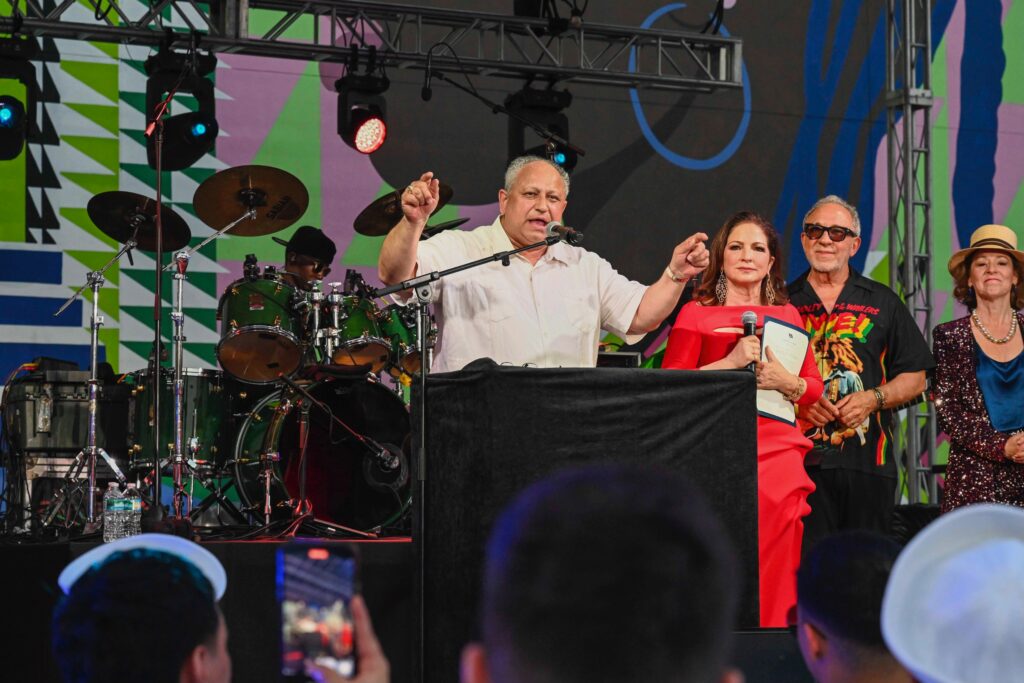
Secretary of the Navy Carlos Del Toro announced that future Virginia-class nuclear-powered attack submarine SSN 811 will be named USS Miami. Secretary Del Toro made the announcement, May 7, during the official kickoff concert of the inaugural Fleet Week Miami, hosted by Blue Star Families. Along with the ship’s name, Secretary Del Toro announced that international pop star Gloria Estefan will be the sponsor for the future USS Miami. In her role, Gloria Estefan will represent a lifelong relationship with the ship and crew. (U.S. Navy photo by MC3 William Bennett IV) 

From SECNAV Public Affairs, May 7, 2024 

Secretary of the Navy Carlos Del Toro announced that future Virginia-class nuclear-powered attack submarine SSN 811 will be named USS Miami. Secretary Del Toro made the announcement, May 7, during the official kickoff concert of the inaugural Fleet Week Miami, hosted by Blue Star Families. 

The future USS Miami honors the city of Miami and the crews of three previously Navy vessels to bear the name.  

“That shared history is what makes Miami one of the greatest cities on Earth—and emblematic of what makes this country the greatest country in the world,” said Del Toro. “Miami is a shining example of what happens when a city welcomes all who come seeking a better life.”  

Along with the ship’s name, Secretary Del Toro announced that international pop star Gloria Estefan will be the sponsor for the future USS Miami. In her role, Gloria Estefan will represent a lifelong relationship with the ship and crew.   

“We are so thankful as citizens of this great country to have all of you out there protecting and serving all of us,” Gloria Estefan said to the approximately 1,500 Sailors and Marines attending the kickoff concert, produced by entertainment icon Emilio Estefan. 

The city of Miami has been honored with three previous vessels: a gunboat (1862-1865), a light cruiser (1942-1947), and a nuclear-powered submarine (1990-2014).    

In June 1862, the first Miami engaged enemy forces at a rapid fire while Flag Officer David G. Farragut’s ships ran past Confederate shore batteries at Vicksburg, Mississippi.  In 1864, the Gunboat’s crew supported Union troops ashore and battled Confederate ironclad Albemarle at Plymouth, NC..    

At the Battle of Leyte Gulf during World War II, the second Miami (CL 89) fought as part of Admiral William F. Halsey’s Third Fleet, helping to sink Japanese destroyer Nowaki on October 26, 1944.  Two seaplane pilots operating from Miamireceived the Distinguished Flying Cross for rescuing downed airmen in enemy waters. Miamiearned a total of 6 battle stars for operations in the Marianas, Western Caroline Islands, Leyte Gulf, Luzon, Iwo Jima, and Okinawa.    

The third Miami (SSN 755) conducted cruise missile strikes during Operation Desert Fox in 1998 and again during Operation Allied Force in 1999.    

Attack submarines are designed to seek and destroy enemy submarines and surface ships; project power ashore with Tomahawk cruise missiles and Special Operation Forces (SOF); carry out Intelligence, Surveillance and Reconnaissance (ISR) missions; support battle group operations; and engage in mine warfare. 

Miami also has a maritime connection. The greater Miami region was formerly home to a seaplane base (1918-1920), a naval reserve air base (1931-1942), and a naval air station (1940-1958).  United States Southern Command (SOUTHCOM) has been headquartered in Miami-Dade County since 1997. 

More information on attack submarines can be found here

Read Secretary Del Toro’s full remarks online


U.S. Navy Accepts Delivery of USNS Earl Warren

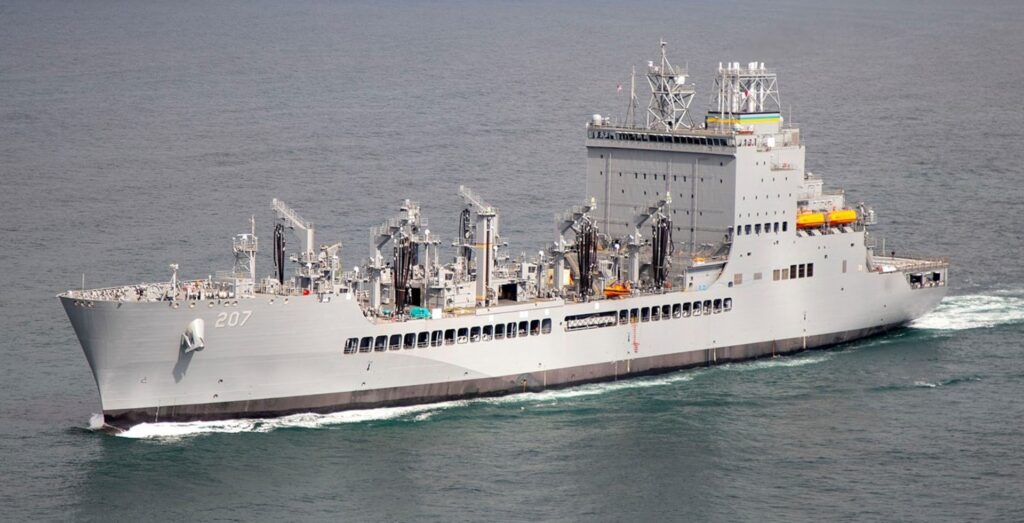
USNS Earl Warren (T-AO 207) during a testing event. (U.S. Navy photo) 

By Team Ships Public Affairs, May 7, 2024 

SAN DIEGO – John Lewis-class fleet replenishment oiler, USNS Earl Warren (T-AO 207) was delivered to the Navy, May 7. 

Delivery follows the successful completion of Integrated Sea Trials to test the readiness and capability of the ship and to validate requirements. 

“Delivery of the third ship in the class will bring more refueling capability directly to the fleet, including replenishment underway capacity,” said John Lighthammer, program manager, Auxiliary and Special Mission Shipbuilding Program Office. “The civilian mariners who crew this ship will have the tools they need to operate in often rapidly changing environments.” 

The John Lewis-class ships are based on commercial design standards and will recapitalize the current T-AO 187-class fleet replenishment oilers to provide underway replenishment of fuel to U.S. Navy ships at sea. These ships are part of the Navy’s Combat Logistics Force. 

General Dynamics NASSCO, the shipbuilder, is also in production on future T-AOs USNS Robert F. Kennedy (T-AO 208), USNS Lucy Stone (T-AO 209) and USNS Sojourner Truth (T-AO 210). Future TAOs USNS Thurgood Marshall (T-AO 211), USNS Ruth Bader Ginsburg (T-AO 212), and USNS Harriet Tubman (T-AO 213) are under contract. 

As one of the Defense Department’s largest acquisition organizations, Program Executive Office Ships is responsible for executing the development and procurement of all destroyers, amphibious ships and craft, auxiliary ships, special mission ships, sealift ships and support ships. 


May 7 Central Command Update

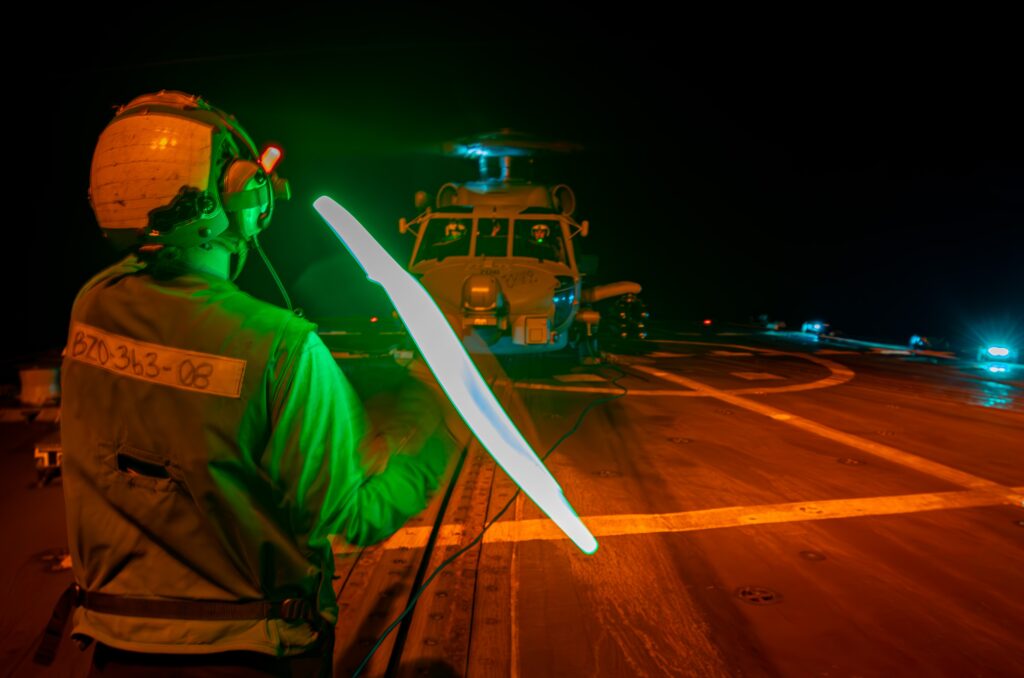
RED SEA (April 10, 2024) An aviation machinist’s mate signals to an MH-60R Sea Hawk helicopter tfrom Helicopter Maritime Strike Squadron (HSM) 74 aboard the Arleigh Burke-class guided-missile destroyer USS Gravely (DDG 107) in the Red Sea, April 10, 2024. (Official U.S. Navy photo) 

U.S. Central Command, May 07, 2024 

 
TAMPA, Fla. – Between approximately 11:02 p.m. and 11:48 p.m. (Sanaa time) on May 6, Iranian-backed Houthi terrorists launched three uncrewed aerial systems (UAS) over the Gulf of Aden from Houthi controlled areas in Yemen. A coalition ship successfully engaged one UAS, U.S. Central Command (USCENTCOM) forces successfully engaged the second UAS, and the final UAS crashed in the Gulf of Aden. There were no injuries or damages reported by U.S., coalition, or merchant vessels.    

Later, at approximately 5:02 a.m. (Sanaa time) on May 7, Iran-backed Houthi terrorists launched an anti-ship ballistic missile (ASBM) over the Gulf of Aden. There were no injuries or damages reported by U.S., coalition, or merchant vessels. 

It was determined that these weapons presented an imminent threat to both coalition forces and merchant vessels in the region. These actions are taken to protect freedom of navigation and make international waters safer and more secure for U.S., coalition, and merchant vessels. 


Floating Piers, Cargo Ship With Aid for Gaza Face Weather Delays

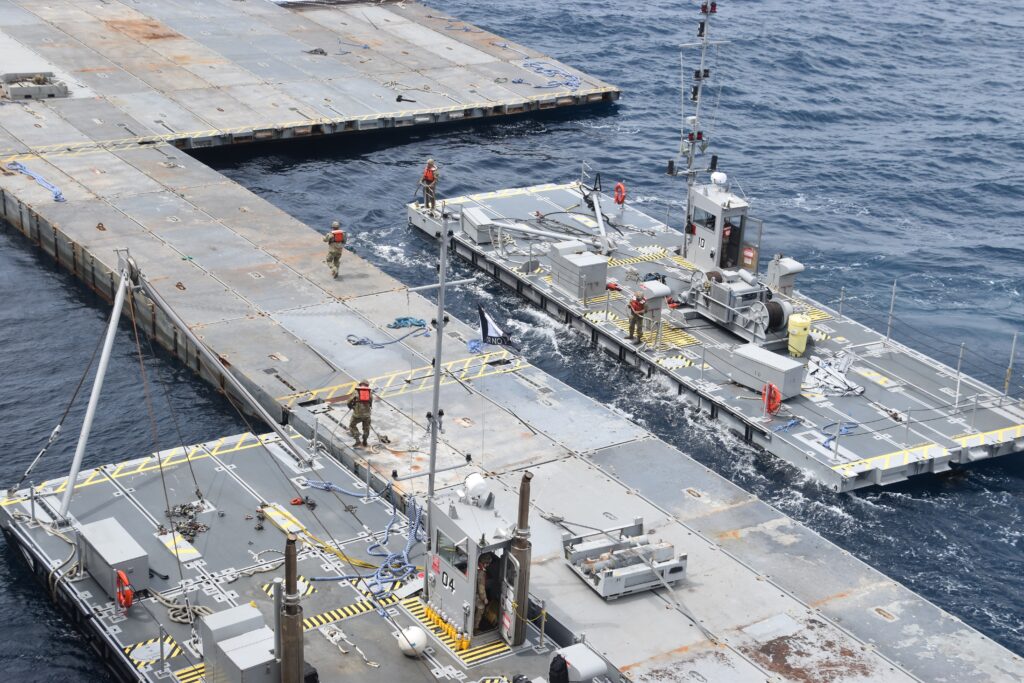
MEDITERRANEAN SEA (April 26, 2024) U.S. military personnel work on construction of the floating Joint Logistics Over the Sea (JLOTS) pier in the Mediterranean Sea off the coast of the Gaza Strip, April 26, 2024. The pier will support the delivery of humanitarian aid to the people of Gaza. (U.S. Navy photo)

May 7, 2024 | By C. Todd Lopez, DoD News  

Construction of the Joint Logistics Over-the-Shore, or JLOTS, system on the Mediterranean Sea, which will streamline delivery of humanitarian aid to Gaza, is now complete, the deputy Pentagon press secretary said today. 

“The U.S. military has completed the offshore construction of the Trident pier section, or ‘the causeway,’ which is the component that will eventually be anchored to the Gaza shore,” said Sabrina Singh during a briefing today. “As I mentioned last week, construction of the floating pier section has also been completed. So as of today, the construction of the two portions of the JLOTS — the floating pier and the Trident pier — are complete and awaiting final movement offshore.”  

At the same time, she said, the cargo ship MV Sagamore is at port in Cyprus being loaded with humanitarian aid supplies bound for Gaza.  

“The Sagamore is a cargo vessel that will use the JLOTS system and will make trips between Cyprus and the offshore floating pier as USAID and other partners collect aid from around the world,” she said.  

Singh explained that the Sagamore, a commercial ship registered in the U.S., will be loaded with humanitarian aid in Cyprus and will then travel from Cyprus to a temporary floating pier several miles off the coast of Gaza. There, at sea, cargo will be unloaded from the Sagamore onto trucks that are onboard Army-owned landing craft utility ships, or LCUs, and logistic support vessels, or LSVs.  

The Army ships will then travel toward Gaza where they will meet up with the Trident pier. There, the trucks onboard the LCUs and LSVs will drive onto the pier and onto the shore of Gaza where the humanitarian aid supplies can then be staged for delivery inside Gaza.  

It’s expected that initially about 90 truckloads of supplies will transit the causeway each day and make their way into Gaza. When the operation reaches full capacity, as many as 150 trucks will make their way into Gaza daily.  

“I think what you’re going to see at the very beginning is a ‘crawl, walk, run’ scenario,” Singh said. “We’re going to start with an additional small amount of aid trucks to flow in to make sure that the system works, that the distribution works, and then you’ll see that increase … when we get to full operational capacity.” 

While the JLOTS system may eventually deliver substantial capacity, Singh said it’s neither the only way nor the best way to get much-needed supplies into Gaza.  

“The best way through those land routes, and we do want to see those opened up,” she said. “We do want to see aid continue to flow in through those land crossings. This is just one It’s meant to help augment, to help complement, other ways that aid can get in.”  

The Gaza Strip, which is about 25 miles long, lies entirely inside Israel and shares a border to the south with Egypt. There are three locations along its border where humanitarian supplies could move into Gaza from either Egypt or Israel. Those locations include the Erez crossing in northern Gaza and the Kerem Shalom crossing in southern Gaza. Both of those crossings connect Gaza to Israel. The Rafah crossing is on the Gaza border with Egypt.  

Since March 2, U.S. Central Command, in coordination with the Royal Jordanian Air Force, has carried out nearly 40 humanitarian missions to airdrop nearly 1,200 tons of humanitarian assistance into Gaza.  

While the JLOTS construction is now complete, that capability has not yet been deployed due to weather conditions, Singh said. Right now, the two piers are floating on the Mediterranean Sea off the coast of Israel near the Port of Ashdod — about 18 miles north of Gaza. Weather conditions, Singh said, prevent moving either of them to their final location.  

“Late last week, Centcom temporarily paused moving the floating pier and Trident pier toward the vicinity of Gaza due to sea state considerations,” she said. “Today there are still forecasted high winds and high sea swells, which are causing unsafe conditions for the JLOTS components to be moved.”