Australian Sailors Graduate Sub Officer Course: Next, Assignment to U.S. Nuclear Attack Submarines 
U.S. Navy  

By U.S. Naval Submarine School Public Affairs and AUKUS Integration and Acquisition Program Office 

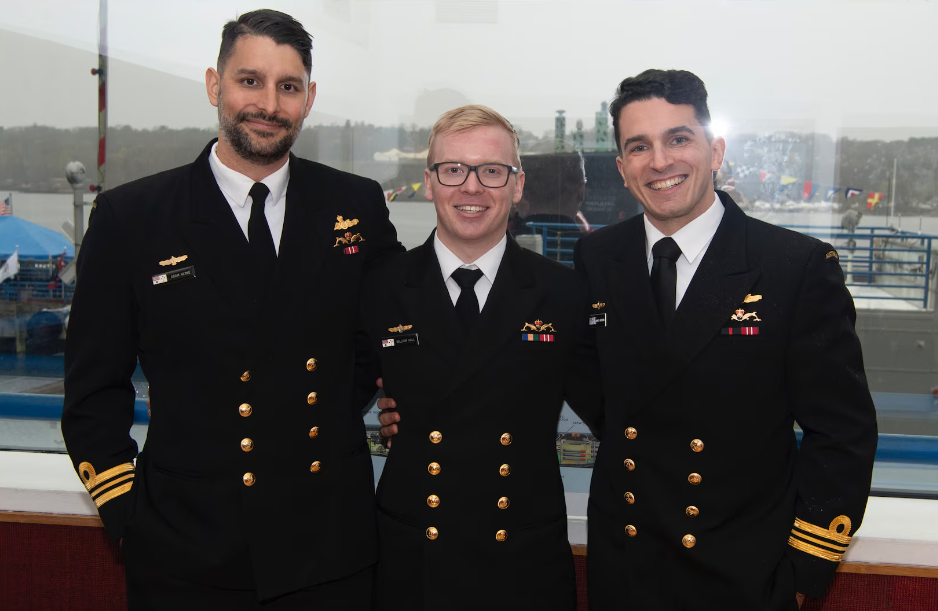
GROTON, Connecticut — In a first for the U.S. Navy and Royal Australian Navy, three RAN officers graduated from the U.S. Navy’s Submarine Officer Basic Course (SOBC) on April 18, 2024, at the Naval Submarine School in Groton, Connecticut.

The RAN officers’ graduation represents a significant step toward realizing Pillar 1 of the trilateral AUKUS partnership, a strategic endeavor aimed at strengthening the security and defense capabilities of Australia, the United Kingdom, and the United States. Pillar 1 aims to create a sovereign conventionally armed, nuclear-powered attack submarine fleet for the Royal Australian Navy. 
 
“Collectively, we would like to thank our instructors here in Groton and also in Goose Creek, South Carolina, for getting us to this point,” said Lieutenant William Hall. Hall, Lieutenant Commander James Heydon and Lieutenant Commander Adam Klyne are the first RAN officers to complete Naval Nuclear Power School and Nuclear Power Training Unit, located in South Carolina, and now SOBC. “Now, we’re looking to join our boats and continuing our careers as part of Australia’s conventionally armed, nuclear-powered submarine force.” 
 
The Submarine Officer Basic Course is the last step in the U.S. Navy’s 15-month nuclear submarine training pipeline before assignment to the fleet. The three RAN officer graduates will be assigned to Virginia-class attack submarines based out of Pearl Harbor, Hawaii. Upon assignment, the graduates serve as division officers, leading a team of highly trained enlisted submariners. In this capacity, they will be tested and qualified on the ship’s systems and in various warfighting and leadership roles. 
 
“Over the last two months, these three officers have trained alongside our Sailors, learning the fundamentals of operating and tactically employing SSNs,” said Naval Submarine School Commanding Officer Captain Matthew Fanning. “At SOBC, they applied both their previous experience and the new skills they developed through our nuclear training schools, to learn how we operate the ocean’s apex predator, the nuclear-powered attack submarine.” 
 
“These officers are the future leaders of Australia’s sovereign conventionally armed nuclear-powered submarine fleet,” said the U.S. Navy’s AUKUS Integration and Acquisition Program Manager Rear Admiral Lincoln Reifsteck. “Their time in Groton bridged the operational gap between the Collins-class SSKs and the Virginia-class SSN. These tours on U.S. Virginia-class submarines are the key professional development step toward earning the privilege to become submarine executive officers and the first commanding officers of Australian SSNs.” 
 
Nearly 100 RAN officers and enlisted personnel will enter the submarine and Naval Nuclear Propulsion training piplelines in 2024. 
 
“These three officers are trailblazers for the Royal Australian Navy,” said Rear Admiral Matt Buckley, Head of Nuclear Submarine Capability within the Australia Submarine Agency. They are not only the first Australians to be fully trained within the U.S. system but will also gain real-world experience aboard Virginia-class SSNs, which will be foundational to Australia’s ability to sovereignly operate, maintain, and steward these world-class platforms.” 
 
AUKUS is a strategic partnership that will promote a safe, free, and open Indo-Pacific, enhance national security, and uplift the three industrial bases. AUKUS Pillar 1 is delivering a conventionally armed SSN capability to the Royal Australian Navy by the early 2030s. The AUKUS I&A Program Office is responsible for executing the trilateral partnership to deliver conventionally armed, nuclear-powered attack submarines to the RAN at the earliest possible date while setting the highest nuclear stewardship standards and continuing to maintain the highest nonproliferation standard. 


VMUT-2 begins assembly of the first 2nd MAW MQ-9A Reaper

U.S. Marines with Marine Unmanned Aerial Vehicle Training Squadron (VMUT) 2 conduct familiarization training with an MQ-9A Reaper unmanned aircraft at Marine Corps Air Station Cherry Point, North Carolina, April 11, 2024. (U.S. Marine Corps photo by Lance Cpl. Orlanys Diaz Figueroa) 

Story by 2nd Lt. John Graham, 2nd Marine Aircraft Wing    

April 12, 2024

MARINE CORPS AIR STATION CHERRY POINT, N.C. – Marine Unmanned Aerial Vehicle Training Squadron (VMUT) 2, 2nd Marine Aircraft Wing (MAW), began the assembly of 2nd MAW’s first MQ-9A Reaper, April 10, as part of the U.S. Marine Corps’ continued transition from the legacy RQ-21A Blackjack in accordance with Force Design initiatives. 

“The delivery and build of VMUT-2’s first MQ-9A aircraft is yet another successful milestone in the transition of VMUT-2 to become the MQ-9A Fleet Replacement Squadron, responsible for the world-class training of the Marine Corps’ MQ-9A pilots and sensor operators,” said Lt. Col. Michael Donlin, commanding officer of VMUT-2.

Many of the parts for the aircraft were delivered to VMUT-2, known as the “Night owls,” aboard Marine Corps Air Station (MCAS) Cherry Point, North Carolina, from General Atomics in March, making 2nd MAW the third and final MAW to receive the aircraft. Marine Unmanned Aerial Vehicle Squadron (VMU) 1, 3rd MAW, procured the first MQ-9A Reaper for the Marine Corps in August 2021, and VMU-3, 1st MAW, was the first VMU to achieve initial operational capability with the MQ-9A platform in August 2023.

The MQ-9A Extended Range Marine Air-Ground Task Force (MAGTF) Unmanned Expeditionary (MUX) Medium-Altitude, High-Endurance (MALE) aircraft is a medium-altitude, long-endurance Block 5 remotely piloted aircraft, enabling future Marine Corps, naval, and joint force operating concepts by providing multisensor surveillance and reconnaissance; data gateway and relay capabilities through an aerial layer; and enabling or conducting the detection and engagement of targets during expeditionary, joint, and combined operations. The aircraft will provide intelligence, surveillance, reconnaissance and targeting as well as performing additional missions such as: maritime domain awareness, airborne network extension, airborne early warning, and electronic support.  

With a range of more than 1,600 miles and the ability to operate for more than 20 hours, the unmanned aircraft is designed to provide intelligence, surveillance and reconnaissance in support of 2nd MAW and wider Marine Expeditionary Force missions. This extended range is possible through the Marine Corps’ addition of external fuel tanks to the aircraft that are capable of holding 1,300 pounds of fuel.

These capabilities will allow the MQ-9A Reaper to support future Marine Corps operating concepts, such as distributed maritime operations, littoral operations in a contested environment, and expeditionary advanced base operations as part of Force Design initiatives. The capabilities that the MQ-9A Reaper will provide represent an enhancement to 2nd MAW’s intelligence, surveillance, and reconnaissance, and data and communications network capabilities. The arrival and assembly of this aircraft represents a milestone in 2nd MAW unmanned aircraft systems’ support for future operating concepts and represents an additional milestone in VMUT-2’s continued transition from the RQ-21A Blackjack platform that served as 2nd MAW’s primary unmanned aircraft system until July 2023.   

“Our ability to rapidly and safely build these aircraft sets the stage for flight operations in the near future and is a testament to the hard work of the ‘Night owl’ maintenance department and the program office over the last ten months,” said Donlin. “‘Night owls’ don’t quit.”


CORAS Rolls Out Early Release of Driver Trees Tool

April 17, 2024

Responding to U.S. Navy’s Agenda for Performance-based Management, Decision-Making, and Readiness

MCLEAN, Va., April 17, 2024 (Newswire.com) – CORAS Federal, a FedRAMP High Software as a Service (SaaS) platform, announced an early release of a Driver Trees feature that adds to its suite of enterprise decision management tools. Driver Trees are a performance-based management process that identifies root causes and the most impactful way of pushing efficient progress and resolution, incorporating the U.S. Navy’s (USN) Get Real Get Better and Performance to Plan (P2P). 

CORAS Driver Trees are already at work within the USN supporting Program Managers in their “hunt for leverage”, using metrics and cause-and-effect relationships to predict future performance and determine the highest-capacity drivers of those metrics. CORAS Driver Trees empower users to identify baseline conditions, align workflows to key performance indicators (KPIs), predict future outcomes, and promote clear ownership and accountability within teams. 

“U.S. Navy departments already trust CORAS to deliver complete insights, informed decisions, proactive collaboration, and a single source of truth across complex multi-system secure environments,” said CORAS President and CTO Dan Naselius. “The CORAS Driver Trees tool is a direct result of listening to our U.S. Navy customers’ needs and delivering them another weapon in our arsenal for DoD defense systems that articulates clear objectives, outcomes, drivers, and data-informed analyses. This tool will keep evolving as we continue to collaborate and refine CORAS Driver Trees’ functionality through customer feedback.”

USN Vice Admiral Morley recently presented a leadership masterclass on Program Management and Driver Trees with an agenda of understanding how to leverage tools like driver trees to align team accountability and deliver positive delta outcomes in USN acquisition environments. CORAS supports the warfighter by bringing disparate data sources together in secure, real-time environments for leadership to make fully informed decisions with live reporting, predictive AI/NLP, what-if scenarios, automations, and workflows. 


VMM-268 Marines Prepare for Marine Rotational Force Darwin

Marine Corps Base Hawaii

April 16, 2024

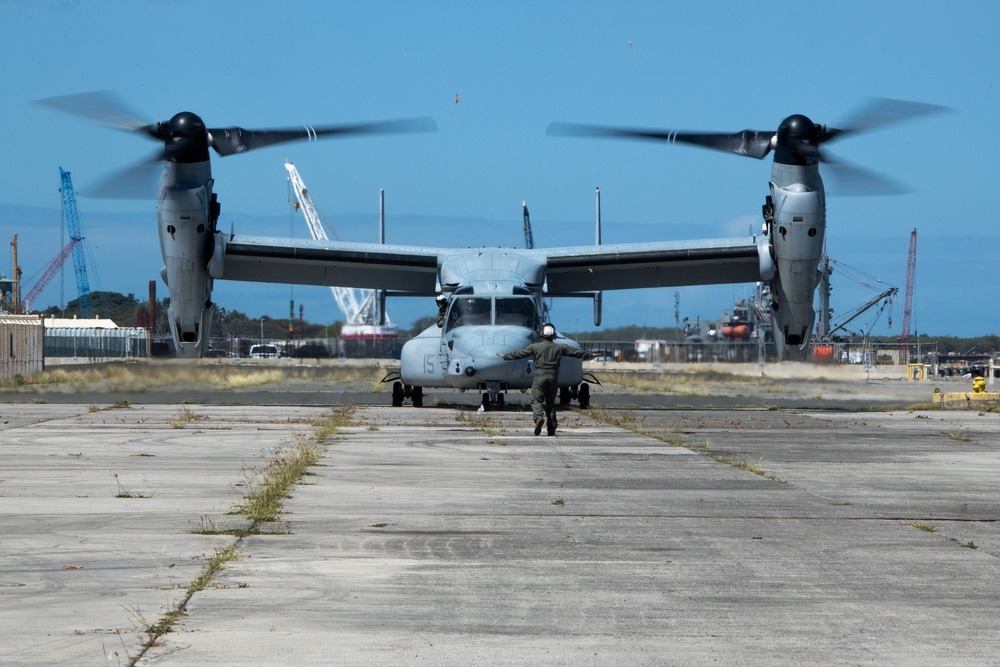
A U.S. Marine with Medium Tiltrotor Squadron (VMM) 268, Marine Aircraft Group 24, 1st Marine Aircraft Wing, guides an MV-22B Osprey in preparation for Marine Rotational Force Darwin (MRF-D) at Joint Base Pearl Harbor-Hickam, Hawaii, April 16, 2024. MRF-D is a deployment held in Australia that enhances capabilities and readiness of both the United States Marine Corps and the Australian Defense Force and continues to help strengthen the alliance between the two nations. VMM-268 will serve as the Aviation Combat Element for the upcoming iteration of MRF-D. (U.S. Marine Corps photo by Lance Cpl. Tania Guerrero)


April 16 Red Sea Update

U.S. Central Command

April 16, 2024

TAMPA, Fla.- Between 10:50 a.m. and 11:30 a.m. (Sanaa time) on April 16, U.S. Central Command (USCENTCOM) forces successfully engaged two unmanned aerial vehicles (UAV) in Iranian-backed Houthi terrorist-controlled areas in Yemen. 

There were no injuries or damage reported by U.S., coalition, or commercial ships.  

It was determined the UAVs presented an imminent threat to U.S., coalition, and merchant vessels in the region. These actions are taken to protect freedom of navigation and make international waters safer and more secure for U.S., coalition, and merchant vessels.


Rite-Solutions Awarded Navy Task Order to Support Electronic Warfare and Support Trainers

MIDDLETOWN, R.I. — Rite-Solutions has been awarded a five-year, $10.7 million competitive Task Order from the Naval Undersea Warfare Center (NUWC), Division Newport to provide hardware and software development services for Electronic Warfare (EW) and Electronic Support (ES) elements of the Submarine Multi-Mission Team Trainer (SMMTT).

The win – Rite-Solutions’ third prime contract win in as many months – will enable the company to continue to support the Undersea Warfare Combat Systems Department, Product Development Division (Code 253) with critical analysis, designing, prototyping, programming, integrating, testing and evaluation, training and installation of EW and ES products.

Execution of this contract will fall under Rite-Solutions’ Engineering Services Business Unit, led by Senior Vice President Laura Deady. “SMMTT is a critical tool in ensuring our sailors have the necessary skills in areas such as strike warfare; anti-submarine and anti-surface warfare; mine warfare; intelligence, surveillance and reconnaissance; navigation; command, control, communications, computers and intelligence; and special warfare,” said Deady. “Rite-Solutions brings the experience, capability, and high-caliber personnel necessary to ensure that our sailors are safe, trained, and prepared.”

Rite-Solutions will support EW System environment simulations such as WLR-8 and BLQ-10, in addition to related Early Warning Receiver (EWR) subsystems. Additionally, Rite-Solutions will support the development of inorganic sensor data analysis, and emitter simulations of potential vessels or vehicles within a trainer gaming environment.

“Software development is a critical element to our company’s core capabilities, and NUWC Newport is one of our most valued customers,” said Joe Marino, Rite-Solutions’ co-founder and CEO. “This contract win is a testament to our technical capabilities, our reputation in the industry, and our amazing team of engineers, scientists, and technical professionals who have an unwavering focus on our customers and their requirements.”


Indian Navy Carries Out First Drug Interdiction as CMF Member

By Combined Maritime Forces Public Affairs | April 16, 2024

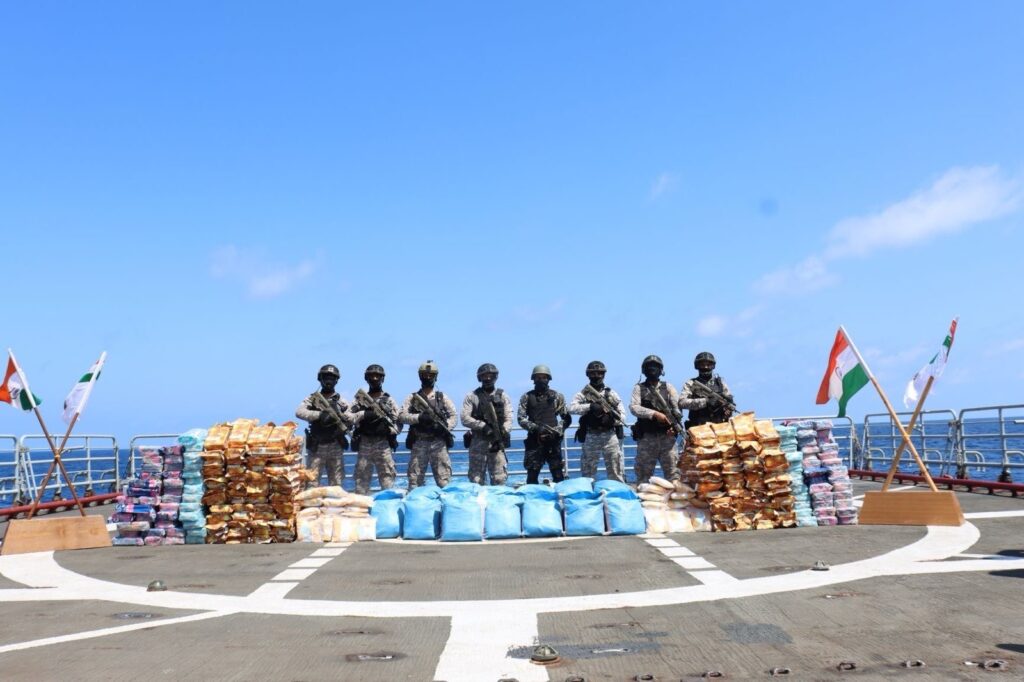
MANAMA, Bahrain — The Indian Navy Ship INS Talwar, operating in support of the Canadian-led Combined Task Force (CTF) 150, conducted its first interdiction of illicit narcotics as a member of Combined Maritime Forces, seizing 940 kg of drugs in the Arabian Sea, April 13.

Talwar, a Talwar-class frigate, seized 453 kg of methamphetamines, 416 kg of hash and 71 kg of heroin from a dhow as part of Focused Operation Crimson Barracuda.

The Indian Navy joined CMF last November.

“I commend the crew of INS Talwar for their efforts throughout this Focused Operation and their hard work has paid off with this seizure of 940 kg of drugs,” said Royal Canadian Navy Capt. Colin Matthews, Commander, Combined Task Force 150. “This seizure, the fourth of this Focused Operation, demonstrates the effectiveness and professionalism of CMF, and of the Indian Navy, in deterring and disrupting criminal and terrorist activities at sea.”

Crimson Barracuda, which concluded on April 15, focused on countering terrorist and criminal organizations’ use of the high seas to conduct smuggling operations in the Western Indian Ocean region.

CTF 150 is one of five task forces under Combined Maritime Forces, the world’s largest international naval partnership. CTF 150’s mission is to deter and disrupt the ability of non-state actors to move weapons, drugs and other illicit substances in the Indian Ocean, the Arabian Sea and the Gulf of Oman.

Combined Maritime Forces is a 42-nation naval partnership upholding the international rules-based order by promoting security and stability across 3.2 million square miles of water encompassing some of the world’s most important shipping lanes.


Defense of Israel Activities Update

U.S. Central Command, April 14, 2024

TAMPA, Fla. — On April 13 and the morning of April 14, U.S. Central Command (CENTCOM) forces, supported by U.S. European Command destroyers, successfully engaged and destroyed more than 80 one-way attack uncrewed aerial vehicles (OWA UAV) and at least six ballistic missiles intended to strike Israel from Iran and Yemen.

This includes a ballistic missile on its launcher vehicle and seven UAVs destroyed on the ground in Iranian-backed Houthi controlled areas of Yemen prior to their launch.

Iran’s continued unprecedented, malign, and reckless behavior endangers regional stability and the safety of U.S. and coalition forces.

CENTCOM remains postured to support Israel’s defense against these dangerous actions by Iran. We will continue to work with all our regional partners to increase regional security.

April 13 – 14 Red Sea Update

April 15, 2024

TAMPA, Fla. – At approximately 7:00 p.m. (Sanaa time) April 13, Iranian-backed Houthi terrorists launched one anti-ship ballistic missile (ASBM) toward the Gulf of Aden from a Houthi controlled area in Yemen. There were no injuries or damage reported by U.S., coalition, or commercial ships.

Then between 4:00 a.m. and 9:15 p.m. (Sanaa time) April 14, CENTCOM forces successfully destroyed four uncrewed aerial vehicles (UAVs) in Houthi-controlled areas of Yemen in self-defense.

It was determined the UAVs presented an imminent threat to U.S., coalition, and merchant vessels in the region.

These actions are taken to protect freedom of navigation and make international waters safer and more secure for U.S, coalition, and merchant vessels.


IDF Announces Rafael’s C-Dome First Combat Interception of Hostile Target at Sea

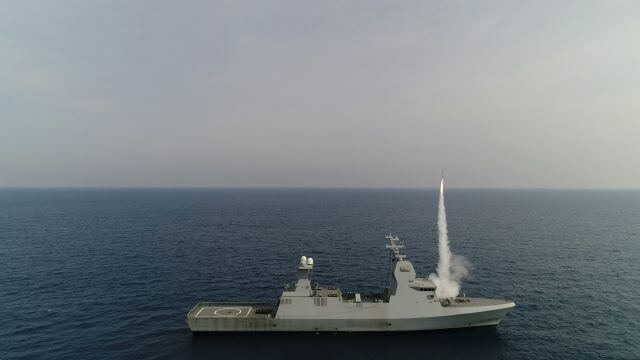
Rafael’s C-Dome System. Rafael

HAIFA, Israel — Overnight, the Israeli Navy successfully deployed Rafael’s C-Dome to intercept a suspicious hostile target which posed a significant threat to Israeli assets and strategic sites in southern Israel.

C-Dome is the naval version of the Iron Dome air and missile defense system and is integrated on the Israeli navy’s Sa’ar 6 corvettes.

This marks the system’s first combat interception, following a series of comprehensive tests over the last several years, serving as a major milestone in the C-Dome’s operational capabilities.

C-Dome serves as a critical layer of defense in Israel’s multi-layered air defense array, relying on the Iron Dome system interceptor, which, to-date has achieved over 6,000 combat interceptions.

C-Dome is capable of addressing existing and future threats that naval forces may encounter, including rockets, cruise missiles, sea-skimming missiles and drones.

In 2023, Rafael unveiled the C-Dome’s mission modular configuration to provide unprotected vessels, as well as vessels that lack adequate air defense means, with advanced and complementary capabilities against multiple, simultaneous attacks from a wide range of threats — without the need for deck penetration, vessel hull retrofit, cable routing, or complex platform integration. Open architecture enables compatibility with the ship’s sensors and CMS.

The integration of the C-Dome system reinforces the defensive capabilities of the Sa’ar 6 corvettes, enhancing their capacity to safeguard Israel’s assets and economic interests within the exclusive economic zone.

Rafael Advanced Defense Systems serving is the prime contractor and developer of the Iron Dome system and C-Dome systems, collaborating with subcontractors Israel Aerospace Industries’ Elta Systems, which has developed the system’s radar, and mPrest, a Rafael subsidiary and developer of the system’s command-and-control systems. The development of the systems is overseen by the Israel Missile Defense Organization, a division of the Directorate for Defense Research and Development.


April 11 Red Sea Update

U.S. Central Command, April 11, 2024

TAMPA, Fla. – At approximately 1:00 p.m. (Sanaa time) on April 11, United States Central Command (CENTCOM) forces successfully engaged and destroyed one anti-ship ballistic missile (ASBM) launched over the Red Sea from Iranian-backed Houthi terrorist-controlled areas in Yemen.

There were no injuries or damage reported by U.S., coalition or commercial ships.

It was determined the ASBM presented an imminent threat to U.S., coalition and merchant vessels in the region. These actions are taken to protect freedom of navigation and make international waters safer and more secure for U.S., coalition and merchant vessels.