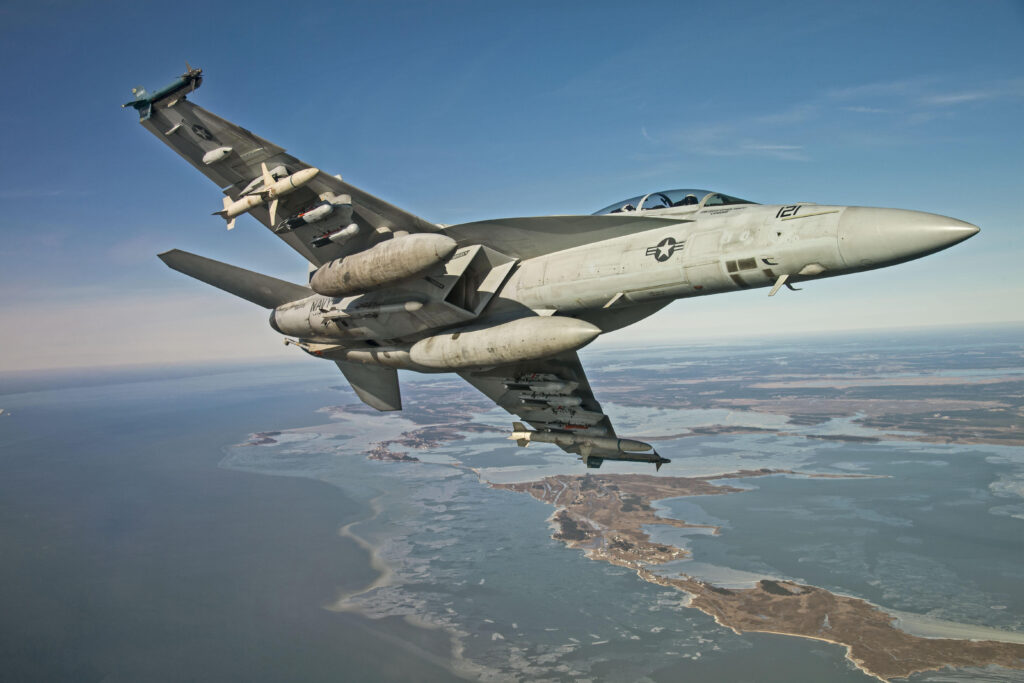
PATUXENT RIVER, Md. — The Navy is set to field the Small Diameter Bomb Increment II on the F/A-18E/F after declaring Early Operational Capability in October.
The F/A-18E/F is the Navy’s first platform to carry the SDB-II, giving the aircraft the capability to hit moving targets in harsh weather and address targets in dynamic scenarios.
“The Navy and Air Force team, along with the test community and fleet stakeholders, worked relentlessly to expedite the fielding of this weapon,” said Tyler Alt, Navy SDB-II program manager. “This weapon will give our warfighters a much-needed capability and provide the basis for future network enabled weapons.”
The team will complete two additional operational test events before achieving Initial Operational Capability in 2024.
SDB-II, or Ground Bomb Unit-53B (GBU-53B) “StormBreaker,” is an air-launched, precision-strike standoff weapon that enables the warfighter to defeat moving and fixed targets. It can operate in adverse weather conditions through its tri-mode seeker that employs infrared and millimeter wave radar to see through fog, smoke and rain.
The weapon has the capability to receive updated target coordinates mid-flight via two-way datalink communications. Using these network options, SDB-II allows airborne or ground controllers the ability to send in-flight target updates.
SDB-II is a Joint-Interest, Air Force-led program and is fielded on the Air Force’s F-15E aircraft. SDB-II will also be compatible and fielded on F-16C/D and F-35 aircraft.
The Navy component of the SDB-II program is executed by the Precision Strike Weapons Program Office, which provides Naval Aviation with dominant lethal, integrated precision strike solutions for any conflict anytime, anywhere.
USCGC Harriet Lane Returns After Inaugural Operation Blue Pacific Patrol in Oceania
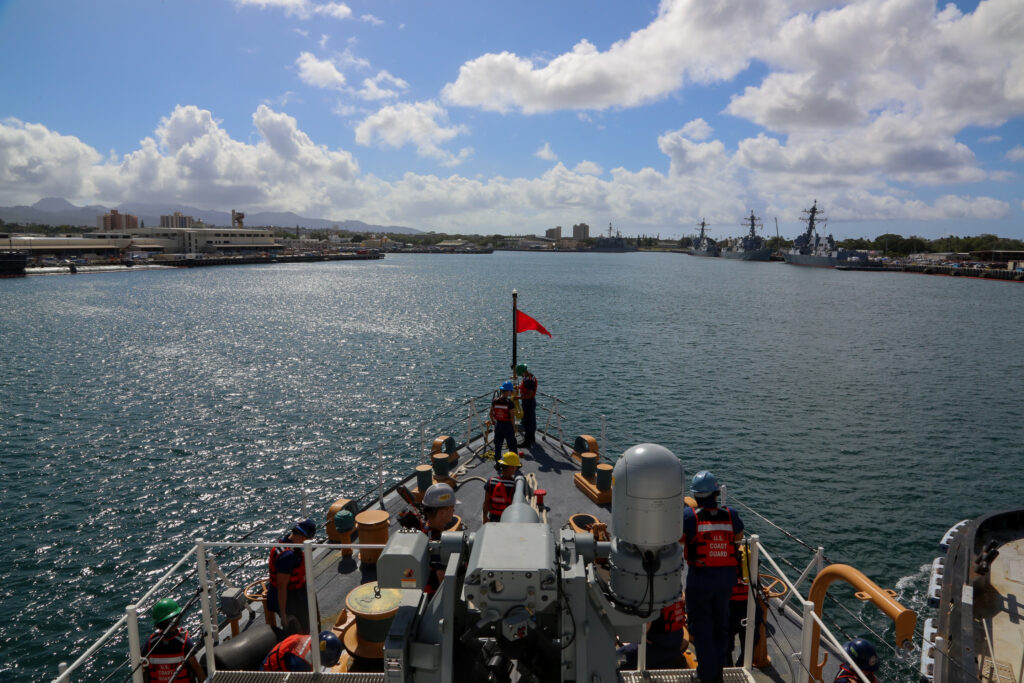
U.S. Coast Guard Cutter Harriet Lane (WMEC 903) crew renders honors to the Battleship Missouri Memorial as the Harriet Lane and crew return to home port in Pearl Harbor, Hawaii, April 9.
HONOLULU — U.S. Coast Guard Cutter Harriet Lane (WMEC 903) and crew returned to home port in Hawaii April 9 after a 79-day patrol in support of Coast Guard District Fourteen’s Operation Blue Pacific in Oceania.
Harriet Lane and crew departed Pearl Harbor in January and traveled more than 15,000 nautical miles spanning from the Hawaiian Islands to the east coast of Australia. Patrolling in support of Operation Blue Pacific, the cutter and crew worked alongside Pacific Island nations to forge and advance relationships with like-minded allies and partners who share a common vision for maritime governance.
Harriet Lane’s efforts included enhancing maritime domain awareness, combatting illegal fishing activities across Oceania, and participating in exercises to bolster partner capacity and interoperability. Leveraging bilateral maritime law enforcement agreements with Samoa, Fiji, Vanuatu, and Papua New Guinea, Harriet Lane conducted 27 boardings alongside Pacific Island partners in their respective exclusive economic zones (EEZs).
Through bilateral maritime law enforcement agreements, the Coast Guard is able to provide a platform for partner nations to enforce domestic and international laws within territorial seas and the far reaches of their EEZs. The embarked shipriders identify boarding targets within their EEZ, take law enforcement action in accordance with their authority, and are supported by U.S. Coast Guard personnel throughout the course of the boarding activity. These operations are focused on increasing partner nations’ capabilities and maritime domain awareness while safeguarding sovereign rights, supporting sound maritime governance, and combatting illicit activities on the water. Additionally, Harriet Lane law enforcement personnel conducted four fishery boardings on the high seas in concert with the Western and Central Pacific Fisheries Commission.
During Harriet Lane’s patrol, the crew made port calls in American Samoa, Samoa, Fiji, Vanuatu, Australia, Papua New Guinea, and the Marshall Islands. While offshore Nauru, Harriet Lane hosted key leadership engagements and underway subject matter exchanges with local enforcement agencies. Harriet Lane’s crew participated in numerous engagements with local communities throughout the region, including subject matter expert exchanges, such as search and rescue planning and small boat operations, school visits, and several tours of Harriet Lane with U.S. Ambassadors, foreign dignitaries, heads of police and fisheries agencies, and hosted the U.S. Coast Guard Commandant, Adm. Linda Fagan, as she led a maritime roundtable aboard the cutter in Vanuatu.
“This was a patrol of firsts for Harriet Lane and the U.S. Coast Guard” said Cmdr. Nicole Tesoniero, commanding officer of Harriet Lane. “The Coast Guard has a long and storied history in the Pacific, and Harriet Lane’s introduction to the region delivers on a pledge to our allies and partners that the United States has an enduring commitment in the Blue Pacific. Harriet Lane’s crew delivered on each and every ask made throughout this patrol, and I could not be more proud of our crew’s dedication, professionalism, and service to our great nation. This was just the first of many patrols in support of Operation Blue Pacific for Harriet Lane and I look forward to seeing our impact continue to grow.”
Harriet Lane, commissioned in 1984, is a 270-foot medium endurance cutter homeported in Pearl Harbor, Hawaii, to support Coast Guard missions in the Pacific region. The service’s medium endurance cutter fleet supports a variety of Coast Guard missions including search and rescue, law enforcement, maritime defense, and protection of the marine environment.
USCG Cutter Bertholf Returns Home Following 98-Day Indo-Pacific Deployment
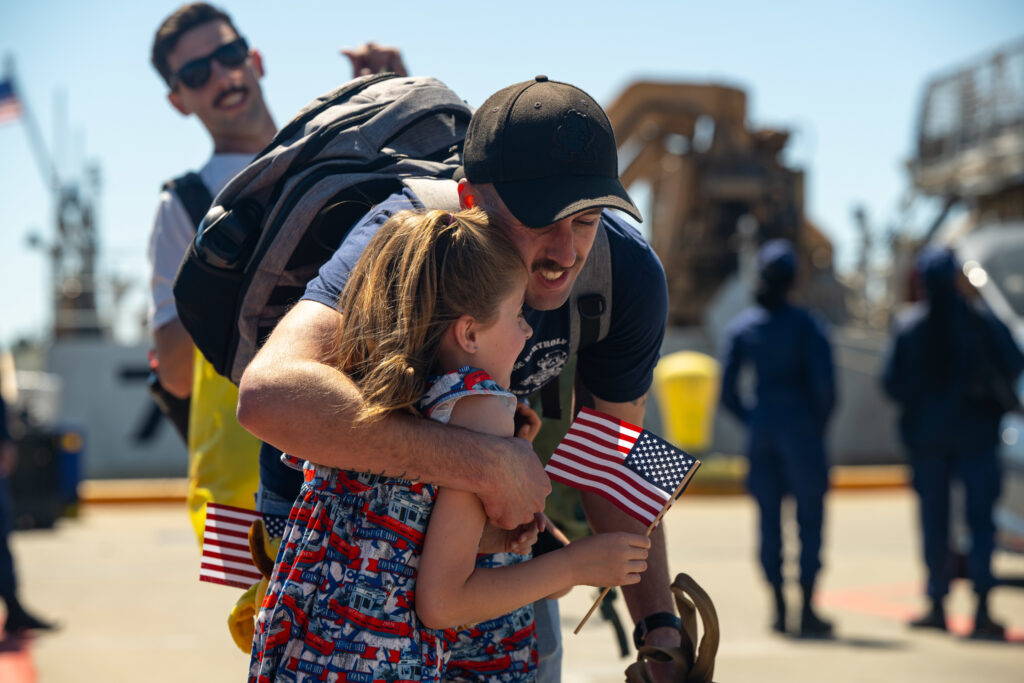
A crew member assigned to the Coast Guard Cutter Bertholf (WMSL 750) greets his family at the cutter’s return to home port on Coast Guard Base Alameda, California following a 98-day patrol in the Indo-Pacific region, April 8. U.S. Coast Guard | Petty Officer 3rd Class Hunter Schnabel
ALAMEDA, California — The U.S. Coast Guard Cutter Bertholf (WMSL 750) and crew returned home April 8 following a 21,000-mile, 98-day Indo-Pacific deployment in support of U.S. Indo-Pacific Command and U.S. Navy’s 7th Fleet.
Throughout the deployment, Bertholf led international engagements in the Republic of Singapore, Malaysia and India, strengthening interoperability and maritime governance through joint at-sea exercises, professional engagements, and subject matter expert exchanges.
Bertholf departed Alameda on Jan. 2 as the Coast Guard’s first of multiple national security cutter deployments to the Indo-Pacific this year.
“The opportunities to work with our allies and partners throughout the Indo-Pacific increased our regional interoperability and greatly strengthened the bonds which we share as a seagoing service,” said Captain Billy Mees, Bertholf’s commanding officer. “We greatly appreciated engaging in professional interactions, enhancing maritime capabilities, and reinforcing maritime governance in the area through promoting global connections, fostering unity, and advancing efforts to maintain an open and free Indo-Pacific region.”
While operating in the vicinity of Singapore, the crew of the Bertholf participated in multiple professional engagements and training exercises with members of the Republic of Singapore Navy, Singapore Police Coast Guard, and Malaysia Maritime Enforcement Agency (MMEA). Bertholf hosted U.S. Ambassador Jonathan E. Kaplan aboard for a tour and a chance for Bertholf’s crew to showcase the cutter’s operational capabilities.
Upon departure, Bertholf’s crew conducted at-sea exercises and subject matter expert exchanges with the Republic of Singapore Navy and MMEA, including a group sail through the Strait of Malacca.
Upon Bertholf’s service-first, historic arrival in Port Klang, Malaysia, the crew conducted several subject matter expert exchanges with the MMEA, Republic of Singapore Navy, Singapore Police Coast Guard, Japan Coast Guard, Korea Coast Guard, and Australian Border Force. The joint training included maritime law enforcement skills, small boat launch and recoveries, emergency rescue and carry procedures, and shipboard damage control tactics to bolster interoperability across the maritime domain of Southeast Asia. Bertholf hosted U.S. Ambassador Edgard D. Kagan and Malaysian dignitaries onboard for a U.S. Embassy reception on the cutter’s flight deck.
Bertholf’s final international port call was Port Blair, India, marking the first time a U.S. Coast Guard cutter has visited the Andaman and Nicobar Islands, a union territory of India situated between the Bay of Bengal and the Andaman Sea.
During the four-day engagement, Bertholf’s crew participated in sporting events and reciprocal tours, and Bertholf’s officers attended a formal reception at the India Coast Guard’s regional headquarters. Bertholf and India Coast Guard participated in the joint exercise ‘Sea Defender,’ with two days of at-sea exercises that included responses to shipboard drone and small boat attacks, shipboard damage control evolutions, pollution responses, counter drug interdiction and non-compliant vessel pursuit tactics, security boardings, flight operations, and an overnight group sail with the India Coast Guard across the Indian Exclusive Economic Zone to the Strait of Malacca.
Commissioned in 2008, Bertholf is one of four Coast Guard legend-class national security cutters homeported in Alameda. National security cutters are 418 feet long, 54 feet wide, and have a 4,600 long-ton displacement. They have a top speed of more than 28 knots, a range of 12,000 nautical miles, endurance of up to 90 days, and can hold a crew of up to 170.
BAE Receives Additional Contracts for Amphibious Combat Vehicles
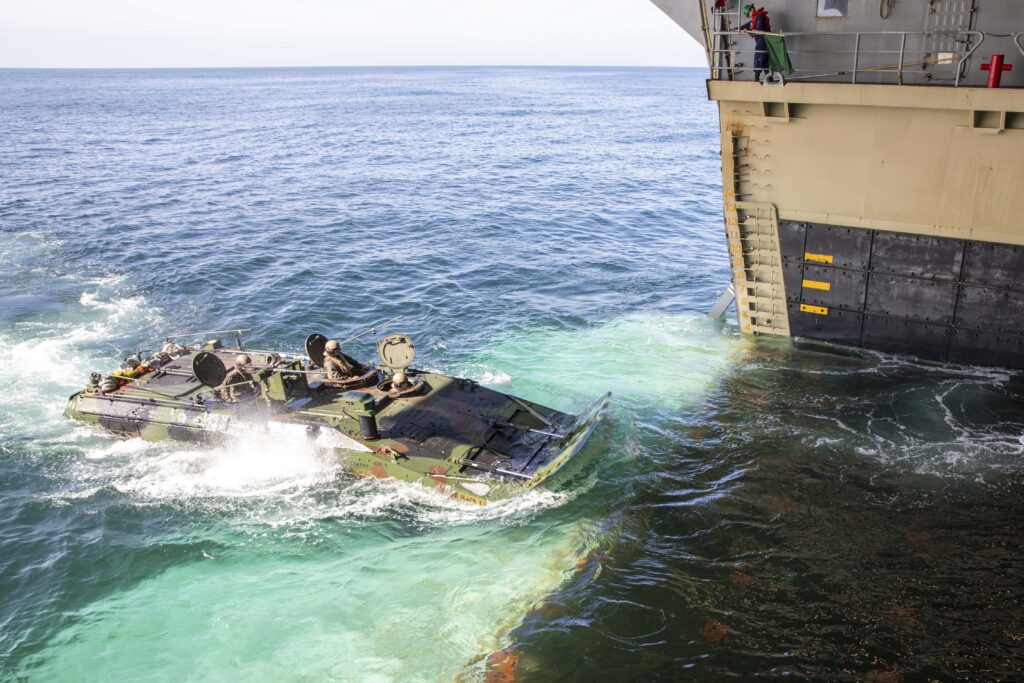
An Amphibious Combat Vehicle (ACV) with the 3d Assault Amphibian Battalion, 1st Marine Division, enters the well deck of amphibious assault ship USS Makin Island (LHD 8) during waterborne training in the Pacific Ocean. U.S. Navy | Mass Communication Specialist Seaman Kendra Helmbrecht
BAE Systems has been awarded an additional $25 million firm-fixed-price modification to a previously awarded $181 million contract by the U.S. Marine Corps for more Amphibious Combat Vehicles (ACVs) under the Marine Corps’ fourth order for full-rate production (FRP).
Total cumulative face value of the contract is $2.7 billion. In addition to vehicle production, the award covers the procurement of ACV Personnel (ACV-P) variants, fielding and sustainment costs, and support and test equipment.
Vehicles produced under this contract will fulfill the Marine Corps’ fleet requirements for ACV-Ps, providing them full operational amphibious capability to execute operations around the world.
“This contract award allows us to continue to deliver this critical capability to the Marine Corps to enable warfighters to complete ship-to-shore missions and other expeditionary requirements,” said Garrett Lacaillade, vice president of amphibious vehicles for BAE Systems. “We continue to work hand-in-hand with our strategic partner Iveco Defense Vehicles and the Marine Corps to ensure that ACVs are ready for current and future deployments.”
ACV-P is the first in a family of four variants to be manufactured and delivered to the Marine Corps. Additional variants include the ACV Command and Control (ACV-C) variant which is currently in production; the ACV 30mm Cannon (ACV-30) variant which production ready test vehicles were delivered for testing earlier this year; and an ACV Recovery (ACV-R) variant which recently completed the design and development phase.
The ACV 8×8 platform provides true open-ocean amphibious capability, land mobility, payload, and growth potential to accommodate future variant growth and technology integration to meet the Marine Corps’ ever-evolving operational needs.
ACV production and support is taking place at BAE Systems locations in Stafford, Virginia; San Jose, California; Sterling Heights, Michigan; Aiken, South Carolina; and, York, Pennsylvania. Deliveries are anticipated to begin in late 2025.
Atlantic Commander: Industry-Government Partnership Essential to Coast Guard Innovation
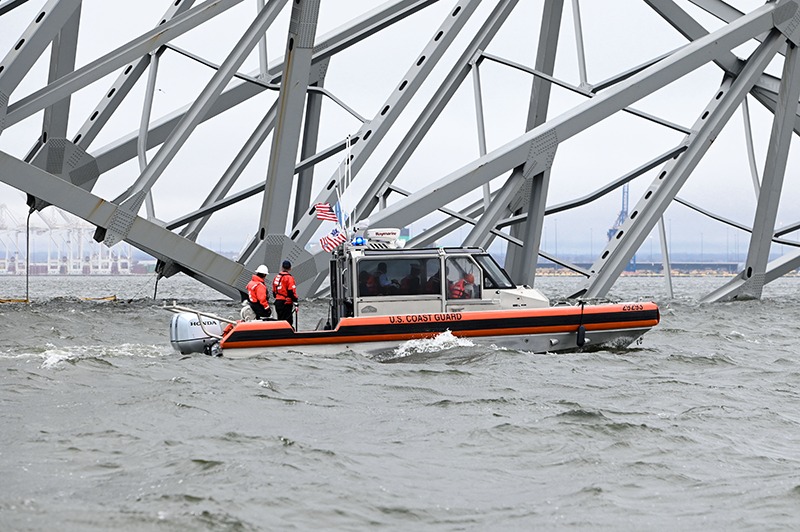
U.S. Coast Guard response boat crews enforce a safety zone, April 2, 2024, after the collapse of the Francis Scott Key Bridge in Baltimore, Maryland.
By Erika Fitzpatrick, Contributor
Future innovation within the U.S. Coast Guard comes from listening to and partnering with the defense industry, Vice Admiral Kevin E. Lunday, U.S. Coast Guard Commander of the Atlantic Area and Defense Force East, said April 8 at Sea-Air-Space 2024.
“Most of the innovation, most of the great ideas — the kernel, the incubator for those — is within the defense industrial base,” he said. The Navy League’s symposium, which he called the premiere industry-government event, is a “special opportunity to have a conversation and a dialogue.”
In addition to supporting U.S. Combatant Commands, Lunday directs Coast Guard forces and operations involving navigable waterways east of the Rocky Mountains to the East Coast, throughout the Atlantic Ocean, and in parts of the Arctic Ocean to the Arabian Gulf.
As such, his command is involved in a range of often high-profile events and issues.
For instance, when Baltimore’s Francis Scott Key bridge collapsed on March 26 within minutes of being rammed by a massive, malfunctioning container ship, Lunday directed forces there within hours for active search and rescue and follow-on recovery efforts. In cooperation with federal, state, and local partners, the USCG set up and now helps lead the Key Bridge Response Unified Command.
“While that may seem like a very unusual operation in some respects — a bridge collapse after a ship hitting it — that kind of emergency response that the Coast Guard is involved in leading is very common for what we do across the Atlantic area, across the service, every day,” he said.
Other Atlantic-area USCG operations include:
Helping prevent and prepare for maritime mass migration incidents and fighting transnational crime in the eastern Caribbean through participation in the Joint Task Force-East.
Controlling, reducing, and preventing deaths from irregular maritime migration, particularly in stemming the flow of migrants from the economically and politically stressed countries of Haiti and Cuba, through Homeland Security Task Force-Southeast.
Looking into the circumstances involved in the June 2023 implosion of the Titan submersible, an ongoing review conducted by the Coast Guard Marine Board of Investigation.
Lunday credited USCG’s successful involvement in these and other endeavors to long-term investments in incident command response and in technological systems that shed light on maritime migration patterns and provide other mission-critical information.
Need to Think Differently
Lunday said USCG is intently focused on readiness — how to carefully balance the readiness of the force with the demand for execution.
However, he said, new solutions are needed, and the Coast Guard looks to private industry to provide many of them.
Our leadership challenges us is to “think differently about how we conduct operations,” Lunday said, “because the increased demands for services and readiness challenges are forcing us to think differently.”
For instance, the Coast Guard needs effective technologies with government and mission application. These include artificial intelligence and data tools to better analyze, understand, model, and predict patterns of human behavior.
Because industry is thinking about where we need to be going, Lunday said, we should “open our mind and our ears and listen to what they’re saying about how we move forward.”
Ursa Major Signs Contract with US Navy for Next Gen Solid Rocket Motors for Standard Missile
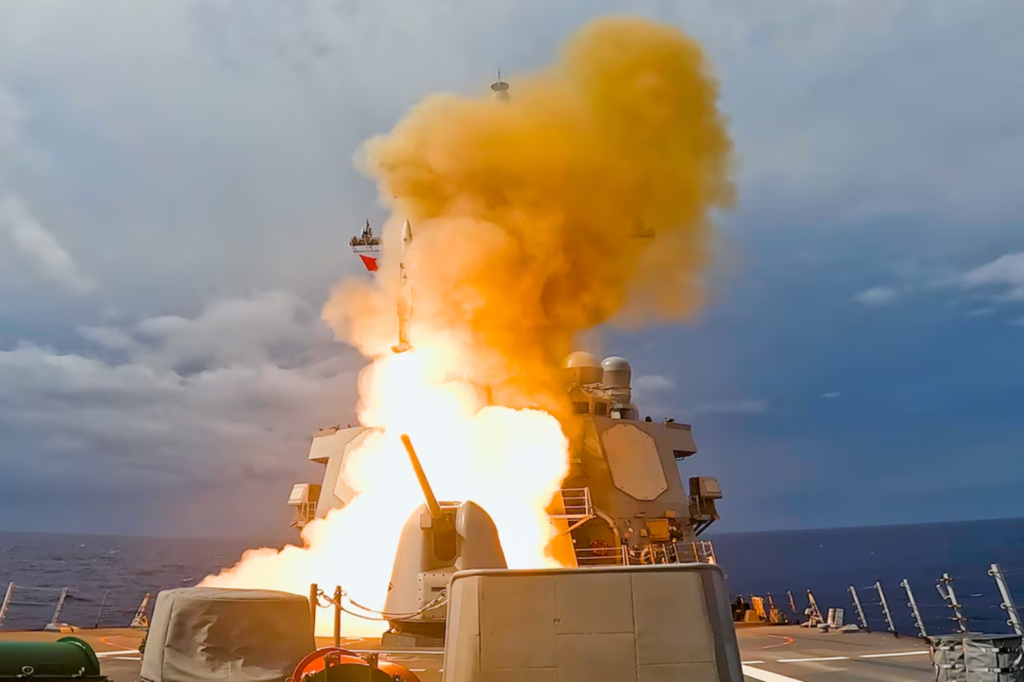
PHILIPPINE SEA (April 5, 2024) The Arleigh Burke-class guided-missile destroyer USS Higgins (DDG 76) launches a Standard Missile (SM) 2 from a forward launcher while operating in the Philippine Sea, April 5, 2024. (USN photo by MC1 Hannah Fry)
DENVER, April 8, 2024 — Ursa Major, America’s leading privately funded company focused solely on propulsion, announced a contract today with the Naval Energetics Systems and Technologies (NEST) Program to develop and hot fire test a prototype solid rocket motor (SRM) for the U.S. Navy’s Standard Missile (SM) program. Under this contract, Ursa Major will develop a new design and apply the company’s revolutionary manufacturing process to the Navy’s workhorse Mk 104 dual-thrust rocket motor in coordination with the Navy’s Program Executive Office Integrated Warfare Systems 3.0, Naval Air Warfare Center – Weapons Division at China Lake, and the Naval Surface Warfare Center at Indian Head.
The Mk 104 SRM powers the Navy’s SM arsenal, including the SM-2, used for surface-to-air defense; the SM-3, used for ballistic missile defense; and the SM-6, an anti-air, land, and sea missile. In 2022, the Missile Defense Agency stated that the SM-6 is the only missile capable of intercepting maneuverable hypersonic missiles. While the Mk 104 is a high-performance motor, legacy models are challenging to manufacture. Using the company’s cutting-edge Lynx production process for SRMs, Ursa Major will leverage additive manufacturing to design a high-performing motor built for manufacturability and reliability.
“We are proud of the Navy’s support and recognition of Ursa Major as a trusted partner to develop the next generation of Mk 104 solid rocket motors,” said Ursa Major founder and CEO Joe Laurienti. “Our new approach to manufacturing SRMs allows Ursa Major to quickly develop high-performing motors at scale, driving volume and cost efficiencies to address this critical national need.”
“PEO IWS is excited to work with Ursa Major on this effort to bolster a critical component of the Nation’s industrial base,” said Captain Thomas Seigenthaler, the director of PEO IWS 3.0. “The production of solid rocket motors is a top priority, and we are impressed with Ursa Major’s innovative approach to address manufacturing challenges.”
Lynx, Ursa Major’s innovative new approach to designing and manufacturing SRMs, was introduced in November 2023. The manufacturing process uses additive manufacturing and a product-agnostic tooling system to rapidly produce scalable SRM systems without expensive or time-consuming re-tooling or re-training. Learn more here.
April 8 Red Sea Update
U.S. Central Command, April 8, 2024
12:15 p.m. and 2:40 p.m. (Sanaa time) on April 8, U.S. Central Command (USCENTCOM) forces successfully engaged and destroyed an air defense system with two missiles ready to launch, a ground control station in Houthi-controlled areas of Yemen, and one unmanned aerial system launched by Iranian-backed Houthi terrorists from Yemen over the Red Sea. There were no injuries or damage reported by U.S., coalition, or commercial ships.
Separately, at approximately 8:00 a.m. (Sanaa time) on April 7, an anti-ship ballistic missile was launched from a Houthi-controlled area of Yemen toward the Gulf of Aden where a coalition ship was escorting M/V Hope Island, a Marshall Islands flagged, U.K. owned, Italian operated cargo ship. There were no injuries or damage reported by U.S., coalition, or commercial ships.
This was the fifth observed missile launch against this coalition ship and M/V Hope Island.
USCENTCOM is dedicated to protecting the freedom of navigation and making international waters safer and more secure for coalition and merchant vessels.
USS Antietam Shifts Homeport to Hawaii
By Commander, U.S. 3rd Fleet Public Affairs, April 8, 2024
JOINT BASE PEARL HARBOR-HICKAM, Hawaii –
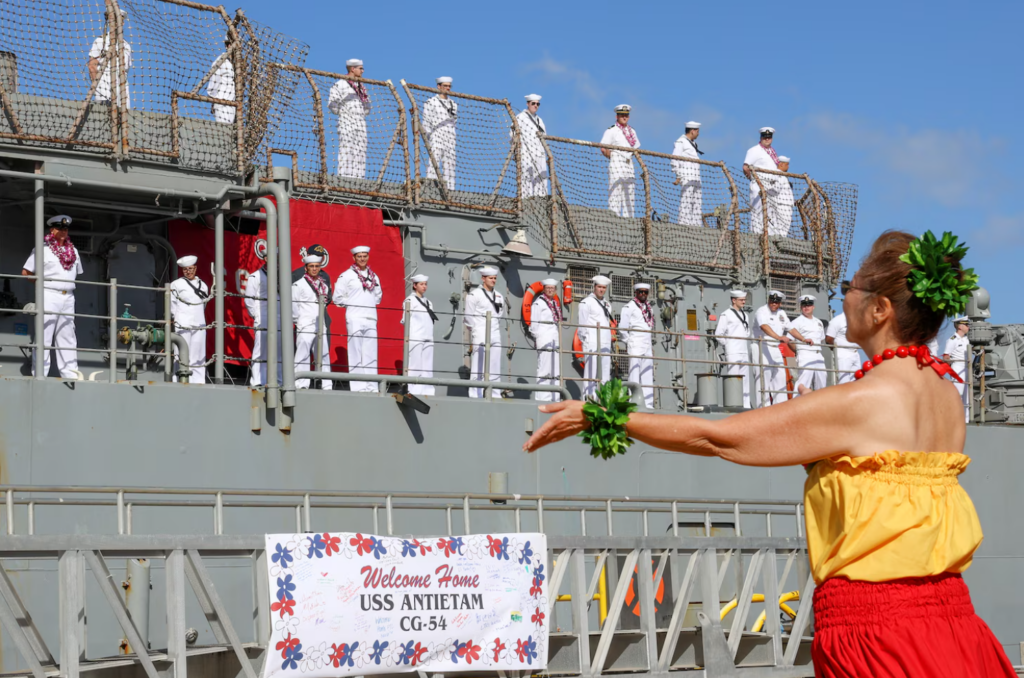
The Ticonderoga-class guided missile cruiser USS Antietam (CG 54) arrived to its new homeport of Joint Base Pearl Harbor-Hickam, Hawaii, April 5, as part of a planned rotation of forces in the Pacific.
Antietam is now assigned to Commander, Naval Surface Group Middle Pacific and U.S. 3rd Fleet.
Antietam departed Yokosuka, Japan, Jan. 26 to transit to Hawaii and assist in enforcing international fisheries law during their Oceania Maritime Security Initiative (OMSI) mission. OMSI is a Secretary of Defense program leveraging Department of Defense assets transiting the region to increase the Coast Guard’s maritime domain awareness, ultimately supporting its maritime law enforcement operations in Oceania.
“I’m proud of the Antietam crew for their execution of the Oceanic Maritime Security Initiative during our homeport shift from Yokosuka, Japan to Hawaii,” said Capt. Victor Garza, commanding officer of Antietam. “I thank the families for the support they give their Sailors. It is their strength that enables us to go to sea.”
During Antietam’s transit to Hawaii, the ship made port calls in major naval ports including Suva, Fiji and Apra Harbor, Guam.
Aloha to Antietam and welcome to Hawaii!
The mission of Commander, Naval Surface Group Middle Pacific is to manage the overall warfighting capability of the Surface Combatant Force homeported at Joint Base Pearl Harbor-Hickam, Hawaii; to coordinate through the Fleet Response Plan cycle the manning, operations, combat systems, engineering, maintenance, training, logistics, administration, and support of assigned units to achieve the highest levels of combat readiness.
An integral part of U.S. Pacific Fleet, U.S. 3rd Fleet operates naval forces in the Indo-Pacific and provides the realistic, relevant training necessary to execute our Navy’s role across the full spectrum of military operations – from combat operations to humanitarian assistance and disaster relief. U.S. 3rd Fleet works together with our allies and partners to advance freedom of navigation, the rule of law, and other principles that underpin security for the Indo-Pacific region.
HII Awarded $74 Million Contract to Support U.S. Navy Vertical Launch Systems
Research and development will enhance fleet defensive capabilities
MCLEAN, Va., April 09, 2024 (GLOBE NEWSWIRE) — HII (NYSE: HII) announced today that its Mission Technologies division was awarded a $74 million contract to research, analyze and develop enhanced capabilities for the Mk 41 and Mk 57 vertical launching systems (VLS) onboard U.S. Navy surface ships.
The task order, administered by the Naval Surface Warfare Center (NSWC) Port Hueneme Division, also applies to associated naval surface weapon systems, combat systems and sensors employed within the Navy.
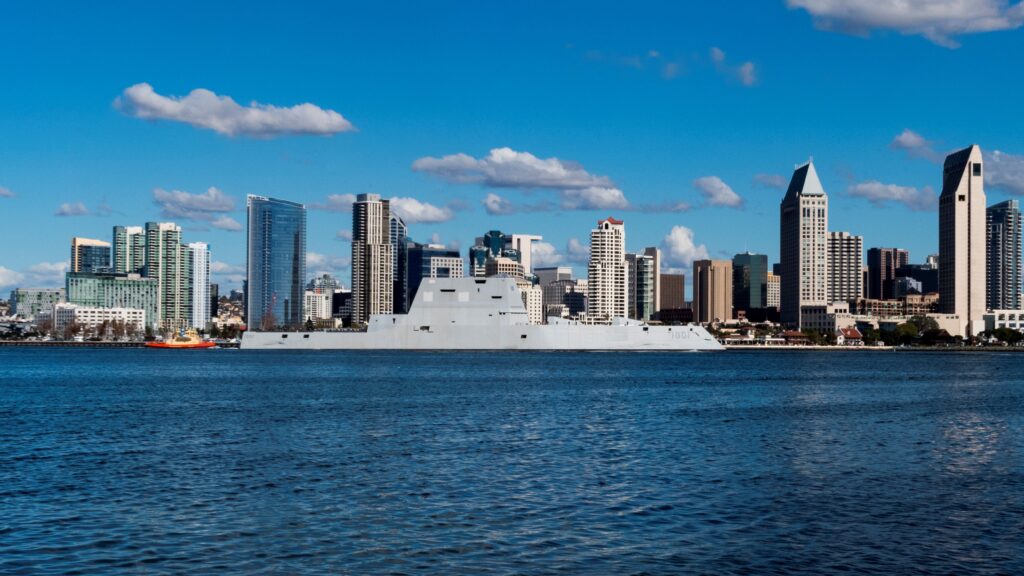
HII’s statement of work includes outfitting the first Zumwalt-class destroyer (DDG 1001) with the latest Mk 57 vertical launch system universal canister electronics unit. The unit, developed by HII, ensures warfighters can fire any missile from any VLS cell on Zumwalt-class ships.
“We are extremely pleased to continue our support to the U.S. Navy, providing critical research, development, test and evaluation in support of vertical launch systems for NSWC Port Hueneme,” said Todd Gentry, president of Mission Technologies’ C5ISR business group. “Facilitating the insertion of technology into naval weapon and combat systems maximizes defensive capabilities for our warfighters, giving them a distinct advantage over adversaries.”
HII will also leverage industry capabilities to support rapid design prototyping, technological improvements and engineering requirements associated with obsolescence issues.
HII was awarded the recompeted task order under the Department of Defense’s Information Analysis Center Multiple Award Contract vehicle (IAC MAC). These IAC MAC task orders are awarded by the U.S. Air Force’s 774th Enterprise Sourcing Squadron to develop and create new knowledge for the enhancement of the Defense Technical Information Center repository and the research and development and science and technology community.
The task order has a five-year term. Most of the work will be performed in Syracuse, New York, and Arlington, Virginia. HII’s support to NSWC Port Hueneme is an extension of work performed under a previous contract awarded in 2021.