Unmanned Systems Help Coast Guard Members Navigate the Future
By David Santos, Coast Guard Academy External Affairs, March 27, 2024 

U.S. Coast Guard leaders envision a future where Unmanned Aerial Systems (UAS) launched from Coast Guard cutters monitor air and surface contacts or fly autonomously inside large ships to inspect vessel tanks and other hazardous compartments. 

Or, using sensors small enough to be installed on small UASs or Autonomous Underwater Vehicles (AUV), measure surface oil spill thickness and help direct assets to heavily impacted areas during oil spill responses. 

These future scenarios are some of the strategic objectives outlined in the service’s Unmanned Systems Strategic Plan, which was released last year. 

The Coast Guard has been exploring the use of long, medium, and short range unmanned aerial systems since 2008 to provide a cost effective way to increase the operational presence of the service in an increasingly complex maritime environment. 

Today cadets, faculty, and staff members at the U.S. Coast Guard Academy are taking the next step in helping to make this vision of the future a reality. 

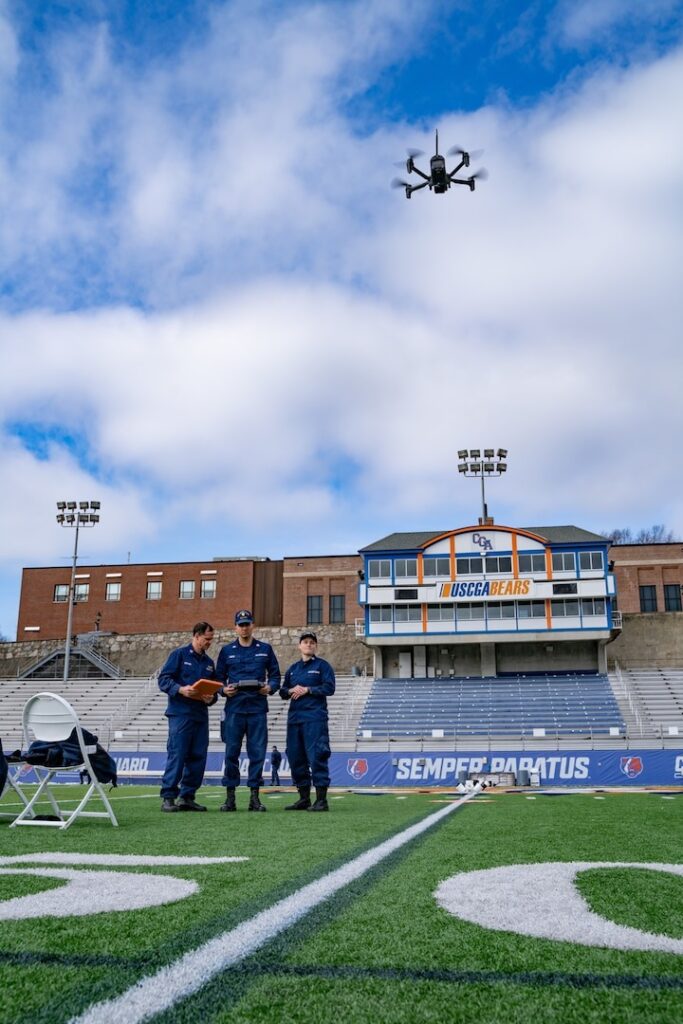
Capt. Brian Maggi and retired Capt. Daniel Burbank, faculty members from the Academy’s Engineering Department, are helping to build a network of licensed drone operators. Their goal is to increase the number of Coast Guard members capable of using the technology in the fleet to help bridge the gap between the huge responsibilities the service is tasked with and the limited resources it is given. 

As qualified Short Range Unmanned Aerial System (SR-UAS) Instructor Pilots, Maggi and Burbank are currently teaching a course to help a wide range of Academy personnel complete all the requirements to earn the Coast Guard SR-UAS qualification by the end of the semester. 
 
“The initial solicitation for this course resulted in 60 cadet responses,” Maggi said. “Many of our cadets are already experienced UAS pilots and know the capabilities of these systems better than we do. As Instructor Pilots, we can empower this group to help the Coast Guard innovate how UAS are integrated into operations and mission support. For the cadets and Coast Guard personnel with limited or no experience, the goal is to foster their curiosity to inspire them to grow into this community and create awareness of how these systems may be a force multiplier for all Coast Guard missions.” 

“It’s very inspiring to see how quickly the cadets learn how to precisely fly the drones and how to use the high resolution electro-optical and infrared imagers for target detection and identification,” Burbank said. “They’ve got great ‘stick and rudder’ flying skills,” he adds, “and are innovative in the ways they use the dozens of flight and imagery modes to get the most benefit from system capabilities.” 

Future plans call for establishing a 3-credit course that would teach cadets how to acquire imagery and video for engineering, science, and Coast Guard mission support. From there an expansion into the Cyber Systems and Operations Research & Data Analytics majors is planned to support the use of this technology in a variety of Coast Guard missions. 

“Having come from an organization where human operators routinely use robotic systems to augment and extend their reach and vision, this feels much the same,” said Burbank, who completed several spaceflight missions as one of three Astronauts who have graduated from the Academy. “These systems with talented and trained humans-in-the-loop will make the Coast Guard much more effective just as they do NASA.” 

As our maritime infrastructure and environment becomes more complex, Coast Guard personnel will be ready to employ unmanned systems to advance the safety and security of U.S. ports and waterways.  
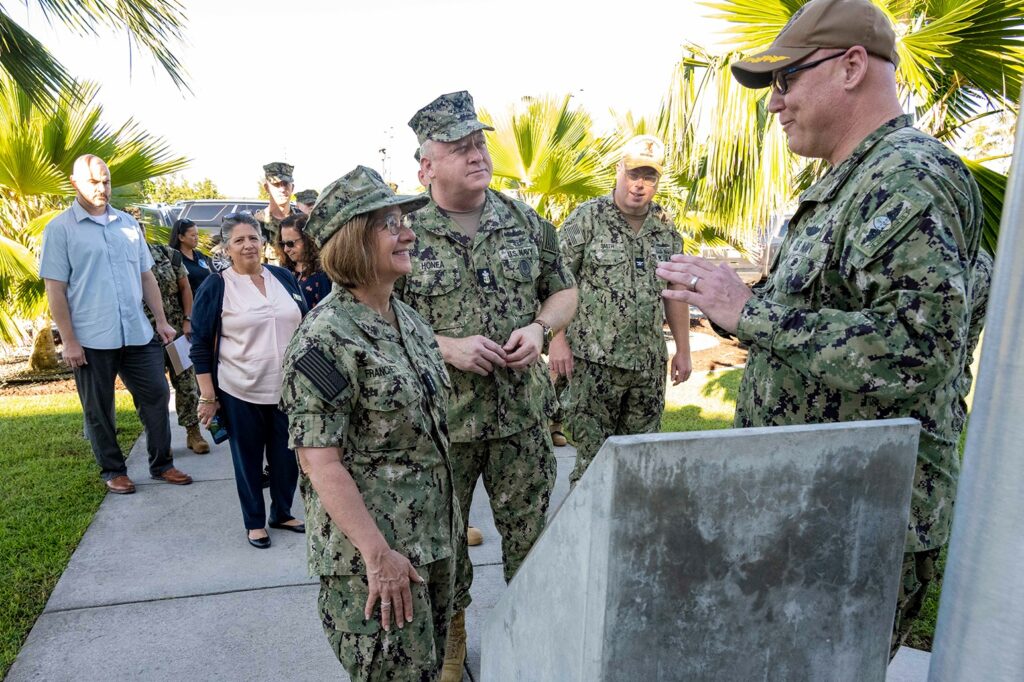


Navy’s Top Officer Credits Training, Logistics with Meeting Red Sea Mission

By Matthew Olay, DOD News  

Chief of Naval Operations Adm. Lisa Franchetti yesterday said she credits both a recent transformation in the Navy’s surface warfare training regimen and the quality of logistics operations for the service’s ability to successfully counter recent attacks by Iranian-backed Houthi terrorists in the Red Sea.  

Navy assets have been operating in the Red Sea since December as part of Operation Prosperity Guardian, a U.S.-led, multinational coalition established to counter attacks by Houthi terrorists on merchant and naval vessels.  

“[Operation Prosperty Guardian] is a great coalition of nations that are really standing up for the rules-based international order as we work to preserve the free flow of commerce through the Red Sea, through the Bab el-Mandeb , and on into the Gulf of Aden,” Franchetti said.   

During a discussion on the overall state of the Navy with the Defense One digital media platform in Washington, Franchetti was asked about what lessons the Navy has learned in the months since it first began participating in the coalition.    

The first lesson, Franchetti said, relates to a transformation in surface warfare training that began roughly nine years ago. At that time, the Navy brought in highly trained instructors to teach members of the surface warfare community how to bring a tactical edge to the field.    

“And now you see nine years later, … we’ve set up reach-back to our warfighting centers to be able to really understand what’s going on in the operating environment, to be able to adjust tactics, techniques procedures,” said Franchetti, who lauded the quality of Navy training across all surface-ship platforms and the entire joint force.   

“I think the investments that we made are really paying off,” she said, ” those great lessons that we’re learning about how to innovate while we’re out there in the same battle space.”   

Franchetti also highlighted how the evolving quality of the logistics operations being conducted during Operation Prosperity Guardian is contributing to the Navy’s overall operational readiness.  

“We had to bring some of our ships out of the Red Sea, originally, to be able to do some of the things they needed to do,” explained Franchetti. “But now we’ve been able to work with allies and partners to be able to do that right on station and really keep everybody in the fight.”  

Franchetti pointed out that the Navy is successfully conducting multiple logistics operations on a daily basis in regions beyond the Red Sea.  

“I’m really proud of how our forces are set up across all of our different regions to be able to respond and to be able to pull together to provide the resources we need to keep our operations going,” she said. “I think it’s a real testament to the work that’s been done in the past to enable us to do this work now and into the future.”  

Houthi militants have attacked or threatened Navy and commercial vessels more than 100 times since late November of last year, according to U.S. Central Command. In response to these attacks, U.S. and coalition forces have conducted 50 self-defense strikes as of March 25.   

Beyond current and future naval operations, Franchetti, who was promoted to chief of naval operations last November, also discussed unmanned vehicles, shipbuilding, retention and quality of life.      

“I could not be more proud of our Navy team or more focused on building the Navy that our nation needs to do all the missions that count on us to do every single day,” said Franchetti.   

“And I’m really looking forward to working … with all of our stakeholders to be able to do that over the next four years that I’m here as CNO.” 


Kraken Teams with Auterion to Boost Autonomous Capabilities for Security Boats

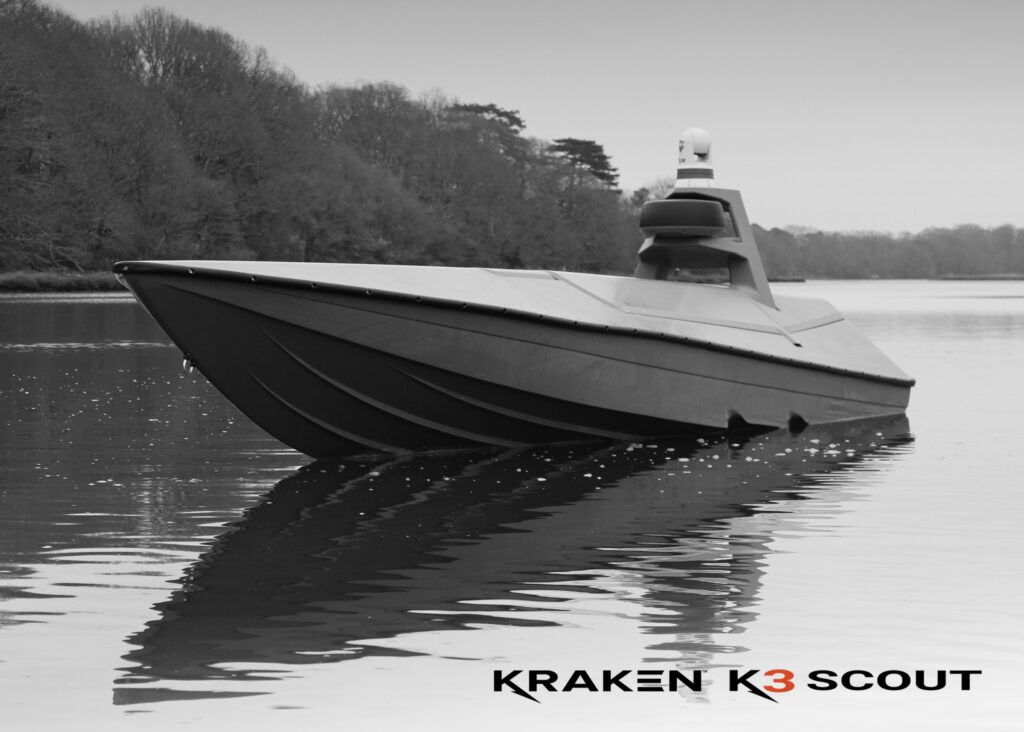
Kraken’s K3 Scout USV. Kraken Technology Group

LONDON, UK, and ARLINGTON, Virginia — Kraken Technology Group and Auterion have announced a strategic partnership to exponentially develop autonomous capabilities in the high-performance littoral security boat sector.

The partnership is focused around the development and implementation of modular, low-cost autonomy software and UxV systems for the maritime domain. The agreement will initially focus on integrated autonomy architecture for Kraken’s K3 Scout and K4 Manta uncrewed platforms.

Auterion’s Skynode X, AuterionOS and numerous capability apps have already been developed and integrated into Kraken’s K3 Scout USV, which is currently undergoing open-water sea trials. AuterionOS’ open software architecture unlocks the ability to create new apps as needed, continuously expanding Kraken’s ability to serve the wide variety of use cases necessary in maritime domains. 

“We are thrilled to be able to extend our expertise into the maritime domain alongside like-minded pioneers and littoral platform experts Kraken. The work done and the progress achieved to date on the development of K3’s uncrewed capability has been impressive and visionary,” said Auterion CEO Lorenz Meier.

“Collaborating with Auterion on the rapid development of the K3 Scout USV has opened our eyes to the size and scale of the technical transformation already underway and has already delivered unique capabilities in record time,” said Kraken founder and CEO Mal Crease. “We very much look forward to an exciting future transforming littoral maneuver with Auterion.”


First AH-1Z to Receive SIEPU Upgrade Arrives at Bell Amarillo Assembly Center

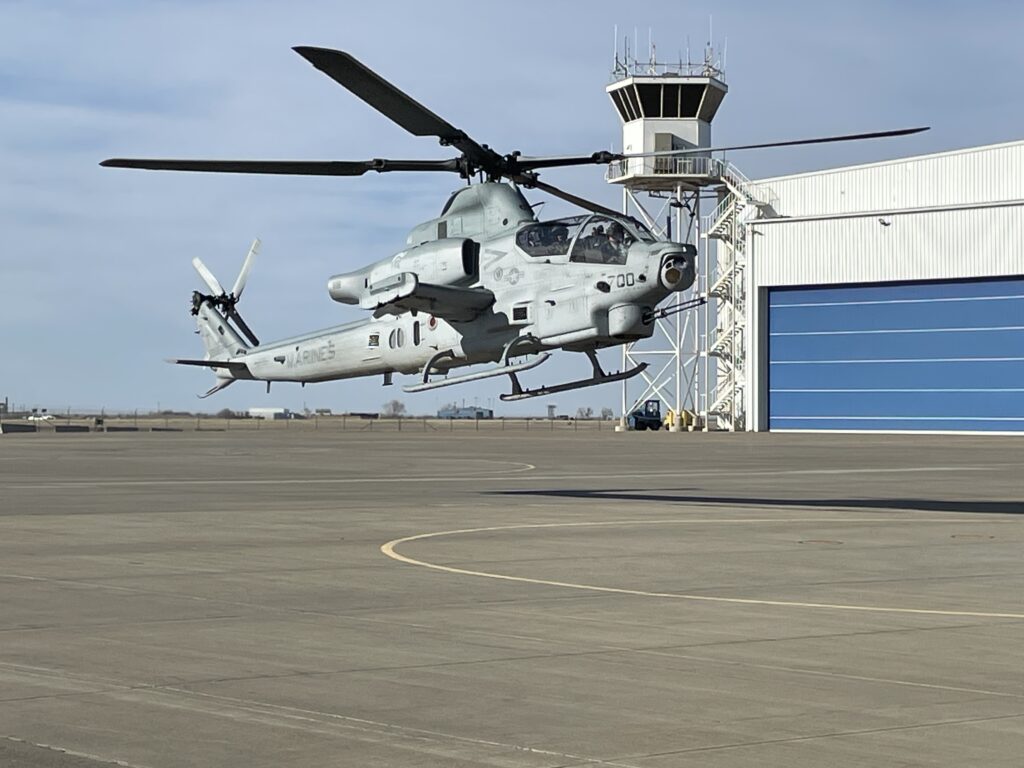
The Bell AH-1Z arrives at the assembly center for the SIEUP modification. Bell Textron

AMARILLO, Texas — The first Bell AH-1Z set to receive the Structural Improvement Electrical Power Upgrade (SIEPU) modification to be provided by Bell Textron Inc. under a contract with the U.S. Marine Corps has arrived at Bell’s Amarillo Assembly Center.

SIEPU modifications optimize the aircraft to improve mission capabilities, aircrew safety and interoperability by increasing the electrical power capacity on the aircraft and supporting the integration of additional cabin capabilities. SIEPU marks the start of the next chapter in the life of domestic H-1 helicopters, following the completion of the U.S. Marine Corps Program of Record in November 2022. 

“The Bell AH-1Z Viper and UH-1Y Venom provide the backbone of attack and utility aviation support in the various battlespaces in which they are used, so SIEPU comes at an important time for the future strategic implementation of this platform,” said Mike Deslatte, Bell H-1 senior vice president and program director. “SIEPU will be immediately beneficial for today’s operations, and also sets the H-1 up to quickly support future operational needs, some that may not even be conceived of yet.”

With SIEPU, H-1s will be able to upgrade to current weapons systems with next-generation capabilities, including kinetic long-range munitions and air launched effects as well as new non-kinetic capabilities. These upgrades greatly extend reach and range while simultaneously enhancing standoff distance.

While the H-1s have already demonstrated their capability to counter enemy unmanned aerial systems, SIEPU will also allow for there to be enough on-board power capacity for future weapons that are yet to be implemented.

“We are confident that SIEPU will help the Marine Corps expand mission essential tasks with more mission flexibility,” said Danielle Markham, SIEPU program manager. “The important thing is to make sure the H-1 is in a position to take advantage of those opportunities as they become available.”

Prior to arriving at the Bell Amarillo Assembly Center, the AH-1Z and UH-1Y completed datalink capabilities testing with the Marine Corps modifications at Camp Pendleton and testing with VMX-1 in Yuma. Bell plans to continue supporting the AH-1Z Viper and UH-1Y Venom through the 2040s in alignment with the Marine Corps Aviation Plan.


First of its Kind Deployment of Marine Cyber Forces to the INDO-PACOM Theater

Story by Maj. Zachary Leuthardt, U.S. Marine Corps Forces Cyberspace Command   

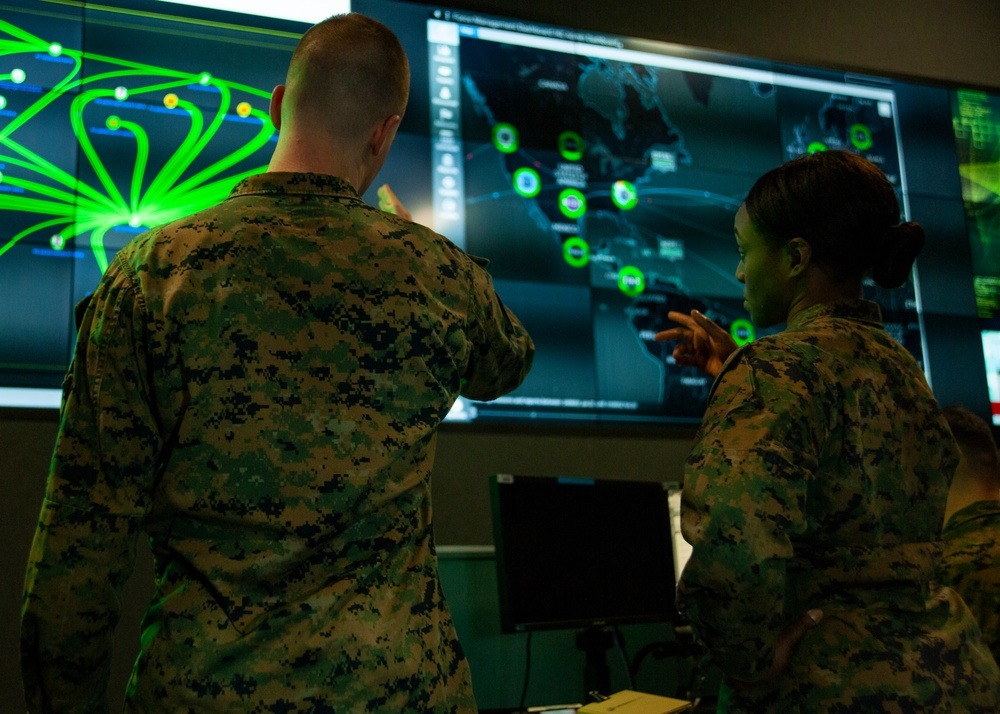
OKINAWA, Japan — Marines assigned to U.S. Marine Corps Forces Cyber Command deployed to Okinawa, Japan as part of the inaugural iteration of a new cyber rotational force concept. 
 
The cyber rotational force concept brings experts in defensive cyber operations to assist tactical and operational units stationed with geographic combatant commands. 
 
“Cyber defense is crucial, and as our capabilities continually mature, it is important that we support the warfighters and units tasked with ensuring our competitive edge throughout the globe,” said Marine Corps Maj. Gen. Ryan P. Heritage, the commander of MARFORCYBER. “Ensuring we have the skills and resources to maintain resilient, reliable networks to support rapid decision making at every level is at the heart of what we do. This is just another step in realizing that goal.” 
 
The team, made up of defensive cyber operations professionals assigned to MARFORCYBER, will join with defensive cyber operations Marines assigned to III Marine Expeditionary Force. 
 
Their mission will be to harden Marine Corps and joint networks in order to better enable the maneuver of units throughout the Western Pacific, knowing that critical infrastructure, networks and systems are effectively monitored and secured. 
 
The forward deployment of cyber forces to operational theaters such as the INDO-PACIFIC, is one way MARFORCYBER is assisting units’ operational and tactical network resiliency in challenging environments. 
 
“Protecting critical networks located inside the weapons engagement zone of several regional adversaries is essential to our ability to physically and virtually maneuver,” said Lt. Gen. William M. Jurney, commander, U.S. Marine Corps Forces, Pacific. “We are excited to work with MARFORCYBER on the cyber rotational force concept and, look forward to the resilience and flexibility their experts can provide our force.” 
 
While the cyber rotational force’s immediate mission is to harden the networks units in the Western Pacific rely upon to complete their mission, it is also a chance to refine the tactics that will be needed in future conflicts against sophisticated adversaries. 
 
“As the threat to our critical cyber infrastructure evolves, it is essential that the Marine Corps be able to defend our forward deployed networks,” Jurney said. “This will be crucial to the Marine Corps’ development of the expeditionary advance basing and stand-in force concepts.” 


Unified Command, Joint Information Center Established for Key Bridge Response 2024

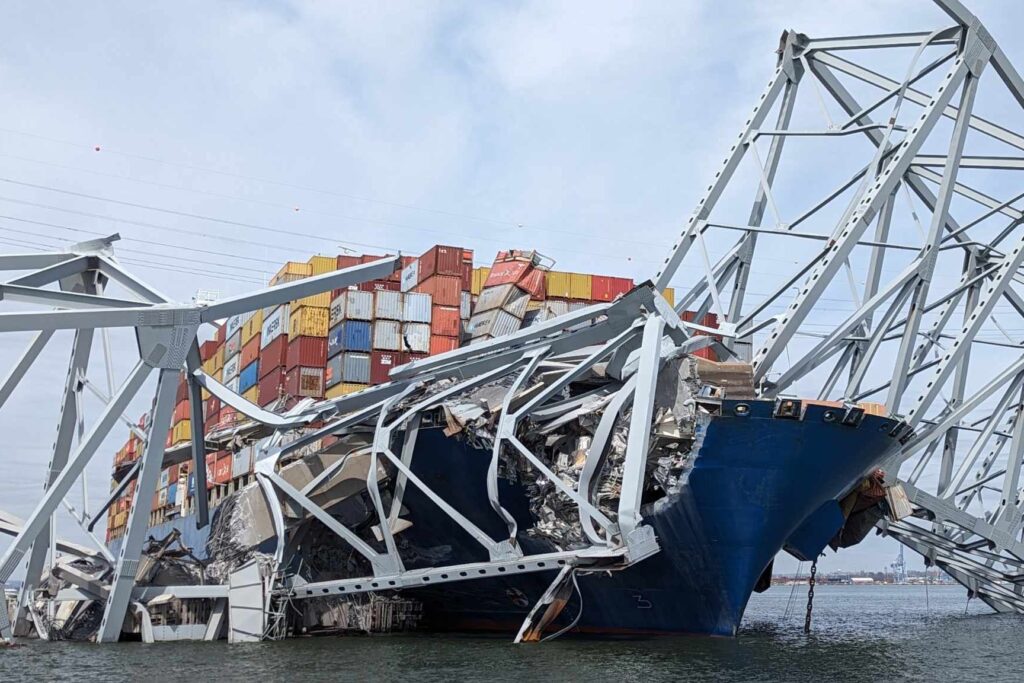
BALTIMORE – A Unified Command and Joint Information Center have been established in Baltimore Wednesday to coordinate response and disseminate information for the Francis Scott Key Bridge collapse on Tuesday morning. 

The Key Bridge Response 2024 Unified Command includes the:  

  • U.S. Coast Guard  
  • Maryland Department of the Environment  
  • Maryland Transportation Authority 
  • Maryland State Police 
  • Synergy Marine  

A website with incident response information can be found at the following URL:  

https://www.keybridgeresponse2024.com

The media is requested to call the Joint Information Center at 410-631-8939 for interview response inquiries and interviews.  

The Unified Command’s operational priorities are ensuring the safety of the public and first responders, accountability of missing persons, protecting the environment, incident stabilization, safely restoring transportation infrastructure and commerce, and supporting the investigation.  


MV-22B Ospreys Begin Reintegration with 15th Marine Expeditionary Unit

Story by Capt. Brian Tuthill, 15th Marine Expeditionary Unit   

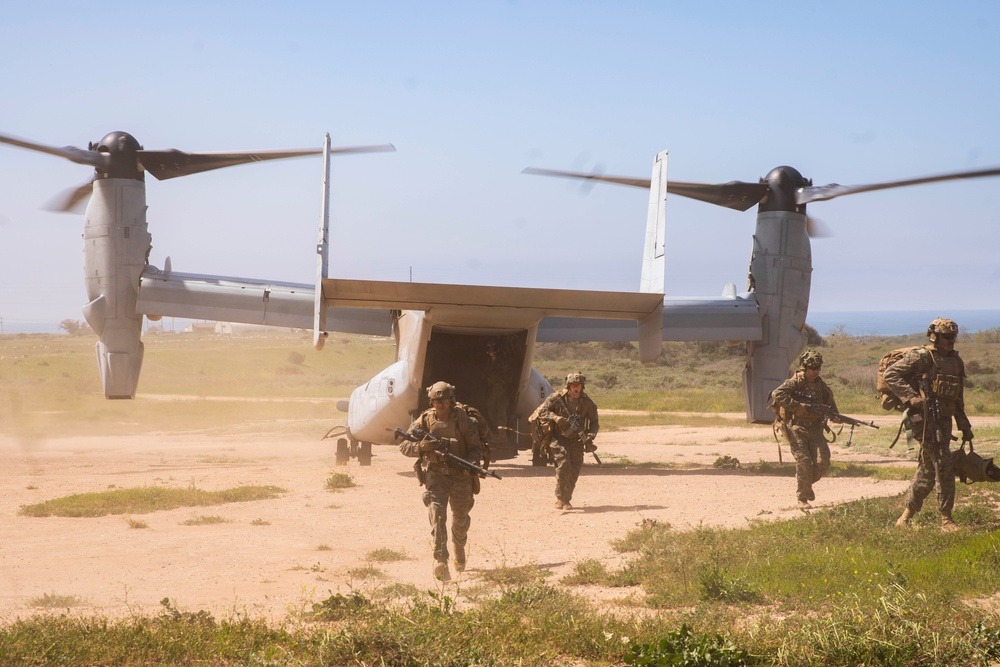
MARINE CORPS BASE CAMP PENDLETON, Calif. – The 15th Marine Expeditionary Unit began MV-22B Osprey reintegration training March 21, transporting a platoon of Marines across Camp Pendleton to regain proficiencies in foundational skills for pilots and infantry Marines. 
 
The training was conducted at two sites and involved a section of MV-22B Ospreys from Marine Medium Tiltrotor Squadron 165 (Reinforced), part of the aviation combat element of the 15th MEU, and Marines with Bravo Company, Battalion Landing Team 1/5, the 15th MEU’s ground combat element. 
 
Bravo Company is BLT 1/5’s airborne assault company for the 15th MEU. 
 
“This type of reintegration training is an important step in returning our pilots and enlisted aircrew to full proficiency and readiness to support the 15th MEU,” said Lt. Col. Drew Bossart, the commanding officer of VMM-165 (Rein.). “We continue to follow the Marine Corps’ deliberate, three-phased approach as our pilots regain basic flight currency, rebuild our instructor cadre, and achieve proficiencies. I am fully confident in our aircraft and that our pilots and aircrews will soon achieve a high state of operational readiness.” 
 
Pilots first landed Ospreys at Camp Pendleton’s helicopter outlying landing field, or HOLF, in the San Mateo area. The HOLF has a section that matches the flight deck dimensions of a U.S. Navy amphibious assault ship, which allows pilots to simulate landing on a ship. The pilots exited their aircraft to meet with leaders from Bravo Company on the ground and provided instructions to the Marines waiting to board the aircraft. Bravo Company Marines then conducted multiple boarding and disembarking drills at the HOLF in the same manner they did previously during at-sea training aboard USS Boxer (LHD 4). 
 
Following the landing zone drills in San Mateo, VMM-165 (Rein.) pilots transported Bravo Company Marines to a confined area landing site in the Las Flores area. The CAL site is a landing zone that that requires pilots to maneuver around obstacles such as trees, powerlines, or buildings to land. These types of landings prepare pilots and crew chiefs for unpredictable terrain and situations they may encounter in an expeditionary environment. Bravo Company Marines exited the aircraft and established security to simulate how they would insert and extract at a landing zone during a mission before reembarking the aircraft. 
 
Following the training at the CAL site, Bravo Company’s Marines were flown back to San Mateo for their final landing and the Ospreys returned to their squadron headquarters at Marine Corps Air Station Miramar. 
 
“MV-22s are the cornerstone of the 15th MEU’s Marine Air-Ground Task Force, providing us unrivaled flexibility for expeditionary operations across the spectrum of military operations and movement from ship to shore,” said Col. Sean Dynan, the commanding officer of the 15th MEU. “VMM-165’s pilots and aircrews have the full support of the 15th MEU as they take a measured approach to progress through all requirements carefully and deliberately.” 
 
VMM-165 (Rein.) and the 15th MEU will continue to conduct progressive training events over the coming weeks, both ashore and at sea. 
 
MV-22B Ospreys are multi-engine, dual-piloted, self-deployable, medium lift, vertical takeoff and landing (VTOL) tiltrotor aircraft designed for combat assault support, combat service support, and special operations missions worldwide. Ospreys have the ability to carry 24 Marines and Sailors twice as fast and five times farther than previous helicopters, flying at 240 knots and up to 200 nautical miles. 


UVision USA, SAIC to Collaborate on Loitering Munition Systems Manufacturing in USA

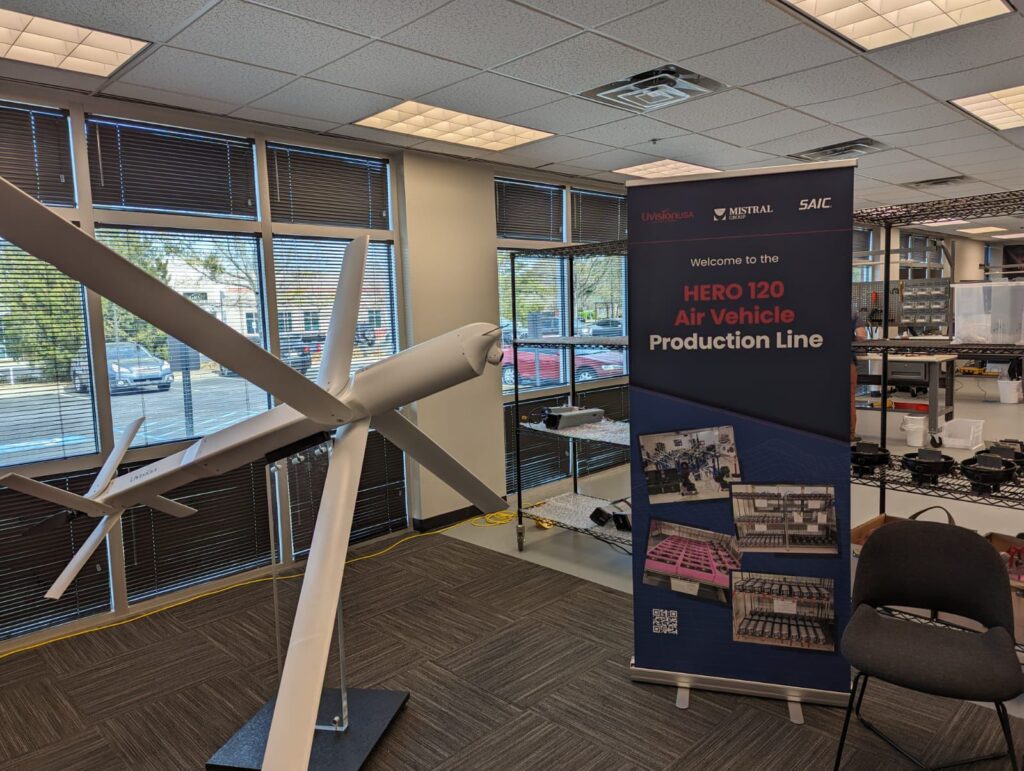
UVision’s Hero 120 Loitering Munition will be built in South Carolina. UVision

UVision Inc. and SAIC (Science Applications International Corp). announced a collaboration agreement for manufacturing of the Hero 120 Loitering Munition system. This cutting-edge defense solution will be produced in Charleston, South Carolina, significantly enhancing rapid response capabilities for all UVisionUSA clients in the United States. 

The collaboration with SAIC is aimed at establishing a fully independent domestic supply chain, ensuring that UVision’s USA clients benefit from reduced dependency on international supply chains, faster delivery times, local training by expert teams, and comprehensive post-sale support and maintenance. 

Major General (Ret.) Avi Mizrachi, Chairman of the board of directors of Uvision USA, said, “UVisionUSA Inc.’s business activity has expanded significantly in the second half of 2023, with several new contracts signed with the US military and other government bodies. Our collaboration with SAIC stems from the need to provide a complete solution to our US clients, independent of the international supply chain. We are proud to announce that the manufacturing facility itself will commence operations in March 2024.”  

The Hero 120 Loitering Munition System is a state-of-the-art, mid-range, anti-tank system designed to address the complexities of the modern battlefield. It offers high-precision strikes against anti-armor, anti-material, and anti-personnel targets, including tanks, vehicles, and soft targets in urban environments. With its ability to cause minimal collateral damage and equipped with a range of multi-purpose warheads, the Hero 120 provides operational users with an unparalleled effective engagement solution. 


Coast Guard Cutter Sustains Damage During Transit Into St. Marys River

From U.S. Coast Guard 7th District Public Affairs Detachment Jacksonville 

March 26, 2024 

JACKSONVILLE, Fla. — The U.S. Coast Guard Cutter Sea Dog (WPB 87373) sustained damage during the crew’s inbound transit from sea to the St. Marys River, Monday.   

The cutter Sea Dog safely moored in Fernandina Beach, Florida, with assistance from additional Coast Guard assets and a commercial towing vessel.  

There were no injuries to personnel, no damage to other vessels in the area, no impediments to the navigable waterway, and no reported environmental impacts as a result of the incident.   

The incident is under investigation. 

The Sea Dog is an 87-foot marine protector-class cutter assigned to Coast Guard Maritime Force Protection Unit Kings Bay in the Coast Guard’s Seventh District.


US Coast Guard Cutter Venturous Returns Home to Florida Following Multi-Mission Deployment

U.S. Coast Guard Atlantic Area, March 26, 2024 

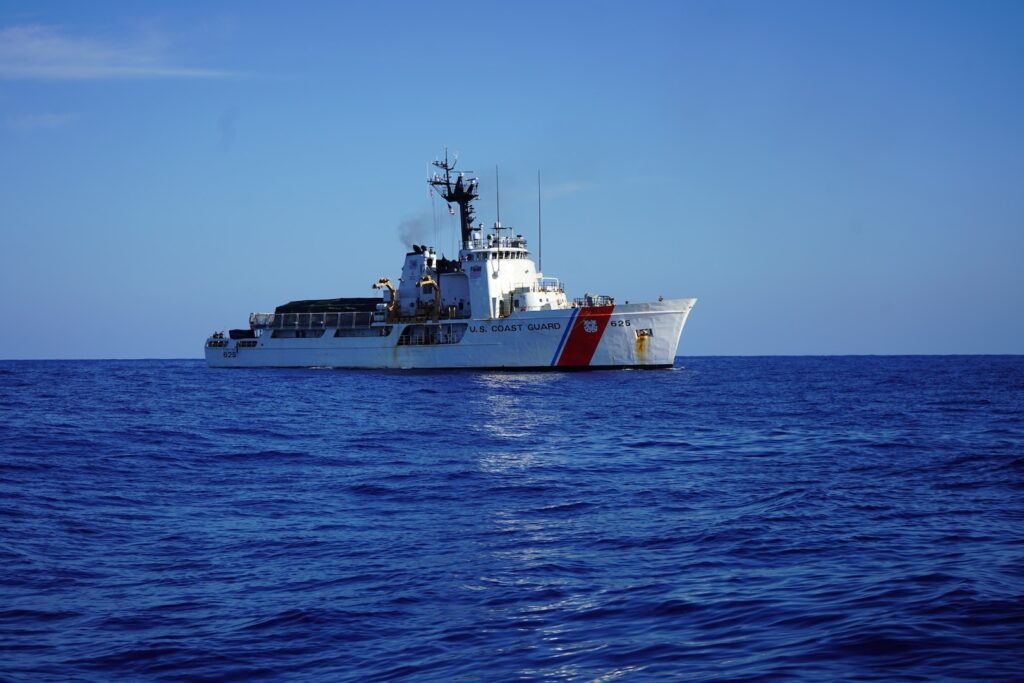
ST. PETERSBURG, Fla. – The U.S. Coast Guard Cutter Venturous (WMEC 625) crew returned to their homeport in St. Petersburg, Friday, after a 60-day Caribbean patrol supporting Homeland Security Task Force – Southeast’s Operation Vigilant Sentry and Joint Interagency Task Force – South’s counterdrug missions.   

While on patrol, the crew of Venturous repatriated 65 migrants. The migrants were safely transferred to Venturous from Coast Guard cutters Dauntless, Forward and Vigilant. Aboard Venturous, the migrants were given food, water, and basic medical care before being repatriated to the Haitian coast guard in Cap-Haïtien, Haiti.  

Venturous patrolled the South Florida Straits and Windward Passage within the Coast Guard Seventh District’s area of responsibility to conduct maritime safety and security missions while working to detect, deter, and intercept unsafe and unlawful migrant ventures bound for the United States.   

The Venturous also hosted the commandant and chief of naval operations of the Dominican navy during their port call in Santo Domingo, Dominican Republic, to discuss capabilities, training, and partnerships in the region.   

“Our highest priority is to prevent the tragic loss of life at sea,” said Cmdr. Karen L. Kutkiewicz, commanding officer of Venturous. “Often, interdicting migrants attempting to illegally enter the southeast maritime border turns into urgent rescue when homemade, overloaded, and dangerously unsafe vessels attempt passage. This mission is challenging both mentally and physically on our crew. I am proud of the crew’s care and professionalism displayed in this humanitarian mission.”  

OVS was first established in 2004 as the operational plan to prevent, deter, prepare for, respond to, and recover from maritime migration events in the Caribbean.  

Venturous is a 210-foot Reliance-class medium endurance cutter. The cutter’s primary missions are counter drug operations, migrant interdiction, and search and rescue in support of U.S. Coast Guard operations throughout the Western Hemisphere.   

For more information about OVS and the cases mentioned in this release, please click here.   

For information on how to join the U.S. Coast Guard, visit GoCoastGuard.com to learn about active duty, reserve, officer, and enlisted opportunities. Information on how to apply to the U.S. Coast Guard Academy can be found here.