Specialized Army Unit Underway to Support Humanitarian Aid Delivery to Gaza
March 12, 2024 | By Joseph Clark  

The specialized Army unit tasked with establishing a temporary pier off the coast of Gaza to deliver critical humanitarian assistance has wasted no time in making the complex operation a reality. 

The first of several watercraft used to construct the pier and manned by troops from the 7th Transportation Brigade began the weekslong transit from the unit’s homeport in Virginia to the U.S. Central Command area of responsibility less than two days after President Joe Biden called on the military to conduct the emergency operation during his State of the Union Address. 

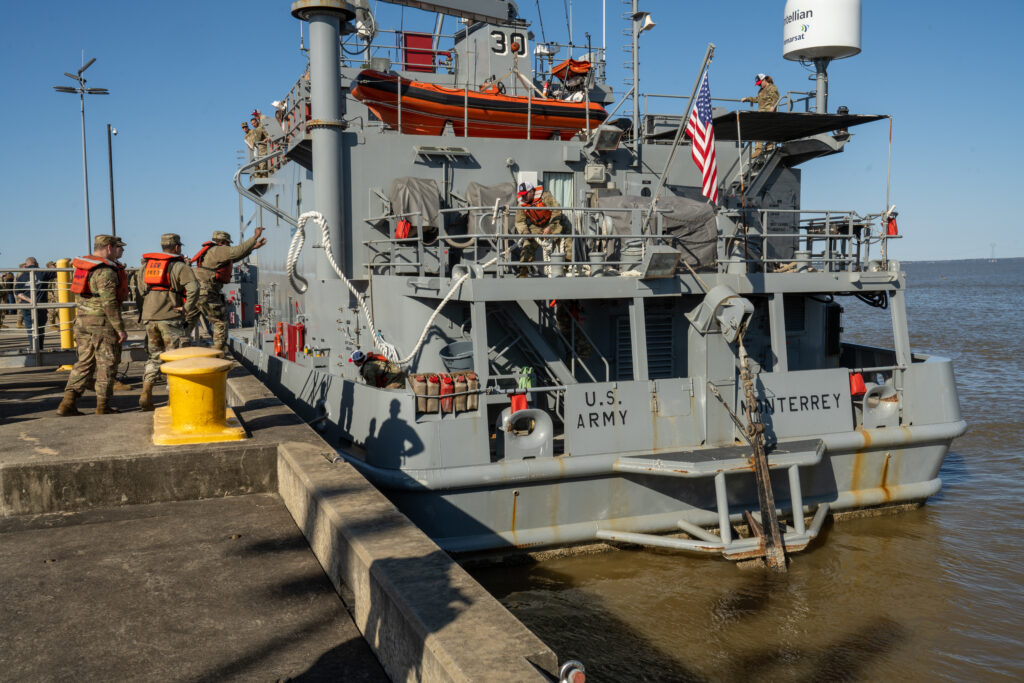
Today, four more Army vessels set sail from Joint Base Langley-Eustis to join the operation: USAVs Monterrey, Matamoros, SP4 James A. Loux and Wilson Wharf.  

The brigade, a component of the XVIII Airborne Corps, is the Army’s premier watercraft unit specializing in Joint Logistics Over-the-Shore, or JLOTS.   

JLOTS systems can jointly employ Army and Navy logistics assets to deliver critical supplies to troops or civilians in austere environments anywhere in the world.  

“This is Army watercraft’s moment, and we’re up for it,” said Army Col. Samuel S. Miller, the 7th Transportation Brigade (Expeditionary) commander. 

“The U.S. and the world will see our humanitarian capability on display and in action forward,” he said. “The 7th TB(X) is highly trained, mobile, versatile and capable to operate in these types of environments.”  

Delivering the capability involves the complex choreography of logistics support and landing craft vessels that carry the equipment used to construct an approximately 1,800-foot causeway comprised of modular sections linked together known as a Trident Pier.  

Once in theater, the unit will begin construction of the causeway off the coast of Gaza enabling the flow of critical aid from the sea to civilians affected by the ongoing conflict. The capability is expected to be operational in approximately 60 days.   

Deploying on short notice anywhere throughout the globe is par for course for the units that comprise the XVIII Airborne Corps, said Army Brig. Gen. John B. Hinson, the corps’ assistant commanding general for support. 

“We are the contingency corps for the Army,” Hinson said. “We have units, divisions, brigade combat teams, separate brigades, that can deploy anywhere in the world for any type of contingency operation in 18 hours.   

“The 7th TB(X) is one of these units that falls in that category where all of their units are very deployable for an immediate response force for different types of contingencies all around the world,” he said.  

Once operational, the pier will be capable of delivering up to 2,000,000 humanitarian aid meals per day.  

Pentagon Press Secretary Maj. Gen. Pat Ryder previewed the capability Friday during a briefing at the Pentagon following Biden’s State of the Union Address.  

“This is part of a full-court press by the United States to not only focus on working on opening up and expanding routes via land, which are the optimal way to get aid into Gaza but also by conducting air drops,” Ryder said. 

The U.S. has conducted several humanitarian assistance airdrops into Gaza alongside the Royal Jordanian Air Force. The combined operations have delivered hundreds of thousands of badly needed meals to civilians.  

Biden said more aid is needed.  

Ryder stressed that the JLOTS capability enables the U.S. to continue delivering aid without putting boots on the ground in Gaza.   

“We’ll be working with partners in the region to be on the receiving end of , but at no time will we require U.S. forces to actually go on the ground,” he said. “Our role will be essentially to provide the service of getting to the causeway, at which point it will then be distributed.”  

Miller said the unit’s extensive training in environments throughout the world has prepared its soldiers to accomplish the mission in Gaza. 
 
JLOTS was last used operationally to deliver humanitarian assistance following the magnitude 7.0 earthquake that struck Haiti in 2010.  

Soldiers from the 7th TB(X) train extensively in deploying the capability around the globe, including off the coast of Australia last summer in support of Exercise Talisman Sabre, a large-scale joint defense exercise between Australia and the United States. 

Experience: Talisman Sabre 

“We understand the importance of this mission, and the interests of the world in this regard,” Miller said. “When it may seem, at times, we have the weight of the world on our shoulders, we will forge across the water to deliver humanitarian assistance.”  

That same determination was echoed throughout the ranks.   

“We like what we do,” said Army Chief Warrant Officer 3 Benjamin Tate, the chief engineer on one of the vessels that set sail for Gaza today.   

“We’re extremely proud that we get to participate in humanitarian relief,” Tate said. “Me personally, if my family was in that situation, I’d want somebody to be willing to help. So, when we were told that was the task, our guys are ramping the boat up and getting ready.” 


U.S. Army Assault Helicopters Conduct Deck Landings on USNS DAHL

By Grady T. Fontana 

11 March 2024 

JINHAE, South Korea – Soldiers with 2nd Battalion, 2nd Aviation Regiment, 2nd Combat Aviation Brigade (2-2 CAB) conducted deck landings with U.S. Army UH-60M Black Hawk helicopters on prepositioning ship USNS Dahl (T-AKR 312), March 7. 
 
Six aircraft crews from Assault Helicopter Battalion 2-2 CAB practiced single-spot deck landings onboard USNS Dahl, about five miles off the coast of Jinhae, South Korea, to certify air crew members and pilots in landing on a ship. 
 
The DLQs were conducted through coordination between Military Sealift Command Office-Korea, USNS Dahl, and crews from Assault Helicopter Battalion 2-2 CAB to qualify or reset their crew on single-spot DLQ currency. 
 
The training environment was also an opportunity for Army aircrews to ensure maritime air movement capability and readiness. 
 
As a secondary training objective, MSCO-K and USNS Dahl aimed to further develop interoperability and joint relationship with 2-2 CAB during ship flight operations. 
 
This training event for the Army also proved to be equally valuable to the crew of USNS Dahl. While mariners’ conduct regular training on ship flight operations, the training environment is usually limited to classroom or computer simulations, which can sometimes not accurately reflect the challenges the crew may face at sea. 
 
In preparation for the event, Dahl conducted a complete inventory and inspection of all flight deck equipment that included testing of all flight deck systems. In addition, Dahl conducted simulated flight deck operations, helicopter crash and fire drills in the days before the operation. 
 
“All flight deck operations are inherently dangerous but DLQs add the wild card of potentially novice crews who are not familiar with either the vessel or ship flight operations in general,” said contracted mariner Capt. Deatra Thompson, ship’s master, USNS Dahl. “Additionally, unlike many USNS vessels, Dahl does not conduct flight operations often and many of the crew, while having received training and simulated operation, some have never been involved in real-life flight operations.” 
 
To reduce danger, Dahl requested that the aircraft’s crew chief depart during the train-the-trainer initial landings to provide hands-on instruction to the Dahl Chock and Chain teams to ensure they were familiar with the methods and placement of the fastening equipment. 
 
The event was executed safely and without incident and resulted in six single-spot deck-landing qualified crews across 2-2 CAB. 
 
“This event demonstrated effective joint coordination and was a great chance for MSCO-K and USNS Dahl to support a valuable training opportunity for our U.S. Army partners stationed here in Korea,” said Cmdr. Patrick J. Moore, commanding officer, MSCO-K. “Overall, there was great collaboration between MSCO-K, USNS Dahl, and the soldiers of 2-2 CAB.” 
 
Maritime prepositioning ship USNS Dahl is a Watson-class large, medium-speed roll-on/roll-off ship and is part of Commander, Maritime Prepositioning Ships Squadron 3. 
 
Commander, Maritime Prepositioning Ships Squadron 3 supports warfighters from all the U.S. Armed Forces by prepositioning Military Sealift Command ships throughout the Indo-Pacific Region, ensuring Army, Navy, Air Force and Marine Corps vehicles, heavy equipment, personnel and supplies are strategically positioned to support the full range of military operations. 
 
Commander, Military Sealift Command Far East ensures approximately 50 ships in the Indo-Pacific Region, are manned, trained and equipped to deliver essential supplies, fuel, cargo, and equipment to warfighters, both at sea and on shore. 
 
Celebrating its 75th anniversary in 2024, MSC exists to support the joint warfighter across the full spectrum of military operations, with a workforce that includes approximately 6,000 Civil Service Mariners and 1,100 contract mariners, supported by 1,500 shore staff and 1,400 active duty and Reserve military personnel. 


March 11 Red Sea Update

USCENTCOM, March 11, 2024 

TAMPA, Fla. – Between 8:50 a.m. and 12:50 p.m. (Sanaa time) on March 11, Iranian-backed Houthi terrorists fired two anti-ship ballistic missiles from Houthi-controlled areas of into the Red Sea toward merchant vessel Pinocchio, a Singaporean-owned, Liberian-flagged ship. The missiles did not impact the vessel and there were no injuries or damage reported. 

Between 2:50-11:30 p.m. (Sanaa time) on March 11, United States Central Command conducted six self-defense strikes destroying an unmanned underwater vessel and 18 anti-ship missiles in Houthi controlled areas of Yemen. It was determined these weapons presented an imminent threat to merchant vessels and U.S. Navy ships in the region. These actions are taken to protect freedom of navigation and make international waters safer and more secure for U.S. Navy and merchant vessels. 


HII Mission Technologies Unveils New REMUS 130 Unmanned Underwater Vehicle

Open Architecture and Modularity Minimize Cost and Risk

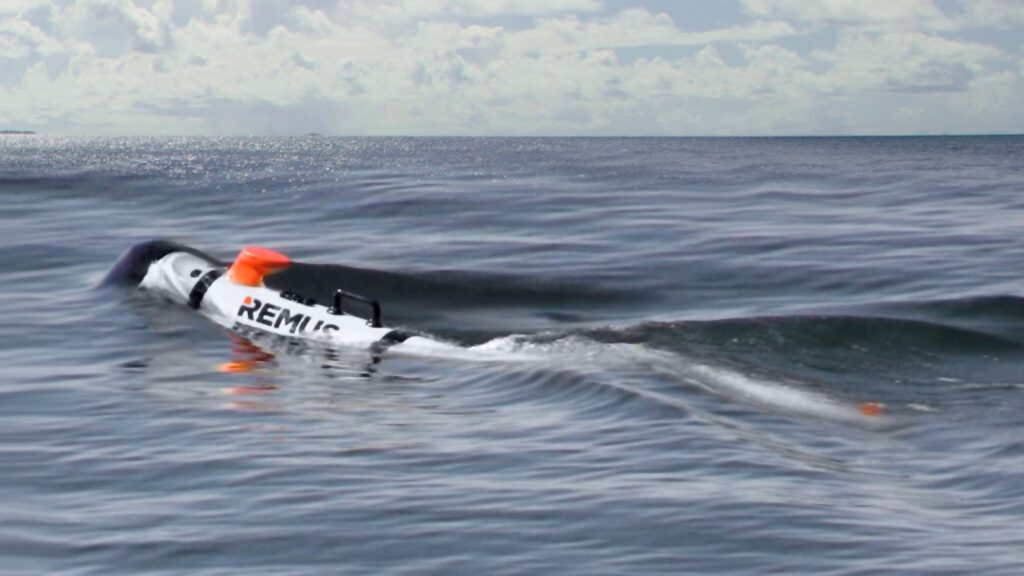
LONDON, March 12, 2024 (GLOBE NEWSWIRE) — HII (NYSE: HII) announced the REMUS 130, a new unmanned underwater vehicle (UUV) model based on the highly successful HII REMUS series of UUVs, today at the Oceanology International 2024 conference and exhibition. 

The REMUS 130 is the third generation of REMUS 100 vehicles and is designed to enhance underwater operations with maximum flexibility, advanced capabilities and innovative features, including: 

  • A compact, two-person-portable design. 
  • Effortless payload integration. 
  • Operational depths down to 100 meters. 
  • An extended battery life of up to 10 hours for sustained operations with easy field battery change. 

“The REMUS 130 is built on the same proven technology platform as the REMUS 300 and offers customers a highly capable vehicle at reduced cost and risk,” said Duane Fotheringham, president of Mission Technologies’ Unmanned Systems business group. “We are excited to introduce this latest generation of the REMUS 100 that will help drive commonality across the fleet and provide our customers with more flexibility to address their mission needs.” 

An image accompanying this release is available at: https://hii.com/news/hii-mission-technologies-unveils-new-remus-130-unmanned-underwater-vehicle/

The REMUS 130 was developed with HII’s internal funding specifically for customers seeking the long service life of REMUS UUVs, along with the proven modularity and open architecture of the REMUS 300 and 620 models at a reduced cost. 

The REMUS 130 is built for a variety of missions and operations, including: 

  • Data collection and research. 
  • Offshore oil and gas exploration. 
  • Search and rescue. 
  • Mine countermeasures operations. 

The REMUS 130 features modern core electronics, navigation and communications systems with modular, open architecture interfaces to accommodate wet or dry payloads, including custom payloads developed by the user. 

The HII REMUS UUV series are recognized for their durability, long service-life and effortless upgradeability. 

Leveraging three decades of innovation and the global delivery of over 600 UUVs to 30 countries, including 14 NATO members, HII’s REMUS 130 is poised to transform underwater operations with its advanced features and cost-efficient solutions. 


USS Annapolis Visits Perth, Australia, in AUKUS Event 

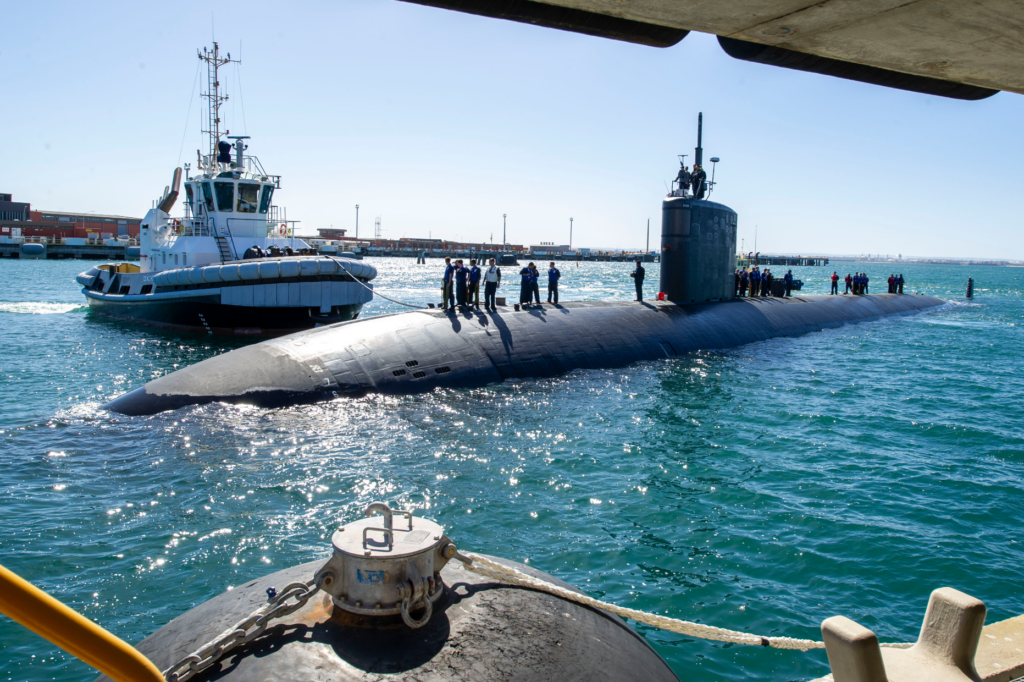
ROCKINGHAM, Australia (March 10, 2024) The Los Angeles-class fast-attack submarine USS Annapolis (SSN 760) pulls alongside Diamantina Pier at Fleet Base West in Rockingham, Western Australia, March 10, 2024. (U.S. Navy photo by Mass Communication Specialist 2nd Class Kaitlyn E. Eads) 

March 10, 2024 

USS Annapolis (SSN 760) arrived in HMAS Stirling in Perth, Western Australia Sunday. 

This marks the second visit by a U.S. fast-attack submarine to HMAS Stirling since the announcement of the AUKUS Optimal Pathway in March 2023. The Optimal Pathway is designed to deliver a conventionally armed, nuclear-powered attack submarine capability to the Royal Australian Navy (RAN). 

“Historically, we’ve had allied SSNs visit Australian ports for many decades totaling more than 1,800 days,” said Rear Adm. Matt Buckley, Head of Nuclear Submarine Capability at the Australian Submarine Agency. “Starting with USS North Carolina (SSN 777) last August, these visits are taking on a more important meaning for the Royal Australian Navy and the Australian Submarine Agency as we build the infrastructure, knowledge, and stewardship needed to establish SRF-West in 2027.” 

Increasing the number of SSN visits to Australia and the establishment of SRF-W comprise the first of three Optimal Pathway phases. As early as 2027, the United States will begin rotational presence in the Western Australia facility as a way to grow the RAN’s ability to operate and maintain a fleet of SSNs. Ultimately, there will be up to four U.S. Virginia-class submarines and one United Kingdom Astute-class submarine at HMAS Stirling. 

The second phase of the Optimal Pathway begins in the early 2030s, with the United States selling Australia three Virginia-class submarines, with the potential to sell up to two more if needed. Phase Three sees the combination of a base British submarine design and advanced United States technology to deliver SSN-AUKUS, the future attack submarine for both Australia and the United Kingdom. Australia plans to deliver the first Australian-built SSN-AUKUS in the early 2040s. 

“Having our submarines rotating through HMAS Stirling is critical to building Australia’s sovereign capability to safely and competently operate SSNs,” shared Rear Adm. Lincoln Reifsteck, the U.S. AUKUS Pillar One Program Manager. “Each visit will build upon the previous one and allow the RAN team to grow its capabilities. This visit will see Australians take a more active role in the execution of a voyage repair period.” 

“For decades, the U.S. Navy, Royal Australian Navy, and Royal Navy have trained and operated together,” said Rear Adm. Chris Cavanaugh, Commander, Submarine Group (CSG) 7. “AUKUS is a natural extension of our already close relationship, building unprecedented capability and interoperability that will pay dividends for generations.” 

“It’s an honor to be here and the team looks forward to working with the Australians and furthering our relationship,” said Cmdr. James Tuthill, Commanding Officer, USS Annapolis. “The enthusiasm and professionalism of the HMAS Stirling team is apparent, and we look forward to making this visit as productive as possible.” 

Initially announced in September 2021, the AUKUS trilateral agreement is a strategic endeavor aimed at strengthening the security and defense capabilities of the three nations that also promotes stability and security in the Indo-Pacific region. Australia will acquire conventionally armed SSNs for the Royal Australian Navy under Pillar I of AUKUS via the Optimal Pathway announced by the heads of the three partner nations on March 13, 2023. 


UPDATE: US and Coalition Defeat Houthi Attack in Red Sea Area 

USCENTCOM, March 9, 2024 

TAMPA, Fla. –Following further engagements through the morning, U.S. and Coalition forces downed a total of at least 28 uncrewed aerial vehicles between 4:00 a.m. and 8:20 a.m. (Sanaa time) on March 9. 

No U.S. or Coalition Navy vessels were damaged in the attack and there were also no reports by commercial ships of damage. 

US and Coalition Defeat Houthi Attack in Red Sea Area 

March 9, 2024 

US and Coalition Defeat Houthi Attack in Red Sea Area Between 4 a.m. and 6:30 a.m. (Sanaa time), Iranian-backed Houthi terrorists conducted a large-scale uncrewed aerial vehicle (UAV) attack into the Red Sea and Gulf of Aden. CENTCOM and coalition forces identified the one-way attack (OWA) UAVs and determined that they presented an imminent threat to merchant vessels, U.S. Navy, and coalition ships in the region. U.S. Navy vessels and aircraft along with multiple coalition navy ships and aircraft shot down 15 OWA UAVs. These actions are taken to protect freedom of navigation and make international waters safer and more secure. 

March 8 Red Sea Update 

TAMPA, Fla. - At approximately 9:50 a.m. (Sanaa time), United States Central Command conducted a self-defense strike against two Iranian-backed Houthi terrorists’ truck-mounted anti-ship missiles in Houthi-controlled areas of Yemen. At approximately 3:55 p.m. (Sanaa time), Houthi terrorists fired two anti-ship ballistic missiles from Yemen into the Gulf of Aden at M/V Propel Fortune, a Singapore-flagged, owned, and operated vessel. The missiles did not impact the vessel. There were no injuries or damages reported. These actions are taken to protect freedom of navigation and make international waters safer and more secure for U.S. Navy and merchant vessels. 


Bell Announces Weapon Systems Integration Lab  

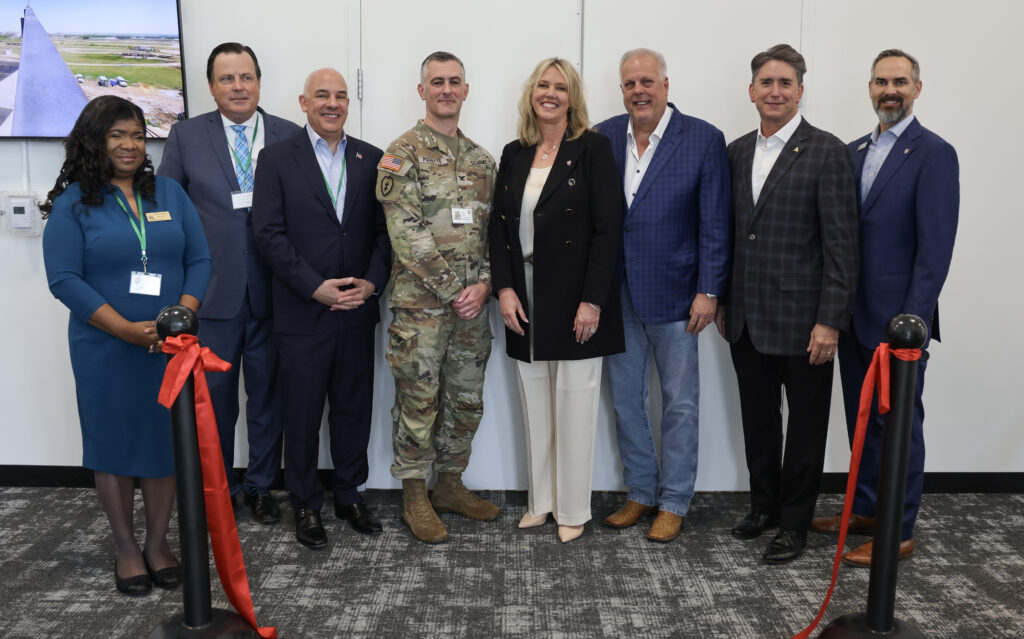
Arlington, Texas (March 11, 2024) – Bell Textron Inc., a Textron Inc. company, announced today the Grand Opening of its Weapon System’s Integration Lab (WSIL) in Arlington, TX. The state-of-the-art facility will aid in in the safe, rapid, and efficient integration and test of a next generation fly-by-wire tiltrotor and mission systems using a modular open systems approach (MOSA) for the United States Army’s Future Long- Range Assault Aircraft (FLRAA).  

As part of our commitment to deliver the U.S. Army’s FLRAA capability to our nation’s warfighters, Bell is pleased to announce the opening of its latest systems integration lab,” said Ryan Ehinger, Bell’s senior vice president and Program Director, FLRAA program. “This dedicated SIL supports the application, verification and validation of Bell’s innovative digital engineering approach and open architecture, playing a critical role in delivering outstanding operational performance and versatility to the U.S. Army.” 

“We are grateful for our partnership with Bell, who has made Arlington the home of its Flight Research Center for nearly six decades now. The Arlington Economic Development Corporation’s recent strategic investment shows our city’s continued commitment to supporting innovation right here in our backyard,” Mayor Jim Ross said.   

In 2021, Bell began construction of a new 47,000 sq. ft. facility to house future development programs at its Flight Research Facility in Arlington, Texas. The FLRAA WSIL is Bell’s fifth generation System Integration Lab located at its Flight Research Center.  This latest SIL facility supports end-to-end integration of our fly-by-wire systems with state-of-the-art Avionics, Electrical, Hydraulic, Flight Controls, and Mission and Sensor Systems for multiple current and future programs, manned and unmanned.  

Bell and the City of Arlington have a history spanning over 55 years. Beginning in 1967, the City of Arlington has played a major role in supporting the innovation of flight-testing for new programs at Bell’s Flight Research Center.  


Canadian-led Combined Task Force 150 seizes 770 kg of methamphetamine in the Arabian Sea 

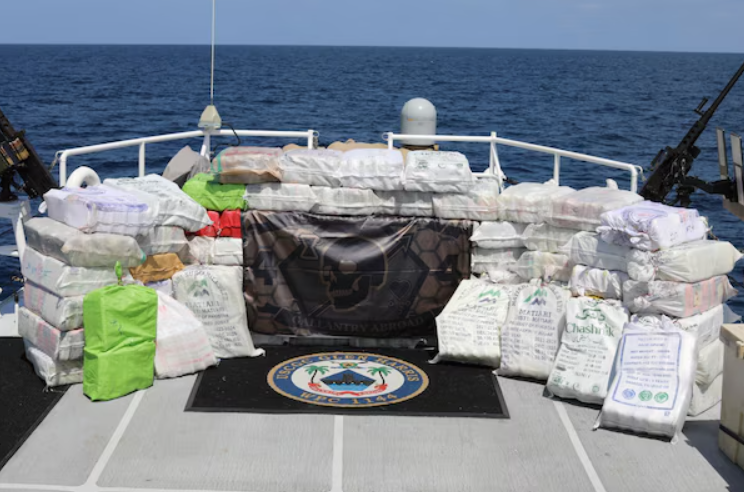
Bags of illegal narcotics seized from a vessel are stacked on the deck of the U.S. Coast Guard Sentinel-class fast response cutter USCGC Glen Harris (WPC 1144) in the Arabian Sea, March 5. Glen Harris was operating under Combined Task Force 150, one of five task forces under Combined Maritime Forces, the largest multinational naval partnership in the world. CTF 150 focuses on maritime security operations outside the Arabian Gulf.

By Combined Maritime Forces Public Affairs | March 09, 2024 

MANAMA, Bahrain — A U.S. Coast Guard cutter operating under the Canadian-led Combined Task Force (CTF) 150 of Combined Maritime Forces seized 770 kg of methamphetamine from a dhow in the Arabian Sea, March 5. 

Based on intelligence provided by CTF 150, the Sentinel-class fast response cutter USCGC Glen Harris (WPC 1144) seized the methamphetamines and, after documenting and weighing the illicit haul, properly disposed of it. 

“I am extremely proud of the work of the Combined Task Force 150 team and USCGC Glen Harris in preventing these drugs from reaching their final destination. This interdiction demonstrates the value of multinational efforts within the Combined Maritime Forces to prevent and disrupt criminal and terrorist organizations at sea,” said Canadian Navy Capt. Colin Matthews, Commander CTF 150. 

Glen Harris is forward deployed to Bahrain. The fast response cutter is part of a contingent of U.S. Coast Guard ships operating in the region under Patrol Forces Southwest Asia (PATFORSWA). PATFORSWA deploys Coast Guard personnel and ships alongside U.S. and regional naval forces throughout the Middle East. 

CTF 150’s mission is to deter and disrupt the ability of non-state actors to move weapons, drugs and other illicit substances in the Indian Ocean, the Arabian Sea and the Gulf of Oman. 

CTF 150 is one of five task forces under CMF, the world’s largest multinational naval partnership, and focuses on maritime security operations in the region. CTF 150 supports other CMF Task Forces and their member nations, with support and intelligence further enabling weapons and drug interdictions in the region. The 41-nation naval partnership upholds the international rules-based order by promoting security and stability across 3.2 million square miles of water encompassing some of the world’s most important shipping lanes. 


Navy Reserve Receives Its First P-8A Poseidon Maritime Patrol Aircraft

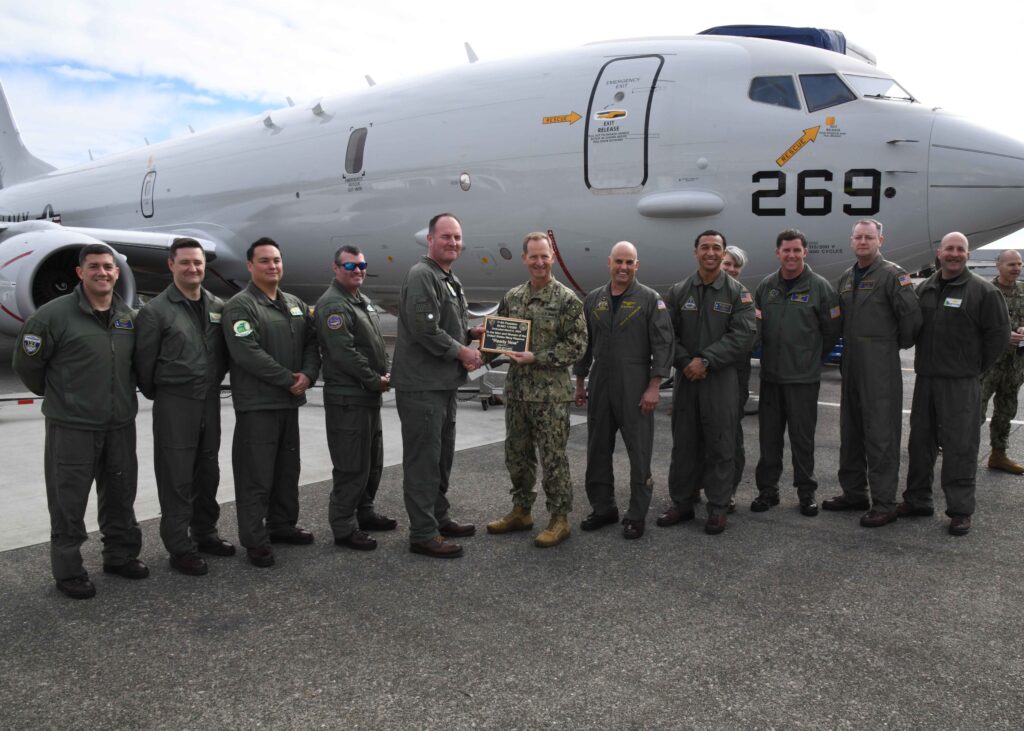
TUKWILA, Wash. (March 6, 2024) Cmdr. James Tilden (fifth from left), executive officer of Patrol Squadron 62, presents a dedication plaque to Vice Adm. John B. Mustin (sixth from left), chief of Navy Reserve and commander of Navy Reserve Force, after taking delivery of the first new P-8A Poseidon for the Naval Air Force Reserve during a ceremony at Boeing Military Delivery Facility in Tukwila, Washington, March 6, 2024. (U.S. Navy photo by Mass Communication Specialist 1st Class Harry Andrew D. Gordon)

By Richard R. Burgess, Senior Editor 

ARLINGTON, Va. — The first Boeing P-8A Poseidon maritime patrol aircraft for the Navy Reserve has been delivered to Patrol Squadron 62 (VP-62). 

In March 6 ceremonies at the Boeing Military Delivery Facility in Tukwila, Washington, Vice Adm. John B. Mustin, chief of Navy Reserve and commander of Navy Reserve Force, was on hand for the delivery, where a dedication was presented to him by Cmdr. James Tilden, executive officer of VP-62.  

VP-62, based at Naval Air Station Jacksonville, Florida, is one of two Navy Air Reserve patrol squadrons. It formerly operated the P-3C Orion maritime patrol aircraft. The transition brings the Navy closer to full operational capability with the P-8A. The other reserve VP squadron, VP-69 at Naval Air Station Whidbey Island, Washington, also will be equipped with the P-8A. 


Coast Guard offloads $4.5 million in seized cocaine, transfers custody of 2 smugglers to federal law enforcement in Mayaguez, Puerto Rico

March 8, 2024

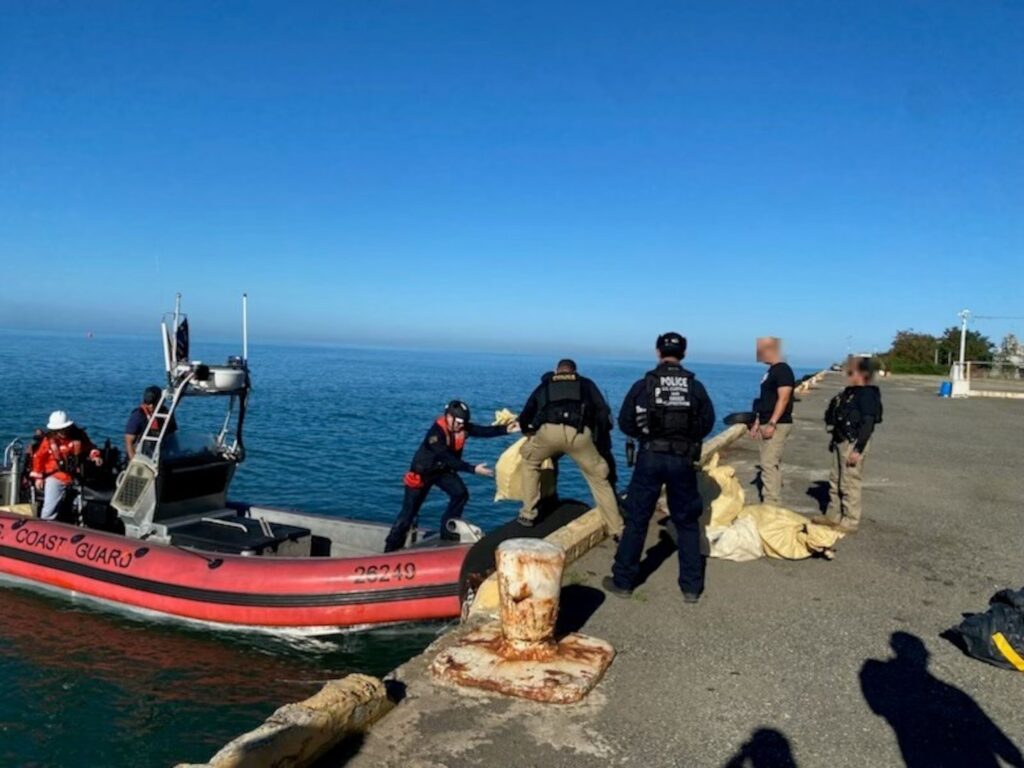
SAN JUAN, Puerto Rico — The crew of Coast Guard Cutter Joseph Napier offloaded 182 kilograms of cocaine and transferred custody of two male smugglers to federal law enforcement authorities in Mayaguez, Puerto Rico, Friday. 

The British Royal Navy HMS Trent (P224), operating with a Coast Guard LEDET onboard, seized the contraband and apprehended two smugglers, Dominican Republic nationals, following the interdiction of a go-fast vessel in Caribbean Sea waters southwest coast of Cabo Rojo, Puerto Rico, March 3, 2024. 

The interdiction is a result of interagency efforts in support of the Coast Guard’s Western Hemisphere Strategy and Operation Unified Resolve. The Drug Enforcement Administration is leading the investigation in this case. 

“We appreciate the work and collaboration of our British Royal Navy partners in stopping drug smuggling vessels in the high seas,” said Cmdr. Gerard Wenk, Coast Guard Sector San Juan chief of response. “The work we do together daily with our federal and local and regional partners helps protect and bring stability to the Caribbean region from this threat.” 

“Drug smuggling organizations pose the greatest threat to the safety and health of our citizens,” said DEA’s Caribbean Division Special Agent in Charge Denise Foster. “The dedication of all maritime surveillance assets is crucial to the success of the mission at hand, we will continue to work with our counterparts and allocate all our law enforcement resources to make a greater impact in vulnerable areas where criminal organizations dedicated to drug trafficking are causing greater damage.” 

The Coast Guard’s efforts under Operation Unified Resolve contribute to the interagency results being achieved daily under Operation Caribbean Guard, which coordinates efforts between the Coast Guard, DHS, and Commonwealth and Territorial law enforcement partners, who are working diligently to deter, detect and disrupt illicit maritime trafficking to Puerto Rico and the U.S. Virgin Islands. 

Detecting and interdicting illegal drug traffickers on the high seas involves significant interagency and international coordination. The Joint Interagency Task Force South in Key West, Florida conducts the detection and monitoring of aerial and maritime transit of illegal drugs. Once interdiction becomes imminent, the law enforcement phase of the operation begins, and control of the operation shifts to the U.S. Coast Guard throughout the interdiction and apprehension. Interdictions in the Caribbean Sea are performed by members of the U.S. Coast Guard under the authority and control of the Coast Guard’s Seventh District, headquartered in Miami.