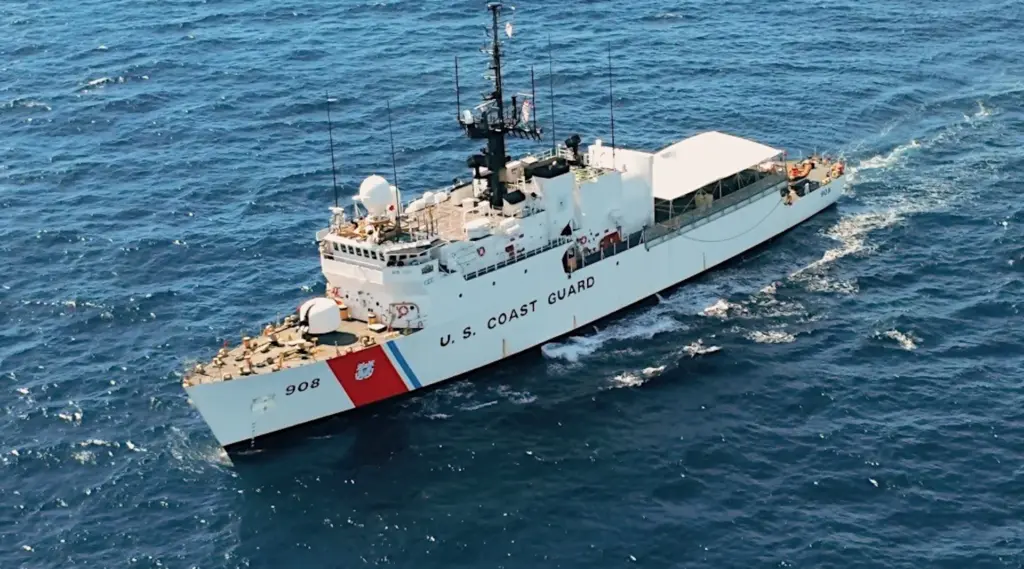
NEWPORT, R.I. — The U.S. Coast Guard Cutter Tahoma (WMEC 908) and crew returned to their homeport in Newport on Tuesday, after a 65-day patrol in the Florida Straits.
Tahoma deployed in support of Homeland Security Task Force – Southeast and Operation Vigilant Sentry within the Coast Guard Seventh District’s area of responsibility. During the patrol, Tahoma’s crew conducted maritime safety and security missions while working with other Coast Guard cutters to detect, deter, and intercept unsafe and illegal maritime migration ventures bound for the United States.
During the patrol, Tahoma contributed to the care and repatriation of 82 migrants. Tahoma interdicted six vessels bound for the United States. Tahoma also responded to a search and rescue case, assisting a Cuban mariner who had become lost at sea.
“It was an honor to serve as Commander, Command Task Unit 44.7.9 in support of Operation Vigilant Sentry,” said Cmdr. Piero Pecora, commanding officer of Tahoma. “The homeland security task force continues to provide cooperative capability to effectively integrate forces from across the spectrum of DHS, state, and local force providers towards the enduring mission of securing our Southern Maritime Border while safeguarding life at sea.”
HSTF-SE serves as the Department of Homeland Security lead for operational and tactical planning, command, and control, and acts as a standing organization to interdict illegal maritime migration attempts with federal, state, and local partners. HSTF-SE continues enhanced enforcement efforts in support of OVS, the 2004 DHS plan to respond to irregular and unlawful mass maritime migration in the Caribbean Sea and the Florida Straits.
Tahoma is a 270-foot, Famous-class medium endurance cutter. The cutter’s primary missions are counter-drug operations, migrant interdiction, enforcement of federal fishery laws, and search and rescue in support of U.S. Coast Guard operations throughout the Western Hemisphere.
For information on how to join the U.S. Coast Guard, visit GoCoastGuard.com to learn about active duty, reserve, officer and enlisted opportunities. Information on how to apply to the U.S. Coast Guard Academy can be found here.
Houthi Attacks on Commercial Shipping in International Water Continue
Release from U.S. Central Command
*****
USCENTCOM
Dec. 3, 2023
Release Number 20231203-01
FOR IMMEDIATE RELEASE
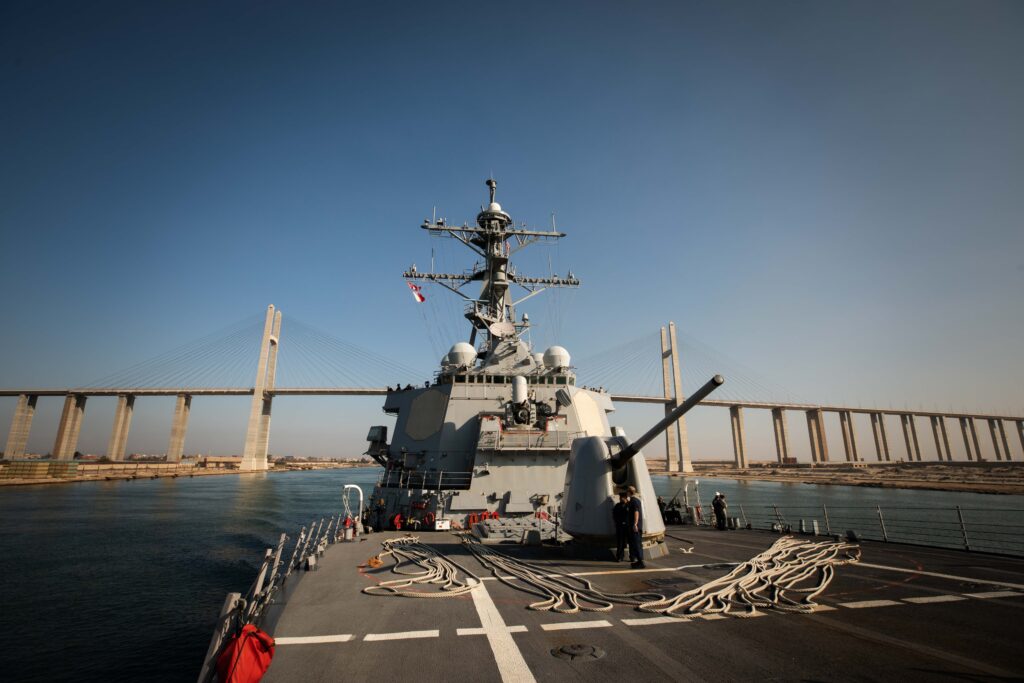
SOUTHERN RED SEA — Today, there were four attacks against three separate commercial vessels operating in international waters in the southern Red Sea. These three vessels are connected to 14 separate nations. The Arleigh-Burke Class destroyer USS CARNEY responded to the distress calls from the ships and provided assistance.
At approximately 9:15 a.m. Sanaa time, the CARNEY detected an anti-ship ballistic missile attack fired from Houthi controlled areas of Yemen toward the M/V UNITY EXPLORER, impacting in the vicinity of the vessel. UNITY EXPLORER is a Bahamas flagged, U.K. owned and operated, bulk cargo ship crewed by sailors from two nations. The CARNEY was conducting a patrol in the Red Sea and detected the attack on the UNITY EXPLORER.
At approximately 12 p.m., and while in international waters, CARNEY engaged and shot down a UAV launched from Houthi controlled areas in Yemen. The drone was headed toward CARNEY although its specific target is not clear. We cannot assess at this time whether the Carney was a target of the UAVs. There was no damage to the U.S. vessel or injuries to personnel.
In a separate attack at approximately 12:35 p.m., UNITY EXPLORER reported they were struck by a missile fired from Houthi controlled areas in Yemen. CARNEY responded to the distress call. While assisting with the damage assessment, CARNEY detected another inbound UAV, destroying the drone with no damage or injuries on the CARNEY or UNITY EXPLORER. UNITY EXPLORER reports minor damage from the missile strike.
At approximately 3:30 p.m. the M/V NUMBER 9 was struck by a missile fired from Houthi controlled areas in Yemen while operating international shipping lanes in the Red Sea. The Panamanian flagged, Bermuda and U.K. owned and operated, bulk carrier reported damage and no casualties.
At approximately 4:30 p.m., the M/V SOPHIE II, sent a distress call stating they were struck by a missile. CARNEY again responded to the distress call and reported no significant damage. While en route to render support, CARNEY shot down a UAV headed in its direction. SOPHIE II is a Panamanian flagged bulk carrier, crewed by sailors from eight countries.
These attacks represent a direct threat to international commerce and maritime security. They have jeopardized the lives of international crews representing multiple countries around the world. We also have every reason to believe that these attacks, while launched by the Houthis in Yemen, are fully enabled by Iran. The United States will consider all appropriate responses in full coordination with its international allies and partners.
Navy Reserve Launches Mobilization and Deployment Support Command (MDSC)
By Commander, Navy Reserve Forces Command Public Affairs
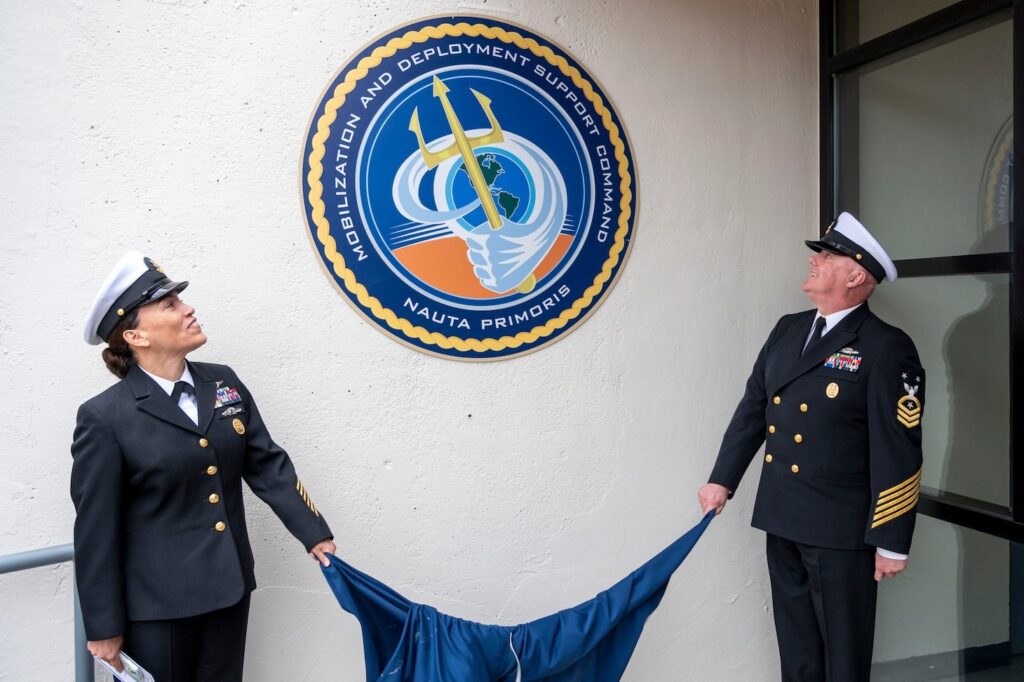
Mobilization and Deployment Support Command (MDSC) officially launched during a ribbon-cutting ceremony on Naval Station Norfolk, December 1, 2023.
MDSC reflects the Navy Reserve’s rapid alignment with the concept of Adaptive Mobilization, a process intended to improve warfighter readiness by enabling the Navy to respond with speed, agility and quantity of personnel in support of large‐scale contingencies and to improve processes and procedures that will ensure effective mass mobilization capability.
“MDSC is being established to provide oversight of all Reserve Component (RC) mobilizations and Active Component (AC) Individual Augmentee (IA) mobilizations,” said Rear Admiral Michael J Steffen, Commander, Navy Reserve Forces Command. “This is a wholesale re-imagining of the legacy, centralized mobilization process and is the realization of the Reserve’s shift from operational support through a centralized center of excellence to strategic reserve via adaptive, distributed mobilizations.”
The establishment of MDSC coincides with the disestablishment of Expeditionary Combat Readiness Center (ECRC), which transferred to Navy Reserve Forces Command (CNRFC) in January 2022.
MDSC will retain the Mobilization Center of Excellence role to train, oversee and execute the Navy’s mobilization processes and continue to deploy steady-state IA Sailors across the globe, while adjusting processes and procedures to encompass the Navy’s focus on Adaptive Mobilization in support of large-scale contingencies and mass mobilization requirements.
According to Steffen, MDSC will continue to set the standard across all Distributed Activation processing sites to provide deployment ready and mission capable warfighters to effectively implement the strategic, operational and tactical objectives of the Navy.
“With the drawdown in missions supporting the Global War on Terror, the return of strategic competition and the new reality of multi‐domain warfare, MDSC’s new mission and capabilities now align to the Navy’s focus in decentralizing the mobilization processing from a singular center at MDSC to the regional REDCOMs and other strategic locations,” said Steffen. “Our Reserve Force is laser-focused on warfighting readiness and our swift transformation will further sharpen our focus on one thing, and one thing only… our ability to fight and win.”
USS RAMAGE RETURNS TO HOMEPORT FOLLOWING 6TH FLEET DEPLOYMENT
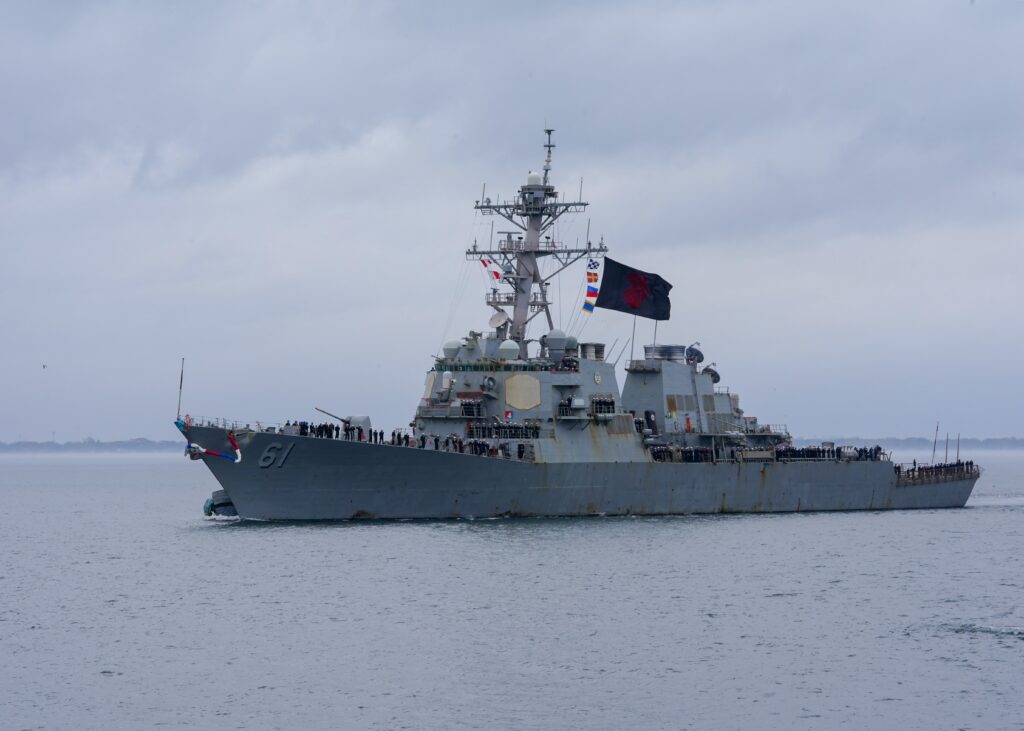
NORFOLK, Va. – The Arleigh-Burke class guided-missile destroyer USS Ramage (DDG 61) – part of Carrier Strike Group (CSG) 12, Gerald R. Ford CSG returns to Norfolk, VA after a 7-month deployment to the US Naval Forces Europe area of operations, Dec. 03, 2023.
The Gerald R. Ford Carrier Strike Group remains on deployment in the Eastern Mediterranean as part of the Pentagon’s response to the Oct. 7th Hamas attacks on the Gaza strip. While abroad, the USS Ramage served as an air defense unit for the strike group off the coast of Israel, and closely monitored Russian Federation Navy units for signs of aggression.
A recent contract for the maintenance of Ramage was awarded to BAE systems in Jacksonville. The crew’s early return to Norfolk provides an opportunity to prepare for an imminent homeport change to Mayport, Florida.
“I’m looking forward to Florida. It feels closer to home than any place I could be stationed,” says Fire Controlman Third Class Tyler Allen Wade Dickey from Refugio, Texas. “This crew is the best team I’ve ever been a part of. There’s isn’t anything we can’t accomplish together.”
In 214 days, the crew of the Ramage accomplished 40 replenishments at sea, logged over 400 helicopter landings, sailed over 50,000 miles, and prepared over 190,000 meals.
While deployed with Carrier Strike Group 12, the Ramage crew conducted maritime security operations and engaged with allied and partner nations. In May, the crew of the Ramage was able to quickly replace critical acoustic equipment and celebrate the Battle of the Atlantic 80th Anniversary in Liverpool, UK. In June, members of the Ramage crew volunteered to clear debris from a public park and planted 100 decorative plants around the municipality of Bar, Montenegro. The July visit to Durres, Albania allowed Ramage leadership to meet with local senior security officials. During the August port visit to Limassol, Cyprus the support of local contractors allowed the crew to complete an intensive week of scheduled upkeep.
The Gerald R. Ford CSG remains flexible to conduct operations wherever needed. In September, Arleigh-Burke class guided-missile destroyer USS Ramage (DDG 61) and Ford-class aircraft carrier USS Gerald R. Ford (CVN-78) shared a port visit in Trieste, Italy prior to conducting dual-carrier operations with ITS Cavour (CVH 550) and Italy’s 2nd Naval Division.
“Throughout our deployment, we’ve conducted joint operations with the British, Spanish, Italian, French, Hellenic, and Turkish Navies.” says Cmdr. Tim Yuhas, commanding officer of the USS Ramage. “These strong strategic relationships between the U.S. and our allies maintains our superior readiness and are critical to our ability to respond to any contingency in the Mediterranean.”
Strengthening partnerships during the deployment to the Naval Forces Europe area of operations builds enduring relationships and emphasizes our shared commitment to promoting safety and stability within the region, while seeking opportunities to enhance our interoperability as NATO allies.
CSG-12, Gerald R. Ford CSG, is on a scheduled deployment in the U.S. Naval Forces Europe-Africa area of operations, employed by U.S. Sixth Fleet to defend U.S., allied, and partner interests.
The Gerald R. Ford Carrier Strike Group is comprised of its flagship and namesake, the Ford-class aircraft carrier USS Gerald R. Ford (CVN-78), Carrier Air Wing Eight (CVW-8), Destroyer Squadron Two (DESRON-2), the Ticonderoga-class guided-missile cruiser USS Normandy (CG-60), and the Arleigh Burke-class guided-missile destroyers USS Ramage (DDG 61), USS McFaul (DDG 74), and USS Thomas Hudner (DDG 116).
The squadrons of CVW-8 embarked aboard Gerald R. Ford are the “Tridents” of Helicopter Sea Combat Squadron (HSC) 9, the “Spartans” of Helicopter Maritime Strike Squadron (HSM) 70, the “Bear Aces” of Airborne Command and Control Squadron (VAW) 124, the “Ragin’ Bulls” of Strike Fighter Squadron (VFA) 37, the “Blacklions” of VFA-213, the “Golden Warriors” of VFA-87, the “Tomcatters” of VFA-31, the “Gray Wolves” of Electronic Attack Squadron (VAQ) 142, and the “Rawhides” of Fleet Logistics Support Squadron (VRC) 40.
Headquartered in Naples, Italy, NAVEUR-NAVAF operates U.S. naval forces in the U.S. European Command (USEUCOM) and U.S. Africa Command (USAFRICOM) areas of responsibility. U.S. Sixth Fleet is permanently assigned to NAVEUR-NAVAF, and employs maritime forces through the full spectrum of joint and naval operations.
Coast Guard Cutter Calhoun arrives to new homeport in Charleston
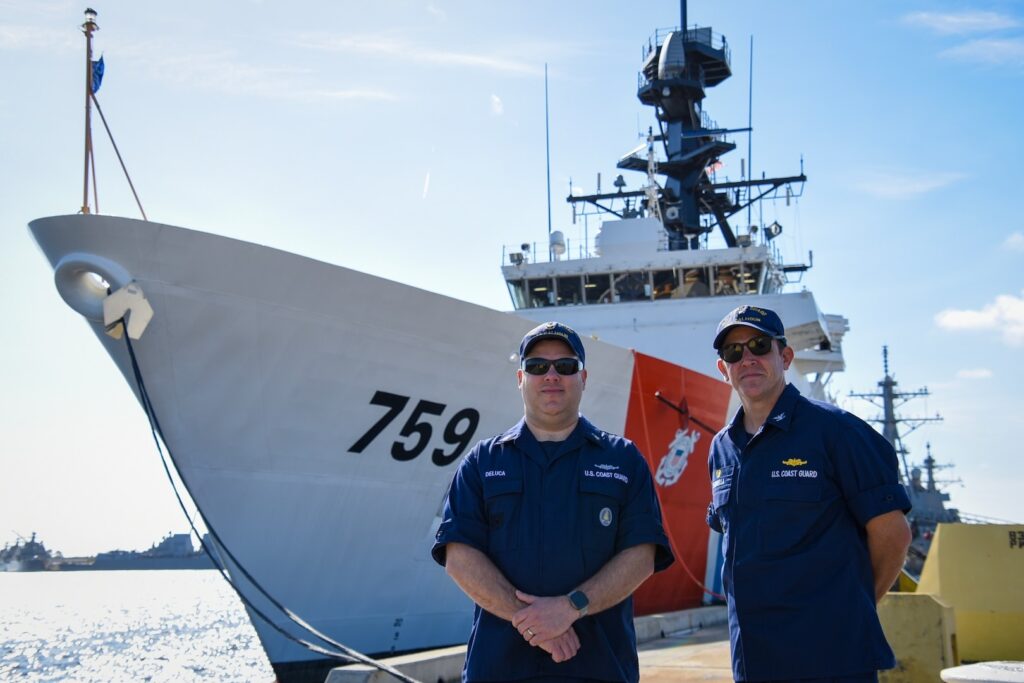
NORTH CHARLESTON, S.C. — The crew of the U.S. Coast Guard Cutter Calhoun (WMSL 759) arrived at their homeport in North Charleston, Sunday, after delivery from Ingalls Shipbuilding and supporting missions throughout the Coast Guard’s Seventh and Eighth districts.
The Coast Guard accepted the delivery of the 10th national security cutter (NSC) on Oct. 13, 2023, after the initial christening ceremony in Pascagoula, Mississippi, June 4, 2022.
Calhoun is the fourth Legend-class NSC to be homeported in North Charleston, joining Coast Guard Cutters Hamilton (WMSL 753), James (WMSL 754), and Stone (WMSL 758).
Calhoun’s crew began deploying to Pascagoula in March 2023. Following an intense 37-day post-delivery period, Calhoun supported the Coast Guard’s Eighth District in response to an oil discharge approximately 20 miles northeast of the mouth of the Mississippi River in the Gulf of Mexico. Calhoun remained on scene for 48 hours, providing key offshore command and control capability to the multi-agency response.
“Our crew members have more than earned their time back home,” said Capt. Timothy Sommella, commanding officer of Calhoun. “Most of our crew has surged the past 18 months in support of other Coast Guard units to meet global commitments. The most recent deployment of over 120 days to the Gulf Coast for the cutter’s delivery and acceptance was particularly challenging but tremendously satisfying. We finally sailed away as a crew for the first time with the same commitment to excellence and determination that the ship’s namesake, the first Master Chief Petty Officer of the Coast Guard, Charles L. Calhoun, displayed during his distinguished Coast Guard career. We are incredibly thankful this time of year for the personal and professional support from our friends and loved ones who stood with us, and we will continue to forge those bonds, whether at sea or ashore.”
During the remainder of Calhoun’s first patrol, Calhoun provided a forward presence in support of Homeland Security Task Force-Southeast and Operation Vigilant Sentry within the Coast Guard Seventh District’s area of responsibility to deter irregular migration and save lives in the South Florida Straits while testing its vital equipment, systems, and completing required training.
“It is a privilege to be a part of such an amazing team of professionals,” said Senior Chief Petty Officer Aaron Deluca, Calhoun’s command senior enlisted leader. “Having completed the challenges of acceptance, training, and sailing one of the most technologically advanced assets in the Coast Guard, I am excited to bring cutter Calhoun to its homeport and the community of Charleston.”
Calhoun is named to honor the first Master Chief Petty Officer of the Coast Guard, Charles L. Calhoun, who was from Ocean City, Maryland. During Calhoun’s tenure, he was responsible for improving and developing many of the Coast Guard’s administrative and people-focused programs, resulting in better communications and retention efforts within the enlisted community.
Calhoun is the newest 418-foot, Legend-class cutter to join the Coast Guard fleet. The Legend-class cutter program leads the Coast Guard’s ongoing surface fleet recapitalization and, when combined with the future offshore patrol cutters, will comprise the Coast Guard’s offshore response capability for decades to come. The cutter’s primary missions are counterdrug operations, migrant interdiction, living marine resources, defense readiness, and command and control in support of U.S. Coast Guard operations worldwide and here at home.
For information on how to join the U.S. Coast Guard, visit GoCoastGuard.com to learn about active duty, reserve, officer, and enlisted opportunities. Information on how to apply to the U.S. Coast Guard Academy can be found here.
U.S. Coast Guard Cutter Bear returns home following 56-day maritime safety and security patrol
PORTSMOUTH, Va. — The crew of the U.S. Coast Guard Cutter Bear (WMEC 901) returned to their homeport in Portsmouth, Friday, following a 56-day deployment in the Windward Pass and Central Caribbean.
Bear worked alongside other Coast Guard cutters, U.S. Navy assets, and Department of Homeland Security units to promote maritime safety and secure maritime borders, targeting unsafe migration and human trafficking from Cuba and Haiti, while prioritizing the protection of lives at sea. Bear’s crew also supported Homeland Security Task Force – Southeast’s Operation Vigilant Sentry and Joint Interagency Task Force South initiatives within the Coast Guard Seventh District’s area of responsibility.
During the patrol, Bear interdicted an overloaded vessel suspected of migrants and escorted the vessel back to their point of origin, Haiti.
While moored in Cartagena, Colombia, the Bear’s crew hosted a subject matter expert exchange with the Colombian Navy. Bear’s crew cross-trained with Colombian Navy partners, sharing interdiction and counterdrug best practices. Bear also hosted an international group of flag officers and staff from Colombia, France, and the United States.
“I’m extremely proud of the Bear crew for their professionalism and fellowship working alongside our Colombia partners,” said Cmdr. Brooke Millard, Bear’s commanding officer. “The interoperability between U.S. and Colombia assets is a true force multiplier.”
Of note, during this patrol, one of Bear’s original 40-year-old Main Diesel Engines clocked 100,000 hours of service, a testament to Coast Guard engineering and maintenance.
Bear is a 270-foot, Famous-class medium endurance cutter. The cutter’s primary missions are counterdrug operations, migrant interdiction, enforcement of federal fishery laws, and search and rescue in support of U.S. Coast Guard operations throughout the Western Hemisphere. The medium endurance cutters fall under the command of the U.S. Coast Guard Atlantic Area. Based in Portsmouth, Virginia, U.S. Coast Guard Atlantic Area oversees all Coast Guard operations east of the Rocky Mountains to the Arabian Gulf. In addition to surge operations, Atlantic Area also allocates ships to deploy to the Caribbean and Eastern Pacific to combat transnational organized crime and illicit maritime activity.
For information on how to join the U.S. Coast Guard, visit GoCoastGuard.com to learn about active duty, reserve, officer, and enlisted opportunities. Information on how to apply to the U.S. Coast Guard Academy can be found here.
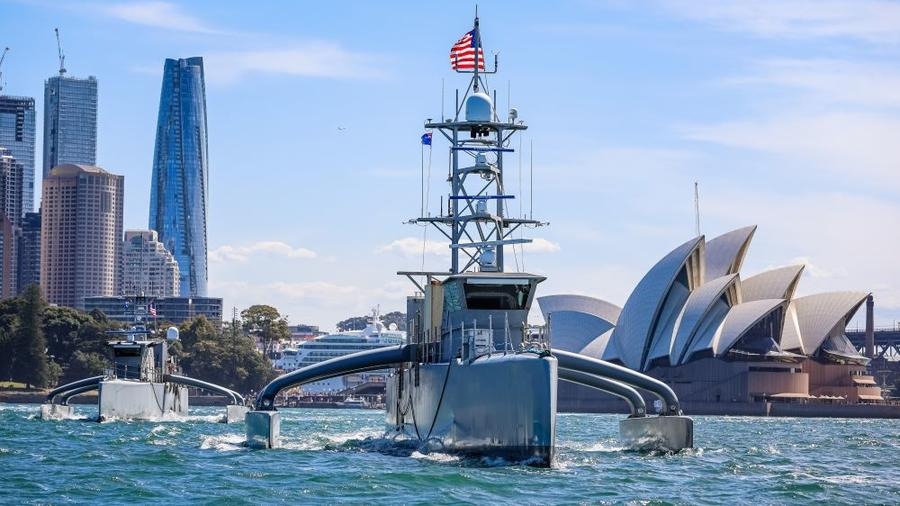
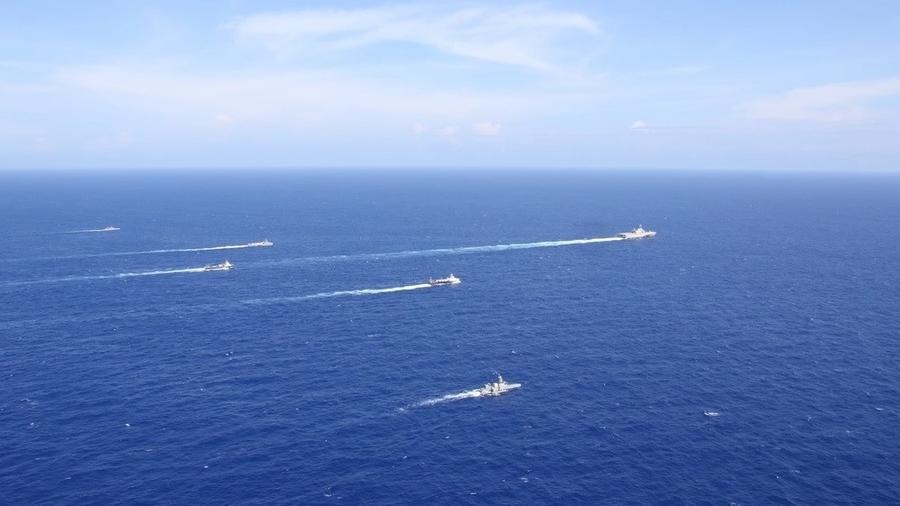
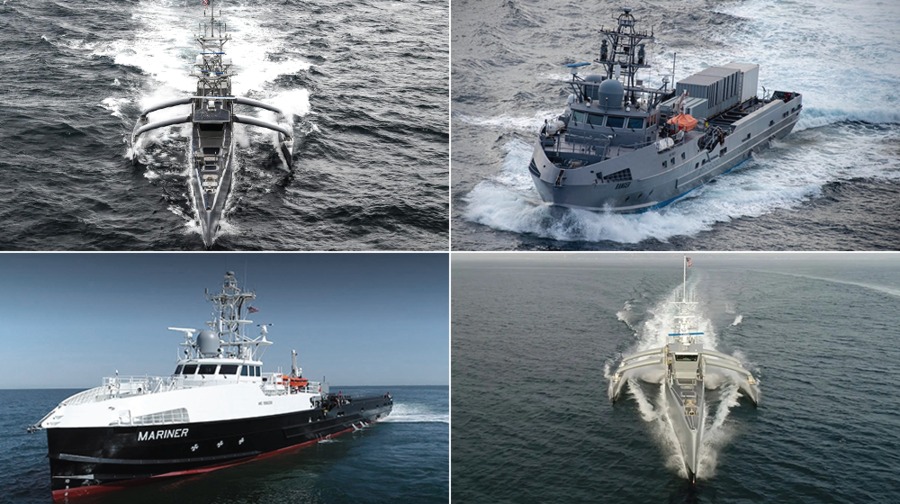
A U.S. Navy task group including four unmanned surface vessels (USVs) reached Sydney Harbor late last month after crossing the Pacific Ocean for the first time and visiting several western Pacific ports.
Each of the fleet’s unmanned vessels (Seahawk, Sea Hunter, Ranger and Mariner) are designed and outfitted with state-of-the-art Leidos autonomy technology.
The deployment, named Integrated Battle Problem (IBP) 23.2, marks a number of historic milestones in naval autonomy.
Retired U.S. Navy Vice Admiral David Lewis, Leidos Sr. Vice President for Maritime Operations, said it’s the first time these vessels have operated together as a task group, traveled beyond Hawaii, crossed the International Date Line, crossed the Equator and visited a Western Pacific foreign port.
Before IBP 23.2, they operated extensively in the Caribbean Sea and Panama Canal and on numerous Eastern Pacific tours.
Lewis said he sees many comparisons to President Theodore Roosevelt’s voyage of the Great White Fleet, a group 16 U.S. Navy battleships that sailed around the world from 1907-1909 in a display of American naval power.
“In many ways, this deployment is showing the world that the U.S. Navy has embraced autonomy, the next generation of maritime high technology,” he said. “This isn’t just a few ships out on a short cruise. This deployment brings together autonomy and multidomain task group operations. I see it as the operational debut of 21st century American technology on the world stage, which is what the Great White Fleet represented in its day.”
Lewis added that the deployment signals a transition of advanced technology out of the laboratory and prototype stages and into the heart of today’s most stressing maritime operational environment, the Western Pacific.
Gerry Fasano, Leidos Defense Group President, emphasized the significance of USVs actively enhancing the fighting envelope of U.S. Navy surface combatants in an organized Surface Action Group.
“The integration of autonomous surface vessels with manned combatants on display in this deployment will give fleet commanders much-needed enhancements to maritime domain awareness, accelerating the speed and lethality of existing maritime kill chains,” says Fasano.
An historic learning opportunity: Lewis said the deployment will reveal a lot about how autonomous vessels operate on deployment.
“We have significant knowledge about cruisers, destroyers and submarines, which we’ve deployed for decades,” he said, “but when you do things you’ve never done before, like deploy a Surface Action Group of autonomous warships across the vast Pacific, unexpected things will happen, and that’s the point. We’re going to learn a lot, and that’s a very good thing.”
Lewis also emphasized the importance of cohesive and continuous maintenance for autonomous systems to support naval operations.
Ray Sheldon, Gibbs & Cox President, said before the deployment, Ranger and Mariner had logged nearly 100,000 miles in supervised autonomy near U.S. shores.
“The Western Pacific has some of the roughest seas in the world,” says Sheldon, “so they’re being put to the test like never before. They’re being asked to operate dependably over a great deal of sheer distance and operational time. All four vessels have a remarkably high reliability record, but not necessarily when exposed to rough waters on the high seas, and that can make a big difference. It’s a harsher operating environment than anything we’ve tested, but these are the types of conditions we’ve been preparing for.” Dan Brintzinghoffer, Leidos Vice President and Division Manager in the Leidos Maritime Business, said that because the deployment will last for several months, his team has positioned hundreds of spare parts aboard Ranger and Mariner.
“Whether it’s harsh operating conditions, severe weather or other mission factors, it’s safe to say we will learn a lot during the extended time at sea,” says Brintzinghoffer. “We know we will experience individual systems issues and learn from those occurrences. The question is, as you stress the system of systems, how do the vessels respond? Normally, there is crew onboard to assist if there are any system issues, but this assistance now must come in the form of an autonomous or semi-automated response. We believe we have the right parts, technology and software in place to keep system availability high.”
Clockwise from top left: Unmanned surface vessels Seahawk, Ranger, Sea Hunter and Mariner. Photos: Leidos
Meet the fleet: Sea Hunter, a fully autonomous vessel, was the first of the four ships to be completed in 2015. In 2019, Fortune called Sea Hunter “the first of a new class of warships that use artificial intelligence in place of a crew.”
Seahawk, also fully autonomous, was the second. Like Sea Hunter, Leidos designed Seahawk to be completely autonomous from the hull up. The company supervised construction of the vessel, which joined the Navy’s Surface Development Squadron One in 2021.
“Seahawk and Sea Hunter are autonomous down to the pump, motor and engine, capable of self-reconfiguration and decision-making about how to operate apart from human guidance,” says Lewis. Ranger, a large semi-autonomous platform, is a fast supply vessel (FSV) converted to operate autonomously by Leidos subsidiary Gibbs & Cox. Leidos purchased Ranger partially completed, selected the shipyard and oversaw the reconstruction effort.
Mariner, also semi-autonomous, is the newest ship in the fleet, a converted FSV that incorporates lessons learned from Ranger into its mechanical and electrical designs to make them more reliable and conducive to autonomy.
“Ranger and Mariner, while not as autonomous as Seahawk and Sea Hunter, can navigate effectively without a crew, but because they weren’t originally designed for autonomy, they aren’t quite at the same level,” said Lewis. “However, these are platforms with substantial capacity. They’ve done surveillance missions, but they also have the potential to be weapons platforms.”
Looking ahead: Beyond the deployment, Lewis sees fully autonomous mission planning as the ultimate form of naval autonomy.
“If the vessel was on a wartime mission and took damage or encountered severe weather, for example, the truly autonomous ship can replan itself to carry out the mission despite damage or equipment casualties without human reprogramming,” he said. “That’s a huge challenge, and it’s something we’re working on implementing every day at Leidos.”
USS Paul Ignatius (DDG 117) Completes Second Forward-Deployed Naval Forces-Europe Patrol
By Ensign Karolyn Batista, USS Paul Ignatius Public Affairs Officer
ROTA, Spain – The Arleigh Burke-class guided-missile destroyer USS Paul Ignatius (DDG 117) returned to Rota, Spain, on November 28, 2023, following a six-month deployment throughout the U.S. Naval Forces Europe-Africa (NAVEUR-NAVAF) and U.S. Sixth Fleet area of operations and marking the completion of its second Forward-Deployed Naval Forces-Europe (FDNF-E) patrol.
During their extended deployment, USS Paul Ignatius Sailors participated in various critical missions aimed at deterrence, safeguarding national security interests, and promoting global stability. The ship participated in various port visits, exercises, bilateral and multinational operations throughout the European and African theaters, contributing to maritime security and defense cooperation. Most recently, the ship integrated into the Gerald R. Ford Carrier Strike Group currently deployed to the eastern Mediterranean Sea.
Under the leadership of commanding officer Cmdr. Corry Lougee, Paul Ignatius’ crew displayed professionalism, expertise, and unwavering commitment to their mission, country, and allies and partners throughout their deployment.
“From conducting maritime exercises and missions in the Baltic Sea to extended operations in the Eastern Mediterranean Sea and providing a strong deterrence, this crew gave 117% effort and finished our patrol strong,” said Lougee. “Getting extended on deployment can be tough for the crew and our families, but our time under the Gerald R. Ford Carrier Strike Group brought us closer together as a team, and our mission and sense of purpose was clear.”
Paul Ignatius completed a demanding and unpredictable deployment, exemplifying the U.S. Navy’s steadfast commitment to ensuring the safety and security interests of our nation, our allies, and our partners.
Family and friends warmly greeted the ship’s arrival and its Sailors. The reunion was a joyous occasion, celebrating not only the safe return home Paul Ignatius but also the significant and historic contributions the crew made.
Four U.S. Navy destroyers, including Paul Ignatius, are based in Rota, Spain and are assigned to Commander, Task Force 65 in support of NATO’s Integrated Air Missile Defense architecture. These FDNF-E ships have the flexibility to operate throughout the waters of Europe and Africa, from the Cape of Good Hope to the Arctic Circle, demonstrating their mastery of the maritime domain.
For more than 80 years, NAVEUR-NAVAF has forged strategic relationships with our Allies and partners, leveraging a foundation of shared values to preserve security and stability.
Headquartered in Naples, Italy, NAVEUR-NAVAF operates U.S. naval forces in the U.S. European Command (USEUCOM) and U.S. Africa Command (USAFRICOM) areas of responsibility. U.S. Sixth Fleet is permanently assigned to NAVEUR-NAVAF and employs maritime forces through the full spectrum of joint and naval operations.
Canada Selects Boeing’s P-8A Poseidon as its Multi-Mission Aircraft
• Partnership with Canadian industry will deliver long-term economic prosperity to Canada • With the P-8, Canada secures NORAD and Five Eyes allied interchangeability • First deliveries expected in 2026
ARLINGTON, Va., Nov. 30, 2023 /PRNewswire/ — The Government of Canada has signed a Foreign Military Sales Letter of Offer and Acceptance for up to 16 Boeing P-8A Poseidon aircraft as part of the Canadian Multi-Mission Aircraft project. Canada joins eight defense partners, including all of the Five Eyes allies, the intelligence alliance that also includes the United States, United Kingdom, Australia, and New Zealand, and becomes the fifth NATO nation to have selected the P-8 as its multi-mission aircraft. First delivery is expected in 2026.
“The P-8 will bolster Canada’s defense capability and readiness and we look forward to delivering this capability to the Royal Canadian Air Force,” said Heidi Grant, president, Business Development for Boeing Defense, Space & Security. “Together with our Canadian partners, we will deliver a strong industrial and technological benefit package that guarantees continued prosperity to Canada’s aerospace and defense industry.”
The P-8 is the only proven, in-service, and in-production solution that meets all CMMA requirements, including range, speed, endurance, and payload capacity. This decision will benefit hundreds of Canadian companies and bring decades of prosperity to Canada through platform sustainment delivered by our Canadian industry partners.
The P-8 acquisition will generate benefits of nearly 3,000 jobs and $358 million annually in economic output to Canada, according to a 2023 independent study by Ottawa-based Doyletech Corporation.
“This is a very important day for the Royal Canadian Air Force and for Boeing,” said Charles “Duff” Sullivan, managing director, Boeing Canada. “The P-8 offers unmatched capabilities and is the most affordable solution for acquisition and life-cycle sustainment costs. There’s no doubt the P-8 will protect Canada’s oceans and its borders for future generations.”
Team Poseidon forms the cornerstone of Boeing’s P-8 Canadian industry partnership, consisting of CAE, GE Aviation Canada, IMP Aerospace & Defence, KF Aerospace, Honeywell Aerospace Canada, Raytheon Canada, and StandardAero. The team builds on the existing 81 Canadian suppliers to the P-8 platform and to more than 550 Boeing suppliers across all provinces contributing to the company’s annual ~CAD $4 billion in economic benefit to Canada, supporting more than 14,000 Canadian jobs.
With more than 160 aircraft delivered or in service, and 560,000 collective flight-hours, the P-8 has proven capabilities for anti-submarine warfare; anti-surface warfare; intelligence, surveillance, and reconnaissance; and humanitarian assistance/disaster relief response.
As a leading global aerospace company, Boeing develops, manufactures and services commercial airplanes, defense products, and space systems for customers in more than 150 countries. As a top U.S. exporter, the company leverages the talents of a global supplier base to advance economic opportunity, sustainability, and community impact. Boeing’s diverse team is committed to innovating for the future, leading with sustainability, and cultivating a culture based on the company’s core values of safety, quality, and integrity.
GA-ASI AND USMC COMPLETE FIRST MQ-9A WTI TRAINING CLASS
MAWTS-1 Graduates Will Be Employed as MQ-9A Experts
SAN DIEGO – 30 November 2023 – General Atomics Aeronautical Systems, Inc. (GA-ASI) and the U.S. Marine Corps (USMC) teamed up to conduct flight training for Marines that was completed on Oct. 29, 2023. The seven-week course on the operation of MQ-9A Block 5 Unmanned Aircraft System was given to Marine Aviation Weapons and Tactics Squadron One (MAWTS-1) at Marine Corps Air Station Yuma, Arizona. The students participated in Weapons and Tactics Instructor (WTI) Course 1-24, which is a comprehensive course designed for selected pilots and enlisted aircrew that incorporates Marine Corps planning along with implementation of advanced air and ground tactics.
WTI, recognized as an advanced, graduate-level program, provided standardized, advanced tactical training, and played a crucial role in developing and employing aviation weapons and tactics both over land and in maritime environments. The Marines were trained using a GA-ASI-supplied MQ-9A, and the graduates of WTI will now go on to be the experts in MQ-9A Block 5 employment in their squadrons.
The training is a critical part of the Marine Air-Ground Task Force (MAGTF) Unmanned Expeditionary (MUX) Medium-Altitude, High-Endurance (MALE) program meeting Full Operational Capability (FOC). GA-ASI is a committed partner in helping the USMC meet this critical program milestone.
“We congratulate the new graduates of WTI and Semper Fi,” said GA-ASI Vice President of DoD Strategic Development Patrick Shortsleeve. “GA-ASI is proud to support the training of the MAWTS-1 aircrews in the use and utility of the MQ-9A platform.”
Renowned for its fault-tolerant flight control system and triple-redundant avionics system architecture, the MQ-9A UAS embodies the industry’s highest standards of reliability and performance, surpassing those of many manned aircraft.
GA-ASI has delivered nine MQ-9A UAS to the USMC so far. Four of these MQ-9A aircraft are actively engaged in operational missions, playing a vital role in supporting mission-critical Marine Corps objectives. The USMC awaits delivery of 11 additional aircraft, which will fulfill their goal of three squadrons by 2025.