GA-ASI DEMONSTRATES SHORT TAKEOFF/LANDING OF UAS ON UK CARRIER

Release from General Atomics Aeronautical Systems 

***** 

Mojave Flights for the Royal Navy Highlight UAS’ Ability to Operate From Warships 

SAN DIEGO – 17 November 2023 – General Atomics Aeronautical Systems, Inc. (GA-ASI) conducted a first-of-its-kind demonstration of its short takeoff and landing (STOL) capability on the HMS Prince of Wales, a Royal Navy aircraft carrier, using the Mojave Unmanned Aircraft System. The demonstration took place on November 15, 2023, when the Prince of Wales was underway off the East Coast of the U.S., and the Mojave was controlled by an aircrew within a control station onboard the ship. The demonstration included takeoff, circuits, and approaches and ended with a landing back onto the carrier. 

“We applaud the Royal Navy’s foresight in embracing this unprecedented capability for its carriers,” said GA-ASI CEO Linden Blue. “We knew our STOL capability would enable a UAS to safely take off and land on the Prince of Wales. Seeing our Mojave operate successfully in this environment opens myriad new ways our aircraft can be used to support multi-domain naval operations.”  

Mojave is a short takeoff and landing UAS demonstrator originally developed to prove STOL operations at unprepared landing sites. While Mojave shares common systems and components with GA-ASI’s Gray Eagle model, a STOL wing set option is likewise being planned for the larger, more capable MQ-9B aircraft, which includes SkyGuardian®, SeaGuardian®, and the new Protector RG Mk 1 currently being delivered to the UK Royal Air Force. The MQ-9B version, called MQ-9B STOL, is being considered by the Royal Navy and other navies that operate aircraft from large flat-deck warships without catapults and arresting gear.  

Royal Navy Director Develop, Rear Admiral James Parkin, whose team planned the trial, said: “The Mojave trial is a European first – the first time that a Remotely Piloted Air System of this size has operated to and from an aircraft carrier outside of the United States. The success of this trial heralds a new dawn in how we conduct maritime aviation and is another exciting step in the evolution of the Royal Navy’s Carrier Strike Group into a mixed crewed and uncrewed fighting force.” 

Equipping UAS with STOL capability provides greater versatility and allows the aircraft to operate in areas previously deemed unsuitable for UAS operations, including landing onto and taking off from an aircraft carrier. MQ-9B STOL will be capable of carrying the same payloads and conducting the same missions as the SkyGuardian and SeaGuardian, including maritime surveillance, Anti-Submarine Warfare (ASW), Airborne Early Warning (AEW), and surface strike. 


History-Making Oceanographer and Ret. Navy Captain Dies at 92

Release from the U.S. Navy 

***** 

16 November 2023 

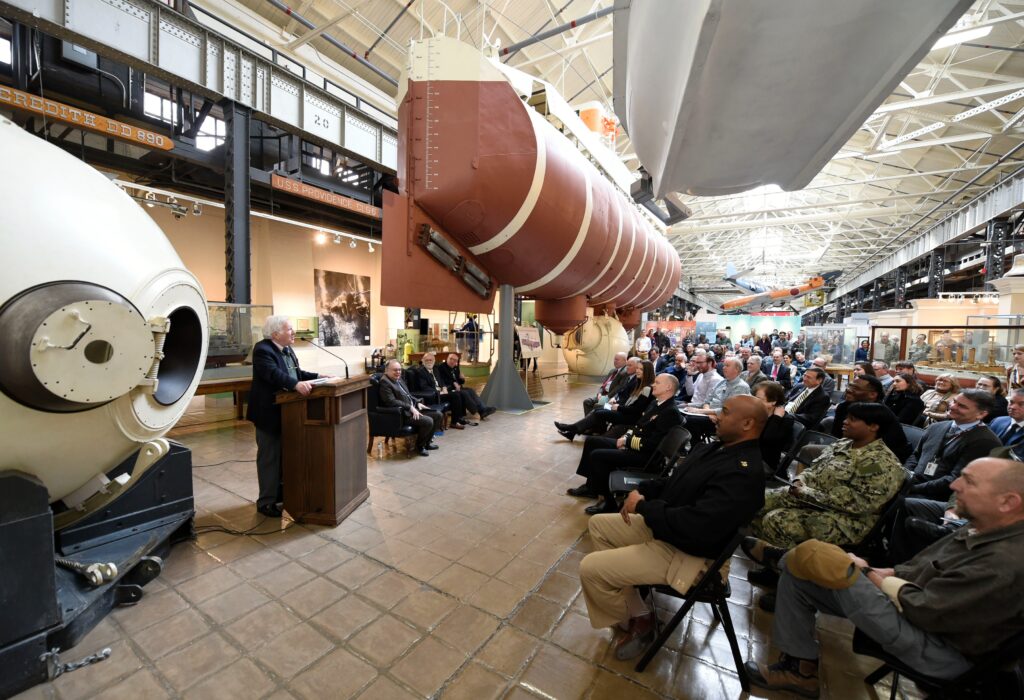
Retired U.S. Navy Capt. Don Walsh, best known for his daring dive to the deepest spot on Earth, nearly 36,000 feet below the ocean’s surface, has died at age 92. 
 
Walsh was a co-pilot of the Trieste bathyscaphe, a deep submergence vehicle acquired by the Office of Naval Research (ONR) in 1958. Two years later, on January 23, 1960, Walsh and Swiss engineer Jacques Piccard, son of the inventor of the bathyscaphe, became the first humans to descend into the Challenger Deep, located in the Pacific Ocean’s Mariana Trench. 
 
“ONR sponsored the Trieste, but it was then-Lt. Don Walsh who made the very daring decision to make the first descent into the deepest spot of the earth’s ocean. Walsh was a Navy officer, a submariner, an adventurer, and an oceanographer. To his family, we extend our deepest condolences and gratitude for allowing him to explore, and share his extraordinary experiences and knowledge with us,” said Chief of Naval Research Rear Adm. Kurt Rothenhaus. 

Retired U.S. Navy Capt. Don Walsh, best known for his daring dive to the deepest spot on Earth, nearly 36,000 feet below the ocean’s surface, has died at age 92. 
 
Walsh was a co-pilot of the Trieste bathyscaphe, a deep submergence vehicle acquired by the Office of Naval Research (ONR) in 1958. Two years later, on January 23, 1960, Walsh and Swiss engineer Jacques Piccard, son of the inventor of the bathyscaphe, became the first humans to descend into the Challenger Deep, located in the Pacific Ocean’s Mariana Trench. 
 
“ONR sponsored the Trieste, but it was then-Lt. Don Walsh who made the very daring decision to make the first descent into the deepest spot of the earth’s ocean. Walsh was a Navy officer, a submariner, an adventurer, and an oceanographer. To his family, we extend our deepest condolences and gratitude for allowing him to explore, and share his extraordinary experiences and knowledge with us,” said Chief of Naval Research Rear Adm. Kurt Rothenhaus. 
 
Years later, Walsh described his dive with Piccard in a 2016 Future Force interview as “a pretty big deal” and a big relief to Adm. Arleigh Burke, who had greenlighted the expedition. 
 
“Because he’d rolled the dice with us, just like ONR rolled the dice with us. He figured …they could probably do it. And we did it. And so he was pretty happy about that,” said Walsh. 
 
Walsh’s journey to the Challenger Deep is still believed to hold the record for deepest dive yet in a manned vehicle, and ushered in a “golden age” of manned underwater exploration in the 1960s and 70s. Walsh and Piccard, though, saw little when they hit the ocean floor. They only had 20 minutes to survey their surroundings, which had become a cloud of debris, before heading back to the surface. 
 
Walsh was a submariner, explorer and oceanographer, who also taught at the University of Southern California. His love of the ocean and advocacy for its exploration continued well after his Navy retirement in 1975. 
 
In 2010, the U.S. Navy presented its highest civilian recognition, the Navy Distinguished Public Service Award, to Walsh for his achievement and service in the years following his Navy career. He had served as a U.S. policy adviser on State Department and federal science boards, authored more than 200 published contributions to marine literature and presented more than 1,500 lectures in 50 countries. 


US Navy Submarine Industrial Base Team Launches 2023-2024 Defense Trade Skill Pipeline Programs

Release from Naval Sea Systems Command 

***** 

Nov. 17, 2023 

By Team Submarines Public Affairs 

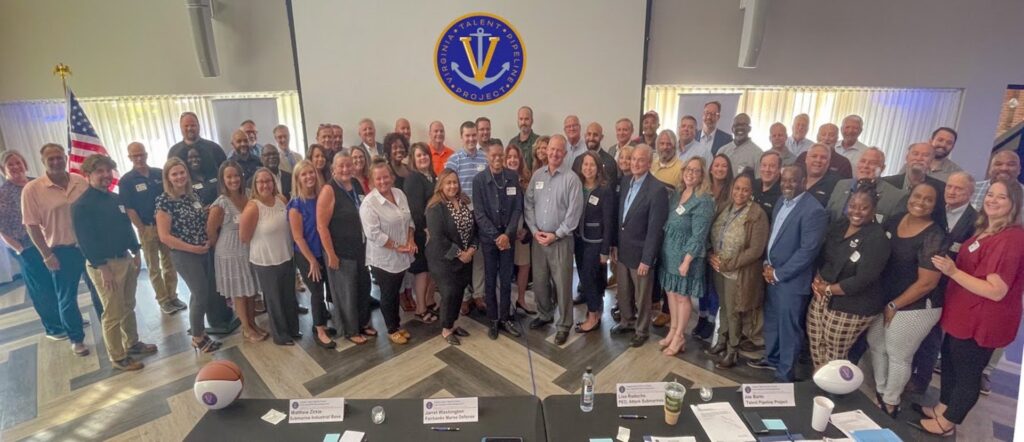
WASHINGTON NAVY YARD – Over the last two months, the U.S. Navy’s Submarine Industrial Base (SIB) program team, in partnership with a critical network of Department of Defense suppliers, launched its 2023—2024 Talent Pipeline Program. In launching the next pipeline, a series of workforce trade skill events were held in key maritime centers of gravity including Philadelphia, PA, Hampton Roads, VA, Pittsburgh, PA, Boston, MA, and Long Island, NY. The Boston and Long Island pipeline projects are the newest additions to the Talent Pipeline Program as it enters its third year. 

Pipeline program participants gathered at orientation events to hear from senior leaders about the Navy’s generational journey to recapitalize its sea-based strategic deterrence, including the need to hire 100,000 new skilled trade workers into the submarine industrial base over the next 10 years. Attendees also heard testimony from SIB employers who have benefited from the talent pipeline program. 

The program’s goal is to enable employers in the SIB to hire and retain employees with critical trade skills by connecting with career and technical training providers and career-seeking students. 

“We need you. We need all of you,” said Ms. Stephanie Link, executive director, Program Executive Office for Attack Submarines, who spoke to pipeline participants at the inaugural Long Island orientation event about the critical mission of America’s submarine force. “Without a trained and talented workforce who understands the mission and wants to participate, we’re not going to meet demand. And I don’t think that in this threat landscape we can risk that.” 

The 2023-2024 Talent Pipeline Projects build on the success of the 2022-2023 season where more than 700 new workforce members participated in 2022-2023 Talent Pipeline Project Signing Day events earlier this summer. ‘Signing Days’ recognize trade skills students who have successfully completed training and are embarking on careers at small and medium-size defense industrial base suppliers that participated in the talent pipeline programs. 

In Philadelphia, Team Submarine’s Command Master Chief Jeff Hiscocks challenged suppliers to build the workforce needed to support the Navy’s submarine construction cadence of one Columbia Class submarine and two Virginia Class submarines by FY 2026 as part of the SIB’s demand signal. 

“I thank you for your continued participation in the Talent Pipeline Program,” said Hiscocks. “You can see some of the first year, second year teams who have been here since the beginning. The data doesn’t lie, you are seeing dramatic improvement in the retention of new hires.” 

Individuals and suppliers located in, and around maritime centers of gravity are encouraged to attend and engage with talent pipeline program events to include launch/orientations, career fairs, welding competitions, signing days, and more. 

For more information on the Navy’s Submarine Industrial Base Program’s Talent Pipeline Program visit: 

Talent Pipeline Program (dibtalentpipeline.com) 


Celebrating 45 years of the F/A-18 Strike Fighter

Release from Naval Air Systems Command 

***** 

NAVAL AIR SYSTEMS COMMAND, PATUXENT RIVER, Md.–Born out of necessity and innovation, the U.S. Navy’s F/A-18 Hornet introduced a level of aircraft superiority that had not been seen before and set the standard for future development of next-gen fighters. Now, celebrating the 45th anniversary of its first flight Nov. 18, the original strike fighter aircraft is affectionately referred to as the “Legacy.” 

Appropriately coined, the nickname encapsulates not only the cutting-edge capabilities of the aircraft at the time, but its place in history as the first in its class that would pave the way for future aircraft platforms. 

Before the creation of the Legacy Hornet, the Navy’s fighter air wing consisted of multiple aircraft, each with a specific skill set and mission. The arrival of the F/A-18 Hornet ushered in a generation of carrier-capable, multirole fighter aircraft that were all-weather and attack, designed for traditional strike applications and close air support without compromising fighter capabilities. 

“It showed a great understanding of what a strike fighter mission requires,” said Cmdr. Tim Tuschinski, Integrated Product Team Lead for Radar/Fighter Electronic Warfare in the F/A-18 and EA-18G Program Office (PMA-265). “It allowed pilots to move quickly and efficiently between the air-to-air combat mission and the air-to-ground mission; it’s the flip of a switch.” 

The Hornet cut its teeth during Operation Desert Storm, proving its lethality and versatility. Pilots could engage adversary fighters in the air and take out ground targets during the same mission. The aircraft’s survivability and easy repair only proved to further solidify its role as the preeminent aircraft in the carrier fighter air wing. 

This aircraft was born at Naval Air Systems Command and developed to be a strike fighter. 

“It’s fast! When you slick this thing up, it flies like a bat out of hell,” said Tuschinski. “It paved the way for the multimission platform aircraft that we see with the Super Hornet, the F-35 and the next generation fighters.” 

Originally created by McDonnell Douglas and Northrop Grumman, the versatility of the aircraft came from its avionics, cockpit displays, excellent aerodynamics and its capability to carry a variety of weapons. It was built for pilot interface with a hands-on throttle and stick incorporation, as well as a digital cockpit. 

“The most rewarding missions were the ones when we were able to locate and neutralize high value assets to keep our guys on the ground safe,” said Tuschinski, when reflecting on his time in the cockpit. 

Today, the Legacy Hornet is no longer the preeminent strike fighter in the carrier air wing, that role has been passed along to its offspring, the Super Hornet. The Navy retired its last remaining legacy aircraft in the spring of 2023. However, the Hornet remains a workhorse for the U.S. Marine Corps and the militaries of several allied nations. 

“We’re poised to continue sustaining this platform, keeping it lethal and survivable until its sundown,” said Tuschinski. “It’s going to continue its mission for the Marine Corps.” 

Tuschinski flew the Legacy Hornet for 15 years and supported missions in Iraq during Operation Iraqi Freedom. His squadron provided close air support for troops under fire and completed pre-strike missions to set up ground troops for success. He now works in PMA-265, leading the team focused on radar and electronic weapons for the F/A-18 and the EA-18G. 

This year not only marks the 45th anniversary of the Legacy Hornet’s first flight, but also the 50th anniversary of the establishment of PMA-265. For a half-century, the men and women of the program office have provided critical capabilities, cradle to grave, for the Hornet, Super Hornet and Growler. 

“Our team continues to move fast and take risks to support, sustain, and advance the fleet,” said Capt. Michael Burks, PMA-265 Program Manager. “The technologies and capabilities that we develop are reliable, maintainable, and upgradable, allowing constant improvement, so that we can best support the Sailors and Marines in the fleet.”    

The Hornet was just the beginning and set an expectation for fighter/attack aircraft that continues today. Over the past decade the U.S. Navy fully transitioned from use of the Hornet to the Super Hornet. This includes its use by the Blue Angels. The F/A-18 family of aircraft has surpassed 11 million flight hours. Through initiatives like Service Life Modification, the Super Hornet will be the numerically predominant aircraft in the carrier fighter air wing into the mid-2030s and will provide significant combat capability for the air wing into the 2040s.  

“It is a privilege to be at the helm of this esteemed, dedicated workforce,” said Burks. “PMA-265 continues to ensure responsiveness, innovation, expertise, professionalism and priority when addressing the needs of our warfighters and the challenges facing our international partners; that legacy continues.” 


RTX and DARPA to revolutionize Gallium Nitride technology for improved radio frequency sensors 

APG-79 radar on an F/A-18 strike fighter

Release from RTX 

***** 

Demonstration will employ diamond to increase sensor capabilities 

TUCSON, Ariz., (Nov. 16, 2023) — Raytheon, an RTX (NYSE: RTX) business, has been awarded a four-year, $15 million contract from DARPA to increase the electronic capability of radio frequency sensors with high-power-density Gallium Nitride transistors. The improved transistors will have 16 times higher output power than traditional Gallium Nitride with no increase in operating temperature.   

Raytheon is the world’s leading manufacturer of military-grade Gallium Nitride, a cutting-edge semiconductor technology that, when used in radar systems, improves range and radar resource management handling. This new prototyping work is being performed under DARPA’s Technologies for Heat Removal in Electronics at the Device Scale program, known as THREADS. 

“Our engineers have unlocked a new way to produce Gallium Nitride, where thermal management is no longer a limiting factor,” said Colin Whelan, president of Advanced Technology at Raytheon. “These new system architectures will result in sensors with enhanced range.” 

Raytheon is partnering with the Naval Research Laboratory, Stanford University and Diamond Foundry to grow diamond, the world’s best thermal conductor, for integration with military-grade GaN transistors and circuits. Cornell University, Michigan State University, the University of Maryland and Penn State University are also providing technology and performance analysis.  

For nearly 25 years, Raytheon has invested in Gallium Nitride research and development, using it in defense systems like the Patriot®, LTAMDS/GhostEye® family of radars, APG-79(v)4 and SPY-6 family of radars

Work on this contract is being conducted in Andover, Massachusetts.  


U.S. Coast Guard Cutter Polar Star departs Seattle to begin Operation Deep Freeze in Antarctica

Release from Coast Guard Pacific Area 

***** 

16 November 2023 

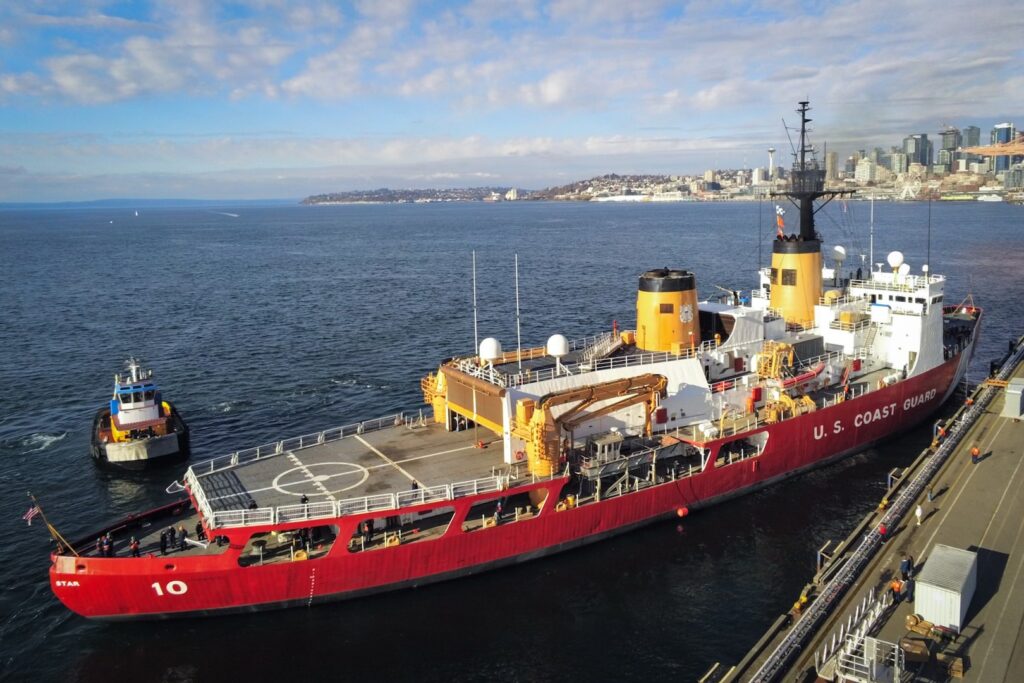
SEATTLE – The U.S. Coast Guard Cutter Polar Star (WAGB 10) and crew departed Seattle, Wednesday, and are scheduled to transit to Antarctica in support of Operation Deep Freeze. 

Operation Deep Freeze (ODF) is an annual joint military mission to resupply the United States Antarctic stations in support of the National Science Foundation (NSF), the lead agency for the United States Antarctic Program (USAP). This marks the 27th year for the Polar Star to render support. 

Each year, the Polar Star crew breaks a navigable channel through ice, allowing fuel and supply ships to reach McMurdo Station, which is the largest Antarctic station and the logistics hub of the USAP. 

“Operation Deep Freeze is a unique and important mission that Coast Guard Cutter Polar Star undertakes each year,” said Capt. Keith Ropella, Polar Star’s commanding officer. “This mission requires year-round effort from the crew to prepare this 47-year-old cutter for the 20,000 nautical mile round trip and extreme environmental conditions we will face. We have an incredible and dedicated team; I couldn’t be more excited or more proud to make this journey with them.” 

The U.S. Coast Guard is recapitalizing its polar icebreaker fleet to ensure continued access to the polar regions and to protect the country’s economic, environmental, and national security interests. Each year, the crew is asked to put forth an immense amount of time and effort to prepare the cutter for their annual deployment in support of ODF. The Polar Star completed the third of five planned phases of the service life extension project (SLEP), costing $15.6 million over a 132-day maintenance period. 

“The U.S. Coast Guard is pleased to continue partnering with the National Science Foundation and the U.S. Antarctic Program to enable a durable U.S. presence on Antarctica and across the Southern Ocean,” said Vice Adm. Andrew Tiongson, Pacific Area commander. ”Our commitment to the Antarctic region is unwavering, and we have been pleased to increase our maritime cooperation with like-minded members of the Antarctic Treaty, as well as investing in new technologies and vessels to ensure our presence is enduring.” 

Joint Task Force-Support Forces Antarctica, provides Department of Defense support to the NSF and the USAP through ODF. Every year, a joint and total force team works together to complete a successful ODF season. Active, Guard, Reserve service members from the U.S. Air Force, Army, Coast Guard, and Navy work together to forge a strong JTF-SFA that continues the proud tradition of U.S. military support to the USAP. The U.S. Coast Guard provides direct logistical support to the NSF and maintains a regional presence that preserves Antarctica as a scientific refuge. 


BOLLINGER SHIPYARDS DELIVERS 6TH AND FINAL BOSTON-BOUND FAST RESPONSE CUTTER TO U.S. COAST GUARD

Release from Bollinger Shipyards 

***** 

USCGC Melvin Bell is the sixth of six FRCs to be homeported in Boston, MA 

LOCKPORT, La., — (November 16, 2023) – Bollinger Shipyards LLC (“Bollinger”) today announced it has delivered the USCGC Melvin Bell to the U.S. Coast Guard in Key West, Florida. This is the 181st vessel Bollinger has delivered to the U.S. Coast Guard over a 35-year period and the 55thFast Response Cutter (“FRC”) delivered under the current program. 

“We’re incredibly proud to deliver the USCGC Melvin Bell, the final of six Fast Response Cutters to be homeported in Boston, the birthplace of the U.S. Coast Guard,” said Bollinger President & C.E.O. Ben Bordelon. “We’re confident that pound for pound, the quality and capabilities of the FRC platform are unmatched and that this vessel will outperform its mission requirements and expectations in the challenging conditions where it will operate in the North Atlantic. Our unique experience building for the Coast Guard is unparalleled and has shown time and time again that we successfully deliver the highest quality vessels on a reliable, aggressive production schedule. We look forward to continuing our historic partnership with the U.S. Coast Guard.” 

The USCGC Melvin Bell will be the sixth of six FRCs to be homeported in Sector Boston, which is known as “The Birthplace of the Coast Guard.” The sector is responsible for coastal safety, security, and environmental protection from the New Hampshire-Massachusetts border southward to Plymouth, Massachusetts out to 200nm offshore. Sector Boston directs over 1,500 Active Duty, Reserve, and Auxiliary members whose mission is to protect and secure vital infrastructure, rescue mariners in peril at sea, enforce federal law, maintain navigable waterways, and respond to all hazards impacting the maritime transportation system and coastal region. 

The Coast Guard’s FY2024 Unfunded Priorities List includes procuring four more FRCs (which would be the 66th through 69th vessels in the program) to provide increased Coast Guard presence and engagement with allied and partner countries in the Indo-Pacific region. Earlier this year, Adm. Linda Fagan, the commandant of the U.S. Coast Guard, said, “The Indo-Pacific is clearly a consequential region for America’s future. The United States Indo-Pacific Strategy identifies an expanded role for the U.S. Coast Guard as a top Administration priority as we seek to ensure a region that is free and open. The U.S. Coast Guard will continue its long history of operational presence in the region with additional cutter patrols and deployable specialized forces.” 

Each FRC is named for an enlisted Coast Guard hero who distinguished themselves in the line of duty. Bell, a minority pioneer and Pacific war hero was a patriot whose distinguished career in service of his country spanned 65 years in military and civil service.  During his active-duty career, Bell held many distinctions.  In 1943 he became the first Pacific Islander advanced to chief petty officer.  He later held the distinction of a dual rating as Chief Radioman and Chief Electronics Technician.  In 1958 he became the first minority Master Chief in the history of the Coast Guard.   

His decorations included the Coast Guard Good Conduct Medal (five awards), Navy Commendation Medal, Navy Unit Commendation, National Defense Service Medal, Asiatic Pacific Campaign Medal, American Defense Medal, American Campaign Medal and Victory World War II Medal. 

ABOUT THE FAST RESPONSE CUTTER PLATFORM 

The FRC is an operational “game changer,” according to senior Coast Guard officials. FRCs are consistently being deployed in support of the full range of missions within the United States Coast Guard and other branches of our Armed Services due to its exceptional performance, expanded operational reach and capabilities, and ability to transform and adapt to the mission. FRCs have conducted operations as far as the Marshall Islands—a 4,400 nautical mile trip from their homeport. Measuring in at 154 feet, FRCs have a flank speed of 28 knots, state of the art C4ISR suite (Command, Control, Communications, Computers, Intelligence, Surveillance, and Reconnaissance), and stern launch and recovery ramp for a 26-foot, over-the-horizon interceptor cutter boat. 


SECNAV Names Ship After World War II Hero, Medal of Honor Recipient Ernest E. Evans

Release from the Secretary of the Navy Public Affairs 

***** 

15 November 2023

Secretary of the Navy (SECNAV) Carlos Del Toro announced, today, that a DDG 51 Flight III Arleigh Burke-class guided-missile destroyer will be named after World War II hero Ernest E. Evans, the first Native American in the Navy to earn the Medal of Honor and one of only two World War II destroyer captains to attain it.

Secretary Del Toro made the announcement during Native American Heritage month. Additionally, Secretary Del Toro announced that the ship’s sponsor will be U.S. Secretary of the Interior Deb Haaland, the first Native American to serve as a cabinet secretary.

“Since our nation’s founding, Native Americans, such as Ernest Evans, have volunteered to serve in our armed services. From the Revolutionary War, the Civil War, World War I and II, to Korea, Vietnam, Desert Storm, and the conflicts in Iraq and Afghanistan, Native Americans have fought with honor and distinction to preserve our union and defend our ideals of freedom and democracy, even during periods where they were not recognized as citizens of our country,” said Secretary Del Toro.”

“Today, we honor Commander Ernest Evans for his courage and ultimate sacrifice,” said Secretary Deb Haaland. “While this nation has not always welcomed them, Native Americans have consistently and honorably served in disproportionately high rates across the Armed Forces to keep us safe at home and abroad. As we honor Commander Evans with this stunning vessel, we also honor the service of Indigenous servicemembers nationwide, past and present. Native American history is American history, and today’s designation ensures that our story continues to be told.”

Ernest Edwin Evans was born on Aug. 13, 1908, in Pawnee, Oklahoma. He graduated from Central High School in Muskogee, Oklahoma, and enlisted in the U.S. Navy on May 29, 1926. After a years’ enlisted service, he was appointed to the U.S. Naval Academy, entered as a midshipman, and graduated with a Bachelor of Science degree in June 1931.

Evans spent his first decade of service in San Diego, Pensacola, and aboard seven ships. He was serving on his eighth in the East Indies when the Japanese attacked Pearl Harbor on Dec. 7, 1941, thrusting the U.S. into World War II.

In 1943, Cmdr. Evans assumed command of the USS Johnston, serving as its only commanding officer. During the commissioning ceremony, Cmdr. Evans reportedly told his crew and the audience assembled, “This is going to be a fighting ship. I intend to go in harm’s way, and anyone who doesn’t want to go along had better get off right now.”

Oct. 25, 1944, off the coast of the Philippines, Cmdr. Evans and the crew of the USS Johnston found themselves in harm’s way during the Battle of Leyte Gulf. On that day, Cmdr. Evans and his fellow destroyer captains launched an offensive attack against overwhelming odds against a much larger Japanese naval force, with the USS Johnston in the lead. Not waiting for orders, Evans commanded the crew to begin a torpedo run, drawing fire away from the carriers, directly taking hits from three powerful 14-inch guns. Despite severe damage to his ship and his own wounds from Japanese fire, he repeatedly put the USS Johnston between the enemy and more vulnerable U.S. ships, saving the lives of thousands of his fellow Sailors.

Ultimately, the USS Johnston was lost during the Battle of Leyte Gulf, with Cmdr. Evans going down with his ship. For his leadership and selfless service in the face of a superior enemy force, he was posthumously awarded the Medal of Honor.

“And I am honored to announce that, in recognition of his heroic actions, our Navy will once again welcome a USS Ernest E. Evans into our fleet once again, as his name will adorn our future Arleigh Burke Flight III class destroyer DDG-141,” said Secretary Del Toro.

In addition to the Medal of Honor, the Bronze Star, Purple Heart, and Presidential Unit Citation Ribbon, Cmdr. Evans had the China Service Medal, American Defense Service Medal, Fleet Clasp, and was entitled to the Asiatic-Pacific Campaign Medal with six engagement stars, the World War II Victory Medal, and the Philippine Defense and Liberation Ribbons with the one star.

A destroyer escort vessel, USS Evans (DE 1023), was named in honor of Cmdr. Evans. Mrs. Hugh Hendrickson of Tulsa, Oklahoma, sister to Cmdr. Evans, sponsored the vessel at the launching at the Puget Sound Bridge and Dredging Company, Seattle, Washington, on Sept. 14, 1955.


12th Marine Regiment Re-Designated to 12th Marine Littoral Regiment 

Release from Headquarters Marine Corps 

***** 

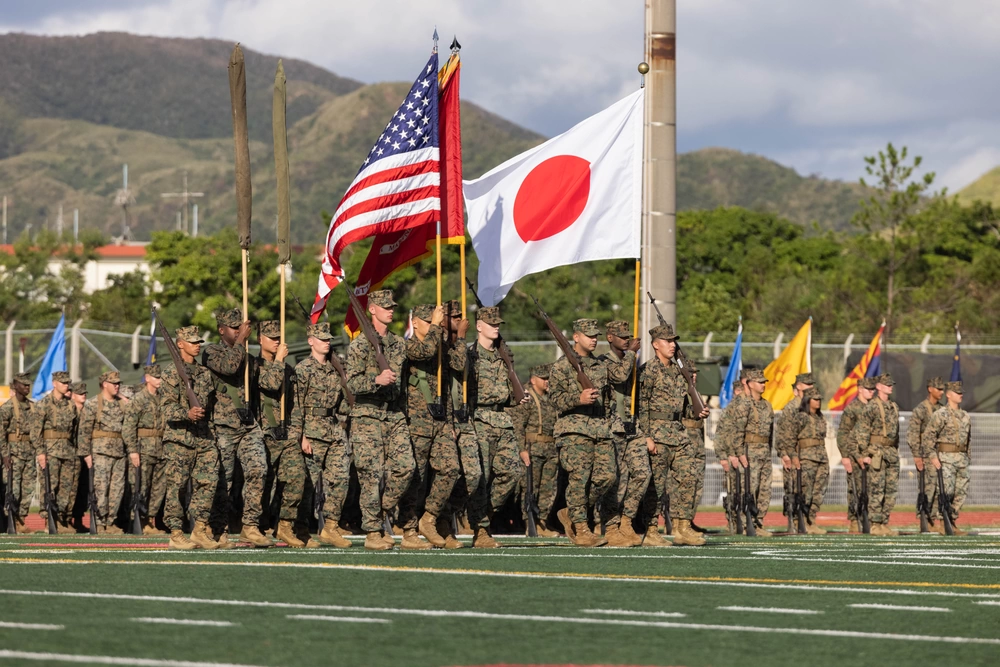
CAMP HANSEN, OKINAWA, Japan – 12th Marine Regiment redesignated to 12th Marine Littoral Regiment (MLR) on November 15, 2023, during a ceremony at Camp Hansen, Okinawa, Japan. This redesignation is the first step in the process outlined in January’s Security Consultative Committee (“2+2”) announcement that reinforces the enduring commitment of the U.S. to the defense of Japan and to peace and stability in the Indo-Pacific.  

“Today marks a significant milestone in the storied history of the 12th Marine Regiment as they redesignate to the 12th Marine Littoral Regiment,” said Maj. Gen. Christian Wortman, commanding general of the 3d Marine Division. “12th MLR is poised to meet the challenges of today and tomorrow, with a vigilant eye on the horizon and a steadfast resolve to protect our nation and support the defense of Japan.” 

While forward stationed in Okinawa, Japan, 12th Marine Littoral Regiment will integrate with the Joint Force and the capabilities of our allies and partners, supporting deterrence efforts, and remaining prepared to respond to potential crises.  

“12th MLR represents a vital evolution of our mission and capabilities.,” said Col. Peter Eltringham, commanding officer of 12th Marine Littoral Regiment. “We’re proud to be here in the First Island Chain, and a force prepared to respond to contingencies wherever and whenever required. It is our pledge to guard and advance the 12th Marines legacy of honor, fidelity and valor, now as the 12th MLR.” 


BAE Systems to equip Royal Australian Navy’s Hunter class frigates with Mk 45 naval gun 

Release from BAE Systems 

***** 

LOUISVILLE, Ky. — Nov. 15, 2023 — BAE Systems has received a contract to deliver multiple shipsets of the Mk 45 Medium Caliber Gun and automated Ammunition Handling System (AHS) for the Royal Australian Navy’s new Hunter class frigates. The Mk 45 gun system will equip the Royal Australian Navy with a common, adaptable gun system that can easily integrate advanced munitions to provide the firepower required to meet the Hunter class deterrence mission.  

“We are proud to partner with BAE Systems Maritime Australia to deliver the Mk 45 gun system and Ammunition Handling System to the Royal Australian Navy,” said Brent Butcher, vice president and general manager of Weapon Systems at BAE Systems, Inc. “The highly reliable Mk 45 system maximizes the lethality of the Hunter class frigates, offers the capability to integrate advanced munitions, and supports additional future technology upgrades. With this system fielded on 11 fleets across the globe, it has proven it offers high-reliability.”   

The Mk 45 gun system combines the 5-inch, 62-caliber Mk 45 Mod 4A naval gun with a fully automated AHS that continuously supplies the gun with ammunition, in high sea state conditions, without assistance from the crew. This automated gun system increases Sailor productivity, reduces risk to Sailor safety, and increases the operational capability of the Mk 45 at sea.  

Work on the contract will begin in 2023 and finish in 2036. Engineering work will be completed in Minneapolis, Minnesota and production will occur in Louisville, Kentucky.  

BAE Systems has delivered over 280 shipboard applications to the U.S. Navy and 11 fleets across the globe.