USS Jack H. Lucas (DDG 125) Arrives at Homeport in San Diego
Release from Commander, Naval Surface Force, U.S. Pacific Fleet 

***** 

By Ensign Sarah Beauchamp 

25 October 2023 

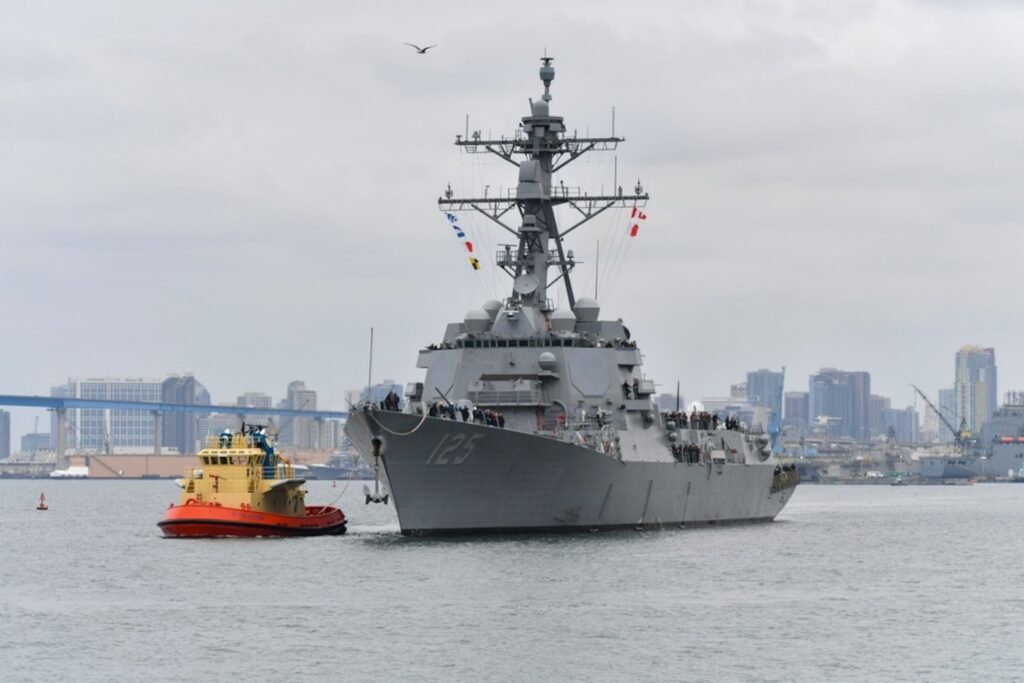
SAN DIEGO, Calif. – The first Flight III Arleigh Burke-class guided-missile destroyer, USS Jack H. Lucas (DDG 125), arrived at its new homeport in San Diego Oct. 25. 
 
The Navy commissioned Jack H. Lucas, Oct. 7, 2023, during a ceremony in Tampa, Florida under the leadership of Carrier Strike Group 11. The destroyer is assigned to U.S. 3rd Fleet. 
 
“I am so proud of all of the Sailors of Jack H. Lucas, who truly embody the indestructible mindset of the namesake,” said Capt. Brett Oster, commanding officer of Jack H. Lucas. “They have worked tirelessly on all qualifications and certifications, setting the bar and allowing the ship to arrive in San Diego to reunite with family and friends on schedule.” 
 
The crew of the Jack H. Lucas successfully completed a safe voyage from Pascagoula, Mississippi, to Tampa while executing critical evolutions to include navigation check ride, engineering drills, and a missile launch using the latest ship-based radar and weapons systems. The ship and crew were welcomed by thousands of guests who were given the opportunity to tour the vessel in anticipation of the commissioning ceremony. 
 
The commissioning ceremony was attended by more than 5,000 guests including family and friends of the crew, the local community of Tampa Bay, and distinguished officials. This event marked a significant milestone for the vessel and her crew and served as a testament to their dedication and hard work. 
 
Following commissioning, the ship continued its journey to the Pacific Ocean by successfully transiting the Panama Canal and making stops in Rodman, Panama and Manzanillo, Mexico. 
 
“I am immensely proud of our incredibly talented crew, taking the ship underway a week before conducting two sea and anchors in Tampa and completing a skillful Panama Canal transit while en route to our homeport San Diego,” said Cmdr. Matthew Kleine, executive officer of Jack H. Lucas. 
 
Upon arrival to San Diego, Jack H. Lucas was given a warm welcome from 300 friends and family members as it pulled into its new homeport for the first time. The reception was a testament to the strong bonds forged between the crew and their loved ones throughout their voyage. 
 
In the coming year, the ship will undergo a series of rigorous tests to evaluate its combat readiness and effectiveness. These tests will serve as a critical assessment of the vessel’s combat capability and will ensure that the Flight III variant destroyer is ready to serve in the Navy. 
 
Built by Huntington Ingalls Industries in Pascagoula, Mississippi, Jack H. Lucas was launched on June 4, 2021, and delivered to the U.S. Navy March 26, 2022. The ship was commissioned in Port of Tampa, Florida on Oct. 7, 2023, and then transited to her homeport at Naval Base San Diego, California. 
 
Arleigh Burke-class Destroyers are the backbone of the U.S. Navy’s surface fleet. These highly capable, multi-mission ships conduct a variety of operations, from peacetime presence to national security providing a wide range of warfighting capabilities in multi-threat air, surface, and subsurface. 
 
An integral part of U.S. Pacific Fleet, U.S. 3rd Fleet operates naval forces in the Indo-Pacific and provides the realistic, relevant training necessary to execute our Navy’s role across the full spectrum of military operations – from combat operations to humanitarian assistance and disaster relief. U.S. 3rd Fleet works together with our allies and partners to advance freedom of navigation, the rule of law, and other principles that underpin security for the Indo-Pacific region. 


CAES Awarded Production Contract from US Navy for New AN/ALQ-99 Low Band Transmitter

Release from CAES 

***** 

OCTOBER 25, 2023 

Arlington, Va. – CAES, a leading provider of mission-critical advanced electronics, has been awarded a contract from the U.S. Navy for production of the AN/ALQ-99 Low Band Consolidation (LBC) transmitter. Total funding through 2025 to support both the U.S. Navy and Royal Australian Air Force (RAAF) is expected to exceed $55 million, if all options are exercised. This award also includes new special test equipment and follows a contract for the initial pre-production phase of the LBC. 

“We are proud of our longstanding partnership with the U.S. Navy on next-generation electronic warfare technology,” said Mike Kahn, CAES president and CEO. “The LBC brings critical upgrades to the AN/ALQ-99 Low Band Transmitter (LBT) to combat evolving and emerging threats.”  

The LBC is a modification to the AN/ALQ-99 LBT. CAES has a proven history of developing, producing and delivering LBTs. CAES provides these components for the U.S. Navy and RAAF EA-18G Growler Airborne Electronic Attack fleets. These transmitters played a critical role in protecting the lives of U.S. and coalition forces during Operation Iraqi Freedom, Operation Enduring Freedom and across the Global War on Terror. 

Having manufactured more than 850 transmitters across the last several decades, CAES continues to deliver products at the forefront of U.S. Navy and RAAF’s EA-18G operations worldwide. CAES transmitters are designed, built and tested to provide high power across multiple octave bandwidths, which allows them to withstand the demanding and severe environment of maritime, Tactical Aviation aircraft operating from U.S. Navy aircraft carriers. They also provide high reliability with low maintenance costs. 


US Navy and MDA Successfully Intercept Multiple Targets in Integrated Air and Missile Defense Test 

Release from PEO Integrated Warfare Systems Public Affairs and MDA Public Affairs 

***** 

Oct. 26, 2023 

By PEO Integrated Warfare Systems Public Affairs and MDA Public Affairs 

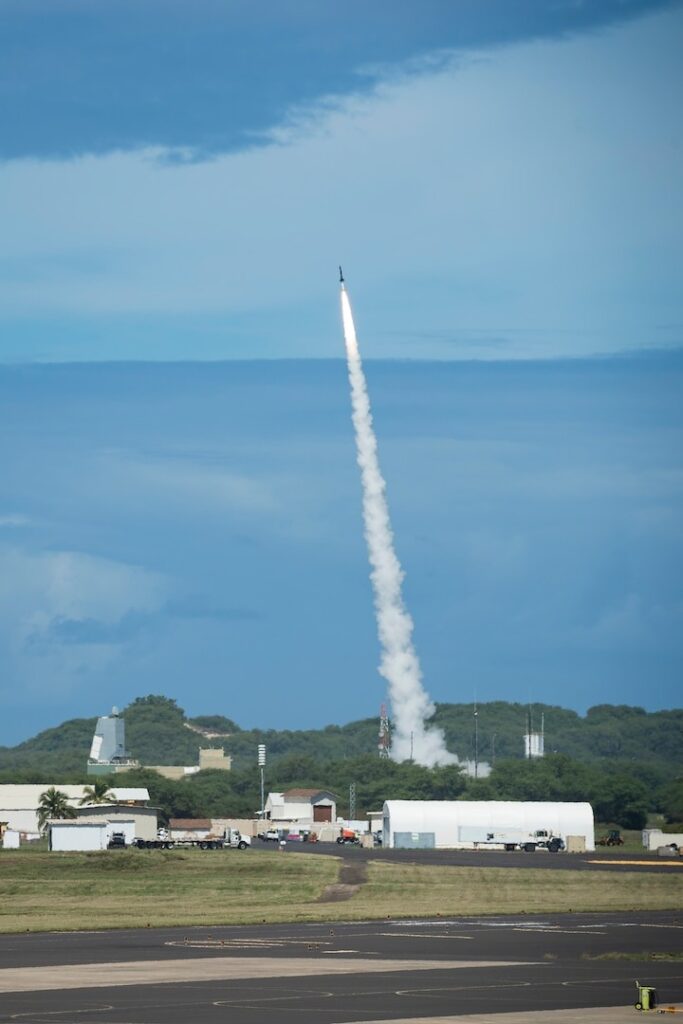
U.S. Navy Arleigh Burke-class destroyer USS CARL M. LEVIN (DDG 120) successfully intercepted multiple targets in an Integrated Air and Missile Defense (IAMD) test executed by the U.S. Navy Program Executive Office Integrated Warfare Systems and the Missile Defense Agency (MDA) from the Pacific Missile Range Facility, Kauai, Hawaii. 

The joint test, known as Vigilant Wyvern, demonstrated the capability of a ballistic missile defense-configured Aegis ship to detect, track, engage and execute intercepts of two short-range ballistic missile (SRBM) targets while concurrently demonstrating an Anti-Air Warfare (AAW) engagement of two subsonic anti-ship cruise missile drone targets. 

This realistic, live-fire raid scenario represented one of the largest IAMD events ever conducted in the U.S. Indo-Pacific Command Area of Responsibility and demonstrated for the first time a concurrent Ballistic Missile Defense and Anti-Air Warfare raid. 

The test, designated Flight Test Aegis Weapon System-48 (FTM-48) by the MDA, demonstrated the IAMD engagement of two SRBM targets with two Standard Missile 3 Block IA (SM-3 Blk IA) interceptors, and engagement of two subsonic anti-ship cruise missile drone targets with four SM-2 Blk IIIA interceptors. 

“The success of Vigilant Wyvern is a huge milestone,” said RDML Seiko Okano, Program Executive Officer Integrated Warfare Systems. “The Navy and MDA successfully demonstrated the tremendous capability of Aegis ships defending against an IAMD raid scenario. This test event is the first of its kind and an excellent example of collaboration between organizations, further progressing a unified mission to increase capability. Congratulations to the joint test team and the ship’s crew for an excellent event.” 

As part of the IAMD Priority Mode, ships can integrate classic air defense with new discrimination and tracking capabilities to defend against coordinated, simultaneous missile attacks. 

“The success of this joint test represents a critical step in defending against multiple targets in a realistic raid scenario,” said RDML Douglas Williams, MDA Acting Director. “The Aegis weapon system successfully defeated multiple concurrent attacks, showcasing the incredible versatility of both this system and the crew of the USS CARL M. LEVIN. My congratulations to the entire test team in achieving this milestone.” 

PEO IWS and the MDA jointly executed Vigilant Wyvern/FTM-48. Targets were launched from the Pacific Missile Range Facility, located on Kauai, Hawaii. 

Additional information about the Navy’s AEGIS Integrated Combat System and Guided Missile Destroyers can be found at www.navy.mil and additional information about all elements of the U.S. Missile Defense System can be found at www.mda.mil


SM-6 Missile Fired from Deck of LCS  

Release from Commander, Naval Surface Forces 

***** 

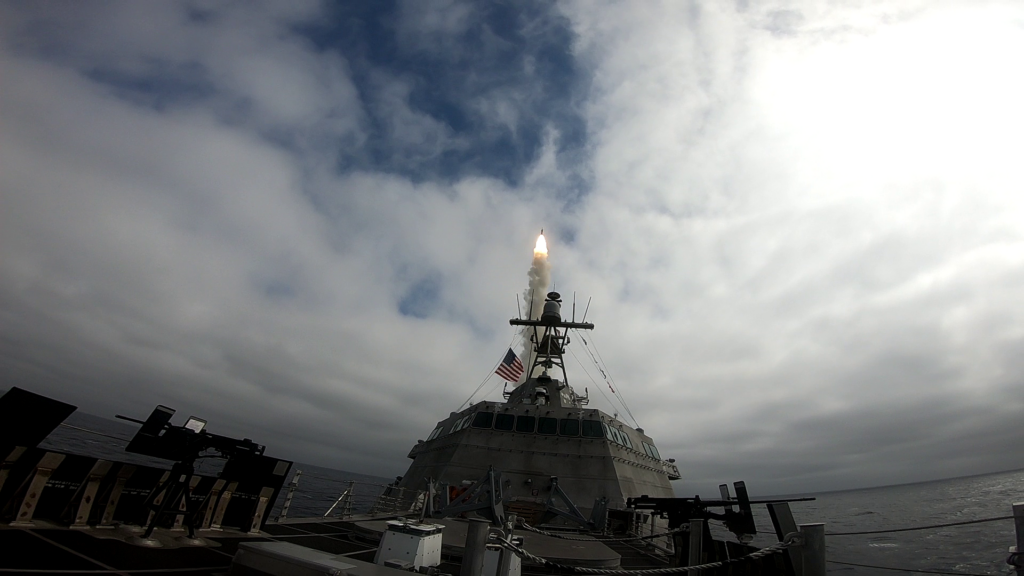
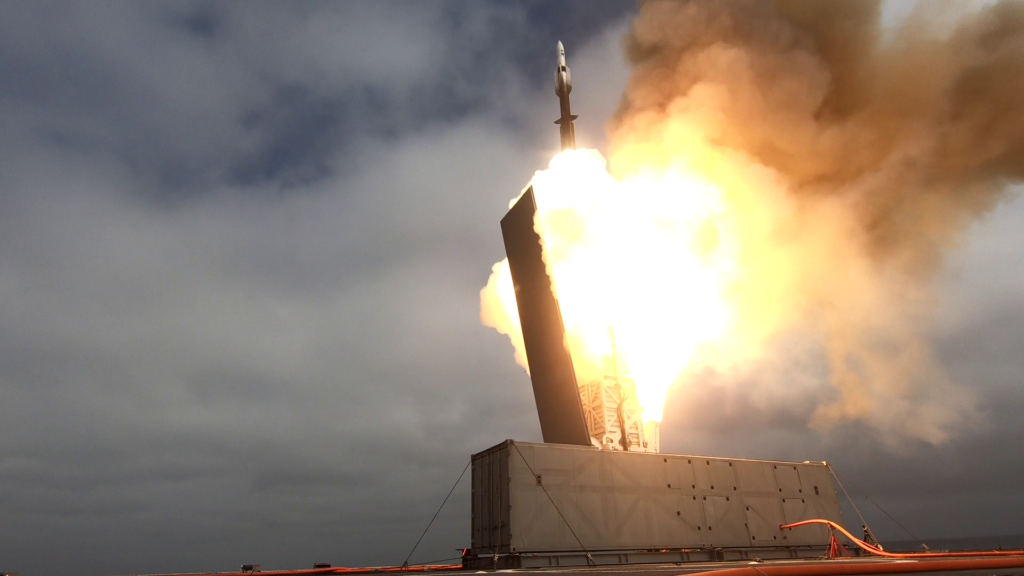
SAN DIEGO — USS Savannah (LCS 28) conducted a live-fire demonstration Oct. 24 in the Eastern Pacific Ocean utilizing a containerized launching system that fired an SM-6 missile at a designated target, according to Cmdr. Arlo Abrahamson, spokesperson for the Naval Surface Forces. The exercise demonstrated the modularity and lethality of Littoral Combat Ships and the ability to successfully integrate a containerized weapons system to engage a surface target. The exercise will inform continued testing, evaluation, and integration of containerized weapons systems on afloat platforms. 


Unmanned Surface Vessel Division Arrives in Sydney 

Release from U.S. 7th Fleet Public Affairs 

***** 

Oct. 25, 2023 

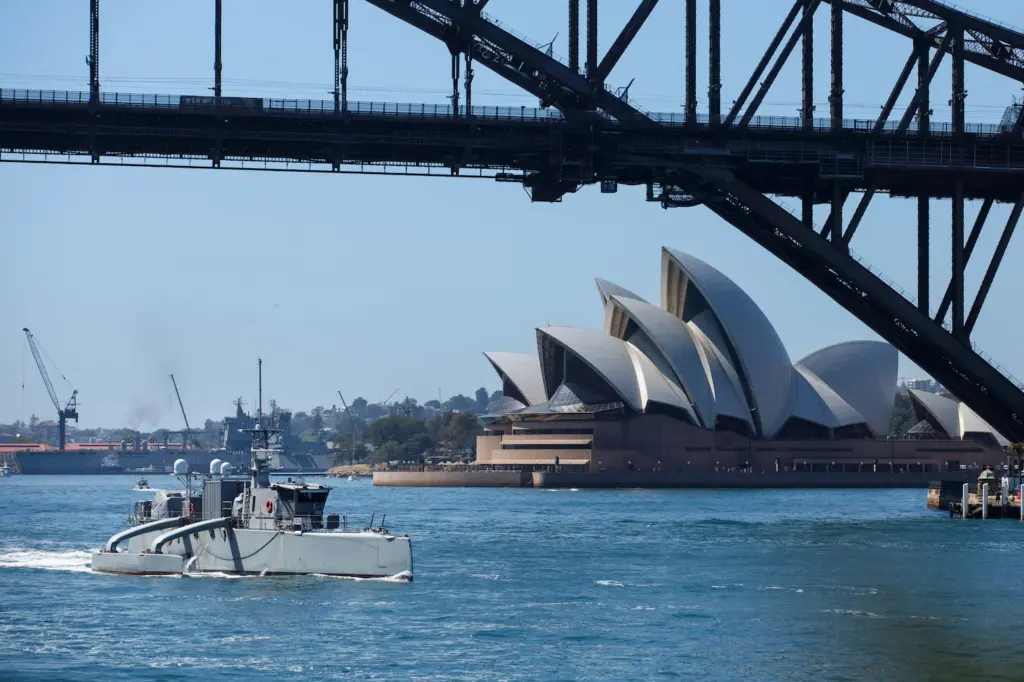
SYDNEY   –  Unmanned Surface Vessel Division One’s (USVDIV-1) unmanned surface vessels (USVs) Ranger, Mariner, Seahawk and Sea Hunter arrived in Sydney, Australia, for a scheduled port visit October 24 ahead of their participation in bilateral exercises with the Royal Australian Navy (RAN). 

During the exercises, USVDIV-1 will collaborate with the RAN on testing unmanned systems in concert with industry partners to advance a shared understanding of these capabilities to meet strategic requirements. 

“I look forward to furthering the strong relationship our navies have worked hard to create,” said U.S. Navy Commander Jeremiah Daley, commanding officer of USVDIV-1. “Our shared vision of a free and open Indo-Pacific relies upon developing these advanced capabilities that will create the asymmetric warfighting advantages to deter aggression in contested environments.” 

Along with the USVs, the Independence-variant littoral combat ship USS Oakland also arrived in Sydney. All five U.S. Navy vessels are currently employed in the ongoing U.S. Pacific Fleet exercise Integrated Battle Problem (IBP) 23.2 to develop concepts of operations for future unmanned programs of record and further integrated USVs into routine operations alongside manned surface combatants. 

“In order to develop a program as different and disruptive as small, medium, and large USVs, integrating with allies and partners early and consistently in its development is key to our success,” said Daley. “Through exercises like IBP 23.2 and Autonomous Warrior, we continue to learn from experience in an operational theater and deepen our interoperable strength.” 

USVDIV-1’s mission is to test, evaluate and operate in support of integrating USVs into fleet operations and provide recommendations to Navy leadership on the development of unmanned systems. 

U.S. 7th Fleet is the U.S. Navy’s largest forward-deployed numbered fleet, and routinely interacts and operates with allies and partners in preserving a free and open Indo-Pacific region. 


U.S. Coast Guard Cutter Vigilant returns from Caribbean patrol after interdicting 5,600 pounds of illicit drugs 

Release from U.S. Coast Guard Atlantic Area 

***** 

Oct. 24, 2023 

CAPE CANAVERAL, Fla. – The crew of the U.S. Coast Guard Cutter Vigilant (WMEC 617) returned home to Cape Canaveral, Tuesday, following a 29-day patrol in the Central Caribbean and Florida Straits. 

Patrolling in support of Joint Interagency Task Force-South, Vigilant worked alongside other Coast Guard cutters, Department of Defense and Department of Homeland Security units, and international partners to conduct counter-drug operations.  

During the patrol, Vigilant’s crew disrupted illegal narcotics smuggling, interdicting more than 5,600 pounds of illicit drugs. While in theater, Vigilant interdicted five drug-smuggling vessels and apprehended eight suspected traffickers, contributing directly to U.S. Coast Guard objectives to combat transnational criminal organizations. 

Vigilant operated as the Central Tasking Unit coordinating international and other asset movement to interdict suspected drug smuggling vessels, which strengthened ties with international partners and promoted regional stability and security. 

In addition, Vigilant rescued 12 Cuban migrants in an unseaworthy vessel 120 nautical miles south of Cuba. Once aboard Vigilant, the crew provided the migrants with food, water, shelter, and medical aid until they were repatriated. 

 “I’m extremely proud of our crew and the important lifesaving and critical counter-narcotic missions that we were able to perform on this patrol,” said Cmdr. Jon Potterton, the commanding officer of Vigilant. “It was excellent that we were able to strengthen our domestic and international partnerships and work together to make the world a safer place.” 

Vigilant is a 210-foot Reliance-class medium endurance cutter. The cutter’s primary missions are counter-drug operations, migrant interdiction, enforcement of federal fishery laws, and search and rescue in support of U.S. Coast Guard operations. The medium endurance cutters fall under the command of the U.S. Coast Guard Atlantic Area. Based in Portsmouth, Virginia, U.S. Coast Guard Atlantic Area oversees all Coast Guard operations east of the Rocky Mountains to the Arabian Gulf. In addition to surge operations, Atlantic Area also allocates ships to deploy to the Caribbean and Eastern Pacific to combat transnational organized crime and illicit maritime activity. 

For information on how to join the U.S. Coast Guard, visit GoCoastGuard.com to learn about active duty, reserve, officer, and enlisted opportunities. Information on how to apply to the U.S. Coast Guard Academy can be found here


CORAS Wins Contract with the United States Naval Academy Leadership, Education, and Development Division

Release from CORAS 

***** 

MCLEAN, Va. – October 24, 2023: CORAS is proud to announce a contract with the United States Naval Academy (USNA) to develop and deliver a mobile-enabled application for its Leadership, Education, and Development (LEAD) Division. The mobile application requirement was envisioned and spearheaded by Captain Kevin Mullaney, USN, Ph.D., the Course Director and Leadership, Ethics, and Law department chair for the USNA. Named the Leaders Compass, the application is created through research in leadership development, decision-making, and moral psychology, and delivers a competency support framework for Midshipmen leader development across the institution. 

“We are honored to support the US Naval Academy and its mission to cultivate the next generation of DoD Leaders,” said CORAS President and CTO Dan Naselius. “Aggregating data from all the USNA scoring areas into a mobile-enabled tracking format makes it possible for every Midshipman and Faculty to see how they are performing and growing – the familiar tracker format delivers a complete user experience and ensures buy-in at all levels. It is exciting to see how Navy and Marine Corps future leaders will be interacting with data in this way from the onset of their careers.” 

“One of the advantages of the Leaders Compass system is that it integrates the entire developmental experience for Midshipmen across the 47-month journey at the Naval Academy,” CAPT Mullaney said. “We are fortifying the future fleet of officers by providing purposeful development in conjunction with assessments, making the data that we collect actionable and giving students access to robust developmental resources and curated experiences with the Naval Academy’s faculty and leadership.” 

The Leaders Compass supports the assessment of Midshipmen in four (4) key areas: academic, professional/leadership development, physical, and competencies. It allows Midshipmen to track coursework and grades, chart performance in classes and training exercises, engage with coaches and faculty, and follow assigned work and goal progression. Peer review provides 360-degree feedback on leadership behaviors and relationship management. The Leaders Compass offers complete transparency and a level of engagement that keeps Midshipmen focused on their leadership journey from day one. 

USNA faculty and staff also benefit from the Leaders Compass application. They have access to Midshipmen data on the scope and effectiveness of classes, training, development, GPA, Scores, materials, and events. On a comprehensive level, it also gathers collective data to assess and gauge program performance and effectiveness.  

CORAS is already at work in the Department of Defense (DoD), managing an array of disparate data sources and bringing real-time interaction, data modeling, and predictive artificial intelligence (AI) to federal civilian and military agencies. CORAS manages some of the largest business challenges through proprietary solutions that offer flexibility to work with existing programs with proven business processes and no data lock-in. CORAS’ Enterprise SaaS solution manages the US Navy’s digital POM and supports various S&T portfolios and contracts that use data to solve complex business challenges. CORAS’ privately-owned solutions allow it to be an open data company that supports the preparation and readiness of data for AI and machine learning (ML) as well as putting teams in place that can gather the data and run models against it. 


Alakai Defense Systems Awarded $30.7 Million Naval Air Warfare Center Aircraft Division Contract

Release from Alakai Defense Systems 

***** 

Alakai to provide multiple checkpoint explosive detection systems  

TAMPA BAY, Fl.—October 24, 2023— Alakai Defense Systems Inc. announced that it was awarded a $30.7 million contract with the U.S. Naval Air Warfare Center Aircraft Division to provide multiple Checkpoint Explosive Detection Systems (CPEDS) as well as required training and product support.  

Alakai Defense Systems’ CPEDS is an extreme standoff range explosive detection system. CPEDS is used for Entry Point Security and performs detection and identification of bulk, residue and trace quantities of explosives, homemade explosives, chemical warfare agents, toxic industrial chemicals and narcotics. CPEDS can be used for defense, security, and law enforcement applications. The system can be operated remotely, further isolating the operator from the threat chemicals or any potential blast radius.  

CPEDS employs deep UV Raman spectroscopic detection methodologies to identify real-time threats. With expertise in laser-based sensing, threat sensing technology (UV, Vis, & IR), Alakai’s products feature patented, proprietary eye-safety technology.  

“Our military and allies increasingly face dangerous, life-threatening environments,” explained Ed Dottery, President and CEO, Alakai Defense Systems. “I remain passionate in my mission to save lives and limbs from harm and our CPEDs provide some of the most advanced explosive detection technology ever developed to safeguard our Nation’s defenders.”  

The contract was awarded on August 17, 2023, in support of the Naval Air Systems Command’s Security Cooperation Office. Work is to be completed by February 2027.  

About Alakai Defense Systems Alakai Defense Systems, Inc. is a small, veteran owned high-tech company specializing in laser and electro-optical standoff threat detection sensors for defense & security applications. Founded in 2003, Alakai’s ongoing work includes research and development of laser-based trace material detection technologies for U.S. government agencies. For more information, visit www.alakaidefense.com or contact Alakai at [email protected].  


Crowley Moves to Launch First-Ever LNG Bunkering at Panama Canal’s Pacific Side

Release from Crowley 

***** 

(JACKSONVILLE, Fla.; Oct. 24, 2023) – Global shipping and sustainable energy logistics leader Crowley is proceeding with plans to provide liquefied natural gas (LNG) bunkering services on the Pacific side of the Panama Canal, under the first permit issued by the Panama Maritime Authority (AMP) for the provision of such services.  

Crowley’s advanced energy group will operate the innovative service to manage the ship-to-ship LNG transfer services. With a potential start date in 2024, Crowley is preparing to provide bunkering and related port solutions to safely deliver lower-emission LNG to vessels for fuel and cryogenic tank cooldown services at the canal.   

“LNG is widely accepted as the most practical transitional alternative fuel for maritime shipping and to stay ahead of the rapid deployment of LNG-powered ships across the global market, Crowley is strategically growing its LNG bunkering operations across North and Central America,” said James Fowler, senior vice president and general manager, Crowley Shipping. “The Panama Canal will become a key location for vessels to take on LNG, and Crowley’s future Panamanian bunkering service will give international ship owners confidence to continue to adopt LNG across their fleets.” 

A leader in U.S. LNG supply chain and engineering services, the Panama Canal location expands Crowley’s LNG solutions. In 2014, Crowley received the first small-scale LNG export license from the U.S. Department of Energy for LNG transportation from the U.S. into Free Trade Agreement (FTA) and Non-Free Trade (NFTA) countries. The company then pioneered small scale LNG transportation and engineering to Puerto Rico.  

Crowley’s services expanded in 2022 with the opening of an LNG truck-loading terminal in Peñuelas, Puerto Rico. A 12,000 m3 (3.17 million gallons) LNG bunker barge, the largest in the U.S, is under construction with a long-term charter agreement with Shell to begin service in 2024 for ships on the U.S. East Coast.  

Crowley has served Central America including Panama for more than 60 years with maritime and logistics services. 


U.S. Navy Awards Bollinger Shipyards Contract to Build 4 Additional Mine Countermeasures Unmanned Surface Vessels  

Release from Bolliger Shipyards 

***** 

Award builds upon Bollinger’s growing autonomous portfolio  

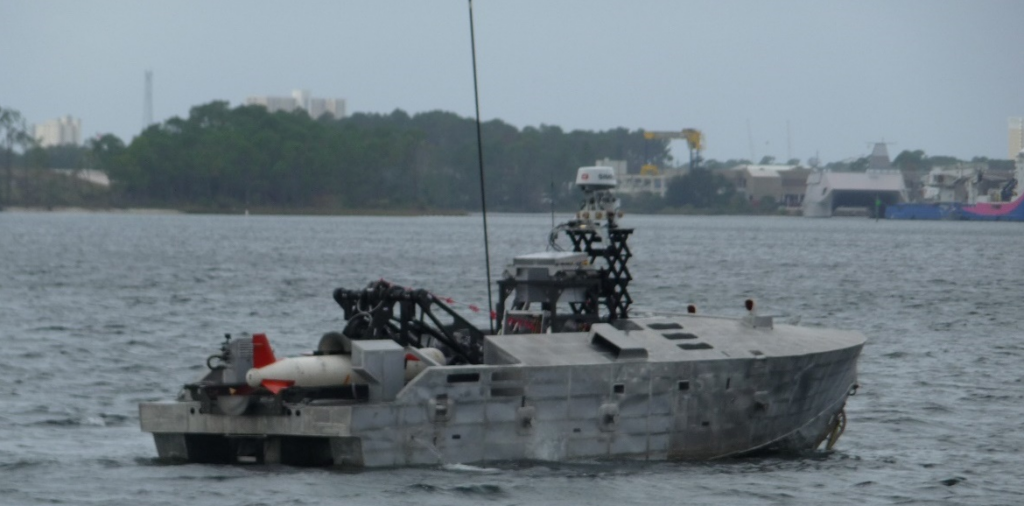
LOCKPORT, LA. — (October 23, 2023) – The U.S. Navy has awarded Bollinger Shipyards (“Bollinger”), a privately-held and leading designer and builder of military and commercial vessels, a contract to build four (4) additional Mine Countermeasures Unmanned Surface Vessels (MCM USV). This brings the total number of vessels under contract up to seven (7), with options for up to 18 more vessels. 

“Bollinger is honored to be entrusted by the U.S. Navy to continue building the Mine Countermeasures Unmanned Surface Vessel program,” said Ben Bordelon, President and CEO of Bollinger Shipyards. “Our skilled workforce is second to none. We are proud to support and protect the men and women of the U.S. Navy with state-of-the-art, multi-mission unmanned surface vessels that can operate in the most challenging conditions.”  

Bollinger was first awarded the contract to build the MCM USV program in April 2022. The MCM USV is an autonomous vessel capable of supporting minesweeping, mine hunting, and mine neutralization missions. Naval mines present a significant threat to U.S. naval operations and to U.S. and allied shipping in coastal waters, continental shelf waters, port approaches, and straits. The MCM USV program is key to replacing capabilities currently being undertaken by soon to be retired MCM-1 class Mine Countermeasures Ships and MH-53E helicopters. 

Bollinger will continue to build the MCM USV program at Bollinger Shipyards’ Lockport, Louisiana, facility.