Navy, Marine Corps Conclude Large Scale Exercise 2023 
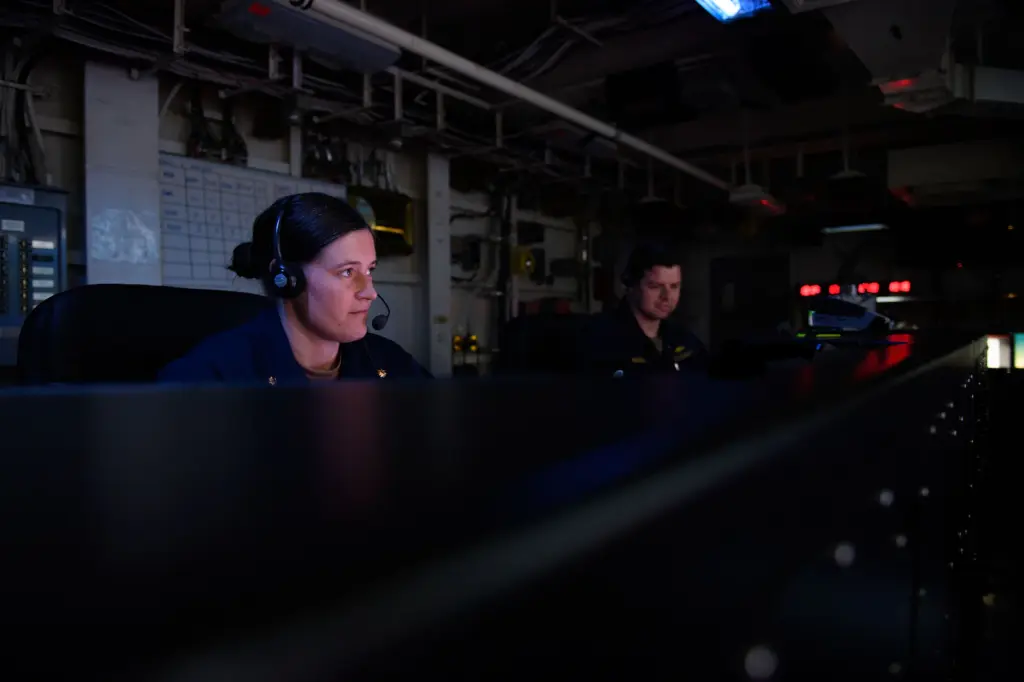
NORFOLK, Va. (Aug. 9, 2023) Lt. Cmdr. Christine Tyndall, from San Jose, California, and Lt. Steven McGhan, from Merritt Island, Florida, stand watch during Large-Scale Exercise (LSE) 2023 aboard the Nimitz-class aircraft carrier USS Dwight D. Eisenhower (CVN 69). LSE 2023 is a live, virtual, and constructive, globally-integrated exercise designed to refine how we synchronize maritime operations across multiple fleets, in support of the joint force. (U.S. Navy photo by Mass Communication Specialist 2nd Class Mo Bourdi/Released)

Release from U.S. Fleet Forces Command 

***** 

18 August 2023 

NORFOLK, Va. – More than 25,000 Sailors and Marines across the globe participated in the U.S. Navy and U.S. Marine Corps-led Large Scale Exercise (LSE) 2023, Aug. 9-18. 
 
One of the largest exercises for the maritime services, LSE 2023 is a live, virtual and constructive, globally-integrated exercise designed to refine the synchronization of maritime operations. 
 
During a media roundtable, the commanders of U.S. Fleet Forces Command, U.S. Pacific Fleet, U.S. Naval Forces Europe and Africa, and Marine Forces Command highlighted LSE 2023 as the leading exercise in how the Navy and Marine Corps further improves their ability to fight on land, air, sea, space, and cyberspace in order to maintain a military force that is most effective in peacetime and more powerful in war. 
 
“We have a responsibility and a duty to be able to respond globally to threats and vulnerabilities to peer adversaries and competitors,” said Adm. Daryl Caudle, commander U. S. Fleet Forces Command. “And the way you get great at that is to practice with exercises like LSE 2023.” 
 
LSE 2023 spanned 22 time zones and included participants from U.S. Fleet Forces Command, U.S. Pacific Fleet, U.S. Naval Forces Europe-Africa Command, Marine Forces Command, U.S. Marine Corps Forces Europe and Africa, U.S. Marine Corps Forces Pacific, and seven U.S. numbered Fleets: Second, Third, Fourth, Fifth, Sixth, Seventh, and Tenth. 
 
The integration of fleet operations with emerging technologies played a key role in refining and validating Distributed Maritime Operations (DMO) capabilities. 
 
“The United States is a global power that has global interests. We have allies and partners around the world. We routinely sail, fly, and operate in international spaces,” said Adm. Stuart Munsch, commander, U.S. Naval Forces, Europe and Africa. “You put that all together, and we have a responsibility to be able to operate globally, effectively, and that’s what we’re doing. We demonstrate that to assure our allies and partners, and we demonstrate it to deter adversaries.” 
LSE 2023 reinforced a culture of learning and increased warfighting readiness by merging real-world operations with virtually constructed scenarios to create a realistic training environment that allowed Sailors and Marines to train the way we fight, regardless of geographic boundaries. 
 
“This is an exercise where we can bring all of our experiences together and learn from each other,” said Lt. Gen. Brian Cavanaugh, commander, Marine Forces Command. “I’ve learned a tremendous amount from Admirals Caudle, Paparo, and Munsch, as well as General Jurney and General Sofge, and you don’t get that until you come together and do an exercise like this. The challenges we encountered during LSE 23 only help us in our continuum of learning – from the tactical unit, up through the highest levels of decision making.” 
 
LSE 2023 incorporated live units underway ranging from aircraft carriers to submarines, shore logistic support units, and more than 30 virtual units. This included pier-side participation from ships as well as training facilities and staff headquarters from around the world. 
 
From the strategic level with combatant commanders down to the hands-on training on the tactical level, this exercise encompassed a wide range of training for the Navy and Marine Corps. 
 
“We are a global, responsive Navy operating dynamically within the joint force, ready to respond to threats against our nation,” said Adm. Samuel Paparo, commander, U.S. Pacific Fleet. “Our competitors are increasingly cooperating and operating further afield. This underscores the importance of exercises like LSE to hone our ability to find, track and monitor potential threats and coordinate globally.” 
 
The U.S. Navy and U.S. Marine Corps will incorporate lessons learned from LSE 2023 into the planning of its next large scale exercise iteration which will take place in 2025. 
 
To read the full transcript from the media roundtable with LSE 2023 commanders visit:

https://www.usff.navy.mil/Press-Room/Press-Releases/Article/3498119/large-scale-exercise-2023-commanders-interview-transcript/ 


Bangor Dry Dock Recertifies, Completing Seismic Mitigation Work

Workers help guide a hydraulic anchor drilling rig, February 16, 2023, as part of the seismic mitigation effort at Puget Sound Naval Shipyard & Intermediate Maintenance Facility.(U.S. Navy Photo by Wendy M Hallmark)

Release from U.S. Pacific Fleet 

*****

From Courtesy Story

BREMERTON, Wash. – Interim seismic mitigation efforts, which began Feb. 15 on the Trident Refit Facility Delta Pier in Bangor, have been completed.

In January of this year the Navy restricted submarines from entering certain dry docks in the Pacific Northwest (both at Puget Sound Naval Shipyard & Intermediate Maintenance Facility and Trident Refit Facility- Bangor) because of seismic concerns identified in recent studies. The Navy team rapidly deployed and implemented a repair technique using dry dock wall reinforcing tie downs.

The three dry docks where tie downs were installed have been recertified. Repairs to the full length of the Bangor dock walls have been completed and the dock was recertified August 10. PSNS & IMF’s Dry Dock 5 was recertified June 30 to dock USS Connecticut (SSN 22) and Dry Dock 4 was recertified April 28 to dock USS Pennsylvania (SSBN 735).

“The completion of seismic mitigations at the TRF Bangor dry dock is an incredible milestone,” said Capt. JD Crinklaw, commander, PSNS & IMF. “For the past six months, thousands of personnel have dedicated themselves to ensuring all three dry docks were safely and efficiently brought back into operation, so we could continue our mission. I am incredibly grateful to the team of experts who helped us reach this objective and ensure the readiness and resilience of the Navy’s fleet.”

Construction efforts include drilling holes for the installation of anchors inside the dry dock walls to enhance structural integrity and ensure the safety of the workforce, community, environment, and submarines. The mitigation efforts updated existing emergency response plans to better address the chance of a catastrophic earthquake, along with improved early-warning employee notification systems in the dry docks.

Experts from private industry, Naval Sea Systems Command, Naval Facilities Engineering Systems Command, TRFB and PSNS & IMF planned and implemented the structural upgrades, with an eye on the Navy’s future needs and in support of the mission to deliver modern, fully-mission capable warships on-time, every time, preserving our national security.

“The upgrades done at Delta Pier will provide the Navy with critical sustainment operations, for our submarines, in the years ahead,” said Capt. Mike Eberlein, commanding officer, Trident Refit Facility-Bangor. “When I look at the amount of work done over the last few months, the precision of that work, and the speed and efficiency of the professionals involved, I am amazed at the capabilities of the Navy to conduct our national security mission.”

These short-term mitigation actions did not affect the nation’s strategic deterrent capability or the ability of the fleet to continue its overall mission. PSNS & IMF remains the primary provider for the maintenance, repair, modernization, inactivation and disposal of ships, submarines, and nuclear-powered aircraft carriers in the Pacific Fleet.

Based on future planned improvements to Dry Dock 6, and differences in ship design and the size of aircraft carriers, it was determined immediate seismic mitigations are not required. Aircraft carrier maintenance at PSNS & IMF remains unaffected.

The need for mitigations in the remaining docks will be determined once current efforts are complete and may include stability enhancements for submarine availabilities.

For questions related to this release, please contact the Navy Office of Information at 703-697-5342 or [email protected].


Navy to Christen Guided-Missile Destroyer Ted Stevens (DDG 128)

Release from U.S. Dept. of Defense 

*****

18 August 2023

The Navy will christen the future USS Ted Stevens (DDG 128) during a 9:00 a.m. CDT ceremony on Saturday, Aug. 19, in Pascagoula, Mississippi. 

ShapeThe principal address will be delivered by the Honorable Sean O’Keefe, 69th Secretary of the Navy and 10th Administrator of NASA.  Remarks will also be provided by the Honorable Russell Rumbaugh, Assistant Secretary of the Navy (Financial Management and Comptroller); Vice Admiral Jeffrey Hughes, Deputy Chief of Naval Operations for Warfighting Development; and Kari Wilkinson, executive vice president of Huntington Ingalls Industries and president of Ingalls Shipbuilding. The ship’s sponsors are Catherine Ann Stevens, Susan Stevens Covich, and Lily Irene Becker, the wife and daughters of the ship’s namesake. In a time-honored Navy tradition, the sponsors will christen the ship by breaking a bottle of sparkling wine across the bow.

The ship’s namesake, Ted Stevens, was a U.S. Senator from Alaska who served the Senate and the Solicitor of the Interior Department for over 40 years. He was a strong supporter of the Navy and Marine Corps. 

This is the first U.S. Navy ship to honor Stevens and will be the third Flight III upgrade ship. 

Arleigh Burke-class destroyers are the backbone of the U.S. Navy’s surface fleet, providing protection to America around the globe. These highly capable, multi-mission ships conduct various operations, from peacetime presence to national security, providing a wide range of warfighting capabilities in multi-threat air, surface, and subsurface domains. These elements of seapower enable the Navy to defend American prosperity and prevent future conflict abroad.

Media may direct queries to the Navy Office of Information at (703) 697-5342. More information on guided-missile destroyer programs can be found at:  https://www.navy.mil/Resources/Fact-Files/Display-FactFiles/Article/2169871/destroyers-ddg/


Leidos selected by U.S. Navy to operate and sustain medium unmanned vessels

Release from Leidos 

***** 

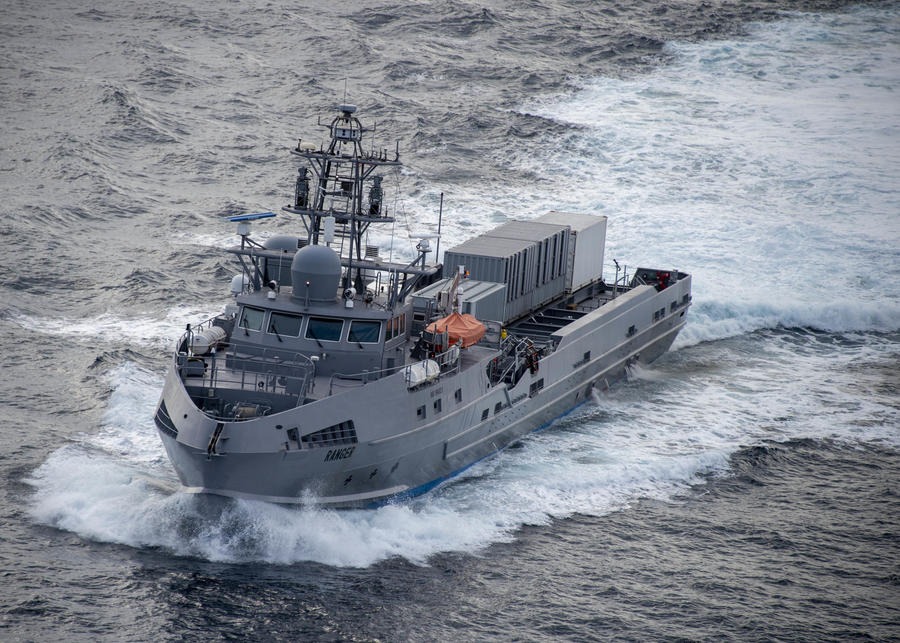
RESTON, Va. (August 17, 2023) – Leidos (NYSE:LDOS), a FORTUNE® 500 science and technology leader, was recently awarded a new task order by Naval Sea Systems Command to manage, operate and maintain the U.S. Navy’s Overlord and medium unmanned surface vessels (USVs). The single-award task order has a one-year base period of performance and two one-year options. The task order has a maximum value of approximately $95 million if all options are exercised. 

“Leidos is leading a new era of naval operations,” said Gerry Fasano, Leidos Defense Group president. “The Leidos team has unmatched experience and expertise in autonomous vessel design and operations, delivering four operational medium-sized USV platforms to the Navy so far. We look forward to helping the Navy accelerate this important work and providing new capabilities at the tip of the spear.” 

“This task order starts an important phase in the Navy’s evolution of USVs and integrating them into distributed maritime operations,” said Dave Lewis, Leidos Defense Group senior vice president and Maritime Systems operations manager. “The power of this technology lies in its ability to operate independently and extend the horizon of crewed ships. We look forward to supporting the Navy as they continue this important journey into the future.” 

Leidos has delivered four operational medium-sized USVs currently in the Navy’s fleet: Ranger, Mariner, Sea Hunter, and Seahawk. This contract will expand Leidos’ experience managing USV operations and maintenance.  


General Dynamics Electric Boat Holds Keel-Laying Ceremony for Submarine Tang (SSN 805) 

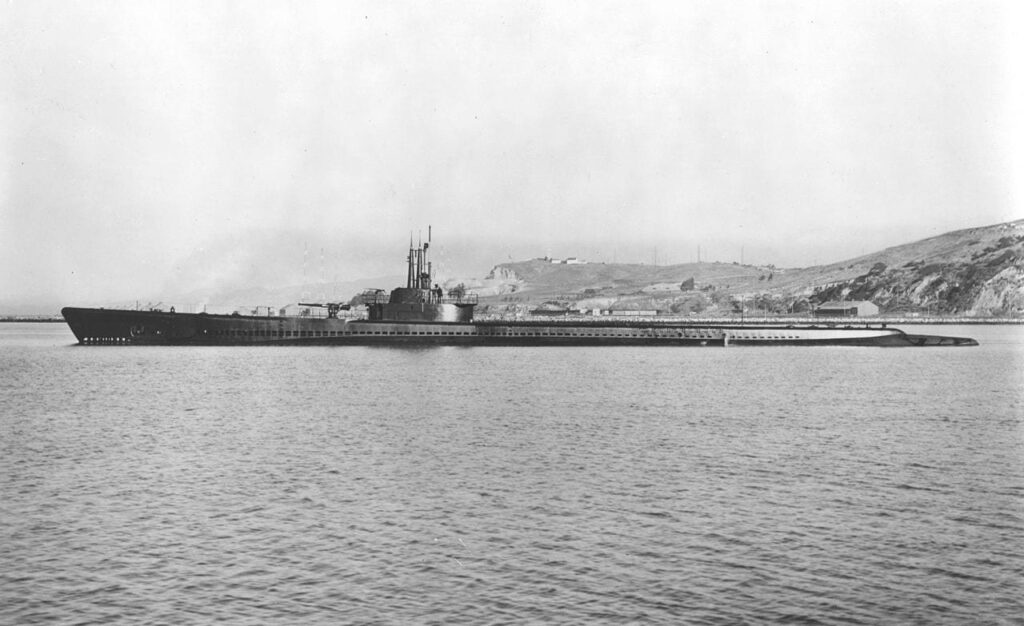
The first USS Tang (SS-306), shown off the Mare Island Navy Yard, California, in 1943. U.S. Navy

Release from General Dynamics Electric Boat 

***** 

Quonset Point, R.I. (August 17, 2023) – General Dynamics Electric Boat, a business unit of General Dynamics (NYSE: GD), announced today it held a keel laying for the Virginia-class submarine Tang (SSN 805) at its facility in Quonset Point. The keel laying is a ceremonial event in which the initials of the ship’s sponsor are welded onto a plate to be attached to the submarine. It marks a milestone in the construction of a ship. 

The submarine will be the third ship in the U.S. Navy to carry the name Tang. The first USS Tang was a Balao-class submarine, SS 306, credited as the most successful U.S. submarine of WWII, sinking the most tonnage of any U.S. submarine—33 enemy ships—on five war patrols over the course of just 14 months. 

“This ship represents our ongoing commitment to provide the Navy with the most capable and lethal submarines it needs to ensure our country’s freedom in an increasingly contested undersea arena,” said Kevin Graney, president of General Dynamics Electric Boat. “It takes a diverse team of talented and dedicated professionals to design, engineer and build these remarkable machines, and each one of us comes to work every day knowing the safety of our sailors depends on the work we do.”  

The ship’s sponsor, Mimi Donnelly, is the daughter-in-law, wife and mother of U.S. Navy submariners. She was accompanied at the ceremonies by her husband, retired Vice Admiral Jay Donnelly. 

Speaking to the audience of Navy personnel, invited guests and Electric Boat employees, Donnelly expressed her appreciation for the technical expertise and exacting standards required to construct a Navy submarine.  

“As the wife and mother of submariners, when my loved ones went to sea I was comforted by the knowledge that their ships were the best in the world; expertly built, tested at every phase of construction and well-maintained—nobody does it better.” 

The keynote address was delivered by Vice Admiral William Houston, Commander, Submarine Forces. In his remarks, to the shipbuilders he stressed the importance of their work. 

“All of you have made direct contributions towards protecting our Nation,” said Houston. “You have designed and built a fleet of Virginia-class submarines that are at the cutting edge of technology and craftsmanship. Because of you, our Nation’s Submariners stand ready to compete and win in all domains when called upon.” 

Donnelly joined Electric Boat welder Alison Fasulo of Warwick, R.I. to help weld her initials onto a steel plate, which will be permanently mounted in a place of honor on the completed vessel. At the completion of the weld, Donnelly authenticated her initials and declared the keel “true and fairly laid.” 

Tang is the 32nd submarine in the Virginia class designed for the full range of 21st-century mission requirements, including anti-submarine and surface ship warfare and special operations support. Tang will be equipped with the Virginia Payload Module (VPM). The VPM comprises four large-diameter, vertical payload tubes in a new hull section inserted into the existing Virginia-class submarine design. The tubes enable the submarine to deliver a variety of capabilities, including weapons, unmanned undersea vehicles, and other undersea payloads. 

General Dynamics Electric Boat is the prime contractor and lead design yard for the Virginia class and constructs the ships in a teaming arrangement with Huntington Ingalls Industries’ Newport News Shipbuilding in Virginia. 

General Dynamics Electric Boat designs, builds, repairs and modernizes nuclear submarines for the U.S. Navy. Headquartered in Groton, Connecticut, the company employs more than 21,000 people. More information about General Dynamics Electric Boat is available at www.gdeb.com


Blue Ridge Returns to Yokosuka, Concludes Summer Patrol

Release from U.S. 7th Fleet 

***** 

From Mass Communication Specialist 2nd Class Matt Hall, USS Blue Ridge (LCC 19) Public Affairs 

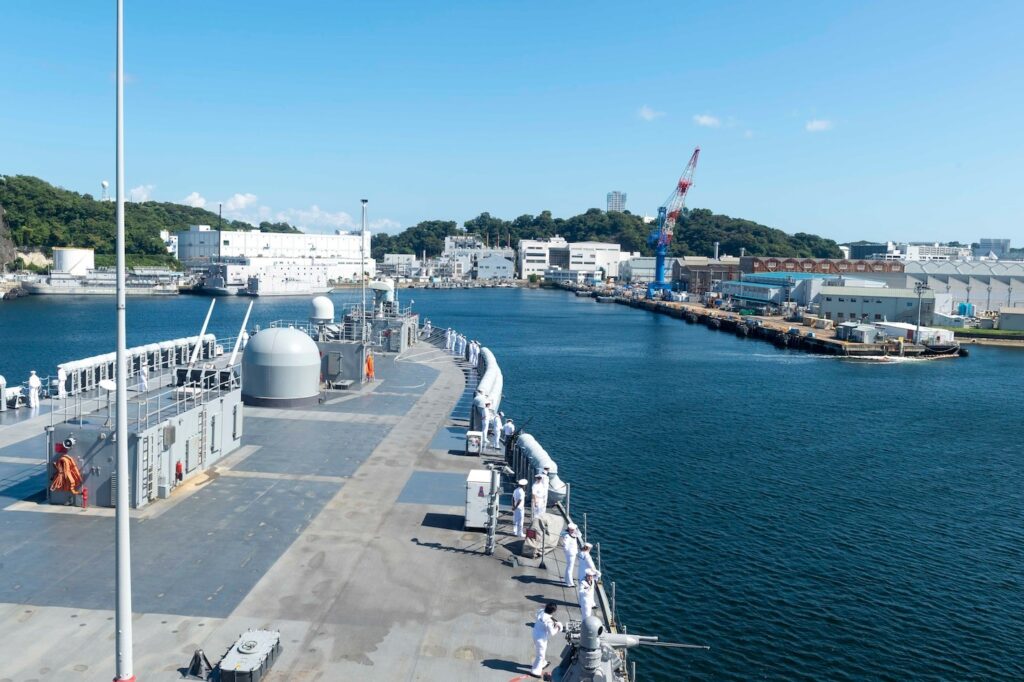
YOKOSUKA, Japan — U.S. 7th Fleet flagship, USS Blue Ridge (LCC-19) returned to Commander, Fleet Activities Yokosuka, Aug. 17, after a patrol in the Indo-Pacific region. 

The patrol, which began July 8, saw Blue Ridge make port visits to Singapore; Jakarta, Indonesia; Muara, Brunei; and Puerto Princesa, Philippines, enabling dialogue and relationship building among allies and partners. 

“I am extremely proud of the hard work and flexibility that the crew showed during this patrol,” said Blue Ridge Commanding Officer, Capt. Dale M. Gregory. “Their professionalism and teamwork led to a successful patrol and allowed us engage with partners across the Indo-Pacific. It is in creating these people-to-people ties with our partners that we are able further our shared interests in preserving peace and prosperity and a free and open Indo-Pacific.” 

At the beginning of patrol, Blue Ridge visited Jakarta, Indonesia July 27  29; the ship’s first visit to the country since 2019. Thomas conducted talks with Chief of the Indonesian Maritime Security Agency (Bakamla) Vice Adm. Aan Kurnia; U.S. Ambassador to the Republic of Indonesia, Ambassador Sung Y. Kim; Chief of Staff the Republic of Indonesia Fleet Command, Rear Adm. Didong Rio Duta; and other key-leaders. Additionally, members of the Seventh Fleet staff conducted staff-talks with their Indonesian Navy counterparts, aimed at improving interoperability and addressing shared maritime security challenges. 

The visit to Jakarta included a by the U.S. 7th Fleet Band for local members of the Indonesian military at the @America cultural center. The band also spent time with a local school band, sharing their expertise and knowledge, later ending with a joint concert for friends and family members. Additionally, Blue Ridge and U.S. 7th Fleet staff Sailors took part in community outreach activities such as a beach clean-up, a sports day with the Indonesian Navy, and volunteering at local community programs for children. 

Second, Blue Ridge conducted a post visit in Muara, Brunei Darussalam Aug. 3 – 5, the first visit to the country since 2002. There, Thomas conducted talks with U.S. Ambassador to Brunei, Her Excellency Caryn McClelland; the Minister of Defence II, The Honorable Pehin Datu Lailaraja; Major General (Retired) Dato Paduka Seri Haji Awang Halbi bin Haji Mohd Yussof; the Commander of Royal Brunei Armed Forces, Major General Dato Paduka Seri Haji Muhammad Haszaimi bin Bol Hassan; and other key-leaders from Brunei. 

While in Brunei, Muslim Sailors had the opportunity to visit a local mosque for Friday prayers. Additionally, Blue Ridge and U.S. 7th Fleet Sailors took part in a sports day with members of the Royal Brunei Navy, strengthening the bond between service members. 

Finally, Blue Ridge conducted a port visit in Puerto Princesa, Philippines, Aug. 7 – 10, the ship’s first visit there since 2019. In Puerto Princesa, Thomas and U.S. 7th Fleet leadership met with Vice Admiral Alberto Carlos, Commander, Western Command (WESCOM) and WESCOM leaders, where they discussed enhancing interoperability between the two militaries and finding ways to increase cooperation in the maritime domain.  Additionally, the U.S. 7th Fleet Deputy Commander Captain Amy Bauernschmidt met with Captain Dennis Labay, the commander of Philippine Coast Guard District Palawan. Thomas and U.S. 7th Fleet staff also met with Puerto Princesa leadership including Atty. Jethro M. Palayon and Mayor Lucilo Bayron. 

During the port call, the U.S. 7th Fleet Band performed in front of a live audience at SM City Mall with counterparts from the Philippine Air Force Western Command Band. Additionally, Blue Ridge hosted a tour of the ship to members of the Philippine Air Force Western Command. 

Between port visits, Blue Ridge sailed 8,840 nautical miles through the Philippine Sea and the South China Sea, conducted three anchorages, 18 sea-and-anchor details, and four straight transits. 9,100 rounds of ammunition were fired in multiple live-fire exercises, and the “Golden Falcons” of Helicopter Sea Combat Squadron 12 logged 21 hours of flight time in nine helicopter operations. 
 

“I am extremely proud of the hard work and flexibility that the crew showed during this patrol,” said Blue Ridge Commanding Officer, Capt. Dale M. Gregory. “Their professionalism and teamwork led to a successful patrol and allowed us engage with partners across the Indo-Pacific. It is in creating these people-to-people ties with our partners that we are able further our shared interests in preserving peace and prosperity and a free and open Indo-Pacific.” 

Blue Ridge is the oldest operational ship in the Navy, and as U.S. 7th Fleet command ship, is responsible for patrolling and fostering relationships within the Indo- Pacific Region. 

For more news from USS Blue Ridge, visit http://www.navy.mil/local/lcc19/


HII RECEIVES ORDER TO BUILD TWO REMUS 620 UNMANNED UNDERWATER VEHICLES FOR NOAA

Release from HII 

***** 

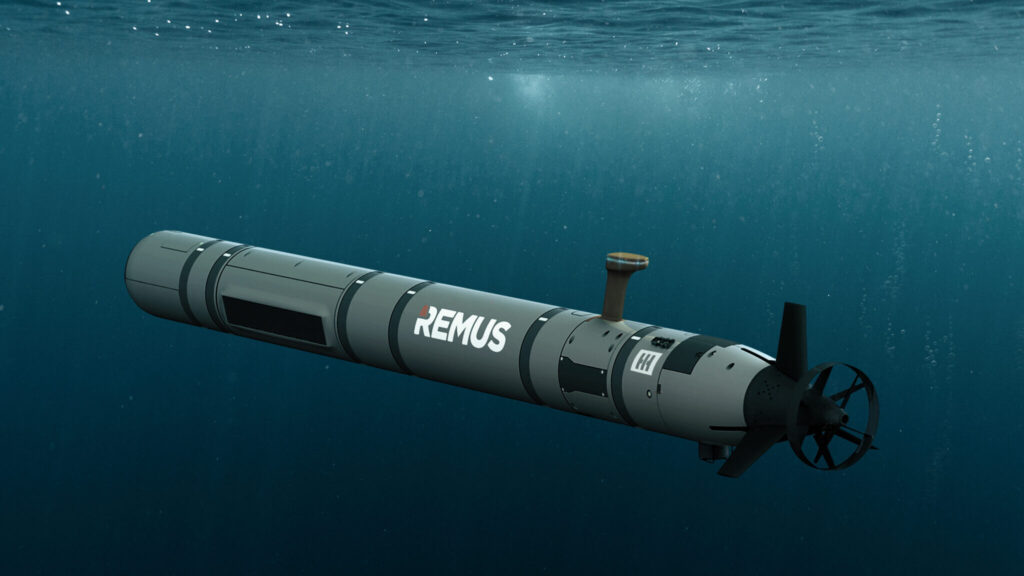
McLEAN, Va., Aug. 17, 2023 (GLOBE NEWSWIRE) — The National Oceanic and Atmospheric Administration (NOAA) recently ordered two REMUS 620 unmanned underwater vehicles (UUVs) from HII (NYSE: HII). 

The customized, medium-class UUVs will be built by HII’s Mission Technologies division in partnership with W.S. Darley & Co. and delivered in 2024. 

Unveiled in November of 2022, the REMUS 620 has a battery life of up to 110 hours and a range of 275 nautical miles, providing unmatched mission capabilities for mine countermeasures, hydrographic surveys, intelligence collection, surveillance and electronic warfare. 

“The REMUS 620 is the first medium-class UUV designed to accurately deliver this range of advanced above- and below-water effects at long range,” said Duane Fotheringham, president of Mission Technologies’ Unmanned Systems business group. “We are excited to build these vehicles for the U.S. government, supporting the mission of our long-term customer, NOAA.” 

The vehicles will be customized with a synthetic aperture sonar module, additional energy modules and auxiliary equipment. 

An image accompanying this release is available at: https://hii.com/news/hii-remus-620-unmanned-underwater-vehicle-noaa-2023/

“There has been tremendous market interest in the REMUS 620,” Fotheringham added. “Combined with the steadily increasing backlog of our REMUS 300 vehicles, this order is a strong statement on the capabilities of our products.” 

NOAA will use the REMUS 620 vehicles for higher-resolution mapping of the Gulf of Mexico and its effort to restore the seafloor habitats damaged by the 2010 Deepwater Horizon oil spill. The agency has previously used other REMUS models for habitat characterization, marine archeology and other ocean mapping and exploration activities. 

The REMUS line of UUVs has been successful around the world supporting scientific research and operations and is currently in use in more than 30 countries. 

For more information about HII’s Unmanned Systems, visit: https://hii.com/what-we-do/capabilities/unmanned-systems/

For more information about NOAA’s Mesophotic and Deep Benthic Communities Restoration project, visit: https://www.fisheries.noaa.gov/southeast/habitat-conservation/mesophotic-and-deep-benthic-communities-restoration 


First round of attack helicopters arrive in the Czech Republic

Release from Naval Air Systems Command 

***** 

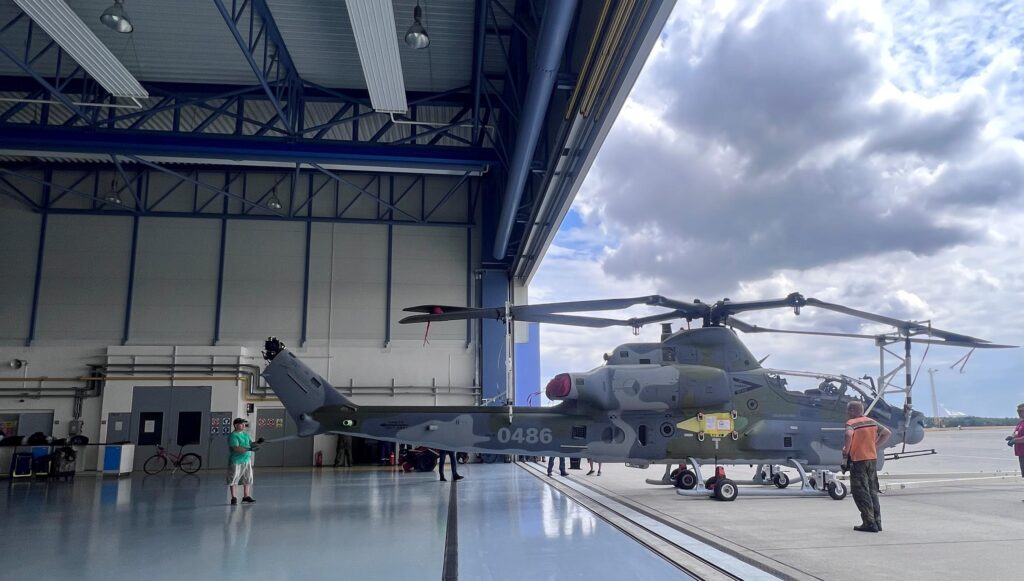
NAVAL AIR SYSTEMS COMMAND, PATUXENT RIVER, Md. –Two AH-1Z Vipers arrived in the Czech Republic this week, marking the first in-country delivery as part of a partnership with the US Marine Corps H-1 Light/Attack Helicopter program office (PMA-276) and industry partner, Bell. 

“Four years ago, we embarked on a journey with the Czech Republic Air Force to deliver the H-1 family of aircraft, including four AH-1Z and eight UH-1Y helicopters,” said Col. Vasilios Pappas, PMA-276 program manager. “Since then, we have worked together to award the required contracts, deliver the applicable logistics equipment, develop a training program and so much more, all in preparation for this delivery. This is a remarkable milestone.” 

In 2019, the Czech Republic selected the H-1 to modernize the country’s armed forces and strengthen its homeland defense and the country is expected to be independently operating by late-2024. 

A lot has transpired since the initial contract. 

From a training perspective, an initial team of Czech aircrew and maintainers had the opportunity to complete the Marine Light/Attack Helicopter Training Squadron (HMLAT) 303 training pipeline, graduating earlier this year. Beginning this fall, H-1 crews will train alongside representatives from Bell, and its supplier, Pinnacle Solutions, through a “train-the-trainer” model. Pilots, crew chiefs and maintainers will learn the additional skills required to operate and sustain its fleet of AH-1Z and UH-1Y helicopters, and train other members of its force. 

In addition, the country has a Flight Training Device (FTD) to support skills development, offering access to the controls and weapon systems for preparation purposes. The Czech Republic FTD broke ground in March 2023 and construction will finish in time to begin training this fall. 

Now, with the aircraft in-country, the Czech Air Force can begin the acceptance process and over the next 12 months, additional aircraft will arrive based on the production schedule. 

The Czech Air Force squadron is expected to be independently operating in late-2024. 

PMA-276 manages the end-to-end procurement, development, support, fielding and disposal of the Marine Corps and international customers H-1 family of aircraft. For more information, visit: PMA-276 | NAVAIR (navy.mil) 


Farewell, FLIP! Renowned Navy-Owned Research Platform Retired after 60 Years of Service 

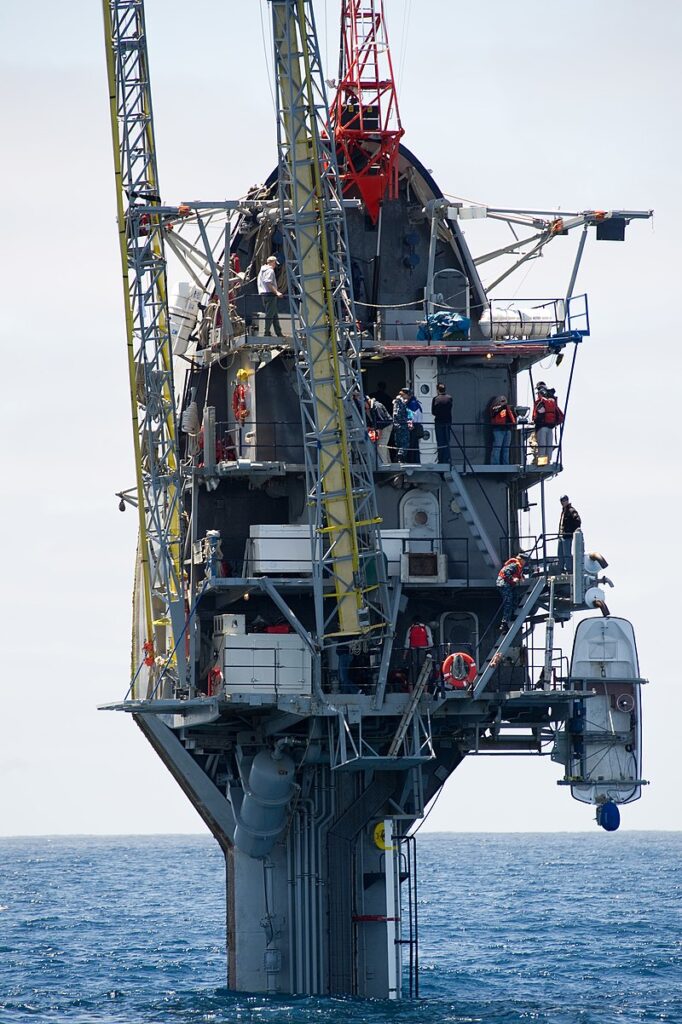
120630-N-PO203-310 SAN DIEGO, Calif. (Jun. 30, 2012) Only 55 feet remain visible after the crew partially floods the Floating Instrument Platform, or FLIP’s, ballast tanks causing the vessel to turn stern first into the ocean. The 355-foot research vessel, owned by the Office of Naval Research (ONR) and operated by the Marine Physical Laboratory at Scripps Institution of Oceanography at University of California, conducts investigations in a number of fields, including acoustics, oceanography, meteorology and marine mammal observation. (U.S. Navy photo by John F. Williams/Released)

Release from the Office of Naval Research 

***** 

Aug. 16, 2023 
By Warren Duffie, Jr., Office of Naval Research

ARLINGTON, Va.- A dynamic era in naval oceanography recently ended as the iconic Floating Instrument Platform – popularly known as FLIP – was officially retired from service. 
 
Built in 1962 with funding from the Office of Naval Research (ONR), FLIP helped generations of scientists and oceanographers better understand the mysteries of the sea, including internal waves, air-sea interaction and long-range sound propagation. Sadly, age and exorbitant life-extension costs resulted in the platform being disestablished.  
 
On Aug. 3, a solemn gathering of well-wishers watched as FLIP was towed, at sunset, to a dismantling and recycling facility. Last month, a formal good-bye ceremony was hosted by the Marine Physical Laboratory at the University of California, San Diego (UCSD). 
 
Still, FLIP – which was owned by the U.S. Navy and managed by Scripps Institution of Oceanography at UCSD – boasts a proud legacy and represents a golden age of oceanography that saw a renewed focus on ocean exploration, the creation of new fields of study, and greater public appreciation of the scientific and strategic importance of the ocean. 
 
“Over its career, FLIP was a key mission enabler for ONR’s basic and applied programs in meteorology, oceanography and ocean acoustics,” said Dr. Thomas Drake, head of ONR’s Ocean Battlespace Sensing Department.  
 
“Whether investigating air-sea interaction, ocean mixing, boundary layer dynamics or acoustic thermometry, FLIP’s unique properties and capabilities enabled the collection of exquisite datasets that served as the gold standard for numerous process studies and extensive model development, ultimately increasing our understanding of the maritime environment.” 
 
Shaped like a spar buoy, the 355-foot FLIP resembled a giant baseball bat. When horizontal, FLIP was towed out to sea where on-board hydraulics and ballast tanks “flipped” the platform (in about 30 minutes) to the vertical – producing a stable, mobile at-sea experimental laboratory, capable of riding out swells while providing sensor data 300 feet into the water column. 
 
FLIP could carry a research team of 11 people and a crew of five, and sustain research operations for up to 30 days without resupply. Also, everything mounted on the platform turned 90 degrees when it “flipped” at sea. All fixtures – from generators to toilets – turned at right angles, and there were separate passageways, doors and platforms for every major space inside and outside. 
 
Because FLIP had no propulsion system of its own, it had to be towed by ship to a location. This quiet design made FLIP perfect for recording ocean acoustics and sounds as well as observing tidal forces, internal waves and small-scale turbulence. Such data gathering fostered greater knowledge of ocean currents and acoustics, air-sea interactions and marine mammal sounds. 
 
In addition, FLIP was crucial to groundbreaking naval basic and applied research, much of which was sponsored by ONR. This includes oceanography, meteorology, ocean acoustics and the development of hydrophones (underwater microphones) – as well as how the upper part of the ocean interacts with the lower part of the atmosphere and how that interface affects things like sonar. 
 
Another aspect of FLIP’s design that enabled it to be relevant for six decades was its lack of built-in sensors that could become obsolete. This allowed generations of researchers and scientists to install cutting-edge equipment and technology for testing. 
 
Retired Scripps physical oceanographer Dr. Rob Pinkel logged many hours on FLIP cruises, starting in 1969 as a graduate student. 
 
“In total, I spent about three years at sea aboard FLIP over the course of my career,” he said. “I enjoyed working with the crew and my research group to achieve something special. When all of the instruments were performing properly and the data were coming in, it was like operating a very rich gold mine.” 
 
Naval Postgraduate School Professor Dr. Qing Wang led an ONR-sponsored research cruise aboard FLIP in 2017 to study air-sea interaction: “FLIP was such an impressive research platform that enabled us to do very detailed, thorough work. It truly was a game-changer in terms of naval scientific research and will be missed.” 
 
Rob Sparrock, a program officer in ONR’s Oceanographic Research Facilities division, said, “Losing FLIP is unfortunate, but the loss will be mitigated by new unmanned assets and networks of smaller buoys being developed. FLIP’s legacy also lives on in current research platforms such as the French Polar POD, whose design is inspired by FLIP.” 
 
Though retired, FLIP will live on at Scripps. One of its booms (crane-like arms for suspending instruments) will be installed on the Scripps research pier in La Jolla and used to deploy instruments. Also, artifacts from the platform will be displayed in a permanent exhibit at Scripps’ Birch Aquarium. 


USS Sioux City (LCS 11) Decommissions 

Release from LCS Squadron Two 

***** 

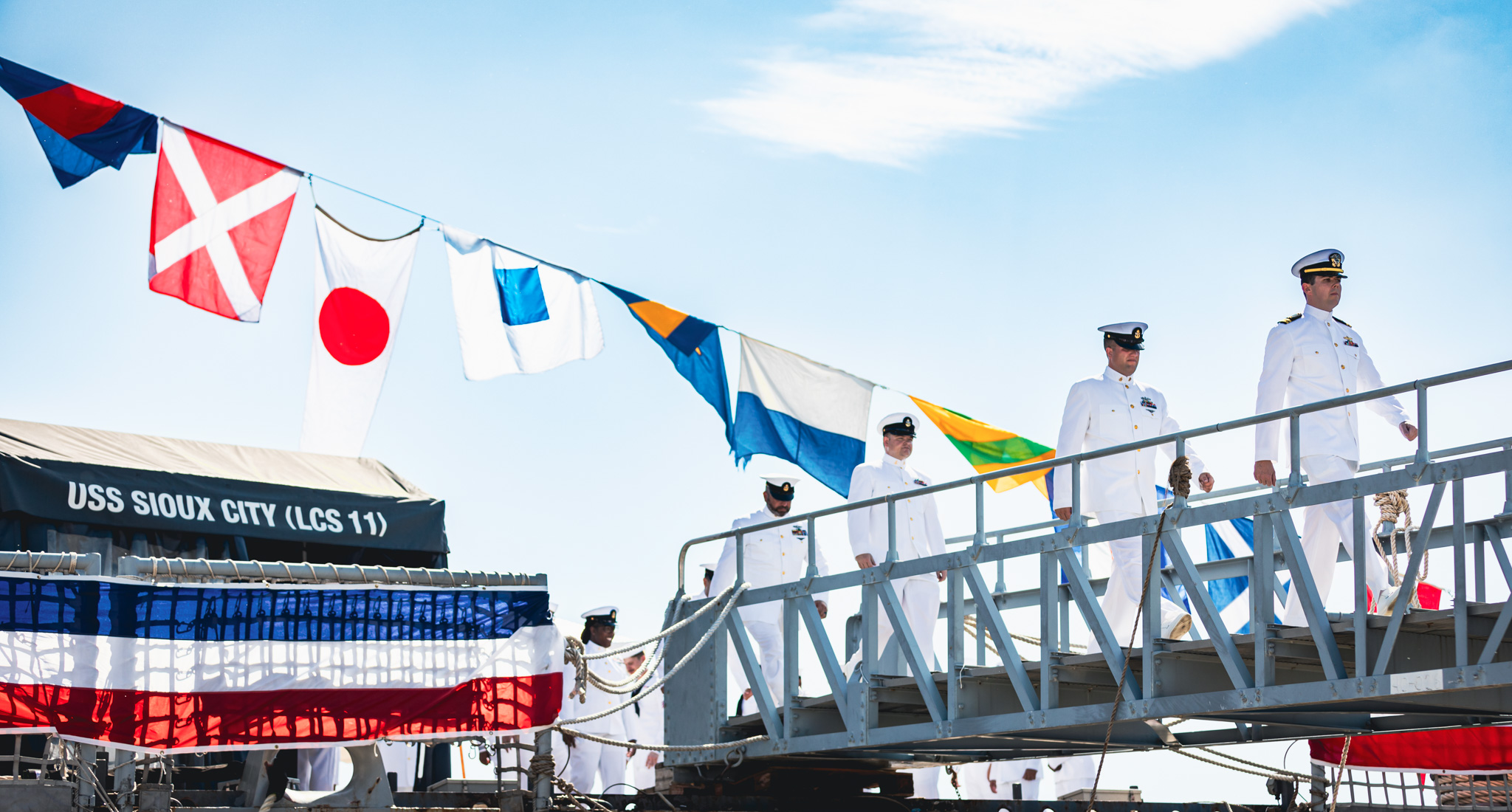
NAVAL STATION MAYPORT, Fla. — Freedom-variant littoral combat ship (LCS) USS Sioux City (LCS 11) was decommissioned in Mayport, Fla., August 14. 

As an operational unit, Sioux City and its crew played an important role in the defense of our nation and maritime freedom. Sioux City and its Sailors were key to determine the operational success and deployment capabilities of today’s LCS platform. 
 
During the ceremony guest speaker, Capt. Daniel Reiher, Commander, Littoral Combat Ship Training Facility Atlantic, wished the crew of Sioux City fair winds and following seas as they bid farewell to their ship. 
 
“Though our ship’s service ends today, her legacy does not. For years to come the Sailors who served onboard will carry forth lessons learned and career experiences gained,” said Capt. Daniel Reiher, Commander, Littoral Combat Ship Training Facility Atlantic. “As those lessons and experiences are used to forge those that follow us, the legacy of SIOUX CITY will strengthen our Navy for generations to come.” 
 
Sioux City and its Sailors contributed a tremendous amount of work and time to ensure success of the LCS program during the ship’s time in naval service. Sioux City completed four successful deployments in December 2020, July 2021, December 2021 and October 2022. The ship deployed to U.S. Fourth, Fifth and Sixth Fleet, integrated with a carrier strike group, performed exercises with partner navies and conducted joint maneuvers with other U.S. Navy warships. While deployed in 2022, Sioux City provided maritime security presence enabling the free flow of commerce in key corridors of trade. Sioux City was also the first LCS to operate in U.S. Fifth and Sixth fleets across the Atlantic where they participated in counter drug trafficking operations with the U.S. Coast Guard to seize over 10,000 kilograms of cocaine worth an estimated $500 million. 
 
“First off, it’s impressive and humbling to see the shipmates, past and present, and all the well-wishers gathered in attendance today. It’s easy to get locked into the day-to-day grind of running a ship and forget about those who came before you and those who hope and pray for your success,” said Cmdr. Michael Gossett, Sioux City’s commanding officer. “It’s tempting to engross oneself with the finality of the process. Let us not lose sight of the memories we have made, the culture we have built, successes we have had and will endure forever.” 
 
Built by Fincantieri Marinette Marine in Marinette, Wisconsin, Sioux City was commissioned November 17, 2018, at the Naval Academy in Annapolis, Maryland. Mary Winnefeld, a longtime resident of Sioux City, served as the ship’s sponsor. 
 
USS Sioux City (LCS 11) is the first United States Navy Warship named after the city of Sioux City, Iowa. The ship represents the proud people of the Sioux Nation, a combination of the Dakota and Lakota Native American Tribes. Upon decommissioning, Sioux City will be placed into a Foreign Military Sale (FMS) disposition status, and its Sailors will receive follow-on orders to new assignments. 
 
LCS are fast, agile, mission-focused platforms designed to operate in near-shore environments, winning against 21st-century coastal threats. LCS are versatile and are capable to support a broad spectrum of fleet missions and operate alongside regional navies and coast guards while supporting forward presence, maritime security, sea control, and deterrence missions around the globe. 
 
For more news from Commander, Littoral Combat Ship Squadron Two, visit https://www.surflant.usff.navy.mil/lcsron2/ or follow on Facebook at https://www.facebook.com/comlcsron2/