11th Marine Regiment activates first long-range missile battery 
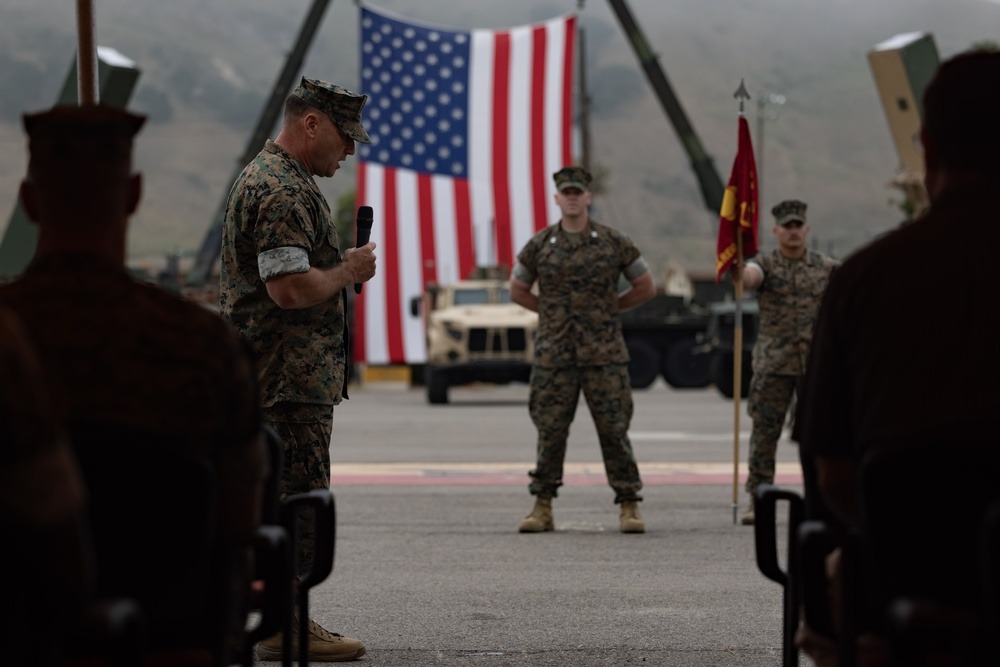
Photo By Lance Cpl. Migel Reynosa | U.S. Marine Corps Col. Patrick Eldridge, the commanding officer of 11th Marine Regiment, 1st Marine Division, gives a speech during the activation ceremony for Long Range Missile Battery A, 11th Marines, at Marine Corps Base Camp Pendleton, California, July 21, 2023.

Release from the 1st Marine Division 

***** 

CAMP PENDLETON, CA, UNITED STATES 

07.24.2023 

Story by  Capt. Joseph DiPietro, 1st Marine Division  

In a historic event at Marine Corps Base Camp Pendleton, California, the 11th Marine Regiment, 1st Marine Division activated the Marine Corps’ first long-range missile battery during a ceremony July 21. 
 
The new battery, which falls directly under 11th Marines, is designed to enhance the division’s and the joint force’s long-range strike and eventually sea denial capability and lethality. 
 
“It is truly a privilege and honor to stand with these Marines as we move forward with the long-range fires capability,” said Capt. Justin Hillebrand, who became the battery’s first commander during the ceremony. “These Marines have done phenomenal things. They took an idea and are making it work. The job just started, but this capability will be able to reach out and provide devastating and lethal fires.” 
 
The battery will train with long-range fires launchers, designed to fire Tomahawk cruise missiles, and various supporting assets to further refine the structure and requirements necessary for successful employment of the system. The battery’s Marines, along with 11th Marines’ leadership, will continue to refine tactics, techniques, and procedures to employ the long-range fires system in support of 1st MARDIV and I Marine Expeditionary Force initiatives. 
 
“This is a historic chapter in the Marine Corps and the 11th Marine Regiment. The American people expect the Marine Corps to prepare for war,” added Col. Patrick Eldridge, the commanding officer for 11th Marines. “There are nefarious states and actors in our world today who are credible threats to their neighbors, to our allies, and to the United States. The requirement for this capability now exists and the SecDef turned to the Marine Corps, the Marine Corps turned to 11th Marines, and we turn to Alpha Battery and our test and evaluation partners to make this capability a reality.” 
 
The long-range fires platform is an emerging capability for the Marine Corps and is growing as part of the broader ground-based anti-ship missile development for the service. 
 
Col. Eldridge concluded his activation ceremony remarks on a lighter note adding, “I imagine someone pretty high up said, ‘We’ve seen what Marines can do with rifles, let’s see what Marines can do with Tomahawks.’” 
 
In addition to the long-range missile battery activation, Marines with 2nd Battalion, 11th Marine Regiment, 1st MARDIV executed the first live-fire Naval Strike Missile test conducted by Marines of the Navy/Marine Corps Expeditionary Ship Interdiction System last month to demonstrate the firepower of another emerging capability. In conjunction with Marine Corps Systems Command, the NMESIS successfully launched and engaged a simulated target off the coast of Southern California. 
 
“NMESIS is the Marine Corps’ material solution for the ground based anti-ship missile capability through the Remotely Operated Ground Unit for Expeditionary Fires platform,” explained Staff Sgt. Derek Reddy, the NMESIS team leader for 11th Marines, during the flight test. “The guided flight test is absolutely imperative. It is so important that the Marines are actually conducting the exercise now to show off the system and its capabilities to the Marine Corps.” 
 
The long-range fires platform, NMESIS, and other fire support assets are only part of 1st MARDIV’s commitment to sea denial. Maritime reconnaissance, port and airfield seizure, and a continued emphasis on small unit leadership and tactics all drive the division toward capabilities and experience necessary to compete on the modern battlefield. Despite the advances in technology, formations, and tactics, 1st MARDIV Marines and Sailors relentlessly train fire and maneuver skills and will continue to build on the basics of the combined arms dilemma. 


Fairbanks Morse Defense Teams with Marand for Global Expansion

Release from Fairbanks Morse Defense 

***** 

Collaboration positions defense contractors to support the sale, design and manufacturing of ships in Australia 

BELOIT, Wis. – July 26, 2023 – Fairbanks Morse Defense (FMD), a portfolio company of Arcline Investment Management (Arcline), is teaming with Marand Precision Engineering (Marand) to expand its best-in-class marine technologies, OEM products, and service solutions to marine defense customers in Australia. Under the terms of the long-term agreement with FMD, Marand will manufacture and service components, as well as provide integrated solutions for FMD’s global customer base.

“Our collaboration with Marand positions us to support the sale, design, and manufacture of specialized components for the Royal Australian Navy’s future programs while also giving Marand access to our highly trained field service technicians and service centers,” said FMD CEO George Whittier. “All our customers benefit from this arrangement.”

Fairbanks Morse Defense has over 80 years of working with the US Navy on their nuclear projects, and this partnership will allow the Australian market to take advantage of FMD’s expertise and experience for their own new nuclear submarine programs.

“This collaboration combines the expertise of two highly respected defense contractors, giving our customers worldwide access to an even broader range of manufacturing and engineering solutions,” said Stuart Lindley, Future Business and Strategy for Marand Defence. “We’re looking forward to working with Fairbanks Morse Defense and expanding our ability to serve customers globally.” 

Based in Victoria, Australia, Marand has established itself as a global provider of precision-engineered solutions for the defense industry.


HII COMPLETES INSTALLATION OF USS JOHN C. STENNIS (CVN 74) MAIN MAST

Release from HII 

***** 

NEWPORT NEWS, Va., July 26, 2023 (GLOBE NEWSWIRE) — HII’s (NYSE: HII) Newport News Shipbuilding (NNS) division has completed a significant milestone in the refueling and complex overhaul (RCOH) of the aircraft carrier USS John C. Stennis (CVN 74). 

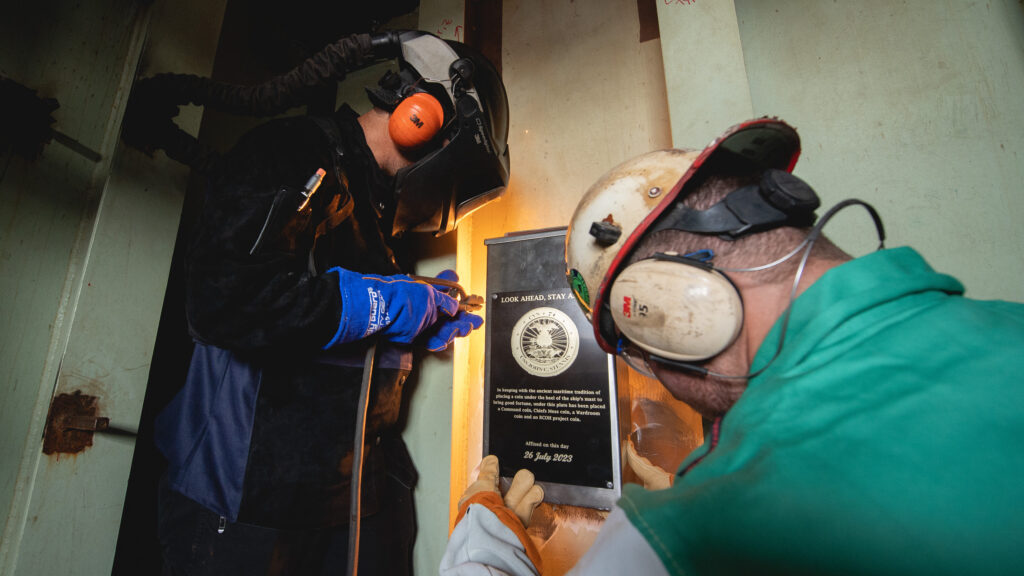
NNS shipbuilders and USS John C. Stennis sailors held a mast-stepping ceremony Wednesday, an ancient maritime custom of placing a coin underneath the ship’s mast to bring good fortune. A time capsule containing photos, a piece of the old mast, several coins and other artifacts was attached to the interior of the main mast. 

“It’s always great making significant progress and checking off major accomplishments during this RCOH period – today is yet another triumph by this team,” said Capt. J. Patrick Thompson III, the ship’s commanding officer. “This mast stepping allows us to acknowledge our past as we move into the future. Today we place a number of items in our time capsule to weld to the mast – to honor this moment in history, and more importantly to honor the workers and Stennis crew members helping us prepare the ship for another 25 years.” 

The ceremony followed a major milestone this spring when the shipyard installed the ship’s new main mast, which raises the carrier’s distinctive profile 123 feet above the flight deck. This marks the first RCOH during which the mast was installed all in one section using a new 315-ton crane HII invested in to support the RCOH program. 

Photos and video accompanying this release are available at: 
https://hii.com/news/uss-john-c-stennis-mast-stepping-rcoh-newport-news-shipbuilding 

“When the mast lands on the carrier, it represents one of the most visible construction milestones in the overhaul,” said Rob Check, NNS vice president, in-service aircraft carrier programs. “Our highly skilled shipbuilders are working with our Navy partners, our suppliers and numerous contractors to recapitalize this ship and deliver her back to the Navy for another 25 years of service.” 

The RCOH process is performed only once during the ship’s 50-year lifetime and involves upgrades to nearly every space and system on the ship. Tanks, the hull, shafting, propellers, rudders, piping, ventilation, electrical, combat and aviation support systems are repaired, upgraded and modernized. Work also includes defueling and refueling the ship’s two nuclear reactors, and repairs, maintenance and upgrades to the propulsion plant. 

After the RCOH, USS John C. Stennis will be the most modern and technologically advanced Nimitz-class aircraft carrier in the fleet and will continue to be a vital part of the nation’s defense. The RCOH represents 35% of all maintenance and modernization in an aircraft carrier’s service life. 

NNS is the only shipyard with the skilled workforce and facilities equipped for this project. USS John C. Stennis is the seventh Nimitz-class carrier to undergo RCOH. 


JCREW Counter IED Program Achieves Full Operational Capability

Release from Naval Sea Systems Command

*****

By Program Executive Office Unmanned and Small Combatants Public Affairs

WASHINGTON – The Program Executive Office for Unmanned and Small Combatants (PEO USC) announced that the Joint Counter Radio-Controlled Improvised Explosive Device (RCIED) Electronic Warfare (JCREW) Increment One Block One (I1B1) program has achieved full operational capability ahead of schedule.

The I1B1 is a family of systems sharing common hardware and software, delivering protection against RCIEDs. The systems include three capabilities: mounted, dismounted, and fixed sites that provide critical support to warfighters.

The mounted systems provide protection from RCIEDs for mobile ground vehicles. The dismounted systems, also called “Manpack” systems, are carried by warfighters to provide protection from RCIEDs. The fixed sites systems provide protection from RCIEDs for temporary, semi-permanent, and permanent facilities and infrastructure. This includes compounds, airfields, buildings, and guard posts.

“The I1B1 program achieving full operational capability shows our commitment to the warfighter, who can now fully employ this technology in multiple domains to counter threats from RCIEDs,” said Capt. Jon Haase, Expeditionary Missions program manager.

The JCREW I1B1 program includes a full government-owned technical data package, open architecture hardware, upgradable software and firmware, and comes with an integrated test mechanism that verifies readiness to operate without the need for external test equipment.

With the JCREW I1B1 achieving FOC, the Navy’s inventory requirements have been met. Fleet operators are trained to employ and maintain the system. A supply support infrastructure is in place, including a government-owned-and-operated depot for repair.

JCREW I1B1 is currently employed by the U.S. Navy, Air Force, and partner countries Australia and New Zealand.

PEO USC designs, develops, builds, maintains, and modernizes the Navy’s unmanned maritime systems; mine warfare systems; special warfare systems; expeditionary warfare systems; and small surface combatants.


HII is Awarded Contract for Aircraft Carrier Maintenance in San Diego

Release from HII

*****

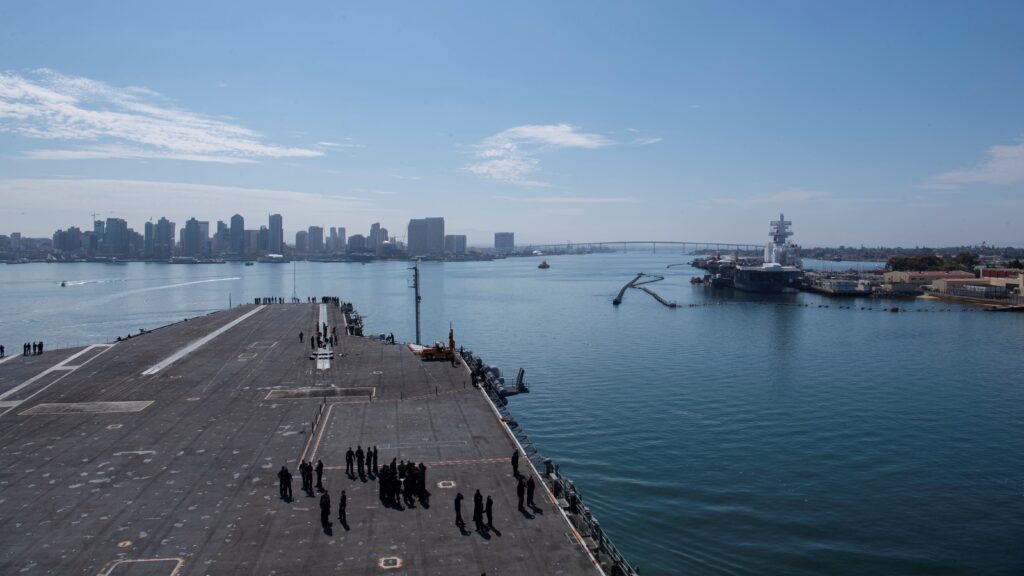
NEWPORT NEWS, Va., July 24, 2023 (GLOBE NEWSWIRE) — HII (NYSE: HII) announced today that its Newport News Shipbuilding (NNS) division has been awarded a contract from the U.S. Navy to support maintenance of nuclear-powered aircraft carriers in San Diego. The indefinite delivery, indefinite quantity (IDIQ), cost-plus incentive and award contract has a potential value of $528.4 million over five years, if all options are exercised.

The contract covers maintenance, repair and modernization efforts for Nimitz– and Gerald R. Ford-class aircraft carriers home-ported in and visiting the San Diego area. It will support emergent work, continuous maintenance availabilities, as well as Chief of Naval Operations (CNO) scheduled availabilities.

“We are honored to continue our longstanding tradition of providing world-class service to our U.S. Navy aircraft carriers in San Diego,” said Thomasina Wright, NNS vice president of fleet support programs. “For more than two decades, we’ve earned the Navy’s trust to carry out this important task, and we look forward to continuing that legacy with the highest quality, on-time and on-budget work.”

NNS is the nation’s sole designer, builder and refueler of nuclear-powered aircraft carriers.

A photo accompanying this release is available at: https://hii.com/news/hii-newport-news-shipbuilding-san-diego-2023/.


BAE Systems to deliver next-generation digital Identification Friend or Foe interrogator for the U.S. Navy

Release from BAE Systems

*****

Modernized design provides advanced capabilities to support mission success

GREENLAWN, N.Y. – July 25, 2023 – BAE Systems has received a $15 million contract from the U.S. Navy to deliver its next-generation digital interrogator for maritime vessels. The interrogator will have advanced capabilities—providing time-critical insights that reduce friendly fire incidents and support mission success in hostile environments.

BAE Systems’ modernized AN/UPX-50(C) Digital Interrogator will provide a common modular design and open system architecture. Its design enables the rapid integration of new technology within the existing footprint through software updates instead of hardware configuration.

“The flexibility of our design provides high performance without changes to existing fleet infrastructure—getting critical system updates to the warfighter faster,” said Donna Linke-Klein, director of Tactical Systems at BAE Systems. “This investment will accommodate IFF technology growth for several decades to best equip the U.S. Navy in the evolving battlespace.”

The AN/UPX-50(C) Digital Interrogator will serve the U.S. Navy fleet. It delivers high-performance, multi-function Identification Friend or Foe (IFF) solutions for air defense, weapon systems, air traffic control, and range instrumentation. Used for Mark XIIB IFF processing, including Mode 5 and Mode S, it provides secure and encrypted data exchange. It also includes a third receive channel for passive acquisition of Mode 5 Level 2 and Automatic Dependent Surveillance—Broadcast In, providing enhanced situational awareness for warfighters.

With more than 80 years of IFF experience, BAE Systems has delivered over 16,000 transponders, 1,500 interrogators, and 6,000 combined interrogator transponder systems for use on new and existing platforms, including unmanned aerial vehicles, ships, and rotary- and fixed-wing aircraft.

Work on the upgraded AN/UPX-50(C) Digital IFF Interrogator will be performed at BAE Systems’ state-of-the-art facility in Greenlawn, New York.


USSOCOM Declares Initial Operational Capability for Lockheed Martin’s New Dry Combat Submersible

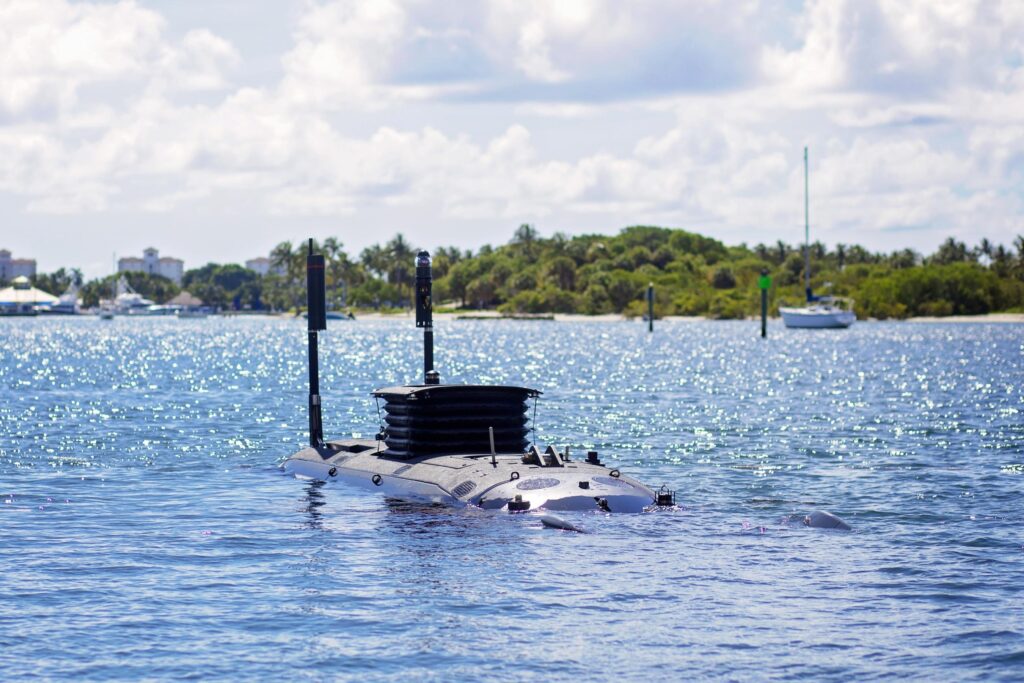
A Dry Combat Submersible, manufactured for U.S. Special Operations Command, departs from Lockheed Martin’s Palm Beach, Florida facility in transit to open water sea trials which were completed in March 2023. Photo courtesy Lockheed Martin.

Release from Lockheed

*****

WEST PALM BEACH, Fla., July 24, 2023 — U.S. Special Operations Command (USSOCOM) declared Initial Operational Capability for Lockheed Martin’s Dry Combat Submersible (DCS) last month. This milestone represents a transformational capability for USSOCOM forces in Maritime and Undersea Systems.

The Dry Combat Submersible has the potential to transform undersea warfare for special operators,” said Gregg Bauer, C6ISR vice president and general manager at Lockheed Martin. “DCS provides safe, clandestine delivery for occupants over long distances in a completely dry environment and features a lock-in and lock-out chamber. Occupants arrive at the mission warm, rested, hydrated and ready, making this vessel a key advantage in mission success.”

A Deeper Dive

With this capability, U.S. Special Operations Forces traveling extended distances below the surface of the ocean will be safe to do so without a wetsuit and without exposure to the elements. Due to the DCS’s lock-in/lock-out technology, special operators can get in and out of the vehicle while entirely submerged and undetected.

DCS is designed to transport a special operations team to their destination and enables personnel to arrive discretely to their desired exit point.

“The Lockheed Martin team is proud of the work that has gone into the development and delivery of DCS and supporting USSOCOM to this IOC milestone,” says Jason Crawford, senior program manager for Manned Combat Submersibles. “We look forward to delivering the third DCS and supporting DCS into Full Operating Capacity, filling a critical gap for USSOCOM.”

DCS is manufactured in Palm Beach, Florida. Sustainment operations will include lifecycle support, post-delivery logistics support, pilot and special operator training, and training equipment to ensure the safe and effective operation of the new capability in future special forces efforts.


U.S. Coast Guard Cutter Steadfast Returns Home after 70-day Counternarcotics Patrol in Eastern Pacific

Release from U.S. Coast Guard 13th District

*****

July 23, 2023

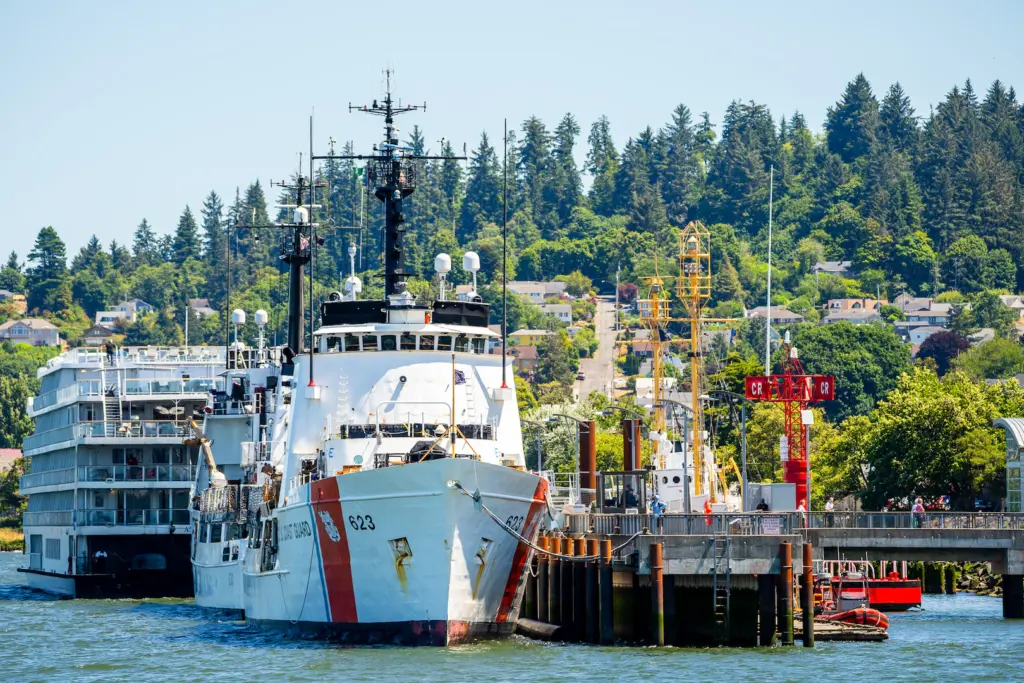
ASTORIA, Ore. – The U.S. Coast Guard Cutter Steadfast (WMEC 623) and crew returned to homeport, Friday, after a 70-day counternarcotics patrol in the Eastern Pacific. 

Steadfast’s crew disrupted the flow of illegal narcotics on three separate occasions during their patrol, preventing a combined total of more than 11,550 pounds of cocaine from reaching the U.S. 

The crew steamed more than 16,000 nautical miles conducting training, law enforcement missions, providing search-and-rescue coverage, and conducting helicopter operations while patrolling the waters between their Astoria homeport and the international waters off the coasts of Central and South America. 

While patrolling in the Eastern Pacific, June 9, Steadfast’s cutter boat crew detected a suspected narcotics-smuggling panga-style vessel. Coast Guard personnel conducted a boarding on the vessel, resulting in the interdiction of 2,200 pounds of cocaine. 

On June 18, Steadfast was notified by a Customs and Border Protection Maritime Patrol Aircraft and crew (MPA) of another suspected narcotics-smuggling vessel. Steadfast personnel launched the helicopter, which was able to visually detect the target. Steadfast’s boarding team interdicted the 50-foot low profile vessel (LPV), a type of vessel specifically designed for avoiding radar detection, which make them difficult to detect. Steadfast personnel were able to interdict and seize 6,864 pounds of cocaine from the vessel. 

During routine operations on July 9, Steadfast personnel were notified by MPA crew of a suspected narcotics-smuggling vessel transiting international waters. Steadfast launched a cutter boat with a boarding team and HITRON helicopter and aircrew to interdict the vessel. The target vessel attempted to evade the pursuit crew and began jettisoning suspected packaged narcotics overboard. The gunner aboard the HITRON helicopter used disabling fire to stop the engines of the smuggling vessel, ending the pursuit. Steadfast personnel recovered the jettisoned contraband, resulting in the seizure of another 2,464 pounds of cocaine. 

The seized contraband was offloaded in San Diego during Steadfast’s transit home. 

The ongoing battle against drug cartels in the Eastern Pacific theater demands united efforts on all fronts. Between initial detection, gathering intelligence, interdiction, and case prosecution, the Coast Guard works closely with partner nations and other U.S. agencies to interrupt the flow of illegal narcotics and chip away at the influence of cartels. 

“This patrol marked another epic adventure for the crew of Steadfast,” said Cmdr. Brock Eckel, Steadfast’s commanding officer. “The crew’s teamwork and dedication were key to our operational success and their camaraderie made memories of a lifetime at sea and in exotic foreign ports. In keeping with the traditions of the sea services, I am also proud to have inducted 55 pollywogs into the glorious realm of Neptunus Rex’s Kingdom as Honorable Shellbacks.” 

Notably, Steadfast became the second known U.S. military vessel to cross the equator on the 4th of July, earning 55 crew members the title of “Star-Spangled Shellbacks.” Steadfast’s crew was able to participate in a line crossing ceremony that solidified crew camaraderie and upheld the long-practiced traditions of seagoing services. 

In addition to the ship’s successes in the counternarcotics arena, Steadfast and crew enjoyed several new and exciting experiences in other areas. During their port call in Panama City, Steadfast crew members spent time bolstering relationships with the Panamanian Navy, participating in a volleyball tournament and a barbeque. One of the ship’s small boat crews also rescued a sea turtle that had been entangled in fishing gear, cutting it free and releasing it back to the sea. 

Commissioned in 1968, Steadfast is a 210-foot Reliance-class medium endurance cutter homeported on the Oregon coast. The cutter and crew deploy along the western seaboard from North America to South America conducting missions such as living marine resource law enforcement, counter-narcotics and migrant smuggling, and search-and-rescue operations. 


USMC Completes 20,000 Flight Hours with MUX MALE MQ-9A

Release from General Atomics

*****

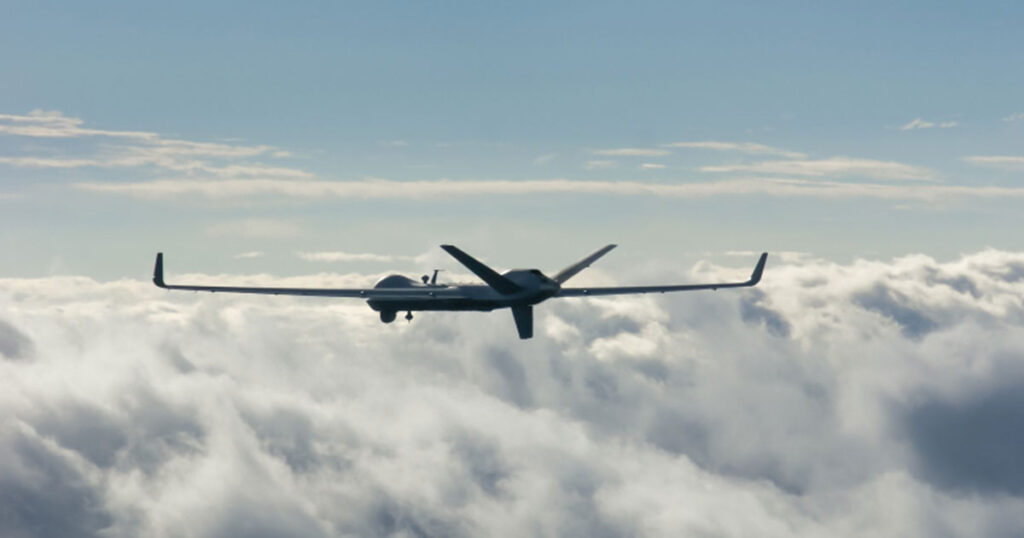
SAN DIEGO – 24 July 2023 – General Atomics Aeronautical Systems, Inc. (GA-ASI) congratulates the U.S. Marine Corps (USMC) on achieving a significant milestone of surpassing 20,000 flight hours with their Marine Air-Ground Task Force (MAGTF) Unmanned Expeditionary (MUX) Medium-Altitude, High-Endurance (MALE) MQ-9A Unmanned Aircraft System (UAS).

To date, GA-ASI has delivered eight MQ-9A UAS to the USMC. Two of these MQ-9A aircraft are actively engaged in operational missions, playing a vital role in supporting mission-critical Marine Corps objectives. The USMC awaits delivery of 12 additional aircraft, which will fulfill their goal of three squadrons by 2025.

“This strategic acquisition of MQ-9As underscores the USMC’s commitment to strengthening their aerial surveillance capabilities and demonstrates their confidence in GA-ASI’s expertise in delivering top-tier UAS,” said GA-ASI President David R. Alexander.

Renowned for its fault-tolerant flight control system and triple-redundant avionics system architecture, the MQ-9A UAS embodies the industry’s highest standards of reliability and performance, surpassing those of many manned aircraft.

The USMC fleet will ultimately be entirely composed of the MQ-9A Extended Range (ER) configuration, enhanced with wing-borne fuel pods and reinforced landing gear. This model has been specifically designed to extend its endurance to more than 30 hours, enabling persistent long-endurance surveillance capabilities. Equipped with Full-Motion Video and both a Synthetic Aperture Radar and a Moving Target Indicator/Maritime Mode Radar, this advanced system provides the USMC with a comprehensive real-time situational awareness picture.

The USMC’s 20,000 flight hours with MQ-9A represent an impressive accomplishment in the field of unmanned aviation. GA-ASI is honored to have played a role in this achievement and looks forward to continuing its collaboration with the USMC to further advance the capabilities of unmanned systems and support their growing UAS squadrons.


President Biden Announces Intent to Nominate Key Roles Within the U.S. Military

Admiral Lisa Franchetti has been nominated to become the next Chief of Naval Operations.

Release from The White House

*****

WASHINGTON – Today, President Joe Biden announced his intent to nominate the following four individuals for key roles within the U.S. military. Each are highly decorated naval officers with extensive operational experience. They will help ensure that the U.S. Military, and in particular the U.S. Navy, remain the most powerful and capable forces in the world at this critical moment.

Nominee for Chief of Naval Operations: Adm. Lisa Franchetti
Adm. Lisa Franchetti currently serves as the Vice Chief of Naval Operations.  She is a surface warfare officer with extensive operational and policy experience.  She previously served as the Director for Strategy, Plans, and Policy for the Joint Chiefs of Staff, and as commander of the U.S. Sixth Fleet.  She has also served as commander of U.S. Naval Forces Korea, commander of Carrier Strike Group 9, and commander of Carrier Strike Group 15.  She received her commission in 1985 through the Naval Reserve Officer Training Corps Program at Northwestern University, where she received a Bachelor of Science in Journalism. She also attended the Naval War College and holds a master’s degree in organizational management from the University of Phoenix.  If confirmed, Admiral Franchetti will be the first woman to serve as Chief of Naval Operations and on the Joint Chiefs of Staff.

Nominee for Vice Chief of Naval Operations: Vice Adm. James Kilby
Vice Adm. James Kilby currently serves as the Deputy Commander of U.S. Fleet Forces Command, which trains, equips, certifies, and provides combat-ready Navy forces to Combatant Commands around the world. Prior to that, he served as Deputy Chief of Naval Operations for Warfighting Requirements and Capabilities, N-9, Office of the Chief of Naval Operations. His first flag assignment was standing up Naval Surface and Mine Warfighting Development Center and he also served as commander of the Carl Vinson Strike Group.  He is a 1986 graduate of the U.S. Naval Academy.

Nominee for Commander of Indo-Pacific Command: Adm. Samuel Paparo
Adm. Samuel Paparo has extensive experience serving in the Indo-Pacific region, and currently serves as the commander of the U.S. Pacific Fleet, the world’s largest fleet command in a priority region for the United States. He is a U.S naval aviator and has flown more than 6,000 hours, with 1,100 carrier landings. He previously served as commander of U.S. Naval Forces Central Command/U.S. 5th Fleet/Combined Maritime Forces. He graduated from Villanova University and was commissioned in 1987. He earned a Master of Arts in International Studies from Old Dominion University and a Master of Science in Systems Analysis from the Naval Postgraduate School. He is also a graduate of the Air Command and Staff College, Air War College, Naval War College, and the Joint and Combined Warfighting School.

Nominee for Commander of Pacific Fleet: Vice Adm. Stephen “Web” Koehler
Vice Adm. Stephen T. “Web” Koehler currently serves as the Director for Strategy, Plans, and Policy for the Joint Chiefs of Staff. A naval aviator, he previously served as the Commander of the U.S. Third Fleet, Director of Fleet Training at U.S. Fleet Forces Command, Deputy Commander of U.S. Pacific Fleet, and Director for Operations at U.S. Indo-Pacific Command. Koehler is a 1986 graduate of the University of Colorado at Boulder where he received a Bachelor of Science in Physics and was commissioned through the Naval Reserve Officer Training Corps Program. He holds a master’s degree in National Security and Strategic Studies from the Naval War College and is a graduate of the Joint Staff College and the Navy Nuclear Power Program.