BOLLINGER SHIPYARDS DELIVERS 54th FAST RESPONSE CUTTER TO U.S. COAST GUARD
Release From Bollinger Shipyards

USCGC William Sparling is the fifth of 6 FRCs to be homeported in Boston, MA

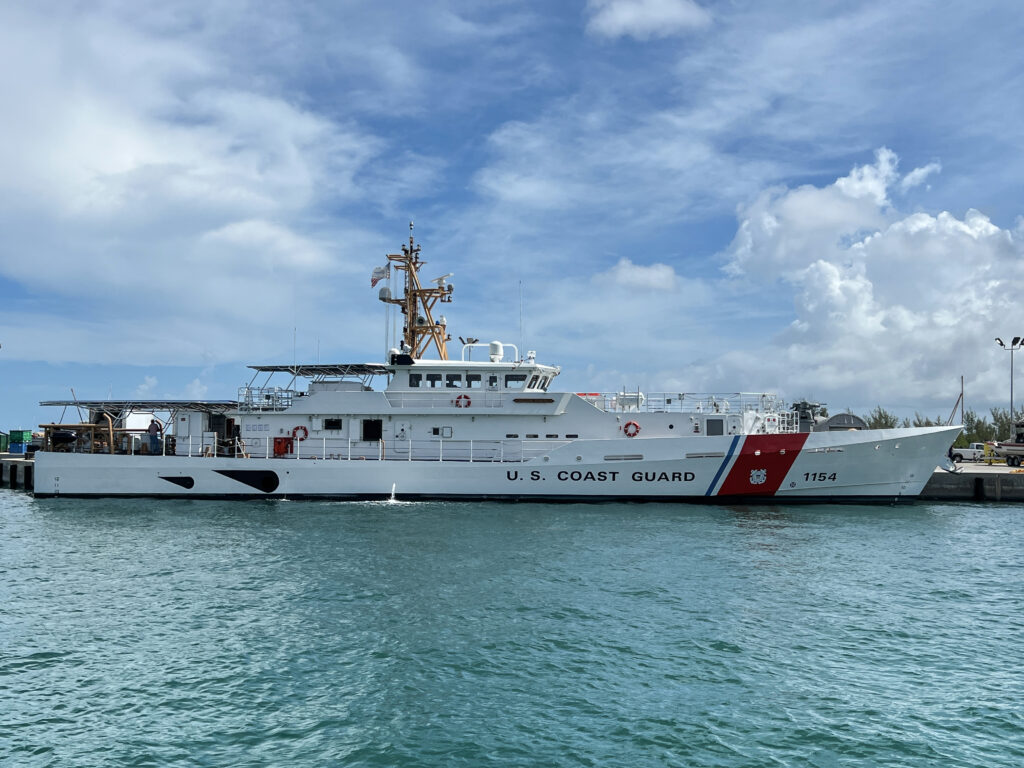
LOCKPORT, La., — (July 20, 2023) – Bollinger Shipyards LLC (“Bollinger”) has delivered the USCGC William Sparling to the U.S. Coast Guard in Key West, Florida. This is the 180th vessel Bollinger has delivered to the U.S. Coast Guard over a 35-year period and the 54th Fast Response Cutter (“FRC”) delivered under the current program.

“We’re incredibly proud to deliver another Fast Response Cutter to be homeported in Boston, the birthplace of the U.S. Coast Guard,” said Bollinger President & C.E.O. Ben Bordelon. “We’re confident that pound for pound, the quality and capabilities of the FRC platform is unmatched, and that this vessel will outperform its mission requirements and expectations in the challenging conditions where it will operate in the North Atlantic. Our unique experience building for the Coast Guard is unparalleled and has shown time and time again that we can successfully deliver the highest quality vessels on a reliable, aggressive production schedule. We look forward to continuing our historic partnership with the U.S. Coast Guard.”

The USCGC William Sparling will be the fifth of six FRCs to be homeported in Sector Boston, which is known as “The Birthplace of the Coast Guard.” The sector is responsible for coastal safety, security, and environmental protection from the New Hampshire-Massachusetts border southward to Plymouth, Massachusetts out to 200nm offshore. Sector Boston directs over 1,500 Active Duty, Reserve, and Auxiliary members whose mission is to protect and secure vital infrastructure, rescue mariners in peril at sea, enforce federal law, maintain navigable waterways, and respond to all hazards impacting the maritime transportation system and coastal region.

The Coast Guard’s FY2024 Unfunded Priorities List includes, as one of its items, an unfunded priority for procuring four more FRCs (which would be the 66th through 69th in the program) to provide increased Coast Guard presence and engagement with allied and partner countries in the Indo-Pacific region.

Each FRC is named for an enlisted Coast Guard hero who distinguished themselves in the line of duty. Coxswain William Sparling was awarded a Silver Star by Admiral Chester Nimitz for his combat actions during the invasion of Guadalcanal. Forming part of the initial assault wave, Boatswain’s Mate Second Class Sparling landed his embarked troops, and then made three return trips in the face of terrific enemy fire to land equipment, ammunition and supplies.

ABOUT THE FAST RESPONSE CUTTER PLATFORM

The FRC is an operational “game changer,” according to senior Coast Guard officials. FRCs are consistently being deployed in support of the full range of missions within the United States Coast Guard and other branches of our armed services. This is due to its exceptional performance, expanded operational reach and capabilities, and ability to transform and adapt to the mission. FRCs have conducted operations as far as the Marshall Islands—a 4,400 nautical mile trip from their homeport. Measuring in at 154-feet, FRCs have a flank speed of 28 knots, state of the art C4ISR suite (Command, Control, Communications, Computers, Intelligence, Surveillance, and Reconnaissance), and stern launch and recovery ramp for a 26-foot, over-the-horizon interceptor cutter boat.

ABOUT BOLLINGER SHIPYARDS LLC

Bollinger Shipyards LLC (www.bollingershipyards.com) has a 76-year legacy as a leading designer and builder of high-performance military patrol boats and salvage vessels, research vessels, ocean-going double hull barges, offshore oil field support vessels, tugboats, rigs, lift boats, inland waterways push boats, barges, and other steel and aluminum products from its new construction shipyards as part of the U. S. industrial base. Bollinger has 13 shipyards, all strategically located throughout Louisiana and Mississippi with direct access to the Gulf of Mexico, the Mississippi River and the Intracoastal Waterway. Bollinger is the largest vessel repair company in the Gulf of Mexico region.
Marine Corps Releases Command Investigation Into the MV-22B Osprey Mishap in California on June 8, 2022

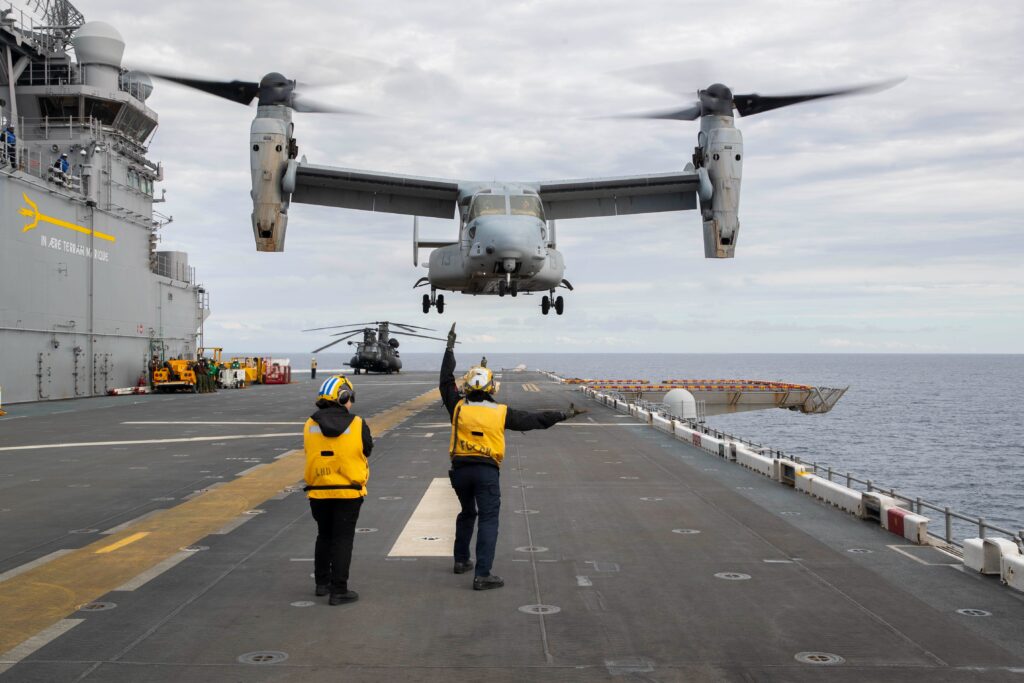
PACIFIC OCEAN (Dec. 6, 2022) – An MV-22 Osprey tiltrotor aircraft assigned to Marine Medium Tiltrotor Squadron (VMM) 364 takes off from the flight deck of amphibious assault carrier USS Tripoli (LHA 7).

Statement from the V-22 Joint Program Office (PMA-275) 

On June 8, 2022, five U.S. Marines from the “Purple Foxes” of Marine Medium Tiltrotor Squadron 364 (VMM-364) lost their lives during an aviation mishap onboard an MV-22 Osprey. The investigation into the mishap’s cause is complete, and Marine Corps leaders have shared the results with the families. 

The investigation revealed no error on the part of the pilots and aircrew, and confirmed no maintenance errors led to the mishap. It was determined the pilots and aircrew were conducting routine flight operations in accordance with applicable regulations when a catastrophic, unpreventable and unanticipated mechanical failure occurred. 

The investigation revealed the cause of the mishap was a dual hard clutch engagement (HCE) which created a Single Engine and Interconnect Drive System (Single Engine/ICDS) failure; the failure resulted in a catastrophic loss of thrust on the right-hand (RH) proprotor. The degraded drivetrain caused by the dual HCE event and subsequent Single Engine/ICDS failure created an unrecoverable departure from controlled flight, resulting in the tragic crash that occurred on June 8, 2022.

The V-22 Joint Program Office (PMA-275) continues to take decisive actions to address the HCE mechanical challenge. Since 2010, there have been numerous actions associated with defining, mitigating or eliminating HCEs. The results of this investigation have further driven efforts to mitigate the HCE phenomenon, identify root cause and prevent it from occurring. 

“Our latest research and mitigation efforts produced several new findings that significantly increased our understanding of the HCE phenomenon,” said Col. Brian Taylor, PMA-275 program manager. “While definitive root cause for all HCE events has not yet been identified, we are using this new information to implement solutions designed to reduce the likelihood of an HCE event and increase aircrew safety.”

Through a combination of efforts, including the recent input quill assembly replacement bulletin in February 2023, the risk of a HCE event occurring was reduced by greater than 99 percent. The V-22 community executed 22,258 flight hours between February 3, 2023 and July 19, 2023, with zero HCE events. 

“The completion of this investigation does not close the HCE effort within PMA-275,” Taylor added. “The implemented IQA life limit, which reduced overall V-22 HCE risk by greater than 99 percent, was not a result of this investigation but is certainly reinforced by its findings.” 

“The loss of these five Marines is tragic and, while there will always be inherent risk in military aviation, we are working tirelessly to identify and mitigate risk across the V-22 platform; we are committed to the safety of the Marines, Airmen, Sailors, and the Japan Ground Self Defense Force, that fly this platform every day,” he said.

HQMC Statement:

The investigation into the cause of the Marine Medium Tiltrotor Squadron 364, 3rd Marine Aircraft Wing MV-22B Osprey mishap in Glamis, California, on June 8, 2022, is complete. We have provided the results of the investigation to the families of our fallen Marines and provided all available resources to them during this difficult time.

The loss of Capt. Nicholas P. Losapio, Capt. John J. Sax, Cpl. Nathan E. Carlson, Cpl. Seth D. Rasmuson, and Lance Cpl. Evan A. Strickland continues to be felt across the Marine Corps.

The investigation revealed the cause of the mishap was a dual hard clutch engagement (HCE) which created a Single Engine and Interconnect Drive System (Single Engine/ICDS) failure; the failure resulted in a catastrophic loss of thrust on the right-hand (RH) proprotor. The degraded drivetrain caused by the dual HCE event and subsequent Single Engine/ICDS failure created an unrecoverable departure from controlled flight, resulting in the tragic crash that occurred on June 8, 2022.

It is clear from the investigation that there was no error on the part of the pilots and aircrew and nothing they could have done to anticipate or prevent this mishap. They were conducting routine flight operations in accordance with applicable regulations when this catastrophic and unanticipated mechanical failure occurred. The investigation also found there was no maintenance error on the part of the team whose job it was to prepare the aircraft to fly on the day of the flight.

The Marine Corps has taken the following actions in coordination with the original equipment manufacturer: design and field a new Proprotor Gearbox Input Quill Assembly that mitigates unintentional clutch disengagements and hard clutch engagement events; improve MV-22B drivetrain and flight control system software, drivetrain component material strength, and inspection requirements; and integrate a crash survivable, high-temperature, fire-resistant flight data recorder into all MV-22B aircraft. All USMC MV-22B commands will also present this investigation to pilots and aircrew to discuss the hazards of hard clutch engagements and its potential to cause a Single Engine/Interconnect Drive System failure compound emergency.

On February 3, 2023, the Marine Corps, Navy, and Air Force Special Operations Command issued Dynamic Component Bulletin 63 which directed the replacement of all input quill assemblies over a predetermined flight hour threshold at the recommendation of the V-22 Joint Program Office. Replacing the input quill assembly at this threshold significantly reduces the likelihood of a Hard Clutch Engagement occurring by 99 percent, based on the data.

We will never forget Capt. Nicholas P. Losapio, Capt. John J. Sax, Cpl. Nathan E. Carlson, Cpl. Seth D. Rasmuson, and Lance Cpl. Evan A. Strickland, and their loved ones, as we continue with our quest to provide the safest, most lethal platforms to the men and women who fly them.

The redacted command investigation is available to the public via the Marine Corps Freedom of Information Act website: hqmc.marines.mil/Agencies/USMC-FOIA/FRR/.


USS Illinois Returns Home from Indo-Pacific Deployment

Release from Commander, Submarine Force, U.S. Pacific Fleet Public Affairs

*****

July 19, 2023

By Chief Petty Officer B. Biller, Commander, Submarine Force, U.S. Pacific Fleet Public Affairs

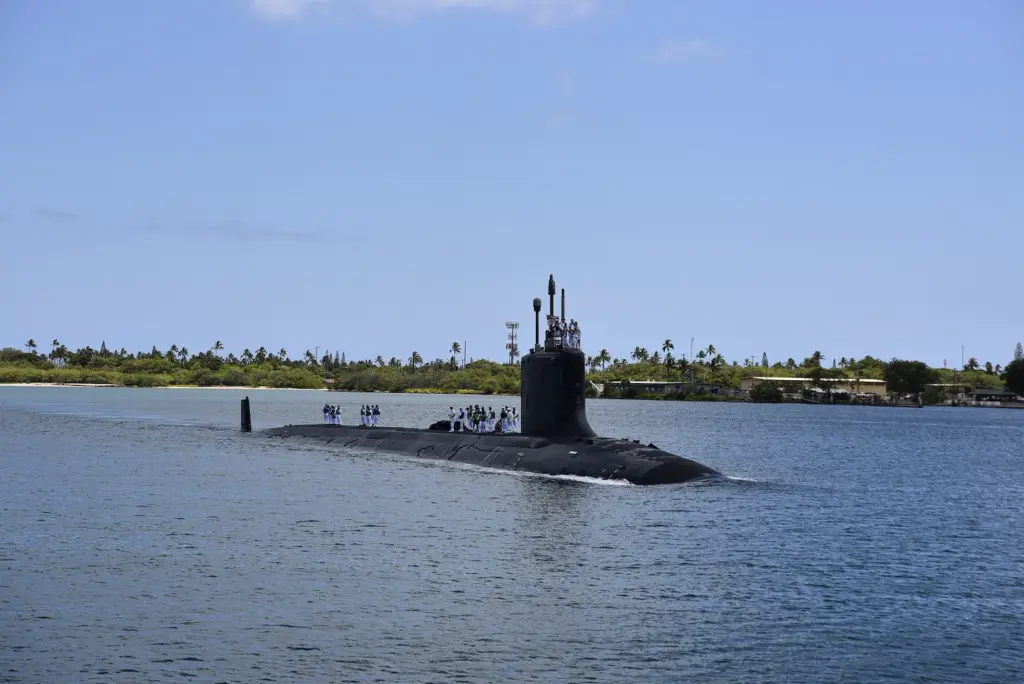
JOINT BASE PEARL HARBOR-HICKAM, Hawaii  –  The Virginia-class fast-attack submarine USS Illinois (SSN 786) returned to Joint Base Pearl Harbor-Hickam on July 3, following a seven-month deployment.

Illinois deployed from Pearl Harbor in December 2022, during which the submarine and its crew performed a full spectrum of operations, to include anti-submarine and anti-surface warfare missions in the Indo-Pacific region.

“The Illinois crew demonstrated the extreme resiliency and endurance required to operate at sea,” said Illinois Commanding Officer Cmdr. Daniel McNab, from Brewster, Minnesota. “Operating a deployed submarine through the most remote parts of the Pacific is incredibly challenging. The strength of our families and support from home was essential to accomplishing our mission of defending a free and open Indo-Pacific region. It has been the highest honor of my career to serve at sea with this amazing crew. I could not be more proud of my Sailors, their families, our Illinois supporters, and the dedication each of them has to our nation.”

During the deployment, the crew traveled approximately 35,000 nautical miles under the sea. The Sailors aboard Illinois trained to be combat-ready prior to departure and maintained those standards throughout the deployment.

“The grit and positive attitude displayed by the entire Illinois crew has been extraordinary,” said Illinois Chief of the Boat Master Chief Fire Control Technician (Submarines) Mark Walter, from Burke, Virginia. “Every day, Illinois Sailors demonstrated our ability to maintain a sustained presence at sea. Special thanks are owed to all the families for keeping our home front secure. Our nation is stronger and our loved ones are safer because of your sacrifice.”

During the deployment, 41 Illinois Sailors became fully qualified in submarines and earned their Submarine Warfare Specialist designation known as “dolphins”.

“The most unforgettable moment of deployment was when I qualified in submarines, especially because I was pinned on my birthday,” said Torpedoman Fireman Apprentice Jeremiah J. Bruce from Montgomery, Alabama. “Earning my silver dolphins was tough and it took a lot of sleepless nights of studying. It was achievable with help from the entire crew along the way. I’m extremely proud and appreciative to be a part of the Illinois team.”

Illinois was commissioned Oct. 29, 2016, and is the 13th Virginia-class submarine. It is 377 feet long with a beam of 34 feet. USS Illinois is the second ship to be named for the nation’s 21st state, the first being the battleship USS Illinois (BB 7) which was in service from 1901 to 1920, serving as part of President Theodore Roosevelt’s “Great White Fleet”.


USS Little Rock: Back with a Vengeance

Release from U.S. Naval Forces Southern Command

*****

July 19, 2023

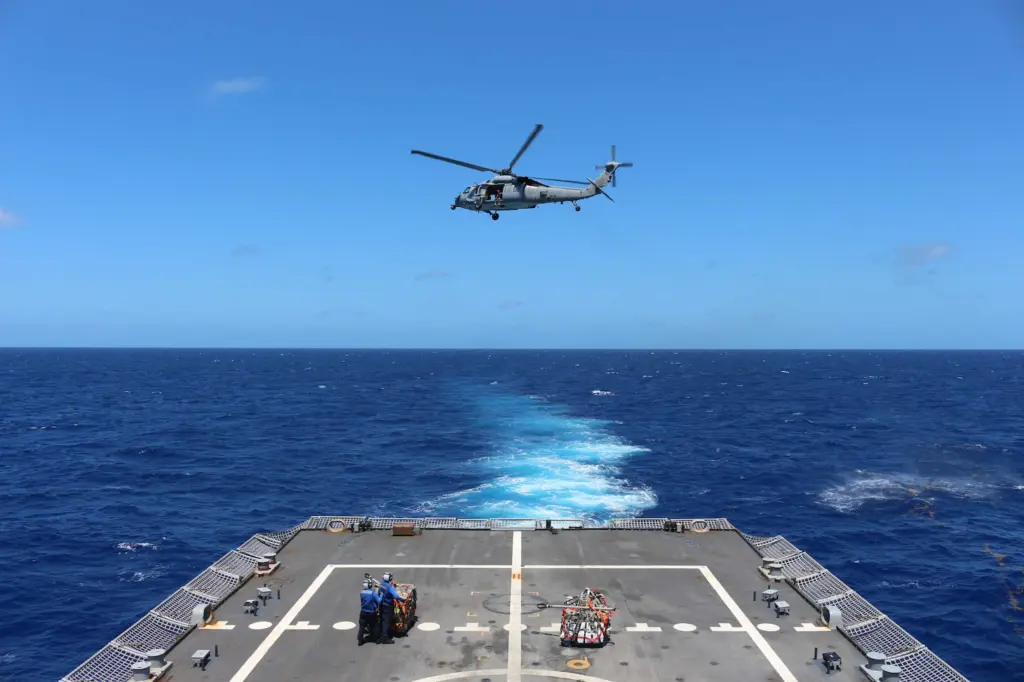
Caribbean Sea  –  The Freedom-variant littoral combat ship USS Little Rock (LCS 9) with an embarked U.S. Coast Guard (USCG) Law Enforcement Detachment (LEDET) has made its presence known in the fight against illicit drug-trafficking since entering the U.S. Southern Command (USSOUTHCOM) area of responsibility (AOR).
 

In early April, the team interdicted a go-fast vessel (GFV), detained four suspected drug smugglers, and recovered 50 kilograms of cocaine. Based on observations from the deployed helicopter, the suspected smugglers had jettisoned an estimated 650 kilograms of cocaine.

Later that month, while on patrol in the Caribbean, a maritime patrol aircraft spotted a suspected drug smuggling GFV and vectored Little Rock in for an intercept. In response, Little Rock deployed a helicopter and a sea asset. LEDET members saw a package get tossed into the water before the GFV stopped and the LEDET gained positive control of the vessel. After receiving permission to conduct a boarding, the LEDET detained three suspected drug smugglers and recovered an estimated 570 kilograms of suspected cocaine worth an approximate street value of more than $14.25 million. This was just the beginning.
 
In early May, the Little Rock team interdicted another GFV, detained two suspected drug smugglers, confiscated one firearm, and recovered an approximated 652 kilograms of cocaine. Later that month, the Little Rock had two more interdictions amounting to the detainment of six suspected drug smugglers and a recovery of an estimated 2,530 kilograms of cocaine overall.

“Little Rock is here to bring down the hammer on illicit trafficking in the Caribbean,” said Cmdr. Mike Chesnut, commanding officer of the USS Little Rock. “Together with JIATF-S (Joint Interagency Task Force – South) and our embarked team, we will pursue and disrupt Transnational Criminal Organizations to support stability at home and throughout the Americas.”

The USS Little Rock has had six GFV interdictions to date and Little Rock will continue to raise this number. As long as the ship is assigned to Commander, Task Force 45 (CTF-45), she will continue interdiction operations. CTF-45 is the 4th Fleet task force charged with executing combined naval operations, building and strengthening Latin American, south of Mexico, and Caribbean maritime partnerships, and acting as a DoD ready service provider to JIATF-S in support of counter illicit-drug trafficking operations in the Central and South American waters.

U.S. Naval Forces Southern Command/U.S. 4th Fleet supports USSOUTHCOM’s joint and combined military operations by employing maritime forces in cooperative maritime security operations to maintain access, enhance interoperability, and build enduring partnerships in order to enhance regional security and promote peace, stability and prosperity in the Caribbean, Central and South American region.

LEDETS are deployable specialized forces of the U.S. Coast Guard that enforce U.S. laws and treaties in the maritime domain. LEDETs conduct counter-smuggling operations as their primary mission from U.S. and allied platforms. The U.S. Coast Guard is simultaneously a member of the Joint Force, a law enforcement organization, a regulatory agency, and a member of the intelligence community. The U.S. Coast Guard’s wide suite of specialized maritime capabilities, competencies, and authorities enhances the Joint Force’s comparative advantage at sea.


HII is Awarded Naval Surface Warfare Center’s Integrated Training Systems Contract

Release from HII

*****

MCLEAN, Va. (July 19, 2023) — HII’s (NYSE: HII) Mission Technologies division has been awarded a $41 million contract to provide integrated training systems installation and sustainment (ITSIS) for the U.S. Navy.

The task order was awarded under the Naval Sea Systems Command’s (NAVSEA) SeaPort Next Generation contract to support the Naval Surface Warfare Center Dahlgren Division Dam Neck Activity (NSWCDD DNA) and has a one-year base period plus one six-month extension.

The work expands upon HII’s existing support of training systems to the customer.

“HII is excited to continue our partnership with NAVSEA and deliver shipboard and shore-site integrated training system hardware and software installation and life-cycle sustainment services,” said Ryan Norris, president of Mission Technologies’ Fleet Sustainment business group. “We have built a strong team with extensive experience installing, configuring, maintaining, modernizing and securing Navy networks, tactical systems and C6ISR systems. We look forward to supporting the systems that are critical to training naval warfighters and improving fleet readiness.”

With more than 30 years of experience delivering shipboard and shore-based installation and sustainment services to the U.S. Navy, HII’s team will provide hardware and software upgrades, system maintenance, training system integration, curriculum development and fleet training, cybersecurity, lab support, integrated logistics support, configuration management and life-cycle sustainment of integrated training systems.


SECNAV ACCEPTS MIAMI-DADE’S INVITATION TO HOST FLEET WEEK MIAMI IN 2024

Release from Commander, Navy Region Southeast

*****

By CNRSE PAO

18 July 2023

MIAMI (July 14, 2023) – Secretary of the Navy Carlos Del Toro joined with Miami-Dade County Mayor Daniella Levine Cava to announce the inaugural Fleet Week Miami in 2024.
 
The two dignitaries made the announcement July 14 at PortMiami along with other military and civilian officials.  Fleet Week Miami will be held May 7-14, 2024 at PortMiami, and will bring in excess of 800 service members to south Florida whose primary mission will be to contribute to a growing understanding of the Navy’s importance in our country’s national defense.  The week-long event is expected to feature both US Navy and US Coast Guard vessels to showcase military technology to the public.
 
“We are honored the U.S. Navy has accepted Miami-Dade County’s invitation to host Fleet Week at PortMiami in 2024,” Levine Cava said. “Residents and visitors will be able to see ships up close, board them and take tours as well as participate in community events. We are also excited the visiting sailors and marines will be able to enjoy our attractions, engage in community projects and experience all of Miami-Dade’s unique cultural offerings.”
 
Other speakers at the news conference included the Honorable Oliver G. Gilbert, III, Chairman, Miami-Dade Board of County Commissioners; the Honorable Carlos Del Toro, Secretary of the Navy; and Hydi Webb, PortMiami Chief Executive Officer.  
 
Senior military present for the announcement included: Rear Adm. Douglas Schofield, Coast Guard Commander District 7; Rear Adm. Allan Thomas, Director of Operations SOUTHCOM; and Capt. Ian Johnson, Commander Navy Region Southeast.
 
The U.S. Navy visited Miami through its Navy Week program in January. The successful event was one of 15 Navy Weeks nationwide to take place in 2023, and it brought a variety of assets, equipment, and personnel to a single city for a weeklong series of engagements designed to bring America’s Navy closer to the people it protects. Miami Navy Week gave the community an opportunity to learn about the Navy, its sailors and its importance to national security and prosperity, and its success helped spur the Fleet Week Miami initiative.
 
“Thank you Mayor Levine Cava, Miami-Dade County and the city of Miami for continuing to host our service members, and for opening up your port to our fleet,” said Secretary of the Navy Carlos Del Toro. “Fleet Week in Miami will be an unforgettable opportunity for Miamians and tourists alike to learn about the incredible people who make up our Navy, Marine Corps and Coast Guard, and their importance to our national security and prosperity.”  


Heavyweight Torpedo Contributes to U.S. Navy’s Undersea Dominance

Release from SAIC

*****

Heavyweight Torpedo Contributes to U.S. Navy’s Undersea Dominance

  • The MK48 torpedo is the U.S. Navy’s sole submarine-launched anti-submarine warfare and anti-surface warfare weapon.
  • SAIC serves as the prime integrator for the MK48, providing integration as well as test support for the torpedo’s subsystems.  
  • Integration of the MK48’s afterbody/tailcone involves more than 500 piece parts.

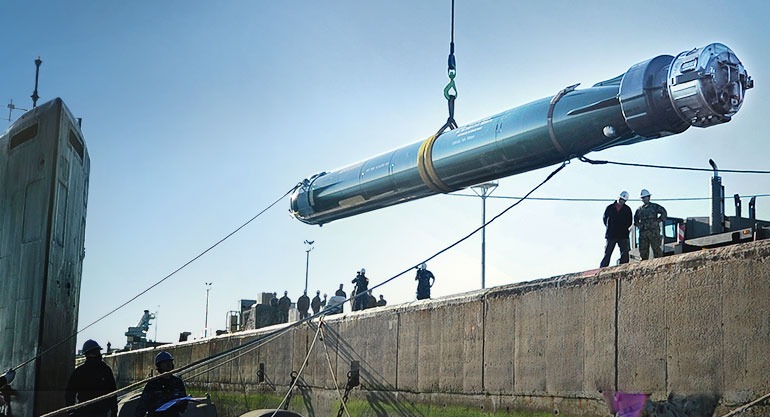
The MK48 torpedo is the U.S. Navy’s sole submarine-launched anti-submarine warfare and anti-surface warfare weapon. All classes of Navy submarines use it for achieving sea control and neutralizing or destroying threats to high-value vessels.

As the prime integrator of the MK48 torpedo, SAIC builds, integrates and tests the afterbody/tailcone sections and fuel tanks of the MK48 Mod 7 heavyweight torpedo for Naval Sea Systems Command (NAVSEA).

Often considered the torpedo’s engine room, the afterbody/tailcone controls the torpedo’s propulsion, starts and applies the power necessary to drive it from the time it is launched until it reaches its target, and steers it on its course to the mark.

The afterbody/tailcone comprises 26 major sub-assemblies requiring the integration of greater than 500 piece parts.

SAIC‘s team of MK48 subject matter experts works primarily in Bedford, Ind., near Naval Surface Warfare Center Crane Division, where the majority of the torpedo integration work takes place. The contract’s program and engineering management team is based in Middletown, R.I., near Naval Undersea Warfare Center (NUWC) Division Newport. SAIC completed the design, development and delivery of an automated electrical power system test set, which is used to test the torpedo’s alternator/regulator assembly, in Indianapolis. 

Building on past success

For more than a decade, SAIC has provided engineering, technical and management services in support of NUWC’s propulsion test facility. Our team performs facility operations, maintenance, upgrades and testing in support of the Navy’s only land-based torpedo testing facility. In this capacity, SAIC’s engineers and technicians routinely integrate MK48 afterbody/tailcones in preparation for tests.

The facility can test torpedoes across their full speed and depth envelopes. Our team runs these tests to capture very unique performance data for NAVSEA.


Bell Expands H-1 Advanced Maintenance Training Academy for USMC

Release from Bell Textron

*****

Jul 19, 2023

Bell Expands H-1 Advanced Maintenance Training Academy for USMC

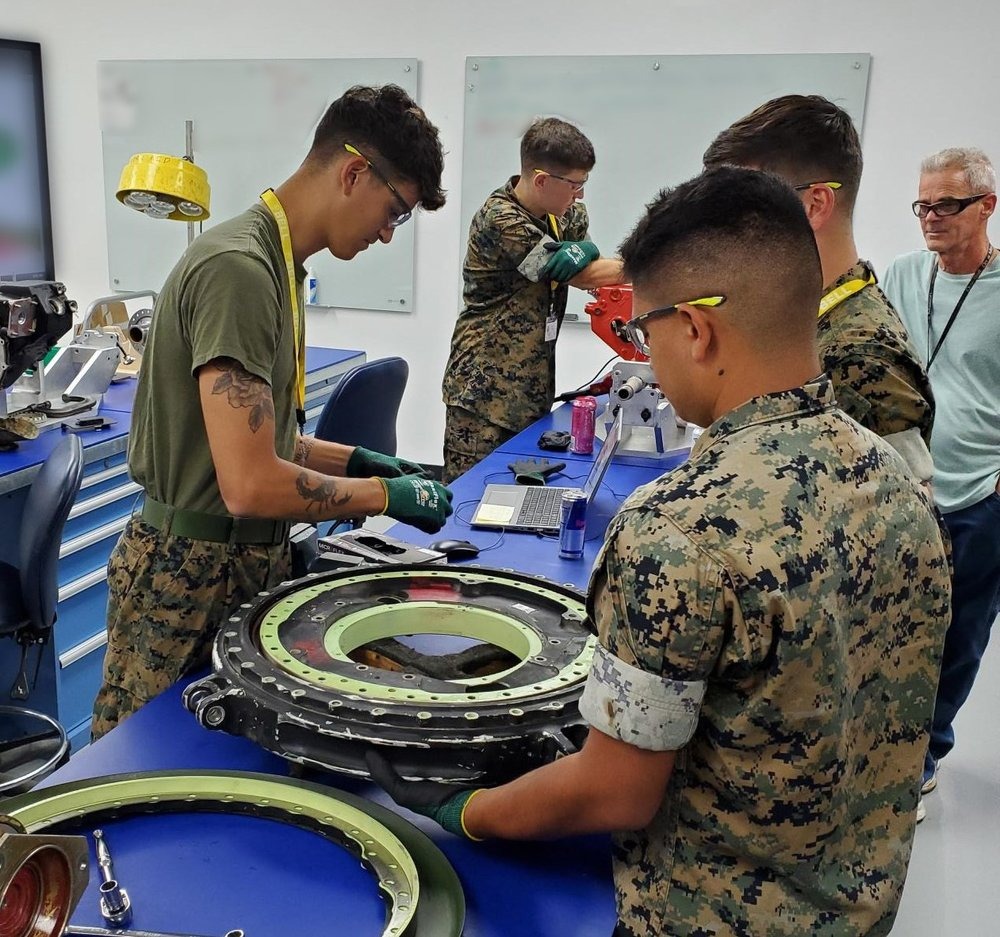
What does Marine Corps Air Station (MCAS) Camp Pendleton, MCAS Futenma, Bell’s Amarillo Assembly Center, and Bell’s Repair and Overhaul Center have in common? They are all locations where U.S. Marine Corps aircraft maintainers come to receive top-of-the-line maintenance training for the Bell H-1 aircraft line.

Bell has launched its H-1 Advanced Maintenance Training Academy (AMTA) to provide long-term fleet support through a week-long, interactive training program taught by Bell H-1 maintenance instructors and specialists. The training is an immersive experience coupled with 3-D courseware and hands-on technical instruction for routine maintenance repairs on items such as flight controls, gearboxes, swashplates, and both rotor blades.

“Through the H-1 AMTA, Marine maintainers can take the training knowledge that they receive here and implement it directly on the H-1 flight line, ensuring mission-focused fleet readiness at all times,” said Steve Rudat, H-1 AMTA instructor, Bell.

Marine maintainers from various Marine Aviation Logistics Squadrons (MALS) and Marine Light Attack Helicopter Squadrons (HMLA) located around the world, including MALS-29, MALS-39, HMLA-167, HMLA-169, HMLA-267, HMLA-367, HMLA-369, and HMLAT-303, have attended the H-1 AMTA offered at one of the participating locations.

Most recently, MCAS Camp Pendleton was added to the list of locations that host the H-1 AMTA.

“The goal of the AMTA is for Marines to develop a deeper understanding of the H-1 platform and how the different aircraft systems function together. Whether they are at their home squadron or deployed on a mission, our AMTA program provides H-1 Marine maintainers with the skills to keep their aircraft on the flight schedule,” said Bryan Riley, H-1 fleet support manager, Bell.

Since its launch, over 100 Marine maintainers have successfully completed the training program.

“At Bell, we are committed to providing top-tier after-market support to our customers, and this is one of the key ways that we can support the mission of the HMLA community,” said Nate Green, H-1 program manager, Bell.

The Bell H-1 line is purpose-built to support the U.S. Armed Forces. Bell continues to modernize the Bell AH-1Z Viper and Bell UH-1Y Venom to serve the future generations of warfighters. The current line of the Viper and Venom have proven to be two of the most agile, dependable, and interoperable aircrafts on the market.


Coast Guard crew offloads more than $158 million worth of narcotics in San Diego

Release from the U.S. Coast Guard 11th District

*****

July 17, 2023

USCG District 11 Public Affairs

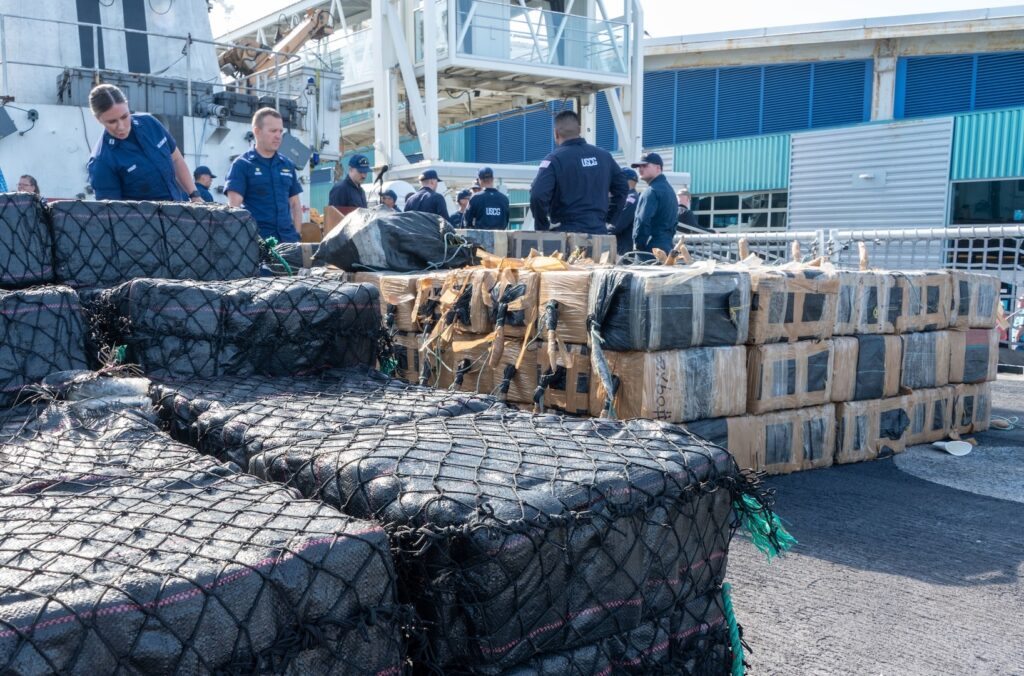
SAN DIEGO — The crew of the Coast Guard Cutter Steadfast (WMEC 623) offloaded more than 11,600 pounds of cocaine and 5,500 pounds of marijuana worth an estimated $158 million in San Diego, Monday.

The interdictions were conducted during counter-narcotics patrols in the Eastern Pacific Ocean between May and July by crews of the Coast Guard Cutters Vigilant (WMEC 617), Mohawk (WMEC 913) and Steadfast.

“The crews of the Coast Guard Cutters Vigilant, Mohawk and Steadfast worked diligently to combat transnational organized crime, disrupt drug flow and prevent a significant amount of drugs from reaching the U.S.,” said Rear Adm. Andrew Sugimoto, commander, Coast Guard Eleventh District. “Their unwavering commitment while interdicting drug smugglers at sea is not only commended, but their continued efforts are unmatched.”

Numerous U.S. agencies from the Departments of Defense, Justice and Homeland Security cooperated in the effort to combat transnational organized crime. The Coast Guard, Customs and Border Protection, FBI, Drug Enforcement Administration, and Immigration and Customs Enforcement, along with the Mexican Navy (SEMAR), contributed to this counter-narcotic operation. These coordinated efforts underscore the strong collaboration between the U.S. and SEMAR.

“Nothing is guaranteed when a Coast Guard crew says ‘goodbye’ to loved ones and embarks on a multi-month patrol,” said Cmdr. Brock Eckel, commanding officer of the Steadfast. “However, our team worked incredibly hard, day-and-night, to stop three smuggling vessels, preventing more than five tons of illicit narcotics from reaching American soil. I am honored to serve with the amazing Steadfast crew and share in their success.”

The fight against drug cartels in the Eastern Pacific Ocean requires unity of effort in all phases from detection, monitoring, and interdictions, to criminal prosecutions by international partners and U.S. Attorneys’ Offices in districts across the nation. The law enforcement phase of counter-smuggling operations in the Eastern Pacific Ocean is conducted under the authority of the Eleventh Coast Guard District, headquartered in Alameda. U.S. Coast Guard members lead and conduct the interdictions, including the actual boardings.

The Steadfast is a 210-foot medium endurance cutter homeported in Astoria, Oregon. This multi-mission platform falls under the operational command of the Coast Guard Pacific Area Commander. As a Coast Guard resource, Steadfast deploys in support of the Coast Guard’s Eleventh and Thirteenth Districts as well as Joint Inter-Agency Task Force South (JIATF-S). During deployments, Steadfast patrols along the western seaboard of the United States, Mexico and North and Central America conducting search and rescue, maritime law enforcement, living marine resource protection, and homeland defense operations.


General Officer Announcement

Release from the U.S. Department of Defense

*****

General Officer Announcement

July 17, 2023

Secretary of Defense Lloyd J. Austin III announced today that the president has made the following nominations:

Marine Corps Maj. Gen. James H. Adams, III, for appointment to the grade of lieutenant general with assignment as deputy commandant for Programs and Resources, Headquarters, United States Marine Corps, Washington, D.C.  Adams is currently serving as deputy director, Requirements and Capability Development, J-8, Joint Staff, Washington, D.C.