SEATTLE — The Coast Guard Cutter Healy (WAGB 20) departed Seattle, Tuesday, for a months-long Arctic deployment.
The crew aboard Healy, a 420-foot icebreaker, will provide U.S. surface presence in the Arctic, conduct high latitude science and research missions, engage in exercises and professional exchanges with foreign partners, and conduct other operations as directed throughout the deployment.
Healy’s deployment supports the Coast Guard’s Arctic Strategy while providing critical training opportunities for Polar sailors and future operations in the Arctic.
“We’re excited to begin our Arctic deployment to the high latitudes,” said Capt. Michele Schallip, Healy’s commanding officer. “Our deployment will support scientific exploration to increase understanding of the changing Arctic environment and associated impacts. We’ll also have opportunities to deepen the Coast Guard’s cooperation with our allies, and partner nations through engagements and joint exercises to promote regional stability, security and strengthen our collaborative partnerships.”
The Healy deploys annually to the Arctic to support multiple science missions and Operation Arctic Shield, the service’s annual operation to execute U.S. Coast Guard missions, enhance maritime domain awareness, strengthen partnerships, and build preparedness, prevention, and response capabilities across the Arctic domain.
Commissioned in 2000, Healy is one of two active polar icebreakers in the Coast Guard’s fleet. The Seattle-based Coast Guard Cutter Polar Star (WAGB 10) is a Polar icebreaker commissioned in 1976.
The Coast Guard is recapitalizing its Polar icebreaker fleet to ensure continued access to both Polar regions and support the country’s economic, commercial, maritime, and national security needs.
Secretary of Defense Lloyd J. Austin III announced today that the president has made the following nomination:
Navy Rear Adm. John B. Skillman for appointment to the grade of vice admiral with assignment as deputy chief of naval operations for Integration of Capabilities and Resources, N8, Office of the Chief of Naval Operations, Washington, D.C. Skillman is currently serving as director, Programming Division, N80, Office of the Chief of Naval Operations, Washington, D.C.
Navy Captain Michael T. Spencer for appointment to the grade of rear admiral (lower half). Spencer is currently serving as commander, Naval Aviation Warfighting Development Center, Fallon, Nevada.
Air Industries Group Receives Two Contracts Totaling $5.2 Million for US Navy E-2D Aircraft and F-35 Joint Strike Fighter Components
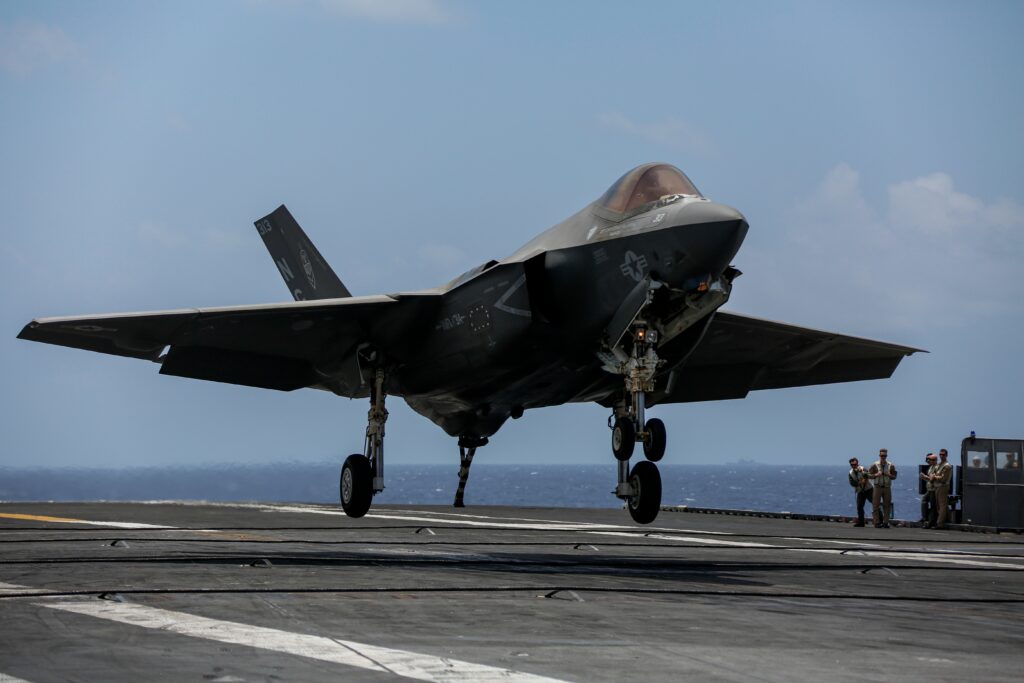
PACIFIC OCEAN (July 30, 2022) An F-35C Lightning II, assigned to the “Black Knights” of Marine Fighter Attack Squadron (VMFA) 314, prepares to make an arrested landing on the flight deck of the Nimitz-class aircraft carrier USS Abraham Lincoln (CVN 72). The Abraham Lincoln Carrier Strike Group is underway conducting routine operations in the U.S. 3rd Fleet. U.S. Navy photo by Mass Communication Specialist 3rd Class Michael Singley)
BAY SHORE, N.Y.–(BUSINESS WIRE)–Jul. 11, 2023– Air Industries Group (the Company) (NYSE American: AIRI), an integrated Tier 1 manufacturer of precision assemblies and components for mission-critical aerospace and defense applications, and a prime contractor to the U.S. Department of Defense, today announced that it has been awarded two new contracts valued at a total of $5.2 million to produce components for the U.S. Navy E-2D aircraft and F-35 Joint Strike Fighter.
The first order is valued at $2.0 million for E-2D arresting gear components. The order originates from a long-time customer of Air Industries Group, which has manufactured these flight safety components for many years. Deliveries under this new order are expected to begin in 2025.
The second order is valued at $3.2 million for F-35 arresting gear components for the CV and CTOL versions of the aircraft. This order is from a new, non-U.S. customer for Air Industries Group. Deliveries under this order are expected to begin in the fourth quarter of 2023.
Mr. Lou Melluzzo, CEO of Air Industries, commented: “We are very pleased to have received two sizeable orders for mission-critical components. The E-2D aircraft is essential to controlling the airspace above U.S. Navy carrier battlegroups. Air Industries has supported the E-2D for many years and is proud to continue to do so.
“The new order for the F-35 aircraft is particularly gratifying as it is from a non-U.S. customer. Our business development strategy has focused on broadening our customer base and expanding our geographic reach. This contract from a European manufacturer is a positive step in both regards.”
NAVAIR Selects Mercury to Deliver Digital Head-Up Display for T-45 Goshawk Training Aircraft
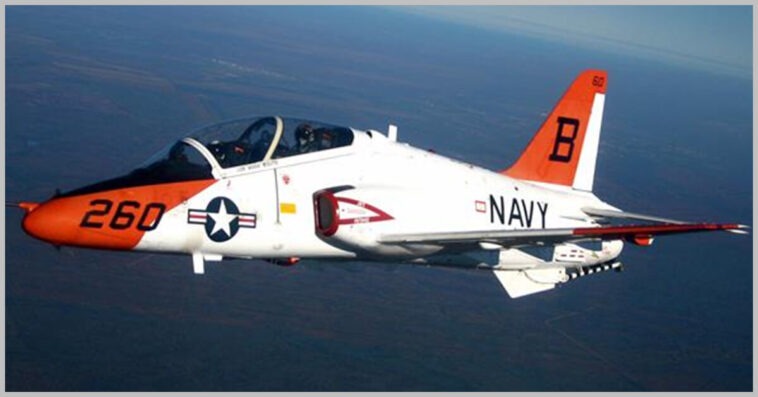
ANDOVER, Mass., July 12, 2023 (GLOBE NEWSWIRE) — Mercury Systems, Inc. (NASDAQ: MRCY, www.mrcy.com), a technology company that delivers processing power for the most demanding aerospace and defense missions, received a five-year contract worth as much as $83 million from the U.S. Naval Air Systems Command to deliver high-definition, digital Head-Up Display (HUD) systems for the T-45 Goshawk training aircraft. This firm-fixed-price delivery order was issued under a previously awarded basic ordering agreement. The Navy is the first customer to adopt Mercury’s HUD1080 technology that enables aviators to see critical flight and weapons data in real-time without taking their eyes off the sky.
Under this program, Mercury expects to deliver nearly 300 HUD systems, with the first $45 million production order awarded in conjunction with this contract. The T-45 Goshawk is a tandem-seat jet trainer used to train Navy and Marine Corps aviators to fly the U.S. military’s most advanced fighter jets, including the F/A-18E/F Super Hornet, F-35 Lightning, and the EA-18G Growler, as well as tactical airborne early warning aircraft such as the E-2 Hawkeye. The new T-45 HUD with an integrated camera is based on Mercury’s low-profile HUD design that minimizes pilot discomfort, enhances situational awareness, and maximizes an aviator’s field-of-view. It is also DAL-A certifiable—the highest level of design assurance that can be applied to airborne systems—allowing it to be used for critical flight and mission tasks such as landing on aircraft carriers.
Why It Matters Pilots must understand a wealth of rapidly changing data while flying, and a HUD allows them to maintain awareness of this information without having to take their eyes off the sky to look down at multiple instruments. Current training aircraft use older analog HUD systems that have a bulky design, are out of production, and cannot integrate with the modern enhanced vision systems used in today’s fighter jets. The integration of Mercury’s HUD into the T-45 solves the obsolescence problem for the aircraft and ensures pilots are trained in an operationally realistic environment, as the systems are compatible with upcoming T-45 avionics upgrades.
“The introduction of the HUD1080 expands Mercury’s display technology portfolio and our ability to deliver mission-ready technology and solutions for all aspects of the avionics ecosystem,” said Mitch Stevison, Executive Vice President and President of Mercury’s Mission Systems division. “We look forward to delivering our digital HUD for the T-45 Goshawk, ensuring today’s student pilots have the technology to train for current and future missions.”
CARTAGENA, Colombia – U.S. Navy and Marine forces are set to arrive in Cartagena in support of UNITAS LXIV, the world’s longest-running multinational maritime exercise in the world, scheduled to start July 11, 2023.
The Colombian navy will host this year’s UNITAS, which will feature 26 warships/vessels, three submarines, 25 aircraft (fixed wing/helicopter), and approximately 7,000 people from 20 partner nations. Forces will conduct training operations off the coast of Cartagena, Colombia, and ashore in Covenas and Barranquilla, Colombia, through July 21. This year marks the 64th iteration of the exercise. Additionally, this year Colombia will celebrate the bicentennial of its navy, a historical milestone commemorating 200 years of the country’s maritime forces.
“UNITAS is so much more than a two week exercise. All participating nations have given much time, energy and effort into the months of planning leading up to what will be one of the most complex UNITAS to date,” said Rear Admiral Jim Aiken, commander U.S. Naval Forces Southern Command/U.S. 4th Fleet. “Utilizing air, surface, sub-surface, and unmanned assets, and land units, UNITAS will provide the multinational force a challenging environment in which to conduct training across the full spectrum of maritime operations. UNITAS strengthens maritime partnerships, enhances proficiency and improves interoperability of the participating forces, which is why so many partner nations are taking part this year.”
As part of the U.S. Navy’s future hybrid fleet, the Chief of Naval Operations has tasked U.S. 4th Fleet to scale unmanned platforms to the fleet level. An addition to this year’s UNITAS will include the integrated operations of unmanned air, surface, and subsurface systems into the exercise. UNITAS’ challenging training address key aspects of multinational and combined operations such as technology standardization and common operating procedures.
“This is our first opportunity to integrate unmanned systems into our operations at sea,” said Rear Adm. Aiken. “UNITAS has often served as a test bed for technology, so it is appropriate that we begin our unmanned integration campaign to operationalize the hybrid fleet here in UNITAS.”
In addition to the United States, UNITAS LXIV will bring together 19 nations from all over the world to train forces in joint maritime operations that enhance tactical proficiency and increase interoperability. Participating nations include Belize, Brazil, Canada, Chile, Colombia, Dominican Republic, Ecuador, France, Germany, Honduras, Jamaica, Mexico, Panama, Peru, Paraguay, Spain, South Korea, United Kingdom, United States, and Uruguay.
Following the UNITAS LXIV Opening Ceremony on July 12, the in port phase of the exercise will feature subject matter expert exchanges, professional symposia, ship rider exchanges, and operations meetings. During this time, Marines and Sailors will conduct expeditionary training events in Covenas to include riverine operations and diving and salvage operations.
During the UNITAS LXIV Underway Phase, forces will participate in events testing all warfare operations, to include live-fire exercises such as a SINKEX and an amphibious ship-to-shore landing and force retraction.
“Marines and Sailors from across the United States will travel to Colombia to not only train alongside our partner nations’ militaries, but to hone the skills required to operate as part of a larger maritime force focused on sea control and sea denial,” said Lt. Gen. David G. Bellon, commander, U.S. Marine Corps Forces, South, and U.S. Marine Corps Forces, Reserve. “We will be exercising command and control from a forward position as Marines set up and employ Expeditionary Advanced Base Operations to enhance naval capabilities as part of UNITAS.”
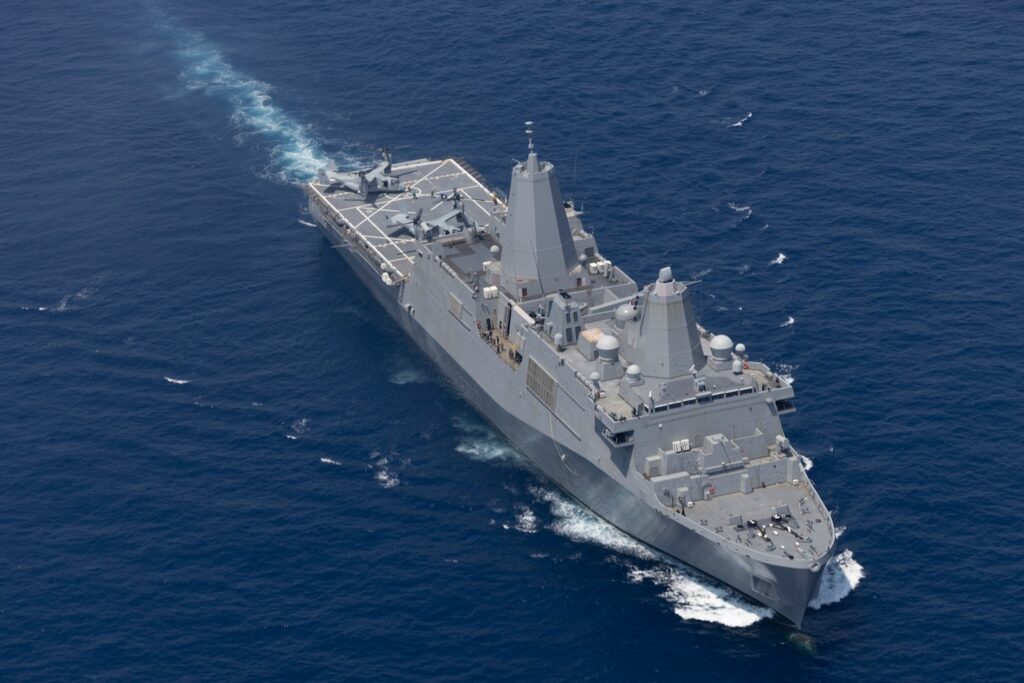
U.S. forces participating in UNITAS LXIV include USS New York (LPD 21), USS Cole (DDG 67), USS Little Rock (LCS 9), USS Pasadena (SSN 752), and USNS Burlington (T-EPF 10). Other U.S. participants include Patrol Squadron Five (VP 5), Mobile Diving and Salvage Unit (MDSU) 2, Explosive Ordnance Disposal Mobile Unit (EOD) 612, Mine Countermeasures Group 3, (MCMGRU 3), Expeditionary Mine Countermeasures EOD Company 61 (EODMU 61), East-coast based Naval Special Warfare units, Helicopter Sea Combat Squadron 22 (HSC 22), Helicopter Maritime Strike Squadron 70 Detachment 2 (HSM 70 Det 2), Joint Communications Support Element (JCSE), Fleet Surgical Team (FST) Eight, and the Meteorological Environmental Team (MET). U.S. Marine forces include 3rd Battalion, 23rd Marine Regiment (3/23), 4th Amphibious Assault Battalion (4th AABn), 8th Combat Logistic Battalion (CLB 8), 4th Combat Engineer Battalion (4th CEB), Marine Medium Tiltrotor Squadron 774 (VMM 774), Marine Light Helicopter Attack Squadron 775 (HMLA 775), Marine Aerial Refueler Transport Squadron 234 (VMGR-234), Marine Aircraft Control Group – 48 (MACG-48), and Marine Fighter Attack Squadron 112 (VMFA-112). Finally, Commander, Destroyer Squadron 40, (COMDESRON 40), Commander, Amphibious Squadron Four (COMPHIBRON FOUR), U.S Marine Corps Forces South (MARFORSOUTH), Special Operations Command South (SOCSOUTH), USNAVSOUTH/FOURTHFLT, and U.S. Southern Command (USSOUTHCOM) are participating in UNITAS LXIV.
UNITAS, which is Latin for unity, united, or oneness, was conceived in 1959 during a previous era of strategic competition when representatives at the first Inter-American Naval Conference in Panama agreed to conduct an annual maritime exercise with one another. Prior to UNITAS I in 1960, U.S. Chief of Naval Operations Adm. Arleigh Burke reviewed preparations for the multinational exercise. He commended planners for their progress, especially in building compatible communication systems among navies, and predicted that UNITAS would build strong relationships among Sailors of the Western Hemisphere.
U.S. Naval Forces Southern Command/U.S. 4th Fleet supports U.S. Southern Command’s joint and combined military operations by employing maritime forces in cooperative maritime security operations to maintain access, enhance interoperability, and build enduring partnerships in order to enhance regional security and promote peace, stability and prosperity in the Caribbean, Central and South American region.
U.S. Marine Corps Forces, South is the Marine Corps component to U.S. Southern Command, is responsible for planning exercises, operations, and overall Marine Corps support for the SOUTHCOM assigned area of responsibility.
Bataan ARG and 26th MEU(SOC) Marines, Sailors Set Sail for Deployment
ATLANTIC OCEAN – U.S. Marines and Sailors of the Bataan Amphibious Ready Group (BAT ARG) / 26th Marine Expeditionary Unit (MEU) (Special Operations Capable) (SOC) departed Norfolk, Virginia, and Camp Lejeune, North Carolina, July 10, after completing a comprehensive, nine-month training program.
The deployment is part of a regular rotation of forces that foster maritime security and increased theater cooperation by providing a forward naval expeditionary presence with vast, specialized crisis response capabilities to support the geographic combatant commander, numbered fleet commander, and joint special operations task force commander.
“We are ready to complete any mission before us, and we are looking forward to the opportunities we will have to work alongside our allies and partners in the months ahead,” said Capt. Martin Robertson, commander of Amphibious Squadron 8. “Our Sailors and Marines have trained hard and are ready. We are thankful for the support of our families and loved ones during this journey.”
The BAT ARG/26th MEU(SOC)’s pre-deployment training program culminated with its final certification exercise, Composite Training Unit Exercise (COMPTUEX), a series of exercises designed to fully integrate roughly 4,000 Marines and Sailors into one cohesive contingency force while testing the units’ abilities to carry out sustained operations from the sea. During COMPTUEX, the BAT ARG/26th MEU(SOC) operated under NATO command and control to replicate the realities of missions the Navy-Marine Corps team may encounter on deployment.
“Over the course of the last nine months, Marines and Sailors of the 26th MEU(SOC) successfully demonstrated the battle staff competencies coupled with all-domain operational capabilities and high proficiency across the MEU Marine Air-Ground Task Force (MAGTF) mission essential tasks and warfighting functions, to include MEU/SOF-integration, during an enhanced, rigorous pre-deployment training program within a scenario reflective of the EUCOM, AFRICOM, and CENTCOM regions,” said Col. Dennis “Dolf” Sampson, commanding officer of the 26th MEU(SOC). “Throughout our work-ups, the Bataan Amphibious Ready Group and the 26th MEU(SOC) executed multiple advanced at-sea training exercises and fully integrated into a cohesive naval expeditionary force capable of supporting theater campaigning requirements while remaining postured, as the Nation’s Immediate Response Force, to rapidly respond to any crisis.”
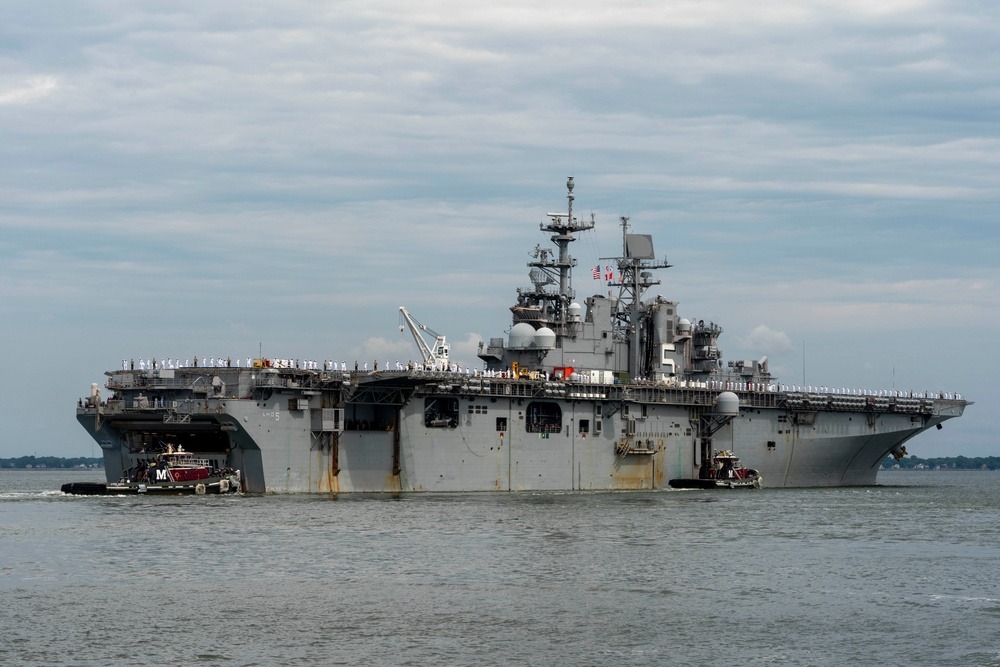
The Bataan ARG is comprised of the Wasp-class amphibious assault ship USS Bataan (LHD 50), the San Antonio-class amphibious transport dock USS Mesa Verde (LPD 19) and the Harpers Ferry-class dock landing ship USS Carter Hall (LSD 50). Embarked commands include commander, Amphibious Squadron (CPR) 8, Fleet Surgical Team 8, Tactical Air Control Squadron 21, Helicopter Sea Combat Squadron 26, Assault Craft Unit 4, Beach Master Unit 2, and the 26th MEU(SOC).
“I could not be any prouder of the Marines, Sailors, and families of the 26th MEU(SOC),” Sampson said. “They set the bar very high during our work-ups as the premiere Tri-GCC Crisis Response Force, showcasing the flexibility and all-domain operational capabilities the ARG/MEU(SOC) provides to a Fleet or Joint Task Force Commander within the littorals and beyond.”
The 26th MEU(SOC) serves as one of the Nation’s premier crisis response forces capable of conducting amphibious operations, crisis response, and limited contingency operations, to include enabling the introduction of follow-on forces and designated special operations, in support of theater requirements of the Geographic Combatant Commander. Coupled with the BAT ARG, the 26th MEU(SOC) serves as a premier stand-in force with a full complement of all-domain capabilities to operate persistently within the littorals or weapons engagement zones of an adversary.
For more information, please contact Bataan ARG and 26th MEU(SOC) Public Affairs: Bataan Amphibious Ready Group Public Affairs, [email protected] and 26th Marine Expeditionary Unit (Special Operations Capable) Communication Strategy & Operations, [email protected].
Third Marine Aircraft Wing Squadron Prints Medical Device In-flight
Story by 2nd Lt. Andrew Baez, 3rd Marine Aircraft Wing
MARINE CORPS BASE CAMP PENDLETON, Calif. — On June 21, 2023, Marine Medium Tiltrotor Squadron (VMM) 164, Marine Aircraft Group (MAG) 39, 3rd Marine Aircraft Wing (MAW), facilitated the in-flight three-dimensional (3D) printing of a medical cast aboard an MV-22B Osprey, in support of the Marine Corps’ Integrated Training Exercise (ITX) 4-23. This milestone event took place as the U.S. Marine Corps looks to sharpen its expeditionary manufacturing capabilities. The Assistant Commandant of the Marine Corps, Gen. Eric M. Smith, emphasized the importance of these organic Marine Corps capabilities in recent testimony to the Senate Armed Services Committee.
“We have to do some very creative work to do additive manufacturing and 3D printing forward,” Smith said. “If confirmed, I’m committed to continuing that effort because I do see one day we will be printing forward in forward operating bases. We’ll be printing major end items, aircraft engines, propellers, we’ll be doing that forward as opposed to straining the lines that come from the United States through contested logistics areas.”
The successful cast print, in collaboration with the Marine Innovation Unit (MIU) and the Naval Postgraduate School (NPS), showcased one angle of Marine Corps aviation’s capacity to facilitate 3D printing in-flight, mirroring potential realistic, dynamic combat scenarios.
The event began with the concept of a Marine in the field with a broken wrist. The steps included scanning the Marine’s arm, optimizing the cast shape using generative design software, and printing the device while en route to a medical evacuation mission.
Lt. Col. Michael Radigan, an MIU liaison to the Naval Postgraduate School, operated the printer in-flight. He currently works with the Consortium for Additive Manufacturing Research and Education (CAMRE), which supported ITX with advanced manufacturing capabilities. The specific printer used is known as a TAMOS (Tactical Advanced Manufacturing Operational System), developed by Mr. Spencer Koroly from Naval Information Warfare Center-Pacific (NIWC-Pacific), San Diego, California.
“This event was significant because it demonstrated a mobility for 3D printing that we have not seen before,” Lt. Col. Radigan said. “Sometimes there is a perception that 3D printers can only operate in a clean room to get mission capable parts. I think we smashed that theory and showed that not only can they operate on the go, but we can do it well during highly dynamic combat flight profiles.”
CAMRE recognizes that advanced manufacturing will play a significant role in a contested logistics environment. 3D printing complements the supply system and makes it more resilient during combat. Recently, Marines from I Marine Expeditionary Force learned how to build, operate and maintain the machines at NIWC-Pacific to prepare for their deployment in which they will be taking the AMOS printer with them. The printer also prints replacement parts for the machine in the event it needs maintenance, and this allows more independence for the expeditionary unit.
Col. Jeremie Hester, Commanding Officer of MAG-39, views the event a means to better support Marines operating on the ground.
“We are doing what Marine Aviation has always done – support our brothers and sisters on the ground,” Hester said. “Now we are figuring out how to do it better!”
Recognizing the importance of innovation and emerging technologies, VMM-164 was poised to play a critical part in this evolution by providing assault support during ITX 4-23. Third MAW has the capability to host multiple printers aboard aircraft and produce a substantial volume of needed parts en route to an objective. Due to the printers’ low power requirements, follow-on experimentation will explore powering dozens of printers via aircraft power for production at scale in contested environments.
“Third MAW has always kept an eye forward,” Radigan said. “Demonstrations like this reinforce their commitment to staying on the leading edge.”
Navy Accepts Delivery of USNS Harvey Milk (T-AO 206)
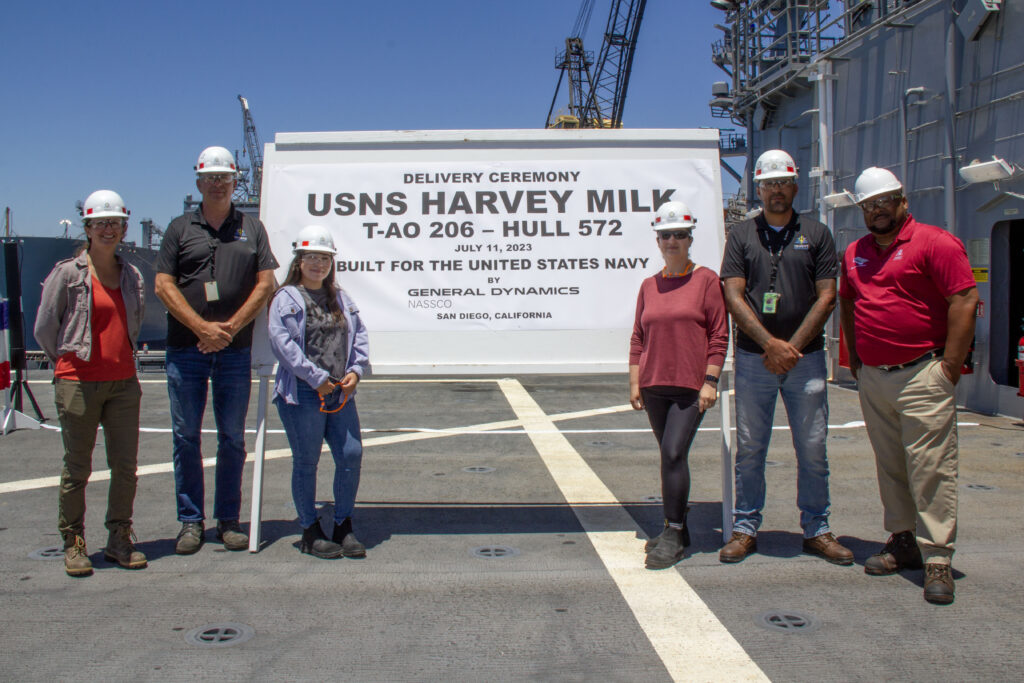
The Navy accepted delivery of fleet replenishment oiler, USNS Harvey Milk (T-AO 206), from shipbuilder General Dynamics National Steel and Shipbuilding Company (NASSCO) on July 11.
The delivery of T-AO 206 follows the successful completion of acceptance trials with the Navy’s Board of Inspection and Survey to test the readiness and capability of the ship and to validate requirements.
“We are excited to deliver the 2nd of class T-AO, USNS Harvey Milk, and expand the Navy’s capacity and capability to provide a fuel pipeline at sea,” said John Lighthammer, program manager, Auxiliary and Special Mission Shipbuilding Program Office. “The fleet and her Sailors will benefit from enhanced at-sea operations.”
T-AO 206, the second ship of the 20-ship class, will be operated by Military Sealift Command. The ship provides diesel fuel, lubricating oil and jet fuel; small quantities of fresh and frozen provisions and dry stores; and potable water to Navy ships at sea. T-AOs add underway replenishment capacity to the Navy’s Combat Logistics Force and will become the cornerstone of the fuel delivery system.
Shipbuilder General Dynamics NASSCO is currently constructing USNS Earl Warren (T-AO 207) and the future USNS Robert F. Kennedy (T-AO 208), USNS Lucy Stone (T-AO 209) and USNS Sojourner Truth (T-AO 210). Future USNS Thurgood Marshall (T-AO 211) and USNS Ruth Bader Ginsburg (T-AO 212), and yet to be named T-AO 213 are under contract.
As one of the Defense Department’s largest acquisition organizations, PEO Ships is responsible for executing the development and procurement of all destroyers, amphibious ships, special mission and support ships, boats and craft.
USNS BURLINGTON Hosts Launch Of Unmanned Surface Vehicle
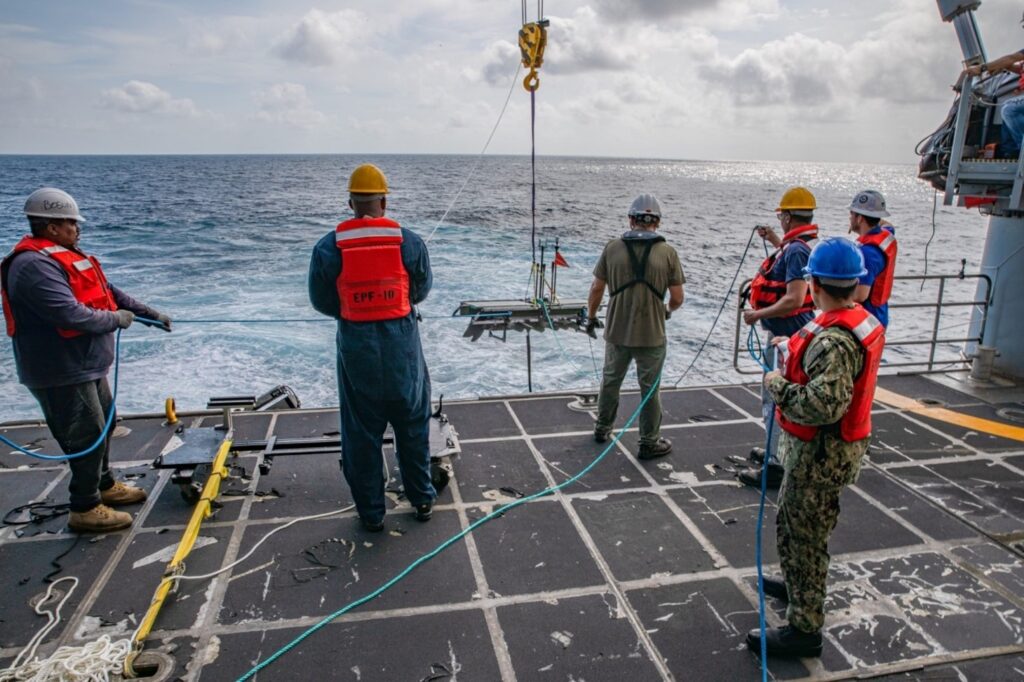
CARRIBEAN SEA – U.S. Navy Sailors partnered with Military Sealift Command civilian mariners and civilian contractors in a collaborative effort to successfully launch a Wave Glider unmanned surface vehicle (USV) from expeditionary fast transport ship USNS Burlington (T-EPF 10), June 30, 2023.
The launch took place during the Burlington’s transit to Cartagena, Colombia ahead of the start of UNITAS LXIV. Colombia is this year’s host for UNITAS, longest-running annual multinational maritime exercise in the world, scheduled to start on July 11, 2023.
“UNITAS is so unique and full of opportunities for innovation, providing an ideal location to experiment with service concepts and conduct combined training while close to home and in a permissive environment,” said Burlington’s Military Detachment officer in charge, Cmdr. Michael Fleck.
Wave Glider is one of the unmanned systems in operation during the exercise as a part of the U.S. Naval Forces Southern Command/U.S. 4th Fleet (USNAVSOUTH/FOURTHFLT) Unmanned Integration Campaign. The campaign’s goal is to deploy and integrate unmanned systems and artificial intelligence tools into operations, which will bolster the Navy’s Marine Domain Awareness (MDA), counter-narcotics (CN) efforts and information sharing with partner nations.
“UNITAS is an outstanding avenue to introduce emerging naval concepts for multinational exercises and operations in the region,” said Burlington’s Military Detachment senior enlisted leader, Senior Chief Information Systems Technician Anthony Davis.
The Wave Glider USV runs on wave power, meaning the vertical wave motion is converted into forward thrusts. During UNITAS LXIV, the Wave Glider USV will provide Maritime Domain Awareness (MDA) in the exercise operations area during the underway portions of UNITAS. The overall objective of the USNAVSOUTH/FOURTHFLT Unmanned Integration Campaign is to ultimately scale unmanned platforms to the fleet level while developing tactics, techniques, and procedures resulting in the U.S. Navy’s Hybrid Fleet of the 2030s.
UNITAS, Latin for Unity, is the longest-running multinational maritime exercise in the world. A U.S.-sponsored joint exercise, UNITAS was conceived in 1959, with the first UNITAS (UNITAS I) taking place in 1960. UNITAS has occurred every year since then.
U.S. Naval Forces Southern Command/U.S. 4th Fleet supports U.S. Southern Command’s joint and combined military operations by employing maritime forces in cooperative maritime security operations to maintain access, enhance interoperability, and build enduring partnerships in order to enhance regional security and promote peace, stability and prosperity in the Caribbean, Central and South American region.
Clean Technology Lasers: The Maritime Industry’s New Tool to Remove Corrosion and Scale
Shipbuilding professionals understand the value of pretreating metal surfaces of parts to remove corrosion.
Release from Laser Photonics
*****
Laser systems quickly remove corrosion and scale from metal surfaces with less preparation and mess than traditional techniques
In the maritime industry, corrosion, and scale (where rust penetrates a metal surface) can quickly become an issue in an outdoor, salt sea spray laden environment. When sea spray evaporates, it leaves salt behind, leading to saltwater staining and accelerated corrosion.
So, most shipbuilders as well as those responsible for maintenance and repair understand the value of treating metal surfaces to remove corrosion, scale, and saltwater staining, which is vital to maintain essential interior and exterior components such as engines, generators, fuel pumps, winches, anchoring chains, latches, door hinges and locks. This is necessary to preserve not only function but also prevent further corrosion and deterioration including possible premature failure.
Unfortunately, traditional techniques used for this purpose such as sandblasting and chemical stripping are messy and require expensive consumables as well as substantial time for preparation and cleanup. Additionally, sandblasting and chemical stripping may not be feasible to clean, maintain, or recondition many of the ship’s interior and exterior spaces. These methods are also drawing scrutiny from regulators like the EPA and OSHA since they can pose risks to applicators and the environment.
Although manual methods of cleaning and removal are available, such as chipping and using wire brushes and grinders, these are very labor intensive and time consuming.
Today, a more effective alternative is utilizing industrial-grade, precision laser-based systems that can remove corrosion and scale with a high-energy laser beam that leaves the substrate unaffected. The technology can also be used for selective cleaning and even de-painting on access points and service latches when required. Preparation and cleanup time are minimal, and the low-maintenance equipment can last decades.
According to Vincent Galiardi, owner of Galiardi Laser Clean, a surface cleaning operator based in St. Charles County, Missouri, many people are surprised to learn that clean technology lasers are the most cost-effective, efficient, and safest method of metal surface preparation.
“Many people are unfamiliar with the use of lasers to pretreat metal surfaces,” says Galiardi. “When I do a demonstration, at first the people in attendance are skeptical. But after I use the laser to treat a small area, everyone starts talking and getting excited. By the end, when I let them try the equipment, everyone is having a good time and saying how great the laser works.”
Given its effectiveness treating metal surfaces, industrial laser systems are increasingly being used at shipyards, shipbuilding berths, and even aboard ships. Technicians can use mobile handheld units, or if needed the systems can be integrated into automated inline processing lines. With significant advantages in safety and efficiency, laser cleaning is poised to disrupt the surface treatment market across more sectors.
Resolving Conventional Cleaning Limitations
To treat metal surfaces, sandblasting or chemical stripping are traditionally used as industrial cleaning processes.
Sand Blasting
Abrasive sandblasting involves forcefully projecting a stream of abrasive particles onto a surface, usually with compressed air or steam. The silica sand used in abrasive blasting typically fractures into fine particles and becomes airborne, which can cause serious or fatal respiratory disease.
When workers inhale crystalline silica, the lung tissue reacts by developing fibrotic nodules and scarring around the trapped silica particles, causing a fibrotic lung condition called silicosis. Estimates indicate that more than 1 million U.S. workers are at risk of developing silicosis and that more than 100,000 of these workers are employed as sandblasters.
In addition, particles are generated during abrasive blasting that further contribute to respiratory problems and other harmful health effects.
“When sand or any other media is used to knock off particles from a substrate, there is always a byproduct that has the potential to become airborne and inhaled,” says Galiardi.
“Industry has needed a cleaner, safer surface pre-treatment solution for a very long time,” adds Galiardi. “Sandblasting is inherently unsafe for operators. The silica glass used in sandblasting is toxic. An operator must wear a full HEPA suit when sandblasting to avoid breathing in particulates.”
Sandblasting also is time-consuming to clean up since the sand essentially scatters everywhere, even though it is usually considered a “fast” cleaning method.
Chemical Stripping
With chemical stripping, harsh, even toxic chemicals are used to strip metal-based objects of rust, paint, and contaminants to bare metal. However, for operators, exposure to corrosive acids and noxious chemical fumes is inherently dangerous. The process can also be time-consuming to prepare the proper chemical bath, achieve the required level of cleaning, and dispose of the waste. In addition, disposing of toxic chemicals is costly and closely regulated by agencies like OSHA and the EPA.
Safe, Effective Laser Cleaning
Laser-based systems have significant advantages over these traditional methods, including ease of use in which an operator simply points and clicks a high-energy laser beam at the surface. The substrate is not affected by the laser, and the systems do not create any mess or byproducts. The approach is eco-friendly, energy-efficient, and completes the job in half the time of traditional methods when preparation and cleanup are considered.
“In our experience, laser cleaning is as fast at removing rust or old coatings as other methods, but without the same amount of cleanup,” said Galiardi. “When we treat a surface with lasers, any fumes or dislodged particulate is extracted into a HEPA filter and the job is done. There is no media [sand, chemicals] to replenish or clean up.”
Galiardi Laser Clean uses laser systems made by Orlando, Florida-based Laser Photonics, a leading provider of patented industrial grade CleanTech® laser systems for cleaning and surface conditioning. The American-made systems function either as mobile standalone units or can be integrated into production lines.
The laser systems are available in portable and stationary models ranging from 50 to 3,000-watts (a 4,000-watt version is in development) with chamber sizes from 3’ x 3’ in size to 6’ x 12’. The systems can also be installed in manufacturing lines in cabinets or operated by a robotic arm.
In the shipbuilding industry, operators are utilizing the industrial grade laser systems to maintain a wide range of vital interior and exterior equipment. Operators are using CleanTech systems to smooth surfaces and remove rust and scale from engines, generators, fuel pumps, water separators, winches, anchoring chains, gear shifting and throttle components without disassembly. This improves safety, function, lifespan, and reduces the risk of premature failure, which could be very dangerous during an emergency such as a storm on the high seas.
The laser systems similarly maintain door hinges and locks as well as remove saltwater stains from metal surfaces. In addition, the technology is used for selective de-painting and cleaning of access points, service latches, and other maritime applications.
With clean laser technology, there is now an environmentally friendly alternative to abrasive blasting and chemical stripping for surface pretreatment. The approach is safer for operators and highly adaptable to a wide range of maritime applications.
“As people become more aware of laser-based systems and compare them to traditional methods, they need to factor in prep and cleanup time, which can significantly impact project cost. When the improved operator safety, equipment longevity, and lower maintenance of laser systems are also considered, the clean laser technology has a much higher ROI,” says Galiardi.
The longevity of low-maintenance laser systems further adds to their value, increasing ROI, and making replacement unnecessary for decades.
“CleanTech laser systems can last for 50,000 to 100,000 hours. That’s many decades working eight-hour days. After purchase, there’s virtually no maintenance necessary,” concludes Galiardi.