NORFOLK, Va. – U.S. Fleet Forces Command and U.S. Marine Forces Command will conduct Fleet Battle Problem 2023 (FBP 23-1) June 9-13 on land and off the coast of Camp Lejeune, North Carolina and the Virginia Capes to further develop integrated maritime capabilities with the II Marine Expeditionary Force and U.S. 2nd Fleet.
FBPs occur multiple times a year to practice and assess new warfighting concepts that culminate in large and complex events, such as Large Scale Exercise (LSE). FBP 23-1 will focus on integrated naval capabilities, distributed logistics, and capabilities in support of Expeditionary Advanced Base Operations (EABO).
“Across the spectrum of the Navy’s operational level of war learning continuum, Fleet Battle Problems employ real-world equipment and conditions to create challenging and realistic environments designed to enable our Navy and Marine Corps team to assess innovative capabilities and explore new operational concepts,” said Adm. Daryl Caudle, commander, U.S. Fleet Forces Command. “These Battle Problem events are an investment toward developing an integrated maritime force ready to keep pace with the latest technologies, innovative tactics, and warfighting concepts needed to overmatch our adversaries.”
FBP 23-1 allows the Navy and Marine Corps to maintain and improve EABO and Littoral Operations in a Contested Environment (LOCE). Both LOCE and EABO contribute to naval operating concepts, such as Distributed Maritime Operations (DMO), that place a growing emphasis on Navy-Marine Corps integration.
“The Navy-Marine Corps team continues to innovate and adapt to current and potential threats,” said Lt. Gen. Brian Cavanaugh, the commanding general of Marine Forces Command. “Working together in events like Fleet Battle Problem strengthens our warfighting team, builds on our integration and simply makes us a better Naval force ready to answer our Nation’s call.”
Events like Fleet Battle Problem 23-1 improve how the Navy and Marine Corps work together to form a strong and cohesive Maritime Force capable of projecting American power from sea to shore at home and around the world.
Northrop Grumman to Produce New Maritime Navigation Sensor for U.S. Navy
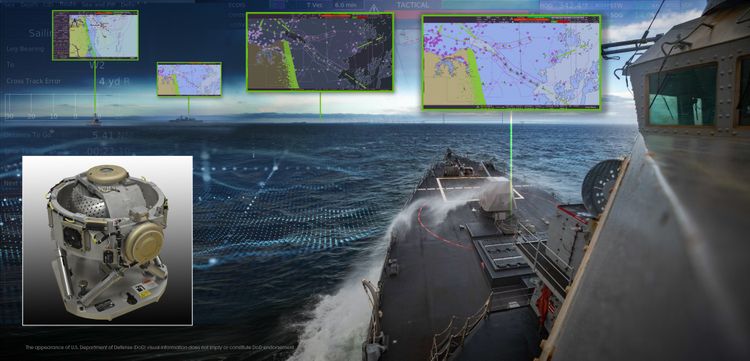
The Northrop Grumman-built AN/WSN-12 Inertial Sensor Module provides accurate positioning data with or without GPS for Navy ships and submarines. (Photo Credit: U.S. Navy)
CHARLOTTESVILLE, Va. – June 8, 2023 – The U.S. Navy awarded Northrop Grumman Corporation (NYSE: NOC) a production contract for the new AN/WSN-12 Inertial Sensor Module (ISM). Northrop Grumman’s AN/WSN-12 ISM is a next-generation sensor that significantly improves maritime navigation in Global Positioning System (GPS) denied environments for surface ships and submarines.
“The new AN/WSN-12 Inertial Navigator System will deliver more precision and performance for the warfighter while occupying the same footprint as its predecessor.” said Todd Leavitt, vice president, naval and oceanic systems, Northrop Grumman. “This allows upgrades to be made on existing systems where space is at a premium.”
The new AN/WSN-12 ISM is a key component of the U.S. Navy’s AN/WSN-12 Inertial Navigator System (INS), upgrading the Northrop Grumman built AN/WSN-7 INS. The WSN-7 is on nearly every ship in the U.S. Navy and has been the program of record for more than two decades. Surface ships and submarines rely heavily on the positioning data provided by GPS for navigation, for safety at sea and to fire weapons. The AN/WSN-12 ISM provides highly accurate positioning data with or without GPS, a key component to establishing Assured Position, Navigation, and Timing (A-PNT) maritime solutions. The first ISM will be fielded later this year.
$119.1 Billion, 407K+ Jobs Supported by the New England Defense Cluster
Details the Economic Strength and Growth in the Region
MIDDLETOWN, RI – SENEDIA, the alliance for Defense tech, talent, and innovation, today released a new report that highlights the importance of the New England Defense Cluster to U.S. economic growth. The term “Defense Cluster” encompasses all defense-related activities including both the private Defense Industry (defense contractors) and the Military Defense Infrastructure, which includes civilian employees working for the Department of Defense (DoD), active-duty military personnel (Army, Navy, Marine Corps, Air Force, Space Force), and U.S. Coast Guard and National Guard personnel.
In addition to state-level impacts for all six New England states, the report provides a comprehensive look at the New England region’s impact. In 2022, the cluster accounted for $119.1 billion in economic output, representing 9.2 percent of the region’s GDP. It also accounted for 407,523 jobs, generating more than $40 billion in income for households.
“The Defense Cluster is an engine of innovation nationwide, and especially here in New England, where billions of dollars in economic activity are generated and hundreds of thousands of military and civilian employees have high-wage, high-tech, high-demand careers,” said Molly Donohue Magee, SENEDIA executive director. “A robust Defense Cluster is essential to national security and this report demonstrates that it is equally critical for our economy.”
New England’s Defense contracts are growing at a faster rate than the national average, making it a major contributor to the U.S. defense industry and regional economy. The cluster significantly impacts job creation, income, and output across every New England state, and has a strong multiplier effect and economic linkages with other sectors in the region.
“From small, advanced manufacturing businesses and start-up tech companies to major defense contractors and military installations, the Defense Cluster represents tremendous opportunities for the workforce and for our economy,” said Senate Armed Services Committee Chairman Jack Reed (D-RI). “Across New England, we are developing new technologies and capabilities, modernizing our military, building next-gen submarines, and driving broader economic growth today and for the future.”
High-level findings from the report are summarized on the SENEDIA website, with a full version and state-level highlights available for download.
“Today’s report provides a timely, comprehensive look at the power and potential of the Defense Cluster and we look forward to seeing how policymakers, employers, and military leaders can make use of this important information,” said Magee.
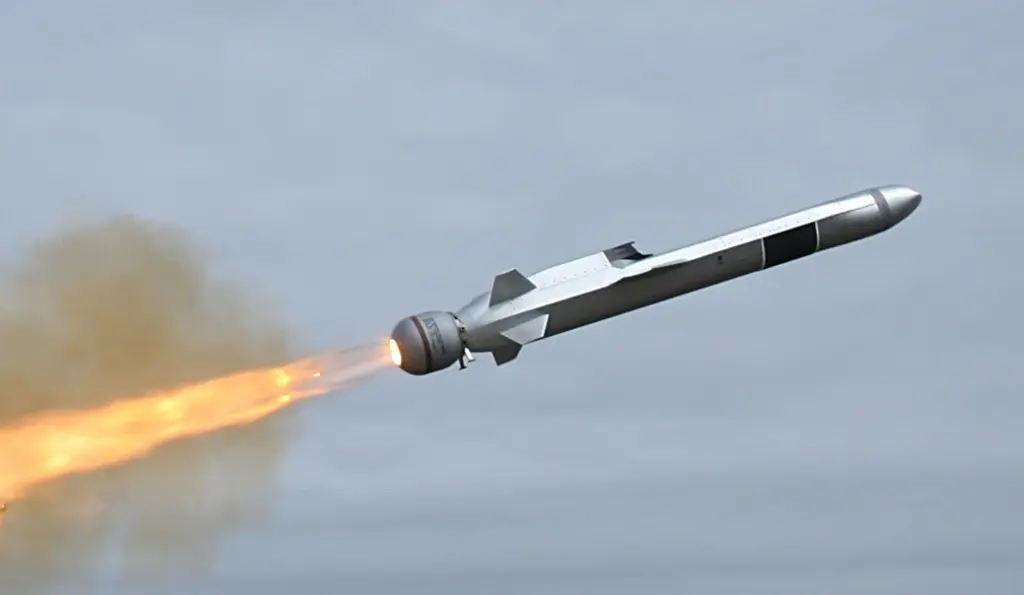
We have received an order from Raytheon Missiles & Defense for Naval Strike Missiles to the US Navy Over-The-Horizon Weapon System (OTH WS) program worth MNOK 1 345.
Raytheon is prime contractor to the US Navy.
The order is related to the OTH WS framework agreement announced 31 May 2018. We have signed orders for MNOK 3 110 under this framework agreement.
“This is the largest Naval Strike Missiles-order from US Navy so far. This generates jobs and demand for increased production capacity, both for us and our suppliers. As announced at our CMD in June 2022, we have started a significant investment in a new missile production facility that will be finished in June next year,” says Eirik Lie, President of Kongsberg Defence & Aerospace.
NSM The NSM provides superior operational performance and high survivability against all enemy defence systems.
High resolution imaging infrared seeker provides ATR and precise hitpoint for each ship class. Thrust to weight ratio above 1 and high-g programmable endgame maneuvers provide unsurpassed defence penetration capabilities.
Over-The-Horizon Weapon System The Over-The-Horizon Weapon System is a long-range, surface-to-surface missile employed by either the Littoral Combat Ship or the planned guided-missile frigate, intended to engage maritime targets both inside and beyond the firing unit’s radar horizon.
The OTH-WS is a stand-alone system consisting of an operator interface console, naval strike missile, and a missile launching system, requiring minimal integration into the host platform.
The OTH-WS receives targeting data via tactical communications from combatant platforms or airborne sensors and requires no guidance after launch.
US Navy awards launch and recovery system contract for fourth Ford-class aircraft carrier
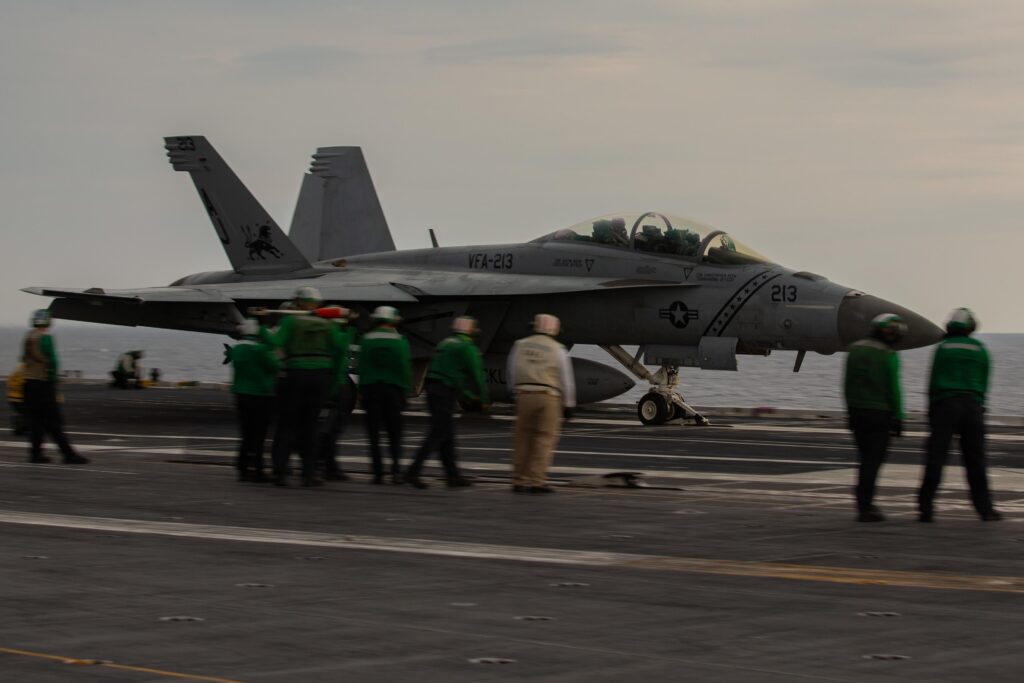
An F/A-18F Super Hornet from Strike Fighter Squadron (VFA) 213 launches off of the flight deck of the first-in-class aircraft carrier USS Gerald R. Ford (CVN 78) using the Electromagnetic Aircraft Launching System (EMALS), March 10, 2023. As the first-in-class ship of Ford-class aircraft carriers, CVN 78 represents a generational leap in the U.S. Navy’s capacity to project power on a global scale.
NAVAL AIR SYSTEMS COMMAND, PATUXENT RIVER, Md.–The U.S. Navy awarded General Atomics a $1.204-billion contract modification June 12 to build the Electromagnetic Aircraft Launch System (EMALS) and Advanced Arresting Gear (AAG) for the future USS Doris Miller (CVN 81).
The contract includes AAG and EMALS production, shipset deliveries, engineering change orders, production incorporation of obsolescence mitigations, program support, installation, and certification support for CVN 81 through 2032.
Capt. Mike Kline, program manager for the Aircraft Launch and Recovery Equipment Program Office (PMA-251) said the contract award is an important evolution in the future of launch and recovery for U.S. Naval warfare.
“As the fourth Ford-class aircraft carrier to enter the fleet, CVN 81 can lean on CVN 78’s experience, and the lessons learned while advancing EMALS and AAG for the next generation of Sailors,” he said.
EMALS and AAG certification on USS John F. Kennedy (CVN 79) is currently underway, and system production on USS Enterprise (CVN 80) is near completion. Production work for EMALS and AAG on the CVN 81 will begin immediately, with support planned through 2032.
Coast Guard holds special status ceremony for Cutter Bayberry
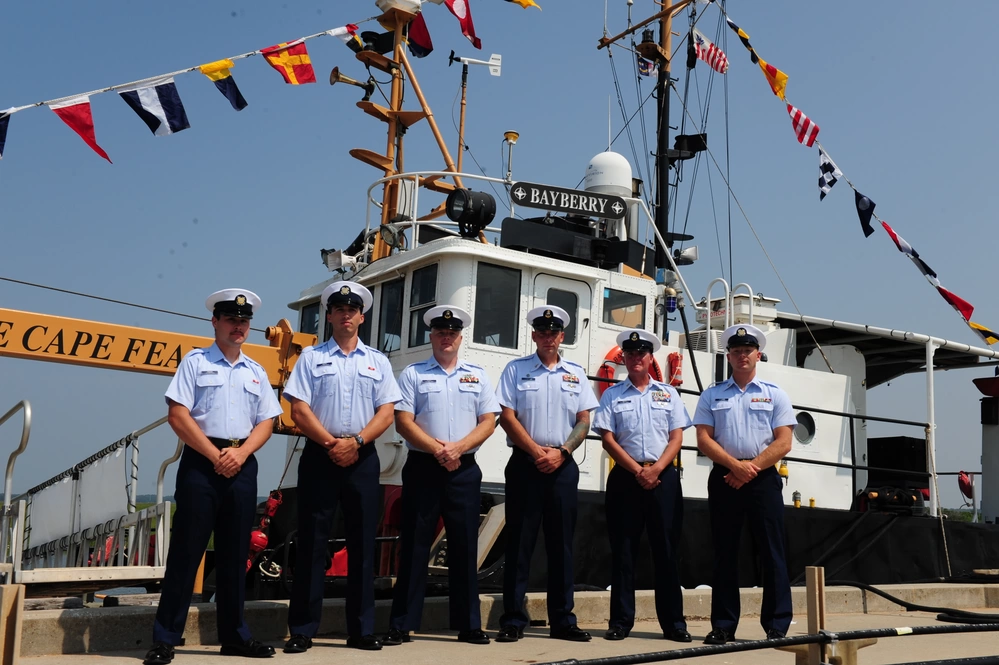
PORTSMOUTH, Va. — The Coast Guard held a special status ceremony at Station Oak Island, N.C. Wednesday morning to signify the beginning of it being decommissioned after 69 years of active Coast Guard service.
The Bayberry was built by Reliable Welding Works in Olympia, WA, and spent its first 17 years in the San Francisco area, with a three year stay in Rio Vista CA, before returning to Seattle in 1971. When it returned to Washington, it was retrofitted with a 60-foot barge for operations and was the only one of its kind. The cutter also became a primary deployer of the Vessel of Opportunity Skimming System, an oil spill recovery system. The Bayberry’s operations in Seattle spanned from 1971 until 2009 when it was relocated to Oak Island.
The Bayberry’s recent accomplishments include post-hurricane Dorian operations, where the crew led a waterways reconstitution mission, completed a complex voyage correcting 40 aids to navigation discrepancies, enabling the rapid resumption of ferry service, and facilitating the delivery of emergency supplies to 700 residents stranded on Ocracoke Island. In 2021, when extensive shoaling suddenly compromised Oregon Inlet Channel and no other capable asset was available to respond, the cutter led a 400-mile mission to the Outer Banks to retrieve and relocate five buoys that dangerously misled mariners, significantly enhancing the safety of this busy waterway, preserving search and rescue capabilities, and sustaining the local economy.
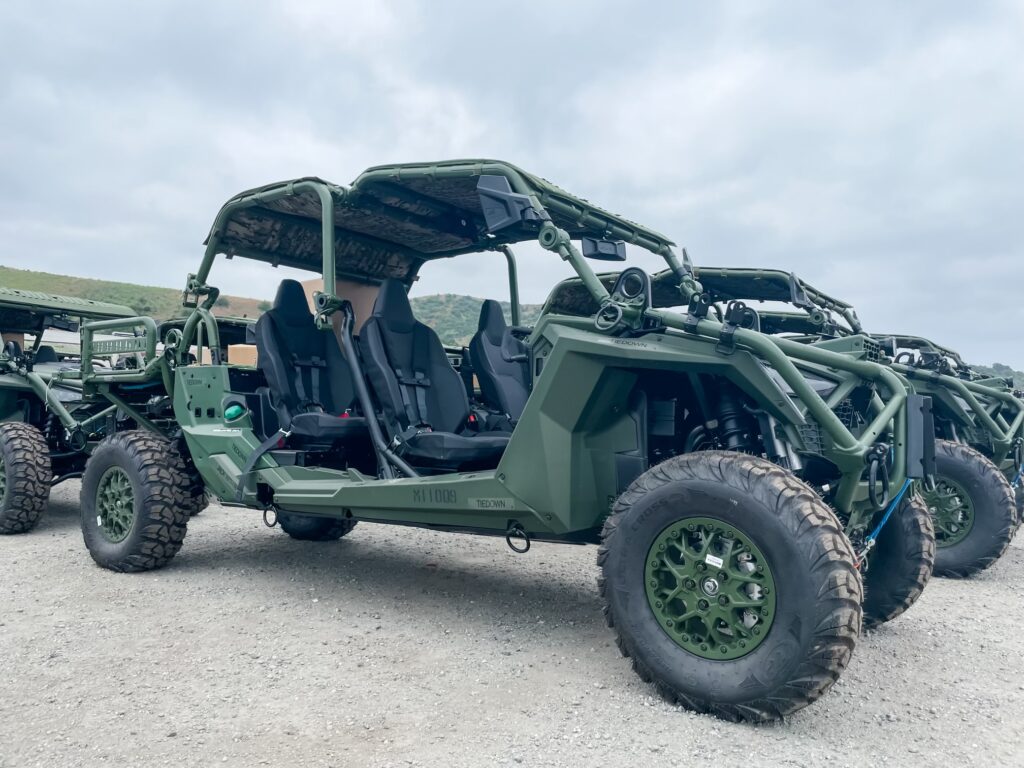
Marine Corps Systems Command Begins Fielding Cutting-edge Ultra Light Tactical Vehicle
MARINE CORPS BASE QUANTICO, Va. — Marine Corps Systems Command has begun fielding the new Ultra Light Tactical Vehicle, or ULTV, reaching initial operational capability and marking a significant milestone in the Corps’ Force Design 2030 modernization efforts. This state-of-the-art tactical vehicle is set to enhance infantry, reconnaissance, and logistics mobility and sustainability, providing the modern warfighter with an advanced, lightweight solution tailored for operations in an anti-access/area denial environment.
“Fielding the ULTV serves as a signal that the Corps is keeping in stride with the ambitious roadmap laid out in Force Design 2030,” said Col. John Gutierrez, portfolio manager for Logistics Combat Element Systems. “This new capability will ultimately help forge a more agile and resilient Corps—one which is empowered to overcome the evolving complexities of modern warfare.”
Fielding operations will proceed in conjunction with the First Marine Expeditionary Force, based at Camp Pendleton, California. The first ULTVs have already arrived at I MEF, with 1st Battalion, 5th Marines receiving the initial vehicle set. An ongoing, structured roll-out will continue throughout the MEF, culminating in August, followed by additional fielding events across the Marine Corps.
The ULTV, a modular, off-road utility vehicle, is currently replacing the Utility Task Vehicle, or UTV, which has reached the end of its lifecycle. With its ability to be rapidly configured, the ULTV supports diverse infantry needs, ranging from logistical support and casualty evacuation to command and control and electronic warfare missions. Furthermore, the ULTV can be internally transported in the MV-22 and CH-53E/K, further facilitating rapid deployment.
“The ULTV is more than just a tactical vehicle; it enhances our capabilities across the board, ensuring the success of our mission and the safety of our Marines,” said Program Manager for Light Tactical Vehicles Jennifer Moore. “The ability to rapidly configure the ULTV to suit diverse mission needs– from logistical support to electronic warfare– enhances our capabilities in previously unimagined ways.”
Flights Featured ESM, COMINT, Detect and Avoid, AIS, and Link 16 Capabilities
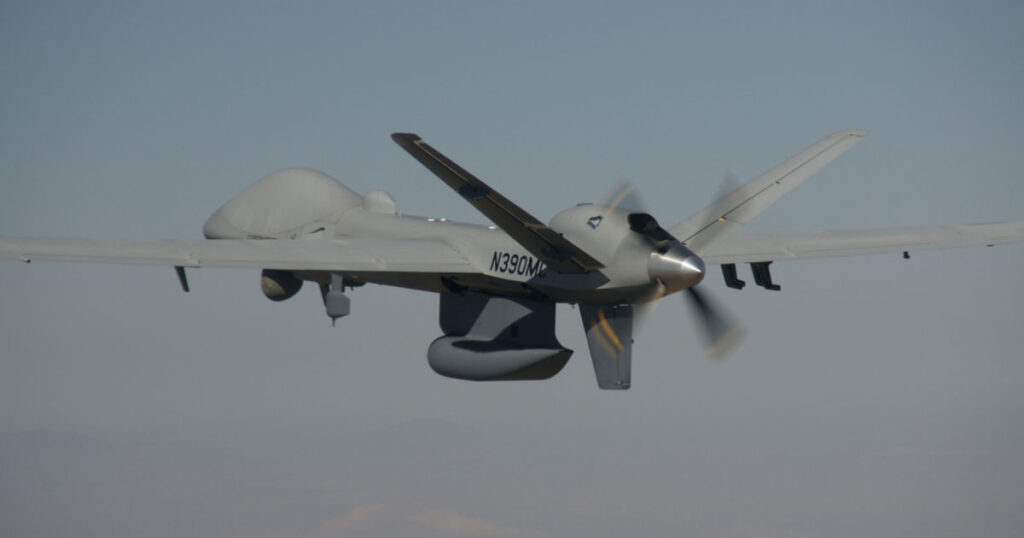
SAN DIEGO – 07 June 2023 – As part of a U.S. Navy contract, an MQ-9B SeaGuardian® Unmanned Aircraft System from General Atomics Aeronautical Systems, Inc. (GA-ASI) supported the NORTHERN EDGE 2023 (NE23) exercise May 8-19, 2023. The training exercise, which took place in the Gulf of Alaska, was one of a series of U.S. Indo-Pacific Command (IPACOM) exercises that prepares joint forces to respond to crises in the Asia Pacific region.
GA-ASI’s SeaGuardian is a maritime derivative of the MQ-9B SkyGuardian® and remains the first UAS that offers multi-domain Intelligence, Surveillance, Reconnaissance and Targeting (ISR&T) and has an internal payload suite that can prosecute surface and subsurface targets in support of Fleet Operations.
During NE23, SeaGuardian provided real-time Maritime ISR&T data feeds to the various IPACOM operations centers including Pacific Fleet, Pacific Air Forces, Joint Base Elmendorf-Richardson Joint Exercise Control Group (JECG) and various exercise and real-world watch floors. Real-time sensor data – including Signals Intelligence (SIGINT), radar, and full-motion video – was Processed, Exploited and Disseminated (PED) by operators via Minotaur Mission System. The Minotaur system was developed by the Johns Hopkins University Applied Physics Laboratory. It links sensors, SIGINT, cameras, radar and communications equipment into a single, automated system that allows operators to more efficiently identify, track and target simultaneously with other users for expedited dynamic tasking. This classified data was transmitted to the Joint Fires Network using new DoD technologies allowing for the smart routing of communications between widely distributed communications nodes.
In addition, SeaGuardian showcased an array of operational payloads, including Electronic Support Measures (ESM), Radar Moving Target Indication (MTI) and Inverse Synthetic-Aperture Radar (ISAR), Communication Intelligence (COMINT), Automatic Identification System (AIS), high-definition Electro-Optical/Infra-Red (EO/IR) imaging system and Link 16.
The ESM payload on SeaGuardian was supplied by Sierra Nevada Corporation and the COMINT payload was made by L3Harris Technologies. The aircraft featured the SeaVue Multi-role radar from Raytheon Technologies. GA-ASI’s Link 16 solution leveraged the L3Harris Small Tactical Terminal (STT) KOR-24A radio and Ultra Electronics Air Defense Systems Integrator (ADSI) host software ran on the Parry Labs Stellar Relay Common Compute Module.
The GA-ASI-developed Detect and Avoid (DAA) system was also installed in SeaGuardian and received a limited certification from NAVAIR. This enabled SeaGuardian to perform beyond visual line-of-sight (BVLOS) operations within the exercise airspace.
SeaGuardian’s multi-domain capabilities allows it to flex from mission to mission and pass real-time sensor data directly to the fleet through Link 16 and satellite feeds to the shore-based command and intelligence centers. During NE23, the MQ-9B effectively passed ISR&T information to various surface and air units, and a litany of other U.S. and foreign units taking part in the exercise.
In addition to its contributions to the exercise, the SeaGuardian self-deployed from GA-ASI’s Desert Horizons flight operations facility in El Mirage, Calif., to Joint Base Elmendorf-Richardson, Alaska, covering over 2,000 nautical miles in a single flight and demonstrated SeaGuardian’s unrivalled expeditionary attributes. The aircraft self-deployed back to El Mirage following the exercise. All flights were flown from a forward deployed Mission Command Element comprised of a Certified Ground Control Station and Mission Intelligence Station located Naval Air Station Whidbey Island, Washington, exercising UAS Expeditionary Concept of Operations (CONOPS) in support of Exercise objectives.
Makin Island ARG, 13th MEU Return to Home Port San Diego
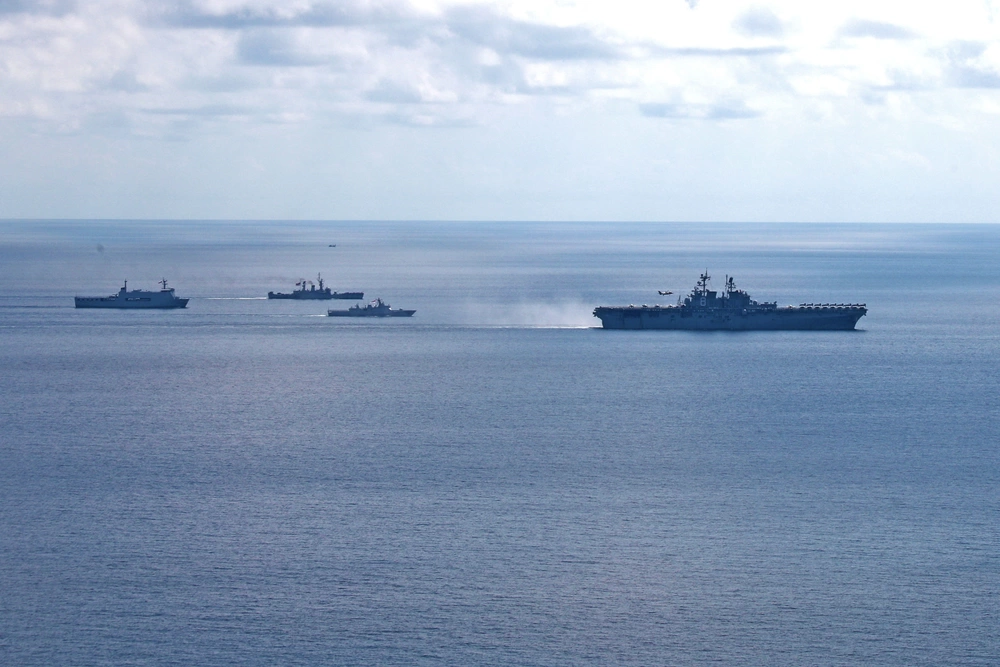
Photo By Gunnery Sgt. Chad Pulliam | PACIFIC OCEAN (Dec. 18, 2022) – A U.S. Marine Corps F-35B Lightning II pilot with Marine Fighter Attack Squadron (VMFA) 122, 13th Marine Expeditionary Unit, performs a vertical landing aboard amphibious assault ship USS Makin Island as Indonesian servicemembers view the landing from Indonesian Navy vessels during Cooperation Afloat Readiness and Training/ Marine Exercise (MAREX) Indonesia 2022, Dec. 18. CARAT/MAREX Indonesia is a bilateral exercise between Indonesia and the United States designed to promote regional security cooperation, maintain and strengthen maritime partnerships, and enhance maritime interoperability. In its 28th year, the CARAT series is comprised of multinational exercises, designed to enhance U.S. and partner navies’ and marine corps abilities to operate together in response to traditional and non-traditional maritime security challenges in the Indo-Pacific region. (U.S. Marine Corps photo by Gunnery Sgt. Chad J. Pulliam)
The Makin Island Amphibious Ready Group, led by commander, Amphibious Squadron 7 and comprised of amphibious assault ship USS Makin Island (LHD 8) and amphibious transport docks USS Anchorage (LPD 23) and USS John P. Murtha (LPD 26), with the embarked 13th Marine Expeditionary Unit, returns to San Diego this week following a seven-month deployment to the U.S. 3rd and 7th Fleet areas of operations.
“Our goal was to achieve interoperability with our allies and partners and promote a free and open Indo-Pacific. We accomplished that mission and brought every single Sailor and Marine home safely,” said U.S. Navy Capt. Andria Slough, commanding officer of Makin Island. “While the world witnessed our ARG-MEU team strengthening partnerships, I had a front-row seat to the tremendous amount of skill, dedication and hard work of 2,500 people each day of deployment. It’s awe-inspiring to watch Sailors and Marines at their very best!”
The Makin Island ARG and the 13th MEU successfully integrated capabilities of approximately 4,500 Sailors and Marines, supported allied interoperability during seven exercises, and traveled more than 47,000 nautical miles across the Indo-Pacific while deployed. Makin Island embarked all elements of the Marine Air-Ground Task Force, consisting of the 13th MEU Command Element; the Ground Combat Element, Battalion Landing Team 2/4; the Logistics Combat Element, Combat Logistics Battalion 13; the Aviation Combat Element, Marine Medium Tiltrotor Squadron (VMM) 362 (Reinforced), and Marine Fighter Attack Squadron (VMFA) 122, which included a full squadron of 10 F-35B Lightning IIs.
The ARG-MEU team began the deployment with Cooperation Afloat Readiness and Training exercises alongside regional partners and allies. The CARAT 2022 maritime exercise series promoted regional security cooperation, maintained and strengthened maritime partnerships, and enhanced interoperability among participating forces. Makin Island executed CARAT missions with Indonesia in December and Singapore in January, and Anchorage and John P. Murtha spent time training with members of the Sri Lanka and Timor-Leste militaries, respectively.
From February to March 2023, the Makin Island ARG and the 13th MEU participated in the 42nd iteration of exercise Cobra Gold with the Royal Thai Navy and Marine Corps. Cobra Gold is one of the largest multilateral theater security cooperation exercises in the Indo-Pacific and reflects the U.S. commitment to allies and partners, providing a continuous and reliable platform to train, prepare, and enhance regional stability and interoperability. Participants included Japan, Malaysia, the Republic of Indonesia, the Republic of Korea, and the Republic of Singapore, as well as participants from more than 20 other nations.
“I am so proud of all our Marines and Sailors as we return from this action-packed, seven-month deployment after exceeding all of our goals,” said U.S. Marine Corps Col. Samuel Meyer, commanding officer of the 13th MEU. “Through our Navy and Marine Corps integration, we worked with our partners and allies, creating personal bonds that will last a lifetime. From the CARAT series with Indonesia, Singapore, Timor-Leste, and Sri Lanka to our three large exercises with Thailand, Republic of Korea and the Philippines, we further strengthened these critical relationships that will continue to grow with routine ARG-MEU deployments to the region.”
The ARG-MEU participated in bilateral Exercise Ssang Yong 2023 alongside the ROK Navy and Marine Corps from March to April, reinforcing U.S. commitment. Operational exercises such as SY23 demonstrate the alliance remains ironclad, contributes to regional security, and promotes stability in northeast Asia and the Indo-Pacific region as a whole. During Ssang Yong, the 13th MEU disembarked the entirety of Battalion Landing Team 2/4 to participate in military operations in urban terrain training, close-quarters battle training, and various live-fire ranges with our ROK counterparts.
The Makin Island ARG and the 13th MEU wrapped up the deployment by participating in exercise Balikatan 2023 with the Armed Forces of the Philippines in April. The 17,600 participants made it the largest iteration of the exercise to date. Together, the two militaries trained side-by-side, developing interoperability and improved capability in the areas of maritime security, amphibious operations, live-fire training, urban and aviation operations, cyber defense, counterterrorism, and humanitarian assistance and disaster relief preparedness.
An integral part of U.S. Pacific Fleet, U.S. 3rd Fleet operates naval forces in the Indo-Pacific and provides the realistic, relevant training necessary to flawlessly execute our Navy’s role across the full spectrum of military operations that range from combat operations to humanitarian assistance and disaster relief. U.S. 3rd Fleet works together with our allies and partners to advance freedom of navigation, the rule of law, and other principles that underpin security for the Indo-Pacific region.
Marine Expeditionary Units (MEU) embarked on Amphibious Ready Groups (ARG) are characterized by their sea-based forward presence and expeditionary nature. As the Nation’s premier crisis response force, the ARG/MEUs provide a flexible and lethal force ready to perform a wide range of military, humanitarian, and diplomatic operations around the globe without the need for access, basing and overflight. Operating in international waters, this Navy-Marine Corps team also provides flexible deterrence options in key sea lines of communication and adjacent littorals near strategic chokepoints and can seize and hold maritime terrain in the defense of national interests.
Expeditionary Strike Group 3 comprises three amphibious squadrons, 15 amphibious warships, and eight naval support elements including approximately 18,000 active-duty and reserve Sailors and Marines. As the deputy commander for amphibious and littoral warfare, U.S. 3rd Fleet, the ESG 3 commander also oversees Mine Countermeasures Group 3 and the 14 littoral combat ships and two subordinate divisions under Littoral Combat Ship Squadron 1. ESG 3 is postured in support of U.S. 3rd Fleet as a globally responsive and scalable naval command element, capable of generating, deploying, and employing naval forces and formations for crisis and contingency response, forward presence, and major combat operations focusing on amphibious operations, humanitarian and disaster relief and support to defense civil authorities, and expeditionary logistics.
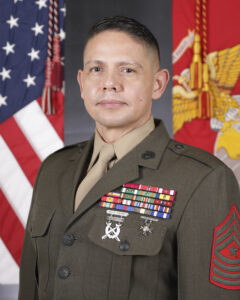
Marine Corps Announces the 20th Sergeant Major of the Marine Corps
Sgt. Maj. Black has served as the 19th Sergeant Major of the Marine Corps since July 26, 2019. Following the ceremony, he will relinquish his post as the highest-ranking enlisted Marine and principal enlisted advisor to the Commandant.
Sgt. Maj. Ruiz is a native of Phoenix, Arizona. He joined the Marine Corps Nov. 2, 1993, and attended recruit training at Marine Corps Recruit Depot San Diego, California. He began his career as a Marine Corps warehouse clerk with 3rd Supply Battalion, 3rd Force Service Support Group, in Okinawa, Japan. He continued his career as an enlisted leader serving across the Corps to include 1st Service Support Group; 3rd Battalion, 4th Marine Regiment; 3rd Battalion, 5th Marine Regiment; and 4th Marine Logistics Group.
He has deployed in support of Operation Iraqi Freedom, Operation Enduring Freedom and operations with the 31st Marine Expeditionary Unit.
Outside of the Marine Corps operating forces, Sgt. Maj. Ruiz has served as a recruiter in Los Angeles, a drill instructor with 3rd Recruit Training Battalion, MCRD San Diego, and as an instructor, drill master and chief instructor for Drill Instructor School, MCRD San Diego.
Sgt. Maj. Ruiz will serve as Commandant of the Marine Corps’ preeminent enlisted advisor with a protocol equivalency of a three-star general officer.
The Sergeant Major of the Marine Corps typically serves a four-year term, though service in the position is at the discretion of the Commandant.
The post of Sergeant Major of the Marine Corps was established in 1957 as the senior enlisted advisor to the Commandant of the Marine Corps, the first such post in any of the branches of the United States Armed Forces.