Kraken Robotics Announces $9.5 Million Contract with the Navy of a Large Asia Pacific Country
Release from Kraken Robotics 

************** 

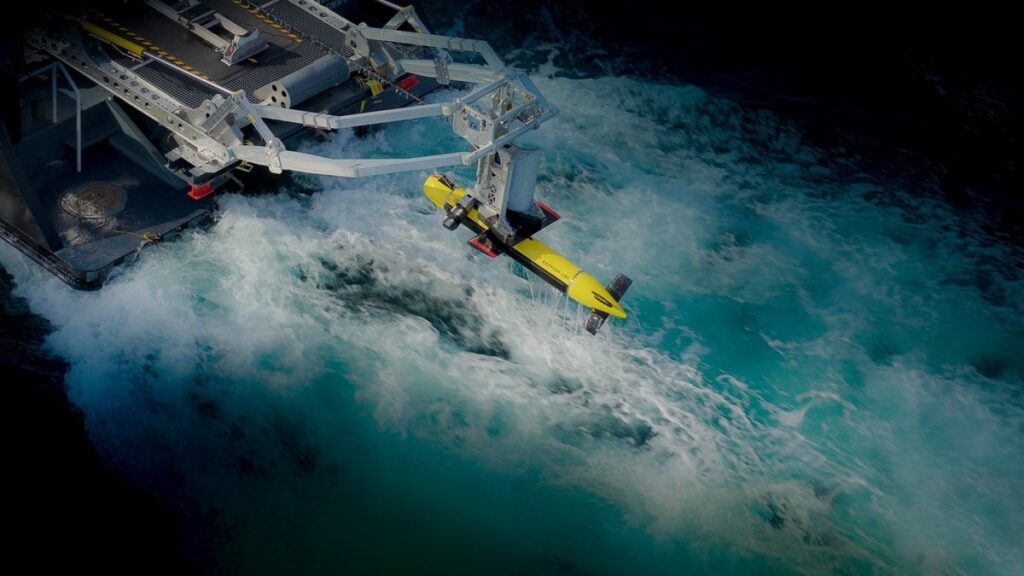
ST. JOHN’S, NEWFOUNDLAND, May 31, 2023 /GLOBE NEWSWIRE/ — Kraken Robotics Inc. (TSX-V: PNG, OTCQB: KRKNF) announces a $9.5 million contract to supply high-resolution seabed mapping sonar equipment to a navy in Asia-Pacific. The customer cannot be named at this time. Under the scope of the contract, Kraken will deliver its KATFISH™ high-speed minehunting solution. The contract also includes a variety of support and sustainment options, including training, spares and operational support. 

Under the acquisition contract, Kraken will deliver its KATFISH towed Synthetic Aperture Sonar, Tentacle® Winch and Autonomous Launch and Recovery System (ALARS) in Q2, 2023. Kraken’s equipment will be integrated onboard a vessel of opportunity selected by the customer. Continuing to build off successful KATFISH deliveries with various NATO navies, this represents Kraken’s first KATFISH system sale in the Asia-Pacific region. 

This contract follows the results of a successful in-country demonstration of KATFISH™ for the customer in Q1 of this year. Kraken’s team worked in concert with a local survey company to complete a 200 km seabed survey that provided real-time ultra- high-resolution imagery and bathymetry of the seafloor along coastal waters. 

Kraken is seeing continued opportunities for growth in all regions of the world as several trends are driving demand for Kraken’s synthetic aperture sonar technology. These include: 

  • A heightened focus on maritime security and protection of subsea infrastructure. 
  • An industry upgrade cycle and a gradual shift to smaller unmanned surface vessels for mine hunting. There are over 300 manned mine hunting vessels that are more than 20 years old and need to be upgraded over the next 5-10 years. Many of these will be replaced with smaller, unmanned vessels. 

  • Strong growth in the commercial market from growing requirements for high resolution data for seabed surveys and subsea asset inspection in the offshore oil and gas and offshore wind sectors. 


ABOUT KATFISH 

The KATFISH is a high-speed seabed survey system providing ultra-high resolution seabed imagery and bathymetry for defense and commercial customers. The acoustic imagery and bathymetry collected by KATFISH systems provides customers with actionable intelligence about subsea assets and infrastructure such as subsea pipelines and fiber optic cables, as well as important hydrographic information about the safety of key transit routes for ocean going assets. Kraken has integrated KATFISH to a variety of manned and unmanned vessels of opportunity, providing both standalone turnkey seabed mapping as well as optional integration to a customer’s combat mission management systems. 



NAVY RELEASES DRAFT ENVIRONMENTAL ASSESSMENT FOR HOMEPORTING OF COLUMBIA CLASS SUBMARINES AT NAVAL SUBMARINE BASE KINGS BAY

Release from U.S. Fleet Forces Command 

***************** 

26 May 2023 

NORFOLK, Va. – The Navy has released a Draft Environmental Assessment (EA) for the homeporting of the Columbia Class submarines at Naval Submarine Base (NSB) Kings Bay. 
  
The Navy proposes to establish facilities and functions at NSB Kings Bay to support the homeporting of Columbia Class submarines as replacements for the retiring Ohio Class submarines currently homeported at NSB Kings Bay. Under the Proposed Action, the Navy would construct eight facilities, modify five facilities, and demolish three facilities across three locations on NSB Kings Bay. Facility changes and development activities would be phased over a period of five years and completed coincident to the first Columbia Class submarines in 2028. The Proposed Action does not modify any existing dry-docks or conduct any in-water activity. 
  
During the 2028 – 2042 transition period from the Ohio Class to the Columbia Class and at completion, the Columbia Class (SSBNs) will be phased in as the Ohio Class are phased out, and thus total numbers of submarines homeported at NSB Kings Bay during this time will not exceed the number of Ohio Class submarines currently homeported at the base. 
  
The personnel numbers associated with the Columbia Class submarines are expected to be comparable to those associated with the Ohio Class submarines. Personnel numbers are also not anticipated to increase. Therefore, the Proposed Action will not increase the number of personnel employed at NSB Kings Bay, although an increase in temporary workers will result during the demolition, modification, and construction of 16 facilities and various functions scheduled for completion in 2028. 
  
This Environmental Assessment evaluates the potential environmental impacts associated with the Proposed Action alternative and the No Action Alternative to the following resource areas: air quality, water resources, geological resources, cultural resources, biological resources, utilities and infrastructure, public health and safety, and hazardous materials and wastes. 
  
The Proposed Action is needed because the Ohio Class SSBNs are reaching the end of their service lives and need to be replaced before degrading to unacceptable conditions. Even with additional maintenance, these submarines would continue to suffer from reduced reliability and increased costs associated with the obsolescence of legacy Ohio system components. 
  
The Draft EA is available for review at Www.Nepa.Navy.Mil/columbia-class. The Navy has prepared this Draft Environmental Assessment (EA) to inform the public of the Proposed Action and to allow the opportunity for public review and comment. The Draft EA will be released for public comment for 30 days.  The Navy invites public comments on the Draft EA, which will help the Navy arrive at the best possible informed decision about the proposal. Comments may be submitted during the public comment period from May 26 through June 25, and be postmarked no later than June 25 to ensure consideration in the Final Environmental Assessment. Written comments may be submitted on the website, or mailed to: ATTN: Ms. Sara Goodwin, code: EV22.SG, 6506 Hampton Blvd, Norfolk, VA 23508-1212. 


Northrop Grumman Rapidly Prepares for Next-Generation Relay Ground Stations in the Pacific Region

Release from Northrop Grumman

*********** 

BOULDER, Colo. – June 1, 2023 – Northrop Grumman Corporation (NYSE: NOC) recently completed a successful preliminary design review (PDR) of Relay Ground Station-Asia (RGS-A) for the U.S. Naval Information Warfare Center (NIWC) Pacific. 

  • RGS-A will connect critical legacy and next-generation satellites and end users. 
  • The successful PDR confirms the company is on track to transform the existing missile-warning system. 
  • The review was completed a month ahead of schedule, demonstrating the company’s ability to rapidly meet changing customer requirements. 

Expert: 

Aaron Dann, vice president, strategic force programs, Northrop Grumman: “The preliminary design review exceeded our customers’ expectations and is the next step in delivering much-needed new capabilities to the Pacific region. Our advanced technologies will deliver what is needed to support missile-warning and missile-tracking satellites that protect our nation and its allies.” 

Details: 

The U.S. Space Force is working to transform the existing missile-warning system with the Future Operationally Resilient Ground Evolution (FORGE) system. A cornerstone of the FORGE architecture includes developing relay ground stations capable of supporting existing and new satellite constellations with the ability to handle changes in bandwidth and availability. 

Northrop Grumman was awarded a $99.6 million five-year contract from NIWC Pacific last year to design, develop, integrate, test and deliver the relay ground station. The majority of the work will take place at Northrop Grumman’s campus in Boulder, Colorado. 

NIWC Pacific will develop six antennas for RGS-A to enable the Space Systems Command (SSC) next generation Space-Based Infrared System (SBIRS) ground system which keeps legacy satellites in geosynchronous orbit. RGS-A will be deployed to Guam and is on schedule to be installed by late 2025. 

Northrop Grumman is a leading global aerospace and defense technology company. Our pioneering solutions equip our customers with the capabilities they need to connect and protect the world, and push the boundaries of human exploration across the universe. Driven by a shared purpose to solve our customers’ toughest problems, our 95,000 employees define possible every day.   


U.S. Marine Corps deactivates 1st Battalion, 12th Marines

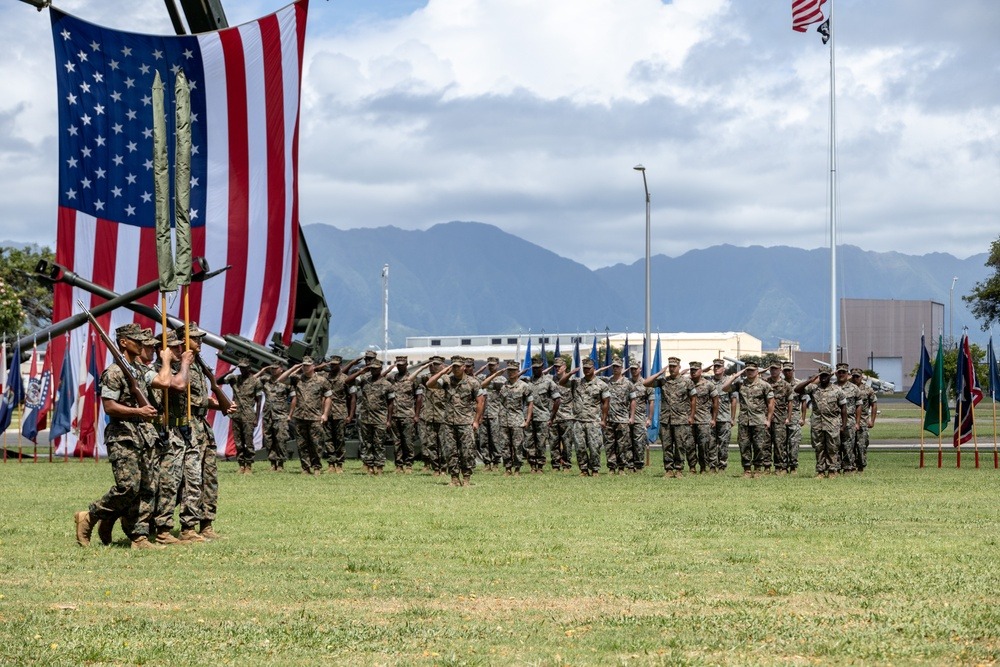
Photo By Sgt. Israel Chincio | U.S. Marines with 1st Battalion, 12th Marines, 3d Marine Division, participate in the unit’s deactivation ceremony on Marine Corps Base Hawaii, May 26, 2023. The deactivation is in accordance with Force Design 2030’s modernization efforts. The battalion has played a valuable role in setting conditions for the 3d Marine Littoral Regiment, and future MLRs, to provide combat ready and lethal forces in the Indo-Pacific. 3d MLR and 12th Marines, which is scheduled to transition to an MLR in 2025, will provide ready and capable stand-in forces to the first island chain, bolstering the United States Indo-Pacific Command’s ability to support deterrence efforts and respond to potential crises with allies and partners. (U.S. Marine Corps photo by Sgt. Israel Chincio)  see less | View Image Page

Release from 3rd Marine Division 

************ 

MARINE CORPS BASE HAWAII, HI, UNITED STATES 

05.26.2023 

Story by 1st Lt. Anne Pentaleri 

3rd Marine Division    

MARINE CORPS BASE HAWAII – 1st Battalion, 12th Marines cased its colors during the unit’s deactivation ceremony at Marine Corps Base Hawaii, May 26, 2023. 
 
1st Battalion, 12th Marines activated on Sept. 1, 1942, as 4th Battalion, 12th Marines at Camp Elliot, California, as an artillery regiment in support of 3d Marine Division. After participating in a number of World War II campaigns, to include battles at Bougainville, Guam, and Iwo Jima, 1/12 underwent a brief period of deactivation before reactivating in support of the Far East Command’s maintenance of amphibious readiness capabilities during the Korean War. 
 
The Marines of 1/12 saw the Vietnam War unfold from April 1965 to September 1969 while operating from their positions at Phu Bai, Da Nang, Cam Lo, Khe Sanh, and Camp Carroll. As U.S. forces kicked off the major raid known as Operation Thor on June 1, 1968, 1/12 enabled the regaining of control of the Demilitarized Zone through the provision of fire support and conduct of artillery raids. 
 
In June 1971, at the conclusion of the Vietnam War, the Marines of 1/12 reported to Marine Corps Air Station Kaneohe Bay, Hawaii, where they have since been permanently stationed. In September 1994, after the battalion’s successful participation in operations Desert Shield and Desert Storm, 1/12 was reassigned to the 3d Marine Division as a part of III Marine Expeditionary Force. From August 2004 to November 2011, 1/12 participated in the Global War on Terror, deploying in support of operations Iraqi Freedom and Enduring Freedom. One such deployment to Al Anbar Province, Iraq, was under the command of now Maj. Gen. Stephen Liszewski, who served as 1/12’s battalion commander from 2006 to 2008, and is now the commanding general of Marine Corps Installations Pacific. 
 
In recent years, 1/12 has been at the forefront of institutional change, leading the practical application of expeditionary advanced basing operations, experimentation with foraging concepts, and the employment of next-generation weapons systems. Most notably, operating in support of Large Scale Exercise 21, the battalion successfully employed the soon-to-be fielded Navy Marine Expeditionary Ship Interdiction System to fire the Naval Strike Missile aboard Pacific Missile Range Facility Barking Sands on Kauai, Hawaii, on Aug. 5, 2021. The missiles traveled over 100 nautical miles before reaching their target – a simulated adversary ship played by the ex-USS Ingraham, a retired Oliver Hazard Perry-class guided missile frigate. Similar operational mission profiles will allow Marine artillery to deny key maritime terrain and facilitate joint force maneuver. 
 
“1st Battalion, 12th Marines spent the last two years at the forefront of force design and joint force integration,” said Lt. Col. Joseph Gill, commanding officer, 1st Battalion, 12th Marines. “We have made tremendous progress in the development of tactics, techniques, and procedures and set conditions for the fielding of the Navy Marine Corps Expeditionary Ship Interdiction System. The battalion’s efforts have increased the lethality of the 3d Marine Division and influenced the way we’ll fight for the foreseeable future.” 
 
On May 26, 2023, the U.S. Marine Corps deactivated 1/12. The change took place in accordance with Force Design 2030’s modernization efforts. The battalion has played a valuable role in setting conditions for the 3d Marine Littoral Regiment, and future MLRs, to provide combat ready and lethal forces in the Indo-Pacific. 3d MLR and 12th Marines, which is scheduled to transition to an MLR in 2025, will provide ready and capable stand-in forces to the first island chain, bolstering the United States Indo-Pacific Command’s ability to support deterrence efforts and respond to potential crises with allies and partners. 
 
“Deactivating a battalion of this nature and ensuring the deliberate transfer of personnel, facilities, and equipment is a tremendous undertaking,” said Maj. Ryan Capdepon, the executive officer of 1st Battalion, 12th Marines. “In true 1/12 fashion, our Marines and Sailors displayed professionalism, flexibility, and dedication in tackling the associated tasks. Concurrently, we continued to support numerous operational requirements and remain postured for potential contingency scenarios. I am proud of our team and the job they have done. Each one of them will be an asset to their next command.” 


Fairbanks Morse Defense signs exclusive agreement with pureLiFi to deploy secure LiFi technology

Release from Fairbanks Morse Defense 

************ 

BELOIT, Wis. and EDINBURGH, Scotland – May 31, 2023 – Fairbanks Morse Defense (FMD), a portfolio company of Arcline Investment Management, is advancing its cutting-edge technology portfolio by signing a three-year agreement with UK-based pureLiFi, a world leader in the development of LiFi, a secure, light-based wireless connectivity technology. The agreement makes FMD the exclusive reseller of the company’s technology and products to FM OnBoard maritime defense customers in the United States, providing those users with access to secure, reliable data transmission capabilities while at sea.   

“The ability to have secure connectivity while at sea is a mission-critical capability for our maritime defense customers,” said George Whittier, Chief Executive Officer of Fairbanks Morse Defense. “pureLiFi’s technology pairs perfectly with FM OnBoard, enabling technicians to securely communicate from the engine room with live, remote technicians who can help troubleshoot any issues.” 

LiFi is a mobile wireless technology that uses light rather than radio frequencies to transmit data. The company’s Kitefin™ LiFi system is the first mission deployable LiFi system designed specifically for the defense industry and builds on the inherent physical security of containable light communications to ensure that data is only transmitted to the right people in the right place. LiFi is not vulnerable to eavesdropping or jamming attempts. The system can be easily set up and deployed in a matter of minutes and enables highly secure connectivity in places that are traditionally considered to be impractical or inaccessible.   

“Fairbanks Morse Defense is quickly becoming known for its best-in-class maritime defense technology solutions, and we consider this to be an ideal collaboration for expanding our presence in the US,” said Alistair Banham, pureLiFi CEO. “Our collaboration with FMD represents a significant step towards expanding LiFi technology beyond pureLiFi’s large scale land-based deployments. We look forward to working with FMD to deliver this game-changing LiFi technology to maritime defense customers.”  

Prior to this agreement, pureLiFi worked with FMD through the FM Defense Accelerator. The companies have been leveraging LiFi and FMD’s resources to co-develop and evaluate maritime use cases for LiFi technology.  


Boeing and ST Engineering Sign P-8 Sustainment MoU

From left: Torbjorn (Turbo) Sjogren, Vice President and General Manager, Government Services, Boeing Global Services; Sarbjit Singh, President, Defence Aerospace, ST Engineering. (Photo: Boeing)

Release from Boeing

********* 

– Joint effort will identify opportunities to collaborate in systems integration, training, local parts distribution, support and sustainment work for the P-8 

SINGAPORE, May 29, 2023—Boeing [NYSE: BA] signed a Memorandum of Understanding (MoU) with ST Engineering to outline potential areas of collaboration in systems integration, training, local parts distribution, support and sustainment work for the P-8A Poseidon. 

Boeing and ST Engineering have identified opportunities to collaborate in a number of areas and will explore these in more detail, including jointly developing a P-8 service center in Singapore with the provision of engineers and aircraft maintenance technicians to support maintenance and engineering services. 

The P-8A is a long-range, multi-mission aircraft that delivers unmatched antisubmarine warfare, anti-surface warfare, intelligence, surveillance and reconnaissance, and humanitarian assistance and disaster relief capabilities. 

The P-8A, a military derivative of the Next-Generation 737-800, combines superior performance and reliability with an advanced mission system that ensures maximum interoperability in the future battle space. With more than 160 aircraft in service, the P-8 has executed more than 600,000 mishap-free flight hours around the globe. 

Militaries that operate or have selected the P-8 include the U.S. Navy, the United Kingdom’s Royal Air Force, Royal Australian Air Force, Royal New Zealand Air Force, Indian Navy, Royal Norwegian Air Force, Republic of Korea Navy and German Navy.  


World first as UK hosts inaugural AUKUS AI and autonomy trial

Release from the U.K. Ministry of Defence 

***** 

  • Experimental work by Australia, UK and US on detecting and tracking military targets  
  • Vehicles retrained in flight to adapt to changing mission situations 
  • Shared focus on adhering to safe and responsible artificial intelligence activity 

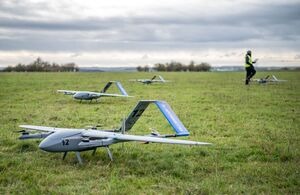
The first AUKUS artificial intelligence (AI) and autonomy trial was held at Upavon in Wiltshire in April, with the aim of rapidly driving these technologies into responsible military use. 

The work saw the initial joint deployment of Australian, UK and US AI-enabled assets in a collaborative swarm to detect and track military targets in a representative environment in real time. Accelerating the development of these technologies will have a massive impact on coalition military capability.  

The trial, organised by the UK’s Defence Science and Technology Laboratory (Dstl), achieved world firsts, including the live retraining of models in flight and the interchange of AI models between AUKUS nations. The AUKUS collaboration is looking to rapidly drive these technologies into military capabilities. 

The AUKUS Advanced Capabilities Pillar, known as Pillar 2, is pursuing a trilateral programme of work on a range of leading-edge technologies and capabilities to promote security and stability in the Indo-Pacific region. Through Pillar 2, Australia, the UK, and the US have collaborated to accelerate collective understanding of AI and autonomy technologies, and how to rapidly field robust, trustworthy AI and autonomy in complex operations, while adhering to the shared values of safe and responsible AI. 

Autonomy and AI will transform the way Defence operates. The strategic environment is rapidly evolving, meaning we must adapt our technologies at pace if we are to maintain our operational advantage. By sharing AI – and the underpinning data to enable it – with one another, Australia, UK, and US militaries can access the best AI, reduce duplication of effort, and ensure interoperability. 

The event was attended by senior AUKUS Advanced Capabilities pillar leaders – General Rob Magowan (UK), Deputy Chief of the Defence Staff (Financial and Military Capability), Abraham (Abe) Denmark (US), Senior Advisor to the Secretary of Defense for AUKUS, and Hugh Jeffrey (AUS), Deputy Secretary Strategy, Policy, and Industry. 

UK Deputy Chief of Defence Staff, Military Capability, Lieutenant General Rob Magowan said: 

“This trial demonstrates the military advantage of AUKUS advanced capabilities, as we work in coalition to identify, track and counter potential adversaries from a greater distance and with greater speed. Service personnel, scientists and engineers from our three nations combined to develop and share critical information to enhance commanders’ decision making.  

“Accelerating technological advances will deliver the operational advantages necessary to defeat current and future threats across the battlespace. We are committed to collaborating with partners to ensure that we achieve this while also promoting the responsible development and deployment of AI.” 

US Senior Advisor to the Secretary of Defense for AUKUS, Abe Denmark said: 

“We recognise the immense importance of this collaboration in strengthening our collective national security of our nations. The development and deployment of advanced artificial intelligence technologies have the potential to transform the way we approach defense and security challenges.  

“This capability demonstration is truly a shared effort and is thus a critical step in our collective initiative to stay ahead of emerging threats. By pooling our expertise and resources through our AUKUS partnerships, we can ensure that our militaries are equipped with the latest and most effective tools to defend our nations and uphold the principles of freedom and democracy around the world.” 

Australian Deputy Secretary, Strategy, Policy and Industry, Hugh Jeffrey said: 

“The AUKUS AI and Autonomy trial in Salisbury Plain demonstrated AI algorithms working in a mission-tailored adaptive capability. The AUKUS research and operator teams collaborated to develop, test and evaluate joint machine-learning models, and operate our different national platforms on the battlefield.  

“I was impressed to see AI models rapidly updated at the tactical edge to incorporate new targets, which were immediately shared among the three partners to deliver decision advantage and meet changing mission requirements. This cooperation under AUKUS Pillar II will deliver a capability greater than any one country could achieve alone, and this really is the rationale for the AUKUS partnership at work.” 

More than 70 military and civilian defence personnel and industry contractors were involved in the exercise in April 2023. The trial utilised a variety of air and ground vehicles to test target identification capability, including: Blue Bear Ghost (UK) and Boeing/Insitu CT220 (AUS) uncrewed aerial vehicles (UAVs), Challenger 2 tank, Warrior armoured vehicle and Viking uncrewed ground vehicle (UGV), along with a commercially hired FV433 Abbot self-propelled gun and former Eastern Bloc BMP OT-90. 

The trilateral teams collaborated to develop joint machine-learning (ML) models, apply test and evaluation processes, and fly on different national UAVs. The ML models were quickly updated to include new targets and shared among the coalition and AI models retrained to meet changing mission requirements. 


Raytheon Technologies to deliver Full Rate Production for TCTS Increment II Air Combat Training System for U.S. Navy 

Release from Raytheon Technologies 

***** 

May 25, 2023 

CEDAR RAPIDS, Iowa, May 25, 2023 /PRNewswire/ — Collins Aerospace, a Raytheon Technologies business (NYSE: RTX) announced today it will deliver on the full rate production contract awarded by the U.S. Navy for Tactical Combat Training System – Increment II (TCTS II), Air Combat Training System (ACMI) for the U.S. Navy. The contract includes both airborne and ground subsystems and will support fielding requirements at various U.S. Navy training ranges. 

“TCTS II addresses today’s peer threat, enabling aircrews to train and improve joint tactics, techniques and procedures in an NSA-certified secure environment,” said John Sapp, vice president and general manager, Integrated Solutions for Collins. 

Validated flight tests on F/A-18 and EA-18G aircrafts, TCTS II’s long-range, air-to-air and air-to-ground networking capability supported real time data exchanges. The system features an open architecture design, highly encryption capability, computing power, and robust datalink. TCTS II will be the foundation for next-generation training scenarios that will use a combination of live, virtual and constructive entities.   

“In our testing, we were able to demonstrate key discriminators of our TCTS II solution including integration into existing infrastructure, tactical intercepts and real-time mission completion notifications,” said Sapp. 

TCTS II is planned to replace the U.S. Navy’s legacy ACMI tracking systems with a single system to support training, from tactical aircrew unit level training events to force exercise events, including mobile and fixed locations worldwide. 

Developed and built by Collins Aerospace and teammate Leonardo DRS, TCTS II is a scalable and flexible open architecture system that enables highly secure air combat training among 4th and 5th Generation U.S. aircraft, and international aircraft. 


Boeing Begins Construction on New Phantom Works Facility

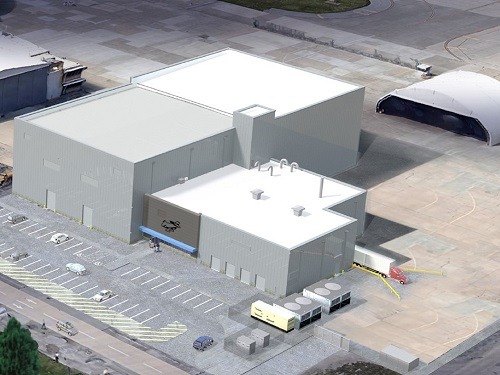
The Boeing Phantom Works’ Advanced Coatings Center in St. Louis will house state-of-the-art, post-assembly phases of future military aircraft production (Boeing artist’s concept).

Release from Boeing

***** 

– The Advanced Coatings Center is the latest factory supporting innovation efforts 

– State-of-the-art facility will house critical post-assembly phases of production 

– Secure facility is key to defense business modernization and expansion plans 

ST. LOUIS, May 26, 2023 — Boeing [NYSE: BA] has begun construction on a new facility to house state-of-the-art, post-assembly phases of future military aircraft production. 

The new Advanced Coatings Center will be a secure facility operated by Phantom Works, Boeing Defense, Space & Security’s proprietary research, development and prototyping division. The construction phase of the 47,500 square-foot facility is underway, and the center is expected to be operational in 2025.  

“As we pivot toward future programs, Boeing’s defense business is in the midst of one of the most significant investments in new facilities in our history,” said Steve Nordlund, Air Dominance vice president and general manager, and St. Louis senior site executive.  “This investment is not only to win new future franchise programs but, more importantly, to enable the United States to outpace increasingly capable and aggressive adversaries. We are revolutionizing how aircraft are designed, built and delivered because the threats demand it,” Nordlund said. 

The Advanced Coatings Center is the third new facility revealed as part of Phantom Works’ multi-billion-dollar Production System of the Future effort, enabling Boeing to scale a platform-agnostic, modular and flexible digital production system across future defense programs. Last fall, the company opened the new Advanced Composite Fabrication Center in Mesa, Ariz., and added a new St. Louis-based Lab and Test facility over the winter.  Additional new factories supporting various phases of production are planned for the coming years.   

“This facility is great news for Missouri and for our nation,” said Missouri Gov. Mike Parson. “With more than 15,000 employees, Boeing is Missouri’s largest manufacturer that helps spur this state’s economic growth every day. This new facility shows our commitment to growth and our investment in the talented workforce.” 


HII Redelivers USS George Washington (CVN 73) to U.S. Navy 

Release from HII 

***** 

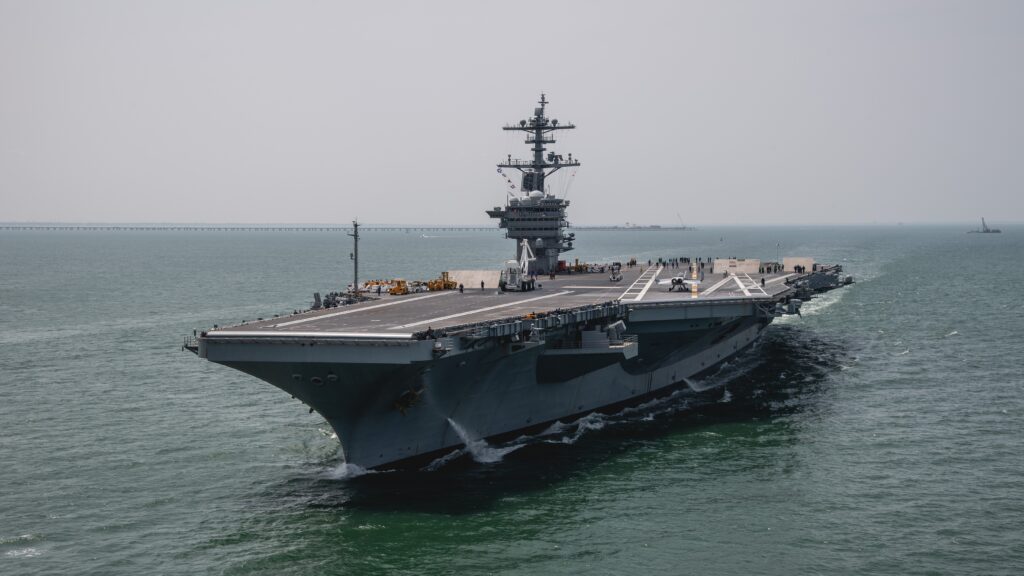
NEWPORT NEWS, Va., May 25, 2023 (GLOBE NEWSWIRE) — HII (NYSE: HII) announced today that its Newport News Shipbuilding division has redelivered the nuclear-powered aircraft carrier USS George Washington (CVN 73) to the U.S. Navy. The redelivery took place after successful sea trials that tested the ship’s systems following its refueling and complex overhaul (RCOH) at NNS. 

“Redelivering George Washington to the Navy is the end result of incredible teamwork between our shipbuilders, the CVN 73 crew, our government partners and all of our suppliers,” said Todd West, NNS vice president, in-service aircraft carrier programs. “George Washington has gone through a transformation and now returns to the fleet as a fully recapitalized ship, ready to support any mission and serve our nation for another 25 years.” 

Sea trials test the carrier’s systems and operations at sea, including high-speed operations. The trials team, comprising sailors, shipbuilders and government representatives, puts the ship through a series of tests designed to prove system performance and demonstrate all the carrier’s capabilities at sea. 

A photo accompanying this release is available at: https://hii.com/news/hii-redelivers-uss-george-washington-cvn-73-to-u-s-navy

“Getting our warship redelivered and back out to sea to take its place as the premier CVN in the world’s greatest Navy is a direct result of the tenacity and grit displayed by our warfighters,” said Capt. Brent Gaut, Washington‘s commanding officer. “To our incredible Sailors, contractors and shipyard workers: I am proud of you, and I sincerely hope you feel an extreme sense of pride as well, especially in light of our once-in-a-lifetime achievement. You all share an equal part in the legacy of getting our warship back into Navy service at a pivotal moment in our great nation’s history. Our collective intent is to show the world what we can do, and what we must do in support of America’s strategic and operational objectives.” 

The RCOH process is performed only once during the ship’s lifetime and involves upgrades to nearly every space and system on the ship. Tanks, the hull, shafting, propellers, rudders, piping, ventilation, electrical, combat and aviation support systems are repaired, upgraded and modernized. Work also includes defueling and refueling the ship’s two nuclear reactors as well as repairs, maintenance, and upgrades to the propulsion plant. 

NNS is the only shipyard with the skilled workforce and facilities equipped for this project. USS George Washington is the sixth Nimitz-class carrier to undergo RCOH. The RCOH represents 35 percent of all maintenance and modernization in an aircraft carrier’s service life. 

Work continues at NNS on the RCOH for USS John C. Stennis (CVN 74), with steady progress so far this year, including the installation of the main mast.