SAIC Awarded $102M Contract to Support U.S. Navy Torpedo Production
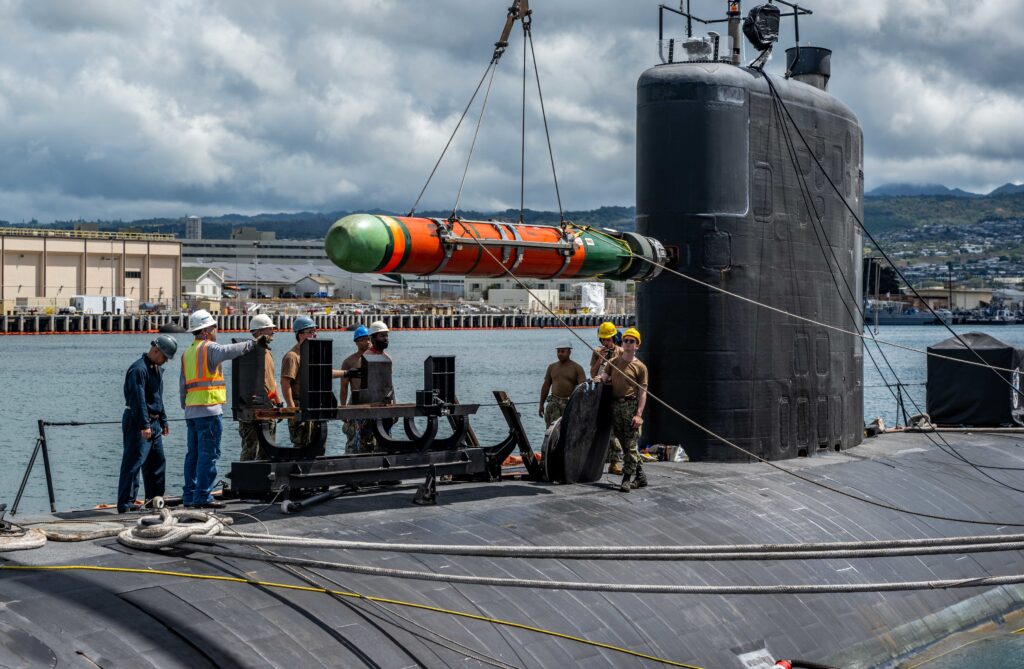
JOINT BASE PEARL HARBOR-HICKAM (June 2, 2021) Sailors assigned to the Los Angeles-class fast-attack submarine USS Columbia (SSN 771) load a Mark 48 advanced capability torpedo for Exercise Agile Dagger 2021 (AD21). AD21 is a training exercise, with one-third of the Pacific Submarine Force getting underway, to assess warfighting readiness and build capacity for the joint force. (U.S. Navy photo by Mass Communication Specialist 1st Class Michael B. Zingaro)
Reston, Va., April 10, 2023 – Science Applications International Corp. (NYSE: SAIC) has been awarded a $102.5 million contract by the U.S. Navy to continue supporting the MK 48 Mod 7 Heavyweight Torpedo program. This is a firm-fixed-price and cost-plus-fixed fee modification to a previously awarded $1.1 billion torpedo production contract.
“SAIC has a long history of supporting the U.S. Navy, notably our work providing the dominant undersea weapons it requires,” said Bob Genter, president of Defense and Civilian Sector at SAIC. “We are honored by the Navy’s confidence in SAIC, and proud to expand our support of the MK 48 program.”
Under the new contract option, SAIC will produce, assemble, test and deliver the U.S. Navy’s MK 48 Mod 7 Torpedo Afterbody Tailcones (AB/TC) and MK29 Mod 0 Warshot Fuel Tanks to the U.S. Navy and foreign partners through implemented Foreign Military Sales (FMS) programs.
Currently, SAIC also provides all necessary facilities, resources and management to meet the contract’s integration, production, test and delivery requirements.
To learn more about SAIC’s work with the Department of Defense, visit www.saic.com/defense.
HII is Awarded Contract Modification for Columbia-Class Ballistic Missile Submarines
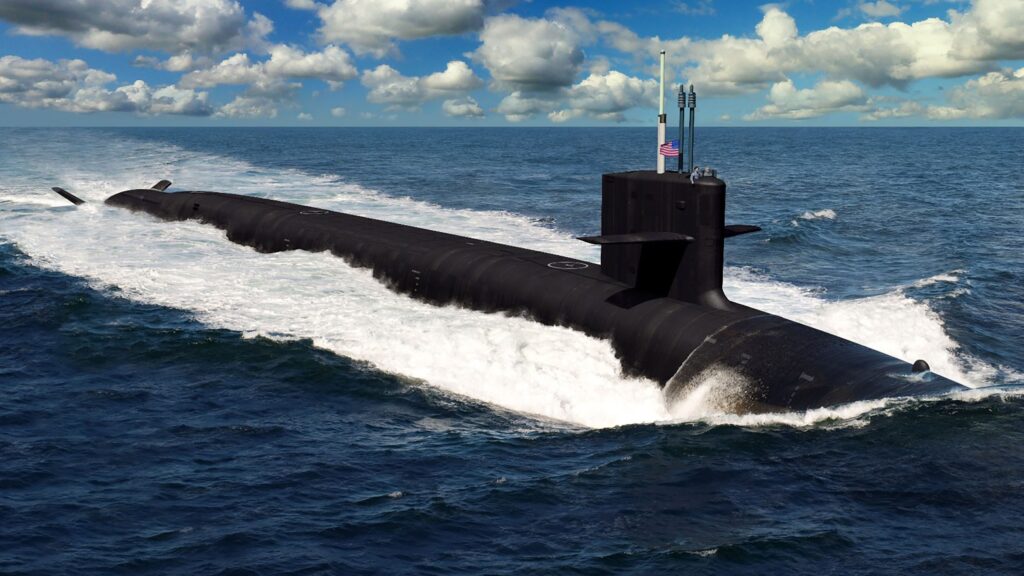
NEWPORT NEWS, Va., April 11, 2023 (GLOBE NEWSWIRE) — HII (NYSE: HII) announced today that its Newport News Shipbuilding division has been awarded a $567.6 million subcontract modification from General Dynamics Electric Boat to provide long-lead-time material and advance construction activities for Columbia-class ballistic missile submarines.
HII is currently under contract for construction of submarine modules for Build I, the first two submarines in the class: District of Columbia (SSBN 826) and Wisconsin (SSBN 827). The advance procurement funds from this subcontract modification, awarded April 4, will allow NNS to purchase major components and commodity material and to begin advance construction on Build II, the next five submarines in the class.
“This contract modification underscores the critical manufacturing work our shipbuilders do for the U.S. Navy, as major contributors to the Columbia-class,” said Brandi Smith, NNS vice president for Columbia-class construction. “When delivered to the fleet, these submarines and their crews will protect peace and freedom around the world, in service of the nation. Our shipbuilders understand the responsibility, commitment and discipline required of them each day, and take great pride in supporting this mission.”
The Navy has designated the Columbia class its top acquisition priority. Ultimately, the Columbia class will replace the fleet of Ohio-class ballistic missile submarines, and take over the role of the nation’s sea-based strategic deterrent, providing the most survivable leg of the nation’s strategic triad.
NNS is a major shipbuilding partner in the Columbia-class program, constructing and delivering six module sections per submarine under contract to General Dynamics Electric Boat.
BAE Systems to manufacture advanced Block 4 F-35 electronic warfare systems to defeat evolving threats
NASHUA, N.H. — April. 3, 2023 — BAE Systems has received $491 million in contracts from Lockheed Martin to produce state-of-the-art Block 4 electronic warfare (EW) systems for future Lot 17 F-35 Lightning II fighter jets, adding to the 1,200 F-35 EW systems it has delivered to date. The powerful Block 4 systems will accelerate the delivery of advanced EW capabilities to warfighters by combining adaptable hardware and incremental software updates.
“The Block 4 EW system will offer greater situational awareness, enhanced survivability and increased capabilities to counter modern threats, and is upgradable to address evolving threats,” said Lisa Aucoin, vice president of F-35 Solutions at BAE Systems. “Our adaptable EW system will help warfighters execute missions today and into the future, and will reduce engineering and sustainment costs for the U.S. Department of Defense and its allies.”
The Block 4 EW systems will include significantly upgraded hardware and software that improves sensing and signal-processing capabilities. New, high-performance sensors will boost the system’s ability to detect difficult-to-observe threats and more threats simultaneously.
“Our modern facilities allow us to manufacture complex, intricate electronics at scale to deliver an affordable EW capability,” said Chris Rossi, director of F-35 production at BAE Systems. “The flexibility of our active production line will allow us to seamlessly transition to the Block 4 design without skipping a beat.”
The AN/ASQ-239 provides F-35s with fully integrated offensive and defense EW capabilities, including long-range threat warning, self-protection, and targeting support. It provides 360-degree, full-spectrum situational awareness and rapid-response capabilities—allowing the F-35 to evade, engage, counter, and jam threats, and reach well-defended targets.
BAE Systems is a leader in electronic warfare, and its strength is its people—a team of knowledgeable, intelligent, and resourceful engineers, project managers, and skilled workers committed to protecting those who protect us. As the company advances next-generation EW technology, it applies its engineering and production expertise as a force multiplier, maximizing its customers’ investments in EW. BAE Systems’ next-generation Storm EWTM spectrum warfare suite is built on a common core architecture that can be customized for multiple airborne platforms, and can be upgraded in the field with software updates.
The AN/ASQ-239 system is designed and manufactured at BAE Systems’ facilities in Manchester, New Hampshire and Nashua, New Hampshire. Additional information is available at www.baesystems.com/ew and www.baesystems.com/en-us/product/f-35.
Additional Information:
As a key partner on the F-35 program, BAE Systems contributes to the aircraft in many ways. Beyond electronic warfare, the company designs and manufactures the F-35’s active inceptor control stick, vehicle management computer, and other electronics. The company also designs and builds the aft fuselage and horizontal and vertical tails, as well as the wingfold for F-35Cs and the nozzle bay doors for F-35Bs.
Coast Guard Cutter Warren Deyampert commissions in Boston
Coast Guard Cutter Warren Deyampert commissions in Boston
BOSTON — The Coast Guard’s newest cutter, the Coast Guard Cutter Warren Deyampert (WPC-1151), was commissioned at Coast Guard Base Boston, March 30.
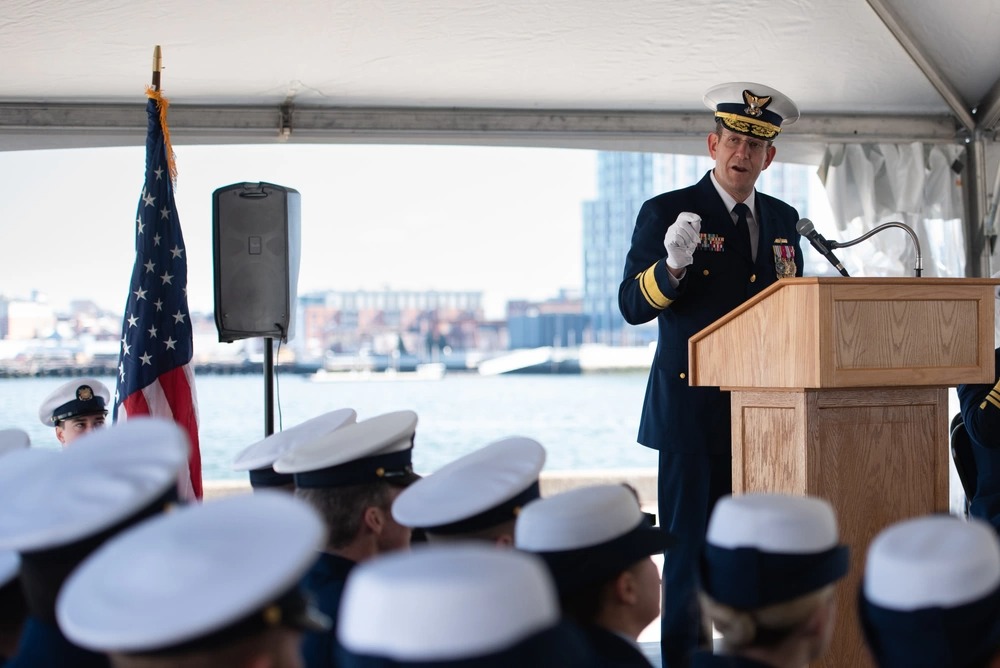
Chief Warrant Officer Lance DeFoggi, assumed command of the cutter during a ceremony presided over by Vice Admiral Kevin Lunday, the Coast Guard Atlantic Area commander. The Warren Deyampert is the second of six Fast Response Cutters that will be homeported in Boston, serving along the 1st Coast Guard District.
“This is truly a special moment in our lives and a milestone for our family’s history that will be remembered for generations to come,” said Pamela Jackson, a cousin of Deyampert, and the ship’s sponsor “To the crew, congratulations on the commissioning of the 51st Fast Response Cutter that will bear the name of my cousin, Warren Deyampert. I am so honored to serve as the sponsor and know that this crew will always have a special place in my heart.”
The Sentinel-class fast response cutter (FRC) is designed for multiple missions, including drug and migrant interdiction; ports, waterways and coastal security; fishery patrols; search and rescue; and national defense. The Coast Guard has ordered 65 FRCs to replace the 1980s-era Island-class 110-foot patrol boats. The FRCs feature advanced command, control, communications, computers, intelligence, surveillance and reconnaissance equipment; over-the-horizon cutter boat deployment to reach vessels of interest; and improved habitability and seakeeping.
“Now, we are standing ready, to get underway to perform all of the missions we have been training for in the birthplace of the Coast Guard,” said DeFoggi. “We will strive to embody the words of our motto, ‘Gallantry during grave peril’, as what was written on Deyampert’s award citation”.
Born in Attalla, Alabama, the cutter’s namesake joined the Coast Guard at age 19, and served aboard the Coast Guard Cutter Escanaba during World War II, beginning in August, 1941. Deyampert’s primary role was within the food service rating, but he also served as one of the ship’s three rescue swimmers.
Following a torpedo attack on the U.S. Army transport ship Dorchester in North Atlantic waters on Feb. 3, 1943, Deyampert swam in absolute darkness to rescue survivors in the freezing waters of the North Atlantic. His efforts affected the rescue of more than 100 crewmembers, many of whom were hypothermic and unable to swim.
Four months later, June 13, 1943, the Escanaba sank, following an explosion onboard that was believed to be from a torpedo attack. All but two crewmembers were killed in the explosion. Deyampert was posthumously awarded the Navy and Marine Corps Medal and Purple Heart Medal for his heroic rescue of the Dorchester crew.
Navy to Commission Future Littoral Combat USS Ship Santa Barbara
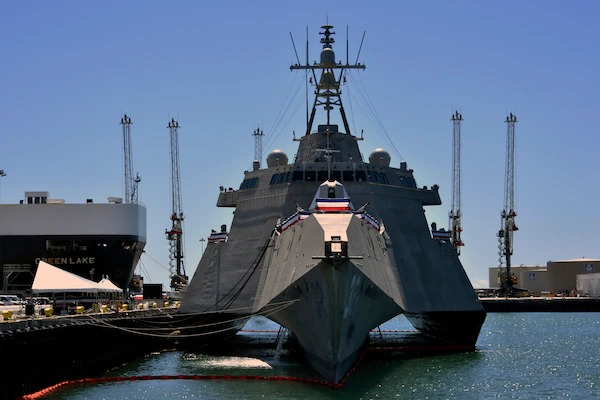
The Navy will commission the future USS Santa Barbara (LCS 32) as the newest Independence- variant littoral combat ship (LCS) during a 10:00 a.m. PST ceremony on Saturday, April 1, in Port Hueneme, Calif., near its namesake city.
The principal speaker is Admiral Samuel Paparo, Commander, U.S. Pacific Fleet. Additional speakers include the Honorable Julia Brownley, U.S. Representative, California’s 26th district; the Honorable Russell Rumbaugh, Assistant Secretary of the Navy, financial management and comptroller; the Honorable Randy Rowse, Mayor of Santa Barbara, Calif; Rear Adm. Casey Moton, program executive officer for unmanned and small combatants; and Mr. Larry Ryder, vice president of business development and external affairs for Austal USA. The ship’s sponsor is Mrs. Lolita Zinke, a Santa Barbara native and wife of the Honorable Ryan Zinke, U.S. Representative, Montana’s first district and former U.S. Interior Secretary.
“The city of Santa Barbara is rich in history, spanning hundreds of years of change and progress that make Santa Barbara an iconic location and a fitting name for LCS 32,” said Secretary of the Navy Carlos Del Toro. “During the second World War, it was home to a Marine Corps Air Station and a Naval Reserve Center. Today, many Veterans and their families continue to call Santa Barbara ‘home.’ Though our Navy and Marine Corps footprint is smaller than in decades past, the spirit of military service and connection with the city of Santa Barbara remains strong.”
LCS 32 is the third United States ship to bear the name Santa Barbara. The first Santa Barbara was a single-screw steel freighter built in 1916 by William Cramp and Sons of Philadelphia. Ordered and taken over by the Navy on February 1, 1918 from the Atlantic & Pacific Steamship Co. of New York, it was commissioned there on April 15, 1918. The second Santa Barbara, a Kilauea-class ammunition ship, was laid down on December 30, 1966 by the Bethlehem Steel Corp., Sparrows Point, MD, launched on January 23, 1968, and commissioned on July 11, 1970.
The LCS class consists of two variants, the Freedom and the Independence, designed and built by two industry teams. Austal USA leads the Independence-variant team in Mobile, Al., for LCS 6 and the subsequent even-numbered hulls, including the future USS Santa Barbara. Lockheed Martin leads the Freedom-variant team, the odd-numbered hulls, in Marinette, Wis.
Littoral Combat Ships are fast, optimally-manned, mission-tailored surface combatants that operate in near-shore and open-ocean environments, winning against 21st-century coastal threats. LCS integrate with joint, combined, manned and unmanned teams to support forward-presence, maritime security, sea control and deterrence missions around the globe.
USS Santa Barbara is homeported at Naval Base San Diego.
The ceremony will be live streamed at: www.dvidshub.net/webcast/31155. The link becomes active approximately ten minutes prior to the event (9:50 a.m. EST).
From by Mark Wright, Missile Defense Agency Public Affairs
PACIFIC OCEAN – The U.S. Missile Defense Agency, in cooperation with the U.S. Navy, successfully conducted Flight Test Aegis Weapon System 31 Event 1a (FTM-31 E1a).
The test demonstrated the capability of a ballistic missile defense (BMD)-configured Aegis ship to detect, track, engage, and intercept a medium range ballistic missile (MRBM) target in the terminal phase of flight utilizing the Standard Missile–6 (SM-6) Dual II with Software Upgrade (SWUP) in a single salvo of two interceptors.
FTM–31 E1a was the third successful flight test of an Aegis BMD-equipped vessel using the SM–6 Dual II missile and the first Aegis Baseline 9.C2.0 (BMD 5.1) intercept of an MRBM target using the SM-6 Dual II SWUP missile.
FTM-31 E1a highlights adjustments made after FTM-31 E1, conducted in May 2021, which did not meet all its objectives. The successful execution of this mission validates that the upgraded SM-6 Dual II SWUP capability is now ready for use by the warfighter in order to defend and protect our allies and deployed forces worldwide.
“This was an incredible accomplishment and key milestone for the Sea-based defense program,” said MDA Director Vice Adm. Jon Hill. “This test proved our capabilities in an operationally realistic scenario, which is a critical step in increasing capability to outpace emerging threats. My congratulations to the entire test team, including our Sailors and our industry partners, who helped us to achieve this milestone.”
The target was launched from the Pacific Missile Range Facility, located on Kauai, Hawaii. The firing ship used for this test was the USS DANIEL INOUYE (DDG 118), which launched two SM-6 Dual II missiles and successfully intercepted the MRBM.
SM-6 delivers over-the-horizon, air defense capability and can perform anti-air warfare, ballistic missile defense, and anti-surface warfare missions. The SM–6 Dual II SWUP missile is designed to defend against short-to-medium range ballistic missiles in the terminal phase of flight.
The Sea Based Terminal (SBT) program, with the Aegis Baseline 9 Weapon System and SM-6 missile, is instrumental in MDA’s efforts to deliver a capability to the Navy to defend high value assets at sea and ashore against advanced threats in the terminal phase of flight. SBT is an incremental and evolving capability for ballistic and regional hypersonic defense capability.
Additional information about all elements of the U.S. Missile Defense System can be found at www.mda.mil.
Please direct all media related queries to Mark Wright, MDA director of public affairs, at 571-231-8212, [email protected] or Nancy Jones-Bonbrest, public affairs officer at 571-231-8211, [email protected].
USCGC Northland returns home following 62-day Florida Straits and Windward Passage patrol
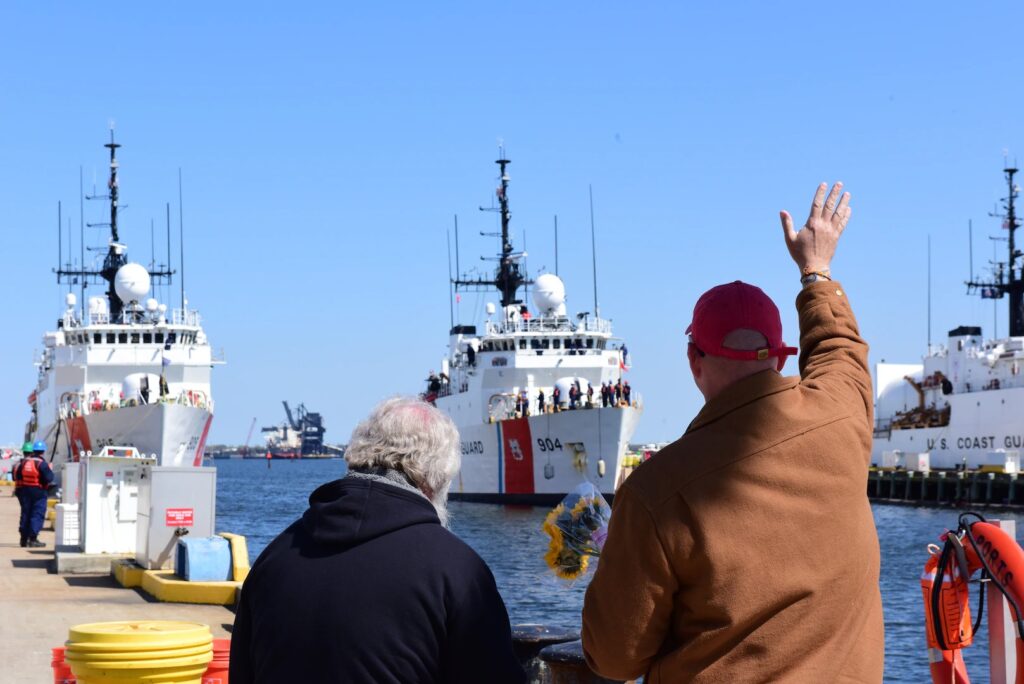
PORTSMOUTH, Va. — The crew of the USCGC Northland (WMEC 904) returned to their home port in Portsmouth, Thursday, following a 62-day maritime safety and security patrol in the Florida Straits and Windward Passage.
Patrolling in support of Homeland Security Task Force – Southeast and Operation Vigilant Sentry in the Seventh Coast Guard District’s area of responsibility, Northland’s crew conducted maritime safety and security missions while working to detect, deter and intercept unsafe and illegal maritime migration ventures bound for the United States.
Northland’s crew interdicted multiple unsafe and overloaded migrant vessels during the patrol, providing food, water, shelter and medical aid to 515 migrants. In one case, Northland partnered with additional Coast Guard air and surface assets to intercept an overloaded, tugboat-style vessel attempting to reach the United States. In another case, Northland was one of the primary assets to respond to a report of multiple people in the water just south of Key West, Florida, rescuing 27 migrants.
“I am immensely proud of the Northland crew,” said Cmdr. Andrew Dennelly, commanding officer of Northland. “Day in and day out, the crew demonstrated they are always ready to deliver exceptional service to the nation. Their inspirational vigilance, professionalism and actions saved hundreds of lives.”
Northland is a 270-foot, Famous-class medium endurance cutter. Its primary missions include law enforcement, search and rescue, drug interdiction, fisheries enforcement, migrant interdiction, homeland security, international training, defense and humanitarian operations. Northland patrols the offshore waters from Maine to Florida, the Gulf of Mexico, the Eastern Pacific and the Caribbean Sea.
For information on how to join the U.S. Coast Guard, visit www.gocoastguard.com to learn more about active duty and reserve officer and enlisted opportunities. Information on how to apply the U.S. Coast Guard Academy can be found here.
Coast Guard crew offloads $166 million worth of counternarcotics in San Diego
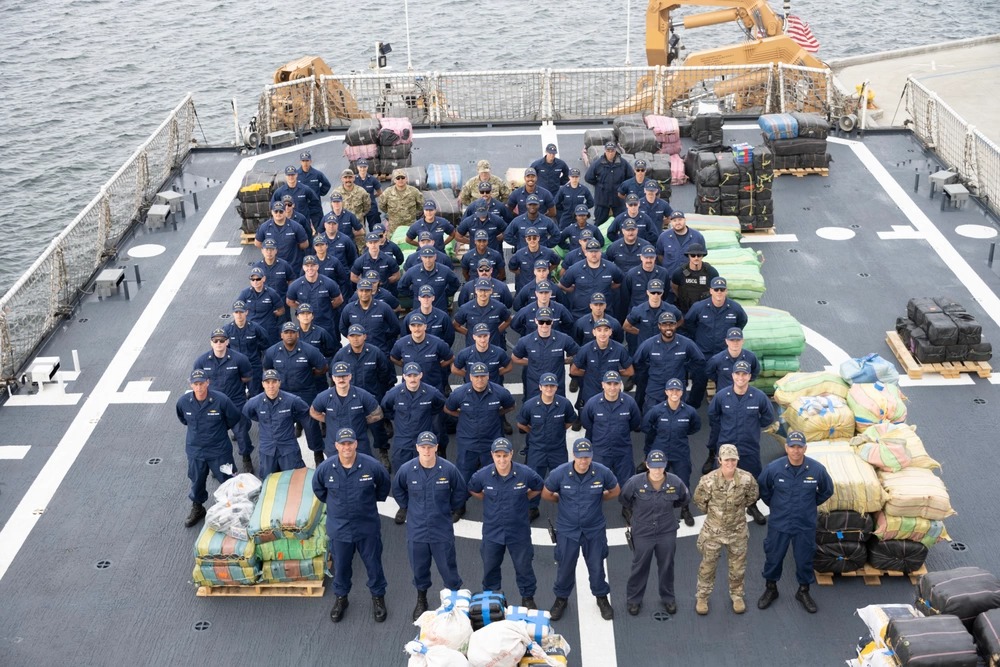
SAN DIEGO — The Coast Guard Cutter Waesche (WMSL 751) crew offloaded more than 6,325 pounds of cocaine and more than 13,220 pounds of marijuana worth more than $166 million, Wednesday, in San Diego.
The five interdictions occurred in international waters in the Eastern Pacific Ocean off the coasts of Central and South America in February and March.
“The Coast Guard is dedicated to preventing illicit drugs from entering our country via the maritime environment,” said Rear Adm. Andrew Sugimoto, Eleventh District commander. “These transnational criminal networks will be met on the water by our vigilant service members, like the crew of the Waesche, at every turn and brought to justice by the U.S. Attorney’s office.”
The counternarcotics were interdicted by the following U.S. Coast Guard cutters:
• Waesche’s crew was responsible for two interdictions seizing approximately 881 pounds of cocaine and 9,500 pounds of marijuana.
• Coast Guard Cutter Steadfast (WMEC 623) crew was responsible for one interdiction, seizing approximately 3,300 pounds of cocaine.
• Coast Guard Cutter Active (WMEC 618) crew was responsible for two interdictions seizing approximately 2,116 pounds of cocaine and 3,716 pounds of marijuana.
“This marks Waesche’s first counter-narcotics patrol in several years and the crew did an outstanding job to work with international and inter-agency partners to successfully prevent $166 million dollars’ worth of illicit drugs from entering our country, cities, and neighborhoods,” said Capt. Robert Mohr, commanding officer of the Waesche. “I am extremely impressed with the crew’s dedication throughout this dynamic patrol. They overcame multiple challenges with collective hard work, ingenuity, and positive attitudes to keep us in pursuit of these cartels and their dangerous drugs. I couldn’t be prouder of this remarkable crew and what they do to protect our communities.”
Numerous U.S. agencies from the Departments of Defense, Justice and Homeland Security cooperate in the effort to combat transnational organized crime. The Coast Guard, Navy, Customs and Border Protection, FBI, Drug Enforcement Administration, and Immigration and Customs Enforcement, along with allied and international partner agencies, play a role in counternarcotic operations.
The fight against drug cartels in the Eastern Pacific Ocean requires unity of effort in all phases from detection, monitoring, and interdictions, to criminal prosecutions by international partners and U.S. Attorneys’ Offices in districts across the nation. The law enforcement phase of counter-smuggling operations in the Eastern Pacific Ocean is conducted under the authority of the Eleventh Coast Guard District, headquartered in Alameda. The interdictions, including the actual boardings, are led and conducted by members of the U.S. Coast Guard.
“Like the United States Coast Guard and our other law enforcement partners, we are always ready to bring drug smugglers to justice in court,” said Sean P. Costello, United States attorney for the Southern District of Alabama. “Disrupting and dismantling the organizations responsible for transporting and distributing this poison remains among our highest priorities.”
The Waesche is the second Legend-class cutter of the U.S. Coast Guard and is homeported at Coast Guard Island in Alameda. The Waesche is 418 feet long with a top speed of 28 knots and a range of 12,000 nautical miles. It is equipped with a flight deck and hangars capable of housing two multi-mission helicopters, and outfitted with the most advanced command, control, and communications equipment.
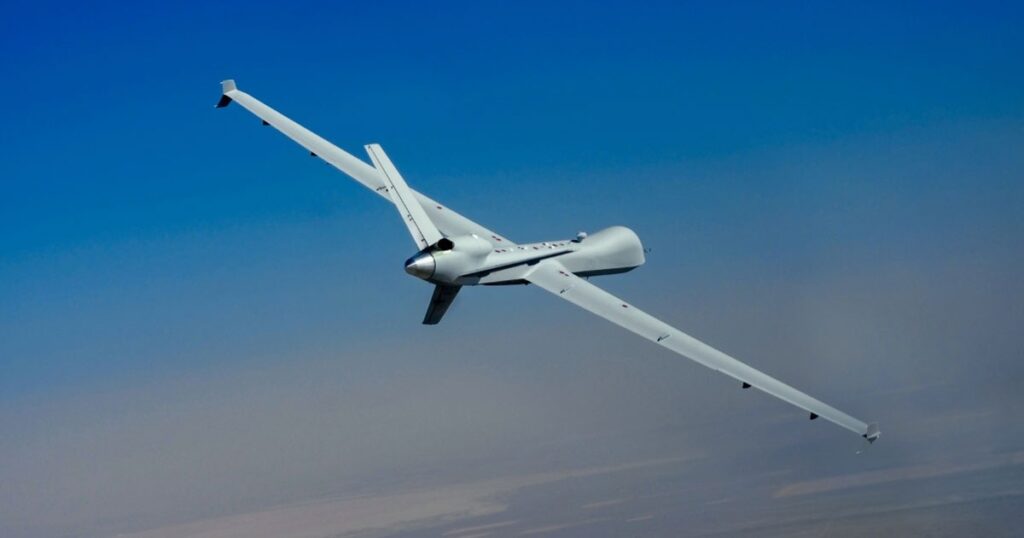
SAN DIEGO – 30 March 2023 – General Atomics Aeronautical Systems, Inc. (GA-ASI) is working with the U.S. Marine Corps (USMC) on a series of Service-Level Training Exercises (SLTE) using a company-owned MQ-9A Unmanned Aircraft System to support the Marine Air-Ground Task Force Training Command (MAGTFTC). The SLTE 2-23 is being conducted near Twentynine Palms, Calif. with participation from Joint Forces. The training ensures participants are prepared for the future dynamic environment.
Contracting the use of MQ-9A enabled USMC to begin integrating Group 5 unmanned aircraft into the Marine Air-Ground Task Force for the first time within the various exercises. GA-ASI began flying the MQ-9A on Feb. 3, 2023, with a combination of GA-ASI and VMU-3 pilots and sensor operators. The aircraft flew out of GA-ASI’s facility at the Yuma Proving Ground, Ariz., with flights over training ranges in Southwest-Continental United States (CONUS). The MQ-9A is providing its proven Intelligence, Surveillance and Reconnaissance (ISR) data package – including GA-ASI’s Lynx® Multi-mode Radar – to provide the USMC with extraordinary situational awareness and simulated close air support.
“GA-ASI is always ready and willing to support the USMC exercises,” said GA-ASI Vice President of DoD Strategic Development, Patrick Shortsleeve. “We know that being able to utilize an actual MQ-9A is critical to the success of these exercises and helps the USMC ramp-up their training program.”
The SLTE Program consists of a series of exercises, including the live-fire Integrated Training Exercise (ITX), Marine Littoral Regiment Training Exercise (MLR TE), and Force-on-Force (FoF) MAGTF Warfighting Exercise (MWX). MAGTFTC executes the SLTE Program, which includes simulated and live-fire armed exercises, to enhance the readiness of the Fleet Marine Forces and support the Marine Corps’ responsibilities to national security.
GA-ASI was contracted by the USMC in 2022 to deliver eight MQ-9A Extended Range (ER) UAS as part of the ARES Indefinite-Delivery/Indefinite-Quantity (ID/IQ) contract.
Raytheon Technologies awarded $619 million US Navy contract for SPY-6 family of radars
Contract includes the first Flight IIA destroyers to be modernized with an upgraded radar
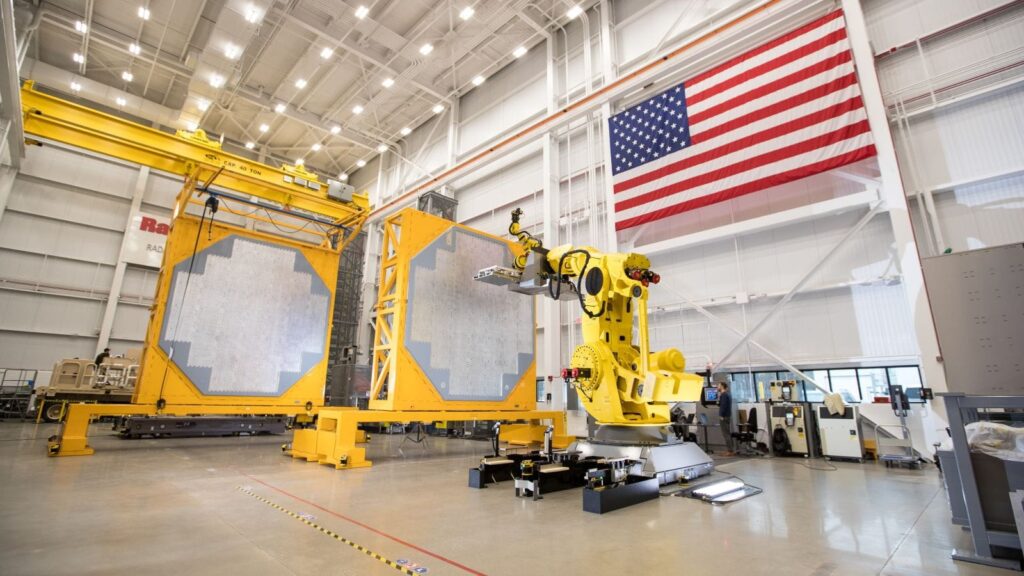
TUCSON, Ariz., (March 29, 2023) —Raytheon Technologies was awarded a $619 million contract to continue to produce AN/SPY-6(V) radars for the U.S. Navy. This is the second option exercised from the March 2022 hardware, production and sustainment contract that is valued up to $3 billion over five years.
“SPY-6 is the most advanced naval radar in the world providing unprecedented integrated air and missile defense capabilities,” said Kim Ernzen, president of Naval Power at Raytheon Missiles & Defense. “Integration into the U.S. fleet is well underway with SPY-6 operating on the Navy’s first, new Flight III destroyer. This contract enables the radar to be added to more ships including the first of existing Flight IIA destroyers that will be modernized.”
The SPY-6 family of radars can defend against ballistic missiles, cruise missiles, hostile aircraft and surface ships simultaneously. They provide several advantages over legacy radars, including significantly greater detection range, increased sensitivity and more accurate discrimination. Their scalable and modular radar arrays reduce cost and sustainment needs, while meeting the mission requirements of seven classes of ships.