Flag Officer Announcement

Release from the Department of Defense 

***** 

Flag Officer Announcement 

MARCH 15, 2023 

Secretary of Defense Lloyd J. Austin III announced today that the president made the following nominations: 
 
Navy Rear Adm. (lower half) Kenneth R. Blackmon for appointment to the grade of rear admiral. Blackmon is currently serving as reserve director for maritime operations, United States Fleet Forces Command, Norfolk, Virginia.    

Navy Rear Adm. (lower half) Marc S. Lederer for appointment to the grade of rear admiral. Lederer is currently serving as reserve deputy for fleet readiness and logistics, N4R, Office of the Chief of Naval Operations, Washington, D.C.  

Navy Rear Adm. (lower half) Robert C. Nowakowski for appointment to the grade of rear admiral. Nowakowski is currently serving as reserve vice commander, United States Naval Forces, United States Central Command, Fifth Fleet, Manama, Bahrain.    

Navy Capt. John E. Byington for appointment to the grade of rear admiral (lower half). Byington is currently serving as deputy chief of staff for strategic plans and policy, Naval Information Force Reserve Region Southeast, Jacksonville, Florida. 

Navy Capt. Jeffrey J. Jurgemeyer for appointment to the grade of rear admiral (lower half). Jurgemeyer is currently serving as chief of staff, United States Surface Force Pacific, San Diego, California. 

Navy Capt. Richard S. Lofgren for appointment to the grade of rear admiral (lower half). Lofgren is currently serving as commanding officer, Naval Reserve, Fourth Fleet/United States Naval Forces Southern Command, Mayport, Florida. 

Navy Capt. David E. Ludwa for appointment to the grade of rear admiral (lower half). Ludwa is currently serving as executive officer, Naval Reserve, United States Pacific Fleet Logistics Readiness Center, San Diego, California.  

Navy Capt. Michael S. Mattis for appointment to the grade of rear admiral (lower half). Mattis is currently serving as deputy commander, Navy Reserve Region Readiness and Mobilization Command, San Diego, California.  

Navy Capt. Richard W. Meyer for appointment to the grade of rear admiral (lower half). Meyer is currently serving as deputy commander, Navy Region Southeast Reserve Component Command, Fort Worth, Texas. 

Navy Capt. Peter K. Muschinske for appointment to the grade of rear admiral (lower half). Muschinske is currently serving as deputy fleet chaplain, Navy Reserve, United States Pacific Fleet, Maritime Headquarters, Detachment One Zero One, Pearl Harbor, Hawaii.   

Navy Capt. John A. Robinson III for appointment to the grade of rear admiral (lower half). Robinson is currently serving as chief of staff, Navy Office of Information, Washington, D.C. 

Navy Capt. Bryon T. Smith for appointment to the grade of rear admiral (lower half). Smith is currently serving as commanding officer, Navy Reserve, Navy Installations Command Emergency Operations Center, Washington, D.C.  

Navy Capt. Michael R. Vanpoots for appointment to the grade of rear admiral (lower half). Vanpoots is currently serving as deputy commander, Navy Reserve Region Readiness and Mobilization Command, Norfolk, Virginia. 

Navy Capt. Marc F. Williams for appointment to the grade of rear admiral (lower half). Williams is currently serving as regimental commander, Naval Construction Group One, Port Hueneme, California. 


Wittman Statement on AUKUS Announcement 

March 13, 2023 

***** 

Wittman Statement on AUKUS Announcement  

WASHINGTON, D.C. – Today, Congressman Rob Wittman (VA-01), Vice Chairman of the House Armed Services Committee, released the following statement in response to today’s conference on the path forward for AUKUS: 


“First, I commend our three countries for their focus on continuing to realize the promise of AUKUS. At its core, the security framework is an agreement between the United States and the incredibly close friends and allies we find in Australia and the United Kingdom to enhance and advance our shared security priorities in the Indo-Pacific. We must never lose sight of that. AUKUS is far from a zero-sum game, and the success of the framework is critical to deepening our relationship with our allies, expanding our industrial base, and building a more stable Indo-Pacific region. China is watching our actions in the Indo-Pacific very closely—Beijing’s own military ambitions grow by the day. AUKUS at its inception and today reflects a landmark moment for our countries to demonstrate resolve, alignment, and commitment to peace and strength in this era of Great Power Competition.   


“I believe that done properly, AUKUS will be a win-win and serve as a critical opportunity to fully leverage our shared resources and grow our industrial base to support both US and Australian submarine construction. As I have consistently said, US support of Australia in their submarine construction cannot be at the expense of the US imperative to build at least 2 Virginia-class submarines per year and ultimately field 66 attack submarines in the US fleet. AUKUS will not realize its full potential if the overall number of submarines crewed by AUKUS members in the Pacific does not increase above current shipbuilding plans over the next decade—our shared strategic environment demands nothing less. We must, and will, continue to invest in our combined industrial bases in order to reach the full potential of AUKUS.” 


Congressman Rob Wittman represents the 1st District of Virginia. He serves on the House Natural Resources Committee and the House Armed Services Committee, where he serves as the Vice Chairman of the full committee and as the Chairman of the Tactical Air and Land Forces Subcommittee. 


USS ARLEIGH BURKE (DDG 51) RECEIVES SERVICE LIFE EXTENSION

Release from Naval Surface Force Atlantic Public Affairs 

***** 

14 March 2023 

NAVAL STATION NORFOLK — 

OPNAV N96 recently approved a five-year service life extension for USS Arleigh Burke (DDG 51). 
  
First-in-class Arleigh Burke’s estimated service life was 35 years, expected to expire in FY 2026, but efforts began early last year to request additional service time for the ship. The approval extension carries the ship out through FY 2031 now, when the ship will be 40 years old. 
  
According to Rear Adm. Brendan McLane, commander, Naval Surface Force Atlantic, the extension is a testament to the success of the DDG 51 program as a whole and is an example of the Navy’s enduring relationship with industry partners. 
  
“DDG 51’s are the best warships in history. They demonstrate that there are no limits to what we can accomplish with a strong American Navy-industrial partnership,” McLane said. “Arleigh Burke-class destroyers are the backbone of the Navy’s surface fleet and critical to the Nation and the Navy today and long into the future.” 
  
A DDG modernization program is underway to provide a comprehensive mid-life upgrade that will ensure the DDG 51 class possesses the latest long-range fires and terminal defense capabilities. The modernization changes are also being introduced to new construction ships to increase the baseline capabilities of the newest ships in the class, and to provide commonality between new construction ships and modernized in-service ships. The goal of the DDG modernization effort is to increase warfighting capabilities and drive commonality, which enable these ships to remain relevant, to their service life, against current and future threats.       
  
After 30 years in Norfolk, Va., Arleigh Burke shifted homeports to Rota, Spain, on March 26, 2021, to be forward-deployed in U.S. Sixth Fleet. The ship arrived at Naval Station Rota on April 11, 2021, and is on its third patrol. 
 
SURFLANT mans, trains and equips assigned surface forces and shore activities, ensuring a capable force for conducting prompt and sustained operations in support of United States national interests. The SURFLANT force is composed of nearly 80 ships, 17 pre-commissioning units, and more than 30 shore commands. 


Release from General Dynamics Electric Boat 

************** 

Statement from General Dynamics Electric Boat President Kevin Graney Regarding the AUKUS Agreement 

GROTON, Conn. (March 13, 2023) – Today, the United States, United Kingdom and Australia announced the trilateral AUKUS partnership, which will provide Australia with a conventionally armed, nuclear-powered submarine. General Dynamics Electric Boat has a long history of leadership in the design and construction of nuclear submarines from the beginning of naval nuclear propulsion with the USS Nautilus (SSN 571). 

“We look forward to working with the Navy and our industry partners to use our knowledge and expertise to support Australia’s acquisition of nuclear submarines and the development of that country’s shipbuilding infrastructure. The AUKUS agreement underscores the critical role submarines play in the defense of our nation and our allies and calls attention to the importance of continuing to grow our submarine industrial base here in the United States,” said Kevin Graney, president, General Dynamics Electric Boat. 


Coast Guard Cutter Kimball returns home following Western Pacific patrol

Release from Coast Guard Pacific Area 

***** 

March 14, 2023 

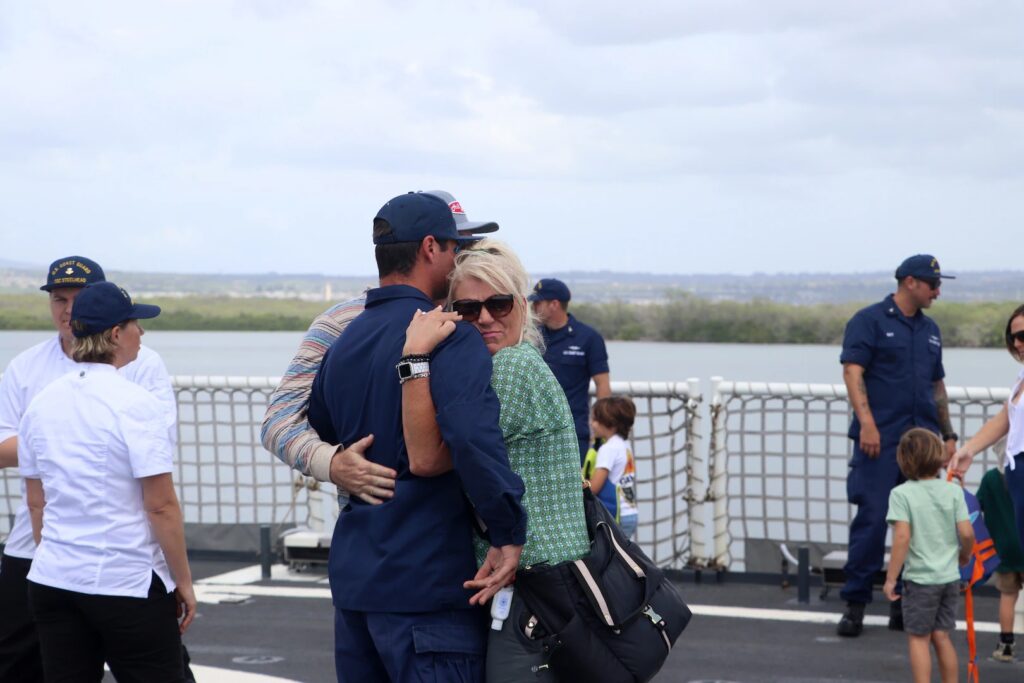
HONOLULU — The Coast Guard Cutter Kimball (WMSL 756) and crew returned to their Honolulu homeport, Friday, following a 42-day, 10,000 nautical mile Western Pacific patrol. 

Kimball was the first U.S. military ship in recent history to visit the port city of Kagoshima, Japan, where the crew partnered with servicemembers from Japan Coast Guard’s 10th District to plan and conduct combined operations and search-and-rescue exercises
 
Kimball’s crew met with Japan Coast Guard senior leadership and hosted Japan Coast Guard servicemembers, U.S. Consulate Fukuoka staff, community leaders and local media aboard the cutter during the port visit in support of Operation SAPPHIRE. 

Operation SAPPHIRE is a joint agreement between the U.S. and Japan Coast Guards signed in 2022 for enhancing cooperation between the two sea services. SAPPHIRE is an acronym for the ‘Solid Alliance for Peace and Prosperity with Humanity and Integrity on the Rule of law-based Engagement.’

“By collaborating with Japan Coast Guard members and conducting evolutions that enhanced communication and inter-operability during the patrol, the crew continued to strengthen a solid foundation for the positive and productive relationship with the maritime service of a like-minded nation,” said Captain Tom D’Arcy, Kimball’s commanding officer. 
 
Kimball’s crew demonstrated proficiency in the ship’s aviation program by working with an air operations inspection team to conduct a biennial Shipboard-Aviation Standardization Inspection (AVSTAN). By achieving their AVSTAN certification, Kimball can continue deploying with aviation detachments during future patrols. 
 
Kimball also supported U.S. Coast Guard efforts to increase its presence in the Indo-Pacific. Kimball’s crew delivered a MH-65 Dolphin helicopter from Air Station Barber’s Point to Santa Rita, Guam, to enable forward operations that extend the service’s air coverage in the region. 
 
During the patrol, the cutter’s engineering department was presented with the Rear Admiral R. S. Lucas Plaque Award for their outstanding contributions to the Coast Guard’s naval engineering program. Members from Kimball’s engineering department were cited for excellence and ingenuity during recent patrols and for completing three extensive industrial periods encompassing significant maintenance, contractual repair projects, and casualty repairs valued at over $4.4 million. 
 
“I am extremely proud of our crew’s accomplishments,” said D’Arcy. “Kimball continues to remain on the front lines of the Coast Guard’s strategic plan. Our engagements in Japan strengthened our existing relationships with international partners who uphold good maritime governance. Kimball’s patrol re-affirmed the U.S. Coast Guard’s commitment to facilitating a free and open Indo-Pacific.” 
 
Commissioned in 2019, Kimball is the Coast Guard’s seventh national security cutter and one of two homeported in Honolulu. National security cutters are 418-feet-long, 54-feet-wide and have a displacement of 4,500 long-tons. With a range of 12,000 nautical miles, the advanced technologies of Legend-class national security cutters are designed to support the national objective to maintain the security of America’s maritime boundaries and provide long range search-and-rescue capabilities. 


Northrop Grumman Offers Battle Management, Command and Control Expertise for U.S. Navy’s E-XX TACAMO Program

Release from Northrop Grumman 

***** 

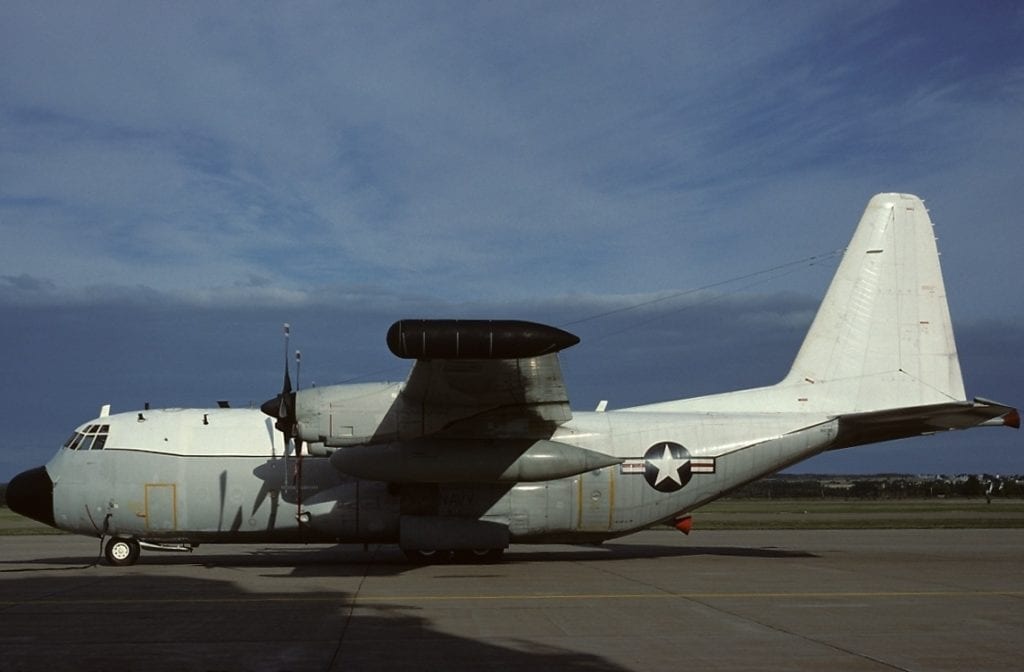
MELBOURNE, Fla. – Mar. 15, 2023 – Northrop Grumman Corporation (NYSE: NOC) is leveraging its weapons system integration and battle management leadership to compete for the U.S. Navy’s E-XX TACAMO fleet of aircraft systems. 

The Navy’s E-XX TACAMO aircraft will be based on the C-130J platform, and provides connectivity between the National Command Authority and ballistic submarines capable of delivering nuclear weapons. The Navy currently operates a fleet of E-6B Mercury aircraft to provide survivable, reliable and endurable airborne command, control and communications between the National Command Authority and U.S. strategic and non-strategic forces. The Navy intends to replace the E-6B fleet with the E-XX to modernize this critical strategic deterrent mission. 

“Our extensive experience integrating aircraft and mission systems, combined with our expertise in creating operationally ready solutions in support of the nuclear enterprise, makes Northrop Grumman the optimal partner to deliver the Navy’s E-XX TACAMO weapon system” said Janice Zilch, vice president, multi-domain command and control programs, Northrop Grumman. “As we’ve demonstrated with the Navy’s E-2 programs, we have been a longtime partner in helping the Navy meet its operational requirements. We will bring this expertise in helping the Navy deliver the E-XX TACAMO on time and optimized for this strategically important mission.” 

For more than six decades, Northrop Grumman has delivered on the development, production and modification of the Navy’s E-2 Hawkeye system as the prime contractor, and continues to provide total mission assurance with proven solutions that are secure, survivable, multi-layered systems designed for total weapon system security. 

“Our team has vast knowledge and expertise in delivering critical command and control, and nuclear enterprise capabilities,” said Henry Cyr, director, multi-domain command and control capture programs, Northrop Grumman. “We perform challenging work that has a real-world impact. You can see that on our legacy platforms, the platforms currently in operation, and the platforms we will deliver tomorrow.” 

Northrop Grumman is a leading global aerospace and defense technology company. Our pioneering solutions equip our customers with the capabilities they need to connect and protect the world, and push the boundaries of human exploration across the universe. Driven by a shared purpose to solve our customers’ toughest problems, our 95,000 employees define possible every day.


Statement by Secretary of Defense Lloyd J. Austin III on AUKUS Optimal Pathway Announcement 

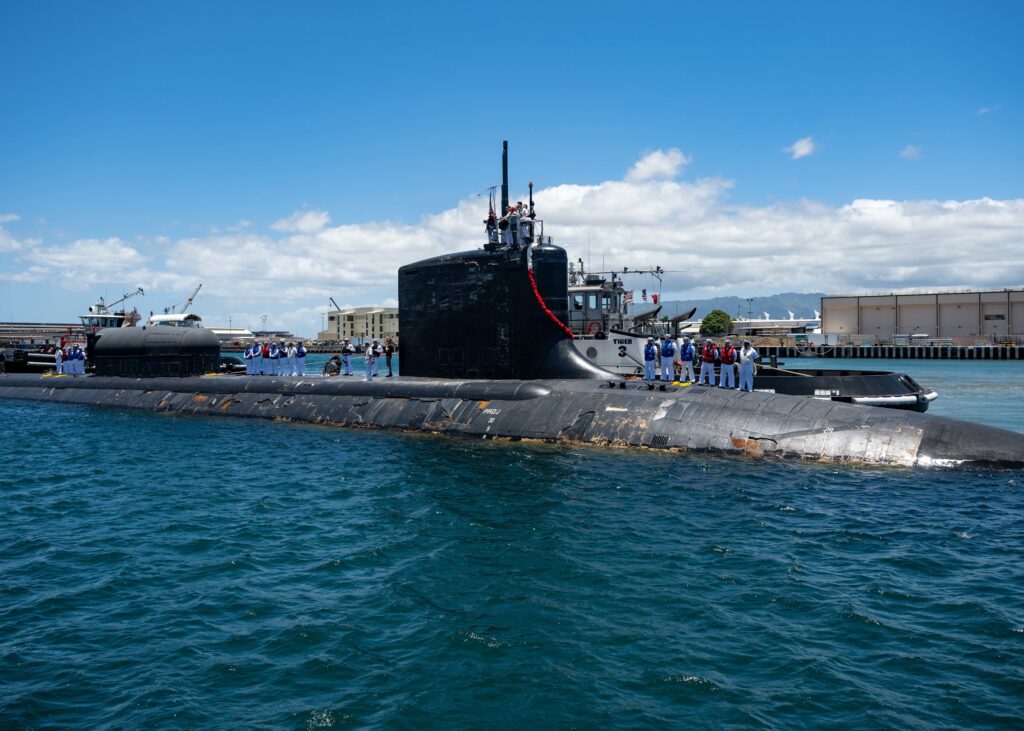
JOINT BASE PEARL HARBOR-HICKAM (May 25, 2022) The Virginia-class fast-attack submarine USS North Carolina (SSN 777) returns to Joint Base Pearl Harbor-Hickam from deployment in the 7th Fleet area of responsibility. North Carolina performed a full spectrum of operations, including anti-submarine and anti-surface warfare, during the extended seven-month, Indo-Pacific deployment. (U.S. Navy photo by Electronics Technician (Nuclear) 2nd Class Leland T. Hasty II)

Release from the Secretary of Defense 

***** 

MARCH 13, 2023 

Today, I was honored to join President Biden, Australian Prime Minister Albanese, and U.K. Prime Minister Sunak as they announced the AUKUS Optimal Pathway, a commitments-based, phased plan for Australia to acquire conventionally-armed, nuclear-powered submarines. This is the next step forward in the transformational partnership among our three great democracies.  

In September 2021, the United States, Australia, and the United Kingdom laid out an ambitious vision for our countries that will strengthen our combined military capabilities, boost our defense industrial capacity, enhance our ability to deter aggression, and promote our shared goal of a free and open Indo-Pacific. AUKUS is a shared, long-term investment that will allow us to build defense advantages that endure for decades to come.   

One of the most important parts of this partnership is increasing each of our countries’ submarine capabilities. Under the first phase of the Optimal Pathway, the United States and the United Kingdom will immediately increase port visits of conventionally-armed, nuclear-powered submarines in Australia and then, as early as 2027, will begin rotating through Australia under Submarine Rotational Force-West.  In the next phase, the United States intends to sell three Virginia-class submarines to Australia in the 2030s, with the potential to sell up to two more if needed. Finally, Australia and the United Kingdom will develop and deploy SSN-AUKUS, a new conventionally-armed, nuclear-powered submarine that incorporates critical U.S. technologies. Each phase of the Optimal Pathway will set the highest nuclear nonproliferation standards. 

We’re also working to strengthen our countries’ industrial bases; to eliminate barriers to information-sharing and technological cooperation; and to develop and deliver advanced capabilities in such areas as artificial intelligence, hypersonics, and maritime domain awareness. All these investments will allow us to work more closely with our valued and highly capable allies to deter aggression in the Indo-Pacific—a region whose future is crucial for U.S. national security and the rules-based international order that makes us all safer.   

I would like to thank the many public servants in all three proud democracies whose hard work has made this historic announcement possible. I look forward to working with my team and with our Australian and British counterparts to continue to move toward our shared vision of a stable, secure Indo-Pacific and an open world of rules and rights.


Navy Accepts Delivery of Ship to Shore Connector, Landing Craft, Air Cushion 105 

Release from Naval Sea Systems Command 

************** 

By Team Ships Public Affairs 

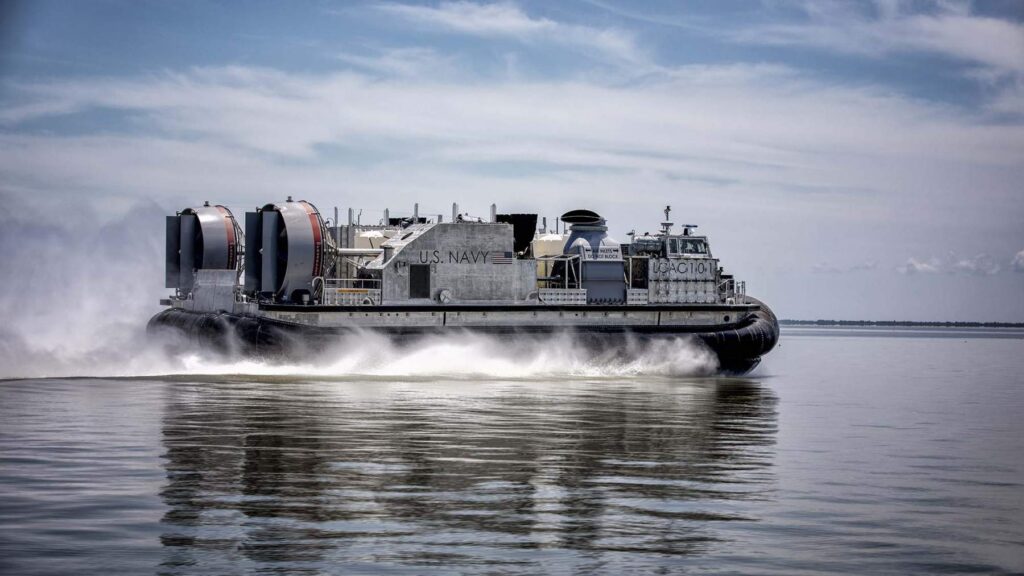
SLIDELL, LA – The Navy accepted delivery of the next-generation landing craft, Ship to Shore Connector (SSC), Landing Craft, Air Cushion (LCAC) 105, March 8. 

LCACs are built with configurations, dimensions, and clearances similar to the legacy LCACs they replace – ensuring that this latest air cushion vehicle is fully compatible with existing well deck-equipped amphibious ships, the Expeditionary Sea Base and the Expeditionary Transfer Dock. LCACs are capable of carrying a 60-75 ton payload. They primarily transport weapon systems, equipment, cargo, and assault element personnel through a wide range of conditions, including over-the-beach. 

“LCACs are a critical tool for the Navy, the Marine Corps, and all of our warfighters,” said Amphibious Assault and Connectors Program Manager, Program Executive Office (PEO) Ships, Capt. Jason Grabelle. “This delivery comes at an important time for the fleet, and their inclusion will only strengthen our posture.” 

The delivery of LCAC 105 comes after completion of acceptance trials conducted by the Navy’s Board of Inspection and Survey, which tested the readiness and capability of the craft to effectively meet its requirements. 

Textron Systems of Slidell, Louisiana is currently in serial production on LCACs 107-115. 

As one of the Defense Department’s largest acquisition organizations, PEO Ships is responsible for executing the development and procurement of all destroyers, amphibious ships, special mission and support ships, boats and craft. 


NAVFAC Pacific awards $2.8-billion contract task order for Pearl Harbor dry dock replacement 

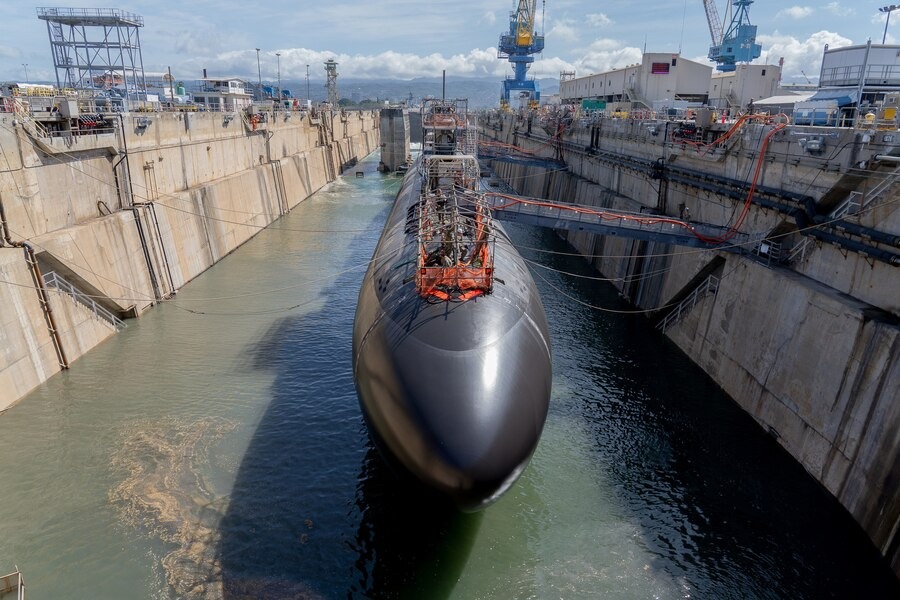
JOINT BASE PEARL HARBOR HICKAM, Hawaii (July 27, 2021) Pearl Harbor Naval Shipyard & Intermediate Maintenance Facility successfully undocked the Los Angeles-class fast-attack submarine USS Topeka (SSN 754) on time commencing a two-day evolution on July 27, 2021. This undocking is a major milestone in the submarine’s docking selected restricted availability (DSRA). Each undocking is a complex evolution that requires teamwork across the entire shipyard to ensure a safe and on-time event. (U.S. Navy photo by Amanda Urena)

Release from Naval Facilities Engineering Systems Command 

***** 

JOINT BASE PEARL HARBOR-HICKAM – Naval Facilities Engineering Systems Command (NAVFAC) Pacific awarded a $2.8-billion task order under a previously-awarded indefinite-delivery/indefinite-quantity multiple-award construction contract to Dragados/Hawaiian Dredging/Orion JV, based in Honolulu, Hawaii, to replace Dry Dock 3 at Pearl Harbor Naval Shipyard and Intermediate Maintenance Facility (PHNSY & IMF) March 10. 

The planned five-year project will construct a graving dock, to be designated Dry Dock 5, in order to support PHNSY’s ability to continue serving the Navy decades into the future by maintaining and modernizing the U.S. Pacific Fleet’s nuclear-powered submarines. 

“As part of the Navy’s Shipyard Infrastructure Optimization Program (SIOP), replacing Dry Dock 3 at Pearl Harbor Naval Shipyard is a critical enabler of increased naval capability,” said Pete Lynch, program executive officer for Industrial Infrastructure, who oversees SIOP. “This project is a key investment in increasing capacity and modernizing our nation’s public shipyards through upgraded dry docks and facilities, new equipment, and improved workflow.” 

Dry Dock 3 at PHNSY & IMF will become functionally obsolete once the Navy’s Los Angeles-class submarines are no longer in service. The dry dock, built in 1942, cannot service Virginia-class submarines or larger surface ships. 

“We look forward to working with Dragados/Hawaiian Dredging/Orion JV, Pearl Harbor Naval Shipyard, and all our stakeholders on this project over the next several years in order to deliver this critical capability to the Fleet,” said Capt. Steve Padhi, commanding officer of Officer in Charge of Construction (OICC) Pearl Harbor Naval Shipyard. “The project team and cooperating agencies have gone above and beyond to set the conditions for success. We have incorporated lessons learned and best practices from other dry dock projects and field offices across the Navy, and we have consulted with our construction contractors early in order to confidently meet the requirements we’ve been given. My OICC team and I are ready to get started on this historic effort.” 

The Navy is investing heavily in shipyard infrastructure for nuclear-powered warships. The Navy established SIOP to increase throughput at the four public shipyards by updating their physical layout, upgrading and modernizing their dry docks, and replacing antiquated capital equipment with modern tools and technologies. 

SIOP is a holistic investment plan that when fully executed will deliver required dry dock repairs and upgrades to support current and planned future classes of nuclear-powered aircraft carriers and submarines, optimize workflow within the shipyards through significant changes to their physical layout, and recapitalize industrial plant equipment with modern technology that will substantially increase productivity and safety. 

The full contract announcement is available at:  

https://www.defense.gov/News/Contracts/Contract/Article/3326241/


ASSA Presents 2023 Honorable Thad Cochran Leadership Award to U. S. Senator Roger Wicker  

Senator Wicker joins an august group of award recipients dedicated to improving the opportunities for domestic shipbuilding suppliers.  The award was first established in 2017 and presented to Congressman Rob Wittman (VA-01).  In 2018, the Honorable Tammy Baldwin from Wisconsin was recognized. The Honorable Joe Courtney (CT-02) was the 2019 recipient, and in 2020 the award was presented to The Honorable John Garamendi (CA-03). In 2021, the Honorable Donald Norcross (NJ-01) received the award. Last year, the award was presented to Congresswoman Suzan DelBene (WA-01)

Release from the American Shipbuilding Suppliers Association 

***** 

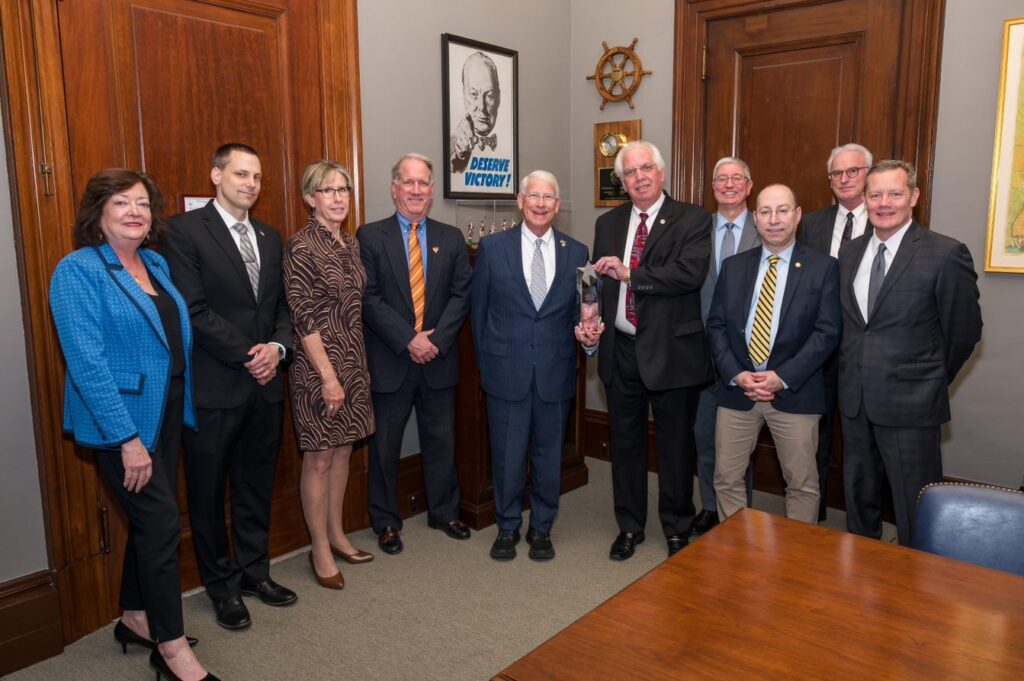
Washington, District of Columbia – March 10, 2023 – The American Shipbuilding Suppliers Association (ASSA) presented its 2023 Honorable Thad Cochran Leadership Award to U. S. Senator Roger Wicker, R-Miss., for his dedication and commitment to a robust American shipbuilding supplier industrial base.  He was presented the award during the Annual ASSA Congressional Fly-in by ASSA Founder, Carl Fisher of Thrustmaster of Texas.     
  
The Honorable Thad Cochran Leadership Award is given annually to a public servant, as selected by the ASSA membership, and was established to honor the leadership of the late Senator Cochran for his unwavering support to those large and small businesses that provide the technologies and components necessary to build US Navy and US Coast Guard ships, which are critical components of U.S. national security policy.    


“On behalf of the members of the American Shipbuilding Suppliers Association (ASSA), I would like to express our sincere appreciation to Senator Wicker for his dedicated advocacy of a strong naval force and a robust domestic supplier industrial base to support that force. The membership of ASSA recognize the importance of his position in support of the shipbuilding supplier industrial base and that his actions clearly demonstrate his continued commitment to strengthening a fragile yet strategically critical industrial component,” said Mr. Fisher    
  
Senator Wicker  is recognized by the overall shipbuilding industry for his leadership and actions in support of legislation that requires the US Navy to maintain a fleet of 355 ships along with his support of “Buy America” legislation. Senator Wicker authored the “Securing the Homeland by Increasing our Power on the Seas (SHIPS) Act,” which made it the policy of the United States to achieve the Navy’s requirement for a 355- ship fleet. This legislation, which was designed to bolster national security and   

increase American shipbuilding capacity, was signed into law by President Trump during the 115th Congress as part of the National Defense Authorization Act.   
  
“A strong fleet has always been the cornerstone of America’s defense,” Wicker said. “My advocacy for our navy and for American shipbuilding is based on my belief that peace comes through strength. I especially appreciate receiving an award named after my friend and colleague, Senator Thad Cochran, whose contributions to our shipbuilding industry were significant.”  


Senator Wicker has represented Mississippi in the United States Senate since December 2007. During his time in the Senate, Wicker has championed pro-growth policies to create jobs, limit federal overreach, protect life, and maintain a strong national defense. He is the ranking member of the Senate Armed Services Committee for the 118th Congress. He is also a senior member of the Senate Committee on Commerce, Science and Transportation, having served previously as the chairman and ranking member for the 116th and 117th Congresses, respectively. His other committee assignments include the Environment and Public Works Committee and the Rules and Administration Committee. Wicker also serves as a member of the U.S. Merchant Marine Academy Congressional Board of Visitors.   
  
Senator Wicker has been a strong advocate for economic development initiatives to help keep Mississippians competitive in a global marketplace. He has been honored by the National Association of Manufacturers (NAM) for his work on pro-growth, pro-manufacturing policies in Congress.   
  
Senator Wicker served on active duty in the U.S. Air Force and then joined the Air Force Reserve. He retired from the Reserve in 2004 with the rank of lieutenant colonel.   

ASSA is a member driven, national organization, advocating for the American Shipbuilding Supplier Base to the U. S. Congress, Navy, Coast Guard, and shipbuilders to ensure the long-term stability of the U. S. national maritime industry.