U. S. – Indo Joint Working Group on Aircraft Carrier Technology Cooperation Meets in India 
Release from Program Executive Office Aircraft Carriers Public Affairs 

***** 

March 9, 2023 

By Program Executive Office Aircraft Carriers Public Affairs 

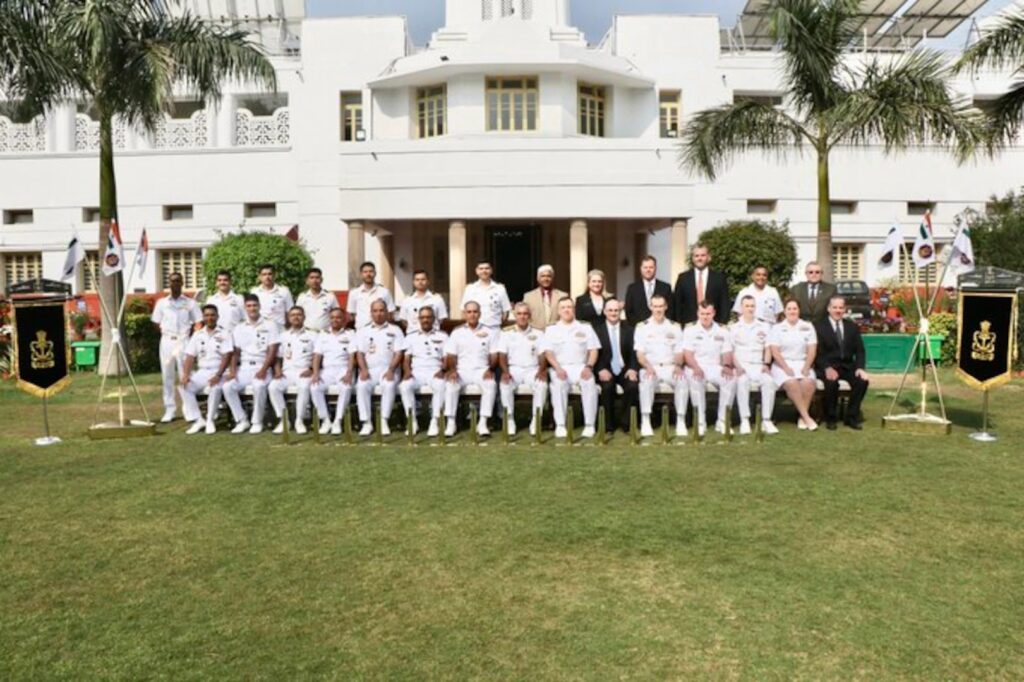
WASHINGTON NAVY YARD, DC – The sixth meeting of the U.S. – Indo Joint Working Group on Aircraft Carrier Technology Cooperation (JWGACTC) concluded on Mar. 3 in India, marking a successful, bilateral exchange of information and best practices in the areas of ship construction and maintenance. 

The five-day meeting, co-chaired by Rear Adm. James P. Downey, program executive officer for aircraft carriers, representing the U.S. delegation; and Rear Adm. Sandeep Mehta, Assistant Controller Carrier Projects for the Indian Navy, deepened a successful legacy of cooperation between the two Pacific nations—sessions launched in August 2015 as part of a U.S. – India Defense Technology and Trade Initiative (DTTI). 

“India is a vital strategic partner for the United States,” said Downey, “and our program office takes pride in the collaborative spirit we’ve built with our Indian Navy counterparts.  Our technology is diverse, while our goal is linked foundationally—to accelerate our respective missions of building and maintaining these extremely capable ships and systems that deliver readiness to our fleets.” 

In mid-February, India logged an important milestone when it completed initial flight deck trials on its first indigenous aircraft carrier, INS Vikrant. 

“Back in 2015, the first Indian Navy delegation visited Norfolk and toured the Gerald R. Ford [CVN 78] when she was still in construction at Newport News Shipbuilding,” Downey recalled.  “And this week, our U.S. team stood on board India’s new INS Vikrant, the largest naval ship ever built in India—that was an inspiring moment.”  INS Vikrant is expected to begin operations later this year, a step reflective of the government’s vision of Atmanirbhar Bharat, or greater self-reliance. 

JWGACTC Tour Highlights

In a robust slate of events conducted from 27 February to 3 March, JWGACTC representatives gathered in New Delhi at the Kota House and visited India’s Directorate of Naval Design, discussing areas of mutual interest in several technology areas, including topside aircraft carrier systems and aircraft / ship integration.  Meeting participants delivered updates and discussed opportunities for the two navies to expand cooperation under the initiative.  Rear Adm Downey also met with Vice Chief of Naval Staff Vice Adm. SN Ghormade, DTTI Interagency Task Force (DIATF) Co-Chair Lt. Gen. Manjinder Singh, and Vice Adm. Kiran Deshmukh, Controller of Warship Production and Acquisition. 

The combined delegation then flew to Kochi, Kerala, on India’s southwest coast, for a tour of Cochin Shipyard Limited, where INS Vikrant was built. Vikrant is the third ship to bear the name, and the first aircraft carrier built entirely by the Indian government and industrial base.  

Capt. Brian Metcalf, who leads the Gerald R. Ford-Class New Construction Program Office (PMS 378), appreciated the first-hand look at India’s indigenous ship building capability and Cochin’s modern facilities, tasked with designing and manufacturing the country’s next generation aircraft carrier. 

“Looking at our ships, the designs are clearly different: from propulsion to how we launch aircraft—Ford, for instance, using EMALS [Electromagnetic Aircraft Launch System] and AAG [Advanced Arresting Gear]; while India employs a STOBAR [short takeoff barrier-assisted recovery] system to launch aircraft off a ski-jump ramp,” said Metcalf. 

“In terms of the art and science of shipbuilding and sustainment and the need for building efficiencies into everything we do, whether that’s leveraging resources or building smarter, we share similar challenges and goals.  So we can benefit from hearing new operating philosophies and ideas for streamlining business practices.  All of that goes a long way toward enhancing interoperability at sea.” 

While in Kochi, Downey also visited India’s Southern Naval Command, meeting with Vice Adm. M.A. Hampiholi and visiting the Naval Institute of Aeronautical Technology and the School for Naval Airmen. 

Hampiholi afforded Downey the opportunity to meet with trainees at the Advanced Aero Engine Training Centre and to see the school’s Basic and Specialist Vehicle Simulator, mockup helo decks, and Virtual Reality-Aircraft Rescue and Fire Fighting Training Facility, as well as the Indian Navy’s P-8I long-range, multi-mission, maritime patrol aircraft simulator. 

After several years of interruptions due to COVID-19, JWGACTC participants were pleased to return to this annual in-person meeting format, with the face-to-face interaction fostering closer relationships, particularly among newer team members. 

“One-on-one as well as face-to-face team engagement is so important,” said Downey.  ”These forums and exchanges build trust and teamwork.  That’s when you learn across the joint team and when you establish solid foundations and protocols that enhance operations and interoperability for our futures.” 

Building on this highly successful meeting, the seventh JWGACTC meeting is scheduled to be held in the United States in 2024. 


MARINE CORPS LAUNCHES SOFTWARE FACTORY  

Release from U.S. Marine Corps Deputy Commandant for Information Communication Strategy and Operations Office 

March 10, 2023 

***** 

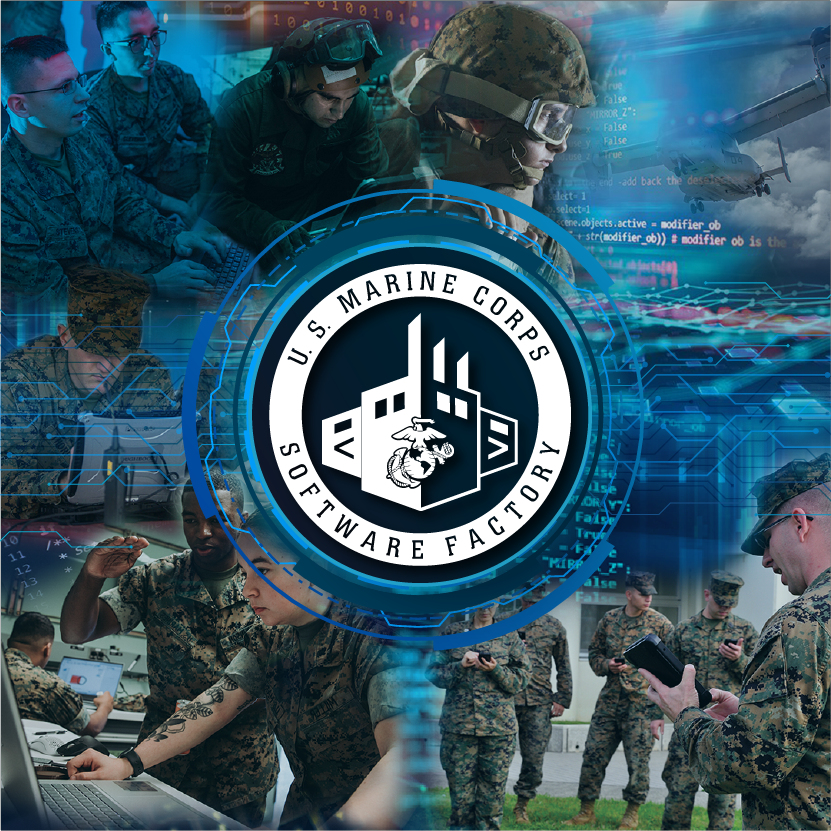
AUSTIN, Texas – The Marine Corps established the Marine Corps Software Factory (MCSWF) to create a world-class Marine-led software development capability today, March 10, 2023.  

The future operating environment will require Marines to scope and implement software-based solutions at the edges of the battlefield without connectivity or assistance from centralized or contracted support.  

The MCSWF enhances Marine Corps modernization efforts by empowering Marines to develop applications for commanders at the speed of relevance. 

“Our Marines have an amazing capacity for understanding complex technologies. We must empower our Marines to use that technological know-how to create a more lethal force,” stated Gen. David H. Berger, 38th Commandant of the Marine Corps. “The Marine Corps is fielding more complex systems and platforms right now, and we must invest in our Marines’ and Civilian Marines’ capacity to advance in parallel.”   

The MCSWF will leverage recent endeavors in talent management, partnerships with industry, and innovations in cloud technology. The MCSWF will work closely with Manpower and Reserve Affairs (M&RA) to ensure ease of career implications for program participants and to ensure software factory outcomes are optimized across the modernization enterprise. 

As the Marine Corps’ Chief Information Officer, Lt. Gen. Matthew Glavy, Deputy Commandant for Information (DC I), will serve as the executive sponsor for the MCSWF. 

“The Marine Corps Software Factory is about outcomes, creating advantage for Marines at the tactical edge, today”, stated Glavy. “The MCSWF will provide viable capabilities to enhance mission readiness through the power of information.”  

MCSWF is a three-year pilot to demonstrate a scalable, Marine-led software development capability. The three-year pilot will evaluate the demand from the fleet to better understand overall requirements. 

March 25, 2021, MARADMIN 164/21 was released via Information, Command, Control, Communications, and Computers (IC4) division soliciting participation in the inaugural Marine Corps Micro-Application Development Innovation Challenge. The Innovation Challenge yielded promising results and proved that given the right resources, talented Marines across the MOS spectrum can design and deliver software capabilities from the tactical to strategic levels. Subsequent micro-application innovation challenges consistently revealed untapped technical talent and a demand signal for organically developed software solutions within the Marine Corps. 

The initial MCSWF cohort was sourced from the Communications Occupational Field. Future candidates will be solicited across the service from any MOS.  

Marines selected to attend the MCSWF will undergo a three-year program consisting of three phases: a technical accelerator, one-to-one pairing enablement, and employment utilization. For the first three months, Marines will attend a technical accelerator to establish a baseline skillset. Then, Marines will work one-to-one with technical experts from industry while solving real Marine problem sets.  

Marines who successfully complete the enablement phase will receive the 0673 Necessary MOS (Application Developer). Marines will spend the final 24 months in a utilization tour building Marine Corps software solutions while continuing to advance their skillsets. 

The MCSWF is co-located with the Army Software Factory (ASWF) in Austin, Texas. The MCSWF has established a formal agreement with the ASWF showcasing the first collaborative software development effort in the DoD. Partnering with ASWF will accelerate Marine Corps software development modernization efforts at a significantly reduced cost.   

The software factory is for Marines, powered by Marines. If anyone on the Marine Corps team is interested in joining the factory or has an idea of how a software solution can better the Corps they are encouraged to reach out directly to the factory via email at [email protected] 

To learn more about the MCSWF or how to get involved the following link to the MCSWF website is provided: https://www.hqmc.marines.mil/mcswf 


USCGC Spencer returns to Portsmouth after an 88-day African patrol 

Release from Coast Guard Atlantic Area Public Affairs 

***** 

March 10, 2023 

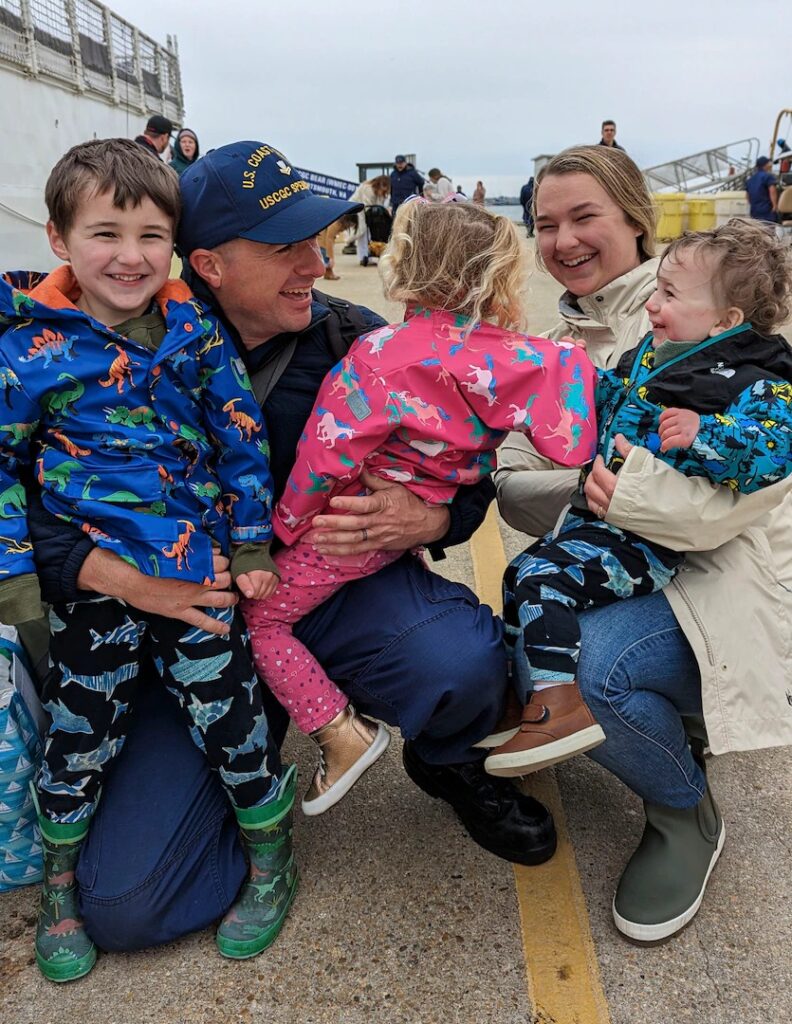
PORTSMOUTH, Va. – The crew of USCGC Spencer (WMEC 905) returned to their home port in Portsmouth, Friday, following an 88-day deployment in the U.S. Naval Forces Europe-Africa area of operations, employed by the U.S. Sixth Fleet and Combined Task Force 65, to defend U.S., allied and partner interests. 

During the patrol, Spencer’s crew worked to combat illicit transnational activities, including illegal, unregulated and unreported fishing, by conducting multinational law enforcement operations in the Atlantic Ocean. Their efforts served to strengthen existing relationships with African nations and prioritized opportunities for new partnerships. Spencer’s crew also participated in Obangame Express 2023, a maritime exercise with participants from the U.S. Navy, U.S. Coast Guard and 17 West African partners. Conducted by U.S. Naval Forces Africa, Obangame Express is designed to improve regional cooperation, information-sharing practices, and tactical interdiction expertise to enhance the collective capabilities of participating nations to counter illegal, unreported, and unregulated fishing and other sea-based illicit activity. 

“I am very proud of what this crew accomplished on Spencer while working with our partners in Africa,” said Cmdr. Corey Kerns, Spencer’s commanding officer. “Together we demonstrated the U.S.’s commitment to maritime security in West Africa and the Gulf of Guinea. We helped our partners in the region build the capability to enforce a rules-based order critical to their own food and economic security. I know this deployment will be something we all remember for a long time, and it was an honor to be a part of it.” 

Spencer’s crew hosted multiple African country representatives, held diplomatic engagements and participated in community relations events during port visits in Cabo Verde, The Gambia, Senegal, Sierra Leone, Togo, Nigeria and Côte D’Ivoire. Spencer’s port visit to Lomé, Togo marked the first U.S. ship visit to Togo since 2012. 

While at sea, Spencer also interdicted a Brazilian sailing vessel carrying 3,040 kilograms of suspected cocaine worth over $109 million. 

Spencer’s crew was augmented with several temporarily assigned members, including Tactical Law Enforcement and Maritime Safety and Security Team personnel, medical officers from the U.S. Public Health Service and Coast Guard, U.S. Coast Guard Auxiliary Chinese language translators, electronics technicians and a yeoman. 

Commissioned in June 1986, Spencer is a Famous-class medium endurance cutter named after John C. Spencer, the 16th Secretary of the Treasury. Spencer is homeported in Portsmouth, Virginia. The cutter’s primary mission areas include homeland security, law enforcement, counter drug, search and rescue, migrant interdiction and fisheries enforcement in support of U.S. Coast Guard operations throughout the Western Hemisphere.  

For information on how to join the U.S. Coast Guard, visit www.GoCoastGuard.com to learn more about active duty and reserve officer and enlisted opportunities. Information on how to apply the U.S. Coast Guard Academy can be found at www.uscga.edu


Boeing, Shield AI Set to Collaborate on Artificial Intelligence, Autonomy for Defense Programs 

Release from Boeing 

***** 

– Teams will explore integrating artificial intelligence technology on current and future programs for military customers 

AURORA, Colo., March 8, 2023 — Boeing [NYSE: BA] and Shield AI have signed a memorandum of understanding to explore strategic collaboration in the areas of autonomous capabilities and artificial intelligence on current and future defense programs. The agreement, signed at the Air Force Association Warfare Symposium, will be managed by Boeing Phantom Works. 

“Boeing continues to leverage talent from across the enterprise to make great strides in autonomous capabilities and programs in recent years,” said Steve Nordlund, vice president and general manager for Boeing’s Air Dominance organization. “Collaborating with Shield AI, the leader in AI pilots, will accelerate our ability to deliver these capabilities to the warfighter.” 

Shield AI created Hivemind, an artificial intelligence pilot that has flown a variety of aircraft. According to Shield AI, the AI pilot can also enable swarms of drones and aircraft to operate autonomously without GPS, communications or a human pilot in the cockpit.  

“AI pilots are the most strategic deterrent technology since the introduction of stealth aircraft and have proven successful in flying air-combat scenarios” said Brandon Tseng, president and co-founder of Shield AI and a former Navy SEAL. “Integrating Boeing aircraft with our AI pilot would redefine what large aircraft, crewed or uncrewed, could do. As the world leader in aerospace technology, Boeing has been exceptionally easy to engage with, so we are excited to expand our scope of work to co-develop, productize and bring to market the world’s best AI pilot for large aircraft.” 


Continuing Promise 2022 Team Continues its Promise to Haiti

Release from U.S. Naval Forces Southern Command 

***** 

March 8, 2023 

Continuing Promise 2022 Team Continues its Promise to Haiti 

By 1st Lt Gregory Dreibelbis 

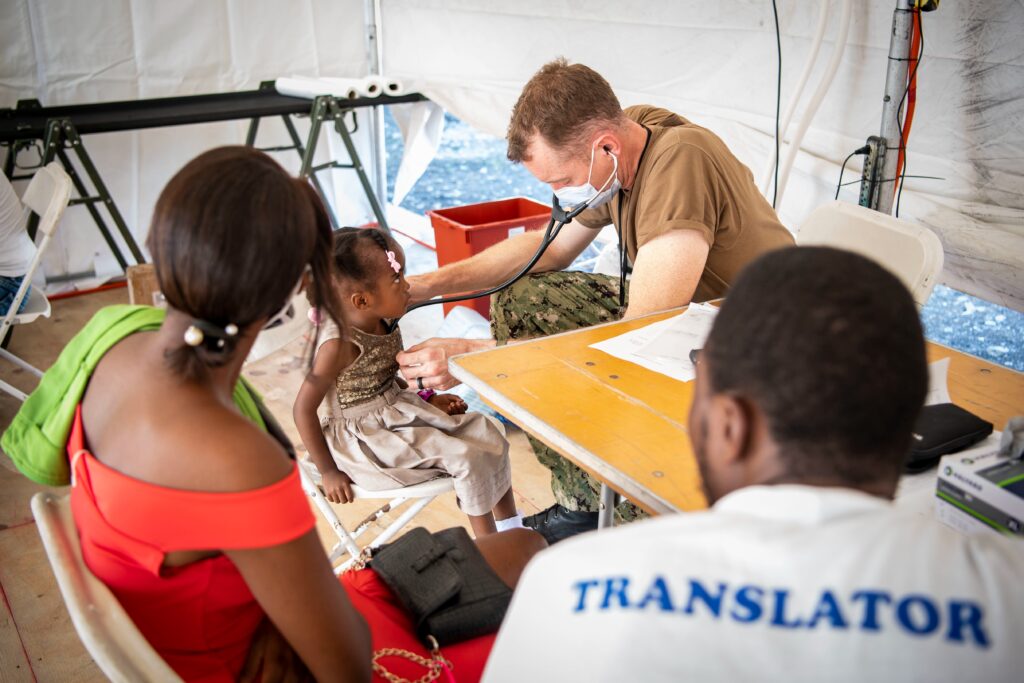
JEREMIE, Haiti – Medical providers will continue their efforts providing high-quality adult, pediatric, optometry and dental care to those in need in Haiti. 

“We had to take a short pause in our operations to ensure the safety of our personnel, but it’s important that we get back out there and continue our promise to the people of Haiti,” said Capt. Bryan Carmichael, commander of Amphibious Squadron Four and mission commander for Continuing Promise 2022. “We’ve developed a plan that gets our medical providers to and from the ship safely, and provides the people of Haiti with the care they need.” 

The USNS Comfort is underway in the vicinity of Jeremie, Haiti, for its fifth and final mission stop of CP 22. 

Medical services will be provided at Wharf de Jeremie from Dec. 14 to Dec. 16. A large donation of medical supplies will also be made before Comfort departs Haiti on the 17th of Dec. 

Since its inaugural mission in 2007, Continuing Promise missions have treated more than 582,000 patients and conducted over 7,000 surgeries in the region. Comfort’s current mission is the 12th Continuing Promise mission conducted in the Caribbean, Central and South America. 

U.S. Naval Forces Southern Command/U.S. 4th Fleet supports U.S. Southern Command’s joint and combined military operations by employing maritime forces in cooperative maritime security operations to maintain access, enhance interoperability, and build enduring partnerships in order to enhance regional security and promote peace, stability and prosperity in the Caribbean, Central and South American region. 


BAE Systems honors its best ship repair suppliers for 2022

Release from BAE Systems 

***** 

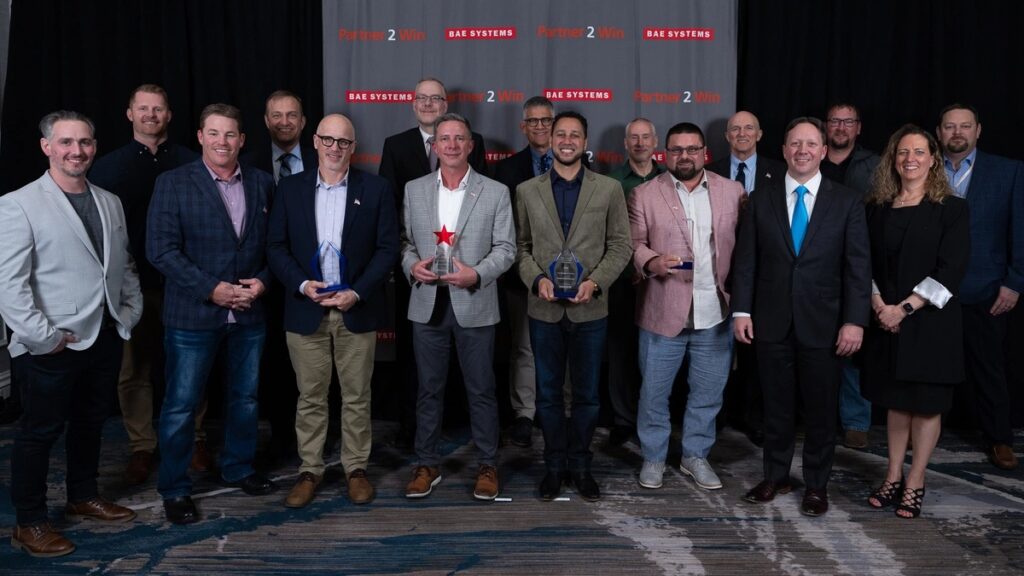
NORFOLK, Va. – March 9, 2023 – BAE Systems recognized the best suppliers and subcontractors to its Ship Repair business during a ‘Partner2Win’ Supplier ceremony. More than fifty companies that successfully supported the maintenance of U.S. Navy ships and commercial vessels in three ports during 2022 were honored. 

BAE Systems’ Partner2Win program is a collaborative partnership between the company’s three shipyards in Jacksonville, Florida; Norfolk, Virginia; San Diego, California, and a vast network of naval and commercial ship repair suppliers across the country. 

“Our ship repair operations are enhanced by the support of great suppliers. In 2022, we delivered more than 60 repair and modernization projects, providing U.S. Navy sailors and commercial mariners with quality work performed safely in our shipyards,” said Paul Smith, vice president and general manager of BAE Systems Ship Repair. “The combined effort with our supplier base formed a true partnership for performance. I extend my sincere thanks to all of our supply chain partners and applaud those who have earned our ‘Partner2Win’ Supplier Awards.” 

This year’s top ship repair supplier awards went to American Scaffold, Inc., of San Diego, California; and Vallen Distribution Inc., of Belmont, North Carolina. 

 
American Scaffold, a full service scaffold company, is the subcontractor of the year for the entire BAE Systems Ship Repair enterprise. American Scaffold provided scaffold and containment systems to all three shipyards, ensuring safe working conditions and controls to protect employees and the environment.  

Vallen Distribution, an indirect materials distributor, is the business’ material supplier of the year. In 2022, Vallen installed and managed consumable parts vending machines throughout the Norfolk shipyard to reduce parts retrieval time. For the three shipyards, Vallen was a trusted partner in helping to oversee indirect inventory.  

The following companies were recognized in addition to American Scaffolding and Vallen Distribution as stand-out award winners: 

  • BAE Systems Jacksonville Ship Repair’s Small Business of the Year – Atlantic Marine Cleaning of Jacksonville, Florida;   
  • BAE Systems Jacksonville Ship Repair’s Subcontractor of the Year – East Coast Repair & Fabrication, LLC of Chesapeake, Virginia; 
  • BAE Systems Norfolk Ship Repair Small Business of the Year – EMS Industrial, Inc. of Madison, Wisconsin;  
  • BAE Systems Norfolk Ship Repair Subcontractor of the Year – Marcom Services, LLC, of Portsmouth, Virginia;  

  • BAE Systems San Diego Ship Repair Small Business of the Year – AMP United LLC of Dover, New Hampshire; and  
  • BAE Systems San Diego Ship Repair Subcontractor of the Year – International Marine & Industrial Applicators, LLC, of Spanish Fort, Alabama. 

BAE Systems is a leading provider of ship repair, maintenance, and modernization services to the U.S. Navy’s fleet of combatant ships in their homeports, as well as refit and hauling services for commercial and privately-held vessels. The company operates three full-service shipyards in California, Florida, and Virginia, and offers a highly skilled, experienced workforce, seven dry docks and railways, and significant pier space and ship support services.


Brazil and the United States partner to combat illegal fishing as USCGC Stone arrives in Rio de Janeiro

Release from Coast Guard Atlantic Area 

***** 

March 7, 2023 

Brazil and the United States partner to combat illegal fishing as USCGC Stone arrives in Rio de Janeiro 

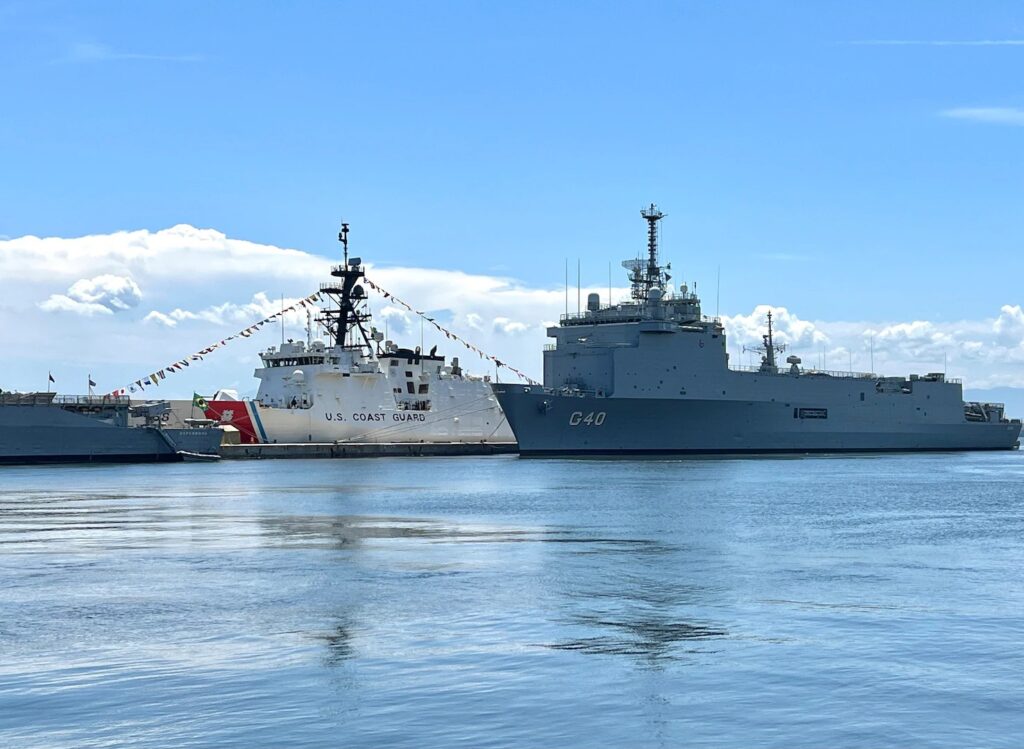
RIO DE JANEIRO — USCGC Stone (WMSL 758) arrived in the port of Rio de Janeiro, Brazil for a scheduled visit, Tuesday. 

The visit is Stone’s second stop in Brazil as the cutter continues its multi-mission deployment in the South Atlantic Ocean, exhibiting the U.S. Coast Guard’s partnership with Brazil and strengthening the interoperability of the two nations’ maritime forces to counter illicit maritime activity and promote maritime sovereignty throughout the region.  

“This deployment has already proven the effectiveness of our interagency and international partnerships,” said U.S. Coast Guard Capt. Clinton Carlson, Stone’s commanding officer. “On our first stop in Brazil in Recife in February 2023, we embarked representatives from the Brazilian Navy who have consistently provided invaluable insight and enhanced our capabilities, allowing us to more readily conduct maritime law enforcement to safeguard and protect international waters.” 

Brazil and the United States’ naval services both use unmanned aerial systems to provide increased maritime domain awareness across a variety of mission sets.  The embarked Brazilian officers are part of Brazil’s first ship-based unmanned aerial systems squadron, and the embarkation of these officers aboard Stone highlights the robust partnership between the two nations and their shared commitment to upholding the rules-based international order at sea. 

“While deployed with the Stone we have been working to counter illegal fishing,” said Brazil Navy Lt. Caio Cardinot. “It’s been a real pleasure to build this partnership, sharing knowledge and expertise with each other. With common UAS capabilities, a very robust communication center, and a hardworking crew, we have been very impressed during our time here.” 

In recent years, the United States and Brazil have partnered to share and exchange maritime tactics, techniques, and procedures. Since 2009, the U.S. Coast Guard provided 34 mobile training team deployments and three resident training courses to Brazil in the areas of crisis management, mobile command systems, port security, maritime law enforcement, search and rescue, and disaster response. Additionally, Stone previously visited Rio de Janeiro in 2021 while conducting a South Atlantic Ocean deployment. 

Both countries are dedicated to the responsible management of marine resources, demonstrating their shared commitment through the continued integration of their naval forces. 

“This deployment is about partnerships,” Carlson said. “Not only have we embarked officers from the Brazilian Navy, but we’ve also embarked U.S. Navy and Marine Corps personnel augments as well. As we work with Brazil’s maritime forces, we’re strengthening our domestic partnerships as well, bringing both joint and combined capabilities to combat illegal, unreported, and unregulated fishing around the world. These partnerships create new opportunities for us to maintain free and sustainable access to maritime resources for all.” 

Stone is the ninth Legend-class national security cutter in the Coast Guard fleet, homeported in Charleston, South Carolina. The national security cutters can execute the most challenging national security missions, including support to U.S. combatant commanders. 

Stone is under the command of U.S. Coast Guard Atlantic Area. Based in Portsmouth, Virginia, U.S. Coast Guard Atlantic Area oversees all Coast Guard operations east of the Rocky Mountains to the Arabian Gulf. In addition to surge operations, they also allocate ships to work with partner commands and deploy to the Caribbean and Eastern Pacific to combat transnational organized crime and illicit maritime activity. 

For information on how to join the U.S. Coast Guard, visit GoCoastGuard.com to learn about active duty and reserve, officer and enlisted opportunities. Information on how to apply to the U.S. Coast Guard Academy can be found here


Coast Guard Cutter Munro returns from multi-month Alaska Patrol 

Release from Coast Guard 17th District 

***** 

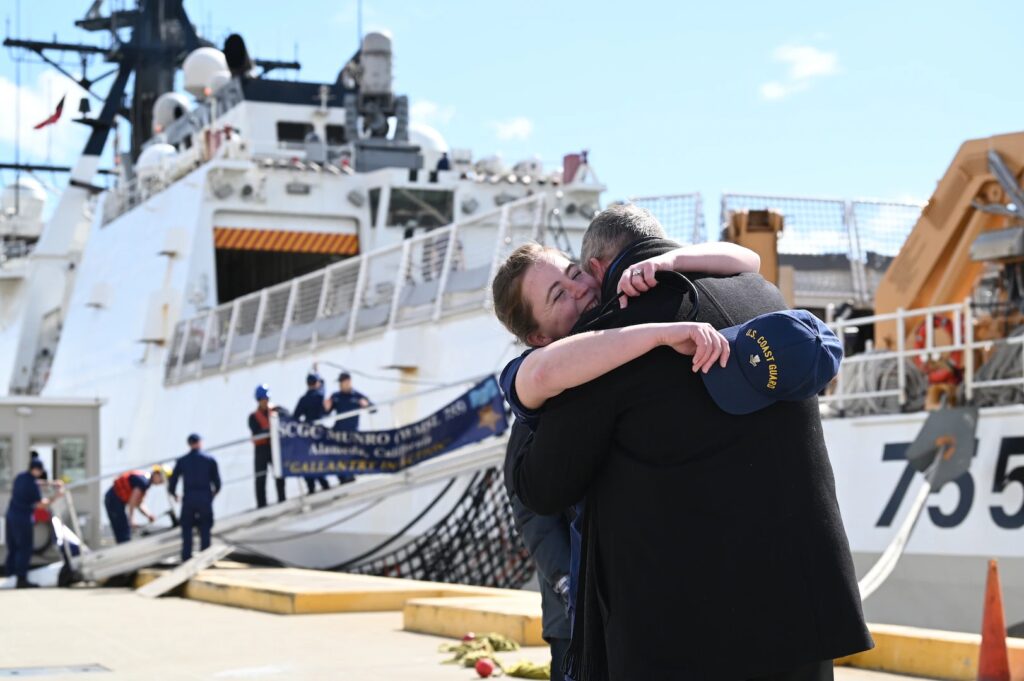
ALAMEDA, Calif. — The Coast Guard Cutter Munro (WMSL 755) and crew returned home to Alameda, Monday, following a 105-day, 10,000-nautical mile Alaska patrol. 
 
Munro partnered with NOAA Office of Law Enforcement personnel to conduct 24 boardings of commercial fishing vessels with the goal of enforcing sustainable fishing practices and ensuring compliance with federal regulations. 
 
During the patrol, the Munro and crew served as the primary search and rescue (SAR) asset in the Bering Sea. 
 
“The continued existence of these fisheries depends on a healthy and productive ecosystem,” said Capt. Rula Deisher, Munro’s commanding officer. “As a federal law enforcement agency, it is the Coast Guard’s responsibility to ensure the longevity of these resources and safety of the fishing fleet. We’re happy to do our part combating unsustainable fishing and promoting maritime commerce that is essential to a strong U.S. economy.” 
 
The crew performed 452 flight evolutions with five separate aircraft from Air Station Kodiak, Alaska, qualifying seven pilots and ensuring SAR readiness in the region. 
 
“A winter patrol in the Bering Sea is the ultimate test of the cutter and crew,” said Deisher. “I am so proud of the women and men of the Munro who braved the elements, operating in the Arctic region to protect our nations resources and fishers.” 
 
Commissioned in 2017, Munro is named for Signalman First Class Douglas A. Munro, the only Coast Guardsman awarded the Congressional Medal of Honor in 1942 for his actions and sacrifice in the defense, rescue, and evacuation of a U.S. Marine battalion from Point Cruz at Guadalcanal in the Solomon Islands. 
 
Munro is one of four Legend-class national security cutters homeported in Alameda. National security cutters are 418-feet long, 54-feet wide, and have a 4,600 long-ton displacement. They have a top speed of more than 28 knots, a range of 12,000 nautical miles, endurance of up to 90 days, and can hold a crew of up to 170. These cutters are the centerpiece of the U.S. Coast Guard’s fleet, capable of executing the most challenging operations, including supporting maritime homeland security and defense missions at home and abroad. 


SECNAV Renames Pathfinder-class Oceanographic Survey Ship USNS Maury after Marie Tharp 

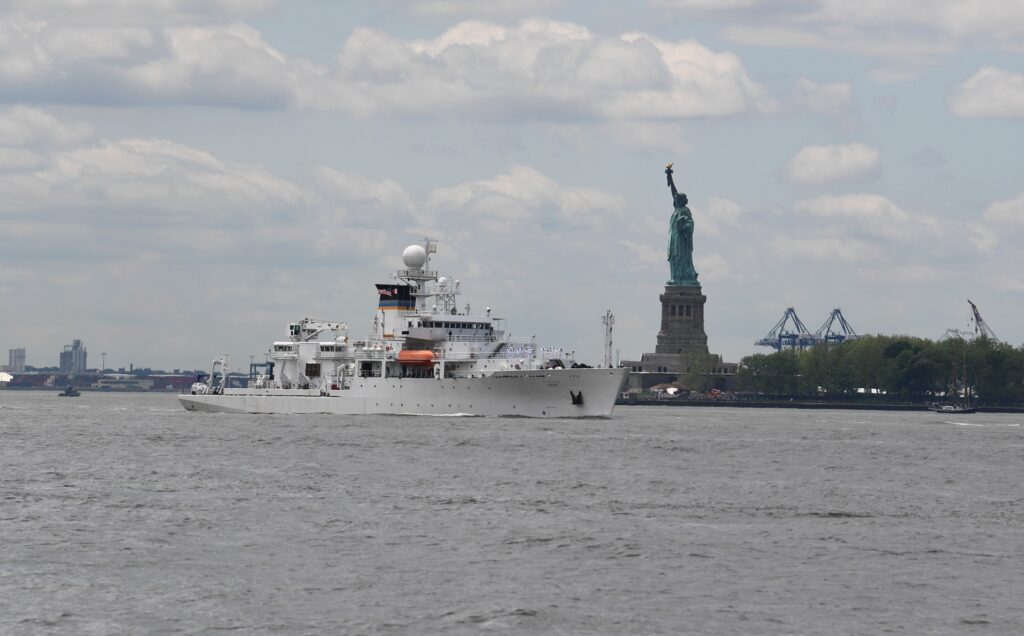
During the parade of ships, USNS Maury (T-AGS 66) passes Lady Liberty on the way into port as part of Fleet Week New York, May 23, 2018. Marines, Sailors, and Coast Guardsmen are in New York to interact with the public, demonstrate capabilities and teach the people of New York about America’s sea services. (U.S Marine Corps photo by Sgt. Annika Moody)

Release from the Navy Chief of Information 

***** 

SECNAV Renames Pathfinder-class Oceanographic Survey Ship USNS Maury after Marie Tharp 

08 March 2023 

Today, on International Women’s Day, Secretary of the Navy (SECNAV) Carlos Del Toro announced that the Pathfinder-class oceanographic survey ship formerly named USNS Maury (T-AGS 66) has been renamed USNS Marie Tharp (T-AGS 66). 

This renaming honors Marie Tharp, a pioneering geologist and oceanographic cartographer who created the first scientific maps of the Atlantic Ocean floor and shaped our understanding of plate tectonics and continental drift.   

The decision arrived after a congressionally mandated Naming Commission outlined several military assets across all branches of service that required renaming due to confederate ties. In September 2022, Secretary of Defense Lloyd Austin accepted all recommendations from the naming commission and gave each service until the end of 2023 to rename their assets.  

“I’m pleased to announce the former USNS Maury will be renamed in honor of pioneering geologist and oceanographic cartographer, Marie Tharp. Her dedication to research brought life to the unknown ocean world and proved important information about the earth, all while being a woman in a male-dominated industry,” said Del Toro. “As the history of our great Nation evolves, we must put forth the effort to recognize figures who positively influenced our society. This renaming honors just one of the many historic women who have made a significant impact on not only our Navy, but our Nation.” 

Tharp was born in 1920 and graduated from the Ohio University in 1943. Due to WWII, more women were recruited into a variety of professions, prompting the University of Michigan to open their geology program to women, resulting in Tharp completing her master’s degree in 1944. After working in her field for a few years, Tharp became one of the first women to work at the Lamont Geological Observatory. During this time she met Bruce C. Heezen (namesake of T-AGS 64) and worked together using photographic data to locate downed military aircraft from WWII. Between 1946 and 1952, Woods Hole Oceanographic Institute’s research vessel, Atlantis, used sonar to obtain depth measurements of the North Atlantic Ocean, which Tharp, in collaboration with her colleague, Heezen, used to create highly detailed seafloor profiles and maps.  While examining these profiles, Tharp noticed a cleft in the ocean floor that she deduced to be a rift valley that ran along the ridge crest and continued along the length of its axis, evidence of continental drift.  At the time, the consensus of the U.S. scientific community held continental drift to be impossible, but later examination bore out Tharp’s hypothesis.  Her work thus proved instrumental to the development of Plate Tectonic Theory, a revolutionary idea in the field of geology at the time.  Owing to this and other innovative mapping efforts (some which the Navy funded), the National Geographic Society awarded Tharp its highest honor, the Hubbard Medal, placing her among the ranks of other pioneering researchers and explorers such as Sir Ernest Shackleton, Charles Lindbergh, and Rear Admiral Richard E. Byrd.  

The logistical aspects associated with renaming the ship will begin henceforth and will continue until completion with minimal impact on operations and the crew. 

T-AGS 66 was accepted in 2016 and named USNS Maury (T-AGS 66) after Commander Matthew Fontaine Maury, the “Father of Modern Oceanography” who resigned from his Navy career to accept a command in the Confederate States Navy. The former USNS Maury was the only US Navy Vessel named after a Confederate military officer. T-AGS 66 is currently assigned to Military Sealift Command and is in the Persian Gulf.  


ONE TEAM, NSWC PCD brings flexibility to the future of diving 

Release from Naval surface Warfare Center Panama City Division 

***** 

ONE TEAM, NSWC PCD brings flexibility to the future of diving 

By Jeremy Roman, NSWC PCD Public Affairs 

PANAMA CITY, Fla.  –   

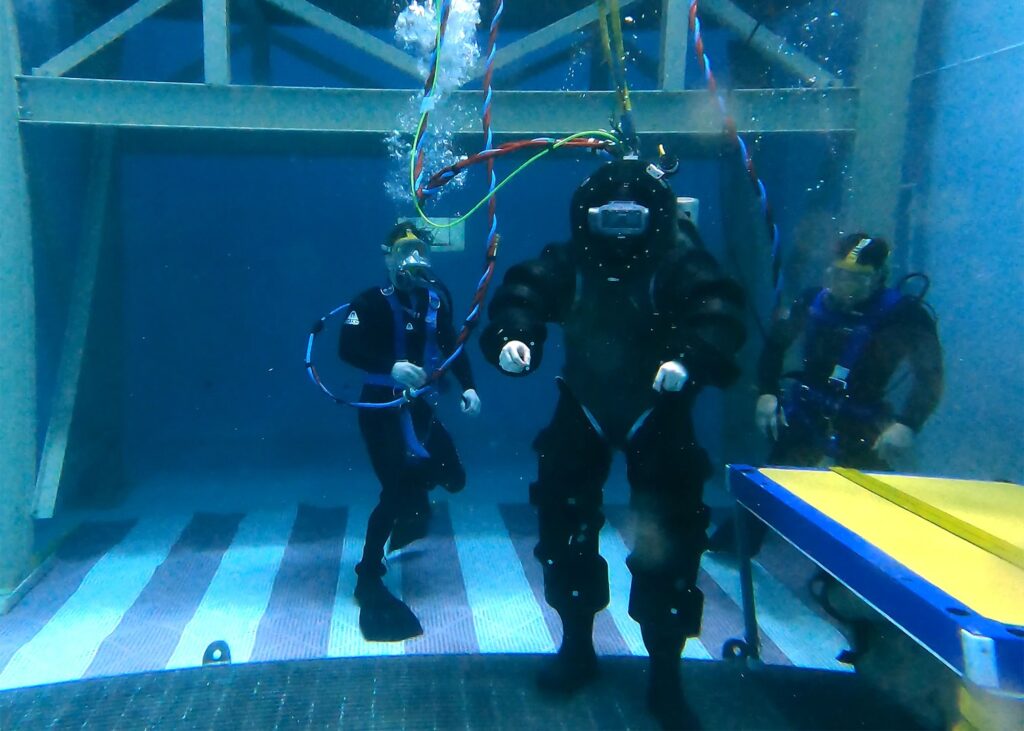
After months of planning, the mission to rapidly deliver solutions to ensure warfighting dominance moved one step closer during the Deep Sea Expeditionary with No Decompression (DSEND) Suit In-Water Concept Demonstration held at the U.S. Navy Experimental Diving Unit (NEDU), Feb. 7 – 8. 

The DSEND demo tested the capabilities of a new concept suit aimed to help divers navigate their environment more efficiently. Allie Williams, Naval Surface Warfare Center Panama City Division (NSW PCD) Fleet Diving In-Service Engineering Agent, explained some of the highlights from this successful demonstration.  

“This test was conducted as a proof of concept demonstrating the DSEND suit’s flexibility and maneuverability under the diver’s own power,” said Williams. “The operator was [also] wearing a Divers Augmented Vision Display (DAVD) system inside the suit to demonstrate the future permanent integration of DAVD, as well.” 

While performance-capable, the current Atmospheric Diving Suit (ADS) is also heavy, lacks maneuverability and requires relatively large sea craft for deployment. This project aims to innovate the previous ADS on several fronts including improvements to its current rotary joint design. For example, the current ADS does not allow movement in the same direction as natural human joints, which can contribute to diver fatigue. This new suit concept would enhance a diver’s range of motion, without considerable strain or force, while providing the added benefit of allowing the user to swim independent of propulsion systems. 

An additional program objective is to develop a swimmable dive suit that maintains atmospheric pressure internal to the suit and can withstand pressures up to 300 feet of seawater (fsw). Further development could enable it to greater depths. 

“The demo went well and served as a good proof of concept for the project. We received good feedback and it was valuable to have the chance for follow-on testing,” said Williams. “This program will provide new capabilities to the warfighter by creating a more flexible and lightweight ADS, compared to the previous more costly and burdensome capabilities.” 

Not only does this demonstration move the project closer to interoperability capability, it also strengthens partnerships through the organizational collaboration of Naval Sea Systems Command 00C3, Office of Naval Research 342, NSWC PCD, Naval Undersea Warfare Center Keyport, Nuytco Research, Mide Technology, Coda Octopus and NEDU. They will continue their respective work to complete their primary objective, which is to develop a suit that will replace the 300 fsw Mixed Gas Diving Systems and eventually go to greater depths.