General Dynamics NASSCO Christens the Third Ship in the T-AO Fleet Oiler Program for the U.S. Navy 

Release from General Dynamics NASSCO

******* 

SAN DIEGO — General Dynamics NASSCO christened the future USNS Earl Warren (T-AO 207), the third ship for the U.S. Navy’s John Lewis-class fleet oiler program, today. Secretary of the Navy (SECNAV) Carlos Del Toro, served as the principal speaker at the ceremony, in addition to remarks from NASSCO and U.S. Navy representatives. Following brief remarks, the ship’s sponsor, U.S. Supreme Court Justice Elena Kagan, christened the ship with the traditional champagne bottle break alongside the hull. 

“Along with its namesake, this majestic vessel will be instrumental in shaping the future of our nation. The shipbuilders of NASSCO are proud to have ensured Earl Warren’s legacy will live on in this ship,” said David Carver, president of General Dynamics NASSCO. “On behalf of the 48-hundred employees of General Dynamics NASSCO, I am proud to present the USNS Earl Warren for christening to our sponsor the Supreme Court Justice, Elena Kagan.” 

The ship honors Earl Warren, 14th Chief Justice of the United States of the Supreme Court. During his 16 years as Chief Justice, a period of time when the Supreme Court was known as the “Warren Court”, civil rights and civil liberties were dramatically expanded, marking this period as one of the most important periods in the history of American constitutional law. 

“Indeed, the ship’s motto could not be more appropriate: ‘I Will Find a Way or I Will Make One,'” said Del Toro. “That’s exactly what a young Earl Warren did when he overcame obstacles to joining the Army during the First World War, and that’s what he continued to do in the fight for equality, democracy, and social justice throughout his life.” 

General Dynamics NASSCO was awarded with a contract to design and build the first six ships, T-AO 205 – T-AO 210, by the U.S. Navy for the next generation of fleet oilers, the John Lewis-class in 2016. In 2022, the Navy awarded NASSCO with a contract modification for the construction of two additional John Lewis-class fleet oilers (T-AO 211 and 212), with the option for the Navy to procure an additional oiler, T-AO 213 which was included in the 2023 defense budget. 

In addition to the christening of this ship, two ships in the T-AO class fleet oiler program for the U.S. Navy – the future USNS Robert F. Kennedy (T-AO 208) and the future USNS Lucy Stone (T-AO 209), – are currently under construction. The second ship, the future USNS Harvey Milk (T-AO 206) will be delivered to the Navy later this year. The lead ship, the USNS John Lewis (T-AO 205) was delivered to the Navy in 2022. 

The 742-foot-long oilers are designed to transfer fuel to U.S. Navy carrier strike group ships operating at sea and have the capacity to carry 157,000 barrels of oil, a significant dry cargo capacity, aviation capability and up to a speed of 20 knots. 


USCGC Spencer Completes Multinational Maritime Security Patrol off West Africa 

Release from U.S. Coast Guard 

******* 

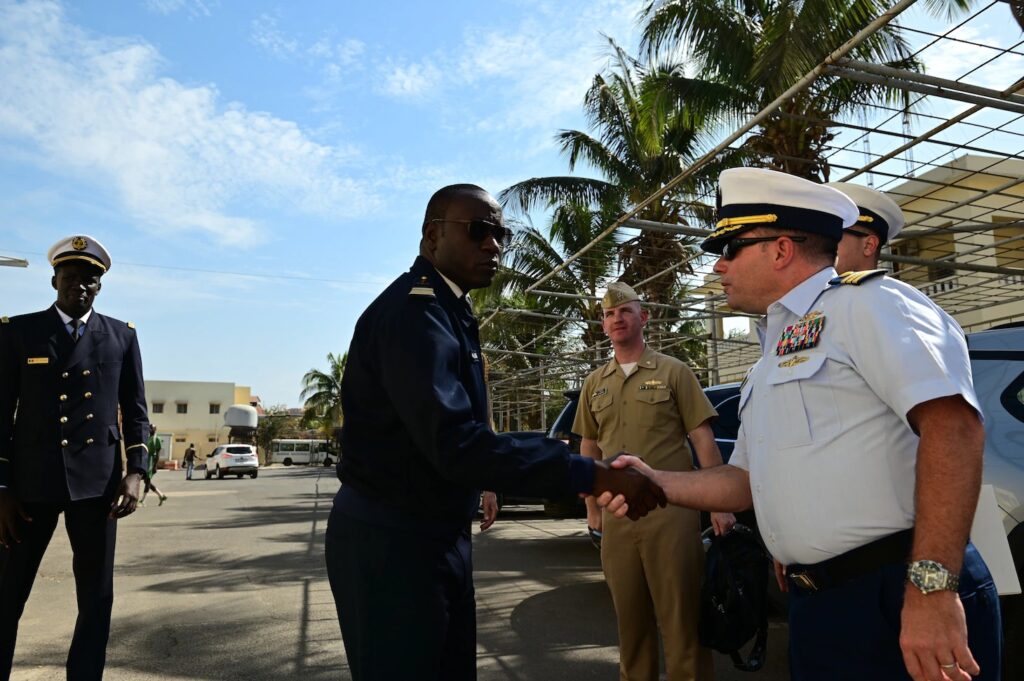
DAKAR, Senegal — The Famous-class medium-endurance USCGC Spencer (WMEC 905) arrived in Dakar, Senegal for a scheduled port visit following a multinational maritime security patrol, Jan. 17, 2023, U.S. Naval Forces Europe and Africa/U.S. Sixth Fleet said in a Jan. 19 release.

Spencer’s visit to Dakar included meetings with Capt. Karim Mara, Senegalese deputy chief of naval staff, as well as leaders from the Senegalese Navy and the U.S. Office of Security Cooperation. Prior to the port visit, Spencer embarked maritime counterparts from Cabo Verde, Senegal, and The Gambia for a security patrol to identify and deter illegal, unreported, unregulated (IUU) fishing as well as build living marine resource enforcement capacity with African partner nations.

“We were able to build maritime domain awareness with our partners by establishing an offshore law enforcement presence that demonstrated Cabo Verde’s, Senegal’s, and The Gambia’s commitment to maritime security and living marine resource enforcement. We did this by conducting combined maritime law enforcement operations and effectively communicating and coordinating with each country’s Maritime Operations Center,” said Cmdr. Corey Kerns, Spencer’s commanding officer.

This deployment demonstrates NAVAF’s [U.S. Naval Forces Africa’s] and the U.S. Coast Guard’s commitment and longstanding partnership to work with our African partners to counter illicit maritime activity in the Atlantic Ocean. The U.S. Coast Guard regularly integrates and operates within the NAVAF area of operations. The U.S. Coast Guard’s authorities and capabilities provide the Joint Force with unique tools that bridge the cooperation-to-conflict continuum.

Senegal and the United States share a proud history of promoting peace and security in Africa. Later this month, Senegal will participate in the NAVAF-led exercise Obangame Express 2023, the largest annual maritime security exercise in Western Africa. These types of exercises strengthen partnerships and allow countries to work more closely on shared transnational maritime challenges.

“The United States and Senegal enjoy an exceptional security partnership that bolsters our shared efforts to promote peace and security in West Africa, combat illegal, unreported, and unregulated fishing, and protect marine resources,” said Mike Raynor, U.S. Ambassador to Senegal. “The arrival of USCGC Spencer to Dakar reflects that robust partnership.”

The U.S. shares a common interest with African partner nations in ensuring security, safety, and freedom of navigation on the waters surrounding the continent, because these waters are critical for Africa’s prosperity and access to global markets.

U.S. Coast Guard Atlantic Area, headquartered in Portsmouth, Virginia, oversees all Coast Guard operations east of the Rocky Mountains.


Coast Guard, Partners Tracking Russian Vessel off Hawaiian Coast 

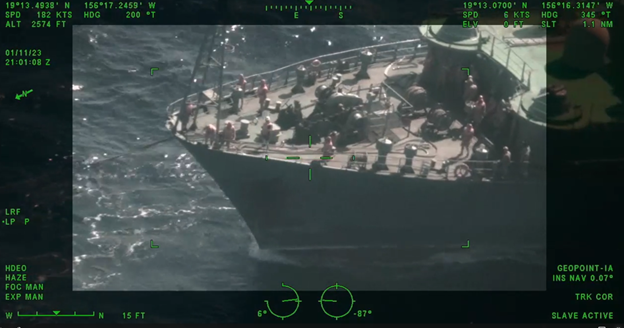
In recent weeks, the U.S. Coast Guard has continued to monitor a Russian vessel, believed to be an intelligence gathering ship, off the coast of the Hawaiian Islands. The Coast Guard continues to coordinate with Department of Defense partners, providing updates to foreign vessel movements and activities and to appropriately meet presence with presence to encourage international maritime norms. Source: dvidshub

Release from U.S. Coast Guard

******* 

HONOLULU — In recent weeks, the U.S. Coast Guard has continued to monitor a Russian vessel, believed to be an intelligence gathering ship, off the coast of the Hawaiian Islands, the Coast Guard 14th District said in a release. 
  
While foreign military vessels may transit freely through the U.S. economic exclusive zone (EEZ), as per customary international laws, foreign-flagged military vessels have often been observed operating and loitering within Coast Guard District Fourteen’s area of response. 
  
The Coast Guard continues to coordinate with Department of Defense partners, providing updates to foreign vessel movements and activities and to appropriately meet presence with presence to encourage international maritime norms.   
  
“The U.S. Coast Guard is currently monitoring the Russian vessel operating in the vicinity of Hawaii,” said Cmdr. Dave Milne, chief of External Affairs. “As part of our daily operations, we track all vessels in the Pacific area through surface and air assets and joint agency capabilities. The Coast Guard operates in accordance with international laws of the sea to ensure all nations can do the same without fear or contest. This is especially critical to secure freedom of movement and navigation throughout the Blue Pacific.” 
  
As a part of the Department of Homeland Security, the Coast Guard is the lead federal agency for at-sea enforcement of U.S. fisheries laws; additionally, the Coast Guard assists in the enforcement of laws on the high seas subject to the jurisdiction of the United States’ exclusive economic zone. Law and treaty enforcement account for approximately 1/3 of the Coast Guard’s annual budget.  


USCGC Decisive Returns Home from Final Patrol 

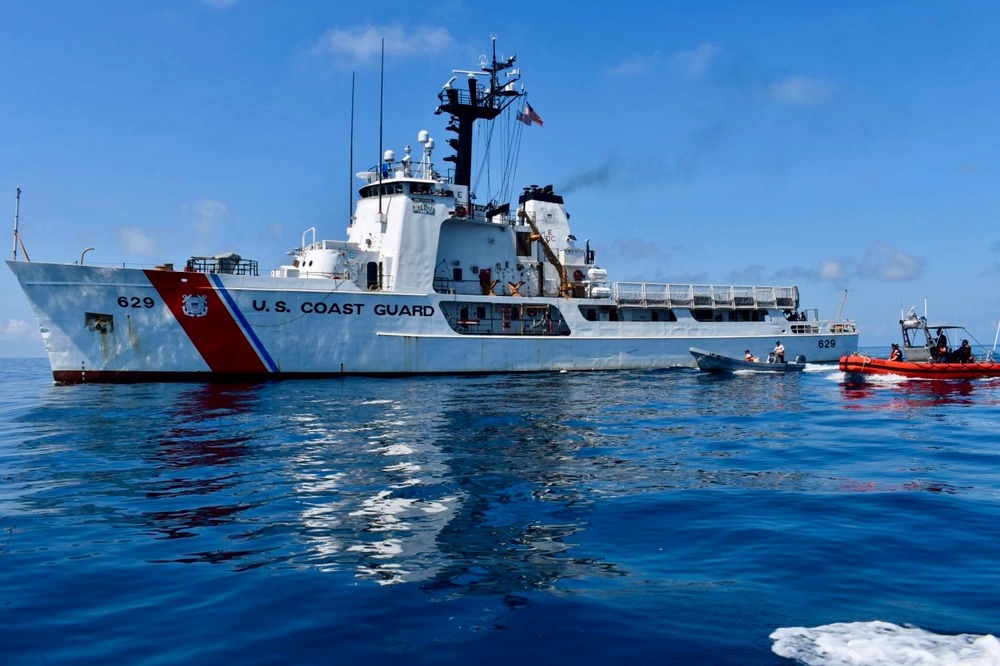
The Reliance-class medium endurance cutter USCGC Decisive (WMEC 629) conduct at sea engagements with the navy of Guatemala in the territorial seas of Guatemala on Oct. 25 – 26, 2021. The U.S. Coast Guard conducts routine deployments in the Southern Command area of responsibility, works alongside partners, builds maritime domain awareness, and shares best practices with partner nation navies and coast guards. (U.S. Coast Guard photo)

Release from U.S. Coast Guard 

*******

PENSACOLA, Fla. — The crew of the USCGC Decisive (WMEC 629) returned to their homeport in Pensacola, Jan. 13, following a 33-day patrol in the Eastern Pacific Ocean, concluding 55 years of service to the Nation, the Coast Guard Atlantic Area said in a Jan. 18 release. 

Decisive patrolled the Eastern Pacific Ocean in the Coast Guard Eleventh District’s area of operations. While underway, the Decisive’s crew supported the Coast Guard’s drug interdiction and search and rescue missions to promote safety of life at sea and deter the flow of illegal narcotics into the United States.   

While deployed, Decisive’s crew collaborated with Coast Guard assets and foreign military aircraft to detect, deter, and interdict illegal narcotics voyages. At one point, Decisive disrupted two vessels suspected of drug trafficking in the same night. Decisive also collaborated with the USCGC Alert (WMEC 630) to safely transfer three suspected smugglers. While aboard Decisive, the detainees received food, water, shelter and medical attention. 

“The crew’s remarkable professionalism, competence and determination were on full display as we met the diverse challenges of operations at sea,” said Cmdr. Aaron Delano-Johnson, commanding officer of Decisive. “Whether it was conducting simultaneous boardings or our skilled engineers conducting voyage repairs in Panama, the crew exceeded expectations at every turn. After a successful, final patrol for Decisive, we are looking forward to returning home to our family and friends on shore.” 

During the patrol, Decisive traveled more than 6,000 miles and traversed through the Panama Canal. By transiting the historic waterway, Decisive’s crew earned their Order of the Ditch certificates, a time-honored nautical tradition recognizing mariners who have crossed the Panama Canal between the Atlantic and Pacific Oceans. 

Decisive is a 210-foot, Reliance-class medium-endurance cutter with a crew of 72. The cutter’s primary missions are counter drug operations, migrant interdiction, and search and rescue in support of U.S. Coast Guard operations throughout the Western Hemisphere. 


Marine Corps Activated Marine Corps Information Command

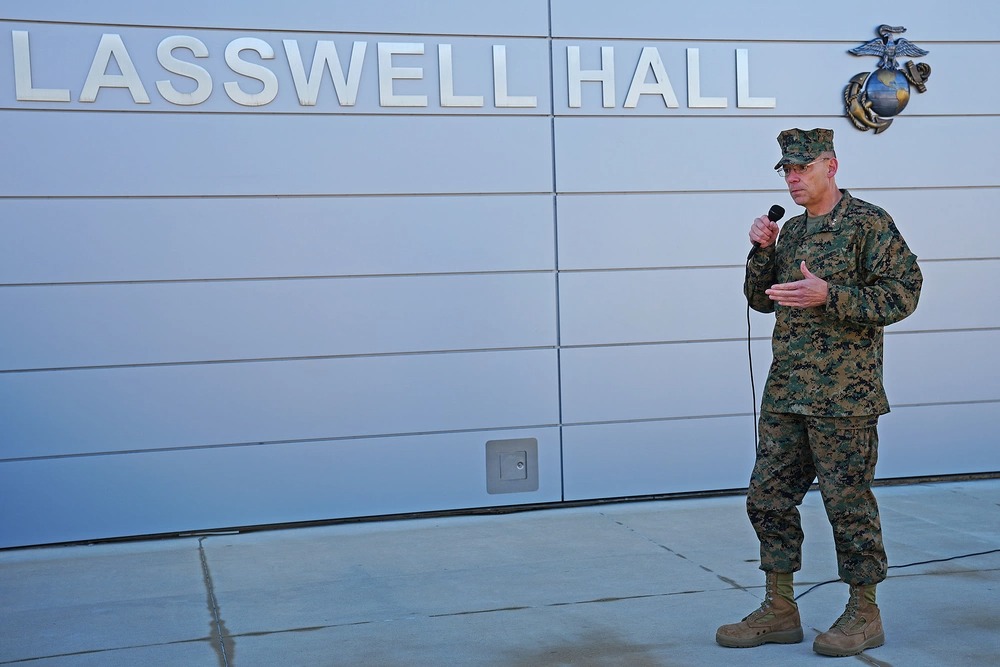
Marine Maj. Gen. Ryan P. Heritage, Commander of Marine Forces Cyber, speaks at the uncasing of the flag of the Marine Corps Information Command, in a ceremony held at Ft. George G. Meade on 13 January, 2023. The MCIC is comprised of a Headquarters, the Marine Cryptologic Office, and two Major Subordinate Commands; the Marine Corps Information Operations Center and Marine Cryptologic Support Battalion.

Release from U.S. Marine Corps 

******* 

FORT MEADE, Md. — The U.S. States Marine Corps continues operationalizing the Marine Corps’ seventh warfighting function, information, by activating a service retained, two-star command poised to synchronize, coordinate, and integrate capabilities across the Fleet Marine Force, Jan. 17, said Ryan Lowcher of Marine Corps Forces Cyber Command. 
 
Commanded by Maj. Gen. Ryan P. Heritage, the current commander of U.S. Marine Corps Forces Cyberspace and U.S. Marine Corps Forces Space Command, the Corps’ newest unit will integrate, synchronize, and enable information activities that deter adversaries and set conditions for the Fleet Marine Force across the range of military operations. 
 

“The activation of the MCIC is all about warfighting, integration and enabling the Joint Force to meet our national security objectives,” said Lt. Gen. Brian Cavanaugh, the commanding general of Marine Corps Forces Command. 

 
Serving as the primary integrator of information-related capabilities that support Service and Fleet Marine Force requirements with seamless coordination, the Marine Corps Information Command will also encompass units previously assigned to the deputy commandant for Information including the Marine Corps Information Operations Center, the Marine Corps Cryptologic Support Battalion, and the Marine Corps Cryptologic office. 
 
Heritage added, “A single commander who can leverage the authorities and approvals needed to synchronize global cyber, space, influence, and intelligence effects creates unity of support for the FMF and generates information advantages in support of commander’s objectives.” 
 
The Marine Corps Information Command will now serve as the linkage across the commands that conduct operational level planning and will enable the commander to provide task organized detachments leveraging authorities across the range of military operations and in support of campaigning objectives. 


USCGC Tahoma Returns Home after 50-day Caribbean Sea Patrol 

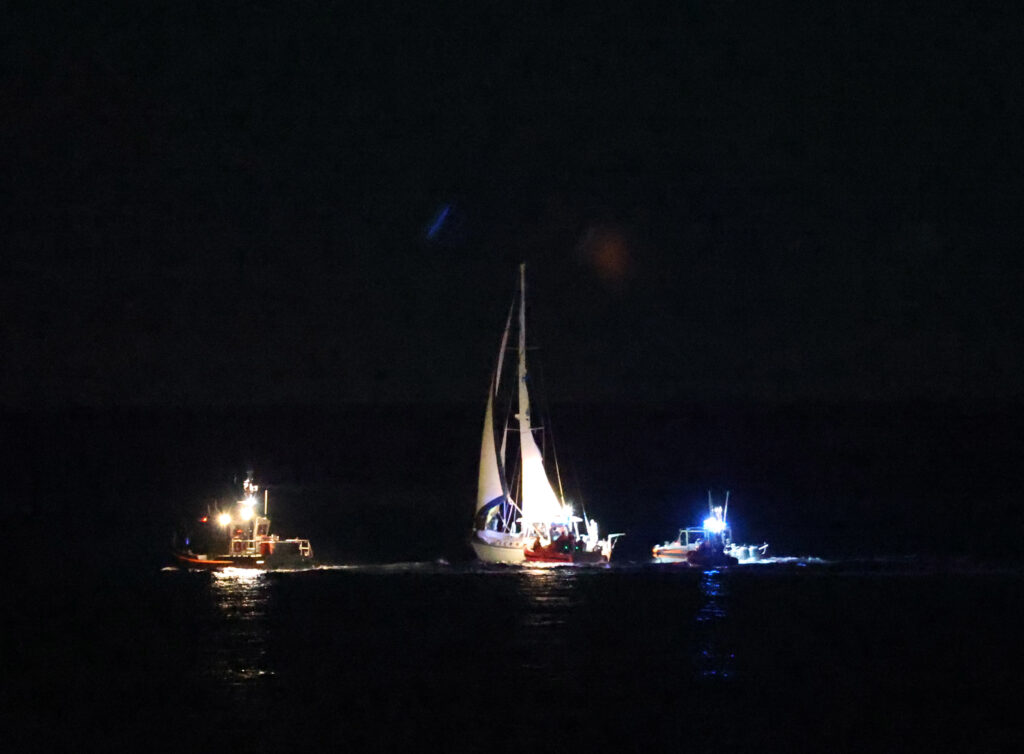
Coast Guard, and Customs and Border Protection Air and Marine Operations crews stop a grossly overloaded and unsafe Haitian sail freighter about 50 miles south of Cudjoe Key, Florida, Dec. 12, 2022. The people were repatriated to Haiti on Dec. 20, 2022. U.S. COAST GUARD / Cutter Tahoma’s crew

Release by U.S. Coast Guard 

******* 

NEWPORT, R.I. — The crew of the USCGC Tahoma (WMEC 908) returned to their home port in Newport, Rhode Island, Jan. 16, following a 50-day patrol in the Caribbean Sea, the Coast Guard Atlantic Area said in a release. 

Tahoma patrolled the south Florida Straits in support of Homeland Security Task Force – Southeast and Operation Vigilant Sentry in the Coast Guard Seventh District’s area of operations. While underway, Tahoma’s crew conducted maritime safety and security missions while working with a variety of Coast Guard and U.S. Customs and Border Protection assets, as well as good Samaritan vessels, to detect, deter and intercept unsafe and illegal migrant ventures bound for the United States. 

Throughout the patrol, Tahoma intercepted, cared for and safely transferred more than 650 Cuban and Haitian nationals. Notably, Tahoma worked with partners to stop a highly unstable, overloaded sailboat with 93 Haitian nationals on board, many of whom were held below decks in unsafe and unsanitary conditions. 

Tahoma’s rescues highlight the Coast Guard’s critical maritime law enforcement and lifesaving missions of maintaining safety at sea and preventing the potential for loss of life by deterring migrants from taking to the sea in dangerously overcrowded, unseaworthy vessels in an attempt to enter the United States illegally. 

“I am very proud of Tahoma’s crew for their hard work and dedication, carrying out this demanding mission while being away from family during the holiday season,” said Cmdr. Piero Pecora, Tahoma’s commanding officer. “Their focus and professionalism at all hours of the day and night saved hundreds of lives and reflects the Coast Guard’s unwavering dedication to the safety of life at sea.” 

Tahoma is a 270-foot Famous-class medium-endurance cutter with a crew of 100. The cutter’s primary missions are counter drug operations, migrant interdiction, enforcement of federal fishery laws, and search and rescue in support of U.S. Coast Guard operations throughout the Western Hemisphere. 


SECNAV Names Future Destroyer after MoH Recipient Capt. Thomas G. Kelley

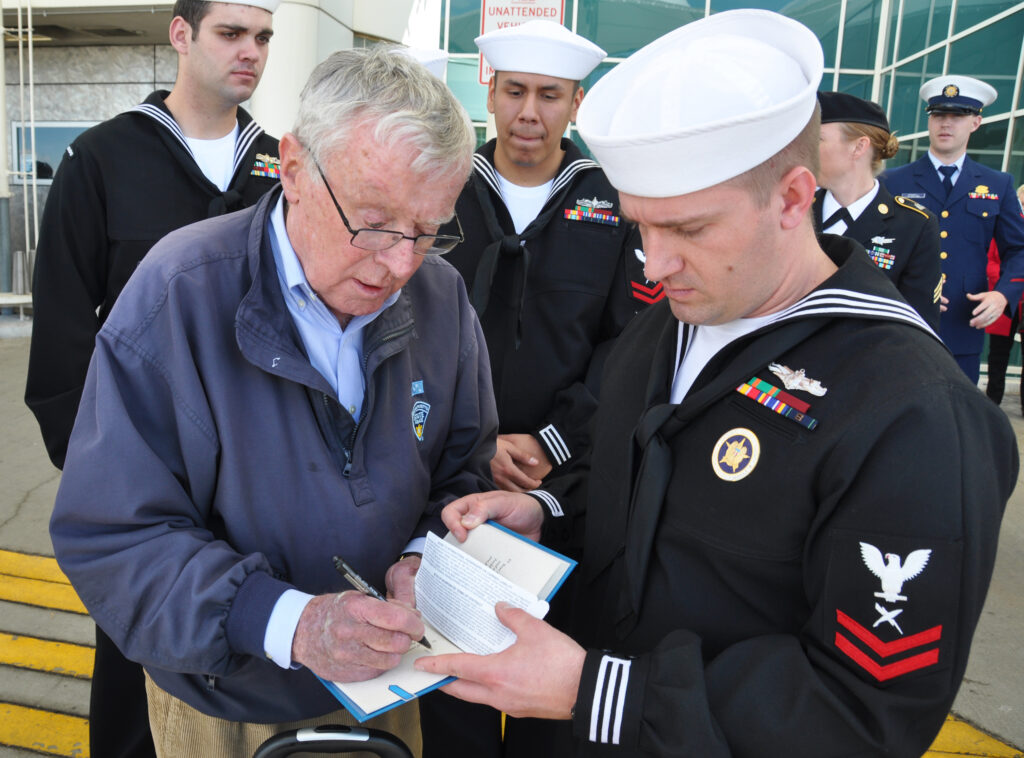
Secretary of the Navy Carlos Del Toro announced the future Arleigh Burke-class guided-missile destroyer DDG 140 will be named USS Thomas G. Kelley, named after the Medal of Honor recipient retired Capt. Thomas G. Kelley, pictured above signing a young Sailor’s book. U.S. NAVY / Petty Officer 2nd Class Robert Hartland

WASHINGTON – Secretary of the Navy (SECNAV) Carlos Del Toro announced during the Surface Navy Association Symposium that future Arleigh Burke-class guided-missile destroyer DDG 140 will be named USS Thomas G. Kelley (DDG 140), the Navy said in a Jan. 12 release.

The future USS Thomas G. Kelley will honor retired Captain Thomas G. Kelley, a Medal of Honor recipient. The name selection follows the tradition of naming destroyers after U.S. naval leaders and heroes.   

In 2020, former Secretary of the Navy Richard Spencer announced his intention to name a ship after Kelley but had yet to dedicate the name to an assigned hull number. Today, Del Toro assigns the name to DDG-140, which was appropriated in the fiscal year 2023 budget. 

“It is with great admiration and great pride that I am announcing the naming of the DDG-140 after Captain (retired) Thomas Gunning Kelley,” said Del Toro. “May we all, especially the future men and women assigned to this ship, always be inspired by Kelley’s brilliant leadership, bold initiative, and resolute determination.” 

Kelley was born in 1939 and grew up in Boston, Massachusetts. He graduated from the College of the Holy Cross in 1960 and was commissioned in the Navy. His early assignments as a Surface Warfare Officer included time aboard USS Pandemus (ARL-18), USS Davis (DD-937), and USS Stickell (DD-888). Kelley then volunteered to serve in Vietnam as a lieutenant commanding River Assault Division 152.  

Riverine Action

On June 15, 1969, Kelley led river assault craft boats when they fell under attack. Kelley, while severely wounded, continued to protect and lead his men to safety. For this gallant effort, he was awarded the Medal of Honor. Kelley, despite his injuries, continued his naval career, taking on the position of executive officer of USS Sample (DE-1048) and commanding officer of USS Lang (FF-1060). While serving, Kelley earned his master’s degree in management from the Naval Post Graduate School and completed the Armed Forces Staff College course in Norfolk, Va. Kelley retired from naval service as a Captain after thirty years, ending his tour as the director of legislation in the Bureau of Naval Personnel.  

After his military service, Kelley became the Massachusetts Department of Veterans’ Services commissioner and was named Secretary of the Department in 2003. In 2011, Kelley retired from public service and focused on charitable pursuits. He is close with the Medal of Honor Society, previously serving as president, Holy Cross’ O’Callahan Society, Arlington National Cemetery, the Homebase Program which treats veterans and active military with the hidden wounds of war, in partnership with the Boston Redsox Foundation and Massachusetts General Hospital. He also serves on the board of directors of the USS Constitution Museum. 

‘Tremendous Honor’

“It is a tremendous honor and I am truly humbled, especially as a Surface Warfare Sailor,” Kelley said. “I trust that those who sail in this ship will be reminded of service to their shipmates and that they will be carrying on a tradition greater than themselves.” 

Arleigh Burke-class destroyers, built around the Aegis Combat System, are the backbone of the U.S. Navy’s surface fleet providing protection to America around the globe. They incorporate stealth techniques, allowing these highly capable, multi-mission ships to conduct a variety of operations, from peacetime presence to national security, providing a wide range of warfighting capabilities in multi-threat air, surface and subsurface domains. These elements of sea power enable the Navy to defend American prosperity and prevent future conflict abroad. 


Cutter Alex Haley Returns to Kodiak following 7-Month-Long Maintenance Period 

The Coast Guard Alex Haley sits dry docked for repairs and maintenance in Seattle, Washington, Dec. 13, 2022. While in dry dock, the crew and contractors successfully completed more than $6 million worth of repairs. U.S. COAST GUARD

Release from U.S. Coast Guard 

******* 

KODIAK, Alaska — The crew of the Coast Guard Cutter Alex Haley returned to homeport at Coast Guard Base Kodiak, Alaska, on Jan. 12, following an extended seven-month dry dock maintenance period in Seattle, Washington, the Coast Guard 17th District said in a release.  

While in dry dock, the crew and contractors successfully completed more than $6 million worth of repairs.  

The engineering department oversaw 76 work items including major overhauls on the cutter’s controllable pitch propeller system, speed reducers, rudders, and boilers, along with inspections of fuel, sewage, and water tanks. The operations department supervised a renewal of the Alex Haley’s flight deck, navigation systems, and electronics while maintaining critical law enforcement currencies. The deck department expertly completed vast amounts of painting and topside preservation, while ensuring small boat operational readiness.  

When crewmembers were not directly involved in repairs, they took advantage of temporary duty training opportunities to gain technical proficiencies.  

Crew Helps with Other Coast Guard Missions 

Crewmembers were sent to southern California to aid in migrant operations, supported scientific missions in the Arctic, and played a key role in the Rim of the Pacific 2022 Naval Exercise, strengthening our relationships with 33 partner nations.  

The entire crew also attended advanced damage control schools hosted by Naval Base Kitsap in Bremerton, Washington. Crewmembers were taught plugging, patching and dewatering techniques in the classroom then went hands-on, applying their knowledge to simulated flooding in a wet trainer.  

Firefighting tactics were also honed while combating real fires during two scenarios that mimicked plausible casualties on a cutter like the Alex Haley.  

“I am incredibly proud of the crew’s accomplishments during this extended maintenance period,” said Cmdr. Brian Whisler, commanding officer of the Alex Haley. “The crew worked tirelessly to make significant material and aesthetic improvements to the cutter which will have long-term benefits as we continue to prepare for future patrols in the Bering Sea. Seven months is a long time to be away from home and we are thrilled to be reunited with our family, friends, and our Kodiak Community.” 

Following its dry dock period, the Alex Haley will be able to continue operating as the Coast Guard’s primary asset in the Bering Sea with renewed and improved capabilities.  

The Alex Haley is a 52-year-old 282-foot Medium Endurance Cutter that has been homeported in Kodiak since 1999. The crew routinely operates throughout the Bering Sea, the Gulf of Alaska, and the Pacific Ocean. The Alex Haley’s ability to operate in extreme weather conditions provides the mission flexibility necessary to perform search and rescue, fisheries law enforcement, and vessel safety inspections across Alaska. 


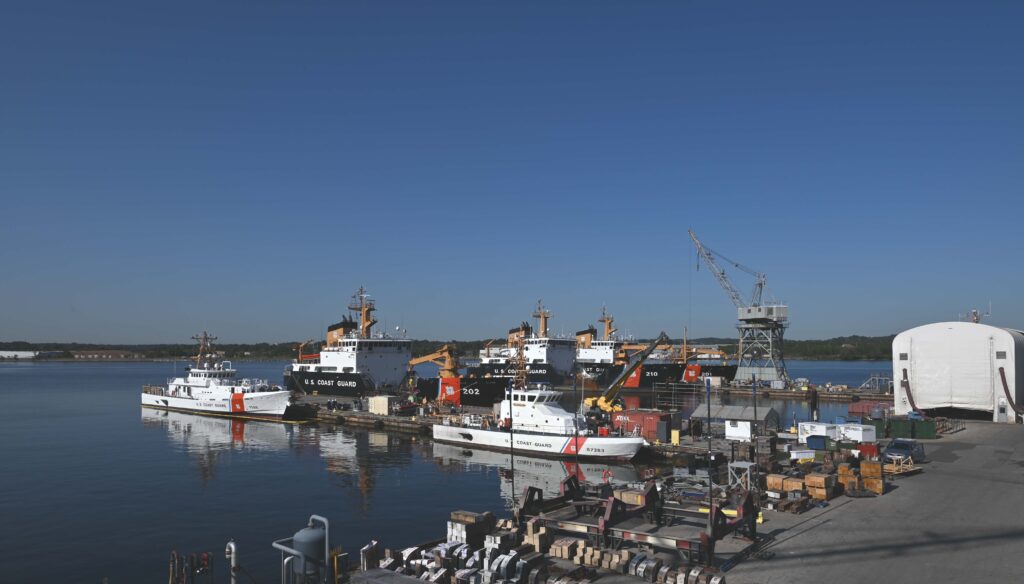
Coast Guard, Navy Competition for Ship Availabilities to Increase: USCG Official

The Coast Guard Yard at Curtiss Bay, Maryland, is the service’s main cutter maintenance facility. U.S. COAST GUARD

ARLINGTON, Va. — The U.S. Coast Guard will be in “closer competition than we ever have before” with the U.S. Navy for dry dock and dockside availabilities for their ships, a Coast Guard official said during a panel on maintenance at the Surface Navy Association Annual Symposium on Jan. 12. 

Bob Thomas, U.S. Coast Guard deputy assistant commandant for engineering and logistics (CG-4D), said that the Coast Guard is competing for resources with both the industry and the Navy as retention and recruiting struggles. persist throughout the military. Along with maintenance areas that the Coast Guard hasn’t historically dealt with, such as cyber, that creates an intensely competitive environment, he said. 

The Coast Guard has seen many of the same recruiting and retention challenges as the other services, Thomas noted. 

“The workforce has almost become a migrant workforce,” he said. “They’ll shift to where the work is, [or] who’s paying the most. […] That drives the cost way up when people are competing for limited resources. You get to pay more for the same thing, or sometimes it’s not available.”

Collaborating to Retain Workforce Numbers

However, he added that the Coast Guard is working closely with the Navy to help mitigate some of these issues, mentioning a number of collaborative efforts that he thinks are “going to pay off huge for the Coast Guard.” 
 
Navy Rear Adm. Scott Brown, deputy commander for logistics, maintenance, and industrial operations, also said that 2022 was “not a great year” in terms of staffing at the public shipyards, stating that they were short by 1,200 personnel, with 37,000 total working in those shipyards. 
 
“A big focus of our efforts is to improve the recruiting and incentives for folks that come into the shipyards,” he said. 
 
Brown said he believes that, in addition to the economy, the state of the shipyards and changing demographics are the primary reasons why the Navy continues to struggle with recruiting and retention. 
 
To offset some of those challenges, the Navy is looking not only to boost pay, but to also offer career development opportunities to sailors. For example, the Navy has introduced a program to help mechanical expert tradespeople, a promotion that keeps them “turning wrenches” while still providing advancement opportunities.


Hot Production Line for Navy’s Ship-to-Shore Connectors

Landing Craft, Air Cushion (LCAC) 104, attached to Assault Craft Unit 4, approaches the Wasp-class amphibious assault ship USS Kearsarge (LHD 3) for well deck operations Dec. 1, 2022. LCAC 100 is the Navy and Marine Corps next generation landing craft designated to replace the legacy LCAC, providing a more reliable and capable high speed amphibious connector to deliver Sailors and Marines and their equipment from ship to shore. U.S. NAVY / Mass Communication Specialist Mark O. Klimenko

ARLINGTON, Va. — Three years after the first Ship-to-Shore Connector (SSC) was delivered to the Navy, the service has accepted delivery of six SSCs, with a total of 24 under contract, with manufacturer Textron, the program manager said Jan. 11 at the Surface Navy Association’s annual symposium
 
Most recently, the Navy took delivery of LCAC 104 and LCAC 106 in June 2022 and November 2022, respectively, said Capt. Jason Grabelle, program manager for amphibious assault and connectors. 
 
Four SSCs are currently at Assault Combat Unit 4 (ACU-4) in Norfolk, Va., he said, and a number of them are going through post-delivery testing and trials. Multiple craft are currently under construction. The next milestone will be LCAC 105 going to acceptance trials.

Past Issues Resolved

In terms of differences between the aging LCAC platform and the SSC craft that will replace it, Grabelle said the two vessels basically do the same thing. The primary differences concern the four gas turbine engines on the SSC, as well as a lower life cycle cost for the SSC. 
 
“ACUs are not only the operators, they are the maintainers,” Grabelle said. “All the plus-ups we’ve made on the SSC are related to improving operational availability and maintainability.” 
 
Asked whether past issues with the gearbox and blade cracking are behind the program, Grabelle said those problems were no longer an issue. 
 
“We definitely have a steady production baseline,” he said. “We are getting more and more craft delivered to the fleet … and the production line is hot and moving along.”