The Light Amphibious Warship will be much larger than this utility landing craft, and it will also have the ability to discharge its cargo and passengers onto unprepared shores. U.S. NAVY / Mass Communication Specialist 3rd Class Keith Nowak
ARLINGTON, Va. — The Navy will attempt to “lock in” a plan to procure 18 light amphibious warfare (LAW) ships in the Defense Department’s Program Objective Memorandum-2025 (POM-25), Marine Corps Brig. Gen. Marcus Annibale, director of expeditionary warfare (OPNAV N95), said at the Surface Navy Association’s annual symposium
on Jan. 11.
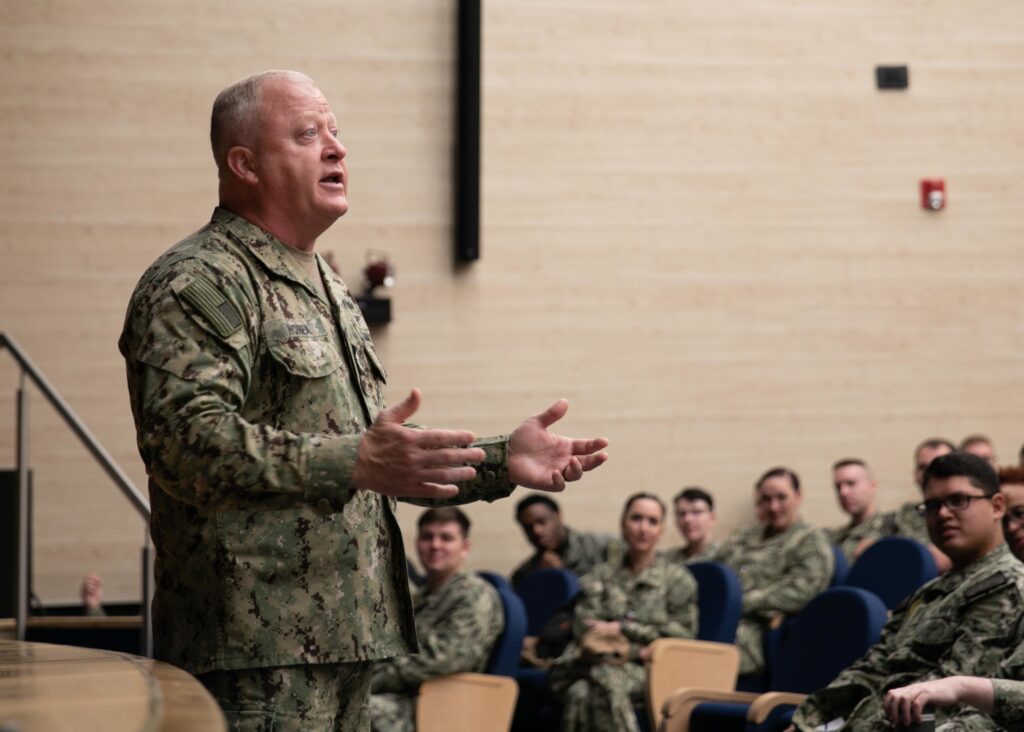
“The light amphibious warship will birth a new class of ships,” Annibale said. “And the inventory goal is 18 [for the] initial capacity. That’s mapped to the Marine Littoral Regiment.”
Last April, SEAPOWER reported that the Marine Corps planned to least two commercial ships over the next two years to experiment with the LAW ship concept known as landing ship medium (LSM), according to Brig. Gen. Mark Clingan, assistant deputy commandant for Combat Development and Integration and deputy commanding general of Marine Corps Combat Development Command.
A LAW/LSM ship would be designed to carry 75 Marines in a Marine Littoral Regiment and land them ashore in an expeditionary environment. These ships would be less attractive targets for enemy missiles than a larger amphibious warfare ship, Clingan remarked.
Annibale also said that he remained focused on a capacity goal of 31 amphibious ships for the Marines: 10 LHA/LHD large-deck amphibs, and 21 LPD/LSD amphibious transport docks.
Mine Countermeasures
Another priority is to deliver the Mine Countermeasures Mission (MCM) package for the Independence-class Littoral Combat Ship (LCS), he said.
“The MCM mission package is on the cusp of IOC [initial operational capability],” Annibale said. “The USS Cincinnati is doing trials on it.
“We don’t want to put the man in the minefield, we want to put the sensor in the minefield,” he continued, noting that allies such as the Dutch and Belgians are involved from a NATO standpoint. “So very exciting times on all the capabilities that go with the MCM mission package.”
CNO Gilday: Shipbuilders Need to Deliver Vessels Faster
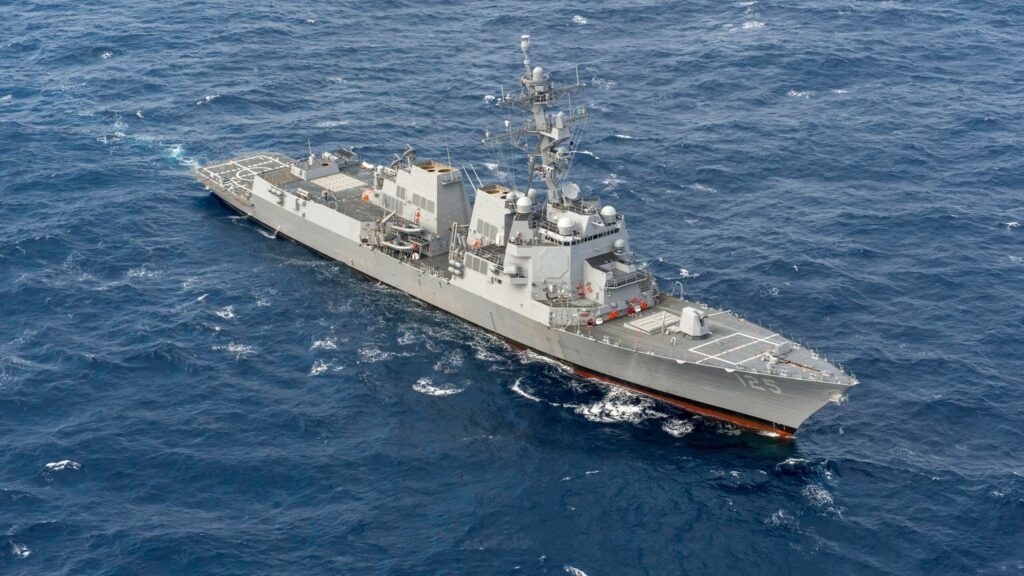
The Flight III Arleigh Burke-class guided-missile destroyer Jack H. Lucas, shown on builder’s trials. Congress is pushing the Navy to procure three destroyers per year.
*******
ARLINGTON, Va. — The nation’s shipyards need to accelerate their delivery of ships to demonstrate they deserve the maxed-out funding they have received from Congress, Chief of Naval Operations Michael Gilday said Jan. 10 at the Surface Navy Association‘s Annual Symposium.
Gilday said he thought the Navy’s $27.5 billion proposal for shipbuilding in the most recent budget was the maximum that the seven shipyards — five of which build surface ships — could handle, but Congress authorized an additional $4 billion on top of that. One of the main drivers? Congress wants the Navy to buy three destroyers per year.
Now, the shipbuilding industry needs to show that they can produce at the rate the funding requires, he said.
Navy Not Getting What it Pays For
“We are not necessarily getting what we are paying for with respect to two or three ships per year,” Gilday said, noting that industry is also falling short of the two-attack-submarines-per-year production goal. “Right now, I see them a little bit behind on some of our production lines.”
In November, Congress approved the increase to three destroyers per year as part of the National Defense Authorization Act for 2023, which authorized $816.7 billion in overall defense spending. The Navy asked for two ships as part of a nine-ship multi-year destroyer proposal with an option for a 10th. However, Congress approved a more aggressive buy of 15 destroyers over five years, which would require three per year. HII’s Ingalls Shipbuilding and General Dynamics’ Bath Iron Works would be the primary shipbuilders.
The Navy has faced continued questions about industrial capacity to build these ships, and the service is likely to face scrutiny in the coming years over shipyard production rates.
MCPON on Recruiting: ‘Pond Has Less Fish in It,’ Service Needs ‘Good Stories’ About Navy
NAVAL SUPPORT ACTIVITY NAPLES, Italy (Nov. 4, 2022) Master Chief Petty Officer of the Navy James Honea speaks to Sailors assigned to Naval Support Activity Naples, Italy during an all-hands call, Nov. 4, 2022. Honea conducted a fleet visit to answer questions and discuss his priorities on topics that included: warfighting competency, mental health, education, and quality of life. (U.S. Navy Photo by Mass Communication Specialist 2nd Class Almagissel Schuring)
*******
ARLINGTON, Va. — The Navy is working hard to address recruitment and retention but struggles with the fact that “the pond has less fish in it,” so more “good stories” need to be told about the Navy, said the Master Chief Petty Officer of the Navy at the Surface Navy Association’s annual symposium here on Jan. 10.
Navy Recruiting Plan
During a media roundtable, MCPON James M. Honea told reporters that recruiters “have a really good plan” but can only do so much.
“I need more of our good stories to be told about who we are and the good things we have going on,” he said. “Serving our nation in any capacity possible is a great thing.”
Military officials have blamed external factors such as a low unemployment rate for difficulty in recruiting, although retention has lagged as well.
When asked about how the Navy is dealing with retention, Honea said that he has toured Norfolk to “understand what the barriers were” and interact with sailors directly about their concerns.
“We’ve been addressing those concerns and finding sensible ways to solve those problems,” he said. “Along the way we’re trying to decide what are the quick and easy solutions to some of those problems.”
Suspending High-Year Tenure
The Navy has taken some steps to try to deal with the problem of retention. In December, the service reportedly suspended enlisted high-year tenure for two years — a policy that moved active-duty sailors to the reserve if they did not meet benchmarks.
Honea said that addressing issues like access to quality medical care, eliminating bureaucracy, and doing other things to ensure a positive experience for sailors are some of his top priorities for helping with retention.
“We can do better as a Navy,” he said. “We’re getting better — not as quickly as I’d like. … Those are very basic things we should be much better at, so it hurts me that we are not as good as [we can be].”
SECNAV Announces Sponsors for the Future USS Telesforo Trinidad
SECNAV Announces Sponsors for the Future USS Telesforo Trinidad
WASHINGTON — Secretary of the Navy (SECNAV) Carlos Del Toro announced the sponsors for the future Arleigh Burke-class guided-missile destroyer USS Telesforo Trinidad (DDG 139), Jan. 10 during a celebration at the Rayburn House Office Building.
The ship’s two sponsors are Ms. Christine Trinidad, one of the great-granddaughters of Medal of Honor recipient Petty Officer 2nd Class Telesforo de la Cruz Trinidad; and retired Rear Adm. Connie Mariano, the first Filipino-American in history to become a U.S. Navy Admiral, and the first military woman in American history to be appointed White House Physician.
“A ship’s commanding officer will change hands, and the crew will come and go, but the sponsors hold a special bond through the ship’s entire lifetime,” said Del Toro. “I am excited for the enduring partnership that Christine and Connie will build with this ship and the crew in the years to come.”
Telesforo Trinidad was a fireman in the U.S. Navy who received the Medal of Honor for his actions in Mexican waters near La Paz, on board the USS San Diego on Jan. 21, 1915. He is the second service member, and the first and only sailor of Asian descent to receive the award in peacetime. Trinidad served during both World Wars before retiring to the Philippines.
IMSC Task Force Completes Maritime Exercise with Unmanned Systems, A.I.
MANAMA, Bahrain — The International Maritime Security Construct (IMSC) completed a three-day maritime exercise in the Arabian Gulf, Jan. 9, integrating unmanned systems and artificial intelligence during a naval drill for the second time in six months, U.S. Naval Forces Central Command Public Affairs said in a Jan. 9 release.
IMSC’s operational task force, Coalition Task Force (CTF) Sentinel, completed exercise Sentinel Shield with U.S. Navy guided-missile destroyer USS Delbert D. Black (DDG 119) and two Saildrone Explorer unmanned surface vessels from U.S. 5th Fleet
“We planned this exercise to demonstrate how artificial intelligence and unmanned systems effectively increase CTF Sentinel’s maritime domain awareness to maintain maritime security in Middle Eastern waters,” said Royal Saudi Navy Capt. Alamri Assem, CTF Sentinel’s director of plans.
During the exercise, unmanned and artificial intelligence systems operated in conjunction with Delbert D. Black and CTF Sentinel’s command center ashore in Bahrain. The systems were able to help locate and identify objects in nearby waters and relay visual depictions to watchstanders.
“Saildrones transmitted information on contacts of interest and our watch officers coordinated with the destroyer for further monitoring,” said U.S. Navy Capt. Brian Granger, CTF Sentinel’s deputy commander.
CTF Sentinel previously completed a similar exercise Aug. 23 when Royal Bahrain Naval Force ship RBNS Ahmed Al-Fateh (P20) and U.S. Coast Guard patrol boat USCGC Baranof (WPB 1318) participated with another Saildrone Explorer from U.S. 5th Fleet. The late-summer event was the first time IMSC planners specifically designed a Sentinel Shield exercise to integrate unmanned systems.
IMSC was formed in July 2019 in response to increased threats to freedom of navigation for merchant mariners transiting international waters in the Middle East. IMSC’s operational arm, CTF Sentinel, was established four months later to deter state-sponsored malign activity and reassure the merchant shipping industry in the Bab al-Mandeb and Strait of Hormuz.
IMSC membership currently includes 11 nations: Albania, Bahrain, Estonia, Latvia, Lithuania, Romania, Saudi Arabia, Seychelles, United Arab Emirates, United Kingdom, and the United States.
CAES Awarded LRIP2 Contract from Lockheed Martin to Support Navy’s AOEW System
ARLINGTON, Va. — CAES has been awarded a Low-Rate Initial Production Phase 2 (LRIP-2) contract from Lockheed Martin Corporation to supply its Phased Array Antennas to support Lockheed Martin’s Advanced Off-Board Electronic Warfare (AOEW) system, CAES announced in a Jan. 5 release. The announcement follows LRIP-1 contract that CAES was awarded earlier this year.
“We’re honored to continue our work with Lockheed Martin to bring critical electronic warfare capabilities to the U.S. Navy,” said Mike Kahn, CAES president and CEO. “Our unique combination of longstanding RF experience and next generation electronic warfare technology allows us to continue to be a trusted partner of choice.”
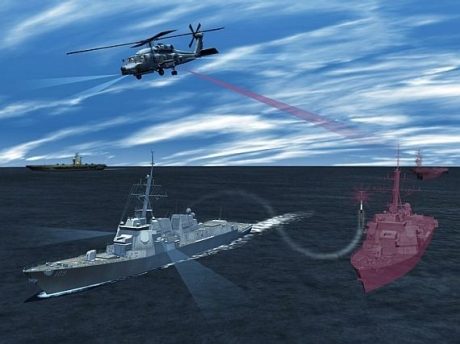
The AOEW program delivers electronic surveillance and attack capabilities for U.S. Navy Ships. The AOEW system is a helicopter-borne pod that has the ability to work independently or with the ship’s onboard electronic surveillance sensor, AN/SLQ-32(V)6, which also features CAES Antennas. The AOEW can be carried aloft by Navy MH-60R/S Seahawk helicopters.
USCGC Frederick Hatch Completes Expeditionary Patrol in Oceania
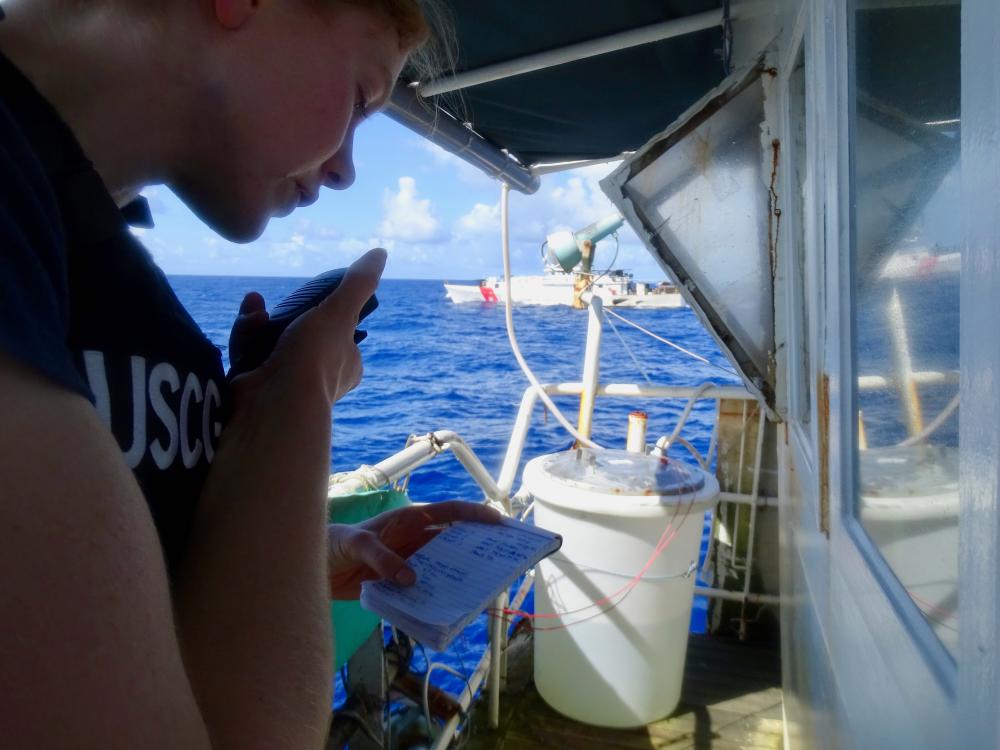
SANTA RITA, Guam — The crew of the USCGC Frederick Hatch (WPC 1143) completed a 41-day 7100-nautical mile expeditionary patrol throughout Oceania on Dec. 23, U.S. Coast Guard Forces Micronesia / Sector Guam said in a Jan. 6 release.
Under Operations Rematau and Blue Pacific, this patrol countered illegal, unreported, and unregulated fishing in the exclusive economic zones of the Federated States of Micronesia, the Republic of the Marshall Islands, and the Republic of Nauru by enforcing applicable laws, regulations, and individual countries’ sovereignty. The crew strengthened partnerships through established bilateral maritime law enforcement agreements, shiprider operations, subject matter exchanges, and community engagements.
“This patrol exemplified the operational advantage the Fast Response Cutter provides the Coast Guard in Oceania, displaying our ability to successfully complete fisheries enforcement and search and rescue missions over 1,800 nautical miles from home. Mixed with fantastic port calls and impactful community relations events, the last 41 days were a testament to the Hatch crew’s adaptability and diligence that made this patrol so successful. It has been an honor to sail with each of them. Making it home for Christmas is a great reward, especially after being away for Thanksgiving,” said Lt. Patrick Dreiss, USCGC Frederick Hatch’s commanding officer.
The crew hosted students from high schools and colleges as well as community members during their port calls to share the missions of the U.S. Coast Guard and provide a look at the ship itself. They also participated in local sporting events and cultural activities. When departing the Republic of the Marshall Islands, the team took on an additional temporary crewmember, Staff Sgt. Gary Likiak, U.S. Army, and part of the local embassy team. Likiak rode along to Kosrae, which is also home for him – the first time he’s been home in six years.
“Reinvigorating our bi-lateral agreements with our partners in the region after COVID-19 was the main objective of this patrol, and our successes with shipriders aboard and warm hospitality received at each island both allowed us to achieve this goal,” said Dreiss.
Of note, on this patrol, the Frederick Hatch team hosted shipriders from the maritime enforcement branches of the FSM, RMI, and Nauru governments. This activity was the first time shipriders could accompany U.S. Coast Guard crews in several years as Pacific Island partners resume normal operations after limiting travel as a COVID precaution.
The team conducted 16 boardings, issued five warnings, and found no significant violations. The fishing vessels were tuna longliners and purse seiners.
On Dec. 17, the Frederick Hatch crew, after departing Kosrae, enacted the newly expanded agreement for maritime law enforcement operations, conducting two boardings on licensed fishing vessels operating in the FSM exclusive economic zone.
“It was very fulfilling to have an opportunity to enact the Expanded Maritime Law Enforcement Agreement for the first time after watching the program develop over the last year,” said Dreiss. “It provides the U.S. Coast Guard with another avenue to support our regional partners and continues to lay the groundwork for increasing Illegal, Unregulated, and Unreported Fishing enforcement in the region.”
The expanded agreement builds on the existing bilateral shiprider agreement between the two countries. It establishes procedures for authorizing the U.S. to conduct maritime law enforcement boardings on behalf of FSM to combat illicit maritime activity when an FSM law enforcement officer is not present. More specifically, the agreement provides a coordinating mechanism and process for U.S. law enforcement personnel to work with the FSM National Police, Division of Border Control and Maritime Surveillance to receive approval from the FSM to act under the agreement.
“This was an excellent warm-up of our bilateral relations and fisheries enforcement process following COVID. It was great to have local experts with us again and provide services to our FSM, RMI, and Nauru partners,” said Capt. Nick Simmons, the commander of U.S. Coast Guard Forces Micronesia/Sector Guam. “The successful application of the expanded agreement now allows us to support our partners better. FSM occupies more than one million square miles of the Pacific Ocean and ranges 1,700 miles from West (Yap) to East (Kosrae) with the enforcement team in Pohnpei. This agreement allows us to help our partners overcome the logistics that limited enforcement in the past when it is difficult to get a shiprider out to the field.”
The U.S. Coast Guard flags IUU-F as one of the top threats to oceans and a significant regional destabilizing factor. The United States continues to emphasize the ocean’s health and good governance, as evidenced by expanded measures to combat illegal fishing in the fiscal 2023 National Defense Authorization Act. Notable items include an expanded High Seas Drift Net Act, improvements to NOAA’s Seafood Import Monitoring Program, programs aimed at reducing the impacts of ships and other vessels on marine mammals, and a federal ban on buying or selling shark fins in the U.S.
The U.S. Coast Guard regularly exercises 11 bilateral fisheries law enforcement agreements on behalf of the United States with countries throughout the Pacific islands. Shiprider agreements allow maritime law enforcement officers to observe, board, and search vessels suspected of violating laws or regulations within a designated EEZ or on the high seas. These law enforcement activities bolster maritime law enforcement operations and maritime domain awareness and provide a mechanism to conduct integrated operations within the Pacific. This expanded agreement is the first of its kind. It seeks to overcome the challenges of the Oceania region’s vast distances while leveraging limited enforcement resources and the trust built between nations over decades.
The U.S. Coast Guard maintains strong partnerships with the maritime forces in the region through extensive training and subject matter expert exchanges. FSM, also known as the Big Ocean State, has one of the world’s largest EEZs, with waters rich in sea life. RMI, located halfway between Hawaii and Australia north of the equator, is an archipelago of 29 atolls, five low coral islands, and 1,151 islets that shares maritime borders with FSM, Kiribati, and Nauru.
RMI’s exclusive economic zone of 1.2 million square kilometers (463,322 square miles). Nauru is the smallest island nation and the third smallest country in the world, with around 10,000 inhabitants. Fishing is essential to their food security. FSM and RMI are signatories to a Compact of Free Association with the United States. They are Pacific Islands Forum Fisheries Association members and party to the South Pacific Tuna Treaty, as is Nauru.
In addition to fisheries enforcement, the Frederick Hatch crew conducted a search and rescue case medically evacuating a 31-year-old Vietnamese fisherman to a higher level of medical care in Pohnpei on Nov. 20.
The cutter’s boarding team learned of the fisherman’s injuries while conducting a bilateral fisheries boarding with an FSM Marine Police Officer aboard the fishing vessel Ocean Galaxy 195 nautical miles (224 statute miles) south of Pohnpei. The ship is a 69.4-meter (227-foot) purse seiner flagged out of Nauru. The fisherman reportedly fell 12 feet earlier the same day, sustaining a head and possible spinal injury. He was conscious and talking but lost feeling and motion in his right arm and both legs, exhibiting severe concussion symptoms.
“It was an absolute team effort by every member of Frederick Hatch to medevac the injured crewmember from the Ocean Galaxy successfully. Witnessing each crewmember perform at the highest level after completing two boardings earlier the same day to help a fellow mariner was awesome to watch,” said Dreiss.
Operation Rematau is how U.S. Coast Guard Forces Micronesia/Sector Guam supports the overarching Coast Guard endeavor Operation Blue Pacific to promote security, safety, sovereignty, and economic prosperity in Oceania. Rematau means people of the deep sea. It recognizes the wisdom of the Pacific Island Forum leaders in that securing the future requires long-term vision and a carefully considered regional strategy for the Blue Pacific Continent. Op Rematau reinforces U.S. commitment to working together to advance Pacific regionalism based on the Blue Pacific narrative. This action supports U.S. national security objectives, bolstering regional maritime governance and security.
The Frederick Hatch is the 43rd 154-foot Sentinel-class fast response cutter and is named for a surfman and lighthouse keeper who was a two-time Gold Life Saving Medal recipient. The Coast Guard commissioned the ship along with its sister ships, Myrtle Hazard (WPC 1139) and Oliver Henry (WPC 1140), in Guam in July 2021. These cutters are a vital part of the U.S. Coast Guard’s enduring regional presence serving the people of the Pacific by conducting 10 of the Service’s 11 statutory missions with a focus on search and rescue, defense readiness, living marine resources protection, and ensuring commerce through marine safety and ports, waterways, and coastal security.
7th Fleet Destroyer Conducts Transit of Taiwan Strait
TAIWAN STRAIT — The Arleigh Burke-class guided-missile destroyer USS Chung-Hoon (DDG 93) conducted a routine Taiwan Strait transit Jan. 5 (local time) through waters where high-seas freedoms of navigation and overflight apply in accordance with international law, U.S. 7th Fleet Public Affairs said in a Jan. 5 release.
“The ship transited through a corridor in the Strait that is beyond the territorial sea of any coastal State. Chung-Hoon’s transit through the Taiwan Strait demonstrates the United States’ commitment to a free and open Indo-Pacific,” the release said. “The United States military flies, sails and operates anywhere international law allows.”
General Dynamics Land Systems Delivers Advanced Reconnaissance Vehicle Prototype to U.S. Marine Corps
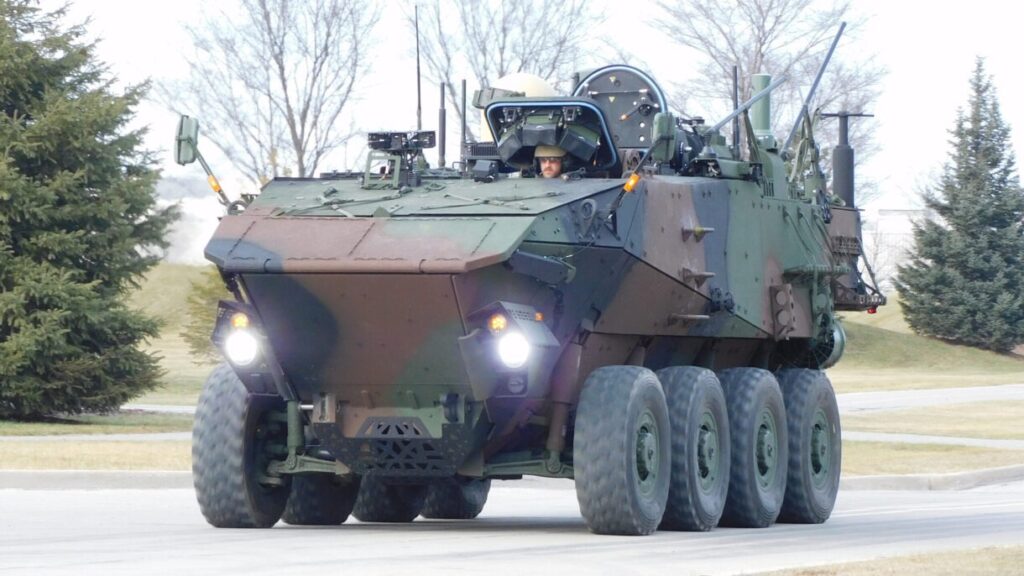
General Dynamics Land Systems Advanced Reconnaissance Vehicle
STERLING HEIGHTS, Mich. — General Dynamics Land Systems, a business unit of General Dynamics, submitted its Advanced Reconnaissance Vehicle (ARV) prototype to the U.S. Marine Corps for evaluation in the service’s ongoing competition, the company said in a release.
“We are proud to have delivered this transformational capability to the Marine Corps,” said Gordon Stein, General Dynamics Land Systems vice president and general manager of U.S. operations. “Our purpose-built ARV prototype is the fruition of several years of research and development internally and in collaboration with the USMC. We can’t wait for Marines to get their hands on this ARV and use it as their quarterback on the multi-domain battlefield.”
General Dynamics Land Systems’ ARV connects to an array of onboard and offboard sensors, uncrewed aerial vehicles, and will eventually include ground robotic systems.
Along with the ARV prototype, General Dynamics Land Systems also delivered a system integration lab, and a blast hull for survivability testing.
“We have continued to align with the Marine Corps’ 10-year transformational initiative, Force Design 2030, and our ARV capability furthers that objective,” said Phil Skuta, General Dynamics Land Systems director of strategy and business development for U.S. Marine Corps and Navy programs. “The ARV is highly mobile on land and in the water and will allow Marines to sense and communicate like never before. Our design also ensures growth margins and modular open architecture to rapidly incorporate new technology as it develops.”
French Warship Seizes Illegal Drugs in North Arabian Sea
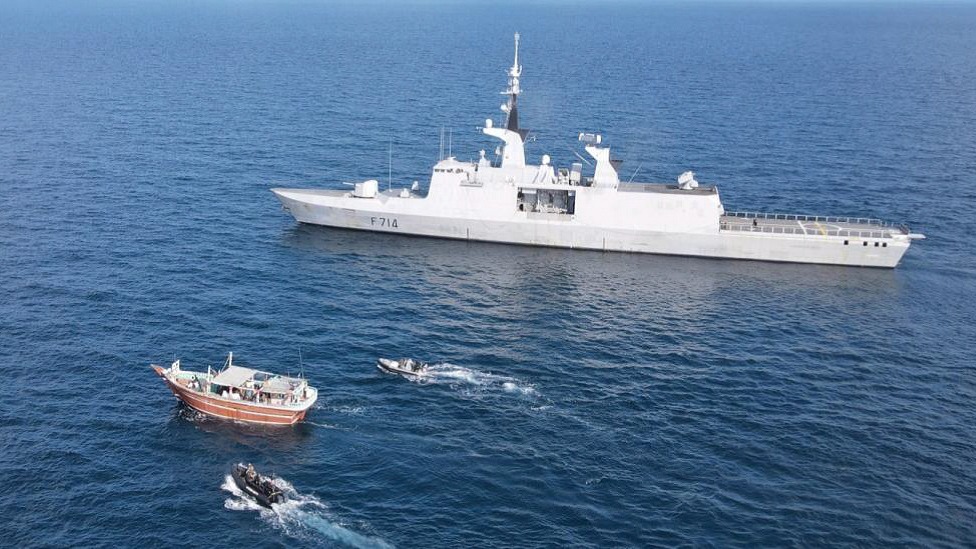
MANAMA, Bahrain — A French warship seized illegal drugs worth a total estimated U.S. street value of $24 million from a fishing vessel transiting international waters in the North Arabian Sea, Dec. 27, Combined Maritime Forces Public Affairs said in a Jan. 3 release.
French Marine Nationale frigate FS Guépratte (F714) was patrolling regional waters in support of Combined Task Force (CTF) 150 when it seized 3,492 kilograms of hashish and 472 kilograms of heroin from the fishing vessel.
Led by the Royal Saudi Navy, CTF 150 is one of four task forces organized under the Combined Maritime Forces (CMF), the largest international naval partnership in the world consisting of 34 member-nations.
CMF has seized nearly $1 billion worth of illicit narcotics since 2021 while patrolling international waters in the Middle East.
Guépratte previously seized 271 kilograms of heroin from another fishing vessel while patrolling the Gulf of Oman in February 2022.