Future Destroyer USS Sam Nunn Marks Start of Fabrication
HII has started fabrication for the future USS Sam Nunn. HII
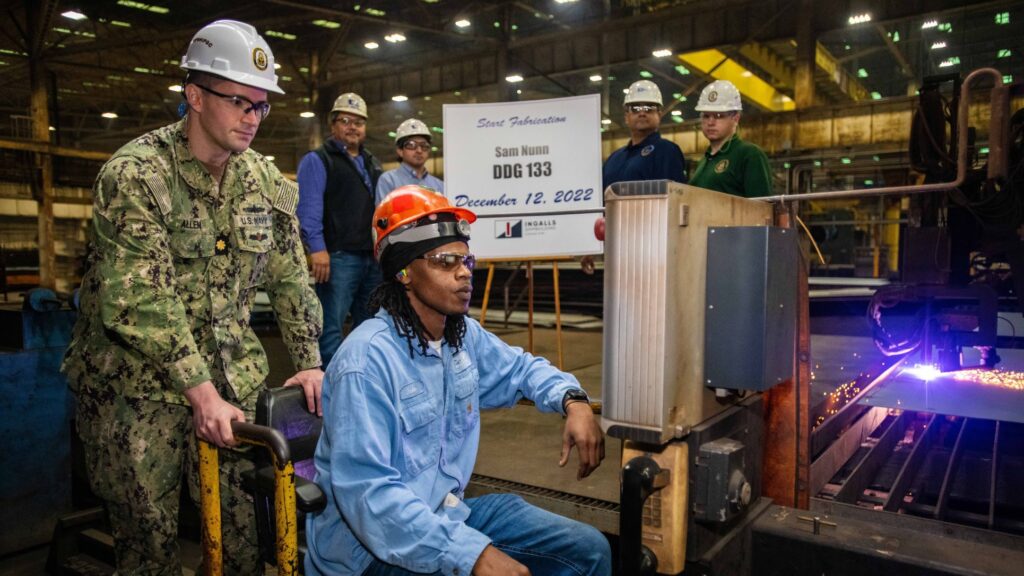
PASCAGOULA, Miss. — The U.S. Navy and HII marked the start of fabrication for the future USS Sam Nunn (DDG 133) with a ceremony at HII’s shipyard on Dec 12, Team Ships Public Affairs said in a Dec. 14 release.
DDG 133 will be a DDG 51 Flight III guided missile destroyer centered on the AN/SPY-6(V)1 Air and Missile Defense Radar and will provide greatly enhanced warfighting capability to the fleet. The Flight III baseline begins with DDGs 125-126 and continues with DDG 128 and follow-on ships.
The ship is named for Samuel Augustus Nunn Jr., a United States senator who represented Georgia from 1972 to 1997 and served as chairman of the United States Senate Committee on Armed Services and the Permanent Subcommittee on Investigations.
“The future USS Sam Nunn will provide 21st Century offensive and defensive warfighting capabilities for decades to come,” said Capt. Seth Miller, DDG 51 program manager, Program Executive Office (PEO) Ships.
In addition to Sam Nunn, HII’s Pascagoula shipyard is also currently in production on future destroyers Jack H. Lucas (DDG 125), Ted Stevens (DDG 128), Jeremiah Denton (DDG 129) and George M. Neal (DDG 131).
Standing NATO Maritime Group Two Transfers Flagship in Rota
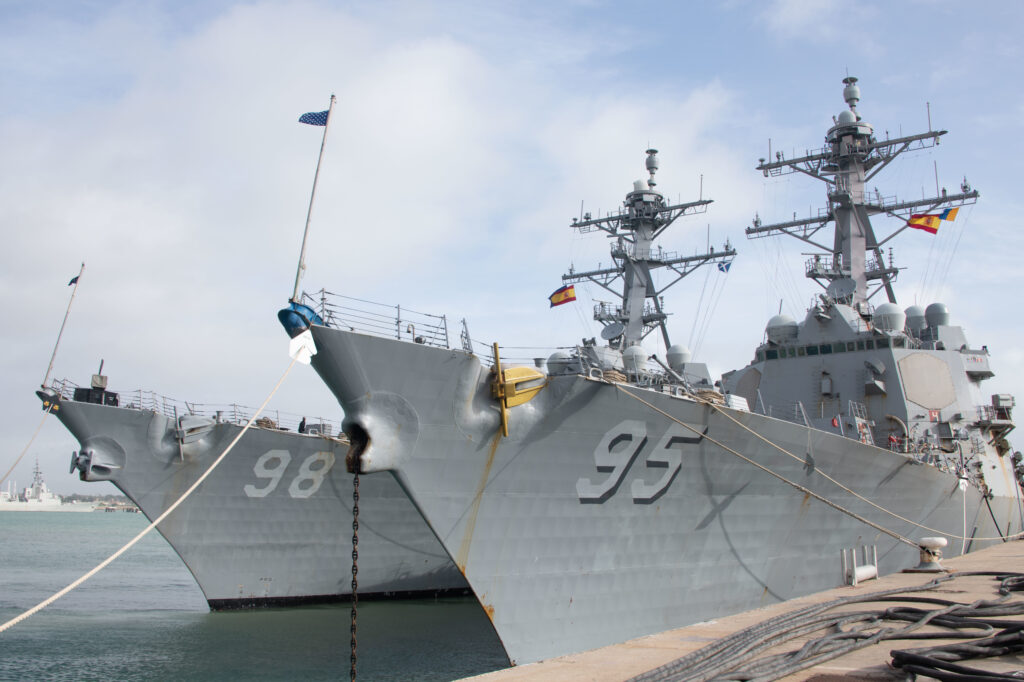
Standing NATO Maritime Group Two transfers its flagship from USS Forrest Sherman (DDG 98) to USS James E Williams (DDG 95) as USS Forrest Sherman completes its deployment and prepares to return to homeport in Norfolk, VA. U.S. NAVY / Petty Officer 3rd Class Ezekiel Duran
ROTA, Spain — Standing NATO Maritime Group Two (SNMG2) transferred its flagship as scheduled from U.S. Navy Arleigh Burke-class guided-missile destroyer USS Forrest Sherman (DDG 98) to U.S. Navy Arleigh Burke-class guided-missile destroyer USS James E. Williams (DDG 95) at Naval Station Rota on Dec. 13, said Cmdr. Fernando Estrella, NATO Allied Maritime Command, in a release.
USS Forrest Sherman assumed flagship duties for SNMG2 on July 1.
While operating in the Euro-Atlantic area she provided continuous maritime capability by operating throughout the Mediterranean Sea, Ionian Sea, Adriatic Sea, Aegean Sea and Tyrrhenian Sea. Her vigilance activities stretched from the Straits of Gibraltar to the Syrian Channel and as far as the northern Adriatic Sea.
“I can’t express enough how proud I am of the Sailors on board USS Forrest Sherman,” said U.S. Navy Rear Admiral Scott Sciretta, commander of SNMG2. “They served admirably, meeting and exceeding each and every operational commitment and challenge. Their persistent presence as the flagship for an international task group served as an active deterrent to our adversaries and ensured peace and respect for national sovereignty, territorial integrity, human rights and international law. As a result of their efforts, the NATO Alliance is stronger than ever and we will continue to demonstrate how our combat-credible, forward-deployed force is the most potent, flexible and versatile instrument of military power. To the Sailors of Forrest Sherman and their families whose sacrifices allow them to serve, thank you.”
USS Forrest Sherman demonstrated a high level of interoperability by serving as the flagship for a task group of 21 different rotating ships from seven NATO nations. Additionally, she led the task group as it integrated with various other Allied maritime groups to include Standing NATO Mine Countermeasures Group Two (SNMCMG2), the U.S. Navy Harry S. Truman Carrier Strike Group (HSTCSG) and George H.W. Bush Carrier Strike Group (GHWBCSG), the French Navy Charles De Gaulle Carrier Strike Group, the Italian Navy Cavour Carrier Strike Group and the Royal Navy HMS Albion Littoral Readiness Group. Throughout her deployment she visited nine different ports in seven countries, proudly flying the NATO flag, and serving as a visible reminder of the Alliance’s solidarity and cohesion afloat.
“Serving as the flagship for SNMG2 has been an incredible privilege,” said U.S. Navy Cmdr. Lawrence Heyworth IV, commanding officer of USS Forrest Sherman. “The crew of the Forrest Sherman enjoyed working closely with ships and Sailors from 12 different nations throughout this deployment, and we are proud of the interoperability and interchangeability we have developed with our NATO Allies and partners.”
USS Forrest Sherman is scheduled to complete her six-month deployment and return to her homeport in Norfolk, Virginia, in the United States. USS James E. Williams is scheduled to serve as SNMG2’s flagship throughout the remainder of her deployment.
“The crew of James E. Williams is prepared and ready to engage the challenges that lie ahead as we assume flagship duties for SNMG2,” said U.S. Navy Commander Robert Ireland, commanding officer of USS James E. Williams. “We look forward to continuing to strengthen our relationship with NATO Allies and partners while operating in the Euro-Atlantic area.”
As a NATO task group, SNMG2 prioritizes its mandate to enhance the collective readiness, responsiveness, deployable readiness, integration and interoperability of its forces. Its focus is on deterrence and defense against all adversaries in the maritime domain, upholding freedom of navigation, securing maritime trade routes and protecting the main lines of communication.
SNMG2 is a multinational integrated task group that projects a constant and visible reminder of the Alliance’s solidarity and cohesion afloat. This continuous maritime capability performs a wide range of tasks, including exercises and real-world operations in periods of crisis and conflict.
SNMG2 is one of four Standing Naval Forces that operate under NATO Allied Maritime Command, headquartered in Northwood, United Kingdom.
Future USS Carl Levin Successfully Completes Acceptance Trials
The future USS Carl M. Levin (DDG 120) returned to General Dynamics Corp’s Bath Iron Works Bath shipyard from acceptance trials, flying three brooms signaling clean sweeps of performance tests. GENERAL DYNAMICS
Bath, Maine — The future USS Carl M. Levin (DDG 120) successfully completed acceptance trials on Dec. 9, returning to General Dynamics Corp’s Bath Iron Works (BIW) Bath shipyard after spending two days at sea, Team Ships Public Affairs said in a Dec. 12 release.
During acceptance trials, the ship and its crew performed a series of demonstrations for review by the U.S. Navy’s Board of Inspection and Survey (INSURV). These demonstrations are used by INSURV to validate the quality of construction and compliance with Navy specifications and requirements prior to delivery of the ship to the U.S. Navy. Many of the ship’s onboard systems, including navigation, damage control, mechanical and electrical systems, combat systems, communications and propulsion applications, were tested to validate performance met or exceeded Navy specifications.
“The future USS CARL M. LEVIN performed exceptionally at sea and is ready to deliver to the Navy early next year,” said Capt. Seth Miller, DDG 51 program manager, Program Executive Office (PEO) Ships. “The Navy is excited to welcome yet another of these multi-mission warships to our Sailors.”
DDG 120 is named for the late Michigan Senator, Carl M. Levin, who served in the U.S. Senate for 36 years from 1979-2015. As the longest serving senator in Michigan state history, Levin became a staunch supporter of the armed services through his work and leadership as Chairman and Ranking Member of the Senate Committee on Armed Services.
As a Flight IIA destroyer, DDG 120 is equipped with the Aegis Baseline 9C2 Combat System, which includes Integrated Air and Missile Defense capability and enhanced Ballistic Missile Defense capabilities. This system delivers quick reaction time, high firepower and increased electronic countermeasures capability against a variety of threats.
The shipyard is also continuing production on future destroyers John Basilone (DDG 122), Harvey C. Barnum Jr. (DDG 124), Patrick Gallagher (DDG 127), Louis H. Wilson Jr. (DDG 126) and William Charette (DDG 130).
U.S. Navy Retrieves Artemis I Orion Spacecraft
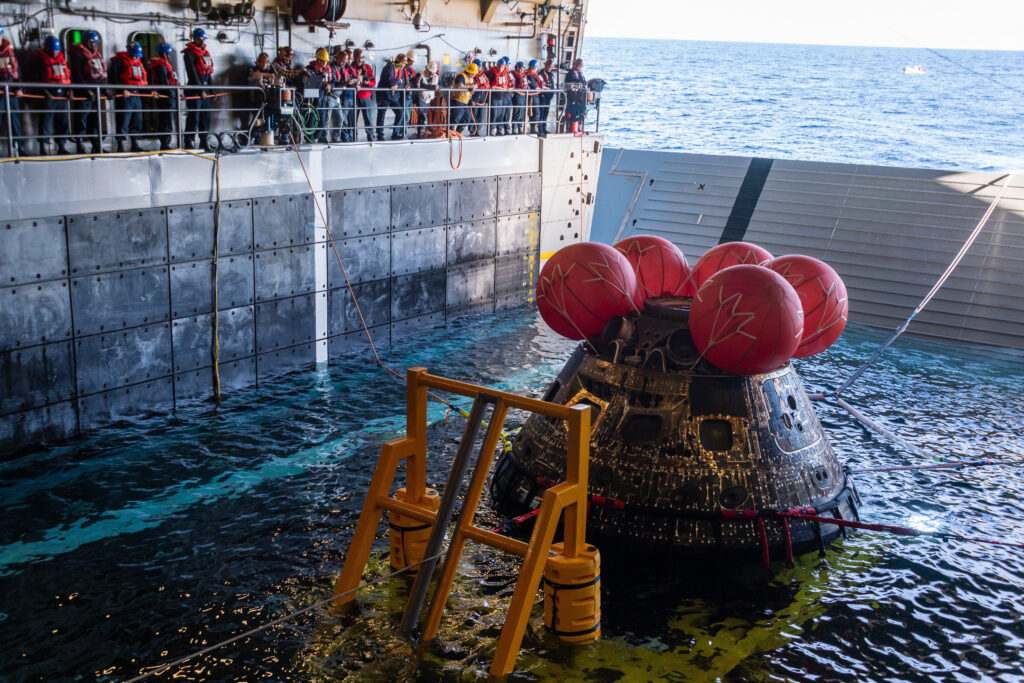
Sailors aboard the amphibious transport dock USS Portland (LPD 27) use a line load attenuating mechanism assembly to pull the NASA Artemis I Orion spacecraft into the well deck, Dec. 11, 2022. U.S. NAVY/ Mass Communication Specialist 2nd Class Devin Kates
SAN DIEGO — Amphibious transport dock USS Portland (LPD 27) retrieved the Artemis I Orion spacecraft in coordination with multiple organizations including NASA, U.S. Space Command, fellow U.S. Navy ship Independence-variant littoral combat ship USS Montgomery (LCS 8), Helicopter Sea Combat Squadron (HSC 23) and Explosive Ordnance Disposal Expeditionary Support Unit (EODESU) 1, Dec. 11, Expeditionary Strike Group Three said in a release.
NASA chose to use these Navy surface ships due to their adaptable capabilities. Portland’s medical facilities provide at-sea support for ground crews and astronauts as needed, and embarked helicopters are poised to aid flight hardware recovery, conduct medical evacuation to shore and collect imagery. Portland is equipped with extensive communication suites, enabling the multi-agency landing and recovery team to talk with the flight control team in Texas and NASA’s exploration ground systems team at the Kennedy Space Center in Florida.
“I am extremely proud of our team’s ability to execute a historic moment in history by successfully recovering the Orion capsule,” said Capt. John Ryan, commanding officer of Portland. “Each organization that participated in this mission underwent an extensive amount of training and our ability to work together as a unit demonstrates our adaptability and effectiveness as an amphibious platform.”
Montgomery, a surface warfare mission package LCS, provides flexible surface warfare capabilities like 11-meter rigid-hull inflatable boats (RHIBs) that could serve as surface connectors for ship-to-ship movements, flight hardware retrieval, and to move the capsule from the sea into the ship. The ship’s mission bay is large enough to store the capsule, and the flight deck can support MH-60S/R Sea Hawk helicopters or MQ-8C Fire Scouts. Montgomery was responsible for providing security in the area of operation and served as a back-up source of small boats.
“Our Navy has a long history of working with NASA spaceflight programs, and the Montgomery crew was truly honored to be a part of this historical partnership,” said Cmdr. Edison C. Rush III, commanding officer of Montgomery “The successful capture of the Orion only motivates our crew to continue training and increasing our capabilities as a littoral combat ship.”
Artemis I is the first integrated test of NASA’s deep space exploration systems. Artemis I is the first in a series of increasingly complex missions. It is an uncrewed flight test that will provide a foundation for human deep space exploration and demonstrate our commitment and capability to return humans to the moon and extend beyond.
“We are extremely excited to have worked with the U.S. Navy to accomplish this mission,” said Melissa Jones, NASA Landing and Recovery Director. “For years our teams have trained together for this and could not be happier with how well the recovery mission was executed.”
Portland began early morning efforts to recover the Orion capsule with the launch of four small boats and two combat rudder raiding craft. The small crafts located the capsule in the open ocean, inspected the capsule and rigged lines to the outside of the capsule to facilitate the movement toward the ship. Aboard those craft were Navy Expeditionary Combat Command’s EODESU-1 divers, who received vigorous training at NASA Johnson Space Center’s Neutral Buoyancy Laboratory. The highly trained Navy divers are proficient in open water and small boat procedures, adaptable to changing situations, excel at on-the-spot problem solving and experts at salvage and towing operations. These expeditionary capabilities make them the ideal personnel to assist in the safe recovery and transportation of the Orion capsule from the ocean to Portland’s well deck. Following the launch of the small boats, Navy and NASA personnel rigged tending lines and guided the capsule through the water to Portland. The Orion capsule was then winched into place on the Orion recovery cradle assembly aboard the ship.
Portland and Montgomery are assigned to Expeditionary Strike Group. ESG 3 comprises four amphibious squadrons, 15 amphibious warships and eight naval support elements including approximately 18,000 active-duty and reserve Sailors and Marines. As the deputy commander for amphibious and littoral warfare, U.S. 3rd Fleet, the ESG 3 commander also oversees Mine Countermeasures Group 3 and the 14 littoral combat ships and two subordinate divisions under Littoral Combat Ship Squadron 1. ESG 3 is postured in support of U.S. 3rd Fleet as a globally responsive and scalable naval command element, capable of generating, deploying and employing naval forces and formations for crisis and contingency response, forward presence and major combat operations focusing on amphibious operations, humanitarian and disaster relief and support to defense civil authorities and expeditionary logistics.
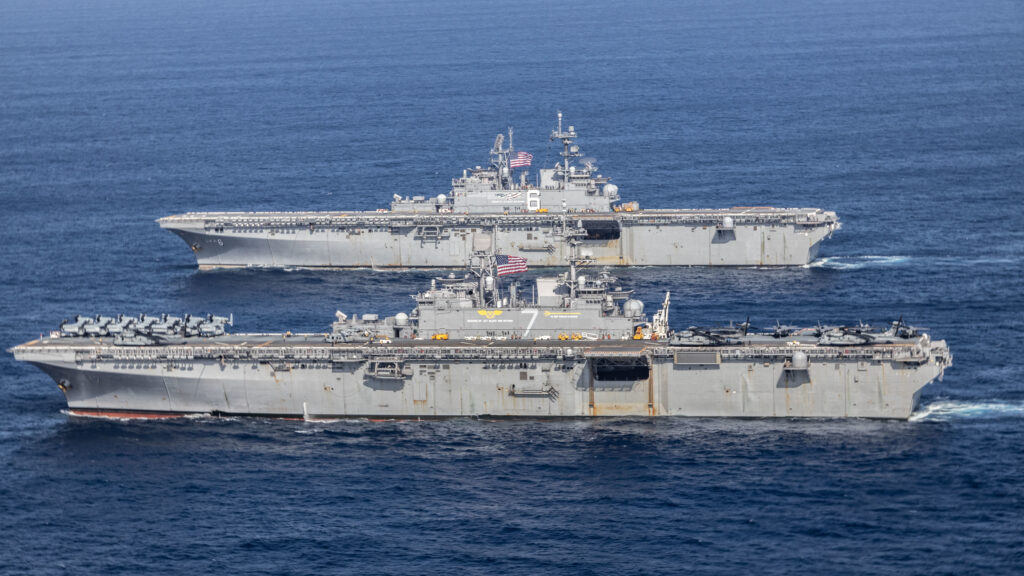
The amphibious assault ship USS Tripoli (LHA 7) sails with the amphibious assault ship USS America (LHA 6) during a photo exercise in the Philippine Sea, Sept. 17, 2022. The future USS Fallujah (LHA 9) will be similar to these ships but equipped with a well deck. U.S. MARINE CORPS / Lance Cpl. Christopher Lape
WASHINGTON — Secretary of the Navy (SECNAV) Carlos Del Toro announced Dec. 13 that a future America-class amphibious assault ship will be named USS Fallujah (LHA 9).
The future USS Fallujah will commemorate the First and Second Battles of Fallujah, American-led offensives during the Iraq War. The name selection follows the tradition of naming amphibious assault ships after U.S. Marine Corps battles, early U.S. sailing ships or legacy names of earlier carriers from World War II.
“It is an honor to memorialize the Marines, Soldiers and coalition partners that fought valiantly and those that sacrificed their lives during both battles of Fallujah,” said Del Toro. “This namesake deserves to be in the pantheon of iconic Marine Corps battles and the LHA’s unique capabilities will serve as a stark reminder to everyone around the world of the bravery, courage and commitment to freedom displayed by those who fought in the battle.”
The First Battle of Fallujah occurred in April 2004 in an effort to capture or kill insurgents responsible for the killing of four U.S. contractors. The Second Battle of Fallujah, fought between Nov. 7 and Dec. 23, 2004, was a major U.S. led offensive to retake control of the city from insurgents and foreign fighters. With over 100 coalition forces killed and over 600 wounded, Operation Phantom Fury is considered the bloodiest engagement of the Iraq War and the fiercest urban combat involving U.S. Marines since the Vietnam War’s Battle of Hue City.
“Under extraordinary odds, the Marines prevailed against a determined enemy who enjoyed all the advantages of defending in an urban area,” said Commandant of the Marine Corps Gen. David H. Berger. “The Battle of Fallujah is, and will remain, imprinted in the minds of all Marines and serves as a reminder to our Nation, and its foes, why our Marines call themselves the world’s finest.”
Along with the ship’s name, Del Toro announced the sponsor for the future USS Fallujah as Mrs. Donna Berger, who, in her role, will represent a lifelong relationship with the ship and crew.
Donna Berger is not only the spouse of Gen. David H. Berger, 38th Commandant of the Marine Corps, but also an avid advocate and mentor for military families.
America-class amphibious assault ships are designed to support Marine Corps Operational Maneuver From the Sea and Ship to Objective Maneuvers. The America-class ships replaced all of the decommissioned Tarawa-class LHAs and are now optimized for aviation ability, accommodating the Marine Corps’ future Air Combat Element while adding additional aviation maintenance capabilities and increasing fuel capacities and extra cargo storage. With the unique inherent powers of the amphibious assault ships, they are often called upon to also support humanitarian and other contingency missions upon short notice.
HII Hosts Marine Corps Commandant at Ingalls Shipbuilding
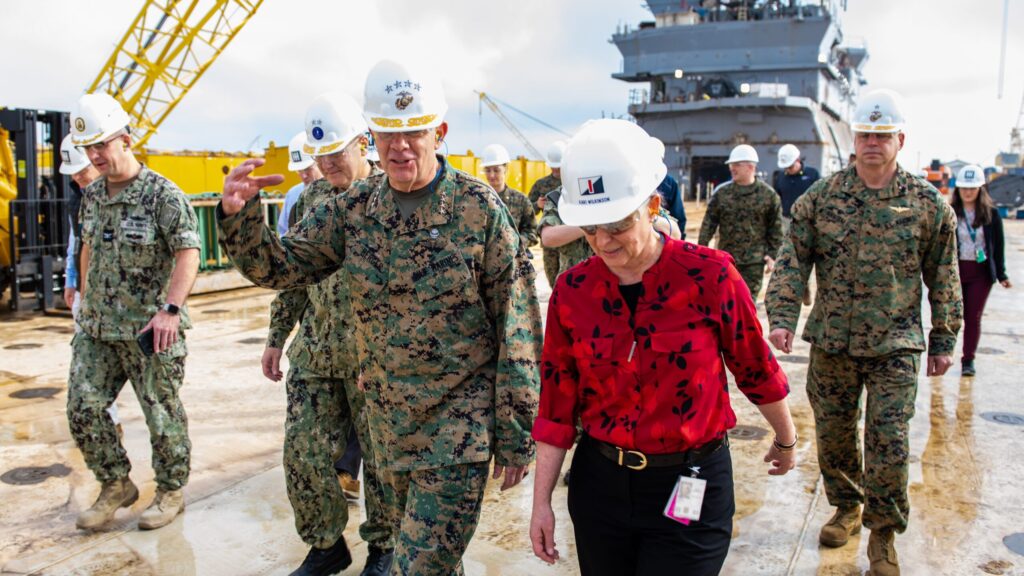
Gen. David H. Berger, the 38th commandant of the U.S. Marine Corps, walks the grounds of the HII Ingalls shipyard, meeting leadership, including Ingalls president Kari Wilkinson. HII
PASCAGOULA, Miss. — HII’s Ingalls Shipbuilding division hosted Gen. David H. Berger, the 38th commandant of the U.S. Marine Corps, on Dec. 12, the company said in a release. Berger met with Ingalls leadership and toured the shipyard, including two amphibious ships currently under construction, Bougainville(LHA 8) and Richard M. McCool Jr. (LPD 29).
“We value the opportunity to showcase our talented shipbuilders and state-of-the-art facility to the Marine Corps and Navy,” Ingalls Shipbuilding President Kari Wilkinson said. “It’s a great day when our customers see first-hand the work we are completing to support their service, and when we can hear directly from them on requirements.”
As the sole builder of the entire San Antonio class of ships, Ingalls has delivered 12 San Antonio-class ships to the Navy and has three more under construction, including Richard M. McCool (LPD 29), Harrisburg(LPD 30) the first Flight II LPD and Pittsburgh(LPD 31). The shipyard is also building large-deck amphibious ships for the Navy and Marine Corps, delivering a total of 15 ships (Tarawaclass, LHA 1-5; Waspclass, LHD 1-8; and most recently Americaclass, LHA 6 and LHA 7). The large-deck amphibious ship production line remains online and efficient with the ongoing construction of Bougainville (LHA 8) and LHA 9.
“It’s always a good day when you get to see amphibious warships being built,” said Gen. Berger, commandant of the U.S. Marine Corps. “Amphibious ships are critical for the Marine Corps’ ability to modernize for a potential near-peer fight while we still perform our daily crisis response missions around the globe — we need amphibs for all our missions.”
Ingalls has designed, built and maintained amphibious ships, destroyers and cutters for the U.S. Navy, Marine Corps and the U.S. Coast Guard for nearly 85 years. Recently, nearly $1 billion was invested in the infrastructure, facility and toolsets at Ingalls enabling shipbuilders, improving product flow and process efficiency, and enhancing product quality. Ingalls is supported by over 700 suppliers across 49 states. As the largest supplier of U.S. Navy surface combatants, Ingalls is simultaneously building four classes of ships and has pioneered the development and production of technologically advanced, highly capable ships for the surface Navy fleet for decades.
U.S. Navy Awards $13.5 Million for BAE Systems’ Smart D2 Technology
AUSTIN, Texas — The U.S. Navy has awarded BAE Systems $13.5 million to incorporate its Smart D2 technology as part of the U.S Navy’s ALE-47 Common Carriage program which increases expendable payload capacity as the service converts from round to square countermeasures, the company said in a Dec. 13 release. The contract is an Other Transaction Agreement (OTA) through the Naval Aviation Systems Consortium (NASC). This is the first purchase of Smart D2 technology by the Department of Defense (DoD).
“Aircraft survivability technology is in a race against emerging threats,” said Don Davidson, director of the Advanced Compact Electronic Warfare Solutions product line at BAE Systems. “Smart D2 elevates legacy systems to the technology capabilities of next-generation smart countermeasures.”
The Smart D2 technology can be integrated into an aircraft’s existing ALE-47 Airborne Countermeasures Dispenser System — the trusted system of choice for aircraft survivability among U.S. armed forces and international allies. More than 4,000 ALE-47 systems have been installed in over 30 countries.
Instead of replacing an aircraft’s entire ALE-47 system, Smart D2 technology allows for the replacement of key elements — the programmer, sequencer, dispenser and expendables. The programmer contains a regularly-updated database of known threats and identifies the appropriate payload, quantity, and dispensing intervals of each countermeasure. It also provides two-way communication of mission-critical information to enable pilots to make more informed decisions on the spot.
Smart D2 technology supports the U.S. Navy conversion to countermeasure expendables with the same square form factor as the U.S. Air Force and the U.S. Army. The Smart D2 sequencer and square style dispenser are a form and fit replacement to the current ALE-47 sequencer and dispenser for the U.S. Navy’s effort under the NASC OTA. Smart D2 will be deployed on USN rotary and fixed-wing aircraft and is also designed to operate on future platforms.
Work on Smart D2 under the ALE-47 Common Carriage program is underway at BAE Systems’ state-of-the-art facility in Austin, Texas.
The Netherlands Selects KONGSBERG’s Naval Strike Missile for Frigates
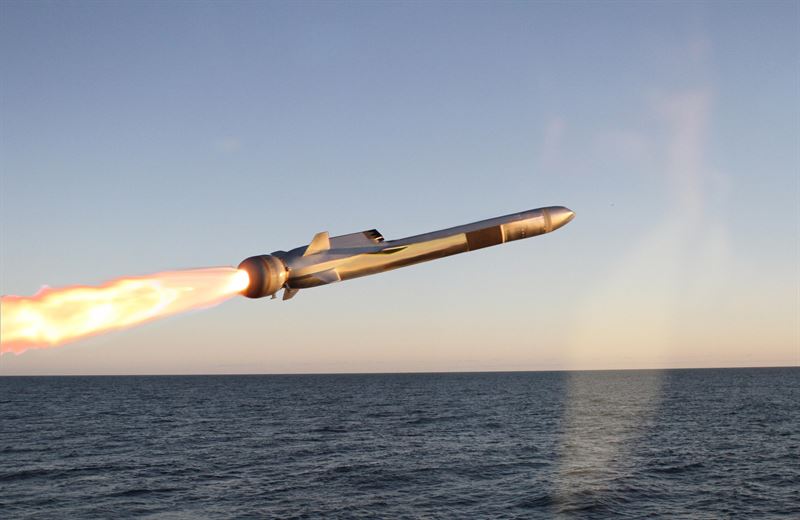
Naval Strike Missile KONGSBERG
KONGSBERG, Norway — Kongsberg Defence & Aerospace AS has entered into a contract with the Netherlands Ministry of Defence to supply the Naval Strike Missile (NSM) for their fleet of Air Defence & Command Frigates, the company said in a Dec. 12 release.
The NSM, at its core, is designed to handle future threats and warfighting environments making it a 5th-generation, long-range, multi-mission (anti-ship & land attack) precision strike missile designed to ensure efficient strikes under complex conditions.
“KONGSBERG is very proud to have been selected by the Netherlands Ministry of Defence to provide the NSM to the Royal Netherlands Navy (RNLN) Air Defence & Command Frigates. This is another great achievement for the NSM program and we are very pleased to welcome the RNLN as a member of the NSM User Group,” says Eirik Lie, President of Kongsberg Defence & Aerospace.
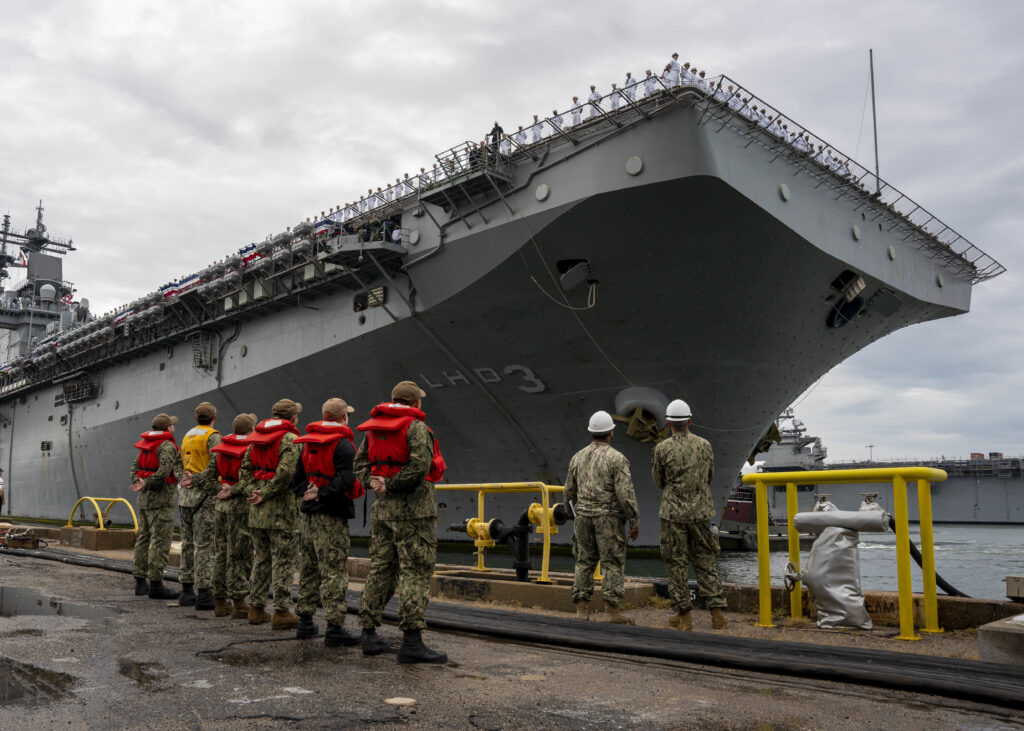
The Wasp-class amphibious assault ship USS Kearsarge (LHD 3), returns to Naval Station Norfolk after a seven-month deployment, Oct. 13, 2022. U.S. NAVY / Mass Communication Specialist 2nd Class Nathan T. Beard
NORFOLK, Va. — BAE Systems has received a $294.7 million contract from the U.S. Navy to drydock and perform more than 20 months of maintenance and modernization work on the amphibious assault ship USS Kearsarge (LHD 3), the company said in a Dec. 12 release. The contract includes options that, if exercised, would bring the cumulative value to $340.3 million.
Under the awarded contract, the maintenance availability of USS Kearsarge will begin in April. Starting in June, the 843-foot-long ship will be drydocked for nearly a year at BAE Systems’ Norfolk shipyard. The shipyard will perform extensive hull, tank and mechanical work, rehabilitate all crew and embarked Marine living compartments onboard, and inspect the ship’s boilers. BAE Systems is expected to complete work aboard the 29-year-old ship in January 2025.
“The extended sustainment period onboard the USS Kearsarge provides a great environment to apply BAE Systems’ substantial experience with ships of the same class and considerable production skills, and supports job stability across our shipyard and supply base,” said Mike Bruneau, vice president and general manager of BAE Systems Norfolk Ship Repair. “Through our maintenance and modernization efforts, the Kearsarge will be ready to deploy for many years to come.”
USS Kearsarge is the third ship of the USS Wasp class of U.S. Navy amphibious assault ships, which are designed to carry expeditionary Marines and their equipment to anywhere in the world. The current Kearsarge is the fourth U.S. Navy vessel to sail with the name. The company’s Norfolk shipyard is also completing a similar modernization project aboard the Wasp.
To prepare for drydocking the Kearsarge, BAE Systems has been hiring employees and temporary workers. Individuals interested in joining the team can visit jobs.baesystems.com for more details. The Norfolk shipyard currently employs about 1,000 people across a number of skilled marine trades and support functions.
Boeing Selects Lufthansa Technik to Support New Zealand’s P-8A Poseidon Fleet
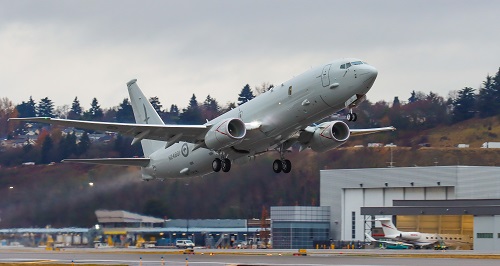
P-8A aircraft. BOEING
BERLIN — Boeing has awarded Lufthansa Technik a contract for sustainment services within its support of the Royal New Zealand Air Force’s (RNZAF) future fleet of four P-8A aircraft that will leverage commercial capabilities to improve readiness rates, Boeing announced in a Dec. 12 release.
The contract is for provision of Lufthansa Technik’s Total Component Support (TCS), a comprehensive component services program for the 737 covering more than four hundred commercial common parts included in the configuration of the P-8A, a military derivative of the popular airliner. Leveraging the 737 commercial market in support of P-8A international customers will allow smaller fleets easier access to necessary global supply chain inventory from the more than four thousand 737 aircraft operating today.
“Our collaboration with Lufthansa Technik is a strong example of how industry can work together to solve customer challenges and maintain high readiness rates,” said Torbjorn (Turbo) Sjogren, Boeing vice president and general manager, Government Services. “Our goal is to expand service offerings from a strategic German industry partner for additional P-8A customers to benefit.”
The TCS program provided by Lufthansa Technik allows the RNZAF to reduce investment in commercial common parts and improve aircraft readiness through access to the German company’s maintenance, repair and overhaul (MRO) global supply chain.
Boeing and Lufthansa Technik signed a strategic Memorandum of Understanding (MOU) in 2021 to support Germany’s P-8A Poseidon fleet. The MOU expanded to a three-party agreement with ESG Elektroniksystem- und Logistik-GmbH in 2022.
“Lufthansa Technik is a longstanding partner with a long history of supporting Boeing aircraft around the world,” said Michael Haidinger, president of Boeing in Germany. “This new contract is a clear demonstration of our commitment to German industry and how we partner across the Atlantic and globally, shaping meaningful partnerships that ensure continued economic and industrial growth in Germany.”
Under Boeing’s Performance-Based Logistics program, Lufthansa Technik also provides hardware support to the Italian fleet of Boeing KC-767A tankers and has facilitated outstanding aircraft availability for the Italian Air Force.
“As a renowned expert for Special Mission aircraft and a leading maintenance, repair and overhaul provider with decades of experience in servicing commercial Boeing 737s, we are delighted to soon start servicing New Zealand’s Poseidon fleet. The strong partnership with Boeing enables us to offer the best possible service level over the entire life cycle of the aircraft,” said Michael von Puttkamer, vice president special aircraft services at Lufthansa Technik. “We are very much looking forward to further cooperation with our partners in Germany and beyond.”
In July 2018, the government of New Zealand announced the purchase of four P-8A Poseidon aircraft to replace their aging fleet of P-3K2 maritime patrol aircraft. The first P-8A to New Zealand was delivered December 2022, with three remaining aircraft to be delivered in 2023.
Deployed around the world with 155 aircraft delivered or in service, and more than 450,000 collective, mishap free flight hours, the P-8A is vital for global anti-submarine warfare, intelligence, surveillance and reconnaissance and search-and-rescue operations.