Coast Guard Cutter Stratton Returns Home Following 97-Day Arctic Deployment
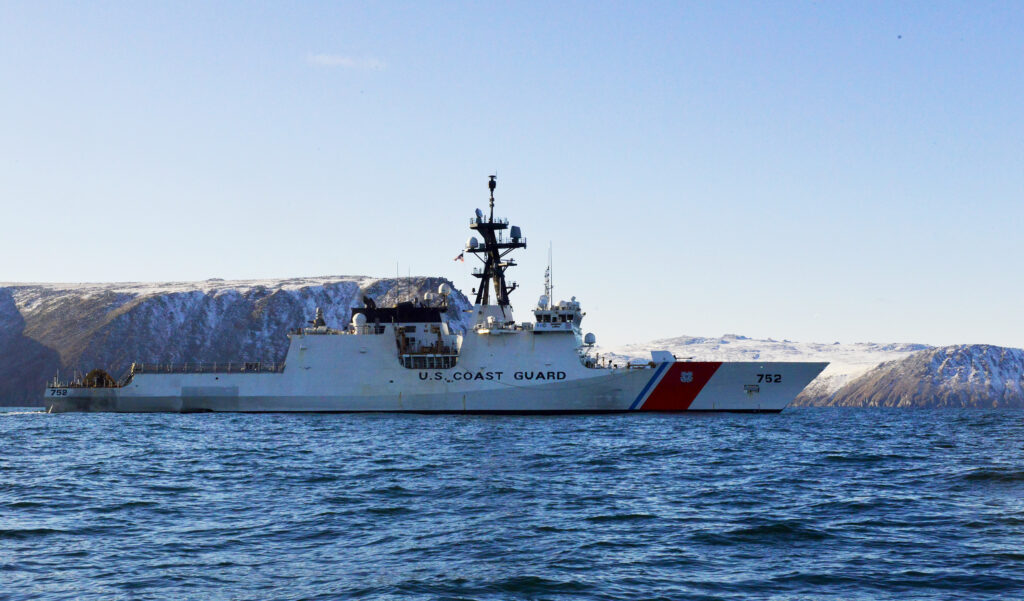
Crew from the U.S. Coast Guard Cutter Stratton (WMSL 752) patrol the U.S.-Russian Maritime Boundary Line near the Diomede Islands, Oct. 9, 2022. U.S. COAST GUARD / Petty Officer 2nd Class Melissa Mckenzie

ALAMEDA, Calif. — The U.S. Coast Guard Cutter Stratton (WMSL 752) and crew returned to Alameda, Nov. 23, following a 97-day, multi-mission deployment to the Arctic Ocean and Bering Sea, the Coast Guard Pacific Area said in a release. 

In August, the cutter and crew departed Alameda to project U.S. sovereignty throughout U.S. Arctic waters, provide search and rescue capabilities in the region, and meet with Alaskan communities. 

Stratton repeatedly operated along the length of the U.S.-Russian maritime boundary line (MBL) from the Diomede Islands to well above the Arctic Circle, while they patrolled within the U.S. Arctic zone. Stratton also patrolled the U.S.-Canadian MBL in the Beaufort Sea, demonstrating a presence in the distant regions of the Arctic.  

On Sept. 26, the Stratton and the Coast Guard Cutter Kimball (WMSL 756) became the first national security cutters to jointly patrol the U.S.-Russian MBL above the Arctic Circle. The operational intent was the protection of the sovereign rights of the U.S. and the promotion of international maritime norms through Coast Guard presence and influence in this increasingly strategic and competitive region. 

Stratton’s crew supported multiple search and rescue cases during their patrol, including rescuing two fishermen from a disabled vessel 180 miles off the Oregon coast while Stratton was transiting to the Arctic. The crew towed a 66-foot disabled fishing vessel toward shore and then transferred the vessel and survivors to a Coast Guard Station Coos Bay 47-foot Motor Lifeboat crew, approximately 45 miles offshore Coos Bay, Oregon. 

Stratton’s crew also coordinated with Air Station Kodiak aircrews and the Alaska State Troopers to help locate a family stranded on the remote shores of Kotzebue Bay, Alaska, after their boat capsized. 

The Stratton and the Canadian Coast Guard Ship Sir Wilfrid Laurier crews conducted an Arctic search-and-rescue exercise near Point Hope, Alaska. The crews exercised bilateral coordination to locate a simulated vessel in distress using Stratton’s Scan Eagle unmanned aerial system and operations specialists aboard Stratton, who directed the Canadian small boat crew toward the distressed vessel while watching a live feed from the overhead drone. The Canadian small boat located, recovered and returned the distressed vessel to the Stratton. 

While operating near and above the Arctic Circle, Stratton’s crew conducted multiple outreach events with community members and key leaders in Kaktovik and Utqiagvik on Alaska’s North Slope. The crew also visited the village of Savoonga on Saint Lawrence Island, Alaska. 

“I’m extremely proud of this crew and all they have accomplished,” said Capt. Stephen Adler, Stratton’s commanding officer. “The U.S. Coast Guard provides the nation’s most active and visible maritime presence in the high latitudes, and coordinates with our international partners through joint exercises and professional exchanges to maintain a safe and prosperous Arctic region. The Coast Guard remains ‘Always Ready’ to preserve and protect our northern shores and waters. As more ships and people move into the Arctic, the Coast Guard will be there to ensure safety of navigation and preserve our national sovereignty, as it always has. The crew has truly lived up to our ship’s motto of ‘We Can’t Afford Not To’ throughout our patrol.” 

Stratton is a 418-foot national security cutter (NSC) capable of extended, worldwide deployment in support of homeland security and defense missions. NSCs routinely conduct operations from South America to the Arctic, where their combination of range, speed and ability to operate in extreme weather provides the mission flexibility necessary to conduct vital strategic missions.


Cutter Oliver Berry Completes Living Marine Resources Patrol in South Pacific

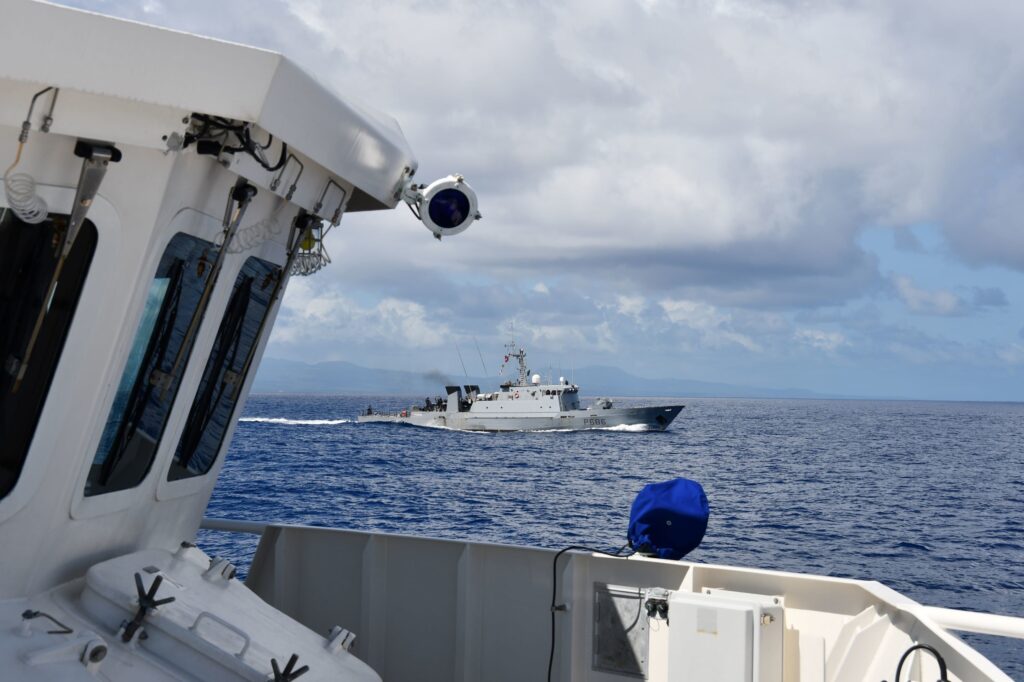
The FS La Glorieuse sails alongside the U.S. Coast Guard Cutter Oliver Berry during formation steaming exercise. The U.S. Coast Guard Cutter Oliver Berry crew returned to homeport in Honolulu Nov. 22, 2022 following a 38-day expeditionary patrol across the South Pacific. U.S. Coast Guard Cutter Oliver Berry

HONOLULU — The U.S. Coast Guard Cutter Oliver Berry crew returned to homeport in Honolulu Nov. 22 following a 38-day expeditionary patrol enforcing international living marine resources treaties and conducting joint operations with partner nations across the South Pacific, the Coast Guard 14th District said in a Nov. 23 release. During the 7,000 nautical-mile patrol, the Oliver Berry crew conducted 12 fisheries boardings, identified 16 fishery and safety violations and completed 18 community relation events while sailing from Honolulu, Hawaii to Kiribati, Samoa, the Kingdom of Tonga and American Samoa before returning to homeport. 

During the first port call of the patrol at Kiritimati Island, Kiribati, the Oliver Berry crew delivered COVID-19 personal protective equipment donated by the U.S. Indo-Pacific Command’s Office of Global Health Engagement before conducting a contactless fueling evolution. The PPE supplies included face masks, thermometers, gloves and face shields to assist the island in their COVID-19 readiness and ensure the safety of its 7,000 citizens. While patrolling Kiribati’s Exclusive Economic Zone (EEZ), the Oliver Berry provided patrol coverage to support the country’s maritime law enforcement efforts. 

The Oliver Berry’s next port visit to Apia, Samoa was the first by a U.S. Coast Guard cutter since 2018. During the port call, the crew of Oliver Berry participated in community engagement and outreach events, to include ship tours for partner maritime organizations and students, a visit to the Samoa Victims Support Group at Faleata to donate school supplies and hygiene products donated by the crew and the Honolulu Chief Petty Officer’s Association, a meeting with students from the National Maritime School to discuss life underway and a beach clean-up around the harbor of Apia. The crew of Oliver Berry also attended a welcoming reception for U.S. Embassy Apia Chargé d’Affaires Noriko Horiuchi, who recognized the crew for assisting Samoa in strengthening its maritime governance and security and highlighted the important role ship rider operations play in promoting maritime resource security. Prior to transiting to Tonga, the Oliver Berry crew also conducted a Passing Exercise with the FS La Glarieuse, a French Patrol Boat homeported in New Caledonia. The event included a crewmember exchange, formation steaming, simulated fishery and counter-narcotic boardings. 

During the Oliver Berry’s time in Samoa and the Kingdom of Tonga, the crew also exercised Bilateral Law Enforcement agreements by hosting local law enforcement officers and conducting boardings in the country’s EEZs. While in Samoa, the crew partnered with officers from the Maritime Police Department and the Fisheries Department to patrol Samoan EEZ for two days, conducting four boardings and identifying six safety and fisheries violations on foreign and Samoan flagged vessels. While in the Kingdom of Tonga, Oliver Berry crew hosted officers from the Tongan Navy and Tongan Police Department to complete two boardings and identify one violation. 

“The importance of exercising U.S. Coast Guard Bilateral Law Enforcement Agreements with our Pacific Island partners can’t be understated,” said Lt. Cmdr. Micah Howell, the commanding officer of the Oliver Berry. “These agreements allow us the opportunity to strengthen our partnerships and work closely with our maritime counterparts to collectively ensure maritime governance and security across the Blue Pacific.” 

In addition to boardings being conducted in Samoan and Tongan EEZ’s, Oliver Berry crew also patrolled international waters in the South Pacific to detect, deter and suppress non-compliance with international treaties and conservation and management measures outlined by the Western Central Pacific Fisheries Commission (WCPFC). Oliver Berry crew conducted four WCPFC boardings in an effort to identify and counter illegal, unreported and unregulated fishing (IUU-F) activity, resulting in one fisheries violation. 

The Oliver Berry is one of six highly capable FRCs stationed across District 14. Their crews provide year-round search and rescue and maritime law enforcement coverage across a 15 million square mile area of responsibility, demonstrating the United States Coast Guard’s enduring commitment to our partner nations across Oceania.


Leonardo DRS Announces Closing of Merger with RADA

ARLINGTON, Va. — Leonardo DRS Inc., a leading mid-tier defense technology provider, announced Nov. 28 the successful completion of the all-stock merger between Leonardo DRS and RADA Electronic Industries Ltd. to become a combined public company.  

The combined company will be aligned to fast growing segments of the U.S. Department of Defense budget with market leading positions in advanced sensing, force protection, network computing, and electric power & propulsion. Further, the combined company’s mid-tier position provides meaningful scale coupled with agility to respond to customer needs with affordable and differentiated solutions. Pro forma revenue and Adjusted EBITDA in 2021 for the combined company was approximately $2.7 billion and $305 million, respectively. 

“We look forward to bringing Leonardo DRS’s mid-tier strength to the public markets with the addition of RADA’s leading tactical radar capabilities,” said William J. Lynn III, chairman & CEO of Leonardo DRS. “Leonardo DRS’s broad exposure to fast growing segments in the defense market and market leading positions in advanced sensing, force protection, network computing and electric power & propulsion make us a unique defense contractor with a compelling growth outlook, margin expansion capabilities and a largely unlevered balance sheet.” 

“We are pleased to have received strong shareholder support for this transaction,” commented Dov Sella, CEO of RADA. “It has always been our goal to maximize shareholder value, and the RADA team and Board believe this merger represents an excellent outcome for the company. The RADA team looks forward to continuing to penetrate the tactical radar market within the strong Leonardo DRS platform.”


Navy Declares Initial Operational Capability for Boeing’s HAAWC

In an artists rendering, a High Altitude Anti-Submarine Warfare Weapon Capability or HAAWC deploys from a Boeing P-8A Poseidon multi-mission maritime patrol aircraft. BOEING

ST. CHARLES, Mo. — Boeing’s High Altitude Anti-Submarine Warfare Weapon Capability, or HAAWC, has satisfied all requirements for initial operational capability status from the U.S. Navy, the company said in a Nov. 22 release. 

The all-weather HAAWC enables the Boeing P-8A Poseidon to deploy Mk54 torpedoes from near or below its cruising altitude. 

“The initial operational capability milestone marks the readiness of HAAWC for fleet introduction for the Navy and its international partners,” said Dewayne Donley, Boeing’s HAAWC program manager. “We’re excited to deliver greater flexibility and capability by way of higher-altitude launches from longer distances than previously possible.” 

The milestone follows the award of a full-rate production contract for the system to Boeing in August, squadron training, and the receipt of low-rate initial production units. 

HAAWC consists of a modular Air Launch Accessory, or ALA, kit that attaches to a Mk54 torpedo, transforming it into a precision-guided glide weapon. 

“It’s a major achievement for our team in reaching our goal of establishing a new high ground in anti-submarine warfare,” said Bob Ciesla, vice president of Boeing Weapons. “We look forward to continuing to work alongside the Navy toward the full deployment and operational capability of the system.” 

Additional fielding of HAAWC units are scheduled through 2024, with the potential for production to continue into 2030 under the current contract. 

The long-range anti-submarine warfare, anti-surface warfare, intelligence, surveillance and reconnaissance P-8A aircraft has amassed more than 450,000 mishap-free flight-hours to date in support of broad-area, maritime and littoral operations, and performs humanitarian and search and rescue missions around the globe.


U.S. Navy Analysis Confirms Iranian Link to Drone Attack

Graphic illustration and images captured by a U.S. Navy explosive ordnance disposal team aboard M/T Pacific Zircon, Nov. 16, showing the location where an Iranian-made unmanned aerial vehicle (UAV) penetrated M/T Pacific Zircon’s outer hull during an attack Nov. 15. U.S. NAVY

MANAMA, Bahrain — A U.S. Navy lab in Bahrain has confirmed Iran’s connection to a Nov. 15 aerial drone attack on a Liberian-flagged commercial tanker transiting international waters in the Middle East, U.S. Naval Forces Central Command Public Affairs said in a Nov. 22 release. 

Two U.S. Navy explosive ordnance technicians boarded M/T Pacific Zircon, Nov. 16, to assess the damage and collect unmanned aerial vehicle (UAV) debris fragments for forensic analysis. During a two-hour survey and evidence collection process, the technicians also obtained explosive residue samples for lab testing.  

U.S. 5th Fleet transported the gathered evidence to a lab at its Bahrain headquarters where technicians confirmed Iran’s connection to the attack. The aerial drone that hit the commercial tanker was identified as a Shahed-136 UAV, fitting a historical pattern of Iran’s increasing use of a lethal capability directly or through its proxies across the Middle East. Iran has supplied aerial drone technology to the Houthis in Yemen used in attacks against Saud Arabia and the United Arab Emirates earlier this year.  

Additionally, the Shahed-136 platform is the same aerial drone Iran has supplied to Russia for use against Ukraine.  

On Nov. 15, the explosive-laden aerial drone attacked Pacific Zircon at approximately 7:30 p.m. in the Northern Arabian Sea, tearing a 30-inch-wide hole into the back of the ship while subsequently penetrating and damaging internal compartments. The UAV’s explosive impact also damaged a shipboard boiler, potable water tank and life raft.    

“The Iranian attack on a commercial tanker transiting international waters was deliberate, flagrant and dangerous, endangering the lives of the ship’s crew and destabilizing maritime security in the Middle East,” said Vice Adm. Brad Cooper, commander of U.S. Naval Forces Central Command, U.S. 5th Fleet and Combined Maritime Forces. Cooper also serves as the multinational task force commander for the International Maritime Security Construct, a 10-member naval coalition whose forces provide maritime security near the Strait of Hormuz and Bab al-Mandeb. 

Upon learning of the attack, the British Royal Navy dispatched frigate HMS Lancaster (F229) to the scene. U.S. 5th Fleet also directed guided-missile destroyer USS The Sullivans (DDG 68), patrol coastal ship USS Chinook (PC 9) and a P-8 Poseidon maritime patrol aircraft to assist and assess the situation. 


HII Authenticates Keel of Virginia-Class Attack Submarine Arkansas

From left, NNS President Jennifer Boykin looks on as members of the Little Rock Nine, Ernest Green, Thelma Mothershed Wair assisted by PCU Arkansas commanding officer Cmdr. Adam Kahnke, Elizabeth Eckford, Gloria Ray Karlmark and Carlotta Walls Lanier, etch their initials onto steel plates during the keel authentication ceremony for Virginia-class submarine Arkansas (SSN 800) on Nov. 19, 2022. HII / Ashley Cowan

NEWPORT NEWS, Va. — HII’s Newport News Shipbuilding (NNS) division hosted a keel authentication ceremony Nov. 19 for Virginia-class submarine Arkansas (SSN 800), the company said in a release. 

The ship’s sponsors are the six women of the historic group known as the Little Rock Nine, the first African American students to attend all-white Central High School in Little Rock, Arkansas during desegregation. NNS honored all nine members, including the three men, during Saturday’s ceremony. 

The Little Rock Nine made history in 1957 with their response to the Supreme Court ruling in Brown v. Board of Education, declaring racial segregation in public schools unconstitutional. Faced with shouting mobs, threats of violence and hostile state leaders who blocked their way, the teenagers were escorted into the school by federal troops at the direction of President Dwight D. Eisenhower. 

“Their courageous spirit will forever inspire Arkansas and her crew. This group forever changed our nation’s history and their submarine will help ensure their legacy continues,” NNS President Jennifer Boykin said. “The bravery and resilience of the Little Rock Nine sparked a fire of change and demonstrated the strength of blending different perspectives and backgrounds. We harness this strength in the shipyard every day. Our diversity allows us to extend beyond our own limits, to reach new heights and build each boat even better than the one before it. Arkansas will be proof of this power.” 

During the ceremony, NNS welders etched a historic six sets of initials of the Little Rock Nine onto metal plates, signifying the keel of SSN 800 as being “truly and fairly laid.” The metal plates will remain affixed to the submarine throughout its life. 

“(Former Navy) Secretary Ray Mabus asked us to be supporters of the ship and its crew. I signed on to be a foster grandmother,” said Elizabeth Eckford, a member of the Little Rock Nine, who spoke on behalf of the group during the ceremony. “President Eisenhower sent 1,000 paratroopers to Little Rock to disperse a mob, bring order and they made it possible for us to enter Central High School. From that point, I’ve had very high regard for specially trained forces.” 

Arkansas is the 27th Virginia-class fast attack submarine being built under the teaming agreement with General Dynamics Electric Boat. 

“With advances in sound silencing, acoustic sensors and weapons delivery systems, Arkansas will traverse the world’s oceans and seas as an apex predator. Representing our asymmetric advantage in the undersea domain, the Arkansas will have no equal,” said Vice Adm. William Houston, commander, Naval Submarine Forces. 

“It is an incredible honor for the crew to begin to establish the relationship with our namesake state of Arkansas as well as with the ship’s sponsors,” said Cmdr. Adam Kahnke, commanding officer of the pre-commissioning unit. “The story of the Little Rock Nine demonstrates the power of perseverance in the face of adversity. I find the relationship with the ship’s sponsors very appropriate due to the fact that perseverance is an essential attribute to success in the art of submarine warfare.”   

NNS is one of only two shipyards capable of designing and building nuclear-powered submarines. The advanced capabilities of Virginia-class submarines increase firepower, maneuverability and stealth. 

This milestone on Arkansas comes following the delivery of USS Montana (SSN 794), the launch of New Jersey (SSN 796) and continued progress on Massachusetts (SSN 798) at NNS earlier in 2022, as the shipyard continues to invest in its workforce and facilities to make steady progress on delivering these important assets to the Navy.


Interagency Delegation Visits Unmanned & AI Task Force in Bahrain

Capt. Michael Brasseur, commander of Task Force 59, briefs Under Secretary of Defense for Policy Dr. Colin Kahl at a display of unmanned surface vessels in Manama, Bahrain, Nov. 18. U.S. NAVY / Mass Communication Specialist 1st Class Mark Thomas Mahmod

MANAMA, Bahrain — Senior U.S. government officials from the Department of Defense and Department of State visited U.S. 5th Fleet headquarters in Bahrain, Nov. 18, to learn about the ongoing integration of unmanned systems and artificial intelligence across the fleet, U.S. Naval Forces Central Command Public Affairs said in a release. 
 
Under Secretary of Defense for Policy Dr. Colin Kahl visited with Assistant Secretary of State for Near Eastern Affairs Barbara A. Leaf and Dana Stroul, the deputy assistant Secretary of Defense for the Middle East, as well as other U.S. officials. 
 
U.S. 5th Fleet’s unmanned systems and artificial intelligence task force, Task Force 59, displayed unmanned surface vessels on the pier after a tour of the Robotics Operations Center. 
 
“The pace of technological change offers tremendous opportunities for upgrading how the U.S. military contributes to security and stability in the Middle East, and how we advance cooperation with partners,” said Dr. Kahl. “Task Force 59 is doing incredible work innovating and leading coalitions that ensure freedom of navigation in some of the world’s most critical waterways.” 
 
In addition, the group toured RFA Cardigan Bay (L3009), a British Royal Navy vessel stationed in Bahrain in support of the United Kingdom’s regional naval headquarters. Royal Navy headquarters in the Middle East are co-located with U.S. 5th Fleet’s, reflecting strong collaboration among longstanding maritime partners. 
 
The interagency delegation also visited U.S. 5th Fleet’s headquarters for discussions on regional maritime operations with Vice Adm. Brad Cooper and his staff. Cooper commands U.S. 5th Fleet as well as two major multinational maritime partnerships, which include the Combined Maritime Forces and International Maritime Security Construct. 
 
The U.S. 5th Fleet operating area includes 21 countries, the Arabian Gulf, Gulf of Oman, Red Sea, parts of the Indian Ocean and three critical choke points at the Strait of Hormuz, Bab al-Mandeb and Suez Canal. 


Coast Guard Offloads More than $101 Million in Illegal Narcotics

A crewmember from Coast Guard Cutter Northland offloads illegal narcotics in Port Everglades, Florida, Nov. 11, 2022. U.S. COAST GUARD

MIAMI — The crew of the U.S. Coast Guard Cutter Northland (WMEC 904) offloaded approximately 5,363 pounds of cocaine worth an estimated $101 million in Port Everglades, Nov. 18, along with 11 suspected smugglers who were apprehended to face prosecution in federal court by the Department of Justice, the Coast Guard 7th District said in a release. 

The drugs were interdicted, during five separate cases, in the international waters of the Caribbean Sea by crews from: 

  • Royal Netherlands Navy Ship HNLMS Holland (P840), embarked USCG Law Enforcement Detachment 408 and a USCG Helicopter Interdiction Squadron helicopter  
  • U.S. Navy ships USS Milwaukee (LCS 5) and USS Wichita (LCS 13), and embarked USCG Law Enforcement Detachments 104 and 107  
  • USCGC Valiant (WMEC 621)  
  • USCGC Venturous (WMEC 625) and embarked USCG Helicopter Interdiction Squadron helicopter  

“We are proud of the drug seizures the crews of our sister ships recently completed. We are honored to share a role in helping remove narcotics from U.S. streets and delivering justice to those attempting to bring illicit substances to U.S. shores,” said Cmdr. Andrew Dennelly, commanding officer of Northland. “We are always ready to protect those on the sea, protect America from threats delivered by the sea, and protect the sea itself.” 

Northland’s 57-day patrol of the Windward Passage, Old Bahama Channel and South Florida Straits primarily focused on deterring dangerous and irregular maritime migration. 

Initially, a suspect vessel is detected and monitored by allied, military or law enforcement personnel coordinated by Joint Interagency Task Force-South based in Key West. Once an interdiction becomes imminent, the law enforcement phase of the operation begins, and control of the operation shifts to the U.S. Coast Guard during throughout this phase. Interdictions in the Caribbean Sea are performed by members of the U.S. Coast Guard under the authority and control of the Coast Guard’s Seventh District, headquartered in Miami. 

Northland is a 270-foot Famous-class medium-endurance cutter. The cutters primary missions include law enforcement, search and rescue, drug interdiction, fisheries enforcement, migrant interdiction, homeland security and defense operations and international training. Northland patrols the offshore waters from Maine to Florida, the Gulf of Mexico, the Eastern Pacific Ocean and the Caribbean Sea.


USCGC Valiant Returns Home after 35-day Caribbean Sea Patrol

The Coast Guard Cutter Valiant crew recovers their cutter boat Sept. 2018, while underway in the Carribean Sea. U.S. COAST GUARD

JACKSONVILLE, Fla. — The crew of U.S. Coast Guard Cutter Valiant (WMEC 621) returned to their homeport at Naval Station Mayport Nov. 7, 2022, following a 35-day Caribbean Sea patrol, the Coast Guard Atlantic Area said in a Nov. 7 release.  

While underway in the Coast Guard Seventh District’s area of operations and in support of Joint Interagency Task Force – South, Valiant conducted counterdrug and migrant interdiction operations.  

Within the first week of patrol, Valiant’s crew boarded a vessel suspected of carrying illegal narcotics and seized just under 900 pounds of cocaine worth approximately $8 million. 

Valiant’s crew also patrolled off the coast of Haiti as a deterrent to dangerous and irregular maritime migration events occurring because of continued instability in the country. 

Prior to patrol, Valiant completed a 7-month dry-dock period in Tampa where the 55-year-old cutter completed extensive maintenance and preservation work.  

“The past eight months have certainly been very busy for Valiant’s crew, and we are glad to finally be back in Jacksonville,” said Cmdr. Jacob McMillan, commanding officer of Valiant. “The crew’s remarkable ability to quickly transition from maintenance to operations has been impressive. I’m very proud of the crew and I’m honored to be serving at sea with them.”  

Valiant is a multi-mission, 210-foot medium-endurance cutter. Its primary missions include search and rescue, maritime law enforcement, marine environmental protection, homeland security and national defense operations.  


Five Allied Carrier Strike Groups Patrol Waters in NATO’s Area of Operations

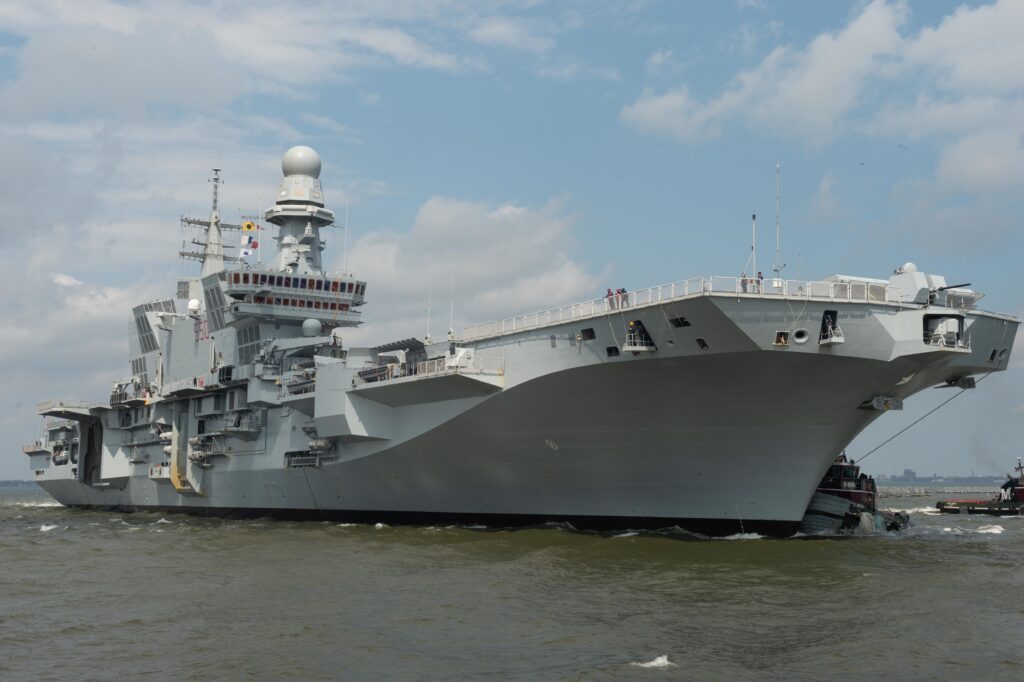
The Italian navy flagship, aircraft carrier ITS Cavour (CVH 550), arrives at Naval Station Norfolk, Virginia, March 26, 2021. U.S. NAVY / Mass Communication Specialist 3rd Class Mitchell Banks

MONS, Belgium — Five Allied aircraft carriers will be operating in the Atlantic Ocean and the North and Mediterranean Seas in November, as part of their regularly scheduled activities, SHAPE Public Affairs said in a Nov. 17 release. 

This occurrence presents an opportunity for Allied nations to coordinate credible combat power throughout the Euro-Atlantic Area and showcases NATO cohesion and interoperability. 

Participating forces comprise the Carrier Strike Groups (CSG) formed in support of the French Navy Charles De Gaulle, the Italian Navy ITS Cavour, the United Kingdom Royal Navy Queen Elizabeth and the United States Navy’s George H.W. Bush and Gerald R. Ford. 

Although each nation’s forces are operating in support of their own mission objectives, the advanced cooperation shows unity towards the collective defence of the Alliance. Ships and assets from various allies and partners are included in the groups, and the activity is coordinated with the Standing NATO Maritime Groups 1 and 2. 

“NATO routinely demonstrates its cohesion, coordinating with multiple international maritime assets at once,” said Commander, NATO Allied Maritime Command Vice Adm. Keith Blount. “This opportunity demonstrates our ironclad commitment to the stability and security of the Euro-Atlantic Area and the strength of our collective capability.” 

“Five carriers within our operating area presents a further opportunity to consolidate our approach to air defense, cross-domain cooperation and maritime-land integration,” he said. 

There is a continuous presence of Allied aircraft carriers around the NATO area of operations, and it is common for multiple CSGs to be deployed simultaneously. The multi-carrier deployment is an opportunity to test the cooperation and practice NATO’s Deter and Defend concept as it leverages a deliberate rhythm of military activity across all geographic areas of the Alliance, as well as across all operational domains and functional areas. 

Allied maritime forces and NATO Maritime Groups regularly patrol the waters around Europe to assure Allies of the maritime commitment to collective defense.