Bahrain Leads Unmanned Exercise for Multinational Task Force
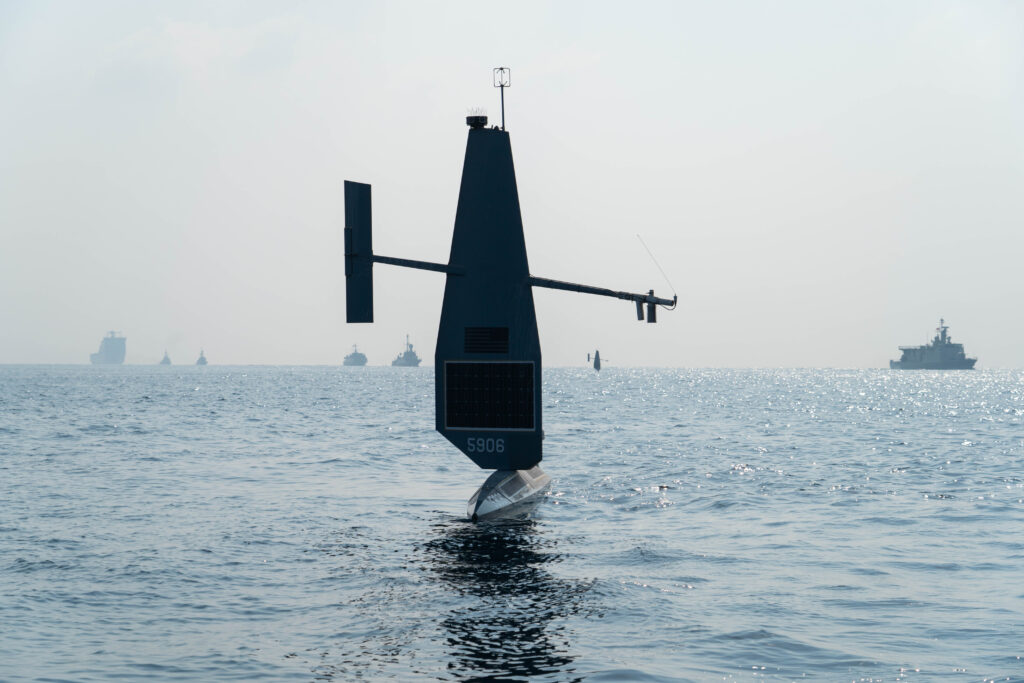
A U.S. Navy Saildrone Explorer unmanned surface vessel operates with patrol coastal ships USS Hurricane (PC 3) and USS Chinook (PC 9) from the United States, UK Royal Navy ships RFA Cardigan Bay (L3009) and HMS Bangor (M109), Royal Bahrain Naval Force ships RBNS Al-Manama and RBNS Al-Fateh, and HMS Khalid from the Royal Saudi Navy in the Arabian Gulf, Oct. 26. U.S. ARMY / Spc. Noah Martin

MANAMA, Bahrain — A multinational naval task force led by Bahrain conducted a one-day training drill in the Arabian Gulf, Oct. 26, featuring the use of unmanned systems and artificial intelligence alongside seven crewed ships, Combined Maritime Forces Public Affairs said in an Oct. 27 release. 

Naval forces from Bahrain, Saudi Arabia, the United Kingdom and the United States participated in support of Bahrain-led Combined Task Force (CTF) 152, one of four task forces organized under the Combined Maritime Forces. The naval drill enhanced interoperability in integrating new unmanned technologies to monitor regional waters. 

“It is so valuable to get these opportunities to really test how our forces from across different nations can work together with the uncrewed systems,” said Royal Bahrain Naval Force Capt. Rashed Al-Ameen, commander of CTF 152. “It helps us better understand how to work with each other to boost regional security.” 

Three U.S. Navy Saildrone Explorer unmanned surface vessels operated with USS Hurricane (PC 3) and USS Chinook (PC 9) from the United States, UK Royal Navy ships RFA Cardigan Bay (L3009) and HMS Bangor (M109), Royal Bahrain Naval Force ships RBNS Al-Manama and RBNS Al-Fateh and HMS Khalid from the Royal Saudi Navy. 

CTF 152 led the exercise while embarked aboard Cardigan Bay, as the ship sailed in international waters off the coast of Saudi Arabia. This is the latest drill involving unmanned systems in the Arabian Gulf since the United Kingdom and United States completed a similar bilateral naval exercise Oct. 7. 

During both maneuvers, unmanned and artificial intelligence systems operated in conjunction with crewed ships and naval command centers ashore in Bahrain. Sensors from the unmanned vessels were able to locate and identify training aides in the water and relay visual depictions to the command centers. 

Established in 2004, CTF 152 oversees maritime security operations in the Arabian Gulf for Combined Maritime Forces. Bahrain assumed command of CTF 152 from Kuwait in August. 

Combined Maritime Forces is the world’s largest multinational naval partnership and includes 34 member-nations whose forces operate in the Red Sea, Gulf of Aden, Northern Arabian Sea, Gulf of Oman, Arabian Gulf and Indian Ocean. CMF is headquartered in Bahrain with U.S. Naval Forces Central Command and U.S. 5th Fleet.


Navy and Army Conduct Second Hypersonics Flight Campaign

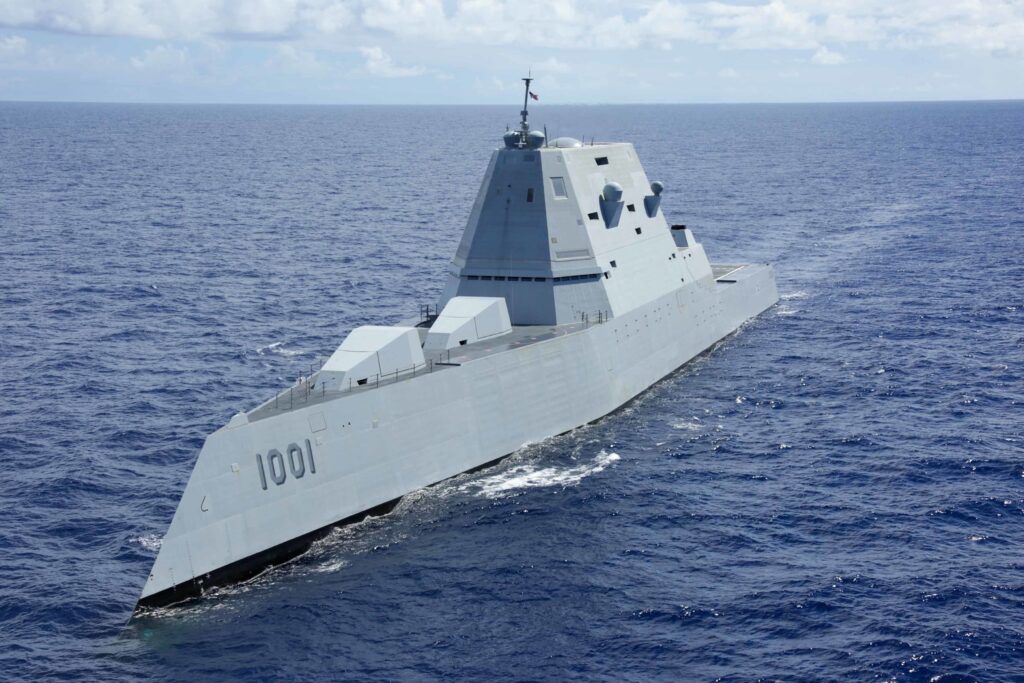
The Zumwalt-class guided-missile destroyer USS Michael Monsoor (DDG 1001) sails in formation during Rim of the Pacific (RIMPAC) 2022. U.S. NAVY / Mass Communication Specialist 3rd Class Aleksandr Freutel

WASHINGTON — The Navy Strategic Systems Programs (SSP) and the Army Hypersonic Project Office (AHPO) successfully conducted the second High Operational Tempo for Hypersonics flight campaign on Oct. 26 at 2:30pm EST, the U.S. Navy Strategic Systems Programs Office public affair office said in a release.  

This flight campaign was executed by Sandia National Laboratories (SNL) from the National Aeronautics and Space Administration (NASA) Wallops Flight Facility. This test will be used to inform the development of the Navy’s Conventional Prompt Strike (CPS) and the Army’s Long Range Hypersonic Weapon offensive hypersonic strike capability. The CPS and AHPO programs are on track to support the first fielding of a hypersonic capability to the Army in fiscal 2023. The Missile Defense Agency (MDA) took part in the campaign to gather data for its work developing systems that will defend against hypersonic weapons.   

One precision sounding rocket launch was conducted containing hypersonic experiments from partners, including CPS, MDA, AHPO, the Joint Hypersonic Transition Office, SNL, Johns Hopkins University/Applied Physics Laboratory, MITRE, Oak Ridge National Laboratory and several defense contractors. A second sounding rocket will be launched this week to complete the campaign. These rockets contained experimental payloads that provided data on the performance of materials and systems in a realistic hypersonic environment. 

During weapon system development, precision sounding rocket launches fill a critical gap between ground testing and full system flight testing. These launches allow for frequent and regular flight testing opportunities to support rapid maturation of offensive and defensive hypersonic technologies. The data collected from the latest sounding rocket campaign will drive warfighting capability improvements for both Navy and Army to ensure continued battlefield dominance. 

The CPS Program, the lead for the common hypersonic missile design and development, has implemented a weapon system development plan that includes a series of recurring Technology Insertion points that will ensure the United States offensive hypersonic capability continues to evolve and enhance beyond the initial capabilities fielded to the first Army Battery. The Technology Insertion process will allow for the routine incorporation of new capabilities and system improvements, as they become available, in order to rapidly maximize the warfighting capability delivered to our Soldiers and Sailors. The frequency and affordability of the sounding rocket launches allows for the Navy and Army Programs to mature these technologies prior to finalizing the weapon system design. For example, the October 2021 inaugural High Operational Tempo for Hypersonics flight campaign demonstrated a capability that was deemed sufficiently mature to pursue its incorporation in the next Technology Insertion.  

This test is a vital step in the development of a Navy-designed common hypersonic missile, consisting of a Common Hypersonic Glide Body and booster, which will be fielded by both the Navy and Army with individual weapon systems and launchers tailored for launch from sea or land. The Navy and Army will continue to work in close collaboration to leverage joint testing opportunities. 

Delivering hypersonic weapons is one of the DoD’s highest priorities. Hypersonic weapons, capable of flying at speeds greater than five times the speed of sound (Mach 5), are highly maneuverable and operate at varying altitudes. The DoD is working in collaboration with industry, government national laboratories, and academia to field hypersonic warfighting capability in the early-to mid-2020s. 

The Army and Navy routinely share data with MDA that supports its work on hypersonic defenses.   


Marine Corps Releases ‘Shifting Threats’ Recruiting Advertising Campaign

The U.S. Marine Corps Recruiting Command released its new advertising campaign on YouTube, Oct. 27.

QUANTICO, Virginia — Marine Corps Recruiting Command will release its new advertising campaign, Shifting Threats, via YouTube on Oct. 27. The commercial is scheduled for its television debut, Saturday, Oct. 29, during the Georgia versus Florida college football game. 

This new advertising campaign conveys a single premise: against ever-evolving threats, our nation’s greatest asset is the adaptable skillset of Marines who fight and win. 

Shifting Threats showcases the increasingly complex and chaotic global environment that Marines are currently operating in, characterized by “un” threats: unpredictable, unimaginable, unknown and undeclared.  

“The centerpiece of the Marine Corps isn’t a platform; it’s the individual Marine,” said Lt. Col. Rob Dolan, Director, Marketing and Communication, MCRC. “The concept behind the Shifting Threats campaign is to explain who we are and what we do for the nation while communicating the Marine Corps’ identity to this generation of prospective Marines.” 

On Oct. 27, the Shifting Threats commercial can be viewed at: https://www.youtube.com/user/OurMarines  

Shifting Threats will be amplified through a variety of communication and media platforms to include compelling communication pieces, such as TV/video advertisement (linear and online), digital audio, social media posts and digital assets.  


Coast Guard Establishes New Base in Oregon

Cmdr. Todd Wimmer, the commanding officer of Base Astoria, shakes hands with Rear Adm. Jon Hickey, the Director of Operational Logistics, during an establishment ceremony in Warrenton, Oregon, to formally establish Coast Guard Base Astoria Oct. 26, 2022. U.S. COAST GUARD / Petty Officer 1st Class Travis Magee

ASTORIA, Ore. — The U.S. Coast Guard held an establishment ceremony Oct. 26 in Warrenton, Oregon, to formally establish Coast Guard Base Astoria. 

During the ceremony, Cmdr. Todd Wimmer assumed command of the new unit. 

Rear Adm. Jon Hickey, the director of Operational Logistics, presided over the ceremony. 

Wimmer previously served as chief of facilities at Coast Guard Training Center Petaluma, California, from 2019-2022. 

Base Astoria is located in Warrenton and will provide operational logistics support for Coast Guard units across the Thirteenth Coast Guard District’s Oregon and southern Washington regions.  


Coast Guard Delivers Upgraded MH-65 Helicopters to Air Station Atlantic City

Coast Guard Air Station Atlantic City received its first upgraded MH-65E Dolphin helicopter Oct. 25. U.S. COAST GUARD

ATLANTIC CITY, N.J. — Coast Guard Air Station Atlantic City received its first upgraded MH-65E Dolphin helicopter Oct. 25 to replace the legacy MH-65D helicopters that serve out of the Coast Guard’s largest MH-65 helicopter unit.  

The avionics upgrade to the Echo or “E” configuration will provide enhanced search and rescue capabilities including modern “glass cockpit” technology that increases pilot and aircrew situational awareness.  

The Dolphin upgrades also include reliability and capability improvements for the automatic flight control system, enhanced digital weather and surface radar and multifunctional displays with more accurate fuel calculations. 

The upgrades comply with the Federal Aviation Administration’s Next Generation Airspace Transportation System requirements, and extends the aircraft service life to the late 2030s. 

The transition of Air Station Atlantic City’s 12 MH-65D helicopters to the upgraded “E” configuration is expected to take approximately 10 months.  

During the upgrade period, the unit’s 62 pilots and 104 aircrew members will undergo a three-week transition course at the Aviation Training Center in Mobile, Alabama. Aircrew and mechanics will undergo formal training specific to their roles and duties during this course. 

“The upgrades and advanced training will enhance the situational awareness of our aircrews and improve mission planning capabilities aboard the Coast Guard’s most prolific rotary-wing asset,” said Cmdr. Christian Polyak, engineering officer at Air Station Atlantic City. “The replacement and inspection of key aircraft components as a part of the upgrade are also expected to extend the aircraft’s service-life and enable us to continue safeguarding and securing our coasts for years to come.” 

Air Station Atlantic City Dolphin helicopter crews perform search and rescue, provide aids to navigation support and maritime law enforcement and marine environmental protection to the mid-Atlantic region from Long Island, New York, to the Maryland and Virginia border.  

Air Station Atlantic City helicopters and aircrews also provide continuous support for the North American Aerospace Defense Command’s airspace security mission in Washington, D.C., and throughout the country as necessary. 

Additionally, the upgrades also include advanced navigation capabilities that will allow pilots to safely maneuver through highly congested, complex air traffic that can be encountered in situations such as disaster response. 

The Coast Guard plans to convert all 98 of its Dolphin helicopters to the MH-65E configuration by the end of 2024. 


CSG-4 Exercise Enhances Gerald R. Ford Inaugural Deployment with NATO Allies

The first-in-class aircraft carrier USS Gerald R. Ford (CVN 78) transits the Atlantic Ocean, Oct. 20, 2022. The Gerald R. Ford Carrier Strike Group (GRFCSG) is deployed in the Atlantic Ocean, conducting training and operations alongside NATO Allies and partners. U.S. NAVY / Mass Communication Specialist 2nd Class Jackson Adkins

NORFOLK, Va. — The Gerald R. Ford Carrier Strike Group and ships from three North Atlantic Treaty Organization (NATO) countries completed a three-week exercise orchestrated by Carrier Strike Group (CSG) 4 called Task Force Exercise (TFEX) 23-2 from Oct. 5-23, Carrier Strike Group Four (CSG-4)Public Affairs said in an Oct. 24 release. 

During TFEX 23-2, USS Bulkeley (DDG 84) and James E. Williams (DDG 95) joined exercise events to prepare for independent-duty deployments later this year. USS Bainbridge (DDG 96) and USS Mason (DDG 87) supported CSG-4 throughout the exercise by augmenting several training scenarios.  
  
The exercise occurred concurrently with the beginning of Ford Strike Group’s inaugural deployment. 
   
Rear Adm. Jeffrey “Caesar” Czerewko, commander, CSG-4, reiterated the significance of the training exercise, especially the unique interoperability opportunities alongside the Ford Strike Group and allies. 
   
“Carrier Strike Group 4 develops scenarios in an agile and informed manner to best prepare our warfighters for anything they may encounter while deployed at-sea,” said Czerewko. “The Task Force Exercise with the Gerald R. Ford Carrier Strike Group and coalition partners provided an unmatched opportunity to integrate together in the Atlantic. The scenarios offered all participants a building block approach to planning and executing missions culminating in successful demonstrations of lethal performance in a high-end fight.” 
   
The three participating countries outside the United States were Canada, Germany and Spain. Their ships included: ESPS Alvaro De Bazan (F 101), HMCS Fredericton (FFH 337), and FGS Hessen (F 221). 
   
The scenarios offered during the exercise included dynamic maneuvers, simulated strait transits, flight operations, weapons systems testing, communication drills, and cyber response. 
   
“All entities within Carrier Strike Group 12 benefited tremendously from this CSG-4-led exercise,” said Rear Adm. Greg Huffman, commander, CSG-12. “As the Gerald R. Ford Carrier Strike Group continues on its first deployment, the relationships built and capabilities refined with our NATO partners will continue to enhance our flexibility while operating forward.” 
   
The Ford Strike Group includes: Carrier Strike Group (CSG) 12, Carrier Air Wing (CVW) 8, Destroyer Squadron (DESRON) 2, USS Gerald R. Ford (CVN 78), USS Normandy (CG 60), USS Ramage (DDG 61), USS McFaul (DDG 74), and USS Thomas Hudner (DD 116). 
   
CSG-4 is a team that consists of experienced Sailors, Marines, government civilians and reservists, who mentor, train and assess U.S. 2nd Fleet combat forces to forward-deploy in support and defense of national interests. CSG-4’s experts shape the readiness of U.S. 2nd Fleet Carrier Strike Groups (CSG), Expeditionary Strike Groups (ESG), Amphibious Readiness Groups (ARG) and independent deploying ships through live, at-sea and synthetic training, as well as academic instruction. Along with its subordinate commands, Tactical Training Group Atlantic (TTGL) and Expeditionary Warfare Training Group Atlantic (EWTGL), CSG-4 prepares every Atlantic-based CSG, ARG and independent deployer for sustained forward-deployed high-tempo operations. 


Navy Conducts Final AQM-37 Target Launch

The Navy prepares to launch the final AQM-37 targets Sept. 22 in support of the U.S. Army’s Integrated Fires Mission Command operations at White Sands Missile Range, New Mexico. U.S. ARMY

PATUXENT RIVER, Md. — The Navy launched the last two remaining AQM-37 targets Sept. 22 in support of the U.S. Army’s Integrated Fires Mission Command operations at White Sands Missile Range, New Mexico, the Naval Air Systems Command said in an Oct. 25 release. 

“The final launch of the AQM-37 represents the closing of a chapter for the Aerial Targets Program Office (PMA-208) and our industry partners, but also intensifies our focus and provides us the opportunity to start and sustain new chapters with more advanced technology and capabilities that closer resemble the threats we face,” said Don Blottenberger, PMA-208 program manager. 

Since 1962, more than 5,000 AQM-37 targets have been delivered and launched in various training and system development operations across the globe. The system replicated both air-to-air and air-to-surface threats and was able to fly simulated ballistic-missile profiles at altitudes of up to 300,000 feet. 

“The legacy of the AQM-37 and those who were involved in its development and sustainment through the decades will not be forgotten,” said Blottenberger. “Its 60-year lifespan is a testament to its capability, reliability and the critical role it has played in the security and preparedness of both our own, and our international partners’ armed forces.” 

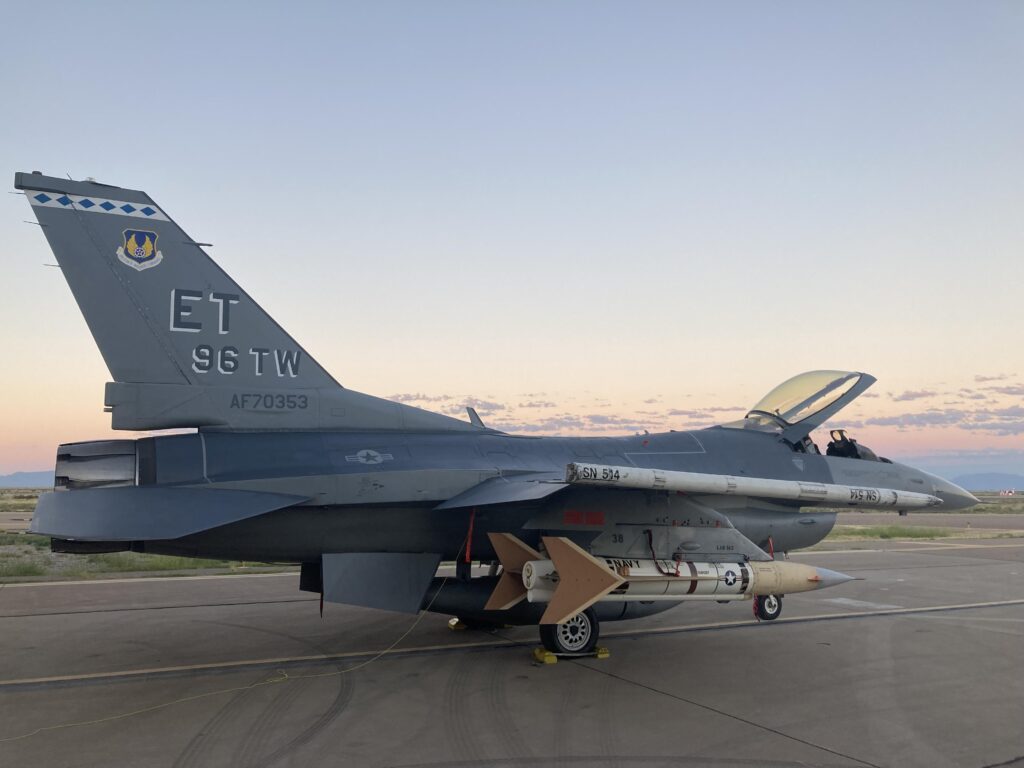
Over six decades, the target played an instrumental role in the testing and deployment of new systems including short range air-to air missiles including the Air Intercept Missile (AIM-9) Sidewinder, ship-borne short range anti-aircraft missiles including the Sea Sparrow Missile (RIM-7) and ships equipped with missile defense (AEGIS) systems. The targets supported both domestic and international partners including NATO nations and was commonly used in conjunction with the U.S. Air Force, most often launched from the F-16 Fighting Falcon. 

Just recently, the Air Force’s 412th Test Wing launched seven AQM-37 targets from F-16s to support testing of E-2D Advanced Hawkeye and F-35 Lightning II capabilities at Navy Exercise Gray Flag at the Point Mugu Sea Range. The AQM-37’s involvement in this exercise and countless others, enhanced capability and supported mission readiness for joint forces. 

“Our supersonic technical team has done fantastic work over the last several years to get the final targets launched and put to use in a way that supports development and testing for our military,” Blottenberger said. “The team saved the Navy close to $1 million by avoiding demilitarization of the last several targets by using them for the Navy Gray Flag Exercise and other test and evaluation events.” 

PMA-208 provides threat representative aerial targets for fleet training and weapons systems test and evaluation.


DHS S&T and NOAA Transition Harmonized Waterway Database to Coast Guard

WASHINGTON — The Department of Homeland Security (DHS) Science and Technology Directorate (S&T) is delivering a harmonized geospatial dataset of national waterways to all federal agencies that comprise the U.S. Committee on the Marine Transportation System (CMTS), the directorate said in an Oct. 25 release. 

The “Harmonized Waterway” project and the delivered dataset will enable enhanced delivery of critical Marine Safety Information (MSI) to mariners in U.S. waters, as well as improve inter-agency coordination to advance federal waterways management. The Coast Guard will host and maintain this geospatial dataset and make this information available online, at no cost to the public. In addition, waterways managers and planners, industry leaders and researchers will have a new tool to help study and monitor our national waterways. 

“The Harmonized Waterway dataset will make it possible for anyone using U.S. waterways — from ships engaged in international trade and commercial fishermen, to recreational boaters — to go online to find the navigational information they need to sail in U.S. waters,” said Dr. Dimitri Kusnezov, DHS undersecretary for Science and Technology. 

With the delivery of the database, the Coast Guard will now transition its delivery of MSI from referencing the National Oceanic and Atmospheric Administration (NOAA) paper chart identification name and number to the harmonized waterway name. 

“The transition away from paper charts and manual application of MSI to electronic charts allows the Coast Guard to improve our delivery of critical safety information to the mariner and represents a major milestone in our efforts to implement the CMTS Strategic Implementation of e-Navigation,” said Mike Emerson, the Coast Guard’s director of Marine Transportation Systems. 

“The Harmonized Waterway project will help immensely as we transition away from traditional paper charts and focus on electronic charts as the primary product for navigation,” said NOAA Adm. Benjamin Evans, director of NOAA Office of Coast Survey. “Working in concert with other agencies helps us do this in an efficient, unified manner.”  

“The Harmonized Waterway program is a major leap forward for the U.S. Marine Transportation System and its ability to provide mariners with the best information for navigating our waterways. The success of this project also highlights the importance of our interagency collaboration and partnerships, and the CMTS has been a proud supporter of this project since its inception,” said Helen Brohl, executive director, CMTS. 

Another benefit the Harmonized Waterway data affords the maritime community is to deconflict and synchronize names and abbreviations for rivers, bays and landmarks, which can differ between local, state and federal agencies. 

“The database is much more agile and can be updated and made available to mariners electronically much more quickly than paper charts,” said David Paquette, S&T Maritime Safety and Security program manager. 

The Coast Guard is coordinating the release of its revised Local Notice to Mariner reports with NOAA and anticipates the transition will begin in 2023. 

For more information about S&T’s innovation programs and tools, visit https://www.dhs.gov/science-and-technology/business-opportunities


Mercury’s New Electronic Warfare Combat Training Pod Available for Order Following Successful Flight Testing

The mPOD jammer training pod is designed to emulate realistic combat scenarios. mPOD

ANDOVER, Mass. — Mercury Systems Inc., a leader in trusted, secure mission-critical technologies for aerospace and defense, announced Oct. 25 that its new mPOD, a rapidly reprogrammable electronic attack (EA) training system designed to train pilots using realistic, near-peer jamming capabilities, has successfully completed initial flight testing and is available for order. 

Tactical Air Support, a leader in commercial air services, tactical aviation training and technical advisory services for U.S. military and international partners, oversaw three days of flight testing that ran beyond visual range tactical intercept training engagements replicating adversary tactics. F-5 aircraft equipped with Mercury’s mPOD EA training system successfully broke, delayed and denied opposing fighter radar locks, created multiple false targets on the opposing fighter radar and performed other electronic attack techniques. 

To sharpen their combat skills, pilots need to train in mock air-to-air combat with other pilots operating as adversaries. Using mPOD, “adversary” pilots can emulate enemy jamming techniques accurately, conditioning aircrews to evolving threat scenarios and better preparing them for real combat. 

“Our aircrew need to train against realistic threat representative systems,” said RC Thompson, CEO of Tactical Air. “Our close working relationship with Mercury has resulted in a state of the art, internally configured EA capability fully integrated with our open architecture sensor suite. The result is threat realism with no performance penalty on our aircraft. It has been a pleasure to work with such an innovative and dynamic company.” 

“We are excited to begin offering our mPOD training system to organizations around the world,” said Mark Bruington, vice president, Mercury Mission Systems. “mPOD is an innovative solution that can be programmed quickly and will help U.S. and allied military pilots develop tactics to maintain a strategic advantage over adversaries. It will also increase pilot and aircraft survivability and reduce training costs through integrated threat presentations.” 

mPOD is built with proven technology for electronic warfare training, test and evaluation: 

  • Simultaneously emulate multiple National Air and Space Intelligence Center (NASIC)-validated threats with proven Filthy Buzzard digital RF memory (DRFM) technology developed and validated over 35 years in partnership with the U.S. Air Force and Navy 
  • Quickly reprogram missions and threats for different aircraft and radar systems in minutes via an intuitive software interface 
  • Speed integration with the aircraft display and control panel using the user interface or an integrated cockpit control panel 
  • Attach the mPOD to any aircraft weapon’s pylon or integrate it within the aircraft to reduce drag and maintain aircraft performance 
  • Decrease overall sustainment cost through a scalable and modular design with six swappable, high MTBF hardware components including a wideband Meggitt antenna 


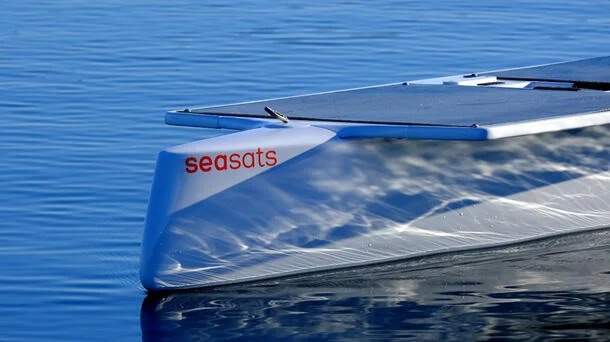
L3Harris Invests in Seasats to Accelerate New Autonomous Maritime Capabilities to the Navy

L3Harris Techonolgies announced its strategic investment in Seasats for their low-cost, solar-powered maritime autonomous surface vehicles. L3HARRIS

MELBOURNE, Fla. — L3Harris Technologies has made a strategic investment in Seasats, a privately-owned company involved in the design and production of low-cost, solar-powered maritime autonomous surface vehicles (ASV) for military and commercial use, L3Harris said in a release. 

L3Harris is making its investment to fuel collaborative development and accelerate production of Seasats’ X3 micro-ASV, whose unique design and low-signature waterline makes it difficult to detect by sight and radar. The X3 features stealthy performance and reliable six-month endurance in all weather conditions for a fraction of the price of current small maritime ASVs, and provides a complement to L3Harris’ large and medium-sized ASV offerings. 

“Our U.S. Navy customers are pursuing innovative solutions to reliably and efficiently patrol the waters from the Red Sea into the Persian Gulf and we understand their urgent need for proliferated maritime ASV architectures,” said Daniel Gittsovich, vice president, Corporate Strategy and Development, L3Harris. “Our investment and collaboration with Seasats provides a proven, multi-capability solution for global maritime security challenges.” 

Inexpensive, versatile and ideally suited to host a variety of maritime payloads, the X3 is well positioned to enhance the counter-piracy, mine clearing, intelligence, surveillance and reconnaissance, and electronic warfare solutions L3Harris already provides its customers. 

Seasats can also serve commercial clients by pairing platforms and sensors to enable advanced hydrographic surveys, infrastructure monitoring, and scientific discovery. Future collaboration and technology sharing between L3Harris and Seasats has the potential to increase the autonomous capabilities, artificial intelligence and endurance of the X3 while cutting production time up to 75 percent. 

“The L3Harris team recognized the value in pairing their payloads and sensors with our versatile platform because together they create an operations-ready solution for a wide range of critical military and commercial uses,” said Mike Flanigan, CEO of Seasats. “Our previous tests and demonstrations with the Navy were enthusiastically received and we are looking forward to making collaborative improvements with L3Harris as we prepare for operational capabilities testing with Task Force 59 in the Arabian Peninsula next year.” 

The U.S. Navy 5th Fleet commander, Vice Adm. Brad Cooper, recently announced a goal to have at least 100 unmanned surface vessels patrolling the Arabian Peninsula by mid-2023. Earlier this year the Navy invited Seasats to participate in its “Digital Horizon 2022” exercise designed to develop maritime domain awareness and accelerate the Navy’s robotic and artificial intelligence maritime capabilities.