Keel Authenticated for Future USS Robert E. Simanek

The keel for the future USS Robert E. Simanek (ESB 7), a Lewis B. Puller-class Expeditionary Sea Base (ESB), was laid at General Dynamics National Steel and Shipbuilding Company (GD-NASSCO) shipyard in San Diego, Oct. 21. GENERAL DYNAMICS NASSCCO

The keel for the future USS Robert E. Simanek (ESB 7), a Lewis B. Puller-class Expeditionary Sea Base (ESB), was laid at General Dynamics National Steel and Shipbuilding Company (GD-NASSCO) shipyard in San Diego, Oct. 21, Team Ships Public Affairs said in a release.

The ship is named for Private First Class Robert Ernest Simanek, who was awarded the Medal of Honor for shielding fellow Marines from a grenade at the Battle of Bunker Hill during the Korean War. The Medal of Honor was presented to him by President Dwight D. Eisenhower in a White House ceremony in 1953.

Simanek recently passed away on August 1, 2022. In addition to the Medal of Honor, he received a Purple Heart award, the Korean Service Medal with two bronze service stars, the United Nations Service Medal and the National Defense Service Medal. His daughter, Ann Simanek, is the sponsor of the ship and attended the keel laying ceremony.

“We are honored this ship will celebrate the late Robert E. Simanek’s legacy as a Medal of Honor recipient and Korean War veteran and his dedication to our country,” said Tim Roberts, Strategic and Theater Sealift program manager, Program Executive Office Ships. “ESBs provide a critical capability to the fleet and provide for increased flexibility.”

Expeditionary Sea Base ships are highly flexible platforms used across a broad range of military operations supporting multiple operational phases. Acting as a mobile sea base, they are a part of the critical access infrastructure that supports the deployment of forces and supplies to provide prepositioned equipment and sustainment with adaptable distribution capability.

These ships support Aviation Mine Countermeasure and Special Operations Force missions. In addition to the flight deck, the ESB has a hangar with two aviation operating spots capable of handling MH-53E equivalent helicopters, accommodations, workspaces and ordnance storage for embarked force, enhanced command, control, communications, computers and intelligence (C4I). These ships support embarked force mission planning and execution and has a reconfigurable mission deck area to store embarked force equipment, including mine sleds and Rigid Hull Inflatable Boats (RHIBs).

In 2019, the Navy decided to commission all Expeditionary Sea Base ships to allow them to conduct a broader and more lethal mission set compared to original plans for them to operate with a USNS designation. A Navy O-6 commands ESBs and a hybrid-manned crew of military personnel and Military Sealift Command civilian mariners. This crew makeup provides combatant commanders with increased operational flexibility in employing the platform.

Construction of the future USS John L. Canley (ESB 6) and the Navy’s John Lewis Class Fleet Replenishment Oilers (T-AO) are ongoing at GD-NASSCO.

USS Milwaukee Deploys to Support Regional Cooperation and Security

Family members wave to their loved ones as Freedom-variant littoral combat ship USS Milwaukee (LCS 5) Departs Naval Station Mayport 18 Oct. Milwaukee is one of four ships assigned to Surface Division 21. U.S. NAVY

MAYPORT, Fla. — The Freedom-variant littoral combat ship USS Milwaukee (LCS 5), along with the “Dragon Whales” of Helicopter Sea Combat Squadron (HSC) 28 Detachment 9 and embarked U.S. Coast Guard Law Enforcement Detachment (LEDET), departed from Naval Station Mayport Oct. 18, starting its second deployment this year to support U.S. 4th Fleet area of operations, said Lt. Anthony Junco of Commander, Littoral Combat Ship Squadron Two in an Oct. 19 release. 

Milwaukee will support counter-illicit trafficking in the Caribbean and the Eastern Pacific. Milwaukee’s operations will also involve exercises and exchanges with partner nations, supporting U.S. 4th Fleet efforts to enhance capability and improve interoperability e while reinforcing the Fleet’s position as the regional partner of choice. 
 
Deploying an LCS to the region demonstrates the U.S. commitment to regional security. The ship’s size, speed and agility make LCS ideal for narcotics interdictions, partner engagements and port access. 
 
“This crew is excited to take the ship on another deployment to 4th Fleet. We have some new Sailors that are looking forward to see new parts of the world, and the Sailors who deployed last time are ready to execute their mission once again,” said Cmdr. Brian A. Forster, commanding officer of Milwaukee. “The interoperability and exercise with our partner nations were the highlight of last deployment and we look forward to doing the same. Building peace through partnership is a core aspect of any deployment and the Sailors of USS Milwaukee are looking forward to working with our allies.” 
 
Manned by more than 100 Sailors, Milwaukee’s crew will consist of surface warfare mission-package personnel, a U.S. Coast Guard law enforcement detachment and an aviation detachment, who will operate the embarked MH-60S helicopter. 
 
USS Milwaukee is operationally assigned to U.S. 2nd Fleet and is one of four littoral combat ships under Surface Division 21. 


Middle East Naval Coalition Expands with Seychelles as 10th Member

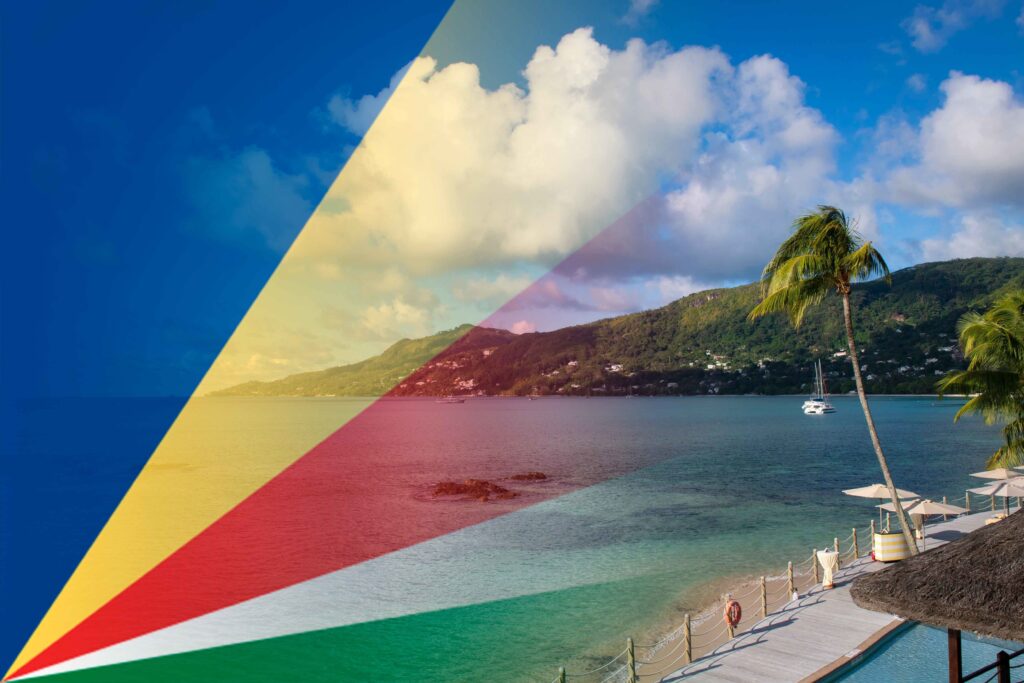
Graphic image depicting the flag of the Indian Ocean island nation of the Seychelles and its shoreline, Sept. 23. U.S. ARMY / Sgt. Terry Vongsouthi

MANAMA, Bahrain — U.S. Naval Forces Central Command (NAVCENT) announced Oct. 19 the Indian Ocean island nation of the Seychelles has joined the International Maritime Security Construct (IMSC), a multinational maritime coalition established in 2019 to deter attacks on commercial shipping in the Middle East. 

Seychelles becomes the tenth member of IMSC and its operational arm, Coalition Task Force Sentinel, which also welcomed Romania in March. Headquartered in Bahrain, IMSC is led by NAVCENT. 
 
“We are very excited to now welcome Seychelles, another great maritime partner in the region,” said Vice Adm. Brad Cooper, commander of NAVCENT, U.S. 5th Fleet and Combined Maritime Forces. “Having representation from countries all over the world makes us a stronger team.” 
 
IMSC was formed in July 2019 in response to increased threats to merchant mariners transiting international waters in the Middle East. Coalition Task Force Sentinel was established four months later to deter state-sponsored malign activity and reassure the merchant shipping industry in the Bab al-Mandeb and Strait of Hormuz. 

“Through our presence across the Middle East, we continue to strengthen our coalition and build new partnerships while reassuring those who operate in this region,” said United Kingdom Royal Navy Commodore Ben Aldous, commander of IMSC and Coalition Task Force Sentinel. 

In addition to Seychelles and Romania, IMSC’s member-nations include Albania, Bahrain, Estonia, Lithuania, Saudi Arabia, the United Arab Emirates, United Kingdom and United States. 

Seychelles is also a member of Combined Maritime Forces, another major naval partnership based in the Middle East led by Cooper. 


Port of Guam Receives Port Security Grant, Working with U.S. Coast Guard Toward Increased Resiliency

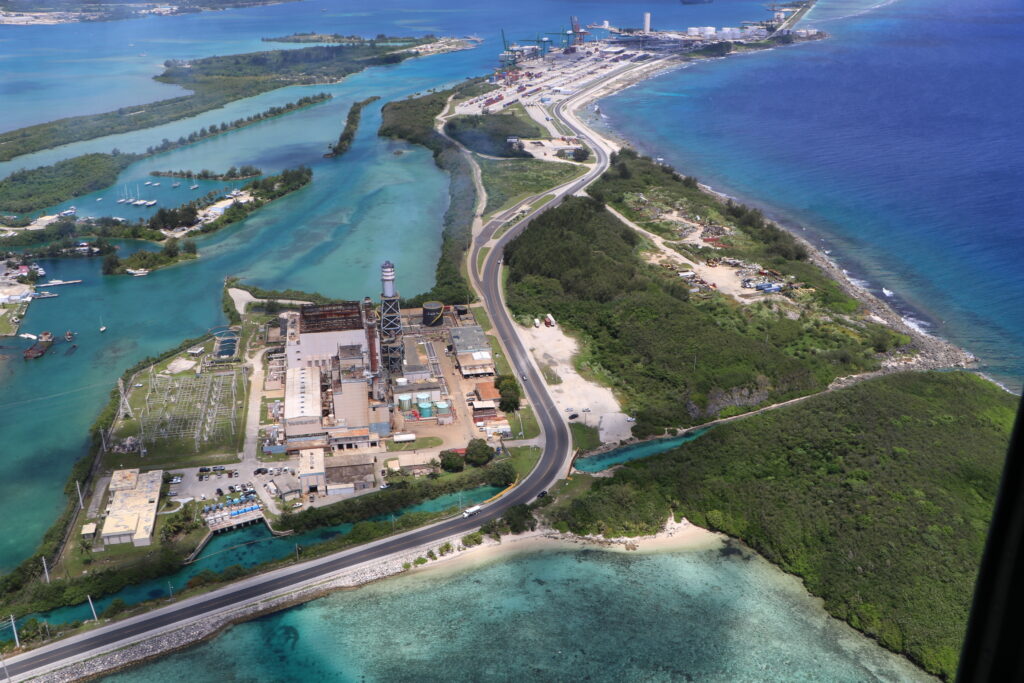
The Port of Guam as seen from the air in June 2021. U.S. COAST GUARD

SANTA RITA, Guam — The Jose D. Leon Guerrero Commercial Port also known as the Port of Guam is among several Western Pacific entities receiving federal grant money through the 2022 Port Security Grant Program (PSGP) to ensure supply chain resiliency within Guam and the Mariana Islands, U.S. Coast Guard Forces Marianas said in a release. 

Guam will receive $564,218 from the PSGP. The PSGP is one of four grant programs under the Department of Homeland Security’s Federal Emergency Management Agency that focuses on strengthening the nation’s critical transportation security infrastructure.  
 
The purpose of the PSGP is to provide the necessary funds for not only state partners but local, territorial and private sector partners to enhance security measures and resilience to critical maritime infrastructure and build threat readiness. 
   
The U.S. Department of Transportation’s Maritime Administration also awarded Guam $5.7 million in grants under the America’s Marine Highway Program in early October. The Jose D. Leon Guerrero Commercial Port is Guam’s only deep-water port and receives about 90% of the island’s imports. It offers facilities and services to ships of all registries and is striving to develop into the world-class container terminal port of the Western Pacific Region. 

“We’re excited for our partners at the Port of Guam, and these awards are very timely. The region we operate in is referred to as the Blue Pacific Continent, highlighting that the ocean connects hundreds of diverse communities,” said Capt. Nick Simmons, commander of U.S. Coast Guard Forces Micronesia and the Captain of the Port. “The eyes of the world are focused on this region, and it has never been more obvious how vital our ports are to our way of life — our economic security and prosperity.” 

The PSGP is vital to maintaining a modernized and secure port supporting the uninterrupted flow of commerce. Regional health, safety, and prosperity inextricably link to the maritime-enabled flow of goods and services, especially realized within the Pacific Islands. This program is one of the ways the U.S. Coast Guard works with private and public sector partners to secure the regional maritime transportation system from disruption, cyber-enabled or otherwise. 

“October is cyber security awareness month which can sound vague but requires our attention. We must safeguard our critical infrastructure from all threats, including those in the digital domain. We are adding capacity here in the Sector, including a cyber security expert, capacity crucial to better supporting our regional partners,” said Simmons. 

At the end of September, members from U.S. Coast Guard Forces Micronesia/Sector Guam, the Government of Guam and industry partners conducted a successful annual full-scale maritime security training exercise at the port of Guam. This exercise prepares federal, territorial and industry Area Maritime Security Committee partners to respond to security threats affecting Guam’s marine transportation system and surrounding critical infrastructure. The scenarios included: 

• Simultaneous cyber incidents at several port facilities. 
• Coordination of response efforts during an island-wide loss of communications. 
• Simulated response to suspected terrorist activity. 
• Changes to the maritime security level. 
• Establishment of a Unified Command to manage the various response efforts. 

“Recently, the Port invited us over to help celebrate their 47th anniversary,” said Simmons. “The main event was a coed team tractor-trailer pull for time. There were seven teams, and the Port Police took the first prize. What heartened me the most was to see our Coast Guard members step in to make a difference when a few teams needed another person. It reflects what we know is true out here, this thing only works if we come together as a team to pull it across the finish line.”


Textron Systems to Provide Second U.S. ESB with Shipboard UAS Operation

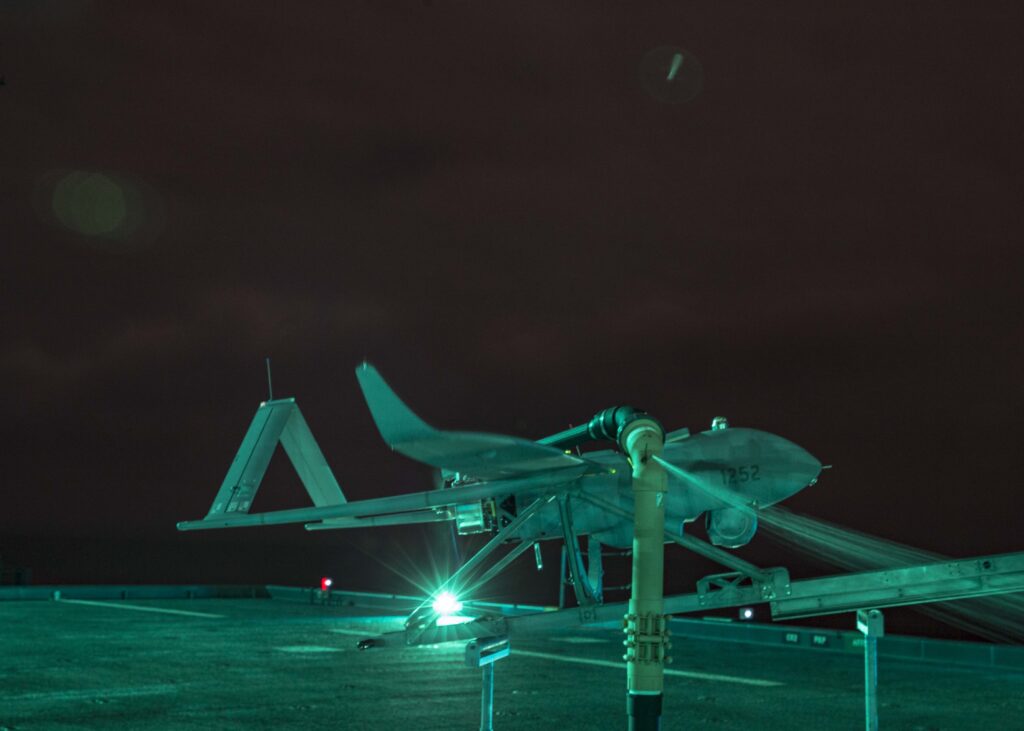
Aerosonde Unmanned Arial Surveillance (UAS) vehicle, Buck G, awaits to launch aboard the Expeditionary Sea-Base USS Hershel “Woody” Williams (ESB 4) in the Atlantic Ocean, Sept. 25, 2020. U.S. MARINE CORPS / Sgt. Megan Roses

HUNT VALLEY, Md. — Textron Systems Corporation, a Textron Inc. company, has been awarded a contract valued at up to $22 million by the U.S. Navy’s Naval Air Systems Command (NAVAIR) to provide UAS operational support to the USS Miguel Keith (ESB 5), the company said in an Oct. 20 release. The contract begins in fiscal 2023 and has a total potential performance period of five years. This award builds on the four-year extension of USS Hershel “Woody” Williams (ESB 4) earlier this year and joins two guided-missile destroyers, bringing the total number of U.S. Navy ships supported by the Aerosonde UAS system to four.  

Under this contract, Textron Systems will deploy its Aerosonde UAS to provide extended range intelligence, surveillance and reconnaissance (ISR) services with enhanced mission payloads aboard the ESB 5. The company’s Field Service Representatives will work alongside the sailors onboard to provide support for a variety of maritime missions.  

“There are numerous vessels of opportunity with the Navy that can benefit from consistent multi-INT ISR,” said Wayne Prender, senior vice president, Air Systems. “Through this fee-for-service contract, the Navy can continue to mature future shipboard ISR requirements while supporting existing real-world missions. We are already seeing the benefits for DDG- and ESB-class ships, and we continue to optimize our services to deliver the unique operational and logistical capabilities our customers demand in order to accomplish their mission and keep our sailors safe.” 

The Aerosonde system has amassed more than 585,000 flight hours while serving multiple U.S. and international allies. It is designed for expeditionary land- and sea-based operations in austere environments and is equipped for multiple payload configurations. For more than 10 years, Textron Systems has provided turnkey, fee-for-service operations, providing hands-on operational support for customers around the world. 


Ultra Maritime and UMS SKELDAR to Evaluate UAS-Based ASW Solution

UMS SKELDAR

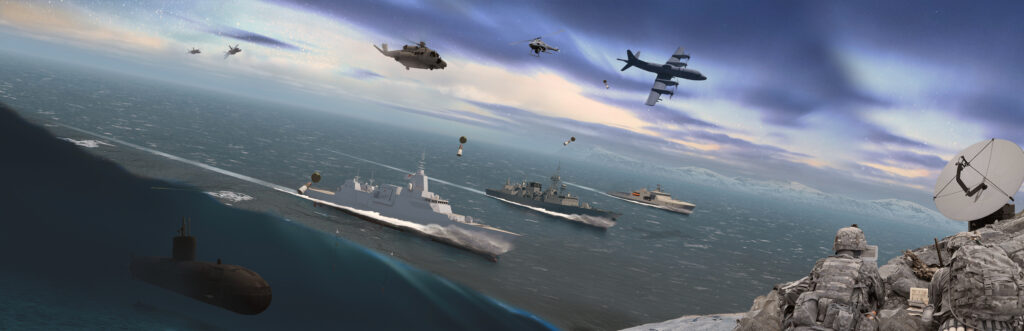
DARTHMOUTH, CANADA — Ultra Maritime (Ultra) and UMS SKELDAR announced that they have been awarded a 2nd Phase contract under the Department of National Defence’s Innovation for Defence Excellence and Security program, which will explore the development of a Rotary Wing UAS to provide an Anti-Submarine Warfare (ASW) sonobuoy dispensing capability, based on the SKELDAR V-200 Uncrewed Aircraft System (UAS). 

This innovative program will review how a medium-sized UAS can be used to deploy sonobuoys for the purpose of tracking potentially hostile submarines operating in the open ocean or close to coastal areas that could pose a threat to the Royal Canadian Navy or other forces. Andrew Anderson, chief technology officer, Ultra Sonar Systems, explains: “We are constantly reviewing new technologies to determine how they can be used to tackle the threat from hostile submarines. The scope of this program is to evaluate the technical and operational feasibility of deploying sonobuoys from a Class II Rotary Wing UAS, to provide the warfighter with another tool in the ASW toolbox.” 

“We are delighted to be a part of this contract with Ultra,” adds Richard Hjelmberg, vice president for Business Development for UMS SKELDAR. “Using Rotary Unmanned Aircraft Systems to help conduct ASW will provide many benefits, not least enabling rapid deployment capabilities, a smaller logistical footprint on Canadian Armed Forces ships and a cost-effective alternative to current methods. At UMS, we are proud of our innovation leadership when it comes to advances in rotary-wing UAS platforms. Our SKELDAR V-200 platform is a prime example of this, with a capability of completing remote automatic flights, exceeding six-hour flight times thanks to the robust heavy fuel engine and the ability to provide a high degree of maintainability and minimum turn-around times. These credentials we believe are the perfect fit for this program.” 

The SKELDAR V-200 has advanced intelligence-gathering capabilities when equipped with multiple sensors. Flight times can exceed six hours, and the heavy-fuel engine combined with efficient maintenance procedures and ease of access to the engine compartment allow for highly efficient routine service processes. 


Navy Announces Two Flag Assignments

ARLINGTON, Va. — The secretary of the Navy and chief of naval operations announced Oct. 20 the following assignments: 

Rear Adm. James A. Kirk will be assigned as commander, Expeditionary Strike Group Three, San Diego, California. Kirk most recently served as commander, Carrier Strike Group Fifteen, San Diego, California.  

Rear Adm. (lower half) Michael W. Baze will be assigned as commander, Navy Personnel Command; and deputy chief of naval personnel, Millington, Tennessee. Baze is currently serving as commander, Expeditionary Strike Group Three, San Diego, California. 


U.S. Marine Corps successfully tests Rafael’s TAMIR IRON DOME Interceptor

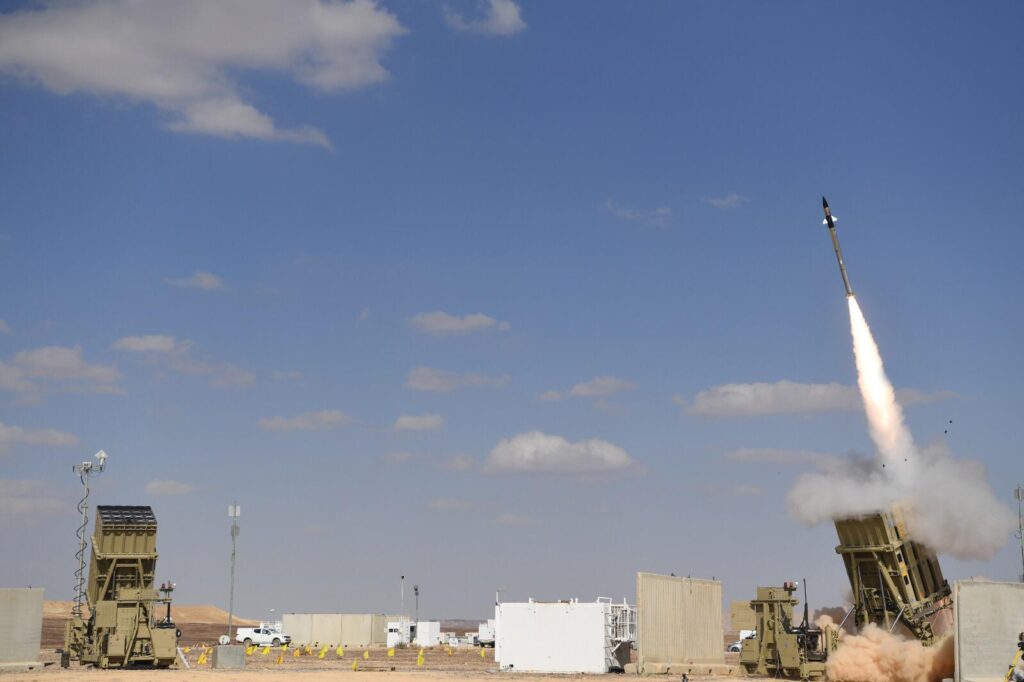
U.S. Marines at the White Sands facility in New Mexico test a new prototype system for Medium Range Intercept Capability using TAMIR IRON DOME interceptors. Spokesperson Department at the Israeli Ministry of Defense

HAIFA, Israel — The U.S. Marine Corps’ latest live fire test of the TAMIR IRON DOME culminates a series of three trials carried out over the past year, and for the third time the system successfully intercepted a wide variety of targets, Rafael said in an Oct. 1 release. In this latest test, the ability to continuously launch TAMIR IRON DOME interceptors from a mobile launcher developed by the Marines was also tested. 

The series of tests were conducted by the Marines at the White Sands facility in New Mexico as part of the development program to test a new prototype system for Medium Range Intercept Capability (MRIC – Medium Range Intercept Capability). 

“The three tests that took place this year proved that the performance of the MRIC system with IRON DOME interceptors is good and provides a dedicated launcher solution for the Marines,” said Don Kelly, project manager in the Air Defense Department (GBAD) of the Marine Corps’ Land Directorate (PEO Land Systems) at the end of the test. 

“Once again, RAFAEL’s systems have proven that they are able to integrate into existing systems and create synergy between systems, providing optimal performance,” said Executive Vice President and Head of the Air and Missile Defense Directorate at RAFAEL Brigadier General (Ret.) Pini Yungman. “RAFAEL’s advanced systems are developed with an “open architecture” allowing seamless integration with other systems.  In the latest test conducted by the Marines, a successful combination of the TAMIR interceptor launched from a new launcher developed under the leadership of the Marines, combined with the Marines’ radar system and the battle management system, which are systems developed by American industries, was demonstrated.” 


Cutter Alert Returns to Astoria Following 68-DayDrug Interdiction Patrol

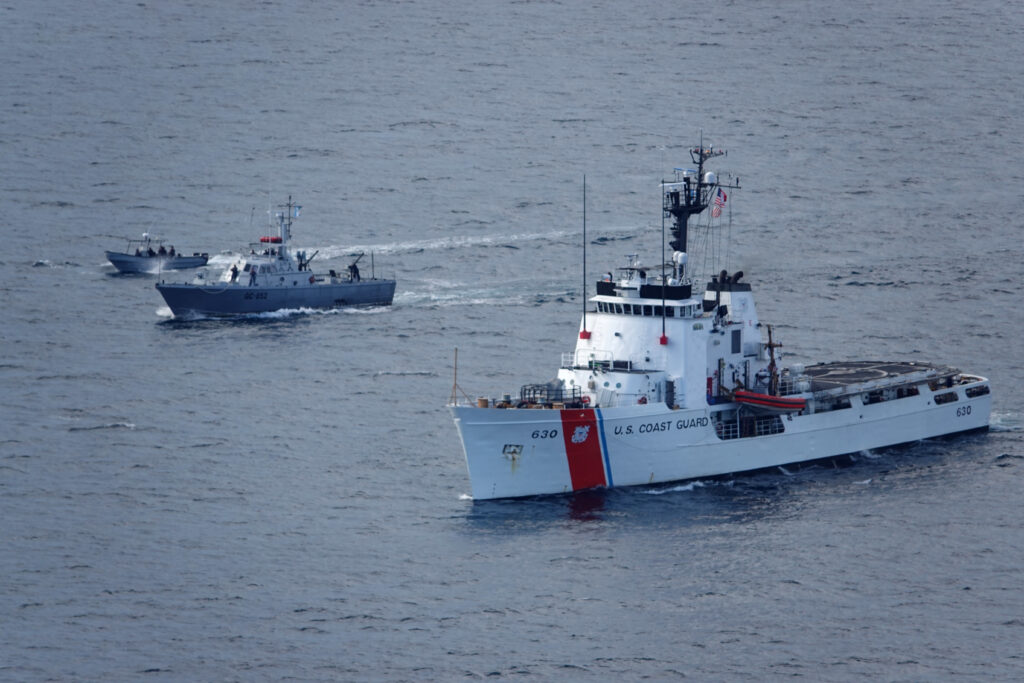
The Coast Guard Cutter Alert (WMEC 630) conducts an engagement coincidental to operations with members of the Guatemalan Navy August 23, 2022, five miles south of Puerto Quetzal, Guatemala. U.S. COAST GUARD

ASTORIA, Ore. — The U.S. Coast Guard Cutter Alert (WMEC 630) crew returned to their homeport Saturday Oct. 8, following a 68-day patrol in the Eastern Pacific Ocean, the Coast Guard Pacific Area said in an Oct. 19 release. 
 
The crew steamed over 13,700 nautical miles ranging from Oregon to Columbia and conducted counter-drug missions, search-and-rescue operations and international law enforcement training engagements. 
 
While in theater, Alert’s crew boarded three Costa Rican fishing vessels and successfully removed 1,440 pounds of marijuana valued at $1.4 million. Furthermore, during the boarding of the fishing vessel Mujer Gitana, Alert’s crew detected and articulated numerous factors of reasonable suspicion allowing Costa Rica to issue a return to port order. Costa Rican Law Enforcement officials searched the vessel and located a hidden compartment under a reversible steel hydraulic door system, a smuggling technique that reportedly has never been seen before on a Costa Rican vessel. The search resulted in the seizure of 729 kilograms of cocaine worth $21.1 million, and the apprehension of seven detainees by one of our top-priority partner nations. 
 
Additionally, the Alert crew led a multinational training engagement with the Guatemalan Navy, conducted three joint boardings with the Costa Rican Coast Guard, and responded to one search and rescue case involving an American fisherman off the coast of Baja California. 
 
The embarked helicopter aircrew flew more than 50 hours over 16 days and searched thousands of miles over the Eastern Pacific Ocean. 
 
The ship also freed two sea turtles that were found entangled in fishing nets left drifting upon the ocean. 
 
“I’m extremely proud of the crew’s dedication, hard work, and sustained high levels of performance over the last two months,” said Cmdr. Matthew R. Kolodica, Alert’s commanding officer. “The Alert and crew truly epitomize the Coast Guard’s motto ‘Semper Paratus’ – ‘Always Ready’ and had a direct positive impact on stemming the flow of illicit narcotics to America, and we helped counter its destabilizing effects in Central and South America.  As each day passes, the crew continues to inspire me; I’m truly honored to lead such an outstanding crew.” 
 
Commissioned in 1969, Alert is one of three 210-foot medium-endurance cutters stationed on the West Coast. With a crew of 75, they regularly perform counter-drug, migrant interdiction, search and rescue and fisheries law enforcement missions throughout the Northern and Eastern Pacific Ocean. 


Rear Adm. Wettlaufer: Shortage of Ships, Mariners an Ongoing Problem for Military Sealift Command

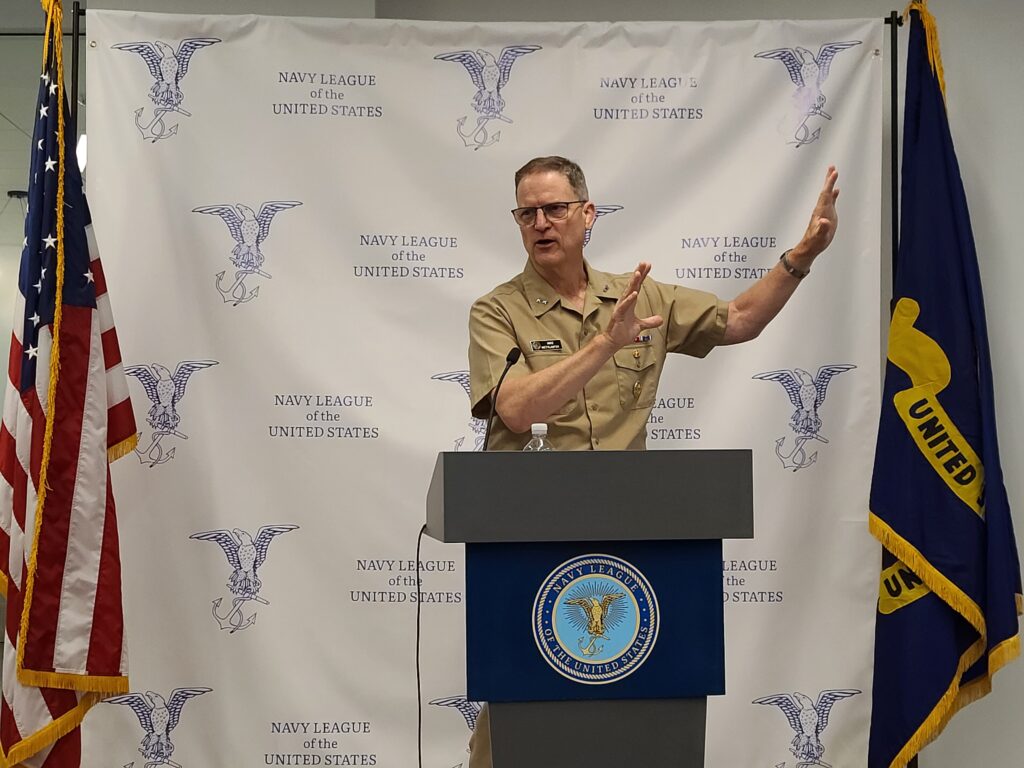
Rear Adm. Michael A. Wettlaufer, commander of Military Sealift Command, answers questions from the audience after speaking about the needs of the organization at the Navy League hosted Special Topic Breakfast, Oct. 18, sponsored by General Dynamics. NAVY LEAGUE OF THE UNITED STATES / James Peterson

ARLINGTON, VA — Military Sealift Command (MSC) continues to face a shortage of both ships and sailors, and it will take a “collective effort” from government and industry to turn the tide, Rear Adm. Michael Wettlaufer, commander of MSC, said here during an event hosted by the Navy League of the United States.

Rear Adm. Wettlaufer noted that after the number of U.S. mariners reached their peak during World War II at 262,000, their population has plummeted to a fraction of that today — about 33,000 between 2018-2021. With recruitment and retention a problem across all of the services, MSC faces no easy solutions.

Specifically, the top challenges currently facing MSC in this area are an atrophied maritime industry, a reduced U.S. flag commercial fleet and a shortage of ocean-going mariners, he said.

To help the issue of a lack of vessels, Wettlaufer said MSC will seek to incentivize commercial participation.

“We’ve got to incentivize U.S. flagged shipping,” he said, noting that the number of U.S. flagged ships at their disposal had declined from 282 at the start of this century to 178 today. “On the production side, it’s great; we’re building ships. But we certainly need more.”

On the recruitment side, it is a multi-pronged problem. A lack of U.S. flagged ships causes a decrease in the mariner population naturally, but there are other issues that the command needs to address, Wettlaufer said.

“This ecosystem is under stress [and] this needs our nation’s focus,” Wettlaufer said. “Why does [this decline in mariner population] happen? Have people changed, or are we ignoring the problem? I think we’re ignoring the problem. I think we’re ignoring the engagement opportunity.”

To help fix this issue, MSC will seek to get mariners to sea through a vigorous recruiting campaign, incentives and training. He also said MSC will be more aggressive in preventing sexual assault. Regardless, it will take a “collective effort” between government and industry to deal with this ongoing issue, the rear admiral said.