Coast Guard Cutter Midgett visited Chennai, India during Western Pacific Patrol 2022
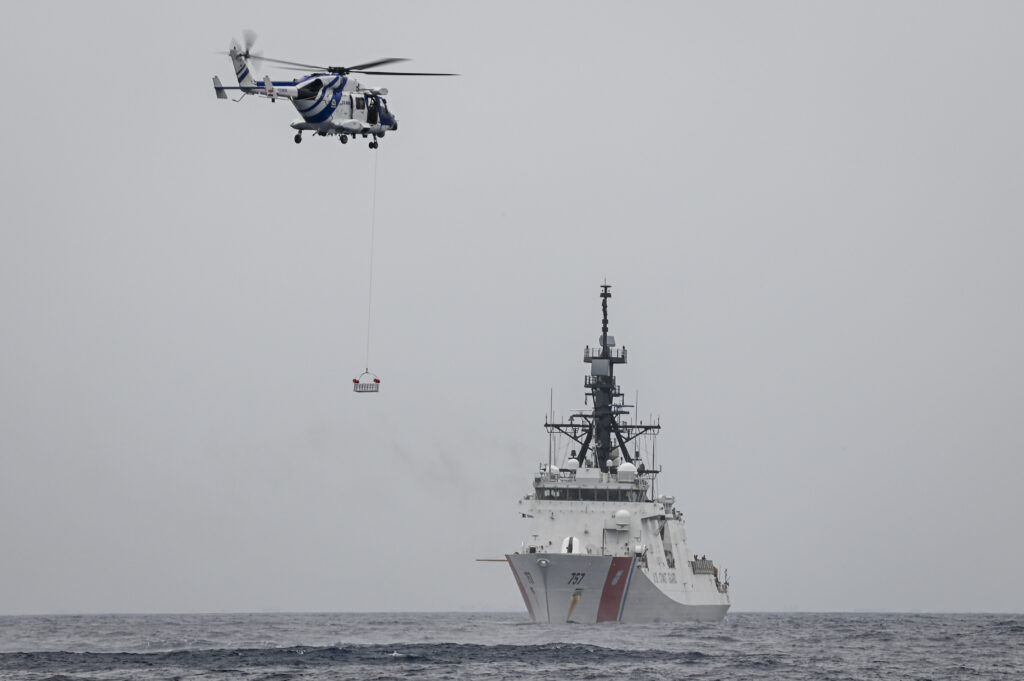
A search and rescue helicopter from the Indian Coast Guard hovers above the waters off Chennai, India, while U.S. Coast Guard Cutter Midgett (WMSL 757) transits in the background during a joint exercise on Sept. 19. The drills allow both countries to observe how each other respond during a variety of scenarios. U.S. COAST GUARD / Petty Officer Steve Strohmaier

CHENNAI, India — The U.S. Coast Guard Cutter Midgett (WMSL 757) departed Chennai, India, on Sept. 19 following the crew’s third international port call during their months-long Western Pacific deployment to the region, Coast Guard Pacific Area announced Sept. 21.

Midgett’s crew conducted bilateral in-port exchanges sharing expertise and best practices in Coast Guard missions with the Indian Coast Guard while in Chennai, building upon the strong partnership between the two nations.

The Midgett visited with the U.S. Consul General of Chennai, Judith Ravin, the Indian coast guard East Region Chief of Staff, Satish Kumar, the Indian coast guard District 5 commodore and other local dignitaries while the Midgett was in Chennai.

Midgett’s crew conducted bi-lateral underway joint exercises with the Indian Coast Guard just off the coast of Chennai, and these drills consisted of a search and rescue exercise, boarding of a target vessel, firefighting capabilities, and formation maneuvering.

“The U.S. Coast Guard has a longstanding commitment to our allies and partners in the Indo-Pacific,” said U.S. Coast Guard Capt. Willie Carmichael, commanding officer of the Midgett. “We spent the past four days with our Indian Coast Guard partners working to advance our capabilities and interoperability through meaningful human interactions with our likeminded partners who share similar values and a commitment to a free and open Indo-Pacific.”

Midgett is operating in support of United States Indo-Pacific Command, which oversees military operations in the region.

Operating under the tactical control of Commander, U.S. 7th Fleet, the cutter’s crew plans to engage in professional and subject matter expert exchanges with regional partners and allies and will patrol and operate as directed during their Western Pacific deployment.

The Coast Guard provides expertise within the mission sets of search and rescue; illegal, unreported and unregulated fishing; maritime environmental response; maritime security; maritime domain awareness; aviation operations; interoperability; and humanitarian assistance and disaster relief.

The U.S. Coast Guard has a 150-year enduring role in the Indo-Pacific. The service’s ongoing deployment of resources to the region directly supports U.S. foreign policy and national security objectives in the Indo-Pacific Strategy and the National Security Strategy.

Since 2019, the Coast Guard Cutter Bertholf (WMSL 750), Stratton (WMSL 751), Waesche (WMSL 751) and Munro (WMSL 755) have deployed to the Western Pacific.

Commissioned in 2019, Midgett is one of two Coast Guard legend-class national security cutters homeported in Honolulu.
Cutter Legare Returns from Three-Month Counter Narcotics Deployment

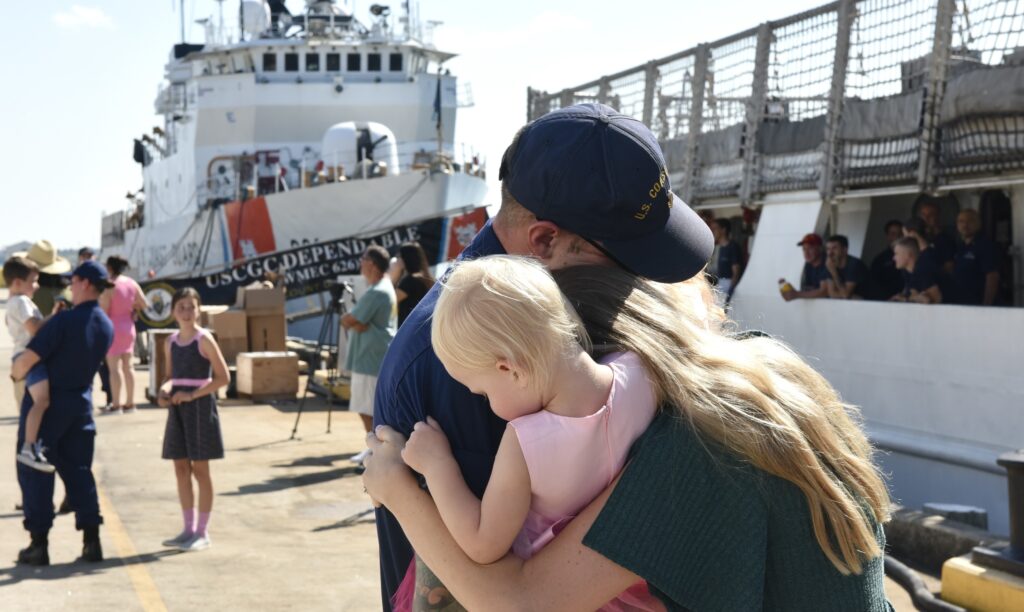
A USCGC Legare (WMEC 912) crew member reunites with his family at the pier in Portsmouth, Va., Sept. 21. U.S. COAST GUARD / Petty Officer 2nd Class Brandon Hillard

PORTSMOUTH, Va. — The crew of USCGC Legare (WMEC 912) returned to their homeport Sept. 21, after an 11-week counter narcotics deployment that included key partner nation engagements and search and rescue operations throughout the Eastern Pacific Ocean and Caribbean Sea.

Legare patrolled more than 15,000 nautical miles in support of Joint Interagency Task Force South and the 7th and 11th Coast Guard Districts, working in conjunction with U.S. Customs and Border Protection, the U.S. Navy, U.S. Air Force, and federal agents from throughout the U.S., the Royal Netherlands Navy, and partner nation coast guards in the Caribbean Sea and Eastern Pacific Ocean.

During the patrol, Legare successfully interdicted four smuggling vessels, including one specially designed low-profile craft, and seized more than 7,000 pounds of illicit narcotics, valued at approximately $67 million. The crew also offloaded approximately 24,700 pounds of cocaine and 3,892 pounds of marijuana, worth an estimated $475 million, at Base Miami Beach on Sept. 15.

The offloaded drugs were interdicted in the international waters of the Caribbean Sea and the Eastern Pacific Ocean by crews from His Netherlands Majesty’s Ship HNLMS Groningen (P843) of the Royal Netherlands Navy and embarked U.S. Coast Guard Law Enforcement Detachment 101; U.S. Navy ship USS Billings (LCS 15) and embarked USCG LEDET 401; and Coast Guard Cutter James (WMSL 754) and Legare (WMEC 912).

Legare also conducted an engagement with the Belize Coast Guard, strengthening an important partnership in joint efforts to combat transnational criminal organizations at-sea and enhance maritime security within the Americas.

“Legare’s crew has worked tirelessly for nearly three months, and as a result significantly fewer drugs will make it to American streets. I am inspired by the way the crew respects and takes care of each other while executing these incredibly dangerous operations. I am honored to have the opportunity to sail alongside them,” said Cmdr. Jeremy Greenwood, commanding officer of Legare.

Legare is a 270-foot Famous-class medium endurance cutter stationed in Portsmouth, Virginia.


USS Higgins Conducts Operations with Royal Canadian Navy in South China Sea 

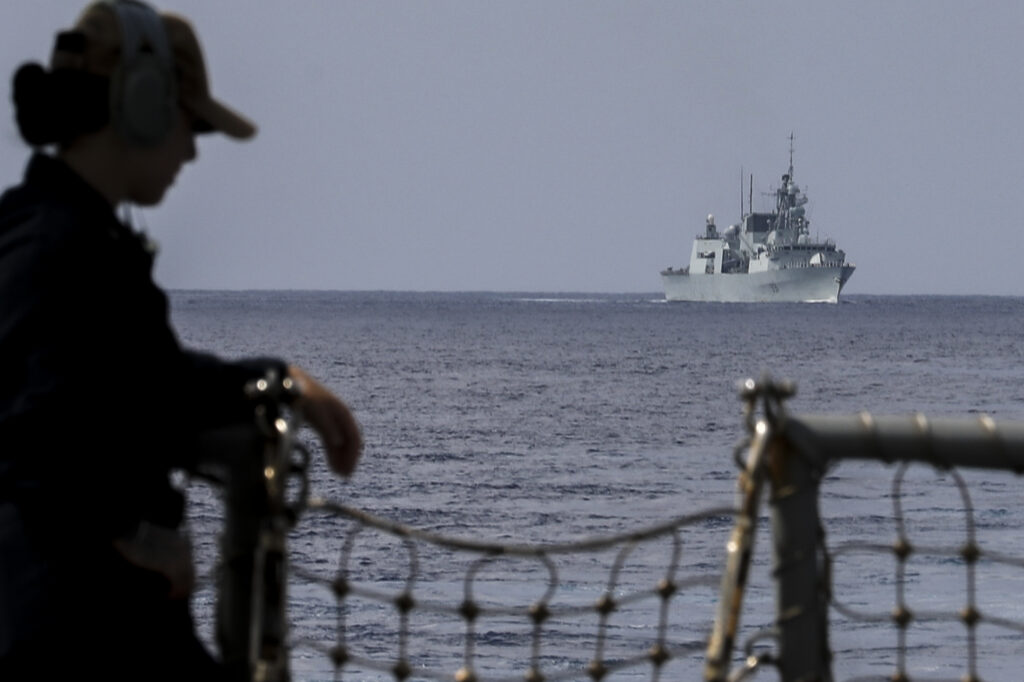
The Royal Canadian Navy Halifax-class frigate HMCS Vancouver (FFH 331) cruises behind U.S. Navy Arleigh Burke-class guided-missile destroyer USS Higgins (DDG 76) while conducting integrated operations in the South China Sea, Sept. 19. U.S. NAVY / Mass Communication Specialist 1st Class Donavan K. Patubo

SOUTH CHINA SEA — Royal Canadian Navy Halifax-class frigate HMCS Vancouver (FFH 331) concluded exercises in the South China Sea with Arleigh Burke-class guided-missile destroyer USS Higgins (DDG 76) Sept. 18, Commander, Task Force 71/Destroyer Squadron 15 Public Affairs announced Sept. 21. 

Vancouver and Higgins conducted bilateral surface action group operations demonstrating interoperability in the execution of joint exercises in the South China Sea and highlighted the U.S. Navy’s support to Canada’s Indo-Pacific deployment and their presence and role in the Western Pacific. 

“Working with USS Higgins in the South China Sea has been an incredible opportunity for HMCS Vancouver,” said Cmdr. Kevin Whiteside, HMCS Vancouver commanding officer. “The two teams seamlessly integrated, conducting a variety of training exercises together. As part of our deployment on Operation PROJECTION, Team Vancouver has been delivering robust capabilities, working with our partner navies since we departed home in June. It was awesome working with the Higgins team, demonstrating our commitment to promoting stability in the Indo-Pacific region.” 

The bilateral training between U.S and Canadian maritime forces served to strengthen skills in maritime operations, anti-submarine warfare operations, air warfare operations and maneuvering. 

“It has been an honor to sail alongside HMCS Vancouver for the past few weeks,” said Cmdr. Joseph McGettigan, Higgins commanding officer. “Operating with our closest allies and partners in the South China Sea provides us an opportunity to deepen our relationships as well as improve our capabilities as a combined force. Gaining familiarity with these waters and each other, provides us a greater ability to assure the stability of the region and demonstrates our shared commitment to a free and open Indo-Pacific.” 

Higgins is assigned to Task Force 71/Destroyer Squadron 15, the Navy’s largest forward-deployed DESRON and the U.S. 7th fleet’s principal surface force. 


UK Royal Navy Acquires Latest Generation REMUS 100 UUVs 

MCLEAN, Va. — HII announced Sept. 21 the delivery of three REMUS 100s unmanned underwater vehicles to the United Kingdom’s Royal Navy. The new systems bring enhanced endurance and the latest generation of sensors and payloads, allowing for increased data quality and mission efficiency. 

“We’re proud to continue our longstanding partnership with the U.K. Royal Navy,” said Duane Fotheringham, president of the Unmanned Systems business group at HII’s Mission Technologies division. “Our newest REMUS 100s will bolster their existing fleet with increased capability for the U.K.’s subsea autonomous operations.” 

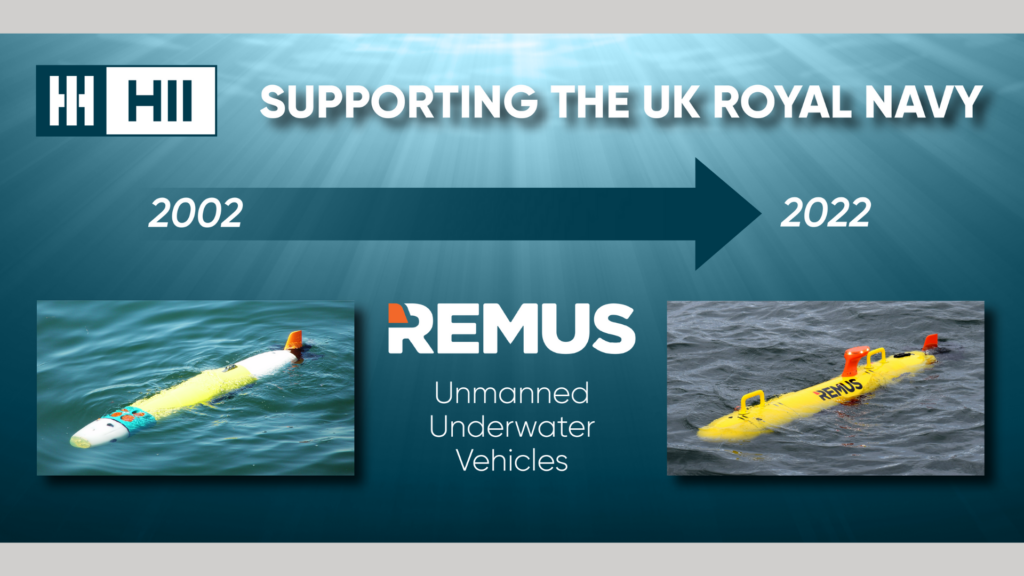
With these new systems, the U.K.’s Ministry of Defence has acquired a mix of REMUS 100s and REMUS 600s used for mine countermeasure operations over the last 20 years. The Ministry of Defence’s first two REMUS 100s, acquired in 2002, are still in operation today. 

“On behalf of the frontline users, I’m delighted to accept into service this refresh of REMUS 100,” said Cmdr. Rory Armstrong, mine warfare lead at the U.K. Navy Command Headquarters. “Our use of the REMUS family of vehicles over the last two decades has paved the way for a future mine countermeasures capability with autonomy at its core. These vehicles represent an exciting evolution of our existing small autonomous underwater vehicle fleet and will make a valued contribution to the Royal Navy as a force for good both in home waters and on an expeditionary basis.” 

HII has sold more than 600 UUVs to 30 countries worldwide, including 14 NATO member countries like the U.K. 


Cruiser USS Monterey Decommissioned 

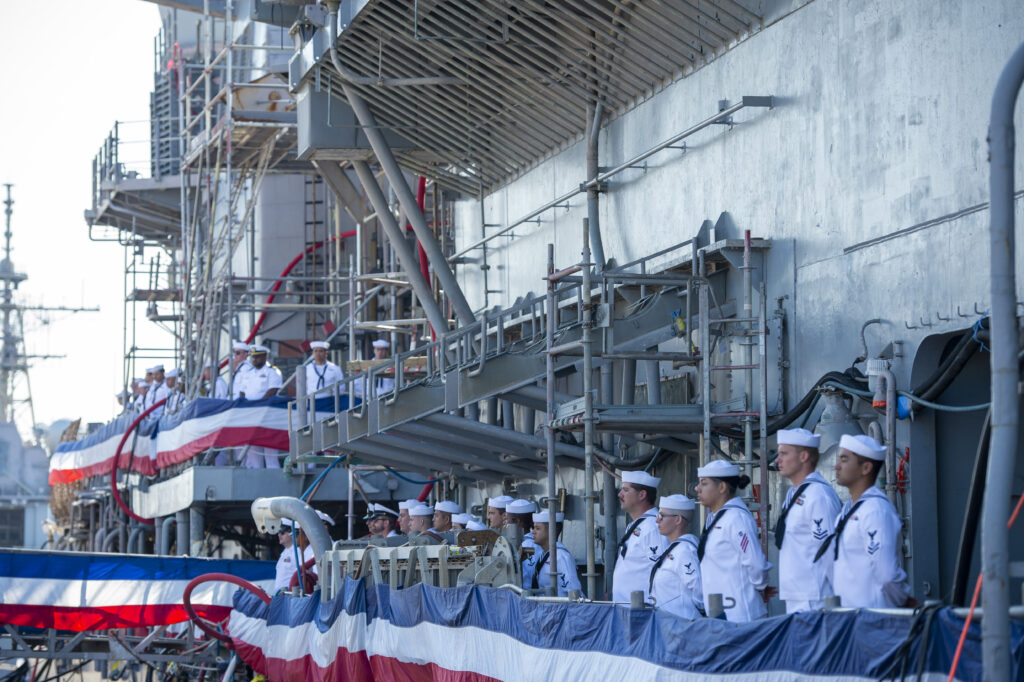
Sailors assigned to the USS Monterey (CG 61) man the rails during its decommissioning ceremony. Monterey was commissioned on June 16, 1990, and was a U.S. Navy warship for 32 years. U.S. NAVY / Mass Communication Specialist 3rd Class Rodrigo Caldas

NORFOLK, Va. — The crew of the guided-missile cruiser USS Monterey (CG 61) held a decommissioning ceremony onboard Naval Station Norfolk, Virginia, Sept. 16, USS Dwight D. Eisenhower (CVN 69) public affairs said in a release. 

Plankowners, including the ship’s commissioning commanding officer Capt. Joel Heaton, as well as former crew members, joined hundreds of attendees to celebrate the ship’s distinguished 32-year history of naval service. 
 
“Unique to the Navy, when we serve on a ship, it becomes part of us — I mean who we are, how we act, think and live. Similarly, we all in turn become part of that ship — it is a tremendously powerful legacy. This is most definitely the case with USS Monterey, she is certainly a testament to her excellent crews and she has been ‘rough in battle and ready in peace,'” said Vice Adm. Jim Kilby, deputy commander, U.S. Fleet Forces Command. 
 
“Monterey executed 14 deployments, many availabilities, and as many training cycles. She was modified over her life to continue to be a relevant and a key ship in our fleet. She will leave a great legacy for many years in the future as those who proudly call themselves Monterey Sailors continue to serve our Nation.” 
 
Monterey’s current Commanding Officer, Cmdr. David M. Schaller, spoke of the powerful bond between Sailors and their ships and the lives shaped aboard.

“Nobody joins the Navy to decommission a ship,” said Schaller. “The Monterey crew performed their duties of putting her to rest in the most professional and exemplary manner, honoring her storied history and service to our nation.” 
 
Monterey was built at Bath Iron Works in Bath, Maine, and commissioned in Mayport, Florida, June 16, 1990. Monterey’s namesake commemorates the battle fought Sept. 20, 1846, in the war with Mexico. 
 
“She has served her crews and her nation well and rightfully takes her place among the ships that, for well over 200 years, have played an indispensable role in protecting the United States of America and serving her strategic interests across the world,” said Schaller. “This ship and her crews will forever share a legacy that will be felt across the fleet for years to come.” 


7th Fleet Destroyer Transits Taiwan Strait with Canadian Frigate 

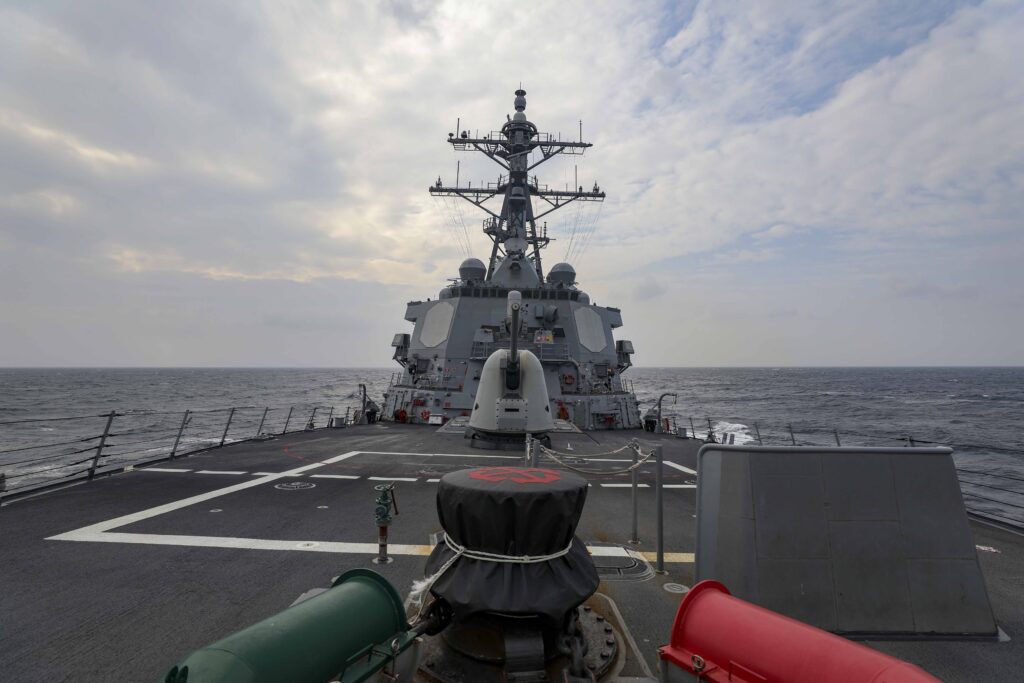
The guided-missile destroyer USS Higgins (DDG 76) conducts a routine Taiwan Strait transit Sept. 20. Higgins is forward-deployed to the U.S. 7th Fleet area of operations in support of a free and open Indo-Pacific. U.S. NAVY / Mass Communication Specialist 1st Class Donavan K. Patubo

TAIWAN STRAIT — The Arleigh Burke-class guided-missile destroyer USS Higgins (DDG 76), in cooperation with Royal Canadian Navy Halifax-class frigate HMCS Vancouver (FFH 331), conducted a routine Taiwan Strait transit Sept. 20 (local time) through waters where high seas freedoms of navigation and overflight apply in accordance with international law, U.S. 7th Fleet Public Affairs said Sept. 20. 

The ships transited through a corridor in the Strait beyond the territorial sea of any coastal state. Higgins’ and Vancouver’s transit through the Taiwan Strait demonstrates the commitment of the United States and its allies and partners to a free and open Indo-Pacific.


Navy Evaluates New Crash Crane for Carrier Decks 

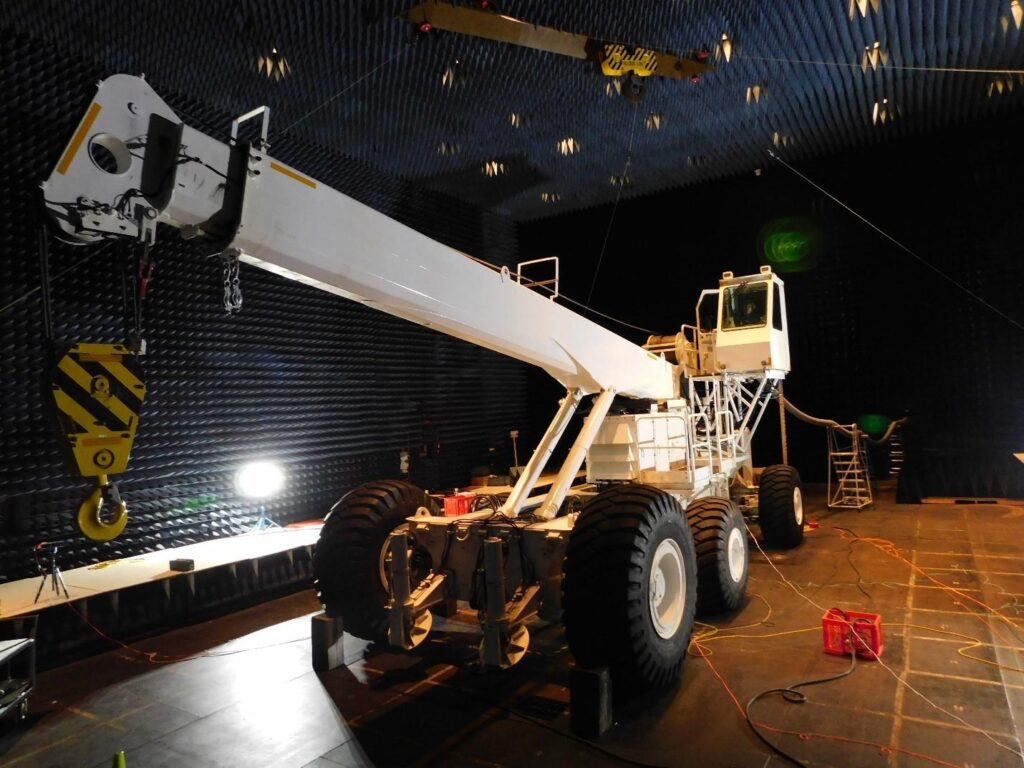
The Navy’s Common Aviation Support Equipment program office (PMA-260) is currently evaluating electromagnetic environmental effects on a crash and salvage crane at the Aircraft Anechoic Test Facility in Patuxent River. U.S. NAVY

PATUXENT RIVER, Md.—The Navy’s Common Aviation Support Equipment program office (PMA-260) is currently evaluating electromagnetic environmental effects on a crash and salvage crane at the Aircraft Anechoic Test Facility in Patuxent River, the Naval Air Systems Command said Sept. 20. 

Electromagnetic waves within the radio frequency spectrum are used for communication, radar and information networks aboard ships. The E3 evaluation currently underway in the Aircraft Anechoic Test Facility will determine the crane’s compatibility with the RF environment. 

RF cannot be seen or felt, but it can negatively affect other electrical systems if those systems are not properly protected. Testing will determine if the crane has an appropriate level of emissions, can withstand a general level of radiation across the whole RF spectrum, and can withstand high levels of radiation tailored to frequencies in its operational environment. 

“The new amphibious and carrier CSC designs will ensure the warfighter has the safest, most modern and reliable equipment possible for years to come,” said Jim Choflet, PMA-260 crash crane team lead. 

Crash and salvage cranes are critical pieces of equipment because no flight operations are allowed on ships without an operational CSC running on standby. They are used for lifting and moving disabled aircraft on carriers and landing helicopter dock flight decks. The new version, designed by industry partner Allied Systems Co., replaces the legacy carrier and amphibious assault crash cranes. 


Bell Selects Sierra Nevada Corp. for its High-Speed VTOL Development Team 

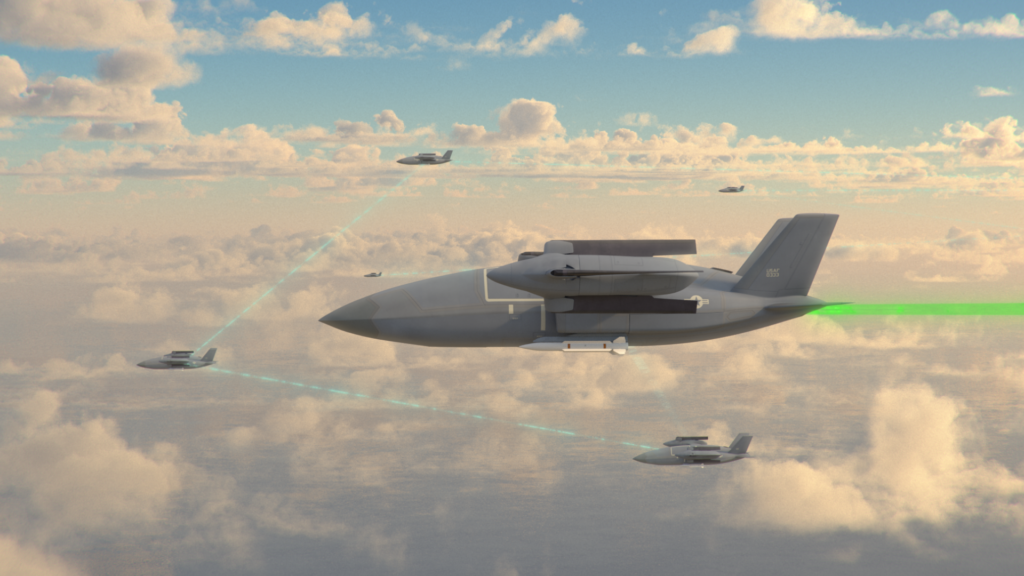
An artist’s conception of Bell Textron’s High-Speed Vertical Takeoff and Landing aircraft. BELL TEXTRON

National Harbor, Md. — Bell Textron Inc. has entered into a teaming agreement with Sierra Nevada Corp. for Bell’s High-Speed Vertical Takeoff and Landing aircraft, Bell announced Sept. 19. As part of the collaboration, SNC will specifically support the design and development of mission systems for HSVTOL variants.   

Bell’s HSVTOL vehicles blend the hover capability of a helicopter with the speed, range and survivability features of fighter aircraft, with low downwash hover capability and jet-like speeds of more than 400 knots. This family of scalable aircraft concepts is designed to carry out U.S. Air Force and Special Operations Command missions across the full spectrum of conflict and political scenarios, including personnel recovery, contested logistics and intelligence, surveillance and reconnaissance and strike.  

“In an effort to advance technical maturity and deliver HSVTOL capability to warfighters sooner, Bell is assembling a team of industry-leading partners. We’re thrilled to have SNC onboard,” said Jason Hurst, vice president, Innovation, Bell. “We’ve made significant progress in Bell’s HSVTOL technology development in 2022, and we look forward to showing this progress in the upcoming year.”  

Bell is currently executing its HSVTOL risk reduction effort and participating in the AFWERX HSVTOL Concept Challenge, a crowdsourcing effort for the Air Force and Special Operations Command. Bell is one of 11 companies from more than 200 challenge entrants selected to receive market research investments aimed at advancing HSVTOL technology. 


GA-ASI Flies MQ-20A Avenger UAS Completely Autonomously 

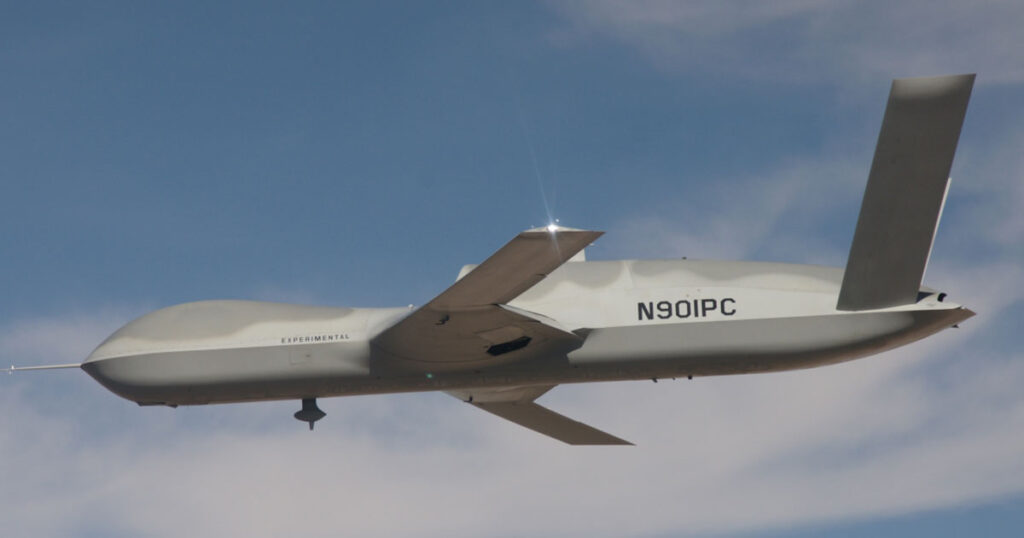
An Avenger MQ-20A, which recently flew using an artificial intelligence pilot. GENERAL ATOMICS AERONAUTICAL SYSTEMS

SAN DIEGO — General Atomics Aeronautical Systems Inc. used a company-owned Avenger MQ-20A unmanned aircraft system to fly a military aircraft using an artificially intelligent pilot deployed on an operationally relevant, open mission systems software stack on Sept. 12, the company said. 

The Avenger’s completely autonomous flight used the AI pilot for close to 30 minutes as a part of a cooperating live, virtual and constructive UAS swarm. The flight was performed as part of GA-ASI’s ongoing commitment and investment into the development of advanced autonomy of AI and machine learning for UAS. 

The flight made use of GA-ASI’s novel Reinforcement Learning architecture to develop and validate an RL agent in an operationally relevant environment. RL agents provide a new and innovative tool for next-generation military platforms to make decisions under dynamic and uncertain real-world conditions. The team flew “chase and avoid behavior” where real-time updates were made to the flight path to avoid adversaries using live fused tracks. Live tracks were provided to the system using the Infrared Search and Track sensor network supplied by Lockheed Martin.  

“The flight was a tremendous success and demonstrated a number of groundbreaking capabilities in the race to operationalize autonomy for collaborative combat aircraft,” said GA-ASI Senior Director of Advanced Programs Michael Atwood. “It’s exciting to see how AI can be used to advance how and where we fly unmanned systems as the complexity of the battlespace increases. Our ‘chase and avoid’ agent’s ability to dynamically update the flight path as threats were identified is the first step towards building an ecosystem of collaborative autonomous combat aircraft.”  

TacIRST is a new class of multifunction, embeddable sensor system with an open architecture. It was developed by Lockheed Martin to provide a range of capabilities for both crewed and uncrewed aircraft. “We anticipated the need for passive, long-range threat detection by autonomous aircraft and are proud to see this capability integrated successfully on the Avenger,” said Terry Hoehn, Director of Lockheed Martin’s Advanced Threat Warning Systems. “We look forward to further collaboration and testing with GA-ASI.” 

The team used a government-furnished CODE autonomy engine and the government-standard OMS messaging protocol to enable communication between the RL agent and the Tactical IRST. By utilizing government standards, such as CODE and OMS, rapid integration of autonomy for collaborative combat aircraft becomes possible. 

General Dynamics Mission Systems also supplied key technologies to the flight. The mission computer used to host the OMS software is part of the Digital Backbone Node family of systems from General Dynamics Mission Systems. The DBN architecture enables rapid and secure deployment of evolving capabilities needed for CCA through application of the latest government open architectures, high-performance computing, advanced cooling, and a high-speed backplane with multi-level security to maximize battlefield collaboration between platforms.  

This flight was another in an ongoing series of autonomous flights performed by GA-ASI using internal research and development funding to prove out important AI/ML concepts for advanced UAS.  


ONR SCOUT Tests Tech for Monitoring Illicit Maritime Cargo 

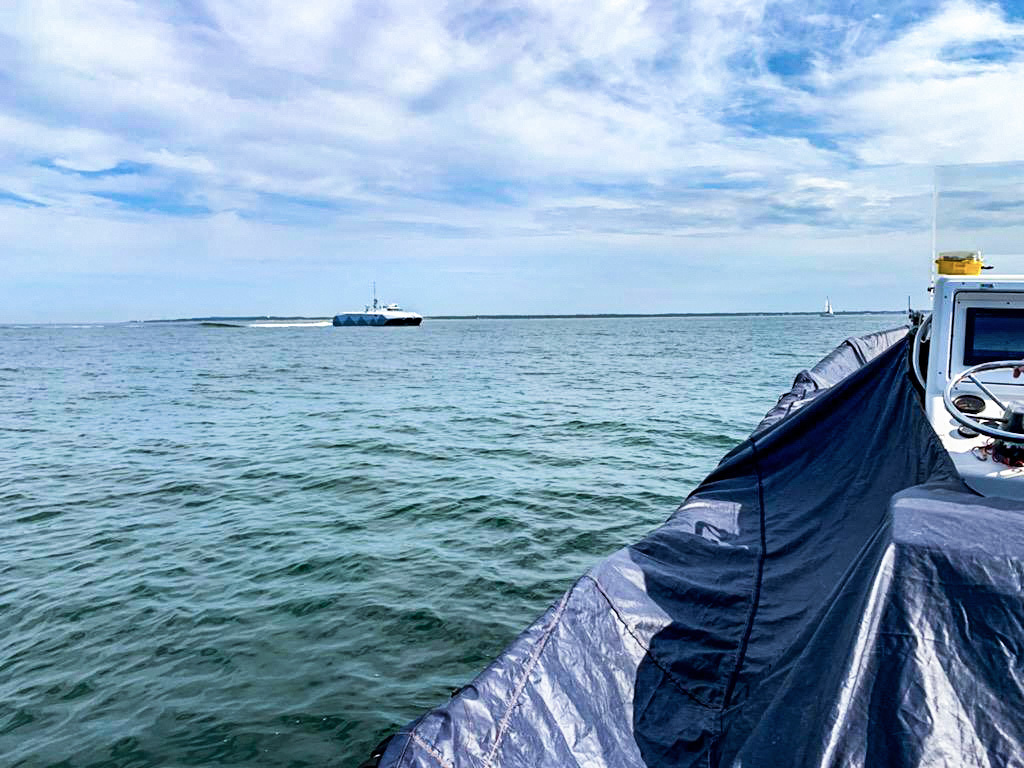
Vessels participate in an ONR SCOUT-sponsored experimentation event at Joint Expeditionary Base Little Creek-Fort Story, Virginia, at the entrance of the Chesapeake Bay. U.S. NAVY / Max Hopkins, Demonstration Assessment Team, Naval Surface Warfare Center Indian Head Division

ARLINGTON, Va. — To improve capabilities for monitoring aircraft and vessels carrying illicit maritime cargo such as drugs, for longer periods of time and over greater distances, the Office of Naval Research-sponsored SCOUT initiative recently conducted a dynamic experimentation event at Joint Expeditionary Base Little Creek-Fort Story, Virginia, at the entrance of the Chesapeake Bay. 

The goal of the event was to find creative solutions to pinpoint “dark targets” — aircraft or watercraft operating with little to no radio-frequency signatures — found in maritime operating areas covered by the Joint Interagency Task Force South, ONR said in a Sept. 19 release. It sought ways to use unmanned technologies to expand intelligence, surveillance and reconnaissance capabilities beyond those of traditional maritime patrol aircraft such as the P-3 Orion and P-8 Poseidon.  
 
JIATF-S currently works with U.S. Southern Command and partner naval forces to leverage all-domain technologies and unmanned capabilities to target, detect and monitor illicit drug trafficking in the air and maritime domains. This facilitates interdiction and apprehension to reduce the flow of drugs, as well as degrade and dismantle transnational criminal organizations. 
 
ONR SCOUT is an ongoing, multiagency experimentation campaign for identifying alternative ways to bring unmanned technologies to warfighter problems, operationalize them and bring them to scale. SCOUT is committed to getting nontraditional, commercial-off-the-shelf, government-developed and/or government-sponsored technologies to the fleet rapidly. 
 
“SCOUT is an innovation vehicle and investment strategy for the rapid development of autonomous platforms that address today’s warfighter challenges,” said Chief of Naval Research Rear Adm. Lorin Selby. “Through experimentation with partners like JIATF-S, we can connect innovators, industry, acquisition professionals and fleet stakeholders to attack and solve key operational problems.” 
 
“This is a pressing issue for JIATF-S because every day multiple suspect vessels are near and in the area of operations conducting illicit trafficking,” said U.S. Coast Guard Lt. Cmdr. Duane Zitta, JIATF-S chief of operational demonstration and experimentation. “Because of this vast area, JIATF-S is looking for alternative capabilities and technologies to provide unmanned counter-operations that can detect and monitor suspect activity, ultimately helping prevent illegal movement to the United States.” 
 
The JEB Little Creek-Fort Story experimentation event was a partnership involving ONR SCOUT, JIATF-S, the Naval Research and Development Establishment, and industry partners in the Chesapeake Bay area. It was one of multiple sprint events (scenario-based demonstrations of technology capabilities and characteristics) held this year that will lead to a large-scale main experimentation event in March 2023. 
 
During the Chesapeake Bay event, participants engaged in simulated drug-running and -hunting scenarios during “cat-and-mouse” games involving a specialized vessel owned by SOUTHCOM and JIATF-S, a “Gotcha” boat formerly used by drug traffickers and seized by JIATF-S, and various targets of interest. 
 
Participants employed sophisticated sensor systems and technologies, ranging from coordinated unmanned aircraft systems to wide-area motion imagery. Data collected during the exercises was fed into an onsite maritime operations center and synthesized, providing operators with real-time information about targets and each technology’s performance. 
 
The technology tested at JEB Little Creek-Fort Story will undergo further refinement and improvement before the March 2023 main experimentation event.