USNS Burlington Conducts Theater Security in Caribbean
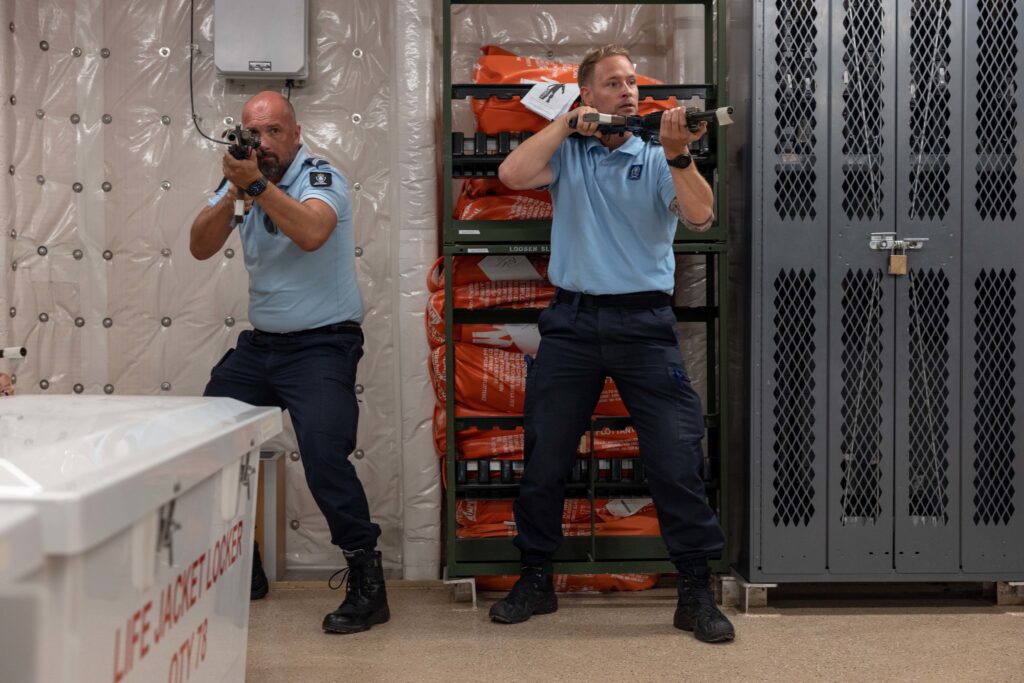
Dutch military police practice room clearing techniques aboard the Spearhead-class expeditionary fast transport ship USNS Burlington (T-EPF-10), during a theater security cooperation event, Aug. 9. U.S. MARINE CORPS / Sgt. Brendan Mullin
ORANJESTAD, Aruba — The Spearhead-class expeditionary fast transport ship USNS Burlington (T-EPF-10) arrived in the port of Oranjestad on the island of Aruba, Aug. 7, during its deployment to the U.S. 4th Fleet area of operations, the fleet’s public affairs office said Sept. 3.
Its mission is to provide expeditionary maintenance to deployed littoral combat ships operating in the region, conduct theater security cooperation engagements to maintain access, enhance interoperability with the Dutch military, and build enduring partnerships in the Caribbean, Central and South American areas of responsibility.
“Theater security cooperation events are important because every single one of our allies and partners brings a unique perspective and background to the table,” says Lt. Christopher Martinez, the officer-in-charge of the military detachment aboard the Burlington. “It increases each of our capabilities as a whole as we learn from each other.”
The crew aboard Burlington invited the Dutch Marines and military police to tour the vessel to demonstrate some of the capabilities the ship possesses. Events like these help reaffirm the United States’ commitment to its allies and partner nations with tangible actions and assets.
While aboard the Burlington, the Dutch military police performed active shooter response drills with the U.S. Navy embarked personnel.
“Working with the Dutch proves there’s more than one solution to a problem,” says Chief Master-At-Arms Robert Abreu. “We both approached the problem a bit differently, and after coming together to talk a bit more, we came up with some techniques that we were both satisfied with.”
USCGC Mohawk Completes Maritime Security Deployment in Gulf of Guinea
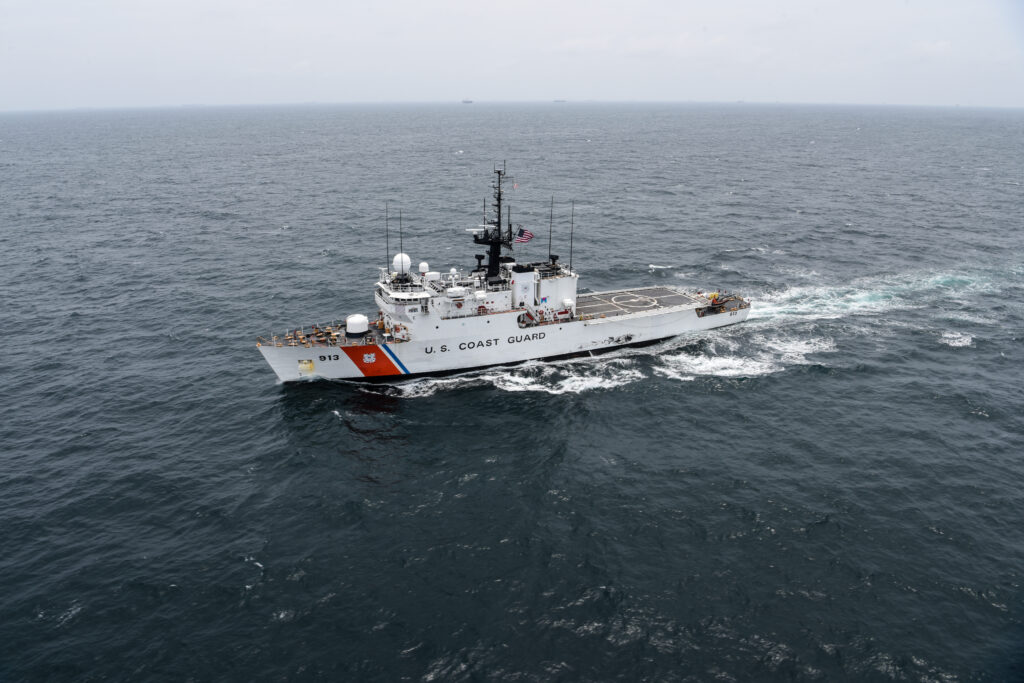
USCGC Mohawk (WMEC 913) sails in the Atlantic Ocean, Aug. 22. Mohawk is on a scheduled deployment in the U.S. Naval Forces Africa area of operations, employed by U.S. Sixth 6th to defend U.S., allied and partner interests. U.S. COAST GUARD / Petty Officer 3rd Class Jessica Fontenette
ATLANTIC OCEAN — The Famous-class medium endurance USCGC Mohawk (WMEC 913) completed a regularly scheduled deployment to the Gulf of Guinea on Sept. 2, U.S. Naval Forces Europe-Africa public affairs said Sept. 6.
From July to September, Mohawk conducted maritime security and law enforcement operations as well as continued building valued relationships with allies and partners from Cabo Verde, Gabon, Ghana, Equatorial Guinea, Sierra Leone and Spain.
“I am extremely proud of this crew and all they have accomplished over the last three months,” said Cmdr. Andrew Pate, commanding officer of the Coast Guard Cutter Mohawk. “We are operating in a global Coast Guard and Mohawk’s ability to deploy across the Atlantic Ocean, and work alongside our European and African partners to combat piracy and illegal, unregulated, and unreported fishing drives home the United States’ commitment to security, stability, and prosperity in the region.”
Mohawk’s deployment also demonstrated the United States’ longstanding commitment of supporting African partners with addressing their security challenges in the maritime domain. The U.S. maritime services routinely work with allied and partner nations to foster a united, global effort to safeguard free and open access to international waterways.
“The successful deployment of USCGC Mohawk to the Gulf of Guinea highlights our continued commitment to our West African partners,” said Vice Adm. Kevin Lunday, commander of U.S. Coast Guard Atlantic Area. “The U.S. Coast Guard is a valued member of the Joint Force, providing unique authorities and capabilities to aid partner nations as they address security and prosperity challenges. Our collaboration and sharing of best practices with our West African counterparts allows us to assist in combating narcotics smuggling, promoting freedom of commerce, and deterring illegal, unreported, and unregulated fishing in their waters.”
Mohawk was forward-deployed to the U.S. Naval Forces Africa (NAVAF) area of operations, and employed by U.S. 6th Fleet. This is the latest of several U.S. Coast Guard cutter deployments to the region.
Cutter Vigorous Returns Home after 53-Day Pacific Interdiction Patrol
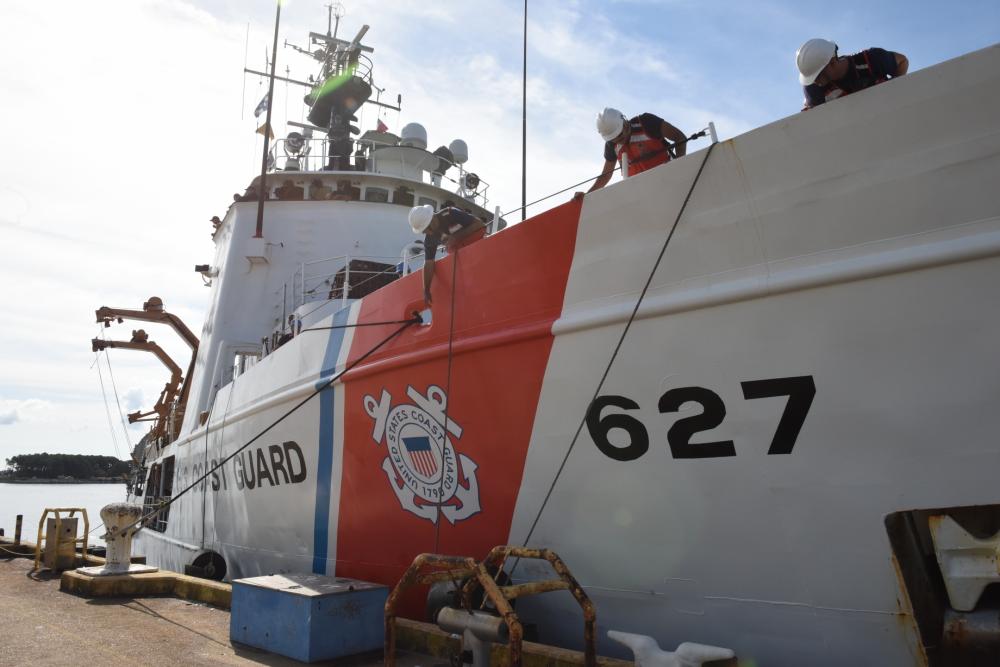
The Coast Guard Cutter Vigorous returned to its Virginia Beach homeport on Sept. 5. U.S. COAST GUARD
PORTSMOUTH, Va. — The USCGC Vigorous (WMEC 627) returned to its home port of Virginia Beach, Sept. 5, following a 53-day patrol in the Eastern Pacific Ocean, the Coast Guard Atlantic Area said in a release.
Throughout the patrol, Vigorous operated in support of the Coast Guard’s 11th District and Joint Interagency Task Force-South, aiding in missions to interdict and disrupt the flow of illegal drugs and migrant trafficking while supporting national security and strengthening relationships with regional partners.
Vigorous seized approximately 1,256 pounds of marijuana worth nearly $2 million that was offloaded in Miami on Aug. 302. In addition, Vigorous’ crew rescued a person in distress more than 100 miles off the coast of Colombia, providing food and mechanical assistance while awaiting a Colombian Navy asset to return the person safely to shore.
Vigorous also conducted a joint training exercise with the Colombian Navy. The training allowed the Coast Guard and Colombian Navy to exercise interagency communication and compare drug interdiction tactics, techniques, and procedures.
After completing almost 50 days of counter-narcotics operations, Vigorous responded to a need for more Coast Guard cutter coverage in the Straits of Florida, south of the Florida Keys. Over the course of 24 hours, Vigorous interdicted 31 Cuban migrants before transferring them to a Florida-based cutter.
“I’m proud of the hard work and professionalism demonstrated by the Vigorous crew,” said Commander Ryan Waters, the cutter’s commanding officer, “that made this challenging patrol successful and memorable.”
Vigorous is a 210-foot Reliance-class medium endurance cutter homeported in Virginia Beach with a crew of 66. Vigorous’ primary mission areas include homeland security, law enforcement, counterdrug, search and rescue, migrant interdiction, and fisheries enforcement in support of U.S. Coast Guard operations throughout the Western Hemisphere.
5th Fleet Ships Free Saildrone USVs from Iranian Navy Ship
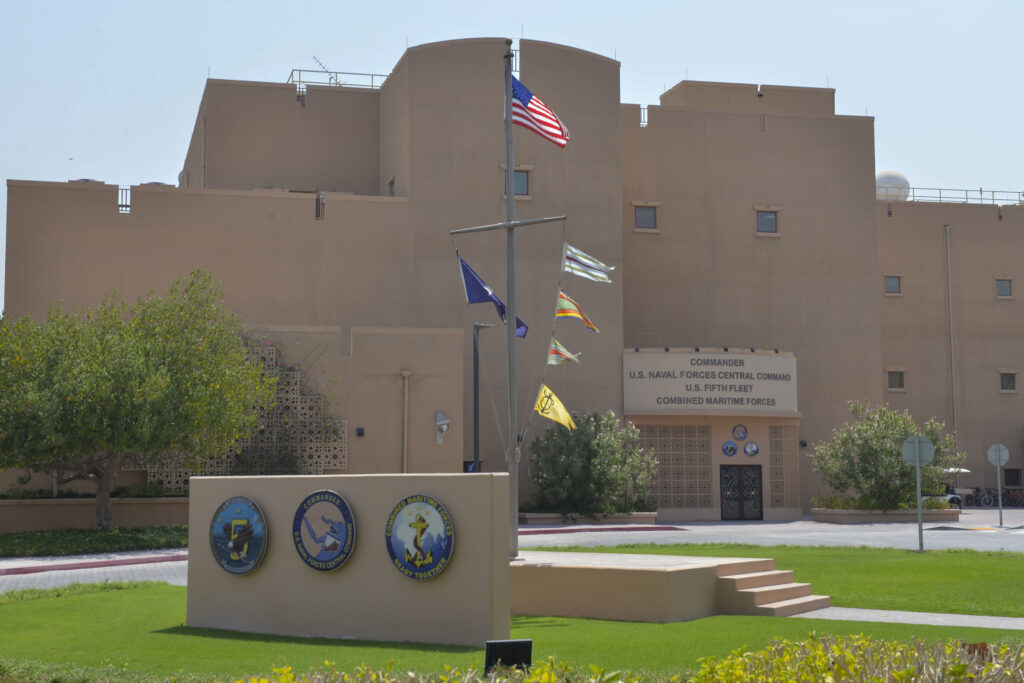
File photo of U.S. Naval Forces Central Command, U.S. 5th Fleet and Combined Maritime Forces headquarters on Naval Support Activity Bahrain. U.S. NAVY
MANAMA, Bahrain — The U.S. Navy intercepted an Iranian warship that seized and detained two U.S. unmanned surface vessels operated by U.S. 5th Fleet in the Red Sea, Sept. 1, two days after Iran was unsuccessful in seizing a similar vessel in the Arabian Gulf, the fleet said Sept. 2.
Jamaran (FFLG 76), an Islamic Republic of Iran Navy ship, seized two Saildrone Explorer unmanned surface vessels operating near one another in international waters before returning the vessels to the U.S. Navy the next day.
The unmanned surface vessels were unarmed and taking unclassified photos of the surrounding environment while loitering in an assigned patrol area at least four nautical miles from the nearest maritime traffic lane. The vessels posed no risk to naval traffic and had been operating in the general vicinity of the Southern Red Sea for more than 200 consecutive days without incident.
At around 2 p.m. (local time) on Sept. 1, U.S. 5th Fleet detected the Iranian ship approaching both unmanned vessels and removing them from the water. U.S. Navy guided-missile destroyers USS Nitze (DDG 94) and USS Delbert D. Black (DDG 119) were operating nearby and immediately responded. Nitze and Delbert D. Black also each launched an MH-60R Sea Hawk from Helicopter Maritime Strike Squadron 48.
Nitze and Delbert D. Black remained on scene communicating with the Iranian warship to deescalate the situation and recover the seized Saildrones. The Iranian warship released the Saildrones at 8 a.m. on Sept. 2.
Vice Chief of Naval Operations Changes Office
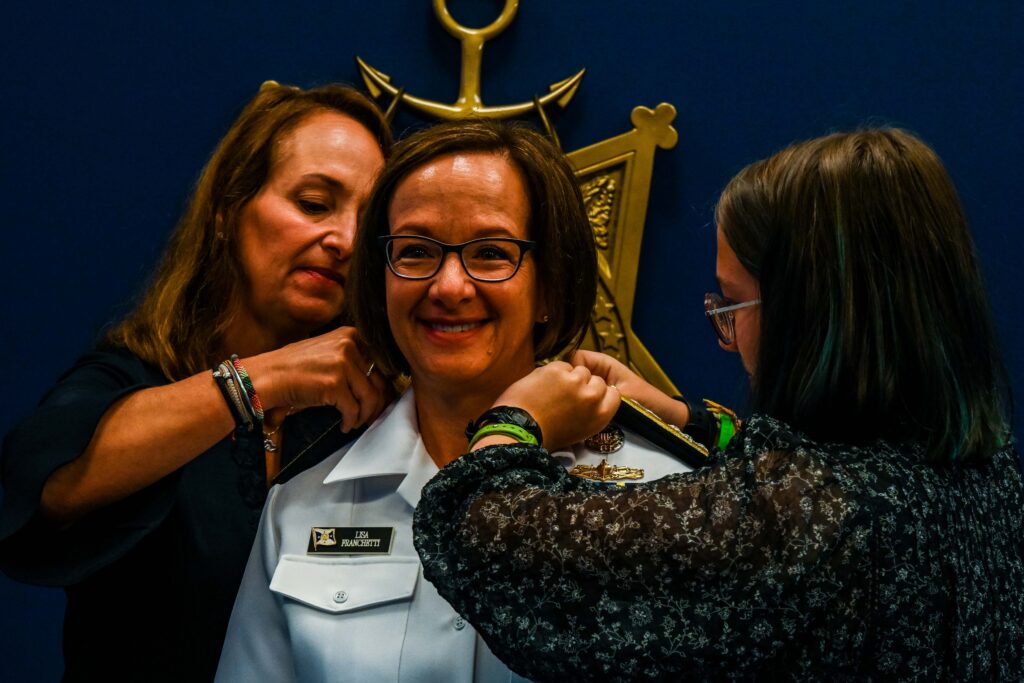
Adm. Lisa Franchetti promotes to the rank of Admiral with her family during the change of office ceremony for the Vice Chief of Naval Operations held at the Pentagon, Sept. 2. U.S. NAVY / Mass Communication Specialist 1st Class Michael B. Zingaro
ARLINGTON, Va. — Adm. Lisa Franchetti was sworn in as the 42nd Vice Chief of Naval Operations when she assumed duties from Adm. William Lescher in a ceremony at the Pentagon, Sept. 2, the Navy said in a release.
“I am grateful for all that Adm. Bill Lescher has done for our Navy and our nation,” said Chief of Naval Operations Adm. Michael Gilday. “Bill always led by example, ensuring our warfighting culture is one focused on continuous improvement and teamwork. His leadership, guidance and initiatives will positively impact the maritime balance of power for years to come.”
“The Navy and the nation are grateful for you and your family’s service,” Gilday added.
Lescher, who served as VCNO from May 2020 to now, is retiring after 42 years of naval service.
“It has been a privilege to serve as Vice Chief. I am grateful for the opportunity to lead, and serve alongside, so many exceptional Sailors throughout my time in the Navy. Our focus has always been on accelerating the Navy’s warfighting advantage by unleashing the power of our people,” said Lescher. “I know that Adm. Lisa Franchetti is the right leader to help guide our Navy to further advantage in this critical decade. She will be exceptional.”
Franchetti was promoted to the rank of admiral by Gilday prior to the change of office.
“Adm. Franchetti is a true leader with unrelenting commitment to the Fleet,” said Gilday. “She demonstrates operational excellence, strong character, diverse perspectives and resilience in all she does — and I look forward to working together to ensure our Navy remains the world’s premier maritime force.”
“It continues to be an honor to serve as a leader in our Navy,” Franchetti said. “My focus remains on supporting the most powerful Navy in the world, ready for the future fight.”
In her previous position, Franchetti served on the Joint Staff as Director for Strategy, Plans and Policy (J-5). As the Joint Staff J5, she was responsible for strategy, plans, and policy recommendations to the Chairman of the Joint Chiefs of Staff to support his provision of military advice across the full spectrum of national security concerns to the President and other national leaders.
U.S. Maritime Forces Arrive for UNITAS LXIII hosted by Brazil
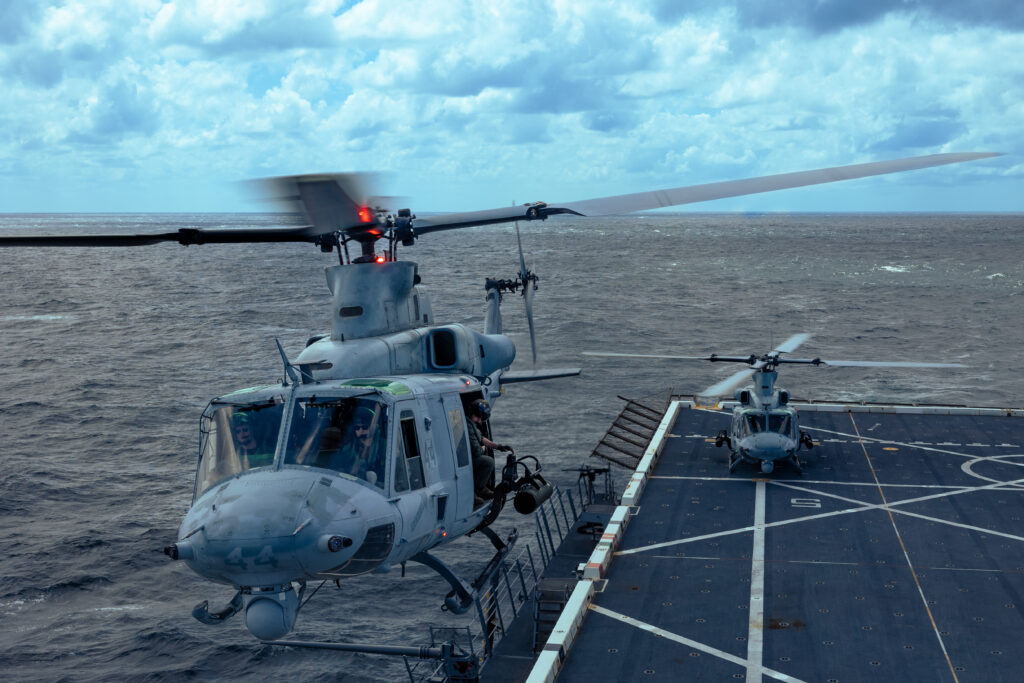
A U.S. Marine Corps UH-1Y Venom helicopter assigned to Light Attack Helicopter Squadron (HMLA) 773 hovers above the landing pad of the San Antonio class dock landing ship USS Mesa Verde (LPD 19) in the North Atlantic Ocean, Aug. 16. HMLA 773 launched three UH-1Y Venom and two AH-1Z Viper helicopters from McGuire Air Force Base and embarked them aboard the USS Mesa Verde for transit to Brazil in support of exercise UNITAS LXIII hosted by the Brazilian Navy and Marine Corps. U.S. MARINE CORPS / Cpl. Colton K. Garrett
RIO DE JANEIRO, Brazil — Navy and Marine forces are set to arrive in Rio de Janeiro in support of UNITAS LXIII, the world’s longest-running multinational maritime exercise scheduled to take place Sept. 8-22, the U.S. Naval Forces Southern Command / U.S. 4th Fleet said in a Sept. 1 release.
This year’s exercise is hosted by the Brazilian navy and will included 20 participating nations, 19 ships, one submarine, 21 aircraft, accounting for approximately 5,500 total military personnel that will conduct operations principally off the coast of Rio de Janeiro.
UNITAS, Latin for “unity,” was conceived in 1959 and has taken place annually since first conducted in 1960. This year marks the 63rd iteration. This year, Brazil will host UNITAS in conjunction and celebration of the bicentennial anniversary of both their nation’s independence and navy’s founding.
“This exercise is an incredible opportunity for all participating nations to come together as professional mariners on the sea, under the sea, in the air and in the littorals, to operate and grow as a team in order to strengthen our partnerships and enhance our collective maritime posture,” said Rear Adm. Jim Aiken, commander U.S. Naval Forces Southern Command/U.S. 4th Fleet. “Congratulations to Brazil on 200 years of independence and excellence in the maritime domain on the sea and on the land.”
In addition to the United States, UNITAS LXIII will bring together 19 nations from across Central and South Americas, the Caribbean, Europe, and Africa to train forces in joint maritime operations that enhance tactical proficiency and increase interoperability. Participating nations include Belize, Brazil, Cameroon, Chile, Colombia, Dominican Republic, Ecuador, France, Guyana, Jamaica, Mexico, Namibia, Panama, Paraguay, Peru, South Korea, Spain, United Kingdom and Uruguay.
“Exercise UNITAS is a highly anticipated premier training opportunity for all the participating nations’ navies and marine corps in the Western Hemisphere,” said Lt. Gen. David Bellon, commander of U.S. Marine Corps Forces, South and Marine Forces Reserve. “UNITAS highlights the foundation of our partnerships and our dedication to building and sustaining the social and military relationships necessary to achieve common objectives and regional security.”
The initial in-port phase will include cultural exchanges, sporting events, community relations projects and the opportunity for UNITAS LXIII partners to participate in bicentennial events such as the Bicentennial Naval Parade scheduled for Sept. 7 along the coast of Rio de Janeiro.
Following opening ceremonies on Sept. 8, naval forces will conduct combined and joint operations as a multi-national task force, executing an event-driven scenario to train in multiple warfare areas. Ships and sailors will head to sea for maritime operation training and Marines will move inland to conduct amphibious training ranges before coming back together in support of a culminating multinational amphibious landing.
A significant focus of UNITAS LXIII is the cooperation and integration of the multinational navy forces with marine corps and naval infantries. The maritime domain includes the littorals that incorporates the ocean and the area inland from the shore which can be supported and defended directly from the sea.
U.S. forces participating in UNITAS LXIII include USS Lassen (DDG 82), USS Mesa Verde (LPD 19), USS Albany (SSN 753), Commander, Amphibious Squadron Eight (COMPHIBRON 8), Helicopter Sea Combat Squadron 22 (HSC 22), Helicopter Maritime Strike Squadron 70 Detachment 2 (HSM 70 Det 2), Patrol Squadron Sixteen (VP-16), Special Boat Team 22 (SBT 22), Mobile Diving and Salvage Unit (MDSU) Det 2, Seal Platoon from Seal Team 8, Explosive Ordnance Disposal Mobile Unit Two (EODMU-2), Beachmaster Unit Two (BMU-2), USCG Pacific Area Tactical Law Enforcement Team (PAC AREA TACLET), Commander, Destroyer Squadron 40, (COMDESRON 40), Fleet Surgical Team (FST) 8, 25th Marine Regiment, 3d Battalion 25th Marine Regiment, 3d Force Reconnaissance Company, 4th Light Armored Reconnaissance Company (4th LAR), 4th Combat Engineer Battalion (4th CEB), 6th Engineer Support Battalion (6th ESB), 4th Air Naval Gunfire Liaison Company (ANGLICO), 4th Civil Affairs Group (4th CAG), Marine Aircraft Group 49 (MAG-49), U.S Marine Corps Forces South (MARFORSOUTH), and USNAVSO/FOURTHFLT.
U.S. Naval Forces Southern Command/U.S. 4th Fleet supports U.S. Southern Command’s joint and combined military operations by employing maritime forces in cooperative maritime security operations to maintain access, enhance interoperability, and build enduring partnerships in order to enhance regional security and promote peace, stability and prosperity in the Caribbean, Central and South American region.
U.S. Marine Corps Forces, South is the Marine Corps component to U.S. Southern Command, is responsible for planning exercises, operation, and overall Marine Corps support for the SOUTHCOM assigned area of responsibility.
U.S. Navy Completes First BQM-177A Target Intercept during Missile Launch
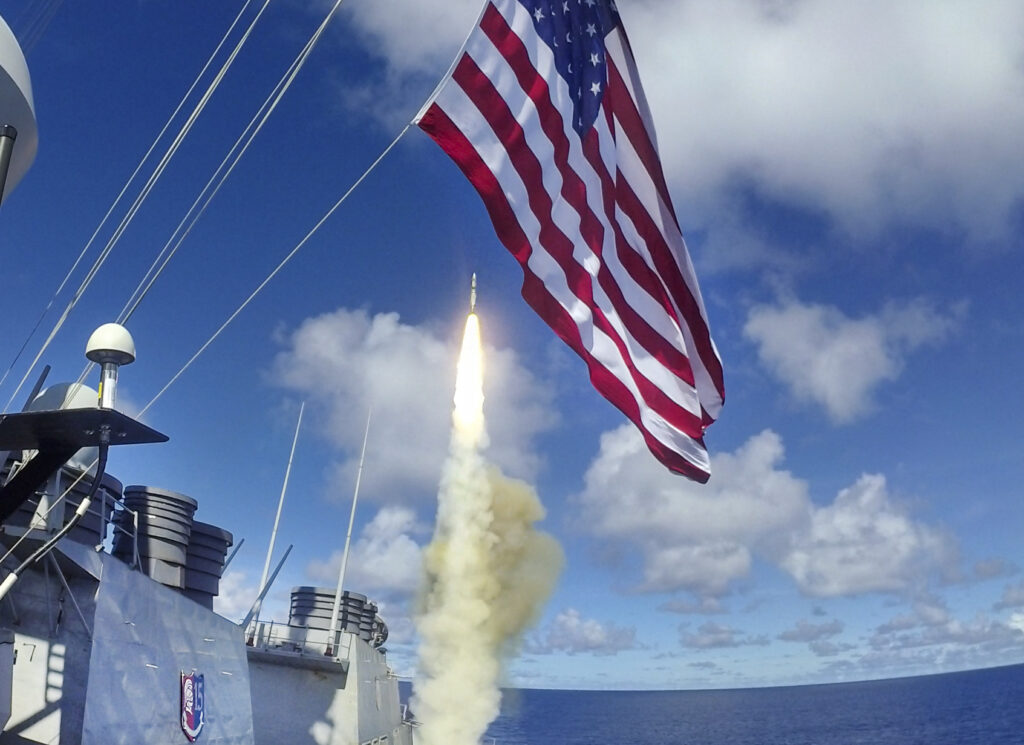
The guided-missile destroyer USS Barry (DDG 52) launches a Standard Missile 2 during a live-fire missile exercise as part of Pacific Vanguard 22, Aug. 28. U.S. NAVY / Mass Communication Specialist 1st Class Deanna Gonzales
PHILIPPINE SEA — The U.S. Navy’s next-generation subsonic aerial target, the BQM-177A, reached full operational capability during a successful standard missile launch and intercept while participating in Pacific Vanguard 2022 in the Philippine Sea on Aug. 28, U.S. 7th Fleet said Sept. 1.
The target drones were launched from the Lewis and Clark-class dry cargo ship USNS Alan Shepard (T-AKE 3) and engaged with missiles launched from Arleigh Burke-class guided-missile destroyer USS Barry (DDG 52) and Royal Australian Navy Anzac-class frigate HMAS Perth (FFH 157), marking the first time the BQM-177A has been used in the Western Pacific region and highlighting the drones achieving full operational capability.
“Not only am I glad the [Commander, Task Force] CTF 71 team was the first to have a successful missile launch against a brand-new type of target drone, but I am extremely grateful that we got to do it side by side with our allies and partners in the region,” said Capt. Walter Mainor, commander, Task Force 71. “I’m proud of all of the participants who worked hard to make this happen, but I’m especially proud of the crews of USS Barry, USNS Alan Shepard, and our coalition partner HMAS Perth.”
The BQM-177A is an advanced high-subsonic, recoverable aerial target system that imitates advanced subsonic anti-ship cruise missile threats to test the effectiveness of shipboard air defense systems and is used for fleet training. It is unmatched in its performance capabilities when it comes to delivering realistic anti-ship missile threat emulation, according to program managers at Naval Air Systems Command.
“Our primary focus in the targets community is effective, affordable training and test for the U.S. Navy,” said Don Blottenberger, the Navy’s Aerial Targets program manager. “The efforts of the team, including partnership with MSC and the target operations organizations, represents the best of our community. The BQM-177, now fully capable, will provide quality service to our warfighters for decades to come.”
Pacific Vanguard 2022 is the fifth iteration of the quadrilateral exercise series between Australia, Japan, Republic of Korea and U.S. Naval forces. This exercise is focused on improving the capabilities of the countries participating to respond together as a naval force against crises and contingencies in the region. The purpose is for the participating navies to continue to refine their skills operating as an integrated force ready to respond to a changing and complex maritime environment in the Indo-Pacific region.
Coast Guard Offloads More than $3 Million in Illegal Narcotics in Miami
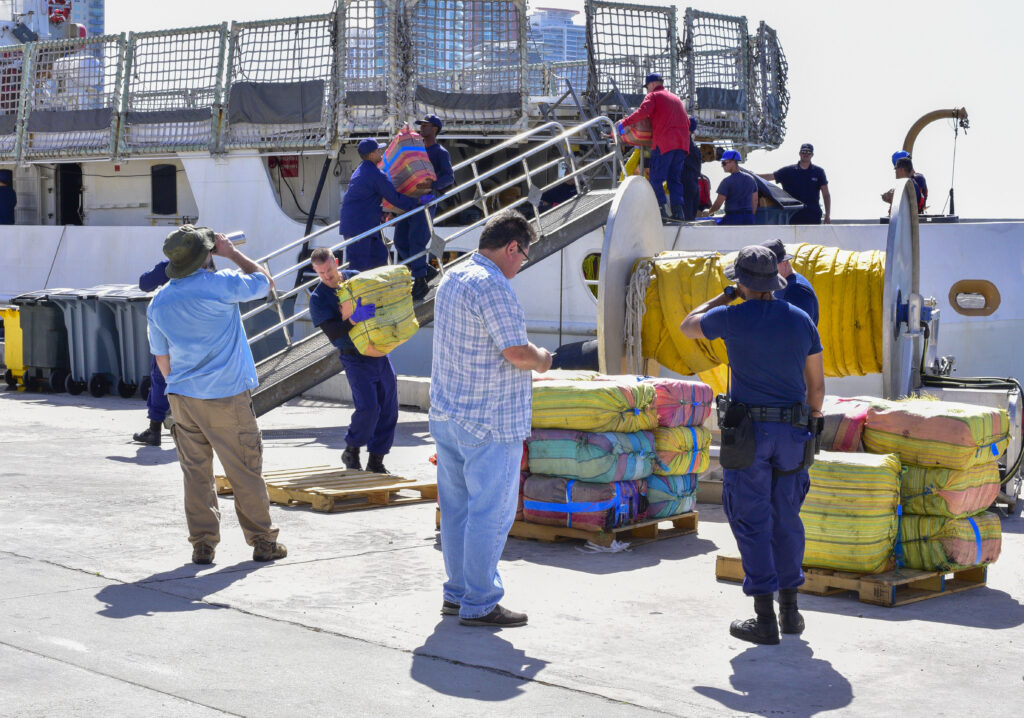
The crew of the U.S. Coast Guard Cutter Vigorous (WMEC 627) offloads approximately 22 pounds of cocaine and 1,256 pounds of marijuana, worth an estimated $3 million, Aug. 30 at Coast Guard Base Miami Beach, Florida. U.S. COAST GUARD / Chief Petty Officer Stephen Lehmann
MIAMI — The crew of the Coast Guard Cutter Vigorous offloaded approximately 22 pounds of cocaine and 1,256 pounds of marijuana, worth an estimated $3 million, on Aug. 30, at Base Miami Beach, the Coast Guard Atlantic Area said Sept. 2.
The drugs were interdicted in the international waters of the Eastern Pacific Ocean by crews from the cutters Vigorous (WMEC 627) and Legare (WMEC 912).
“Vigorous is glad to have been able to make an important contribution to the Coast Guard’s counterdrug mission,” said Cmdr. Ryan A. Waters, commanding officer of Vigorous. “I’m incredibly proud of the hardworking Vigorous crew’s proficiency teamwork and devotion to duty that enabled the detection, interdiction and boarding of a vessel suspected of drug smuggling.”
The fight against drug cartels in the Caribbean Sea and Eastern Pacific Ocean, and the transnational criminal organizations they are associated with, requires a unity of effort in all phases, from detection and monitoring to interdiction and apprehension, and on to criminal prosecutions by international partners and U.S. attorneys’ offices in districts across the nation.
Detecting and interdicting illegal drug traffickers on the high seas involves significant interagency and international coordination. The Joint Interagency Task Force South in Key West, Florida, conducts detection and monitoring of aerial and maritime transit of illegal drugs. Maritime interdiction of illicit maritime activity in the Caribbean Sea is coordinated by the 7th Coast Guard District, headquartered in Miami, Florida, and the 11th Coast Guard District, headquartered in Alameda, California, coordinates interdiction of illicit maritime activity in the Eastern Pacific.
Cutter Vigorous, a 210-foot Reliance-class medium endurance cutter, was commissioned in May 1969 and is homeported in Virginia Beach, Virginia. The Vigorous generally deploys 185 days a year for patrols lasting 45 to 60 days to a variety of operating areas, extending from the Gulf of Maine to the Caribbean Sea, the Gulf of Mexico and the Eastern Pacific Ocean. The Vigorous’ primary mission areas include homeland security, law enforcement, counterdrug operations, search and rescue, migrant operations, and fisheries enforcement.
General Atomics Awarded Contract Continuing EMALS, AAG Evaluation for French Carrier
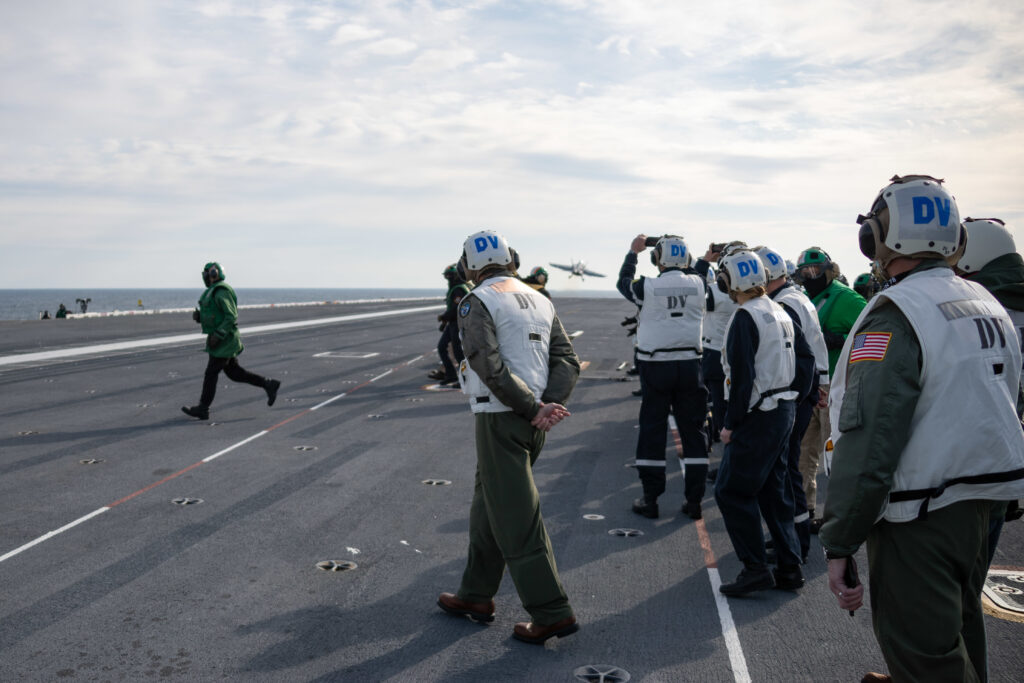
French Armaments Procurements Agency (DGA) members observe flight operations on USS Gerald R. Ford’s (CVN 78) flight deck during a ship visit, April, 23, 2021. DGA executive leadership visited Ford to view the electromagnetic aircraft launch system (EMALS) and advanced arresting gear (AAG) in operation, to enable France to refine the design of the Future French Carrier. U.S. NAVY / Mass Communication Specialist 3rd Class Dalton Lowing
SAN DIEGO — General Atomics Electromagnetic Systems announced it has been awarded a contract by US Naval Air Systems Command to continue development and evaluation of tailored configurations of the Electromagnetic Aircraft Launch System (EMALS) and Advanced Arresting Gear (AAG) as a potential Foreign Military Sale to the French navy for their next generation aircraft carrier, Porte-Avions Nouvelle Génération (PANG).
“We are proud to be supporting the ongoing efforts between our nations to realize the potential of integrating EMALS and AAG onboard the future flagship of the French Marine Nationale,” said Scott Forney, president of GA-EMS. “For decades, France’s Charles de Gaulle and U.S. Nimitz-class carriers have provided interoperable capabilities to conduct joint operations and launch and recover aircraft on each other’s ships. EMALS and AAG onboard next generation French and U.S. aircraft carriers will provide increased interoperability between our navies and greater flexibility to launch a wider range of current and future aircraft for the decades to come.”
GA-EMS will continue evaluating optimal EMALS and AAG configurations for performance and document ship interfaces and impacts on the PANG. The contract will culminate in 2023 with a system requirements review and an evaluation of French suppliers for potential component manufacturing in France.
Under previous contract awards over the past two years, GA-EMS participated in carrier studies to investigate the feasibility of implementing EMALS and AAG for the future French carrier design. In December 2021, the U.S. State Department announced it approved a possible Foreign Military Sale for a two EMALS and three AAG configuration to France.
The first-in-class USS Gerald R. Ford (CVN 78) recently completed its 10,000th successful launch and arrested landing using EMALS and AAG. The systems continue to perform successfully as CVN 78 prepares for its upcoming deployment. GA-EMS is currently under contract with the Navy to support CVN 78 sustainment requirements and is delivering EMALS and AAG for the next two Ford-class carriers currently under construction, John F. Kennedy (CVN 79) and Enterprise (CVN 80). GA-EMS is also working with the Navy to determine the EMALS and AAG contract and schedule requirements for the fourth Ford-class aircraft carrier, Doris Miller (CVN 81).
CNO, Uruguay Navy Chief Discuss Maritime Peace and Security
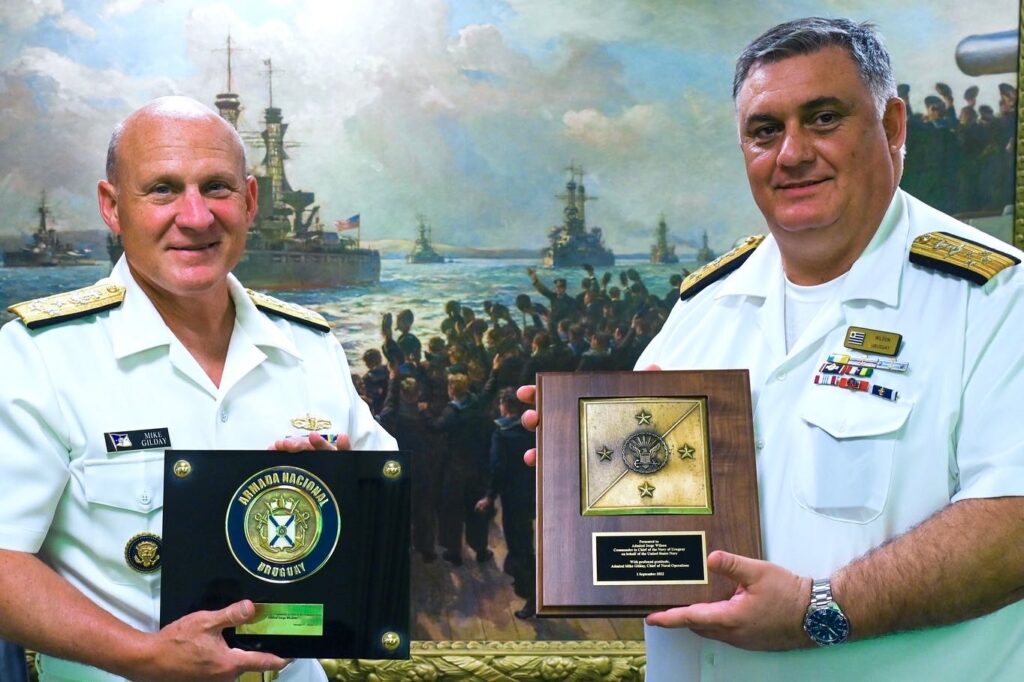
WASHINGTON — Chief of Naval Operations Adm. Mike Gilday hosted Commandant in Chief of the National Navy of Uruguay Adm. Jorge Wilson at the Pentagon for an office call on Sept. 1. U.S. NAVY / Chief Mass Communication Specialist Amanda Gray.
WASHINGTON — Chief of Naval Operations Adm. Mike Gilday hosted Commandant in Chief of the National Navy of Uruguay Adm. Jorge Wilson at the Pentagon for an office call on Sept. 1, the CNO’s public affairs said in a release.
The two leaders discussed their shared vision to advance the bilateral relationship between the two navies, Uruguay’s long-standing partnership in the U.S. Global Peace Operations Initiative, ways to foster innovation and experimentation and the importance of supporting the international rules-based order.
“Through our like-minded values and professionalism, our relationship with the Uruguayan navy continues to grow,” said Gilday. “This visit is an important opportunity to discuss ways to strengthen and advance our cooperation and interoperability.”
During his trip to the Washington area, Wilson attended a ceremony in Baltimore where three former U.S. Coast Guard cutters were reflagged as Uruguayan navy ships, the culmination of a government-to-government agreement finalized in December 2021.
Recently, U.S. and Uruguayan naval forces have worked closely together to conduct peacekeeping operations, assist with disaster response and develop professional education and training. In August, the Uruguayan navy sent maritime planners to participate in PANAMAX 2022 as part of the Combined Force Maritime Component Command Staff hosted by U.S. Naval Forces Southern Command/U.S. 4th Fleet in Mayport, Florida. PANAMAX 2022 is a U.S. Southern Command-sponsored exercise that focuses on security and stability operations to ensure free flow of commerce through the Panama Canal.
Later this month, both the U.S. Navy and the Uruguayan navy will operate together as part of UNITAS LXIII, hosted this year by Brazil. UNITAS strengthens maritime partnerships, enhances proficiency and improves interoperability of the participating forces. This year marks the 63rd iteration of the longest-running, multinational maritime exercise in the world.
This was the first meeting between the two heads of navy.