Ingalls Shipbuilding Awarded DDG 1002 Combat Systems Availability Contract 
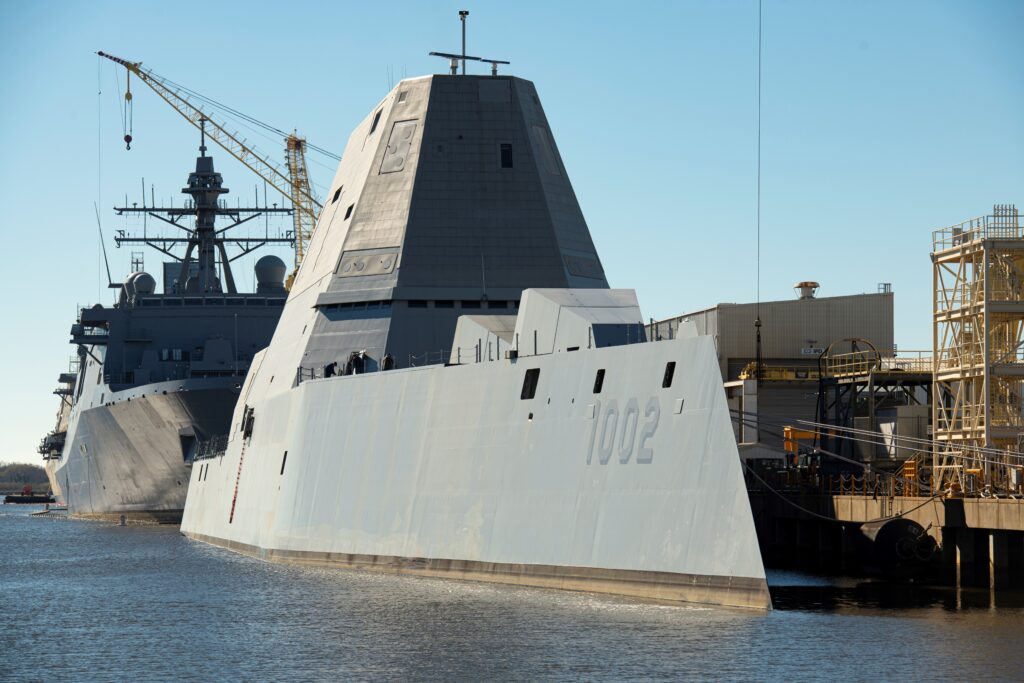
HII’s Ingalls Shipbuilding division will begin combat systems availability for the Zumwalt-class destroyer Lyndon B. Johnson. HII

PASCAGOULA, Miss. — HII’s Ingalls Shipbuilding division has been awarded a contract from the U.S. Navy to begin the combat systems availability for the Zumwalt-class destroyer, Lyndon B. Johnson (DDG 1002), the company said Aug. 29.

During this availability, Ingalls will complete the installation, activation and testing of the combat systems to ensure a fully functional system is ready to operate in the Navy fleet, as part of the Navy’s phased delivery approach. 

“HII is excited to support our Navy colleagues in bringing this new capability to the fleet,” Ingalls Shipbuilding President Kari Wilkinson said. “As a dedicated partner in the construction and system activation of Navy destroyers, Ingalls is eager to leverage our shipbuilders’ expertise and modernized facilities in supporting the Navy’s future generation systems and platforms.” 

The $41.6 million cost-incentive-fee contract allows Ingalls to begin program management, labor, materials and facilities to accomplish industrial efforts and fleet industrial efforts to support the ship’s combat system. 

The DDG 1002 features a state-of-the-art electric propulsion system, wave-piercing tumblehome hull, stealth design and is equipped with the most advanced warfighting technology and weaponry. This ship will be capable of performing a range of deterrence, power projection, sea control, and command and control missions while allowing Navy to evolve with new systems and missions. 


DRS Delivers Advanced Electric Propulsion Equipment for Lead Columbia-Class Submarine 

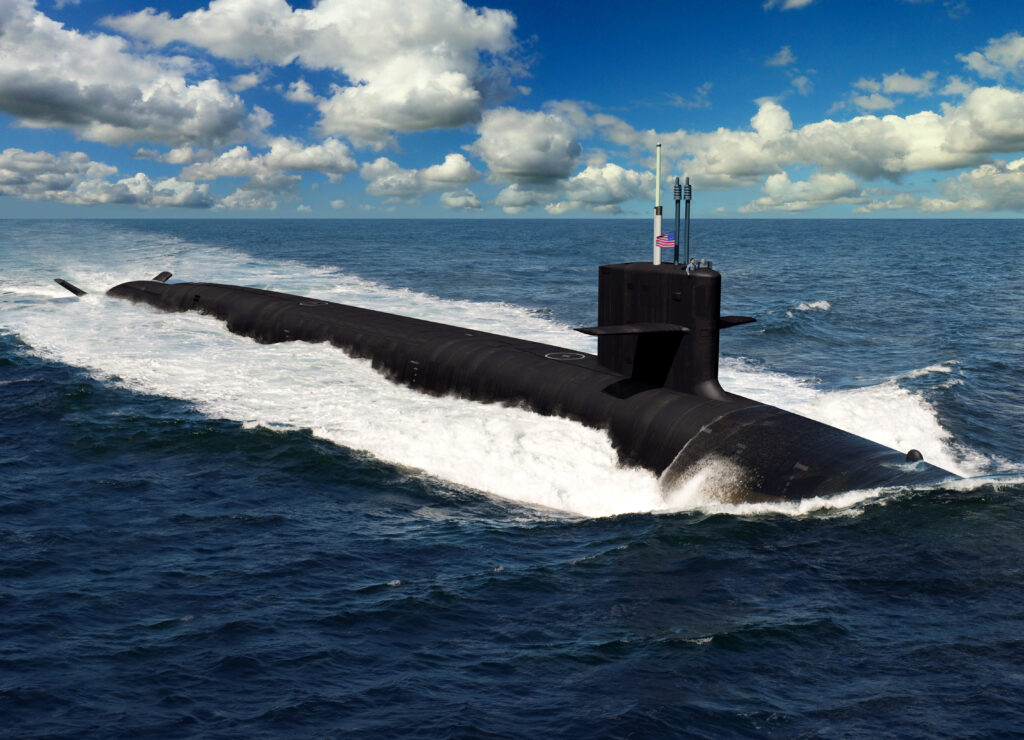
An artist’s rendering of the future Columbia-class ballistic missile submarines. U.S. NAVY

ARLINGTON, Va. — Leonardo DRS Inc. has successfully completed factory acceptance testing and shipment of the first production unit of the main propulsion motor for the U.S. Navy’s new Columbia-class submarine, the company announced Aug. 30. The motor was recently shipped to General Dynamics Electric Boat for integration into the lead ship of the class.   

DRS was chosen by Electric Boat and the U.S. Navy to design and manufacture the major Columbia Electric Drive Propulsion system components including the main propulsion electric motor. All prototype components of this system successfully completed full power endurance and other testing at the Navy’s land-based test facility in 2020, where operational testing continues. In addition to the main propulsion motor, other lead ship components are being manufactured and are also preparing to ship to Electric Boat. 

The Columbia class program goal is to design and build a class of 12 new ballistic missile submarines to replace the U.S. Navy’s current force of Ohio class SSBNs. The Navy has identified the Columbia-class program as its top priority program. The Columbia-class submarines will be larger than the current class in terms of submerged displacement and will become the largest submarine ever built by the United States.  

The DRS Naval Power Systems business was awarded contracts for the electric propulsion system components which included design, test, qualification, and production of the full-scale components for both a land-based test facility and first two ships of the class. Over the past several years, the Navy has completed successful land-based tests of DRS’ electric propulsion components. With significant testing completed, the program is transitioning to production with DRS presently manufacturing the components for the first two ships of the Columbia Class.  

“We are proud to play a key role in developing and providing this capability for the U.S. Navy on this critical national defense asset,” said Jon Miller, senior vice president and general manager of the DRS Naval Power business. “Our long history of providing innovative technology to the U.S. Navy and continuing this work for Electric Boat ensures our Sailors will be defending this country with the most advanced submarine in the world.” 


AeroVironment Introduces Mantis i23 D Imaging Payload 

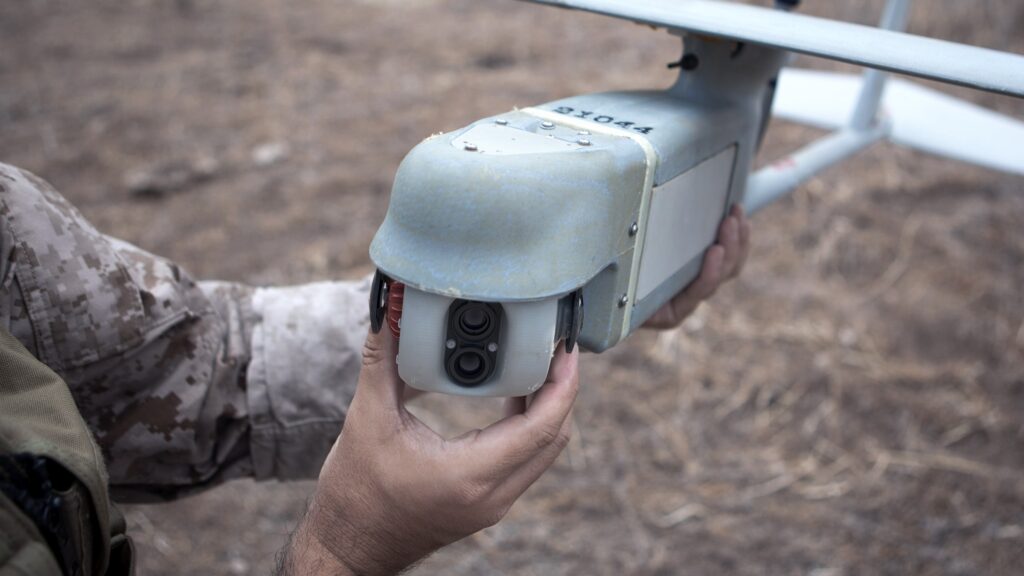
AeroVironment’s new Mantis i23 D multi-sensor daytime imaging payload. AEROVIRONMENT

ARLINGTON, Va. — AeroVironment Inc. introduced Mantis i23 D, a multi-sensor daytime imaging payload compatible with the Raven B small unmanned aircraft systems, the company said Aug. 30.

An enhanced daylight variant of its predecessor, the Mantis i23, Mantis i23 D maintains its ruggedized design and uses the same modular interface to allow for quick and simple swapping between payloads with no software updates required to the avionics or ground control systems.  

At 13.4 ounces (380 grams), the imaging system features dual 18 megapixel electro-optical sensors and 24X digital zoom, providing four times improved target detection over the current Mantis i23 payload during daytime missions. Through its advanced suite of sensors, extended zoom capability, onboard processing and digital imaging stabilization, the Mantis i23 D payload allows operators to increase aircraft standoff distance without compromising image quality. 

“With the introduction of the next-generation Mantis payload, we have expanded the capabilities and adoption of the combat-proven Raven SUAS,” said Charles Dean, AeroVironment vice president of global business development, sales and marketing. “Customers can now operate their Raven systems at a greater standoff distance than before, enabling eyes-on-target from several kilometers away and reducing the risk of the target detecting or hearing the SUAS overhead.” 


UK Donating Undersea Minehunter Drones to Help Ukraine Clear Coastline 

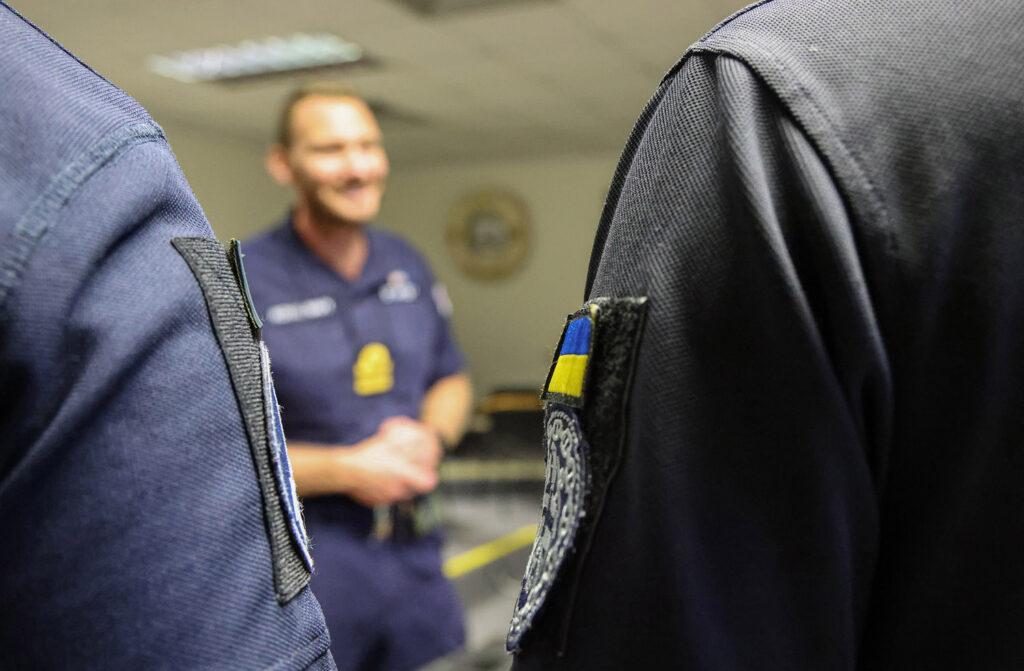
Ukrainian navy divers in the classroom learning how to use an unmanned underwater vehicle. U.K. ROYAL NAVY

LONDON — Dozens of Ukrainian personnel will be taught to use the autonomous mine-hunting vehicles by the U.K. Royal Navy and its U.S. partners over the coming months, the U.K. Ministry of Defence said in an Aug. 26 release. 

The U.K. is giving unmanned underwater vehicles to Ukraine and training Ukrainian personnel in Britain to use them to clear their coastline of mines. 

Six autonomous minehunting vehicles will be sent to the country to help detect Russian mines in the waters off its coast. Three of these will be provided from U.K. stocks, with a further three to be purchased from industry. 

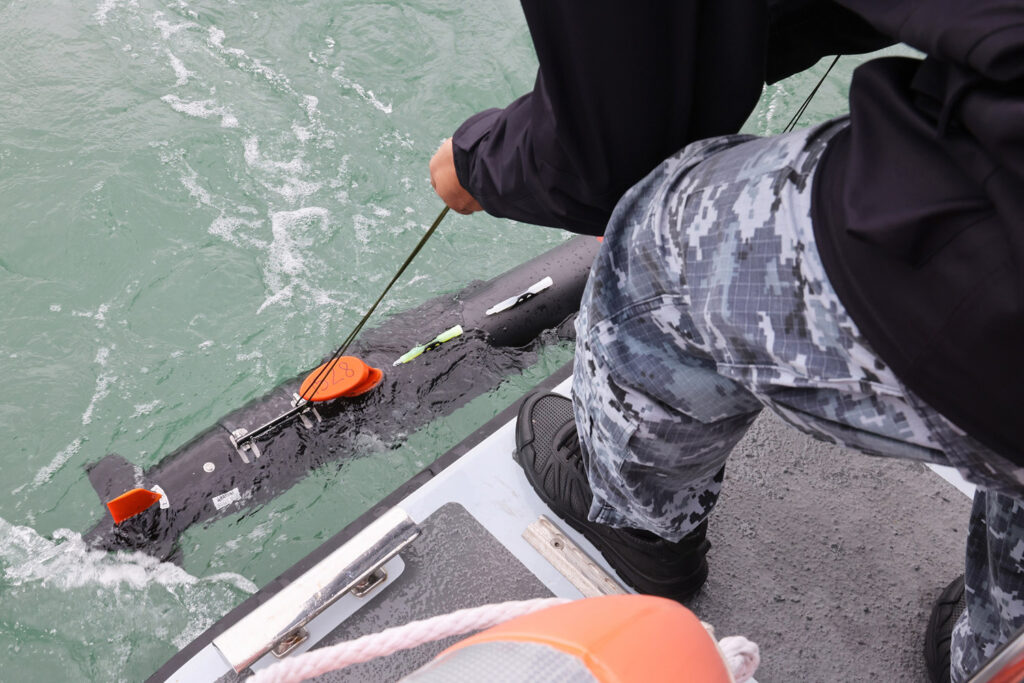
The lightweight autonomous vehicle is designed for use in shallow coastal environments, operating effectively at depths of up to 100 meters to detect, locate and identify mines using an array of sensors so the Ukrainian navy can destroy them. 

Dozens of Ukrainian navy personnel will be taught to use the drones over the coming months, with the first tranche having already begun their training. 

Russia has been weaponizing food by destroying Ukrainian agriculture and blockading the country’s Black Sea ports to prevent exports, with devastating consequences for the world’s poorest people as food prices rise. 

A Ukrainian sailor operates a Royal Navy-provided UUV. U.K. ROYAL NAVY

A small number of ships carrying grain have left Ukraine since the United Nations brokered a deal in July to allow food exports, but efforts to get food out of the country continue to be hampered by sea mines left by Russian forces along Ukraine’s coast. 

“Russia’s cynical attempts to hold the world’s food supply to ransom must not be allowed to succeed,” said Defence Secretary Ben Wallace. “This vital equipment and training will help Ukraine make their waters safe, helping to smooth the flow of grain to the rest of the world and supporting the armed forces of Ukraine as they look to defend their coastline and ports.” 

The Royal Navy’s Diving & Threat Exploitation Group will conduct the three-week training courses, alongside the U.S. Navy’s 6th Fleet. Having considerable experience using the equipment already they will conduct training at sea to operate the vessels and interpret the data they send back to identify mock mines. 

“Through the expert skills being taught here, our Ukrainian allies will be able to clear their own waters of mines,” said Adm. Sir Ben Key, First Sea Lord and chief of the Naval Staff. “These weapons target shipping indiscriminately, but particularly affect civilian traffic and trade and have had a devastating impact on freedom of navigation in the Black Sea. This training is another powerful demonstration of the UK’s ongoing commitment to Ukraine in their fight to defend their country and repel Russian aggression.” 


Keel Laying Commemorated for Future Aircraft Carrier USS Enterprise 

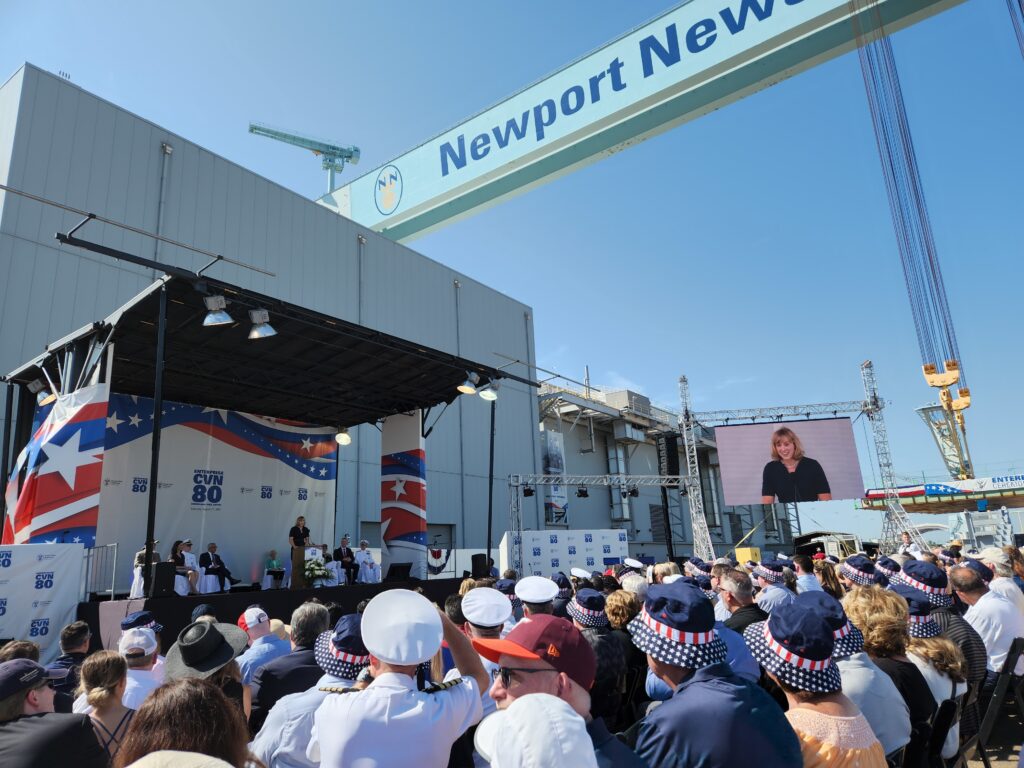
Katie Ledecky, CVN-80 co-sponsor and three-time Olympian delivers remarks at the future USS Enterprise (CVN-80) keel laying ceremony in Newport News, Virginia, Aug. 27. The future USS Enterprise will be the ninth U.S. Navy warship to bear the name. U.S. NAVY

NEWPORT NEWS, Va. — With the words, “I hereby declare the keel of the United States Ship Enterprise truly and fairly laid,” Olympians Simone Biles and Katie Ledecky chalked their initials on respective steel plates, which were then embossed by skilled welders and affixed to the keel of the future USS Enterprise (CVN 80), Aug. 28 at the HII-Newport News Shipyard, in Newport News, Virginia.
 
Ledecky attended the historic keel laying ceremony for the nation’s most advanced aircraft carrier in person, while Biles participated via a pre-recorded message from the World Champions Center in Spring, Texas, Program Executive Office Aircraft Carriers said in a release. Five years earlier, on Aug. 24, 2017, Biles and Ledecky attended CVN 80’s First Cut of Steel ceremony, marking the initial major construction milestone for the Enterprise — the third ship in the USS Gerald R. Ford (CVN 78)-class of aircraft carriers. 
 
On Saturday, after NNS welders Ephony King and Jonathan Rishor finished welding the athletes’ initials on small, steel plates, NNS Lead Rigger, Mike “Chile” Williams, passed a radio to Ledecky, who gave the command for NNS Crane Operator Charlie Holloway to lower the 688-ton keel unit into the dry dock. This section of the ship will support the forward half of the Enterprise, when the CVN 80 is fully assembled. The ceremonial plates will be affixed permanently to the ship’s keel. 
 
Work on the Enterprise has been progressing on schedule, since NNS loaded the Enterprise’s keel unit during the ship’s first “super-lift,” on April 5. With the first main structural member in place, workers have continued erecting the aircraft carrier in the dry dock by joining together a series of pre-outfitted modules. 
 
The future USS Enterprise will be the ninth U.S. Navy warship to bear the name, with the first being a sloop-of-war, commissioned in 1775, after its capture from the British during the American War of Independence. The last Enterprise (CVN 65), served as the world’s first nuclear-powered aircraft carrier from 1961–2017 and is currently moored nearby in the shipyard awaiting the results of an environmental impact statement and a Navy decision on disposal options. 
 
Under Secretary of the Navy Erik K. Raven delivered the keynote address. “The power of this ceremony — at this shipyard, in our country, on this day — is to mark another ship’s life being started to serve more generations of Americans, service members, friends, families, leaders, partners, and allies,” he said.
 
“Fittingly, in the presence of the previous Big E, we now lay the keel of the next Enterprise, the newest future naval warship, CVN 80.” 
 
The ship’s sponsors are internationally renowned. Ledecky is a three-time Olympian, participating in the 2012, 2016, 2020 Games, earning 10 medals. Biles is the most decorated U.S. women’s gymnast, with 32 World/Olympic medals.
 
The future USS Enterprise is scheduled to replace the USS Dwight D. Eisenhower (CVN 69), currently slated for inactivation in 2029. 


Iraq, Kuwait and U.S. Conduct Joint Patrol in Arabian Gulf 

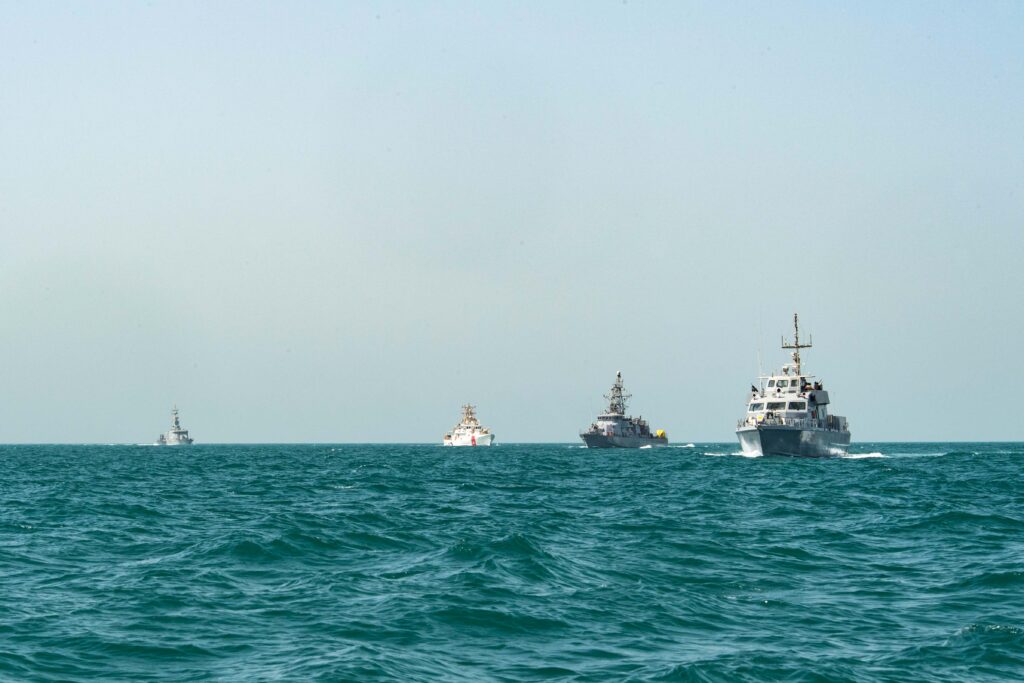
U.S. Navy coastal patrol ship USS Sirocco (PC 6), U.S. Coast Guard fast response cutter USCGC Charles Moulthrope (WPC 1141), Kuwait naval force ship Maskan (P 3717) and Iraq navy fast attack craft P-310 sail together during a joint patrol exercise in the Arabian Gulf, Aug. 25. U.S. NAVY / MC1 Anita Chebahtah

MANAMA, Bahrain — Maritime forces from Iraq, Kuwait and the United States conducted a joint patrol on Aug. 25 in the Arabian Gulf, U.S. Naval Forces Central Command said Aug. 28. Ships from the Iraq navy, Kuwait naval force, Kuwait coast guard, U.S. Navy and U.S. Coast Guard participated in maneuvering exercises and maritime security drills. 

U.S. ships included patrol coastal ship USS Sirocco (PC 6) and fast response cutter USCGC Charles Moulthrope (WPC 1141). Sirocco and Charles Moulthrope are forward-deployed to Bahrain where U.S. 5th Fleet is headquartered. 

“Trilateral engagements like this demonstrate the shared commitment of partner nations to safeguarding the seas,” said Capt. Robert Francis, commander of Task Force 55 whose staff oversees operations for U.S. 5th Fleet surface forces. 

Cooperation among regional partners at sea helps ensure maritime security and stability in nearby waters, he added. 

The U.S. 5th Fleet operating area includes 21 countries, the Arabian Gulf, Gulf of Oman, Red Sea, parts of the Indian Ocean and three critical choke points at the Strait of Hormuz, Bab al-Mandeb and Suez Canal. 


7th Fleet Cruisers Transit Taiwan Strait 

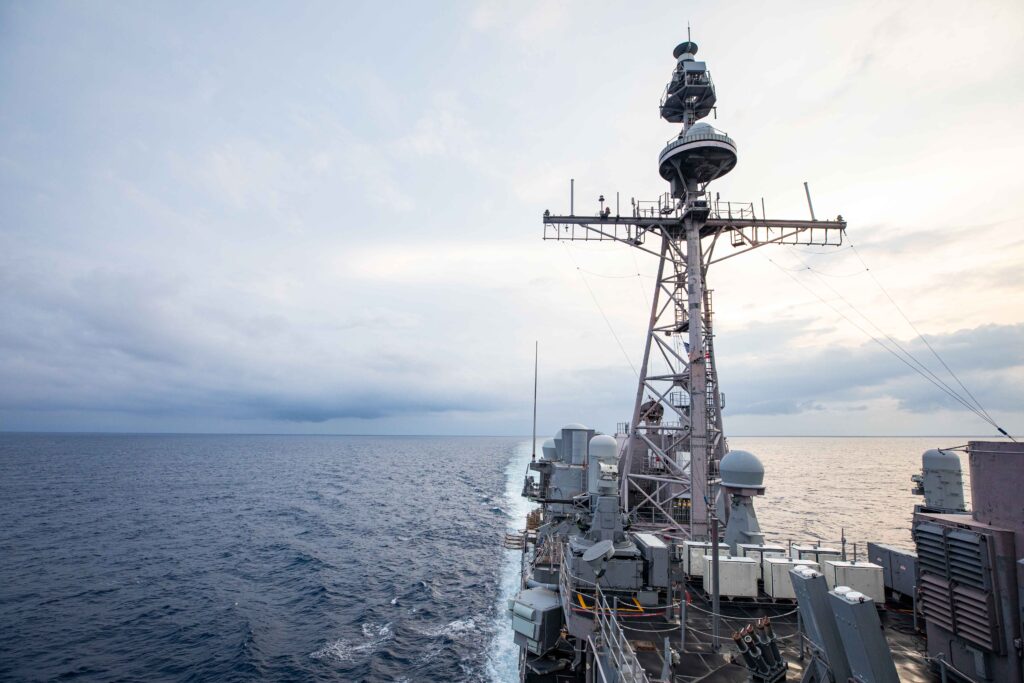
Ticonderoga-class guided-missile cruiser USS Chancellorsville (CG 62) transits the East China Sea during routine underway operations. Chancellorsville is forward-deployed to the U.S. 7th Fleet area of operations in support of a free and open Indo-Pacific. U.S. NAVY / Mass Communications Specialist 2nd Class Justin Stack

TAIWAN STRAIT — Ticonderoga-class guided-missile cruisers USS Antietam (CG 54) and USS Chancellorsville (CG 62) conducted a routine Taiwan Strait transit Aug. 28 (local time) through waters where high seas freedoms of navigation and overflight apply in accordance with international law, U.S. 7th Fleet Public Affairs said in a release. 

These ships transited through a corridor in the Strait that is beyond the territorial sea of any coastal state. The ship’s transit through the Taiwan Strait demonstrates the United States’ commitment to a free and open Indo-Pacific, the release said. The United States military flies, sails, and operates anywhere international law allows. 


SAIC Wins Contract to Support U.S. Navy Networks 

RESTON, Va. — Science Applications International Corp. has been awarded a $163 million contract by the U.S. Navy to support design, development, integration, modernization, sustainment and life cycle support to shore networks, network components and network service solutions for the Naval Information Warfare Center Pacific Shore Networks Branch located in San Diego, the company said Aug. 25. 

Under the contract, SAIC will maintain Naval Enterprise Networks for all shore-based U.S. Navy commands and personnel critical to the Navy’s day-to-day operations, as well as supporting command and control of U.S. Navy units deployed by operational commanders. 

“SAIC is honored to build on our work supporting the U.S. Navy and NIWC Pacific,” said Bob Genter, SAIC president, Defense & Civilian Sector. “We are focused on delivering valuable support and solutions to a range of U.S. Navy network challenges and initiatives.” 

NIWC Pacific provides technological and engineering support critical to information warfare for the U.S. Navy, as well as for Marine Corps, Air Force, Army and Coast Guard programs. Systems development and support includes basic research and prototype development through systems engineering, and integration to life cycle support of fielded systems. 


George H.W. Bush Carrier Strike Group Enters the Mediterranean Sea 

Ships from the George H.W. Bush Carrier Strike Group (GHWBCSG) transit the Atlantic Ocean following a straits transit training event. U.S. NAVY / Mass Communication Specialist Seaman Apprentice Samuel Wagner

STRAIT OF GIBRALTAR — The George H.W. Bush Carrier Strike Group, embarked aboard the Nimitz-class aircraft carrier USS George H.W. Bush (CVN 77), transited the Strait of Gibraltar and entered the Mediterranean Sea as part of a regularly scheduled deployment in the U.S. Naval Forces Europe-Africa area of operations on Aug. 25, the group’s public affairs office said. 

The strike group ships, squadrons and staff departed from the United States earlier this month, aggregating as a strike group in the Atlantic Ocean before beginning the transit through the Strait of Gibraltar. 

“We are here to provide the flexibility and combat power that only a U.S. Navy carrier strike group can provide combatant commanders,” said Rear Adm. Dennis Velez, commander, George H.W. Bush Carrier Strike Group, Carrier Strike Group 10. “The Sailors of the George H.W. Bush Carrier Strike Group are clear-eyed about our mission, ready to execute, and prepared to reassure our partners and allies while allowing our diplomats to negotiate from a position of strength, knowing the U.S. Navy is on station.” 

While in the NAVEUR-NAVAF area of operations, the strike group will work alongside allied and partner maritime forces, focusing on theater security cooperation efforts to further regional stability and demonstrate the strong maritime partnership between the U.S. and these allies and partners. This marks the first time that USS George H.W. Bush has operated in the region since its 2017 deployment, after which it entered an extensive maintenance period. 

Prior to deployment, the carrier strike group completed its final certification exercise with the Italian Navy destroyer ITS Caio Duilio (D 554) as part of the team. Later in the same exercise, the strike group came under the leadership of Naval Striking and Support Forces NATO to flex command and control between U.S. and NATO chains of command, highlighting integration and interoperability between partners and allies. 

Carrier strike groups are an inherently flexible naval force capable of deploying across combatant commands to meet emerging missions, deter and defend against potential adversaries, enhance security, reassure allies and partners, and guarantee the free flow of commerce in the region. 


Ohio-Class Submarines Work with USAF and USMC During VERTREP 

An MH-60R Seahawk helicopter, assigned to the “Wildcats” of Helicopter Sea Combat Squadron 23, delivers supplies to the ballistic missile submarine USS Nevada (SSBN 733) during a vertical replenishment at sea. U.S. NAVY

NAVAL BASE KITSAP, BANGOR, Wash. — Two Ohio-class ballistic missile submarines demonstrated their ability to replenish while operating at sea during a series of vertical replenishment exercises off the coast of California July through August 2022, said Submarine Group 9 public affairs.
 
During the exercise, the Ohio-class ballistic missile submarines USS Nevada (SSBN 733) and USS Henry M. Jackson (SSBN 730) operated jointly with U.S. Navy MH-60R Seahawk helicopters, U.S. Marine Corps MV-22 Ospreys, and U.S. Air Force C-17 Globemaster IIIs. 
 
“Recently the Pacific SSBN submarine force exercised a vertical replenishment capability for at-sea SSBNs to prove our resiliency for worldwide operations and to replenish our ships with materials, food and operational gear,” said Capt. Kelly L. Laing, director of maritime operations for Commander, Task Group 114.3. “This allows us to maintain an unpredictable forward presence and continued demonstration of the unmatched strength of our strategic forces.” 
 
The event showcased the submarines’ ability to remain on mission and at sea while performing essential replenishment operations. 
 
“Our fundamental mission is to deter a strategic attack, which is an existential threat to the United States and our allies.” said Rear Adm. Mark Behning, commander of both Submarine Group 9 and Task Group 114.3. “Testing our readiness ensures we maintain a safe, secure and reliable strategic deterrent force.” 
 
The event was part of a U.S. Strategic Command exercise which highlights the interoperability of multiple U.S. military platforms in order to implement the strategic deterrence mission. 
 
“Exercising these VERTREPs was a joint operation involving Marine and Air Force assets,” Laing said. “This shows our commitment to joint operations worldwide and between combatant commanders. This is important so that we don’t stovepipe ourselves under one community or brand. We are committed to operating together as a global force.” 
 
This event is the latest in a series of efforts by the United States submarine force to look at alternative operations that previously required a submarine to be pierside to accomplish. For example, in May, the Ohio-class ballistic-missile submarine USS Alabama (SSBN 731) conducted an at-sea crew exchange, swapping out the blue and gold crews. This demonstrated the submarine’s ability to continuously operate and stay on mission for longer periods of time while sustaining quality of life for the crews and their families. 
 
“What this shows to our allies and adversaries is that we have the ability to keep our boats at sea,” Laing said. “This shows them that we are ready.”