U.S. Navy Announces 28th RIMPAC Exercise 
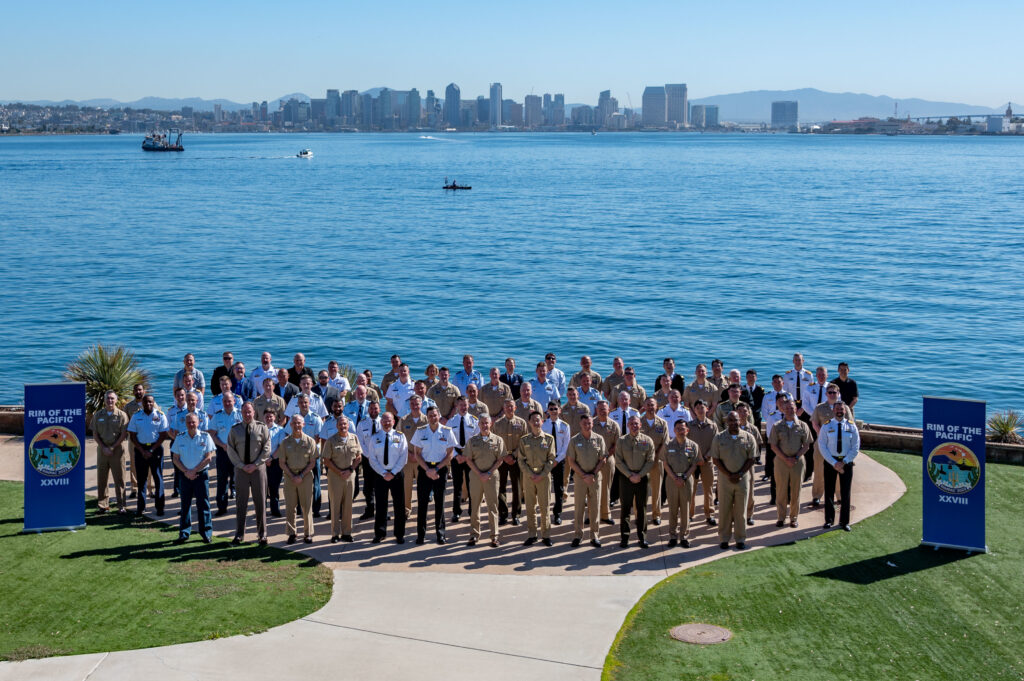
Exercise Rim of the Pacific (RIMPAC) 2022 senior leadership and staffs pose for a group photo onboard Naval Base Point Loma, Feb. 18. The weeklong conference brought the RIMPAC senior leadership and staffs from seven RIMPAC partner nations together for detailed planning in advance of the world’s largest maritime exercise, scheduled to be held this summer in both Hawaii and San Diego. U.S. NAVY / Mass Communication 2nd Class Kevin F. Johnson

SAN DIEGO — Twenty-six nations, 38 surface ships, four submarines, nine national land forces, more than 170 aircraft and approximately 25,000 personnel will participate in the biennial Rim of the Pacific (RIMPAC) exercise scheduled June 29 to Aug. 4, in and around the Hawaiian Islands and Southern California, Commander, U.S. 3rd Fleet Public Affairs, said May 31. 

RIMPAC 2022 is the 28th exercise in the series that began in 1971. 

As the world’s largest international maritime exercise, RIMPAC provides a unique training opportunity designed to foster and sustain cooperative relationships that are critical to ensuring the safety of sea lanes and security on the world’s interconnected oceans. 

The theme of RIMPAC 2022 is “Capable, Adaptive, Partners.” Participating nations and forces will exercise a wide range of capabilities and demonstrate the inherent flexibility of maritime forces. These capabilities range from disaster relief and maritime security operations to sea control and complex warfighting. The relevant, realistic training program includes amphibious operations, gunnery, missile, anti-submarine and air defense exercises, as well as counter-piracy operations, mine clearance operations, explosive ordnance disposal and diving and salvage operations. 

This year’s exercise includes forces from Australia, Brunei, Canada, Chile, Colombia, Denmark, Ecuador, France, Germany, India, Indonesia, Israel, Japan, Malaysia, Mexico, Netherlands, New Zealand, Peru, the Republic of Korea, the Republic of the Philippines, Singapore, Sri Lanka, Thailand, Tonga, the United Kingdom and the United States. 

Hosted by Commander, U.S. Pacific Fleet, RIMPAC 2022 will be led by Commander, U.S. 3rd Fleet, who will serve as Combined Task Force commander. Royal Canadian Navy Rear Adm. Christopher Robinson will serve as deputy commander of the CTF, Japan Maritime Self-Defense Force Rear Adm. Toshiyuki Hirata as the vice commander, and Fleet Marine Force will be led by U.S. Marine Corps Brig. Gen. Joseph Clearfield. Other key leaders of the multinational force will include Commodore Paul O’Grady of the Royal Australian Navy, who will command the maritime component, and Brig. Gen. Mark Goulden of the Royal Canadian Air Force, who will command the air component. 

During RIMPAC, a network of capable, adaptive partners train and operate together in order to strengthen their collective forces and promote a free and open Indo-Pacific. RIMPAC 2022 contributes to the increased interoperability, resiliency and agility needed by the joint and combined force to deter and defeat aggression by major powers across all domains and levels of conflict. 


Navy Announces Flag Officer Assignments 

ARLINGTON, Va. — The secretary of the Navy and chief of naval operations announced June 1 the following assignments: 

Rear Adm. Frederick W. Kacher will be assigned as vice director for operations, J-3, Joint Staff, Washington, D.C. Kacher is currently assigned as assistant deputy chief of naval operations for Operations, Plans, and Strategy, N3/N5B, Office of the Chief of Naval Operations, Washington, D.C. 

Rear Adm. (lower half) John V. Menoni, selected for promotion to rear admiral, will be assigned as assistant deputy chief of naval operations for Operations, Plans, and Strategy, N3/N5B, Office of the Chief of Naval Operations, Washington, D.C. Menoni is currently serving as commander, Expeditionary Strike Group Two, Virginia Beach, Virginia. 

Rear Adm. (lower half) Michael J. Steffen, selected for promotion to rear admiral, will be assigned as commander, Navy Reserve Forces Command, Norfolk, Virginia. Steffen is currently serving as commandant, Naval District Washington, Washington, D.C. 

Rear Adm. (lower half) Rick Freedman will be assigned as director, Education and Training, Defense Health Agency, Falls Church, Virginia. Freedman is currently serving as director, Medical Systems Integration and Survivability, N44, Office of the Chief of Naval Operations, Washington, D.C. 

Rear Adm. (lower half) Patrick S. Hayden will be assigned as director, Readiness and Logistics, U.S. Naval Forces Europe-Africa, Naples, Italy. Hayden is currently serving as deputy director, Logistics, Fleet Supply and Ordnance (N4), U.S. Pacific Fleet, Pearl Harbor, Hawaii. 

Rear Adm. (lower half) Jonathan E. Rucker, selected for promotion to rear admiral (lower half), will be assigned as program executive officer, Attack Submarines, Washington, D.C. Rucker is currently serving as major program manager, Program Executive Office, Columbia, Washington, D.C. 

Rear Adm. (lower half) Darin K. Via will be assigned as deputy chief, Bureau of Medicine and Surgery; deputy surgeon general of the Navy; and director, Medical Resources, Plans and Policy Division, N0931, Office of the Chief of Naval Operations, Washington, D.C. Via is currently serving as commander, Naval Medical Forces Atlantic, with additional duties as director, Tidewater Market, Portsmouth, Virginia. 

Capt. Luke A. Frost, selected for promotion to rear admiral (lower half), will be assigned as director, Reserve Warfare, Office of the Chief of Naval Operations, Washington, D.C. Frost is currently serving as chief of staff, Office of the Chief of Navy Reserve, Washington, D.C. 


U.K. Royal Navy Submarines Set for £265 Million Tomahawk Missile Upgrade  

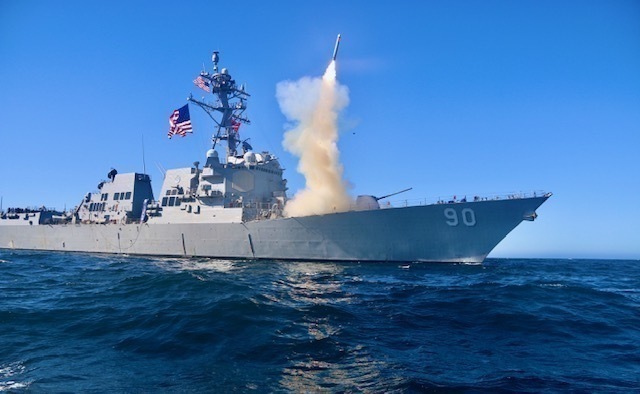
The guided-missile destroyer USS Chafee (DDG 90) launches a Block V Tomahawk, the weapon’s newest variant, during a three day missile exercise in 2020. U.S. NAVY / Ens. Sean Ianno

LONDON — The United Kingdom’s stock of Tomahawk Land-Attack Missiles will be upgraded on Royal Navy submarines to ensure the weapon is even more effective against future threats, the U.K. Ministry of Defence said June 1. 

In a £265 million ($334 million USD) contract with the U.S. government, with maintenance and technical support at the U.K. sites of BAE Systems, Babcock International and Lockheed Martin, the Royal Navy’s Astute-class submarines will be armed with an enhanced Block V standard missile, capable of striking severe threats at a range of up to 1,000 miles. 

At approximately 5.6 meters long and weighing 2,200 kilograms — a similar weight to a 4×4 car — the high subsonic Tomahawk was first introduced into U.K. service in 1998 and can hit inland targets from the sea within minutes. A weapon of choice since then, it has been successfully deployed during operations in Afghanistan, Libya and Iraq. 

“This upgrade will equip our Astute-class attack submarines with the one of the most lethal and precise long-range strike weapons,” said Minister for Defence Procurement Jeremy Quin. “Enhancing this cutting-edge missile system will ensure the U.K. can strike severe threats up to 1,000 miles away.” 

The Tomahawk missiles will be upgraded as part of a foreign military sale with the U.S. government, which was negotiated by the MoD’s procurement arm, Defence Equipment and Support, and will be active from July. 

Making use of existing U.S. research and expertise on the upgraded missile, the contract will mean the United Kingdom continues to receive full access to the U.S. Tomahawk program, support package and upgrades. 

“Not only will this FMS sustain and improve a proven, crucial operational capability for any future conflicts, it will continue to ensure interoperability with our U.S. allies and the follow-on support arrangements will sustain jobs for UK industry,” said Ed Cutts, DE&S’ director of weapons. 

Due to be operational in the mid-2020s, the upgraded Tomahawk will align with the delivery of the latest Astute-class submarines. 


First E-6B Inducted Under New Maintenance Contract 

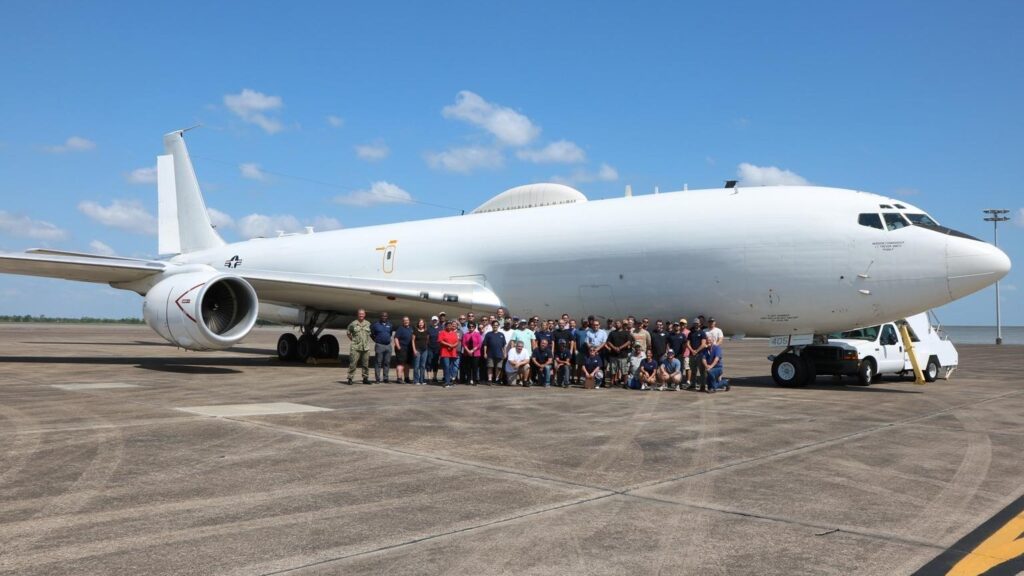
Members of PMA-271 along with industry partners pose with the first E-6B Mercury inducted under the new Integrated Maintenance and Modification Contract at Lake Charles, Louisiana, May 9. NORTHROP GRUMMAN

PATUXENT RIVER, Md. — The first E-6B Mercury arrived at Northrop Grumman Corp.’s Aircraft Maintenance and Fabrication Center in Lake Charles, Louisiana, for Block II modification on earlier this month, the Naval Air Systems Command announced May 31. 

The work is part of an Integrated Modification and Maintenance Contract (IMMC) awarded in February, which focuses on fielding improved airborne strategic communications sooner. 

“This is an important event because it’s the first time a single company will be responsible for executing the entire installation,” said Bob Stailey, Airborne Strategic Command, Control, and Communications Program Office (PMA-271) E-6B deputy program manager. “NGC Lake Charles built an integrated modification schedule that implements efficiencies and lessons learned from previous efforts.” 

The Block II upgrade consists of six modifications to improve the aircrafts’ command, control and communications functions connecting the National Command Authority with U.S. strategic and non-strategic forces. 

The previous modification contract was executed by two separate commercial activities and one organic activity with a 19-month average turnaround time. With this new IMMC, the team anticipates ultimately achieving a six-month modification turnaround timeline. 

“This contract streamlines how we are fielding our capability upgrades,” Stailey said. “We are fully engaged with the fleet and our partners as we reduce the time required for aircraft modifications.”    

Driving toward the timeline reduction goal has been a team effort with partnership between the program, Naval Air Warfare Center Aircraft Division, Fleet Readiness Center Southeast, Defense Contract Management Agency, Strategic Communications Wing One, Fleet Air Reconnaissance Squadron 4, Navy liaison officers and program representative’s onsite in Lake Charles.  

“I’m very proud of the entire team and all the work they’ve done to get to this point,” said Capt. Adam Scott, PMA-271 program manager. “It’s taken a big effort and they are constantly looking for ways to identify and overcome any challenges.” 

Faster turnaround times with the upgrades will lead to more aircraft being available with increased capabilities for the warfighter. 

“Our number one priority is ensuring SCW-1 accomplishes its mission providing assured airborne strategic communications and that the president is always connected to his nuclear forces,” Scott said. 


USS Sioux City Enters Red Sea as First LCS to Deploy to 5th Fleet 

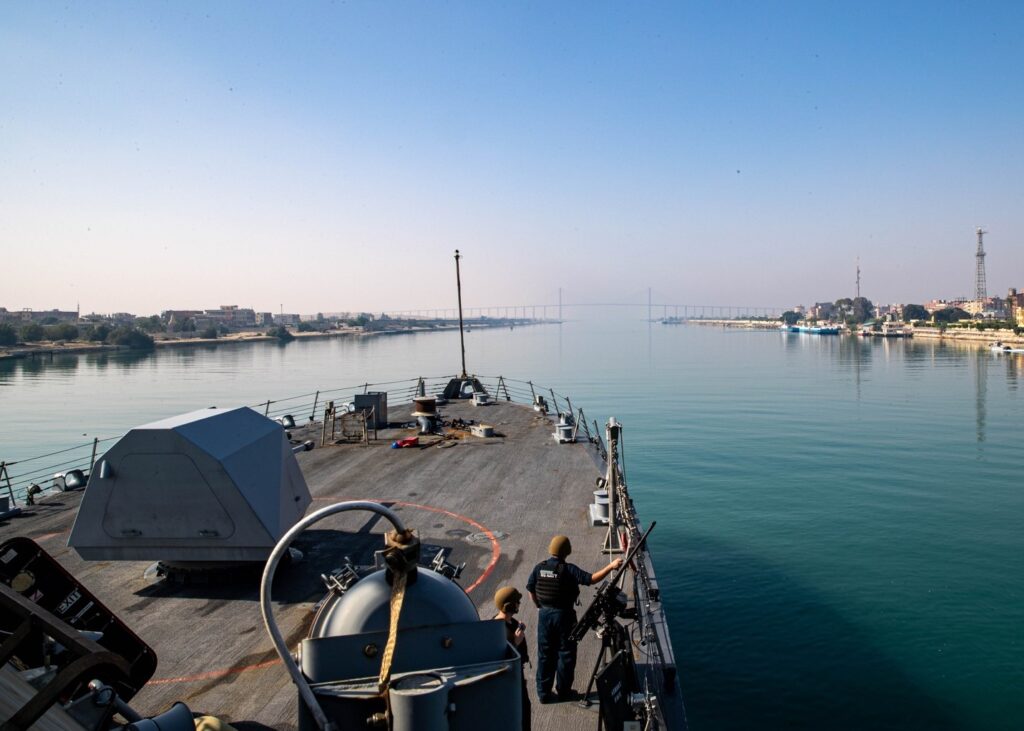
The littoral combat ship USS Sioux City (LCS 11) transits the Suez Canal, May 29. Sioux City is deployed to the U.S. 5th Fleet area of operations to help ensure maritime security and stability in the Middle East region. U.S. NAVY / Mass Communication Specialist 3rd Class Nicholas A. Russell

MANAMA, Bahrain — USS Sioux City (LCS 11) arrived in the U.S. 5th Fleet region May 28, marking the first time a littoral combat ship has deployed to the Middle East, NAVCENT Public Affairs said May 29. 

The ship and crew of 75 personnel are currently sailing in the Red Sea after departing Mayport, Florida, in April. Sioux City is operating in support of a newly established multinational task force, Combined Task Force (CTF) 153, focused on maritime security and partner capacity building in the Red Sea, Bab al-Mandeb and Gulf of Aden. 

“We’re excited to welcome a littoral combat ship to the Middle East for the first time,” said Vice Adm. Brad Cooper, commander of U.S. Naval Forces Central Command, U.S. 5th Fleet and Combined Maritime Forces. “Sioux City’s arrival is not only historic but essential to regional maritime security given its immediate integration with our new multinational naval task force.” 

CTF 153 is one of four multinational task forces organized under Combined Maritime Forces, the largest international naval partnership with 34 nations. Led by the United States, Combined Maritime Forces is headquartered in Bahrain with U.S. 5th Fleet. 

Littoral combat ships are versatile, enabling them to support a broad spectrum of fleet missions and operate alongside regional navies and coast guards. 

Last year, Sioux City operated in the Caribbean Sea where it seized 600 kilograms of cocaine with an estimated street value of $24 million from drug traffickers in April. In October, the ship seized nearly 500 kilograms of cocaine worth $20 million in the Caribbean. 

“We’re thrilled to have Sioux City join our team,” said Capt. Robert Francis, commander of CTF 153. “They’ve worked collaboratively in bringing enhanced capabilities to other regions and that’s certainly what we’re looking forward to here in the Middle East while operating with our international partners.” 

The U.S. 5th Fleet region includes 21 countries, the Arabian Gulf, Gulf of Oman, Red Sea, parts of the Indian Ocean and three critical choke points at the Strait of Hormuz, Bab al-Mandeb and Suez Canal. 


Navy to Commission Virginia-Class Fast Attack Submarine Oregon 

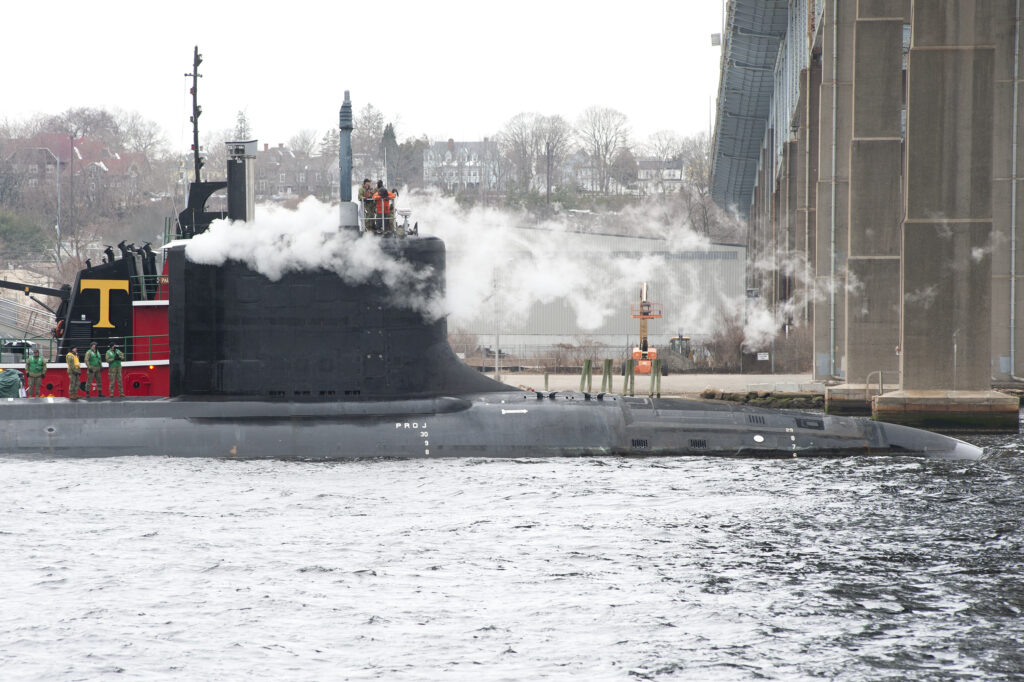
The future USS Oregon (SSN 793) makes its way under the Gold Star Bridge after departing General Dynamics Electric Boat on March 1, en route to Submarine Base New London. U.S. NAVY / John Narewski

ARLINGTON, Va. — The Navy will commission the future USS Oregon (SSN 793), the newest Virginia-class fast attack submarine, during an 11 a.m. EDT ceremony on Saturday, May 28, at Naval Submarine Base New London in Groton, Connecticut, the Defense Department said in a release. 

The future USS Oregon is the third U.S. Navy ship launched to bear the name Oregon, but the first in more than a century. The first was a brig in service from 1841 to 1845. The second was an Indiana-class battleship commissioned in 1896, serving in the Spanish-American War, and ultimately decommissioned for the final time in 1919. 

The principal speaker is Gov. Katie Brown of Oregon. Additional speakers include U.S. Rep. Joe Courtney of Connecticut’s 2nd District; Tommy Ross, performing the duties of assistant secretary of the Navy for research, development, and acquisition; Adm. James Caldwell, director, naval nuclear propulsion program; and Kevin Graney, president of General Dynamics Electric Boat. 

The submarine’s sponsor is Dana L. Richardson, wife of former Chief of Naval Operations Adm. John Richardson and a native of Corvallis, Oregon. Oregon was christened at General Dynamics Corp.’s Electric Boat shipyard in Groton on Oct. 5, 2019. Mrs. Richardson will give the order to “man our ship and bring her to life.” 

“There is no doubt the importance this boat, named after the great state of Oregon, will play in the future of our nation’s security,” said Secretary of the Navy Carlos Del Toro. “This crew is vital to our undersea mission, and I look forward to all of their successes.” 

Oregon is the second Block IV Virginia-class submarine to enter service, designed to carry out the core missions of the submarine force: anti-submarine warfare; anti-surface warfare; delivery of special operations forces; strike warfare; irregular warfare; intelligence, surveillance, and reconnaissance; and mine warfare. These capabilities allow the submarine force to operate anywhere, at any time, and contribute to regional stability and the preservation of future peace. 

Oregon is 377 feet long, has a 34-foot beam, and will be able to dive to depths greater than 800 feet and operate at speeds in excess of 25 knots submerged. It has a crew of approximately 136 Navy personnel. 

The ceremony will be live-streamed at: https://www.dvidshub.net/webcast/28517. The link will become active at 9:45 a.m. EDT. 


General Atomics Awarded Task Order for Manufacturing Feasibility of Submarine Propulsor Bearing Designs 

SAN DIEGO — General Atomics Electromagnetic Systems has been awarded a task order from Naval Surface Warfare Center, Carderock Division to conduct a manufacturing assessment of several new propulsor bearing concept designs, the company said May 27.

The task order is under the Propulsor Demonstration Hardware indefinite delivery, indefinite quantity contract previously awarded to GA-EMS.  

“Manufacturing feasibility evaluations such as this are crucial steps in determining whether a new concept design will deliver greater performance, improved manufacturability, and better lifecycle maintainability when compared to existing propulsor and component designs,” said Scott Forney, president of GA-EMS. “We look forward to working with NSWCCD to review the various design selections, perform a detailed assessment of each design’s approach to the requirements, and provide a ranking to help NSWCCD determine the next step toward manufacturing demonstration prototypes.”   

GA-EMS will conduct a comparative analysis of the selected propulsor bearing designs, including mechanical stress modeling, requirements for manufacturing equipment, assembly and testing, materials sourcing, concept demonstration recommendations, cost analysis and scheduling requirements. NSWCCD is responsible for managing the research and development, design, test, and delivery of submarine propulsors and components to support future U.S. Navy requirements.  

“Our decades of experience engineering and manufacturing large, complex systems, including the electromagnetic aircraft launch and recovery systems for Ford-class carriers, provides us with a unique perspective and a broad range of capabilities and infrastructure that are applicable to submarine hardware and components,” Forney said. “Our goal is to support the Navy’s endeavors to continually advance design innovations that will deliver the best technologies to the fleet and the warfighter.” 


HII Uses Movie Release to Celebrate Its Workforce 

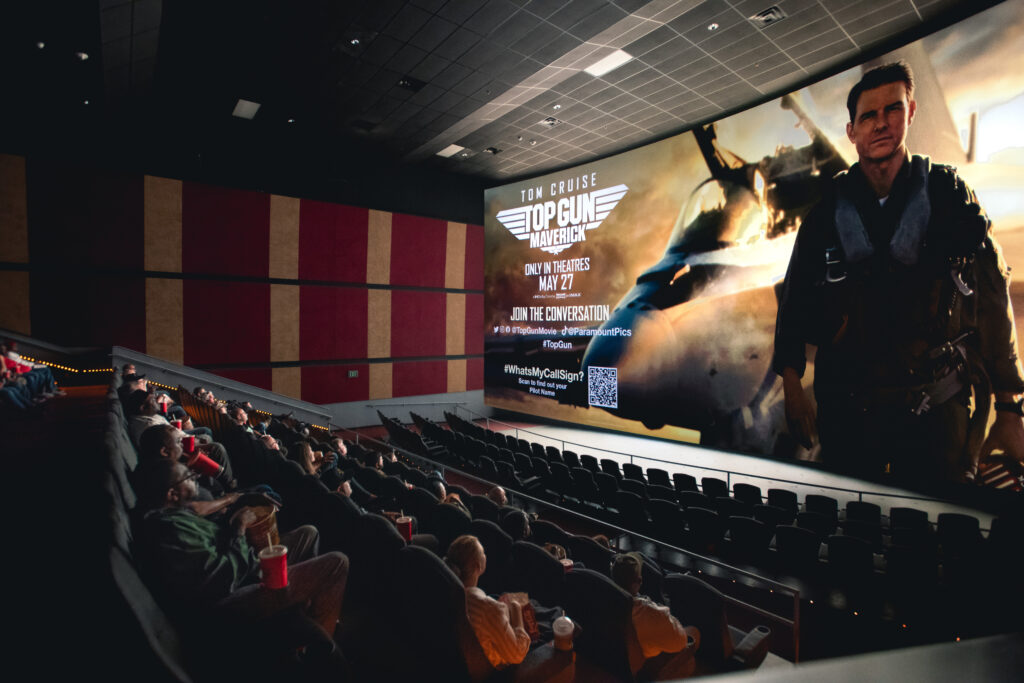
NEWPORT NEWS, Va. — With HII-built aircraft carriers featured prominently in the movie release of “Top Gun: Maverick,” the nation’s largest shipbuilder recognized the release as an opportunity to celebrate its workforce, their contribution to national security and the company’s growing technologies business. In Virginia, where HII is the state’s largest industrial employer, the company’s Newport News Shipbuilding division invited shipbuilders to get an early screening of the movie, the company said May 27. 

“This team builds the most powerful and survivable ships in the world in support of national security,” said Danyelle Saunders, who leads the Newport News Shipbuilding Engagement, Diversity and Inclusion Office. “We’re excited that the movie shines a light on their hard work, and showcases how these incredibly capable platforms function on behalf of the country.” 

HII is America’s only builder of nuclear-powered aircraft carriers. 

A total of 800 Newport News Shipbuilding shipbuilders across shifts were invited to get an early screening of the movie after or before work on Wednesday, May 25, and Thursday, May 26, before “Top Gun: Maverick” officially hit theaters. Additionally, 1,200 vouchers have been provided for additional shipbuilders to see the movie. 

“It’s great the company would do this, especially a pre-showing,” said Newport News Shipbuilding Engineering Technician Will Wiley, who attended the Thursday screening. “We play a huge role in building carriers, so it’s great to see something we were part of on the big screen.” 

DeWolfe “Chip” Miller, corporate vice president of customer affairs for HII, contributed to the production of “Top Gun: Maverick” during his career in the Navy as the commander of Naval Air Forces. 

“The aircraft carriers we build are the most technologically advanced in the world,” Miller said. “We deliver them to the U.S. Navy who man, train and equip Sailors who breathe life into these magnificent machines and take them to sea. Together, we are an unstoppable team: shipbuilders and Sailors. Our country needs that team now more than ever.” 

As America recognizes the 100-year legacy of aircraft carriers this year, all U.S. nuclear-powered aircraft carriers operating in the Navy fleet today were built at Newport News Shipbuilding, including USS Theodore Roosevelt (CVN 71) and USS Abraham Lincoln (CVN 72) seen in “Top Gun: Maverick.” 

HII’s Ingalls Shipbuilding and Mission Technologies divisions also initiated similar efforts to connect employees with the company’s mission through opportunities to receive tickets to see the movie while it is in theaters. 


US 5th Fleet Commander Explains Role of Unmanned, AI in Middle East 

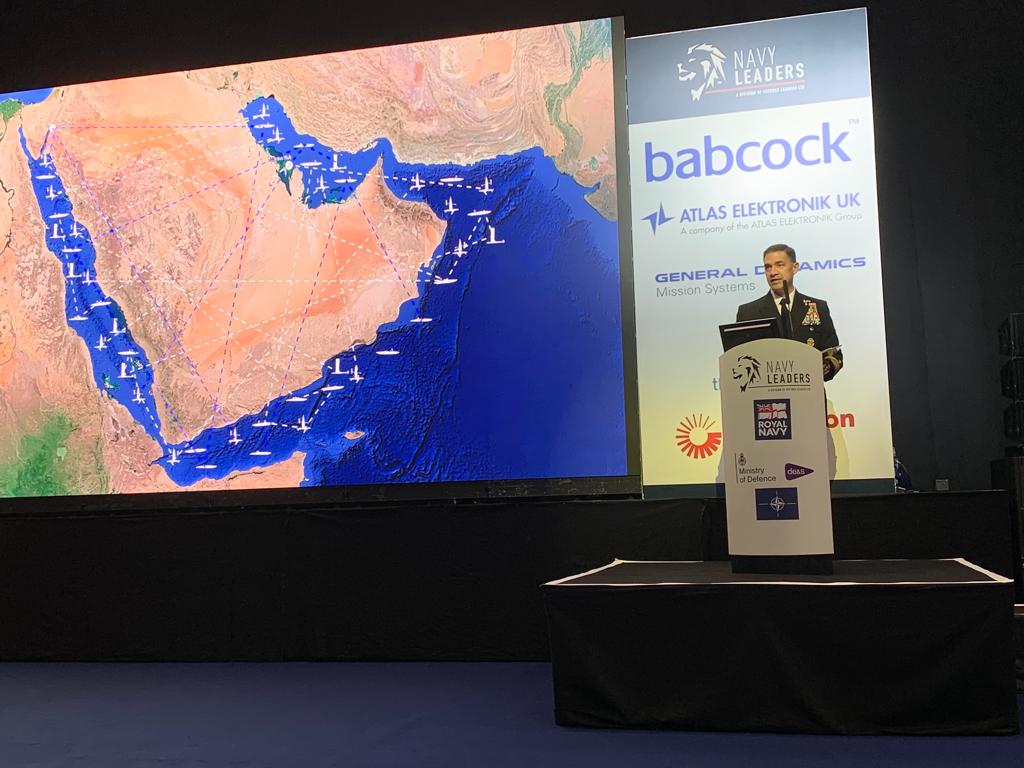
Vice Adm. Brad Cooper speaks at the Combined Naval Event in the United Kingdom. U.S. NAVY

LONDON — The commander for U.S. naval forces in the Middle East discussed the role of unmanned systems and artificial intelligence in naval operations at an international security conference in the United Kingdom, May 24, NAVCENT Public Affairs said May 25. 

Vice Adm. Brad Cooper, commander of U.S. Naval Forces Central Command, U.S. 5th Fleet and Combined Maritime Forces, spoke to an audience of nearly 800 international defense and industry leaders during the Combined Naval Event at the Farnborough International Exhibition and Conference Centre. 

“We are on a path to build the world’s first international unmanned surface vessel fleet,” Cooper said. “Three weeks ago, we surpassed 10,000 total sailing hours for unmanned surface vessels throughout the region. Additionally, two vessels each exceeded 100 consecutive operating days at sea.” 

U.S. 5th Fleet is currently fielding multiple unmanned systems with artificial intelligence across the Middle East after establishing Task Force 59 in September. The task force works closely with members of industry and academia as well as other experts to provide operator feedback and help drive the innovation process forward. 

“The goal is a distributed and integrated network of systems, operated with our partners, to significantly expand how far we can see,” said Cooper. 

Over an eight-month period, the task force stood up operating hubs for unmanned systems and artificial intelligence in Bahrain and Aqaba, Jordan while deploying new unmanned systems to a half-dozen bilateral and multilateral exercises. Additionally, some of the systems are currently contributing to daily operations in regional waters by enhancing maritime surveillance. 

“Every partner and every sensor offers new information that can be added to what we call the ‘Digital Ocean,’ an intelligent synthesis of around-the-clock inputs encompassing thousands of images,” Cooper said. “Putting more eyes above, on and below the water’s surface enhances our picture of the surrounding seas and enables us to position our crewed ships to react more rapidly.” 

Earlier this year, U.S. 5th Fleet announced the goal of forming a multinational fleet of 100 unmanned surface vessels by the summer of 2023. 

“A network of partners can increase shared maritime domain awareness by 30 or 40 times, through an interconnected mesh of sensors and real-time data fused together,” Cooper said. “This is an ambitious goal, but it is achievable because of our incredibly talented team.” 

U.S. 5th Fleet led the world’s largest unmanned maritime exercise in February when 10 nations fielded more than 80 unmanned systems during International Maritime Exercise 2022. The exercise enabled operators employ advanced unmanned systems during 14 different operational scenarios. 

“We are clearly more capable when we operate together, which is why strengthening partnerships and accelerating innovation are intertwined,” said Cooper. “It is not just about the technology. It is our people who have us on a path to realizing this vision together with our partners in the region.” 

The U.S. 5th Fleet area of operations encompasses about 2.5 million square miles of water area and includes the Arabian Gulf, Gulf of Oman, Red Sea and parts of the Indian Ocean. The region is comprised of 21 countries and includes three critical choke points at the Strait of Hormuz, the Suez Canal and the Strait of Bab al-Mandeb at the southern tip of Yemen. 


HII Announces New Vice President of Columbia-Class Program 

Brandi Smith, right, is succeeding Charles Southall as vice president of the Columbia-class submarine program at HII’s Newport News Shipbuilding division. HII

NEWPORT NEWS, Va. — HII announced May 26 that Brandi Smith has been named vice president of the Columbiaclass program at the company’s Newport News Shipbuilding division. Smith will succeed Charles Southall, who will retire July 1 after more than 35 years of distinguished service. 

The U.S. Navy has identified the Columbia class as its No. 1 acquisition priority. Twelve Columbia-class boats will replace the fleet of Ohio-class nuclear ballistic submarines and take over the role of the nation’s sea-based strategic deterrent; these submarines will provide the most survivable leg of the nation’s strategic triad. 

Southall began his Newport News Shipbuilding career in 1986 as an engineering intern in the submarine program and has served in various roles of increasing responsibility. During his tenure as director of advanced submarine programs, he established the Columbia-class submarine program office. Southall also served as the division’s chief engineer and engineering vice president, responsible for leading engineering efforts across all Navy programs. 

“Since the very beginning of his career, Charles has demonstrated deep commitment and ownership for every program, every assignment and every ship he has supported,” said Jennifer Boykin, president of Newport News Shipbuilding. “His leadership and technical acumen have shaped the design and construction of our nuclear fleet for more than three decades, and his impact will endure for generations to come.” 

On June 1, Smith will assume her new role leading company-wide management, leadership, cost, schedule and technical performance of the Columbia-class program. Smith will report to Matt Needy, vice president of Navy programs. 

“Brandi’s experiences encompass a breadth of service on every ship class in our portfolio from ‘design-build’ through ‘in-service’ maintenance,” Boykin said. “Her academic, technical, industrial and proven leadership has uniquely prepared her for this role.” 

Smith began her career at Newport News in 2002 as an engineer in the carrier overhaul program. She has held positions of increasing responsibility throughout her career, including interim director of construction engineering for the Ford class, engineering lead for Integrated Digital Shipbuilding, director of quality control responsible for all nuclear, non-nuclear, and non-destructive testing inspectors and most recently serves as Columbia-class construction program director. 

She earned a mechanical engineering degree from North Carolina State University and an MBA degree from The College of William and Mary.