USS Ronald Reagan CSG Departs Yokosuka for 2022 Deployment 
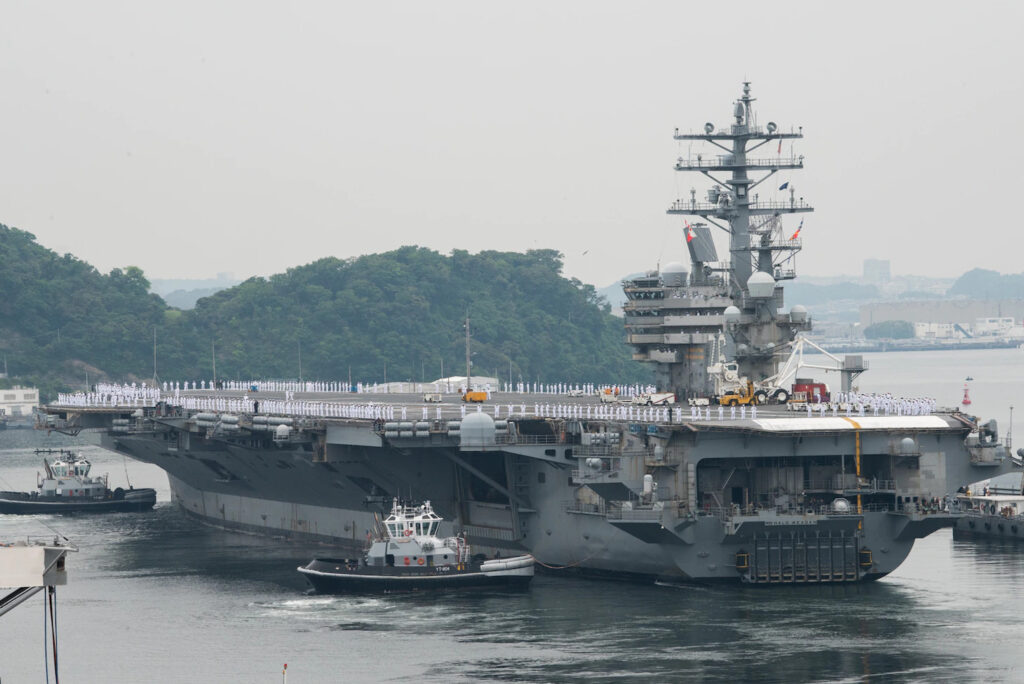
YOKOSUKA, Japan — The U.S. Navy’s only forward-deployed aircraft carrier, USS Ronald Reagan (CVN 76), and its strike group departed Commander, Fleet Activities Yokosuka on May 20 to support security and stability in the Indo-Pacific region, said Lt. Cmdr. Joe Keiley, Commander, Task Force 71 Public Affairs, in a release. 
 
During this routine at-sea period, Ronald Reagan, its strike group ships, the embarked Carrier Air Wing 5, Carrier Strike Group 5 and Destroyer Squadron 15 staffs are expected to work with allies and partners, promote adherence to a rules-based international order, as well as maintain presence and flexibility to meet the needs of the U.S. Department of Defense. 
 
Ronald Reagan successfully completed sea trials in preparation for deployment on May 17. 
 
“Ronald Reagan’s forward deployed presence underscores our nation’s commitment to our allies and partners,” said Capt. Fred Goldhammer, Ronald Reagan’s commanding officer. “Our crew has worked very hard to make the ship ready to face any future challenge, and I am tremendously proud of their efforts. The Sailors onboard Ronald Reagan are incredibly talented and resilient, and their unwavering commitment to our mission helps ensure that our nation’s maritime presence remains strong.” 
 
Sailors manned the rails in summer white uniforms as the ship pulled away from the pier. 
 
“The Ronald Reagan strike group and its team of professional Sailors across its commands, are ready to respond throughout the region in service of our maritime interests,” said Rear Adm. Michael Donnelly, commander, Task Force 70, Carrier Strike Group (CSG) 5. “The support of our families makes what we do at sea possible. In the days ahead we will strengthen our relationships with like-minded allies and partners, and deter anyone who would seek to disrupt international norms.” 
 
The Ronald Reagan Carrier Strike Group will include the Ticonderoga-class guided-missile cruisers USS Antietam (CG 54) and USS Chancellorsville (CG 62), as well as Arleigh Burke-class destroyers from DESRON 15. 


US, Japan Coast Guards Formally Expand Cooperation 

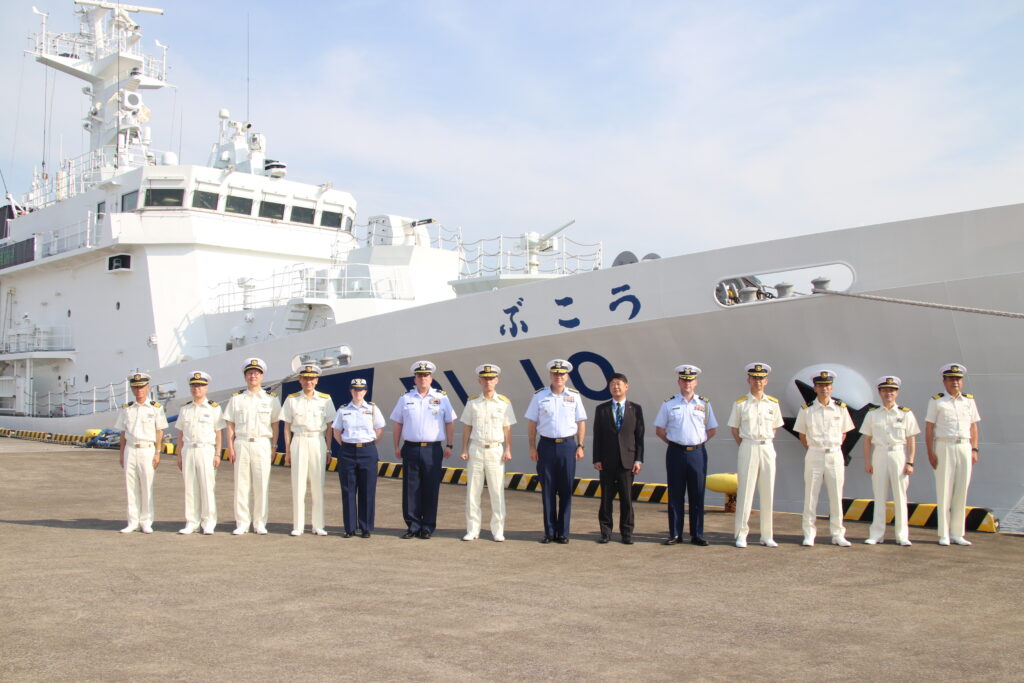
Vice Adm. Michael McAllister, commander of U.S. Coast Guard Pacific Area, Vice Adm. Yoshio Seguchi, Japan Coast Guard vice commandant for operations, and members of their staffs pose in front of the Japan Coast Guard Ship Bukou (PL 10), May 18. U.S. COAST GUARD

TOKYO — The United States and Japan coast guards formally expanded cooperative agreements and established a new perpetual operation during a ceremony May 18 in Tokyo, the Coast Guard Pacific Area said in a release. 

Vice Adm. Michael McAllister, commander of U.S. Coast Guard Pacific Area, and Vice Adm. Yoshio Seguchi, Japan Coast Guard vice commandant for operations, represented their respective services during the historic document signing ceremony and celebration at Japan Coast Guard Headquarters. 

Although a memorandum of cooperation between the sea services has existed since 2010, strengthened relationships, increasing bilateral engagements and continued focus on maintaining a free and open Indo-Pacific necessitated expansion of the memorandum. 

The new operation’s name, Sapphire, is an acronym for Solid Alliance for Peace and Prosperity with Humanity and Integrity on the Rule of law-based Engagement, and it honors the gem regarded as an emblem of integrity and affection found throughout the Indo-Pacific. 

Operation Sapphire encompasses all the annual interactions between the Japan and U.S. coast guards, with the goal of increasing interactions over time. 

To formalize the expanded cooperation, annexes were added to the existing memorandum of cooperation outlining Operation Sapphire to include standard operating procedures for combined operations, training and capacity building, and information sharing. 

“We rely on our partners, allies, and like-minded nations to achieve our shared missions,” said McAllister. “As evidenced by this agreement, our relationship with the Japan Coast Guard is stronger than ever, and I am looking forward to many more decades of partnership and collaborative operations in the Indo-Pacific.” 

“We will conduct smooth cooperation in the fields of joint operation, capacity building and information sharing by this agreement,” said Seguchi. “Sapphire embodies the rule-of-law based engagement between the coast guards, and we will expand the principle of Free and Open Indo-Pacific to other nations.” 


Coast Guard Holds Change of Watch Ceremony for Master Chief Petty Officer 

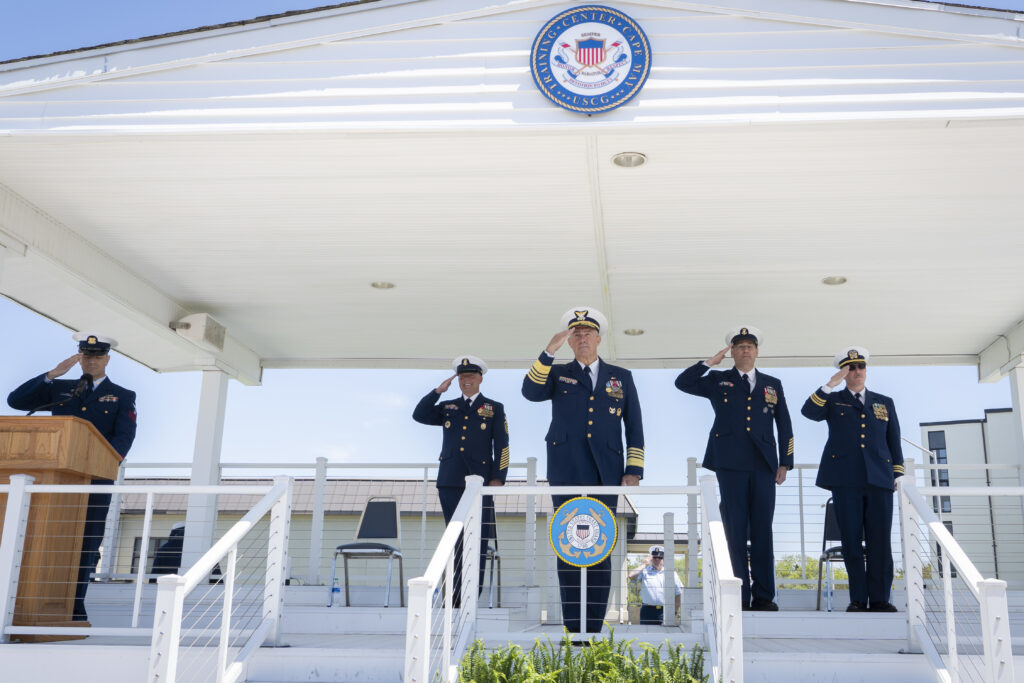
Commandant of the Coast Guard Adm. Karl Schultz, and ceremony members render honors to the national ensign, during the Master Chief Petty Officer of the Coast Guard Change of Watch ceremony in Cape May, New Jersey on May 19. U.S. COAST GUARD / Petty Officer 2nd Class John Michelli

WASHINGTON — Master Chief Jason M. Vanderhaden was relieved as Master Chief Petty Officer of the Coast Guard by Master Chief Heath B. Jones during a military change-of-watch ceremony May 19 at Coast Guard Training Center Cape May, New Jersey.  

Vanderhaden also retired from the Coast Guard after 34 years of service to the nation directly following the ceremony and received the Coast Guard Distinguished Service Medal. 

“I’m grateful for the tremendous leadership of our senior enlisted leader corps and amazing Chief’s Mess, they are truly the backbone of our service,” said Vanderhaden. “It’s been an honor to serve as the 13th MCPOCG, and I look forward to observing the great work of our next leadership team. Together we are the world’s best Coast Guard. Semper Paratus!”  

Vanderhaden assumed the duties of the 13th Master Chief Petty Officer of the Coast Guard on May 17, 2018. The MCPOCG is the highest senior enlisted member of the Coast Guard and the principal adviser to the Commandant on all enlisted personnel matters. 

Jones, now the service’s 14th MCPOCG, previously served as the Command Master Chief for the Deputy Commandant for Mission Support at Coast Guard Headquarters.  

The office of the Master Chief Petty Officer of the Coast Guard was established by legislative action on August 27, 1969, to provide the Commandant with a personal adviser and assistant in matters affecting the enlisted members of the Coast Guard, both active and reserve, and their families. The normal tour of assignment is four years, which runs concurrently with the Commandant of the Coast Guard.


MQ-25 Team Preps for first Air Vehicle, Control Station Integration Test Event 

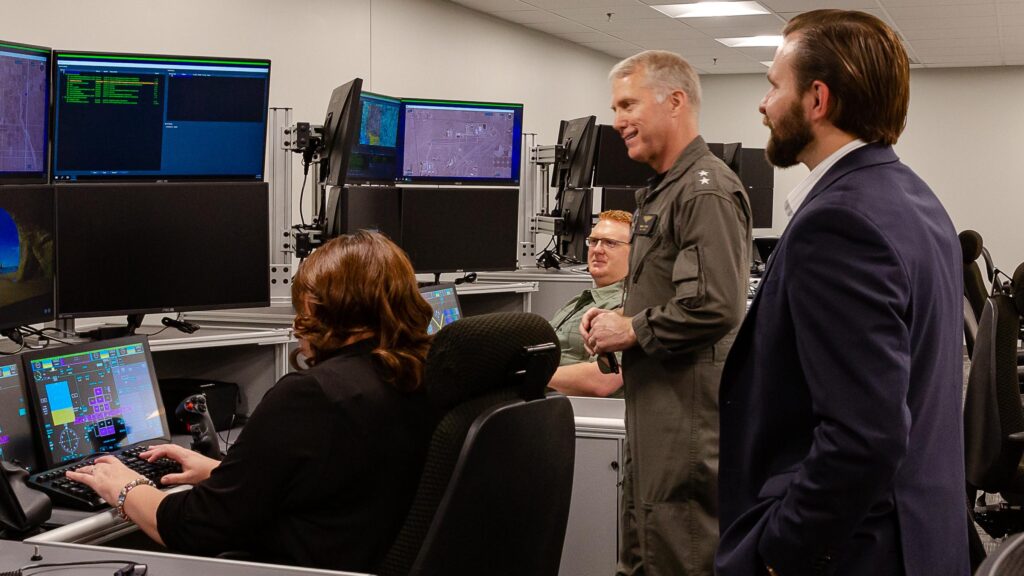
Rear Adm. Brian Corey, who oversees the  Program Executive Officer for Unmanned Aviation and Strike Weapons, observes an MQ-25 engineer demonstrate the functionality of the unmanned system’s MD-5 ground control station May 17 at the System Test and Integration Lab in Patuxent River, Maryland. U.S. NAVY

PATUXENT RIVER, Md. — The Navy’s Unmanned Carrier Aviation program office (PMA-268) is moving forward with integrating its two key elements — the MQ-25 air vehicle and the MD-5 ground control station — at the program’s System Test and Integration Lab at Patuxent River, Maryland, the Program Executive Office for Unmanned Aviation and Strike Weapons said May 18. 

PMA-268 is the lead systems integrator, working closely with its two prime industry partners, Boeing and Lockheed Martin Skunk Works, to ensure the expeditious integration of the MQ-25 Stingray air vehicle, the MD-5 GCS and aircraft carrier modifications required to support MQ-25 operations. 

The MD-5 GCS is part of the Unmanned Carrier Aviation Mission Control System, the system-of-systems required for MQ-25A command and control. UMCS also includes aircraft carrier and shore site infrastructure modifications, Navy produced ancillary equipment and integration with command, control, communications, computers and intelligence systems. 

Rear Adm. Brian Corey, who oversees the Program Executive Office for Unmanned Aviation and Strike Weapons, visited the lab May 17 for a firsthand look at the equipment required to operate MQ-25. 

“It is great to see momentum with GCS following the successful MQ-25 flight demonstrations last year,” he said to the government/industry team. “The air vehicle and GCS are equally important to this program and this is the team that is going to stitch it together.” 

Just recently, Lockheed Martin delivered the latest system developmental release to the Navy and plans to help integrate the MD-5 system with the air vehicle next month. 

“This will be the first time we are integrating an air vehicle and GCS from two different prime contractors,” said T.J. Maday, MQ-25 labs and integration manager. “And this is all being done with the government as the lead system integrator within the government lab.” 

Early integration allows for risk reduction and integration testing between the air vehicle and ground control station and provides the opportunity to ensure network connectivity between development environments are functional. 

Lockheed Martin also recently delivered two MD-5 ground control stations to Webster Outlying Field in Saint Inigoes, Maryland, to support MQ-25’s test transportable control stations. These will be the first assets to control the MQ-25’s initial Unmanned Carrier Aviation Mission Control System flight in 2023. 

The MQ-25 will be the world’s first operational, carrier-based unmanned aircraft. It will provide an aerial refueling capability that extends the range, operational capability and lethality of the carrier air wing.  


SECNAV Names Future Arleigh Burke-Class Destroyer Telesforo Trinidad 

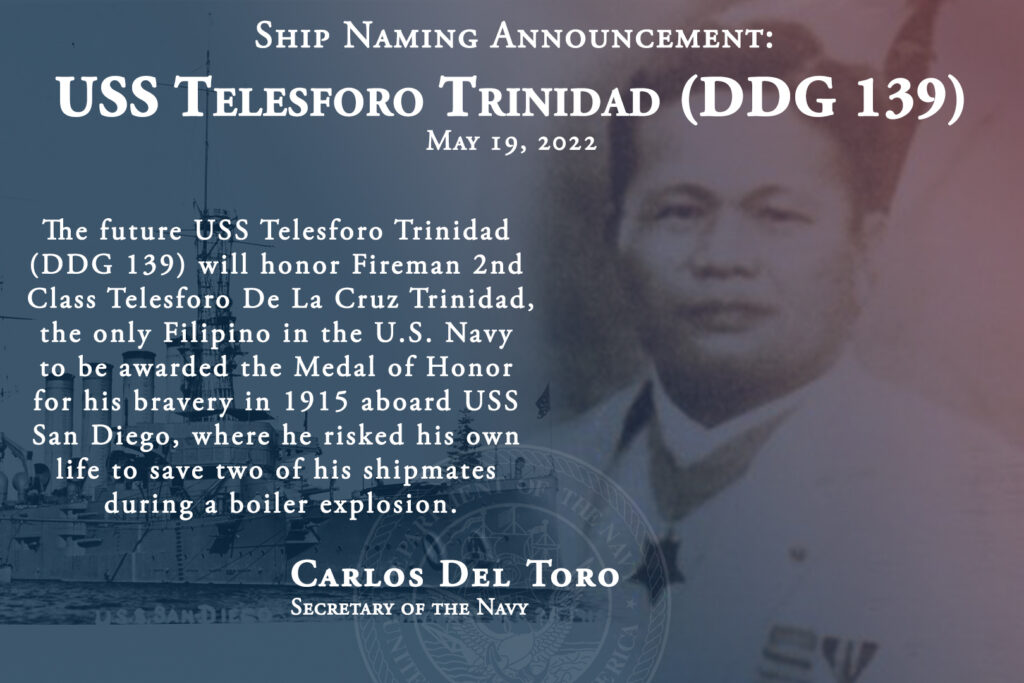
WASHINGTON — Secretary of the Navy Carlos Del Toro announced May 19 that a future Arleigh Burke-class guided-missile destroyer will be named USS Telesforo Trinidad (DDG 139), honoring Fireman 2nd Class Telesforo De La Cruz Trinidad, the only Filipino in the U.S. Navy to be awarded the Medal of Honor.  

“My first time learning about Petty Officer Trinidad’s story was as a midshipman at the Naval Academy and since being sworn in as secretary, I have wanted to honor his heroic actions by naming a ship after him,” said Del Toro. “This ship and her future crew will be a critical piece in strengthening our maritime superiority while also emphasizing the rich culture and history of our naval heritage.” 

Trinidad was born Nov. 25, 1890, in Aklan Province, Panay, Philippine Islands. On Jan. 21, 1915, Petty Officer Trinidad was serving aboard USS San Diego when the captain decided to conduct a four-hour full-speed and endurance trial to determine if the ship could still maintain its officially rated flank speed. Following the trial, an obstructed tube in one of the ship’s boilers gave way, creating a chain reaction. Trinidad re-entered the closed space to the No. 2 boiler to save Fireman 2nd Class R. W. Daly. As he was carrying Daly through the No. 4 fireroom, an explosion of No. 3 boiler hit Trinidad, which burned him in the face. After seeing Daly to safety and despite his injuries, Trinidad then assisted in rescuing another injured shipmate from the No. 3 fireroom. For his bravery, the U.S. Navy awarded him the Medal of Honor.   

“I am pleased to honor Trinidad’s life and legacy today — especially during Asian American Pacific Islander Heritage Month,” said Del Toro. “Having a ship named after such a significant figure highlights our diverse culture and that our people will always be our strategic advantage against any adversary. I hope the naming of this ship is a beacon for not only Asian Americans and Pacific Islanders but for all our Sailors, Marines and civilians who serve across the Department of the Navy. The service and sacrifice of these men and women have made our military and our nation stronger and better.” 


Coast Guard Academy Graduates Record Number of Officers 

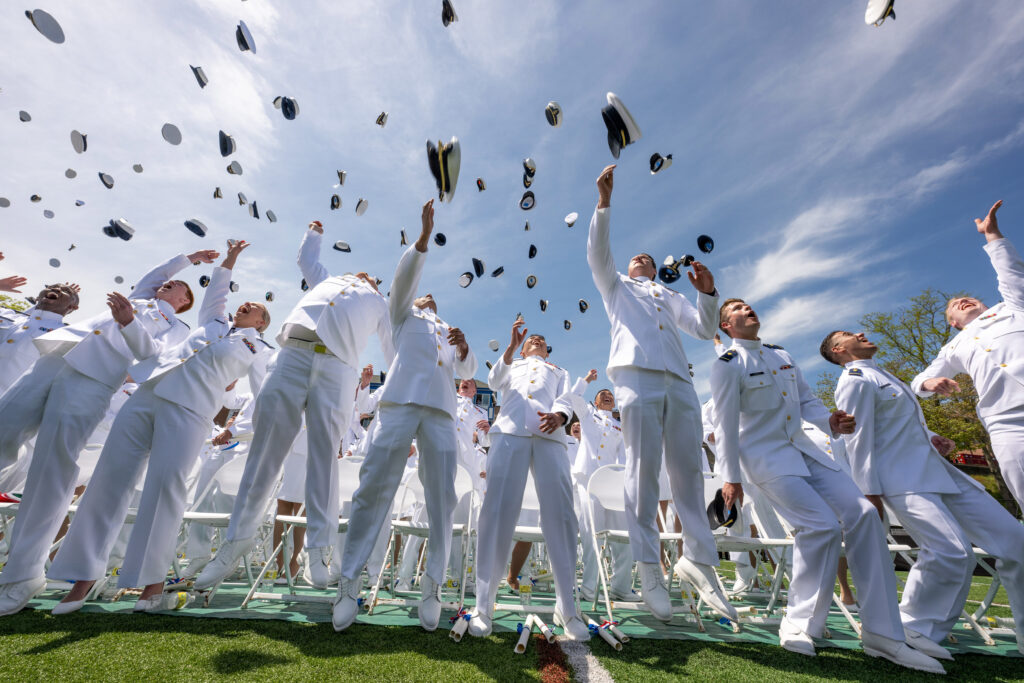
Vice President Kamala Harris delivered the keynote address at the Coast Guard Academy during the 141st Commencement Exercises May 18, 2022. The Coast Guard Academy graduated 252 new officers along with nine international students. U.S. COAST GUARD / David Lau

NEW LONDON, Conn. — The U.S. Coast Guard Academy graduated 252 new officers, along with nine international students, with keynote speaker Vice President Kamala Harris in attendance during the 141st Commencement Exercises May 18, the academy said May 18. 

The Class of 2022 consisted of 87 cadets from underrepresented minority groups, including the largest number of Asian American and Pacific Islanders to graduate in academy history.  

This year also marked the second highest number of cadets to commission into the Coast Guard in addition to 21 Cyber Systems graduates, the first to graduate from the newly instituted major to meet the needs of the service’s cybersecurity strategy of defending cyber space, enabling operations, and protecting infrastructure.  

The new officers will begin to serve as leaders in a variety of operational roles throughout the Coast Guard, mostly on cutters. 

Nine graduating international cadets from the countries of Cambodia, Iceland, Jordan, Mexico, Madagascar, Palau, Panama, Rwanda and the Ukraine will serve in their respective countries of origin. 

“We view our cadets as our eyes and ears and hands and hearts, wherever you serve,” said Harris. “You are doing the critical work — you will be doing the critical work to protect our country, to advance our interests, and to shape the trajectory of world affairs.” 

Founded in 1876, the Coast Guard Academy is one of the five U.S. service academies and is ranked among the nation’s most prestigious and selective institutions of higher learning. 


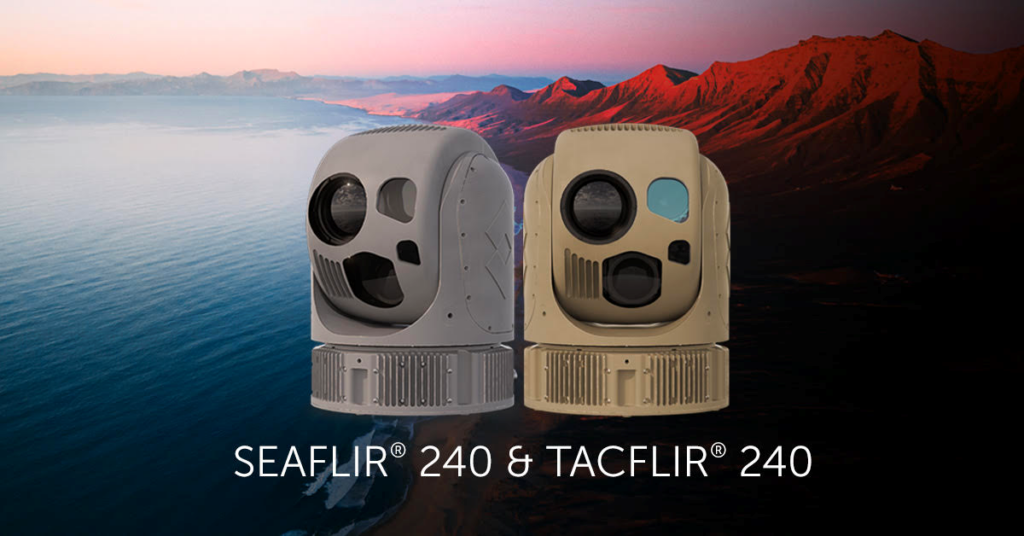
Teledyne FLIR Defense Introduces SeaFLIR 240 and TacFLIR 240 Surveillance Systems 

TAMPA, Fla. ― Teledyne FLIR Defense announced today at SOFIC 2022 the official launch of SeaFLIR 240 and TacFLIR 240, the latest additions to its line of high-definition, multi-spectral surveillance systems developed for a variety of maritime and land-based operations. 

With a lightweight stabilized turret, HD payload options, and inertial navigation capabilities, SeaFLIR 240 can support a wide range of at-sea missions, including intelligence, surveillance and reconnaissance, search and rescue and special operations. The system’s advanced image-processing technology, coupled with a small form factor, make it ideally suited for U.S. Navy, Marine Corps and Coast Guard combatant craft, small boats, and unmanned surface vessels, the company says.  

Tailored for manned and unmanned vehicle use, TacFLIR 240 is designed to identify and track smugglers, terrorists and other threats, day or night, over the toughest terrain. The system can support mid-range object and vehicle detection and assessment both for military and homeland security customers. 

“Our new SeaFLIR/TacFLIR 240 line is a powerful solution in a smaller package, mission-ready for a host of maritime and land applications,” said Dr. JihFen Lei, executive vice president and general manager of Teledyne FLIR Defense. “Leveraging multiple technology enhancements, such as the ability to support developing Aided Target Recognition capabilities, the new 240 line-up can help users dramatically boost operational surveillance, threat detection and classification, all of which improves situational understanding.” 


LCS Successfully Completes First Land-Attack Missile Exercise 

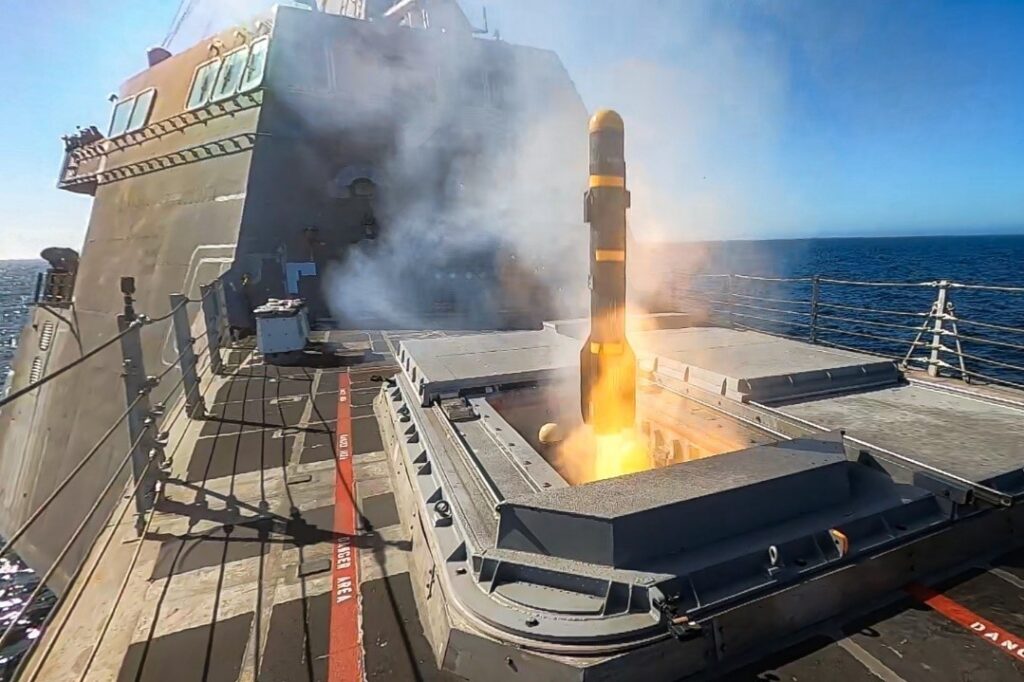
An AGM-114L Longbow Hellfire missile launches from the Surface-To-Surface Missile Module aboard Independence-variant littoral combat ship USS Montgomery (LCS 8). U.S. NAVY / Lt.j.g. Samuel Hardgrove

PACIFIC OCEAN — The U.S. Navy’s littoral combat ship class successfully launched sea-based missiles at a land-based target for the first time during a proof-of-concept exercise on May 12, said Lt.j.g. Sam Hardgrove in a May 16 release. 

Independence-variant littoral combat ship USS Montgomery (LCS 8) fired three AGM-114L Longbow Hellfire missiles to strike a land-based target several nautical miles away as part of the LCS surface-to-surface mission module, or SSMM. 
 
“This test proved the critical next step in increasing lethality of the littoral combat ship,” said Cmdr. Dustin Lonero, Montgomery’s commanding officer. “Using our speed and shallow draft, we are now uniquely optimized to bring this level of firepower extremely close to shore in support of our warfighters and operators on the beach.” 
 
The Longbow Hellfire missile already plays a key role in the up-gunned surface warfare mission package. Originally fielded by both variants of the littoral combat ship in 2019, the missile has repeatedly demonstrated the capability quickly defeat multiple swarming fast attack craft or fast inshore attack craft. Each LCS is capable carrying 24 missiles. 
 
“The SSMM is a fundamental cornerstone of LCS lethality and evolving capability to provide enhanced fire support in the littorals and over the horizon in support of the Navy and Marine Corps fighting force,” said Lt. Michael Jones, a warfare-tactics instructors from Surface and Mine Warfare Development Center. “The new ability for LCS to conduct maritime strikes bolsters the ship’s role in conducting shaping operations within amphibious and expeditionary warfare areas.” 
 
The Longbow Hellfire missile was commissioned in 1998 and has proven successful over its years of service across all U.S. military branches. Originally designed as an anti-tank weapon for the U.S. Army, its all-weather millimeter-wave sensing, semi-active laser guidance continues to prove extremely effective in the maritime domain against all manner of threats. 
 
“If you take a proven program of record and adapt its capability for the maritime warfare environment, you have a win for the taxpayer, improved interoperability between various services, and an increased lethality and competitive edge at sea,” said Chief Gunner’s Mate David Wynne, Montgomery’s weapons chief petty officer. 
 
Combining emerging technologies, an MQ-8C Fire Scout unmanned helicopter, from Helicopter Sea Combat Squadron (HSC) 23, remained airborne providing advanced targeting and bomb hit assessment capability. The Fire Scout already provides littoral combat ships an over-the-horizon intelligence, surveillance, reconnaissance and targeting capability. 


U.S. Navy DDG Seizes $39 Million in Drugs in Middle East 

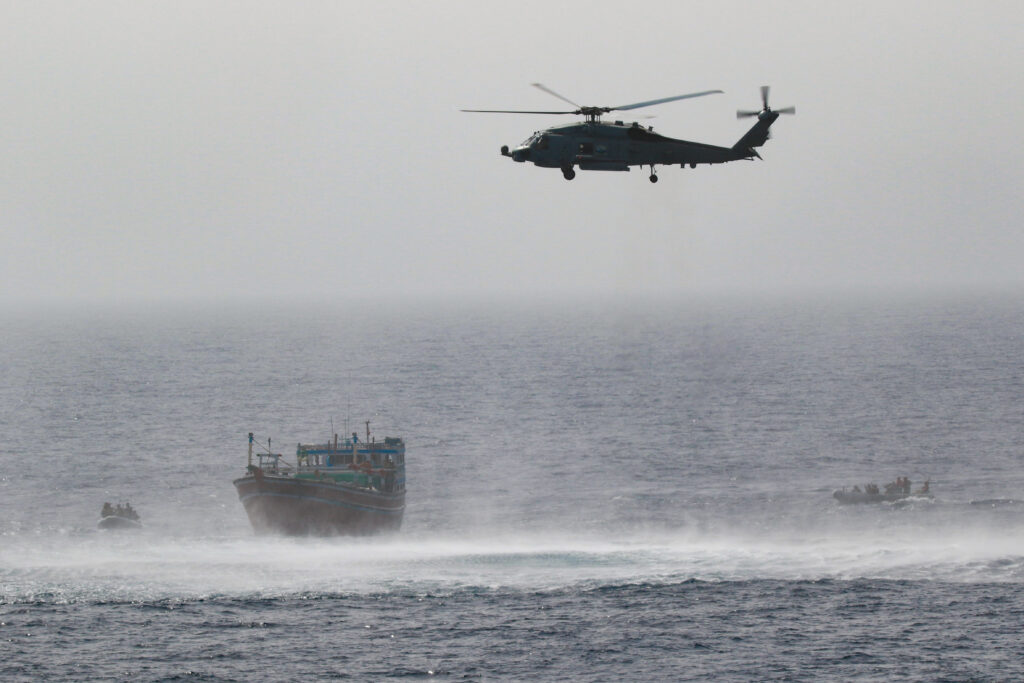
An MH-60R Seahawk from Helicopter Maritime Strike Squadron (HSM) 35, Detachment 1, provides aerial support to an interdiction team from guided-missile destroyer USS Momsen (DDG 92) approaching a fishing vessel May 16. The vessel was seized while transiting international waters in the Gulf of Oman. U.S. NAVY / Mass Communication Specialist 3rd Class Lily Gebauer

MANAMA, Bahrain — A U.S. Navy guided-missile destroyer seized 640 kilograms of methamphetamine worth $39 million from a fishing vessel while patrolling international waters in the Gulf of Oman, May 15-16, U.S. Naval Forces Central Command/U.S. 5th Fleet public affairs said May 17. 
 
A U.S. Coast Guard interdiction team from USS Momsen (DDG 92) discovered the illegal narcotics during a flag verification boarding in accordance with international law. The confiscated drugs and fishing vessel remain in U.S. custody. 
 
The vessel’s nine crew members identified themselves as Iranian nationals and will be transferred to a regional nation for repatriation. 
 
Momsen was operating in support of Combined Task Force 150, one of four task forces under the Combined Maritime Forces. The international naval force has increased regional patrols to locate and disrupt unlawful maritime activity. 
 
The vessel was interdicted while transiting international waters along a route historically used by criminal organizations to smuggle people, weapons, narcotics and charcoal. Crew members attempted to discard more than 60 bales of the seized drugs as Momsen approached. 
 
CTF 150 has conducted nine successful drug seizures in 2022, resulting in the confiscation of heroin, methamphetamine, amphetamine pills and hashish worth a combined value of $130 million. 
 
Combined Maritime Forces is the largest multinational naval partnership in the world. The organization includes 34 nations and is headquartered in Bahrain with U.S. Naval Forces Central Command and U.S. 5th Fleet. 


SECDEF Announces Marine Corps General Nomination 

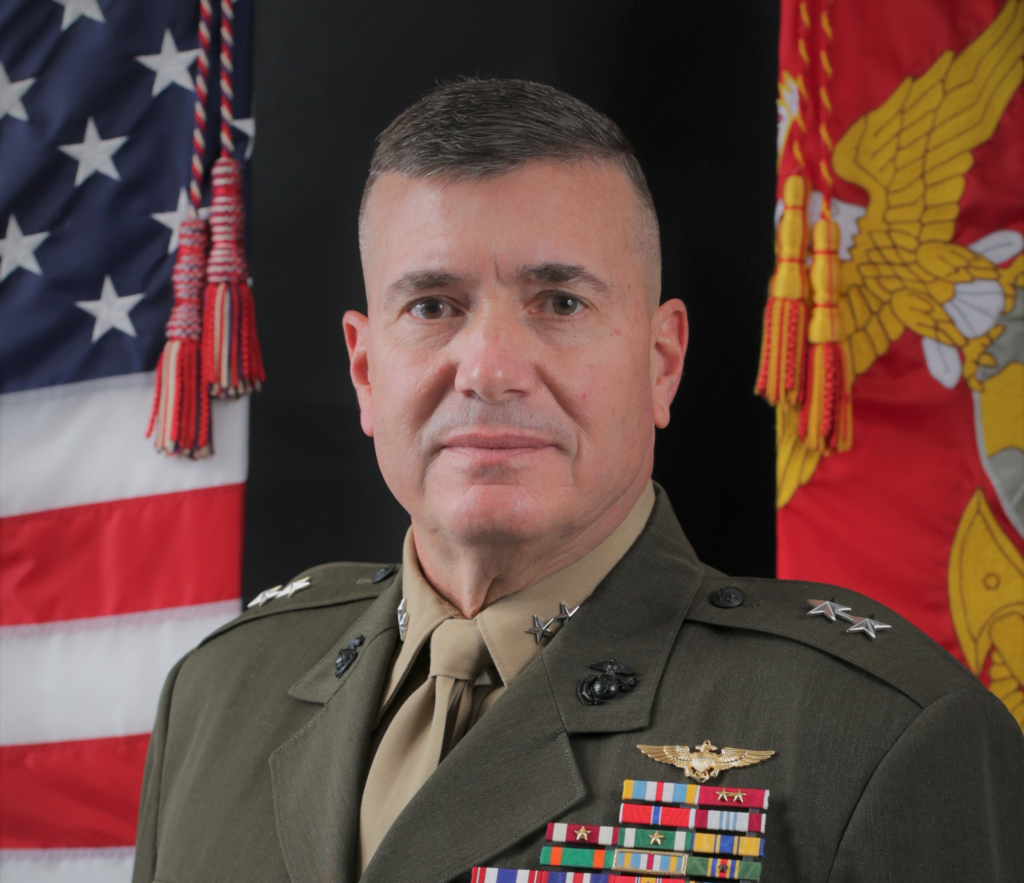
Maj. Gen. Michael S. Cederholm. U.S. MARINE CORPS

ARLINGTON, Va . — Secretary of Defense Lloyd J. Austin III announced May 16 that the president has made the following nomination: 

Marine Corps Maj. Gen. Michael S. Cederholm for appointment to the grade of lieutenant general, with assignment as deputy commandant, aviation, Headquarters, U.S. Marine Corps, Washington, D.C.  Cederholm is currently serving as commanding general, 2d Marine Aircraft Wing, Cherry Point, North Carolina.