SECNAV Names Future Replenishment Oiler Ship Ruth Bader Ginsburg 
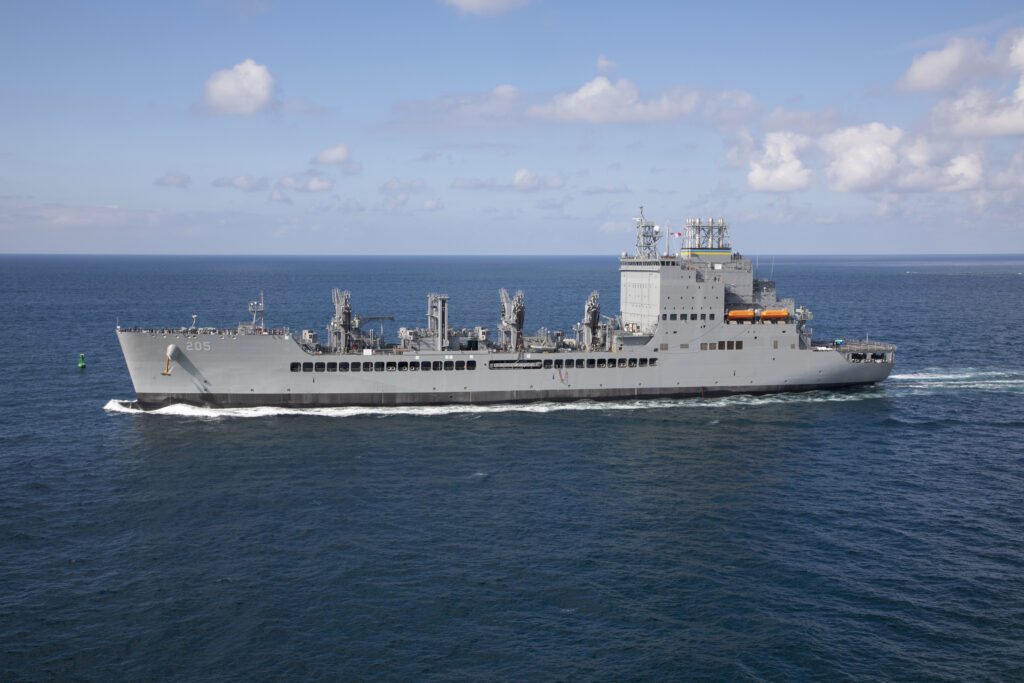
USNS John Lewis (T-AO 205), the Navy’s lead ship of its new class of fleet replenishment oilers. A future ship in the class will be named USNS Ruth Bader Ginsburg. GENERAL DYNAMICS NATIONAL STEEL AND SHIPBUILDING. CO.

WASHINGTON — Secretary of the Navy Carlos Del Toro announced March 31 that a future John Lewis-class replenishment oiler (T-AO) ship will be named USNS Ruth Bader Ginsburg to honor the former Supreme Court Justice and women’s rights activist. 

The future USNS Ruth Bader Ginsburg (T-AO 212) will be the first U.S. Navy ship to bear her name. 

“As we close out women’s history month, it is my absolute honor to name the next T-AO after the Honorable Ruth Bader Ginsburg. She is a historic figure who vigorously advocated for women’s rights and gender equality,” said Del Toro. “As Secretary of the Navy, it is my aim to ensure equality and eliminate gender discrimination across the Department of the Navy. She is instrumental to why we now have women of all backgrounds, experiences and talents serving within our ranks, side by side with their male Sailor and Marine counterparts.” 

The name selection for the John Lewis-class replenishment oiler follows the naming convention of honoring people who have fought for civil and human rights. Born in 1933, Ruth Bader Ginsburg was a pioneering advocate for women’s rights turned Supreme Court Justice. Ginsburg made history as the second woman to serve on the U.S. Supreme Court when she was nominated by President Bill Clinton and confirmed in 1993. Of her 27-year tenure on the Supreme Court, she is most noted for her work toward issuing the majority opinion for United States v. Virginia, a landmark 1996 case that struck down Virginia Military Institute’s male-only admissions policy. 

The future T-AO 212 is the eighth of the T-AO ships awarded to the Navy, with the first delivered in 2021. The class and lead ship T-AO 205 is named in honor of Rep. John Lewis (D-Ga).  

Del Toro also named Justice Ginsburg’s daughter, Jane Ginsburg, as the ship’s sponsor. 

T-AO ships are fleet oilers designed to transfer fuel to the Navy’s operating carrier strike groups. The oilers have the ability to carry a load of 162,000 barrels of oil, maintain significant dry cargo capacity, aviation capability and a speed of 20 knots. General Dynamics National Steel and Shipbuilding Company designed the vessels with double hulls that protect against oil spills as well as strengthened cargo and ballast tanks. The T-AO measures 742-feet in length with a full load displacement of 49,850 tons. 
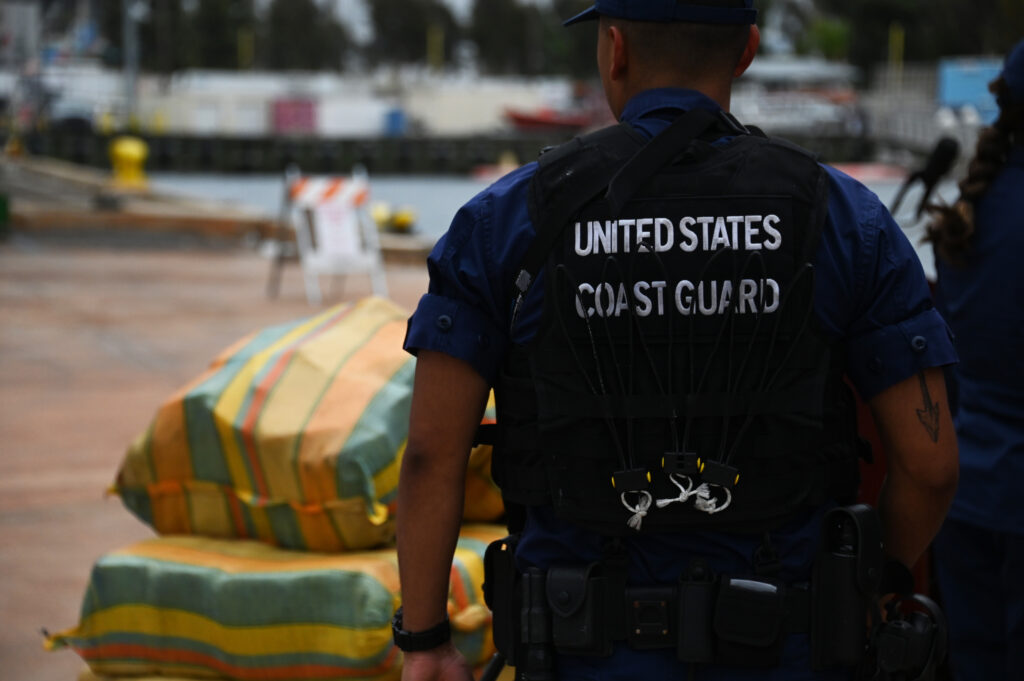


Coast Guard Crew Offloads $223 Million Worth of Drugs in San Diego  

The Coast Guard Cutter Kimball (WMSL-756) crew offloads about 11,300 pounds of cocaine and roughly 4,000 pounds of marijuana worth more than $223 million on March 31 in San Diego. U.S. COAST GUARD / Petty Officer 3rd Class Alex Gray

SAN DIEGO — The  Coast Guard Cutter Kimball (WMSL 756) crew offloaded more than 11,300 pounds of cocaine and more than 4,000 pounds of marijuana worth more than $223 million March 31 in San Diego, the Coast Guard 11th District said in a release. 

The drugs were interdicted in international waters of the Eastern Pacific Ocean off the coasts of Central and South America, including contraband seized and recovered during eight interdictions of suspected drug smuggling vessels between late February and early March. 

“At-sea interdictions of pure cocaine are the most effective way to limit cartel’s destabilizing effects throughout the Western Hemisphere,” said Vice Adm. Michael McAllister, Coast Guard Pacific Area commander. “Coast Guard national security cutters like Kimball are the service’s most capable asset to strengthen maritime governance, but when team partners from the Royal Canadian Navy and U.S. Navy Littoral combat ships they leverage our network of international and interagency partners to reduce the availability of illicit drugs in the Western Hemisphere and facilitate U.S. Attorney’s efforts to close the cycle of justice.” 

The drugs were interdicted by the following ships (the total amount listed below is 11,301 pounds of cocaine and 4,076 pounds of marijuana): 

  • Kimball’s crew was responsible for one interdiction seizing approximately 2,295 pounds of cocaine. 
  • Coast Guard Cutter Legare’s (WMEC 912) crew was responsible for four interdictions, seizing approximately 4,714 pounds of cocaine and 1,826 pounds of marijuana. 
  • Coast Guard Cutter Spencer’s (WMEC 905) crew was responsible for one interdiction seizing approximately 635 pounds of cocaine and 2,250 pounds of marijuana. 
  • Jointly, Her Majesty’s Canadian Ship Yellowknife (MM 706) and Kimball’s crews were responsible for one interdiction, seizing approximately 331 pounds of cocaine. 
  • Jointly, the crews of the Kimball and Legare were responsible for one interdiction, seizing approximately 3,326 pounds of cocaine. 

“This marks the first of likely many counter-drug patrols for Kimball and I am extremely proud of our crew’s preparation and hard work to make this an extremely successful deployment. Kimball’s crew demonstrated that through teamwork we were able to remove over $100 million dollars of cocaine, preventing it from ever crossing our borders or entering our neighborhoods, and further removing a source of illicit revenue from transnational criminal networks,” said Capt. Thomas D’Arcy, commanding officer of the Kimball.

The Kimball is a 420-foot Legend-Class national security cutter and is homeported in Honolulu, Hawaii.


Keel Authenticated for Future USS Patrick Gallagher 

The keel for the future USS Patrick Gallagher (DDG 127) was ceremonially laid at General Dynamics Bath Iron Works on March 30. GENERAL DYNAMICS BATH IRON WORKS

WASHINGTON — The keel for the future USS Patrick Gallagher (DDG 127) was ceremonially laid at General Dynamics Bath Iron Works on March 30, Team Ships Public Affairs said March 31.

The ship is named for Marine Corps Cpl. Patrick Gallagher, who received the Navy Cross for heroism during the Vietnam War when he managed to jump on and throw an enemy grenade into a river. He was killed in action just one year later.  The keel laying marks the 55th anniversary of his death. 

A contemporary keel laying ceremony recognizes the moment of a ship’s construction when two significant pieces of the hull structure are welded together and joined, constituting a major portion of the ship’s shape. The authentication or etching of the ship sponsors’ initials into a ceremonial keel plate will take place during the ceremony. The sponsors of DDG 127 are Gallagher’s three sisters: Teresa Keegan, Rosemarie Gallagher and Pauline Gallagher. 

“The future USS Patrick Gallagher will strengthen our maritime dominance and bring proven capability to the fleet,” said Capt. Seth Miller, DDG 51 class program manager, Program Executive Office – Ships. “This ship and all who serve aboard it will be a reminder of the steadfast commitment to our country that Cpl. Gallagher exhibited.” 

The final Arleigh Burke-class destroyer built in the Flight IIA configuration, DDG 127 is equipped with the Aegis Baseline 9C2 Combat System, which brings crucial Ballistic Missile Defense capabilities to the Fleet in addition to the ship’s primary missions of anti-air, anti-surface, anti-submarine, and strike warfare. 

BIW is also currently in production on the future USS Carl M. Levin (DDG 120), USS John Basilone (DDG 122), USS Harvey C. Barnum Jr. (DDG 124), USS Louis H. Wilson Jr. (DDG 126), USS William Charette (DDG 130), and USS Quentin Walsh (DDG 132). 


Norfolk-based E-2D Advanced Hawkeye Crashes, Two Injured, One Fatality 

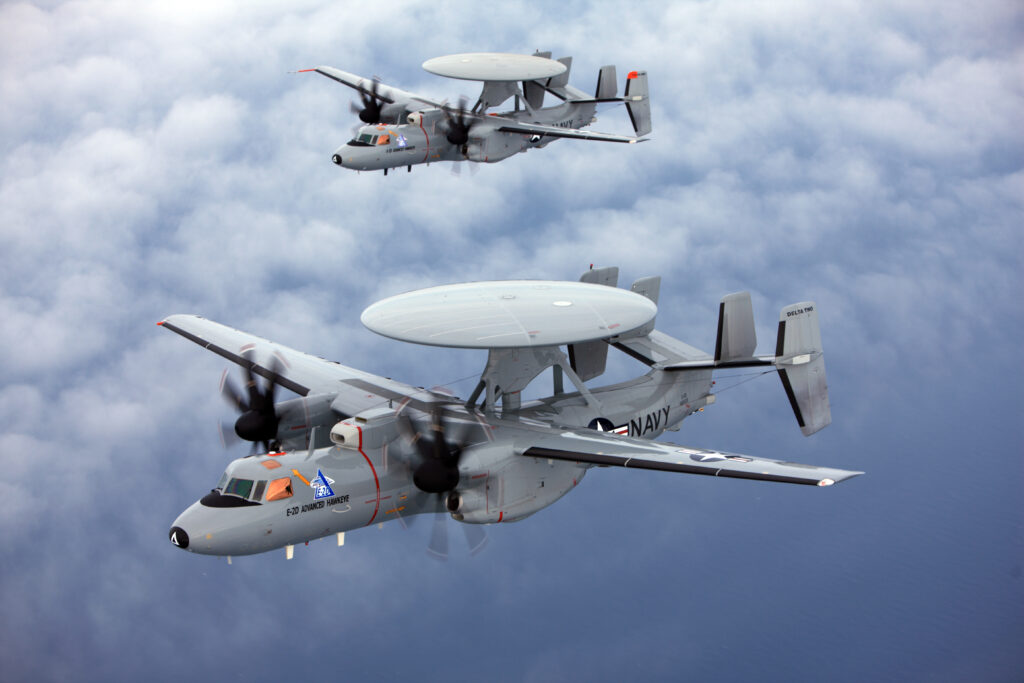
E-2D Advanced Hawkeye aircraft conduct a test flight near St. Augustine, Florida. U.S. NAVY

NORFOLK, Va. — A Navy E-2D Advanced Hawkeye assigned to an East Coast Airborne Command and Control Squadron (VAW) crashed in the vicinity of Wallops Island and Chincoteague, Virginia, March 30, the commander of Naval Air Force Atlantic public affairs said in a release. One crew member has died and two have been injured. 

The E-2D crashed at approximately 7:30 p.m. Two crew members were rescued by Maryland State Police and transported to Wallops Island for follow-on medical treatment for non-life-threatening injuries. The names of injured crewmembers will not be released due to privacy concerns. 

Unfortunately, the third crew member was found deceased in the aircraft. The Worcester County Fire Department Dive Team supported the search and recovery of the deceased. The name of the crew member killed will not be released at this time, pending primary next of kin notification.  


HII’s REMUS 300 Selected as Navy’s Next-Generation Small UUV  

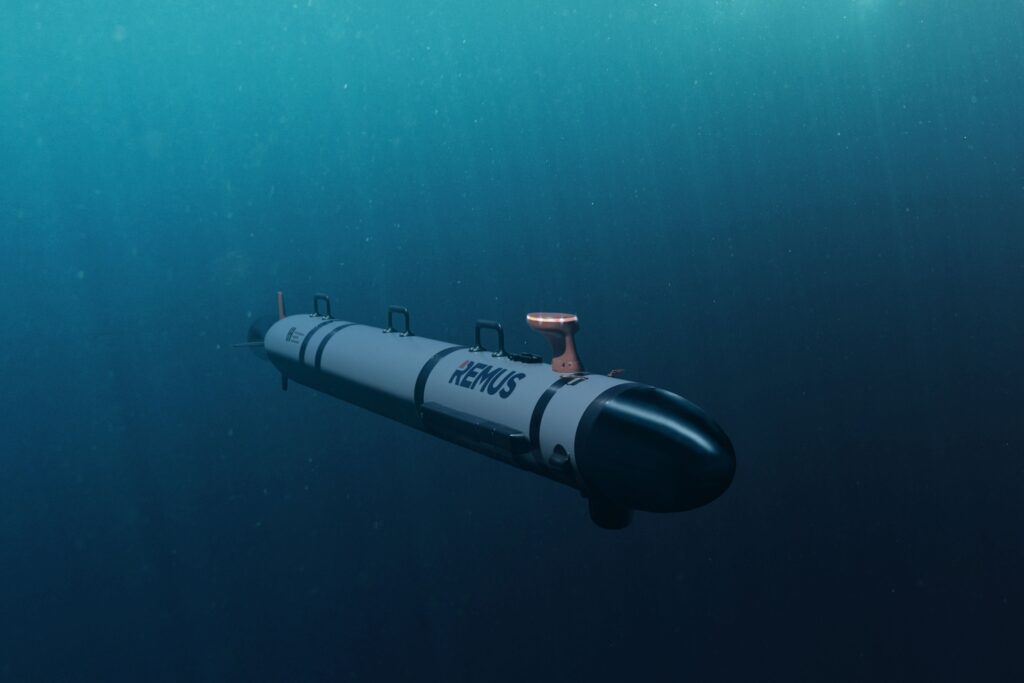
HII’s REMUS 300 unmanned underwater vehicle, selected as the U.S. Navy’s next-generation small UUV program of record. HII

MCLEAN, Va. — HII announced March 30 its advanced unmanned underwater vehicle, REMUS 300, was selected as U.S. Navy’s next generation small UUV program of record. REMUS 300 technology was designed to advance distributed maritime operations by conducting critical underwater missions. 

The initial phase of the program includes the production and testing of REMUS 300 UUVs over the next year. 

“HII is proud of our longstanding partnership with the U.S. Navy and now, to lead in this important direction on behalf of our customer,” said Chris Kastner, president and CEO of HII. “This program demonstrates the value of our investment in autonomous and unmanned systems, and our customer familiarity. We are confident that these technologies will both support the Navy mission and enhance effectiveness for the all-domain force.” 

The vehicle incorporates advanced modularity and open architecture into a compact, man-portable design. 

“REMUS UUVs have been extending the capabilities of the warfighter since they were first used in combat during Operation Iraqi Freedom in 2003,” said Duane Fotheringham, president of the unmanned systems business group in HII’s Mission Technologies division. “We’ve been enhancing, maturing and refining this technology since then, and are pleased the REMUS 300 meets needs for the Navy’s next generation UUV program.” 

The SUUV program, also called Lionfish, is the next-generation Mk18 Mod 1 Swordfish program, which also utilizes HII’s REMUS technology. The selection follows a two-year rapid prototyping effort involving multiple user evaluations and spiral developments to refine the REMUS 300 design. The acquisition was facilitated by the Department of Defense’s Defense Innovation Unit and their commercial solutions opening process via the other transaction authority. 


Coast Guard Cutter Tampa Returns to Homeport following 70-day Patrol 

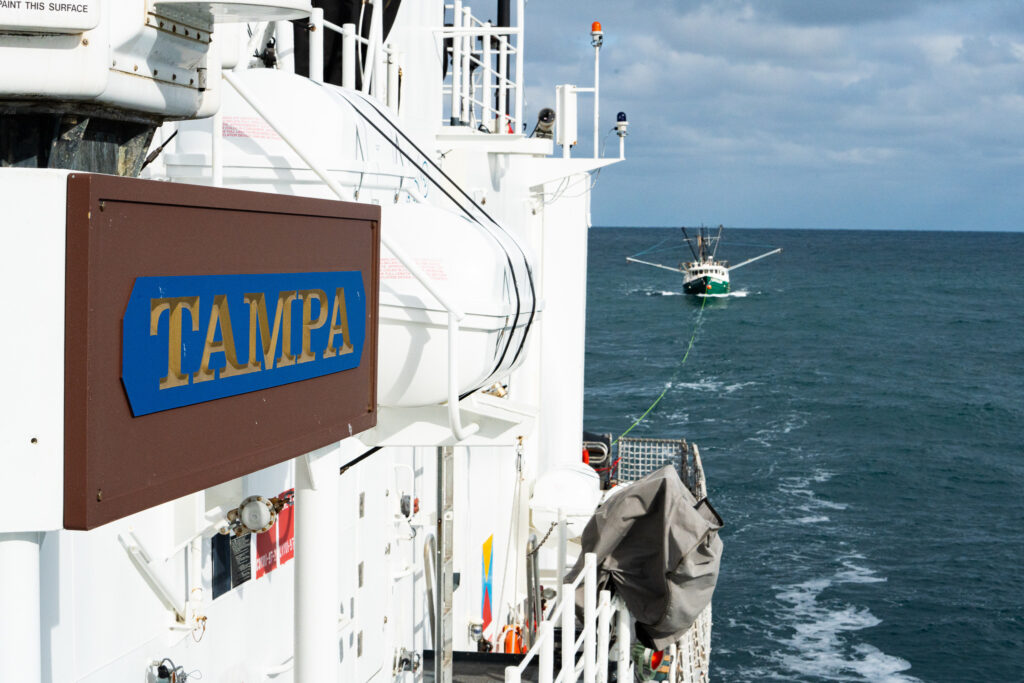
The USCGC Tampa tows the fishing vessel Jenna Lee, being towed east of Cape Cod, Feb. 6. U.S. COAST GUARD / Seaman Ryan Lloyd

PORTSMOUTH, Va. — The crew of the U.S. Coast Guard Cutter Tampa returned to their homeport in Portsmouth, Virginia, March 26, after a 70-day patrol in the North Atlantic Ocean, the Coast Guard Atlantic Area said March 29. 

Throughout the patrol, Tampa’s crew conducted search and rescue, law enforcement and living marine resources missions. The Tampa boarded 26 vessels to ensure that commercial vessels were adhering to mandates regarding catch size, catch amount, gear type and catch area. In addition, boarding teams found eight violations while inspecting the vessel’s safety equipment for compliance and recommended one vessel to return to port to correct safety of life at sea regulation compliance violations. 

Tampa’s crew focused on mainly on scallop, sole, cod, haddock, redfish, pollock and lobster populations off of the New England coast. The mission includes ensuring the country’s protected marine species are provided the protection necessary to help their populations recover to healthy and sustainable levels. 

“Our crew performed admirably in trying sea-going conditions, often facing extreme weather and frigid temperatures. Their perseverance to effect mission execution was truly inspiring. We cherished the opportunity to operate in New England, working with our partners to enforce regulations that sustain fish and shellfish stocks for future generations, while keeping fishing vessel crews safe,” said Cmdr. Sky Holm, commanding officer of Tampa.

Coast Guard Cutter Tampa is a 270-foot Famous-class medium-endurance cutter homeported in Portsmouth, Virginia. The crew routinely deploys in support of counter-drug, migrant interdiction, fisheries enforcement, search and rescue and homeland security missions in support of U.S. Coast Guard operations throughout the Western Hemisphere. 


New National Defense Strategy Delivered to President 

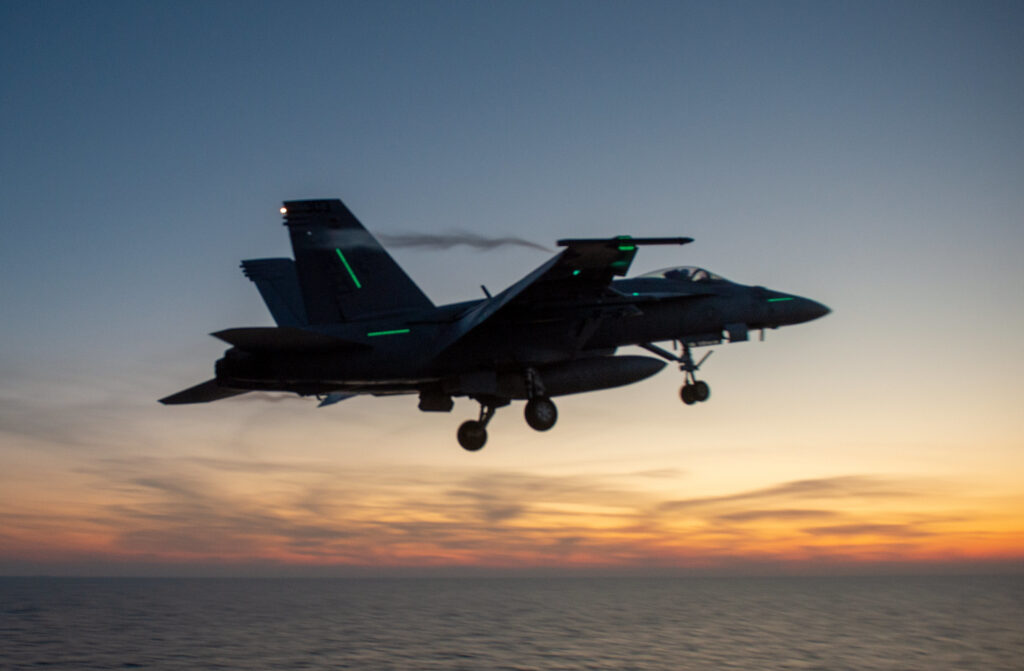
An F/A-18E Super Hornet, attached to the “Blue Blasters” of Strike Fighter Squadron (VFA) 34, launches from the flight deck the Nimitz-class aircraft carrier USS Harry S. Truman (CVN 75), Mar. 25. U.S. NAVY / Mass Communication Specialist 3rd Class Tate Cardinal

ARLINGTON, Va. — The Department of Defense delivered the new 2022 National Defense Strategy to the president March 28, the department said. 

The NDS is classified, but DoD released a fact sheet to inform readers until an unclassified version is released.

“For the first time, the department conducted its strategic reviews in a fully integrated way — incorporating the Nuclear Posture Review and Missile Defense Review in the NDS — ensuring tight linkages between our strategy and our resources,” the fact sheet says. The unclassified NDS will be forthcoming. 

Consistent with the president’s Interim National Security Strategic Guidance, the classified NDS sets out how the Department of Defense will contribute to advancing and safeguarding vital U.S. national interests. The defense priorities are: 

  1. Defending the homeland, paced to the growing multi-domain threat posed by China 
  1. Deterring strategic attacks against the United States, allies and partners 
  1. Deterring aggression, while being prepared to prevail in conflict when necessary, prioritizing the challenge of China in the Indo-Pacific, then the Russia challenge in Europe 
  1. Building a resilient joint force and defense ecosystem. 

“The department will act urgently to sustain and strengthen deterrence, with the People’s Republic of China [PRC] as our most consequential strategic competitor and the pacing challenge for the department. 

“Russia poses acute threats, as illustrated by its brutal and unprovoked invasion of Ukraine. We will collaborate with our NATO allies and partners to reinforce robust deterrence in the face of Russian aggression. 

“The department will remain capable of managing other persistent threats, including those from North Korea, Iran, and violent extremist organizations. 

“Changes in global climate and other dangerous transboundary threats, including pandemics, are transforming the context in which the department operates. We will adapt to these challenges, which increasingly place pressure on the joint force and the systems that support it. 

“Recognizing growing kinetic and non-kinetic threats to the United States’ homeland from our strategic competitors, the department will take necessary actions to increase resilience — our ability to withstand, fight through, and recover quickly from disruption. 

“Mutually beneficial alliances and partnerships are an enduring strength for the United States, and are critical to achieving our objectives, as the unified response to Russia’s further invasion of Ukraine has demonstrated. Answering this ‘call to action,’ the department will incorporate ally and partner perspectives, competencies, and advantages at every stage of defense planning. 

“The Department will advance our goals through three primary ways: integrated deterrence, campaigning, and actions that build enduring advantages. 

  • Integrated deterrence entails developing and combining our strengths to maximum effect, by working seamlessly across warfighting domains, theaters, the spectrum of conflict, other instruments of U.S. national power and our unmatched network of alliances and partnerships. Integrated deterrence is enabled by combat-credible forces, backstopped by a safe, secure, and effective nuclear deterrent. 
  • Campaigning will strengthen deterrence and enable us to gain advantages against the full range of competitors’ coercive actions. The United States will operate forces, synchronize broader department efforts, and align department activities with other instruments of national power, to undermine acute forms of competitor coercion, complicate competitors’ military preparations and develop our own warfighting capabilities together with allies and partners.
  • Building enduring advantages for the future joint force involves undertaking reforms to accelerate force development, getting the technology we need more quickly, and making investments in the extraordinary people of the Department, who remain our most valuable resource. 

“The department will develop, design, and manage our forces — linking our operational concepts and capabilities to achieve strategic objectives. This requires a joint force that is lethal, resilient, sustainable, survivable, agile, and responsive.” 


HII Christens Flight III Destroyer Jack H. Lucas  

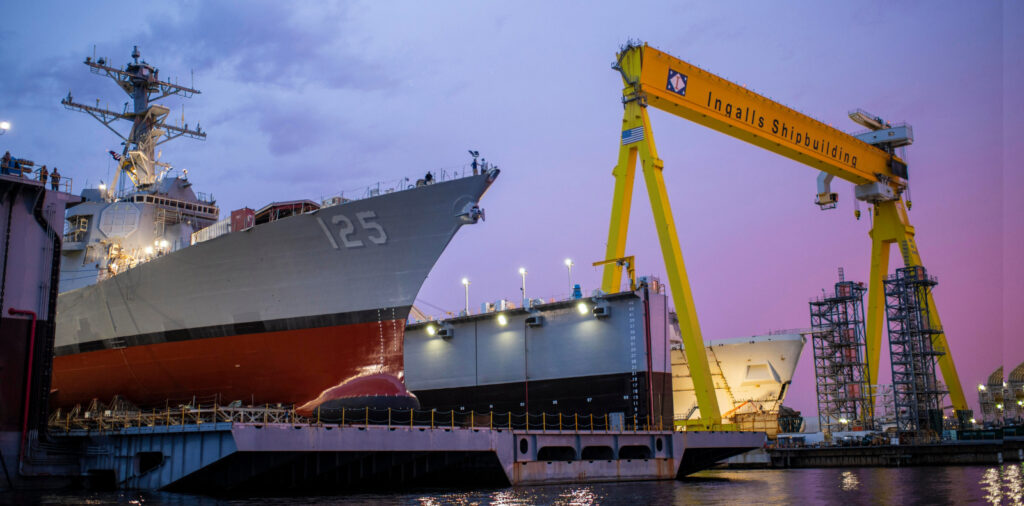
HII christened the pre-commissioning unit Jack H. Lucas on March 26. HII

PASCAGOULA, Miss. — HII christened pre-commissioning unit Jack H. Lucas (DDG 125) on March 26 at the company’s Ingalls Shipbuilding division, the company said in a release. 

Jack H. Lucas, a longtime resident of Hattiesburg, Mississippi, was the youngest Marine and youngest service member in World War II awarded the Medal of Honor. During a close firefight with Japanese soldiers, Lucas saved the lives of three Marines when he unhesitatingly placed himself on two grenades. 

“Jack H. Lucas made a selfless decision to choose others and country over self,” Ingalls Shipbuilding President Kari Wilkinson said. “Our Ingalls shipbuilders have a deep appreciation and respect for what sailors and Marines do on behalf of our nation. We are proud to support them and to provide them this remarkable ship, our first Flight III destroyer.” 

Chief of Naval Operations, Adm. Mike Gilday, was the keynote speaker. 

“Jack H. Lucas is not only the most capable and sophisticated surface combatant ever built by man, but it also represents the bridge from the past to the future, as we bring a new radar, the Aegis Baseline 10, and a new electric plant onto an already highly capable platform,” Gilday said. “Such an evolution would be impossible without the shipbuilders of Huntington Ingalls Industries and the Pascagoula community. Flight III represents the dedication and commitment of our Sailors and civilians — the skill and innovation of our shipyards and industry partners — and the commitment of the American people to keep the seas free and open for all.” 

“You have built the finest destroyer in the world,” Gilday said. 

Jack H. Lucas is cosponsored by Ruby Lucas, widow of the ship’s namesake, and Catherine B. Reynolds, chairman and CEO of the Catherine B. Reynolds Foundation. Together, the two sponsors officially christened the ship and made remarks during the ceremony. 

“May the Jack H. Lucas be indestructible, just like he was,” Ruby Lucas said. “This first of its kind ship is advanced in integrity, courage and commitment to serve our great country. Jack never ran from a fight, and I’m certain that all aboard his namesake will represent Jack with honor. Just as I feel his spirit with me, be assured that he will be with all of you all the time.” 

U.S. Sen. Roger Wicker and U.S. Rep. Steven Palazzo, both of Mississippi, delivered remarks. Other speakers included Meredith Berger, performing the duties of undersecretary of the Navy, and Maj. Gen. Jason Bohm, commanding general, Marine Corps Recruiting Command.  


U.S. Coast Guard Decommissions Three Cutters in Bahrain 

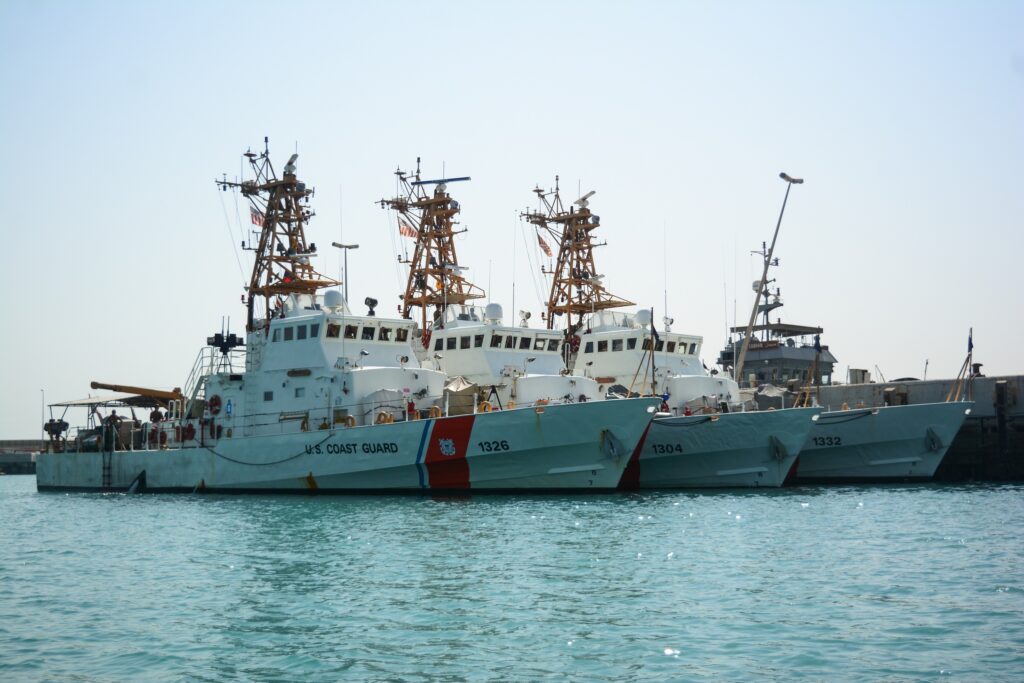
USCGC Monomoy (WPB 1326), USCGC Maui (WPB 1304), and USCGC Wrangell (WPB 1332) sit pierside in the U.S. 5th Fleet Area of Operations. U.S. COAST GUARD

NAVAL SUPPORT ACTIVITY BAHRAIN — The U.S. Coast Guard decommissioned three Island-class patrol boats, March 22, in a ceremony at Naval Support Activity Bahrain, U.S. 5th Fleet Public Affairs said in a release. 

Rear Adm. Keith Smith, deputy commander of U.S. Coast Guard Atlantic Area, attended the ceremony and commemorated 102 years of combined active service by USCGC Maui (WPB 1304), Monomoy (WPB 1326), and Wrangell (WPB 1332).  

“For nearly two decades, these cutters and the Coast Guardsmen that crewed them have worked closely with our [U.S. Naval Forces Central Command] partners and served as the heart of Coast Guard operations in the Middle East,” said Smith. 

Maui was originally homeported in Miami and conducted counter-narcotics and other law enforcement activities near United States for 18 years. 

Monomoy was previously homeported in Woods Hole, Massachusetts. The ship helped secure New York City’s harbor immediately following terrorist attacks in the United States on Sept. 11, 2001. 

In 2004, Maui and Monomoy arrived in the U.S. 5th Fleet region where they have remained for the next 18 years in support of U.S. 5th Fleet maritime security operations. 

Previously homeported in Portland, Maine, Wrangell conducted counter-narcotics and maritime patrol operations along the East Coast of the United States before deploying to the Middle East in 2003. 


Navy to Christen Guided-Missile Destroyer Jack H. Lucas 

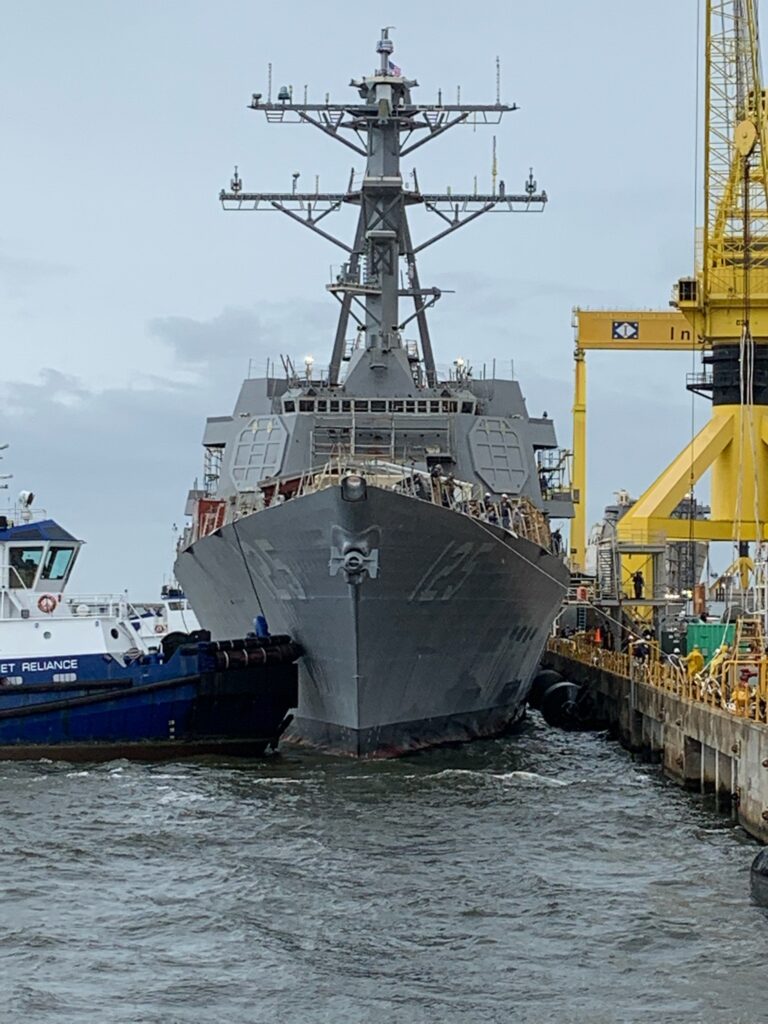
The future Jack H. Lucas (DDG 125), an Arleigh Burke-class guided missile destroyer (Flight III configuration) successfully launched at Huntington Ingalls Industries, Ingalls Shipbuilding division, June 4, 2021. HUNTINGTON INGALLS INDUSTRIES

ARLINGTON, Va. — The U.S. Navy will christen the future USS Jack H. Lucas (DDG 125), the first Flight III Arleigh Burke-class guided-missile destroyer, during a 10 a.m. CDT ceremony on Saturday, March 26, in Pascagoula, Mississippi, the Defense Department announced. 

Jacklyn Harold “Jack” Lucas, the ship’s namesake, served as a U.S. Marine during World War II and was awarded the Medal of Honor at the age of 17, making him the youngest recipient. Private First Class Lucas received the award during the Iwo Jima campaign when he hurled himself on two grenades to absorb the explosion with his own body and protect his fellow Marines. Surviving the blast, Lucas lived until June 5, 2008, when he died from cancer. The future USS Jack H. Lucas (DDG 125) is the first combat warship to bear his name. 

Chief of Naval Operations Adm. Michael Gilday will deliver the christening ceremony’s principal address. Mississippi’s Sen. Roger Wicker and Rep. Steven Palazzo will attend, along with Meredith Berger, performing the duties of the undersecretary of the Navy; Maj. Gen. Jason Bohm, commanding general, Marine Corps Recruiting Command; and Kari Wilkinson, president of Ingalls Shipbuilding will also provide remarks. In Navy tradition, the ship’s sponsors, Ruby Lucas and Catherine B. Reynolds, will christen the ship by breaking a bottle of sparkling wine across the bow. 

“The future USS Jack H. Lucas will serve as a constant reminder of the immense impact actions taken by any one Sailor or Marine can truly have,” said Navy Secretary Carlos Del Toro. “Private First Class Lucas is a national hero and this ship and crew will honor his legacy for decades to come.” 

The ship will be the 73rd Arleigh Burke-class destroyer and is one of 20 ships currently under contract for the DDG 51 program. The Flight III upgrade is centered on the AN/SPY-6(V)1 Air and Missile Defense Radar, which enables Flight III ships to perform anti-air warfare and ballistic missile defense simultaneously. The Flight III baseline begins with DDGs 125-126 and continues with DDG 128 and follow-on ships. The future USS Jack H. Lucas will be 509.5 feet long and 59 feet wide, with a displacement of 9,496 tons. The ship will homeport in San Diego.