HII Authenticates Keel of Guided Missile Destroyer Ted Stevens (DDG 128) 

PASCAGOULA, Miss. — Huntington Ingalls Industries’ Ingalls Shipbuilding division authenticated the keel of the Arleigh Burke-class guided missile destroyer Ted Stevens (DDG 128), the company announced March 25.

The ship’s name honors former U.S. Senator Ted Stevens, who served as a pilot in World War II and later as a senator representing Alaska. At the time he left office in 2009, he was the longest serving Republican U.S. senator in history. 

“With this ship we honor Sen. Stevens’ exemplary service to our nation,” said Kari Wilkinson, president of the Ingalls Shipbuilding division. She was joined at the ceremony by the senator’s wife of 29 years, Catherine Stevens, his eldest daughter, Sue Stevens Covich, and his granddaughter, Laura Sexton, who represented his youngest daughter, Lily Stevens-Becker, who could not attend. “Each one of these women has a unique connection to our ship’s namesake,” Wilkinson said, “and we are grateful that each of them accepted the important responsibility of sponsor. Ingalls shipbuilders welcome them as part of our extended family and we will work steadfastly together to build the legacy of this public servant.” 

Closing out the tradition of a keel authentication ceremony, the ship’s sponsors joined Ingalls welder Henry Johnson to weld their initials onto a steel plate, signifying the keel of DDG 128 as being “truly and fairly laid.” The plate will remain affixed to the ship throughout its lifetime. 

Ted Stevens is the 76th Arleigh Burke-class ship ceremonially laid and the second Flight III destroyer to be constructed at Ingalls Shipbuilding. The Flight III upgrade incorporates a number of design modifications that collectively provide significantly enhanced capability. 
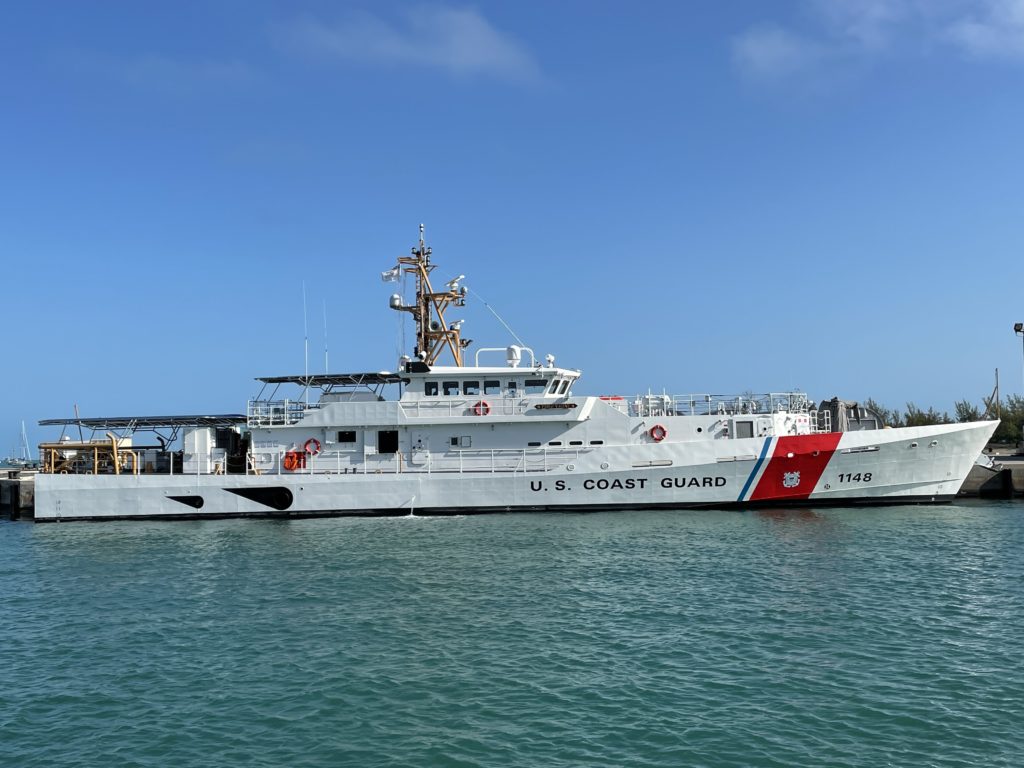


Bollinger Delivers the Future USCGC Pablo Valent 

The U.S. Coast Guard Cutter Pablo Valent, delivered to the Coast Guard on March 17. BOLLINGER SHIPYARDS

LOCKPORT, La. — Bollinger Shipyards LLC delivered the U.S. Coast Guard Cutter Pablo Valent to the service in Key West on March 17, the company said in a release.

This is the 174th vessel Bollinger has delivered to the U.S. Coast Guard over a 35-year period and the 48th fast response cutter delivered under the current program. 

“The early delivery of the USCGC Pablo Valent is another win in Bollinger’s nearly four-decade partnership supporting the men and women of the United States Coast Guard,” said Bollinger president and CEO Ben Bordelon. “We are incredibly proud that the FRC platform is a model program for government acquisition and has surpassed all historical quality benchmarks for vessels of this type and complexity. The results are in the detail and the continued early delivery of truly extraordinary Coast Guard cutters that will serve our nation for decades to come.” 

The USCGC Pablo Valent is the first of three FRCs to be homeported in St. Petersburg, Florida. Sector St. Petersburg has become one of the Coast Guard’s largest commands, with an area of responsibility encompassing over 400 nautical miles of coastline along Florida’s west coast and the third largest U.S. port for domestic trade. The sector has responsibility for five primary operational missions: search and rescue; marine safety; maritime law enforcement; ports, waterways and coastal security; and living marine resources. 

This week, President Joe Biden signed the Consolidated Appropriations Act for fiscal 2022, which included $130 million for two additional FRCs, continuing the program beyond its 64-vessel program of record. This is the second time Congress has added FRCs beyond the original 58 vessel program of record. 

Each FRC is named for an enlisted Coast Guard hero who distinguished themselves in the line of duty. The Florida Keys Hurricane of September 1919 was one of the worst in Texas history, heavily damaging the Brazos Life-Saving Station and leveling the Coast Guard Station at nearby Aransas. Seventy-seven-ton schooner Cape Horn had been fishing far out in the Gulf as the storm descended on the schooner and its crew of eight, capsizing the vessel and flooding the hold. The men clung to the flooded hulk as the strong hurricane pushed it toward the Texas coast.

The Brazos Station lookout spotted the Cape Horn and took immediate action. The crew launched the surfboat in some of the worst sea conditions ever experienced in the area. Although the men were skilled surfmen, the boat shipped seas constantly as waves boarded the vessel from the stern. Pablo Valent and the rest of the crew held the boat steady and safely landed with all 15 occupants. For their valiant efforts, Valent and the rest of the Brazos crew received the Silver Life-Saving Medal. Valent went on to have a successful career in the Coast Guard, taking command of the Brazos Station (a.k.a. Port Isabel Coast Guard Station) in 1935, becoming the first Hispanic American in the service to do so. Valent retired after 28 years of service in the Coast Guard. 


Israeli Air Force Leader Takes Flight in CH-53K 

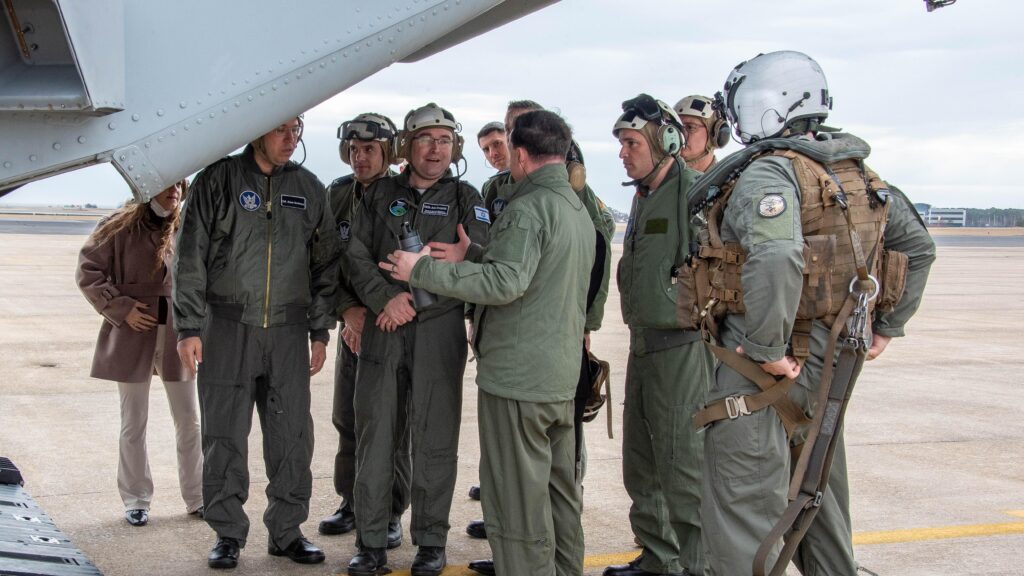
Brig. Gen. Eyal Grinboim, Israeli air force chief of staff, along with his staff, discuss the capabilities of the CH-53K prior to flying on the aircraft. U.S. NAVY

PATUXENT RIVER, Md. — Israeli air force Chief of Staff Brig. Gen. Eyal Grinboim visited Naval Air Station Patuxent River in February for a program update and flight on the CH-53K heavy lift helicopter, Naval Air Systems Command said March 23. 

Grinboim and his staff met with Maj. Gen. Gregory Masiello, program executive officer for air anti-submarine warfare, assault and special mission programs. Masiello and Col. Jack Perrin, program manager, Heavy Lift Program Office (PMA-261), gave the IAF group an overview of the CH-53K program and a status update on current tests and production. 

The visit included an opportunity to co-pilot the aircraft. U.S. Marine Corps Lt. Col. Luke Frank, pilot and officer in charge of CH-53K detachment for Marine Operational Test and Evaluation Squadron 1, provided pre-flight safety instructions before leading the group in a flight. The flight demonstrated the power and capabilities of the CH-53K aircraft. 

Grinboim’s visit to the program office was the first since Israel’s decision last year to purchase the CH-53K. The IAF signed a letter of offer and acceptance on Dec. 30, 2021, with the U.S. government. The agreement is for purchase of 12 CH-53K aircraft with first deliveries planned in 2025. 

As the long-range logistic support backbone for the U.S. Marine Corps, the CH-53K will support Israeli special operations programs first, as well as provide the Israeli Defense Forces with a platform that has the speed, safety and gross weight capability to support all of its missions, including troop and cargo transport, and search and rescue. 

The CH-53K program is on track to achieve Initial Operational Capability in 2022. VMX-1 completed all initial operational test and evaluation scheduled events, including a real-world, non-test event recovering a 14,000-pound downed Navy H-60 from a 12,000 feet high zone in the mountains of Northern California. The CH-53K will transport Marines, heavy equipment and supplies during ship-to-shore movement in support of amphibious assault and subsequent operations ashore. 


Navy’s E-2D Distributed Readiness Trainers Improving Readiness, Capability 

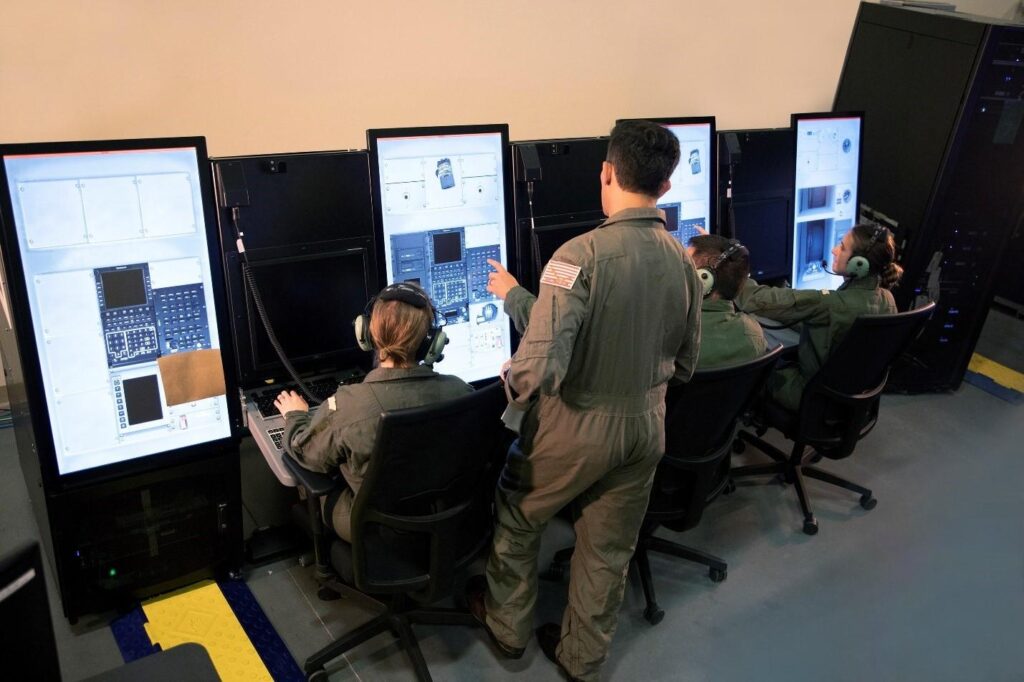
Naval aviators train on E-2D distributed readiness trainers, which are training devices capable of elements of two, five crewmember aircraft to conduct a single training scenario simultaneously and execute the full list of tactics, techniques, and procedures. U.S. NAVY

PATUXENT RIVER, Md. — The aircrew from Carrier Airborne Command & Control Squadron 125 (VAW-125), an E-2D Advanced Hawkeye squadron, recently completed two weeks of on-site readiness training following the installation of two E-2D Distributed Readiness Trainers by the Naval Aviation Training Systems and Ranges program office, Naval Air Systems Command said March 23.   

These medium-fidelity trainers contain a complete mock-up of the E-2D weapons system and are available via commercial off-the-shelf components, allowing them to be operational faster than higher fidelity trainers. The D-DRT uses touch screen technology and are less expensive to maintain than the legacy trainers, which improves reliability and reduces lifecycle costs.   

“Our ability to cycle through reps and sets of advanced tactics, techniques and procedures in a short amount of time will make the warfighter more lethal at a much lower cost to the taxpayer,” said David Adams, PMA-205 Training Systems integrated product team lead.   

The devices were installed to coincide with the squadron’s return from deployment, for use immediately upon return. PMA-205 team members were on hand to provide instruction on their operation.

“The event provided VAW-125 an increased level of combat readiness and the ability to maintain combat effectiveness without costly travel to traditional training locations,” said PMA-205 program manager, Capt. Lisa Sullivan.   

A multidisciplinary PMA-205 team conducted the training and provided aircrew with “hands-on” instruction to learn how to operate the devices and get the most out of their training. The trainers can accommodate an E-2D element of two five-crewmember aircraft to conduct a single training scenario simultaneously and execute the full list of tactics, techniques, and procedures.    

Cmdr. Ryan Mann, executive officer of the E-2 Weapons School, said, “These devices have received a significant amount of positive feedback from the E-2D community, and it is very excited about its capabilities.” Future developments and iterations of the D-DRT will add additional capability to improve readiness.   


Navy Orders YRBM Barges from Conrad Shipyard  

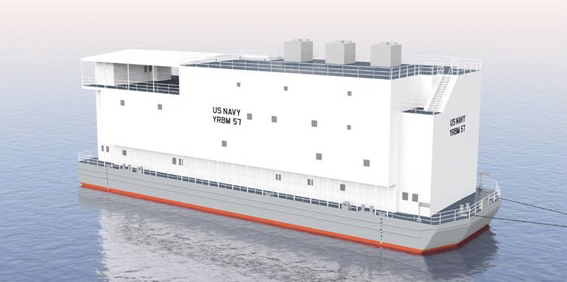
A Yard, Repair, Berthing and Messing barge. CONRAD SHIPYARD LLC

MORGAN CITY, La. — Conrad Shipyard LLC has been awarded a contract by the U.S. Navy for the design and construction of up to eight Yard, Repair, Berthing and Messing (YRBM) barges, the company said in a release.  

YRBM barges provide a temporary home away from home and workplace for service men and women whose vessels are in port for repairs or maintenance. Conrad’s design incorporates functional spaces which allow the Sailors to work, sleep, and eat comfortably.  

The fixed-price contract, a small business set-aside, has a potential value of more than $140 million. Conrad expects to deliver the first YRBM barge to the Navy in late 2023. If the Navy exercises options for the additional barges, peak production is expected to occur from 2023 through 2025.  

“We are excited to enter into this partnership with the Navy to help modernize its fleet,” said Conrad Shipyard CEO Johnny Conrad. “Not only will this contract provide an abundance of jobs for our workforce in the Morgan City area, but it will also help to support a multitude of small businesses. I know our dedicated and hardworking men and women at Conrad are proud to work on this project which will ultimately benefit the brave service men and women of the U.S. Navy.” 

The YRBM barge is an ABS A1 Accommodation Barge with a footprint of roughly 151 feet by 49 feet by 14 feet. The vessel provides pier-side living accommodations capable of berthing 199 mixed gender personnel, messing for 300 personnel, and includes spaces for medical offices, classrooms, workspaces, laundry rooms, storerooms and lounge areas. 


ONR-Sponsored RE2 Robotics, VideoRay ROV Achieve New Depth Milestone 

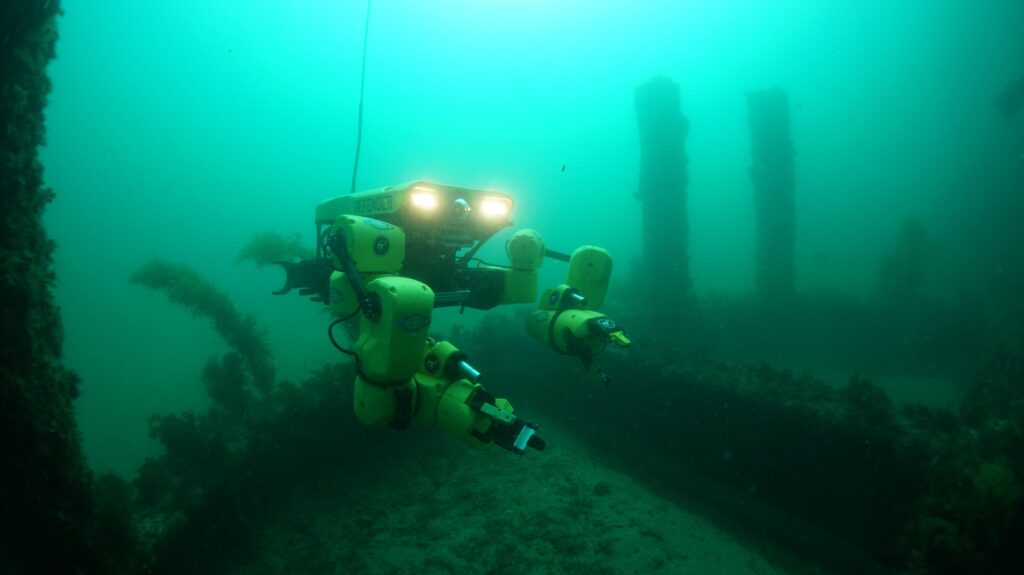
RE2 Robotics’ Sapien Sea Class underwater robotic arms, coupled with VideoRay’s Defender remotely operated vehicle, make up the Maritime Mine Neutralization System. RE2 ROBOTICS

PITTSBURGH and POTTSTOWN, Pa. — RE2 Robotics, a leading developer of intelligent mobile manipulation systems, announced March 22 that its Maritime Mine Neutralization System reached an unprecedented depth milestone of more than 1 kilometer during a recent open-water demonstration for the U.S. Navy’s project sponsor, the Office of Naval Research.   

M2NS is an underwater autonomous mine neutralization system composed of RE2 Sapien Sea-class underwater robotic arms mounted onto VideoRay’s inspection-class Defender remotely operated vehicle. M2NS also uses RE2’s advanced computer vision and autonomy software, RE2 Detect and RE2 Intellect, to enable the precise, autonomous, and clandestine neutralization of a target. 

During the test event, which took place in the Pacific Ocean with support from the Naval Information Warfare Center Pacific in Point Loma, California, four successful dives exceeding 1,000 meters of depth were completed. The dives were conducted using supervised autonomy, which allows human operators to monitor the robotic system’s autonomous movements and make corrections if necessary. 

“These tests allowed us to demonstrate the continuing success of the M2NS project for the U.S. Navy,” said Jack Reinhart, vice president of project management, RE2 Robotics. “The progress we made during these deep dives shows that we could successfully complete an underwater supervised autonomous mission at depths of more than 1,000 meters without any damage to the system. The M2NS system succeeded where no other system of this class has before.” 

All onboard electronics remained operational during the deep dives, including the ROV’s camera feed and data to the support vessel, proving the survivability of the complete system to a depth of more than 1,000 meters.  

“We have proven the ability to deploy the Defender with a large payload to depths of 3,500 feet [1,000-plus meters] from a small deck footprint,” said Marcus Kolb, chief technology officer, VideoRay. “We performed complex, autonomous manipulation tasks with the RE2 system while station-keeping a few feet off the bottom. We are excited about the direction of this program and how it will help accelerate commercial solutions.” 

Following the success of these dives, RE2 Robotics and VideoRay are planning future demonstrations for ONR to test the system’s autonomy capabilities using a tetherless ROV at extended depths. OceanComm Inc., a provider of high-speed wireless underwater communication technology, will provide wireless acoustic modems for future dives. 


Crowley to Operate Ice-Class Tanker for Military Sealift Command 

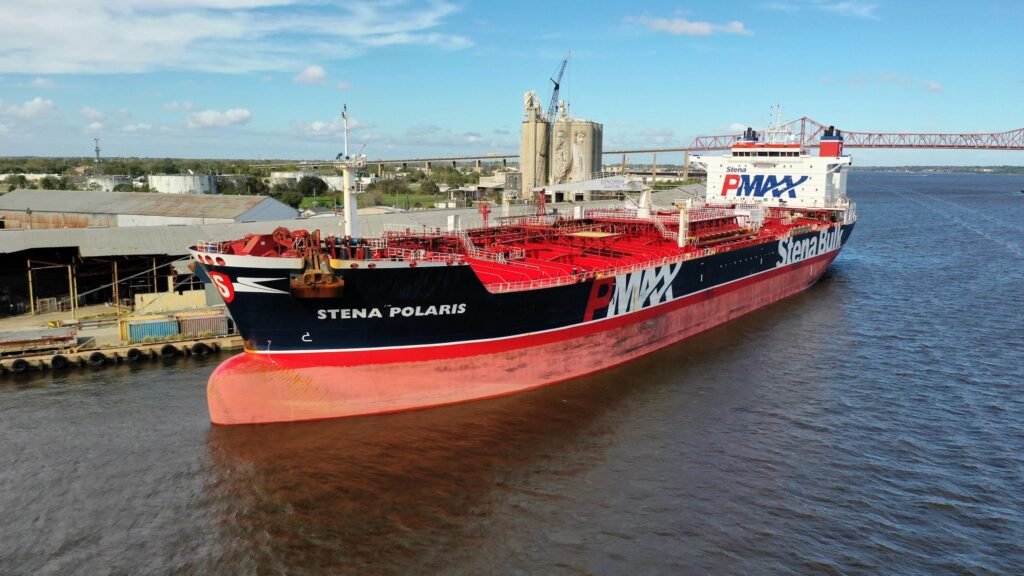
The Stena Polaris, an Ice-class tanker that will be operated by Crowley for Military Sealift Command. CROWLEY

JACKSONVILLE, Fla. — Crowley has been awarded the Military Sealift Command charter contract to operate the Stena Polaris, an Ice-class tanker serving bulk fuel needs of the U.S. Department of Defense, the company said March 21. 

Crowley’s government ship management group has completed the conversion of the ship to meet government and military service standards, including registration as a U.S.-flag vessel. The tanker will transport necessary fuel for defense operations in the Arctic and Antarctica regions. When not operating in those regions, the vessel will transport fuel for defense services in the Mediterranean Sea. 

Crowley has partnered with the DNV classification society and the U.S. Coast Guard to verify the vessel meets the applicable standards to support its missions safely and effectively. Enhancements include adding at-sea refueling capabilities for the military. The tanker, now U.S.-flagged with U.S. mariners, is set to enter service this week.   

The conversion was completed at Fincantieri Marine Repair near downtown Jacksonville, Florida, supporting investment, jobs and the economy of the home city of Crowley’s global headquarters.  

“The Stena Polaris plays a critical mission for our warfighters serving our nation in austere environments, and fundamental work to help our military succeed will be done by the strong workforce and maritime industry in Jacksonville,” said Mike Golonka, vice president, government maritime services, for the Crowley Solutions business unit. “Crowley’s team is fortunate to partner with the U.S. Coast Guard, DNV and Fincantieri Marine Repair to complete the conversion, and we are honored that the U.S. government continues to trust Crowley’s ship management team to meet the Defense Department standards for success and efficient service.” 

“We are excited to partner with Crowley here in Jacksonville to successfully complete this tanker reflagging project,” said Ryan Smith, Fincantieri Marine Repair’s president. “We are now operating in Northeast Florida providing high-quality services to meet the operational needs of military, government, and commercial clients.” 

The contract, which carries a one-year term with multiple option years, has a potential cumulative value of more than $98 million.  


CNO Visits Norfolk for Carrier Aviation Centennial Celebration   

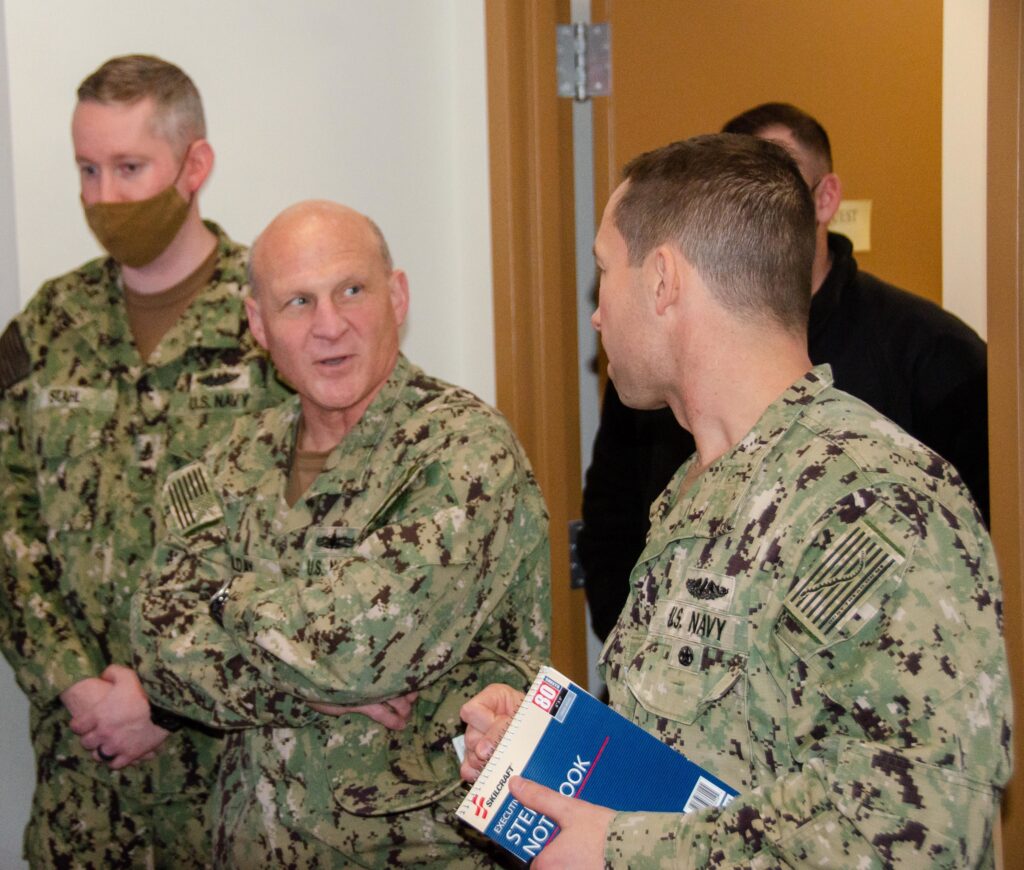
Chief of Naval Operations Adm. Mike Gilday during a visit to Naval Submarine School in February. On March 20-21, he visit Hampton Roads, Virginia, to celebrate a century of U.S. aircraft carrier aviation. U.S. NAVY / Charles E. Spirtos

NORFOLK, Virginia — U.S. Chief of Naval Operations Adm. Mike Gilday traveled to Hampton Roads, Virginia, for the 100 Years of Carrier Aviation Celebration, to visit local commands and to meet with Sailors and industry partners, March 20-21, the CNO’s public Affairs office said in a release. 

Gilday delivered remarks during the centennial celebration ceremony, hosted by the Navy League, held to honor the legacy of U.S. Navy aircraft carriers and aviation. 

“For 100 years aircraft carriers have been the most survivable and versatile airfields in the world,” said Gilday. “Perhaps no single military platform distinguishes what our nation is … and what it stands for … more than the aircraft carrier.”  

While in Hampton Roads, Master Chief Petty Officer of the Navy Russell Smith joined Gilday to meet with Sailors and leadership at Airborne Command and Control Squadron (VAW) 121 and Board of Inspection and Survey, where they spoke to the “get real, get better” call to action. 

The get real, get better mindset seeks to reduce the gap between the Navy’s least and most capable performer, cement dynamic learning and innovation into Navy culture, and build better leaders and teams ready to solve problems more effectively.  

“Our Sailors need to be self-assessing, finding and fixing problems, and embracing the red,” said Gilday. “We need to expand and empower this across the fleet, we have no room for complacency — each ship, squadron and command must hold themselves accountable. We need to continue to get real and get better.” 

Gilday also met with Virginia congressional Democratic Reps. Bobby Scott and Elaine Luria for a working lunch and discussion at Mid-Atlantic Regional Maintenance Center. During lunch, they received updates about ship maintenance.  

Finally, Gilday visited BAE Systems Norfolk Ship Repair for a tour and discussion about shipbuilding and maintenance progress and initiatives. 

“The work being done here in Norfolk, in partnership with BAE Systems, is helping to ensure our Navy is ready and has cutting edge capabilities,” said Gilday. “Working together with industry partners, we will drive down maintenance delays that reduce our readiness, while we continue to make sure our Sailors have what they need to fight and win.”    

The Hampton Roads area has the largest concentration of fleet headquarters administrative and communication facilities outside of Washington, D.C. It is home to more than 82,000 personnel and several major tenant commands: U.S. Fleet Forces Command, Joint Staff Hampton Roads, U.S. Marine Corps Forces Command, Naval Submarine Forces, Atlantic, and Naval Reserve Forces Command. 


Boeing’s Australian-Produced Unmanned Aircraft to be Named MQ-28A Ghost Bat  

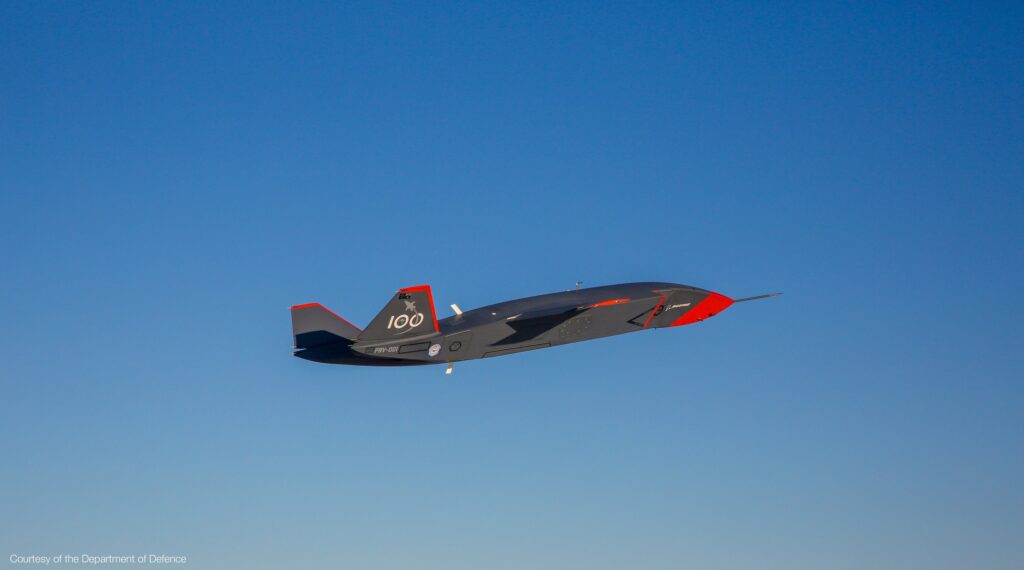
The newly named MQ-28A during the second test flight series at Woomera Range Complex in South Australia. BOEING

AUSTRALIA — Australia has selected MQ-28A Ghost Bat as the military designator and name for the first Australian-produced military combat aircraft in over 50 years. 

Australia’s Defence Minister, Peter Dutton MP, announced the designator and name at a dedicated ceremony held at RAAF Base Amberley, Queensland. 

“The introduction of the new popular name is a rare and special moment in aviation history for our RAAF [Royal Australian Air Force] partners and industry team of over 35 Australian suppliers,” said Glen Ferguson, director of Boeing’s Airpower Teaming System Australia and International. 

“Selecting the Ghost Bat, an Australian native mammal known for teaming together in a pack to detect and hunt, reflects the unique characteristics of the aircraft’s sensors and intelligence, surveillance and reconnaissance abilities, and is a fitting name for this pioneering capability,” said Ferguson. 

With a rapid development timetable of just three years from ideation to first flight, the development program leverages advancements in digital engineering, advanced manufacturing and unique Australian supply chain technologies. 

While the RAAF Loyal Wingman development program name will phase out, Boeing’s product name for global customers will remain the Airpower Teaming System. 

“Our enduring partnership with Commonwealth of Australia and Australian Defence Force is fundamental to the successful development of MQ-28A’s complex technologies and capabilities, and has global export potential for Australia,” said Brendan Nelson AO, president, Boeing Australia, New Zealand and South Pacific. 

During 2022, the program will continue to accelerate the development and testing of the MQ-28A Ghost Bat, with a focus on sensor and missionization capabilities to deliver on RAAF commitments. These requirements will continue to expand as Boeing moves towards the aim of delivering an operational capability for the ADF. 


Cutter Stratton Returns to Alameda Following 97-Day South Pacific Patrol 

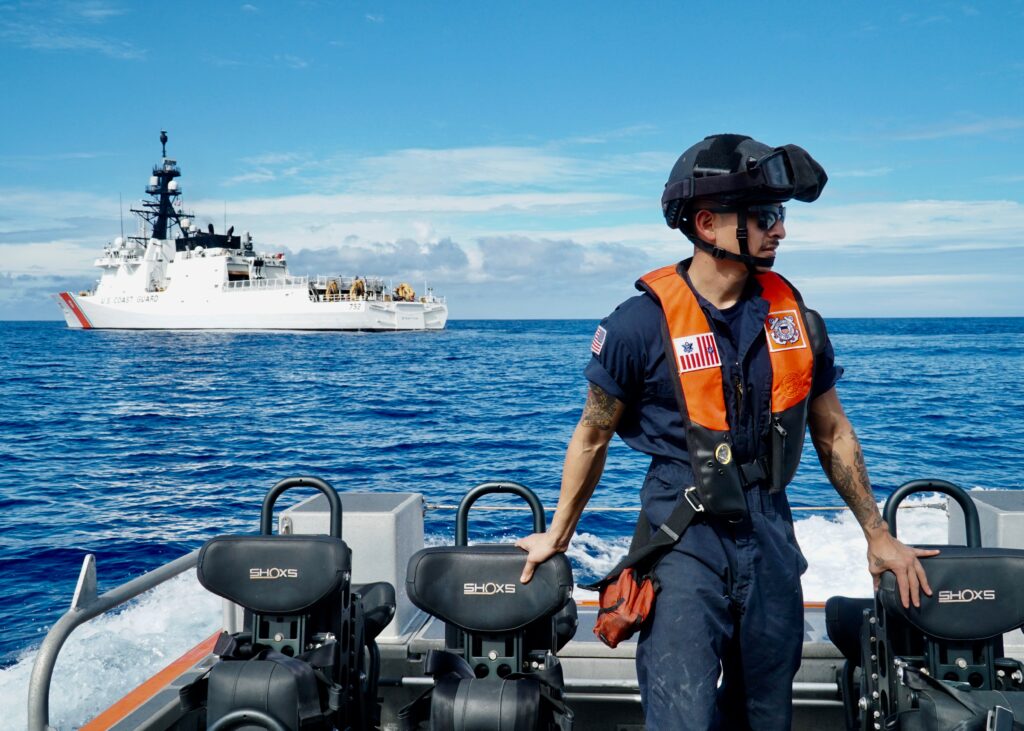
Petty Officer 2nd Class Jose MataAyala, a machinery technician stationed on the Coast Guard Cutter Stratton, observes unqualified crew members as they participate in man-overboard drills off the coast of the Hawaiian Islands, Dec, 31, 2021. U.S. COAST GUARD / Petty Officer 3rd Class David Graham

ALAMEDA, Calif. — The crew of Coast Guard Cutter Stratton (WMSL 752) returned to Alameda, California, March 19 after completing an Operation Blue Pacific Patrol in the south Pacific, the Coast Guard Pacific Area said in a release. 

While underway, Stratton’s crew worked with Pacific partner nations, including Fiji, France, New Zealand, Papua New Guinea, Australia and the United Kingdom on an array of missions and prioritized combating illegal, unreported and unregulated fishing on the high seas or in partner nations’ exclusive economic zones.   

In the effort to combat IUU fishing, Stratton teams boarded 11 vessels during the 20,348-mile patrol and found 21 violations. 

“Our collaboration with our partners and utilization of our shiprider agreements gave us the ability to accomplish our mission of combatting illegal, unreported and unregulated fishing in order to maintain regional stability and protect the fishing industry,” said Capt. Steve Adler, Stratton’s commanding officer. “By bringing aboard shipriders from Fiji, we were able to patrol their exclusive economic zones to better assist them in enforcing their maritime laws.” 

In February, Stratton embarked three shipriders from Fiji with representatives from the Fiji Revenue and Customs Services, the Fiji Ministry of Fisheries and the Republic of Fiji Navy, who led bilateral enforcement efforts for Stratton to patrol their exclusive economic zones. 

There is a shared interest for both Fiji and the United States, as well as other partner nations, to protect fisheries as they provide a renewable source of food and income to the Pacific nations. 

The Stratton crew also used small unmanned aircraft systems to increase the ship’s capabilities and further extend the cutter’s patrol area. 

“Stratton’s capacity for employing cutting-edge technology like sUAS, gives the Coast Guard the upper hand in the fight against IUU fishing,” said Cmdr. Charter Tschirgi, Stratton’s executive officer. “The vast area covered during patrols like these displays the reach the Coast Guard has and the length we will go to assist our partners in the Pacific.” 

While on patrol, Stratton’s crew also participated in multiple joint exercises with partners in the region. These included a formation sailing with the HMS Spey, a tactical maneuvering drill with HMS Spey and USS Sampson, a joint patrol with an Australian Border Force patrol aircraft, fueling-at-sea with New Zealand’s newest replenishment vessel HMNZS Aotearoa, and joint steaming with the French naval vessel FMS Arago and Fijian Patrol vessel Savenaca.