Navy’s CMV-22B Achieves Initial Operational Capability Designation 
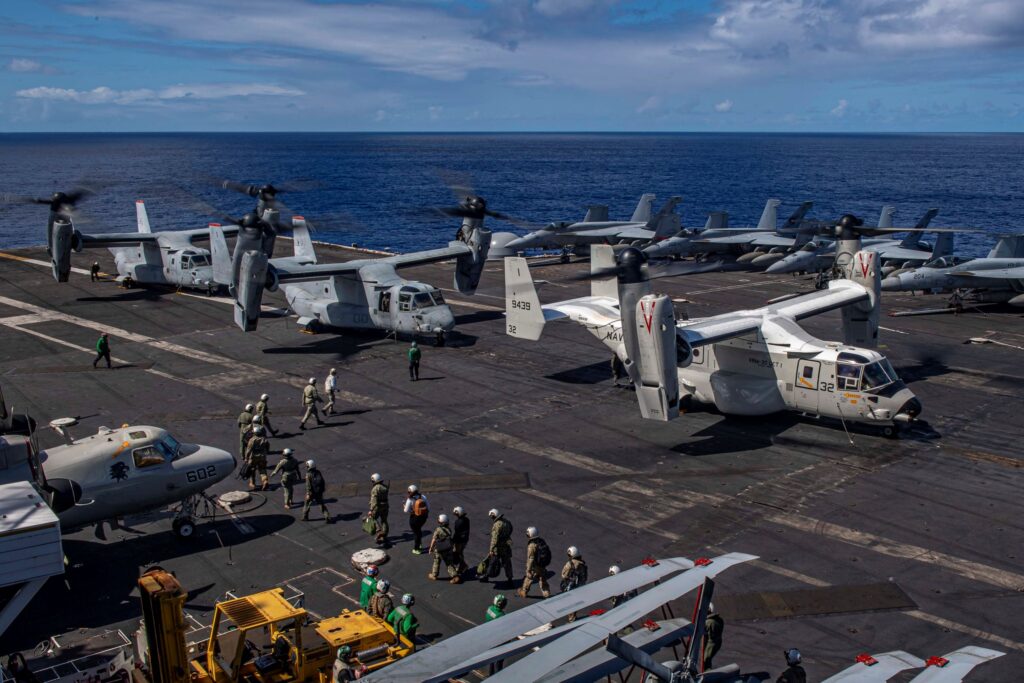
Senior military leadership cross the flight deck to depart Nimitz-class aircraft carrier USS Carl Vinson (CVN 70), Feb. 9. Vinson is currently conducting routine maritime operations in U.S. 3rd Fleet. U.S. NAVY / Mass Communication Specialist 3rd Class Megan Alexander

The Navy announced initial operational capability for the CMV-22B Osprey, confirming the platform’s operational readiness following the successful completion of its first deployment on Feb. 17, Naval Air Systems Command said Feb. 18.

The aircraft was formally declared IOC on Dec. 14, 2021, aligning with the scheduled first-quarter fiscal year requirement.

“The CMV-22’s maiden deployment with Carrier Air Wing [CVW] Two and the [USS Carl] Vinson [CVN 70] team is an operational success, giving me the confidence necessary to make the declaration,” said Rear Adm. Andrew Loiselle, director, Air Warfare Division, N98, Office of the Chief of Naval Operations. “As we continue to deliver the advanced platforms that will make up the Air Wing of the Future, the CMV-22B provides the necessary support and more to carry our future force.”

Loiselle’s designation marks a key milestone in the design, development, acquisition and testing of the CMV-22B and confirms its relevance and readiness to meet the needs of the Navy’s carrier onboard delivery mission. The aircraft transports personnel, mail, supplies and cargo from shore bases to aircraft carriers at sea, and will eventually replace the C-2A Greyhound.

“IOC designation is more than a stamp of approval,” said U.S. Marine Corps Col. Brian Taylor, V-22 Joint program manager. “It is a vote of confidence from top Navy leadership that the design, testing and production of this aircraft meet the logistical needs of the carrier air wings designated to fly the CMV-22B.”

This past summer marked the first deployment for the CMV-22B. Fleet Logistics Multi-Mission Squadron (VRM) 30 embarked on the USS Carl Vinson alongside the F-35C Lightning II and E-2D Advanced Hawkeye squadrons. The first deployed detachment has executed a mission completion rate of 98% and a mission-capable rate of 75%. The CMV-22B is a crucial element of future carrier airwings due to the cargo capacity needed to transport F-35 power modules and additional logistics support for future carrier air wing deployments with next-generation platforms.

“This aircraft went from first flight to first deployment in 19 months, a feat possible through the dedication of the Navy’s acquisition, engineering, test and operational communities, as well as industry, all working in tandem, toward a common goal,” said Taylor.

With 50% more internal fuel than the Marine Corps’ Osprey variant, CMV-22B can transport up to 6,000 pounds of cargo and personnel over a 1,150 nautical mile range. The Navy redesigned the forward sponson fuel tanks and added two wing fuel tanks to add capacity and extend the flight range.

“As our fighter/attack and surveillance aircraft expand in both capability and size to extend the range of the carrier air wing, we must also evolve our support aircraft, in tandem, to supply those platforms. The CMV-22B will transport cargo and personnel to outfit the most advanced aircraft carrier strike groups as we continue to meet the needs of our missions worldwide,” said Taylor.

The program will continue to refine and test capabilities on the aircraft, addressing the agile needs of the fleet. To date, Bell Boeing has delivered 14 aircraft with 44 on contract and full operational capability expected in 2023.
Coast Guard Cutter James offloads More than $1.06 Billion in Illegal Narcotics  

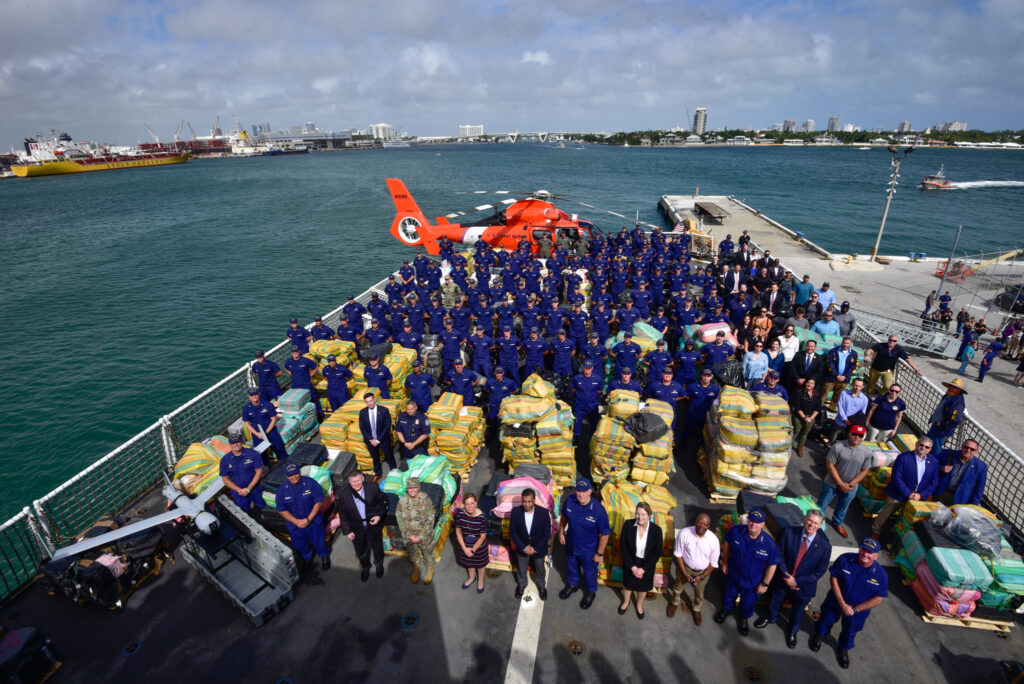
The Coast Guard Cutter James’ (WMSL 754) crew offloaded approximately 54,500 pounds of cocaine and 15,800 pounds of marijuana, worth approximately $1.06 billion, Feb. 17, in Port Everglades, Florida. U.S. COAST GUARD / Petty Officer 3rd Class Jose Hernandez

MIAMI — Coast Guard Cutter James’ crew offloaded approximately 54,500 pounds of cocaine and 15,800 pounds of marijuana worth approximately $1.06 billion on Feb. 17 at Port Everglades, Florida, the Coast Guard 7th District said in a release. 

The ship’s crew set new records during their 90-day patrol for the largest single cocaine interdiction at 10,915 pounds, worth $206.4 million, and the largest single marijuana interdiction at 3,962 pounds, worth $3.59 million, the greatest amount of contraband interdicted during an Eastern Pacific patrol.  

The Coast Guard’s strong international relationships, specialized capabilities and unmatched authorities, allowed for a unity of effort to disrupt transnational criminal organizations. 

The drugs were interdicted in international waters of the Eastern Pacific Ocean and Caribbean Sea by crews from: 

  • Coast Guard Station San Juan 
  • Coast Guard Cutter James 
  • His Netherlands Majesty’s Ship Holland 
  • Coast Guard Cutter Stone 
  • Coast Guard Cutter Griesser 
  • USS Milwaukee 
  • Coast Guard Cutter Northland 
  • Coast Guard Cutter Diligence 
  • Coast Guard Cutter Margaret Norvell 

“The best part of my job is being able to stand here at the end of a patrol and provide visibility on the incredible efforts from crewmembers who have volunteered for the challenging and dangerous duties to keep our shores safe,” said Capt. Todd Vance, the commanding officer of the Coast Guard Cutter James. “Each interdiction is a complex evolution and no two interdictions are the same. In fact, the James’ crew conducted simultaneous interdictions of two go-fast vessels 55 miles apart this patrol, showcasing their dedication and professional execution of the counter-drug mission.” 

Numerous U.S. agencies from the departments of Defense, Justice and Homeland Security cooperated in the effort to combat transnational organized crime. The Coast Guard, Navy, Customs and Border Protection, FBI, Drug Enforcement Administration and Immigration and Customs Enforcement, along with allied and international partner agencies, play a role in counter-drug operations.  

The fight against drug cartels in the Eastern Pacific Ocean and the Caribbean Sea requires unity of effort in all phases from detection, monitoring and interdictions, to criminal prosecutions by international partners and U.S. Attorneys’ Offices in districts across the nation. The law enforcement phase of counter-smuggling operations in the Eastern Pacific Ocean is conducted under the authority of the Coast Guard 11th District, headquartered in Alameda, California, and the law enforcement phase of operations in the Caribbean is conducted under the authority of the Coast Guard 7th District, headquartered in Miami. The interdictions, including the actual boardings, are led and conducted by members of the U.S. Coast Guard.  

The Coast Guard Cutter James is a 418-foot national security cutter homeported in Charleston, South Carolina.  


USS Anchorage, 1st Marine Division Exercise Waterborne Capabilities of ACVs 

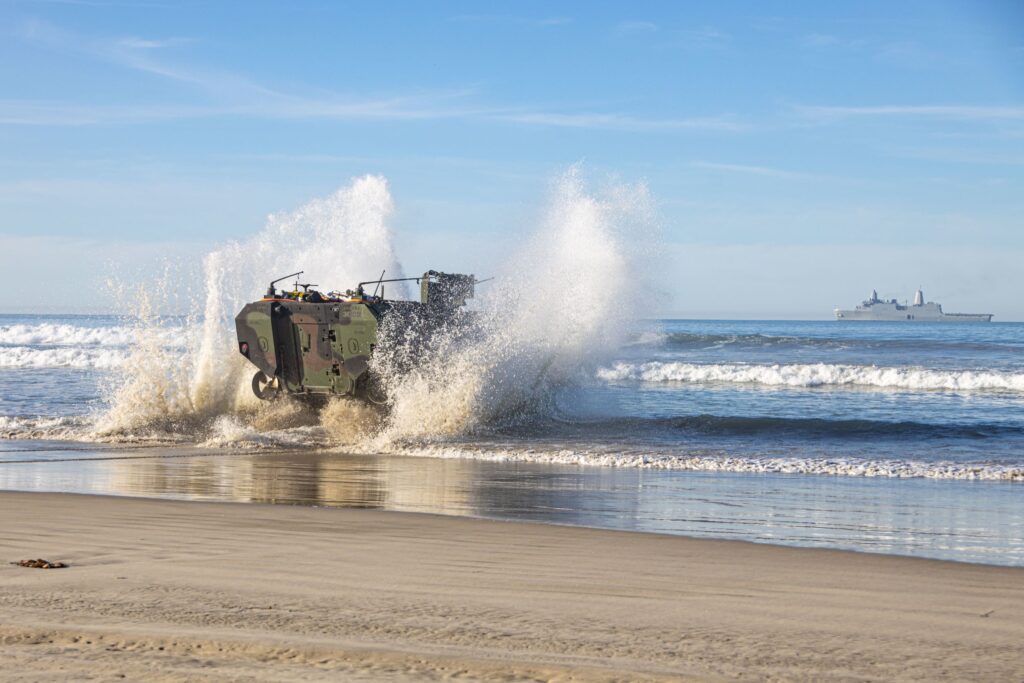
U.S. Marines assigned to the 3rd Assault Amphibian Battalion, 1st Marine Division, conduct waterborne training with an Amphibious Combat Vehicle from shore to loading amphibious transport dock ship USS Anchorage (LPD 23) at Marine Corps Base Camp Pendleton, California, Feb. 12. U.S. MARINE CORPS / Lance Cpl. Willow Marshall

PACIFIC OCEAN — U.S. Marines assigned to the 3rd Assault Amphibian Battalion, 1st Marine Division participated in a waterborne training evolution with Amphibious Combat Vehicles aboard amphibious transport dock ship USS Anchorage (LPD 23) in the Pacific Ocean, Feb. 12-13, Expeditionary Strike Group 3 said Feb. 15. 

The two-day training evolution focused on the safety and ship-to-shore capabilities for both the Marine Corps and Navy, part of a larger training plan to refine tactics and doctrine for amphibious operations. 

“The safety of our Marines and Sailors is a top priority, especially as we continue to test the capabilities of the newest Marine Corps platform,” said Rear Adm. Wayne Baze, commander, Expeditionary Strike Group 3. “The Sailors and Marines involved have received extensive training on operation of the craft, providing the Navy and Marine Corps team the opportunity to rehearse together for real-world events.” 

During the evolution, the ACV demonstrated its survivability, maneuverability and robust swim capabilities by participating in a series of open-ocean swims between USS Anchorage and Marine Corps Base Camp Pendleton, California. USS Anchorage and designated safety boats remained in close proximity of the ACVs throughout the entirety of the amphibious operations, ensuring safety in all aspects of training. 

“As we strengthen naval warfighting as a force and pivot to operating in a contested littoral environment, conducting safe, realistic training on this platform advances our ability to respond swiftly to global threats in austere maritime conditions,” said the commanding general of the 1st Marine Division, Maj. Gen. Roger B. Turner. “The Amphibious Combat Vehicle is purpose-built to provide expeditionary lethality for Marines on the move.” 

The Marines with 3rd Assault Amphibian Battalion, 1st Marine Division worked alongside Anchorage’s crew to successfully demonstrate the ACV’s ability to launch and recover from the well deck. 

“This underway period is a true testament of the rigorous training our Sailors and Marines are doing to prepare for ACV waterborne operations,” said Baze. “They spend countless hours preparing, which is evident in the professional manner in which they conducted themselves throughout this evolution. I could not be more proud of each and every one of them.” 

The ACV is an eight-wheel drive, armored vehicle with open-ocean capabilities and land mobility. It’s a unique combination of previously fielded amphibious vehicles and new technological advances to the fleet’s capabilities. The ACV’s ability to use the ocean and waterways to carry Marines and equipment provides expeditionary readiness to Marines on the move, wherever their mission takes them, across a variety of operating environments. 


Cutter Stratton Visits Fiji during Operation Blue Pacific Patrol 

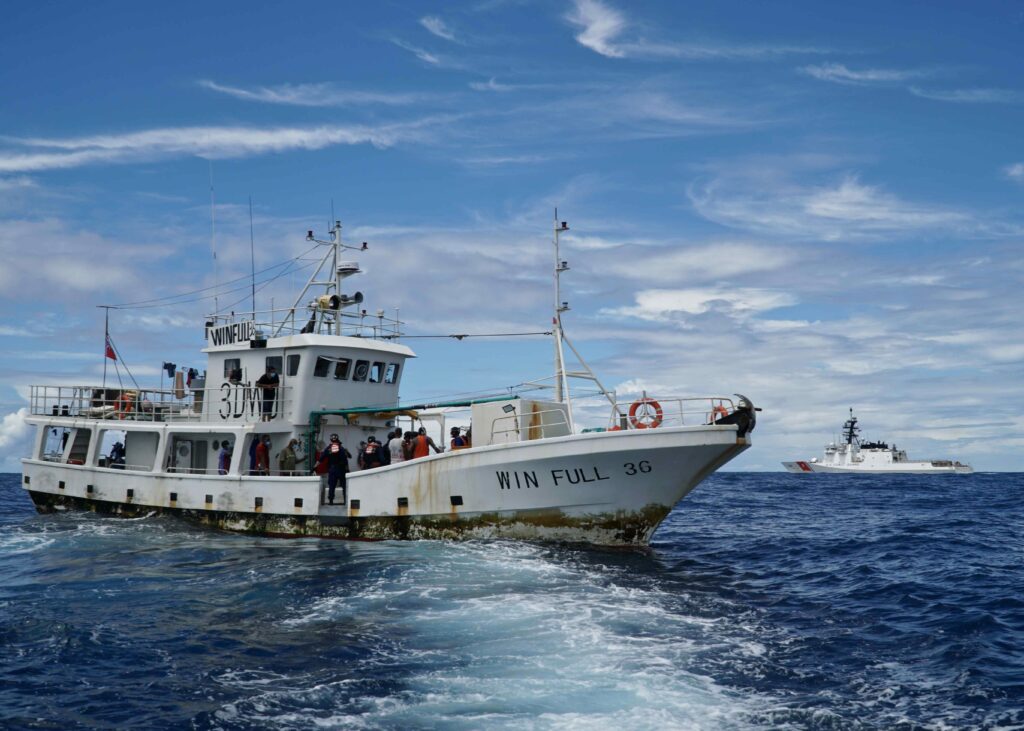
The crew of the Coast Guard Cutter Stratton conducts patrols in Fiji’s exclusive economic zone with Fijian law enforcement personnel in February. The Coast Guard’s mission to combat IUU fishing is essential in protecting maritime governance and a rules-based international order to ensure a free and open Indo-Pacific. U.S. COAST GUARD

SUVA, Fiji — The crew of the Coast Guard Cutter Stratton visited Fiji in February after being underway for 50-days in the Pacific combating illegal, unreported, and unregulated (IUU) fishing, the Coast Guard 14th District said Feb. 15. 
 
During the visit, Capt. Stephen Adler, the Stratton’s commanding officer, met with members of the Fijian media to discuss the Coast Guard’s partnership with Fiji and their combined effort to protect fisheries resources.  
 
“Our relationships with our partner nations are more important than ever in combating illegal, unreported, and unregulated fishing,” said Adler. “We are pleased to work with our Fijian partners to maintain maritime sovereignty and security throughout the region.” 
 
While in the country, the Stratton’s crew welcomed aboard three Fijian ship riders who, with the assistance of Stratton’s law enforcement boarding teams, will ensure compliance with applicable Fijian fishing laws within Fiji’s exclusive economic zone. 
 
The Coast Guard’s mission to combat IUU fishing is essential in protecting maritime governance and a rules-based international order to ensure a free and open Indo-Pacific. 
 
The fisheries industry is a significant source of food and income throughout the Pacific. Protecting this renewable resource is a priority for the United States and Pacific Island Countries as IUU fishing in the Pacific has global impacts and effects.  
 
Recently IUU fishing has replaced piracy as the leading global maritime security threat and has the potential to have a global effect if unchecked. 
 
Prior to visiting Fiji, the Stratton’s crew had been working with British, Australian, New Zealand, and French allied naval forces as well as the U.S. Navy in support of the Tongan government following the volcanic eruption on Jan 15. 
 
The crew also conducted a number of drills and exercises with allied partners including helicopter operations with the Armed Forces in French Polynesia, fueling at sea with the Royal New Zealand Navy Ship Aotearoa, and multiple maneuvering exercises with the Royal Navy HMS Spey.  
 
The Stratton is a 418-foot national security cutter capable of extended, worldwide deployment in support of homeland security and defense missions. NSCs routinely conduct operations throughout the Pacific and Atlantic oceans; their unmatched combination of range, speed, and ability to operate in extreme weather provides the mission flexibility necessary to conduct vital strategic missions. 
 
Operation Blue Pacific is an overarching multi-mission Coast Guard endeavor, promoting security, safety, sovereignty, and economic prosperity in Oceania while strengthening relationships between partner nations in the Pacific. 


Bell to Advance U.S. DoD High-Speed VTOL Capabilities 

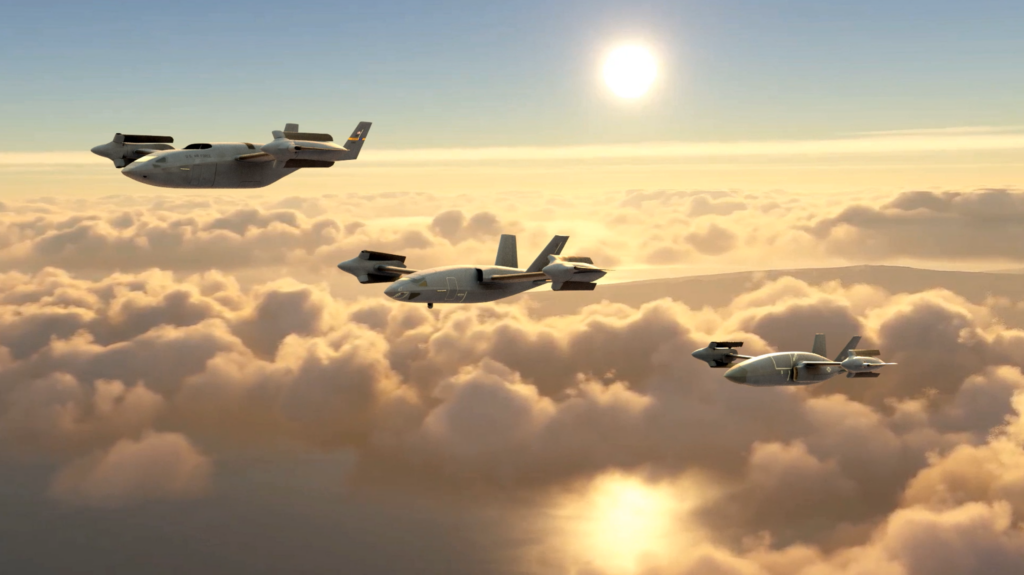
An artist’s conception of Bell Textron’s entry in the AFWERX High-Speed Vertical Take-Off and Landing Concept Challenge. BELL TEXTRON

Fort Worth, Texas — Bell Textron Inc. has advanced to the next phase of the AFWERX High-Speed Vertical Take-Off and Landing Concept Challenge, a crowdsourcing effort for the U.S. Air Force and Special Operations Command, the company said Feb. 16.

Bell is one of 11 companies from more than 200 challenge entrants selected to receive market research investments aimed at advancing solutions that enable optimal agility in austere environments. 

“Bell is thrilled that our HSVTOL concepts have been selected for the next phase of the U.S. Air Force’s AFWERX Challenge,” said Jason Hurst, Bell’s vice president of Innovation. “In entering this next phase, Bell’s teams will continue to lay the groundwork for the production of another revolutionary military aircraft and provide USSOCOM and the U.S. Air Force with conceptual designs and development roadmaps to accelerate this capability to the warfighter.”  

Bell’s HSVTOL vehicles blend the hover capability of a helicopter with the speed, range and survivability features of fighter aircraft. This family of scalable aircraft concepts is designed to support a range of missions, including personnel recovery, autonomous ISR/Strike and tactical mobility, with low-downwash hover capability and jet-like speeds of more than 400 knots. 

Bell’s concepts are envisioned as part of a broader HSVTOL mission system framework that provides the next generation of speed, range, and survivability. These concepts provide the flexibility to carry out USAF and USSOCOM missions across the full spectrum of conflict and political scenarios. It emerged as a top-tier entrant in the HSVTOL Concept Challenge by meeting or exceeding rigorous evaluation criteria focused on technical merit, reliability, scalability, and other factors. 

“The HSVTOL Concept Challenge has surfaced an impressive range and caliber of solutions to help us understand how to build a new class of air vehicles,” said Dr. Reid Melville, chief innovation officer, Air Force Research Laboratory Transformational Capabilities Office. “We believe the organizations selected to receive market research investments at this stage have the potential to deliver truly groundbreaking innovation.” 

Over the next six months, Bell will further develop its HSVTOL solution, working closely with the USAF, USSOCOM, and Collaboration.Ai, the prime contractor facilitating the HSVTOL Concept Challenge. 


U.S., U.K. Navy Chiefs Meet, Discuss Cooperation and Interoperability   

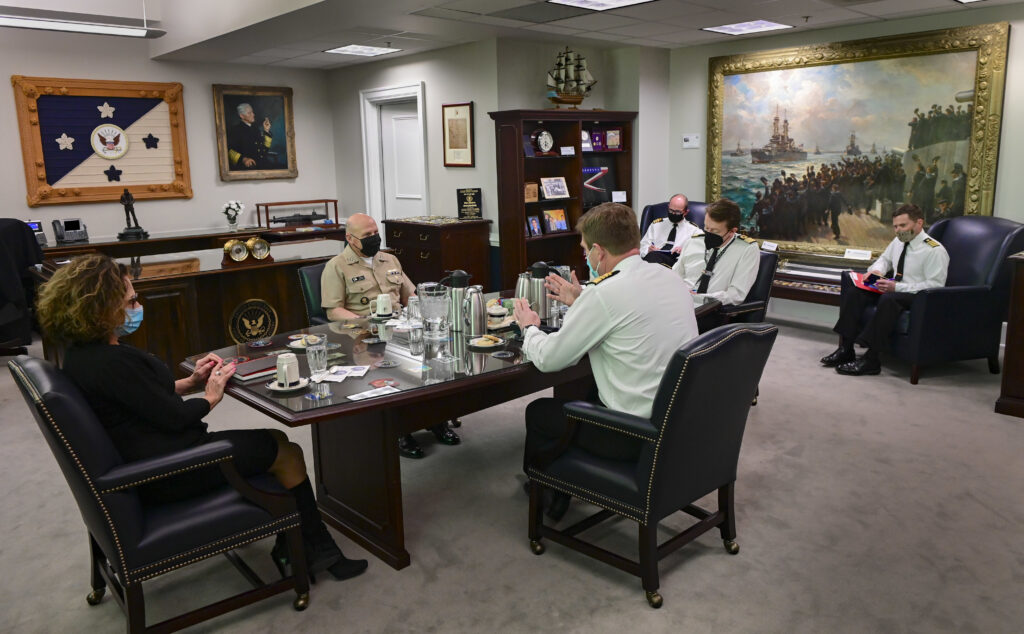
Chief of Naval Operations Adm. Mike Gilday, left middle, meets with Royal Navy Adm. Sir Ben Key, First Sea Lord and Chief of the Naval Staff of the United Kingdom. U.S. NAVY / Mass Communication Specialist 1st Class Sean Castellano

WASHINGTON — U.S. Chief of Naval Operations Adm. Mike Gilday met with his U.K. counterpart, Royal Navy First Sea Lord and Chief of the Naval Staff Adm. Sir Ben Key, at the Pentagon, Feb. 15, the CNO’s public affairs office said in a release.  

During the meeting, the leaders reaffirmed their commitment to deepen cooperation and discussed a wide range of issues including strategic competition, interoperability, capabilities and innovation.  

“Today’s global challenges and security environment emphasize the importance of partnerships and interoperability,” said Gilday. “Our enduring and strong partnership with the United Kingdom helps us to ensure security, stability and prosperity.”  

This meeting marked the first between the First Sea Lord and CNO and was emblematic of the strong partnership between the two countries.  Discussions were substantive and productive.   

Gilday and Key exchanged views about security issues in Europe, the Middle East, and the Indo-Pacific, underscoring the importance of the U.S.-U.K. bilateral relationship and defense cooperation, as well as NATO alliance.  

“I am delighted to be in Washington to see my U.S. counterparts. As the Chief of Naval Operations has said, our two navies share an incredible bond, which was most amply demonstrated last year with the many miles we sailed together on the Carrier Strike Group 21 deployment,” said Key. “We train, exercise and operate together because of our shared outlook, our shared values and our shared desire for peace and prosperity across the globe.”  

“The strength of our alliances and partnerships has never been more important and will continue to be imperative to take on the challenges of the 21st century,” said Gilday.  “I look forward to the continued cooperation between our two countries and our two navies.”  

The two leaders emphasized their navies shared commitment to uphold and advance the rules-based international system.  

The U.S. and Royal Navy operate together around the globe regularly. Most recently, USS The Sullivans (DDG 68) took part in a six-month deployment as part of Carrier Strike Group 21 (CSG21) with HMS Queen Elizabeth (R08). Both navies also conducted multilateral naval training with Australia and Japan during Maritime Partnership Exercise (MPX) 2021 in October.  

Key took office in November. The Navy Chiefs spoke via video conference on Key’s first day in office.  


Lockheed Martin Selected to Prototype Next-Generation USMC 5G Communications 

ANNAPOLIS JUNCTION, Md. — The U.S. Department of Defense has awarded Lockheed Martin a $19.3 million prototype project agreement to create a 5G communications network infrastructure testbed for expeditionary operations experimentation for the Office of the Under Secretary of Defense for Research and Engineering and the U.S. Marine Corps.

The testbed, known as Open Systems Interoperable and Reconfigurable Infrastructure Solution, or OSIRIS, is a key initiative of Lockheed Martin’s 5G.MIL programs which are positioned to help its customers field, scale and integrate 5G technology rapidly and affordably across all operations on land, water, in air, space and cyber. 

“OSIRIS will serve as a critical proof point of Lockheed Martin’s 5G.MIL capabilities,” says Deon Viergutz, vice president, Lockheed Martin Spectrum Convergence. “We are integrating the technical capabilities of 5G waveforms, software and hardware with higher bandwidth and low-latency data rates into our defense products to enhance their performance for our warfighters. We want to ensure that warfighters operating in communications contested and denied environments have resilient access to data to perform their missions anywhere in the world.” 

The OSIRIS program will help address the need for test facilities that enable rapid experimentation and dual-use application prototyping. The testbed will identify areas for further compatibility between 5G network and DoD platforms that will enhance customer capabilities. The infrastructure will also allow for the connection of various 5G-ready user devices, sensors, vehicles and endpoints to explore the military utility of commercial 5G technologies and pave the way for onboarding of new technologies from other OUSD investments while addressing cybersecurity requirements. This capability will further enable and advance DoD’s joint all domain operations concept. 

Teams from Lockheed Martin, along with subcontractors DISH Wireless, Intel, Radisys and Rampart Communications will create the 5G network testbed infrastructure at U.S. Marine Corps Base Camp Pendleton. The period of performance will begin immediately and conclude in September 2024. 


Carl Vinson Carrier Strike Group Returns Home for Valentine’s Day 

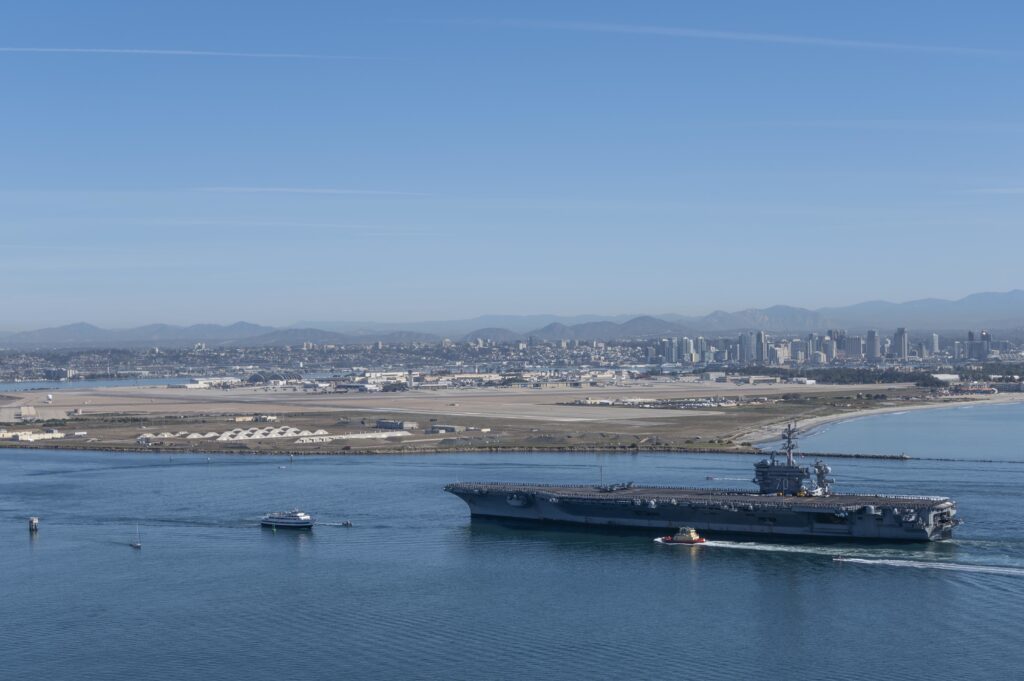
The Nimitz-class aircraft carrier USS Carl Vinson (CVN 70) returns to its homeport of Naval Air Station North Island, San Diego. The Carl Vinson Carrier Strike Group returned to San Diego after an eight-month deployment to U.S. 3rd and 7th Fleets in support of regional stability and a free and open Indo-Pacific. U.S. NAVY / Mass Communication Specialist 2nd Class Kevin Johnson

SAN DIEGO — The Carl Vinson Carrier Strike Group returned to San Diego on Feb. 14, Valentine’s Day, marking the end of an eight-month deployment to U.S. 3rd and 7th Fleets areas of operation, said U.S. 3rd Fleet Public Affairs. 

After an accelerated departure from San Diego, the Carl Vinson CSG supported integrated operations in the Hawaiian Islands operating area with the U.S. Marine Corps, Air Force and Coast Guard as part of the Defense Department’s ongoing presence in the Indo-Pacific region. They continued into the western Pacific demonstrating U.S. commitment to partnerships and alliances in the region while upholding a free and open Indo-Pacific. 
 
“The tireless dedication and professionalism of our Sailors, through a global pandemic, challenging operational tempo, and sacrificed time away from family, is truly humbling,” said Capt. P. Scott Miller, commanding officer of Nimitz-class aircraft carrier USS Carl Vinson (CVN 70), the strike group’s flagship. “Their efforts have demonstrated flexibility and resiliency and ensured mission success in every task. They have directly supported a free and open Indo-Pacific and have underscored our Navy’s readiness, strength, and lethality.” 
 
Ships in the Carl Vinson CSG sailed more than 80,000 nautical miles while underway for 262 days, conducted dual carrier operations and multinational exercises, including maritime security operations, integrated training between surface and air units, long-range maritime strike, anti-submarine warfare, information warfare operations, maritime interdiction operations, personnel recovery, air defense operations, multiple ship navigation and formation maneuvering and refueling-at-sea operations. While deployed, the strike group operated in some of the most heavily navigated waters of the Indo-Pacific including the South China Sea and the Philippine Sea. 
 
Carl Vinson is the first aircraft carrier to deploy with a combination of fourth- and fifth-generation platforms within Carrier Air Wing (CVW) 2 that predominantly represent the “Air Wing of the Future,” including the F-35C Lightning IIs of Strike Fighter Squadron (VFA) 147, the CMV-22B Ospreys of Fleet Logistics Multi-Mission Squadron (VRM) 30, the F/A-18E/F Super Hornets of VFAs 2, 113, and 192, the EA-18G Growlers of Electronic Attack Squadron (VAQ) 136, the E-2D Advanced Hawkeyes of Airborne Command & Control Squadron (VAW) 113, the MH-60R Sea Hawks of Helicopter Maritime Strike Squadron (HSM) 78, and the MH-60S Sea Hawks of Helicopter Sea Combat Squadron (HSC) 4. The complete Air Wing of the Future will also include the MQ-25 Stingray unmanned aircraft system, which is planned to be incorporated into carrier air wings in 2025. 
 
During the deployment, the air wing executed more than 15,000 fixed-wing and helicopter flight hours comprising of 7,791 sorties, 7,702 launches and 7,761 aircraft arrestments. 
 
The strike group successfully completed operations and exercises alongside multiple partners and allies including navies from Australia, Canada, Germany, India, the Netherlands, New Zealand and the United Kingdom as well as the Japan Maritime Self-Defense Force. 
 
Notable multinational, bilateral, and U.S.-only exercises included Large Scale Exercise 2021 in August, Operation Malabar and Maritime Partnership Exercise 2021 in October, Annual Exercise 2021 in November, U.S. and Australia’s bilateral exercise in December and Expeditionary Strike Force and dual carrier operations in January 2022. 
 
“Alongside our partners and allies, we have aggressively pursued every opportunity to elevate our combat readiness in a drive to continue upholding regional stability,” said Rear Adm. Dan Martin, commander, Carrier Strike Group (CSG) 1. “We’ve been doing this for 75 years and I’m proud to say that our team has relentlessly paid tribute to this legacy with many long hours of sweat and determination that started well before we left San Diego.” 

The Carl Vinson CSG consists of Carl Vinson, embarked staffs of CSG 1, CVW-2 and Destroyer Squadron (DESRON) 1; nine embarked air wing squadrons; guided-missile cruiser USS Lake Champlain (CG 57); and DESRON 1 guided-missile destroyers USS Chafee (DDG 90), USS O’Kane (DDG 77), USS Stockdale (DDG 106), and USS Michael Murphy (DDG 112). 


Navy Team Christens First Snakehead Advanced UUV Prototype 

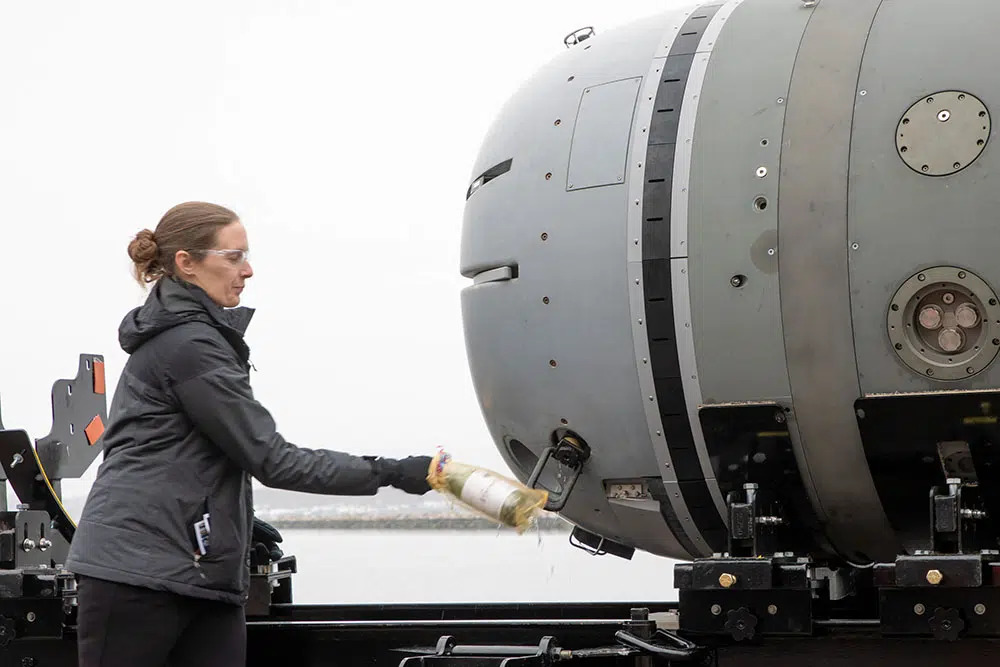
Cheryl Mierzwa, Naval Undersea Warfare Center Division Newport’s technical program manager for the Snakehead Large Displacement Unmanned Undersea Vehicle, christens the underwater vehicle at the Narragansett Bay Test Facility in Newport, Rhode Island, on Feb. 2. U.S. NAVY

WASHINGTON — A Navy team led by the Naval Undersea Warfare Center Division Newport and the Program Executive Office for Unmanned and Small Combatants conducted a vehicle christening for the first Snakehead Large Displacement Unmanned Undersea Vehicle prototype Feb. 2 at the Narragansett Bay Test Facility in Newport, Rhode Island, PEO USC said Feb. 11. 

Snakehead is a modular, reconfigurable, multi-mission LDUUV deployed from submarine large ocean interfaces. It is equipped with a government-owned architecture, mission autonomy capabilities and vehicle software, employing innovation in the areas of hull materials and lithium-ion battery certification. Deployed from a submarine dry deck shelter, Snakehead provides guidance and control, navigation, situational awareness, propulsion, maneuvering and sensors in support of undersea missions. 

The Navy continues to invest in a family of unmanned undersea vehicles to meet the mission requirements for maintaining undersea domain superiority. Snakehead is the Navy’s largest submarine-launched UUV, providing increased endurance, depth capability, and payload capacity beyond small and medium UUVs. 


Coast Guard Cutter Valiant Returns Home after 30-day Patrol 

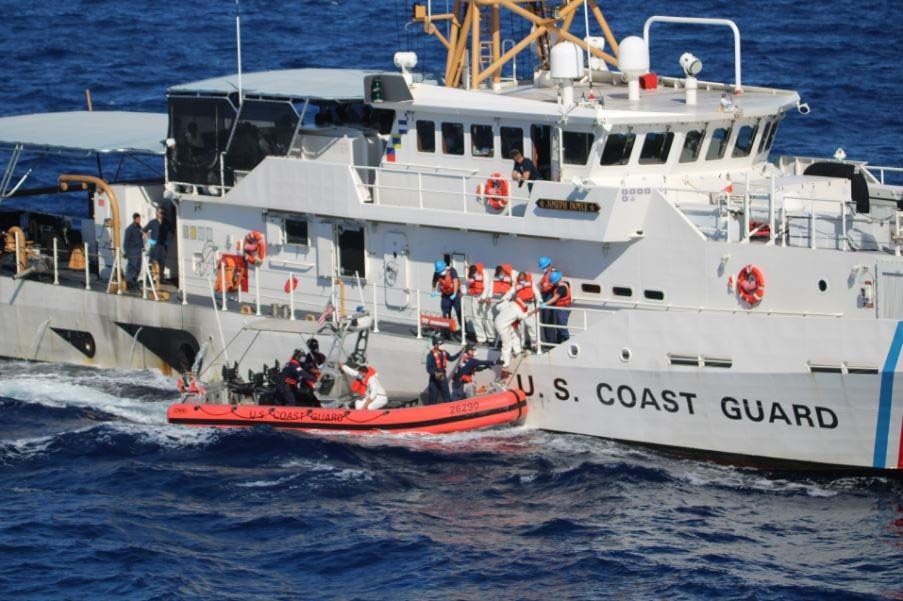
The Coast Guard Cutter Valiant (WMEC 621) crew transfers migrants to Coast Guard Cutter Joseph Doyle (WPC 1133) crew in the Caribbean Sea during a 30-day patrol on Feb. 11. The Valiant crew repatriated over 200 migrants interdicted in the high seas. U.S. COAST GUARD

JACKSONVILLE, Fla. — The Coast Guard Cutter Valiant (WMEC 621) and crew returned to Naval Station Mayport on Feb. 11 after completing a 30-day patrol in the Caribbean Sea, the Coast Guard 7th District said in a release. 

The Valiant’s crew patrolled over 6,300 miles in the Caribbean Sea, conducting a variety of operations in support of Coast Guard District 7. 

The crew partnered with both foreign and domestic military agencies in the detection, interdiction and repatriation of over 200 migrants interdicted in the high seas. 

During their patrol, they received word that a suspected migrant vessel had suddenly and unexpectedly sank, leaving 39 people in the water. The Valiant crew assumed on-scene command of the situation upon arrival and coordinated with Fuerzas Unidas de Rapida Acción assets operating out of Aguadilla, Puerto Rico, to ensure the safe rescue and care of all persons in the water. 

The crew conducted two joint operations with forces from the Dominican navy involving the transfer and repatriation of migrants interdicted by Valiant crew and other U.S. Coast Guard assets. Combined, the evolutions conducted between the Valiant crew and the Dominican Republic navy vessel Aldebarán ensured the safe and efficient return of over 120 migrants to their home country. Such operations continue to showcase the value of partner nation operations and joint efforts to combat human trafficking. 

“Combating illegal immigration and protecting the safety of life at sea are extremely challenging missions that require the utmost flexibility and dedication,” said Cmdr. Jeff Payne, Valiant’s commanding officer. “I could not be more proud of the crew executing the missions flawlessly, saving over 200 lives and working with multiple government agencies to keep our nation safe.” 

The Valiant is a multi-mission 210-foot medium-endurance cutter. Missions include search and rescue, maritime law enforcement, marine environmental protection, homeland security and national defense operations.