CNO Emphasizes Joint All-Domain Operations in Texas Visit
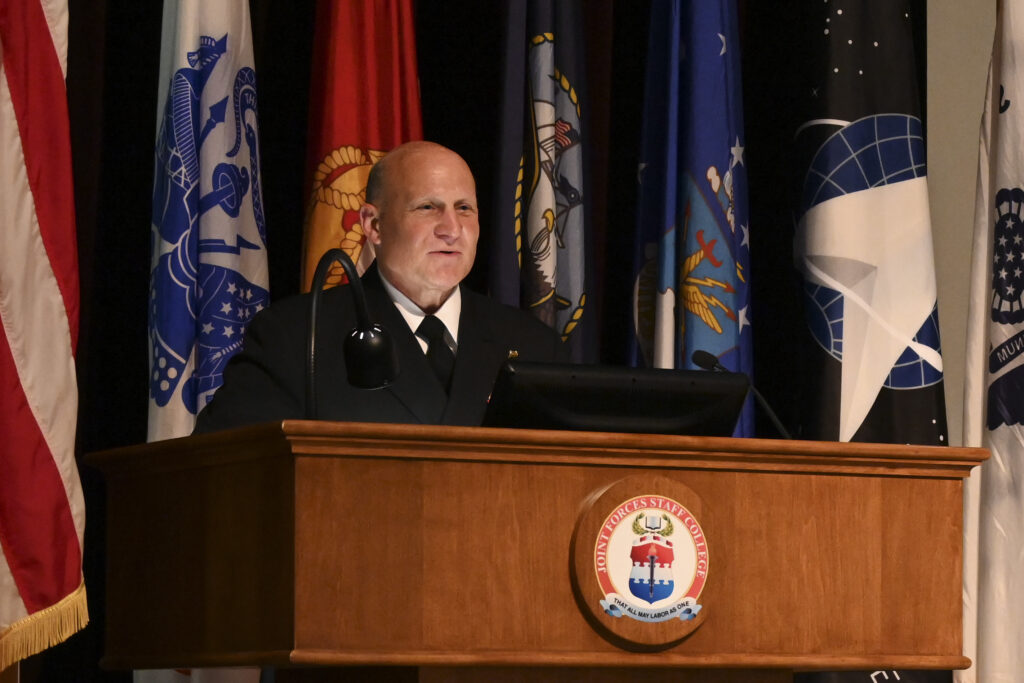
Chief of Naval Operations, Adm. Michael Gilday speaks Feb. 4 during an establishment ceremony for the Naval Safety Command. U.S. NAVY / Mass Communication Specialist 2nd Class (SW/AW) Weston A. Mohr

FORT WORTH, Texas — Chief of Naval Operations Adm. Mike Gilday traveled to Fort Worth, Texas, and visited Lockheed Martin on Feb. 10, with Rep. Kay Granger (R-Texas), the CNO’s Public Affairs Office said in a release.   

Gilday and Granger toured facilities and received updates about F-35C Lightning II advancements and capabilities, joint all-domain operations, anti-surface warfare and weapon technology. 

“The work that we’re doing here in Fort Worth in partnership with Lockheed Martin is delivering cutting edge capabilities for the Navy now and into the future,” said Gilday. “These advanced capabilities will ensure the U.S. Navy will maintain our warfighting advantage against increasingly competitive adversaries and ensure tomorrow’s Sailors will have what they need to win the fight.” 

The F-35C is an aircraft that redefines the multirole fighter. It is a fifth-generation aircraft that integrates advanced stealth technology that provides unprecedented situational awareness to the pilot, as well as lethality and survivability. Major advances in network enabled mission systems, reliability and interoperability make this platform powerful and effective.   

“Today’s visit from Admiral Gilday highlights the role played by Texas, and North Texas in particular, at the forefront of our nation’s strong national defense,” Granger said. Our visit gave us greater insight on the incredible capabilities of the F-35 and the advancements being made to ensure we have the best fighter fleet in the world. I will always remain the F-35 program’s staunchest advocate.” 

The aircraft, satellites, ships and ground vehicles Navy forces operate have the ability to collect information from air, sea, space, land and cyber, but processing and analyzing that amount of data can be a difficult task, Gilday added.   

Gilday explained the industrial base plays a key role in maintaining the current fleet as well as developing and building platforms and capabilities for the future fight. “We will seek opportunities to accelerate the development and fielding of needed capabilities ahead of our rivals,” he said.  

Playing a large role in joint all-domain operations, the F-35C fighter brings increased situational awareness, information sharing and connectivity to the naval force, as well as our allies and partners.  

This visit marked CNO’s second trip to Fort Worth. 


Boeing to Offer the P-8A Poseidon for Canada’s Multi-Mission Aircraft Project 

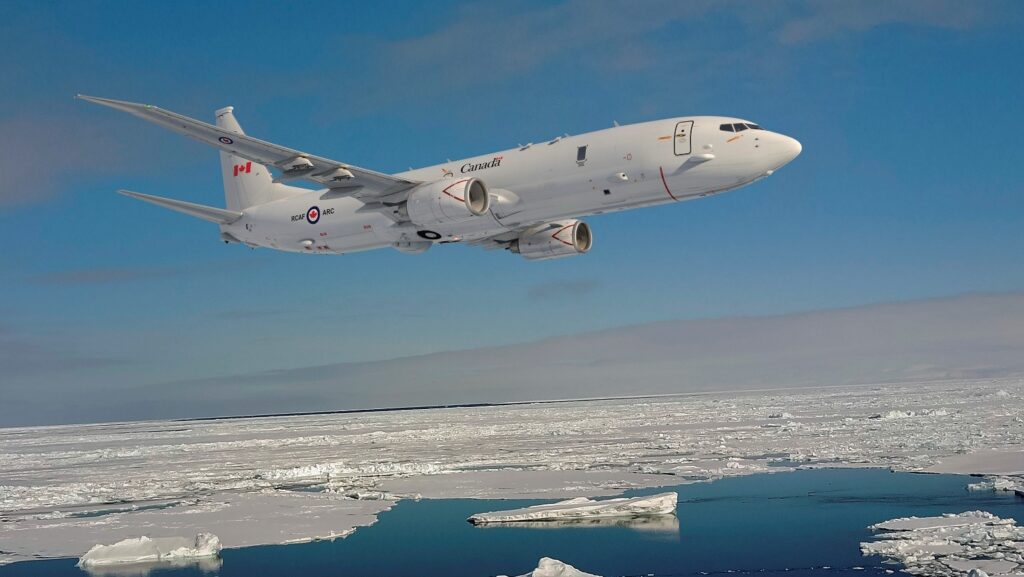
An artist’s rendering depicts the P-8A Poseidon in Canadian livery. BOEING

OTTAWA, Ontario — Boeing announced on Feb. 10 its intent to offer the P-8A Poseidon in response to Canada’s request for information for long-range maritime patrol aircraft. The Canadian Multi-Mission Aircraft project will replace the Royal Canadian Air Force fleet of CP-140 Aurora aircraft and enhance its antisubmarine warfare and intelligence, surveillance and reconnaissance capabilities. 

With more than 140 aircraft in service, the P-8 has executed more than 400,000 mishap free flight-hours around the globe. Militaries that operate or have selected the P-8 include the U.S. Navy, the United Kingdom’s Royal Air Force, Royal Australian Air Force, Royal New Zealand Air Force, Indian navy, Royal Norwegian Air Force, Republic of Korea navy and German navy. 

“The P-8A Poseidon has demonstrated that it is the world’s most capable multi-mission aircraft currently in production and offers a complete solution for Canada’s CMMA requirements,” said Tim Flood, international business development director for Europe and Americas. “The range, speed, and endurance of the P-8 makes it the perfect platform to monitor Canada’s northern and maritime approaches and the P-8 will ensure allied interoperability to meet Canada’s security commitments. Coupled with a robust industrial partnership plan, Boeing’s offer will build on its successful record of contributing to Canada’s economic growth throughout the life of the CMMA program.” 

The P-8A’s multi-mission capability has delivered mission success in antisubmarine warfare, ISR, humanitarian assistance and disaster relief and search and rescue missions. These multi-mission capabilities are enhanced through secure, interoperable, net-ready systems that will provide Canada with the ability to engage/control and to fully integrate with other antisubmarine warfare and ISR assets. 

In addition, the P-8 shares extensive commonality with Boeing’s 737NG, which has support infrastructure around the globe. Commonality in spares and training for aircrews and maintainers reduces costs substantially and enables military operators to leverage support throughout the world.


Fleet Oiler USNS John Lewis Conducts Builder’s Trials 

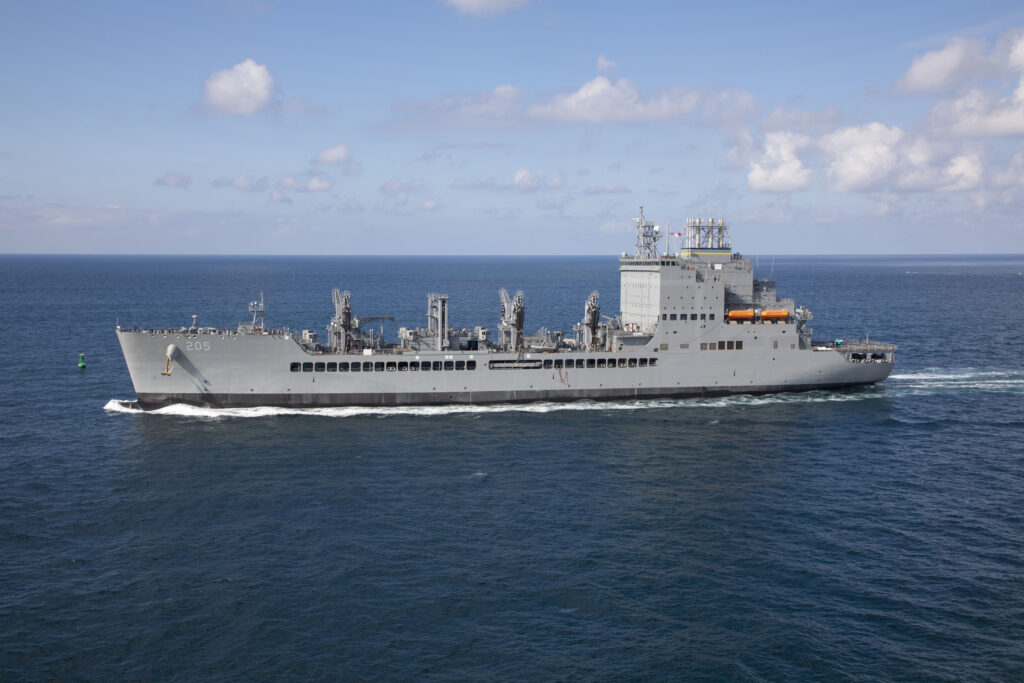
USNS John Lewis (T-AO 205), the Navy’s lead ship of its new class of fleet replenishment oilers, conducted initial builder’s trials and returned to port on Feb. 4. GENERAL DYNAMICS NATIONAL STEEL AND SHIPBUILDING. CO.

WASHINGTON — USNS John Lewis (T-AO 205), the Navy’s lead ship of its new class of fleet replenishment oilers, conducted initial builder’s trials and returned to port on Feb. 4, Team Ships Public Affairs said in a release. 

Builder’s trials consist of a series of in-port and at-sea demonstrations that allow the Navy and the shipbuilder, General Dynamics National Steel and Shipbuilding Co., to assess the ship’s systems and readiness prior to acceptance trials and delivery to the Navy. 

“Ensuring readiness through sea trials is a crucial step to bringing this ship closer to fleet tasking,” said John Lighthammer, program manager at the Auxiliary and Special Mission Shipbuilding Program Office. “USNS John Lewis will provide much needed capability to the fleet as the primary fuel pipeline at sea. We are looking forward to getting the ship into the hands of Sailors and merchant mariners as another tool to support at-sea operations.” 

The new John Lewis-class T-AOs will be operated by Military Sealift Command to provide diesel fuel and lubricating oil, and small quantities of fresh and frozen provisions, stores, and potable water to Navy ships at sea, and jet fuel for aircraft assigned to aircraft carriers. The new T-AOs will add capacity to the Navy’s combat logistics force and become the cornerstone of the fuel delivery system. 

General Dynamics National Steel and Shipbuilding Co. is currently in production on USNS Harvey Milk (T-AO 206), USNS Earl Warren (T-AO 207) and USNS Robert F. Kennedy (T-AO 208). The future USNS Lucy Stone (T-AO 209) and USNS Sojourner Truth (T-AO 210) are under contract. 


Teledyne FLIR Defense to Service U.S. Navy and Coast Guard Sensor Systems 

THOUSAND OAKS, Calif. — Teledyne FLIR Defense, part of Teledyne Technologies, announced Feb. 9 that the U.S. Naval Surface Warfare Center has awarded the company an indefinite delivery, indefinite quantity contract worth up to $43.9 million to service electro-optical sensor systems used for intelligence, surveillance and reconnaissance. 

The contract will provide replacement parts and technical support for several land- and sea-based systems used by the United States Navy and Coast Guard, including the BRITE Star II, the Sea Star SAFIRE III, and the Star SAFIRE 380-HD. 

In addition to the IDIQ award, the Defense Logistics Agency also recently awarded Teledyne FLIR two contracts with a combined value of $16.2 million to procure BRITE Star II multi-sensory imaging systems. Those systems will support the U.S. Navy/Marine Corps H-1 program. 

“Our commitment to product service and support ensures customers derive the highest level of performance over the lifespan of every system we offer,” said JihFen Lei, executive vice president and general manager of Teledyne FLIR Defense. “We’re proud to provide the U.S. Navy, Coast Guard, and Marine Corps with world-class surveillance technology and help them maintain these sensors to detect any threat, anywhere, on land, maritime and airborne platforms.” 

The Star SAFIRE and BRITE Star family of systems are manufactured in Wilsonville, Oregon, and offer users superior image stabilization, ultra-long-range performance and internal navigation for precise targeting. The systems are fully hardened for military fixed-wing and helicopter operations and include a mid-wave infrared thermal imager, low-light cameras and multiple laser payload options. 


AARGM-ER Completes 2nd Successful Missile Live Fire Test 

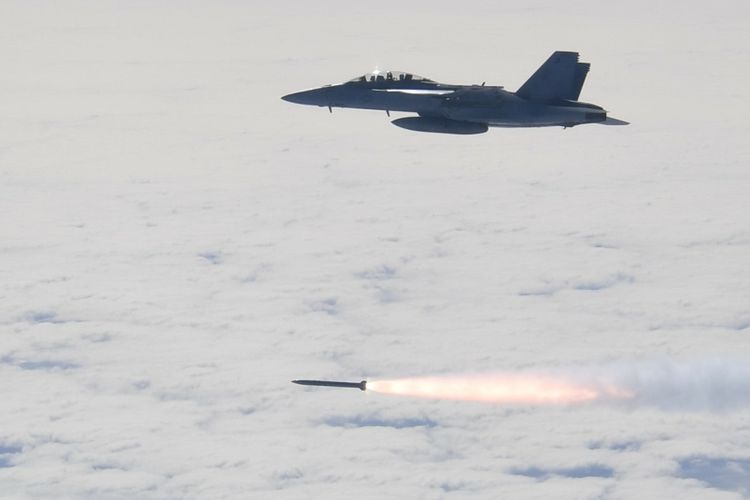
An AARGM-ER is successfully launched from a U.S. Navy F/A-18 Super Hornet during a recent test at the Point Mugu Sea Range, California. U.S. NAVY

LOS ANGELES — Northrop Grumman Corp. announced Feb. 7 the successful completion of the second flight test of its AGM-88G Advanced Anti-Radiation Guided Missile Extended Range.

The U.S. Navy launched the missile from an F/A-18 Super Hornet aircraft Jan. 21 at the Point Mugu Sea Range off the coast of southern California. The missile performed an extended range profile, engaging a land-based, emitter target staged at the range on San Nicholas Island. 

“This second flight test verified AARGM-ER’s ability to detect, identify, locate and engage a land-based air defense radar system from an extended range,” said Captain A.C. Dutko, Navy Program Manager for Direct and Time Sensitive Strike (PMA-242). “Through the exceptional efforts of our government-industry team, we are another step closer to delivering capability to suppress the most advanced adversary air-defense systems without putting our warfighters in danger.” 

Since achieving a milestone C decision (authorization for low-rate initial production) in September 2021, AARGM-ER prime contractor Northrop Grumman has continued to lead its industry team in developing the system. Northrop Grumman is currently under contract to deliver production units of AARGM-ER to support a 2023 initial operational capability fielding.  In December 2021, Northrop Grumman received a $45.6 million contract for the second lot of AARGM-ER LRIP. 

AARGM-ER leverages existing state-of-the-art AARGM sensors, electronics and digital models with the addition of a new high-performance air vehicle, solid rocket motor propulsion system and advanced warhead. 

“AARGM-ER provides the U.S. Navy with the capability to stay ahead of evolving threats,” said Mary Petryszyn, corporate vice president and president of Northrop Grumman Defense Systems. “This flight test further demonstrated the critical capability of AARGM-ER to precisely engage long-range threats, while enabling launching aircrew to remain at a safe distance.” 

AARGM-ER is being integrated on the Navy F/A-18E/F Super Hornet and EA-18G Growler aircraft as well as F-35A/B/C aircraft. 


IMSC Integrates Unmanned Vessel During IMX/CE22  

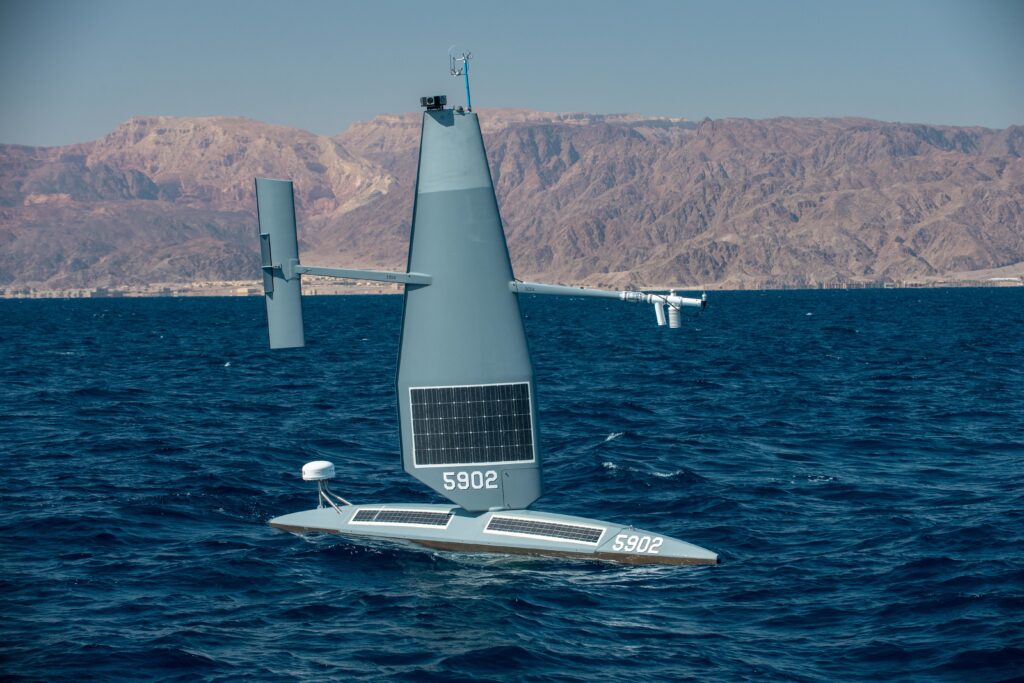
A Saildrone Explorer unmanned surface vessel sails in the Gulf of Aqaba during International Maritime Exercise/Cutlass Express 2022. U.S. NAVY / Mass Communication Specialist 2nd Class Dawson Roth

NAVAL SUPPORT ACTIVITY BAHRAIN — International Maritime Security Construct participated in unmanned integration operations in the Arabian Gulf during International Maritime Exercise/Cutlass Express 2022, Feb. 3, the Coalition Task Force Sentinel Public Affairs Office said Feb. 8.  

IMSC personnel operated with two Saildrone Explorer unmanned surface vessels. The Saildrones were launched by Task Force X, a combined task force established for conducting portions of the exercise focused on unmanned systems and artificial intelligence integration.  

The Saildrone Explorer is a 23-foot-long, 16-foot-tall USV reliant on wind power for propulsion. The vessel houses a package of sensors powered through solar energy for building a shared picture of the surrounding seas.  

Leaders from IMSC observed the capabilities of unmanned systems deployed during operational training scenario at sea from aboard the Royal Bahrain Naval Force ship RBNS Al Muharraq.  

“The exercise was a perfect demonstration of progress towards delivering a genuinely ‘digital ocean’ where navies increasingly employ a combination of manned and unmanned systems, on, above, and below the surface, to deliver unparalleled situational awareness and operational choice to the commander,” said Commodore Don Mackinnon, commander of CTF Sentinel.  

CTF Sentinel is a multinational maritime effort that promotes maritime stability, ensures safe passage, and enhances freedom of navigation throughout key waterways in the Arabian Gulf, Strait of Hormuz, Gulf of Oman, Gulf of Aden, the Bab al-Mandeb and the Red Sea. The coalition is comprised of eight member nations including Albania, Kingdom of Bahrain, Republic of Estonia, Lithuania, Kingdom of Saudi Arabia, United Arab Emirates, United Kingdom and the United States. 


U.S. Navy Selects NCI for $13.4M NAVAIR Fiber Optic Network Modernization

RESTON, Va. — NCI Information Systems Inc. announced Feb. 8 it has received a five-year, $13.4 million prime contract from the U.S. Naval Air Systems Command Naval Air Warfare Center, Weapons Division.

Under the Installation Fiber Optic Networking Support Services contract, NCI, with its partner IntelliBridge, will enable faster, more secure network connections for the Navy by delivering state-of-the-art engineering and implementation fiber optic networking support services.  

“The operational readiness and survivability of today’s warfighters are more closely tied to the speed and security of network technology than at any time in our nation’s history,” said Paul A. Dillahay, president and CEO of NCI. “We are honored to partner with IntelliBridge on this program to support the Navy with better, faster and more secure connectivity to support fleet modernization and mission readiness at sea.”    

Under the contract, NCI and IntelliBridge will transform system interoperability and integration for networks supporting NAWCWD and NAVAIR, enabling seamless and secure computer connectivity. The two organizations will provide E&I fiber optic networking support services such as state-of-the-art network designs, fiber builds, infrastructure mapping and networking solutions.  


USS O’Kane Returns Home from Deployment 

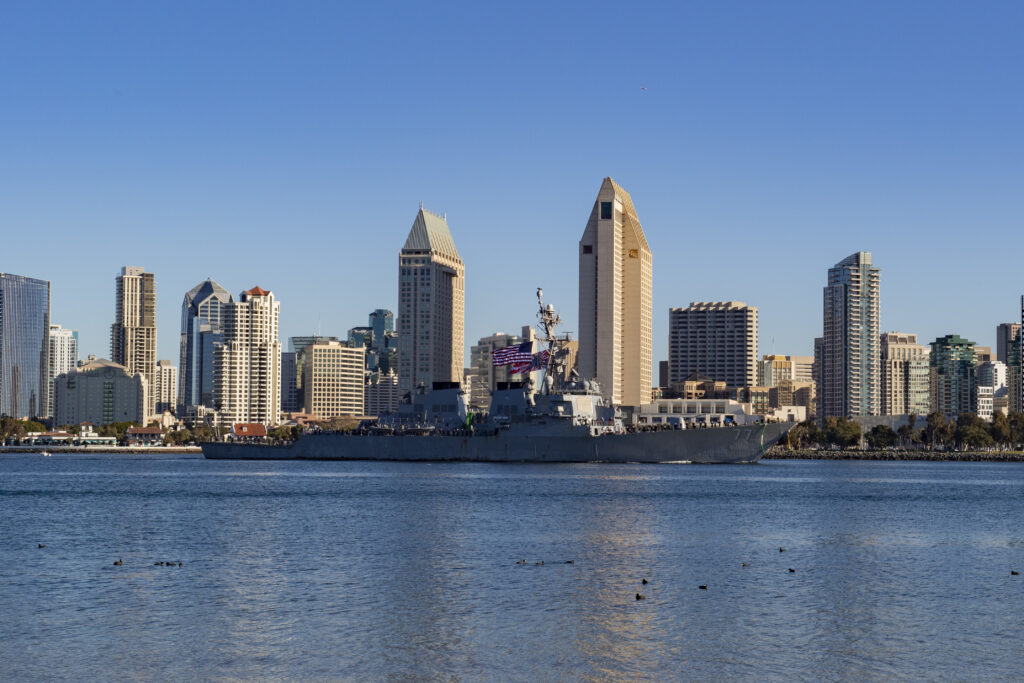
The guided-missile destroyer USS O’Kane (DDG 77) arrives returns to its homeport in San Diego. O’Kane, a part of the Carl Vinson Carrier Strike Group, returned to Naval Base San Diego Feb. 6, following an independent deployment to the U.S. 5th and 7th Fleets in support of national tasking and to ensure a free and open Indo-Pacific. U.S. NAVY / Mass Communication Specialist 2nd Class Kevin C. Leitner

SAN DIEGO — The Arleigh Burke-class guided-missile destroyer USS O’Kane (DDG 77) returned home to Naval Base San Diego on Feb. 6, completing an eight-month independent deployment to the U.S. 5th and 7th Fleet areas of operation, said U.S. 3rd Fleet public affairs. 

O’Kane deployed in June 2021 in support of national tasking, serving as the ballistic missile defense commander for Carrier Strike Group 1 while operating in the U.S. 7th Fleet and the primary ballistic missile defense asset while in the U.S. 5th Fleet. 

The Sailors aboard USS O’Kane lead the way in demonstrating resiliency and dedication to support the mission and each other,” said Cmdr. Michelle R. Fontenot, O’Kane’s commanding officer. “As an independent deployer serving in both the U.S. 5th and 7th Fleets, O’Kane met each mission with success.” 

While operating in U.S. 5th Fleet, O’Kane escorted multiple high-value units through 30 strait transits, including the Strait of Hormuz, Bab el-Mandeb and the Suez Canal. O’Kane participated in several high-end exercises such as maritime security operations in support of the International Maritime Security Coalition, collaborating with seven partner nations for security and the free flow of commerce.

O’Kane also participated in Indigo Defender, a bilateral maritime exercise between Saudi naval forces and U.S. Naval Forces Central Command. In addition, O’Kane conducted maritime interdiction operations; board, search, and seizure operations; and operated alongside international navies, including the Egyptian naval force, Royal Saudi navy and the Indian navy.

Following Israel’s transition from the U.S. European Command theater to U.S. Central Command area of responsibility in September, O’Kane Sailors were able to enjoy a visit to Haifa, further strengthening the U.S.partnership with Israel.

O’Kane served as a key facilitator in a highly successful seizure of illicit cargo from a stateless fishing vessel during a flag verification boarding in accordance with customary international law in the North Arabian Sea on Dec. 20. O’Kane worked alongside the Cyclone-class coastal patrol ships USS Tempest (PC 2), USS Typhoon (PC 5), and the U.S. Coast Guard Advanced Interdiction Team to seize 1,400 AK-47s and 226,000 rounds of ammunition. 

Upon completion of the missions in U.S. 5th Fleet, O’Kane entered U.S. 7th Fleet and took part in expeditionary strike force operations with the Wasp-class amphibious assault ship USS Essex (LHD 2) and the Nimitz-class aircraft carrier USS Carl Vinson (CVN 70). The U.S. force of more than nine ships conducted underway replenishments, including vertical and connected replenishments. O’Kane executed anti-submarine warfare operations while escorting high-value assets through the South China Sea.

“O’Kane’s tireless commitment and unparalleled performance are above reproach. I am very proud of every O’Kane Sailor and what we have accomplished as a team,” said Fontenot. “O’Kane Sailors represent the Navy’s fighting spirit and it is an honor to serve them as their commanding officer.” 


HII Completes Initial Sea Trials of Virginia-class Submarine Montana  

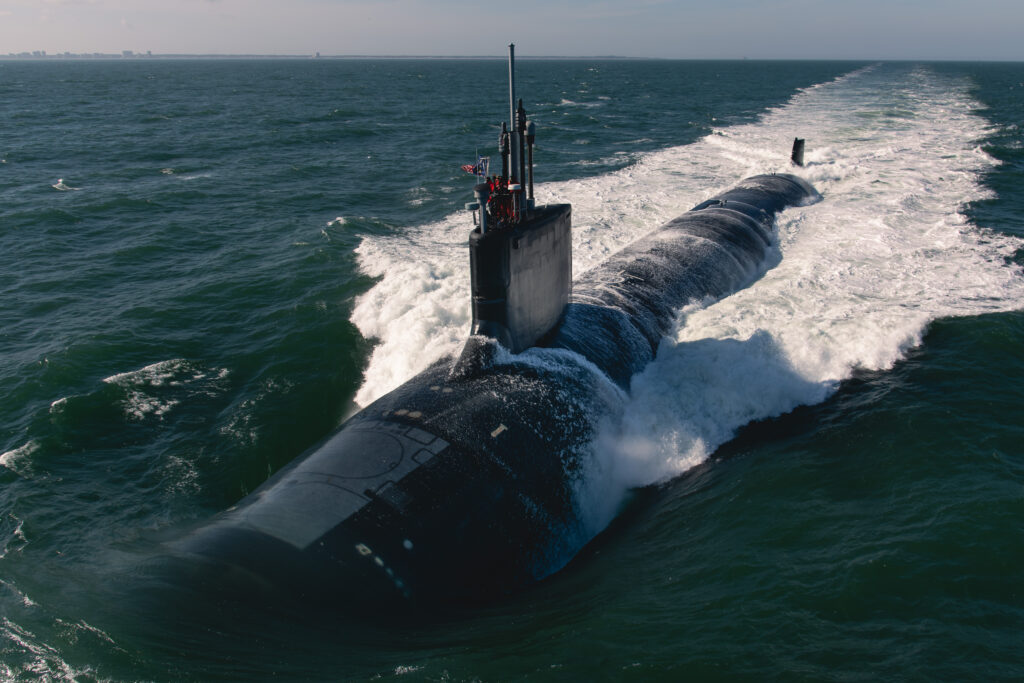
USS Montana has successfully completed sea trials, Huntington Ingalls Industries announced Feb. 7. HUNTINGTON INGALLS INDUSTRIES / Ashley Cowan

NEWPORT NEWS, Va. — Huntington Ingalls Industries announced Feb. 7 the successful completion of the initial sea trials last week of fast attack submarine USS Montana (SSN 794). The Virginia-class submarine, built at HII’s Newport News Shipbuilding division, spent several days at sea last week to test the ship’s systems and components. 

Testing included submerging the submarine for the first time and high-speed maneuvers while on the surface and submerged. HII teams will continue the testing program and will deliver the boat to the U.S. Navy later this year. 

“We are very proud to say the Montana and her crew performed exceptional,” said Jason Ward, Newport News Shipbuilding vice president of Virginia-class submarine construction. “Taking the ship to sea for the first time is a huge milestone for everyone involved. The crew, thousands of suppliers from around the country and shipbuilders from HII and Electric Boat can be proud the ship was successfully brought to life and will soon be part of the world’s greatest Navy.” 

Construction of Montana began in 2015. The boat — the 21st Virginia-class submarine built as part of the teaming partnership with General Dynamic’s Electric Boat — was christened in September 2020. 


Icebreaker Polar Star Arrives in Antarctica 

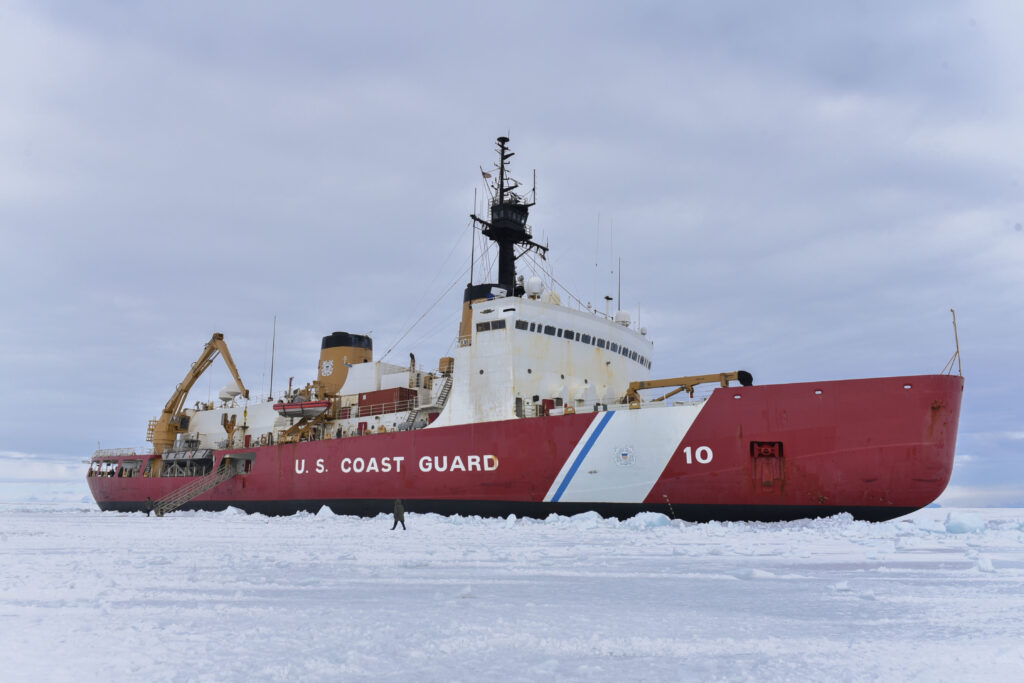
U.S. Coast Guard Cutter Polar Star sits hove-to on a cloudy day in Antarctica, Jan. 17. Polar Star is in its 25th year participating in Operation Deep Freeze, one of many operations in the Indo-Pacific region in which the U.S. military promotes security and stability across the region. U.S. COAST GUARD / Petty Officer 3rd Class Diolanda Caballero

MCMURDO STATION, Antarctica The 157 crewmembers of the U.S. Coast Guard Cutter Polar Star (WAGB 10) arrived at McMurdo Station in Antarctica Feb. 7 following an 86-day transit from the United States and the cutter’s departure from its Seattle homeport Nov. 13, the Coast Guard Pacific Area said in a release. 

This deployment marks the Polar Star’s 25th journey to Antarctica supporting Operation Deep Freeze, an annual joint military service mission to resupply the United States Antarctic stations in support of the National Science Foundation, lead agency for the United States Antarctic Program. 

Each year, the crew pilots the 399-foot, 13,000-ton cutter to break a navigable channel through miles of ice, sometimes as much as 21 feet thick, to allow fuel and supply ships to reach McMurdo Station, the U.S. Antarctic Program’s logistics hub and largest station. 

Polar Star reached the Ross Sea, Antarctica, Jan. 3, and commenced breaking the 37 miles of ice that extended from the ice pier in Winter Quarters Bay at McMurdo Station out to open water. Polar Star spent four weeks breaking ice and grooming the shipping channel. The crew’s efforts were aided by favorable winds and currents and by month’s end had created an open and ice-free approach for the supply vessels. 

The cleared channel to McMurdo Station will enable two supply vessels, Maersk Peary and Ocean Giant, to safely offload over eight million gallons of fuel and 1,000 cargo containers. Together these two ships carry enough fuel, food, and critical supplies to sustain USAP operations throughout the year until the next sealift opportunity in the austral summer of 2023. 

The cutter made international stops in Wellington and Lyttelton, New Zealand on the way to Antarctica. While in New Zealand, the crew engaged with the Royal New Zealand Navy, United States Embassy and volunteered in Christchurch at the local Society for the Prevention of Cruelty to Animals. 

Polar Star will also partner with the Royal New Zealand Navy’s largest ship, Her Royal Majesty’s New Zealand Ship Aotearoa, in support of resupplying Scott Base, New Zealand’s year-round Antarctic research facility. 

“It is a tremendous honor to lead the men and women of Polar Star on this important mission,” said Capt. William Woityra, commanding officer of Polar Star. “This team brought renewed energy and passion to this 46-year-old ship, and overcame significant challenges to deliver exceptional results.” 

Assigned to Operation Deep Freeze each year, the icebreaker spends January and February breaking ice in Antarctica. Polar Star returns to the United States after completing the mission. 

This year also marks the Polar Star’s return to Antarctica following the onset of the COVID-19 pandemic. In the 2020-2021 season, Polar Star conducted a winter Arctic deployment, during which the cutter trekked to the Arctic Circle to project constructive presence in the northern high latitudes under winter conditions and train the next generation of polar sailors. Their efforts resulted in setting a record for the furthest north any American surface vessel has been in the winter months.