Littoral Combat Ship USS Savannah Commissioned 

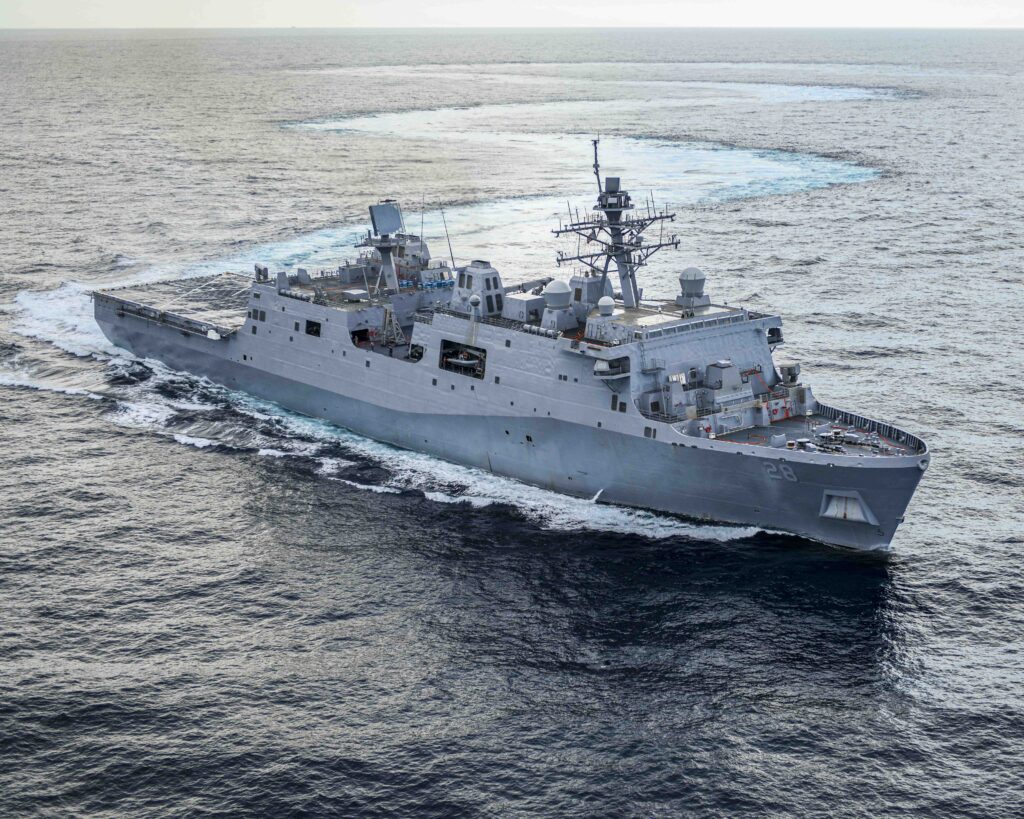
The U.S. Navy commissioned its newest Independence-variant littoral combat ship, USS Savannah (LCS 28), on Feb. 5 in Brunswick, Georgia. U.S. NAVY / Mass Communication Specialist 2nd Class James S. Hong

BRUNSWICK — The U.S. Navy commissioned its newest Independence-variant littoral combat ship, USS Savannah (LCS 28), Feb. 5 in Brunswick, Georgia, the commander, Naval Surface Forces, said in a release. 
 
“It’s fitting that it would find its home in Savannah — a city whose agility has allowed her to be a defining force in the entire scope of American history,” said principal speaker U.S. Rep. Earl L. “Buddy” Carter (R-Georgia). 
 
Diane Davison Isakson is the ship’s sponsor and wife of the late Johnny Isakson, former senator from Georgia. Their daughter, Julie Isakson Mitchell, served as the matron of honor. Meredith Berger, performing the duties of the undersecretary of the Navy, recognized Isakson. 
 
“It is said that the character and spirit of the ship’s sponsor serves to enrich, guide, and protect the ship and her crew,” said Berger. “You come from a family steeped in service. You’ve got Navy in your blood.” 
 
Guest speakers for the event also included Mayor of Savannah Cosby Johnson, Mayor of Brunswick Van Johnson, and Vice Adm. Carl Chebi, commander of Naval Air Systems Command. 
 
“The USS Savannah is poised to represent its motto across the globe, not for self but for others,” said Chebi. “Today as we commission her as an operating force of the U.S. Navy. The ship and her crew will carry on the legacy of the five other ships that had the honor to bear the name Savannah since 1798. They participated in the Mexican War, the Civil War, World War I, World War II and the Vietnam War. The sixth USS Savannah’s history has yet to be written but will be enriched in stories of honor, courage, and commitment.” 
 
During the ceremony, Savannah’s commanding officer, Cmdr. Kevin M. Ray, reported the ship ready, and Isakson gave the traditional order to “man our ship and bring her to life.” 
 
“To the city of Savannah, I assure you, the fine men and women of our crew, who I am humbled to lead, represent everything that is great about your city. Pride, patriotism, resiliency, diversity, and hospitality,” said Ray. “We will carry your name forward, wherever our Nation asks us to go, and we will represent you well.” 
 
Following commissioning, Savannah will sail to California to be home ported in San Diego, joining sister ships USS Coronado (LCS 4), USS Jackson (LCS 6), USS Montgomery (LCS 8), USS Gabrielle Giffords (LCS 10), USS Omaha (LCS 12), USS Manchester (LCS 14), USS Tulsa (LCS 16), USS Charleston (LCS 18), USS Cincinnati (LCS 20), USS Kansas City (LCS 22), USS Oakland (LCS 24) and USS Mobile (LCS 26). 


Cutter Active Returns Home to Port Angeles Following Counterdrug Patrol 

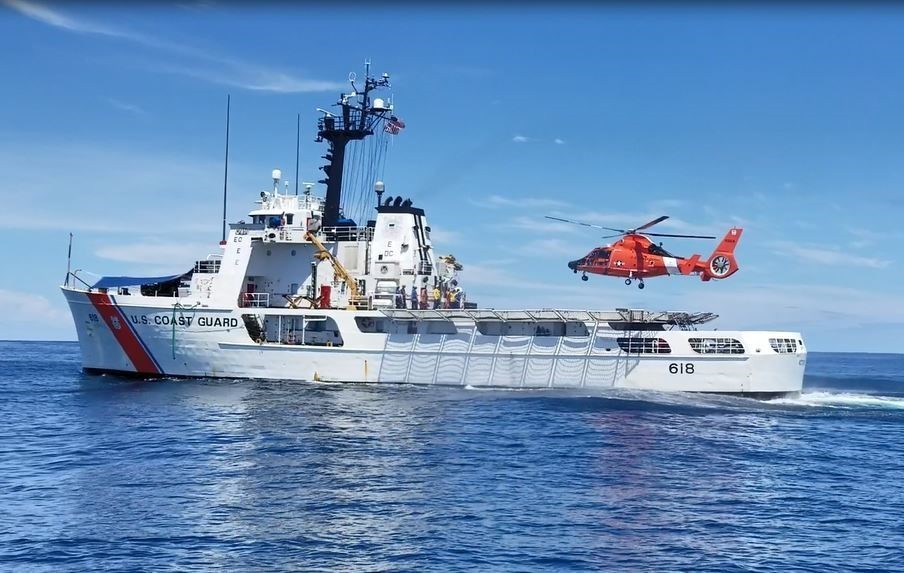
An aircrew and a HH-65 Dolphin helicopter from Air Station Port Angeles prepares to land on the Coast Guard Cutter Active’s flight deck during a counter-drug patrol in the Eastern Pacific Ocean, Sept. 17, 2018. U.S. COAST GUARD / Petty Officer 3rd Class Joshua Wood

PORT ANGELES, Wash. The Coast Guard Cutter Active (WMEC 619) and crew returned to their homeport in Port Angeles Feb. 2 after a 10,572-mile, 55-day deployment to the Eastern Pacific Ocean, the Coast Guard 13th District said Feb. 4.   

The crew deployed off the coast of Central America in support of counterdrug operations. 

Shortly after getting underway, Active participated in helicopter proficiency operations off the coast of Southern California. Pilots from multiple Coast Guard air stations and crews from a number of West Coast-based cutters converged on Active to perform necessary training and proficiency evolutions. 

During a 48hour period, Active’s crew participated in 72 takeoffs and landings from the flight deck in addition to performing a helicopter in-flight refueling and a vertical replenishment. In total, Active directly assisted in the qualification and certification of eight pilots across two helicopter platforms in addition to certifying eighteen shipboard aviation support crewmembers. 

While moored in San Diego, Active embarked a joint aircrew and helicopter from HITRON [Helicopter Interdiction Tactical Squadron] and Coast Guard Air Station San Francisco. HITRON is a Jacksonville, Florida-based specialized law enforcement unit. HITRON crews are trained to use airborne use of force for non-compliant vessels suspected of violating U.S. and international laws to comply with lawful orders. 

“The Active crew performed superbly in every assigned mission during this patrol,” said Cmdr. Brian Tesson, Active’s commanding officer. “Presented with myriad challenges, from engineering casualties to Omicron safety protocols, this crew made a bold statement by stepping out with a positive, can-do attitude in the face of adversity, defining what it means to work aboard the ‘Li’l Tough Guy.’ Bringing their best selves to the job daily, the crew patrolled the Eastern Pacific Ocean to deter and suppress transnational crime and narcotics smuggling while training and qualifying crewmembers as they honed new personal and professional skills. I watched this team overcome each consecutive obstacle with ingenuity, fortitude and professionalism. I could not be more proud to be a part of it.” 

Active’s crew departed in mid-December and were unable to spend time with family and loved ones during the holiday season. However, as is typical for the Active and Coast Guard cutter crews in general, they came together as a family to create a number of great memories during the patrol. The Active’s crew found ways to keep spirits high while patrolling the high seas through conducting drills and training or gathered during one of our onboard holiday meals cooked by the Chiefs’ Mess, or over a sparkling apple cider New Year’s Eve toast. 

Nicknamed the Li’l Tough Guy, the 55-year-old medium-endurance cutter routinely operates from the Straits of Juan de Fuca to Central America conducting search and rescue, domestic fisheries enforcement, counter-narcotics law enforcement, and other statutory Coast Guard missions. 


CNO and MCPON Visit Norfolk for Naval Safety Command Establishment, Fleet Engagement  

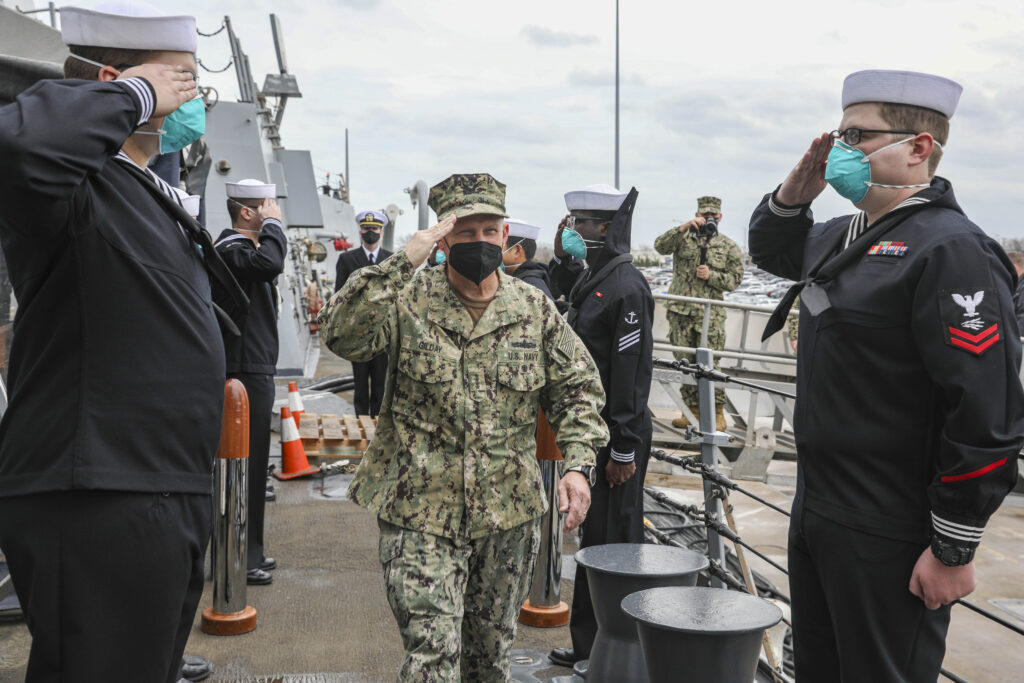
Chief of Naval Operations Adm. Mike Gilday salutes Sailors assigned to USS Mason (DDG 87) during a visit to the ship on Feb. 4. CNO Gilday and Master Chief Petty Officer of the Navy Russell Smith were in Norfolk for an establishment ceremony for the Naval Safety Command, previously known as the Naval Safety Center, and to visit various local commands. U.S. NAVY / Mass Communication Specialist 3rd Class Jeremy R. Boan

NORFOLK, Va. — U.S. Chief of Naval Operations Adm. Mike Gilday and Master Chief Petty Officer of the Navy Russell Smith visited Norfolk Naval Station to attend the establishment ceremony of the Naval Safety Command and visit local Norfolk-based commands on Feb. 4. 

Gilday was the guest speaker for the establishment ceremony, during which the Naval Safety Center was elevated to the Naval Safety Command.  

This elevation, highlighted during his remarks at the Surface Navy Association symposium in January, was a key component of Gilday’s call to action for the U.S. Navy to “get real, get better.” 

“The establishment of the Naval Safety Command expands our focus on safety and leverages ‘get real get better’ principles, while we evaluate safety management and performance of the Navy and Marine Corps,” said Gilday.  

The get real, get better program seeks to reduce the gap between the Navy’s least and most capable performer, cement dynamic learning and innovation into Navy culture, and build better leaders and teams who are ready to solve problems more effectively.  

“The significance of today’s establishment can be summarized simply: It’s a vital change that will increase warfighting readiness,” said Gilday. “Almost no aspect of naval operations can be separated from risk, but risk can be reduced.”  

The Navy elevated the Naval Safety Center to the Naval Safety Command following the USS Bonhomme Richard fire and the Major Fires Review.  

“We will empower our Sailors, Marines and civilians by collecting their insights to bolster our safety culture,” said Commander, Naval Safety Command Rear Adm. Frederick Luchtman. “Ultimately, the command will serve as a force multiplier of a culture that incorporates risk management and accountability by all individuals, regardless of rank and position.” 

Gilday, Luchtman and Hailey unveiled the command’s new seal during the ceremony. Key elements of the seal include a blue and red shield representing protection across the naval enterprise, blue for the Navy’s dominance on, under and over the maritime domain, and red for the courage and tenacity of the Marine Corps, said the command’s press office. The globe behind the shield symbolizes naval warriors, wherever they serve worldwide, under the protection of safety principles. 

The new command motto featured on the seal, “Enabling Warfighting Readiness,” is a testament to the command’s mission to preserve warfighting capability, combat lethality and enable readiness by working with its stakeholders to identify and mitigate or eliminate hazards to reduce unnecessary risk to people and resources. 

“The Naval Safety Command will provide transparency into emerging risk trends and the current safety status of all commands through enhanced risk identification, communication, and accountability, as well as data collection, management, and product dissemination, which will protect our most important resource, our Sailors, Marines, and civilians whose lives we value above all else.” Luchtman said. 

For more information or resources from the Naval Safety Command, visit the command website at https://navalsafetycommand.navy.mil

Other Visits

While in Hampton Roads, Gilday and Smith also visited the Arleigh Burke-class guided-missile destroyer USS Mason (DDG 87) and the Ticonderoga-class guided-missile cruiser USS Gettysburg (CG 64) where they met with Sailors and leadership. 

“Having the opportunity to travel with CNO while having unfiltered, candid conversations with Sailors provides essential feedback that improves our fleet and increases combat readiness. Our people are truly paramount to readiness; without them, Gettysburg and Mason could not perform the multitude of missions they were designed for. It is our Sailors who will ensure we prevail in combat,” said Smith. 


Navy to Commission Future Littoral Combat Ship Savannah 

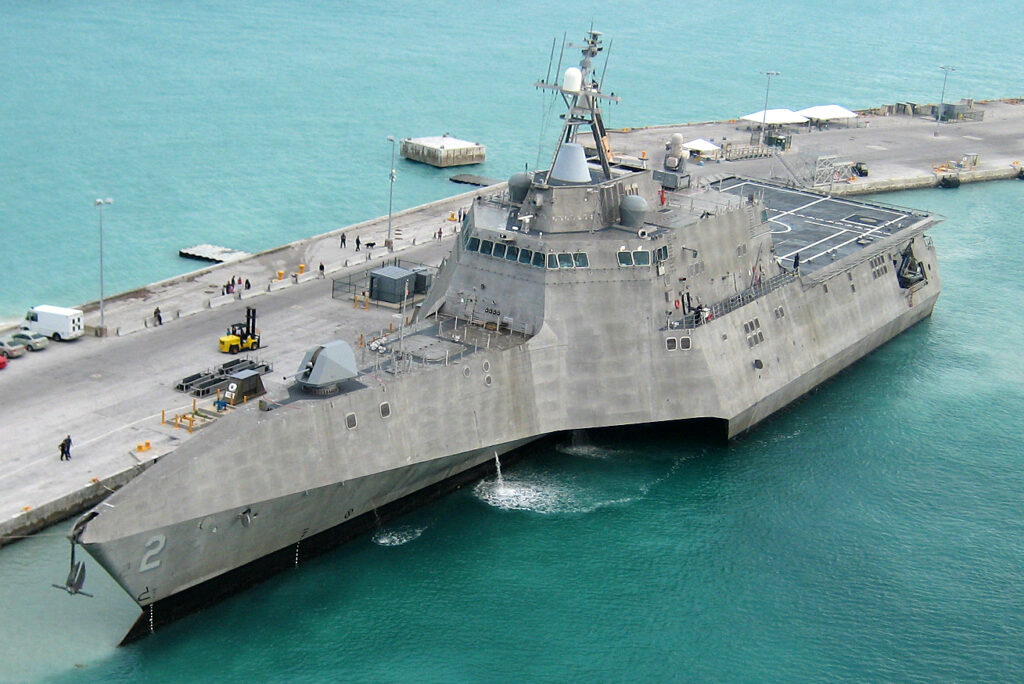
USS Independence (LCS-2), shown here at Naval Air Station Key West, Florida in 2010. The newest Independence-class littoral combat ship, the future USS Savannah, will be commissioned Feb. 5. U.S. NAVY

ARLINGTON, Va. — The Navy will commission the future USS Savannah (LCS 28) as the newest Independence-variant littoral combat ship during a 10:00 a.m. EST ceremony Saturday, Feb. 5, in Brunswick, Georgia, the Defense Department said Feb. 4. 

Remarks will be provided by Rep. Earl L. “Buddy” Carter, R-Georgia; Meredith Berger, performing the duties of the undersecretary of the Navy; Vice Adm. Carl Chebi, Commander, Naval Air Systems Command; Van Johnson, mayor of Savannah; Cosby Johnson, mayor of Brunswick; and Larry Ryder, vice president of Business Development and External Affairs, Austal USA.  

The ship’s sponsor is Dianne Davison Isakson, wife of the late Johnny Isakson, former senator from Georgia. In a time-honored Navy tradition, Isakson, along with the matron of honor, her daughter Julie Isakson Mitchell, will give the first order to “man our ship and bring her to life.” 

“The city of Savannah, Georgia, has played an important role in our nation’s naval history,” said Secretary of the Navy Carlos Del Toro. “I have no doubt the Sailors of USS Savannah will carry on the fighting spirit of this city and will play an important role in the defense of our nation and maritime freedom.” 

The LCS class consists of two variants, the Freedom and the Independence, designed and built by two industry teams. Lockheed Martin leads the Freedom variant team, or odd-numbered hulls, constructed in Marinette, Wisconsin. Austal USA leads the Independence variant team in Mobile, Alabama for LCS 2 and the subsequent even-numbered hulls. 

Savannah is the 14th Independence variant LCS and the sixth ship to bear its name. USS Savannah will homeport at Naval Base San Diego, California. 

The ceremony will be live streamed at: USS Savannah Commissioning. The link becomes active approximately 10 minutes prior to the event (9:50 a.m. EST).


Navy Orders Nine Additional CH-53K Helicopters for the U.S. Marine Corps    

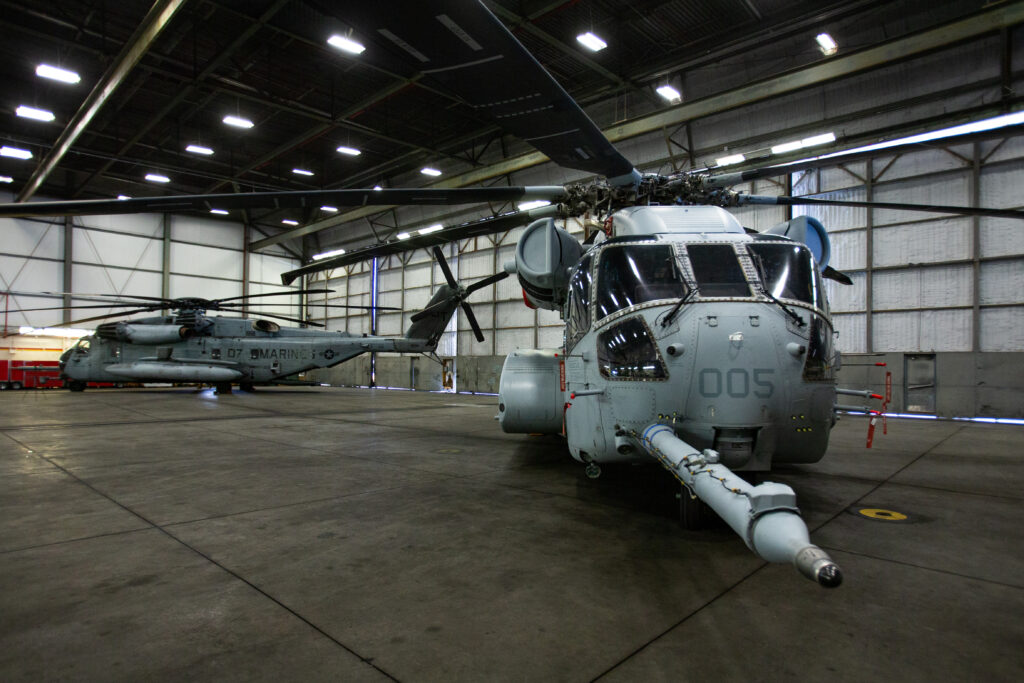
A CH-53K King Stallion (right) and a CH-53E Super Stallion are staged during a redesignation ceremony at Marine Corps Air Station New River, North Carolina, Jan. 24, 2022. U.S. MARINE CORPS / Lance Cpl. Elias E. Pimentel III

STRATFORD, Conn. — Prioritizing affordability and utilizing advanced manufacturing techniques, Sikorsky, a Lockheed Martin company, will build nine additional CH-53K aircraft at a lower unit price than previous lot buys, resulting in significant savings for the U.S. government and taxpayers, the company said Feb. 3. The company’s experienced supply chain coupled with its active digital approach drives speed and affordability throughout design, development, production, and sustainment.  

The CH-53K will further support the U.S. Marine Corps in its mission to conduct expeditionary heavy-lift assault transport of armored vehicles, equipment, and personnel to support distributed operations deep inland from a sea-based center of operations, critical in the Indo-Pacific region. 

These nine helicopters are part of 200 aircraft program of record for the U.S. Marine Corps with deliveries beginning in 2025. 

“By embracing resilient, predictive logistics and sustainment, we are enabling CH-5K crews to make smarter, faster decisions, to increase reliability, and improve readiness and material availability at reduced burden to the fleet,” said Bill Falk, Sikorsky Director, CH-53K programs. “After 50 years of supporting the CH-53E, Sikorsky has a deep understanding of the heavy-lift mission and an enduring partnership with the U.S. Marines Corps enabling our team and our proven supply chain to offer tailored solutions resulting in more efficient missions.” 

The aircraft will be built at Sikorsky headquarters in Stratford, Connecticut, leveraging the company’s digital build and advanced technology production processes. 

The factory is active with seven CH-53K aircraft in build and there are 47 more aircraft in various stages of production. 

Sikorsky has made significant investments in workforce training, tooling, and machinery to increase the number of aircraft built and delivered year over year. 

In total, Sikorsky has delivered five operational CH-53K King Stallion heavy-lift helicopters to the U.S. Marine Corps in Jacksonville, North Carolina, with four more planned for delivery this year. 

The CH-53K program operated by the U.S. Marine Corps entered Initial Operational Test and Evaluation in 2021 and is set to conclude in 2022. 

Sikorsky has a strong foundation to support the CH-53K because the company already provides the U.S. Marines with predictive maintenance on the legacy CH-53E by utilizing the Fleet Common Operating Environment enabling the shift from reactive to predictive maintenance. 

The CH-53K aircraft is equipped with Integrated Vehicle Health Management System, which will transition the U.S. Marines from fixed-interval to on-condition maintenance resulting in lower maintenance crew hours, reduced life cycle costs, and increased aircraft readiness. 

Lockheed Martin is working with the U.S. Navy on a performance-based logistics contract that expands from the CH-53E to add the CH-53K with a contract award expected this year. 


CNO Visits Philadelphia Navy Commands; Emphasizes Importance of Columbia-class Submarines  

Chief of Naval Operations Adm. Mike Gilday speaks with Sailors assigned to the future USS Lenah H.S. Higbee (DDG 123) at Naval Surface Warfare Center, Philadelphia Division, Feb. 3. U.S. NAVY / Lt. Rachel Maul

PHILADELPHIA — Chief of Naval Operations (CNO) Adm. Mike Gilday and Rear Adm. Douglas Perry, director, undersea warfare division, visited Philadelphia-based Navy commands, Feb. 3, the CNO’s public affairs office said in a release. 

Together, they visited the Naval Foundry and Propeller Center and Naval Surface Warfare Command Center, Philadelphia Division, where Gilday toured the facilities, spoke with Sailors and Navy civilians, and received updates about Columbia-class submarine construction. 

“The impressive cadre of engineers here who are delivering world-class results are a national treasure,” said Gilday. “The work you are doing here is vital to national security, as well of that of our Allies and partners.” 

Columbia-class submarines are the Navy’s number one acquisition priority, Gilday added. 

“These submarines need to be delivered on time, on budget and ready for the fight — and that’s what we intend to do,” Gilday said. “Working together, we will get them off of the production line and into the fleet where they belong.” 

The Columbia-class submarine is the nation’s future sea-based strategic deterrent and will provide the most survivable leg of the Nation’s strategic triad. It replaces the currently serving Ohio-class submarines and must be constructed and delivered beginning in fiscal year 2028 to meet U.S. Strategic Command requirements. These ballistic missile submarines serve as an undetectable launch platform for submarine-launched ballistic missiles and are designed specifically for stealth and the precise delivery of nuclear warheads. 

Gilday toured the Naval Sea Systems Command Compatibility Test Facility where he saw the shipboard-representative Columbia Integrated Propulsion System prototypes in operation and the Arleigh Burke-class Land-Based Engineering Site. He also received updates about the developing electrical and propulsion test facility risk-reduction capabilities for newer classes of ships, including the next-generation destroyer (DDG(X)), Constellation-class frigates, and unmanned surface vehicles. 

“Fielding greater numbers of more affordable, smaller surface combatants, like the new Constellation-class frigates, allows us to operate in a more distributed manner — both in day-to-day competition and in high-end combat,” said Gilday. “Because of the work of our systems commands and our partnerships with industry, we will continue to successfully compete and win.” 

Throughout the visit Gilday expressed his gratitude for the innovation and dedication Sailors and civilians have shown to keep these manufacturing and testing efforts on track, especially amidst the pandemic. 

“To the entire workforce here, you directly support and generate warfighting readiness and have my profound thanks,” said Gilday. “Your hard work and commitment to the Fleet is appreciated, and what you are doing is critical for us to be able to protect our Nation.” 

The visit marked Gilday’s first trip to Philadelphia since he assumed his duties as CNO. 

NSWCPD’s mission is to provide research, development, test and evaluation, acquisition support, engineering, systems integration, in-service engineering and fleet support with cyber-security, comprehensive logistics and life-cycle savings through commonality for surface and undersea vehicle machinery, ship systems, equipment and material and to execute other responsibilities. 


Air-to-Air Missiles Program Office Names Italy as Partner 

The Air-to-Air Missiles Program Office has acquired Italy as its 28th Air Intercept Missile 9X international partner. LOCKHEED MARTIN

PATUXENT RIVER, Md. — The Air-to-Air Missiles Program Office (PMA-259) acquired Italy as its 28th Air Intercept Missile (AIM)-9X international partner Dec. 17, 2021, said Katie Ursitti, a spokesman for the Naval Air Systems Command. 

The Italian Embassy in Washington D.C. notified the Navy International Programs Office that the Italian air force accepted and signed the letter of offer and acceptance provided by the U.S. government. 

Italian air force officials signed the letter Nov. 19., and shortly after representatives from PMA-259 and Raytheon Missiles & Defense presented the AIM-9X Block II/II+ Classified Capabilities Briefing to Italian headquarters air force staff and F-35 Lightning II pilots. 

This LOA consists of a modest quantity of AIM-9X Block II/II+ missiles to complement Italy’s F-35 fleet. This procurement will be part of the U. S. Navy’s Lot 23 production contract, which will award in 2023 and deliver missiles in 2026. 

Additionally, the Italian navy, which also operates the fifth-generation fighter aircraft, has been provided with a separate letter of offer and acceptance for Lot 23 AIM-9X Block II/II+ missiles, and is expected to accept it soon. Italy will receive AIM-9X missiles that will employ the true fifth-generation Block II/II+ capabilities of lock-on-after-launch, data link and surface attack. 


Future USS Fort Lauderdale Completes Acceptance Trials 

The San Antonio-class amphibious transport dock Fort Lauderdale (LPD 28), which has completed acceptance trials. HUNTINGTON INGALLS INDUSTRIES

WASHINGTON — The future USS Fort Lauderdale (LPD 28), the Navy’s 12th San Antonio class-amphibious transport dock ship, completed acceptance trials Jan. 31, Team Ships Public Affairs said in a release. 

Acceptance trials consist of integrated testing to demonstrate the capability of the platform and installed systems across all mission areas to effectively meet its requirements. These demonstrations are used to validate the quality of construction and compliance with Navy specifications and requirements prior to delivering the craft to the Navy. LPD 28 will now prepare for delivery in a few weeks. 

“With the completion of both builder’s and acceptance trials, we are confident that LPD 28 has proven the operational readiness of the vessel and the capabilities it will soon bring to the fleet,” said Capt. Cedric McNeal, program manager, Amphibious Warfare Program Office, Program Executive Office Ships. “The collaboration between the Navy and our industry partners ensures that we’ll have a capable and ready ship for our Sailors.” 

The San Antonio-class is designed to support embarking, transporting, and landing Marines and their equipment by conventional or air-cushioned landing craft. The ship’s capabilities are further enhanced by its flight deck and hangar, enabling the ship to operate a variety of Marine Corps helicopters and the Osprey tilt-rotor aircraft. Because of the ships inherent capabilities, they are able to support a variety of amphibious assault, special operations, expeditionary warfare, or disaster relief missions, operating independently or as part of amphibious ready groups, expeditionary strike groups, or joint task forces. 

In addition to LPD 28, Huntington Ingalls Industries’ Ingalls Shipbuilding Division is currently in production of the future USS Richard S. McCool (LPD 29) and the future USS Harrisburg (LPD 30), with LPD 31 planned for start of fabrication later this spring. LPD 28 and 29 will serve as transition ships to LPD 30 – the first LPD 17 Flight II ship. 

LPD 28 and LPD 29 will incorporate design innovations and cost-reduction strategies based upon lessons learned and improved technologies.  The ships will have a more traditional mast in place of the two Advanced Enclosed Mast/Sensors and an updated deckhouse and boat valley design. 


SECDEF Announces Flag Officer Nominations 

ARLINGTON, Va. — The Secretary of the Navy and Chief of Naval Operations announced Feb. 1 the following nominations for appointment to the rank of rear admiral lower half:

Capt. Brian H. Bennett for appointment to the rank of rear admiral (lower half). Bennett is currently serving as executive officer to commander, U.S. Special Operations Command, Tampa, Florida.  

Capt. George E. Bresnihan for appointment to the rank of rear admiral (lower half). Bresnihan is currently serving as chief of staff, Naval Supply Systems Command, Mechanicsburg, Pennsylvania.   

Capt. Matthew Case for appointment to the rank of rear admiral (lower half). Case is currently serving as executive assistant to the surgeon general of the Navy, Washington, D.C.   

Capt. Carey H. Cash for appointment to the rank of rear admiral (lower half). Cash is currently serving as commanding officer, Naval Chaplaincy School and Center, Newport Rhode Island.  

Capt. Maximilian Clark for appointment to the rank of rear admiral (lower half). Clark is currently serving as executive assistant, N98, Office of the Chief of Naval Operations, Washington, D.C.   

Capt. Adan G. Cruz for appointment to the rank of rear admiral (lower half). Cruz is currently serving as deputy, Combat Systems and Integration, N96, Office of the Chief of Naval Operations, Washington, D.C.  

Capt. John E. Dougherty IV for appointment to the rank of rear admiral (lower half). Dougherty is currently serving as major program manager, Program Executive Office for Tactical Aircraft Programs (PMA 230), Patuxent River, Maryland.   

Capt. Kavon Hakimzadeh for appointment to the rank of rear admiral (lower half). Hakimzadeh is currently serving as programs and policy director, Aircraft Carrier Branch Head, N980C, Office of the Chief of Naval Operations, Washington, D.C.   

Capt. Keith A. Hash for appointment to the rank of rear admiral (lower half). Hash is currently serving as program manager for Air Warfare, PMA-298, Naval Air Systems Command, Patuxent River, Maryland.   

Capt. Tracy L. Hines for appointment to the rank of rear admiral (lower half). Hines is currently serving as executive assistant to the chief of naval operations, Office of the Chief of Naval Operations, Washington, D.C. 

Capt. Stephen J. Jackson for appointment to the rank of rear admiral (lower half). Jackson is currently serving as programs and policy director, Expeditionary Combat Branch Head, N957, Office of the Chief of Naval Operations, Washington, D.C. 

Capt. Kevin M. Kennedy for appointment to the rank of rear admiral (lower half). Kennedy is currently serving as director, Surface Warfare Officer Distribution and Career Management Division (PERS 41), Millington, Tennessee.  

Capt. Jeffrey J. Kilian for appointment to the rank of rear admiral (lower half). Kilian is currently serving as chief of staff, Naval Facilities Engineering Systems Command, Washington, D.C. 

Capt. Brett W. Mietus for appointment to the rank of rear admiral (lower half). Mietus is currently serving as the director of the Chief of Naval Operations Strategic Integration Group, Office of the Chief of Naval Operations, Washington, D.C. 

Capt. Thomas P. Moninger for appointment to the rank of rear admiral (lower half). Moninger is currently serving as executive officer to commander, U.S. Southern Command, Miami, Florida. 

Capt. Martin J. Muckian for appointment to the rank of rear admiral (lower half). Muckian is currently serving as chief of staff to commander, U.S. Submarine Forces, U.S. Pacific Fleet; and chief of staff, U.S. Strategic Command Special Activities Pacific, Pearl Harbor, Hawaii.    

Capt. Gregory D. Newkirk for appointment to the rank of rear admiral (lower half). Newkirk is currently serving as executive assistant to commander, U.S. Indo-Pacific Command, Camp H. M. Smith, Hawaii. 

Capt. Matthew C. Paradise for appointment to the rank of rear admiral (lower half). Paradise is currently serving chief of staff, Naval Air Forces, U.S. Pacific Fleet, San Diego, California.   

Capt. Chase D. Patrick for appointment to the rank of rear admiral (lower half). Patrick is currently serving as director, Navy Senate Liaison Office, Office of Legislative Affairs, Washington, D.C. 

Capt. Ryan M. Perry for appointment to the rank of rear admiral (lower half). Perry is currently serving as force public affairs officer, Naval Special Warfare Command, San Diego, California.  

Capt. Bradley N. Rosen for appointment to the rank of rear admiral (lower half). Rosen is currently serving as chief of staff, Navy Installations Command, Washington, D.C. 

Capt. Jonathan E. Rucker for appointment to the rank of rear admiral (lower half). Rucker is currently serving as program manager, COLUMBIA, Washington, D.C. 

Capt. Christopher D. Stone for appointment to the rank of rear admiral (lower half). Stone is currently serving as executive assistant to the vice chief of naval operations, Office of the Chief of Naval Operations, Washington, D.C. 

Capt. Nicholas R. Tilbrook for appointment to the rank of rear admiral (lower half). Tilbrook is currently serving as executive assistant to deputy chief of naval operations for integration of capabilities and resources, N8, Office of the Chief of Naval Operations, Washington, D.C. 

Capt. Guido F. Valdes for appointment to the rank of rear admiral (lower half). Valdes is currently serving as deputy commander, Naval Medical Forces Atlantic, Portsmouth, Virginia.  

Capt. Alexis T. Walker for appointment to the rank of rear admiral (lower half). Walker is currently serving as commanding officer, Surface Warfare Officer School Command, Newport, Rhode Island.   

Capt. David P. Walt for appointment to the rank of rear admiral (lower half). Walt is currently serving as comptroller, Assistant Secretary of the Navy (Financial Management and Comptroller), Washington, D.C. 

Capt. Robert E. Wirth for appointment to the rank of rear admiral (lower half). Wirth is currently serving as director, Submarine/Nuclear Officer Distribution (PERS 42), Navy Personnel Command, Millington, Tennessee.   

Capt. Michael S. Wosje for appointment to the rank of rear admiral (lower half). Wosje is currently serving as executive assistant to deputy chief of naval operations for warfighting requirements and capabilities, N9, Office of the Chief of Naval Operations, Washington, D.C. 

Capt. Douglas L. Williams for appointment to the rank of rear admiral (lower half). Williams is currently serving as technical director for Strategic Systems Program, Washington, D.C. 

The board selected these officers to ensure the Navy has the right senior officers to employ, generate, and design the fleet for combat operations, recognizing that the continued preeminence of the Navy is inextricably linked to its ability to successfully change. To do so, the Navy needs innovative and bold leaders who think creatively and critically are their own toughest critic, challenge assumptions and take well-calculated risks that maximize effectiveness.

The board looked for officers with sustained, superior performance in O5 and O6 command who demonstrated key attributes such as: taking ownership while working collaboratively, looking at new ideas with an open mind, generating a culture of continuous learning, and showing absolute readiness to unleash the power of its people in leading men and women coming from widely varying backgrounds.
General Atomics Demonstrates Autonomous Flight Termination Units During Navy/Army Hypersonic Rocket Test Flight    

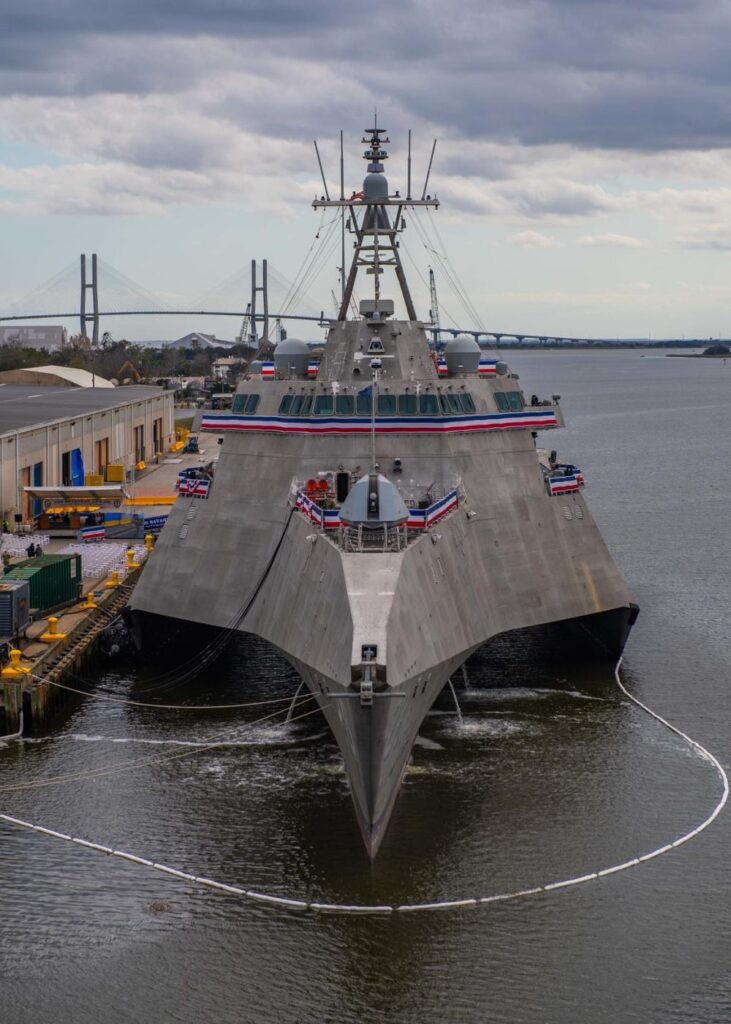
The launch of the successful test of General Atomics’ Autonomous Flight Termination Units. GENERAL ATOMICS ELECTROMAGNETIC SYSTEMS

SAN DIEGO — General Atomics Electromagnetic Systems announced Feb. 1 that its Autonomous Flight Termination Units carried onboard two sounding rockets were successfully demonstrated and performed as expected during a High Operational Tempo for Hypersonics test flight campaign sponsored by the Navy Strategic Systems Programs and Army Hypersonic Program Office on Oct. 20, 2021, at Wallops Island, Virginia.  

The AFTUs help assure missile flight safety and were part of a test campaign to demonstrate technologies to advance the development of the Navy’s Conventional Prompt Strike and the Army’s Long Range Hypersonic Weapon offensive hypersonic strike capability.  

“GA-EMS’ long-established cooperative relationship with the Army, Navy and Sandia National Labs has been key to the design and advancement of hypersonic weapons technologies,” said Scott Forney, president of GA-EMS. “Test flight demonstrations such as this are a critical part of the process toward verifying and inserting this technology into future hypersonic weapon systems. We are pleased the AFTUs performed successfully, advancing the readiness of the AFTU technology. This represents a major step in proving the AFTU’s capability to successfully operate in the hypersonic environment for which they were designed.”    

GA-EMS’ state-of-the-art AFTU offers greater flexibility to assure flight safety for missiles launched for space applications or military weapons testing. Integrated aboard a missile, the AFTU takes a pre-launch defined mission profile and compares it with what the launched missile experiences as it flies. If the flight profile rules or boundaries are violated during flight, the AFTU will command the vehicle to destruct. The AFTU’s compact, lightweight design reduces the size, weight, and power requirements aboard the test vehicle.  

“The missile and space flight industry must provide a means of preventing a launch or aeronautical vehicle and its hazards, including any payload hazards, from reaching any populated or other protected area in the event of a vehicle failure,” Forney said. “Our AFTUs provide the flexibility to operate independently or can be paired to operate together to share data, with the ability to continue the flight should one fail, thus increasing mission assurance.”