Navy Cuts Ribbon on Unmanned Vehicle Testing Facilities at Port Hueneme
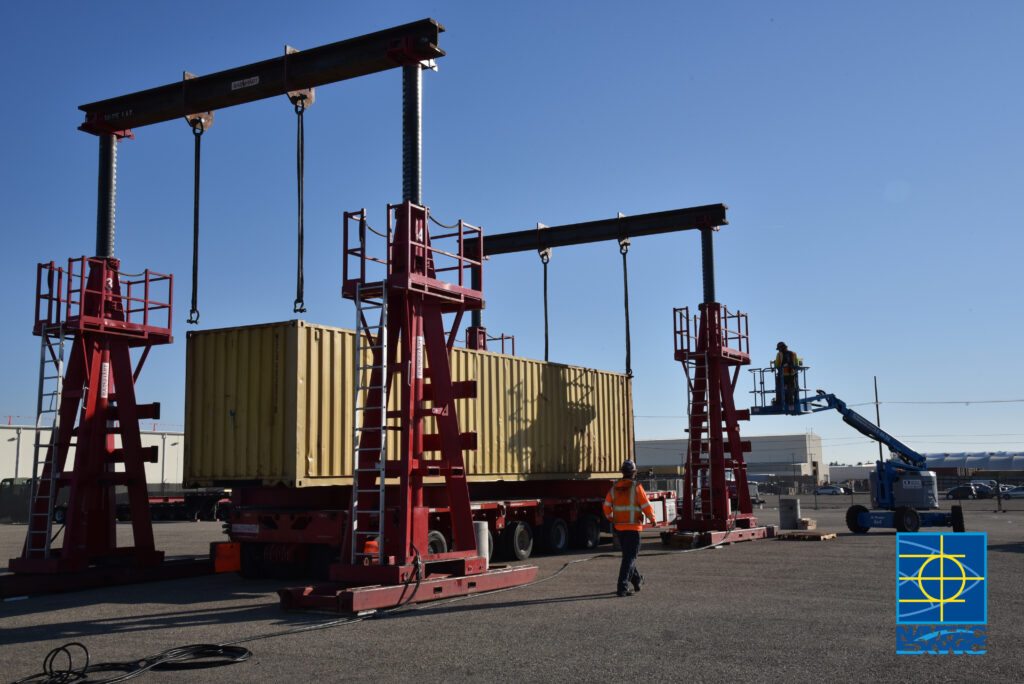
Teams at Naval Facilities Engineering and Expeditionary Warfare Center develop and execute a technical solution and demonstration for the assembly, transportation and disassembly of an 85-foot-long, 90-ton extra-large unmanned undersea vehicle at Naval Base Ventura County in Port Hueneme, California, in April 2021. U.S. NAVY / Palmer Pinckney II

NAVAL BASE VENTURA COUNTY, Calif. — The Navy conducted a joint ground-breaking and ribbon-cutting ceremony Dec. 8 for the first purpose-built and co-located facilities for unmanned maritime vehicle testing, Program Executive Office Unmanned and Small Combatants Public Affairs said in a Dec. 14 release. 

Located on Naval Surface Warfare Center Port Hueneme Division, at Naval Base Ventura County, the facilities will accommodate testing, evaluation, and technology demonstration for Extra-Large Unmanned Undersea Vehicle and Unmanned Surface Vessel prototypes. 

“These facilities will be the focal point of Navy learning and experimentation on the capabilities, operations and sustainment of Unmanned Maritime Vehicle prototypes to inform future programs,” said Capt. Pete Small, Program Manager, Unmanned Maritime Systems (PMS 406). 

PMS 406, within the Program Executive Office Unmanned and Small Combatants (PEO USC), oversees the XLUUV, Large USV, Medium USV programs and their advanced technology capabilities. 

The ribbon-cutting recognized completion of modifications to the existing Littoral Combat Ship Mission Package Support Facility (Building 1392) that will house the XLUUV prototypes, and personnel who will perform test and evaluation and training on the vehicles, which are in fabrication under a contract with Boeing. The ground-breaking recognized the start of construction of the modular administrative building for the newly established Unmanned Surface Vessel Division One and Unmanned Undersea Vehicles Squadron One personnel who will operate and maintain the unmanned vehicle prototypes. 

In addition to five Orca XLUUV prototypes, the NBVC Port Hueneme site will eventually accommodate one MUSV, two Sea Hunter USV and four Overlord USV prototypes. NBVC is ideally suited for these facilities with ready access to open-water instrumented ranges, multimodal expeditionary transportation capabilities, proximity to Navy and industry hubs, and synergies with other tenant commands. 


BAE Systems to Advance F-35 Electronic Warfare Capabilities

An F-35C Lightning II carrier variant joint strike fighter launches from the flight deck of the aircraft carrier USS Nimitz (CVN 68). U.S. NAVY / Mass Communication Specialist Seaman Shauna C. Sowersby

NASHUA, N.H. — BAE Systems has received a $493 million contract modification from Lockheed Martin to significantly upgrade and modernize the electronic warfare system for the F-35 Lightning II, enabling the fifth-generation fighter to quickly detect and address evolving electromagnetic threats in contested battlespaces, BAE Systems said Dec. 15. 

Under the contract, BAE Systems will deliver enhanced and highly capable core hardware for the F-35’s high-performance EW mission system, known as AN/ASQ-239, and will provide engineering support services and test infrastructure. The upgraded system will improve superior situational awareness and electromagnetic attack and countermeasure capabilities with new sensors and more powerful signal processing. 

“The capabilities we will deliver in this contract are foundational and will be leveraged to other platforms to ensure all warfighters have the most advanced EW capability at the ready,” said Lisa Aucoin, vice president of F-35 Solutions at BAE Systems. “The highly adaptable mission system will allow our warfighters to outpace evolving threats and defend democracy around the globe.” 

The enhanced electronic warfare system’s robust design will enable rapid future upgrades, aligning with the U.S. Department of Defense’s strategy for continuous capability development. The system’s modular architecture will also allow for efficient hardware upgrades that reduce lifecycle and retrofit costs, and support faster software updates across the global F-35 fleet. The system also includes the Non-Intrusive Electronic Warfare Test Solution fault isolation and diagnostics capability, which enables precise troubleshooting that further reduces maintenance costs. 

BAE Systems is a major global partner to Lockheed Martin on the F-35 program. In addition to delivering world-class EW systems, the company also manufactures the aft fuselage, active inceptor control system, and vehicle management computer for each F-35 at state-of-the-art manufacturing facilities in the United Kingdom, Australia, and U.S. The company also provides sustainability, technical support, and training services to keep the F-35s mission-ready. 


MIND Technology to Collaborate with Navy on Mine-Hunting Sonars Research

THE WOODLANDS, Texas — MIND Technology Inc. has entered into a cooperative research and development agreement with the U.S. Navy’s Naval Surface Warfare Center, Panama City Division, the company said Dec 13. 

The CRADA, “Advanced Mine Finding,” will allow scientists and engineers from MIND and the U.S. Navy to collaborate on optimizing the next generation of mine-hunting sonar systems to ensure that they fit the needs of the warfighter. 

“Through our subsidiary, Klein Marine Systems, MIND has a long history of supporting the US Navy. I’m thrilled that this CRADA will allow us to leverage the expertise of the scientists and engineers at NSWC PCD to provide innovative solutions to the warfighter, now and into the future,” said Andy Meecham, MIND’s chief technology officer. “This agreement demonstrates our corporate focus on innovation and new technology, which has delivered game-changing capabilities such as our unique full-swath MA-X sonars, will continue to define the gold standard in underwater sensing.” 

MIND Technology Inc. provides technology to the oceanographic, hydrographic, defense, seismic and security industries. Headquartered in The Woodlands, Texas, MIND has a global presence with key operating locations in the United States, Singapore, Malaysia and the United Kingdom. Its Seamap and Klein units design, manufacture and sell specialized, high performance, marine sonar and seismic equipment.   


President Biden Nominates Erik Raven for Under SECNAV

WASHINGTON — President Joe Biden announced his intent to nominate Erik K. Raven for undersecretary of the Navy, the White House said Dec. 13. 

Erik K. Raven is the majority clerk of the Senate Defense Appropriations Subcommittee, where he oversees more than $700 billion of annual spending by the Department of Defense and the intelligence community. Prior to joining the Appropriations Committee in 2007, he served as national security adviser and legislative director to Senator Robert C. Byrd, fellow to Senator Ted Kennedy, in several positions for Senator Dianne Feinstein, and as an English teacher in China. 

Raven holds associate of arts degrees from the College of Marin, a bachelor of arts with honors and distinction in International Relations from Connecticut College and a master of science with merit in international history from the London School of Economics and Political Science. He resides with his family in Washington, D.C. 


State Dept. Approves Possible Sale of Surface Combatant to Greece

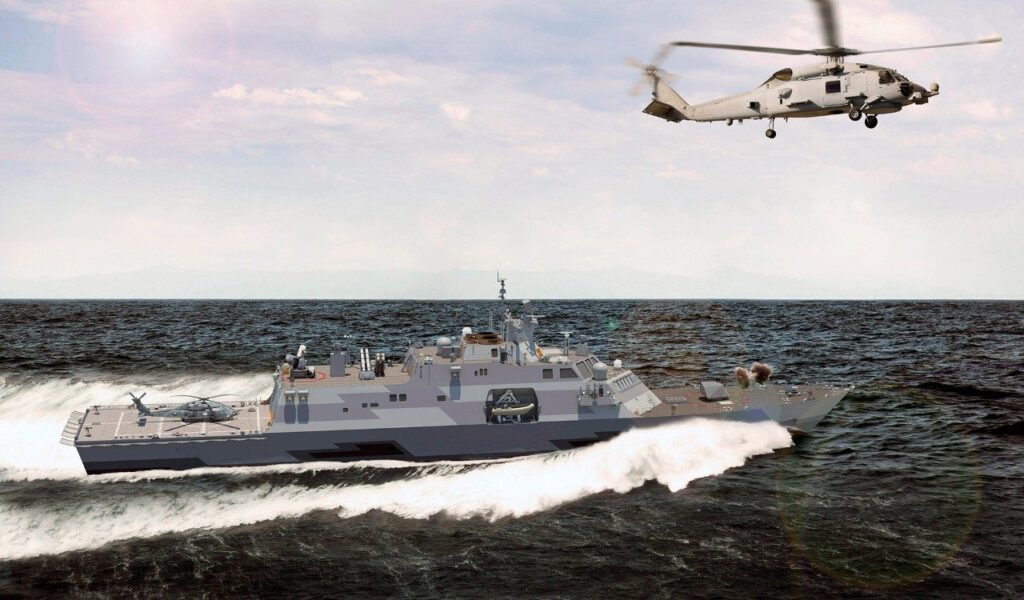
An artist’s conception of the Multi-Mission Surface Combatant vessel. LOCKHEED MARTIN

WASHINGTON — The State Department approved a possible Foreign Military Sale to Greece of Multi-Mission Surface Combatant ships and related equipment for an estimated $6.9 billion, the Defense Security Cooperation Agency said Dec. 10. 

Greece has asked to buy four MMSC ships and associated systems and equipment including combat management systems, sensors, communications equipment, weapons, weapon launchers, munitions and boats.  

The sale also would include “software delivery and support, facilities and construction support, publications and technical documentation, personnel training and training equipment, U.S. government and contractor engineering, technical and logistics support services, test and trials support, studies and surveys and other related elements of logistical and program support,” the announcement said.   

“This proposed sale will support the foreign policy and national security objectives of the United States by helping to improve the security of a NATO ally, which is an important partner for political stability and economic progress in Europe,” the announcement said. “The proposed sale will improve Greece’s capability to meet current and future threats by providing an effective combatant deterrent capability to protect maritime interests and infrastructure in support of its strategic location on NATO’s southern flank. This acquisition, which will be awarded to the winner of an international competition for Hellenic Navy frigate modernization, will enhance stability and maritime security in the Eastern Mediterranean region and contribute to security and strategic objectives of NATO and the United States. Greece contributes to NATO operations in Kosovo, as well as to counterterrorism and counter-piracy maritime efforts. Greece will have no difficulty absorbing these articles and services into its armed forces. 

“Implementation of this proposed sale will require the assignment of approximately eight additional U.S. government and 22 U.S. contractor representatives to Greece to support engineering and logistics support for the production and integration of Hellenic Future Frigates into the Hellenic Navy fleet,” the DSCA said. 

The principal contractor will be Lockheed Martin of Bethesda, Maryland. Lockheed Martin is the prime contractor for the Saudi Multi-Mission Surface Combatant program.   


NAVCENT Launches Saildrone in Gulf of Aqaba for Exercise Digital Horizon

A Saildrone Explorer unmanned surface vessel sails in the Gulf of Aqaba off of Jordan’s coast, Dec. 12, during exercise Digital Horizon. U.S. ARMY / Cpl. Deandre Dawkins

GULF OF AQABA — U.S. Naval Forces Central Command began operationally testing a new unmanned surface vessel in the Gulf of Aqaba Dec. 12 as part of an initiative to integrate new unmanned systems and artificial intelligence into U.S. 5th Fleet operations, the fleet’s public affairs office said Dec. 13. 

NAVCENT commenced exercise Digital Horizon while launching a Saildrone Explorer USV into the water for the first time from the Royal Jordanian naval base in Aqaba, Jordan. Last month, U.S. and Jordanian naval leaders announced the base would become a joint hub for Saildrone operations in the Red Sea. 
 
“These are exciting times for Task Force 59 as we team with the Royal Jordanian Navy to establish our hub for Red Sea operations in Aqaba and deploy some of our new maritime robotics,” said Capt. Michael Brasseur, commander of NAVCENT’s new task force for unmanned systems and artificial intelligence. 
 
The Saildrone Explorer is a 23-foot-long, 16-foot-tall USV reliant on wind power for propulsion. The vessel houses a package of sensors powered through solar energy for building a shared picture of the surrounding seas. 
 
“Our Saildrones leverage machine learning and artificial intelligence to enhance maritime domain awareness, extending the digital horizon with a sustainable, zero-carbon solution,” said Brasseur. 
 
After establishing Task Force 59 in September, NAVCENT is in the early stages of integrating unmanned systems and artificial intelligence into the U.S. 5th Fleet operational environment. 
 
In October, the task force integrated and evaluated new MANTAS T-12 USVs alongside crewed ships in the Arabian Gulf during exercise New Horizon. On Dec. 4, the task force initiated at-sea operational tests for a MANTAS T-38 USV off the coast of Bahrain. 
 
Ongoing evaluations of new unmanned systems in U.S. 5th Fleet help drive discovery, innovation and fleet integration. The U.S. Navy is learning important lessons that will inform future operational employment. 
 
The Middle East region’s unique geography, climate, and strategic importance offer an ideal environment for unmanned innovation through multilateral collaboration. The area includes the world’s largest standing maritime partnership, Arabian Gulf, Red Sea, Gulf of Oman and parts of the Indian Ocean. 


Bollinger Delivers Ocean Transport Barge for Columbia SSBN to Electric Boat

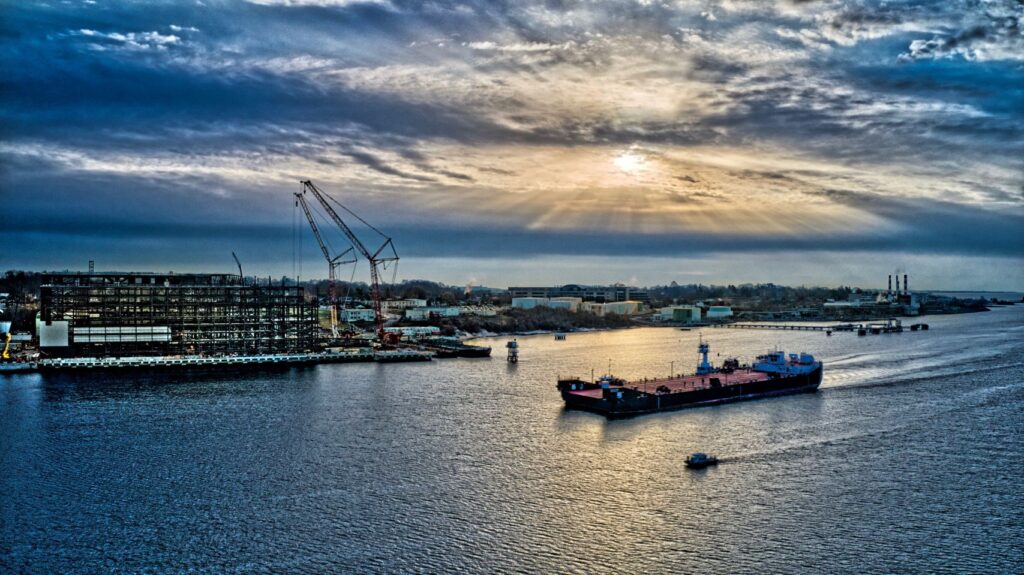
OTB Holland arrives in Groton, Connecticut. BOLLINGER SHIPYARDS

LOCKPORT, La. — Bollinger Shipyards LLC has delivered the Ocean Transport Barge Holland to General Dynamics-Electric Boat’s Groton Shipyard, Bollinger said Dec. 13. 

The Holland will support the construction and maintenance of the United States’ Columbia-class ballistic-missile submarines and Virginia-class fast attack submarines. General Dynamics Electric Boat is the prime contractor on the design and build of the Columbia-class submarine (SSBN), which will replace the aging Ohio-class SSBNs and is a top strategic defense priority for the United States. 

“Bollinger is proud to partner with General Dynamics Electric Boat in support of the U.S. Navy and one of the top strategic priorities of our Nation,” said Bollinger President and CEO Ben Bordelon. “Being able to deliver OTB Holland on time and on budget is a testament to the strength, commitment and resilience of the men and women of the Bollinger workforce, especially following the significant damage sustained to our shipyards and communities following Hurricane Ida earlier this year. Bollinger looks forward to continuing to help meet the expanding needs of the United States’ Navy and supporting efforts to modernize our nation’s fleet.” 

“We are happy to welcome Holland to her new home in the Groton shipyard,” said Kevin Graney, President, General Dynamics Electric Boat. “Our fellow shipbuilders at Bollinger have delivered a terrific asset, on time and on budget. Holland will play an important role in the construction of the Columbia class of submarines, which will carry nearly 70% of the nation’s nuclear arsenal.” 

In November 2019, General Dynamics Electric Boat selected Bollinger to construct the Holland, a 400-foot by 100-foot Ocean Transport Barge. The concept and contract design was performed by the Bristol Harbor Group in Rhode Island, while Bollinger performed the detail design engineering at its Lockport, Louisiana facility and construction at the Bollinger Marine Fabrication facility in Amelia, Louisiana. 

The Columbia class is now being built at Electric Boat’s Quonset Point, Rhode Island, manufacturing facility. Skilled tradespeople will construct and outfit Columbia modules at Quonset Point which will then be transported by the Holland barge to the company’s final test and assembly facility in Groton. The first Columbia module is expected to arrive in Groton in 2023. 


U.S. Navy Establishes Submarine Squadron Two at Portsmouth Naval Shipyard

The first 13 personnel assigned to Submarine Squadron 2 pose for a photograph outside their command building on the day of the unit’s establishment Friday, Dec. 10. U.S. NAVY / Chief Petty Officer Joshua Karsten

KITTERY, Maine — The U.S. Navy established Commander, Submarine Squadron 2 in an official ceremony Friday, Dec. 10, at Portsmouth Naval Shipyard in Kittery, Maine, Submarine Readiness Squadron 32 said in a release. 

The move revives a tradition tied to the original Submarine Squadron 2, which was established in New London, Connecticut, in the late 1930s. In 1941, the Navy sent SUBRON 2 to the Pacific, where it operated during World War II. 
 
After the war, in October 1945, the squadron was back in New London, where it garnered the nickname “The Armada” because of the wide range of submarines under its oversight. 
 
The squadron oversaw some of the first and last built in the Los Angeles class fast attack submarines as well as the Navy’s only nuclear-powered deep submersible research vessel, NR-1. The first nuclear powered submarine, USS Nautilus (SSN 571) was one of nearly 100 submarines assigned to the squadron during its history as well. 
 
Among the submarines assigned to the squadron over the years were the “Fleet Boats” Grouper (SS 214), Flying Fish (SS 229), Finback (SS 230), and Raton (SS 270); diesel submarines Atule (SS 403), Quillback (SS 424) and Sarda (SS 488); and the support ship Chewink (ASR 3). 
 
The most recent previous iteration of Submarine Squadron 2 was disestablished in a ceremony in Groton, Connecticut, Jan. 13, 2012. 
 
Rear Adm. Michael Holland, now chief of staff for U.S. Northern Command, was the commodore of Submarine Squadron 2 at the time of its disestablishment. Holland returned as the keynote speaker for the establishment ceremony Friday. 
 
“The new establishment of Submarine Squadron 2 builds on a proud tradition dating back to the second World War,” said Vice Adm. William Houston, commander, U.S. Naval Submarine Forces, Submarine Force Atlantic and Allied Submarine Command. “Over seven decades in operation, this squadron wrote a history of innovation, flexibility and a fierce dedication to mission accomplishment. Now, Squadron 2 will come back with a new home and a vital new role to play, ensuring the readiness of our fast attack submarines as they complete periods of maintenance at Portsmouth Naval Shipyard and return to the fleet for deployment.” 
 
Capt. Daniel J. Reiss takes over as the commanding officer of the newly reestablished squadron, while Capt. Henry M. Roenke steps into the role of deputy commanding officer for readiness. Master Chief Petty Officer Frederick J. Richter is the command master chief, the senior enlisted service person at the squadron. 
 
Squadron 2 will step in to provide administrative, manning, logistical, training, operational planning and readiness support for Los Angeles- and Virginia-class fast attack submarines homeported at Portsmouth Naval Shipyard during periods of maintenance and improvement. 
 
Since 2012, Submarine Squadrons 12 and 4 provided operational oversight of submarines at Portsmouth Naval Shipyard from their location more than 150 miles away, at Naval Submarine Base New London, in Connecticut. 
 
Capt. Matthew Boland, commanding officer of Submarine Squadron 12, was on hand at the Friday event to ceremonially relinquish oversight of the submarines currently homeported at PNSY. 
 
“I’m honored and excited to help restore this storied squadron name alongside these dedicated submarine crews and the talented and hardworking team at Portsmouth Naval Shipyard,” said Reiss. “Squadrons 12 and 4 did incredible work supporting the shipyard submarines over the last decade. And now, there is benefit to having a dedicated squadron staff on-site, focused on the unique needs of crews in this stage of their readiness cycle. These Portsmouth-based submarine crews face different challenges than those in Groton, and my team is energized to face those challenges with them. We look forward to getting these crews and their boats back in the fight, stronger and tougher than when they arrived.” 


Coast Guard Offloads More than $148 Million of Illegal Narcotics in Miami

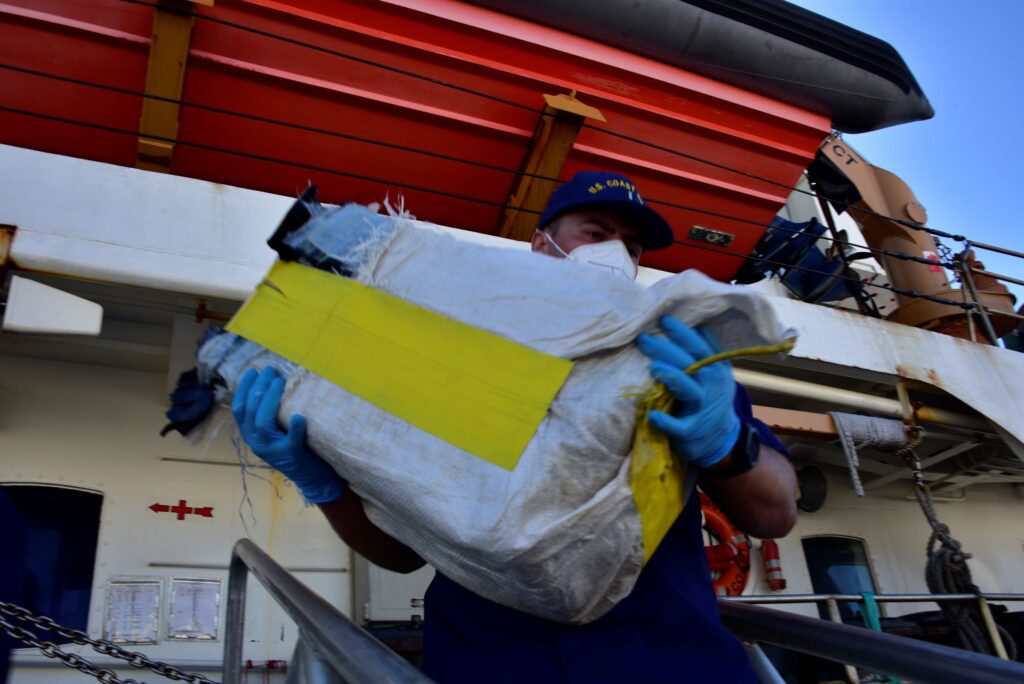
A crew member of the Coast Guard Cutter Dauntless offloads a bale of illegal narcotics at Base Miami Beach, Florida, Dec. 7. The contraband was seized by members of the Royal Fleet Auxiliary Wave Knight and the His Netherlands Majesty’s Ship Holland during three separate interdictions in the Caribbean Sea. U.S. COAST GUARD / Petty Officer 3rd Class Brian Zimmerman

MIAMI — Coast Guard Cutter Dauntless’ crew offloaded more than $148 million of illegal narcotics at Base Miami Beach, Dec. 7, from three separate interdictions in the Caribbean Sea in the past two weeks, the Coast Guard 7th District said Dec. 9. 

Following the three interdictions, nine suspected drug smugglers with Dominican Republic and Colombian nationalities were apprehended. The Royal Fleet Auxiliary Wave Knight crew seized approximately 1,200 pounds of cocaine, and Coast Guard Cutter William Trump and the His Netherlands Majesty’s Ship Hollands’ crew seized approximately 6,700 pounds of cocaine in two interdictions. 

The U.S. Attorney’s Offices for the District of Puerto Rico, Southern District of Florida and the Eastern District of Virginia are prosecuting these cases. 

“These successful interdictions are the result of professional partnerships between the Coast Guard, RFA Wave Knight, and HNLMS Holland crews,” said Hansel Pintos, 7th District spokesperson. “The Coast Guard’s strong international partnerships, counter threats in the maritime domain, protect each of our countries from transnational organized crime, and work to stabilize and promote good governance in the region.” 

This effort is part of an Organized Crime Drug Enforcement Task Forces operation. OCDETF identifies, disrupts and dismantles the highest-level criminal organizations that threaten the United States using a prosecutor-led, intelligence-driven, multi-agency approach. 

The fight against drug cartels in the Caribbean Sea requires unity of effort in all phases from detection, monitoring and interdictions, to criminal prosecutions by international partners and U.S. Attorneys’ Offices in districts across the nation. 

During at-sea interdictions, a suspect vessel is initially detected and monitored by allied, military or law enforcement personnel coordinated by Joint Interagency Task Force-South based in Key West, Florida. The law enforcement phase of operations in the Caribbean Sea is conducted under the authority of the Seventh Coast Guard District, headquartered in Miami. The interdictions, including the actual boardings, are led and conducted by members of the U.S. Coast Guard. 


Coast Guard Cutter Completes Operation Blue Pacific Patrol in Oceania

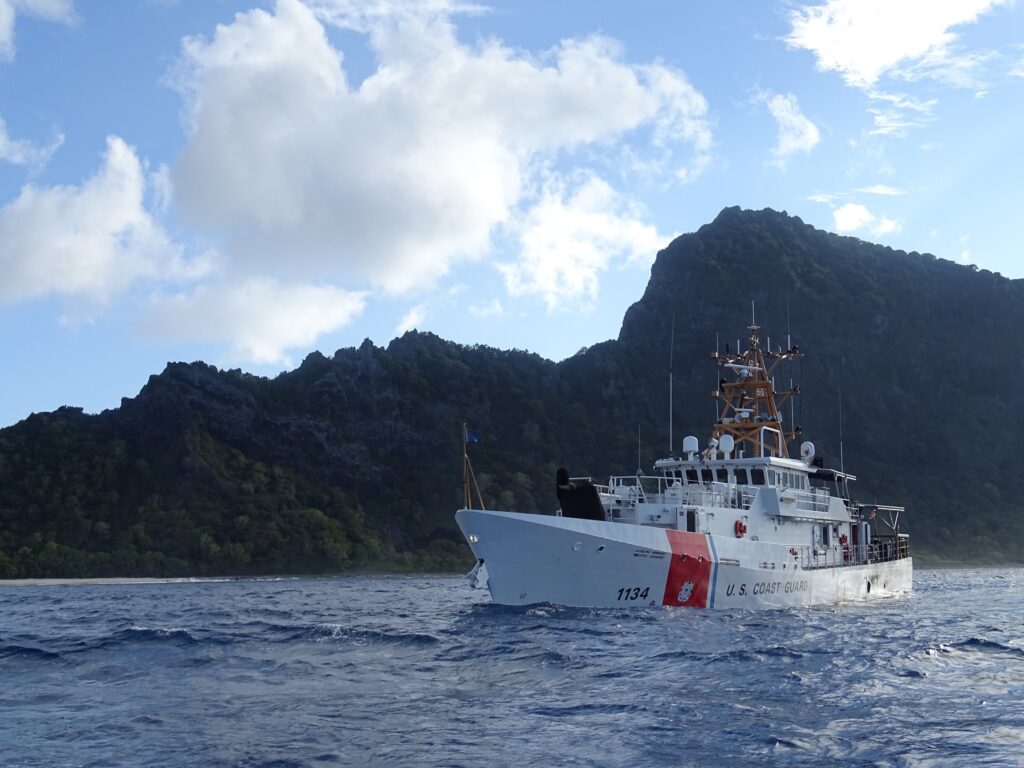
The Coast Guard Cutter William Hart participates in the Pacific Islands Forum Fisheries Agency’s Operation Kurukuru off American Samoa, Oct. 29. U.S. COAST GUARD

HONOLULU — The crew of the Coast Guard Cutter William Hart completed its 39-day patrol over 7,000 nautical miles in Oceania in support of the Coast Guard’s Operation Blue Pacific, last week, said the Coast Guard 14th District. 
 
Operation Blue Pacific is an overarching multi-mission Coast Guard endeavor promoting security, safety, sovereignty and economic prosperity in Oceania while strengthening relationships between our partners in the region. 
 
“This patrol had multiple goals, which really displayed the adaptability of our crew,” said Lt. Cmdr. Cynthia Travers, the commanding officer of the William Hart. “While we continued to support international efforts to combat illegal, unreported, and unregulated fishing in the region, we’ve also worked with our partners including New Zealand’s National Maritime Coordination Centre, the nation of Samoa, the National Park Service, and the National Oceanic and Atmospheric Administration on a number of joint endeavors.” 
 
In November, the crew of the William Hart, one of the Coast Guard’s new Fast Response Cutters, participated in the Pacific Islands Forum Fisheries Agency’s Operation Kurukuru, an annual coordinated maritime surveillance operation with the goal of combating IUU fishing. 
 
IUU fishing presents a direct threat to the efforts of Pacific Island countries and territories to conserve fish stocks, an important renewable resource in the region. 
 
Following the successful conclusion of Operation Kurukuru, the William Hart’s crew continued to patrol the exclusive economic zones of the United States, Samoa, Tonga, Kiribati and Fiji to prevent illicit maritime activity. 
 
Upon request from NOAA, the crew visited Fagatele Bay in the National Marine Sanctuary of American Samoa, using the cutter’s small boat to ensure there was no fishing or activity which would damage the coral within the United States’ largest national marine sanctuary. 
 
The crew of the William Hart also supported a National Park Service boat during a transit between Tutuila Island and the Manu’a Islands, providing search and rescue coverage. 
 
The cutter’s crew then departed for Fiji’s EEZ, where they supported New Zealand’s NMCC by locating an adrift Deep-ocean Assessment and Reporting of Tsunamis buoy and reporting the buoy’s condition to Headquarters Joint Forces New Zealand and other stakeholders. 
 
DART buoys are real-time monitoring systems strategically deployed throughout the Pacific to provide important tsunami forecasting data to researchers. 
 
“These expeditionary patrols are important to the continued stability and prosperity of Oceania,” said Lt. Cmdr. Jessica Conway, a Coast Guard 14th District operations planner. “Partnerships are key to promoting a free and open Indo-Pacific. Operation Blue Pacific allows us to coordinate with regional partners and most effectively employ our assets towards shared goals.”