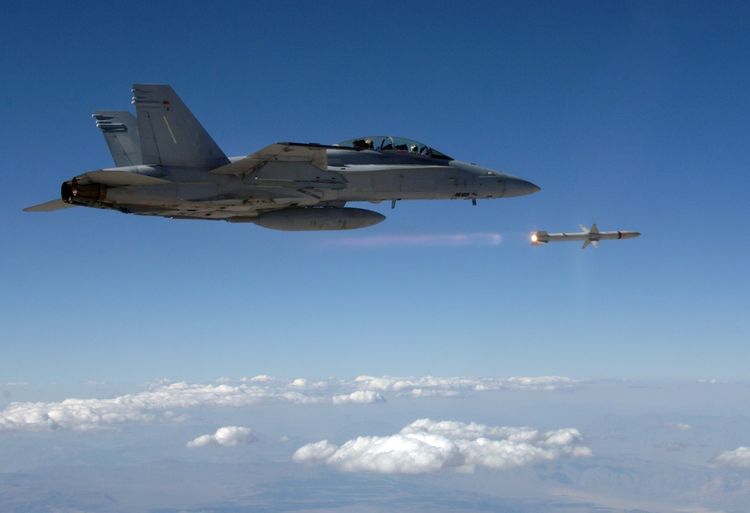
Leonardo DRS to Provide Fourth Shipset of Hybrid Electric Drive Technology for Coast Guard OPCs
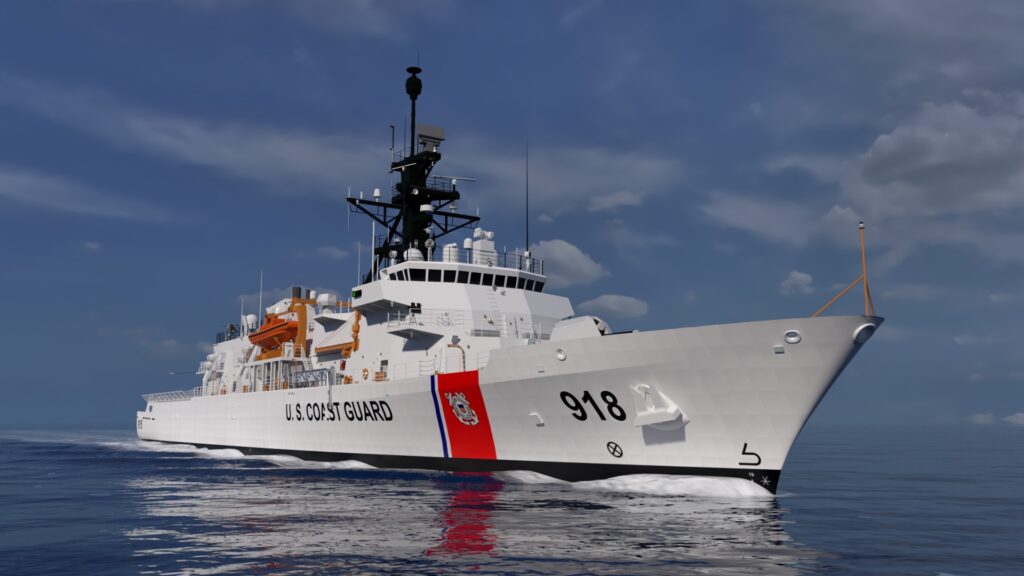
Leonardo DRS will provide the Auxiliary Propulsion System for the Coast Guard’s new fleet of Offshore Patrol Cutters. LEONARDO DRS

ARLINGTON, Va. — Leonardo DRS Inc. has again been awarded a contract by Eastern Shipbuilding Group to provide the Auxiliary Propulsion System for the fourth shipset in the U.S. Coast Guard’s new fleet of Offshore Patrol Cutters, Leonardo DRS said Dec. 6.

This platform is the first combined diesel electric or diesel propulsion system application for the Coast Guard. Eastern Shipbuilding Group is the prime contractor and builder of these next-generation Offshore Patrol Cutters. 

Under the contract, Leonardo DRS will provide its high-performance, permanent magnet motor-based Auxiliary Propulsion System, which has been optimized to meet the Coast Guard’s operational tempo and provides capability for the ship to operate much more efficiently at slower speeds, increases mission duration capability, reduces emissions, and provides emergency take-home capability in the event of a failure of the main propulsion diesel engines. When coupled to the main propulsion gearbox, the system allows the ship to operate quietly and efficiently during loitering operations while providing superior fuel economy for increased on-station operations and capability. 

Maximizing use of the electric drive increases the platform’s green credentials and reduces operational time on the main propulsion engines, providing additional multiple benefits. Because electric motors are virtually maintenance free, life cycle costs over the planned 40-year vessel life are minimized by reducing maintenance hours needed on the engines. Using propulsion diesel engines at slow speeds adds significant wear and tear on the engines and increases the potential for coking/wet stacking. By adding this electric Auxiliary Propulsion System, the Coast Guard can expect to have a built-in advantage of reducing not only fuel and maintenance requirements, but total lifecycle costs and increased safety for the fleet. The main engine overhaul cycle, typically planned at 15 years, can be extended to 25 years.  

“Leonardo DRS is a leading innovator in the naval hybrid electric drive technology arena, and we are proud to be able to provide our advanced technology to the Coast Guard’s fleet of next-generation Cutters,” said Jon Miller, senior vice president and general manager of the Leonardo DRS Naval Power business. “These new propulsion systems will give operational flexibility while significantly increasing cost savings in yearly maintenance and fuel, enabling crews to put more focus on their missions.” 


Marine CH-53Ks Partner with Navy to Test Future Force Operating Concepts

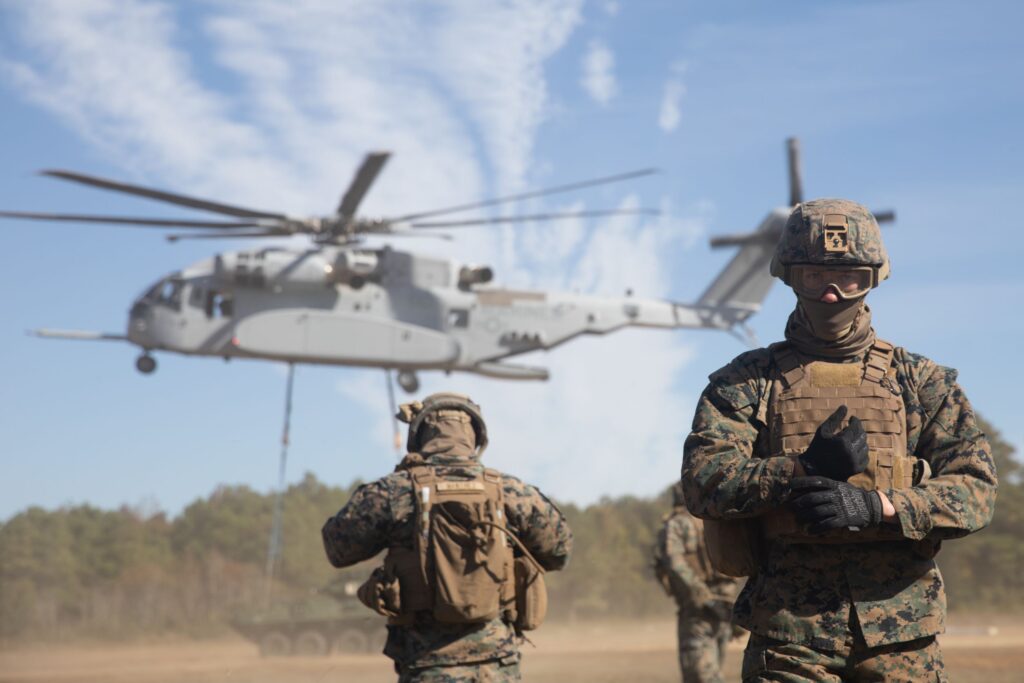
U.S. Marine Corps Pfc. Zackary Riffle with Combat Logistics Battalion 24, Combat Logistics Regiment 2, 2nd Marine Logistics Group waits for a CH-53K King Stallion to take off during a Helicopter Support Team operation at Tactical Landing Zone Albatross on Camp Lejeune, North Carolina, Nov. 19. U.S. MARINE CORPS / Lance Cpl. Meshaq Hylton

ARLINGTON, Va. — In a first for the Marine Corps, Marines from Marine Operational Test & Evaluation Squadron One (VMX-1) conducted over-the-horizon heavy lift and troop transport ship-to-shore operations aboard CH-53K King Stallions over the Atlantic Ocean, Nov. 19-21, Headquarters Marine Corps said Dec. 3.  

These exercises are a critical component of the Marine Corps’ future force operating concepts, such as expeditionary advanced base operations and distributed operations.  

“We are excited to continue advancing the commandant’s vision of the future force by partnering with the Navy and finding ways to optimize how we operate and thrive in a strategic competition environment,” said VMX-1 Commanding Officer Col. Byron Sullivan. “We remain the nation’s naval expeditionary force, ready to fight in any clime or place at any time.” 

VMX-1, evaluating the King Stallion’s ability to meet program specification for the over-the-horizon heavy lift evolution, tested the King Stallion’s capability to transport a 27,000-pound light armored vehicle (LAV-25) from the Wasp-class amphibious assault ship USS Iwo Jima (LHD 7) to a landing zone ashore. The troop transport evolution evaluated the King Stallion’s ability to move troops over the horizon to a location ashore and return to ship without refueling, covering as much as 220 nautical miles roundtrip.  

Combat Logistics Battalion 24 and 2d Battalion, 2d Marines from Camp Lejeune, North Carolina, provided personnel and equipment to assist VMX-1 with their testing, and sailors from the USS Iwo Jima assisted VMX-1 with shipboard and flight deck operations.  

The Marine Corps is progressing through initial operational test and evaluation (IOT&E) of the CH-53Ks prior to fielding them to the Fleet Marine Force. The pilots, maintainers, and contractors of VMX-1, the squadron tasked with conducting operational test and evaluation of Marine Corps aviation platforms and systems, play a significant role in shaping the tactics, techniques and procedures of CH-53K utilization. Additionally, VMX-1 personnel will put the aircraft through rigorous evaluations in order to determine its suitability and effectiveness before arriving to the fleet.  

“We have the most professional and capable individuals maintaining the aircraft and are also appreciative to the Blue-Green Team, who demonstrate the superb ability to operating harmoniously,” said VMX-1 CH-53K Detachment Operations Officer Maj. Joshua Banks.  


Navy League Announces Active-Duty Military Now Eligible for Membership

Marines hike to the next training location during Exercise Baccarat in Aveyron, Occitanie, France, Oct.16. U.S. MARINE CORPS / Lance Cpl. Jennifer Reyes

ARLINGTON, Va. — The Navy League of the United States announced Dec. 2 it has opened membership to active-duty service personnel from every branch of the military to join the organization as individual members. 

The Navy League is a nonprofit civilian, educational and advocacy organization that supports America’s sea services: the Navy, Marine Corps, Coast Guard and U.S.-flag Merchant Marine.

This historical change in the Navy League’s bylaws, passed by its board of directors, has shifted its membership from an all-civilian organization to a joint civilian and active-duty organization. The Navy League currently has 30,000 members in 200 councils around the globe.  

“This important shift in our membership eligibility will lend to greater diversity and gravitas to the Navy League’s mission of education, advocacy and support to our sea services and its members.” said Navy League National President Dave Reilly. “This change also provides an important growth opportunity for the Navy League as we continue to expand our membership and the Navy League’s impact on our sea services.”  

Navy League councils, located primarily in the United States but also around the world, offer service members important ties to their community and a direct way to continue to serve the country once they transition out of service.   

Navy League member benefits include transition assistance, members-only discounts, council membership and a subscription to Seapower magazine. Active-duty sea service members’ children and grandchildren are also eligible to apply for a Navy League Foundation scholarship to aid in college tuition.  

Members can choose to join for one-, two-, three-, four- or five-year periods or can opt to join as a lifetime member. More information on active-duty membership, including an application, can be found on https://www.navyleague.org/become-a-member/active-duty-membership.   


Austin: Ten Marines Nominated for Major General

ARLINGTON, Va. — Secretary of Defense Lloyd J. Austin III announced Dec. 2 that the President made the following nominations:  

Marine Corps Brig. Gen. Keith D. Reventlow for appointment to the rank of major general. Reventlow is currently serving as commander, Defense Logistics Agency Distribution, New Cumberland, Pennsylvania.  

Marine Corps Brig. Gen. William J. Bowers for appointment to the rank of major general. Bowers is currently serving as commanding general, Marine Corps Installations Pacific and Marine Corps Base Camp Butler, Okinawa, Japan.  

Marine Corps Brig. Gen. Christian F. Wortman for appointment to the rank of major general. Wortman is currently serving as senior military assistant to the Deputy Secretary of Defense, Washington, D.C.  

Marine Corps Brig. Gen. Michael J. Borgschulte for appointment to the rank of major general. Borgschulte is currently serving as director of Manpower Management Division, Headquarters, U.S. Marine Corps, Quantico, Virginia.  

Marine Corps Brig. Gen. Roberta L. Shea for appointment to the rank of major general. Shea is currently serving as legislative assistant to the Commandant of the Marine Corps, Headquarters, U.S. Marine Corps, Washington, D.C.  

Marine Corps Brig. Gen. Eric E. Austin for appointment to the rank of major general. Austin is currently serving as director, Capabilities Development Directorate, Headquarters, U.S. Marine Corps, Quantico, Virginia.  

Marine Corps Brig. Gen. Benjamin T. Watson for appointment to the rank of major general. Watson is currently serving as commanding general, Marine Corps Warfighting Lab, Headquarters, U.S. Marine Corps, Quantico, Virginia.  

Marine Corps Brig. Gen. James H. Adams, III, for appointment to the rank of major general. Adams is currently serving as deputy director, Requirements and Capability Development, J-8, Joint Staff, Washington, D.C.  

Marine Corps Brig. Gen. Stephen E. Liszewski for appointment to the rank of major general. Liszewski is currently serving as deputy director for Joint Training, J-7, Joint Staff, in Washington, D.C.  

Marine Corps Brig. Gen. Sean M. Salene for appointment to the rank of major general. Salene is currently serving as director, Strategy and Plans Division, Headquarters, U.S. Marine Corps, Washington, D.C.  


Sofar Launches Wayfinder Weather Routing for Dynamic Voyage Optimization

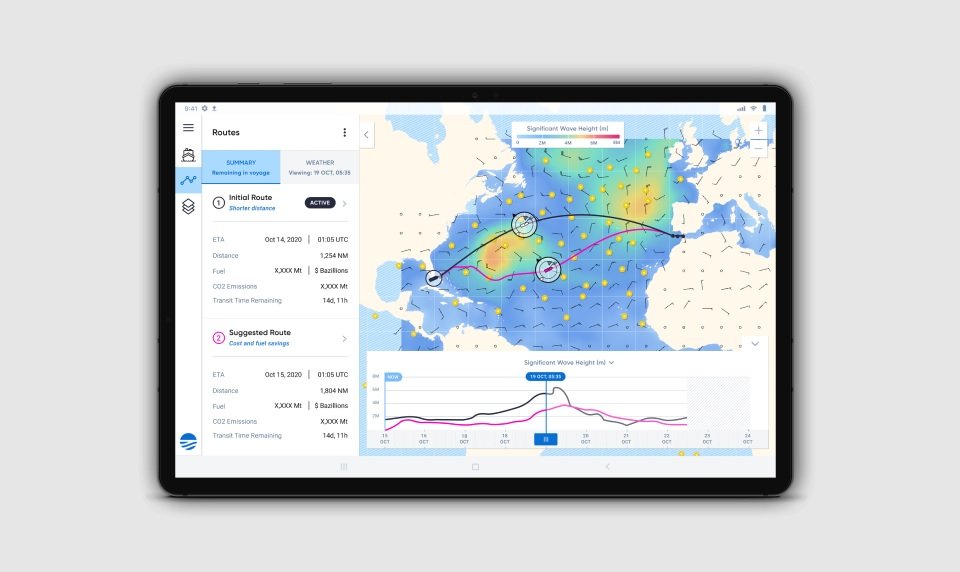
Sofar Ocean’s new Wayfinder application. SOFAR OCEAN

SAN FRANCISCO, Calif. — Sofar Ocean has launched Wayfinder – The Dynamic Route Optimization Platform, a real-time, data-powered application to radically improve maritime route efficiency and reduce fuel emissions, the company said in a release. 

Sofar’s proprietary open ocean sensor network and weather forecasts, combined with real-time market variables and personalized vessel performance models, deliver high-accuracy weather routing and daily speed and routing guidance to ensure more efficient and safer routes. 

Optimized voyage and speed profiles can produce massive reductions of greenhouse gas emissions according to the International Maritime Organization. According to the IMO, with voyage optimization you can see anywhere from 1-10% reduction in GHG. With today’s optimization solutions there is no concept of continuous weather monitoring and daily updates to ensure that ships are always on the most optimal path. Wayfinder’s unique value is that it’s powered by the best weather data with continuously optimized routing recommendations. This gives fleet operators and captains the most recent weather and routing context they need to maximize voyage profitability, minimize safety risks, and track closer toward carbon neutrality with each transit. 

Several major commercial shipping companies including Singapore-based Berge Bulk, Greece-based Star Bulk and Seaven as well as U.S.-based Class society ABS are leveraging the new technology to streamline fleet efficiency by identifying more direct, cost-effective, and energy-efficient routes. 

As a pioneer in shipping sustainability, Berge Bulk has aggressively pursued decarbonization strategies over the last decade. In support of this initiative, they were one of the first pilot customers of the Wayfinder platform. According to their CEO, James Marshall, “Wayfinder allows us to increase vessel utilization and efficiency, ensuring that we balance profitability with emissions reduction objectives. By using Wayfinder’s data and voyage optimization, we’ve seen 

efficiency gains in the range of 4.5% on dedicated voyages, which translates into as many as 14 additional sailing days per year per vessel.”  

“Wayfinder is the Google Maps or Waze of the ocean. It’s your voyage partner — always looking out for the best options among the trillions of possible routes in the ocean,” said Tim Janssen, CEO and cofounder of Sofar Ocean. “Like navigation apps on land, Wayfinder integrates seamlessly into the captain’s workflow and is easy to use. It constantly updates its recommendations based on the latest weather data powered by thousands of live weather sensors, variations in the bunker and charter market, and vessel performance dynamics. Ocean intelligence is in our team’s DNA, and Wayfinder is a big step toward our mission of building a more connected ocean.” 


Marines Test JAGM From AH-1Z Viper

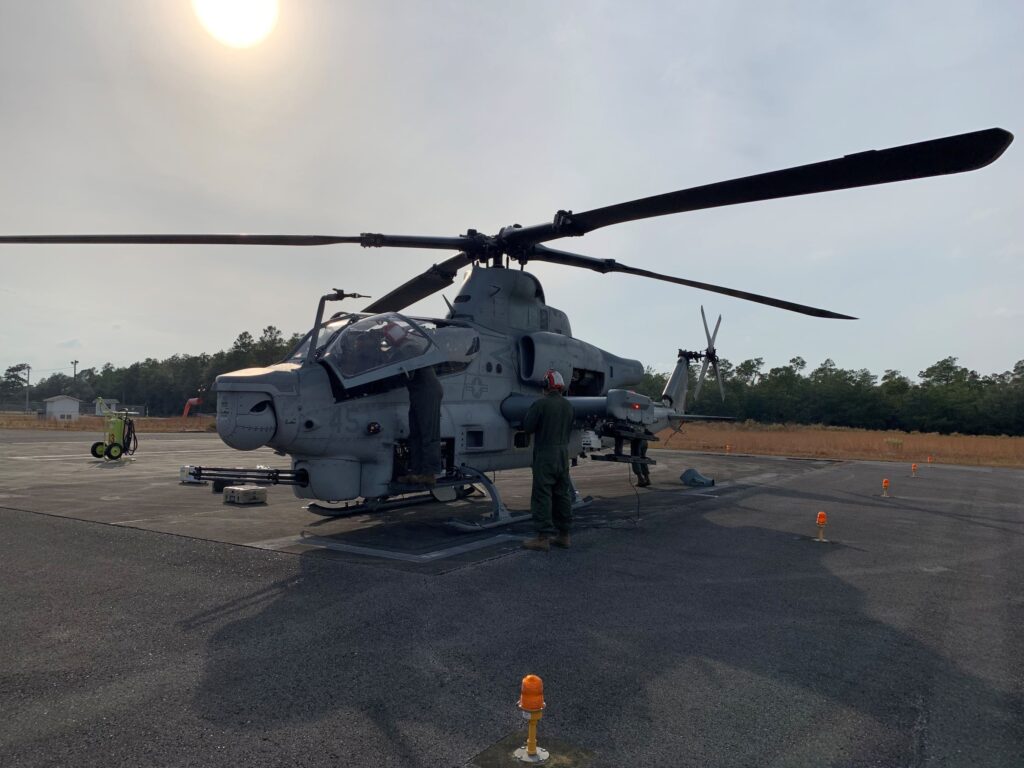
Marine Corps aviation ordnance Marines assigned to Marine Operational Test & Evaluation Squadron One (VMX-1) conduct operational checks on an AH-1Z Viper to ensure the aircraft remains ready during the operational test and evaluation of the joint air-to-ground missile, Nov. 4. U.S. MARINE CORPS / Maj. Jay Hernandez

ARLINGTON, Va. — Marines from Marine Operational Test & Evaluation Squadron 1 (VMX-1) conducted an operational test and evaluation of the joint air-to-ground missile (JAGM) from an AH-1Z Viper, Nov. 3-7 at Eglin Air Force Base in Florida, the Corps announced Dec. 2. 

VMX-1 fired and evaluated the JAGM to determine its suitability and effectiveness to support expeditionary advanced base operations, such as conducting sea denial operations within the littorals and supporting sea control operations.   

Personnel from Air Test and Evaluation Squadron 21 (HX-21), Naval Air Systems Command Direct and Time-Sensitive Strike program office (PMA-242), Army Program Executive Office Missiles and Space, Air Force 780th Test Squadron, as well as industry partners, were on location to observe and analyze the data from the test event. This event can lead to significant improvements in lethality of attack helicopters by arming them with newer munitions equipped with two sensor technologies and optimizes missile performance on maritime targets.    

“Watching these professionals from across the services and industry come together to test the effectiveness and work on improvement for this weapon system is truly a phenomenal experience,” said VMX-1 Commanding Officer Col. Byron Sullivan. “The team is doing everything possible to ensure this capability will be the needed upgrade that enhances our ability to use precision strikes against fast-moving maritime targets.” 

The team observed the test from locations across Eglin Air Force Base, honing in on weather considerations, telemetry and instrumentation, coordinating with the pilots, and observing the impact zone. Ultimately, the data collected will be analyzed to determine overall system effectiveness and develop the tactics, techniques, and procedures for its employment.   

“Executing this type of concept development is very critical to get it right on paper and put more effective systems in the hands of the warfighter,” said Maj. Thomas Hutson, the Assault Support department head at VMX-1 and member of the JAGM test team. 

This test is part of a larger effort to upgrade the AH-1Z and UH-1Y aircraft, in alignment with the Commandant’s vision of force modernization vision to maintain a competitive edge against potential adversaries.    

The mission of VMX-1 is to conduct operational test and evaluation of Marine Corps aviation platforms and systems. 


HII Delivers Guided Missile Destroyer Frank E. Petersen Jr. to U.S. Navy

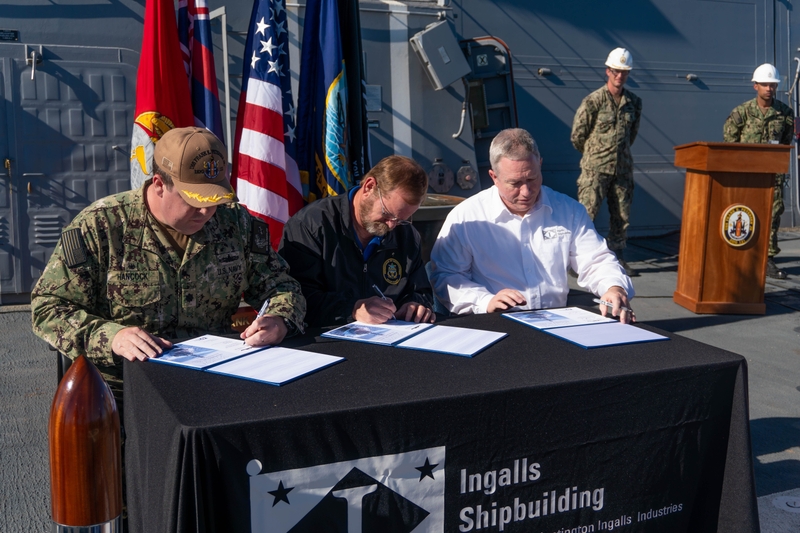
Signing ceremonial documents declaring delivery of Frank E. Petersen Jr. (DDG 121) from Ingalls Shipbuilding to the U.S. Navy are, from left, Navy Cmdr. Daniel Hancock, prospective commanding officer DDG 121; Billy Oaks, superintendent, Aegis Combat System, Supervisor of Shipbuilding, Gulf Coast; and Donny Dorsey, Ingalls DDG 121 ship program manager. In the background are Cmdr. Sean Doherty, left, DDG program manager’s representative; and Chief Petty Officer Yamina Bolar, DDG 121 chief Aegis fire controlman. HUNTINGTON INGALLS INDUSTRIES / Shane Scara

NEWPORT NEWS, Va. — Huntington Ingalls Industries’ Ingalls Shipbuilding division delivered the Arleigh Burke-class guided missile destroyer Frank E. Petersen Jr. (DDG 121) to the U.S. Navy during a signing ceremony Nov. 30. This milestone officially transfers custody from HII to the U.S. Navy. 

“I am again very proud of our DDG team today,” said Kari Wilkinson, Ingalls Shipbuilding president. “Not only have they completed another major program milestone, but they have done so in the face of a pandemic. This team, and all of our shipbuilders across our entire portfolio, are what shipbuilding is all about.” 

Delivery of DDG 121 marked the 33rd destroyer Ingalls has built for Navy, with four more currently under construction, including Lenah Sutcliffe Higbee (DDG 123), Jack H. Lucas (DDG 125), Ted Stevens (DDG 128) and Jeremiah Denton (DDG 129). 

Arleigh Burke-class destroyers are highly capable, multi-mission ships and can conduct a variety of operations, from peacetime presence and crisis management to sea control and power projection, all in support of the United States military strategy. Guided missile destroyers are capable of simultaneously fighting air, surface and subsurface battles. The ship contains myriad offensive and defensive weapons designed to support maritime defense needs well into the 21st century. 

DDG 121 is named for Frank E. Petersen Jr., who was the U.S. Marine Corps’ first African-American aviator and general officer. After entering the Naval Aviation Cadet Program in 1950, Petersen would go on to fly more than 350 combat missions during the Korean and Vietnam wars. 


Construction Begins on Future USS Robert E. Simanek

Construction started on the fifth Expeditionary Sea Base, the future USS Robert E. Simanek (ESB 7), at General Dynamics National Steel and Shipbuilding Co. in San Diego Dec. 1. U.S. NAVY

SAN DIEGO — Construction started on the fifth Expeditionary Sea Base (ESB), the future USS Robert E. Simanek (ESB 7), at General Dynamics National Steel and Shipbuilding Co. in San Diego during a small ceremony, Dec. 1, Team Ships Public Affairs said in a release. 

The ESB ship class is highly flexible and used across a broad range of military operations supporting multiple operational phases, similar to the Expeditionary Transfer Dock class. Acting as a mobile sea base, they are part of the critical access infrastructure that supports the deployment of forces and supplies to provide prepositioned equipment and sustainment with flexible distribution. 

“ESBs are optimized to support the core capabilities of aviation facilities, berthing, special operations, equipment staging support, and command and control operations,” said Tim Roberts, Strategic and Theater Sealift program manager, Program Executive Office Ships. “The ESBs have demonstrated their ability to enhance the fleet’s flexibility and capability as they operate around the world. The addition of the future USS Robert E. Simanek will help continue to provide critical access in the maritime domain.” 

The ship is named in honor of Marine Corps veteran Robert E. Simanek, who was awarded the Medal of Honor after he threw himself on an enemy grenade shielding his fellow Marines during the Korean War. 

In 2019, the Navy made the decision to commission all Expeditionary Sea Base ships to allow them to conduct a broader and more lethal mission set, compared to original plans for them to operate with a USNS designation. ESBs are commanded by a Navy O-6 with a hybrid-manned crew of military personnel and Military Sealift Command civilian mariners. This designation provides combatant commanders greater operational flexibility as to how the platform is employed. 

GD-NASSCO has delivered three other ESBs and is currently constructing the future USS John L. Canley (ESB 6). 


Harry S. Truman Carrier Strike Group Departs on Deployment

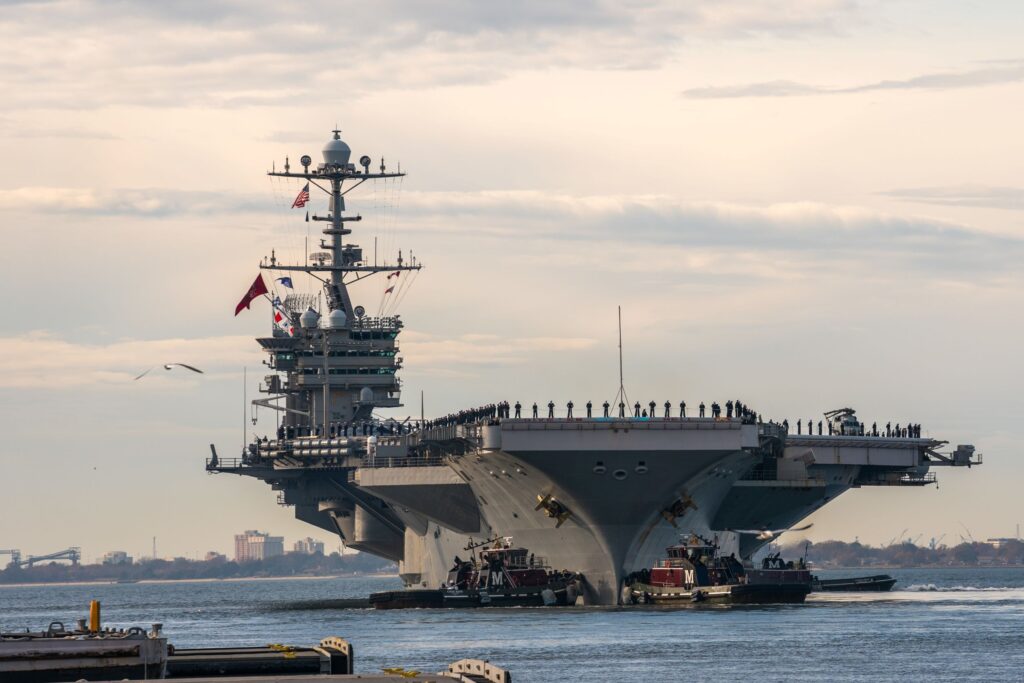
The Harry S. Truman Carrier Strike Group departed Naval Station Norfolk, Virginia, and Mayport, Florida for a regularly scheduled deployment Dec. 1. U.S. NAVY

ARLINGTON, Va. — The Harry S. Truman Carrier Strike Group (HSTCSG) departed Naval Station Norfolk, Virginia, and Mayport, Florida for a regularly scheduled deployment, Dec. 1, the USS Harry S. Truman Carrier Strike Group Public Affairs said in a release. 

Elements of the strike group, commanded by Rear Adm. Curt Renshaw, include flagship USS Harry S. Truman (CVN 75), commanded by Capt. Gavin Duff; the nine squadrons of Carrier Air Wing (CVW) 1; staffs of Carrier Strike Group (CSG) 8; and the Ticonderoga-class cruiser USS San Jacinto (CG 56). 
 
In addition, the strike group will include the guided-missile destroyers of Destroyer Squadron (DESRON) 28 commanded by Capt. Todd Zenner which includes USS Bainbridge (DDG 96), USS Cole (DDG 67), USS Gravely (DDG 107), and USS Jason Dunham (DDG 109). The Royal Norwegian Navy’s frigate HNoMS Fridtjof Nansen (F310) will join the strike group, and operate as part of the strike group throughout the entire deployment. 

The Harry S. Truman Carrier Strike Group will be conducting operations to support maritime security and stability in international waters across the globe. Carrier strike groups have a wide range of capabilities to respond wherever and whenever required through a variety of mission sets. Additionally, strike groups possess the flexibility and sustainability to fight major wars and ensure freedom of the seas. 
 
The deployment follows months of intense training and preparation to include the Board of Inspection and Survey as well as various international maritime exercises such as Group Sail and Composite Training Unit Exercise, an intense multilateral combined exercise that assessed the strike group’s abilities to conduct military operations at sea and project power ashore in late October. 

“The team within the strike group has come together in an impressive manner these last few months,” said Rear Adm. Curt Renshaw, commander, CSG 8. “They have become an integrated, multi-mission team capable of conducting the full spectrum of combat operations to ensure security in the maritime. I have no doubt that we are prepared for any challenge while on this deployment.” 

The strike group units will work alongside allied and partner maritime forces, focusing on theater security cooperation efforts, which help to further regional stability. 
 
“During this training cycle, we have learned how to train and fight side by side whether it is onboard the same ship, in the skies, or across the seas,” Duff said. “While we serve as the flag ship, we are never nearly as capable or as strong as we are when we deploy as a strike group.” 
 
HNoMS Fridtjof Nansen (F310) joined the strike group under the Cooperative Deployment Program, which emphasizes the strengthening of defense partnerships and capabilities between the United States and bilateral or multilateral partners. 
 
“HNoMS Fridtjof Nansen is ready and excited to embark upon this important deployment. The hospitality and professionalism [the] U.S. Navy has provided during our harbor stay and sea periods have been excellent, ensuring that we are an integrated asset of Carrier Strike Group 8. It is truly an honor for us to be the first Norwegian cooperative deployer in history. And this marks yet another milestone in the overall defense cooperation between Norway and our most important ally, USA,” said Commanding Officer Ruben Grepne-Takle. 
 
Squadrons of CVW 1 include Strike Fighter Squadrons (VFA) 11 “Red Rippers;” VFA-211 “Fighting Checkmates;” VFA-34 “Blue Blasters;” VFA-81 “Sunliners;” Electronic Attack Squadron (VAQ) 137 “Rooks;” Carrier Airborne Early Warning Squadron (VAW) 126 “Seahawks;” Helicopter Sea Combat Squadron (HSC) 11 “Dragon Slayers;” Helicopter Maritime Strike Squadron (HSM)72 “Proud Warriors;” and a detachment from Fleet Logistics Support Squadron (VRC) 40 “Rawhides.” 


NGC to Increase Inventory of AARGM for US Navy and German AF

An AGM-88E2 AARGM is launched from an F/A-18 during testing. NORTHROP GRUMMAN

LOS ANGELES — Northrop Grumman has received a $153 million dollar contract award from the U.S. Navy for full-rate production of lots 10 and 11 of the AGM-88E2 Advanced Anti-Radiation Guided Missile (AARGM), the company said Dec. 1. The contract includes production of missiles for the U.S. Navy and German air force. 

“As threats continue to evolve, AARGM remains an affordable solution to continue protecting the U.S. Navy and our allies with their critical missions every day,” said Gordon Turner, vice president, advanced weapons, Northrop Grumman. “The ability to detect and defeat the rapid proliferation of today’s surface-to-air-threats, while remaining out of harm’s way, is paramount to mission success.” 

Northrop Grumman has produced more than 1,500 AARGM missiles for the international cooperative acquisition program with the U.S. Navy, serving as the executive agent, and the Italian air force. The missile provides a supersonic, air-launched tactical missile system that upgrades legacy AGM-88 HARM systems with advanced capability to perform suppression and destruction of enemy air defense systems. 

AARGM is the most advanced system for pilots against modern surface-to-air threats. Providing a combination of precision, survivability and lethality, the system is able to rapidly engage land- and sea-based air-defense threats as well as striking time-sensitive targets. 

As a prime contractor, Northrop Grumman also is developing the Advanced Anti-Radiation Guided Missile – Extended Range (AARGM-ER) in partnership with the U.S. Navy. The AARGM-ER will include a new rocket motor and warhead to provide an advanced capability to detect and engage enemy air defense systems. AARGM is currently deployed with the U.S. Navy and U.S. Marine Corps on the F/A-18C/D Hornet, F/A-18E/F Super Hornet, and U.S. Navy and Royal Australian Air Force EA-18G Growler aircraft; AARGM is also integrated on the Italian air force’s Tornado Electronic Combat aircraft.