Coast Guard Buoy Tender Departs San Francisco for Major Maintenance Period
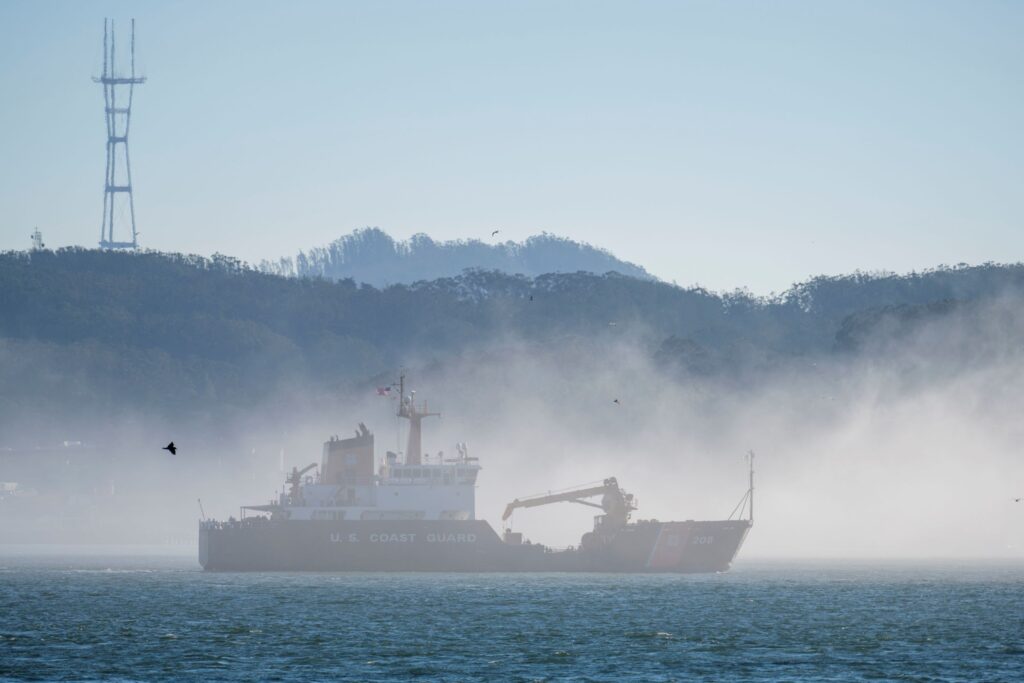
The Coast Guard Cutter Aspen (WLB 208) departs the San Francisco Bay Area Nov. 29. The Aspen served the California coastline since Sept. 28, 2001. U.S. COAST GUARD / Petty Officer 3rd Class Taylor Bacon

ALAMEDA, Calif. — The Coast Guard Cutter Aspen (WLB 208) and crew departed the Bay Area Nov. 29 for the last time as a San Francisco-based cutter and are en route to the Coast Guard Yard in Baltimore to undergo major maintenance and overhaul, the Coast Guard 11th District said Nov. 30.   
   
This marks the end of two decades of service along the California Coastline for the Aspen as one of 16 of the nation’s Juniper class sea-going buoy tenders. The 225-foot ship and its 48-person crew have been stationed at Yerba Buena Island since Sept. 28, 2001.  
   
Aspen’s area of responsibility encompassed the coastal areas from the Oregon-California border to San Diego. In addition to its primary buoy tender operations, the cutter also has a long history in search and rescue, drug and migrant interdiction and marine pollution prevention and response missions. Since 2005, the cutter has worked with U.S. partners in Mexico to interdict tens of millions of dollars in illicit narcotics in support of U.S. Southern Command and Joint Interagency Task Force South objectives, most recently interdicting $3.2 million worth of cocaine in 2017.  In 2007, Aspen responded to the Cosco Busan oil spill in San Francisco and the Deepwater Horizon oil spill in the Gulf of Mexico in 2010 to assist in oil spill cleanup efforts.    
   
The crew is slated to travel approximately 6,000 miles over the course of 40 days and pass from the Pacific to the Atlantic by way of the Panama Canal. The Aspen is scheduled to undergo a $20 million, 12-month major maintenance availability (MMA) overhaul.  
   
The MMA is a planned dry dock event at the Coast Guard Yard, the first such major availability in the life of this class of ship. The availability will recapitalize many of the ship’s critical systems, to include complete crane replacement, topside preservation work and technology modernization. The availability is designed to ensure that the cutter can reach its designed 30-year service life. Aspen will be the 11th 225-foot Juniper Class buoy tender to begin the MMA period.  

The Coast Guard Cutter Alder (WLB 216) formerly homeported in Duluth, Minnesota, is slated to be brought back into service in summer of 2022 by the former Aspen crew and re-homeported in San Francisco. The Aspen’s scheduled final destination will be Homer, Alaska, in early 2023.  

“It has been a privilege to serve along California’s rugged, oftentimes austere coastline; the beauty is without parallel, and the Pacific Ocean’s winds, current, fog and constant swells offshore continue to mold us as the stern teachers they are,” said Lt. Cmdr. Paul Ledbetter, the Aspen’s commanding officer. “The U.S. is and always has been a maritime nation, and my crew relishes the challenges of keeping the maritime transportation system up and running in our capacity as a WLB. We look forward to continuing to serve this great country when we return to San Francisco aboard the Coast Guard Cutter Alder next year.” 
   
Coast Guard Aids to Navigation Team San Francisco will be standing by to perform routine maintenance on the Aspen’s buoys throughout the Bay Area. Additionally, the Coast Guard Cutter George Cobb, a 175-foot buoy tender homeported in San Pedro, is slated to maintain all aids to navigation south of San Francisco and the Coast Guard Cutter Elm, a 225-foot buoy tender homeported in Astoria, Oregon, is also slated to assist throughout Northern California in spring 2022. 
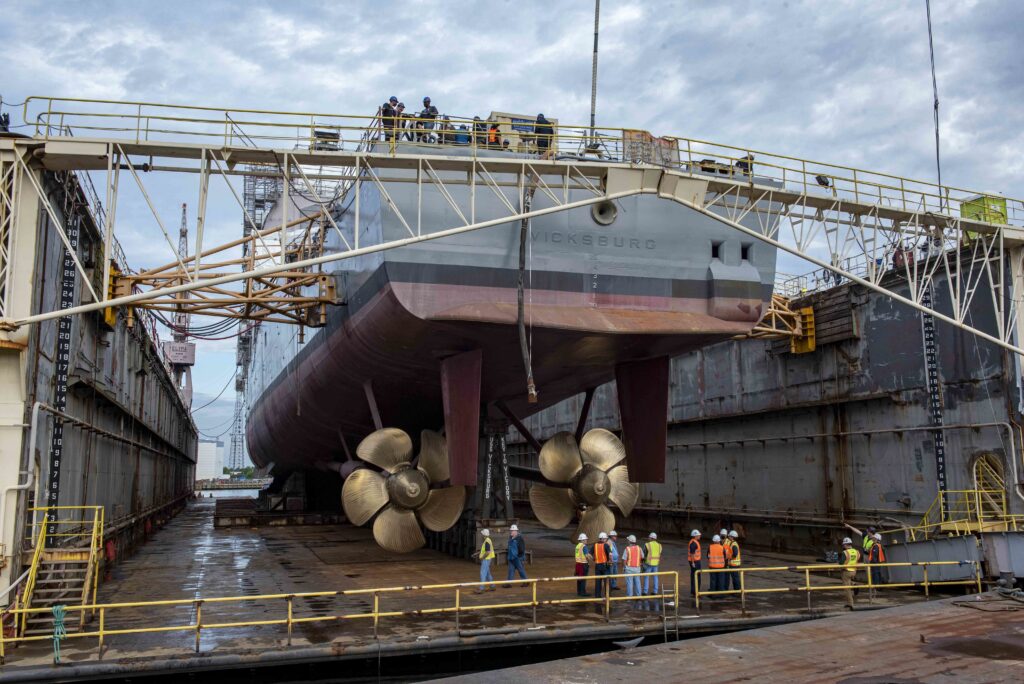


Electrowatch Completes Revere Sensitization Treatments on USS Vicksburg

The Ticonderoga-class guided missile cruiser USS Vicksburg (CG 69), shown here awaiting dry dock flooding in June 2021. U.S. NAVY / Mass Communication Specialist 3rd Class Brandon Roberson

Norfolk, Va. — ElectraWatch, an Austal USA company, completed two successful reverse sensitization treatments of aluminum alloy in service on the U.S. Navy Ticonderoga-class guided missile cruiser USS Vicksburg (CG 69) in September 2020 and July 2021. 

The process of reverse sensitization involves careful heating to restore shipboard aluminum to near-factory condition from a “sensitized” state, an out-of-spec condition susceptible to cracking that can develop at sea. This treatment reduces the need for replacement of the material or alternative surface treatment which is costly and time-consuming. Follow-up measurements verified the material had been returned to within specification. 

“I’m proud of the hard work our engineering team has done to accomplish these treatments,” ElectraWatch General Manager Ryan Dunn said. “These results validate the Navy’s confidence in ElectraWatch and the process we have developed.  Our cutting-edge tools and processes represent a major improvement over previous methods and will serve to extend the service life of the Ticondergoa-class ships.”            

Donald Tubbs, ElectraWatch’s Senior Test & Research Engineer, explains: “These tests are the result of several years of collaboration with waterfront managers and the Navy’s technical and research and development communities.” 

5000-Series Aluminum Alloy (Marine Grade) is used extensively on U.S. Navy guided-missile cruiser superstructures. The specific alloy used, AA5456, can become sensitized after long exposures to elevated temperatures, such as those that arise at sea during solar heating. Once sensitized, the combination of a corrosive environment like seawater and stress can lead to cracking of the plate. 

By carefully controlling time and temperature, the reverse senstization treatment can return to near-factory condition or “heal” aluminum alloy that may have previously required costly complete replacement. Used in tandem with ElectraWatch’s proprietary non-destructive Degree of Sensitization Probe, which has been successfully used to conduct over 9,000 fleet-based sensitization measurements, the Navy now has a turnkey solution to conduct better-informed, cost-saving maintenance planning that limits scope creep and reduces the amount of aluminum replaced.      


BAE Systems Provides First Zero-Emission Fuel Cell Propulsion System for U.S. Vessel

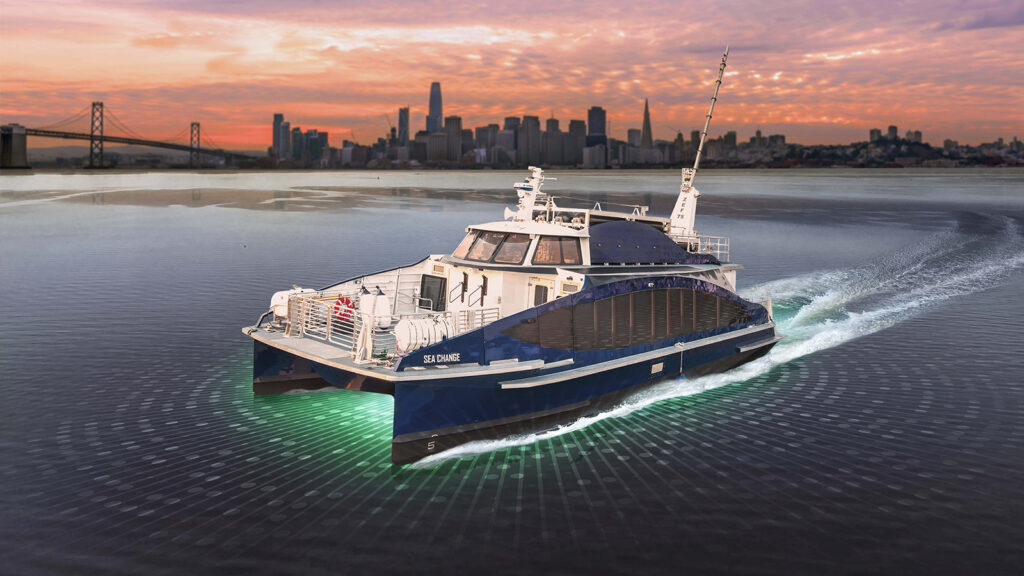
BAE Systems successfully installed its zero-emission propulsion system in the first U.S. hydrogen fuel cell powered marine vessel, the Sea Change. BAE SYSTEMS

SAN FRANCISCO and ENDICOTT, N.Y. — BAE Systems successfully installed its zero-emission propulsion system in the first U.S. hydrogen fuel cell-powered marine vessel, the Sea Change, the company said Nov. 30. 

BAE Systems provided its HybriGen Power and Propulsion solution to Zero Emission Industries for integration on the Sea Change vessel that will operate in the San Francisco Bay Area. The Sea Change project is funded and owned by SWITCH Maritime, an impact investment firm building the first fleet of zero-carbon, electric-drive maritime vessels for adoption by existing ship owners and operators.  

BAE Systems’ propulsion system interfaces with a hydrogen and fuel cell system provided by Zero Emission Industries and lithium-ion batteries to power the vessel without the need for a traditional combustion engine. The all-electric system eliminates diesel fuel use and reduces engine maintenance to create a clean mode of transportation. 

“We are committed to getting our customers to zero emissions with highly reliable and flexible systems that are proven on land and in the water,” said Steve Trichka, vice president and general manager of Power & Propulsion Solutions at BAE Systems. “This historic milestone is the next step on that journey, as we provide San Francisco with an innovative solution that reduces emissions and creates a new clean form of daily transportation for hundreds of commuters.” 

BAE Systems worked with the vessel’s builder, All American Marine, and designer, Incat Crowther, after previously teaming with both companies on multiple projects. BAE Systems uses proven controls and components that have passed certification and inspection by the U.S. Coast Guard. 

The project is also partially funded by a $3 million grant from the California Air Resources Board, administered by the Bay Area Air Quality Management District, that comes from the California Climate Investments initiative, a California statewide program that puts billions of cap-and-trade dollars to work reducing greenhouse gas emissions, strengthening the economy, and improving public health and the environment, particularly in disadvantaged communities.   


Oshkosh Defense Receives $591.6M JLTV Order for Army, Marine Corps, Others

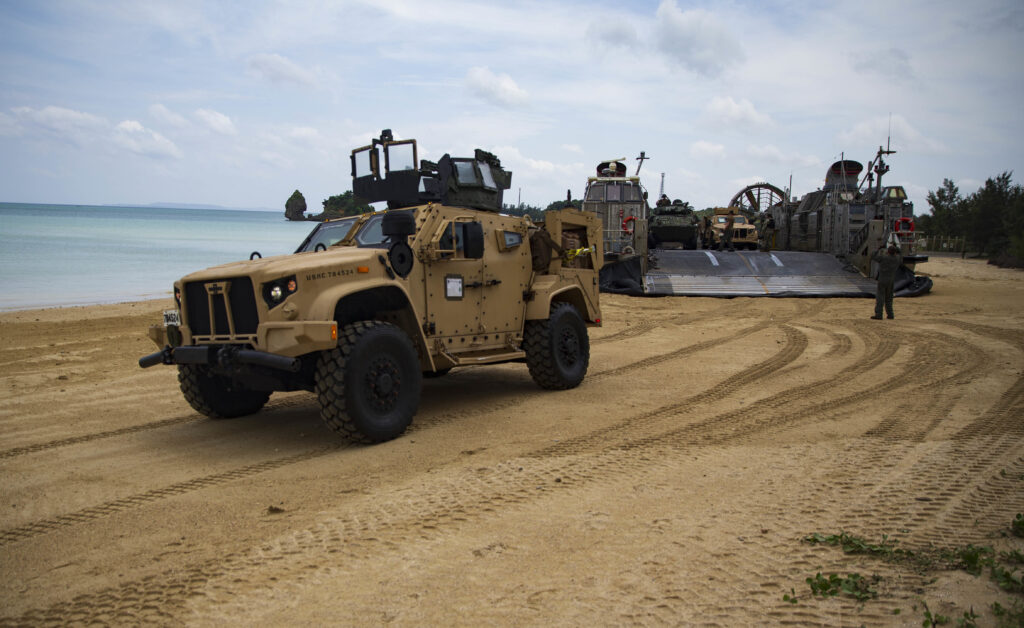
U.S. Marines with Battalion Landing Team 3/5, 31st Marine Expeditionary Unit land on the beach in a joint light tactical vehicle (JLTV) to begin a light armored reconnaissance raid reherasal at Camp Schwab, Okinawa, Japan, June 19. U.S. MARINE CORPS / Sgt. Daisha R. Ramirez

OSKOSH, Wis. — The U.S. Army Contracting Command – Detroit Arsenal (ACC-DTA) has awarded Oshkosh Defense a $591.6 million order for 1,669 Joint Light Tactical Vehicles (JLTV), 868 companion trailers and associated packaged and installed kits, the company said Nov. 29. 

The order includes Oshkosh Defense JLTVs for the U.S. Army, Marine Corps, Air Force and Navy. As part of the order, 125 vehicles will also be delivered to NATO and allied partners, including Brazil, Lithuania, Montenegro and Slovenia. 

Since winning the competitive JLTV contract in 2015, Oshkosh Defense, a wholly owned subsidiary of Oshkosh Corp., has built more than 14,000 JLTVs, and that number continues to grow. 

“Our team takes great pride in designing and building a versatile platform that can survive the extreme demands of future combat,” said George Mansfield, vice president and general manager of Joint Programs for Oshkosh Defense. “That’s what we do and what we’ve been doing for decades. And Oshkosh’s vast tactical wheeled vehicle experience, expertise and knowhow grows with every vehicle that comes off our production line.” 

International momentum surrounding the Oshkosh Defense JLTV also continues to grow as customers seek a light tactical vehicle with lethal capabilities, fleet commonality attributes and design flexibility. 

“Integrated lethality on an agile and protected vehicle like the Oshkosh JLTV is quickly filling capability gaps that exist in many international militaries,” said John Lazar, vice president and general manager of International Programs for Oshkosh Defense. “This past year, we’ve seen an increased interest in the Oshkosh JLTV from international customers with dynamic demonstrations and live fires across Europe, with more planned for 2022.” 


DOT, MARAD Release Assessment of US Merchant Marine Academy

Midshipmen and plebe candidates stand in formation at the U.S. Merchant Marine Academy at Kings Point in 2018. The Plebe candidates are congressionally nominated and are starting indoctrination, a rigorous, 20-day regimen of academic, military, and physical training. U.S. NAVY

WASHINGTON — The U.S. Department of Transportation (USDOT) and Maritime Administration (MARAD) released Nov. 24 a new report titled, “Organizational Assessment of the U.S. Merchant Marine Academy: A Path Forward” and an accompanying implementation plan prepared by the National Academy of Public Administration (NAPA).  

“USMMA students are remarkable leaders committed to serving the nation and supporting positive change,” said Acting Maritime Administrator Lucinda Lessley. “They deserve a modern, safe, and inclusive learning environment where they have the training and resources that will prepare them to succeed in the U.S. merchant marine and in our armed forces. We acknowledge, and have been working to address, the many urgent issues raised by NAPA’s report and to put USMMA on a path to modernization.”   

NAPA’s assessment affirms that USMMA faces “longstanding systemic issues” across almost all areas of its operations, including educational programs; facilities maintenance and capital management; sexual assault and sexual harassment prevention and response, including during the Sea Year; diversity, equity, and inclusion; and internal and external governance.    

The assessment further warns that, “Because of the magnitude and fundamental nature of the challenges USMMA faces, the greatest risk to USMMA’s future is doing nothing to significantly address its challenges and the causes of those challenges.”   

NAPA’s report also makes clear that these challenges have worsened over many years and that under-resourcing — particularly unmet personnel needs — makes many of these challenges more difficult to resolve.    

The Way Forward   

Since the start of the new administration, USDOT and MARAD leaders have been focused on the most urgent issues facing the USMMA. USDOT and MARAD will establish a task force, as recommended by the NAPA report, to develop recommendations that help chart the Academy’s future.  

USDOT and MARAD also have numerous efforts underway to address challenges identified in the NAPA report. For example, USDOT and MARAD have announced a temporary pause in Sea Year training and are developing new requirements for commercial vessels that carry cadets to protect the safety, security, and well-being of cadets.   

In alignment with the reports’ recommendation that USMMA should engage a facility executive to direct and coordinate maintenance and capital efforts, USDOT has detailed a senior federal official to direct ongoing efforts to address the Academy’s maintenance backlog and lead capital efforts.   

In addition, leadership is working to finalize and implement a campus-wide maintenance contract.    

Consistent with the NAPA recommendation that USMMA accelerate investments in information technology, the USDOT Office of Chief Information Officer will work to identify options to upgrade information technology systems.  

USDOT and MARAD remain committed to ensuring training and resources are available to graduate licensed merchant marine officers who can meet the national security, economic, and transportation needs of the nation. The recommendations provided by NAPA will assist the administration in supporting a campus where midshipmen learn to become exemplary leaders in a safe, secure, and modern environment. 

For more information, the assessment and implementation plan are available for download

The U.S. Merchant Marine Academy was founded in 1956 with a mission to educate and graduate leaders to serve the national security, marine transportation, and economic needs of the United States as licensed merchant marine officers and commissioned officers in the Armed Forces. USMMA provides students with a degree and credentials that allow them to embark on a career in public service.  

The NAPA assessment was directed by the 2020 National Defense Authorization Act to provide an analysis of the operations of the USMMA and offer modernization recommendations for implementation consideration.  


Navy Awards Austal Service Contract for Westpac LCSs

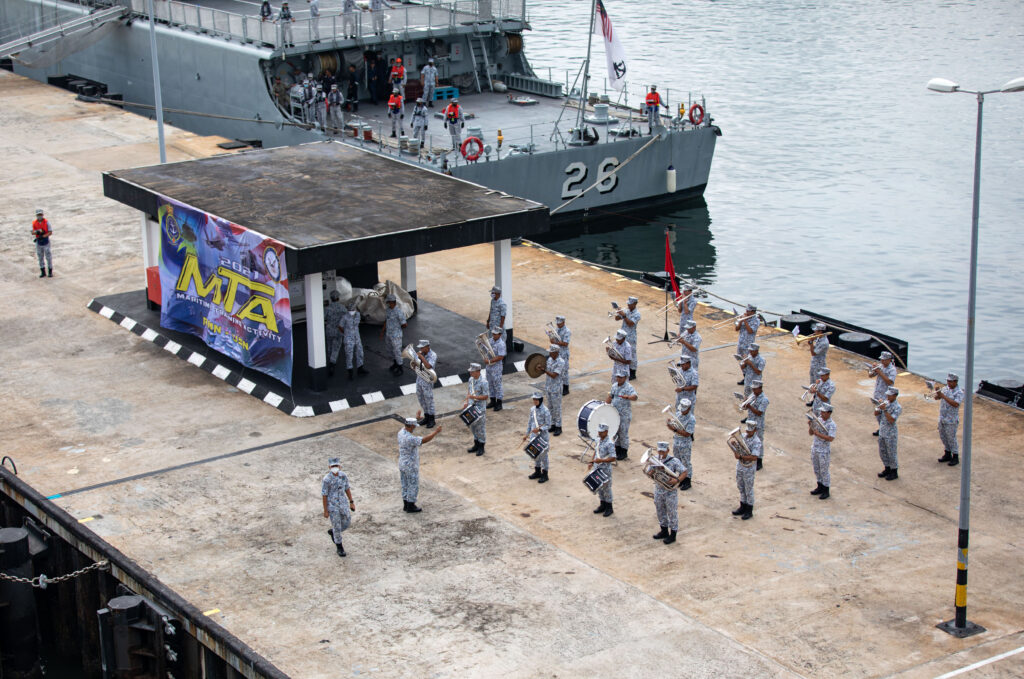
Royal Malaysian Navy Sailors play music as the U.S. Navy Independence-variant littoral combat ship USS Tulsa (LCS 16) arrives at Lumut, Malaysia, following Maritime Training Activity (MTA) Malaysia 2021. U.S. NAVY / Mass Communication Specialist 1st Class Devin M. Langer

Mobile, Ala. — Austal USA has received a contract from the U.S. Navy to provide services and support for littoral combat ships (LCS) deployed to the Western Pacific and Indian Ocean, the company said in a Nov. 24 release. 

This is the third major U.S. Navy service contract for Austal USA following the company’s significant investment in its service business and service centers in Mobile, Alabama, San Diego and Singapore over the last four years. 

The $72.5 million single award, indefinite-delivery/indefinite-quantity contract provides for emergent repair and continuous maintenance for littoral combat ships deployed to the Western Pacific and Indian Ocean and the countries and ports therein. If all options are exercised, the contract will be for five years and bring the total value to $215.8 million. 

This award, which supports Navy requirements within the Western Pacific and Indian Ocean, complements recent awards for littoral combat ship repair and maintenance on the east and west coasts, the Sustainment Execution-East and Sustainment Execution-West contracts. In addition to the three major contract awards, Austal USA recently announced the approval of a lease for a waterfront repair and maintenance facility in San Diego. This provides Austal the capability to support both variants of the littoral combat ship globally.    

“We’ve made it clear to our customer that we are committed to the continued service and support of the LCS throughout its lifecycle,” Austal USA President Rusty Murdaugh said. “We’ve demonstrated this commitment through our continued investment in our people, processes, and facilities — and our customer has responded with confidence.” 

Currently, the U.S. Navy has multiple Independence-variant LCS deployed to the Western Pacific. This contract positions Austal USA to be the prime contractor for all continuous and emergent maintenance on the LCS as they transit and operate in the region. 

In 2017, Austal USA established a service center in Singapore adjacent to the Changi Naval Base to support deployed LCS and Austal-built Expeditionary Fast Transports. Over the last four years, Austal USA’s service and support business has grown in size and scope with continued investment from the company. 

In 2018, the company expanded its presence in San Diego adding more engineering and technical expertise to support the continued delivery of the LCS homeported in San Diego. 

In September 2020, Austal USA purchased additional waterfront, facilities, and equipment along the Gulf Coast in Mobile, Alabama. The new Austal USA West Campus Ship Repair facility includes 15 acres of waterfront property; a pierfront capable of mooring vessels up to 1,000 feet; a 20,000-ton Panamax-class floating dry dock; 300,000 square feet of outside fabrication space; and 100,000 square feet of covered repair facilities. 


DoD Concludes 2021 Global Posture Review

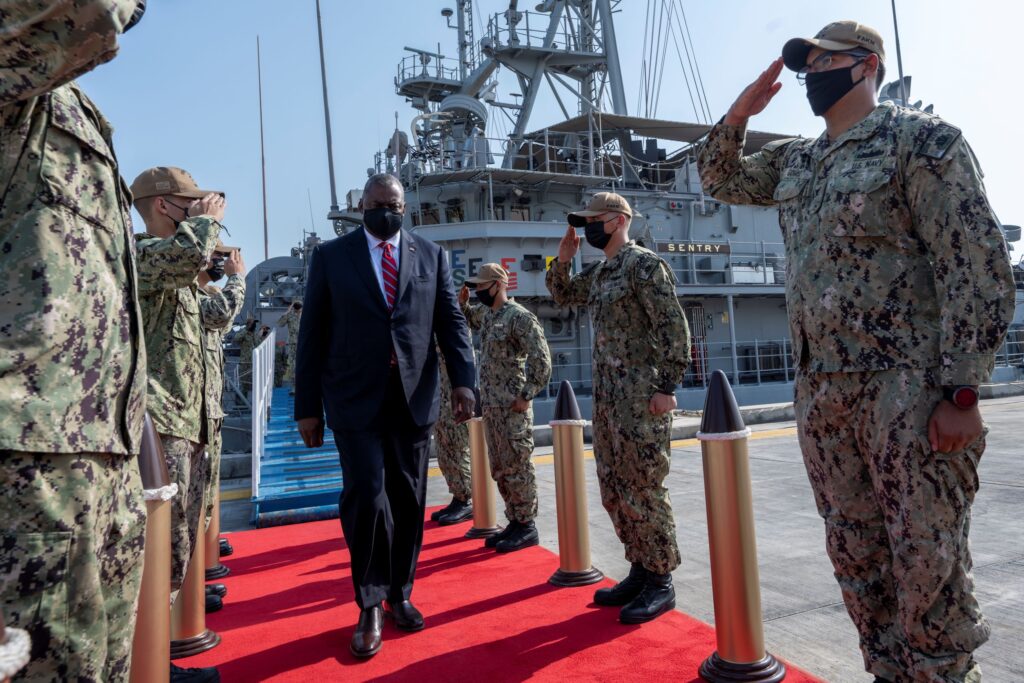
Secretary of Defense Lloyd J. Austin III is piped ashore after viting USS Sentry (MCM 3) in Bahrain, Nov. 21. Secretary Austin was traveling in the Gulf region to deliver remarks at the annual International Institute for Strategic Studies Manama Dialogue and met with senior government officials to affirm the strength of defense partnership and discuss joint priorities in the Middle East. DOD / Chad J. McNeeley

ARLINGTON, Va. — Following several months of analysis and close coordination across the U.S. government, the Department of Defense released the results of the Global Posture Review (GPR) Nov. 29. 

The conclusion of the review comes at a key inflection point following the end of operations in Afghanistan and ongoing development of the National Defense Strategy. Nested within the Interim National Security Strategic Guidance, the GPR assessed DoD’s posture across major regions outside the United States and developed near-term posture adjustments, posture planning guidance and analysis on long-term strategic issues.  

Through these assessments, the GPR will help strengthen posture decision-making processes, improve DoD’s global response capability, and inform the draft of the next National Defense Strategy. 

In the Indo-Pacific, the review directs additional cooperation with allies and partners to advance initiatives that contribute to regional stability and deter potential Chinese military aggression and threats from North Korea. These initiatives include seeking greater regional access for military partnership activities; enhancing infrastructure in Australia and the Pacific Islands; and planning rotational aircraft deployments in Australia, as announced in September. The GPR also informed Secretary Lloyd Austin’s approval of the permanent stationing of a previously rotational attack helicopter squadron and artillery division headquarters in the Republic of Korea, announced earlier this year. 

In Europe, the GPR strengthens the U.S. combat-credible deterrent against Russian aggression and enables NATO forces to operate more effectively. Based on an initial GPR assessments and a recommendation from Austin, in February 2021 President Biden rescinded the 25,000 active-duty force cap in Germany established by the previous administration.  

Additionally, Austin announced in April DoD would permanently station an Army Multi-Domain Task Force and a Theater Fires Command, a total of 500 Army personnel, in Germany.  

In the Middle East, the GPR assessed the department’s approach toward Iran and the evolving counterterrorism requirements following the end of DoD operations in Afghanistan. In Iraq and Syria, DoD posture will continue to support the defeat ISIS campaign and building the capacity of partner forces. Looking ahead, the review directs DoD to conduct additional analysis on enduring posture requirements in the Middle East. 

In Africa, analysis from the review is supporting several ongoing interagency reviews to ensure DoD has an appropriately scoped posture to monitor threats from regional violent extremist organizations, support our diplomatic activities and enable our allies and partners. 

Finally, in Central and South America and the Caribbean, the GPR reviewed the role of DoD posture in support of national security objectives, including humanitarian assistance, disaster relief and counter-narcotics missions. DoD posture will continue to support U.S. government efforts on the range of transnational challenges and partnership activities in the region. 

The Department conducted the GPR with participation from Office of the Secretary of Defense components, the military departments, the Joint Staff, the combatant commands, the National Security Council staff, the U.S. State Department, U.S. Agency for International Development and the Office of the Director of National Intelligence, along with close consultation with dozens of allies and partners worldwide. 


USS The Sullivans Completes Historic Deployment

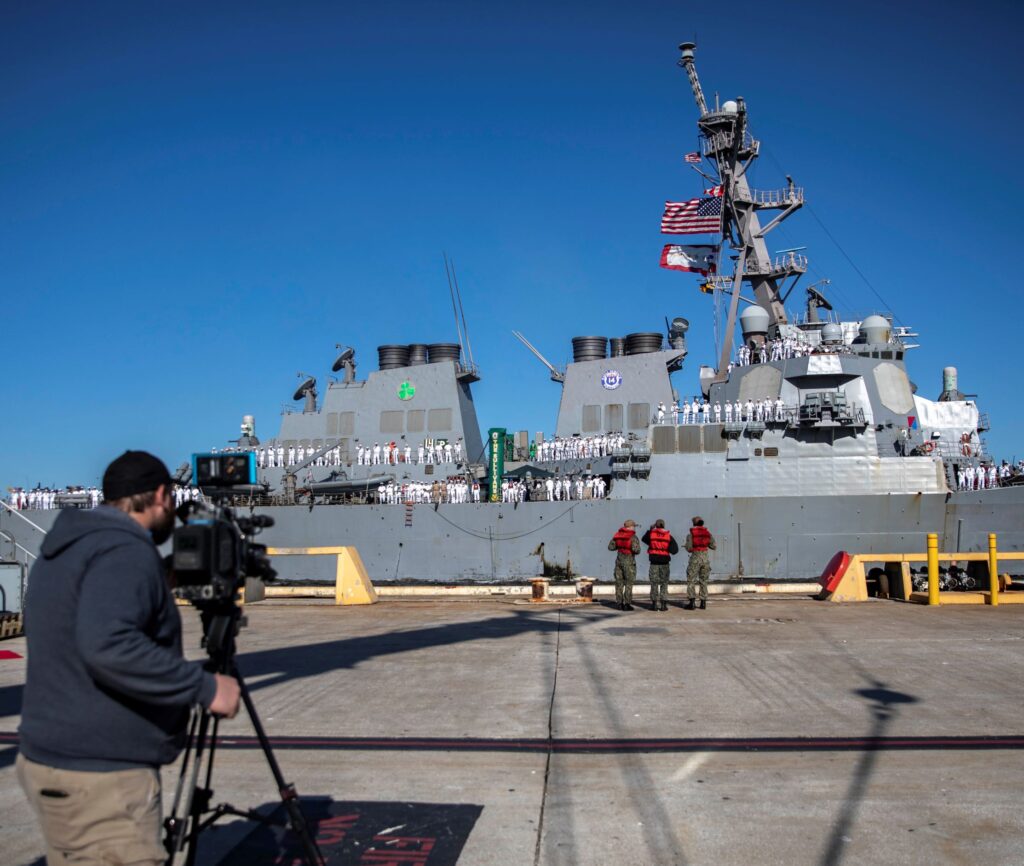
The Arleigh Burke-class guided missile destroyer USS The Sullivans (DDG 68) returns from a seven-month world deployment with the HMS Queen Elizabeth Carrier Strike Group, Nov. 24. U.S. NAVY / Mass Communication Specialist 2nd Class Austin G. Collins

MAYPORT, Fla. — The Arleigh Burke-class guided-missile destroyer USS The Sullivans (DDG 68) returned to Naval Station Mayport, Nov. 24, marking the end of a seven-month world tour deployment to the U.S. 2nd, 5th, 6th and 7th Fleet areas of operations as part of the U.K. Carrier Strike Group 2021 (CSG 21) and Operation Fortis, the U.S. 2nd Fleet said Nov. 24. 

CSG 21 was led by aircraft carrier HMS Queen Elizabeth (R08) on her first deployment and was comprised of multi-national forces, including The Sullivans, U.S. Marine Corps Fighter Attack Squadron (VMFA) 211 and The Netherlands frigate HNLMS Evertsen (F805). 
 
U.S. Navy Cmdr. James Diefenderfer Jr., commanding officer of The Sullivans, regards the integrated deployment as a step forward for the long-standing maritime alliance between the United States and the United Kingdom. 

“The Sullivans was fortunate to complete a seven-month deployment with a United Kingdom carrier, marking the culmination of a decade-long bilateral carrier coordination effort,” Diefenderfer said. “The Sullivans’ crew proved again and again they have the grit and professionalism it takes to represent the U.S. Navy and the memory of the Sullivan brothers while deployed.”  

The crew navigated over 50,000 nautical miles through four U.S. fleets, transiting the Strait of Gibraltar, Suez Canal, Bab-el Mandeb, Strait of Malacca and across the equator. The Sullivans also conducted 29 underway replenishments and 18 sea and anchor details during port visits to Portsmouth, England; Gaeta, Italy; Limassol, Cyprus; Guam; Yokosuka, Japan; Souda Bay, Greece; Toulon, France; and Rota, Spain. 
 
The Sullivans, the only U.S. surface ship in CSG 21, supported U.S. 2nd, 5th, 6th and 7th Fleet commanders across 20 warfare areas ranging from surface to ballistic missile and air defense. 
 
While operating with CSG 21 in Operation Fortis, The Sullivans was tasked to escort HMS Queen Elizabeth around the world, providing multi-threat defense. Operation Fortis was executed in six phases across four different areas of operations, demonstrating interoperability with more than 15 different allied and partner nations. The Sullivans also provided layered defense and command and control for the entire carrier strike group in support of air defense missions to ensure stability and security across the globe. 

“USS The Sullivans has been an integral part of the U.K. CSG for over a year,” said Royal Navy Cmdr. Steven Moorhouse, commander, CSG 21. “It was a pleasure working with The Sullivans, and I thank each and every member of the ship’s company for their loyalty, professionalism and great humour along our journey. The ship’s motto says it all: ‘We stick together.’” 
 
CSG 21 spent nearly half of the seven-month deployment in the U.S 6th Fleet area of operations, participating in four major multinational exercises, including Steadfast Defender and Strike Warrior 2021. 

After departing U.S. 6th Fleet, CSG 21 transited to the Indian Ocean where they participated in the Indian Navy Exercise Konkan. The crew trained to aggressively advance surface, anti-submarine and anti-air warfare tactics while strengthening interoperability with their foreign partners. 
 
The strike group then entered U.S. 7th Fleet and began a string of exercises in the Indo-Pacific, demonstrating seamless interoperability with allies and partners. Exercise Noble Union, conducted in the Pacific Ocean, fully integrated CSG 21 and Expeditionary Strike Group (ESG) 7 and marked the beginning of a three-month tactical training with the Japanese Maritime Self-Defense Force (JMSDF). The strike group also trained with Republic of Korea’s Surface Forces on communication, search and rescue, replenishment capabilities, and cross-deck aviation evolutions. 
 
CSG 21 met the Ronald Reagan Carrier Strike Group (CSG 5), the Carl Vinson Carrier Strike Group (CSG 1) and the JMSDF Carrier Strike Group to conduct quad carrier operations. Squadrons from different air wings operated in concert with the 17-ship force, representing six participating nations and demonstrating a commitment to a free and open Indo-Pacific. 
 
After concluding operations in U.S. 7th Fleet, The Sullivans and CSG 21 re-entered the Indian Ocean to participate in the Maritime Partnership Exercise in the Bay of Bengal with Australia, India, Japan and CSG 1. 
 
The Sullivans detached from CSG 21 in the Indian Ocean and sailed independently through U.S. 5th Fleet, after a farewell visit from Cdre. Moorhouse and U.S. Marine Corps Brig. Gen. Simon Doran, U.S. Senior National Representative to the United Kingdom’s CSG. 
 
The Sullivans participated in one final exercise with the Tunisian Navy in the Mediterranean Sea, the first time conducting high-level integrated operations together. 
 
“The crew worked extremely hard over the last year and a half preparing for and executing a deployment as dynamic as this one,” Diefenderfer said. “I am grateful for the love and sacrifice that the Sailors and their families displayed through a global pandemic leading into a deployment. The crew came together to accomplish every operational tasking as a team.” 


Austal Contracts with SSAB for Steel for Navy T-ATS Construction

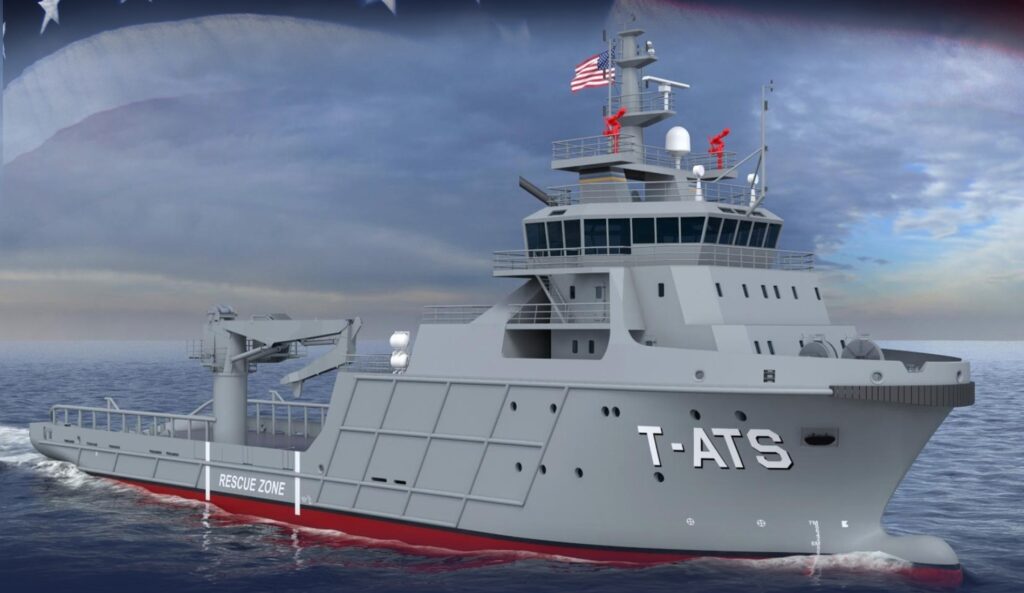
An artist’s conception of a Towing, Salvage and Rescue ship. AUSTAL USA

Mobile, Ala. — Following Austal USA’s award from the U.S. Navy to build steel-hulled Towing, Salvage and Rescue ships (T-ATS), Austal USA has contracted with local Alabama steel provider SSAB to provide steel for the new Navy ships, Austal said Nov. 29. The supplier partnership directly supports hundreds of jobs in the greater Mobile area from both Austal and SSAB. 

Austal will source various strength and sized steel plating from SSAB capable of being cut, shaped, welded and fitted, resulting in the construction of valuable support ships and potential combat ships for our U.S. military. 

“SSAB not only provides us with quality steel, but also great flexibility due to its location adjacent to us here in Mobile, Alabama,” Austal USA President Rusty Murdaugh said. “The ability to work quickly and in-person with them on current and future steel requirements by the U.S. Navy and Coast Guard is an asset to Austal that will support our business and economic growth in our community.” 

“Austal USA is a respected and valued partner to SSAB Americas,” SSAB Americas Senior Vice President and Chief Commercial Officer Jeff Moskaluk said.  “Our participation in such an important and vital project, that will strengthen both the economic and national security of our country, makes this partnership even more meaningful. We are proud to work closely with Austal USA and demonstrate the service, quality and value that is delivered from an interconnected and local supply chain here in Alabama.” 

Austal USA broke ground on a new steel manufacturing line in March 2020 to meet the steel-ship demand signal of the U.S. government. The new line will be operational in April with Austal poised to start construction on the recently award U.S. Navy T-ATS program. Austal’s state-of-the-art steel production line will support future steel programs for the U.S. Navy and U.S. Coast Guard.  


USCGC Hamilton Returns Home after 72-day Patrol, Drug Offload

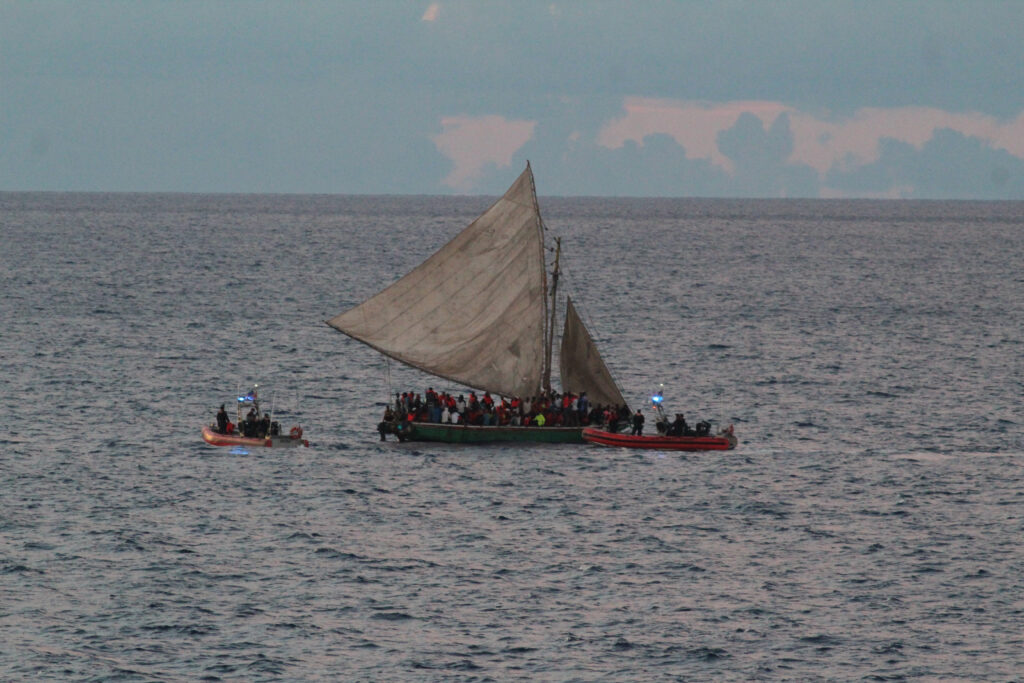
Two Coast Guard Cutter Hamilton(WMSL 753) small boats repatriates Haitian migrants on the Eastern Pacific Ocean, Sept. 18. The Cutter Hamilton repatriated 199 migrants during its 72-day patrol. U.S. COAST GUARD

CHARLESTON, S.C. — The Legend-class national security cutter USCGC Hamilton (WMSL 753) crew returned home Nov. 24 to Charleston after completing a 72-day patrol throughout the Eastern Pacific Ocean, the Coast Guard 7th District said in a release.  

The crew offloaded 26,250 pounds (11,907 kilograms) of cocaine and 3,700 pounds of marijuana worth $504 million Monday at Port Everglades.    

Hamilton’s crew interdicted five drug-laden vessels while patrolling the Eastern Pacific Ocean. Hamilton’s law enforcement team detained all 14 suspects, stopped 199 Haitian migrants, and rescued two people.  

Hamilton’s crew, along with an aviation detachment from the Coast Guard’s Helicopter Interdiction Tactical Squadron, began the deployment in early September anticipating a counter-narcotics patrol in the Eastern Pacific Ocean.  

With changes in the Haitian political climate, Hamilton’s crew transitioned to alien migration interdiction operations in the Windward Pass. Hamilton’s crew focused on dangerous maritime migration voyages, then interdicting 199 Haitian migrants. They also managed tactical control of seven U.S. Coast Guard cutters, which reduced Haitian migration by 93% with no loss of life. 

“We are thrilled to be back in the low country in time for the holidays. The past 72 days have taken us from deterring illegal migration off Haiti to combatting drug trafficking organizations in the Eastern Pacific,” said Capt. Matthew Brown, commanding officer of Hamilton. “Every day brought new challenges but also new opportunities for this crew to come together and solve complex problems. The product of their hard work was the successful deterrence of unsafe migrant ventures from the claw of Haiti and the seizure of nearly 12 tons of illegal drugs destined for North America.”   

Hamilton is one of three 418-foot national security cutters homeported in Charleston under U.S. Coast Guard Atlantic Area Command with two more anticipated by 2025. With its robust command, control, communication, computers, intelligence, surveillance, and reconnaissance equipment, they are the most technologically advanced ship in the U.S. Coast Guard’s fleet. These crews regularly work cooperatively under U.S. Coast Guard Pacific Area, district commanders and combatant commands. 

NSCs are a worldwide deployable asset that supports the Department of Homeland Security, Department of Defense and national objectives through drug interdiction, migrant interdiction, national defense, SAR, fisheries enforcement and national intelligence collection.   

U.S. Coast Guard Atlantic Area command, based in Portsmouth, Virginia, oversees all U.S. Coast Guard operations east of the Rocky Mountains to the Arabian Gulf. Also, they allocate ships to deploy to the Caribbean and Eastern Pacific to combat transnational organized crime and illicit maritime activity.