Boeing to Build New Factory in Illinois to Produce MQ-25 Stingray

Boeing will build the U.S. Navy’s MQ-25 Stingray unmanned aerial refueler at a new 300,000 square foot facility at MidAmerica St. Louis Airport in Illinois. The facility will feature state-of-the-art manufacturing processes and tools, including robotic automation and advanced assembly techniques, to improve product quality and employee ergonomics. BOEING

ST. LOUIS — Boeing will build the Navy’s newest carrier-based aircraft at a new high-tech facility in Illinois, bringing the benefits of digital aircraft design and production to the Navy and up to 300 advanced manufacturing jobs to the greater St. Louis region, the company said Sept. 17. 

The new 300,000 square-foot facility at MidAmerica St. Louis Airport, scheduled for completion in 2024, initially will employ approximately 150 mechanics, engineers and support staff who will build the MQ-25 Stingray, the Navy’s first operational, carrier-based unmanned aircraft. Employment could reach up to 300 with additional orders. 

“The world’s largest aerospace company is doubling down on Illinois because of our unparalleled assets in the transportation and logistics sector and the world-class talent of our people,” said Gov. J.B. Pritzker. “To prepare our communities for the future, my administration is committed to making continued investments that will modernize our airports, spark new innovation and bring jobs and economic opportunities to our communities from Chicago to St. Clair and beyond. I want to thank the Boeing company for their vote of confidence in Illinois, as well as St. Clair County leadership and the MidAmerica Airport team for giving companies another reason to choose Illinois.” 

Boeing digitally engineered the entire MQ-25 aircraft and its systems, resulting in high-fidelity models that are used to drive quality, efficiency and flexibility throughout the production and sustainment process. The new MQ-25 facility will include state-of-the-art manufacturing processes and tools, including robotic automation and advanced assembly techniques, to improve product quality and employee ergonomics. 

“The team and state-of-the-art technology we’re bringing to the Navy’s MQ-25 program is unprecedented, and we’re incredibly proud to be expanding both as we build the future of autonomous systems in Illinois,” said Kristin Robertson, vice president and general manager of Autonomous Systems, Boeing Defense, Space & Security. “We’ve received great support from MidAmerica Airport and countless dedicated employees, and we’re excited to build the Navy’s first operational, carrier-based unmanned aircraft right here in the Metro East.” 

For two years, Boeing and the Navy have been flight testing the Boeing-owned MQ-25 test asset from MidAmerica Airport, where in recent history-making missions T1 has refueled an F/A-18 Super Hornet, an E-2D Hawkeye and an F-35C Lightning II.  

The U.S. Navy intends to procure more than 70 MQ-25 aircraft to help extend the range of the carrier air wing, and the majority of those will be built in the new facility. Boeing is currently producing the first seven MQ-25 aircraft, plus two ground test articles, at its St. Louis facilities, and they will be transported to MidAmerica for flight test. The MQ-25 program office, including its core engineering team, will remain based in St. Louis. 

The new MQ-25 facility will be in addition to existing manufacturing operations at Boeing St. Clair, which produces components for the CH-47 Chinook, F/A-18 Super Hornet, F-15 and other defense products. 


US, UK Australia Form Trilateral Partnership, Start Australian Nuclear Submarine Project

The Virginia-class fast-attack submarine USS New Mexico (SSN 779) returns to its homeport of Naval Station Norfolk, Sept. 15, 2021. U.S. NAVY / Mass Communication Specialist 1st Class Alfred Coffield

ARLINGTON, Va. — The United States, the United Kingdom, and Australia have formed a tri-lateral defense partnership, which soon will launch a project to develop and build nuclear-powered submarines for the Royal Australian Navy.  

Australia operates Collins-class diesel-electric submarines and was in the process of procuring 10 submarines in a partnership with France, a deal that is likely to be torpedoed by the new AUKUS partnership. 

At the White House Sept. 15, the presidents of the three nations spoke at the news conference announcing the AUKUS partnership.   

“The first major initiative of AUKUS will be to deliver a nuclear-powered submarine fleet for Australia,” said Australian Prime Minister Scott Morrison. “Over the next 18 months, we will work together to seek to determine the best way forward to achieve this.  This will include an intense examination of what we need to do to exercise our nuclear stewardship responsibilities here in Australia. We intend to build these submarines in Adelaide, Australia, in close cooperation with the United Kingdom and the United States. 

The project would represent a major industrial enterprise in a nation with no experience in building and operating nuclear submarines. Australia has built modern surface warships, including high-end anti-air warfare destroyers. 

U.K. Prime Minister Boris Johnson seconded the partnership. 

“I’m delighted to join President Biden and Prime Minister Morrison to announce that the United Kingdom, Australia, and the United States are creating a new trilateral defense partnership, known as AUKUS, with the aim of working hand in glove to preserve security and stability in the Indo-Pacific,” Johnson said. “We’re opening a new chapter in our friendship, and the first task of this partnership will be to help Australia acquire a fleet of nuclear-powered submarines, emphasizing, of course, that the submarines in question will be powered by nuclear reactors, not armed with nuclear weapons. And our work will be fully in line with our non-proliferation obligations.”  
   
“This will be one of the most complex and technically demanding projects in the world, lasting for decades and requiring the most advanced technology,” Johnson said. “It will draw on the expertise that the U.K. has acquired over generations, dating back to the launch of the Royal Navy’s first nuclear submarine over 60 years ago; and together, with the other opportunities from AUKUS, creating hundreds of highly skilled jobs across the United Kingdom, including in Scotland, the north of England, and the Midlands, taking forward this government’s driving purpose of leveling up across the whole country.” 

“Our governments will now launch an 18-month consultation period to determine every element of this program — from workforce, to training requirements, to production timelines, to safeguards and nonproliferation measures, and to nuclear stewardship and safety — to ensure full compliance with each of our nation’s commitments under the Nuclear Non-Proliferation Treaty,” said President Joseph Biden. 


AT&T, Naval Postgraduate School to Jointly Research 5G, Edge Computing Solutions

A Naval Postgraduate School deployment plan for the 5G and edge computing work. NAVAL POSTGRADUATE SCHOOL

AT&T and the Naval Postgraduate School (NPS) have entered into an agreement to explore and develop 5G and edge computing-based maritime solutions aimed at benefitting national defense, homeland security, and industries such as shipping, oil and gas, recreational boating and more. 

The NPS and AT&T experiments with 5G and edge computing are expected to result in the identification of advanced technology solutions such as a connected system of unmanned and autonomous vehicles that can improve critical elements of national defense, such as multi-domain situational awareness, command and control, training, logistics, predictive maintenance and data analytics. 

The research includes the use of edge computing, where data is processed locally near a device to speed the completion of computing tasks.  

The parties entered into a three-year Collaborative Research and Development Agreement (CRADA). Under the agreement, super-fast, low latency AT&T 5G networking and edge computing capabilities will support a broad array of 5G-focused experiments on NPS facilities incorporating artificial intelligence, robotics, internet of things, machine learning, data analytics and smart base solutions. 

As part of the CRADA, one initiative is the NPS’ Sea Land Air Military Research (SLAMR) program. SLAMR conducts activity at Camp Roberts in South Monterey County, California, and, to a lesser extent, on the NPS main campus and at SLAMR’s beach lab north of the main campus in Monterey.

The NPS SLAMR program will explore the development of 5G and edge computing-powered sea applications that connect crewed and non-crewed vessels and sensors. Experiments will be conducted within the SLAMR’s multi-domain laboratory. The program is also focused on providing all-domain maritime solutions for a broad array of defense, industry and commercial applications.

The vision guiding the SLAMR program is to eventually have a command and aquatics operations facility with which to perform localized, unmanned aerial, surface, and underwater robotic vehicle activity. It is expected the facility and some of the experimental vehicles will be connected and powered by AT&T networking capabilities, including 5G and edge computing services.

The placement of AT&T’s 5G networking infrastructure is underway at NPS in accordance with a real estate license. It includes a tower and a short-range antenna on a prefabricated pad to be located at the SLAMR beach lab within walking distance from the main NPS campus. A key goal of the equipment placement is ease of access for faculty and students conducting autonomous vehicle research at a former waste-water treatment facility on the site. 


U.S. Coast Guard Cutter Trains with Royal Australian Navy

HMAS Sirius conducts a dual replenishment at sea with HMAS Canberra and USCG Cutter Munro as HMAS Anzac sails behind, during Indo-Pacific Endeavour 2021. LSIS Leo Baumgartner

ALAMEDA, Calif. — U.S. Coast Guard members aboard the Alameda-based Coast Guard Cutter Munro (WMSL 755) participated in a cooperative three-day at-sea exercise with the Royal Australian Navy in the South China Sea Sept. 11 to 13, the Coast Guard Pacific Area said in a Sept. 16 release. 

The joint training engagement included joint operations, professional exchanges, and multi-unit maneuvering at sea to strengthen interoperability between the U.S. Coast Guard and Royal Australian Navy. 

“These at-sea engagements with our long-standing partners in the Indo-Pacific region provided an excellent joint training opportunity for the crew,” said Munro’s Commanding Officer Capt. Blake Novak. “Enhancing cooperation and building trust strengthens our relationship with the Royal Australian Navy while expanding our regional security cooperation initiatives.” 

The U.S. Coast Guard has a long history of cooperation with the Royal Australian Navy. The U.S. and Australia, along with New Zealand and France, make up the Pacific Quadrilateral Defense Coordinating Group or P-QUAD. P-QUAD endeavors to enhance maritime security in the Western and Central Pacific Ocean in partnership with the Pacific Island Countries through organizations such as the Fisheries Forum Agency. 

“The United States and Australia have deep and abiding interests throughout the Pacific,” said Vice Adm. Michael F. McAllister, commander, U.S. Coast Guard Pacific Area. “As leaders in maritime safety and security, our forces are dedicated to upholding regional sovereignty, stability and security. Through joint operations with Australia, we strengthen our interoperability with an ally deeply committed to promote international rules and norms within the Indo-Pacific.” 

“The Royal Australian Navy has enjoyed multiple opportunities throughout the year to work with the United States in the Indo-Pacific,” said Capt. David Teitzel, Royal Australian Navy, commander Task Group 635.3. “Being able to operate with a United States Coast Guard cutter like USCGC Munro has strengthened how we interoperate and boosts how we work together in the interest of regional security. I thank Munro for their time in-company and we look forward to sailing with the United States Coast Guard again.” 

Munro, a 418-foot national security cutter, departed its homeport of Alameda in July for a months-long deployment to the Western Pacific. Operating under the tactical control of the U.S. 7th Fleet, the cutter and crew are engaging in professional exchanges and capacity-building exercises with partner nations, patrolling and conducting operations as directed. 

National security cutters like Munro feature advanced command and control capabilities, aviation support facilities, stern cutter boat launch and increased endurance for long-range patrols, enabling the crews to disrupt threats to national security further offshore. 


Rusty Murdaugh Named President of Austal USA

Austal USA President Rusty Murdaugh. AUSTAL USA

MOBILE, Ala. – The Austal USA Board of Directors announced the election of Rusty Murdaugh as President of Austal USA effective Sept. 9, the company said in Sept. 15 release. Murdaugh joined Austal USA in 2017 as chief financial officer and has been serving as interim president since February. 

Murdaugh, a long-time veteran of the defense industry, brings sound business acumen and superior fiscal management skills to Austal USA. Before Austal, Murdaugh held leadership positions with Esterline Corporation, Avnet, United Technologies (formerly Goodrich), and Honeywell.   

Austal USA Board Chairman Larry Cavaiola said, “Over the course of the last six months, the company has secured multiple contracts under Rusty’s leadership and is well-positioned for continued growth. Rusty has a clear strategic vision to grow the company’s business and lead Austal USA’s worldwide operations.”  

As interim president, Murdaugh aggressively led the addition of steel shipbuilding to the Austal USA manufacturing operations and led the company’s facility expansion in Mobile by acquiring additional waterfront and services capability on the Mobile River. 

“I am honored to be selected to lead this great company,” Murdaugh stated.  “I am excited about the opportunity to lead the world’s finest shipbuilders, and I’m looking forward to the growth ahead in the coming years as we win new shipbuilding and ship maintenance contracts.” 

The election comes as the company grows its diverse portfolio of new construction, service and support, and autonomous vehicle contracts. The company has submitted a bid to build the U.S. Coast Guard’s Offshore Patrol Cutter and is executing a preliminary design and concept study for the U.S. Navy’s Light Amphibious Warship program. The company also recently secured two services and maintenance contracts, expanding its post-delivery business. 


SeaRobotics to Develop Crawling Amphibious Breacher for U.S. Navy

An Assault Breacher Vehicle drives through a lane in a berm during breaching exercises aboard Marine Corps Base Camp Lejeune, North Carolina, 2014. The Navy is seeking an amphibious robotic breacher capable of neutralizing explosives. U.S. MARINE CORPS

STUART, Fla. — SeaRobotics Corp. has been awarded a U.S. Navy Small Business Innovation Research (SBIR) Phase I contract to develop a CRawling Amphibious Breacher (CRAB), an amphibious robotic crawler capable of proofing shoreline assault lanes and neutralizing explosive and non-explosive obstacles to ensure clear landing zones for armed forces personnel, the company said in a Sept. 15 release.  

Phase I of the process (Navy SBIR 20.3) is to further develop an innovative but cost-effective means of demonstrating how SeaRobotics’ proposed CRAB concept could operate in swarm formation to specifically disarm various mine types — buried and submerged — in surf and beach zones. As such, CRABs are required to be rapidly deployable from a surface or subsurface marine asset in coastal waters (up to 400 meters from shore) in depths up 12 meters (or approximately 40 feet.)  

One of the other defined Key Performance Parameters is the capacity to drop GPS markers to accurately identify optimal assault lanes, made visible via a shared operating system that plots landing paths on a driver display aboard a command Amphibious Combat Vehicle (ACV).  

“We are delighted to have been awarded this important SBIR Phase I contract,” said SeaRobotics president Don Darling. “Current advances in marine robotics are redefining what’s possible in terms of tactical explosive ordnance disposal, and the challenge of developing an amphibious crawler capable of operating eight-hour missions above and below the waterline in sand, mud, and shell soil sea floor conditions is a natural extension of our R&D efforts at SeaRobotics to engineer the next generation of autonomous, uncrewed systems for a range of defense applications.” 

Phase II of the Navy SBIR 20.3 process is to manufacture a scaled prototype to demonstrate system performance and test the required range of operational parameters. Results will inform the necessary refinements for a Phase III development plan and ultimately transition the proposed technology to Marine Corps use.  


Vice Adm. Kilrain Nominated as Assistant to Chairman of Joint Chiefs

Secretary of Defense Lloyd J. Austin III announced Sept. 14 the president has made the following nomination:

Navy Vice Adm. Colin J. Kilrain for appointment to the rank of vice admiral, and assignment as assistant to the chairman of the Joint Chiefs of Staff, Washington, D.C. Kilrain is currently serving as associate director for military affairs, Central Intelligence Agency, McLean, Virginia.


Northland Returns Home after 80-day Eastern Pacific Patrol, Miami Drug Offload

Coast Guard Cutter Northland crews rescued three people after their boat caught fire approximately 150 miles south of Golfito, Costa Rica, August 18, 2021. Maritime Rescue Coordination Centre Costa Rica contacted 11th Coast Guard District command center watchstanders to relay the report of a vessel fire and requested Coast Guard assistance. U.S. COAST GUARD

PORTSMOUTH, Va— USCGC Northland (WMEC 904) returned to Portsmouth Sept. 13, following an 80-day patrol in the Eastern Pacific Ocean in support of the Coast Guard 11th District and Joint Interagency Task Force South, the Coast Guard Atlantic Area said in a Sept. 15 release. 

The Northland’s crew patrolled the Eastern Pacific performing counter-drug operations with the support of an aviation detachment from the U.S. Coast Guard Helicopter Interdiction Tactical Squadron flying an MH-65 Dolphin Helicopter. In addition to Northland’s HITRON detachment, aircraft crews from the U.S. Navy and Customs and Border Protection provided critical aerial surveillance and reconnaissance for the cutter throughout the patrol. 
 
During the patrol, Northland successfully interdicted several suspected drug smuggling vessels. On Sept. 8, the cutter pulled into U.S. Coast Guard Base Miami Beach and offloaded 7,833 pounds of cocaine with an estimated street value of $148 million. The cutter crew also transferred three suspected narcotics smugglers to Coast Guard Seventh District and U.S. Drug Enforcement Administration personnel, signaling the culmination of a successful joint interagency effort in the Eastern Pacific. 

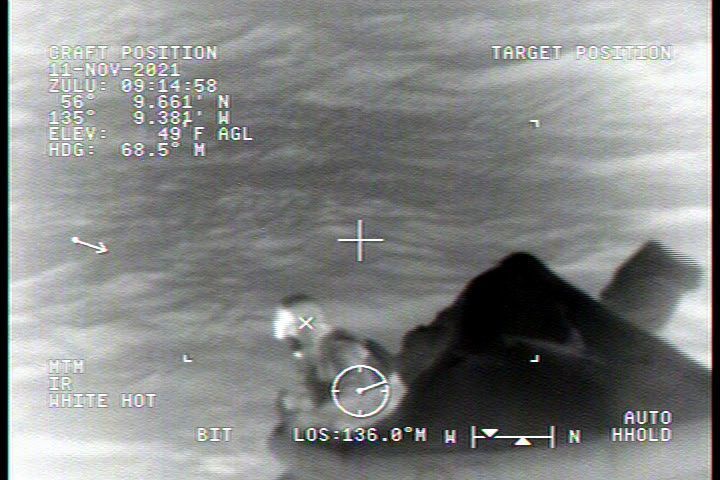
Aside from successfully interdicting suspected drug smuggling vessels, Northland maintained a maritime assistance presence in the region throughout the patrol. On Aug. 11, the Coast Guard Eleventh District relayed an alert from the Maritime Rescue Coordination Center Costa Rica reporting the fishing vessel Baula X on fire with three mariners trapped aboard. On Aug. 18, Northland launched the Dolphin crew in search of the boat. Upon successfully locating the burning fishing vessel, the helicopter crew guided Northland’s small boat team to the location. They safely rescued the three fishers and delivered them to the nearby cargo vessel Avra GR, participating in the Automated Mutual-Assistance Vessel Rescue program.  

When not actively chasing drug runners or rescuing fishers, Northland maintained a steady training regimen for new and veteran crewmembers on navigation, engineering, and nautical activities. Training for emergencies and routine operations is critical to sustaining Northland’s peak mission effectiveness and is in keeping with the Coast Guard’s motto, Semper Paratus  — Always Ready.  

“During this patrol, our crew showed terrific adaptability when responding to equipment malfunctions, scheduling changes, issues spurred by the COVID-19 pandemic, and a litany of other challenges faced. Throughout all of this, the crew displayed tremendous determination and teamwork, resulting in multiple mission accomplishments. I am extremely proud of the effort put forth by Northland, our embarked aviation detachment, and all of the support elements that worked to ensure our safety and success throughout,” said Cmdr. Patricia M. Bennett, Northland’s commanding officer.  

USCGC Northland is a 270-foot Famous-class medium-endurance cutter homeported in Portsmouth. The crew routinely deploys in support of counter-drug, migrant interdiction, fisheries, search and rescue, and homeland security missions. 


Bell Completes 100th Consecutive On-Time Delivery of AH-1Z to Marine Corps

A Bell AH-1Z conducts flight testing at Bell’s Amarillo Assembly Center before delivery to the U.S. Marine Corps. BELL TEXTRON / Anthony Boyer

AMARILLO, Texas — Bell Textron, a Textron company, has successfully completed its 100th consecutive on-time delivery of the AH-1Z aircraft to the U.S. Marine Corps, which began nearly four years ago, the company said in a Sept. 14 release.  

Bell accomplished this milestone through tight coordination with its manufacturing and assembly facilities, UAW 218, numerous suppliers, and government partners. The H-1 series consists of the AH-1Z Viper and UH-1Y Venom, which provide light attack and utility helicopter support to the Marines while maintaining a small logistical footprint through the 85% commonality between the airframes. 

“Performance like this takes a lot of work, communication, and trust to ensure alignment between numerous partners, all working toward the same objective. I could not be more proud of our Bell employees.” said Mike Deslatte, Bell H-1 vice president and program director. “Our front line workers, engineers, and supply chain professionals all help support the Marines. Their work designing, manufacturing, and assembling critical components while ensuring quality parts reach the production line on time help the Marines ensure our nation’s security.” 

Bell and its Team Viper/Venom partners collaborate with the U.S. Marine Corps H-1 Light/Attack Helicopter program (PMA-276) to provide integrated solutions and increase combat lethality and readiness. In addition to delivering production aircraft on time, Bell directly supports scheduled maintenance. The company is also working on new capability upgrades to equip the Marines with the most advanced technology available. 

“This is a feat only possible through the determination of our production team and the program’s strong relationship with our industry partners and suppliers,” said Col Vasilios Pappas, PMA-276 program manager. 

Bell is currently working toward the U.S. Marine Corps program of record and anticipates production of Marine Corps H-1 through 2022. The U.S. Marine Corps H-1 production contract is for 349 aircraft, consisting of 160 UH-1Y and 189 AH-1Z. Bell will continue manufacturing aircraft for foreign military customers including contracts for Bahrain AH-1Zs and a mixed Czech Republic fleet of both AH-1Zs and UH-1Ys. 


CH-53K King Stallion Logs First Successful Fleet Mission

A Marine Corps CH-53K King Stallion lifts a Navy MH-60S Knighthawk helicopter from a draw in Mount Hogue, California, Sept. 5, 2021. The Knighthawk conducted a hard landing during a search-and-rescue mission, which resulted in no casualties or injuries of its crew. The two-day operation was the first official fleet mission for the CH-53K King Stallion, as it is currently undergoing an operational assessment while the Marine Corps modernizes and prepares to respond globally to emerging crises or contingencies. U.S. MARINE CORPS / Cpl. Therese Edwards

NAVAL AIR STATION PATUXENT RIVER, Md. — The CH-53K King Stallion successfully recovered a Navy MH-60S Knighthawk helicopter from Mount Hogue in the White Mountains of California on Sunday, Sept. 5, the Naval Air Systems Command said in a release.  

The two-day operation was the first official fleet mission for the Marine Corps’ new heavy lift capability, which is in the midst of initial operational test and evaluation with Marine Operational Test and Evaluation Squadron One (VMX-1) at Marine Corps Air Ground Combat Center Twentynine Palms, California. 

“VMX-1 received a request for assistance from the Naval Safety Center about an MH-60S Knighthawk that suffered a hard landing near Mt. Hogue [California], at an elevation of 12,000 feet mean sea level in July,” said Lt. Col. Luke Frank, CH-53K detachment officer in charge for VMX-1.  

The MH-60S Knighthawk was sitting on a high-altitude ridge in very rugged terrain near the California-Nevada line on July 16 following a hard landing. The helicopter was supporting a search and rescue effort for a lost hiker. All four crewmembers survived without injury and were rescued the following day. 

According to Frank, both the MH-60S unit and the Naval Safety Center had exhausted all other resources for recovery, including Army National Guard, Navy and Marine Corps fleet squadrons. “They all lacked the capability to lift the aircraft without an extensive disassembly,” he said. 

VMX-1’s CH-53K detachment quickly examined the environmental conditions and conducted a quick feasibility assessment of support and determined that the CH-53K could conduct the lift. The CH-53K fulfills the heavy lift mission of the Marine Corps as it greatly expands the fleet’s ability to move equipment and personnel throughout its area of operations. 

“After two weeks of exhaustive planning and assembling a team of more than 25 Marines and Sailors from VMX-1 and 1st Landing Support Battalion from Camp Pendleton, [California],. we deployed two CH-53Ks to Bishop, California, and got to work,” he said. 

The CH-53K was designed to lift nearly 14 tons (27,000 pounds) at a mission radius of 110 nautical miles in high and hot environments, a capability that expands the service’s range in supporting joint and coalition forces against potential adversaries. 

The MH-60S weighed approximately 15,200 pounds and was positioned in a tight ravine at nearly 12,000 feet mean sea level and needed to be transported over 23 nautical miles to the Bishop, California, airport. 

“After six months of flight operations with the CH-53K, the detachment had every confidence in the aircraft’s abilities to conduct the mission safely. Our main concern was the environmental factors ground support personnel would have to endure,” said Frank. 

“This is exactly what the K is made to do,” he said. “Heavy lift is a unique and invaluable mission for the Marine Corps. Horsepower is our weapon system and the CH-53K is armed to the teeth. The entire team of Marines at VMX-1, 1st Landing Support Battalion, and NAS Fallon Search and Rescue were extremely motivated to execute this mission and we are all very proud to have completed this one flawlessly.

“To be the first group of professionals to complete a real-world, heavy lift/high altitude mission in support of a unit who thought all options were off the table is extremely rewarding,” said Frank. “This is sure to be the first of what will be many, many successful missions for this aircraft and for heavy lift squadrons.”