Austal USA to Lease San Diego Facility to Repair Navy Ships
SAN DIEGO — Austal USA received approval from the San Diego Port of Commissioners to assume the lease of Marine Group Boat Works in the Port of San Diego. Austal USA and Marine Group Boat Works are entering a 45-day exclusive period to close the agreement, the company said in a Nov. 9 release.
Austal USA will use the 15-acre site to focus on ship repair for U.S. Navy, Military Sealift Command, and U.S. Coast Guard ships. The site, immediately adjacent to U.S. Naval Base San Diego, will include a newly built dry dock designed specifically to handle small surface combatants and other small to medium size ships. Marine Group Boat Works will focus on their yacht repair business in their Chula Vista shipyard.
“This investment marks a major milestone in Austal’s focus on growing our services business and anchors our commitment to servicing Navy, Military Sealift and Coast Guard ships in the Indo-Pacific Command region. This facility expands our commitment to our customers to ensure they are receiving the Austal USA brand quality throughout the lifecycle of the ships we deliver,” Austal USA President Rusty Murdaugh said. “As the industry leader for on-schedule and on-budget delivery to the U.S. Navy, Austal USA has made continuous improvement a cornerstone of our culture and operations.”
Austal USA will establish a full-service ship repair capability providing maintenance and modernization for small surface combatants, autonomous vehicles, and other vessels. The site will include a dry dock optimized to execute availabilities on littoral combat ships and other small surface combatants. Services include technical and material support, topside work, and dry-docking availabilities.
Retired Adm. James ‘Jamie’ Foggo Hired as Dean of Think Tank Focused on Maritime Thought Leadership
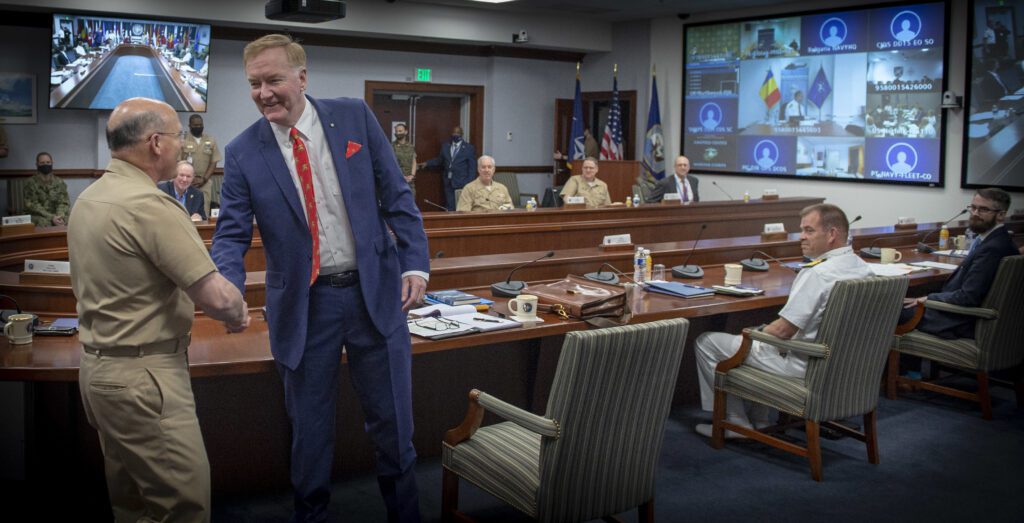
Adm. Mike Gilday, U.S. Navy chief of naval operations, speaks with retired Adm. James G. Foggo during the Combined Joint Operations from the Sea Center of Excellence (COE) Future Maritime Warfare Symposium 2021 in April. U.S. NAVY / Mass Communication Specialist 2nd Class Joshua M. Tolbert
ARLINGTON, Va. — The Navy League of the United States — a nonprofit civilian, educational and advocacy organization that supports America’s sea services: the Navy, Marine Corps, Coast Guard and U.S.-flag Merchant Marine — announced today it has launched a new think tank, the Center for Maritime Strategy, with retired Adm. James “Jamie” Foggo as its dean. This organization will conduct and support policy research and advocacy efforts across a broad spectrum of issues that impact the United States’ position as a maritime nation.
“Policy development and advocacy are the main reasons for the Navy League’s existence, and we are stepping up our activity in these areas to meet the requirements of 21st century maritime power,” said Navy League National President David Reilly.
The development of the Center for Maritime Strategy was led by a steering committee drawn from Navy League leadership. The committee was chaired by former Chief of Naval Operations and current Navy League National Vice President Adm. John Richardson. Other members of the committee included retired U.S. Fleet Forces commander Adm. John Harvey, former Master Chief Petty Officer of the Navy and current Navy League CEO Mike Stevens, Frank Russo of Forctis Advisory, and Fulton Homes CEO Doug Fulton. This committee will remain in place to provide general oversight and advice to the center’s dean.
“The Navy League’s Center for Maritime Strategy will be the go-to place for maritime strategic thought, policy recommendations and informed advocacy.” Richardson said. “The new organization will include a vibrant media operation to amplify it’s work. I’m excited about this initiative to boost the Navy League’s citizen voice and help strengthen the United States as a maritime nation.”
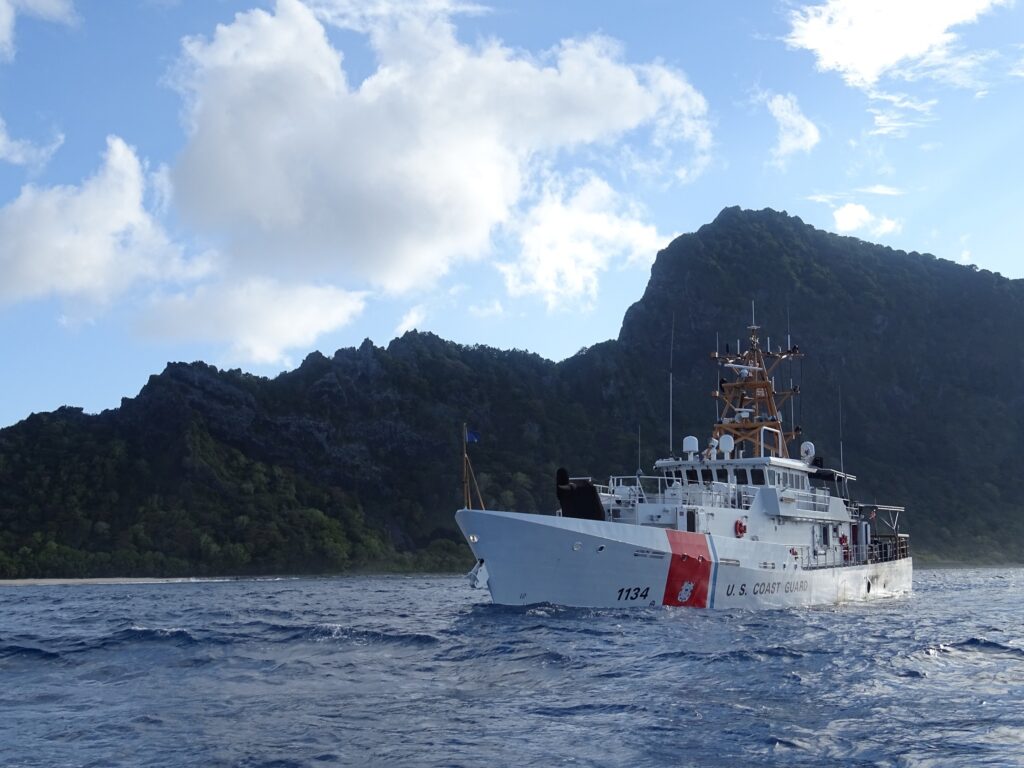
The Coast Guard Cutter William Hart participates in the Pacific Islands Forum Fisheries Agency’s Operation Kurukuru off American Samoa, Oct. 29, 2021. U.S. COAST GUARD
HONOLULU — The Coast Guard and its partners successfully completed the Pacific Islands Forum Fisheries Agency’s (FFA) Operation Kurukuru in the Pacific, Nov. 5, the Coast Guard 14th District said Nov. 9.
Operation Kurukuru is an annual coordinated maritime surveillance operation with the goal of combating illegal, unreported, and unregulated (IUU) fishing. This year the crews of the Coast Guard Cutter William Hart, Coast Guard Cutter Myrtle Hazard and an Air Station Barbers Point HC-130 Hercules participated in the joint endeavor.
“The operation included 15 Guardian Class and Pacific Patrol Boats from Pacific nations operating alongside five Australian Navy, French Navy and United States Coast Guard vessels,” said Allan Rahari, the FFA Director Fisheries Operations. “Seven aircraft from the FFA, quadrilateral and regional partners provided air surveillance, as well as satellite surveillance and use of other emerging technologies.”
This year’s Operation Kurukuru was conducted over the course of 12 days, involving 15 Pacific FFA member nations and Pacific Quadrilateral Defense Coordinating Group (Australia, France, New Zealand, and U.S.) partners while covering over 8,9 million square miles.
During the operation, 300 vessels were remotely sensed by satellites or sighted by ships and aircraft while 78 vessels were boarded either at sea or in port. Of those 300 sightings, the Coast Guard contributed 63.
While the operation was ongoing, the Air Station Barbers Point Hercules aircrew also diverted to Starbuck Island in Kiribati to assist with an ongoing missing persons case.
Kurukuru is a Japanese term meaning round and round relating to the highly migratory nature of targeted species such as tuna which annually travel throughout the Pacific providing an important renewable resource for Pacific Island Countries and Territories (PICT).
IUU undermines PICT efforts to conserve and manage fish stocks, presenting a dire threat to protecting these vital resources for generations to come.
“Combating illegal, unreported, and unregulated fishing really is a team effort out here in the Pacific,” said Lt. j.g. Tyler Peterson, an operations planner at the Coast Guard 14th District. “Because of fish migratory habits, they frequently travel between different countries’ exclusive economic zones, so no one country can protect the fish stocks on their own. This is why joint efforts like Operation Kurukuru are so important. We are able to work with our partners towards our mutual goal of preserving this vital resource.”
Along with participating in large scale operations like Operation Kurukuru, the Coast Guard also works individually with nations to counter IUU through the use of bilateral law enforcement agreements.
Bilateral law enforcement agreements allow partner PICTs to embark their law enforcement officers aboard Coast Guard vessels to enforce laws within their exclusive economic zone. The Coast Guard maintains 11 bilateral ship rider agreements throughout the Pacific, combating not only IUU but also promoting a free and open Indo-Pacific.
Future USNS Harvey Milk Christened at General Dynamics NASSCO San Diego
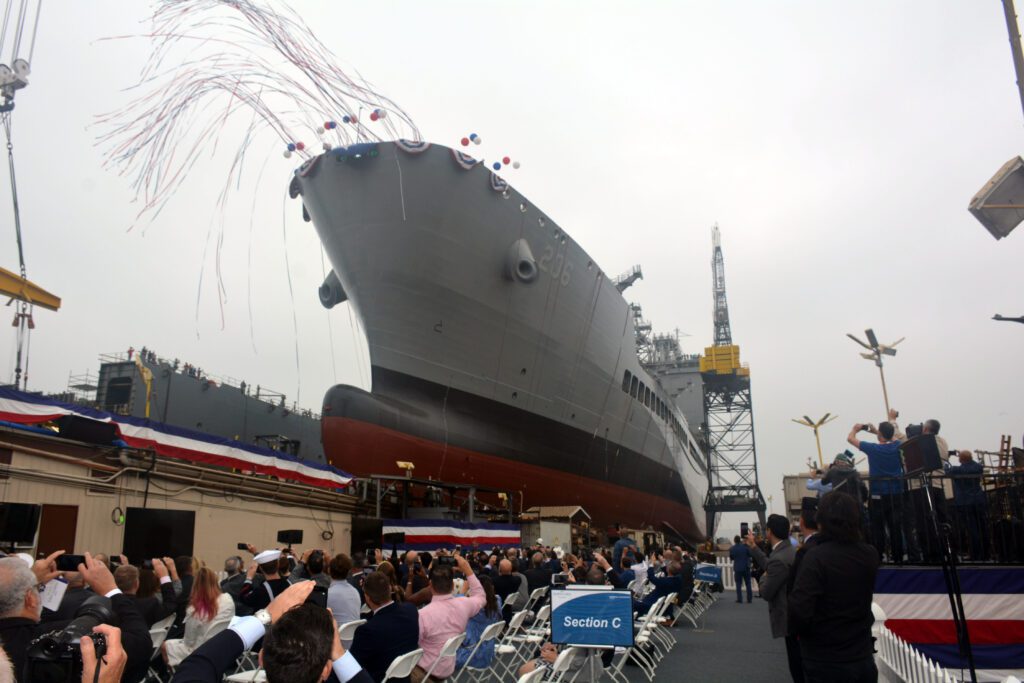
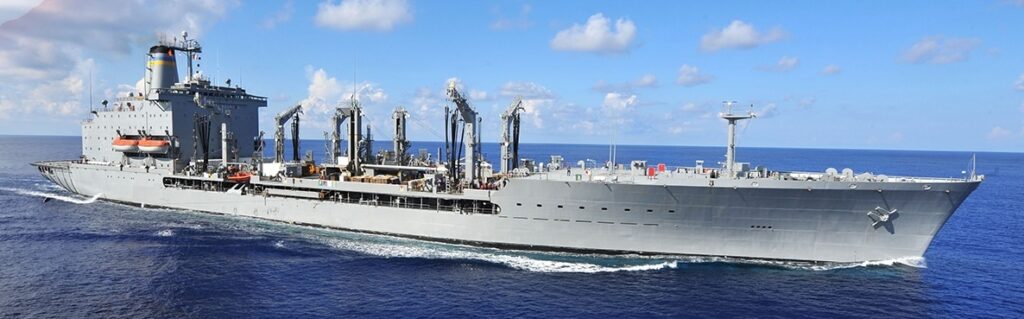
Military Sealift Command’s newest ship, fleet replenishment oiler USNS Harvey Milk (T-AO 206), slides into the water during the christening ceremony at General Dynamic NASSCO, San Diego. The ship honors Navy veteran and LGBT activist Harvey Milk, one of the first openly gay candidates elected to public office as a member of the San Francisco Board of Supervisors in 1978. U.S. NAVY
SAN DIEGO — Fleet replenishment oiler USNS Harvey Milk (T-AO 206), the Military Sealift Command’s newest ship, was christened during a ceremony at the General Dynamics NASSCO shipyard in San Diego, Nov. 7, Navy spokeswoman Sarah Burford said in a release.
The event was attended by the family of the ship’s namesake as well as other dignitaries included Carlos Del Toro, secretary of the Navy; former Secretary of the Navy Ray Mabus; Vice Adm. Jeffery Hughes, deputy chief naval operations for Warfighting Development; Rear Adm. Stephen Barnett, commander, Navy Region Southwest; Rear Adm. Michael Wettlaufer, commander, Military Sealift Command; Capt. James White, Milk’s civil service master; Todd Gloria, mayor, San Diego; former Rep. Susan Davis; Jen Campbell, San Diego Council president; Anne Kronenberg, activist and Milk’s former campaign manager; members of the Harvey Milk Foundation, and members of the LGBTQ+ community.
The ship honors Navy veteran and LGBT activist Harvey Milk, one of the first openly gay candidates elected to public office as a member of the San Francisco Board of Supervisors in 1978. He was assassinated Nov. 10, 1978, 10 months after he was sworn in, by fellow City Supervisor Dan White. Milk was posthumously awarded the Presidential Medal of Freedom in 2009 for his activism. USNS Harvey Milk is the first ship named for an openly gay person.
“The secretary of the Navy needed to be here today, not just to amend the wrongs of the past, but to give inspiration to all of our LGBTQ community leaders who served in the Navy, in uniform today and in the civilian workforce as well too, and to tell them that we’re committed to them in the future,” Del Toro said, noting that Milk resigned his commission and was discharged from the Navy for being gay. “For far too long, sailors like Lt. j.g. Milk were forced into the shadows or, worse yet, forced out of our beloved Navy. That injustice is part of our Navy history, but so is the perseverance of all who continue to serve in the face of injustice.”
“My uncle never dreamed of having a ship, or a street, or a park, or a school named after him,” said Stuart Milk, Harvey’s nephew and the keynote speaker at the ceremony. “What we celebrate today is that the Navy honors the difference between tolerance and acceptance.”
The 746-foot Milk is the second ship in the new John Lewis-class previously known as the TAO(X). This class of oilers has the ability to carry 162,000 barrels of diesel ship fuel, aviation fuel and dry stores cargo. The upgraded oiler is built with double hulls to protect against oil spills and strengthened cargo and ballast tanks, and will be equipped with a basic self-defense capability, including crew served weapons, degaussing, and Nixie Torpedo decoys, and has space, weight, and power reservations for close in weapon systems such as SeaRAMs and an antitorpedo torpedo defense system. The Lewis-class of oilers will replace the current Kaiser-class fleet replenishment oilers and they age out of the MSC fleet.
“A Navy veteran and tireless advocate for equality and universal rights, having Harvey Milk as the namesake for this ship as she adds to our nation’s strategic advantage in agile logistics is absolutely awesome,” said Wettlaufer. “With enhanced capabilities in storage and delivery of fuel and cargo, Harvey Milk will support our Navy in the away game as we keep our country safe far from home and protect the sea lines of communication. Important to our economic vitality and assuring allies and partners, this ship will help promote freedom of access to international seas and the rules based international order that has sustained the peace over the last 70 years.”
Speaking before breaking a bottle of champagne across the ship’s hull, the ship’s sponsor, Paula Neira, clinical program director of the Johns Hopkins Center for Transgender Health and a Navy veteran, said, “When Harvey Milk sails, she’ll send a message both domestically and around the globe to everybody that believes in justice and freedom and liberty, that there is a place for you in this family.”
Following the traditional champagne christening, Milk slid into the water with its horn blowing, streamers flying and music from the Navy Band Southwest playing.
Five more Lewis-class oilers are on order for the Navy. In July 2016, then-Secretary of the Navy Ray Mabus said he would name the Lewis-class oilers after prominent civil rights activists and leaders including Earl Warren, Sojourner Truth, Lucy Stone and Robert F. Kennedy.
CNO Speaks with UK’s First Sea Lord, Royal Navy Adm. Ben Key, on Key’s 1st Day in Office
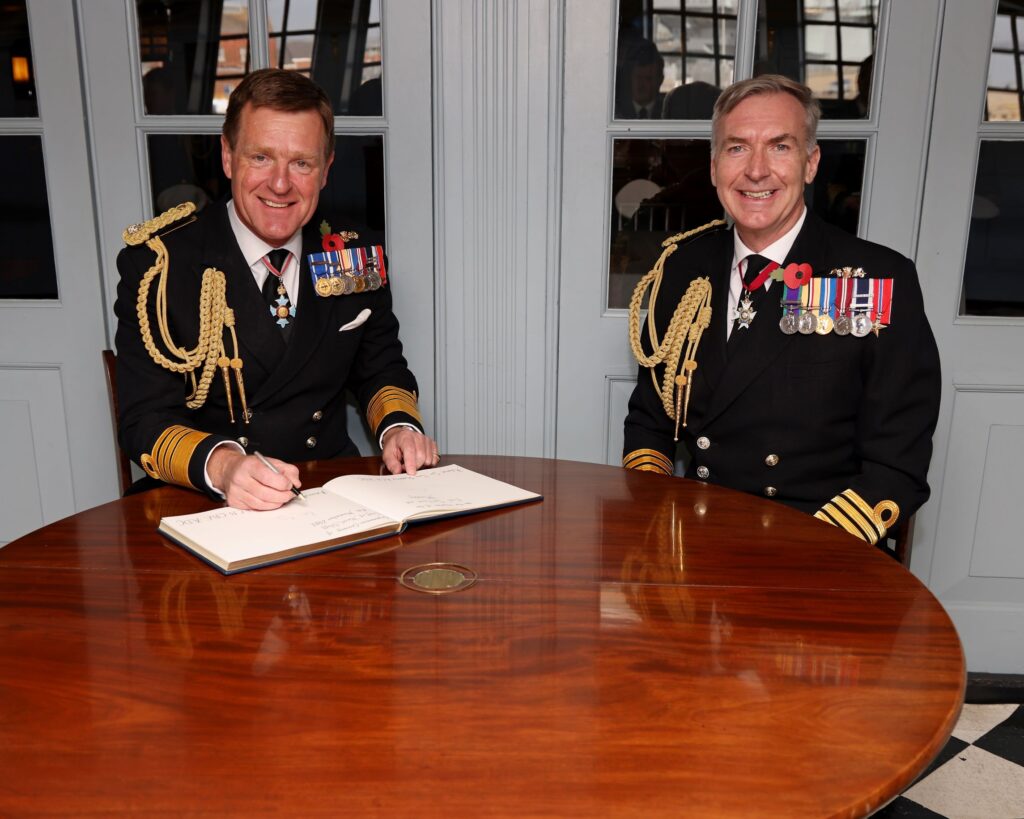
Aboard Nelson’s flagship Victory, Adm. Sir Ben Key, left, took over as first sea lord from Adm. Sir Tony Radakin, whose 29 months at the helm end as he moves on to become the new chief of defense staff. U.K. ROYAL NAVY
WASHINGTON — Chief of Naval Operations (CNO) Adm. Mike Gilday spoke with Royal Navy Adm. Sir Ben Key, first sea lord and chief of the naval staff, on Nov. 8 to reaffirm the special relationship between the two navies and discuss areas for continued collaboration and cooperation, the CNO’s public affairs officer said in release.
Gilday spoke with Key on his first day in office as first sea lord.
“I want congratulate Adm. Key on his appointment as first sea lord and I am excited to work closely with him,” said Gilday. “Our navies enjoy a long tradition of sailing together from the Atlantic to the Indo-Pacific and we work tirelessly and interchangeably to keep the maritime commons open and free. No doubt, our alliance is an anchor of peace and stability across the globe.”
Key echoed Gilday’s sentiment.
“I was delighted to be able to speak to Adm. Mike Gilday, the chief of naval operations, on the very day I took the helm as first sea lord,” he said. “The bonds between our two navies are deep and historic and I am determined to see they go from strength to strength. Having recently served as chief of joint operations, I have seen how closely we operate around the globe with our American cousins. From USS The Sullivans being an integral part of the HMS Queen Elizabeth Carrier Strike Group on her recent deployment to the Pacific, to our combined operations in the Atlantic in support of NATO, both our nations are benefitting from this outstanding strategic partnership with our shared endeavor to make the world a safer place.”
The U.S. and Royal Navy operate together around the globe regularly. Most recently, USS The Sullivans (DDG-68) took part in a six-month deployment as part of Carrier Strike Group 21 with HMS Queen Elizabeth (R08). Both navies also conducted multilateral naval training with Australia and Japan during Maritime Partnership Exercise 2021 in October.
Navy to Christen Future USNS Harvey Milk
A photo illustration announcing that Military Sealift Command fleet oiler, T-AO 206, will be named USNS Harvey Milk. U.S. NAVY
ARLINGTON, Va. — The Navy will christen the John Lewis-class replenishment oiler, the future USNS Harvey Milk (T-AO 206), during a 9 a.m. PDT ceremony Saturday, Nov. 6, in San Diego, California, the Defense Department said Nov. 5.
Stuart Milk, cofounder of the Harvey Milk Foundation and Milk’s nephew, will deliver the principal ceremonial address. Remarks will also be provided by the Carlos Del Toro, secretary of the Navy; Vice Adm. Jeffrey Hughes, deputy chief of naval operations for Warfighting Development; and Rear Adm. Michael Wettlaufer, commander, Military Sealift Command. The ship’s sponsors are U.S. Sen. Dianne Feinstein of California, and Paula Neira, Navy veteran and clinical program director of the Johns Hopkins Center for Transgender Health. Neira will christen the ship by breaking a bottle of sparkling wine across the bow in a time-honored Navy tradition.
“Tomorrow we christen the future USNS Harvey Milk,” said Del Toro. “Leaders like Harvey Milk taught us that diversity of backgrounds and experiences help contribute to the strength and resolve of our nation. There is no doubt that the future Sailors aboard this ship will be inspired by Milk’s life and legacy.”
The Navy’s Military Sealift Command will operate the future USNS Harvey Milk, the second ship in its class. The ship is named in honor of the late politician and civil and human rights activist, who served in the Navy during the Korean War as a diving officer. After his naval career, Harvey Milk was elected to the San Francisco Board of Supervisors in 1977, becoming the first openly gay elected official in California. Milk was assassinated on Nov. 27, 1978.
The John Lewis-class ships are based on commercial design standards and will recapitalize the current T-AO 187-class fleet replenishment oilers to provide underway fuel replenishment to Navy ships at sea. Fleet replenishment oilers are part of the Navy’s Combat Logistics Force.
In June 2016, the Navy awarded a $3.2 billion contract to General Dynamics NASSCO in San Diego to design and construct the first six ships of the Future Fleet Replenishment Ship, the John Lewis-class (T-AO 205), with construction commencing in September 2018. The Navy plans to procure 20 ships of the new class.
Norfolk Naval Shipyard Returns USS Pasadena to the Fleet
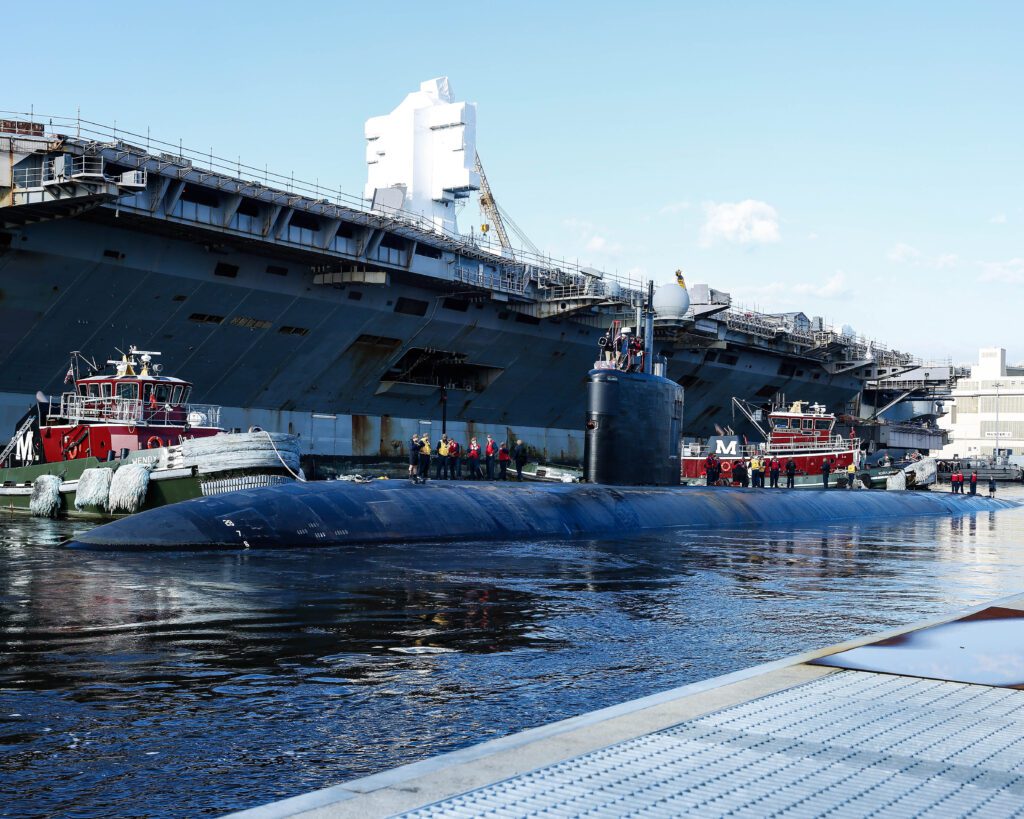
USS Pasadena (SSN 752) returned to the fleet Oct. 31 following successful completion of its Drydocking Selected Restricted Availability at Norfolk Naval Shipyard (NNSY). NNSY / Tony Anderson
NORFOLK NAVAL SHIPYARD, Portsmouth, Va. — USS Pasadena (SSN 752) returned to the fleet Oct. 31 following successful completion of its Drydocking Selected Restricted Availability (DSRA) at Norfolk Naval Shipyard (NNSY), said Michael Brayshaw, NNSY deputy public affairs officer for Norfolk Naval Shipyard.
The Los Angeles-class attack submarine spent just over a year at NNSY to replace, repair and overhaul components throughout the boat, as the shipyard’s first DSRA in a decade.
Pasadena served as NNSY’s pilot project leveraging the Naval Sustainment System—Shipyards (NSS-SY) program. NSS-SY is underway at all four public shipyards, leveraging industry and government best practices on shipyard processes to drive quick and visible improvements in ship maintenance. During the overhaul, Navy leaders such as then-Acting Secretary of the Navy Thomas Harker visited NNSY and met with the Pasadena team to pledge their support and discuss the drive to “get real, get better,” encouraging shipyarders to candidly discuss any constraints so they can be resolved.
NSS-SY initiatives included establishing an Operations Control Center to drive project team communications and resolve barriers in work execution, and “crew boards” to track jobs supporting the boat’s overhaul. Deputy Project Superintendent Mike Harrell was brought onto the project for standing up the center and was instrumental in breaking down barriers to ensure non-stop execution of the critical chain of work, driving through issues and constraints to completion. While Pasadena did not meet its original completion date, these improvements helped deliver the boat back to the Fleet and are being implemented on other NNSY overhauls, to include USS Toledo (SSN 769) and USS Dwight D. Eisenhower (CVN 69).
“Following a tremendous amount of effort and teaming on a very challenging availability, Pasadena has returned to the fleet to meet its significant operational commitment for our Navy and nation,” said Shipyard Commander Capt. Dianna Wolfson. “The Pasadena project team met our Navy leadership challenge to ‘get real, get better’ in several significant ways, and their efforts will pay off as we leverage their learning across America’s shipyard and our NAVSEA enterprise.”
Project Superintendent Frank Williams said the project team stayed focused throughout all phases of the availability on knowledge sharing and maintaining schedule. Beyond NSS-SY improvements, Pasadena’s team incorporated lessons learned from Portsmouth Naval Shipyard’s USS Newport News (SSN 750) DSRA in planning the availability and executing similar jobs. Additionally, when Pasadena missed its original undocking date in the spring, the project team worked to perform more jobs with the boat on keel blocks to condense the schedule following undocking.
“Sailors and ships are meant to be at sea and not in a repair environment and throughout all phases of the availability, it’s been our job to get them back there,” said Williams. “The project team has done a great job keeping focused on this throughout the past 13 months. Thanks to all the efforts of our team and Ship’s Force, we have now gotten Pasadena back to sea where she belongs.”
AeroVironment Awarded $20.3M SOCOM Contract for Switchblade Missiles
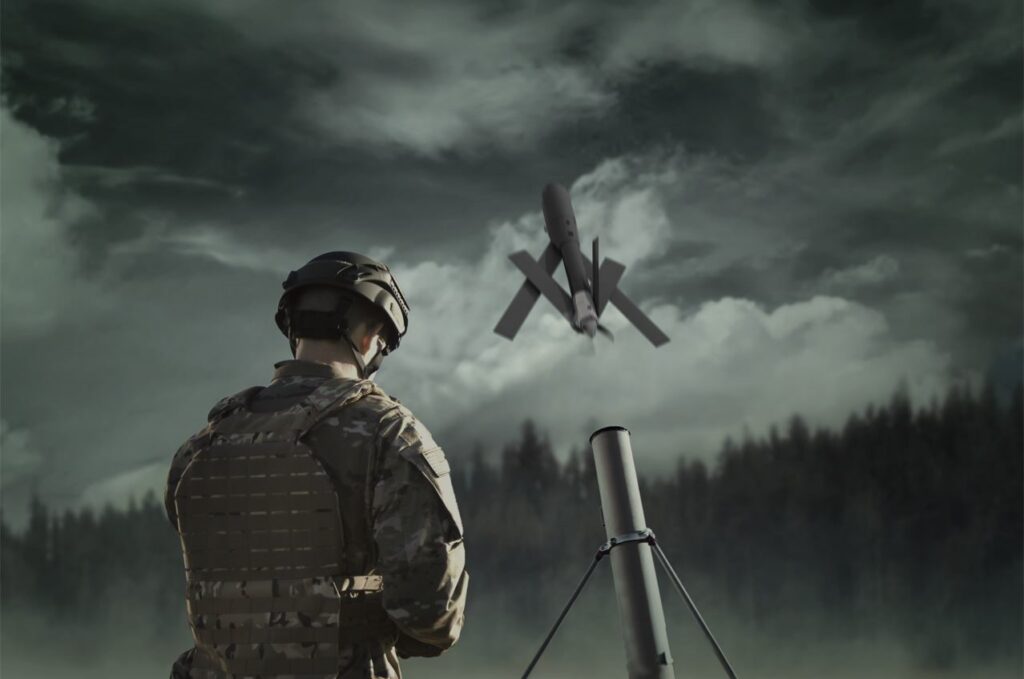
A Switchblade 600 tactical missile system. AEROVIRONMENT
ARLINGTON, Va., Nov. 4, 2021 —AeroVironment Inc. was awarded a firm-fixed-price contract Sept. 28 by the U.S. Special Operations Command for $20.3 million for the procurement of Switchblade 600 tactical missile systems. Delivery is scheduled to be completed by January 2023.
“Switchblade 600 is an all-in-one, man-portable tactical missile that provides warfighters with the capability to fly, track and engage non-line-of-sight targets and light-armored vehicles with precision lethal effects,” said Brett Hush, vice president and product line general manager for tactical missile systems. “The tube-launched Switchblade 600 can be easily transported for deployment from fixed and mobile platforms in any environment, providing operators with superior force overmatch and minimizing exposure to direct and indirect enemy fires.”
Switchblade 600 is equipped with a high-performance electro-optical, gimbaled sensor suite, precision flight control and more than 40 minutes of flight time to deliver unprecedented tactical reconnaissance, surveillance and target acquisition. Its anti-armor warhead enables engagement and prosecution of hardened static and moving light armored vehicles from multiple angles without external ISR or fires assets. Switchblade 600’s patented wave-off and recommit capability allows operators to abort the mission at any time and then re-engage either the same or other targets multiple times based on operator command, resulting in minimal to no collateral damage.
Ingalls Shipbuilding Successfully Completes Builder’s Trials for LPD Fort Lauderdale
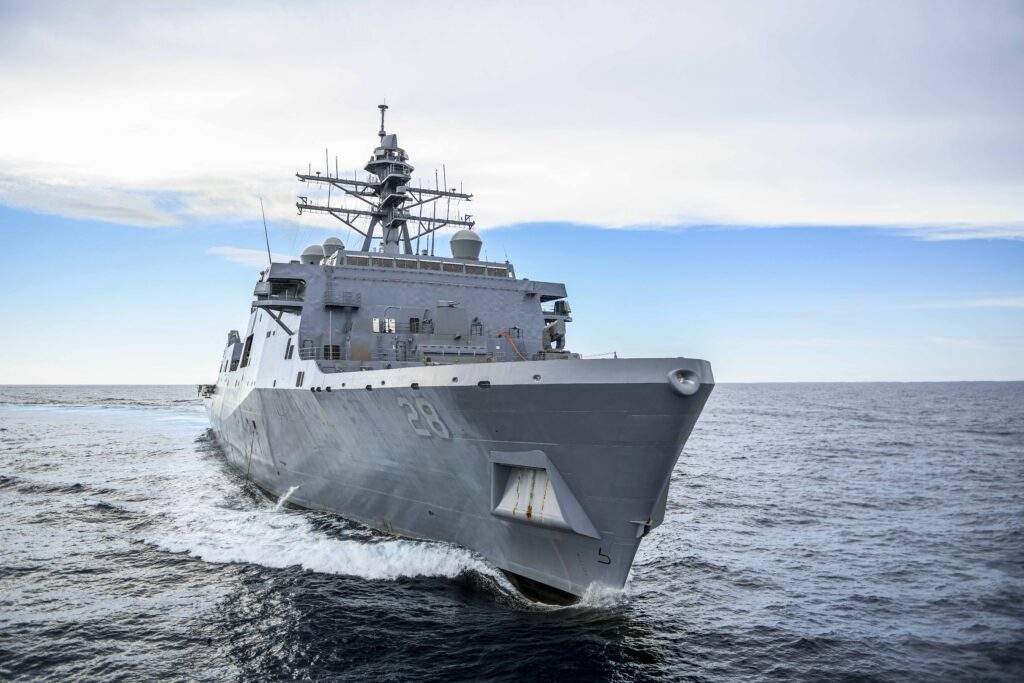
Huntington Ingalls Industries has announced that its Ingalls Shipbuilding division recently completed the first round of sea trials for San Antonio-class amphibious transport dock Fort Lauderdale (LPD 28). HUNTINGTON INGALLS INDUSTRIES
PASCAGOULA, Miss. — Huntington Ingalls Industries’ Ingalls Shipbuilding division recently completed the first round of sea trials for San Antonio-class amphibious transport dock Fort Lauderdale (LPD 28), the company said Nov. 2.
“Shipbuilding is about teamwork. Our shipbuilders work as a team with our Navy partners to make these ships ready to join the fleet,” said Steve Sloan, Ingalls’ LPD program manager. “The success we achieved this week will propel us into a strong finish as we prepare for acceptance trials later this year. We are proud of the work our shipbuilders have accomplished so far and look forward to finishing strong.”
LPD 28 is named Fort Lauderdale to honor the Florida city’s historic ties to the U.S. Navy, which date back to the 1830s and include an important naval training center during World War II.
Ingalls has delivered 11 San Antonio-class ships to the Navy and has three more under construction including Fort Lauderdale (LPD 28), Richard M. McCool Jr. (LPD 29) and Harrisburg (LPD 30). Ingalls was awarded a $1.5 billion contract for the construction of LPD 31 in 2020.
The San Antonio-class is the latest addition to the Navy’s 21st-century amphibious assault force. The 684-foot-long, 105-foot-wide ships are used to embark and land Marines, their equipment and supplies ashore via air cushion or conventional landing craft and amphibious assault vehicles, augmented by helicopters or vertical takeoff and landing aircraft such as the MV-22 Osprey. The ships support a Marine Air Ground Task Force across the spectrum of operations, conducting amphibious and expeditionary missions of sea control and power projection to humanitarian assistance and disaster relief missions throughout the first half of the 21st century.
AeroVironment Demonstrates Switchblade Loitering Missile Integration for Air Launched Effects from JUMP 20 UAS
AeroVironment’s Switchblade 300 loitering munition, which can now be integrated with the larger JUMP 20 unmanned aircraft. AEROVIRONMENT
ARLINGTON, Va., Nov. 3, 2021 — AeroVironment has successfully demonstration of integrating Switchblade 300 loitering missiles and JUMP 20 medium unmanned aircraft systems (UAS) for increased mission autonomy and efficacy, the company said Nov. 3.
This Air Launched Effects (ALE) proof-of-concept demonstration took place in August 2021 with the goal of launching an inert Switchblade 300 from the JUMP 20 and successfully recovering both air vehicles.
The systems were integrated by fixing the inert Switchblade 300 tube-launch system to the existing JUMP 20 platform’s vertical lift boom with a custom-made bolt-on mount and firing system. Switchblade 300 was remotely fired using the JUMP 20 ground control solution with in-flight control taken by a separate Switchblade ground element. Both vehicles were successfully recovered, proving the demonstration event to be the first Switchblade 300 integration and air launch from a JUMP 20 Group 3 vertical takeoff and landing (VTOL) platform.
“This end-to-end integrated solution enables customers with greater time on station than if they were to deploy a Switchblade on its own, resulting in the ability to conduct persistent real-time surveillance to increase the chance of identifying the correct target and minimizing collateral damage,” said Brett Hush, AeroVironment vice president and product line general manager of tactical missile systems.
“It combines the combat-proven Switchblade loitering missile’s lethality, reach and precision strike capabilities with low collateral effects and the VTOL, fixed-wing JUMP 20’s advanced multi-sensor ISR services and 14-hour endurance.”