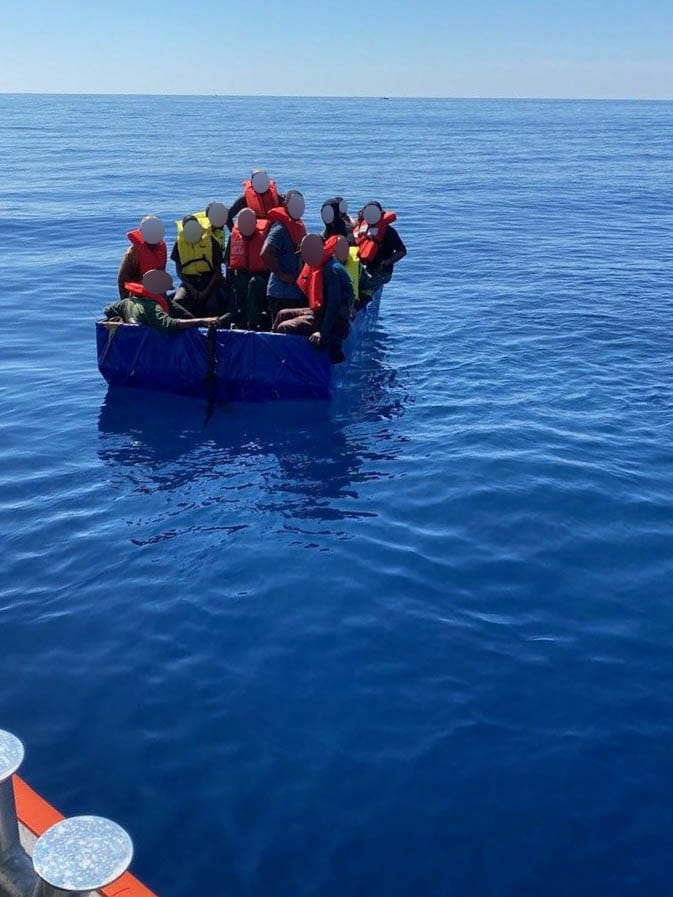
A Coast Guard Station Marathon boatcrew locates 15 migrants aboard a sailing vessel near Big Pine Key, Florida on July 3, 2021. Coast Guard Cutter Kathleen Moore’s crew repatriated 15 Cubans to Cuba, July 10, 2021. U.S. COAST GUARD
MIAMI — Coast Guard Cutter Kathleen Moore’s crew repatriated 23 Cubans to Cuba Saturday following an interdiction approximately 15 miles south of Big Pine Key and a search and rescue mission off the coast of Key West, the Coast Guard 7th District said in a July 10 release.
A good Samaritan reported a vessel with 15 people aboard to Coast Guard Sector Key West watchstanders at 10 a.m. Saturday. A Station Key West law enforcement crew arrived on scene and brought the migrants aboard. They are reported in good health.
“Navigating the Florida Straits on a good day is difficult and unpredictable in rustic vessels,” said Lt. Cmdr. Mario Gil, Coast Guard Liaison Officer, Cuba. “Daring these voyages during hurricane force winds and seas are treacherous and lives have a greater risk of being lost.”
Since Oct, 1, 2020, Coast Guard crews have interdicted 554 Cubans compared to:
5,396 Cuban Migrants in Fiscal Year 2016 1,468 Cuban Migrants in Fiscal Year 2017 259 Cuban Migrants in Fiscal Year 2018 313 Cuban Migrants in Fiscal Year 2019 49 Cuban Migrants in Fiscal Year 2020
Once aboard a Coast Guard cutter, all migrants receive food, water, shelter and basic medical attention. Throughout the interdiction, Coast Guard crew members were equipped with personal protective equipment to minimize potential exposure to any possible case of COVID-19.
Raytheon to begin Next-Generation Jammer Mid-Band Production for U.S. Navy
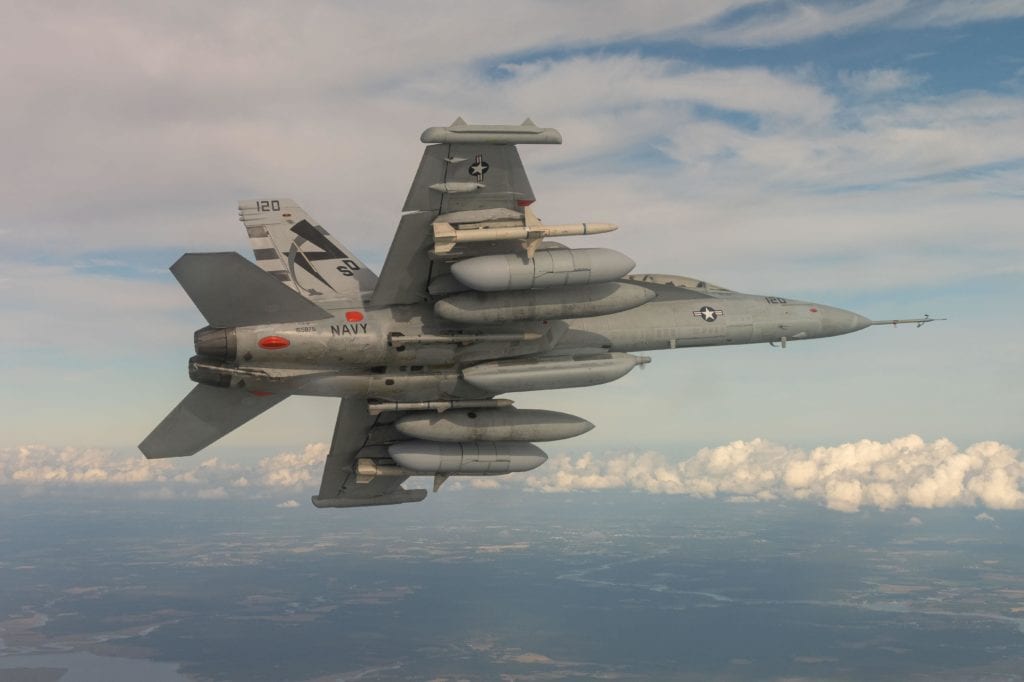
An EA-18G Growler from Air Test and Evaluation Squadron (VX) 23, located at Naval Air Station Patuxent River, Maryland, conducts a Next Generation Jammer Mid-Band (NGJ-MB) flight test over Southern Maryland recently. U.S. NAVY / Steve Wolff
EL SEGUNDO, Calif. — Raytheon Intelligence & Space, a Raytheon Technologies business, has been awarded a $171.6 million contract for Low-Rate Initial Production Lot I, or LRIP I, of the U.S. Navy’s Next Generation Jammer Mid-Band (NGJ-MB), the company said in a July 8 release. The award advances the program from the development stage into production and deployment.
NGJ-MB is the Navy’s advanced electronic attack system that offensively denies, disrupts and degrades enemy technology, including air-defense systems and communications. NGJ-MB uses the latest digital, software-based and Active Electronically Scanned Array technologies. This allows operators to non-kinetically attack significantly more targets and at greater distances.
“With its power and ability to jam multiple radars simultaneously, NGJ-MB will fundamentally change the way the Navy conducts airborne electronic attack,” said Annabel Flores, vice president of Electronic Warfare Systems for RI&S. “NGJ-MB will increase the survivability and lethality of fourth-and fifth-generation fighters, making naval aviation that much more effective.”
The award follows last week’s Milestone C decision, advancing the program into the production and deployment phase. NGJ-MB has completed more than 145 hours of developmental flight-testing using mission systems and aeromechanical systems. The program has also completed over 3,100 hours of anechoic chamber and lab testing at Naval Air Station Patuxent River, Maryland, and Naval Air Station Point Mugu, California. Chamber tests evaluated the system’s performance both on and off the EA-18G Growler aircraft, in addition to jamming techniques and reliability testing.
Saildrone’s New Surveyor Autonomous Research USV Completes Ocean Crossing from San Francisco to Hawaii
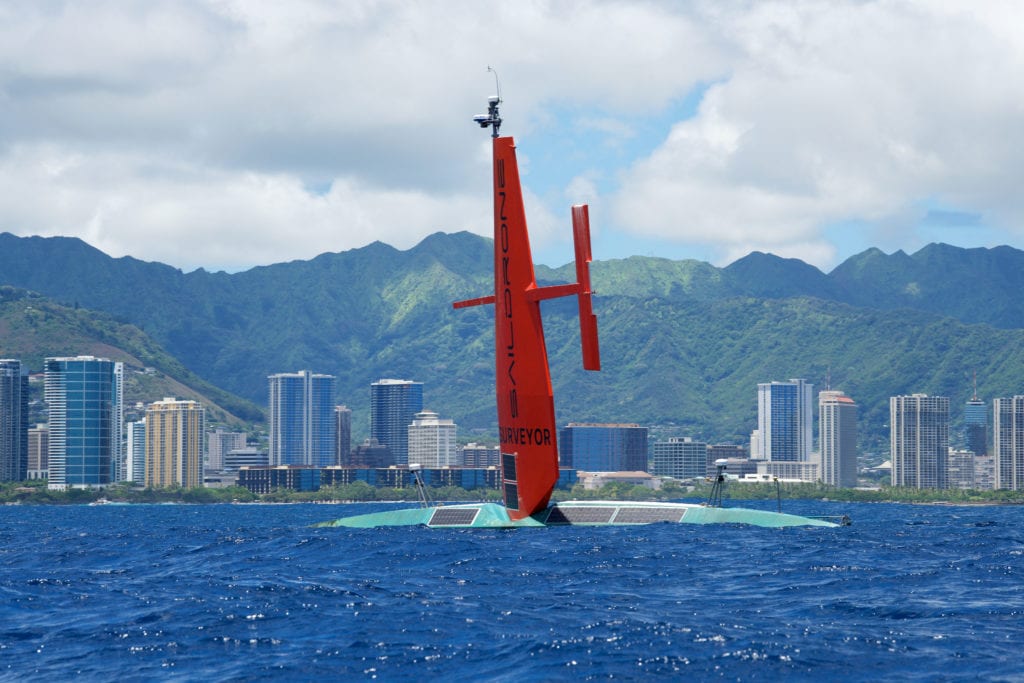
Saildrone’s Surveyor arrived in Hawaii on July 8 after a voyage from San Francisco to Honolulu. SAILDRONE
HONOLULU – The uncrewed, autonomous, Saildrone Surveyor arrived in Hawaii July 8 after a groundbreaking first voyage from San Francisco to Honolulu, Saildrone Inc. said in a release.
While ocean crossings are nothing new for Saildrone’s autonomous surface vehicles, the Saildrone Surveyor is a new, much larger class of vehicle optimized for deep-ocean mapping. During the 28-day voyage, the Saildrone Surveyor sailed 2,250 nautical miles and mapped 6,400 square nautical miles of seafloor.
Using renewable wind and solar energy for its primary power source, the Saildrone Surveyor is the only vehicle in the world capable of long-endurance, uncrewed ocean mapping operations. The valuable data it collects will help address issues impacting our world including climate change, offshore renewable energy, natural resource management, and maritime safety.
Measuring 72 feet long (22 meters) and weighing 14 tons, the Saildrone Surveyor carries a sophisticated array of acoustic instruments, normally carried by large, manned survey ships. The Surveyor’s sensors interrogate the water column looking at underwater ecosystems and map the seafloor in high resolution to a depth of 23,000 feet (7,000 meters).
Multibeam data from the Saildrone Surveyor has been calibrated and assessed by an external team from the University of New Hampshire (UNH), which normally calibrates large government survey vessels. “The data quality from the Surveyor is of very high quality, as good as anything we have seen from a ship,” said Larry Mayer, director for the UNH Center for Coastal and Ocean Mapping. “Due to the wind-powered nature of the vehicle, it is very quiet, and this enables the very accurate acoustic measurements needed to map to these depths.”
The ocean covers more than 70% of the planet, but more than 80% remains unmapped and unexplored. The lack of ocean exploration is largely due to the high cost of access to our oceans, which has traditionally been undertaken by large ships. These ships can cost hundreds of millions of dollars to build and hundreds of thousands of dollars per day to operate. The Saildrone Surveyor represents a paradigm shift in the cost of ocean access, performing the same job as a survey ship but at a fraction of the cost and carbon footprint.
“This successful maiden voyage marks a revolution in our ability to understand our planet,” said Richard Jenkins, Saildrone founder and CEO. “We have solved the challenge of reliable long-range, large-payload remote maritime operations. Offshore survey can now be accomplished without a large ship and crew; this completely changes operational economics for our customers. Based on this achievement, I am excited to apply Saildrone Surveyor technology to other markets normally reserved for large ships, such as homeland security and defense applications. The implications of a low-carbon solution to these critical maritime missions are significant.”
With this successful proof of concept voyage, Saildrone Inc. of California, will now build a fleet of Surveyors to be manufactured at U.S. shipyards. Saildrone intends to map the entire Earth’s oceans in the next 10 years.
Norway’s First P-8A Poseidon Rolls Out with New Livery
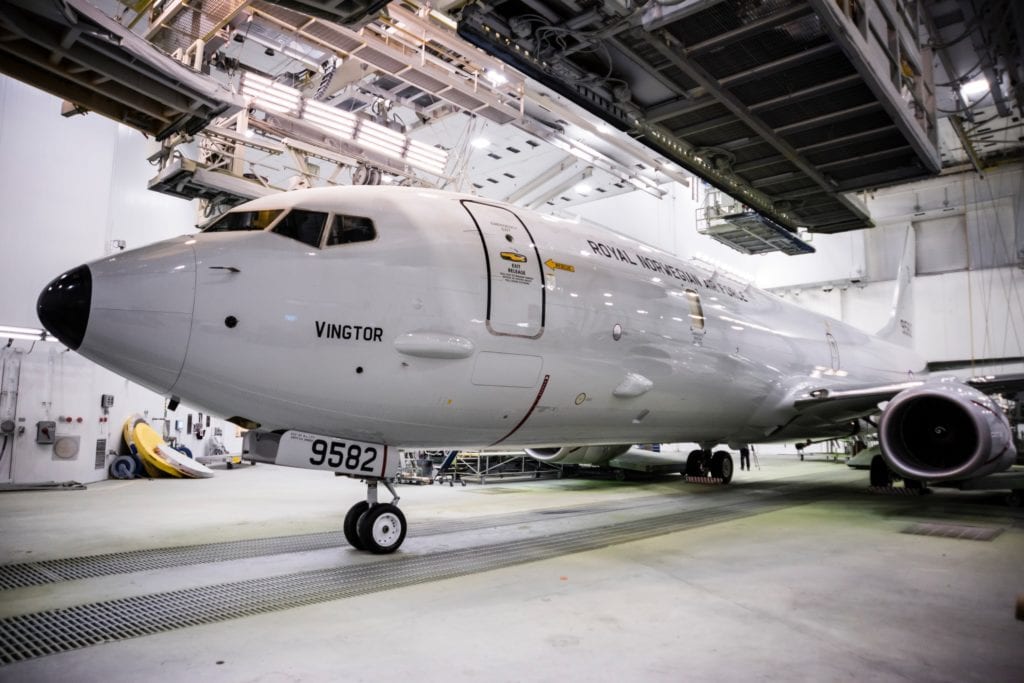
Norway’s first P-8A Poseidon, Vingtor, rolled out of the paint show in Renton, Washington, on July 9. It will return to the factory floor to prepare for flight testing. BOEING
RENTON, Wash. — The first P-8A Poseidon aircraft for Norway today rolled out of the paint shop in Renton, in Royal Norwegian Air Force livery, Boeing said in a July 9 release. Norway is one of eight nations to have acquired the P-8A as their new multi-mission maritime patrol aircraft.
Recently, the air force revealed the names of its five P-8A Poseidon aircraft: Vingtor, Viking, Ulabrand, Hugin and Munin. The names are inspired by Norse mythology and continue a tradition of almost 80 years that started when the names Vingtor, Viking and Ulabrand were used on Norway’s PBY-5 Catalina maritime patrol aircraft in 1942. Since then, other maritime patrol aircraft operated by the Royal Norwegian Air Force have carried those names, including its current P-3 fleet, which will be replaced by the P-8.
Norway’s first P-8A aircraft – Vingtor – will now return to the factory floor to be prepared for flight testing. First flight is scheduled for later this month, and mission systems will be installed on the aircraft after that.
CTF Sentinel Completes Third Joint Exercise in the Arabian Gulf
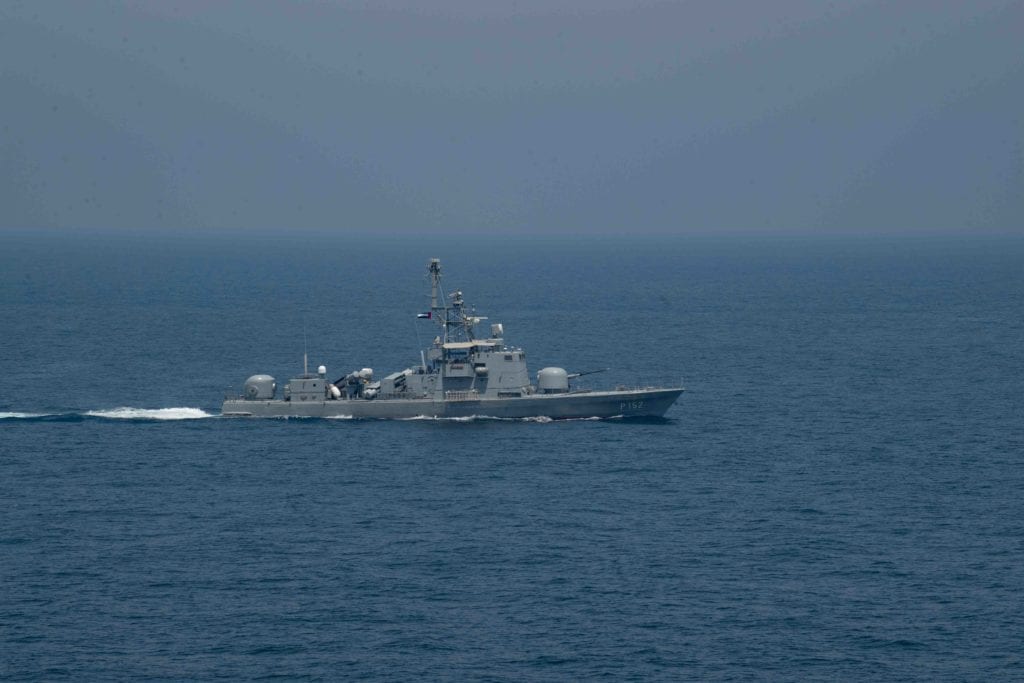
United Arab Emirates Navy missile patrol boat Marban (P 152) operates in formation with guided-missile cruiser USS Monterey (CG 61), not pictured, during a Coalition Task Force (CTF) Sentinel Shield-led interoperability exercise in the Arabian Gulf, June 26. U.S. NAVY / Mass Communication Specialist Seaman Chelsea Palmer
MANAMA, Bahrain — Coalition Task Force (CTF) Sentinel completed its third iteration of combined exercise Sentinel Shield in the Arabian Gulf, showcasing interoperability between coalition warships June 26, the task force spokeswoman said in a July 8 release.
During the exercise, the United Arab Emirates Navy missile patrol boat Marban (P152) and United States Navy guided-missile cruiser USS Monterey (CG 61) conducted synchronized tactical maneuvers while testing communications across systems and platforms with each other and merchant vessels.
“Two of our Gulf Coast Country partners participated in this exercise,” said Commodore Adrian Fryer, Royal Navy, CTF Sentinel commander. “Every engagement helps us promote partnerships, maintain our edge and remain vigilant in upholding the free flow of commerce in the region, and support the global economy.”
Regular training between Sentinel and Sentry patrols throughout the Arabian Gulf is a vital part of the CTF Sentinel mission.
Sentinels are large naval assets, such as frigates and destroyers, which provide overwatch of two critical choke points, the Strait of Hormuz and the Bab el-Mandeb Strait. Sentries are smaller naval vessels, such as patrol craft and corvettes, which patrol key transit areas between the choke points.
Each exercise increases synchronicity between partner nations enabling them to continue deterring state-sponsored malign activity in the region.
“On behalf of the crew of the Marban, it has been an honor to work with the USS Monterey on this mission that has increased our level of coordination which plays an important role at sea,” said United Arab Emirates Lt. Cdr. Saleh Almehrzi, commanding officer of the Marban.
The exercise was successful and we hope there will be many more opportunities to work alongside coalition members in the future to further our partnership.”
U.S. Navy Capt. Joseph Baggett, commanding officer of USS Monterey, highlighted the critical nature of CTF Sentinel’s mission and the importance of continued training exercises with our partners.
“Regional security and stability are directly linked to enhanced cooperation, understanding, and collaboration with key regional partners, like the UAE Navy, and it was an absolute honor to train and learn from our operations with Marban,” said Baggett.
CTF Sentinel is a multinational maritime effort to promote maritime stability, ensure safe passage, and enhance freedom of navigation throughout key waterways in the Arabian Gulf, Strait of Hormuz, the Bab el-Mandeb Strait, and the Gulf of Oman.
Boeing to Support RAF Poseidon Fleet and Train Crews for Next Five Years
Aviation Machinist’s Mate 3rd Class Audulio Garza, assigned to the “Grey Knights” of Patrol Squadron (VP) 46, signals to the pilots of a P-8A Poseidon anti-submarine warfare patrol aircraft, Dec. 14, 2020, in Lossiemouth, Scotland. U.S. NAVY / Mass Communication Specialist 2nd Class Austin Ingram
LOSSIEMOUTH, Scotland — Boeing and the U.K. Ministry of Defence have signed an agreement for Boeing to support the Royal Air Force’s (RAF) fleet of Poseidon MRA1 maritime patrol aircraft and train the crews that operate them, the company announced.
“Our new Poseidon fleet continues to grow from strength to strength and is already defending the U.K.’s maritime interests at home and abroad,” said Defence Secretary Ben Wallace. “This contract with Boeing Defence UK secures our critical submarine-hunting aircraft capabilities whilst also creating a home-grown training enterprise and creating over 150 British jobs.”
Under the aircraft and training support contract, valued at $321.6 million (£233.5 million), Boeing will provide maintenance services, spares and repairs, including tools and ground support equipment, as well as supply chain management, forecasting and inventory management, and airworthiness services for the RAF’s P-8 fleet.
The training element of the contract will offer a suite of training systems and courseware to prepare aircrew and maintainers to safely and effectively operate and maintain the fleet. Boeing will provide the flight instructors to train P-8A pilots, and under the terms of a subcontract, Burgess Hill-based CAE UK will create more jobs in the UK to provide rear crew and engineering instructors, and console operators and controllers who will perform role playing and support functions during training and mission rehearsal exercises.
These agreements will create 150 jobs in the United Kingdom, including more than 100 at RAF Lossiemouth in northern Scotland. Boeing employees are already working alongside RAF personnel at the station in Moray, supporting the current fleet of five Poseidons.
“The P-8A Poseidon brings the RAF critical reconnaissance capabilities, and we are proud to be a trusted partner in helping to keep RAF aircrew trained, and the P-8A mission ready,” said Anna Keeling, managing director of Boeing Defence UK. “We are excited to see our continued growing presence in Scotland with the creation of these highly-skilled jobs, in addition to our existing footprint of more than 2,500 employees across the U.K., reaffirming our commitment to help strengthen the aerospace and defense sector in Scotland.”
The RAF is on contract for nine Poseidon aircraft with five already delivered and the remaining four scheduled for later this year, when around 200 Boeing employees are expected to be based at RAF Lossiemouth focused on maintenance, training and support.
The second of two Operational Flight Trainers, jointly developed by Boeing and CAE for the Poseidon fleet, arrived at RAF Lossiemouth last month. Both will be installed in the Boeing-built Strategic Facility, which accommodates three Poseidon aircraft, squadrons and mission support facilities.
The P-8A Poseidon supports maritime surveillance, anti-submarine warfare and anti-ship warfare for the United Kingdom and increases protection of the country’s nuclear deterrent and Queen Elizabeth class aircraft carriers. More than a dozen U.K.-based suppliers produce components for the P-8, making up five percent of every P-8 aircraft around the world. Marshall Aerospace and Defence Group has built and delivered more than 900 auxiliary fuel tanks from its production facility in Cambridge.
Flying Ship Technologies Secures Sales for Wing-in-Ground-Effect Maritime Vessels
LEESBURG, Va. — Flying Ship Technologies Corp. has signed a $100 million sales agreement with a European customer for the purchase of wing-in-ground-effect maritime vessels, the company said in a July 8 release.
“We’re elated to announce this agreement,” said Flying Ship CEO Bill Peterson. “These vessels will provide fast, low-cost delivery to a wide range of coastal locations around continental Europe and the surrounding islands. Flying Ships will improve the quality of life for consumers by enhancing existing trade routes and opening new routes to deliver fresh foods, medical supplies, and e-commerce, while being carbon-neutral and a fraction of the cost of air freight.”
Flying Ships serve an untapped opportunity in the expanding global logistics market for fast, cost-effective delivery of time-critical, price-sensitive goods. The global logistics market is growing annually and projected to be more than $15 trillion over the next five to seven years.
“This order is the first of many for Flying Ship vessels. As the world looks for ways to reduce greenhouse gases and the logistics market continues to surge, we expect even more interest in Flying Ships as a green alternative to ships, trucks, rail and air freight for inexpensive, fast delivery of goods,” Peterson said.
Flying Ship Technologies is developing autonomous ground effect vessels that fly just over the water, which the company says are 10 times faster than boats, a quarter of the cost to maintain and operate compared to planes, provide tens of thousands of additional coastal access points, and are dramatically cleaner for the environment.
HII To Acquire Alion Science and Technology
NEWPORT NEWS, Va. — Huntington Ingalls Industries has entered into a definitive agreement to acquire Alion Science and Technology for $1.65 billion in cash from Veritas Capital, subject to customary adjustments, HII announced in a July 6 release.
Alion will become part of Huntington Ingalls Industries’ Technical Solutions division. The transaction is expected to close in the second half of 2021, subject to customary closing conditions.
Alion provides advanced engineering and research and development services in the areas of intelligence, surveillance and reconnaissance, military training and simulation, cyber, data analytics and other next-generation technology-based solutions to the Department of Defense and intelligence community customers, with the U.S. Navy representing about one third of current annual revenues.
Alion is poised for continued strong growth with over $3 billion in backlog today, with more than $5 billion in estimated contract value and a robust opportunity pipeline, Huntington Ingalls said. Alion has more than 3,200 employees with over 80% of employees maintaining security clearances.
“We established the Technical Solutions division in 2016 with a vision and strategy focused on partnering with our customers to solve their most pressing challenges,” said Mike Petters, HII’s president and CEO. “Today’s announcement, coupled with our previous investments in leading edge technologies, such as cybersecurity and autonomous systems, reflects our commitment to stay on the cutting edge of critical, high-growth national security solutions and generate significant long-term value for our shareholders.”
“The combination of Alion and our Technical Solutions business represents a significant value creation opportunity that broadens our capabilities and customer access in our target markets,” said Andy Green, HII executive vice president and president of Technical Solutions. “The experienced Alion team and the highly complementary solutions and products they provide are consistent with the strategic vision we have articulated for the Technical Solutions business, and we are excited about the significant growth potential this combination represents.”
Cutter Thetis Returns from 47-Day Counter-Drug Patrol
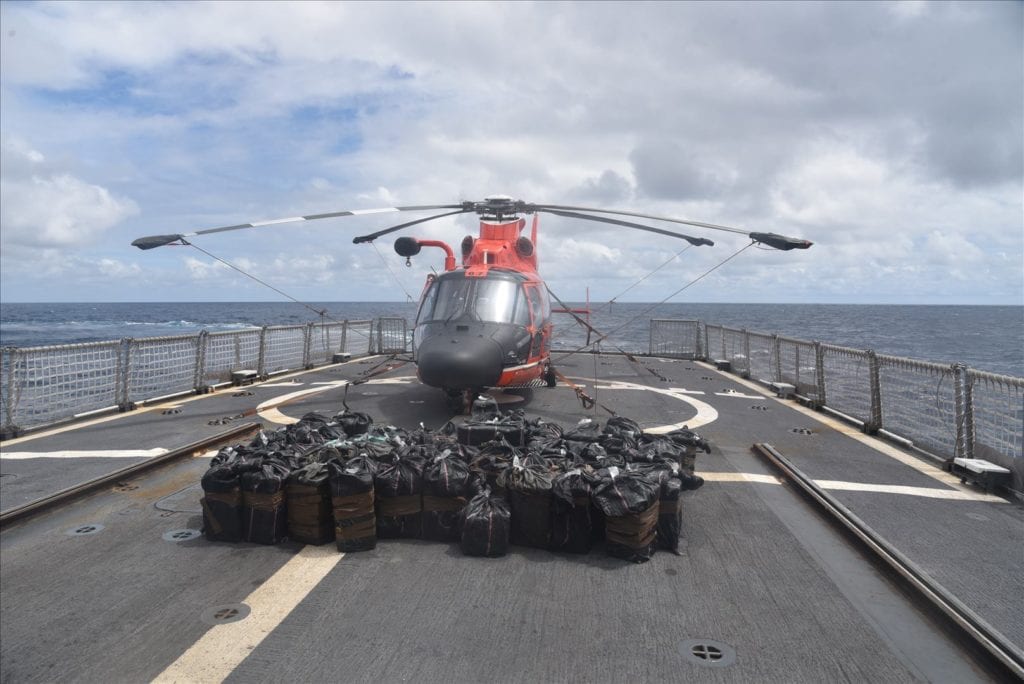
A Coast Guard Helicopter Interdiction Tactical Squadron MH-65 Dolphin helicopter is aboard the Coast Guard Cutter Thetis during a patrol in the Eastern Pacific Ocean, June 12, 2021. The Coast Guard Cutter Thetis returned home to Key West, Florida after completing a 47-day patrol to the Caribbean Sea and Eastern Pacific Ocean. U.S. COAST GUARD
KEY WEST, Fla. — The Coast Guard Cutter Thetis, a 270-foot Famous-class cutter, and crew returned to Key West, Saturday, July 3, following a 47-day deployment to the Caribbean Sea and Eastern Pacific Ocean working with U.S. Southern Command’s Joint Interagency Task Force South, the Coast Guard7th District said in a release.
Thetis’ crew interdicted three suspected smugglers and approximately 4,000 pounds of cocaine with a street value of $75 million. The Thetis crew deployed with an MH-65 helicopter and aviation detachment capable of conducting airborne use of force from the Coast Guard’s Helicopter Interdiction Tactical Squadron based in Jacksonville, Florida.
The Thetis crew also conducted joint counter-narcotic and seamanship training with the Panamanian navy, in which they participated in communications exercises, non-compliant vessel pursuit tactics and medical training while at sea with Panamanian partners.
“The Coast Guard maintains a consistent presence in the region while also leveraging support from our maritime partner nations,” said Cmdr. Justin Nadolny, Thetis’ commanding officer. “It was a pleasure to have the opportunity to train and operate with the Panamanian navy, they are a true group of professionals and together we continue to disrupt the flow of illicit contraband into the United States.”
Cutter Alex Haley Returns to Kodiak from Bering Sea Patrol
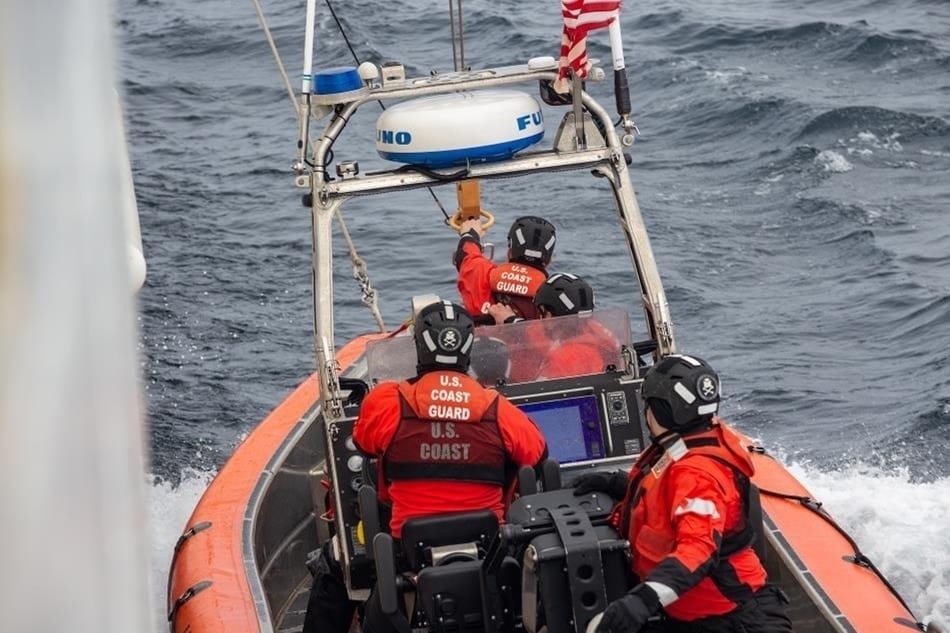
Coast Guard Cutter Alex Haley boat crew members prepare to disconnect from the forward-davit connection during rescue-and-assistance training in the Bering Sea, May 28, 2021. Small boats deployed from Coast Guard cutters are used in a variety of missions including law enforcement and search and rescue. U.S. COAST GUARD
KODIAK, Alaska —The crew of the Coast Guard Cutter Alex Haley returned to homeport on Tuesday, June 29 following a 52-day Bering Sea patrol, the Coast Guard 17th District said in a July 2 release.
While deployed, the crew of the Alex Haley provided search and rescue capability to the fisheries in the Bering Sea. Their embarked MH-65 helicopter crew from Air Station Kodiak conducted a search and rescue mission in the coastal town of Akutan. The aircrew transported a severely injured resident to a higher level of medical care.
The crew also maintained a law enforcement presence throughout the Aleutian chain. They conducted 17 law enforcement boardings, ensured compliance with maritime laws and regulations, and protected the U.S. Exclusive Economic Zone by patrolling the maritime boundary line to prevent the illegal harvesting of U.S. fish stocks.
“Assuming the duties as commanding officer of Alex Haley during a patrol afforded me the opportunity to learn a great deal about the ship and its crew,” said Cmdr. Brian Whisler commanding officer of the Alex Haley. “While such a significant transition can prove challenging, the crew continually maintained impressive work ethic and professionalism in the execution of our primary missions. Their dedication to the people and communities we serve proves Alex Haley crew members is a vital asset in the Bering Sea region.”
The Alex Haley is a 282-foot medium-endurance cutter that has been homeported in Kodiak since 1999. The crew routinely operate throughout the Bering Sea, Gulf of Alaska, and Pacific Ocean. The cutter’s ability to operate in extreme weather conditions provides the mission flexibility necessary to perform search and rescue, fisheries law enforcement, and vessel safety inspections across Alaska.