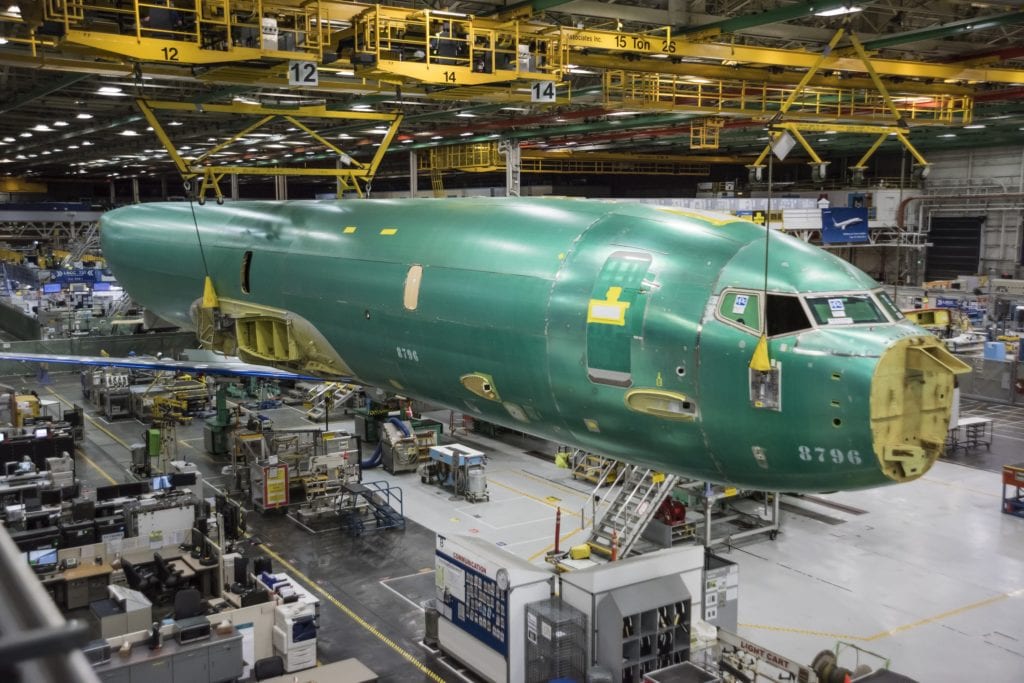
Norway’s first P-8A Poseidon aircraft is moved from a rail car through the air to the first step of the assembly process, the Fuselage Systems Installation tool, in Renton, Washington. BOEING
RENTON, Wash. — The first P-8A Poseidon fuselage for Norway arrived April 12 at Boeing facilities in Renton, Washington, from Spirit AeroSystems in Wichita, Kansas, marking a major milestone in the production of the first of five Poseidons for the Royal Norwegian Air Force.
A derivative of the Boeing 737 Next-Generation commercial aircraft, the P-8 is first assembled at Boeing Commercial Airplanes’ 737 production line, where the fuselage receives additional wiring and systems needed to support military components, equipment and operation. The aircraft is then delivered to Boeing’s Defense, Space & Security unit for the installation of military systems, testing and delivery to military customers.
“Boeing uses a proven in-line production process to efficiently build the aircraft,” said Christian Thomsen, P-8A Europe program manager. “Implementing established best practices and common, commercial production-system tools enables the team to reduce flow time and cost while ensuring quality and on-time delivery to our customers.”
Norway is expected to receive its first P-8 later this year. In total, five P-8s will eventually replace Norway’s current fleet of six P-3 Orions and three DA-20 Jet Falcons and will provide advanced capabilities to maintain situational awareness in neighboring waters on and below the surface of the ocean.
To date, Boeing has delivered 104 P-8 aircraft to the U.S. Navy and customers in Australia, India and the United Kingdom.
Cutter Kimball Returns Home from Expeditionary Patrol in the Pacific
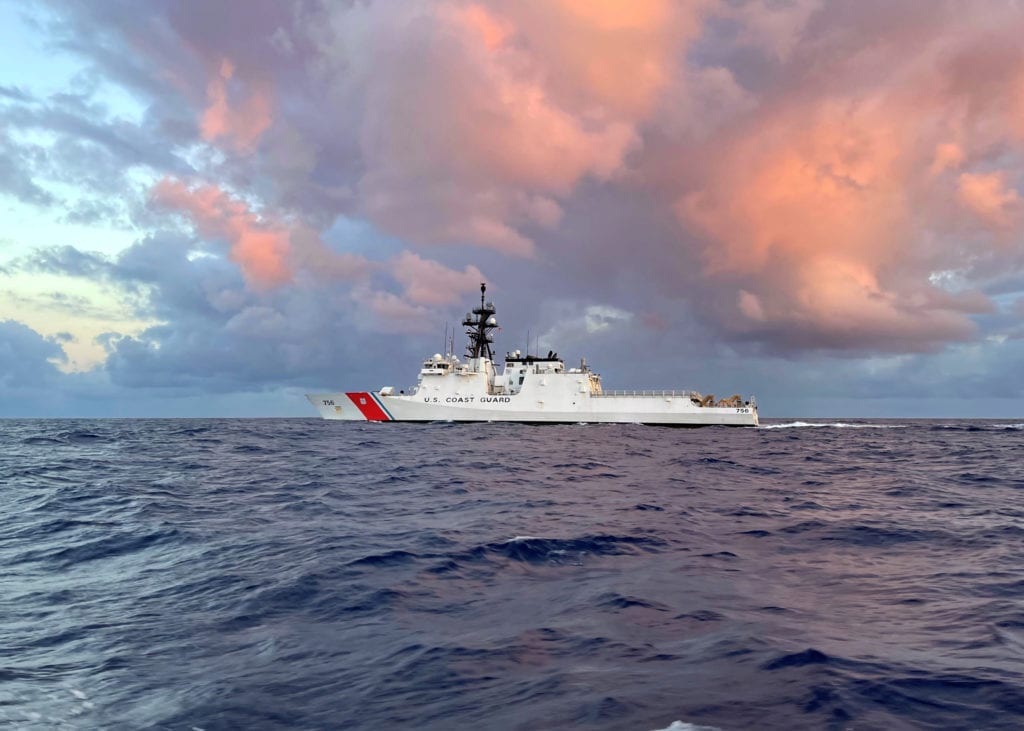
The crew of the Coast Guard Cutter Kimball (WMSL 756) underway in the Pacific, April 4, 2021. The Kimball was conducting an expeditionary patrol supporting Operation Blue Pacific, Op Rai Balang, and Op Aloha Shield. U.S. COAST GUARD
HONOLULU — The crew of the Coast Guard Cutter Kimball (WMSL 756) returned to Honolulu April 9 after completing an expeditionary patrol supporting Operation Blue Pacific, Operation Rai Balang and Operation Aloha Shield in the Pacific, the Coast Guard 14th District said in an April 9 release.
During the 82-day patrol, the cutter’s crew worked closely with partners and allied nations on numerous missions ranging from search and rescue to the prevention of illegal, unreported, and unregulated fishing (IUU) while promoting stability and security throughout the region.
“I’m tremendously proud of my crew’s exceptional performance, especially considering how their dedication and teamwork allowed them to overcome the many challenges associated with operating by ourselves for long periods of time in remote locations and the difficulties created by the global pandemic,” said Capt. Holly Harrison, the Kimball’s commanding officer. “They adapted and overcame every obstacle and challenge put in their way with ease, exactly what you’d expect from our phenomenal Coast Guardsmen and women.”
One of the main goals of the 20,000 nautical-mile patrol was to assist the United States’ partners in the region with combating IUU.
Throughout the deployment the cutter’s crew worked closely with the Pacific Islands Forum Fisheries Agency (FFA) during Op Rai Balang, a coordinated effort between partners in the region to combat IUU, while also enforcing Western and Central Fisheries Commission regulations on the high seas to protect the region’s fish stocks.
Fish stocks are a vital renewable resource for many nations in the Pacific. Because of the migratory nature of fish, efforts towards their conservation requires teamwork between the partner nations.
The multi-million-dollar IUU fishing industry represents a direct threat to the partners efforts to ensure these resources remain sustainable for years to come and throughout the patrol the crew of the Kimball worked with the governments of the Solomon Islands, Federated States of Micronesia, and Papau New Guinea to strengthen domain awareness and resource security within the nation’s economic exclusive zones.
During the patrol, the crew queried 21 foreign fishing vessels and boarded six, generating vital information reports for the partners in their efforts to combat IUU.
“The National Security Cutters bring a capacity and capability into the Coast Guard which are truly game changing when it comes to curbing IUU in the Pacific,” said Rear Adm. Matthew Sibley, commander, Coast Guard 14th District. “Patrols such as the Kimball’s display these cutters ability to cover large swaths of the Pacific and support our partners in joint conservation efforts while contributing to the overall stability of the region.”
The Kimball is one of the Coast Guard’s newer 420-foot Legend-class National Security Cutter and boasts a wide array of modern capabilities helping the crew to complete their varied missions.
Throughout the patrol, the crew used the cutter’s ability to deploy unmanned aircraft systems (UAS) to collect observation reports on vessels of interest which were shared with Maritime Security Advisors and the FFA Regional Fisheries Surveillance Center.
The UAS was also utilized during both day and night searches for a missing mariner southwest of Guam, displaying the versatility of the new technology and its potential in multiple types of missions.
Another key goal of the patrol was to increase interoperability between the Coast Guard and partners in the region.
The Kimball’s crew participated in a number of exercises with partners in the region, including training with a Royal Australian Navy Sea Dragon aircraft crew during the FFA Op Rai Balang, joint interdiction training with the Japan coast guard ship Akitsushima, and an exercise with the USS Tulsa.
“Over the past 82-days, Kimball’s crew conducted joint operations with the Japanese coast guard, Royal Australian Navy, Pacific Islands Forum Fisheries Agency and U.S. Navy.” said Harrison. “In each operation, we were thoroughly impressed with our partners’ professionalism, skill, and commitment to Oceania and regional security.”
Curtiss-Wright Awarded Contract to Support Ford-Class CVN Elevators
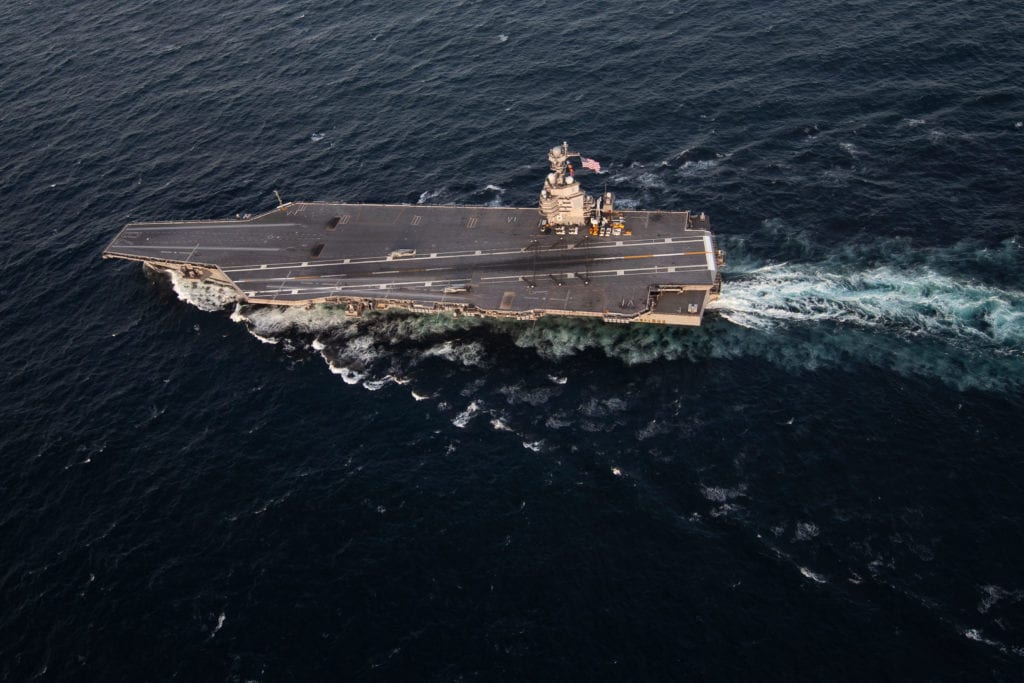
USS Gerald R. Ford (CVN 78) transits the Atlantic Ocean March 20, 2021. U.S. NAVY / Seaman Jackson Adkins
SHELBY, N.C. — Curtiss-Wright Actuation Division has been awarded a contract to provide Exlar Electro-Mechanical Actuators to Federal Equipment Co. (FEC) to support its weapons elevator systems for the Ford-class aircraft carrier program, the company said in a release.
Exlar actuators are used in several other mission critical areas on the Ford-class carriers, including the Jet Blast Defector, Integrated Catapult Control Station and Landing Signal Officer station actuation systems.
Exlar’s field-proven, commercial off-the-shelf (COTS) actuation products are used in a variety of industries and applications providing robust, reliable and energy efficient solutions. These COTS and modified COTS products and technologies are used in numerous naval and ground defense applications, as well as offering alternatives to fluid power options while providing lower total cost of ownership through energy efficiency, lower maintenance costs and integration with automated control systems.
FEC also uses the Exlar GSM Series integrated products as lock actuators for the weapons elevator systems they provide to the Ford carrier program on their CVN-78 and CVN-79 ships.
“We are proud to be able to continue to support both FEC, the U.S. Navy and its shipbuilder as the Navy modernizes its carrier fleet,” said Phil Bowker, Curtiss-Wright senior general manager, Actuation Division.
Exlar is a business unit of Curtiss-Wright’s Actuation Division.
Cutter Returns Home following Eastern Pacific Law-Enforcement Patrol
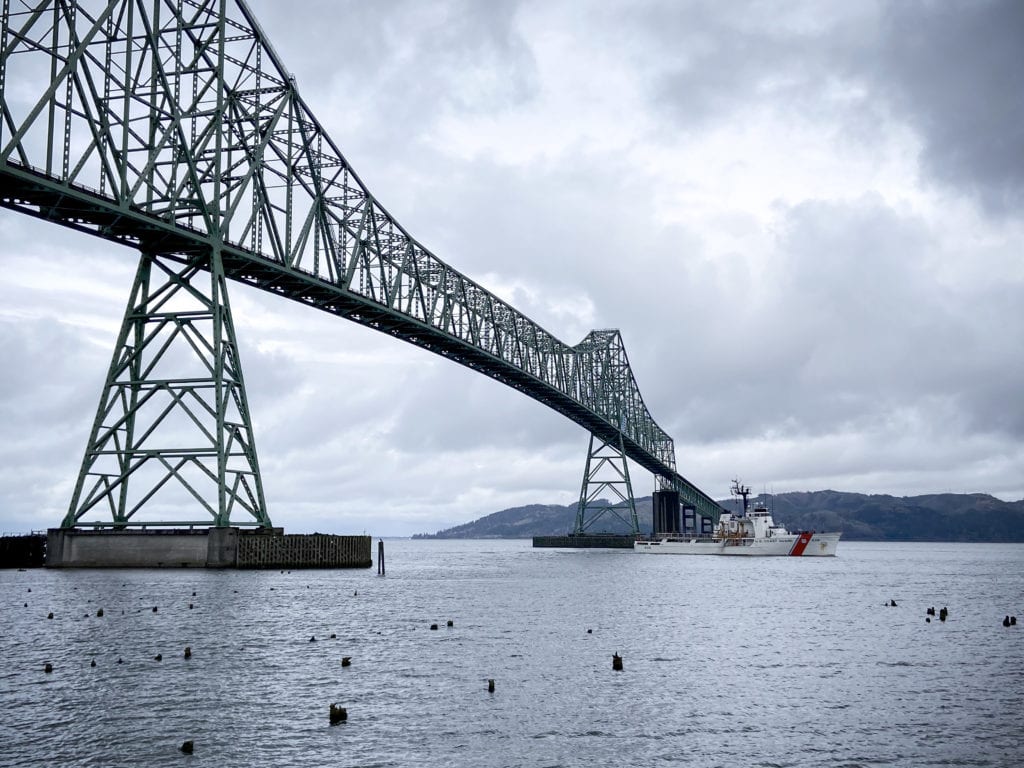
The USCGC Alert (WMEC 127) and its crew return to homeport in Astoria, Oregon, Wednesday, April 7, 2021, following a 63-day patrol that began in early February. The cutter and crew patrolled off the coast of Mexico and in the vicinity of the United States-Mexico Maritime Boundary Line enforcing international laws and treaties to disrupt illegal narcotics and migrant smuggling. U.S. Coast Guard photo by Petty Officer 1st Class Cynthia Oldham.
ASTORIA, Ore. — The Coast Guard Cutter Alert (WMEC 630) returned home to Astoria, Oregon, April 7 following a 63-day counterdrug patrol in the Eastern Pacific Ocean, the Coast Guard Pacific Area said in a release.
Working in conjunction with different Coast Guard and Mexican law enforcement agencies, Alert’s crew disrupted more than 2,100 pounds of cocaine, valued at over $41 million wholesale, from entering the United States.
The Oregon-based cutter and crew patrolled international waters off the coast of Mexico and the United States-Mexico Maritime Boundary Line, enforcing international laws and treaties throughout their deployment and disrupting the flow of illegal narcotics and migrant smuggling.
While on patrol, a maritime patrol aircraft spotted a suspected smuggling vessel. Alert’s crews launched both cutter small boats and pursued the vessel until it ran out of fuel. The case was transferred to Mexican law enforcement officials from the Secretaría de Marina (SEMAR).
Through the collaborative and international team effort, the smugglers were successfully apprehended, and 1,600 pounds of illegal narcotics seized by Mexican Law Enforcement.
Within 48 hours, Alert’s crew identified another law enforcement case for interdiction and changed course to intercept the suspected smuggling vessel. After a multi-hour pursuit, the crew successfully interdicted approximately 550 pounds of cocaine and apprehended six suspected narco-traffickers for prosecution in the United States.
Numerous U.S. agencies from the Departments of Defense, Justice and Homeland Security cooperated in the effort to combat transnational organized crime. The Coast Guard, Navy, Customs and Border Protection, FBI, Drug Enforcement Administration, and Immigration and Customs Enforcement, along with allied and international partner agencies, play a role in counter-drug operations.
Alert’s crew transferred the seized narcotics and suspected drug traffickers to the Department of Justice, via Coast Guard Station San Diego March 1 before steaming north to complete their three-week Tailored Ship Training Assessment, a bi-annual assessment designed to evaluate the cutter’s training teams and operational readiness.
“Once again, the crew of Alert was able to overcome the challenges of the COVID-19 pandemic and equipment failures on a 50-year-old ship to execute a wide range of Coast Guard missions from the US-Canada Border to the Mexico-Guatemala border over a two-month period,” said Cmdr. Tyson Scofield, Alert’s commanding officer. “Overall, Coast Guard Cutter Alert successfully completed a variety of operations through the combined effort of every member of the crew.”
While patrolling the Eastern Pacific, Alert’s watchstanders identified a sea turtle entangled in fishing debris. The cutter maneuvered into position and launched its small boat to help the endangered sea animal, ultimately setting the sea turtle free from the entwined debris. Marine environmental protection is a statutory mission of the Coast Guard and every year approximately 300 sea turtles are saved by the Coast Guard.
“Marine life has always had a special place in my heart. When the opportunity to save a turtle arose, I was beyond excited to help,” said Petty Officer Third Class Timothy Waters who was aboard the small board to help free the entangled sea turtle. “I am honored to have done something so small that contributes to something much larger than me.”
Elbit Systems Completes the Acquisition of Sonobouy Manufacturer Sparton Corp.
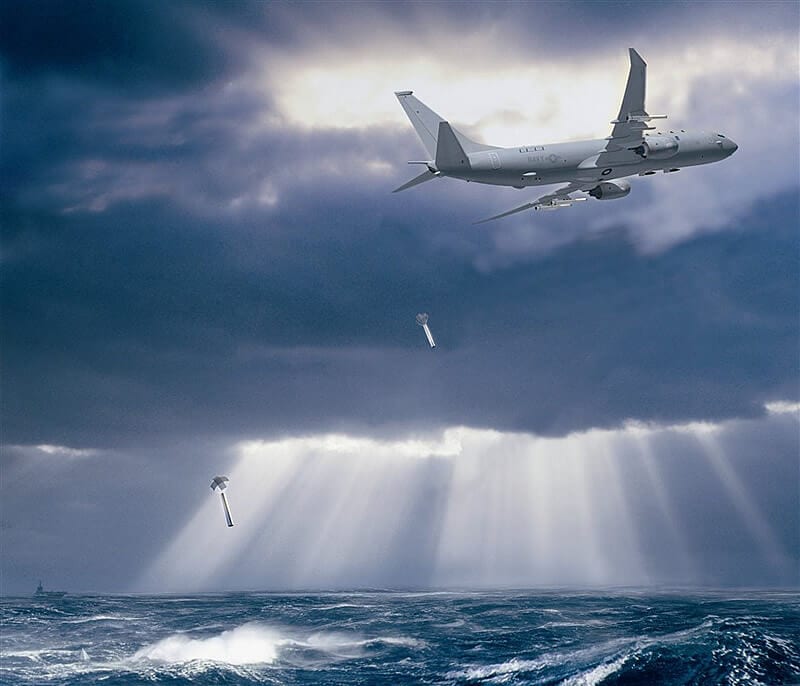
An artist’s conception of a P-8A aircraft dropping Sparton-built sonobuoys. ELBIT SYSTEMS OF AMERICA
HAIFA, Israel — Elbit Systems announced April 6 its U.S. subsidiary, Elbit Systems of America, completed the acquisition of Sparton Corp. from an affiliate of Cerberus Capital Management for $380 million. The closing follows receipt of all the required approvals, including U.S. government and regulatory approvals.
Headquartered in De Leon Springs, Florida, U.S., Sparton is a premier developer, producer and supplier of systems supporting undersea warfare for the U.S. Navy and allied military forces. Sparton is well-known as a manufacturer od sonobuoys for anti-submarine search and tracking by aircraft.
“The growing importance of the maritime arena and the market position and technological strength of Sparton make this acquisition significant to our long-term growth strategy, with a particular focus on the U.S. We believe that the completion of this acquisition will be beneficial for both Elbit Systems’ and Sparton’s employees and customers,” said Bezhalel “Butzi” Machlis, Elbit Systems president and chief executive officer.
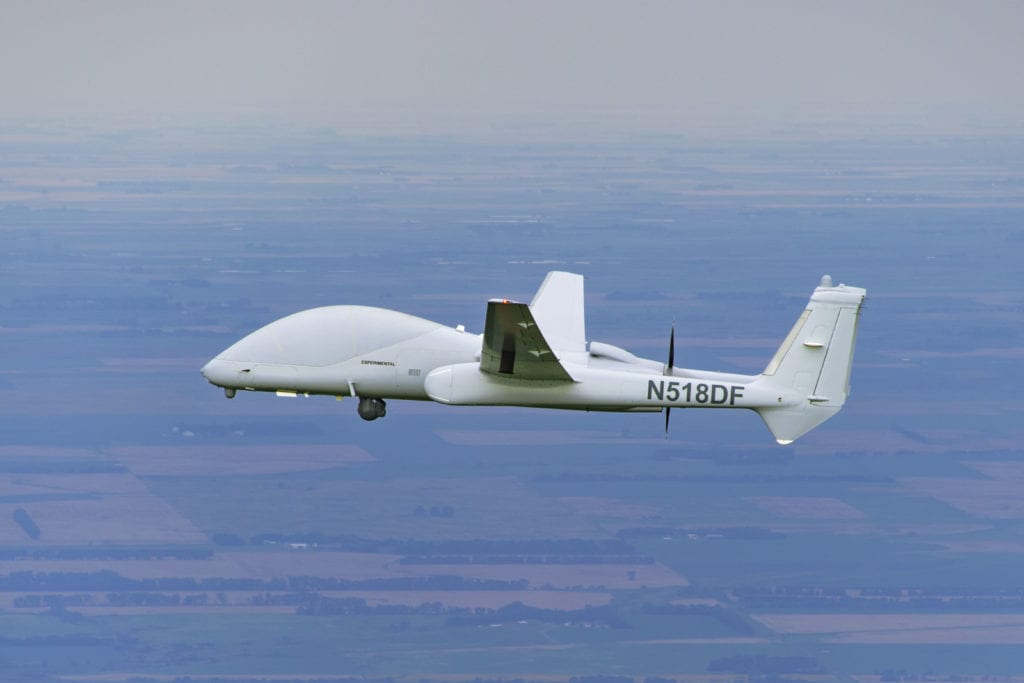
Northrop Grumman’s optionally manned Firebird, which flew to various locations around the United States to showcase its flexibility and ability to fly in national airspace. NORTHROP GRUMMAN
SAN DIEGO — Northrop Grumman Corp.’s Firebird multi-sensor aircraft showcased the versatility of the optionally manned autonomous system as it flew to various locations across the United States last month, the company said in an April 6 release.
The ability of Firebird to be flown manned through national airspace is a demonstration of its unique operational flexibility for self-deployment and its rapid relocation ability to adapt to specific user needs and operational requirements.
The company flew Firebird almost 9,000 miles around the US with stops in Dayton, Ohio, Washington D.C., Patuxent River, Maryland, as well as Tampa, Miami and Key West, Florida.
“Our flights showcased one of its key differentiators — the ability to position the system in a manned configuration, then convert to autonomous operations for persistent ISR in under two hours,” said Jane Bishop, vice president and general manager, autonomous systems, Northrop Grumman. “At each stop, plane-side briefings provided customers the opportunity to see first-hand the operational versatility of the platform, its large sensor bay, and rapid configurability for changing mission needs.”
Firebird is a medium-altitude, long-endurance unmanned aircraft system designed for flexibility and affordability. Customers can install new payloads in as little as one day and swap payloads in 30 minutes, making the system suitable for numerous domains and missions.
The flights concluded in Key West, where the team conducted a series of manned maritime operational events that included a four-sensor package containing two high-definition electro-optical sensors, a maritime configured multi-spectral sensor for small target detection and an Automatic Information System receiver.
Leidos Completes Delivery of Seahawk MDUSV to U.S. Navy
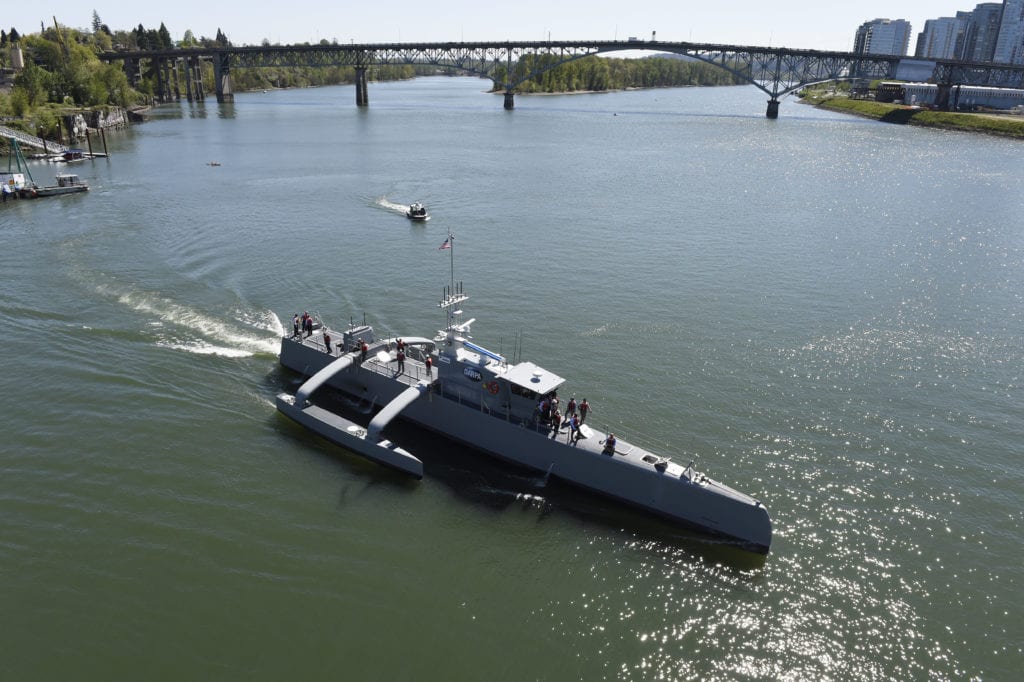
Leidos has completed delivery of a cutting-edge autonomous vessel, the Seahawk, an upgraded design from the earlier Sea Hunter vessel shown here getting underway following its christening ceremony in 2016. U.S. NAVY / John F. Williams
RESTON, Va. — Leidos has completed delivery of a cutting-edge autonomous vessel to the U.S. Navy, known as Seahawk, the company said in an April 7 release. The Office of Naval Research awarded Leidos the cost-plus-fixed fee contract to build the vessel, with an approximate value of $35.5 million, in December 2017. Work was principally performed on the Mississippi Gulf Coast.
“As technology continues to accelerate and adversaries become more sophisticated, our customers must constantly evolve,” said retired Rear Adm. Nevin Carr, Leidos vice president and Navy strategic account executive. “We are honored to provide this latest technological advancement to America’s sailors who fight to keep the seas open and free.”
Seahawk is a long-range, high-availability autonomous surface vessel with a composite trimaran hull. This medium-displacement unmanned surface vehicle (MDUSV) will enhance capabilities for naval operations. Like Leidos’ MDUSV Sea Hunter, Seahawk is substantially larger than other U.S. Navy USVs and has significantly increased capabilities compared to smaller USVs in terms of range, seakeeping and payload capacity. Seahawk is designed to operate with little human involvement, thus providing a forward-deployed and rapid-response asset in the global maritime surveillance network.
“We didn’t just put an autonomous navigation system onto an existing ship,” said Dan Brintzinghoffer, Leidos vice president for Maritime Solutions. “Every mechanical and electrical system on Seahawk has unique configurations designed to run for months at a time without maintenance or a crew.”
The trimaran’s displacement (fully loaded) is 145 long tons. This includes 14,000 gallons of fuel that can power the twin diesel engines for a substantial length of time. Seahawk’s upgraded design follows an evaluation of over 300 lessons learned from Sea Hunter. These upgrades were based on joint evaluations by Leidos and the Navy and include upgraded electrical systems, a payload mounting system and test operator control station.
Seahawk will join Surface Development Squadron One in San Diego, California.
Keel Laid for Future USS Harvey C. Barnum Jr.
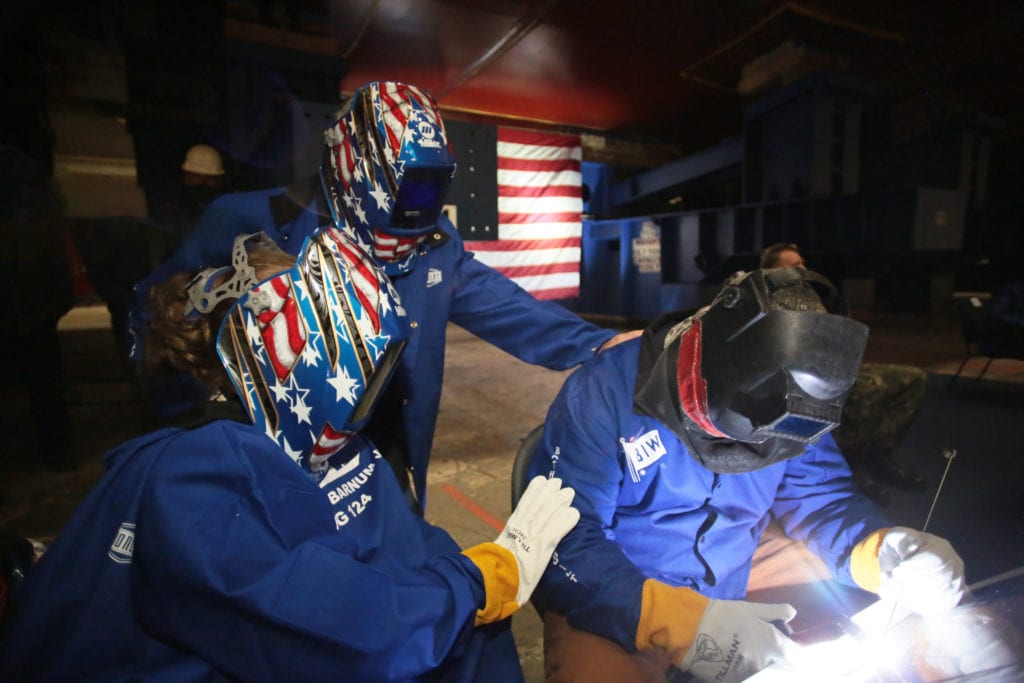
The future USS Harvey C. Barnum Jr. (DDG 124) namesake, Col. Harvey “Barney” Barnum, Jr. (USMC, Ret.) (center) and his wife and ship sponsor, Martha Hill (left) monitor as Bath Iron Works welder Marty Fish (right) inscribes Col. Barnum’s signature onto the keel plate at General Dynamics Bath Iron Works (BIW) shipyard, April 6. BATH IRON WORKS
BATH, Maine – The keel of the future USS Harvey C. Barnum Jr. (DDG 124) was ceremoniously laid at General Dynamics Bath Iron Works (BIW) shipyard, April 6, the Navy’s Team Ships Public Affairs said in an April 7 release.
The ship’s namesake, Col. Harvey “Barney” Barnum Jr. (USMC, Ret.) and his wife and ship sponsor, Martha Hill, attended the event. Acting Secretary of the Navy, Thomas W. Harker, Maine Sens. Susan Collins and Angus King Jr. and Rep. Chellie Pingree were also in attendance.
With the assistance of BIW welder Marty Fish, Barnum inscribed his signature onto the keel plate. As the sponsor, Martha Hill authenticated the keel by etching her initials into the keel plate, a tradition that symbolically recognizes the joining of modular components and the ceremonial beginning of the ship.
“Col. Barnum has spent his life in service to our country and it is an honor to lay the keel of his ship,” said Capt. Seth Miller, DDG 51 class program manager. “This ship and all who serve aboard it will be a reminder of the honor, courage, and commitment that Col. Barnum embodies.”
Barnum twice served in Vietnam and is a Medal of Honor recipient for heroic actions taken against communist forces at Ky Phu in Quang Tin Province in December 1965 after his company came under enemy fire and was separated from the rest of their battalion.
DDG 124 is a Flight IIA Arleigh Burke-class destroyer equipped with Aegis Baseline 9, which provides improved integrated air and missile defense capabilities, increased computing power, and radar upgrades that improve detection range and reaction time against modern air warfare and ballistic-missile defense threats.
BIW is also in production on the future Arleigh Burke-class destroyers Carl M. Levin (DDG 120), John Basilone (DDG 122), Patrick Gallagher (DDG 127), and Flight III ships, Louis H. Wilson Jr. (DDG 126), and William Charette (DDG 130), as well as the future Zumwalt-class destroyer, Lyndon B. Johnson (DDG 1002).
NNSY Welcomes MTS Sam Rayburn for Inactivation
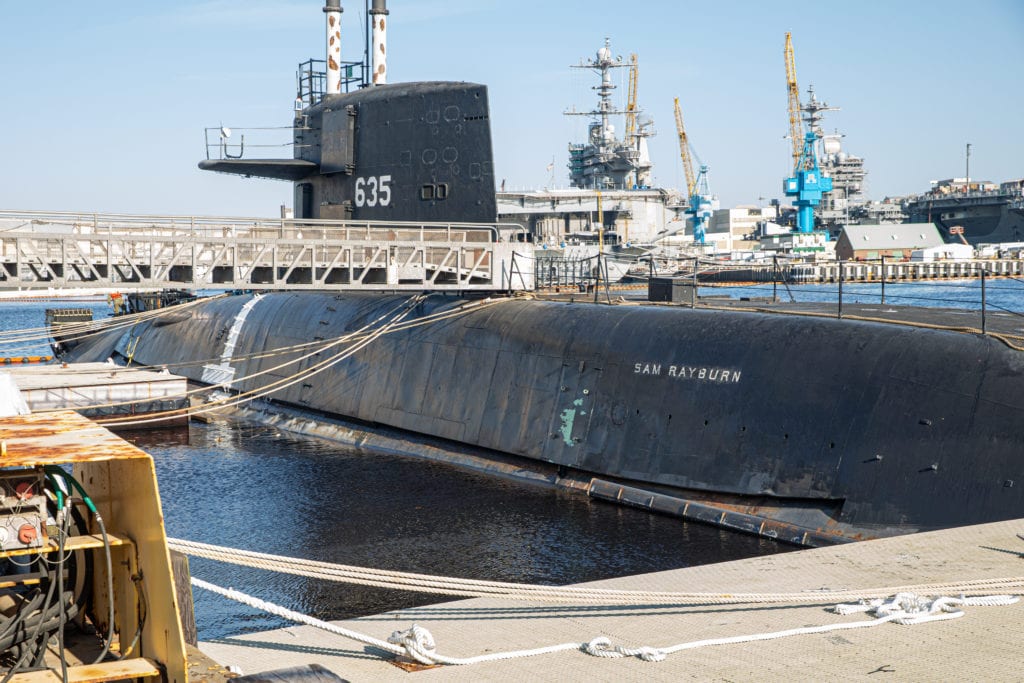
Norfolk Naval Shipyard welcomed the Moored Training Ship Sam Rayburn (MTS 635) in advance of its inactivation April 3. Along with MTS Daniel Webster (MTS-626), Rayburn is being replaced by the next-generation training vessels MTS La Jolla (MTS 701) and USS San Francisco (SSN 711). Danny De Angelis
NORFOLK, Va. — Norfolk Naval Shipyard (NNSY) welcomed the Moored Training Ship Sam Rayburn (MTS 635) April 3 in advance of its inactivation.
Rayburn (formerly SSBN 635) served as a MTS at Nuclear Power Training Unit – Charleston for more than 30 years training Sailors in the operation, maintenance and supervision of nuclear propulsion systems. Along with MTS Daniel Webster (MTS 626), Rayburn is being replaced by the next-generation training vessels MTS La Jolla (MTS 701) and USS San Francisco (SSN 711).
Providing unique opportunity for the NNSY workforce, Rayburn marks the Navy’s first inactivation of a MTS. Upon completion of this work, Rayburn will be towed to Puget Sound Naval Shipyard for recycling. NNSY will also perform Webster’s inactivation.
“USS Sam Rayburn has proudly served the U.S. Submarine Force and Navy Nuclear Propulsion Program since 1964, and we now welcome it to America’s Shipyard,” said Shipyard Commander Capt. Dianna Wolfson. “Performing the first inactivation of a Moored Training Ship will develop another important facet in our service to the fleet, and we look forward to excelling in our mission as one team.”
Throughout Rayburn’s three-decade stint as a training vessel, NNSY has performed maintenance on it as needed, sometimes in Portsmouth when a dry docking was required, and other times onsite in Charleston, sending upwards of 200 employees to perform Pierside Extended Maintenance Availabilities and support depot level repairs during continuous maintenance availabilities.
Commending Norfolk Naval Shipyard’s Charleston (NNSY-CHS) team for its record of planned maintenance and emergent repairs, Adm. James Caldwell, director, Naval Reactors, said, “NNSY-CHS’s efforts directly contributed to the Naval Nuclear Propulsion Training Program’s (NNPTP) ability to meet or exceed annual fleet requirements for qualified operators for the past several years, allowing the nuclear Navy to achieve 100 percent fleet manning for the first time in 10 years. This recognition speaks to the direct leadership, dedication and follow through of a passionate team striving for consistent impactful results.”
During this time of modernization for the NNPTP, the NNSY-CHS team has been concurrently working retirements of Rayburn and Webster; delivering and supporting work of the new vessels; and modernizing the site to enhance future training needs.
“Preparing and towing the MTS 635 represents the next step in modernizing the nuclear training program here in Charleston,” said MTS Project Superintendent Chrystal Brady. “By retiring the MTS 635, NPTU Charleston can move forward with the final preparations to receive the MTS 711 later this year. The NNSY Charleston team continues to demonstrate dedication to the mission of the site. To care for and deliver this asset, many personal sacrifices have been made over the years to deliver on maintenance schedules and, most recently, to ensure an on-time tow. Our team takes great pride in the way we represent NNSY and the Navy every day.”
Exemplifying Wolfson’s “One Mission-One Team” mantra, sending Rayburn to Portsmouth required constant communication and coordination between NNSY and its Charleston team hundreds of miles away. “There were several key parts to this plan for Norfolk Naval Shipyard — the safe departure from Charleston, tow, and safe arrival at Norfolk Naval Shipyard,” said Pat Ensley, NNSY Submarine program manager. “This was a great team effort to accomplish this mission. The detailed preparations for departure took significant planning and execution to complete the preparations for tow.”
Following La Jolla, which completed its conversion at NNSY in November 2019, San Francisco is now in the final stages of becoming a Moored Training Ship for towing to Charleston. These conversions are the closest NNSY has come to new ship construction since the 1950s, requiring two complete hull cuts, separating each boat into three pieces, recycling the center section, and adding three new hull sections, adding 76 feet to the overall length on both vessels.
This article is by Michael Brayshaw, NNSY Lead Public Affairs Specialist
Coast Guard, Navy Begin High Seas Oceania Maritime Security Initiative Patrol
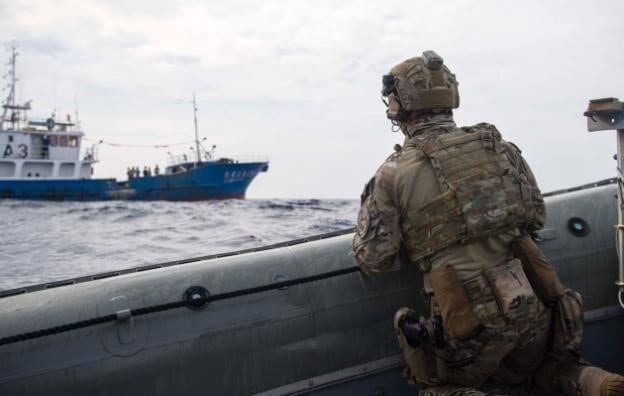
Independence-variant littoral combat ship USS Tulsa (LCS 16), with an embarked Coast Guard law enforcement detachment from the Pacific Tactical Law Enforcement Team are conducting maritime law enforcement operations through the enforcement of international law and the Western and Central Pacific Fisheries Convention to protect United States and Pacific Island Nations’ resource security and sovereignty. U.S. NAVY
SAN DIEGO, Calif. — The U.S. Coast Guard and U.S. Navy began their joint mission in the Western and Central Pacific under the Oceania Maritime Security Initiative (OMSI) to reduce and eliminate illegal, unregulated, unreported (IUU) fishing, combat transnational crimes and enhance regional security, April 5, the U.S. 3rd Fleet said in an April 6 release.
Independence-variant littoral combat ship USS Tulsa (LCS 16), with an embarked Coast Guard law enforcement detachment from the Pacific Tactical Law Enforcement Team, are conducting maritime law enforcement operations through the enforcement of international law and the Western and Central Pacific Fisheries Convention to protect United States and Pacific Island Nations’ resource security and sovereignty.
The Oceania Maritime Security Initiative (OMSI) program is a Secretary of Defense program that leverages Department of Defense assets transiting the region to improve maritime security and maritime domain awareness, ultimately supporting regional stability and partnerships in Oceania.
“USS Tulsa is proud to contribute to the OMSI mission” said Cmdr. William Dvorak, Tulsa’s commanding officer. “Working with the embarked U.S. Coast Guard law enforcement detachment, our crew is looking forward to supporting maritime security in the Indo-Pacific.”
The OMSI improves maritime security and maritime domain awareness by enabling U.S. Coast Guard law enforcement personnel to conduct maritime law enforcement operations from U.S. Navy assets in coordination with the Western and Central Pacific Fisheries Commission.
“Our team is ready and excited to execute the OMSI mission,” said Cmdr. Robert Berry, commanding officer of the embarked law enforcement detachment. “Collaborating with our U.S. Navy counterparts enables us to monitor and deter IUU fishing in the Western and Central Pacific and provides a presence for maritime surveillance and security in the region.”