USS Fort McHenry Decommissioning Ceremony Marks 33 Years of Service
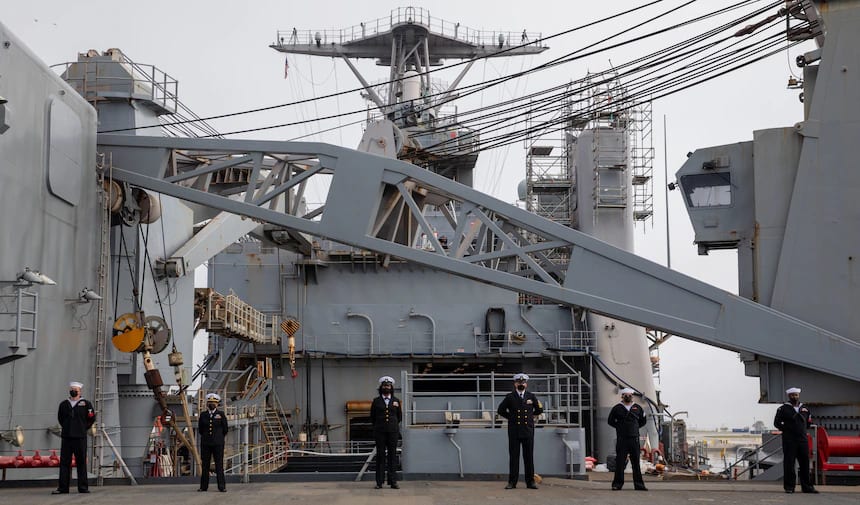
Sailors aboard the Whidbey Island-class dock landing ship USS Fort McHenry (LSD 43) main the rails during the decommissioning ceremony at Naval Station Mayport, March 27, 2021. U.S. NAVY / Mass Communication Specialist Seaman Aaron Lau
NORFOLK, Va. — The Whidbey Island-class dock landing ship USS Fort McHenry (LSD 43) held a small, COVID-conscious decommissioning ceremony at Naval Station Mayport, Florida, on March 27 before its inactivation, which will occur in April, the U.S. Fleet Forces Command said in a release.
Rear Adm. Robert Katz, commander, Expeditionary Strike Group (ESG) 2 presided over the ceremony, which included the remaining ship’s crew and several of its previous commanding officer, including the ship’s commissioning commanding officer, Capt. George “Dusty” Rhodes, who retired in 1999 and featured prominently in the ceremony.
“I am humbled to be with you on this bittersweet day as we gather here at Naval Station Mayport to commemorate this ship’s 33 years of commissioned service,” said Katz. “The history of Fort McHenry lies within each of the ship’s Sailors, and it is my hope this pride in their namesake guided all who crossed its quarterdeck and reported for duty.”
Fort McHenry was commissioned on Aug. 8, 1987, at Lockheed Shipyard in Seattle.
“During my 17 years of sea duty and four commands at sea, I have no doubt that the Fort McHenry crew was the best with whom I ever served,” said Rhodes. “They were always more than willing to do whatever it took to fulfill the mission. It is remarkable how closely they have stuck together over the past 34 years. I am proud to be among them.”
After arriving in San Diego on Sept. 30, 1987 the ship remained homeported there until 1995 when it replaced the USS San Bernardino (LST 1189) as a forward-deployed ship based in Sasebo, Japan.
Fort McHenry’s first deployment to the Western Pacific took place between June 16 and Dec. 16, 1988, as part of an Amphibious Ready Group (ARG) along with embarked Marines from the 15th Marine Expeditionary Unit. The other ships of the ARG were USS New Orleans (LPH 11), USS Mobile (LKA 115), USS Ogden (LPD 5) and USS Fresno (LST 1182). During the deployment Fort McHenry participated in exercises Cobra Gold-88, Valiant Usher 88-6 and Valiant Blitz 89-1 and the Sailors and Marines got some well-earned liberty during port visits to Okinawa, the Philippines, Thailand, Australia, South Korea and Pearl Harbor, Hawaii.
Over the next few decades, Fort McHenry would shift homeport, and deploy several more times, supporting Operations Desert Shield, Desert Storm, Vigilant Warrior and Enduring Freedom. Its crews would assist with humanitarian assistance efforts domestically, such as oil spill cleanup in the Prince William Sound and internationally, supporting disaster relief efforts in East Timor in 2001, the Philippines and Indonesia in 2004,
In November 1994, the ship received the first women to be permanently assigned to the crew — two lieutenants who reported aboard as the Supply Officer and Electrical Officer.
The ship’s final deployment was as part of the USS Kearsarge (LHD 3) Amphibious Ready Group and concluded in July 2019. While deployed to the Europe, Africa and the Middle East area of operations, Fort McHenry, along with embarked Marines from the 22nd Marine Expeditionary Unit, conducted maritime security operations and provided a forward naval presence in these critical regions.
During the deployment, Fort McHenry Sailors conducted a burial at sea for the remains of 34 veterans and two military spouses, a passing exercise with Egyptian navy ships in the Northern Arabian Sea and conducted more than 15 strait transits and port visits to Romania, the United Arab Emirates, Germany and Latvia. The ship capped off their deployment by participating in exercise Baltic Operations 2019.
“The last crew of Fort McHenry has performed with toughness and resiliency,” said Fabrizio, the ship’s final commanding officer. “Like their predecessors onboard, their efforts during the last phase of the ship’s active service and the inactivation process have been nothing short of amazing.”
The ship will be inactivated on April 16, 2021, and will be designated as Out of Commission in Reserve. That same day, it is scheduled to be towed by a seagoing tug to the Naval Inactive Ship Maintenance Facility in Philadelphia.
Navy Announces New Assignments for Flag Officers
Rear Adm. Blake L. Converse, assigned as deputy commander, U.S. Pacific Fleet, one of a number of new assignments announced March 29. U.S. NAVY
ARLINGTON, Va. — The acting secretary of the Navy and chief of naval operations announced on March 29 the following assignments:
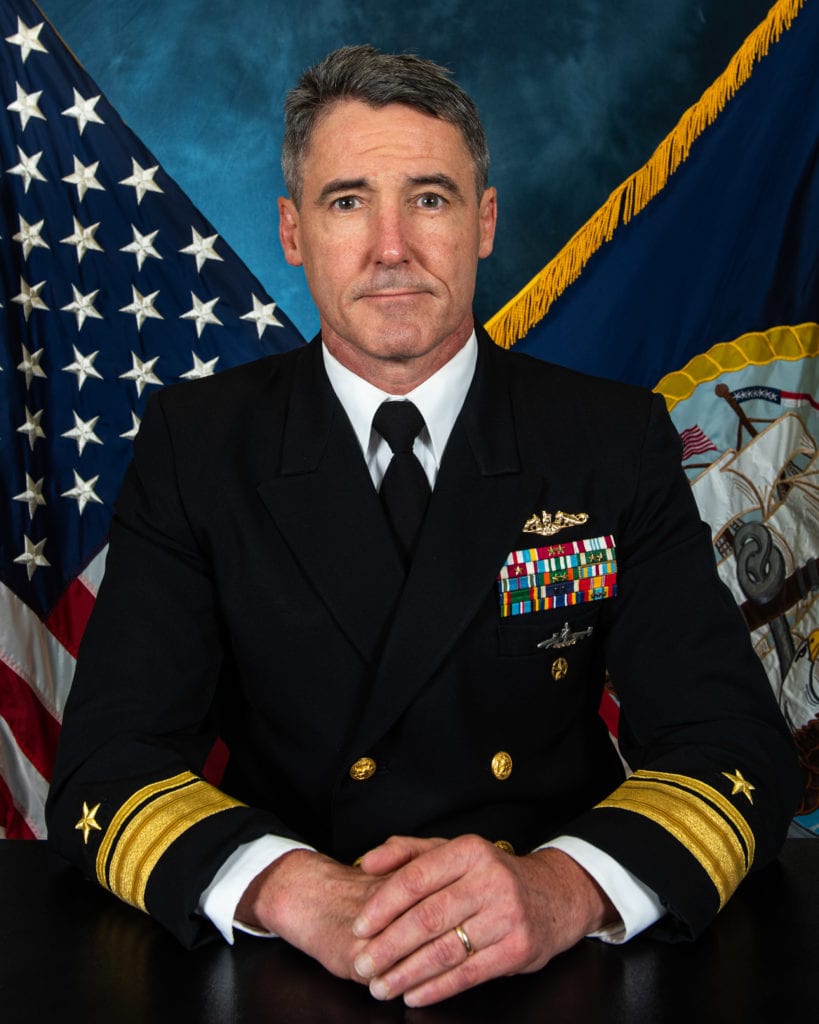
Rear Adm. Blake L. Converse will be assigned as deputy commander, U.S. Pacific Fleet, Pearl Harbor, Hawaii. Converse is currently serving as commander, Submarine Force, U.S. Pacific Fleet, Pearl Harbor, Hawaii.
Rear Adm. Frederick W. Kacher will be assigned as assistant deputy chief of naval operations for operations, plans and strategy, N3/N5B, Office of the Chief of Naval Operations, Washington, D.C. Kacher is currently serving as commander, Expeditionary Strike Group Seven; and commander, Amphibious Force, Seventh Fleet, Okinawa, Japan.
Rear Adm. (lower half) James A. Aiken, selected for promotion to rear admiral, will be assigned as commander, U.S. Naval Forces, Southern Command; and commander, U.S. Fourth Fleet, Jacksonville, Florida. Aiken is currently serving as commander, Carrier Strike Group Three, Bremerton, Washington.
Rear Adm. (lower half) Joseph D. Noble Jr., selected for promotion to rear admiral, will be assigned as director, logistics operations, Defense Logistics Agency; and commander, Joint Regional Combat Support, Fort Belvoir, Virginia. Noble is currently serving as commander, Naval Supply Systems Command Weapons Systems Support, Philadelphia, Pennsylvania.
Rear Adm. (lower half) Dean A. VanderLey, selected for promotion to rear admiral, will be assigned as commander, Naval Facilities Engineering Systems Command Pacific; and director, Fleet Civil Engineer, U.S. Pacific Fleet, with additional duties as fleet civil engineer, N46, U.S. Pacific Fleet, Pearl Harbor, Hawaii. VanderLey is currently serving as commander, Naval Facilities Engineering Systems Command Atlantic with additional duties as fleet civil engineer (N01CE), U.S. Fleet Forces Command, Norfolk, Virginia.
Rear Adm. (lower half) Peter G. Vasely, selected for promotion to rear admiral, will be assigned as commander, special operations, Special Operations Joint Task Force – Afghanistan, U.S. Special Operations Command, Kabul, Afghanistan. Vasely is currently serving as director for operations, Defense Intelligence Agency, Washington, D.C.
Rear Adm. (lower half) Stephen D. Barnett will be assigned as commander, Navy Region Southwest, San Diego, California. Barnett is currently serving as commander, Navy Region Northwest, Silverdale, Washington.
Rear Adm. (lower half) Michael A. Brookes will be assigned as director, J2, U.S. Southern Command, Doral, Florida. Brookes is currently serving as director of intelligence, J2, U.S. Strategic Command, Offutt Air Force Base, Nebraska.
Rear Adm. (lower half) Timothy J. Kott will be assigned as commander, Navy Region Hawaii; and commander, Naval Surface Group Middle Pacific, Pearl Harbor, Hawaii. Kott is currently serving as commander, Carrier Strike Group One, San Diego, California.
Rear Adm. (lower half) Carl A. Lahti will be assigned as commander, U.S. Naval Forces, Japan; and commander, Navy Region Japan, Yokosuka, Japan. Lahti is currently serving as commandant, Naval District Washington, Washington, D.C.
Rear Adm. (lower half) Matthew N. Ott III will be assigned deputy chief of staff for Fleet Ordnance and Supply; and fleet supply officer, N41, U.S. Fleet Forces Command, Norfolk, Virginia. Ott is currently serving as executive director, operational contract support, Office of the Under Secretary of Defense for Acquisition and Sustainment, Washington, D.C.
Rear Adm. (lower half) Milton J. Sands will be assigned as commander, Special Operations Command Africa, U.S. Special Operations Command, Stuttgart, Germany. Sands is currently serving as commander, Naval Service Training Command, Great Lakes, Illinois.
Capt. Christopher D. Alexander, selected for promotion to rear admiral (lower half), will be assigned as commander, Naval Surface and Mine Warfighting Development Center, San Diego, California. Alexander is currently serving as commanding officer, Surface Warfare Officer School Command, Newport, Rhode Island.
Capt. Sean R. Bailey, selected for promotion to rear admiral (lower half), will be assigned as deputy commander, U.S. Naval Forces, U.S. Central Command; and deputy commander, U.S. Fifth Fleet, Manama, Bahrain. Bailey is currently serving as chief of staff, Naval Air Force Atlantic, Norfolk, Virginia.
Capt. Thomas R. Buchanan, selected for promotion to rear admiral (lower half), will be assigned as deputy director for plans and policy, DJ5, U.S. Central Command, Tampa, Florida. Buchanan is currently serving as commandant of midshipman, U.S. Naval Academy, Annapolis, Maryland.
Capt. Christopher J. Cavanaugh, selected for promotion to rear admiral (lower half), will be assigned as director, Maritime Headquarters (N03), U.S. Pacific Fleet, Pearl Harbor, Hawaii. Cavanaugh is currently serving as director, submarine/nuclear power distribution (PERS-42), Navy Personnel Command, Millington, Tennessee.
Capt. Brad J. Collins, selected for promotion to rear admiral (lower half), will be assigned as commander, Navy Region Northwest, Silverdale, Washington. Collins is currently serving as chief of staff, Navy Installations Command, Washington, D.C.
Capt. Jennifer S. Couture, selected for promotion to rear admiral (lower half), will be assigned as commander, Naval Service Training Command, Great Lakes, Illinois. Couture is currently serving as assistant chief of staff, Naval Surface Force, Atlantic, Norfolk, Virginia.
Capt. William R. Daly, selected for promotion to rear admiral (lower half), will be assigned as deputy director for policy, plans, strategy, capabilities and resources, J-5/8, U.S. European Command, Stuttgart, Germany. Daly is currently serving as chief of staff, Naval Surface Forces, U.S. Pacific Fleet, San Diego, California.
Capt. Ronald A. Foy, selected for promotion to rear admiral (lower half), will be assigned as deputy director for global operations, J-3, Joint Staff, Washington, D.C. Foy is currently serving as deputy commander, Naval Special Warfare Command, Virginia Beach, Virginia.
Capt. Patrick J. Hannifin, selected for promotion to rear admiral (lower half), will be assigned as deputy director for political-military affairs (Asia), J5, Joint Staff, Washington, D.C. Hannifin is currently serving as director, aircraft carrier requirements, N98, Office of the Chief of Naval Operations, Washington, D.C.
Capt. Oliver T. Lewis, selected for promotion to rear admiral (lower half), will be assigned as deputy director for political-military affairs (Europe, NATO, Russia), J-5, Joint Staff, Washington, D.C. Lewis is currently serving as executive assistant to the chief of naval operations, Office of the Chief of Naval Operations, Washington, D.C.
Capt. Benjamin R. Nicholson, selected for promotion to rear admiral (lower half), will be assigned as U.S. Indo-Pacific Command representative, Guam, Commonwealth of the Northern Mariana Islands, Federated States of Micronesia, Republic of Palau; commander, U.S. Naval Forces, Marianas; and commander, Joint Region Marianas, Guam. Nicholson is currently serving as executive assistant to the vice chairman of the Joint Chiefs of Staff, Joint Staff, Washington, D.C.
Capt. Randall W. Peck, selected for promotion to rear admiral (lower half), will be assigned as president, Board of Inspection and Survey, Virginia Beach, Virginia. Peck is currently serving as commanding officer, USS John C. Stennis (CVN 74), Norfolk, Virginia.
Capt. Ronald J. Piret, selected for promotion to rear admiral (lower half), will be assigned as commander, Naval Meteorology and Oceanography Command, Stennis Space Center, Mississippi. Piret is currently serving as chief of staff, Naval Meteorology and Oceanography Command, Stennis Space Center, Mississippi.
Capt. Benjamin G. Reynolds, selected for promotion to rear admiral (lower half), will be assigned as director of Maritime Headquarters, U.S. Naval Forces Europe/Africa/Sixth Fleet, Naples, Italy. Reynolds is currently serving as director, Operations Division, Office of the Assistant Secretary of the Navy for Financial Management and Comptroller; and director, Operations Division, Fiscal Management Division, N821, Office of the Chief of Naval Operations, Washington, D.C.
Capt. Mark A. Schafer, selected for promotion to rear admiral (lower half), will be assigned as commander, Navy Region Korea; commander, U.S. Naval Forces Korea; and commander, Naval Component, U.S. Forces Korea, United Nations Command, Korea, Busan, Korea. Schafer is currently serving as deputy, staff operations and plans, Joint Special Operations Command, Tampa, Florida.
DOT Announces Funding Availability for Port Infrastructure Development Program
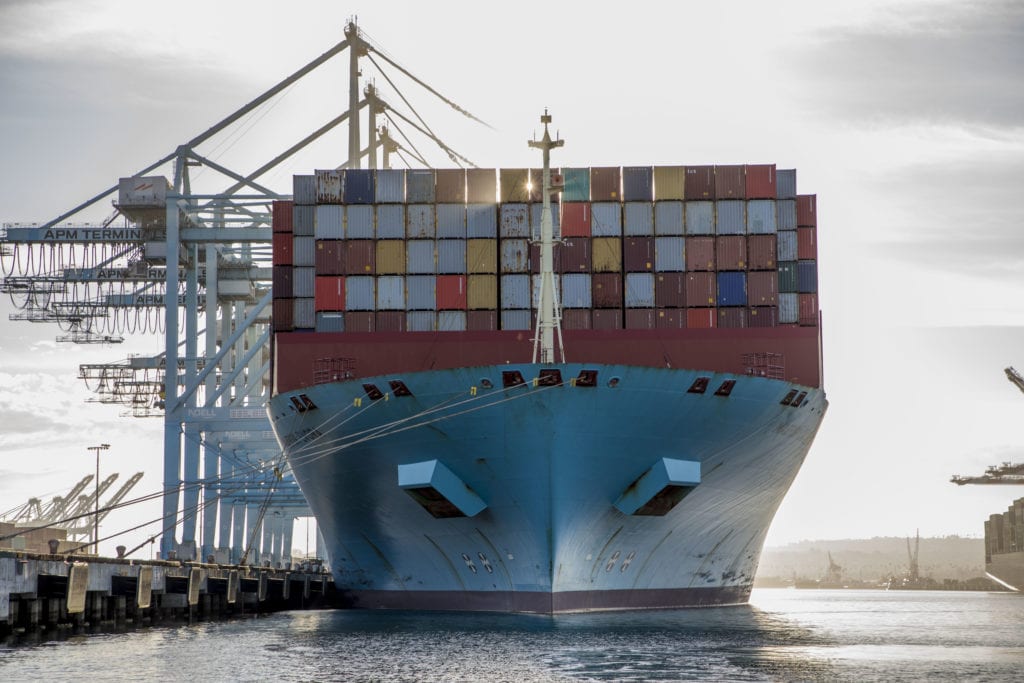
A cargo ship at the Port of Los Angeles. PORT OF LOS ANGELES
WASHINGTON – The U.S. Department of Transportation’s Maritime Administration announced on March 29 a Notice of Funding Opportunity (NOFO) encouraging states and port authorities to apply for $230 million in discretionary grant funding for port and intermodal infrastructure-related projects through the Port Infrastructure Development Program (PIDP).
“Our nation’s ports are a key part of our critical infrastructure. They create jobs and make our economy more resilient and sustainable,” said U.S. Secretary of Transportation Pete Buttigieg. “This funding will build upon local investments in infrastructure to deliver long-term economic benefits to American workers and communities, while also addressing climate and equity.”
Buttigieg announced this funding at a White House event focused on the development of offshore wind energy programs. Over the past two years, 12 percent of Port Infrastructure Development Program grant applicants included the anticipated development of wind energy facilities and the movement of wind energy components as part of their project proposals. This year’s grant funding will bolster these efforts. More information about the development of these offshore wind energy programs can be found here.
The Port Infrastructure Development Program supports the efficient movement of commerce upon which our economy relies. The grants are awarded on a competitive basis to support projects that strengthen and modernize port infrastructure and support the Nation’s long-term economic vitality. In keeping with the priorities of the Biden-Harris Administration, the department’s review process will also consider how proposed projects address climate change and environmental justice impacts and advance racial equity, reduce barriers to opportunity, and meet challenges faced by rural areas.
“State and local authorities are working to position ports to take advantage of a clean energy economy,” said Acting Maritime Administrator Lucinda Lessley. “These infrastructure grants will continue to bolster their efforts while creating jobs in these communities and the U.S. maritime industry as a whole.”
Previous grants have supported projects such as infrastructure resiliency and shore-side improvements to facilitate wind energy projects.
The Consolidated Appropriations Act 2021, made $230 million available for the Port Infrastructure Development Program, with $205 million reserved for grants to coastal seaports and Great Lakes ports. The minimum award size is $1 million, with a federal cost-share not to exceed 80%. The federal cost share can be higher for certain categories of projects. To provide technical assistance, the department will host a series of webinars during the Port Infrastructure Development Program grant application process. Details and registration information regarding these webinars will be made available at www.transportation.gov/portgrants.
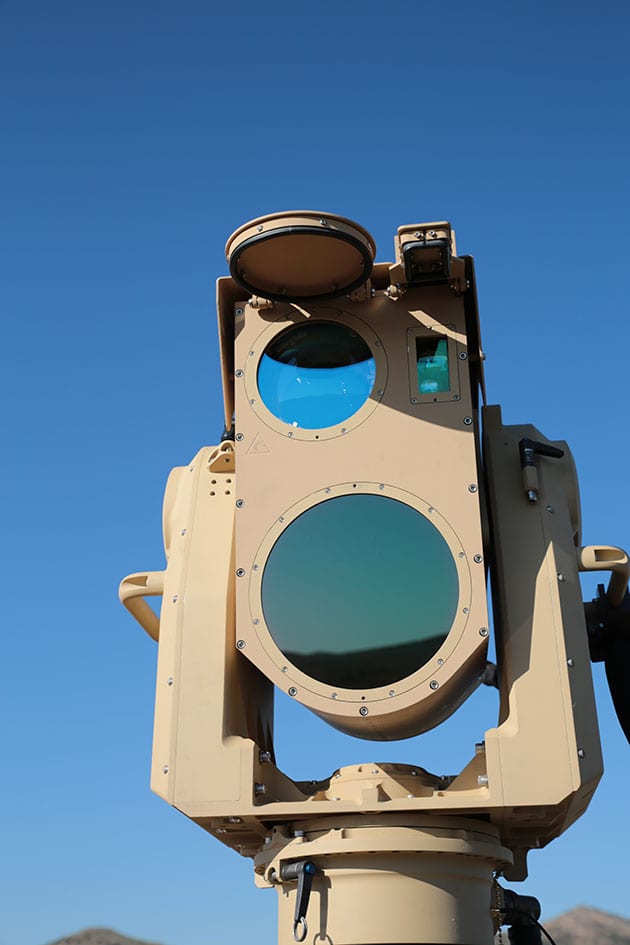
ST. LOUIS — Boeing was awarded a $2.5 million contract by the U.S. Marine Corps to sustain the service’s Compact Laser Weapon System (CLWS) units, the company said in a March 29 release.
The five-year contract includes maintenance services for the Boeing-built CLWS units defending against hostile unmanned aerial systems in theater. Each CLWS unit is equipped with a best-in-class beam director and acquisition, tracking and pointing software to deliver precision protection.
“We’re honored to continue our partnership with the Marine Corps,” said Kurt Sorenson, Boeing program manager for CLWS. “This will ensure that their systems continue to operate at the highest levels in defense of our warfighters.”
Boeing recently increased the maximum beam power and reliability of the CLWS units – providing enhanced protection against larger and more numerous threats at greater range, as well as enabling them to defeat threats more quickly and efficiently.
Boeing has more than 40 years of innovation and experience building directed energy systems, and has produced laser weapons for use in the air, on land and at sea.
Austal USA Enters Steel Shipbuilding Market
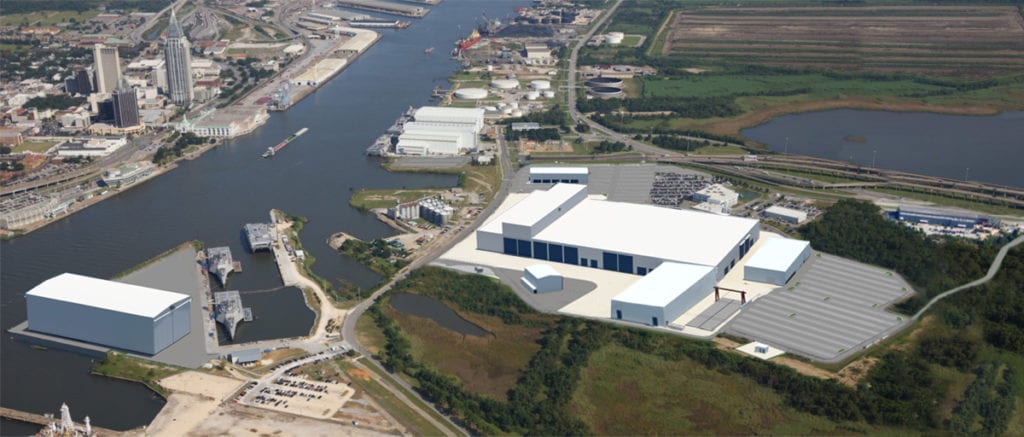
An artist’s conception of Austal USA’s new steel shipbuilding facility. AUSTAL USA
MOBILE, Ala. — Austal USA broke ground on its steel manufacturing line March 26, positioning the company to start steel production in April 2022, the company said in a release. This addition of steel capability ensures Austal USA will remain a major contributor to the U.S. shipbuilding industrial base.
“This world-class steel manufacturing line is a treasure for the Gulf Coast, the U.S. Navy and the U.S. Coast Guard that will provide a much needed boost to the defense industrial base and our Nation’s defense,” said Rep. Jerry Carl, R-Alabama, the congressman for Alabama’s 1st District.
The ceremony marked the start of a new era for Austal USA as the company adds steel shipbuilding capability to its growing business portfolio.
“As demand for the greater and larger Navy and Coast Guard fleets grows, Austal USA is investing to meet those changing requirements,” said Rusty Murdaugh, the company’s interim president. “We’re investing in our people, we’re investing in our processes and we’re investing in our facilities and capabilities.”
Just as Austal helped turn Mobile into the nation’s premier location for construction of aluminum ships, the company is poised to do the same for steel. During World War II, residents of Mobile built steel Liberty ships that were critical to the war effort. In the coming years, Austal will look to build and deliver steel ships needed by the U.S. Coast Guard and Navy.
Founded on innovation, effectiveness and efficiency, Austal USA will bring its proven lean manufacturing processes and facility design to the steel shipbuilding market. These processes have helped deliver 24 ships to the Navy in the last nine years.
Iwo Jima ARG and 24th MEU Deploy After Redefining Integrated Training
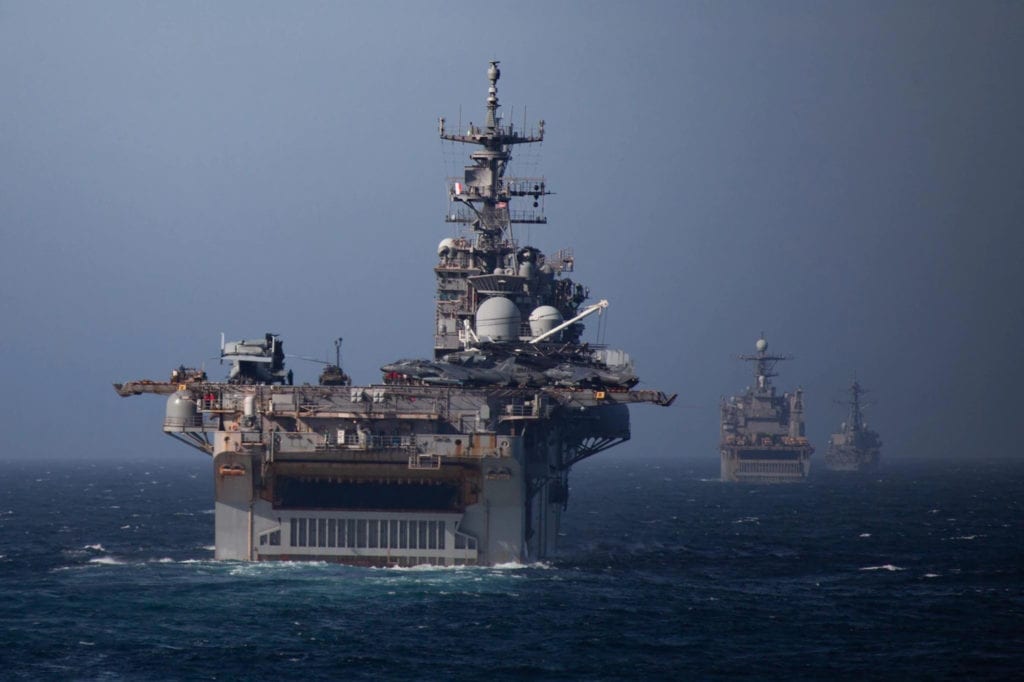
The amphibious assault ship USS Iwo Jima (LHD 7) and ships of the Iwo Jima Amphibious Ready Group (ARG), embarked with the 24th Marine Expeditionary Unit, simulate a strait transit during a composite unit training exercise (COMPTUEX) off the Atlantic coast, March 1, 2021. COMPTUEX is a month-long training event designed to test the ARG-MEU’s capabilities against the full spectrum of military operations. U.S. MARINE CORPS / Lance Cpl. Davis Harris
NORFOLK, Va. — The Iwo Jima Amphibious Ready Group (ARG) and the 24th Marine Expeditionary Unit (MEU) deployed March 25 after completing an intensive, month-long composite training exercise (COMPTUEX) and brief in-port maintenance period, the U.S. 2nd Fleet said in a release.
The ARG-MEU’s COMPTUEX was designed to fully integrate roughly 3,700 Sailors and Marines into one cohesive contingency force while testing the units’ abilities to carry out sustained operations from the sea. During the exercise, the Blue-Green team executed virtual and live evolutions challenging every major warfare area, including responses to surface and subsurface contacts, electronic attacks, surface and air amphibious assaults, and precision airstrikes.
COMPTUEX was led by Commander, Carrier Strike Group (CSG) 4 and Expeditionary Operations Training Group (EOTG) staff, during which both groups of assessors provided training and mentorship while evaluating the warfighting capabilities of all units. There were two distinct phases of training that increased in complexity and intensity over time.
At sea, simulated attacks by hostile aircraft, ships, and submarines required active responses by the ARG-MEU in real-time. Additionally, there were several live visit, board, search, and seizure (VBSS) exercises those fully integrated elements of the ARG and MEU at the tactical team level.
On shore, the landing force conducted raids in daytime and nighttime urban environments. They executed multiple tactical recoveries of aircraft and personnel missions, utilizing Navy as well as Marine aviation assets.
The ARG-MEU team was also assessed on their ability to integrate Navy and Marine Corps forces in a variety of warfare areas, essential to ensuring readiness in a variety of joint mission sets.
“The ARG-MEU proved we are adaptable and can respond to a variety of complex and rapidly changing situations,” said Capt. Darren Nelson, commodore of Amphibious Squadron (PHIBRON) 4. “Our success depended on being innovative, thinking strategically, planning operationally, and acting tactically. The training we completed is unique in that only an ARG-MEU conducts this type of combined training in the military.”
The 24th MEU, based out of Camp Lejeune, North Carolina, is the first East Coast MEU to embark ships with the Department of Defense’s new Joint Light Tactical Vehicle (JLTV). The JLTV is a versatile ground transport vehicle now used by all ground-based elements within the MEU, providing state-of-the-art protection and technology to troops in tow.
Additionally, in response to the commandant of the Marine Corps’ new force design, the MEU embarked with a robust Light-Armored Reconnaissance detachment.
“As the nation’s crisis response force, the ARG-MEU team must remain ready to respond at a moment’s notice when crises arise,” explained Col. Eric D. Cloutier, commanding officer, 24th MEU. “This exercise gave our team the opportunity to train how we fight across a range of military operations, providing a force-in-readiness to the fleet that is prepared to decisively engage when called upon.”
Emphasizing flexibility during the month-long evolution, this Marine Air-Ground Task Force (MAGTF) conducted a company-sized amphibious live-fire raid event. During this raid, nearly 100 Marines and Sailors converged on targets at Camp Lejeune’s newest range. Finally, the month of ship-to-shore operations culminated with an amphibious assault by a fighting force of nearly 600 Marines and Sailors.
Driving the ARG-MEU’s broad spectrum of expeditionary capabilities is its overall readiness as a fighting force. Most notably, this Navy-Marine Corps team took a deliberate approach to maximizing readiness through pre-deployment training while also joining forces to combat COVID-19, using coordinated mitigation procedures before their final at-sea period. In addition to conducting a restriction-of-movement (ROM) prior to embarking for the training exercise and adhering to 100% mask-wearing and other health and safety mitigations, the ARG-MEU were among the first units prioritized to receive the COVID-19 vaccines once they were approved for emergency use across the Department of Defense.
“The entire ARG-MEU is estimated to have over 90% voluntarily immunized once the last few people receive their second dose underway,” said Nelson. “The impressive number was achieved by making the vaccine available to everyone and by doing everything possible to educate our Sailors and Marines about the vaccine.”
The ARG consists of the amphibious assault ship USS Iwo Jima (LHD 7), transport dock ship USS San Antonio (LPD 17), and dock landing ship USS Carter Hall (LSD 50). Embarked detachments for the Iwo Jima ARG include PHIBRON 4, Fleet Surgical Team (FST) 6, Helicopter Sea Combat Squadron (HSC) 26, Tactical Air Control Squadron (TACRON) 21, Naval Beach Group (NBG) 2, Beach Master Unit (BMU) 2, Assault Craft Unit (ACU) 2 and 4, and Sailors from Amphibious Construction Battalion (ACB) 2. Also, joining the training were USS Arleigh Burke (DDG 51) and USS The Sullivans (DDG 68).
The 24th MEU consists of a ground combat element, Battalion Landing Team (BLT) 1/8, a logistics combat element, Combat Logistics Battalion (CLB) 24, and an aviation combat element, Medium Tilt-Rotor Squadron (VMM) 162 Reinforced.
The Iwo Jima ARG-MEU team is manned, trained and equipped to fulfill amphibious requirements in support of maritime security and stability. Amphibious ready groups and larger amphibious task forces provide military commanders a wide range of flexible capabilities including maritime security operations, expeditionary power projection, strike operations, forward naval presence, crisis response, sea control, deterrence, counter-terrorism, information operations, security cooperation and counter-proliferation, and humanitarian assistance and disaster relief.
Navy T-4C Jet Trainer Crashes in Texas; 2 Ejections
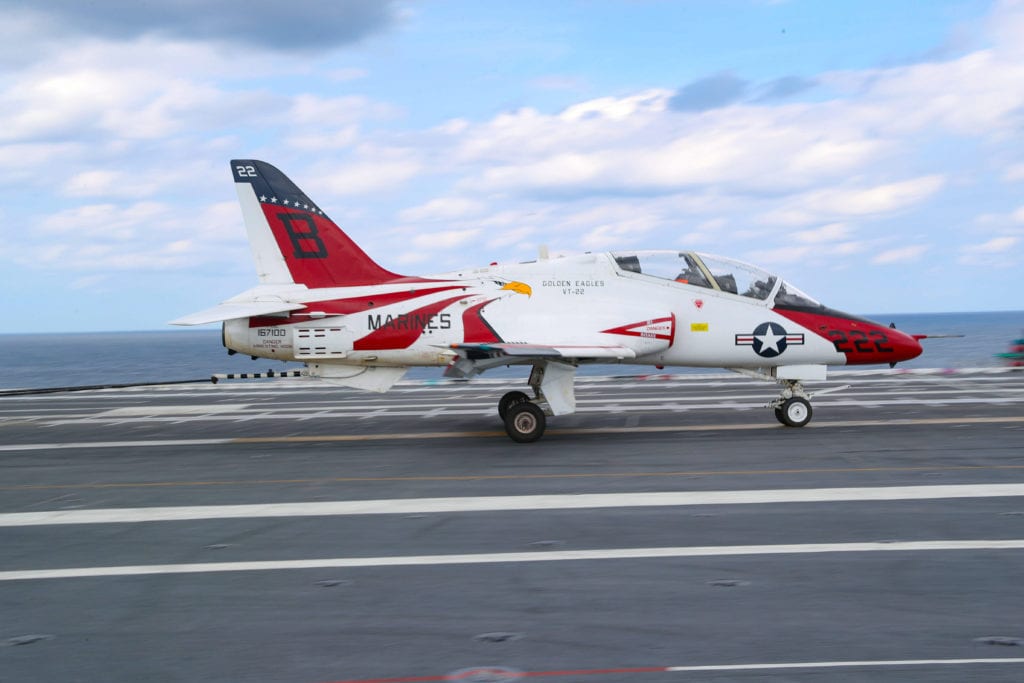
A T-45C Goshawk, reported to be the same one that crashed, lands on the flight deck of the aircraft carrier USS Gerald R. Ford (CVN 78), March 15, 2021. U.S. NAVY / Chief Mass Communication Specialist RJ Stratchko
ARLINGTON, Va. — A U.S. Navy training jet crashed March 24 in Texas, but both crew members ejected safely.
The T-45C Goshawk crashed at approximately 2 p.m. Central time three miles northeast of Nava/ Outlying Field Orange Cove, Texas, the Navy said in a release.
“The two occupants, an instructor, and a student, safely ejected from the aircraft and reported minor injuries,” the release said. “They were transported to a local medical treatment facility for evaluation. Navy and local emergency services responded to the scene and extinguished a small brush fire. Navy personnel are on scene and are cooperating with local authorities.
The aircraft was assigned to Training Air Wing Two at Naval Air Station Kingsville, Texas, was being flown by the Golden Eagles of Training Squadron 22.
The incident is under investigation.
Raytheon to Continue to support U.S. Navy Counter-Narco-Terrorism Operations
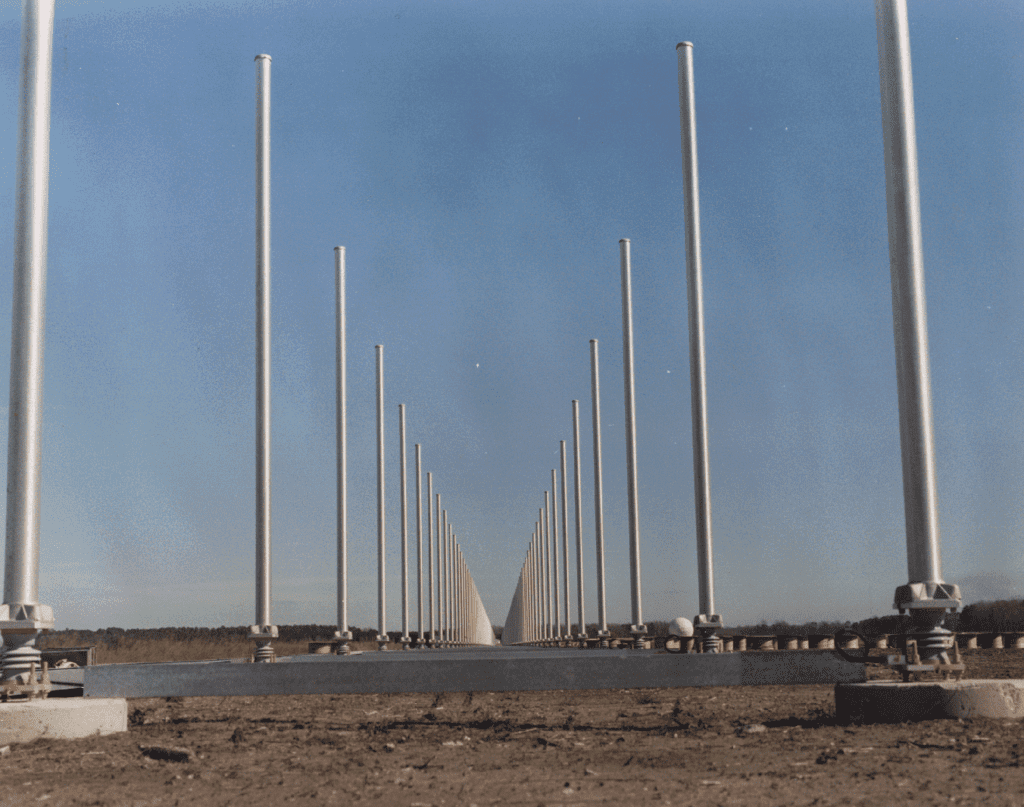
U.S. Navy AN/TPS–71 Relocatable Over-the-Horizon Radar (ROTHR) stations. U.S. NAVY / Wikipedia
ARLINGTON, Va. — Raytheon Intelligence & Space (RI&S), a Raytheon Technologies business, will continue operating and maintaining the U.S. government’s Relocatable Over-the-Horizon Radar (ROTHR) system under a $146 million, five-year contract, the company said in a March 24 release.
Originally developed to track long-range targets for aircraft and ships, ROTHR is now the primary detection system for border security and drug smuggling interdiction for the Joint Interagency Task Force South. In 2020 alone, ROTHR contributed to the seizure of 26 metric tons of cocaine from drug smugglers attempting to cross into U.S. territory.
“Raytheon Technologies’ ROTHR systems have supported U.S. Navy operations for over 30 years,” said John DeSimone, vice president of Cybersecurity, Training and Services for RI&S. “We will continue to work closely with the Navy and JIATF South to help protect our national security.”
The contract covers operations and maintenance at six ROTHR locations in Puerto Rico, Texas and Virginia. Each radar provides more than 2.5 million square miles of coverage area, resulting in extremely low operational costs.
Bell Boeing V-22 Osprey Soars Past 600,000 Fleet Flight-hours
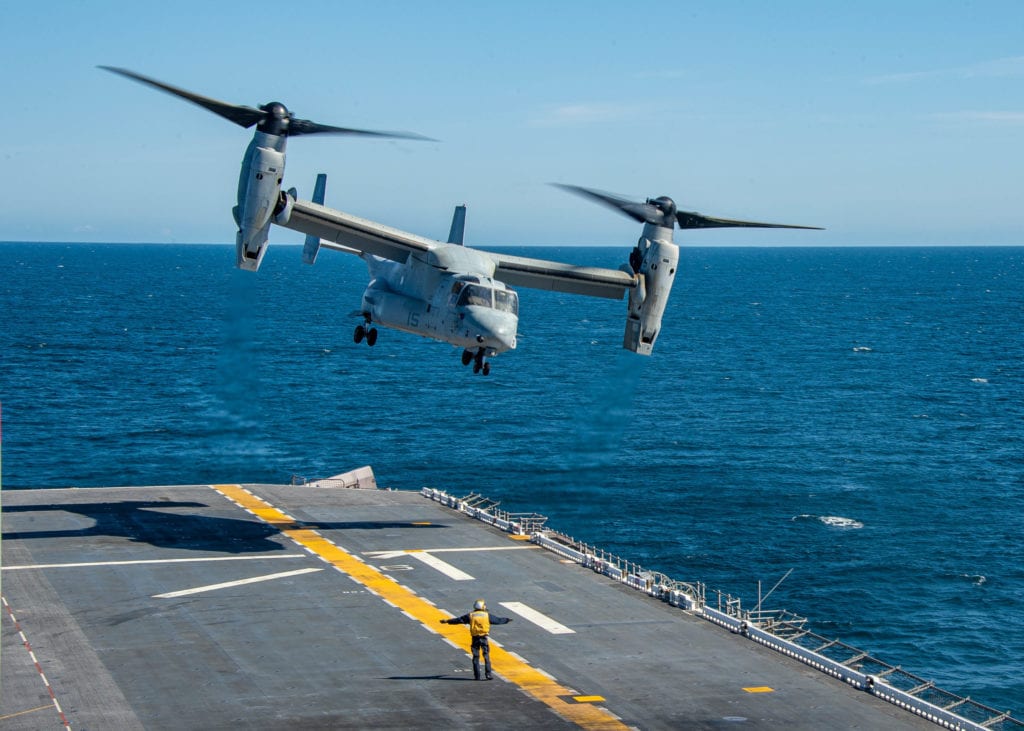
An MV-22 Osprey tiltrotor aircraft, attached with Marine Medium Tiltrotor Squadron (VMM) 165 (Reinforced), 11th Marine Expeditionary Unit, takes off from the flight deck of Wasp-class amphibious assault ship USS Essex (LHD 2) on March 21. U.S. NAVY / Mass Communication Specialist 3rd Class Brett McMinoway
ARLINGTON, Va., and Fort Worth, Texas– The Bell Boeing V-22 Osprey has logged more than 600,000 flight-hours, providing continuous customer support to maintain mission readiness and transport critical cargo and personnel, Bell and Boeing said March 24 in a joint release.
Built by Bell Textron Inc., a Textron Inc. company, and Boeing, the V-22 fleet has grown to more than 400 aircraft and is operated by the United States Marine Corps, U.S. Air Force, U.S. Navy and the Japan Ground Self-Defense Force.
The V-22 is the only military production tiltrotor aircraft in the world. Its speed, range, maneuverability and logistical capability make it one of the most versatile and cost-effective solutions for its customers.
“There is no other aircraft in the world capable of matching the unique capabilities of the Osprey,” said Kurt Fuller, Bell V-22 vice president and Bell Boeing program director. “The 600,000 flight-hours represent countless tactical, logistical and humanitarian assistance missions, and the dedication of the men and women who maintain and operate the aircraft every day to keep it an advanced aircraft.”
Bell Boeing directly supports V-22 readiness by providing comprehensive global services to V-22 squadrons, including maintenance support, training, on-site field representatives, data analytics and new and repaired parts. For example, the Naval Air Systems Command recently awarded Bell Boeing a contract to deliver and install kits for nacelle improvements and the conversion area harness onto the CV-22 aircraft for the Air Force. The program refines the design of the nacelles and wiring harnesses for better reliability and maintainability, ultimately reducing repair time and improving readiness.
“Each V-22 flight hour is the product of a team effort,” said Col. Matthew Kelly, V-22 Joint Program Office program manager. “Enabled by pilots, maintainers, testers, engineers, the program workforce and our industry partners who, together, ensure safe and effective V-22 operation.”
Recent program accomplishments include the V-22’s latest variant, the CMV-22B, assigned to the “Titans” of Fleet Logistics Multi-Mission Squadron 30, completing the first delivery of an F-35 engine to the USS Carl Vinson, along with successful paradrops with the U.S. Navy’s parachuting team, “The Leap Frogs,” earlier in the year.
“From its first flight over 30 years ago to achieving this significant flight-hour milestone, the V-22 has a demonstrated legacy of mission success,” said Shane Openshaw, Boeing V-22 vice president and Bell Boeing V-22 deputy program director. “As we look at optimizing future sustainment and support, our customer partnerships and commitment to innovation, flexibility and agility will ensure we build on the aircraft’s ability to support whatever the mission demands.”
Coast Guard Offloads More than 19,600 Pounds of Cocaine, Marijuana
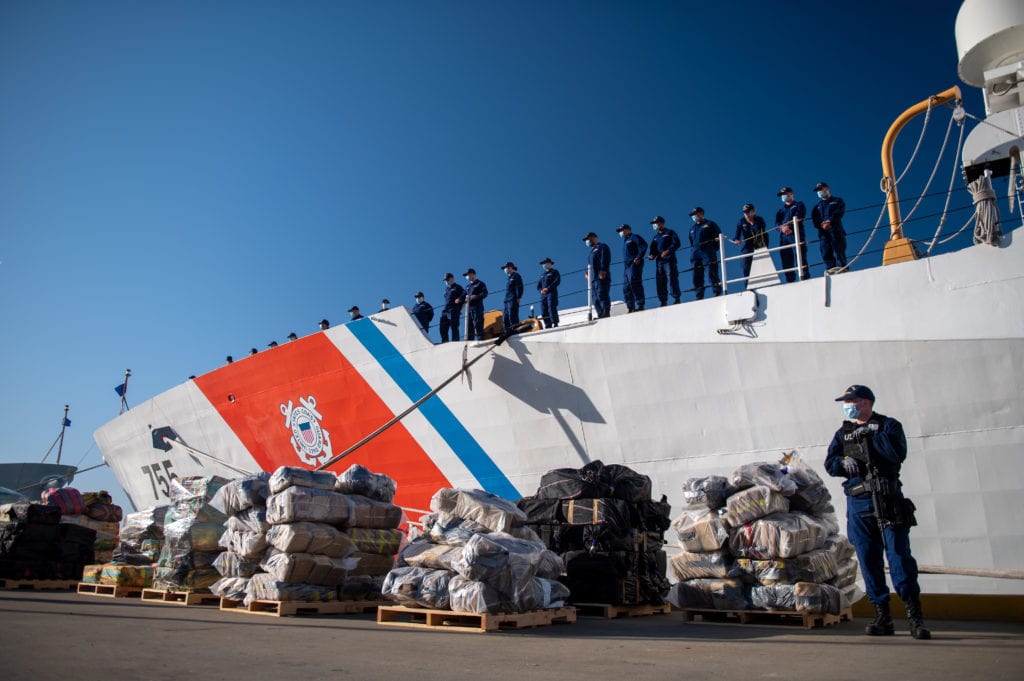
The crew of the Coast Guard Cutter Munro gather in formation behind seized contraband during a drug offload in Alameda, California, March 23, 2021. U.S. COAST GUARD / Petty Officer 3rd Class Taylor Bacon
ALAMEDA, Calif. — The crew of the Coast Guard Cutter Munro (WMSL 755) offloaded approximately 8,200 pounds of seized cocaine and 11,450 pounds of marijuana March 23 at the ship’s homeport at Coast Guard Base Alameda, the Coast Guard Pacific Area said in a release.
Prior to the Munro’s arrival in Alameda, the crew transferred 12 detainees, approximately 9,200 pounds of cocaine and 2,150 pounds of marijuana to law enforcement officials in San Diego.
The drugs, in total worth an estimated $330 million, were seized in international waters of the Eastern Pacific Ocean between January and March, representing 15 suspected drug smuggling vessel interdictions off the coasts of Mexico, Central and South America by the following Coast Guard and Navy ships:
The Coast Guard Cutter Munro (WMSL 755) crew was responsible for nine interdictions, seizing approximately 10,200 pounds of cocaine and 11,450 pounds of marijuana.
The Coast Guard Cutter Bear (WMEC 901) crew was responsible for two interdictions, seizing approximately 66 pounds of cocaine.
The Coast Guard Cutter Vigilant (WMEC 617) crew was responsible for one interdiction, seizing approximately 1,870 pounds of cocaine.
The Coast Guard Cutters Bear and Munro conducted a joint interdiction, seizing approximately 3,747 pounds of cocaine.
Coast Guard Law Enforcement Detachment 107 deployed aboard the USS Freedom (LCS 1) was responsible for two interdictions, seizing approximately 1,600 pounds of cocaine and 2,150 pounds of marijuana.
“National security cutters like Munro are national-level assets and are game changers for the United States government’s maritime interdiction capability,” said Vice Adm. Linda Fagan, the commander of Coast Guard Pacific Area. “As your Coast Guard, we use our unique capabilities and authorities as a military service and a law enforcement agency to secure the nation’s maritime border and to disrupt illegal activity of dangerous cartels. This offload demonstrates another successful cycle of justice.”
“Transnational criminal organizations have not slowed down due to the pandemic, and the Coast Guard women and men continue to protect our nation on the frontlines,” said Capt. Blake Novak, the commanding officer of the Munro. “Our crew intercepted a group of suspected smugglers, on average, every 90 hours for 45 days straight, seizing nearly 30,000 pounds of cocaine and marijuana valued at over $330 million. Maintaining such a high level of performance was only possible because of a total team effort. This crew set the bar for excellence, and I am incredibly proud of all of them.”
Munro is one of four national security cutters homeported in Alameda. These Legend class cutters are 418-feet long, 54-feet wide, and have a 4,600 long-ton displacement. They have a top speed in excess of 28 knots, a range of 12,000 nautical miles, endurance of up to 90 days and can hold a crew of nearly 150.